

Soul-Shaping Worship | A Three-Part Miniseries
While I typically take a break from preaching over the summer, I am stepping back into the pulpit for the next three Sundays to guide our parish through a three-part miniseries on Psalm 103, 104, and 105. I’m calling this little trilogy "Soul-Shaping Worship".
Redeemer Family,
While I typically take a break from preaching over the summer, I am stepping back into the pulpit for the next three Sundays to guide our parish through a three-part miniseries on Psalm 103, 104, and 105. I’m calling this little trilogy "Soul-Shaping Worship".
Worship happens whenever a human being gives devotion, honor, praise, and glory to someone or something. Worship can be expressed outwardly in speaking, singing, kneeling, cheering, shouting, but it is also an inward posture of the heart. The World Cup, the 250th Anniversary of the USA, a hike up Old Rag Mountain, or even your favorite summer concert are all places where you can observe humans worshipping - giving glory and honor to someone or something they love. Humans are worshippers, homo adorans.
The fascinating reality of worship is that it is not only expressive, but also formative. Humans become like whomever or whatever they worship. The act and posture of worship changes us - it molds and shapes us. For this reason, all humans should take worship deeply serious and it should be practiced with great intentionality. Show me who or what you worship and I’ll show you the kind of person you are becoming.
Though he was God-in-the-flesh, Jesus was (and is) a full human being and, as a human, is a worshipper. The Son glorifies the Father. How did Jesus worship? We know that he prayed and sang the Psalms. If we who share in the risen humanity of Jesus want to be formed to be more like Jesus, then it would only follow that we learn to pray and sing the Psalms as well.
This is the underlying logic beneath our parish’s habit of returning to the Psalms every summer. We want our worship to make us more like Jesus, and so our worship must include the Psalms.
Over the next three weeks, I’d like us to explore this dynamic more deeply in the following ways:
July 5 — Psalm 103
Worshipping God for his compassion, which shapes us into a more compassionate people.July 12 — Psalm 104
Worshipping God as creator, which cultivates wonder and awe in us as his creatures.July 19 — Psalm 105
Worshipping God for his covenant faithfulness towards Israel, which gives us deep roots in the story of redemptive history.
Compassion, wonder, roots… I know I need more of these in my life and I suspect you do as well.
Redeemer family, over the next three weeks, let’s grow to become more like Christ as we learn to worship with these psalms.
In the Father’s love,

Preparing for a Capital Campaign
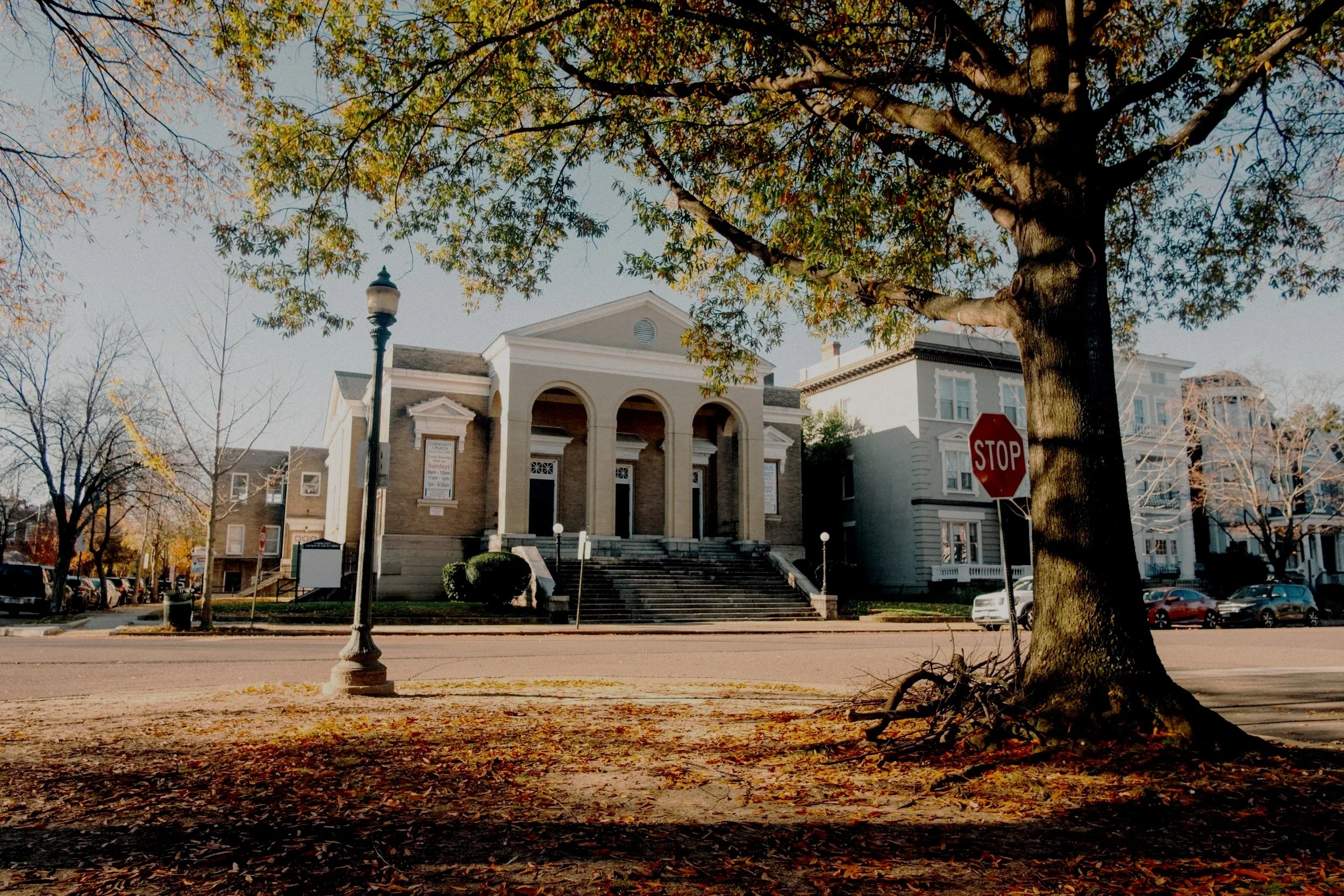
I’m writing to you today about our upcoming capital campaign to raise funds for renovating and outfitting our parish’s future home: 1801 Park Ave.
In my experience, most people have fairly strong feelings about things like capital campaigns and fund-raising, but we don’t all feel the same thing.
Some of us absolutely love the excitement of building for the future and are thrilled that our parish is doing this!
Others of us have had bad experiences with fund-raising in the past and may feel a strong sense of distaste or cynicism about Redeemer running a capital campaign.
Still others feel a mix of conflicting emotions: excitement about renovating 1801 Park Ave., but also annoyance that a capital campaign is necessary to do so - almost as if a campaign is a “necessary evil”.
For starters, I want you to know that I myself have cycled through all of these over the past year. So one of the things that I want to do today is be totally transparent about the campaign so we can have clarity and unity together as a church in this vitally important season.
Redeemer Family,
I’m writing to you today about our upcoming capital campaign to raise funds for renovating and outfitting our parish’s future home: 1801 Park Ave.
In my experience, most people have fairly strong feelings about things like capital campaigns and fund-raising, but we don’t all feel the same thing.
Some of us absolutely love the excitement of building for the future and are thrilled that our parish is doing this!
Others of us have had bad experiences with fund-raising in the past and may feel a strong sense of distaste or cynicism about Redeemer running a capital campaign.
Still others feel a mix of conflicting emotions: excitement about renovating 1801 Park Ave., but also annoyance that a capital campaign is necessary to do so - almost as if a campaign is a “necessary evil”.
For starters, I want you to know that I myself have cycled through all of these over the past year. So one of the things that I want to do today is be totally transparent about the campaign so we can have clarity and unity together as a church in this vitally important season.
This past winter and spring, in addition to all the normal day-in-day-out rhythms of parish life, your campaign leadership has been preparing for a capital campaign. As you might imagine, if you want to do anything in a thoughtful, Biblical, God-honoring manner, it takes time to prepare. I would imagine that this has led some of you to feel like nothing is happening because we haven’t been talking about a campaign publicly. I assure you - work is being done! It’s just the quiet, unglamorous work of preparation.
Additionally, your campaign leadership has decided that the best way for Redeemer to pursue a capital campaign is in a slow, relational, less-flashy way than some other organizations might choose. We know that many people in our parish have either never been part of a campaign before or perhaps have had a variety of experiences with fund-raising in the past. For these reasons, we think slow, steady, and relational is a better approach than big, flashy, and fast.
Now, if we are going to lead our parish through a capital campaign that is slow and relational, that means creating small-to-mid-sized gatherings where people can learn more about the process and ask questions. We want every single person that calls Redeemer home to have a chance to participate. This means that some people will participate 1st, some 2nd, some 15th, some 37th, etc. The only way for everyone to participate in a campaign at the exact same time is to start with something big up front. However, starting with a big, up-front thing is also fairly impersonal and non-relational. Do you see the problem?
So! Here’s what you can expect going forward:
Summer - Mid-Fall
Gatherings: Lots of small-to-mid-sized gatherings in people’s homes to talk about the vision for 1801 Park Ave., the financial needs, and what it means to give financially to this project. Lots of opportunities for Q&A.
Small Groups: Launching August 23.
Tours: In-person tours of 1801 Park Ave.
Teaching: A sermon series on a Biblical understanding of financial stewardship and how the Gospel transforms our practice of generosity.
Prayer: Prayer meetings for the faithfulness and health of our parish as we take these steps.
Mid-Fall
Gatherings: Potentially more small-to-mid-sized gatherings if needed.
Small Groups: Discussions around what God is doing in us and in our church through this process.
Tours: More in-person tours of 1801 Park Ave.
Teaching: October 11 - November 15: A sermon series on the vision and mission of our parish as we anticipate moving to 1801 Park Ave.
Late Fall
Public call for everyone to participate in the campaign as they are able and according to the way they are being led by the Holy Spirit.
Early Winter
Celebration! We’ll take time to celebrate what God has done in us and our church during the campaign.
More celebration! We’ll celebrate Redeemer’s tenth anniversary the weekend of December 5-7.
OK, this is as much detail as I know at this point. As our team solidifies more details, dates, and events, we will share them with you! All along the way, please don’t be a stranger - especially if you have questions, concerns, ideas, or curiosities. If there’s something on your mind, go ahead and ask! (The best person to whom you can direct your questions about the Campaign is Mallory Nix who has graciously stepped up to serve as our Campaign Manager.)
Redeemer family, I love you all and I’m genuinely growing in my excitement and gratitude for what God is doing in our church through this process. This has the potential to be a very healthy season for us, so let’s lean into it.
In the Father’s love,
On behalf of:
Campaign Chair: Mike Mcclure
Campaign Manager: Mallory Nix
Redeemer Vestry:
Alex Griffith, Senior Warden
Kate Kemp, Junior Warden
Brewster Rawls
Morgan Fogleman
Jenn Kilmer
Caleb Boyer
Campaign Steering Committee:
Mike Mcclure
Mallory Nix
Chaney Widmer
Morgan Fogleman
Jeff King
Victoria Strout
the Rev. Dan Marotta
Youth Fellowship Updates
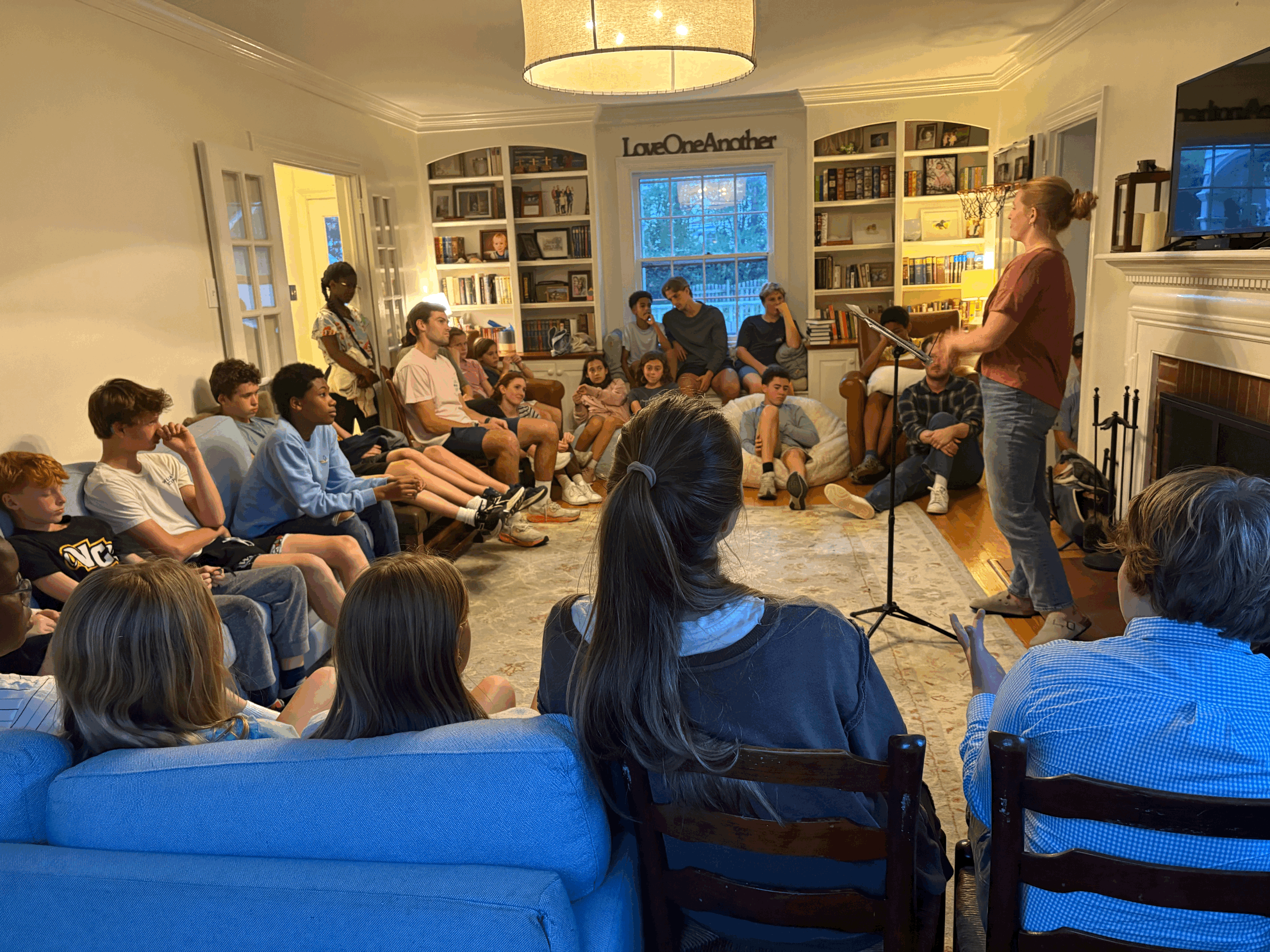
As we have reached the conclusion of another school year, we wanted to take a moment and share what our Youth Fellowship will look like in the year ahead, including some important dates and new leadership. Programmatically, here are some changes that you can expect along with a brief explanation of the reason for some of these changes.
Hello Friends,
As we have reached the conclusion of another school year, we wanted to take a moment and share what our Youth Fellowship will look like in the year ahead, including some important dates and new leadership. Programmatically, here are some changes that you can expect along with a brief explanation of the reason for some of these changes.
Weekly Programming
We will be starting a new time for our students that will take place on Sunday mornings between the 9:00 a.m. and 11:00 a.m services. Sunday morning is a time when many of our leaders and students are already gathered together to worship with our whole church. We want to make best use of this time and give students and leaders another space to build fellowship and grow in faith together. We’re calling this time “Sunday Devotionals” and it will be an opportunity for students to sit down with their leaders for some breakfast and hear a brief devotional from one of our Youth Fellowship leaders on a passage of scripture. Then students will have a short time to talk and pray with leaders. These Sunday Devotionals will begin on Sunday, August 30 and will take place from 10:25-10:55 a.m. Look for more details as we approach August.
Our weekly Youth Fellowship meetings will be on Wednesday evenings from 6:30-8:30 p.m. at 2715 Grove Ave. There are several reasons for this change and we hope it serves our Redeemer families and students well. In the past our Youth Fellowship has met on Wednesday evenings, though we tried Sunday evenings for the past year. It was not clear that this move to Sunday evenings served our families best, plus we wanted to provide a time Sunday morning as mentioned above. Tikvat has enough space for us all, middle school and high school students and leaders, to gather together. Both our leaders and our students see a value in being together as a larger group and we are looking forward to having our high school students begin to take on some forms of leadership and service in our ministry. At the same time, we recognize the developmental differences between 6th grade students and seniors in high school, and so, the second hour of our time together will involve middle school and high school separating into different groups. Each group will hear a lesson given from God’s word and then break off into small groups based on grade and gender.
We believe that having this middle-of-the-week touchpoint with students is valuable, even if a Wednesday evening gathering is difficult for some students to attend during certain seasons. In the event that a student cannot attend on a Wednesday night, our Sunday Devotionals are still a time set apart for them to be with leaders and grow in their faith.
Fall Retreat
The dates for our Fall Retreat are confirmed, so please mark your calendar for the weekend of September 25-27. This retreat takes place in a few different beach houses located in Sandbridge, Virginia. We will depart Friday evening and return Sunday morning. These retreats are a great opportunity for our team of volunteer leaders to form strong relationships with all our students and to create a strong foundation for the school year ahead. These retreats are also a big logistical undertaking and we could use help in making this retreat a success, particularly as it relates to food planning, preparation and the execution of meals during the weekend. If you believe you have relevant skills and are interested in helping, please email me.
Youth Fellowship Leadership

Finally, a few words regarding the leadership of our Youth Fellowship ministry here at Redeemer. As we have finished the school year and are looking to the year ahead I (Nathan Horner) will continue to give leadership and oversight to our Youth Fellowship for the year ahead. We also want to officially announce the hire of a new “Co-Director of Youth Fellowship” named Kenzie White. Kenzie is an alumni of James Madison University and has spent years working with middle school and high school students as a leader in the ministry of Young Life. More recently, Kenzie served on staff at The Church of The Incarnation Anglican Church in Harrisonburg, Virginia. Her official start date is August 1, at which point she will come alongside me in leading our Youth Fellowship.
We are delighted to have a strong team of volunteer leaders who are looking forward to discipling and coming alongside our students for the year ahead. We recently had 4 new leaders join the team who will be paired with our rising 6th grade students as they join our Youth Fellowship. Our volunteer leaders are central to the way our Youth Fellowship operates here at Redeemer and so if you are not sure which volunteer leader is specifically assigned to your child’s grade and gender, please email me and I would be glad to make the connection.
Friends, thank you for your attention. We are so excited for the year ahead in our Youth Fellowship. Please take the time to pray a blessing over our Youth Fellowship as a whole, our volunteer leaders, and over all the students of our church as we seek to disciple them into mature followers of Jesus, rooted deeply in the Gospel, and living in the love of the Father.
Thanks and Blessings,

Nathan Horner
Church Planter-in-Residence
Children in Worship: an Invitation for the Summer
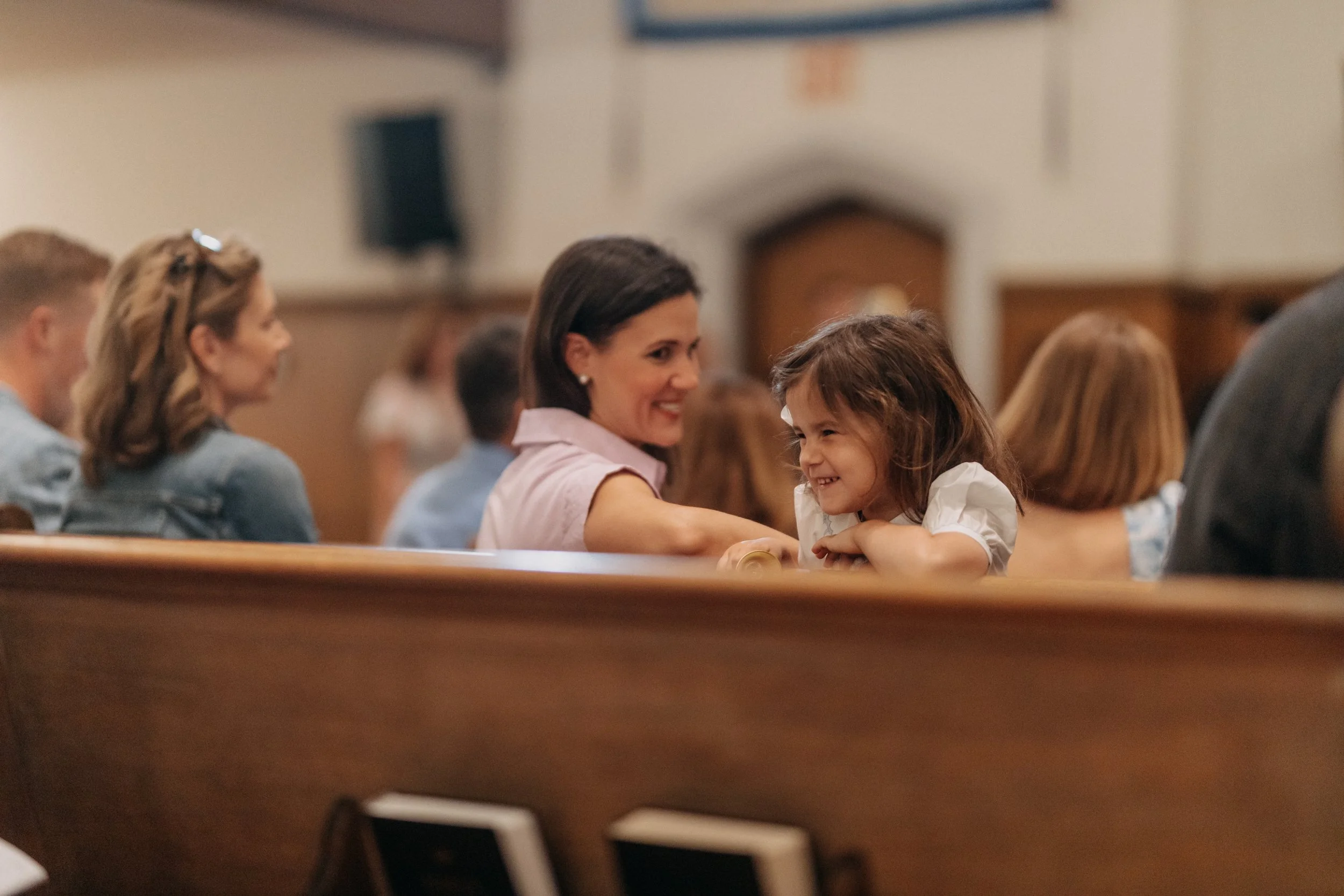
It’s almost that time of year again! We have learned from older, more established ministries that the summer months provide two unique opportunities for our parish. The first is to allow our hard-working Redeemer Kids volunteers a much-needed chance to slow down. The other is the chance to embrace more participation from children during the worship service for the summer season for the sake of both our children themselves and the adults around them! As our parish moves into the season of Ordinary Time and we find ways to practice our faith in, well, ordinary ways, this is a wonderful time to shift the way we teach our children as well.
Dear Redeemer Family,
It’s almost that time of year again! We have learned from older and more established ministries that the summer months provide two unique opportunities for our parish. The first is to allow our hard-working Redeemer Kids volunteers a much-needed chance to slow down. The other is the chance to embrace more participation from children during the worship service for the summer season for the sake of both our children themselves and the adults around them! As our parish moves into the season of Ordinary Time and we find ways to practice our faith in, well, ordinary ways, this is a wonderful time to shift the way we teach our children as well.
When will this take place?
Redeemer Kids will only offer a Three’s Room, Pre-K Room, K-1st Grade Room and the full nursery for both services starting Sunday, June 7 through August 16.
What does this mean for our kids?
We will offer a children’s liturgy specifically for our young children to help guide them through the service (and to doodle on, of course) as well as providing crayons to use. Our 2nd grade+ aged children will be welcomed into portions of the service that they have not been in before to learn alongside our older members during the sermon and to practice corporate prayer during Prayers of the People. This is not a break from children’s spiritual formation—rather, a new way to practice it together!
What does this mean for parents?
If your child is a rising 2nd grader or older, they will be sitting with you for the whole service! We will offer some resources specifically for these children to engage with the service. I can speak from experience that it is no small task to help my own squirmy son sit through long stretches of the service and I don’t want to minimize that challenge for you parents. I urge you to see this not only as an opportunity for your child to form new habits around worship (like when to sit, listen, stand, sing, and kneel), but to find their place in the whole body of Christ by participating in new ways!
What does this mean for Redeemer Kids volunteers?
Our hope is to give our hard-working Redeemer Kids teachers, assistants, coordinators, and more a season to slow down. Many of you might not know that we ask our teachers and assistants to serve every three weeks and our coordinators and nursery volunteers to serve every four weeks. As the year has gone on, many of our team members have served more frequently than this in order to have the 30 volunteers needed every Sunday to run our children’s ministry. For those who are not currently serving in Redeemer Kids, take this season to thank our Redeemer Kids volunteers and to prayerfully consider how you could use your own gifts to volunteer as well—you’re needed!
What does this mean for everyone else?
This is a wonderful opportunity to engage in a new way with the children of our parish! There will be opportunities to stretch and grow as a congregation as we extend hospitality to the school-aged children of our church and by supporting families with young children in the pews around you. Here are a few practical guidelines to consider:
The first way you can help is to model attentive and fully engaged behavior for the kids around you. You disciple the kids nearby when you attentively observe the sermon, stay focused when listening, and use your body to kneel, stand, and extend your hands. After all, children learn the most by observing!
Get to know the names of the children who sit near you in particular and then ask after them by name each week. This small gesture can mean the world to children (or anybody for that matter) who can often feel overlooked in a crowd.
When a child near you is noisy (drops a pen, cries, giggles, talks out loud) during the silent portions of the service, don’t react. This could take practice for each of us, but stay engaged in the prayer/silence/liturgy and take this time as an opportunity to grow in focus and to model a still and calm posture for your neighbors. This is a spiritual “muscle” we can all exercise.
Be open to how you can grow from this experience. During this summer and beyond, be attentive to how children already naturally engage with the service on their own. Do they shout the creeds or dance when they sing? Do they find it hard to be attentive during the scripture reading or to withhold their enthusiasm when they are able to participate in a call and response? Children reflect our own emotions, desires, and sin patterns, but are often more obvious about it. Be open to what you can learn about yourself from watching these children and how you can grow in your own faith through this.
Pray with me now and each week to come: Almighty God, heavenly Father, you have blessed us with the joy and care of children; Give us calm strength and patient wisdom so to train them, that they may love all that is true, and pure, and lovely, and of good report, following the example of their Savior Jesus Christ. Amen.
In Christ,

Casey Cisco
Director of Redeemer Kids
What You Need To Know About Jeff’s Summer Sabbatical
This summer, after seven years of full-time ministry serving our parish as our Senior Director of Operations, Jeff King will be taking a two-month sabbatical. This upcoming time away is part of our staffing policy and has been in the works for a while!
We are so grateful Jeff is able to take this time to rest, and we pray it provides refreshment for him and his family so he can continue to work on mission together with us for many, many years to come!
This summer, after seven years of full-time ministry serving our parish as our Senior Director of Operations, Jeff King will be taking a two-month sabbatical. This upcoming time away is part of our staffing policy and has been in the works for a while!
We are so grateful Jeff is able to take this time to rest, and we pray it provides refreshment for him and his family so he can continue to work on mission together with us for many, many years to come!
What is a Sabbatical?
The word Sabbatical has its roots in the word ‘Sabbath’ - a stopping, a pausing, a time of rest, a time to slow down and remember that the Lord is God. Sabbath is a recognition that the deepest layer of reality is rest in God, not strenuous effort and achievement. Throughout the story of the Bible, God continually calls and commands His people to practice Sabbath rest. This takes the form of the weekly sabbath for the people (one day out of seven) and annual sabbath for the land (one year out of seven).
A Sabbatical is “a healthy and effective means of preventing burnout and of renewing and enhancing a professional’s capabilities for dealing effectively with problems facing those who need help...the overall goal is rest and renewal, not rigid adherence to a prescribed plan of action. [A sabbatical] might involve study, travel, writing or some combination of all three, blended with a good measure of relaxation and family time.” (Anglican Diocese of Pittsburgh Clergy Compensation Guide)
“The sabbatical tradition began in the universities at the time when the university was part of the church. The idea was that the university professors (who were often ministers) needed one year in every seven to become students again and to refresh their spiritual calling.” (Lifeway, “Five Gidelines for a Successful Sabbatical)
What is Redeemer’s Staff Sabbatical Policy?
Redeemer’s Sabbatical Policy is applicable to all full-time staff.
Rector — 3 months every 7 years
Senior Director — 2 months every 7 years
Director — 1 month every 7 years
Before embarking on a sabbatical, a staff person must cheerfully, and without reservation, commit to 2 additional years on staff. Our hope is to develop a leadership culture where staff can be regularly refreshed for new seasons of ministry.
When is Jeff’s Sabbatical happening?
Jeff’s last Sunday and final day of work will be Sunday, June 14.
Jeff will return to Redeemer for work on Sunday, August 16.
Is something wrong? Is Jeff leaving?
No! There isn’t anything wrong that is causing the Sabbatical. This is an expected time away. The only plan he has is to return to Richmond and re-up for another great season with Redeemer.
What will Jeff do during his sabbatical?
Jeff will be out of town for most of the two months. The goal is not to “go on vacation,” but rather to intentionally shift away from the regular rhythms of life in Richmond, technology use, busyness, and hurry, to slow down, enjoy the company of good friends he doesn’t get to see as often, cook slowly while blasting good tunes, lazily play the guitar, visit a few restaurants he’s been wanting to get to up the east coast, travel with his family, read some good books, spend time in nature, and rest. Specific days are also being planned for silence, solitude, and engagement with a spiritual director.
What if you want to contact Jeff while he’s gone?
Unfortunately, Jeff will not be having any contact with Vestry, Staff, or parishioners while on Sabbatical.
If you need anything in the way of operational help while he’s gone, please contact Sarah Holloway, Redeemer’s administrator, or another member of the staff.
Is there anything for you to do?
Yes! There are three very important things for you to do while Jeff is gone:
Pray: Pray for Jeff and for his family during this time away.
Support: Continue to support the leadership of our Staff and Wardens as they maintain additional work in Jeff’s absence.
Own: For some of you, Jeff’s time away may provide an opportunity for you to step up and take more ownership and responsibility for an aspect of our parish life. Please do so with humility and courage.

Redeemer Kids: A Year in Review
The ministry year in Redeemer Kids is coming to a close. From September through May, our children’s ministry follows the cycle of the church calendar and the narrative of the Bible to hear stories ranging from the beginning of Creation during Ordinary Time through the start of the liturgical new year and the Advent season all the way through the life and ministry of Jesus and the start of the church on Pentecost. I get the immense privilege of having a front row seat to see our children learn and grow during this time and to witness the love of the volunteers as they shepherd these littles ones.
From September through May, our children’s ministry follows the cycle of the church calendar and the narrative of the Bible to hear stories ranging from the beginning of Creation during Ordinary Time through the start of the church on Pentecost. Throughout the year, I get the immense privilege of having a front row seat to see our children learn and grow during this time and to witness the love of the volunteers as they shepherd these littles ones!
This year, I saw God at work in the faithful presence of each man and woman who showed up on Sunday mornings to teach the Gospel to kids, wipe runny noses, greet new families, and hand out countless goldfish crackers week after week. They have all loved these children and supported each other faithfully during the year and I am profoundly grateful to get to be a witness to this often unseen work of the Lord in our parish!
I want to share some of those stories with you, so here at the end of the year I’ve asked our volunteers to reflect on their time with the kids and share where they have had eyes to see and ears to hear God at work. Here are some of their responses…
Casey Cisco
Director of Redeemer Kids
Q. How did you see God at work in the lives of the children in our parish over the past ministry year?
“The 4th and 5th grade children are excellent readers. During our class I’ve rarely read the lesson’s Bible verses. Instead, I’ve seen God at work as the children volunteered to read and did so with voice, expression and feeling.”

“Caring for the children in our nursery is such a gift. In just an hour on Sunday mornings, we are witnesses to God's steady hand over their lives, their relationships with their peers, and their growth as human beings.”
“I have watched children in my class learn how to have fun with each other and how to include others in order to create a welcoming environment. I have witnessed kids learn how to take initiative on their own and apologize when an apology is needed, and I love seeing them treat each other with respect and learn how to be kind, even when they might not want to.”
“[In the children’s] growth in awareness that Jesus is with us in the room.”
“I saw so many children eager to read the passages out loud, happy to announce what time in the church calendar it was, and do a wonderful job of watching the lesson.”
“Children are learning the meta narrative of scripture and being able to answer the questions, what's in the Old and New Testaments.”
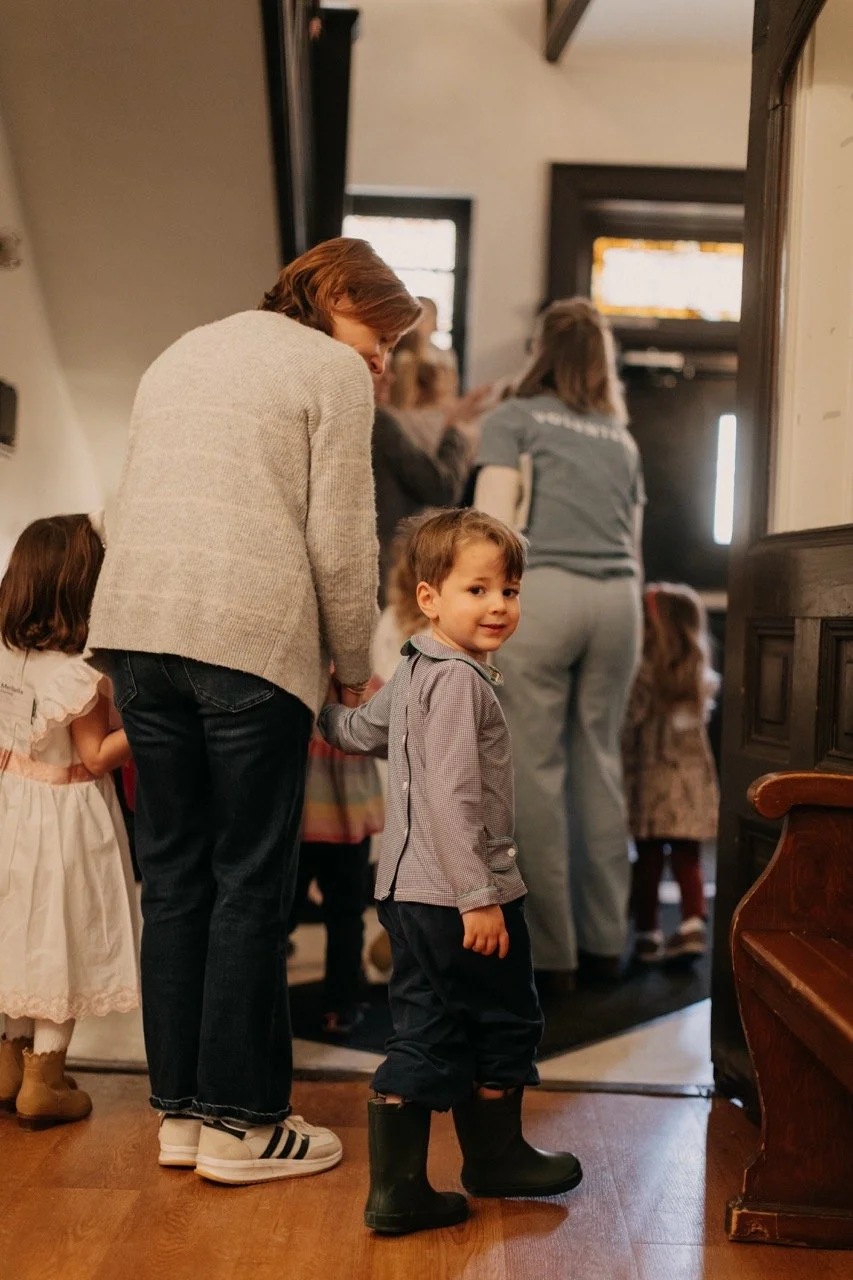
“I saw God’s work in the lives of the children… through their laughter and curiosity. I’ve been reminded that the most simplistic questions that children ask are the ones that we should be circling back to even as mature believers. I’ve learned so much by being asked simple questions and things that seem very ordinary to us as believers can be easily forgotten about or under appreciated. I like to believe that if I can explain something then I understand it and that’s why I love the kids curiosity.”
“In the 9:00 a.m. PreK class there was so much growth and excitement surrounding the church calendar that I had never seen before. They were eager to start new church seasons, excited to share what they knew about or had experienced in past seasons and engaged with Easter in a new way.”
“After a year of serving in the nursery with my two daughters, I see the toddlers in the congregation recognize them outside the classroom, want to be held by them. It's wonderful to see the bonding happen in both directions.”
“[I see this in] children who comfort their friends if they're sad, and children who recite Bible verses and songs.”
Q. Where did you see God at work through another volunteer?
“Our volunteer class assistants are, without exception, wonderful and dedicated teachers of God’s word. One Sunday morning when I was grappling with how to get across the ‘big idea’ of the lesson my assistant stepped in and gracefully took over. He began asking questions, focusing our restless class and leading them to discernment and understanding. God was definitely at work that day!”
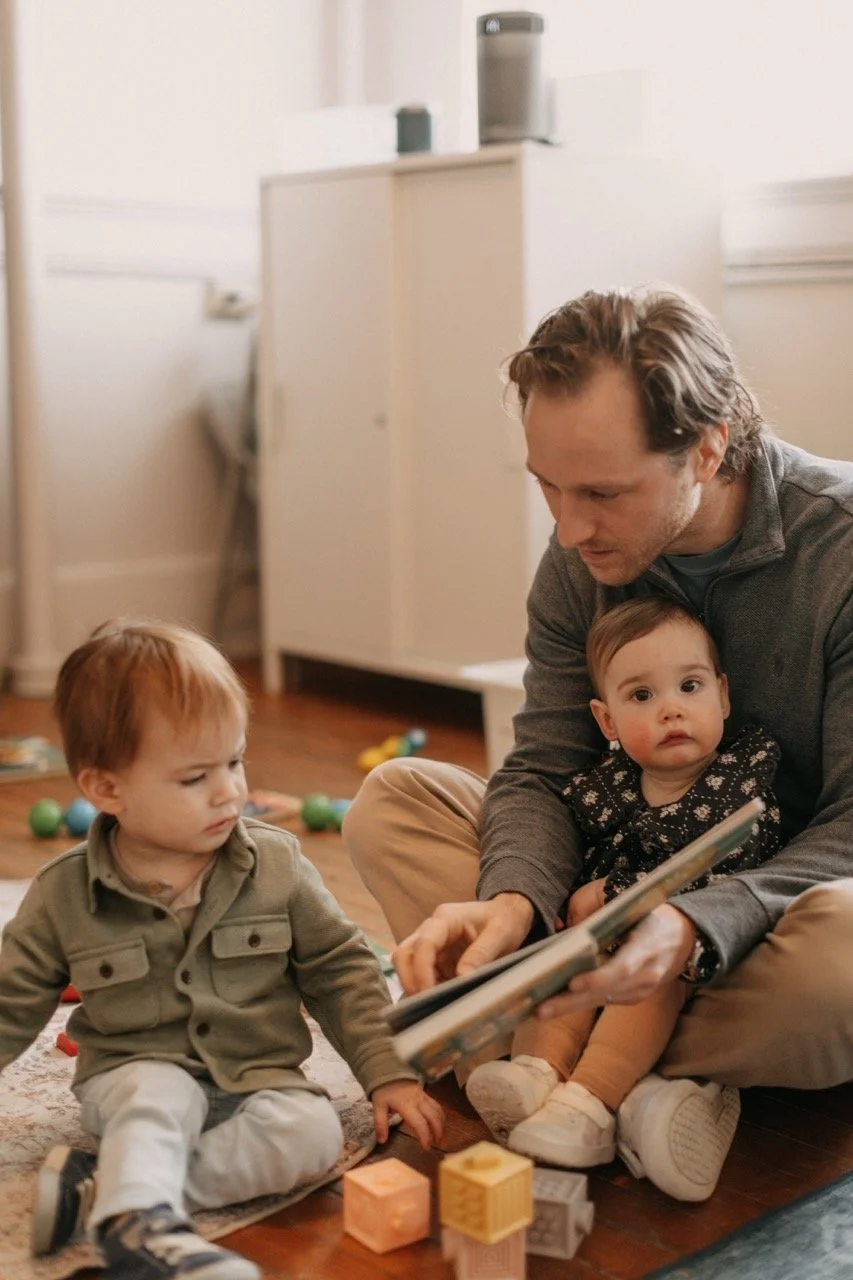
“The men who have served in the nursery this year have been so loving and generous to our children… These moments have opened my eyes to how the Lord truly designed men and women in His image to work together in the mission of raising up our children; it is a blessing to serve alongside men on the nursery team!”
“DJ had such a gentle yet firm approach to the kids and was helpful in redirecting their attention.”
“Naomi is an incredible, joyful teacher! I adore how she engages the children, knows them all, gives them time to speak, responds in a way that they feel heard, and creates an engaging lesson for them!”
“Honestly, seeing Casey Scheetz wipe snotty nose after snotty nose feels like a beautiful example of someone serving like Christ served, like foot-washing but for babies.”
“Will has consistently showed patience and compassion to a child in our class that struggles with transitions. He is able to redirect energy, infuse a stabilizing presence, and mitigate the various stimuli that make it hard for this child to be with their peers.”
“I see God working through Mrs. Cody, as she learns that each class that she teaches in her life will require different kinds of teaching skills and ‘strategies’.”
“Callie Dickens has such a gift for capturing the children's sense of wonder.”
“All of the teachers I assisted were fantastic. Their passion for teaching, their enthusiasm and their patience with the kids was so evident and so impactful in working with and teaching the kids.”

“I saw God at work through Callie Dickens. I’ve had the privilege to be her assistant and I can see her heart for the Lord by her expressions through lessons. She kept the children engaged and never failed to give attention to every curious question.”
“I see volunteers who show up with a few days notice and also with a few hours notice. I see volunteers who are very tender with children who are crying or hesitant to go to their classrooms. I see volunteers who choose to serve for weeks or months at a time so they can establish rapport and consistency in their classrooms.”
”The insightful questions that Becca Goodall always asks the kids.”
Q. Whether silly or serious, what did you hear a child say that has stuck with you?
“One of our early lessons this year was from Samuel 1 about how the Israelites decided to use the God’s power in the Ark of the Covenant to win their coming battle with the Philistines. They did so without asking God for His guidance or permission. Disaster was the result. After reading the Bible story we’d barely begun the discussion when I was struck by how the class quickly, very profoundly and without my prompts grasped what the lesson was all about… You can’t put God in a box!”
“One little girl singing all the lyrics to All I Want For Christmas Is You . . . after not speaking for 2.5 years in the nursery.”
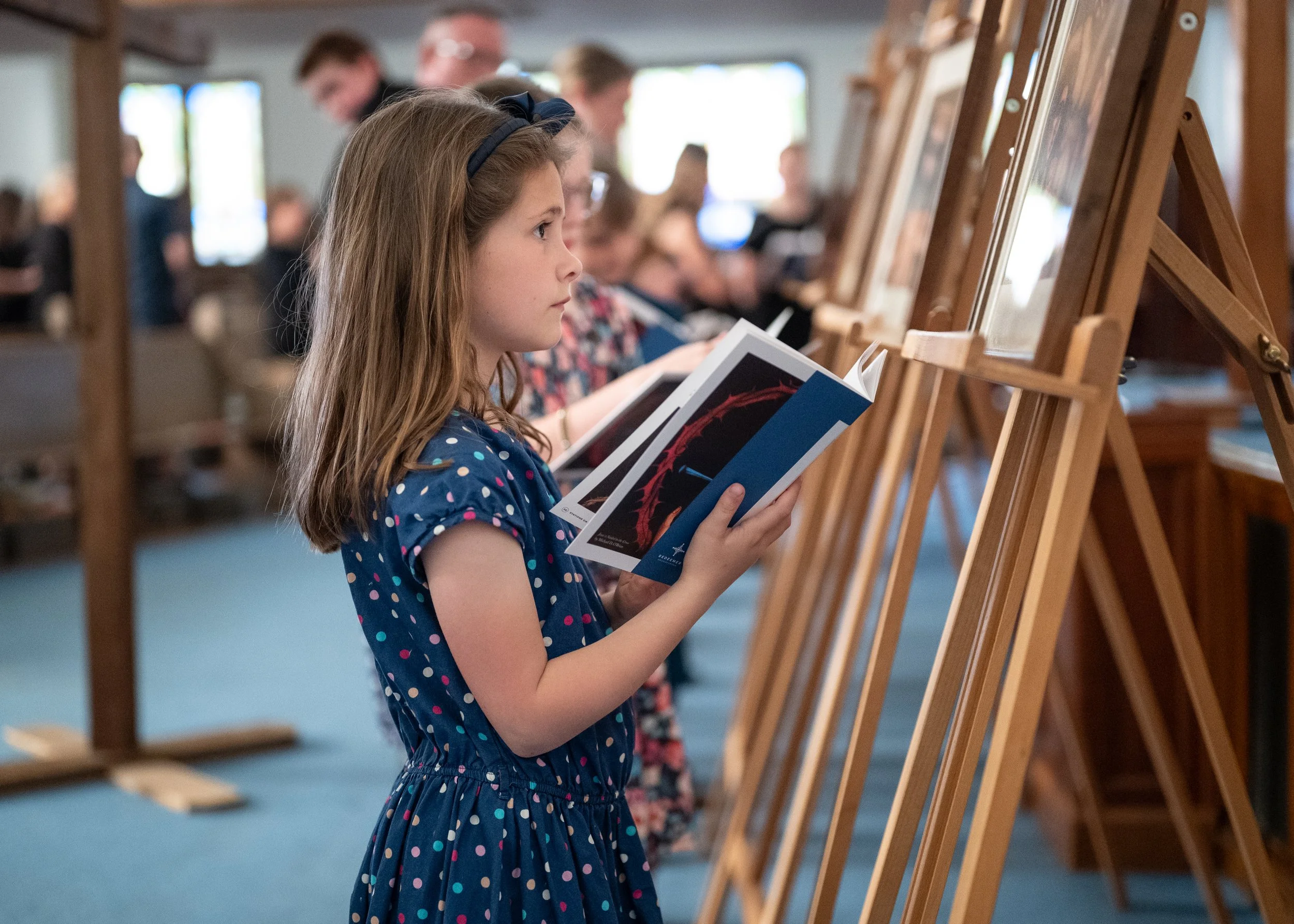
“Several children from our small group participated in Holy Week services this year. Several of them described feeling ‘the sad room’ during the Good Friday service, stating that they didn't know why it was all so sad, but they felt like crying, and described a heaviness to that service that was unusual for them. This stands out to me because it showed me how our services helped these children experience Holy Week, even though they could not articulate the theological truths being reflected through those services. Can my 5-year-old explain why we call "Good Friday" good? No — but she got to experience Good Friday anyway. And I believe that it is laying the rich soil for their minds and hearts and souls to receive the seeds of faith — and as their minds grow to better understand the sacrifice and suffering of Jesus, his sinlessness, and the depths of his love for us, their bodies will already be familiar with these rhythms and rituals. They'll be able to overlay that story onto what their bodies have been participating in for years. That makes me so grateful for services that are multi-sensory, and for a church body that is reassuring that children are welcome, regardless of their level of participation.”
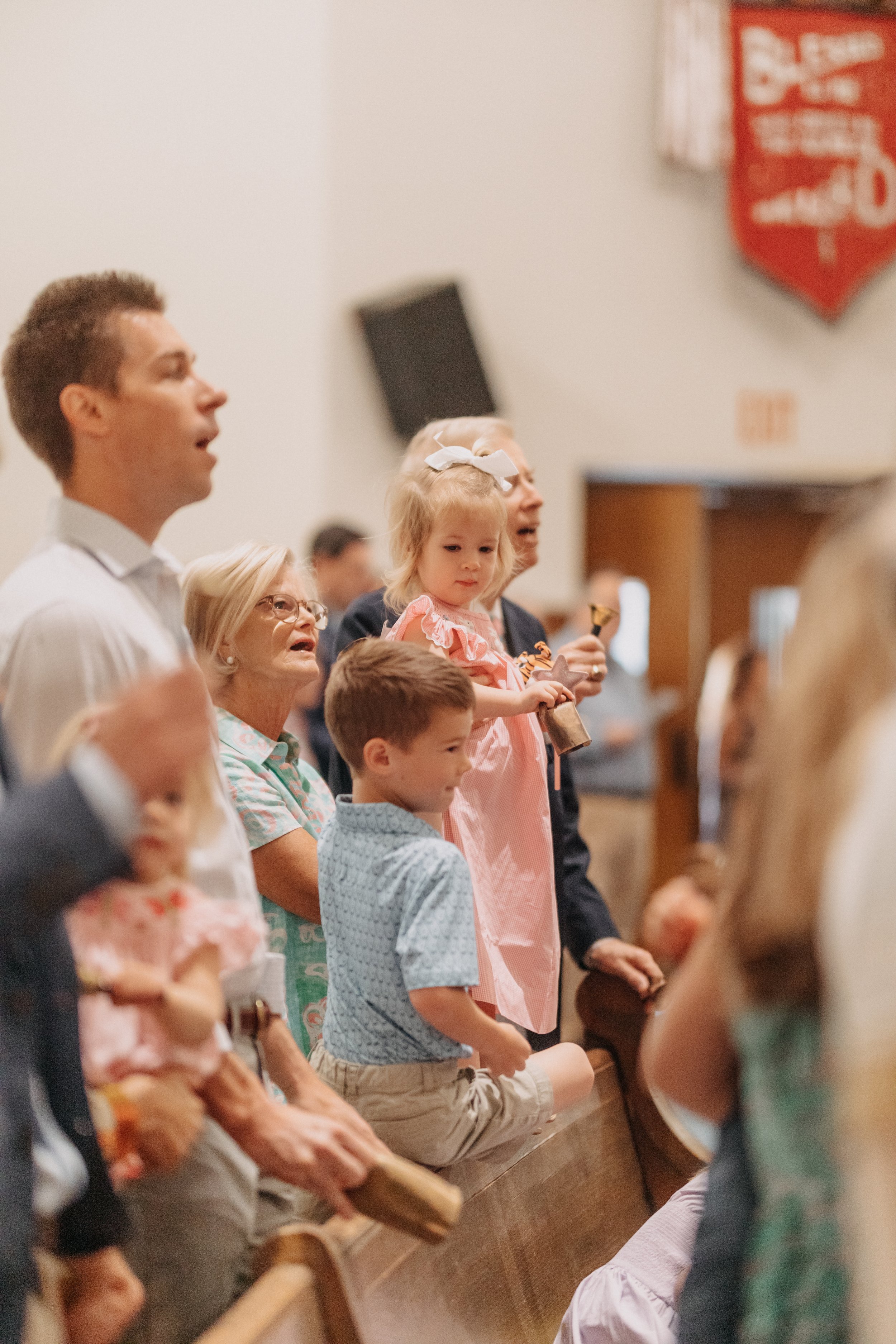
“One girl's favorite part of Easter was remembering her own baptism!”
“‘I can wait’ (from a child who has struggled to wait).”
“At the Shrove Tuesday dinner, one of the toys set out for the kids broke, so one little girl tracked down Rev. Dan in the crowd to get him to fix it. I love her conviction that the pastor of her (fairly large!) church was someone who would know her and care about her problems.”
“One of the children a few weeks ago randomly came up to me and told me that her sister was sick. I asked what was wrong and she told me that she had a cold and that her mommy gave her medicine. I offered to pray for her sister and she said ‘no’, smiled, and the skipped away to go play with the blocks. It stuck with me because this happened in less than a minute and was absolutely hilarious, but I still prayed for her sister in my own personal time. It made me realize that we still get the privilege to pray for people that we’ve never met and sometimes people don’t want a prayer in the moment. They just want someone to talk to. I may not have been able to heal her sister or give her a lesson on what the meaning of prayer was in that particular moment, but I was able to be an available ear and show concern and I hope one day she gets that same personal experience with God if she hasn’t already.”
“Without being prompted to apologize, one boy looked at his friend right in the eye and said, ‘I’m sorry for being mean, will you forgive me.’”
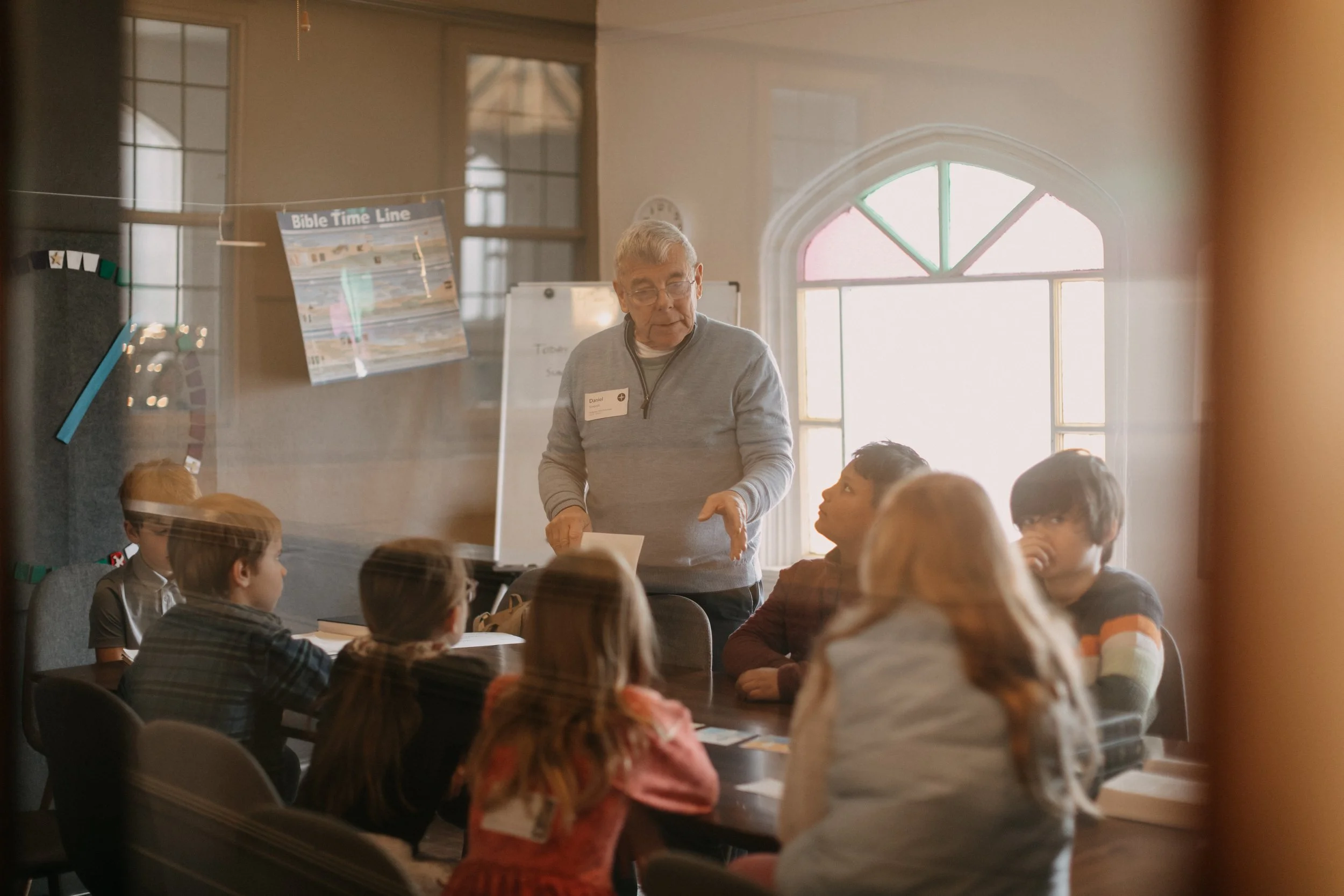
“A little girl in the nursery has made it very clear that she's a big fan of Aubie the Tiger.”
“One girl patiently held her hand high in the air for the majority of our teaching time, and when she was finally called upon for her urgent question, she proceeded to tell us all about the new record player that she got in her house.”
“One teacher asked the kids to share their name and then one thing they wanted to tell God. When we got to one boy, we asked him to say his name and with so much emotion he said, ‘I can’t answer that question, I need to answer the next one. I want God to know that my family is going to have a new baby!!!’”

Renewing Our Membership Commitments
May is pledge month at Redeemer. During this time we encourage all members to make Membership Commitments which involve giving Time, Talent, and Treasure to the Lord Jesus through his body, the Church. Whether you are becoming a new member this month or are a returning member, this is an important action item for all of us. Pledging provides important information to our Vestry and Ministry Leaders to make wise and strategic plans for our parish.
Redeemer Family,
May is pledge month at Redeemer. During this time we encourage all members to make Membership Commitments which involve giving Time, Talent, and Treasure to the Lord Jesus through his body, the Church. Whether you are becoming a new member this month or are a returning member, this is an important action item for all of us. Pledging provides specific information to our Vestry and Ministry Leaders to make wise and strategic plans for our parish.
Now, if you are not yet a member, this is for you as well. One of the best ways to “try Redeemer on” is to practice living as a member before actually taking that step of commitment.
If you are ready to pledge, here’s the link. Every adult is required to submit a pledge (households can make their financial pledges together.) Every adult regular attender is encouraged to make a pledge, but not required. Please note that your yearly financial pledge goes towards our standard operational budget. Redeemer staff is in the process of planning an upcoming capital campaign for 1801 Park Ave., and we’ll share more details as plans take shape.
If you’re a little fuzzy on what those membership commitments are or if you’d like a refresher, keep reading!
MEMBERSHIP COMMITMENTS
PREAMBLE
The commitments of membership are not designed to be burdensome or onerous. Though our sinful human tendency is to view all rules and expectations as constraints on our freedom, we want to embrace these commitments wholeheartedly - recognizing that they are for our good and the good of our fellow members in the church and our neighbors outside the church.
THE 3 MEMBERSHIP COMMITMENTS
TIME — A member commits to making participation in Sunday worship and in small group fellowship a regular part of their weekly habits. Of course while it is understood that travel schedules and illness may often keep us from participating 100% of the time, we want to say together as members, “we will make it a priority to be together.”
Key Belief: There is no such creature as a member who rarely worships with us on Sunday or refuses to join a small group.
Key Action Item: Register to lead or participate in a Small Group for the fall of 2026.
TALENT — A member commits to volunteering their talents and gifts within the church. This may take the shape of formally joining a ministry team (or two or three), or volunteering in some other special capacity. Of course while it is understood that travel and work schedules may make this a challenge; we want to say together as members, “we will make it a priority to serve one another and our neighbors.”
Key Belief: There is no such creature as a member who is too busy to ever volunteer their time for the church.
Key Action Item: Register to volunteer on a ministry team for the coming year.
TREASURE — A member commits to submitting a financial pledge each year and giving of their financial resources to the mission and work of the church. Of course, the resources of each individual and household will vary widely; this is to be expected within an economically diverse church. Our generosity is not predicated upon the achievement of a particular level of financial success or comfort, but rather upon Christ’s call for us to simply give sacrificially. Our giving honors the Lord (who is the giver of all good gifts), forms us (helping us grow in dependence on God), and provides for the work of the church (which is a benefit to ourselves and others).
Key Belief: There is no such creature as a member who is unwilling to give any of their resources back to the Lord by giving to the church.
Key Action Item: Register your financial pledge for the September 2026 - August 2027 fiscal year.
If you’re ready to take these steps, click here to submit your pledge.
Here are some commonly asked questions about membership commitments:
What is a Pledge?
A pledge is your communication with our Ministry Leaders, Vestry, and Finance Team regarding what you anticipate you will be able to contribute to Redeemer in the next ministry year (September 1, 2026 - August 31, 2027). Your commitment allows Redeemer’s leadership to accurately assess what resources we have to steward and how they can best be utilized.
Why are Pledges Important for the Vestry & Finance Team?
Redeemer’s fiscal year runs from September 1 - August 31. The Vestry and Finance Team will be spending the summer drafting a new budget for the coming year of ministry. What a gift it would be to them if they knew ahead of time what the congregation planned to give! Your clear communication helps our church draft careful, informed, strategic plans for funding the ministry of the coming year.
Why are Pledges Important for Me?
While pledging is imminently practical and helpful for our church leadership, it’s more than that. Pledging is also an opportunity for your heart to be shaped by God. Why? Because how we use our resources both reveals and guides what God is doing in our hearts. When your church asks you to pledge, you are being asked to open your calendar and bank account to the Lord and ask Him, “How would you have me use the resources you have entrusted to me?” It’s a wonderful question that all of us should be asking on a regular basis.
What Pledging is NOT
Pledging is not an attempt to raise Redeemer’s volunteer and small group rosters. Nor are we trying to increase our budget or meet a financial shortfall. We are grateful to report that our parish is in a healthy and strong position financially. Pledging is not about fixing something that is broken, but rather about us continuing to grow spiritually together.
Can my financial pledge be designated for 1801 Park Ave.?
Your yearly financial pledge goes towards our standard operational budget. Redeemer staff is in the process of planning an upcoming capital campaign for 1801 Park Ave., and we’ll share more details as plans take shape.
Deadline for Pledging
The deadline for pledging is Friday, May 29. Please do not wait until the last minute! Very real decisions and plans for the coming year of ministry will be made based on the pledging data that our leadership receives.
If you have more questions, please feel free to reach out to a member of our Staff, Vestry, or Finance Team and they will be glad to assist you. Let’s aim for 100% participation here!
Warmly,
Redeemer’s Staff, Ministry Leaders, Vestry and Finance Team

Ascension, Pentecost, and Trinity Sunday
As Eastertide draws to a close we look towards significant days in our church calendar: Ascension Day, Pentecost, and Trinity Sunday. Each of these days are invitations to remember and enter more deeply into the story of Christ and the life of his Church.
The following devotionals have been prepared for meditating on Christ’s reign, the gift of the Holy Spirit, and the mystery of a Triune God, written and illustrated by one of our deacons, Ben Lansing.
As Eastertide draws to a close we look towards significant days in our church calendar: Ascension Day, Pentecost, and Trinity Sunday. Each of these days are invitations to remember and enter more deeply into the story of Christ and the life of his Church.
The following devotionals have been prepared for meditating on Christ’s reign, the gift of the Holy Spirit, and the mystery of a Triune God, written and illustrated by one of our deacons, Ben Lansing.
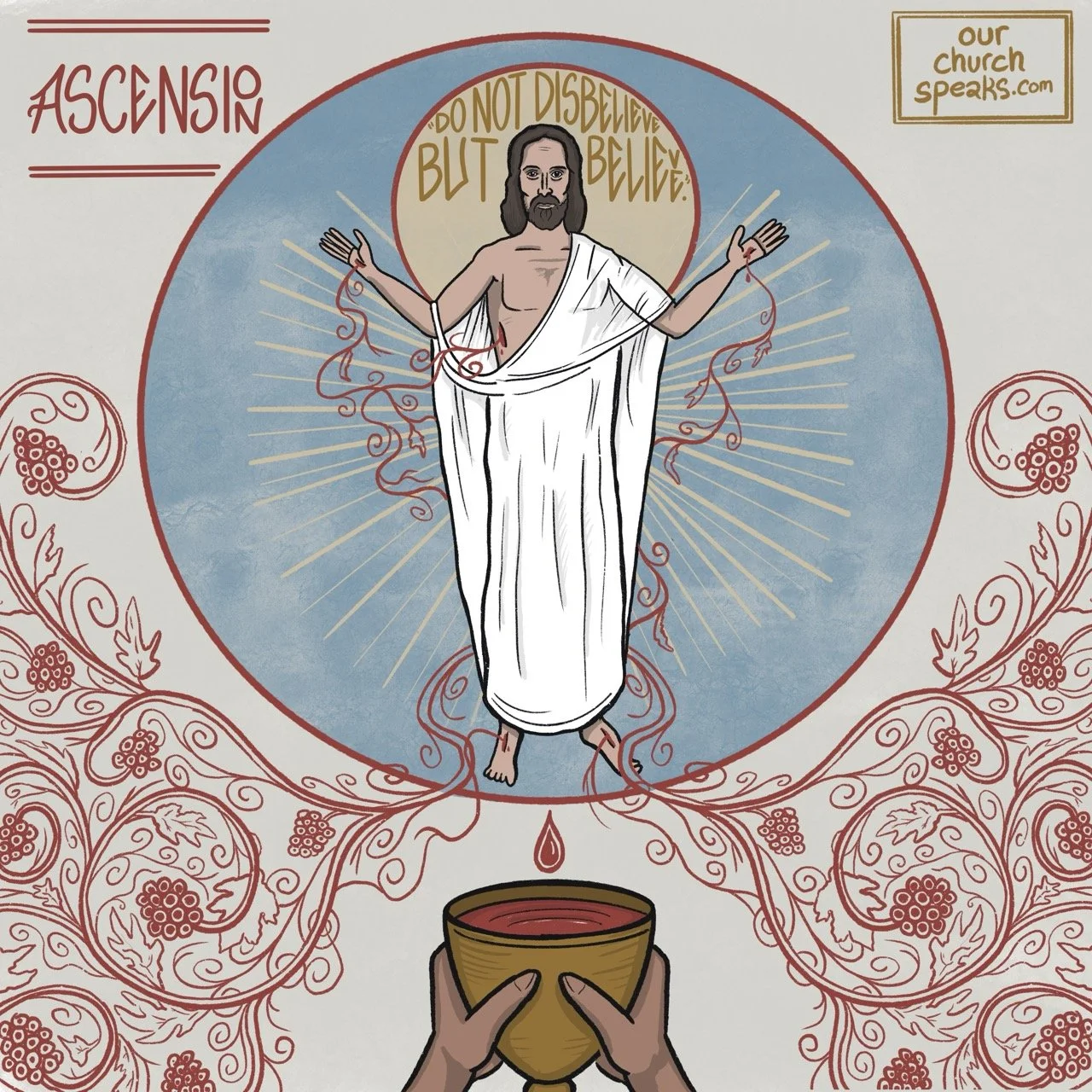
ASCENSION DAY
May 14, 2026 (Forty Days after Easter)
“So then the Lord Jesus, after he had spoken to them, was taken up into heaven and sat down at the right hand of God.” — Mark 16:19
“I am with you always” — Jesus (John 20:27)
Forty days after Easter Day, the church observes Ascension Day, recognizing the astonishing moment when the resurrected Jesus ascended, body and soul, into heaven. After his resurrection, Jesus didn’t fade away like a ghost after a single, dramatic appearance; no, he remained with his disciples for an astonishing forty days. Over these five and a half weeks, over five hundred people witnessed the resurrected Christ. Jesus’ death had been publicly confirmed and now he was publicly confirmed as alive. This was no magic trick or religious illusion. It would be impossible to maintain such an elaborate deception for even a day, much less forty days. The resurrected Messiah fellowshipped with his disciples, took walks with them, taught them, and ministered to them during this period. He even cooked for them and ate with them. There was no denying that Jesus truly had been raised from the dead. He was alive. For decades after, the hundreds of stories of the resurrection witnesses were cross-examined and investigated by skeptics and proven true time and time again and the gospel spread with new generations of converts, convinced that Jesus Christ was the living God.
At the culmination of these forty days, Jesus lifted up his hands and blessed his disciples and was suddenly “taken up before their very eyes, and a cloud hid him from their sight.” (Acts 1:9) Yet Jesus had not abandoned his disciples. “I am with you always,” Jesus said in his Great Commission (Matthew 28:20). And so he is. Jesus is the true vine (John 15:1) and all who are in Christ are grafted into him (Romans 11:17). He is still present in his body and his blood, giving us life and love, wisdom and truth. He is interceding for us now before the Father (Hebrews 7:25), giving us a seat with him in the heavenly places (Ephesians 2:6). He continues to minister to us today, through his Spirit, as we await his coming again in glory and power at the very end of the age.
Practice
Take an Ascension Hike. Hike up a hillside or climb a mountain the week of Ascension Day in imitation of the Lord’s journey up the Mount of Olives on the way to his ascension.
Prayer for Ascension Day
Almighty God, whose only-begotten Son our Lord Jesus Christ ascended into heaven: May our hearts and minds also there ascend, and with him continually dwell; who lives and reigns with you and the Holy Spirit, one God, for ever and ever. Amen.
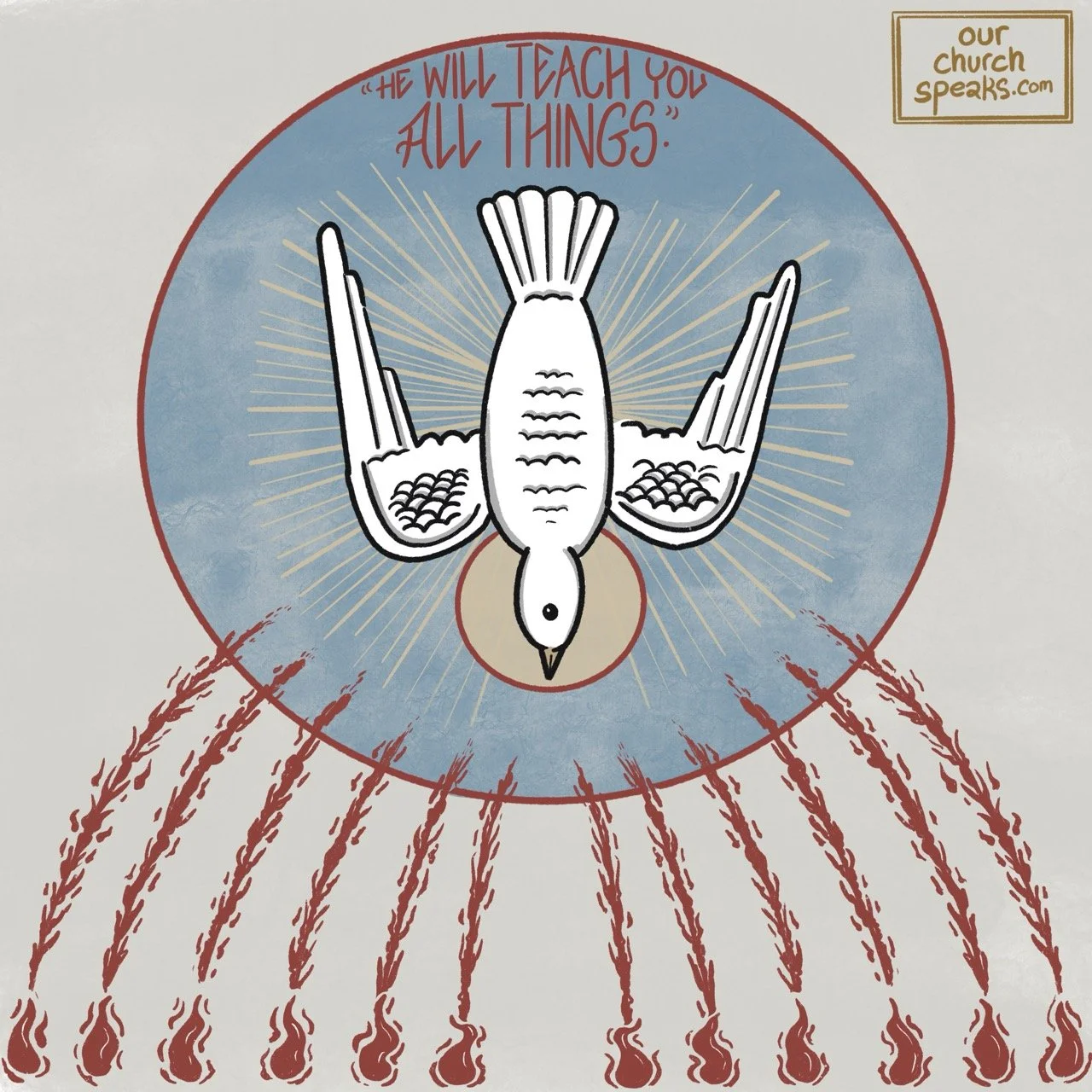
Pentecost
May 24, 2026 (Fifty Days after Easter)
“He will teach you all things.” — John 14:26
“When the day of Pentecost arrived, they were all together in one place. And suddenly there came from heaven a sound like a mighty rushing wind, and it filled the entire house where they were sitting. And divided tongues as of fire appeared to them and rested on each one of them. And they were all filled with the Holy Spirit and began to speak in other tongues as the Spirit gave them utterance.” — Acts 2:1-4
After his resurrection, Jesus gave his disciples the Great Commission, “Go therefore and make disciples of all nations, baptizing them in the name of Father and of the Son and of the Holy Spirit, teaching them to observe all that I have commanded you.” (Matthew 28:19-20) The good news of Jesus’ resurrection was intended for the entire world, and the disciples would be the ones to share it. But before they went, Jesus commanded them to wait. “Stay in the city,” Jesus said, “until you are clothed with power from on high.” (Luke 24:49) “You will receive power when the Holy Spirit has come upon you, and you will be my witnesses in Jerusalem and in Judea and Samaria, and to the end of the earth.” (Acts 1:8)
After Christ’s ascension into heaven, his disciples returned to the Temple in Jerusalem and worshipped God continually. As observant Jews, they believed that their Messiah had truly come and defeated sin and death through the power of his resurrection. But what next? Ten days later, when the Jewish feast of Shavuot arrived, the disciples met together in Jerusalem for the festival. Shavuot, called “Pentecost” by Greek-speaking Jews, because it fell fifty days after Passover, was a festival of first fruits, when God was given an offering from the land’s early produce. Ancient Jewish tradition connected this feast with the giving of the Ten Commandments to Moses on Mt. Sinai. But soon, Pentecost would take on the meaning of a new gift from God.
The book of Acts tells us that when the disciples were all together in one place, the sound of a rushing wind filled the room and the Holy Spirit fell upon everyone, manifesting himself in flames of fire. The disciples began speaking in the languages of the Gentile nations and they were enabled to fulfill Jesus’ Great Commission. Centuries earlier, the prophet Joel foretold, “God declares, that I will pour out my Spirit on all flesh, and your sons and your daughters shall prophesy.” (Joel 2:28) Now, in the presence of all, these promises were fulfilled. The disciples were once a scattered group, without direction. Now, through the Spirit, they were empowered for mission. Because of this, Pentecost is the birthday of the church.
On Pentecost Sunday, the church commemorates this great day of the Holy Spirit with red liturgical colors. Congregants are encouraged to wear red to church on Pentecost as a visible reminder that, through the power of the Holy Spirit, the church is now “clothed with power from on high.”
Practice
On Pentecost Sunday, be sure to wear red as a visual reminder of the descent of the Holy Spirit, manifested in tongues of fire.
Prayer for Pentecost
Almighty God, on this day, through the outpouring of the Holy Spirit, you revealed the way of eternal life to every race and nation: Pour out this gift anew, that by the preaching of the gospel your salvation may reach to the ends of the earth; through Jesus Christ our Lord, who lives and reigns with you, in the unity of the Holy Spirit, one God, for ever and ever. Amen.
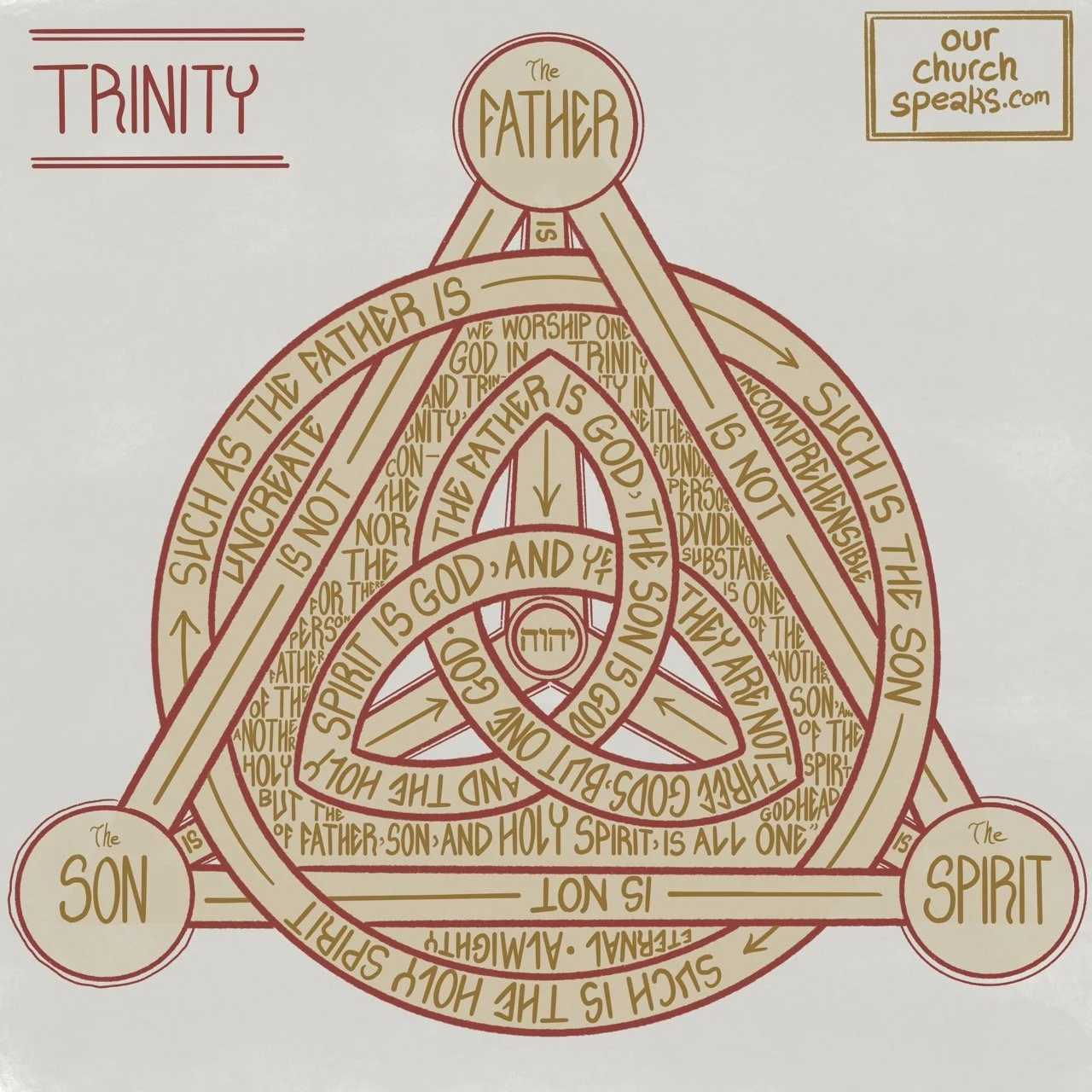
TRINITY SUNDAY
May 31, 2026 (The Sunday after Pentecost)
“Go therefore and make disciples of all nations, baptizing them in the name of the Father and of the Son and of the Holy Spirit.” — Matthew 28:19
“We worship one God in Trinity and Trinity in unity, neither confounding the person nor dividing the substance. For there is one person of the Father, another of the Son, another of the Holy Spirit. But the godhead of the Father, Son, and Holy Spirit, is all one… The Father is God, the Son is God and the Holy spirit is God, and yet they are not three gods, but one God.” — From the Athanasian Creed
On the Sunday after Pentecost, the church turns its attention to the mysteries of the Trinity. In both the Old and New Testaments, God reveals that he is One God in three persons, and throughout Scripture we are given insights into the eternal relationship of love within the Godhead. Christians since the 1st century have marveled at this intricate revelation and have carefully defined what Scripture says about this loving God we worship. The word “Trinity” does not appear in the Bible, but the identity of God that this word represents is found throughout Scripture. We have seen these Biblical, Trinitarian descriptions featured throughout the liturgical feasts. On Epiphany Sunday, the Father, Son, and Holy Spirit manifested at Jesus’ baptism, where God the Father proclaimed “this is my beloved Son” as the Holy Spirit descended upon Jesus. On Ascension Day, we heard Jesus tell his disciples to “go into all of the world, baptizing in the name of the Father, and of the Son, and of the Holy Spirit.” In the Nicene Creed, the word “Trinity” is used to describe God’s revelation of himself and, later, the much longer Athanasian Creed was written to elaborate on the truths defined by the Nicene Creed. In many churches, the Athanasian Creed is read or sung in the Trinity Sunday liturgy as an act of praise and recognition of the profound and glorious nature of the God we serve.
Practice
Take several minutes to read through the Athanasian Creed, one of Christianity’s most detailed statements of Trinitarian doctrine (you can find it in the Book of Common Prayer 2019 edition on pg. 769). Named after the African theologian Athanasius of Alexandria (c. 296-373), this creed’s complexity points to the fathomless, infinite, incomprehensible holiness of our loving God who is simultaneously the author and origin of humility and simplicity.
Prayer for Trinity Sunday
Almighty and everlasting God, you have given to us your servants grace, by the confession of a true faith, to acknowledge the glory of the eternal Trinity, and in the power of your divine Majesty to worship the Unity: Keep us steadfast in this faith and worship, and bring us at last to see you in your one and eternal glory, O Father; who with the Son and the Holy Spirit live and reign, one God, for ever and ever. Amen.
Additional Resources
Our Church Speaks
A teaching series about saints from every era and place, with art and history by Ben Lansing (includes art and biographies of over 250 saints, along with a podcast cohosted with D.J. Marotta, and an illustrated devotional book written with D.J. Marotta.)Our Church Year
An upcoming illustrated book by Ben Lansing & D.J. Marotta about feasts and fasts of the church liturgical calendar. Sign up here to stay in the loop on updates about this book.Prints of the artwork featured in this article are available here.
A downloadable version of these devotionals are available here.
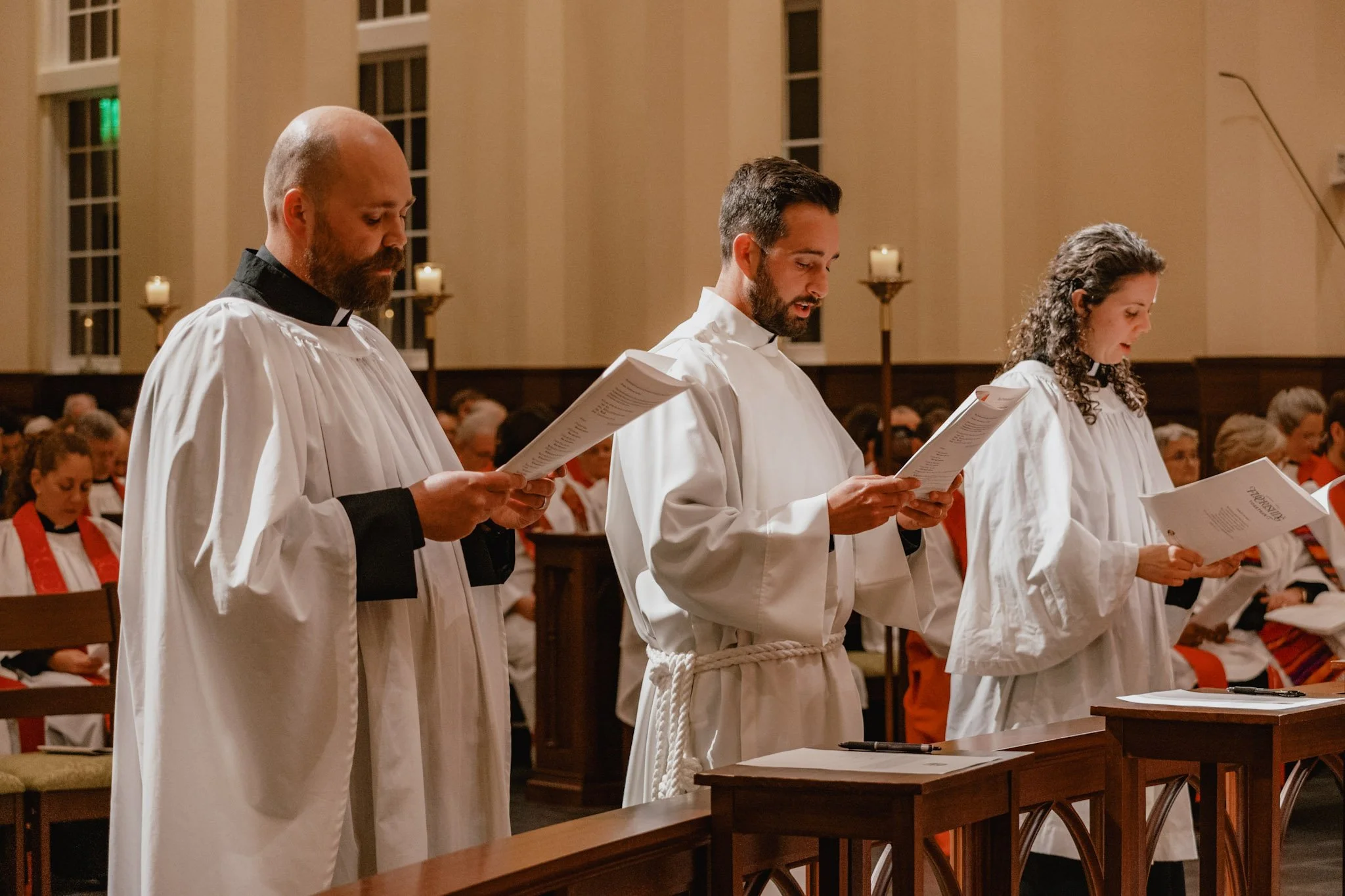
Celebrating the Ordination of Will Clark
-
Redeemer Family,
On Sunday evening, May 17, one of our CCO college ministers, Will Clark, will be ordained to the priesthood!
Now, I would imagine that some of those words may be unfamiliar to a few of you, so let’s brush up on our old-school vocabulary:
Ordained: This refers to the New Testament practice of church leaders laying hands on a person and praying for them in order to ask the Holy Spirit to set them apart for a particular area of responsibility and ministry in the church. There are three orders of ordination practiced by most Christian traditions: Deacons, Priests, and Bishops.
Priest: The word “priest” actually comes from the Greek word for “elder,” presbuteros. (Presbuteros -> presbyter -> proster -> priest, if you were curious.) The priest is a chosen leader in a congregation, vetted by members of the church and approved by them and the bishop for ordination, and is responsible for maintaining orthodoxy in the teaching and overseeing the proper celebration of the sacraments within the parish. We may also call him or her, appropriately, pastor (shepherd) since they are responsible for caring for the spiritual needs of the members of the church. The priest celebrates Communion, baptizes, marries couples, and proclaims God’s forgiveness and absolution of the people’s sins after they confess either in the service or in private.
Deacon: This word comes from the Greek for slave or servant, diakonos. The deacon is responsible for helping serve at the Communion Table during worship and leading the congregation in serving the poor, hungry, and needy both inside and outside the church. Two types of deacons exist: transitional deacons seek to be ordained as priests and vocational deacons intend to remain deacons.
Diocesan: This word refers to our diocese (The Diocese of the Mid-Atlantic) which, for us, is a regional network of churches in Virginia, D.C., and Maryland.
Synod: This is simply an old word for an annual gathering of clergy and other church leaders.
Will Clark has been in ordination process for a number of years now which includes a written application, in-person interviews and exams, psychiatric evaluation, seminary study, assigned reading, ministry experience, and recommendations from the Vestry and Rector of their parish. He was ordained to the diaconate last year, and I’m grateful for the continued hard work and dedication that Will has shown through this process.
Well done, brother!
If you are able, please join us in celebration by attending Will’s ordination service at 2715 Grove Ave., followed by a reception (*reception details to come). It is also appropriate to take a moment to pray for Will, that the Holy Spirit would further equip him for the labors that lie ahead.
O Lord Jesus, who art the Good Shepherd that careth for thy flock: We beseech thee to bestow upon thy Church the gifts of the Holy Spirit in abundance, and to raise up from among us faithful and able persons called to the ministries of Deacon, Priest, and Bishop. Inspire them to spend and be spent for the sake of the Gospel, and make them holy and loving servants and shepherds of the flock for whom thou didst shed thy most precious blood. Grant this for the sake of thy love. Amen.
INVITATION FOR THOSE WHO SENSE A CALL TO MINISTRY
Now, as you’re reading this, you may be someone who has wondered whether or not you are called to ordained ministry. If that’s you, we would love to hear from you and help you with the discernment process.
Christian discernment is best practiced together, not alone.
You can find further information about the ordination process here, and we would be glad to walk you through it if you have any questions.
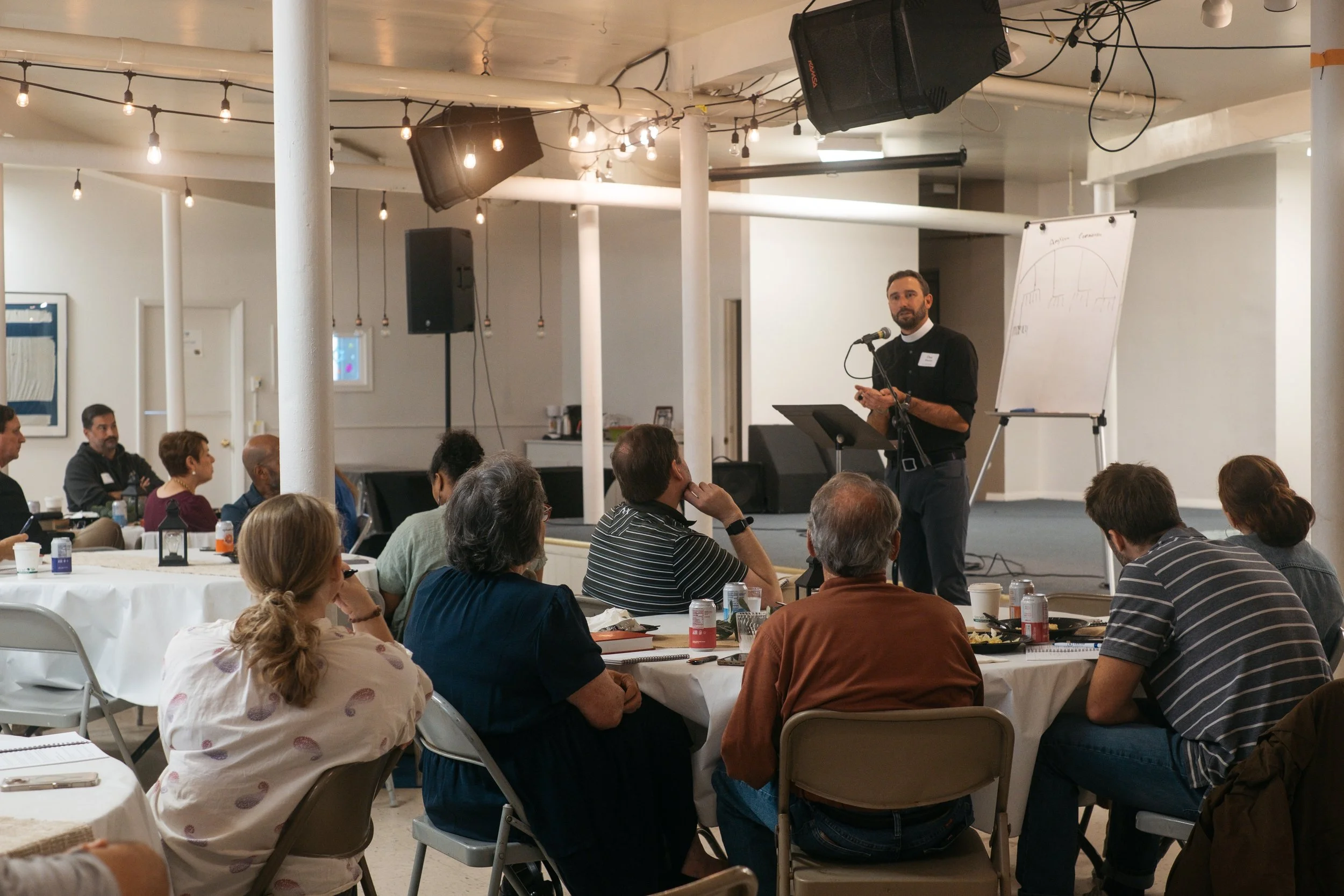
Summer Catechesis Classes
As summer approaches each year, there’s a word that starts to echo in my mind – “scatter.” It often feels like our church scatters for the months of June and July, as we plan trips to see family, or cross off beautiful and far-off destinations from our bucket lists, or lug trunks and duffel bags to campgrounds in the mountains.
As summer approaches each year, there’s a word that starts to echo in my mind – “scatter.” It often feels like our church scatters for the months of June and July, as we plan trips to see family, or cross off beautiful and far-off destinations from our bucket lists, or lug trunks and duffel bags to campgrounds in the mountains.
Many of you might be used to seeing Redeemer’s summer calendar dedicated to Book Clubs. Some of you have led thoughtful discussions on great works of history, theology, fiction, art, and so on. Thank you for your labors! Please keep reading good books and gathering to share what you’ve learned! This summer, we’re trying on something new. We're going to focus our program calendar towards a more intentional and comprehensive Christian catechesis.
If you’re not familiar with the word “catechesis,” it's simply an old word the church has used for a long time to describe the work of teaching children and adults the ways of God’s people. We actually get the word “echo” from the same Greek root. Picture generations of Christians “echoing” back and forth to each other and to those who come after them the story of who God is and what he has done for his people in the person and the work of Jesus Christ. Of how then we are meant to live out our days in light of that truth.
As we continue to grow as a church family, we hope to provide more regular opportunities for Catechesis classes each year that will teach the basics of the Christian faith and address a wide reach of applications. Over the course of one year, you’ll see core classes like Beginning with Christ, Believing in Christ, Belonging to Christ, and Becoming Like Christ. And throughout a given year you’ll see classes that address more specific themes of the Christian life like how to care for your body, how to navigate seasons of singleness, dating, and marriage faithfully, or how to parent with abundant grace. And so, Redeemer family, the more years we spend together, the deeper and wider the chance for a thorough catechesis to form us in the gospel story, and the more we bear out a missional presence in all areas of our lives.
Amidst all the scattering you and your household may do this summer, I want to encourage you to save time for one of our Catechesis classes.

The Rev. Lane Cowin
Senior Director of Ministries
Anticipating New Life: Serving Our City on Holy Saturday
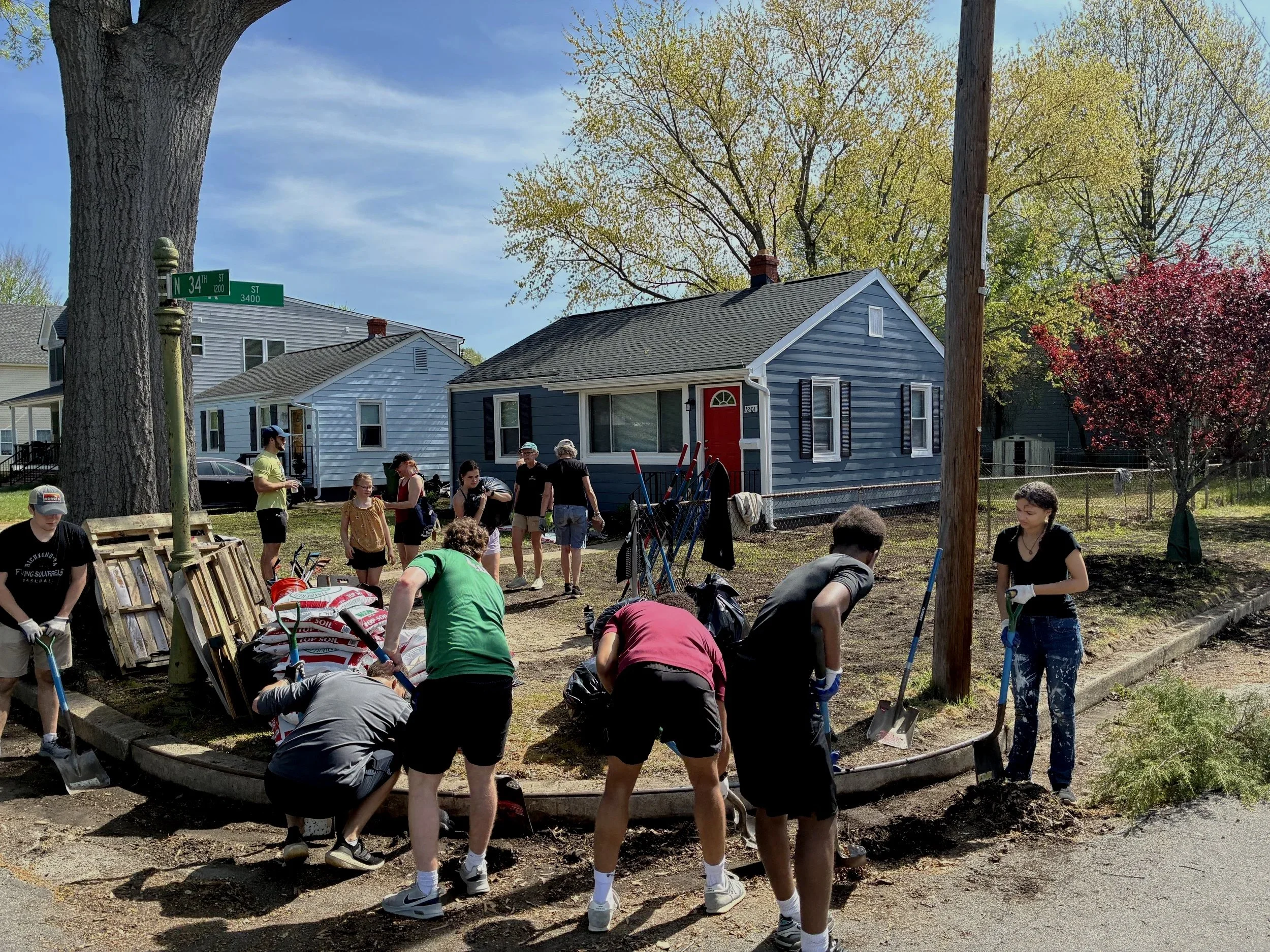
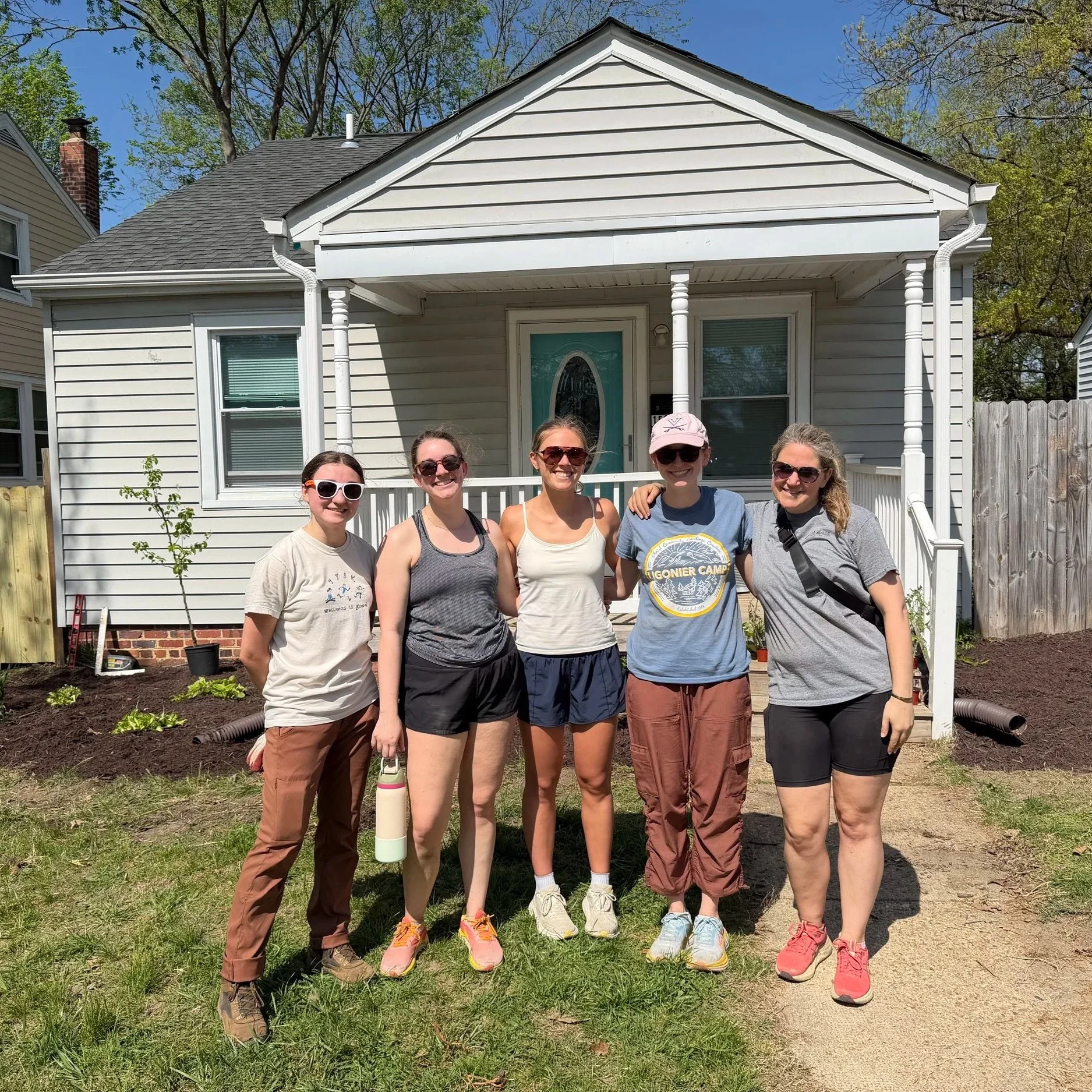
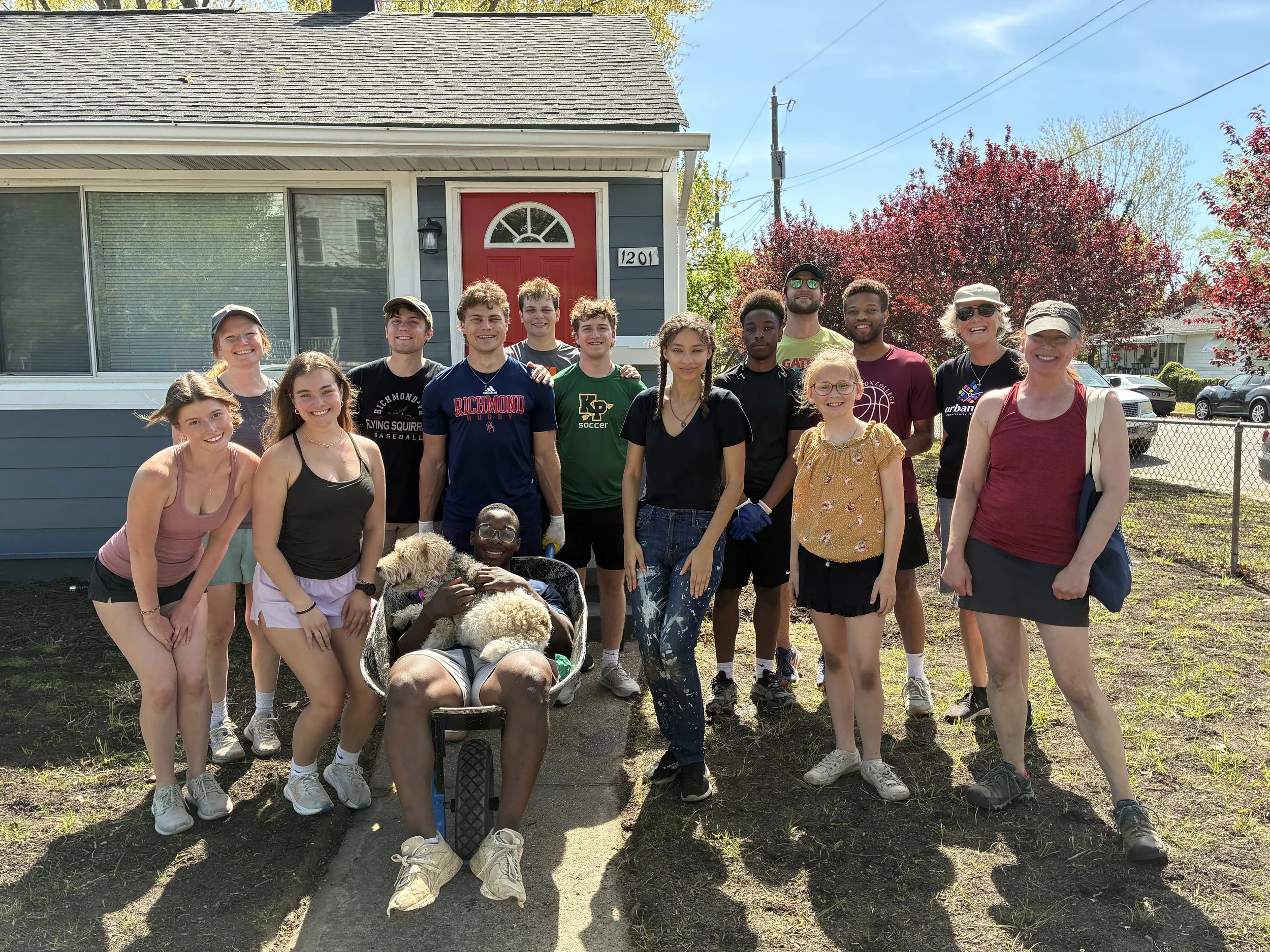
On Holy Saturday, volunteers of all ages gathered in Richmond’s East End to serve alongside one of Redeemer’s Justice & Mercy partners, Urban Hope, preparing newly acquired homes for families through landscaping and care. In the midst of hard work and tired bodies, the day became a living reflection of the hope of the cross.
What do we do on Holy Saturday as we wait with growing anticipation to celebrate the Resurrection? How about rip out weeds, lug mulch, and prep the ground for new life?
About forty volunteers, ranging from Youth Fellowship and college students to adults, gathered Saturday morning in the East End of Richmond to come alongside Urban Hope in their mission to provide affordable housing. Redeemer's past three work days have been spent on outdoor maintenance and landscaping, allowing Urban Hope to provide not only a shelter for families, but space to build community and houses to reflect the light of Jesus to the neighborhood. One of the ways Urban Hope gets to show care for their tenants is by taking good care of the outsides of these houses.
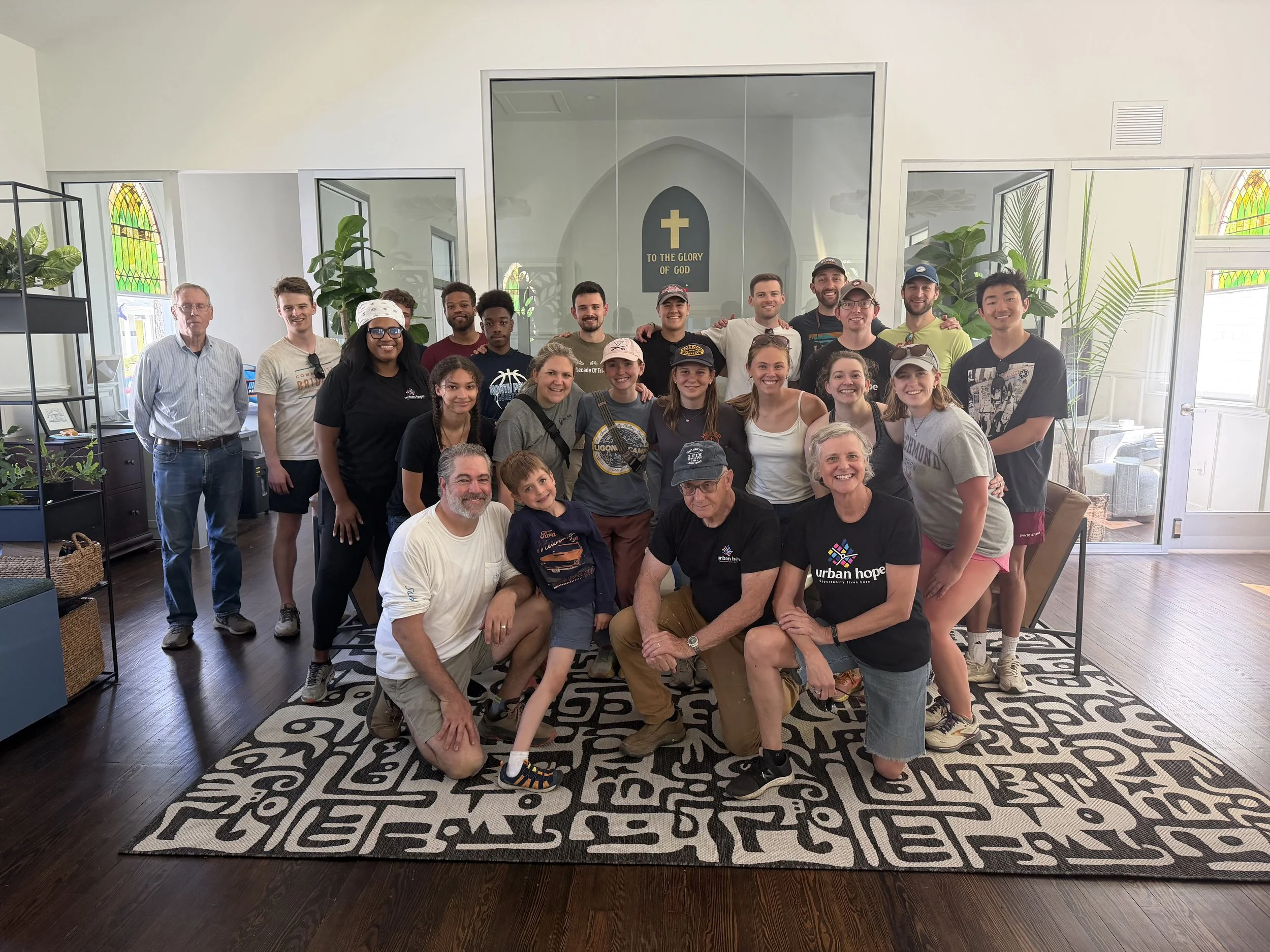
This year, we were at two houses acquired by Urban Hope in December. Families have already moved in (the insides were move-in-ready), but the outside of both needed some work. CCO students from UofR and leaders were busy prepping the yard for seeding and cutting new flower beds along the house. They made quick work of it. Redeemer volunteers and Youth Fellowship students joined other regular Urban Hope volunteers in building fences, laying top soil, cutting out and mulching new beds, and prepping the raised bed for planting.
While sweat dripped as I stood over a weed that was giving me particular trouble, I made eye contact with a friend. We both agreed this was hard, but I was reminded of my reflection on Good Friday. The cross would have been bloody, the ground around stained with the blood that had dripped from the wounds of Jesus. And yet that blood was exactly what, three days later, would cause flowers to bloom (an image beautifully represented by the flowering of the cross outside of Redeemer on Easter). Because of the cross, our sweat working against the evil of weeds that overtake, and grass that spreads in all the wrong places, is not in vain. Our sweat leads to new life. It was a gift to work hard and struggle alongside my brothers and sisters. We were tired, many weak from fasting, but hopeful too. Because of the cross, the hardships of this world don’t get the final say. Sunday is coming!
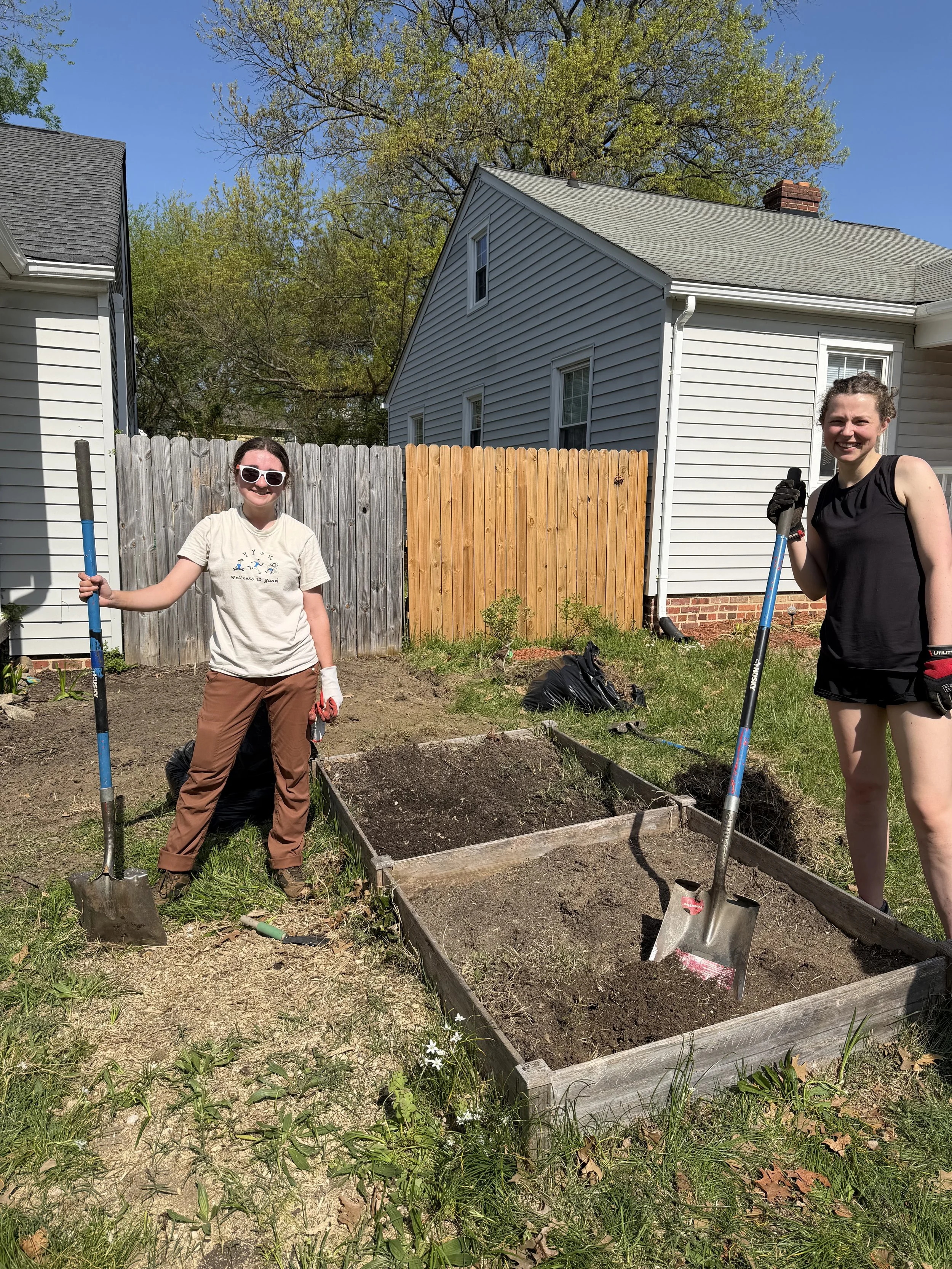
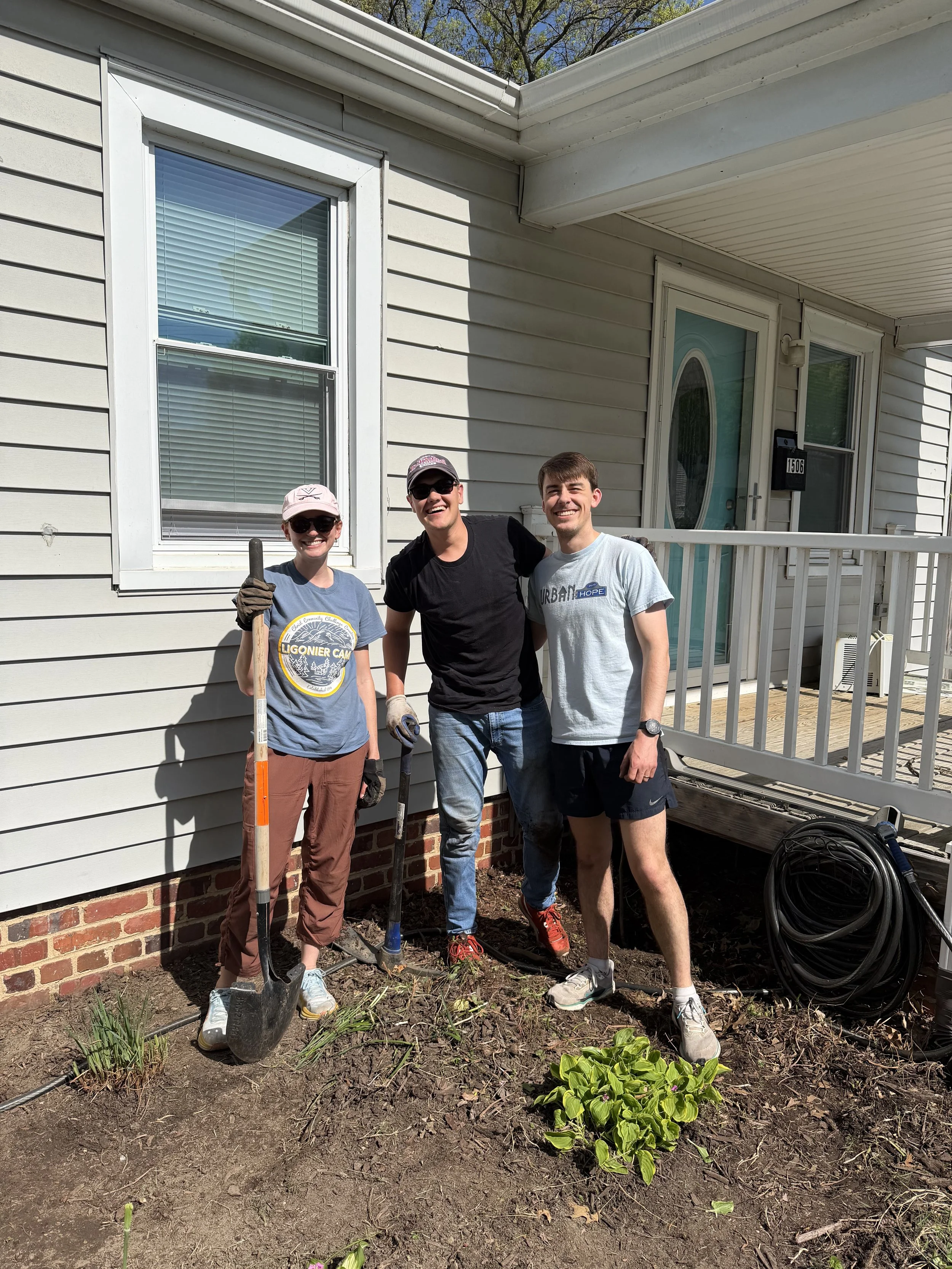
Finished and tired, we gathered together for lunch and heard a bit more about Urban Hope's vision. They currently have 45 units being rented to families at a range of affordable prices, matching their ability to pay. Nine more units are in the pipeline. Urban Hope also offers financial health classes open to the community. They seek to care for and teach individuals about finances with a heart for the whole person, not just their budget. Carolyn, the director of programs and teacher of these classes, explained beautifully that the goal isn't just for participants to have a different relationship with money, it's that they themselves become different, and from that place they are able to use their money differently. That's the only way change lasts.
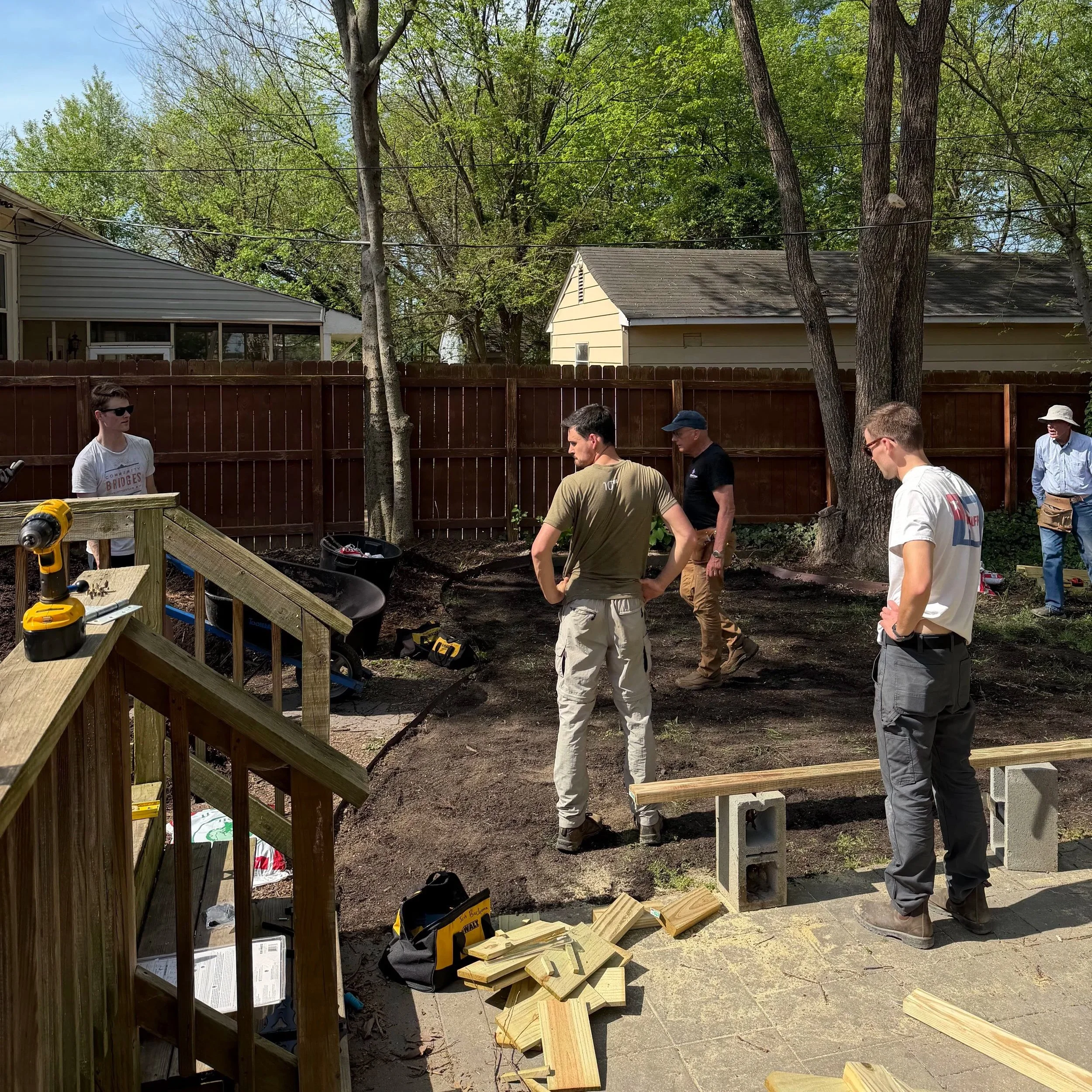
It’s truly an honor to support Urban Hope financially as a Justice & Mercy partner, as well as physically in our work days. In the fall, we plan to return to these two houses to plant. If you are knowledgeable about plants and/or may have plants to share (split from your own garden or purchased) please reach out to Isabelle Huggard. Redeemer is excited to continue to grow our relationship with Urban Hope and be a part of the great work they are doing.

Isabelle Huggard
Justice & Mercy Liaison — Urban Hope
Living the Gospel Story
One of the core aims of CCO, the national college ministry which our parish partners with for our college ministries at UR and VCU, is for college students to gain a vision for following Christ in every area of life. One of the ways that we try to equip our students with this whole life vision for discipleship is through CCO’s annual Jubilee Conference.
One of the core aims of CCO, the national college ministry which our parish partners with for our college ministries at UR and VCU, is for college students to gain a vision for following Christ in every area of life. One of the ways that we try to equip our students with this whole life vision for discipleship is through CCO’s annual Jubilee Conference.
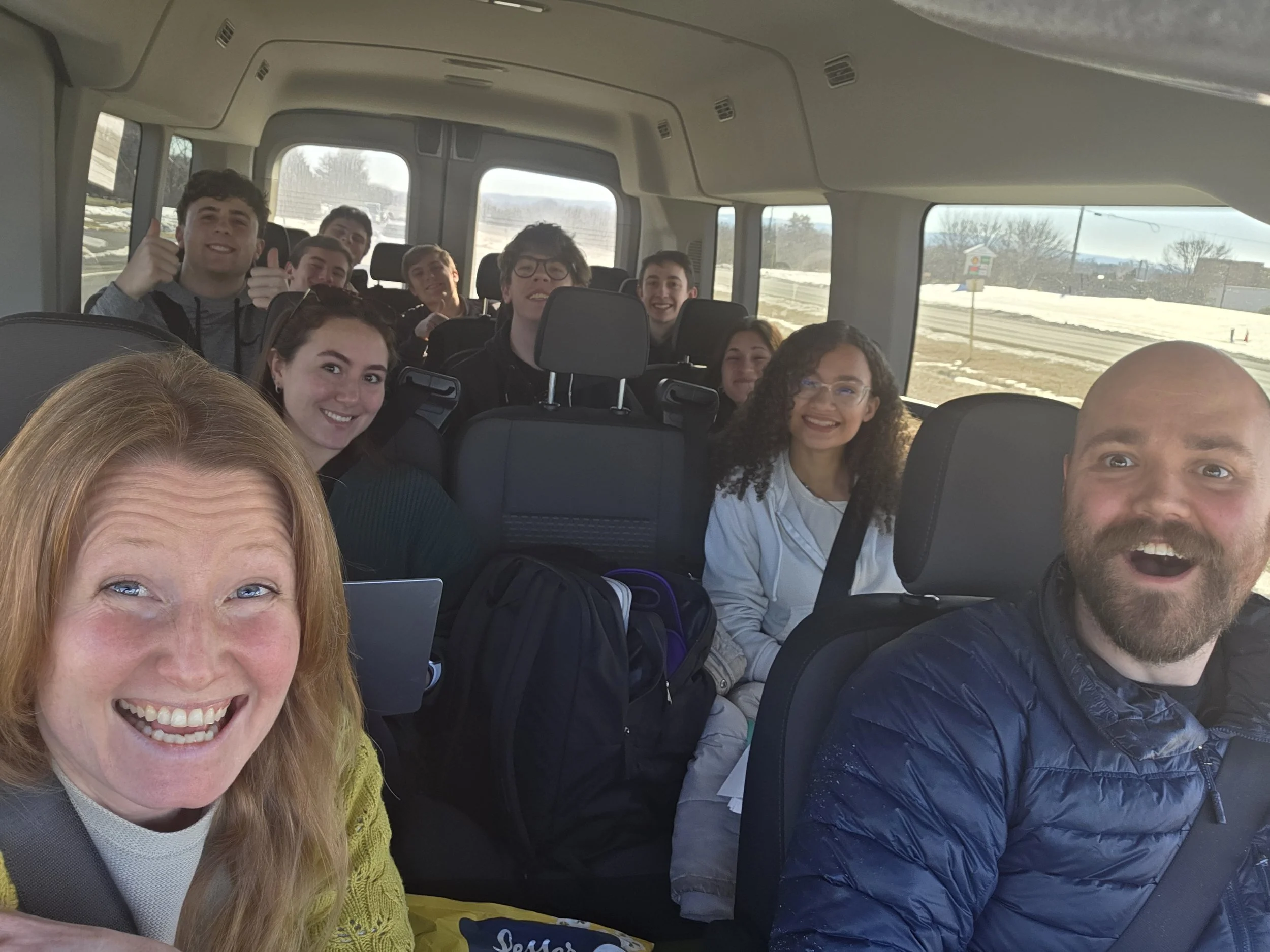
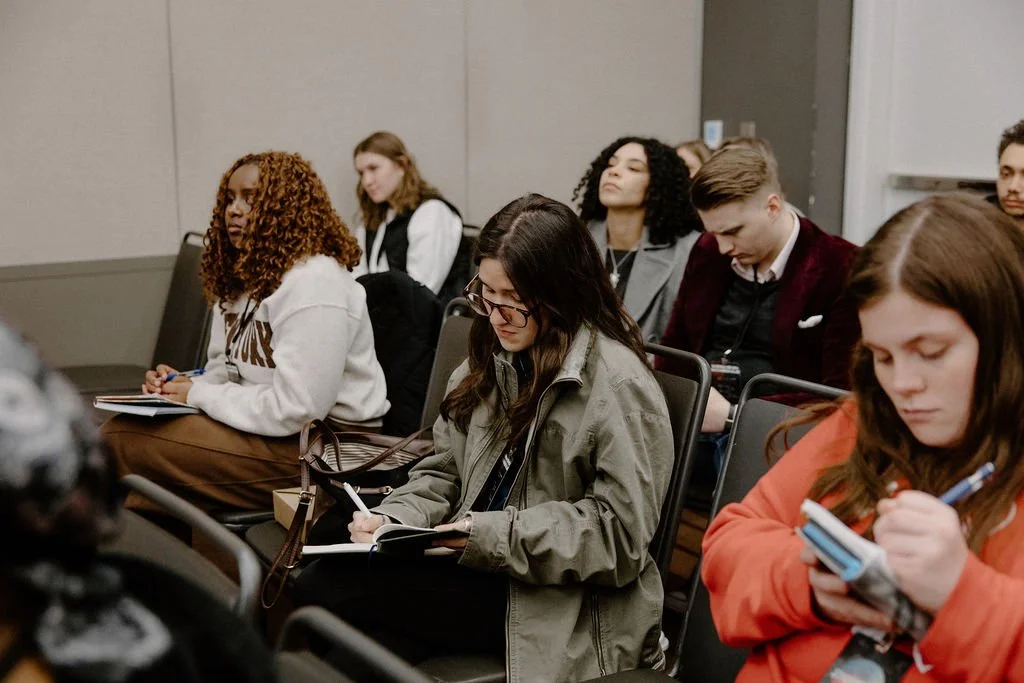
This year, Tee, Audrey, and I traveled with 18 students from UR and VCU to participate in Jubilee. We joined with CCO ministries from around the country for three days of worship, fellowship, and plenary sessions organized around the gospel story: Creation, Fall, Redemption, and Restoration. Perhaps the most unique thing about Jubilee is the diversity of the breakout sessions. Students are able to choose from a broad array of workshops, to learn about how the gospel applies to every area of life: friendship, business, medicine, education, visual arts, law, social media, artificial intelligence, evangelism, creation care, the Church, farming, poetry, and more.
“One thing I really loved about Jubilee was the breakout sessions, and especially the breakout about why you should join a local church. It taught me to really lean into the church and take advantage of things like intergenerational fellowship, corporate worship, and participation in the sacraments… Jubilee was a great experience, especially in college years when you are defining the ways you are going to live for the rest of your life.”
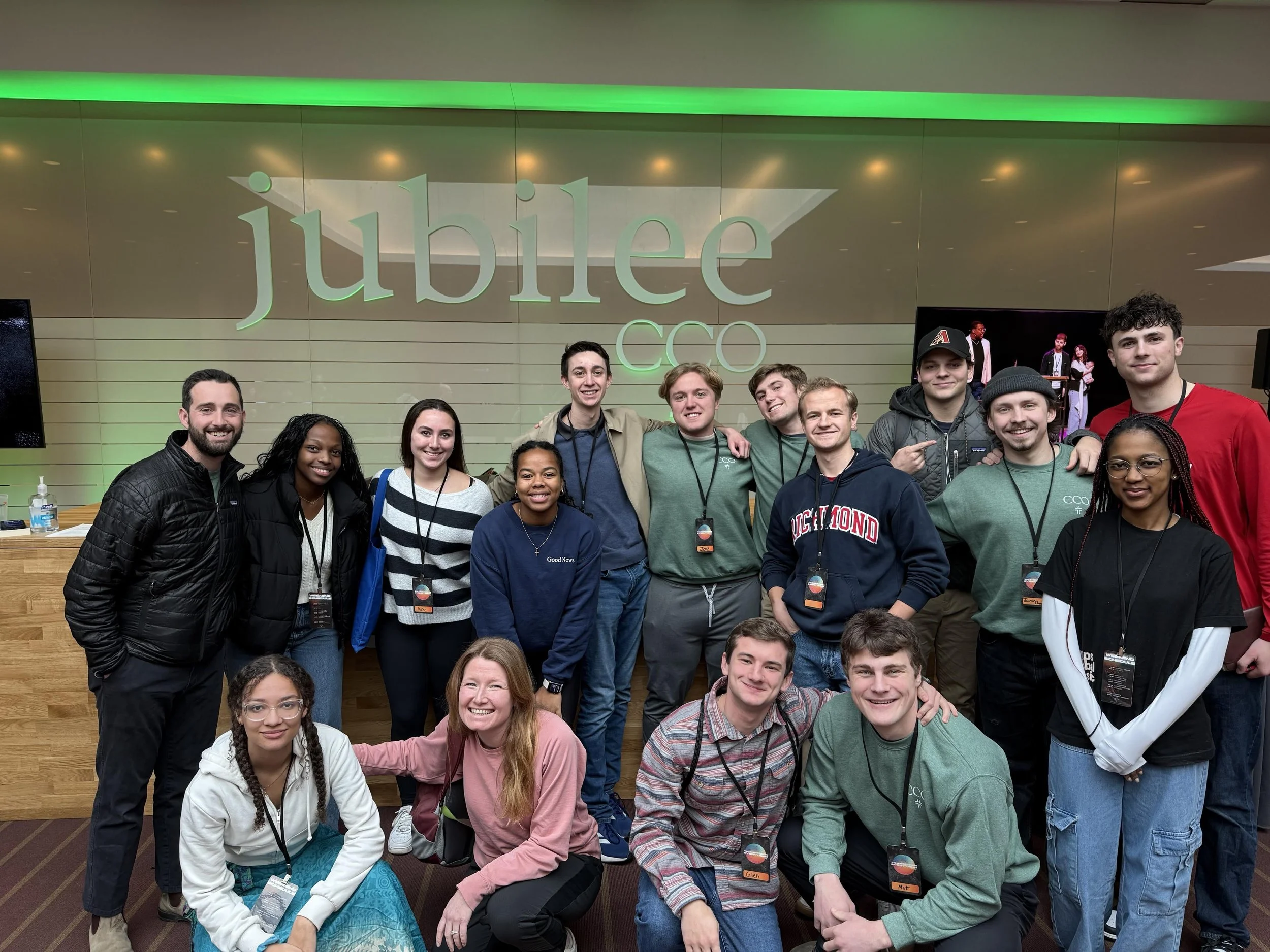
“Jubilee was beautiful! I really felt God’s hand on my heart. I learned so much about applying the gospel to different aspects of my life, and it opened my eyes to what it can look like to truly love my neighbors.”
Coming back to Richmond, it has been encouraging to see students learning to live inside the gospel story, applying the gospel to the specifics of their actual, everyday lives—in their callings as students, friends, roommates, church members, and members of our CCO campus ministries.
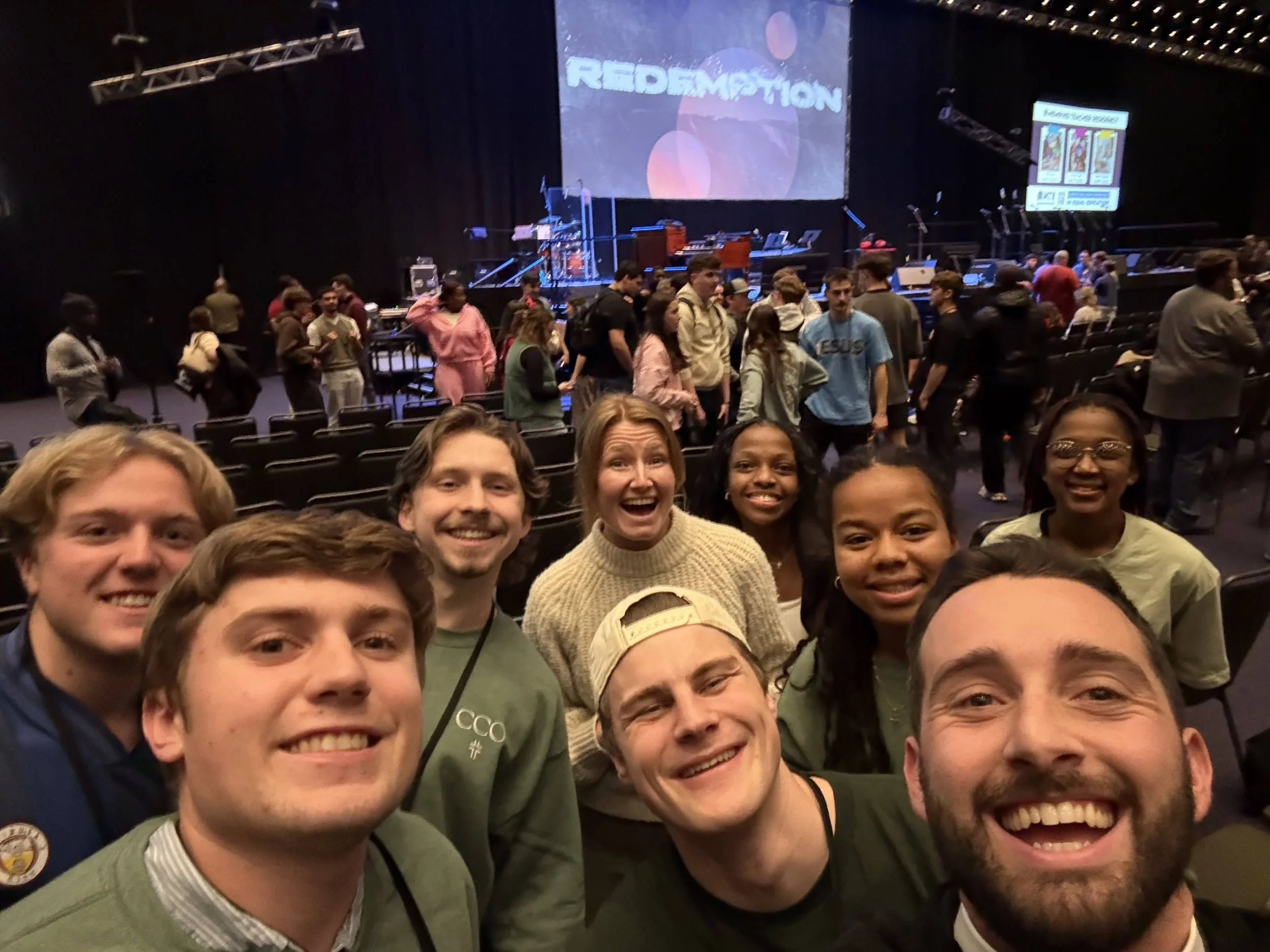
“My time at Jubilee was very enjoyable! I got to spend some time away from campus and fellowship with friends old and new. I hope every student in CCO will take advantage of this opportunity and all that we can learn from spaces like this.”
Please pray for our ministries on campus at UR and VCU, that CCO would continue to be a place where students experience gospel formation for missional presence on these two campuses, and that the Lord would use our ministries to draw college students to himself.
The Rev. Will Clark
College Minister — V.C.U.
Holy Week and the Triduum
Holy Week is nearly upon us. I want to take a few minutes to explain what it will be like to participate in the most important days of the year together. Please, if you can, read the following in its entirety.
Good afternoon! Holy Week is nearly upon us. I want to take a few minutes to explain what it will be like to participate in the most important days of the year together. Please, if you can, read the following in its entirety.
PALM SUNDAY | March 29
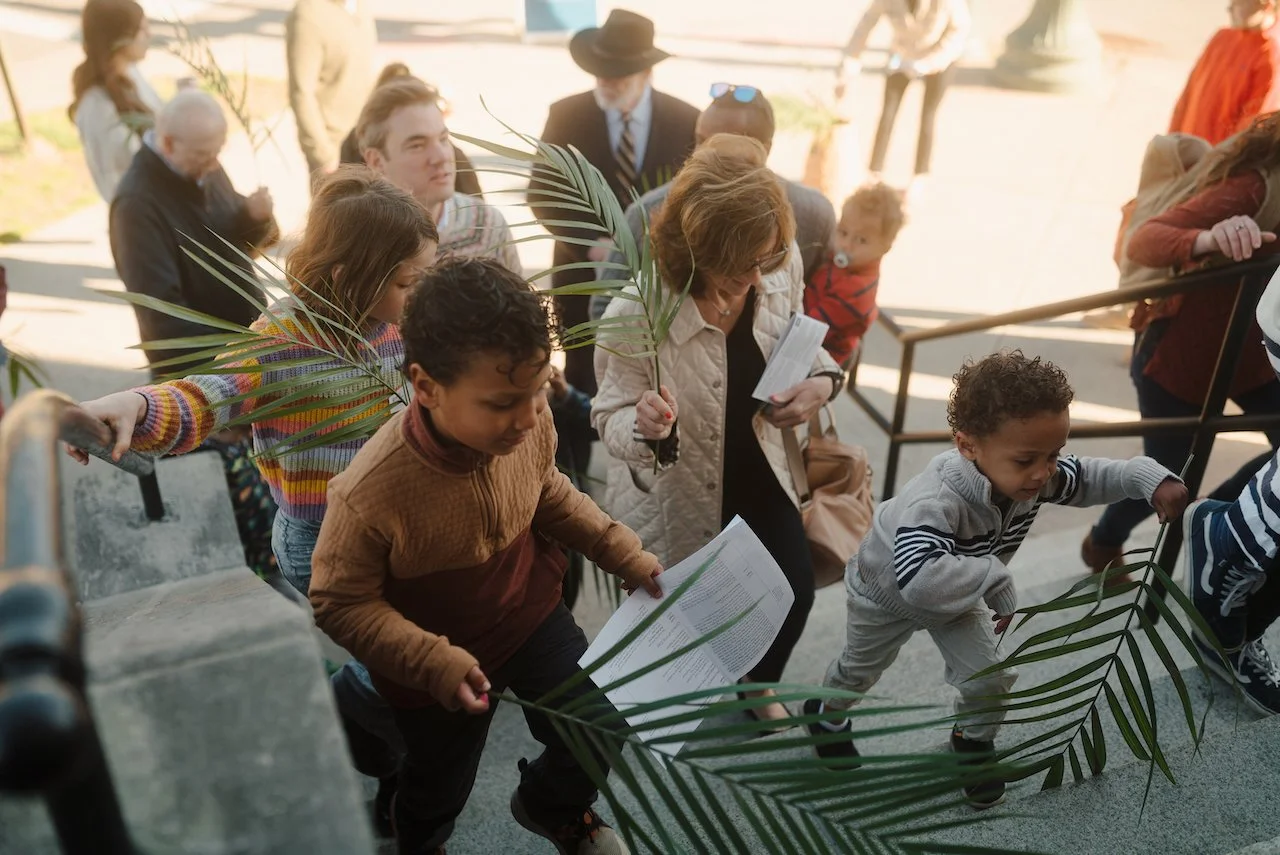
This is the first day of Holy Week and the day that we remember Christ’s triumphal entry into the city of Jerusalem (recorded in all four Gospel accounts: Matthew 21:1-11, Mark 11:1-10, Luke 19:29-38, and John 12:12-15). That morning, we will begin by gathering outside on the sidewalk along Grove Avenue before we process into the sanctuary waving palm branches and singing. Now, this concept isn’t a new or creative idea. It is, in fact, a very old tradition.
So why are we doing this? There are at least three good reasons (and I’m sure many more):
It connects us to our history: By waving palm branches, singing, and processing together, we will do something with our bodies in the present that connects us to the people of God in the past. We are joined with Christian brothers and sisters from ages past, as well as with the first century citizens of Jerusalem, who welcomed Jesus into their city.
It is formative for our young children (and for adults): Few things help young children (or adults for that matter) understand a story better than acting it out together. We want more than intellectual assent to the teaching of scripture; we want to receive, embody, and extend the good news of what Christ has done for us. This is why we kneel, stand, sing, eat the bread, drink the wine, and - yes - wave the palms!
It is an act of public worship: In our secular, materialist age, there are very few opportunities for acts of public worship and devotion to Christ. No doubt, as many of us adults walk down Arthur Ashe Boulevard, we will feel very silly. If that describes you, don’t worry, you’re in good company. We will all feel the strangeness of publicly worshiping Christ in the midst of neighbors who might think we are lunatics. But this is not a bad thing - for us or for our neighbors. It’s good for us because it presents us with a very real opportunity to be courageous. It’s good for our neighbors because our worship serves as a reminder that no matter what the zeitgeist of our time may say, there are real men and women and children who are continuing to find life in Christ Jesus.
So, dear friends, on Palm Sunday, come ready to do a new thing, which is a very old thing, and to do a strange thing, which is a very good thing. We will wave palm branches, sing, walk, and declare together that, minority though we be, there is still hope to be found only in the Lord Jesus.
STATIONS ON BOULEVARD
On Monday-Wednesday from 8:00 a.m.-7:00 p.m. and Thursday-Friday from 8:00 a.m. to 4:30 p.m., the 12 Stations of the Cross will be posted along Arthur Ashe Boulevard. I encourage you to set aside 30-45 minutes of time to stop by and spend time praying and contemplating each station. A guidebook will be available at the installation to lead you through this exercise.
MAUNDY THURSDAY | April 2
The Paschal mystery - the death and resurrection of Jesus Christ - is at the heart of the Christian Gospel. The evening of Maundy Thursday begins the Triduum (the sacred three days). Maundy Thursday receives its name from the maudatum (commandment) given by our Lord: A new commandment I give to you, that you love one another: just as I have loved you, you also are to love one another (John 13:34). At the Last Supper, Jesus washed his disciples' feet and commanded them to love one another as he had done. This day commemorates the Lord’s example of servant ministry, the institution of the Eucharist, the agony of the Garden of Gethsemane, and the betrayal leading to the crucifixion.
No nursery or children's ministry. Kids are invited to fully participate in all parts of the service. Click here to download a Parent Guide for this service.
Remember to wear sandals or slip-off shoes (to facilitate the foot-washing portion of the service).
GOOD FRIDAY | April 3
The Good Friday liturgy is the second part of the Triduum. This most somber of all days is appropriately marked by fasting, abstinence, and penitence, leading us to focus on Jesus and the meaning of his Cross. Some churches do not use musical instruments or bells on this day. The church is often darkened. The bare, stark appearance of the church serves as a reminder of the solemnity and sorrow of the day. The Lord of Life was rejected, mocked, scourged, and then put to death on the Cross. The faithful are reminded of the role their own sin played in this suffering and agony as Christ took all sin upon himself in obedience to the Father’s will. By the Cross we are redeemed, set free from bondage to sin and death. The Cross is a sign of God’s never-ending love for us. It is a sign of life in the midst of death.
No nursery or children’s ministry. Kids are invited to fully participate in all parts of the service. Click here to download a Parent Guide for this service.
Remember to wear black or gray clothing.
EASTER VIGIL | April 4
This is an ancient church tradition that begins outside the sanctuary in the dark of the evening. A fire is kindled, torches and candles are lit, and we process into the darkened sanctuary together. The atmosphere is pregnant with brooding mystery and drama. Scriptures and prayers are chanted, sung, and read. The story of the Bible is traced and then together we wait - in stillness, in silence, in the dark - we keep watch.
Then, suddenly, with bursting shouts of "Alleluia!" the lights go up and bells are rung as we celebrate the unlooked-for resurrection of Christ.
From there, the service proceeds to the Eucharist and, after the service concludes, we feast together.
If you have experienced an Easter Vigil before, you have some idea of what to expect.
If you never have, then come for the first time.
The service begins at 8:00 p.m. outside the sanctuary and concludes at 10:00 p.m.
Join us for an Easter Vigil Nacho Feast following the vigil!
No nursery or children’s ministry. Kids are invited to fully participate in all parts of the service (though young children may struggle or fall asleep in the pews, which is no problem at all).
EASTER SUNDAY | April 5
As the third day dawns, we celebrate the bodily resurrection of our Lord from the dead!
Alleluia! Christ is risen! The Lord is risen indeed! Alleluia!
The church will resound with the ringing of bells, shouts of praise, and songs of joy! This is a dual sacrament service with both Baptisms and Eucharist.
There are three identical services: 7:00 a.m., 9:00 a.m., and 11:00 a.m. (But only the 9:00 a.m. and 11:00 a.m. provide nursery and children’s ministry). Click here to download a Parent Guide for this service.
If you are able to attend the 7:00 a.m. service, please do so! We will likely run out of space at 9:00 a.m. and 11:00 a.m. By worshiping at the sunrise service, you show hospitality to visitors who will likely attend the later two.
Also, if you are a member of Redeemer, this is a day of service and hospitality to newcomers. Join the staff in rolling up your sleeves and offering the warmest of welcomes to our neighbors.
There will be coffee, juice, and donuts across the street near the VMFA sculpture garden after all three services. Stay for a while and enjoy the after-party!
Redeemer family, I love you all and I’m so grateful that we get to walk through this week together. I hope and pray that our observance, practice, and worship through these services forms the Gospel more deeply within us so that we might be more missionally present to our families, neighbors, and city.
In the Father’s love,
Call to a Corporate Fast on Good Friday, April 3
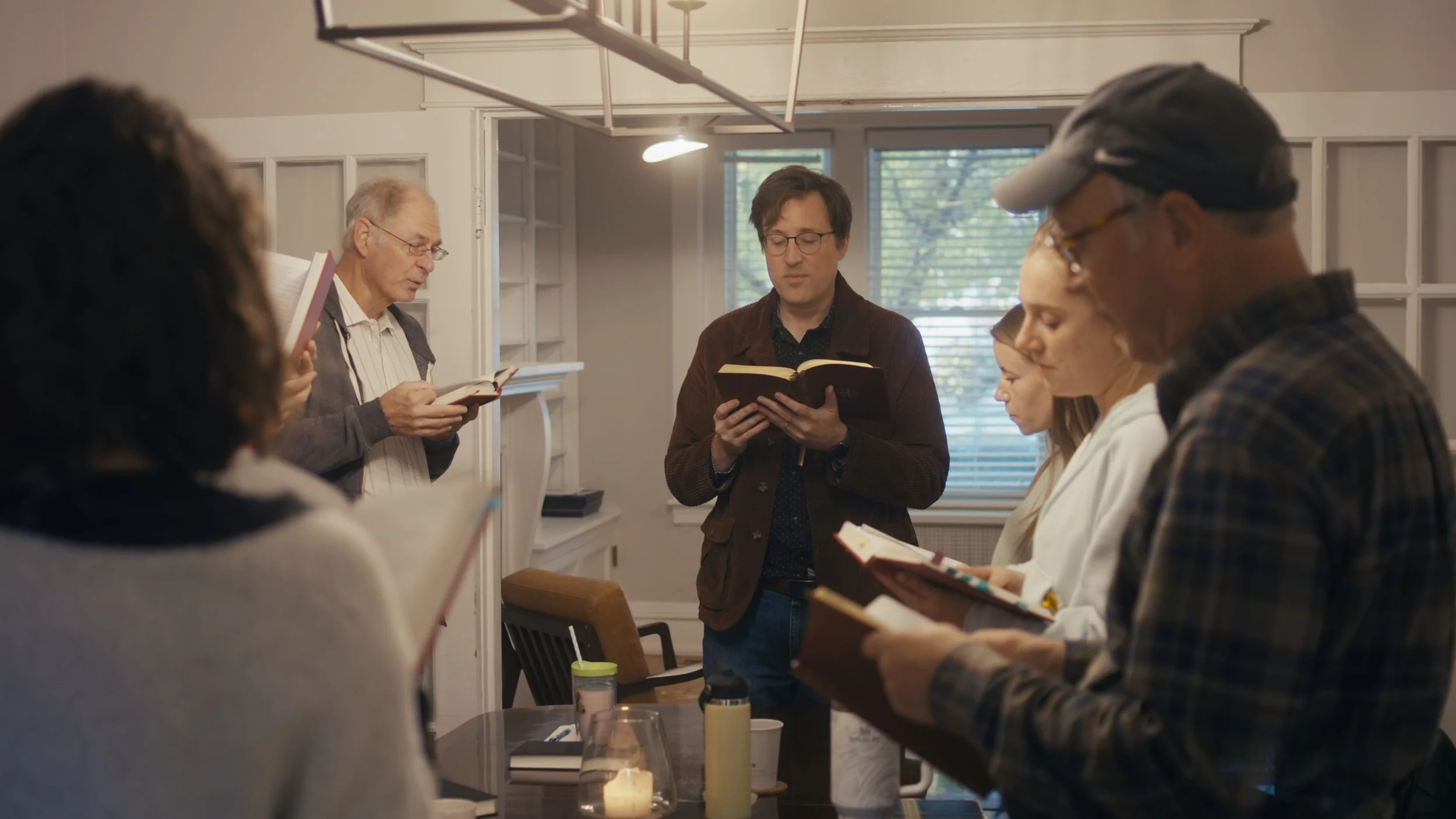
While most of us are likely familiar with the concept of a private, personal fast, we may be less familiar with the concept of a corporate fast. Here are just a few (of the many) examples of corporate fasting in scripture.
Redeemer Family,
While most of us are likely familiar with the concept of a private, personal fast, we may be less familiar with the concept of a corporate fast. Here are just a few (of the many) examples of corporate fasting in scripture:
Leviticus 16: The Israelites practice an annual corporate fasting on the Day of Atonement.
Nehemiah 9: The Israelites practice a national time of confession, fasting, prayer, repentance, and public scripture reading.
Joel 2: God speaks to the prophet Joel and calls him to declare a time of corporate fasting and repentance.
Jonah 3: The people of Nineveh respond to Jonah’s prophetic preaching with fasting and repentance.
Acts 27: Paul and his 275 shipmates fast for 14 days through a storm at sea before breaking their fast in a manner that is a nod towards the Eucharist (vs 35).
Throughout scripture, corporate fasts are marked by themes of repentance, confession, and calling on God to show mercy and provide atonement for the sins of the people.
Therefore, how appropriate that throughout church history, it has been common for both clergy and parishioners to fast on Good Friday of Holy Week - a day devoted to repentance of our sins and remembering the mercy of God in the atoning death of Christ on the cross.
As the Book of Common Prayer states in the preface to the Good Friday service on p.564, “This most somber of days is appropriately marked by fasting, abstinence, and penitence, leading us to focus on Jesus and the meaning of his cross.”
And so Redeemer Family, on Good Friday of Holy Week (April 3), we are all invited to fast together, as a parish. No one should feel coerced or peer-pressured to participate. Fasting is most spiritually effective when it is something you choose, not something you do because other people guilted or shamed you into it!
So, if you wish to participate, here are two potential ways:
Full-Fast
The fast begins at the end of the Maundy Thursday service on April 2.
Eat an early dinner beforehand.
Come to one of the Maundy Thursday services, 5:00 p.m. or 7:00 p.m.
Practice foot-washing and receive the Eucharist, then the fast begins.
The bread and wine of the Eucharist are the last food in your stomach from Thursday evening, through all of Good Friday, to Saturday morning.
Attend one of the Good Friday services, 5:00 p.m. or 7:00 p.m.
Break the fast on Saturday morning with a simple and light meal.
Partial Fast
If you are new to fasting or have a medical condition that makes fasting unwise, here are partial ways to participate:
Shorten the fast: Sunrise to sunset on Friday. Eat an early breakfast Friday morning and a late dinner Friday evening. Skip lunch and fast for the daylight hours.
Limit the fast to only refraining from solid foods. Replace meals with fruit juice or a smoothie.
Beloved brothers and sisters, the goal here is to not create some new law that everyone must obey. The goal is to help us participate in the passion of our Lord together. We are not in this alone; we are a church family.
Let’s fast together on Good Friday and then, let’s FEAST together on Easter Sunday!
In the Father’s love,
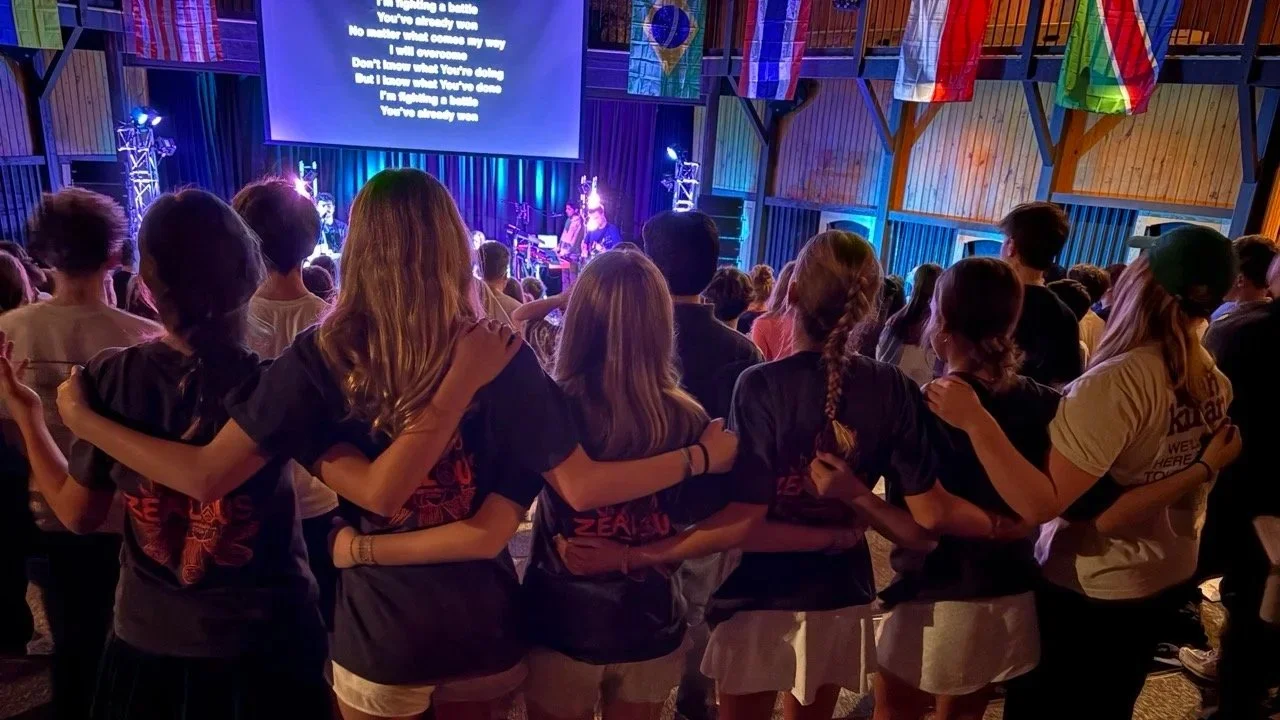
Growing Faith Through Risk: Reflections from Our Youth Fellowship Retreats
In February and March, the Youth Fellowship team joined the Falls Church Anglican on their Breakaway retreats at Rockbridge for the first time. It was a great experience, and one that caused me to reflect on many levels. As soon as we traveled down the winding drive and pulled up at the Blue Ridge cabins, I was hit with nostalgia remembering my own days in high school going on retreats and staying in these very cabins. As the girls lugged what seemed like an impossible amount of luggage into the cabins, I hoped that this experience would be as meaningful for them as it had been for me.
In February and March, the Youth Fellowship team joined the Falls Church Anglican on their Breakaway retreats at Rockbridge for the first time. It was a great experience, and one that caused me to reflect on many levels. As soon as we traveled down the winding drive and pulled up at the Blue Ridge cabins, I was hit with nostalgia remembering my own days in high school going on retreats and staying in these very cabins. As the girls lugged what seemed like an impossible amount of luggage into the cabins, I hoped that this experience would be as meaningful for them as it had been for me.
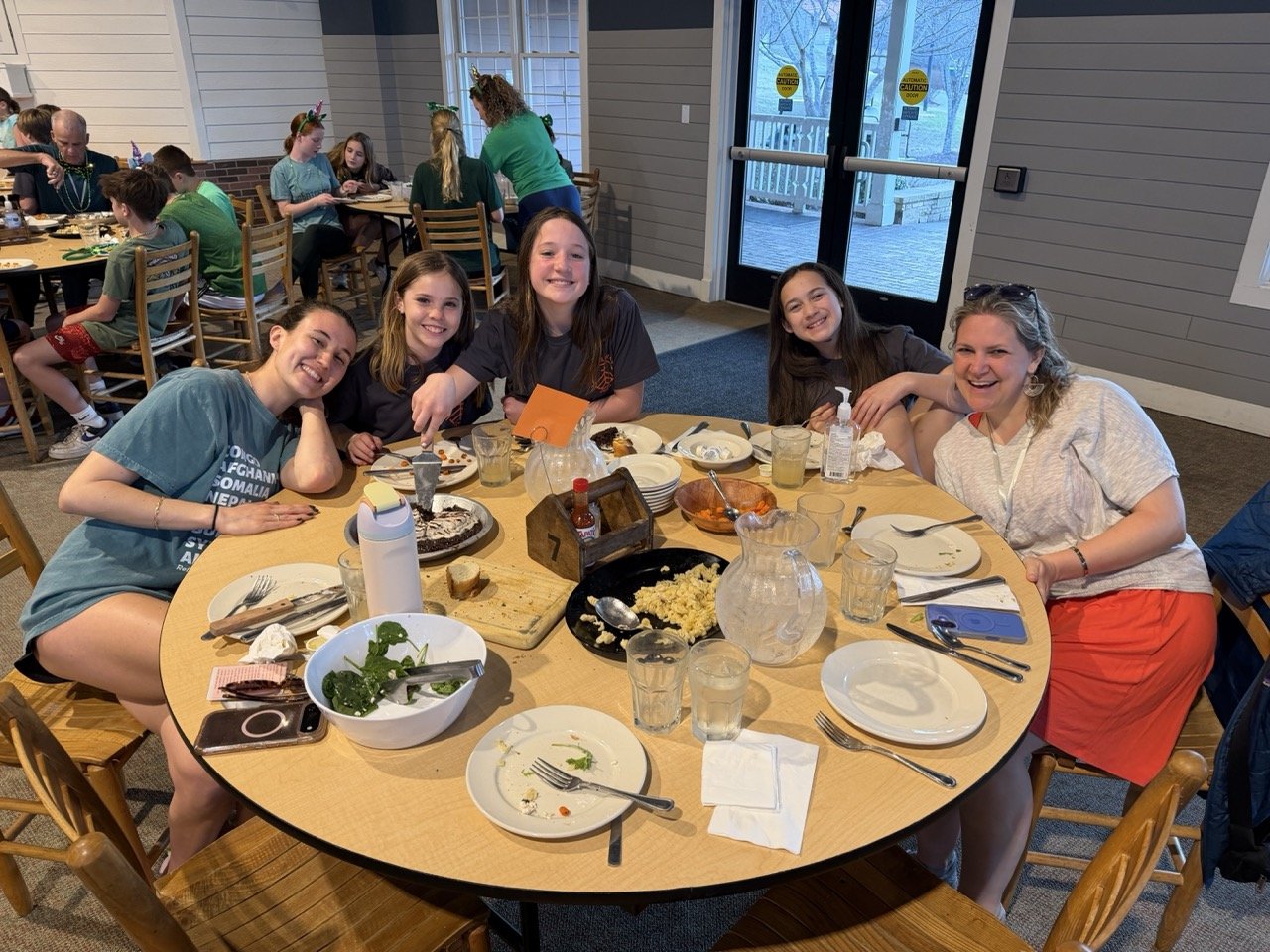
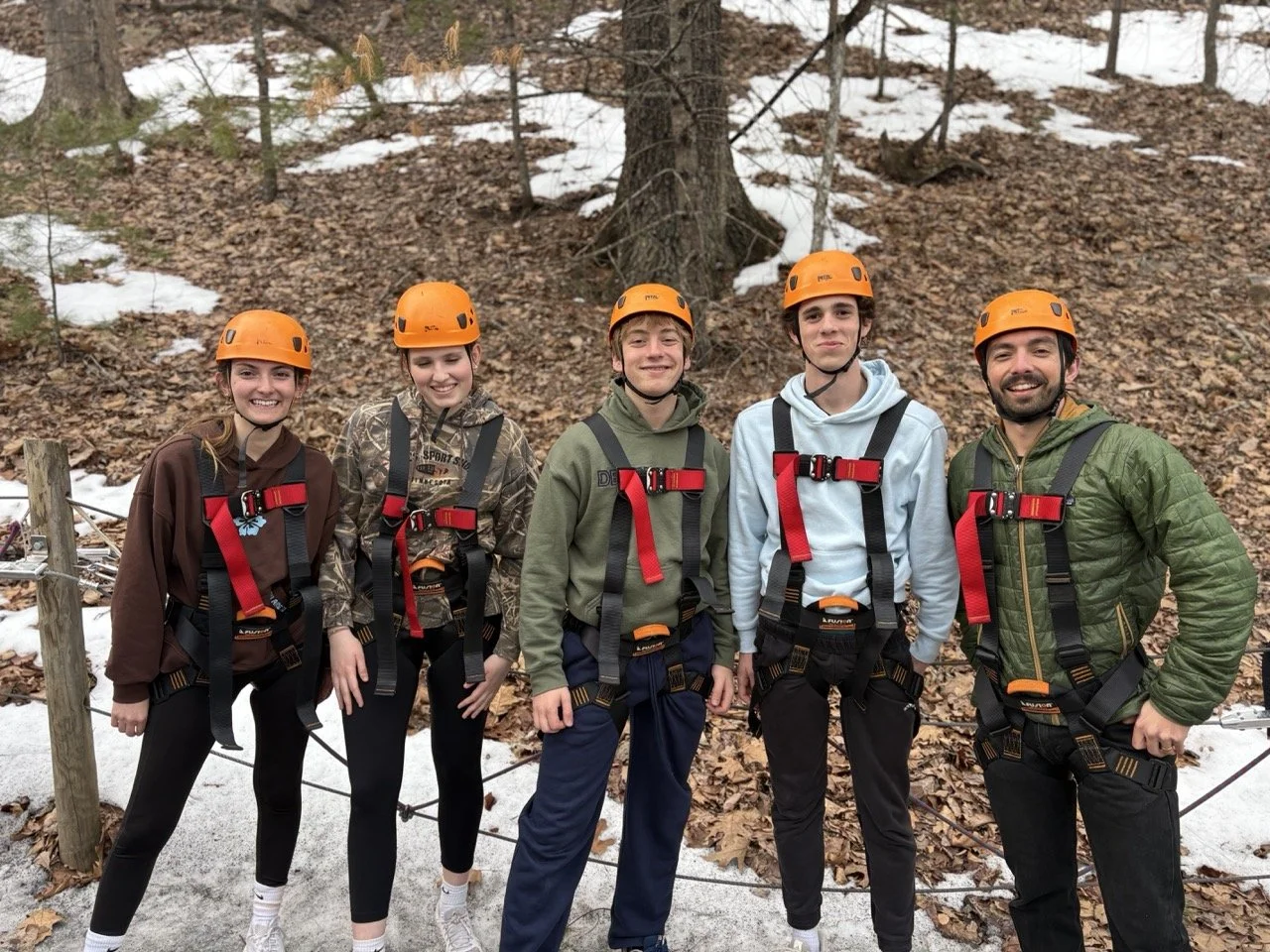
When I look back on those retreats, besides remembering some amazing experiences listening to sermons and bonding with friends, what stands out are some of the free time activities. I remember navigating the ropes course, my heart in my throat, and climbing the rock wall, determined not to give up. These activities stand out not just because of the fun and adrenaline involved, but because they took me and my friends outside of our comfort zones. We may have been intimidated, but we were able to overcome our fears and do them anyway.
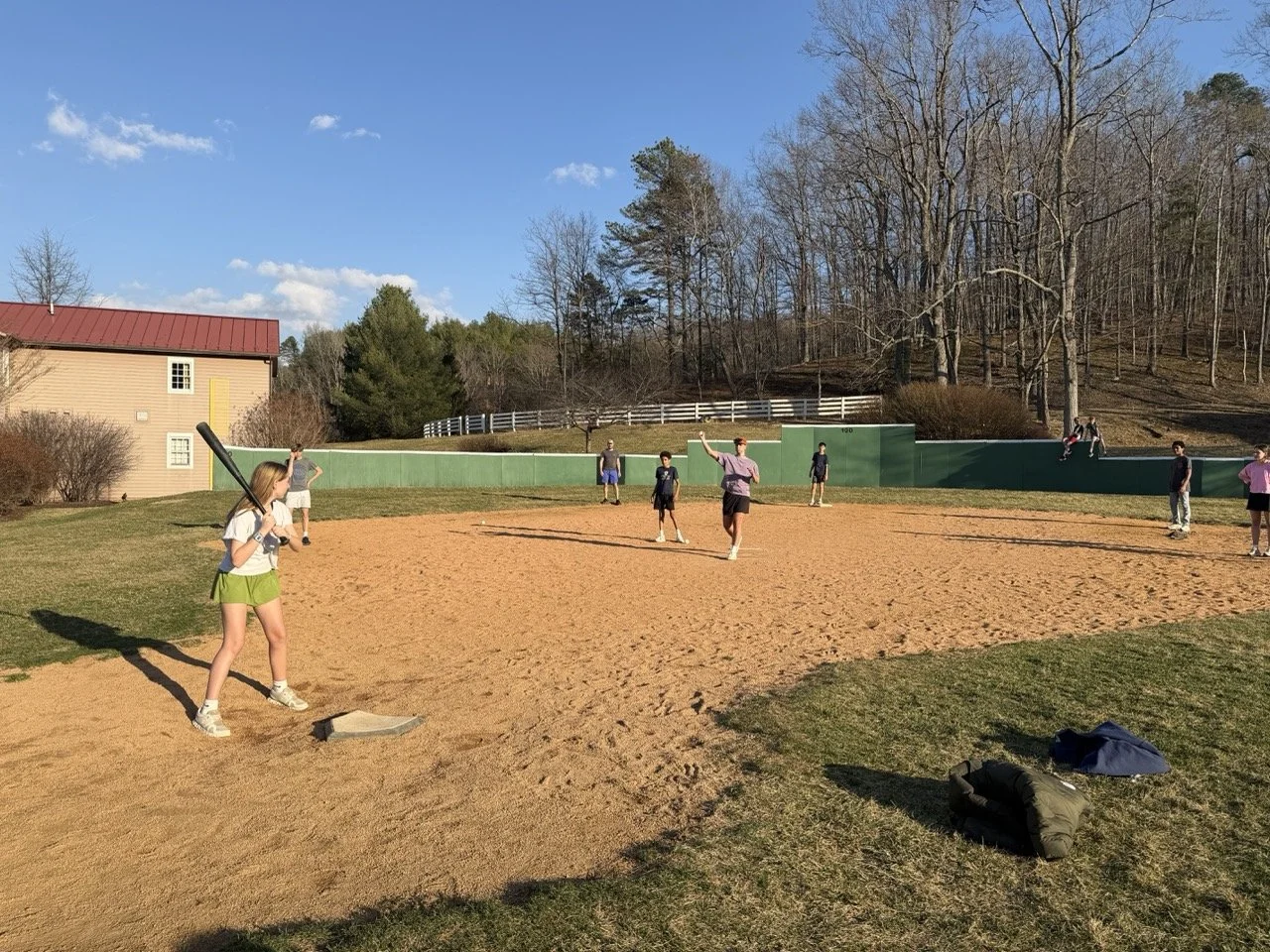
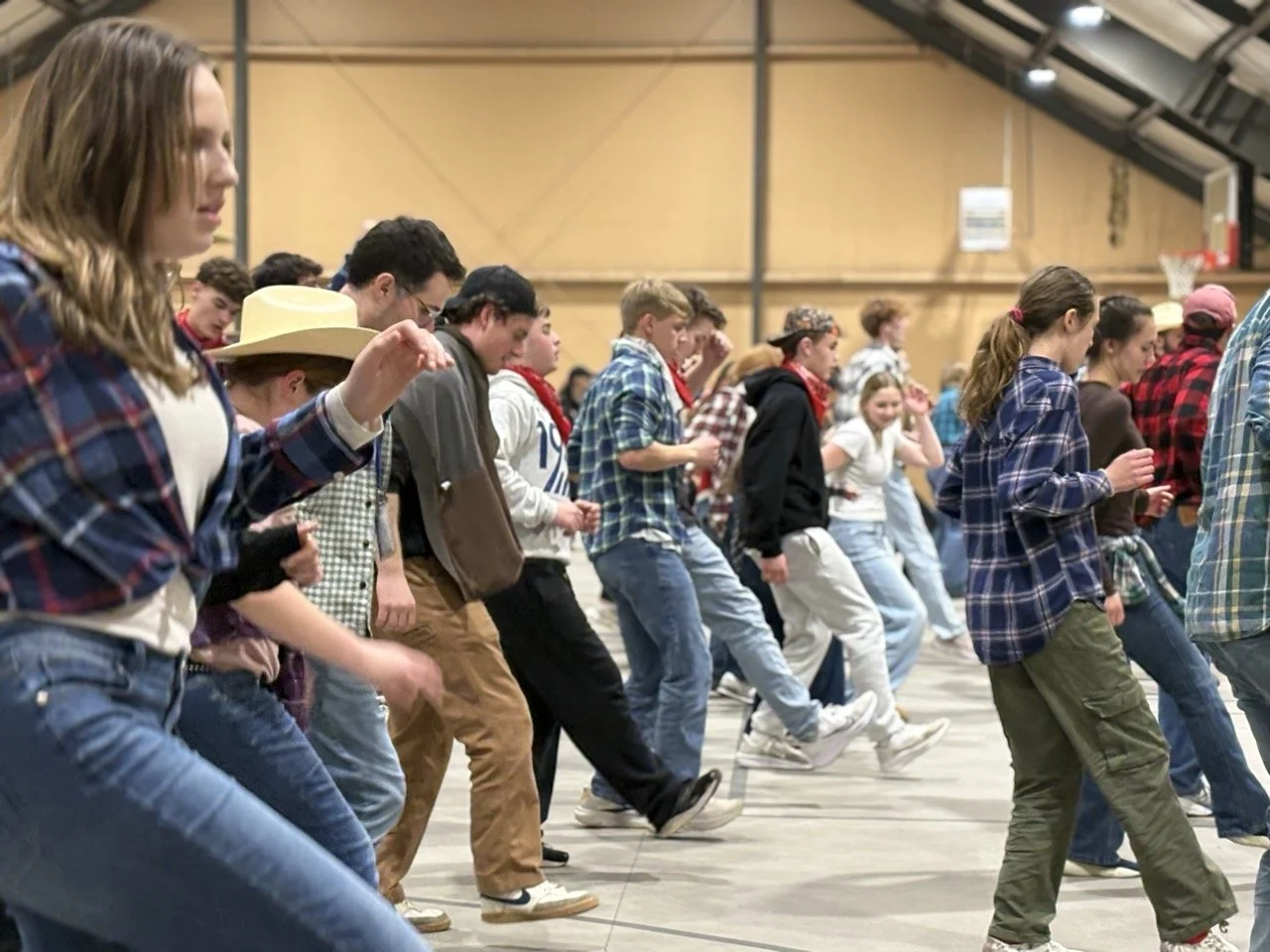
During both the high school and middle school retreats, we talked about risk. Leaders asked students how they had taken risks that weekend, and affirmed them for the ones we witnessed. During one of these conversations, Annie, a middle school girl, looked at us curiously and asked, “Why is it important to take risks?” It was a GREAT question! The leaders and I explained that taking risks is how we grow, and especially how we grow in dependence on God. Students were encouraged that if they felt God was inviting them to take a risk, it could be a powerful way to grow in their faith. As Nathan Horner, our Church-Planter-in-Residence put it, “Without risk there is no faith.” Since the definition of faith involves trusting in something we do not see, risk is a prerequisite to faith.
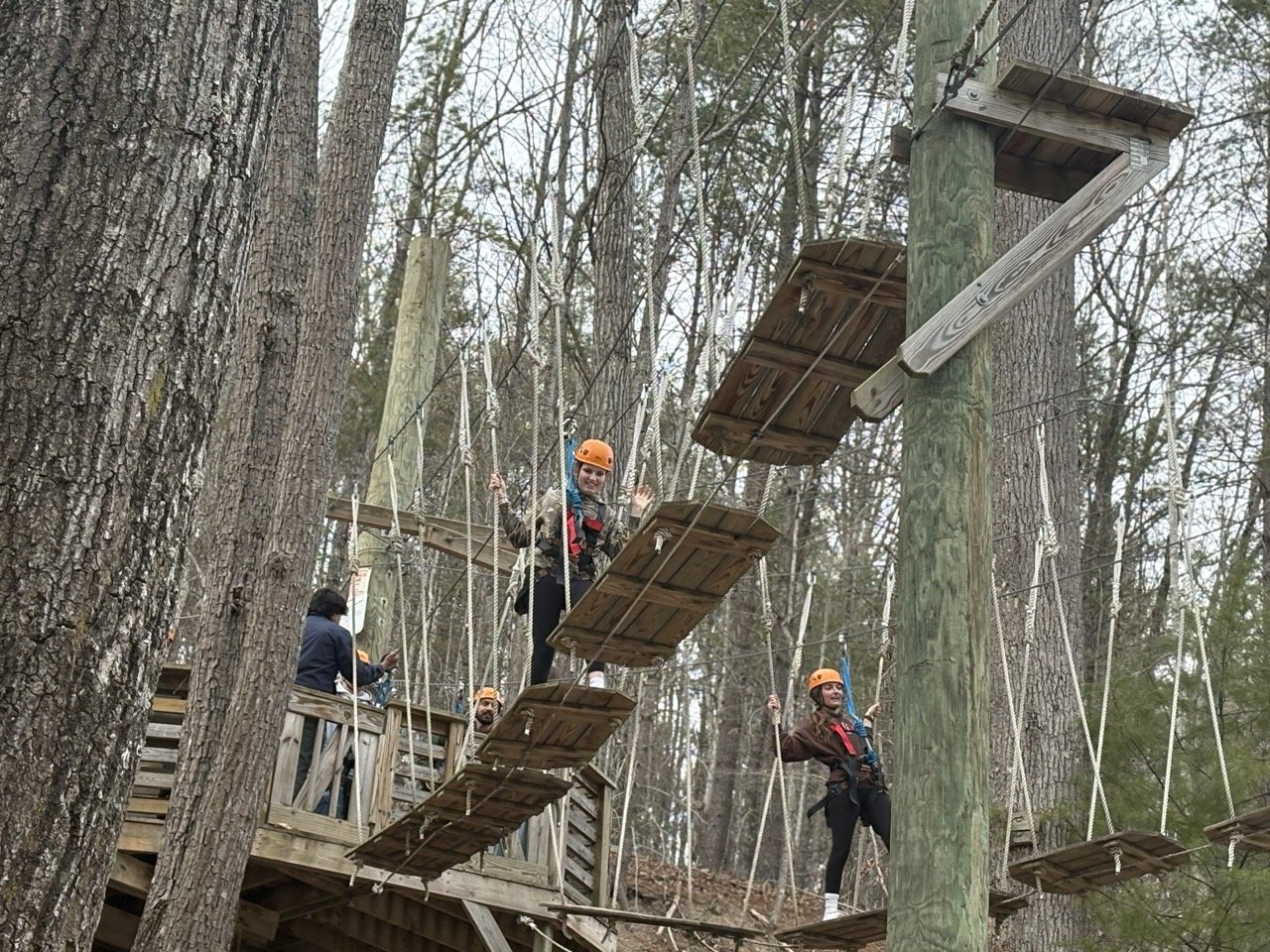
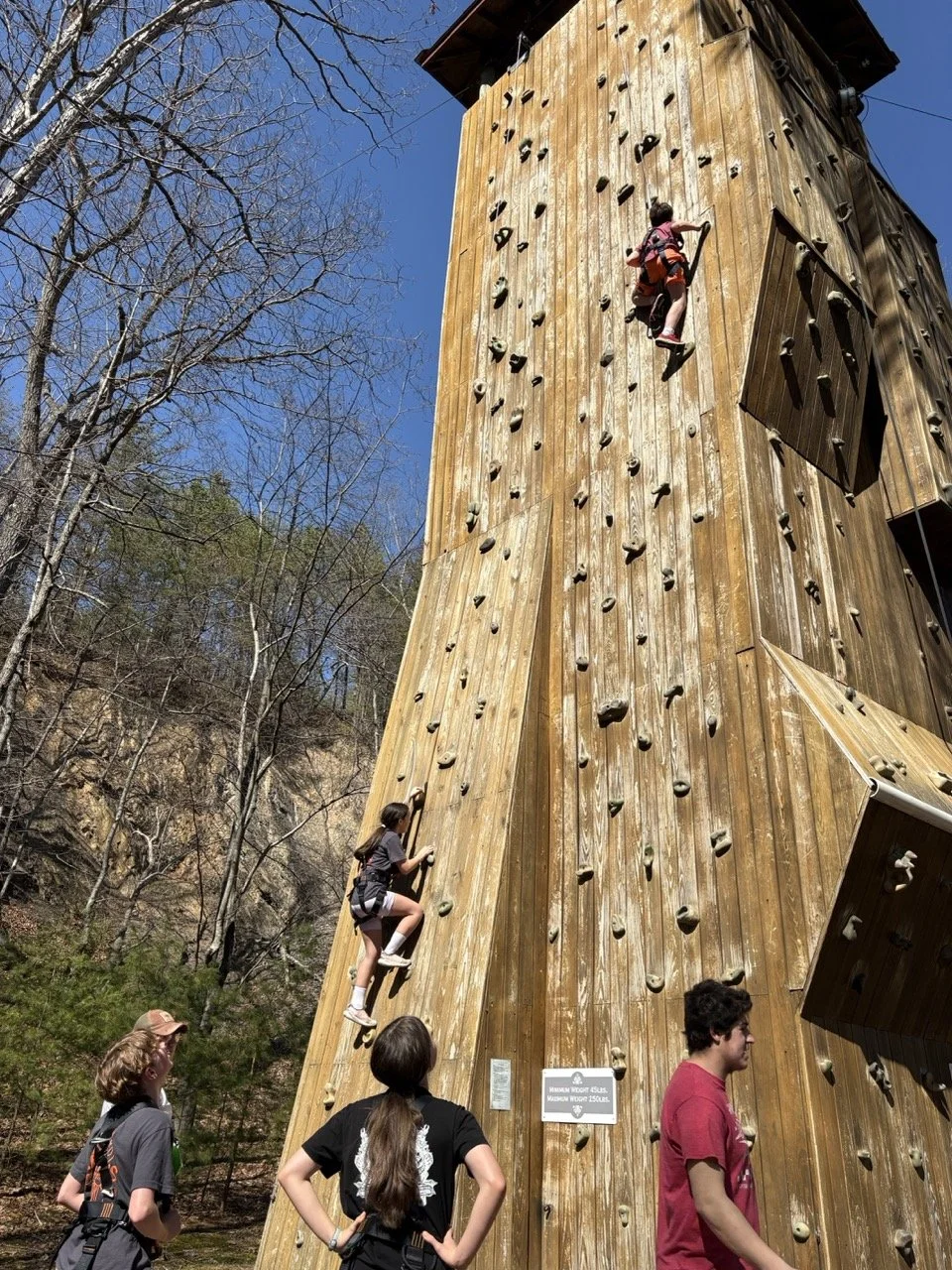
Over both retreat weekends students stepped out of their comfort zones and took several meaningful risks. Like me, they stepped out in faith on the ropes course and braved the rock wall. They flew from great heights on the screamer swing, participated in sports tournaments, formed friendships with strangers, and hopped up on stage to participate in club games. Most importantly, students opened up and shared vulnerably with one another and their leaders, creating opportunities for new levels of relationship. I could see the pride and empowerment on their faces when we talked about these experiences. This is the power of offsite events for students: they are able to take risks outside of the bounds of their everyday life, within the safety and care of Youth Fellowship. Being able to step outside their comfort zone is a great gift to students, one that stretches and grows their faith in a God who is always faithful.
We are excited to give students more opportunities to take risks and grow their faith this summer through our Summer Service Trips. These trips will allow students to take risks not only for themselves, but in the service of others. In my opinion, this is one of the most life-changing trips that a student can take. They will have the opportunity to not only hear and talk about their faith, but to live it out boldly. Students are bound to take risks at some point in their lives, and service trips are a great way to encourage healthy risk-taking as they continue practicing their faith.

Laren Bleam
Youth Fellowship Assistant
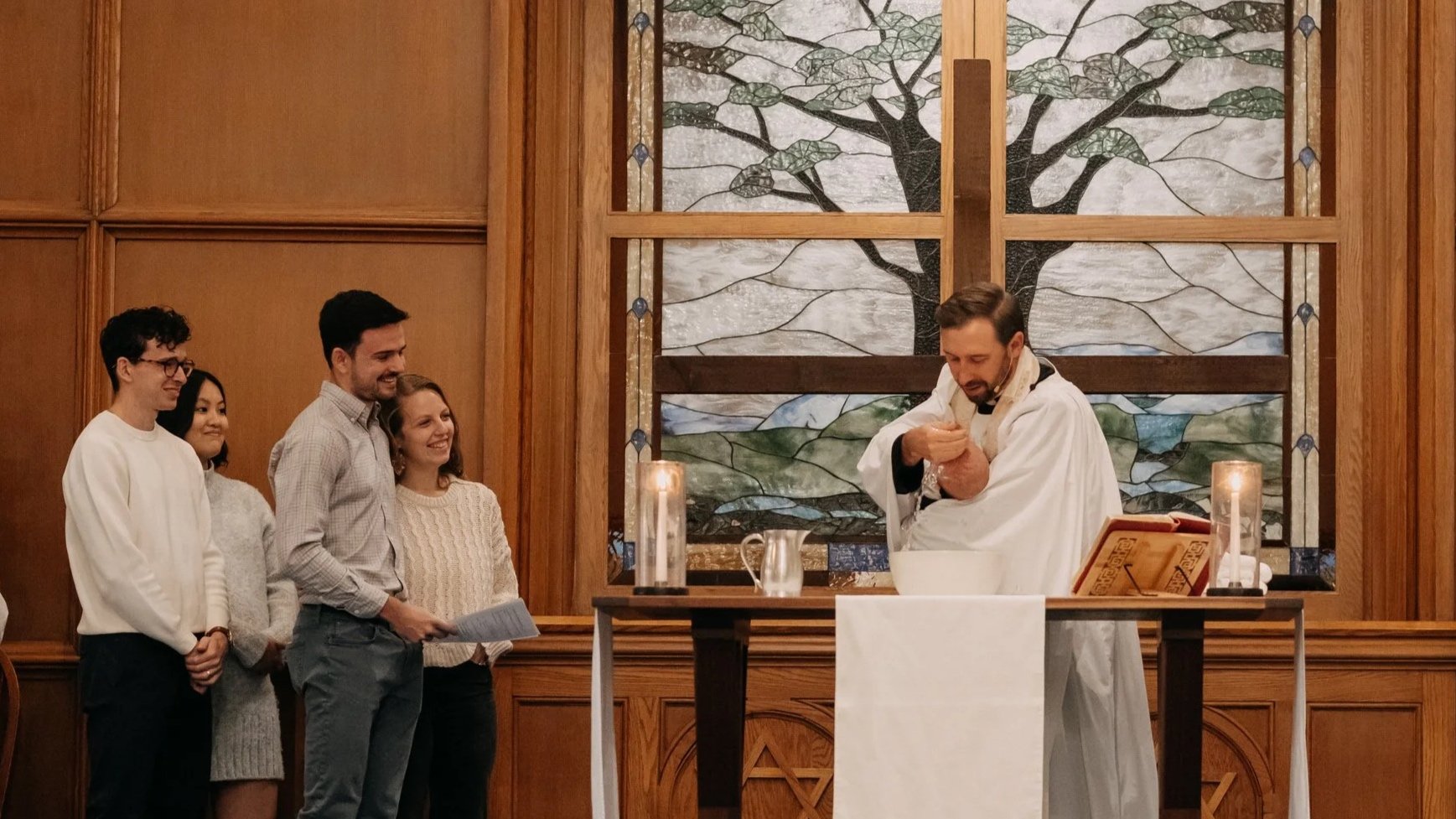
Listening at the Waters: Sacred Listening with Babies & Toddlers
Marked as Christ’s Own
Every Baptism Sunday, Dan cradles a baby in his arms, gently tracing the sign of the cross with oil on their forehead and proclaiming, “You are sealed by the Holy Spirit in Baptism and marked as Christ’s own forever.” In that moment, something both tender and profound is declared: God is at work.
In our Anglican tradition, baptism is not first about what a person can understand, articulate, or confess—though those gifts will unfold as a child grows and later stands to confirm their faith. Baptism begins with God’s action. It rests on the promise that God is already moving, already claiming, already loving.
And there, in Dan’s arms, is an infant—wholly and utterly dependent. Nothing is required of them. They do not need to reason, respond, or speak in order to receive. They may be sleeping peacefully or crying in protest. Still, the promise stands. The Church speaks confidently of God’s work in the baptismal waters, trusting that grace is not constrained by language, comprehension, or developmental stage.
If God’s grace precedes understanding and God’s Spirit moves before words, then it reshapes the way we see our children, the way we listen to the Spirit, and even the way we see ourselves.
Learning to Listen to God at Work
In baptism, we proclaim a truth that both comforts and unsettles us: God is already at work from the very beginning of our children’s lives. Our children are not blank slates waiting to be filled, nor are their spiritual lives on hold until they can speak the right words. Scripture reminds us that “the Spirit helps us in our weakness… with groanings too deep for words” (Romans 8:26). God meets us precisely where words fail. If this is true for us, it is certainly true for our children.
It is easy to overlook the spiritual lives of babies and toddlers. However, when we assume that the Spirit’s work depends on abilities they have not yet developed, we risk placing limits where God does not. In doing so, we may miss the communication that is already happening—even if at times it is difficult to see.
Much of babies’ and toddlers’ communication is embodied, emotional, and relational. A reaching hand, a searching gaze, the comfort found in a familiar face, the insistence on hearing the same story again and again—these moments are rich with glimpses of the Spirit at work. They express deeper longings, longings that echo the very questions we continue to carry into adulthood: With whom do I belong? Who am I? What story am I part of?
To notice this, we must slow down. We must learn to watch and to listen for what Lacy Finn Borgo calls “the unspoken language of the heart.” The invitation is not to make something happen, but to pay attention—to listen for the Spirit who is already moving.
Becoming like Children
If we are learning to listen for the Spirit at work in our young children, we soon discover that the invitation turns toward us as well. In Matthew 18:3, we are called to become like little children. At the heart of that call is a posture children embody so naturally: dependence. A newborn’s cry, a toddler’s outstretched arms, a child returning again and again to the safety of a parent’s presence—these gestures are not only signs of need, they are invitations to listen. In their reliance, we hear something true about the way we all stand before God.
As we witness their dependence, we begin to recognize our own. Romans 5:8 reminds us that God’s love did not wait for our readiness or righteousness; it met us while we were still sinners. Our lives in Christ begin not in strength, but in need. The baby’s cry and the toddler’s trust echo our own story: we are completely reliant, utterly held. When we listen closely, their small, daily gestures become a living reminder of our need.
This shared dependence reshapes the way we attend to the children entrusted to us. We listen not as those who have mastered faith, but as fellow recipients of mercy. We listen with trust—trusting that the Spirit who has been faithful in our story is faithfully at work in theirs.
And we listen expectantly. We listen to their questions, their repetitions, their joys, and even their meltdowns. We listen for what God might be revealing through their need and through our own. In this mutual posture of dependence, listening becomes more than attentiveness or awareness; it becomes an act of faith. We wait, we watch, and we trust that the God who met us in our weakness is already speaking and moving in them.
Listening at the Waters
Baptism declares that God speaks first. Before we understand, before we articulate, before we respond—God acts. At the font, we witness a grace that does not wait for readiness. We see a child who cannot yet profess faith, and we proclaim over them a promise that rests entirely on God’s faithfulness. Baptism anchors us in this reality: we belong to Christ not because we have mastered the language of belief, but because he has marked us as his own.
But baptism also teaches us how to listen.
If God is at work before words, then our task is not to manufacture spiritual life in our children, but to pay attention to the Spirit already working. The same waters that mark them as Christ’s own invite us to watch for the Spirit’s movement in their gestures, their attachments, their questions, and their quiet longings. We listen at the font. We listen in the nursery. We listen in the everyday moments that seem small but are, in fact, filled with holy mystery.
Grace,

Mikala Thompson
Assistant Director of Redeemer Kids
Holy Listening
Our parish professes that children are a vital part the body of Christ and are capable of a rich spiritual life. Our children’s ministry therefore takes care in how we teach children about the gospel, the Scriptures, and the Triune God, knowing that children are capable of receiving this eternal truth. But I wonder if we can overemphasize our role as teachers who input knowledge and truth in this setting and miss out on what we can receive when we lead children to consider what the Holy Spirit is teaching them directly in these sacred spaces.
I remember a moment many years ago when my family was new to town. It’s an exhausting season to be in when you find yourself asking everyone around you the same mundane get-to-know-you questions, and you find yourself repeating your own elevator-speech version of your story again and again. I was discouraged by the transactional nature of these shallow connections that seemed to determine whether or not someone gets a place in a new community. I came home from an evening that had involved introducing myself to new people yet again, and I tried to articulate to my husband how my interactions with a couple that we had just met made me feel. I described it at first as weird and even unsettling, but after processing the various conversations I had with both of them, I came to an important realization. They had listened to me. They had really, truly listened to me even in a buzzy social setting with a lot of distractions and—let’s face it—not a lot to gain by my acquaintance. I recalled their posture, their follow-up questions, and their eye contact that at the time had felt odd, but was the unfamiliar sensation of having a stranger’s full attention. That experience was so impactful that it eventually lead me to intentionally study the ministry of listening and ultimately, to never undervalue offering someone on the margins the gift of my full attention. All because that initial demonstration of sacrificial attention at a vulnerable time of my life felt healing. It felt holy.
Years later, I found myself reading Spiritual Conversations with Children and recalling that feeling from so long ago.“Holy Listening” is what author and theologian Lacy Finn Borgo calls the work she and other godly adults do for children at Haven House, a ministry for homeless families in transition. She describes in detail the conversations she has had with children of various ages in her “sessions,” where she allows children to talk and interact at their own pace with little interference on her part. Borgo outlines dialogues in her book that she has had with particular children, illustrating the often long and winding roads of conversation that children traverse when given the rare chance to process their inner life externally. Through the many examples she offers, some that span many sessions with a single child, we are given a glimpse into the patient work of building a safe environment for this growth and what it can produce. Children are invited into play as a way of engaging their deepest thoughts as they verbally process, and the adult is poised here as the calm facilitator of their time, nudging them to invite Jesus into their memories and feelings as they go.
But how does that practice go for those of us who are not in a space and time set aside for the art of holy listening? During hard conversations with children, whether about national news or family struggles or personal challenges, when we are rightfully measuring and analyzing our words, we have to recognize the invitation there to listen as well. What are children hearing from the Spirit as they process the painful realities of life? What can we do to help guide children to their Creator in these moments by asking thoughtful questions that turn their minds to him? What can we learn about the Lord in turn as we do? Children pick up on alarmingly more than we realize and are wired to observe how their caretakers navigate the world in order to learn how to survive in turn. They can tell when we speak of the peace in God’s sovereignty and still live in anxiety and discord. They notice when we pray for God’s justice and grace and speak words soaked in rage, disdain, or hopelessness. Children are often, for better or for worse, mirrors for us to see ourselves more clearly. It would take courage to intentionally move towards small children in vulnerable times and allow ourselves to be known, as well as to get to know what is in their hearts. It takes courage to listen well.
Not only do we have an invitation, we have a responsibility to value what we gain by listening to children intentionally. As Dietrich Bonhoeffer says in his book Life Together, “In a Christian community everything depends upon whether each individual is an indispensible link in a chain. Only when even the smallest link is securely interlocked is the chain unbreakable…Every Christian community must realize that not only do the weak need the strong, but also that the strong cannot exist without the weak.” There is a lot at stake if we do not place proper value on the voice of every member of our communities, including the children. Our ability to be the church God has called us to be depends on valuing the voices of those we would be tempted to call “weak” in our midst. Jesus himself modeled slow, intentional ministry by not only caring for the crowds who thronged him, and the officials, leaders, and wealthy who sought him out, but also for the poor, the unseen, the marginalized, and the young. If we are to live like Christ, we have to actively practice this same kind of ministry.
The call to be compassionately present to those around us is clear, but listening, holy listening, is a skill like any other that may not come natural to most of us. Borgo offers concrete guidelines to help our frazzled, fatigued adult minds begin asking good, meaningful questions of the children in our care (or even to seek out children to care for; there is no lack of them). She is clear that this is not a simple task and will take practice. Open-ended questions like “I am ready to listen; is there something you would like to talk about?” and follow up prompts such as “Can you say more about that?” or “Where do you think God was when that happened/you felt that way?” continually redirect the role of speaker in the conversation back to the child and allow space for the child to move freely in their thoughts as they do. The hardest part of holy listening is the enormous amount of patience it takes to not fill silences ourselves or to rush results. She provides guidelines to reading children’s body language and paying attention to developmentally-appropriate ways children might be answering questions indirectly.
Our parish professes that children are a vital part the body of Christ and are capable of a rich spiritual life. Our children’s ministry therefore takes care in how we teach children about the gospel, the Scriptures, and the Triune God, knowing that children are capable of receiving this eternal truth. But I wonder if we can overemphasize our role as teachers who input knowledge and truth in this setting and miss out on what we can receive when we lead children to consider what the Holy Spirit is teaching them directly in these sacred spaces. As we consider together ways to begin listening more intentionally, both to the children in our care and to those on the margins, let’s pray that God will establish the work of our hands—and ears—to show them that Christ’s love doesn’t measure the time he gives us against what we can do for him, but instead rushes to fill any empty cup we hold up to him.
Casey Cisco
Director of Redeemer Kids
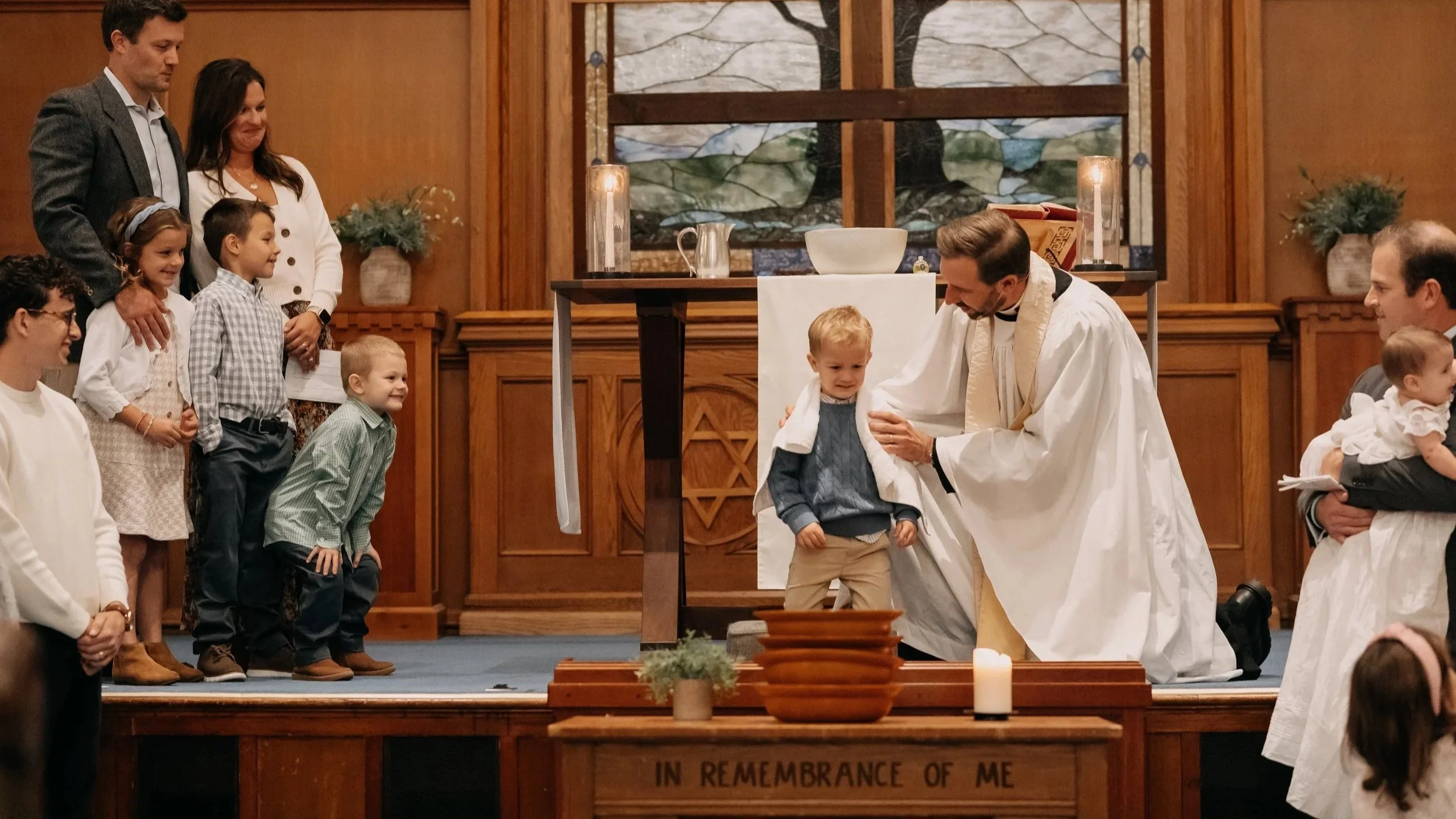
Celebrating the Sacrament of Baptism
On April 5 we will have the joy of celebrating the sacrament of baptism. Here’s who should consider participating.
Dear Redeemer Family,
In the near future, on April 5, we will have the joy of celebrating the sacrament of baptism. Here’s who should consider participating:
You have already given yourself to Jesus in faith but for whatever reason, have never taken the step of baptism. If that describes you, then this is a good opportunity to seal your belonging to Jesus and to his church.
You are right on the edge of converting to the Christian faith. You haven’t made the decision yet, but you’re seriously considering it. If that’s you, think of this as a good opportunity to make up your mind and commit.
You are a Christian parent of an unbaptized child. If that is you, bring your child to receive baptism! The Lord Jesus loves your little one.
Now it may be helpful to offer a brief refresher on what we believe about the sacrament of baptism. If you would benefit from that, keep reading!
WHAT IS BAPTISM?
Many of you are relatively new to the Christian faith and new to participating in a local church, especially a local church that practices ancient traditions like Redeemer does. So let me say a word about what Christian baptism is.
Jesus answered, “Truly, truly, I say to you, unless one is born of water and the Spirit, he cannot enter the kingdom of God." - John 3:5
Go therefore and make disciples of all nations, baptizing them in the name of the Father and of the Son and of the Holy Spirit. - Matt. 28:19
Do you not know that all of us who have been baptized into Christ Jesus were baptized into his death? We were buried therefore with him by baptism into death, in order that, just as Christ was raised from the dead by the glory of the Father, we too might walk in newness of life. - Romans 6:4
Because they formerly did not obey, when God's patience waited in the days of Noah, while the ark was being prepared, in which a few, that is, eight persons, were brought safely through water. Baptism, which corresponds to this, now saves you, not as a removal of dirt from the body but as an appeal to God for a good conscience, through the resurrection of Jesus Christ. - 1 Peter 3:20-21
In Christian baptism, a person is united with Jesus in His death and resurrection. We call baptism a sacrament because it is a physical, tangible, material ritual that is filled with a spiritual, intangible, immaterial grace. Something physical is happening: the person is either being immersed in water or having water poured over their head. Something spiritual is happening: that person is mysteriously (in a way that we can only barely begin to comprehend) being joined together with the Lord Jesus and, therefore, becomes a part of the church - the body of Christ.
THE STORY OF BAPTISM IN THE OLD AND NEW TESTAMENTS
The Old Testament prefigures baptism. There are many examples, but here are the big ones: the creation of the world, the salvation of Noah and his family from the flood, the exodus of the Israelites through the Red Sea, and the Israelites crossing the Jordan River out of the wilderness and into the Promised Land.
Christ commands us to be baptized and to baptize others.
The New Testament authors teach on the centrality of baptism in a Christian’s life.
WHO SHOULD BE BAPTIZED?
Any person, young or old, who wishes to put their trust wholeheartedly in Jesus for their redemption.
Any child of a baptized adult Christian who will raise that child in the faith as a part of the church.
WHY DO WE BAPTIZE INFANTS AND LITTLE CHILDREN?
“We start talking to our children not because they understand us, but so that they will. Baptism is God's language whereby he starts talking to his children and initiates a relationship with them. Sacraments are a word after all.” - Peter Leithart, The Baptized Body
We baptize children, not because we think that an adult profession of faith doesn’t matter (it does and should come at Confirmation - the other side of the coin to infant baptism), but because we seek to raise Christian children within the church.
Jesus said, “Let the little children come to me and do not hinder them.” We take the Bible at its word when it says that little children can come directly to Jesus; they do not have to grow up first.
FOR FURTHER STUDY
I would heartily recommend Peter Leithart’s excellent little book The Baptized Body to anyone who has serious questions about Christian baptism (especially baptizing children) and would like to learn more about it. Copies are available for sale at the book table on Sunday mornings.
You are also invited to join our upcoming Baptism Class on March 10. Together we’ll learn more about the sacrament of baptism—what it is, what it means and symbolizes, how it's done, who it's for, and what the church has historically understood about baptism. All are welcome regardless of whether you or your children are planning to be baptized. Click here to register.
Finally, if you are a teenager or an adult who has never received Christian baptism and you would like to, please email me. I would be delighted to get together and talk with you about it. If you are a parent and your child has not been baptized, same invitation! It would be a joy to baptize your little one. You can click here to register to be baptized on April 5.
In the Father’s love,

Invitation to Private Confession
Over the years, I have found confession, in all its forms, to be a deeply helpful and encouraging practice. I find that, once I get over my fears, God is more tender than I expected, my friends are more understanding than I anticipated, and the priest to whom I confess is utterly without judgement or condemnation.
Redeemer Family,
Over the years I have found confession, in all its forms, to be a deeply helpful and encouraging practice. I find that once I get over my fears, God is more tender than I expected, my friends are more understanding than I anticipated, and the priest to whom I confess is utterly without judgement or condemnation. Confession has helped me receive and experience the grace that God offers to me every day.
I hope the same can be true for you, and to that end I want to offer some potential next steps if you’d like to practice confession during this season of Lent:
Confess directly to God: Read Psalm 32:1-4 and then spend some time writing down the things you want to confess to God. This will help your stream of consciousness not get derailed by random thoughts, to-do lists, or other worries. After reading your list aloud to the Lord, conclude by reading the rest of Psalm 32, verses 5-11.
Confess to a Priest: Schedule a 15-minute confession with either me or the Rev. Lane Cowin.
This is not a time for chit-chat or small talk. We will not be catching up on how things are going.
This is a solemn time (with deep joy waiting on the other side).
Prepare for this time by writing down a list of both your sins of commission (wrong things done) and sins of omission (right things left undone).
When you arrive for your session, we will sit down side by side, light a candle, and use the brief liturgy in the Book of Common Prayer to give structure to our time.
When the liturgy concludes, we will thank each other and bid each other farewell, but will not slide into small talk.
This formal structure allows the priest to serve as simply an aid to your conversation with the Lord. The focus is on you and God, not the priest.
Confess to Trusted Friends: Reach out to a close friend or friends who are mature in their faith, not prone to gossiping, overreacting, or minimizing sin. Let them know ahead of time that you desire to confess to them (instead of springing it on them without warning). Talk about what happened and why. Do your best to be straightforward and honest, not exaggerating or slipping into defensiveness. Ask your trusted friends to pray for you, that you might be forgiven and have the courage to truly repent - turning away from sin and turning towards the goodness of Christ.
Redeemer family, I love you all dearly. I hope that we can be the kind of parish where, instead of posturing our virtue we can be open, honest, and vulnerable about weaknesses, failures, and sins. While a church community should never be a “safe place” to commit sins, it absolutely must be a safe place to confess our sins.
In the Father’s love,
The Definition and Purpose of a Vestry
Every March Redeemer members elect two members to join the vestry—our parish's governing body—for a three-year term. Any member in good standing can be nominated to serve on the vestry. If you are a member of Redeemer, we encourage you to prayerfully consider whom you might nominate for these important roles.
Every March, members of Redeemer elect new members to the Vestry—our parish's governing body. This year we are electing two new Vestry members. Any member in good standing can be nominated to serve on the vestry. If you are a member of Redeemer, we encourage you to prayerfully consider whom you might nominate for these important roles.
Nominations are open through Sunday, February 22.
Nominees will be announced in our Parish Newsletter on Thursday, March 5, and during our worship services on Sunday, March 8.
Voting will be conducted online the week of Sunday, March 8 through Sunday, March 15.
Thank you for your thoughtful and prayerful consideration.
The Definition of a Vestry
What is a Vestry?
Our Vestry is an elected body of deeply committed, faithful lay members of the parish. The Vestry, under the leadership of the Rector, meets monthly to prayerfully steward the “temporalities” (i.e. material resources) of the church.
Demographics of a Healthy Vestry
It is desirable to have a well balanced Vestry that accurately represents the demographics of the congregation. A healthy Vestry is composed of both men and women, young and old, single and married, parents and non-parents.
Characteristics of a Good candidate for Vestry
A good candidate for the Vestry is a deeply committed, faithful, prayerful follower of Jesus and confirmed member of Redeemer. He or she does not need to be successful, influential, or impressive. He or she does not need to be an expert in the Anglican tradition. A good candidate wants to be on the Vestry in order to serve, not to be important or to try to impose their will on the church.
Expected Time Commitment
Not everyone will have the time to serve on the Vestry in every season of life. In addition to one monthly meeting on a weekday morning for three years, Vestry members will be expected to serve 2-3 additional hours per week on Vestry-related tasks. Vestry members will also attend a one-night annual retreat.
Process for Submitting Nominations
Prayer: This is a process that needs to be saturated in prayer.
Please submit your nominations here.
The Purpose of Redeemer's Vestry
Safeguard the Vision
The Vestry’s primary role is to protect the stated vision of the parish. Each member of the Vestry should be able to articulate and safeguard the primary visionary direction of the congregation. They should each know and believe the answer to this question: What is it we are trying to do here?
Insure the Values
While the Vestry may know the direction and what they are trying to do as a parish, the Values question is this: How are we actually trying to live out our vision? What are the means and programs by which we are working toward our Vision? Where do we focus our efforts? What are we going to do now?
Uphold Financial Integrity
The Vestry is also charged with protecting the financial integrity of the church. Through a designated Finance team, the Vestry should scrutinize the finances on a monthly basis. They should provide for an annual audit of all funds; approve budgets and make routine reports to the congregation. They should approve long-term financial contracts and basically act as guardians of the financial life of the parish to insure that the church has a long-term future and is operating in a trustworthy way with all funds that have been given or borrowed.
Support the Rector
Supporting the Rector is the fourth key role of the Vestry. If the Rector is the main agent in accomplishing 1, 2, and 3 above, then the Vestrys’ primary role then is to help the Rector accomplish these things. Vestry leadership is never honorary; they are not rubber stamps for what the Rector decides is best. But they are not either to be ‘devil’s advocates’, the loyal opposition, or representatives of any special interest groups or programs in the parish. The Vestry has one job in a sense: help the Rector to lead the parish in 1, 2 and 3 (above) and support him however they can.
Model Sacrificial Giving
The final role of the Vestry is to model sacrificial, tithe-based giving to the parish. The Vestry should be among the most generous and financially committed members of the church. Why? Obviously, the leadership should never ask members to give beyond their own willingness to give; their own personal level of commitment. Leaders lead in every area, but the Vestry should be strong givers because people who are sacrificial givers…tithers…have usually discovered in themselves a heart of generosity that will help create a parish-wide culture of generosity in the years to come.*
*Language borrowed from our friend The Rev. David Rosenberry.
Author
- 149
- Dan Marotta 16
- Casey Cisco 14
- Christian Hayes 5
- Lane Cowin 4
- Jeff King 3
- Casey Cisco 3
- Ben Lansing 3
- Mikala Thompson 3
- 2
- Claire Lewis 2
- Rachel Capel 2
- Christian Hayes 2
- 2
- 1
- Josh Gibbs 1
- Elizabeth King 1
- Mitchell Waters 1
- Paul Brasler 1
- Stephanie Workman 1
- Will Clark 1
- Cameron Bonsell 1
- 1
- Isabelle Huggard 1