
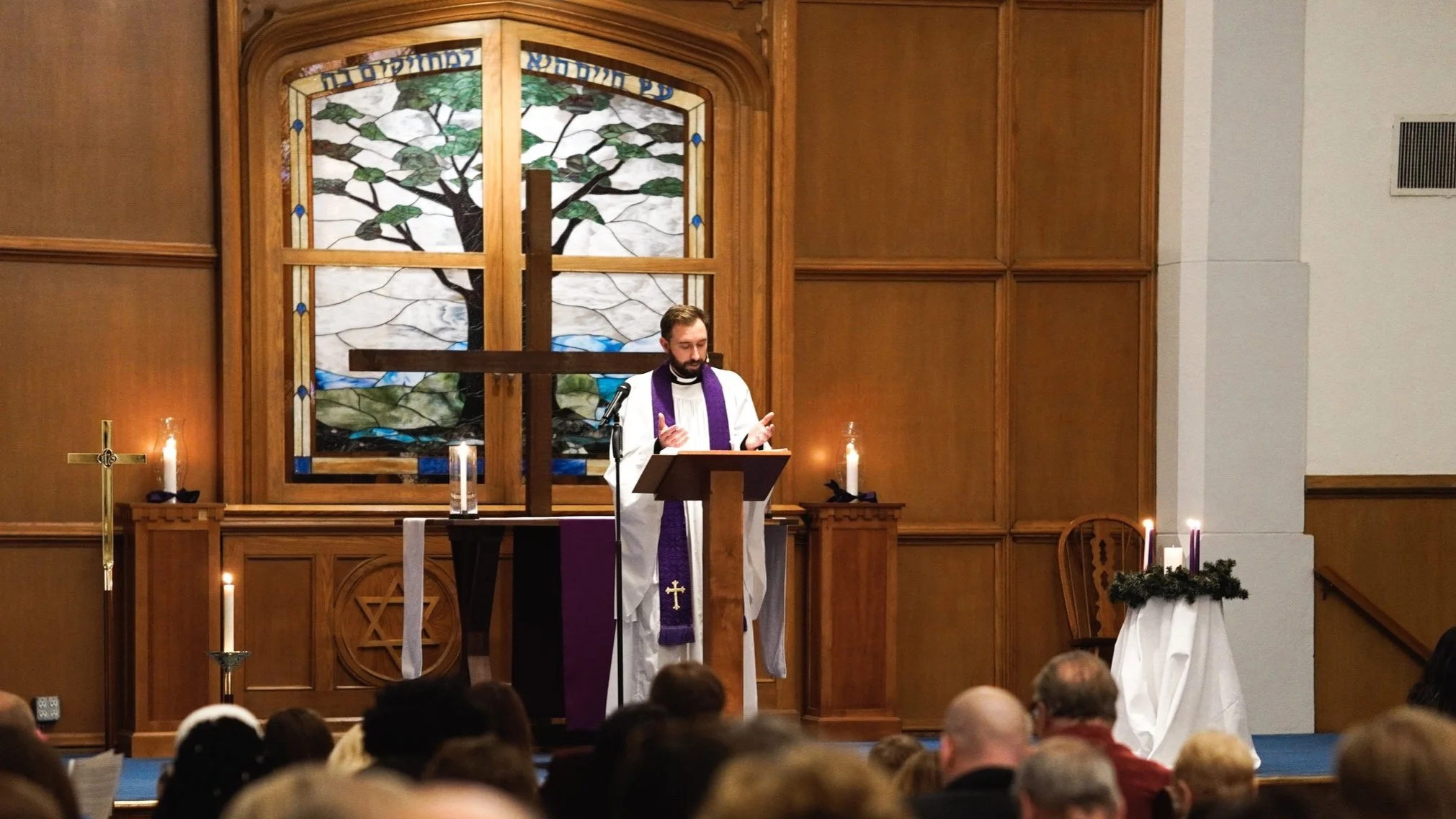
Is Christmas a Family or Church Holiday?
The answer to this question has undergone a dramatic shift in the past few decades. For hundreds of years the answer was a quick and easy “church holiday.” What else could celebrating the birth of our Savior be? Of course, there were family celebrations that often accompanied Christmas church celebrations, but these were understood to be secondary.
Is Christmas a Family or Church Holiday?
The answer to this question has undergone a dramatic shift in the past few decades. For hundreds of years the answer was a quick and easy “church holiday.” What else could celebrating the birth of our Savior be? Of course, there were family celebrations that often accompanied Christmas church celebrations, but these were understood to be secondary.
However, as surely all of us now recognize, the increased emphasis on family gift-giving and the overall decreased cultural acceptance of church participation has led to a quiet, but devastating swap. First the nuclear family rose to the #1 spot on the priority list for Christmas celebrations, then the church fell from #2 to basically dropping entirely off the charts all together. For many of the older generations, Christmas (along with Easter) was considered one of the most important days of the year to attend church (even if you skipped almost all the other days). However, for the younger generations, the idea of attending church on Christmas now sounds terribly inconvenient. It’s becoming normal, even amongst sincere Christians, to participate in worship on most days except Christmas.
What is fascinating about this shift is that it hasn’t produced the feelings and enjoyment of Christmas that it promised. Rather than Christmas celebrations being more fun and meaningful because they are no longer interrupted by “having to go to church,” many people are finding their Christmas celebrations empty and devoid of real meaning. Aside from ordering each other gifts online, eating a ton of unhealthy food, arguing about politics, and watching TV together… what is this even about? What is the point?
One of the most common refrains from Christians who are discouraged by the commercialization of Christmas is, “How do we keep Christ in Christmas?” The answer need not be a mystery - or rather, the answer lies in returning to the mystery. The best possible way we can enjoy the rich meaning and purpose of Christmas, the highest-impact thing we could do to “keep Christ in Christmas,” is simply to worship the Lord Jesus with our church family. Let’s gather together to wonder at the mystery of the incarnation - God has become a man. What a marvelous mystery this is!
Friends, if you are physically able, let’s gather together for worship on both Christmas Eve and Christmas Day. We can do this and celebrate with our families - and I think we will find that each enriches the other. I’ll see you there.
In the Father’s Love,

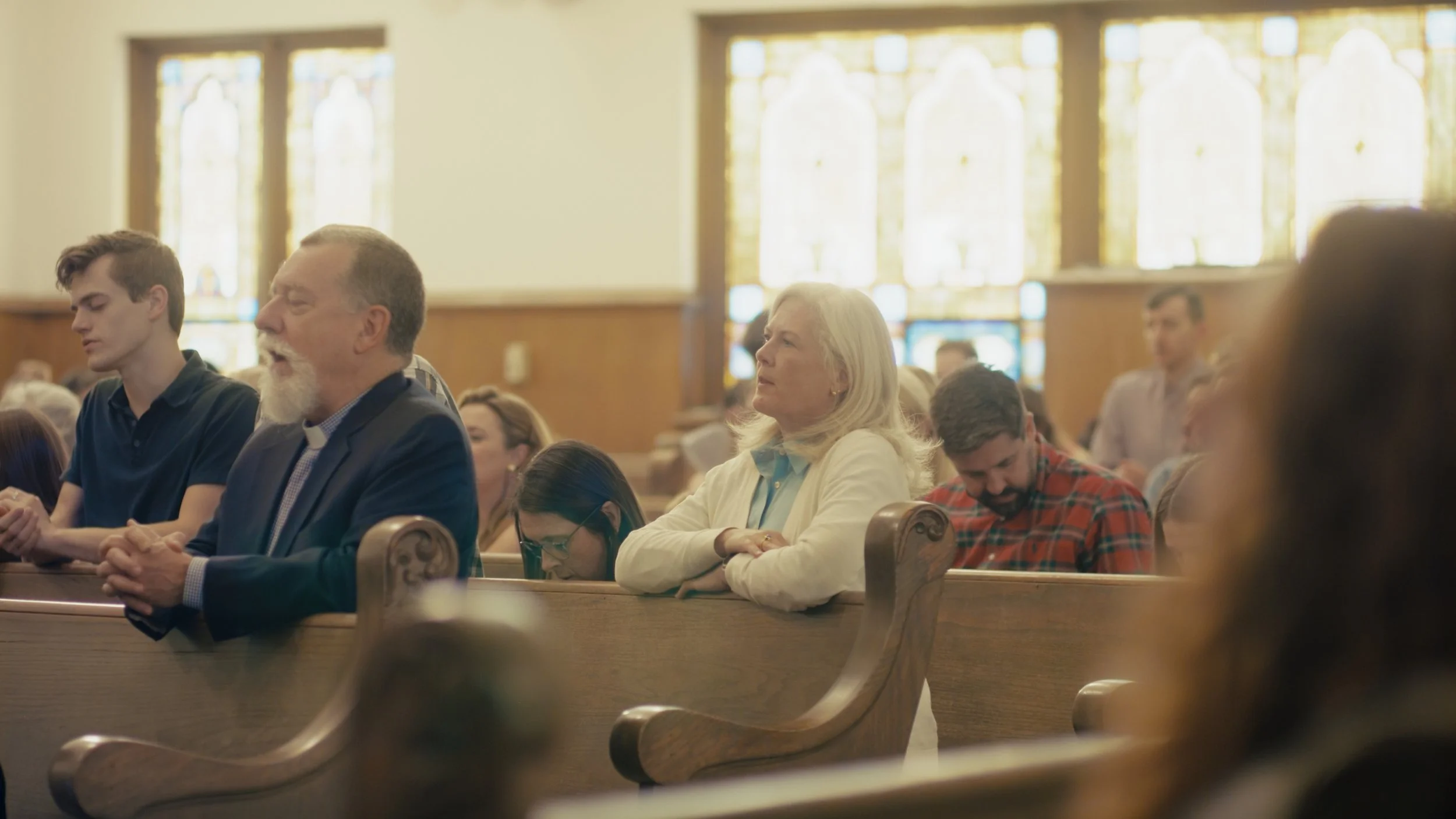
A New Way to Begin Sunday Worship for Advent and Christmastide
During the seasons of Advent and Christmastide, we will begin our worship services on a more contemplative note to help our hearts, minds, and bodies prepare.
Dear Redeemer Family,
During the seasons of Advent and Christmastide, we will begin our worship services on a more contemplative note to help our hearts, minds, and bodies prepare.
Here is the new flow, beginning at 8:55 a.m. and 10:55 a.m.:
Five-minute musical prelude. A time to sit or kneel, be still, and reflect.
A bell chimes three times, calling us to worship the triune God, Father, Son, and Holy Spirit.
Ten seconds of silence.
A poetic invitation is read aloud.
The processional song begins and the service continues as usual.
The Advent season is not merely preparation for the celebration of Christmas (although it certainly is that), it is also preparation for the return of the Lord Jesus to judge, renew, and restore all things. Therefore, in keeping with the theme of preparation, let’s lean into this new (actually, quite old) way of beginning the worship service.
What does this require of you? Arriving 10 minutes before the service begins. So, 8:50 a.m. before the 9:00 a.m. service and 10:50 a.m. before the 11:00 a.m. service. For some, this may be too much of a stretch and we understand. However, if you are able, give it a try!
I’ll see you tomorrow as Redeemer turns 8 years old and we begin a new church year.
In the Father’s Love,

Keep Advent Weird
If you're tripped up by the apparent false start of Advent, you're in good company. Christians do New Years weird. We don't start with fanfare and champagne; we kick off with minor keys and cries from “lowly exile.” Tish Harrison Warren notes that part of the usefulness of Advent is to “make Christmas weird again, to allow the shock of the incarnation to take us aback once more.” I like this because the Incarnation of the Son of God is nothing less than an earthquake, and it should strike us as such.
Dear Friends,
If you're tripped up by the apparent false start of Advent, you're in good company. Christians do New Years weird. We don't start with fanfare and champagne; we kick off with minor keys and cries from “lowly exile.” Tish Harrison Warren notes that part of the usefulness of Advent is to “make Christmas weird again, to allow the shock of the incarnation to take us aback once more.” I like this because the Incarnation of the Son of God is nothing less than an earthquake, and it should strike us as such.
Our problem is that we tend to get comfortable with strangeness. We lose the wonder. We drag glory down and call the holy works of God “normal” when they are anything but. We live in miracles.
Our Youth Fellowship is working to keep the Incarnation strange by spending a few weeks of Advent getting stuck on the miracle of God becoming man. This week we are talking about the meaning of the Incarnation, and we'll focus on one verse from 1 John: “In this the love of God was made manifest among us, that God sent his only Son into the world, so that we might live through him” (4:9).
Not only does John offer the Incarnation as the proof of God's love, he also points to God's final purpose in it: so that we might live through him.
An easy way to lose the wonder is to forget prepositions. Christ did not come so that we could live next to God, near God, or even under God. Jesus took on flesh so that we could live through him. “In” is another appropriate preposition Scripture uses.
St. Athanasius, boldly flirting with blasphemy to underscore the glory of the Incarnation, put it this way: “For the Son of God became man so that we might become God.” This statement should startle you. But the apparent overstatement helps us to get the shock: If we think that Jesus came to give us any other life than his very own, we've missed the Gospel. Scripture is clear: we live in Christ. Not beside him. Not across from him. But in him. Again, we live a miracle. In taking on human form, Jesus has made us “partakers of the divine nature” not bystanders of it (2 Peter 1:4). How is that for weird?
Happy waiting,

Director of Youth Fellowship

Leading with Christian Friendship
“I come to see my friends.”
It was a tentative answer preceded by silence and knowing glances. I had just asked our students, “Why do you come to Youth Fellowship?” I think they all wondered if Christian friendship was a sufficient answer.
Even if it’s not everything, it’s a perfect start.
“I come to see my friends.”
It was a tentative answer preceded by silence and knowing glances. I had just asked our students, “Why do you come to Youth Fellowship?” I think they all wondered if Christian friendship was a sufficient answer.
Even if it’s not everything, it’s a perfect start.
Christian friendship in no way falls short of God’s desires for us. It is at the heart of the gospel. While we were still sinners, Christ died to reconcile us to God. Friendship is one of the graces of faith. Friendship with God was accorded to Abraham, the father of our faith, and it was the name Jesus gave to his disciples before he went to the cross when he said they they were no longer called servants but friends (John 15:15).
I am so grateful that friendship marks the experience of our students within our ministry because we also lead with it.
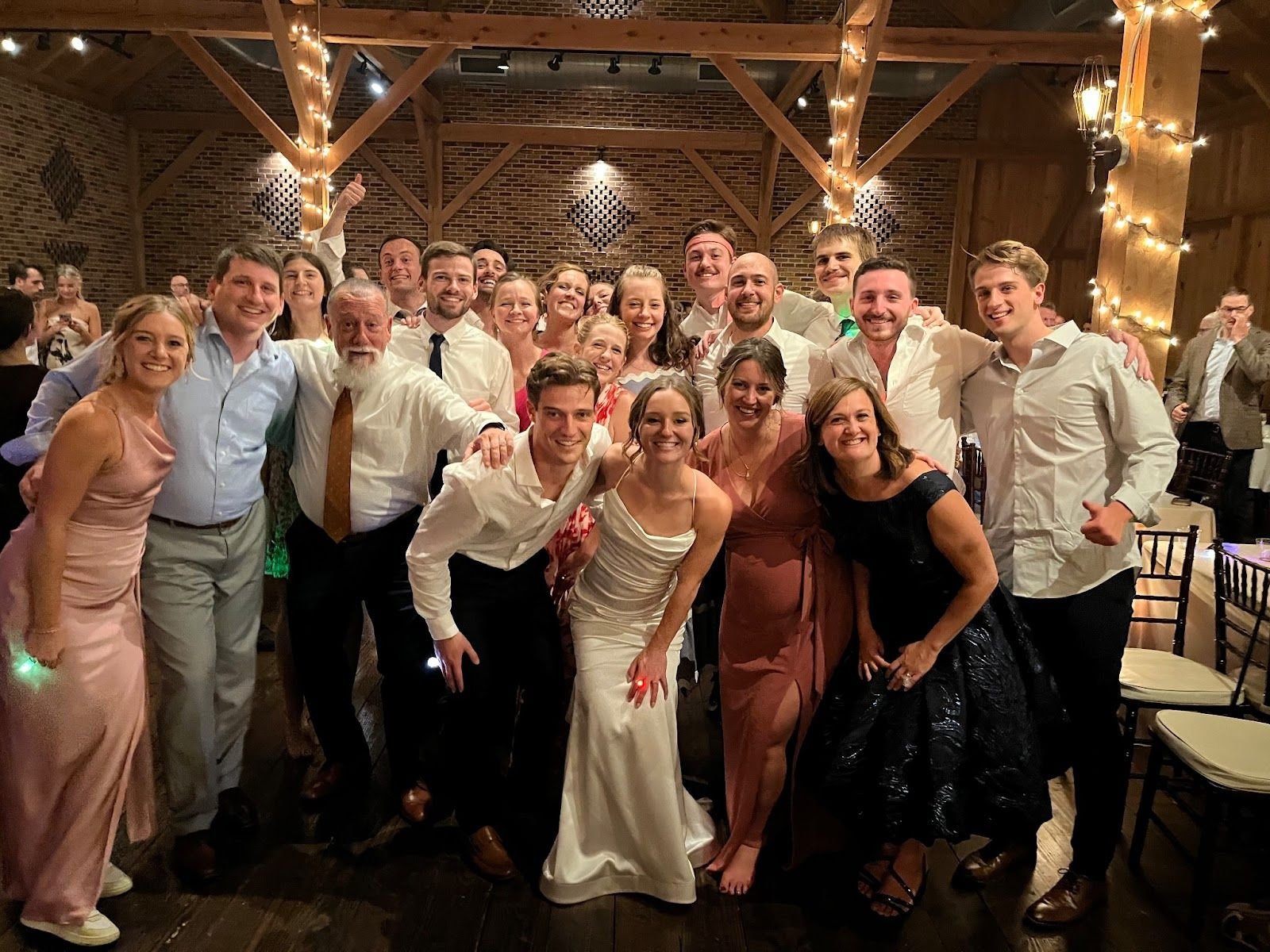
This picture tells a wonderful story of Christian friendship that God has been working in for years through the fellowship of Redeemer Anglican Church. It is our Youth Fellowship team celebrating the wedding of Natalie Gillisse and Jake Davis.
Four years ago, we were largely strangers to one another who began serving the students of Redeemer. Now we are friends – good friends. The kind of friends that make up your wedding party. The kind of friends that you ask to be godparents after the birth of your child. The kind of friends that you hold in mind as you begin to plan your life. The kind of friends you pray and fast for as they are job hunting in Richmond.
Two of our leaders, Kate Ramsdell and Emily Murray, stood with Natalie as her bridesmaids. I (Christian) got to pray the blessing after Natalie and Jake made their vows. Our former worship leaders, Spencer and Meg Mamo, flew in from Colorado. Jake will also hold the honor of becoming the first leader we’ve ever recruited to our team through marriage!
We highlight these stories because we are always teaching our kids, even when we’re not trying. And one of the beautiful things that our Youth Fellowship team is modeling for your sons and daughters is the goodness and the potential for friendship in the Church as they become adults.
We want our kids to see the joy of serving Christ together as we serve his Body. We want our kids to see that coming together even after a long day at the office or the hospital or law school classes brings us life.
God has made us friends.
And so when you catch glimpses of the friendships that your sons and daughters are forging in our fellowship together, pray that the roots of these friendships will grow deep.
With Peace,
RETREAT TESTIMONY
It’s 3:55pm on Friday, October 18. Retreat weekend is finally here. Students begin to gather at the Parish House with duffle bags, backpacks, pillows (or pillow pets) and all those extra items that didn’t quite make it into the first round of packing. The energy of students greeting their friends and saying final goodbyes to parents bubbles to the surface. After circling the block twice and repacking to make more room in the van, we set off to Smith Mountain Lake. I hear the dull hum of conversation and laughter emanating from the backseat.

While the students look forward to a weekend to relax, fellowship with friends, and connect with their faith on a deeper level, I’m anticipating how God might use these relationships to draw us closer to one another and, in turn, to learn a bit more about His goodness. I’ve experienced a taste of His unfailing love in the mutual bonds of friendship developed with my co-leaders and I hoped to model Christ-like friendship to our students.
One of the joys of leading in this Fellowship is witnessing relationships formed in real-time. I had the opportunity to catch up with one of our 10th grade students, Riley Helms, to recap the weekend. She described the dynamic of that van ride to Smith Mountain Lake. She shared that being an “older” student on the retreat meant that younger students wanted her perspective and opinions. She said, “They were very much wanting all the details on [my life], but, at the end of the day, you have to know God before understanding how to love others.” She described her experience in Youth Fellowship like this, “It has strengthened friendships and helped me remember and relate to [these] girls a lot better. You are human and you feel these same emotions I feel.”
I’m struck by Riley’s wisdom. As I was focusing on what lessons I could impart on the students in our Fellowship, she was doing the work of the Gospel in the backseat of the van. She faithfully listened to younger students and pointed them to Christ – to have a relationship with Him as the ultimate priority. Wow! Riley spoke about the retreat as a “moment to relax” and yet she’s loving others through mere presence in our Fellowship as an image-bearer of Christ’s love for the least of these and the youngest in our Youth Fellowship.
“But if we walk in the light, as he is in the light, we have fellowship with one another, and the blood of Jesus, his Son, purifies us from all sin.” 1 John 1:7


What does it mean to be a nursery volunteer?
Over the past few weeks, several people have approached me about volunteering in the nursery. While they initially ask about logistics—arrival times, expectations, and so on—the conversation invariably leads to this question: "Is volunteering in the nursery just babysitting?"
Over the past few weeks, several people have approached me about volunteering in the nursery. While they initially ask about logistics—arrival times, expectations, and so on—the conversation invariably leads to this question: "Is volunteering in the nursery just babysitting?"
For many who grew up in church, the nursery was often seen as a place where babies were whisked away so their sounds, bodily functions, and general "baby-ness" wouldn't interrupt the flow of the service. After all, we have all experienced the harried local pastor or priest trying to talk over the din of screaming babies.
Alternatively, you might recognize a nursery as a place that provides a safe, developmentally-appropriate environment where babies can receive care as their parents have a break from caring for their children and can worship, listen to a sermon, and hopefully greet their neighbor before picking up their child from the nursery.
Whether you're in one camp or the other—or both—you're not wrong! A nursery provides a space where little ones and their parents can receive care. By entrusting their child to a volunteer or staff member, parents can receive a brief respite. And if it helps keep the parish priest sane, all the better! However, there's an even deeper dimension to our work, rooted in our beliefs about children and their relationships with God.
Our Beliefs About Children
Around Redeemer you will hear us saying, “We believe that children have a full spiritual life.” This life does not begin the minute they can fully form sentences, go to the bathroom independently, or regulate their emotions—it starts in the womb.
Multiple places in the Bible show us that God knows us in our mother’s womb.
“Before I formed you in the womb I knew you, and before you were born I consecrated you; I appointed you a prophet to the nations.” - Jeremiah 1:5
"For you created my inmost being; you knit me together in my mother's womb. Your eyes saw my unformed body; all the days ordained for me were written in your book before one of them came to be.” - Psalm 139:13–16
“Listen to me, O coastlands, and give attention, you peoples from afar. The Lord called me from the womb, from the body of my mother he named my name.” - Isaiah 49.1
Not only does God know us, but in some miraculous way, we can recognize Him. The Gospel of Luke describes when Elizabeth, pregnant with John, greets the pregnant Mary: "And when Elizabeth heard the greeting of Mary, the baby leaped in her womb. And Elizabeth was filled with the Holy Spirit." Elizabeth describes this event in Luke 1:44: “For behold, when the sound of your greeting came to my ears, the baby in my womb leaped for joy.” In this passage, John the Baptist knew and recognized his Savior while still in the womb, long before reaching any outward developmental milestones.
If we believe that God can meet our littlest brothers and sisters even in the womb, how much more should we seek to inhabit God's story with them, recognizing them as our “fellow heirs according to the promise”?


Tell the Story
Like us, these children are part of the same grand narrative of Creation, Fall, Redemption, and New Creation. On Sundays, we practice this reality through our liturgy and Holy Communion. In the nursery, we follow a similar pattern by remembering God’s story through reading books based on scripture, singing songs, and praying with and for these little ones.
As we care for these babies and pray in their presence, we are not only practicing our remembrance of God's story but also actively reminding these little ones that they have a place; they belong in God’s story and in the fellowship of the saints. Our prayers serve as a powerful instrument of spiritual formation—both for us as we strive to care for these little ones, and for the babies themselves.
Through partnership with parents in care and prayer, we consistently convey the message: "You belong!" This refrain echoes through the books we read, the songs we sing, and our commitment to praying with and for these families and their children. As we steward not just the physical needs of these babies, but their spiritual lives as well, we are participating in the work that God has already started in welcoming these smallest members into his family.

Join Us
So is serving in the nursery just babysitting? In one sense, yes! However, this doesn't mean something beautiful and holy isn't happening during our seemingly ordinary Sunday morning.
May we at Redeemer Anglican Church become a community where children, from the tiniest babies to the most energetic toddlers, hear the comforting refrain of "You belong! You belong! You belong!" May this resonate in every nursery volunteer's gentle care and in every prayer whispered over a child. As we nurture these young souls, may they grow deeply rooted in the knowledge that they have a place in God's story and in our church family.
If you'd like to volunteer in our nursery, I would love to meet with you. If you would like to support this ministry but can't serve on Sunday mornings, we invite you to pray for the children at Redeemer. Below, I've included one of the prayers from the Book of Common Prayer that our nursery volunteers pray on Thursdays.
"Watch over thy child N., O Lord, as his days increase; bless and guide him wherever he may be, keeping him unspotted from the world. Strengthen him when he stands; comfort him when discouraged or sorrowful; raise him up if he falls; and in his heart may thy peace which passeth understanding abide all the days of his life; through Jesus Christ our Lord. Amen"
Grace,

Mikala Thompson
Assistant Director of Redeemer Kids

Sacred Time and The Liturgical Calendar
“Church time is sacred time with a story. And in sacred time, memory, imagination, and meaning work together so we can celebrate the shared stories of God’s activity in human history by remembering them as though they were happening to us. Memory enables us to remember and recall the story; imagination enables us to relive it, make it new again; and meaning interprets and applies it to our actions.” – Young Children & Worship, Steward & Berryman
“Church time is sacred time with a story. And in sacred time, memory, imagination, and meaning work together so we can celebrate the shared stories of God’s activity in human history by remembering them as though they were happening to us. Memory enables us to remember and recall the story; imagination enables us to relive it, make it new again; and meaning interprets and applies it to our actions.” – Young Children & Worship, Steward & Berryman
If you’ve been around Redeemer Kids at all in the past couple of years, you’ve seen a giant piece of gray felt hanging in several of the kids’ rooms with what looks like a clock face on the front. Only instead of numbers, there are blocks of color that create a circle and a felt arrow that moves around that circle by ticking around the 52 blocks each week; it moves steadily and slowly like the minute hand on a watch face. This simple felt art on the wall is how we introduce the children in our ministry to the "sacred time with a story" we call the liturgical calendar, and it has become one of my very favorite lessons in the curriculum year.

This is one of the few lessons that sync up every room in Redeemer Kids on the same Sunday, and children who grow up in Redeemer Kids will hopefully know this story by heart by the time they finish 5th grade! Every year on Christ the King Sunday – the very last Sunday of Ordinary Time and the last green block of the long, long stretch of green blocks that make up half the church calendar – we break from our pattern of listening to Old Testament stories of judges, prophets, and temples to position ourselves for the transition into the New Testament in Advent. The stories of the Old Testament that the children have heard are put in the metanarrative of Jesus as King: the King who will rule over every mighty king in history and defeat the death and sorrow that plagued Creation from the moment Adam and Eve were cast out of the Garden of Eden. We will close the old year out by remembering that every story points to Jesus the King. Then in two weeks, on December 1st, the capital-C Church will celebrate the start of the Christian new year! Only instead of entering the new year with fireworks and parties, we enter quietly, somberly, and with rich anticipation. We enter the new year through Advent, the season of waiting and watching, remembering how the Israelites waited on the Messiah, and now we all await his second coming together. Our felt calendar-clock ticks to the purple blocks — four of them — where we watch them move steadily each week, lighting candles in our Advent wreaths as we go. While our culture gets noisy with parades and parties and presents, our little rooms at church get quiet.

“[The Church calendar] is a powerful means of shaping our lives around God’s one big unfolding story as laid out in scripture. Rather than our lives turning around our own agenda, it turns around Christ. Rather than being about my own achievements and acclaim, my life becomes about what God has done in Christ.” — "The Church Year" from God's Big Story
Time is a funny thing, especially for children. We say the Messiah is coming, the Messiah has come, and the Messiah is here, all at once. We say time moves in a line and in a circle. The language we use about time can feel disorienting instead of enlightening! The Church calendar invites us to use our collective memory and imagination to help each child, and the rest of us, find our place in God’s time together across centuries and continents. In the next couple of months, particularly the months of December through February, the church will move through three seasons of the liturgical year – Advent, Christmastide, and Epiphanytide. During those months there are tangible and compelling ways to draw our children into the story of the Gospel, "God's one big unfolding story": by lighting candles on wreaths in Advent, celebrating the Eucharist together on Christmas morning, witnessing baptisms in Epiphany, and so much more. Telling the story of our faith by the way we inhabit time together is a powerful tool to unify our congregation, old and young, with the ancient church and believers around the world.”

Casey Cisco
Director of Redeemer Kids

What is a Pre-Election Prayer Vigil?
As the presidential election draws near and tensions in our country run high, it would be wise for us, as the people of the living God, to draw together in prayer for the peace, justice, health, and flourishing of our nation.
Redeemer Family,
As the presidential election draws near and tensions in our country run high, it would be wise for us, as the people of the living God, to draw together in prayer for the peace, justice, health, and flourishing of our nation.
Therefore, I am inviting all of you (plus any friends, family, or neighbors) to a Pre-Election Prayer Vigil, 7:00 - 8:00 p.m. on Monday evening, November 4.
Now, here’s what this IS and what it IS NOT:
What the Prayer Vigil is:
Liturgical prayer and free, extemporaneous prayer.
Space for stillness and silence.
Seeking the Lord and His will for our nation together.
Crying out before God for peace, justice, good governance, and just laws.
Humility before the Lord Jesus who is our true King.
What the Prayer Vigil is not:
A time of teaching in which Redeemer weighs in on political candidates.
An attempt to convince God to elect whichever candidate we prefer.
A space to be passive-aggressive in our prayers where we pretend to talk to God but are really using our prayers to criticize people who are politically different from us (my personal favorite!).
(Note: If you are interested in leaning into this time a bit more, you might consider re-listening to this sermon I preached on Palm Sunday earlier this year: The Posture & Purpose of Jesus’ Politics.)
Redeemer family, I love you all and I’ve been so encouraged by the thoughtful, nuanced, careful way that so many of you are engaging the political process. Well done! Keep it up. Let’s move forward into the coming weeks as people who are truly and delightfully different from what we hear on the news and read online.
In the midst of stress, let’s be cheerfully unfazed.
In the face of outrage, let’s use gentle words to turn away wrath.
In the presence of fear, let’s remain confident in our God.
And no matter what may come our way, let’s continue to find ways to pray for, love, serve, and honor those who appear to be our enemies. All with the deep resource that is the grace and mercy of the Lord Jesus in the good news of the Gospel.
I’ll see you in the sanctuary at 2715 Grove Ave. on Monday evening, November 4. It will be a quiet, simple time for us to kneel before the Lord together on behalf of our nation.
In the Father’s love,
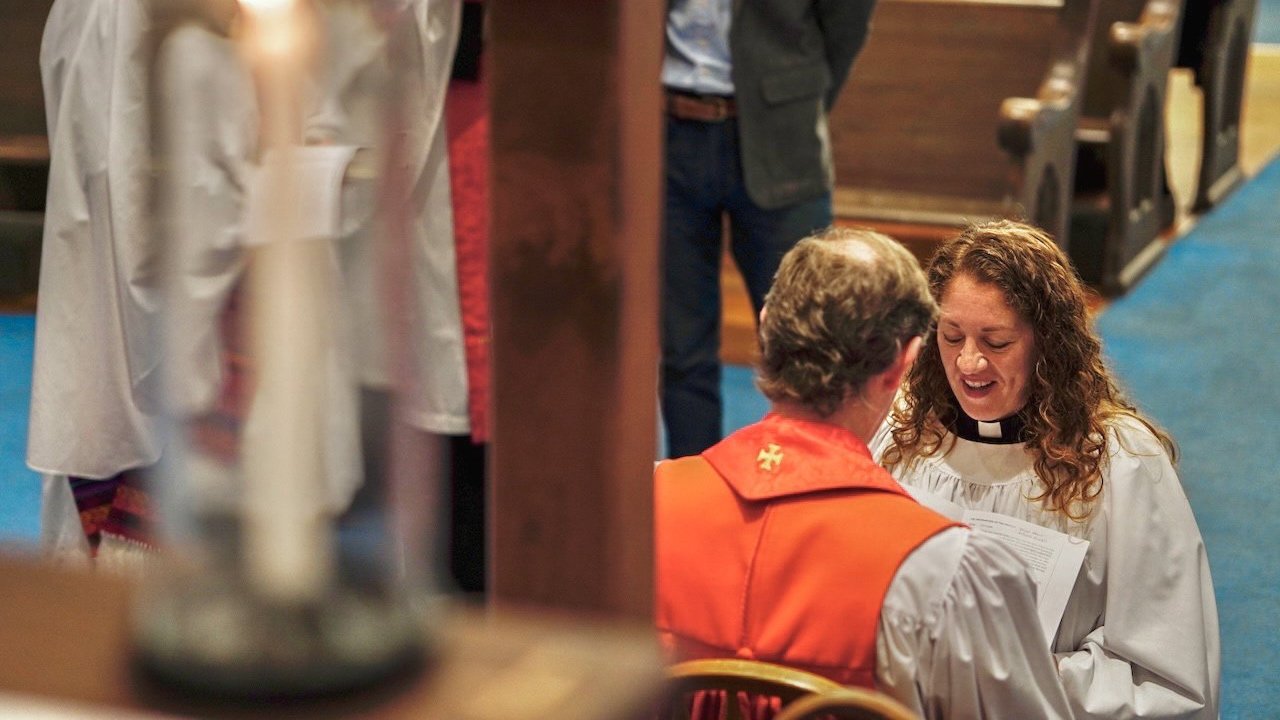
Clergy Development at Redeemer
During the Q&A portion of our Parish Town Hall last year, one of you asked me, very kindly, what sort of challenges our parish is facing. I answered that, amongst other things, a lack of ordained clergy to serve our parish was (and still is) one of the most difficult handicaps that Redeemer faces. While we have a fantastic team of people in leadership, both on staff and Vestry, we have very few ordained deacons and priests for a parish of our size.
Redeemer Family,
During the Q&A portion of our Parish Town Hall last year, one of you asked me, very kindly, what sort of challenges our parish is facing. I answered that, amongst other things, a lack of ordained clergy to serve our parish was (and still is) one of the most difficult handicaps that Redeemer faces. While we have a fantastic team of people in leadership, both on staff and Vestry, we have very few ordained deacons and priests for a parish of our size.
I want to give you a hopeful and encouraging update on this front! A number of our staff are in the ordination process and, Lord willing, in a few years' time, we may very well have A LOT more clergy to serve our parish.

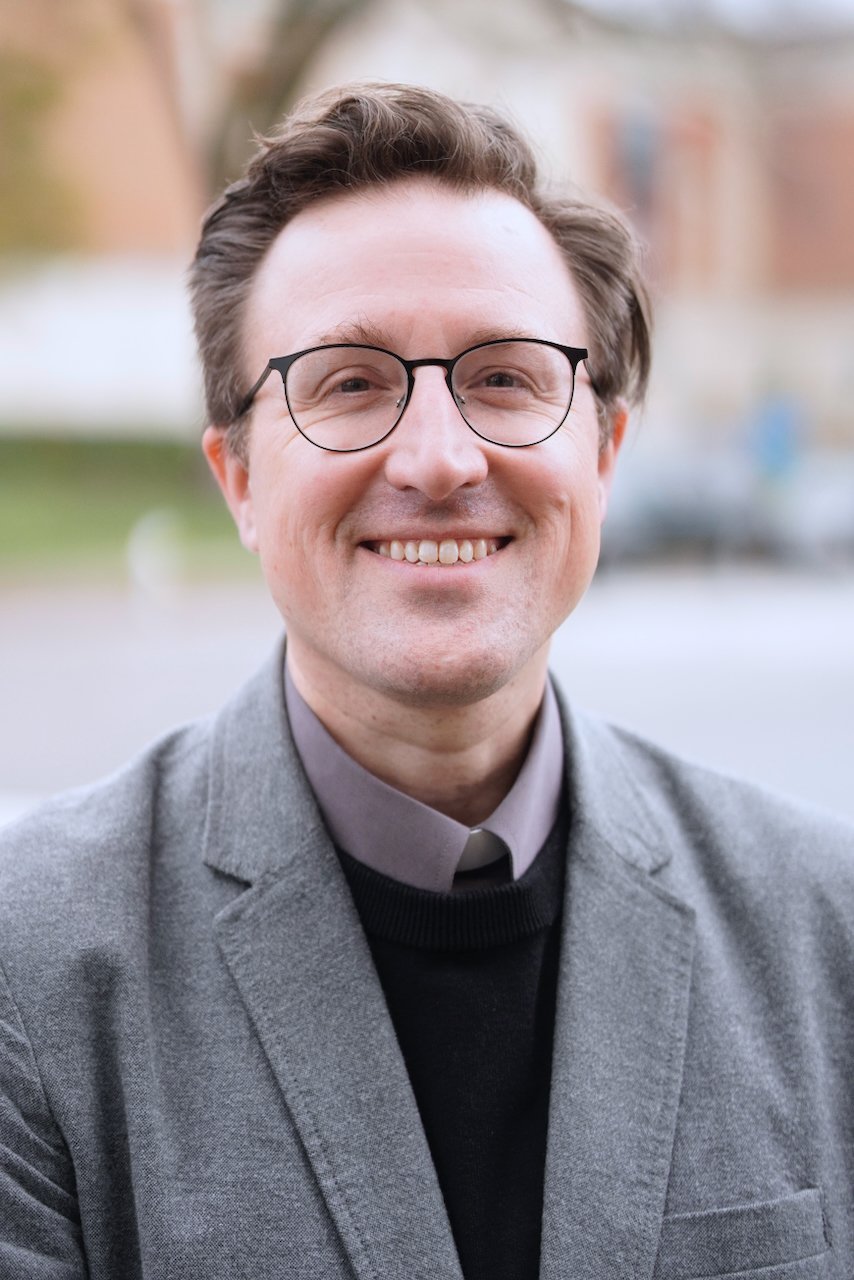


The Rev. Steve Byrd, Deacon, ordained 2022.
The Rev. Ben Lansing, Deacon, ordained 2023.
The Rev. Lane Cowin, Transitional Deacon, will be ordained to the priesthood on November 9, 2024.
Will Clark, Has completed seminary training. Currently in the preparation stage, seeking ordination to the priesthood, will likely be ordained sometime between 2025-2027.
Oldson Duclos, Has completed seminary training. Currently in the preparation stage,seeking ordination to the priesthood, will likely be ordained sometime between 2025-2027.
Tee Feyrer, Currently in seminary, seeking ordination to the priesthood, will likely be ordained sometime between 2026-2028.
Of course, this only details our current staff who intend to stay at Redeemer. It does not include the following people:



The Rev. David Comeau, ordained 2021.
The Rev. Danny Hindman, ordained 2022.
The Rev. Lewis Lovett, ordained 2023.
These men were all ordained to the transitional diaconate and priesthood during their time at Redeemer before being sent out to plant All Souls Anglican Church (David and Danny) and Resurrection Anglican Church (Lewis).
INVITATION
In just a few weeks time on November 9, our Bishop, the Rt. Rev. Chris Warner, will be with us to ordain Lane Cowin from the diaconate to the priesthood. This is a great opportunity to celebrate not only what the Lord is doing in and through our sister Lane but also the way in which our God is faithfully raising up new servants to care for his Church.
Thanks be to God!
In the Father’s love,

Confirmation + Membership: A Way to Practice Belonging
On Sunday, November 10th, we have the joyful opportunity for you to be Confirmed by our Bishop and welcomed as new Members into the Parish. This is a wonderful event that takes place only twice a year, and is available to all who have been baptized and attended our Foundations class! I thought I’d take a moment to share a few details about what it means to take this important step in your faith.
“Why should I become a member of a local church?”
Over the years I’ve heard a number of well-intentioned and sincere objections follow this question like the following:
Membership feels exclusive, like some people are in and some are out. This isn’t very hospitable.
Membership feels too institutional, like the church is a club and not a family.
Membership means requirements and obligations which are anti-Gospel and anti-Grace.
It might surprise you to learn this, but I used to strongly agree with each one of these objections. However, over the years, my thinking has changed significantly and - rather than membership working against hospitality, family, and Gospel - I’ve become deeply convinced that membership actually facilitates each of these!
Here’s how:
1. Membership facilitates hospitality.
Luke 14:12-14. "He said also to the man who had invited him, 'When you give a dinner or a banquet, do not invite your friends or your brothers or your relatives or rich neighbors, lest they also invite you in return and you be repaid. But when you give a feast, invite the poor, the crippled, the lame, the blind, and you will be blessed, because they cannot repay you.'”
In Christ’s teaching, we are specifically instructed to open our doors and invite in those who are on the outside. This passage is not just about inviting in the poor vs the rich (though it is also about that), it is about extending hospitality to outsiders vs insiders. Now, if in the name of hospitality we say there’s no such thing as insiders or outsiders, then who will do the inviting and who will come to the party? You cannot invite others into the hospitality of God until you yourself have received the goodness of the Lord’s hospitality. You must be in before you can invite others in.
Once you are in, you realize there are others who are out - which puts you in the perfect situation to obey Jesus’ teaching on true hospitality. In this way, Membership (a formal and clear way of defining who is in and who is out) actually sets us up to obey the Lord, open our doors, and demonstrate real hospitality to others.
2. Membership makes the church more like a family.
1 Timothy 5:1-2. “Do not rebuke an older man but encourage him as you would a father, younger men as brothers, older women as mothers, younger women as sisters, in all purity.”
This passage instructs us to treat other people in the church like family. Then, our author (the Apostle Paul) goes on to give specific instructions about who to care for, how to care for them, and how to discipline people when they stray into sin. The assumption is, you can only operate as a family when it is clear exactly who is a part of the family. Paul is clearly not instructing us to treat all people like fathers, mothers, brothers, and sisters but rather the people who are a part of the church family. When such individuals stray into flagrant sin, they are (temporarily, and for the sake of encouraging repentance) removed from the church family. For this kind of familial love and discipline to work, there must be some sort of clear boundary line that delineates who is in the family and who is not.
Therefore, in order for the church to function like a family, we must know who, specifically, is a part of that family. The brothers, sisters, mothers, and fathers here is not meant to signify some abstract concept of warm relationships, rather we should be thinking of specific people. i.e. my brother-in-Christ Jeromy or my father-in-Christ David. Membership helps take us from the abstract to the specific in being a church family.
3. Membership showcases the Gospel.
Ephesians 2:8-10. “For by grace you have been saved through faith. And this is not your own doing; it is the gift of God, not a result of works, so that no one may boast. For we are his workmanship, created in Christ Jesus for good works, which God prepared before hand, that we should walk in them.”
“But Membership means requirements and obligations which are anti-Gospel and anti-Grace.” This is the one I hear most often. It is also the one to which I am, simultaneously, most sympathetic and which I disagree with the most strongly! I am sympathetic because it is absolutely true that the Gospel is the good news of the free gift of mercy and forgiveness won for us in the death and resurrection of the Lord Jesus. The Gospel is primarily about something God has done for us and not something that we do for God.
However, when we receive this free gift of mercy and forgiveness, we find that it changes absolutely everything about us. Our lives are no longer our own. We belong - body, mind, and soul - to the Lord. We begin to embody the good news of the Gospel, allowing it to shape our lives and affections.
Membership clarifies the implications of the Gospel for us and, therefore, showcases the beauty of the Gospel in the transformed lives of the members. If we resist Membership on the grounds that “the Gospel is not about doing stuff,” we are saying that the church is not to have any vision for what a redeemed and renewed life in Christ should look like. A quick, cursory reading of just about any New Testament book should quickly lay that objection to rest.
Dear friends, on November 10, 2024, our Bishop (the Rt. Rev. Christopher Warner) will visit Redeemer to confirm and welcome in new Members. I want to warmly and joyfully extend the invitation to Membership to absolutely all of you! If you would like to move forward here are your action items:
*(Prerequisite: Take the Foundations Class)
Step 1: Register to become a member on November 10.
Step 2: Fill out the membership and pledge form.
Step 3: Sign up for a pre-membership interview with Lane Cowin or Oldson Duclos.
Step 4: Arrive 30 minutes early to one of the services on November 10.
Step 5: Participate in the Confirmation & Membership service on November 10.
Step 6: Join the Bishop and other new members for lunch after the 11:00AM service.
This wonderful event only takes place twice a year, and is available to all who have been baptized and attended our Foundations class! If you have any questions about what it means to be a Member at Redeemer, or about the Membership process, please reach out to me.
In the Father’s love,
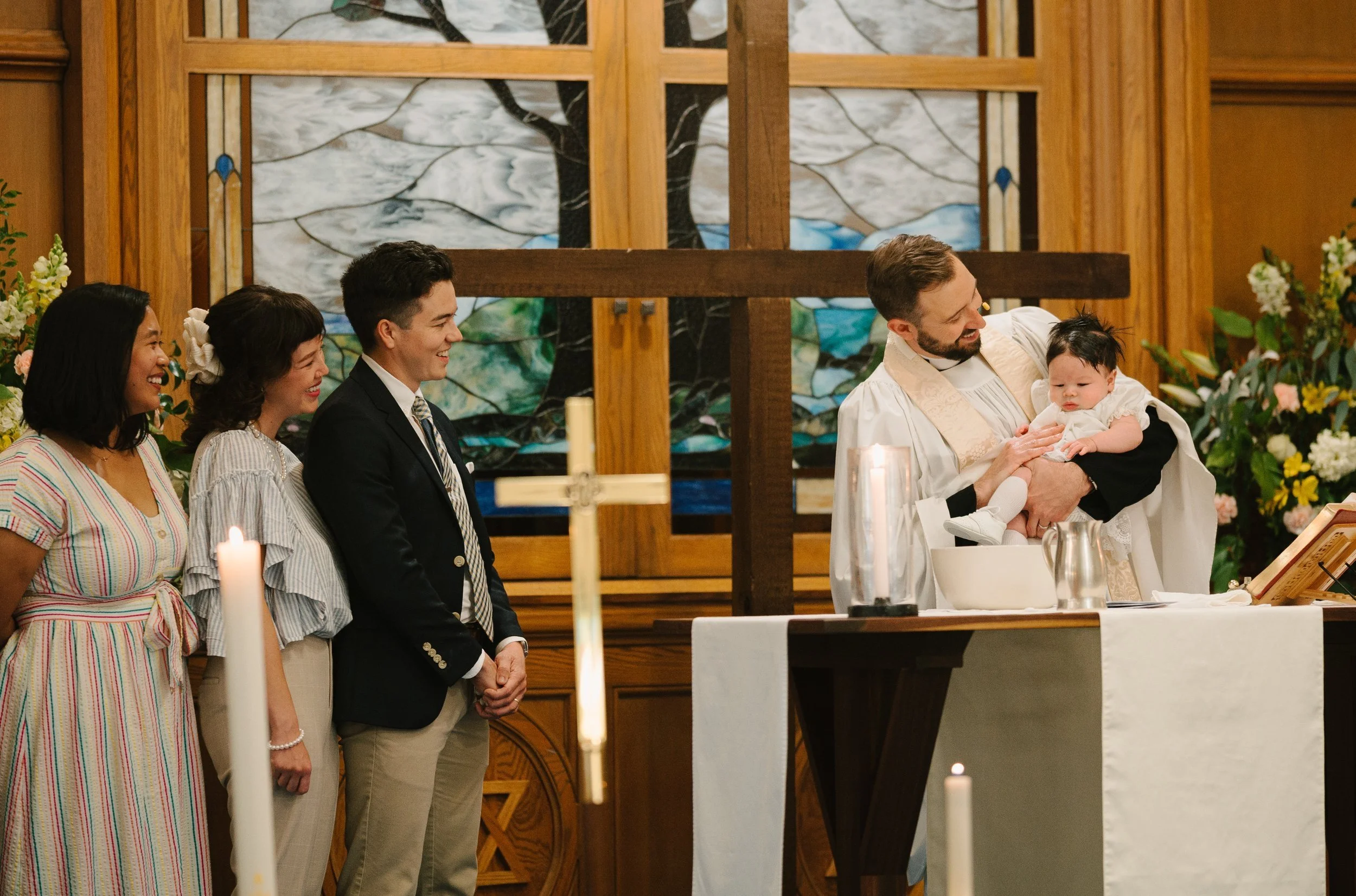
Invitation for Baptism
In just a few weeks time, on November 3, we will have the joy of celebrating the sacrament of baptism. Here’s who should consider participating.
Dear Redeemer Family,
In just a few weeks time, on November 3, we will have the joy of celebrating the sacrament of baptism. Here’s who should consider participating:
You have already given yourself to Jesus in faith but for whatever reason, have never taken the step of baptism. If that describes you, then this is a good opportunity to seal your belonging to Jesus and to his church.
You are right on the edge of converting to the Christian faith. You haven’t made the decision yet, but you’re seriously considering it. If that’s you, think of this as a good opportunity to make up your mind and commit.
You are a Christian parent of an unbaptized child. If that is you, bring your child to receive baptism! The Lord Jesus loves your little one.
Note: For an occasion as special as a baptism, we often want to plan ahead, invite friends, family, and godparents, and prepare a special celebration of some kind. So, in the interest of helping us all plan ahead, I thought I’d send out the dates for Baptism Sundays for 2024-25. These four special days are the traditional Baptism Sundays of the liturgical calendar.
January 12: Epiphany Sunday
April 20: Easter Sunday
June 8: Pentecost Sunday
Now it may be helpful to offer a brief refresher on what we believe about the sacrament of baptism. If you would benefit from that, keep reading!
WHAT IS BAPTISM?
Many of you are relatively new to the Christian faith and new to participating in a local church, especially a local church that practices ancient traditions like Redeemer does. So let me say a word about what Christian baptism is.
Jesus answered, “Truly, truly, I say to you, unless one is born of water and the Spirit, he cannot enter the kingdom of God." - John 3:5
Go therefore and make disciples of all nations, baptizing them in the name of the Father and of the Son and of the Holy Spirit. - Matt. 28:19
Do you not know that all of us who have been baptized into Christ Jesus were baptized into his death? We were buried therefore with him by baptism into death, in order that, just as Christ was raised from the dead by the glory of the Father, we too might walk in newness of life. - Romans 6:4
Because they formerly did not obey, when God's patience waited in the days of Noah, while the ark was being prepared, in which a few, that is, eight persons, were brought safely through water. Baptism, which corresponds to this, now saves you, not as a removal of dirt from the body but as an appeal to God for a good conscience, through the resurrection of Jesus Christ. - 1 Peter 3:20-21
In Christian baptism, a person is united with Jesus in His death and resurrection. We call baptism a sacrament because it is a physical, tangible, material ritual that is filled with a spiritual, intangible, immaterial grace. Something physical is happening: the person is either being immersed in water or having water poured over their head. Something spiritual is happening: that person is mysteriously (in a way that we can only barely begin to comprehend) being joined together with the Lord Jesus and, therefore, becomes a part of the church - the body of Christ.
THE STORY OF BAPTISM IN THE OLD AND NEW TESTAMENTS
The Old Testament prefigures baptism. There are many examples, but here are the big ones: the creation of the world, the salvation of Noah and his family from the flood, the exodus of the Israelites through the Red Sea, and the Israelites crossing the Jordan River out of the wilderness and into the Promised Land.
Christ commands us to be baptized and to baptize others.
The New Testament authors teach on the centrality of baptism in a Christian’s life.
WHO SHOULD BE BAPTIZED?
Any person, young or old, who wishes to put their trust wholeheartedly in Jesus for their redemption.
Any child of a baptized adult Christian who will raise that child in the faith as a part of the church.
WHY DO WE BAPTIZE INFANTS AND LITTLE CHILDREN?
“We start talking to our children not because they understand us, but so that they will. Baptism is God's language whereby he starts talking to his children and initiates a relationship with them. Sacraments are a word after all.” - Peter Leithart, The Baptized Body
We baptize children, not because we think that an adult profession of faith doesn’t matter (it does and should come at Confirmation - the other side of the coin to infant baptism), but because we seek to raise Christian children within the church.
Jesus said, “Let the little children come to me and do not hinder them.” We take the Bible at its word when it says that little children can come directly to Jesus; they do not have to grow up first.
FOR FURTHER STUDY
I would heartily recommend Peter Leithart’s excellent little book The Baptized Body to anyone who has serious questions about Christian baptism (especially baptizing children) and would like to learn more about it. Copies are available for sale at the book table on Sunday mornings.
If you are a teenager or an adult who has never received Christian baptism and you would like to, please email me. I would be delighted to get together and talk with you about it.
If you are a parent and your child has not been baptized, same invitation! It would be a joy to baptize your little one.
Click accordingly to register for the upcoming Baptism Class on October 7 and Baptism Sunday on November 3.
In the Father’s love,

First Impressions Gathering Follow Up
Thank you for those of you who were able to participate in our First Impressions Gathering (and thank you to everyone who helped with childcare!). If you were not able to attend, or if you were upstairs helping with little ones, I have 3 favors to ask of you.
Redeemer Family,
Thank you for those of you who were able to participate in our First Impressions Gathering (and thank you to everyone who helped with childcare!). If you were not able to attend, or if you were upstairs helping with little ones, I have 3 favors to ask of you:
Please set aside 1 hr and 6 minutes to watch this video and another 15 minutes to read this Case for Support. I don't want anyone to feel left behind as our parish goes through this discernment process.
Please email any thoughts, suggestions, or questions to Jeff King.
Please set aside some time to pray for the Holy Spirit to lead us, either a few minutes a day or a longer bit of time each week. And consider joining me for prayer at one or all of these Discerning Prayer Sessions at the Parish House.
October 2, 7:30-8:30 p.m.
October 30, 7:30-8:30 p.m.
November 20, 7:30-8:30 p.m.
Thank you! I love you all and I'm looking forward to learning and discovering the next steps along with you.
In the Father's love,

Here's to You, Summer (hey fall, didn’t see you there!)
I’m never ready for this week.
I see it coming a mile away and I’m still unprepared.
Summer has boarded the ship and is waving farewell as she sails off and away.
Let us raise a glass, toast her splendor, and fondly remember how we felt that first week of June.
Alright, enough that.
Fall is here!
Dear Redeemer Family,
I’m never ready for this week.
I see it coming a mile away and I’m still unprepared.
Summer has boarded the ship and is waving farewell as she sails off and away.
Let us raise a glass, toast her splendor, and fondly remember how we felt that first week of June.
Alright, enough that.
Fall is here!
For many of us, there are so many things that will begin to clamor for our attention as we head into September. Our calendars will fill up and before we know it, we’ll be saying things like, “I don’t know how I got so busy!”
This happens to the Marotta family as well! One way that Rachel and I have found to combat the back-to-fall busyness is to sit down with our family calendar before the summer ends and make sure that the most important things get scheduled first. For us, the spiritual health of our family and the church is the most important thing. Everything else is negotiable.
So, church commitments go first on the calendar:
Sunday Morning Worship
Saturday Sabbath
Wednesday Night Youth Fellowship
Thursday nights for hosting people within the parish
Sunday evening Foundations Class
Men’s & Women’s Fellowship Events
Vestry & Staff Meetings & Retreats
Next on the calendar go important dates for our little family:
Birthdays and Holidays
Days of rest and play
Trips to visit relatives and friends
Quarterly overnight getaways for me and Rachel without the kids
Next go important school dates for the kids:
Monday-Friday classes
Field trips
Recitals and special programs
Next go Youth Sports
Soccer (x3)
Volleyball (x1)
I could keep going, but I’ll stop there. The point is, we have found over the years that this is key:
Unless we proactively claim the calendar for the spiritual, relational, and emotional health of our family and the church, then someone or something else will claim it for us.
This helps us know how to navigate calendar conflicts and to consistently choose what is best for us and the church over what feels easy at the moment.
Example #1: Most weekday evenings, I don’t feel like I have the energy for much besides getting the kids to bed and perhaps reading a book before falling asleep with the lights on. However, if I’ve already scheduled an evening to host some key leaders in our church or a Small Group gathering, then I find myself led by the calendar into something that is genuinely good for my soul. And afterwards, I’m always glad that I did.
Example #2: Often we have to choose between multiple good things. Should our child go to soccer practice or youth fellowship? Should I take Saturday off or work on Sunday’s sermon for a few more hours? If I wait until the last minute to decide, I will be swayed by whatever feels like the path of least resistance. However, if I prayerfully and thoughtfully plan out my calendar ahead of time, I am more likely to make a wise decision.
So, here’s what I am asking all of us to do.
Take some intentional time in the next few days and claim the Fall Calendar for the spiritual well-being of your family and church:
Sunday Worship: First, schedule every Sunday morning for worship.
Small Group: Second, schedule one day a week for Small Group and sign up! Here’s the link.
Sabbath: Third, schedule one day per week for Sabbath rest. Though Sunday or Saturday are ideal, it could be another day depending on your work schedule.
Fellowship & Service: Depending on your situation and life stage, mark your calendar for church fellowship and service opportunities:
Men’s Fellowship & Women’s Fellowship Events
Justice & Mercy Partners service opportunities
Volunteering with one of Redeemer’s ministries
Some of you already do this so very well and you’re probably way ahead of us!
Others of us are not yet accustomed to committing to things (especially church things) in advance. Consider this an invitation to try it out for the first time and see if it bears good fruit in your life.
Looking forward to a great fall together.
In the Father’s love,

Gospel Formation: An Invitation to Redeemer’s Youth
As we prepare to gather this fall, I want to share how we approach ministering to our youth and invite you to take another step forward into the life of our Youth Fellowship.
At Redeemer, we describe our life together with the phrase "Gospel Formation for Missional Presence," and because our Youth Fellowship is an integral part of the whole of Redeemer, this is true for us as well.
Dear Friends,
As we prepare to gather this fall, I want to share how we approach ministering to our youth and invite you to take another step forward into the life of our Youth Fellowship.
At Redeemer, we describe our life together with the phrase "Gospel Formation for Missional Presence," and because our Youth Fellowship is an integral part of the whole of Redeemer, this is true for us as well.
Gospel Formation presses on every way that we relate to Jesus; it involves how we think about Jesus, who we believe he is, and how we choose to follow his teachings.
When we say that we want to be formed in the gospel, we make an essential pivot away from the gospel as an abstraction, concept, or memory tucked away in our minds, and we move towards its full claim: Jesus is the life of the world, and we are invited to make our life in him.
The gospel is essentially about new life in God. It is about being born again, the resurrection of the dead, and the life of the world to come – a whole new creation in Jesus. The Gospel could never be just another commodity that we can choose to fit – or not fit – into our lives. It encompasses everything, and it calls us to give everything we are and everything we have to the hope of renewal in Jesus.
This is all to say that what we believe about the gospel shapes everything about how we share it with our students.
As we, the Youth Fellowship team, pursue formation in the gospel together as we practice our new life in Jesus, we will invite our students to be formed along with us.
We want them to practice with us the new identity that Jesus gives us as sons and daughters of God; we want them to know that the true stories of their lives are not defined by the victories and defeats of middle or high school but by the victory of Jesus over all things and all time. On and on, we want to be formed completely in the life of Jesus together.
In the end, it is our own formation in the gospel, our own practiced life in the new creation, that is our missional presence to one another. This is what Redeemer Youth Fellowship is all about, and we are excited to begin again!
With Peace,

2024 Redeemer Nursery Updates
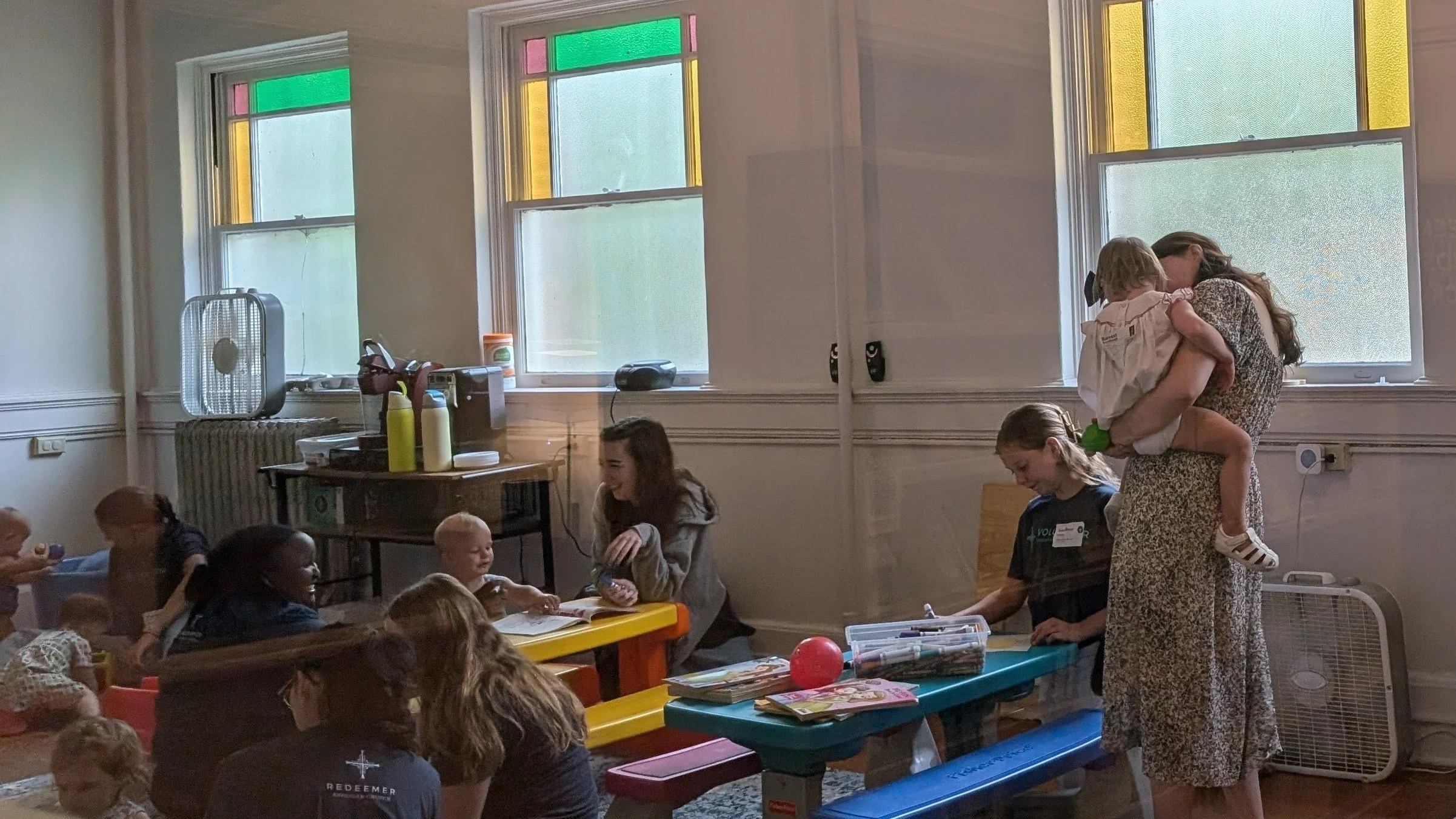
The nursery at Redeemer is growing! Over the summer, we have had 40 babies in regular attendance between the ages of 6 months-3 years old. With that growth, we are making changes to extend the spiritual formation we practice in Redeemer Kids to our tiniest parishioners. From the moment they are born, we want to build their sense of belonging in the context of the church and God’s story and help them develop a sense of wonder in the beauty of their identity in Christ.
The nursery at Redeemer is growing! Over the summer, we have had 40 babies in regular attendance between the ages of 6 months-3 years old. With that growth, we are making changes to extend the spiritual formation we practice in Redeemer Kids to our tiniest parishioners. From the moment they are born, we want to build their sense of belonging in the context of the church and God’s story and help them develop a sense of wonder in the beauty of their identity in Christ.
With this goal in mind, starting August 25th, we will have story time in our nursery with books and stories that follow the church calendar, as well as an interactive music time with shakers, rhythm sticks, and see-through scarves. This story time would not be possible without the rotating set of 14 women in our church who serve these babies once a month and our seven paid childcare staff members who work every week.
Our nursery volunteers—some of whom have served in the nursery since the early days of Redeemer Kids—are actively engaging in the spiritual formation of your children through praying over each child’s name during the week, leading snack time prayer, and being an active presence in the room to care for any child who might be struggling with the transition into the nursery space.
The work of our volunteers is supported by our childcare staff members who are responsible for caring for the hygiene, physical well-being, and safety of children while assisting with the general schedule and rhythms of the nursery. Our childcare staff are CPR trained and most are undergoing continued training in childhood development. It has been a joy to get to know these women and work with them to improve how we interact with each baby that enters our nursery on Sunday mornings.
Finally, I would love to introduce you to our newest childcare staff member, Aliyah. You can learn more about her below!
Mikala Thompson
Assistant Director of Redeemer Kids

"Hi everyone! My name is Aliyah Murrell. I am in my second year of the Doctor of Occupational Therapy program at VCU. My passion is to one day become a NICU Occupational Therapist. I truly believe the work they do for the babies in their care lays the groundwork for their future development, and I would love to be a part of that. That is also why I am excited to join the childcare staff here at Redeemer Anglican Church. I want to gain experience caring for children of different ages to get a better understanding of childhood developmental milestones and to be of service to my community. I have already felt so welcomed by everyone, and I look forward to continuing to grow and learn!"

Storied Little Creatures
We are creatures who live by our stories…Narrative is the ‘central function of the human mind.’ We turn everything into a story in order to make sense of life. We dream in narrative, day-dream in narrative, remember, anticipate, hope, despair, believe, doubt, plan, revise, criticize, construct, gossip, learn, hate, and love by narrative. In fact we cannot avoid it.
“We are creatures who live by our stories…Narrative is the ‘central function of the human mind.’ We turn everything into a story in order to make sense of life. We dream in narrative, day-dream in narrative, remember, anticipate, hope, despair, believe, doubt, plan, revise, criticize, construct, gossip, learn, hate, and love by narrative. In fact we cannot avoid it. We are storied creatures.”
I love this quote by James Bryan Smith in his book The Good and Beautiful God. This idea, that each of us is deeply and innately storied in our daily life, rings true to me. Jonathan Gottshall, a psychologist who authored The Storytelling Animal, paints a vivid picture of the biological framework of the human mind to prove this point. He states that our minds are spinning stories in our sleep every night, whether we remember them or not. In our waking hours, an average person will daydream about 2,000 times per day, each daydream lasting around 14 seconds each. That would mean that we spend nearly half of our waking hours in a daydream of some kind! The math adds up to an average person spending two-thirds of his or her life in a subconscious story of their own creation. If this is true, then imagination, which moves these stories, is not reserved for those who have the time or capacity to rise above the grind of daily life; rather, it is subconsciously, universally, and continuously a part of that daily life. “Storied creatures,” indeed.
Gottschall, who does not profess faith in God, came to this conclusion by being a student of humanity and observing what is true historically and universally about human behavior. What does this mean, then, for those of us who have staked our lives on the belief that there is a greater Story that we are all a part of found in the narrative of the Bible? It would mean that imagination is a key part of our identity as image-bearers and points to something that is true of the One whose image we carry. Malcolm Guite, in his book Lifting the Veil, states that imagination and the arts can “awaken the mind’s attention, to help us, just as much as science might help us, to look out and see what is really there and to discover that reality is itself numinous, translucent with glimmerings of the ‘supernatural’, of something holy shining through it.” Imagination is a key part of how we experience God and the invitation to know Him more through the story of the Bible. If God has given us imagination as a way to know Him more intimately, then it follows that those with the most uninhibited imaginations would have an advantage in knowing Him, right? And who are the most imaginative people you know? They’re probably under four feet tall and are engaging in some form of story right now as you read this.
It’s an easy leap to say that children do story better than anyone else. Or at least more prolifically. Story and imagination are so intrinsically part of their being, particularly from the ages of 3-7 years old, that they can’t escape it! It flows out of them in their play and words and desires. That ability to "do story" is a profound gift when engaging with spirituality in particular because imagination holds mystery so well. In The Religious Potential of the Child, Sophia Cavelletti makes a compelling case that children are deeply spiritual beings and are capable of having rich lives of faith even from a very tender age. Their capacity for engaging with the spiritual world is a natural extension of their uninhibited imaginations. Children are spiritual before they are rational!
We who are charged with the spiritual formation of these very storied little creatures should recognize this if we are to do the sacred work in front of us. Spirituality is not something we have to plant in children; it’s already there. We don’t have to convince children that there is a richer world than their eyes can see and we don’t have to strain in order to communicate with them about an invisible God. Their imaginations hold this mystery easier than many adults do. Our work is to nurture that Story in them, with fear and trembling, knowing that their posture is naturally attuned to God and that same holy God has a posture attuned towards them as well. The work of nurturing their faith is important, urgent, and thankfully, communal. We have the privilege and responsibility as the church to tell this Story to the children in our care, and to nurture that Story as they grow.
Casey Cisco
Director of Redeemer Kids

Practice Seven: Imagination
In the same way art appreciation was superseded by the demand for easy entertainment, so now our entertainment culture is being devoured by a cultural addiction to distraction. While the algorithms at work behind our content consumption may technically be amoral, their effects are anything but; the human imagination is actively being hijacked and suffocated in pursuit of financial profit. How can we reflect the selfless love of Christ when the predominant forces shaping our imaginations are gaming, pornography, clickbait, newsreels meant to invoke political outrage, and 15-second video clips?
How do I love?
Reordering our imaginations through mystery and beauty.
In the same way art appreciation was superseded by the demand for easy entertainment, so now our entertainment culture is being devoured by a cultural addiction to distraction. While the algorithms at work behind our content consumption may technically be amoral, their effects are anything but; the human imagination is actively being hijacked and suffocated in pursuit of financial profit. How can we reflect the selfless love of Christ when the predominant forces shaping our imaginations are gaming, pornography, clickbait, newsreels meant to invoke political outrage, and 15-second video clips?
Listen
“How Do I Love?” — The Rev. Dan Marotta
Read
Art and Faith by Makoto Fujimura
Lifting the Veil by Malcolm Guite
The Supper of the Lamp by Robert Farrar Capon
Practice
EUCHARIST
Weekly on Sundays. Grow by increasing to daily participation (when offered).DIGITAL LIMITS
No screens before prayer. One screen at a time. No screens in the bedroom. Fast from screens 1 day/wk. Fast from screens 1 wk/yr. Use accountability software.MAKING
Co-create with God using your hands on a weekly basis.ART
Regularly chose to engage art over entertainment or distraction.FOOD
Farm to Table isn’t a new trend. Engage the process somewhere in addition to buying and eating.MUSIC/SINGING
Sing and/or make music with those in your household at least once a week.

Practice Six: Vocation
Modern culture’s rejection of a dominant meta-narrative results in the tragic loss of a shared understanding of the purpose of life. Individuals are subsequently left to generate their own personal sense of purpose. Where is that purpose to be found? Work? Pleasure? Health? Wealth? Positive impact on the world? Social justice causes? Concurrent with the loss of a shared purpose is the increase in meaningless work - work that serves no greater purpose than to generate profit and pay salaries. Such flimsy purposes can rarely withstand the rigors of life’s disappointments, trials, and pains.
What is my purpose?
Laboring in renewed vocations for the common good.
Modern culture’s rejection of a dominant meta-narrative results in the tragic loss of a shared understanding of the purpose of life. Individuals are subsequently left to generate their own personal sense of purpose. Where is that purpose to be found? Work? Pleasure? Health? Wealth? Positive impact on the world? Social justice causes? Concurrent with the loss of a shared purpose is the increase in meaningless work - work that serves no greater purpose than to generate profit and pay salaries. Such flimsy purposes can rarely withstand the rigors of life’s disappointments, trials, and pains.
Listen
“What is My Purpose?” — The Rev. Dan Marotta
Read
Every Good Endeavor by Timothy Keller
In the Name of Jesus by Henri J.M. Nouwen
Liturgy of the Ordinary by Tish Harrison Warren
Kingdom Calling by Amy L. Sherman
Practicing The King’s Economy by Michael Rhodes and Robby Holt
The Ruthless Elimination of Hurry by John Mark Comer
Practice
WORK FOR THE COMMON GOOD
Given the choice, choose a paid occupation that contributes to the common good.
GENEROSITY
Give generously from what is earned from occupational work, beginning with a tithe, and then going beyond.
JUSTICE
Volunteer your time and resources to foster justice for the poor, beginning with those nearby.
CREATION CARE
The cultural mandate in Genesis 2 still applies to all. Consider your habits of consumption and adjust to foster health for the created world.

Practice Five: Context
The transience of modern life is one of the variables that actively works against our best efforts to practice the missional presence of Jesus in Richmond. Many of us have the option to leave our current context whenever a new job opportunity presents itself or the dream of a better life begins to materialize in a new locale. The Christian commitment to incarnation is a radical response to this impulse. When we choose to stay and live more deeply into the communities we are a part of, we experience the unique fruit that can only be produced through love over lengthy amounts of time.
Where do I make my life?
Seeking to understand our context in the city in this cultural moment.
The transience of modern life is one of the variables that actively works against our best efforts to practice the missional presence of Jesus in Richmond. Many of us have the option to leave our current context whenever a new job opportunity presents itself or the dream of a better life begins to materialize in a new locale. The Christian commitment to incarnation is a radical response to this impulse. When we choose to stay and live more deeply into the communities we are a part of, we experience the unique fruit that can only be produced through love over lengthy amounts of time.
Listen
“Where Do I Make My Life?” — The Rev. Dan Marotta
Read
The Color of Compromise by Jemar Tisby
Loving the City by Timothy Keller
Reading While Black by Esau McCaulley
Sidewalks in the Kingdom by Eric O. Jacobsen
When Helping Hurts by Steve Corbett and Brian Fikkert
Practice
PROXIMITY
Move into the the city and live in close proximity to neighbors.
STABILITY
Resist the temptation to move somewhere else for a better life. Put down roots.
CURIOSITY
Cultivate a genuine interest in your neighbors and in the complexities of the city.
Note: Some Redeemer parishioners who live in the county neighborhoods or countryside surrounding the city of Richmond may, for financial or other reasons, be unable to move into the city in this season of life. If this is the case, they should practice proximity, stability, and curiosity as best they can in their current context while recognizing that Redeemer’s parish will always have an emphasis on the city.
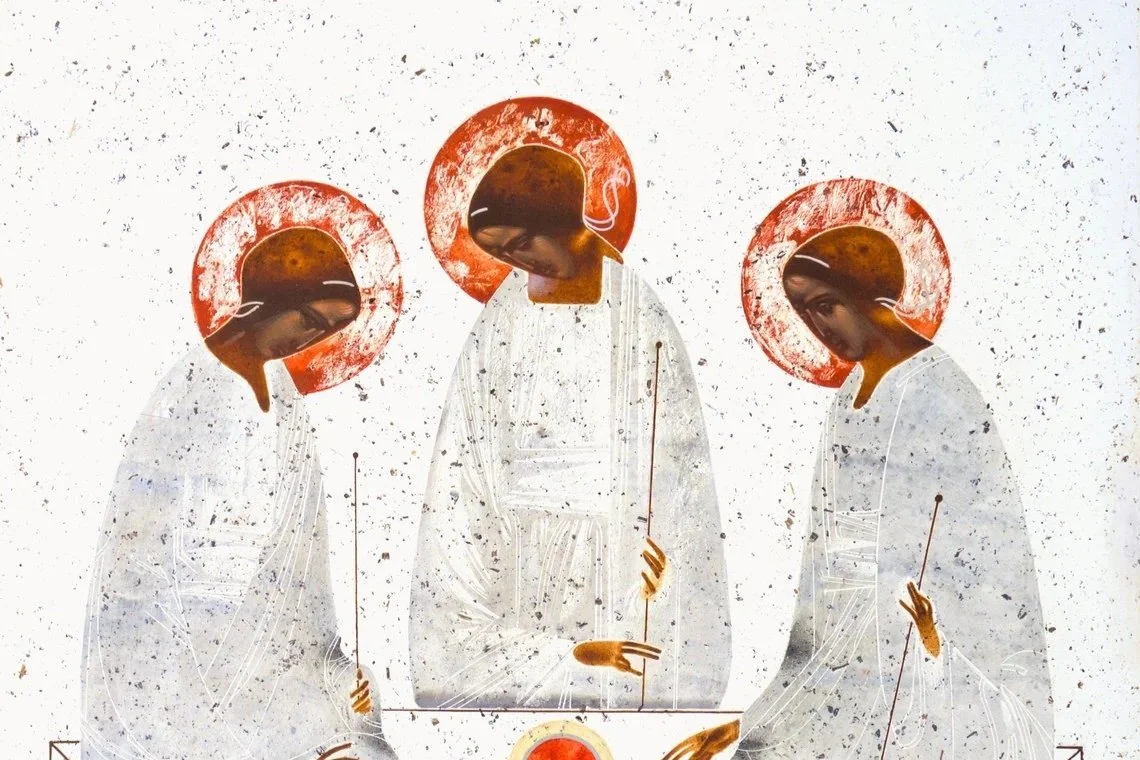
Practice Four: Virtue
Modern life is disorienting. We feel the need to organize our time around life-giving practices like life-hacking, habit-stacking, mindfulness, diet, exercise, and technological limits. We live in the age of “Project Self”, and while these self-edits can be a tremendous help in moving us toward greater health, many of us come to see that they require a significant amount of self-discipline.
How do I change?
Cultivating virtue through redemptive habits.
Modern life is disorienting. We feel the need to organize our time around life-giving practices like life-hacking, habit-stacking, mindfulness, diet, exercise, and technological limits. We live in the age of “Project Self”, and while these self-edits can be a tremendous help in moving us toward greater health, many of us come to see that they require a significant amount of self-discipline. Our wills and determination are often feeble. Here it’s important to note that Christians understand the reformation of the self not just as the development of ideal habits, but as conformity to the image of Jesus; we aim to become people of virtue, like him. This alternate vision of “human beings fully alive” is one that takes into account our deep dependence on the Holy Spirit’s activity in us and our participation in this activity. As St. Augustine said, “without God, we cannot; without us, God will not.” This is an opportunity to take up the ancient spiritual practices of the Church.
Listen
“How Do I Change?” — The Rev. Dan Marotta
Read
The Abolition of Man by C.S. Lewis
The Common Rule by Justin Whitmel Earley
Liturgy in the Wilderness by D. J. Marotta
The Meaning of Marriage by Timothy Keller
The Tech-Wise Family by Andy Crouch
Practice
Remembering Death
Annually on Ash Wednesday.
Grow through daily meditation.
Silence + Solitude
Daily: Set aside a few moments.
Retreats: At least once annually.
Fasting
Annually on Ash Wednesday and Good Friday.
Focus during Lent.
Weekly on Wednesdays and Fridays.
Prayer + Examen
Daily Prayer In the morning or evening.
Grow through use of the offices in the BCP.
Examen at the end of every day.
Sabbath Rest
One 24-hour period of rest each week.
Ideally practiced on Sunday with the church (or on Saturday if you work on Sundays)
Submission
Mutually to brothers and sisters in the church.
Mutually between husbands and wives.
Spiritually to the Bishop.

Practice Three: Belonging
In May 2023, the U.S. Surgeon General Vivek Murthy released a report declaring that the United States is suffering from an “epidemic of loneliness and isolation.” In his report it was stated that “half of Americans (49%) in 2021 reported having three or fewer close friends,” an increase from 27% in 1990. Twelve percent of respondents said they had no close friends at all. Suffice it to say, community is something that almost everyone is hungry for, yet many have overly romanticized views of. It often doesn’t take long for us to realize that the church is full of people that are just as flawed and difficult to be in relationship with as we are. Churches can some times be places that offer community, but fail to deliver on their promise. This is where we must begin to reimagine what it looks like to practice belonging in the community of the church.
With whom do I belong?
Finding belonging in the church community and extending hospitality to strangers.
In May 2023, the U.S. Surgeon General, Vivek Murthy, released a report declaring that the United States is suffering from an “epidemic of loneliness and isolation.” It states that “half of Americans (49%) in 2021 reported having three or fewer close friends,” an increase from 27% in 1990. Twelve percent of respondents said they had no close friends at all.
Suffice it to say, community is something that almost everyone is hungry for and simultaneously have overly romanticized. It often doesn’t take long for us to realize that the church is full of people that are just as flawed and difficult to be in relationship with as we are. Churches can some times be places that offer community, but can also fail to deliver on their promises. This is where we must begin to reimagine what it looks like to practice belonging in the community of the church.
Listen
“With Whom Do I Belong?” — The. Rev. Dan Marotta
Read
The Anglican Way by Thomas McKenzie
The Beautiful Community by Irwyn L. Ince Jr.
The Gospel Comes with a House Key by Rosaria Butterfield
Life Together by Dietrich Bonhoeffer
Where God Happens by Rowan Williams
Practice
Hospitality to Strangers—
Axiom #1: The front porch of the church is your front porch.
Axiom #2: Your kitchen table one of the most powerful tools you have for ministry. Extend invitations to belong to those who are new, friendless, and in need.
Register for Redeemer’s Foundation Class.
Confirmation and Membership—Confirmation by the Bishop of our Diocese is a one-time initiation practice that makes one an adult member of the global Anglican Communion and our local parish. Membership is annually renewed through pledging and participating in membership commitments.
Join a Redeemer Small Group—Weekly gathering with fellow parishioners for table fellowship, Bible reading, discussion, prayer, and care for one another.
Axiom: This is where we practice being Christians in close quarters. Small Groups participants are not necessarily your best friends, but you are practicing the basics of spiritual friendship together.

Practice Two: Identity
Traditional identities are rooted in an over-identification with the family to the detriment of the individual. Modern identities are rooted in the self and demand that all expressions of human community subordinate themselves to the rights and desires of the individual. Both the traditional and modern expressions of identity attempt to provide a stability and security that will endure. And yet both are deeply fragile. Neither can ultimately deliver on their promises. Both demand your constant best efforts in order to receive their benefits. Over time this proves to be exhausting.
Who am I?
Embracing a new identity in Jesus that is received, stable, and secure.
Traditional identities are rooted in an over-identification with the family to the detriment of the individual. Modern identities are rooted in the self and demand that all expressions of human community subordinate themselves to the rights and desires of the individual. Both the traditional and modern expressions of identity attempt to provide a stability and security that will endure. And yet both are deeply fragile. Neither can ultimately deliver on their promises. Both demand your constant best efforts in order to receive their benefits. Over time this proves to be exhausting.
Christian identity is fundamentally different than both traditional and modern identities because it is not an identity you achieve. Rather, it is an identity you receive as a gift. Understanding this allows us to begin to respond to Jesus’s counterintuitive invitation to ‘take his yoke’ upon ourselves and ‘find rest’ (Mt. 11:29-30).
Listen
“Who Am I?”— The Rev. Dan Marotta
Read
The Baptized Body by Peter J. Leithart
The Gift of Being Yourself by David G. Benner
Is God anti-gay? by Sam Allberry
Love Thy Body by Nancy R. Pearcey
You Are What You Love by James K. A. Smith
7 Myths about Singleness by Same Allberry
Practice
If you have not yet been baptized, please reach out to a Redeemer staff member for more information.
Receive the gift of God’s love to you in the bread and wine each week during communion.
Join a Redeemer Small Group.
Register for Redeemer’s Foundation Class.
Daily Bible Reading. (Consider using the Lectionary in the Book of Common Prayer, which assigns various texts to each day of the year.)

Practice One: Story
Human beings are “story creatures”. We are invariably attracted to, shaped inside of, and animated by the stories we hear and internalize and those that we tell. We cannot help but live out of the stories we find most deeply compelling, even if we are not consciously aware of this compulsion. It follows, then, that the story of life inside God’s Kingdom naturally conflicts with many of the alternate stories that we believe about ourselves, others, and the world.
What story am I in?
Telling the story of the Bible as the true and better narrative in which to understand God, ourselves, each other, and this world.
Human beings are “story creatures”. We are invariably attracted to, shaped inside of, and animated by the stories we hear and internalize and those that we tell. We cannot help but live out of the stories we find most deeply compelling, even if we are not consciously aware of this compulsion. It follows, then, that the story of life inside God’s Kingdom naturally conflicts with many of the alternate stories that we believe about ourselves, others, and the world. These stories are often unknowingly providing us with answers to some of the deepest questions of our hearts, questions like “Where have I come from?”, “Who am I?”, “What is my purpose?” and “Where am I going?” The Christian faith is not just a set of ideas to be ascribed to, but a story of the world—its good beginning, tragedy, and restoration—in which we find ourselves.
Listen
“What Story Am I In?” — The Rev. Dan Marotta
“Teaching Our Children the Story” — The Rev. Dan Marotta
Read
A Walk Through the Bible by Leslie Newbigin
The Drama of Scripture by Bartholomew & Goheen
The Mission of God by Christopher JH Wright
Concise Theology by J. I. Packer
Church History in Plain Language by Bruce L. Shelley
The Drama of Scripture by Craig G. Bartholomew
Mere Christianity by C.S. Lewis
Simply Christian by N. T. Wright
To Be A Christian by J. I. Packer
Reading Black Books by Claude Atcho
Tending the Heart of Virtue by Vigen Guroian
A Landscape with Dragons by Michael O’Brien
The Jesus Storybook Bible by Sally Lloyd-Jones
Practice
Join a Redeemer Small Group.
Register for Redeemer’s Foundation Class.
Daily Bible Reading. (Consider using the Lectionary in the Book of Common Prayer, which assigns various texts to each day of the year.)
Read great fictional stories.
Avoid beginning and ending every day with your smartphone and choose not to binge-watch tv shows and movies whose narratives tell a false story about the meaning of happiness, love, life, joy, etc.
Artwork: The Arc of Noah, Ivanka Demchuk
Finding Rhythms of Rest This Summer
Summer brings many welcome changes to our rhythms of life and I’m looking forward to them just as much as you are. The season of Eastertide is behind us. The school semester is wrapping up. Many of you are anticipating a slower pace of work, more time with family and friends, and perhaps some travel away from Richmond - all good and lovely things.
Redeemer Family,
Summer brings many welcome changes to our rhythms of life and I’m looking forward to them just as much as you are. The season of Eastertide is behind us. The school semester is wrapping up. Many of you are anticipating a slower pace of work, more time with family and friends, and perhaps some travel away from Richmond - all good and lovely things.
If you’re anything like me, summer can also be a time (for some of us) to unintentionally put the disciplines of the academic year on hold. Isn’t it ironic that more free time somehow usually means less time given to things like reading scripture, prayer, and service to others? I’ve heard this from many of you as well. One of you has quoted,
“It’s like I’m an intentional Christian 8-9 months out of the year, and then in the summer I take a break from following Jesus.”
I love the honesty and I completely empathize. I feel this tendency in myself as well.
While there are, no doubt, many potential sources beneath this trend, one of them is certainly the reality that many of us live an overly-busy, unsustainable pace of life September through May. Many of us crash-land into June in an exhausted heap. After living with a packed calendar for most of the year, we overcorrect the other direction and step back from too many things. Back and forth the pendulum swings.
The solution, I think, is not a rousing call to spiritual activity during the summer months. Fear not, this letter is not a pitch to “just do more Christian things!” Rather, my sense is that the invitation before us from the Lord is to lean into the soul-nourishing rhythms of true rest. True rest, in a Biblical, Gospel sense, looks a lot less like three hours of late night Netflix and more like a quiet moment reading scripture, a morning walk with a friend, an afternoon siesta, or an evening cook-out with a neighbor.
So, dear brothers and sister, as we enter the new season, I’d like to invite you to consider how these opportunities might be ways of refreshing and replenishing your soul this Summer:
Summer in the Psalms: As is our practice, we will return to preaching through the Psalms this Summer, picking up where we left off with Psalm 77 this coming Sunday. The Psalms are the prayer book of the Bible and help us learn to pray the fullness of our emotional life to God. In addition to listening to the sermons this Summer, consider reading through most or all 150 Psalms over the next three months. This is not an “Accomplishment Goal.” There are not gold stars available for earning here. Rather, think of it as an “Immersion Goal.” I want to immerse myself in the prayers of the Psalms.
*Note: It has been my habit throughout Redeemer’s years to step back from preaching for a good bit of the Summer to share the pulpit with other voices. I’m thrilled and thankful for Lane Cowin, Oldson Duclos, Tee Feyrer, and Will Clark stepping in to each preach twice in this series.
Join a Book Club: With Small Groups on break until the fall semester, consider shifting into a different gear and joining a Summer Book Club. For those book-lover/speed-readers out there, this is an easy one. For those of you who don’t normally read books, this might stretch you a bit. Fear not, this is not school and there’s no grade. The goal is learning in community together.
Practice Sabbath: Look at the calendar for the entire summer and set aside as many Sundays (ideally) or Saturdays (if Sunday doesn’t work) for whole days of intentional Sabbath Rest. If you would like to learn more about why and how to practice Sabbath Rest, we did a series on this back in Eastertide of 2021.
Retreat to Silence & Solitude: Consider looking ahead at the summer calendar and setting aside a 24-hour solo, silent retreat. For many of you, this may feel intimidating. If this is the case, start smaller and try just a few hours. If you missed it, we did a sermon on this practice and you can listen or re-listen to it here.
Redeemer family, there are many more opportunities to lean in this summer and you can learn more about them on our Events page. But please hear me ask, do you need rest? Are you tired and worn out? If so, take Christ up on his invitation to find true, soul-nourishing rest in Him this summer.
In the Father’s love,
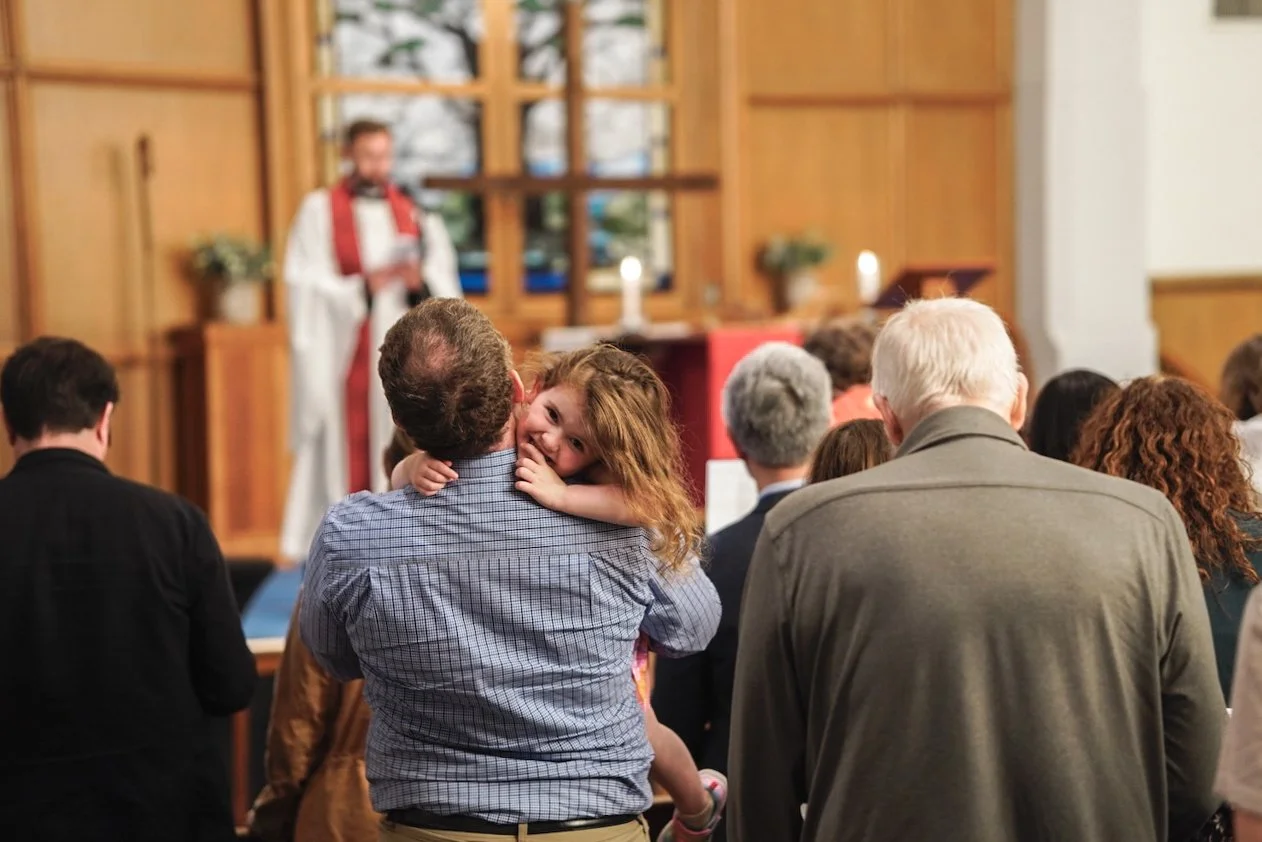
Children in Worship: an Invitation for the Summer
It’s almost that time of year again! We have learned from older, more established ministries that the summer months provide two unique opportunities for our parish. The first is to allow our hard-working Redeemer Kids volunteers a much-needed chance to slow down. The other is the chance to embrace more participation from children during the worship service for the summer season for the sake of both our children themselves and the adults around them! As our parish moves into the season of Ordinary Time and we find ways to practice our faith in, well, ordinary ways, this is a wonderful time to shift the way we teach our children as well.
Dear Redeemer Family,
It’s almost that time of year again! We have learned from older and more established ministries that the summer months provide two unique opportunities for our parish. The first is to allow our hard-working Redeemer Kids volunteers a much-needed chance to slow down. The other is the chance to embrace more participation from children during the worship service for the summer season for the sake of both our children themselves and the adults around them! As our parish moves into the season of Ordinary Time and we find ways to practice our faith in, well, ordinary ways, this is a wonderful time to shift the way we teach our children as well.
When will this take place?
Redeemer Kids will only offer a Three’s Room, Pre-K Room, and the full nursery for both services starting Sunday, June 2nd through July 28th. In August, our full children’s spiritual formation classes will be offered again; we will spend three weeks getting back into the regular rhythms of meeting before we fully relaunch our curriculum in the Fall with the rest of the parish.
What does this mean for our kids?
We will offer a children’s liturgy specifically for our young children to help guide them through the service (and to doodle on, of course) as well as providing crayons to use. Our school-aged children will be welcomed into portions of the service that they have not been in before to learn alongside our older members during the sermon and to practice corporate prayer during Prayers of the People. This is not a break from children’s spiritual formation—rather, a new way to practice it together!
What does this mean for parents?
If your child is a rising kindergartener or older, they will be sitting with you for the whole service! We will offer some resources specifically for these children to engage with the service. I can speak from experience that it is no small task to help my squirmy 7-year-old boy sit through long stretches of the service and I don’t want to minimize that challenge for you parents. I urge you to see this not only as an opportunity for your child to form new habits around worship (like when to sit, listen, stand, sing, and kneel), but to find their place in the whole body of Christ by participating in new ways!
What does this mean for Redeemer Kids volunteers?
Our hope is to give our hard-working Redeemer Kids teachers, assistants, coordinators, and more a season to slow down. Many of you might not know that we ask our teachers and assistants to serve every three weeks and our coordinators and nursery volunteers to serve every four weeks. As the year has gone on, many of our team members have served more frequently than this in order to have the 30 volunteers needed every Sunday to run our children’s ministry. For those who are not currently serving in Redeemer Kids, take this season to thank our Redeemer Kids volunteers and to prayerfully consider how you could use your own gifts to volunteer as well—you’re needed!
What does this mean for everyone else?
This is a wonderful opportunity to engage in a new way with the children of our parish! There will be opportunities to stretch and grow as a congregation as we extend hospitality to the school-aged children of our church and by supporting families with young children in the pews around you. Here are a few practical guidelines to consider:
The first way you can help is to model attentive and fully engaged behavior for the kids around you. You disciple the kids nearby when you attentively observe the sermon, stay focused when listening, and use your body to kneel, stand, and extend your hands. After all, children learn the most by observing!
Get to know the names of the children who sit near you in particular and then ask after them by name each week. This small gesture can mean the world to children (or anybody for that matter) who can often feel overlooked in a crowd.
When a child near you is noisy (drops a pen, cries, giggles, talks out loud) during the silent portions of the service, don’t react. This could take practice for each of us, but stay engaged in the prayer/silence/liturgy and take this time as an opportunity to grow in focus and to model a still and calm posture for your neighbors. This is a spiritual “muscle” we can all exercise.
Be open to how you can grow from this experience. During this summer and beyond, be attentive to how children already naturally engage with the service on their own. Do they shout the creeds or dance when they sing? Do they find it hard to be attentive during the scripture reading or to withhold their enthusiasm when they are able to participate in a call and response? Children reflect our own emotions, desires, and sin patterns, but are often more obvious about it. Be open to what you can learn about yourself from watching these children and how you can grow in your own faith through this.
Pray with me now and each week to come: Almighty God, heavenly Father, you have blessed us with the joy and care of children; Give us calm strength and patient wisdom so to train them, that they may love all that is true, and pure, and lovely, and of good report, following the example of their Savior Jesus Christ. Amen.
In Christ,
Casey Cisco

Renewing Our Membership Commitments
May is pledge month at Redeemer. During this time we encourage all members to make Membership Commitments which involve giving Time, Talent, and Treasure to the Lord Jesus through his body, the Church. Whether you are becoming a new member this month or are a returning member, this is an important action item for all of us. Pledging provides important information to our Vestry and Ministry Leaders to make wise and strategic plans for our parish.
Redeemer Family,
May is pledge month at Redeemer. During this time we encourage all members to make Membership Commitments which involve giving Time, Talent, and Treasure to the Lord Jesus through his body, the Church. Whether you are becoming a new member this month or are a returning member, this is an important action item for all of us. Pledging provides specific information to our Vestry and Ministry Leaders to make wise and strategic plans for our parish.
Now, if you are not yet a member, this is for you as well. One of the best ways to “try Redeemer on” is to practice living as a member before actually taking that step of commitment.
If you are ready to pledge, here’s the link. Every adult is required to submit a pledge (households can make their financial pledges together.) Every adult regular attender is encouraged to make a pledge, but not required.
If you’re a little fuzzy on what those membership commitments are or if you’d like a refresher, keep reading!
MEMBERSHIP COMMITMENTS
PREAMBLE
The commitments of membership are not designed to be burdensome or onerous. Though our sinful human tendency is to view all rules and expectations as constraints on our freedom, we want to embrace these commitments wholeheartedly - recognizing that they are for our good and the good of our fellow members in the church and our neighbors outside the church.
THE 3 MEMBERSHIP COMMITMENTS
TIME — A member commits to making participation in Sunday worship and in small group fellowship a regular part of their weekly habits. Of course while it is understood that travel schedules and illness may often keep us from participating 100% of the time, we want to say together as members, “we will make it a priority to be together.”
Key Belief: There is no such creature as a member who rarely worships with us on Sunday or refuses to join a small group.
Key Action Item: Register to lead or participate in a Small Group.
TALENT — A member commits to volunteering their talents and gifts within the church. This may take the shape of formally joining a ministry team (or two or three), or volunteering in some other special capacity. Of course while it is understood that travel and work schedules may make this a challenge; we want to say together as members, “we will make it a priority to serve one another and our neighbors.”
Key Belief: There is no such creature as a member who is too busy to ever volunteer their time for the church.
Key Action Item: Register to volunteer on a ministry team for the coming year. (The greatest volunteer need we have at the moment is in Nursery and Redeemer Kids!)
TREASURE — A member commits to submitting a financial pledge each year and giving of their financial resources to the mission and work of the church. Of course, the resources of each individual and household will vary widely; this is to be expected within an economically diverse church. Our generosity is not predicated upon the achievement of a particular level of financial success or comfort, but rather upon Christ’s call for us to simply give sacrificially. Our giving honors the Lord (who is the giver of all good gifts), forms us (helping us grow in dependence on God), and provides for the work of the church (which is a benefit to ourselves and others).
Key Belief: There is no such creature as a member who is unwilling to give any of their resources back to the Lord by giving to the church.
Key Action Item: Register your financial pledge for the September 2024 - August 2025 fiscal year.
If you’re ready to take these steps, click here to submit your pledge.
Here are some commonly asked questions about membership commitments:
What is a Pledge?
A pledge is your communication with our Ministry Leaders, Vestry, and Finance Team regarding what you anticipate you will be able to contribute to Redeemer in the next ministry year (September 1, 2024 - August 31, 2025). Your commitment allows Redeemer’s leadership to accurately assess what resources we have to steward and how they can best be utilized.
Why are Pledges Important for the Vestry & Finance Team?
Redeemer’s fiscal year runs from September 1 - August 31. The Vestry and Finance Team will be spending the summer drafting a new budget for the coming year of ministry. What a gift it would be to them if they knew ahead of time what the congregation planned to give! Your clear communication helps our church draft careful, informed, strategic plans for funding the ministry of the coming year.
Why are Pledges Important for Me?
While pledging is imminently practical and helpful for our church leadership, it’s more than that. Pledging is also an opportunity for your heart to be shaped by God. Why? Because how we use our resources both reveals and guides what God is doing in our hearts. When your church asks you to pledge, you are being asked to open your calendar and bank account to the Lord and ask Him, “How would you have me use the resources you have entrusted to me?” It’s a wonderful question that all of us should be asking on a regular basis.
What Pledging is NOT
Pledging is not an attempt to raise Redeemer’s volunteer and small group rosters. Nor are we trying to increase our budget or meet a financial shortfall. We are grateful to report that our parish is in a healthy and strong position financially. Pledging is not about fixing something that is broken, but rather about us continuing to grow spiritually together. Our more immediate needs are for volunteers to step into roles in Redeemer Kids and Small Group leadership.
Deadline for Pledging
The deadline for pledging is Wednesday, May 31. Please do not wait until the last minute! Very real decisions and plans for the coming year of ministry will be made based on the pledging data that our leadership receives.
If you have more questions, please feel free to reach out to a member of our Staff, Vestry, or Finance Team and they will be glad to assist you. Let’s aim for 100% participation here!
Warmly,
Redeemer’s Staff, Ministry Leaders, Vestry and Finance Team

An Important Diocese Update
I am writing to you today to share with you a very important letter from our Bishop, the Rt. Rev. Christopher Warner and to inform you of an investigation that has recently been released regarding sexual abuse that took place between 1990-2002 at The Falls Church Anglican (TFCA) in Northern Virginia.
Note: The following letter and attached PDF contain references to sexual abuse. Please read cautiously if this is triggering for you.
Dear Redeemer Family,
I am writing to you today to share with you a very important letter from our Bishop, the Rt. Rev. Christopher Warner and to inform you of an investigation that has recently been released regarding sexual abuse that took place between 1990-2002 at The Falls Church Anglican (TFCA) in Northern Virginia. This coming Sunday (tomorrow, April 28), I will read the Bishop’s letter publicly at both the 9:00 a.m. and 11:00 a.m. worship services.
In the following, I will try to provide some context for those of you who are unfamiliar with The Falls Church Anglican or with the sexual abuse prevention policies that are in place here at Redeemer.
REDEEMER’S RELATIONSHIP TO THE FALLS CHURCH ANGLICAN (TFCA)
Redeemer is a church plant that came out of TFCA in 2016. You might say that TFCA is our mother church and we are their daughter church. I (Dan) was on staff at TFCA from 2014-2016 in what was then called the “Timothy Program,” a multi-year church planting and clergy development residency.
It is also important to note that the Falls Church Anglican is what might be termed a “flagship church” in our Diocese (Diocese of the Mid-Atlantic) and in our denomination (Anglican Church in North America).
Additionally, a number of Redeemer parishioners are either former members of TFCA or have close relational connections with that parish. This is important to note because there are real men and women who call Redeemer home that are deeply impacted and hurt by what has transpired at TFCA.
WHAT ABOUT OUR PARISH?
Now, for many of us, when we hear stories about the evil of abuse and the pain it causes people, it is natural for us to immediately begin to wonder what kind of systems are in place in our parish and what we can do to prevent such atrocities from happening here.
So in the next few sections, I’d like to walk us through a few different items that will help us understand and care well for our own parish.
REDEEMER’S SEXUAL ABUSE PREVENTION POLICIES
Redeemer complies with the Diocese of the Mid-Atlantic Protection of Children Policies by requiring all volunteers who work with minors (both in Children’s and Youth ministry) to undergo background checks, reference checks, and to complete Child Safety Training every two years through Ministry Safe. Additionally, all Staff and Vestry members are required to complete this Child Safety Training regardless of whether or not they actively volunteer with Children’s or Youth Ministry.
COULD ABUSE HAPPEN AT REDEEMER?
Though the Vestry and Staff here at Redeemer desire to make every effort to protect our parish from abuse, we recognize that no church, no matter how healthy, is able to guarantee safety.
Dr. Diane Langberg, noted Christian trauma specialist and counselor, in observing repeatedly that “sexual abuse can happen anywhere,” states as follows:
The first lesson for preventing abuse is a recognition that sexual abuse is not a problem out there; it is in here. It sits in our pews, it happens in our homes and schools. It occurs in churches, on mission fields, and within our organizations. We need to know how to speak about it, teach truth about it, and protect the vulnerable and care for those whose lives have been shattered by it.¹
I doubt that Dr. Langberg means we should never trust anyone in the church, but she appears to be saying that church leaders and staff need to be humble enough to recognize that they do not know everything, and wise enough to know that no organization, including the church, can ever view itself as being above the possibility of abuse happening in its midst.²
Every family, church, school, or social organization would like to think that their group is above this sort of thing. We would like to think, “that would never happen here.” But when we begin to think that our group is special or somehow less sinful than other groups, we not only delude ourselves, we open the door wider for abuse.
PROTECT THE INSTITUTION?
When abuse happens, sometimes people take on a “protect the institution” mentality that can lead them to diminish the pain of victims in an effort to preserve the good name of their beloved institution. We must remember, the church is the people. So in a church setting, it would be nonsensical to protect the people at the expense of the people. Therefore, when we protect victims by telling the truth about abuse, we are protecting the church.
Our hope here at Redeemer is that we will always remember that our Lord Jesus loves the poor, the vulnerable, the wounded, the oppressed, the abused, and the hurt. We must never seek to protect Redeemer’s “good name” at the expense of caring for individuals. We must be people of compassionate care and people of the truth.
HELP FOR THOSE WHO HAVE SUFFERED ABUSE
I am aware that many of you who call Redeemer home have suffered abuse in the past and are in various stages of the healing process. Others of you have suffered abuse, or know someone who has, and perhaps have never come forward and spoken about it. So at this point, I want to offer an invitation for any of you who have suffered abuse to talk to someone. For this, you have a number of options:
You can always come to me (Dan) or any of the staff or Vestry members of our parish.
There are a number of excellent Christian counseling groups in town that offer safe spaces to tell the truth. In particular we recommend The Barnabas Center and Haven Christian Counseling.
Our Diocese also has a number of helpful resources for reporting abuse and misconduct and receiving care. I would recommend visiting this page on the diocesan website.
A WAY FOR EVERYONE TO HELP REDEEMER BE A SAFE PARISH
There are many ways in which you can help Redeemer be a safe parish going forward. Here are two:
The first is, if you see something, say something. If you have concerns or suspicions about potential abuse, it is better to speak up than to remain silent.
The second is, you might consider taking our Child Safety and Sexual Abuse Awareness Training. There are three offerings coming up on: May 26, June 23, and July 21. You can register for a class here.
PRAYER FOR THOSE WHO HAVE SUFFERED ABUSE
In all of this, we are entirely dependent on the Lord’s mercy, help, and healing. So let’s pray together using these words. If you are able, I would recommend pausing to pray this out loud.
God of endless love, ever caring, ever strong, always present, always just: You gave your only Son to save us by his blood on the cross. Gentle Jesus, shepherd of peace, join to your own suffering the pain of all who have been hurt in body, mind, and spirit by those who betrayed the trust placed in them. Hear the cries of our brothers and sisters who have been gravely harmed, and the cries of those who love them. Soothe their restless hearts with hope, steady their shaken spirits with faith. Grant them justice for their cause, enlightened by your truth. Holy Spirit, comforter of hearts, heal your people's wounds and transform brokenness into wholeness. Grant us the courage and wisdom, humility and grace, to act with justice. Breathe wisdom into our prayers and labors. Grant that all harmed by abuse may find peace in justice. We ask this through Christ, our Lord. Amen.
Redeemer family, I am grieved that these horrible evils were committed against precious children of God. Tomorrow (Sunday, April 28) I will read the Bishop’s letter and speak about this briefly up front at both services. If you are able, please be in prayer for the victims involved in this investigation and for all who have suffered abuse.
I’ll see you tomorrow.
In the Father’s love,
¹ Langberg, Diane. When The Church Becomes Complicit In Sin: Lessons On Preventing and Combatting Sexual Abuse
² In this paragraph, I quote directly from p. 81 of the Investigation Report.
Becoming a Member at Redeemer
On Sunday, May 12th, we have the joyful opportunity for you to be Confirmed by our Bishop and welcomed as new Members into the Parish. This is a wonderful event that takes place only twice a year, and is available to all who have been baptized and attended our Foundations class! I thought I’d take a moment to share a few details about what it means to take this important step in your faith.
“Why should I become a member of a local church?”
Over the years I’ve heard a number of well-intentioned and sincere objections follow this question:
Membership feels exclusive, like some people are in and some are out. This isn’t very hospitable.
Membership feels too institutional, like the church is a club and not a family.
Membership means requirements and obligations, which are anti-Gospel and anti-Grace.
It might surprise you to learn this, but I used to strongly agree with each one of these objections. However, over the years, my thinking has changed significantly and - rather than membership working against hospitality, family, and Gospel - I’ve become deeply convinced that membership actually facilitates each of these!
Here’s how:
1. Membership facilitates hospitality.
Luke 14:12-14. He said also to the man who had invited him, “When you give a dinner or a banquet, do not invite your friends or your brothers or your relatives or rich neighbors, lest they also invite you in return and you be repaid. But when you give a feast, invite the poor, the crippled, the lame, the blind, and you will be blessed, because they cannot repay you.”
In Christ’s teaching, we are specifically instructed to open our doors and invite in those who are on the outside. This passage is not just about inviting in the poor vs the rich (though it is also about that), it is about extending hospitality to outsiders vs insiders. Now, if - in the name of hospitality - we say there’s no such thing as insiders or outsiders, then who will do the inviting and who will come to the party? You cannot invite others into the hospitality of God until you, yourself have received the goodness of the Lord’s hospitality. You must be in before you can invite others in.
Once you are in, you realize there are others who are out - which puts you in the perfect situation to obey Jesus’ teaching on true hospitality. In this way, Membership (a formal and clear way of defining who is in and who is out), actually sets us up to obey the Lord, open our doors, and demonstrate real hospitality to others.
2. Membership makes the church more like a family.
1 Timothy 5:1-2. “Do not rebuke an older man but encourage him as you would a father, younger men as brothers, 2 older women as mothers, younger women as sisters, in all purity.”
This passage instructs us to treat other people in the church like family. Then, our author (the Apostle Paul) goes on to give specific instructions about who to care for, how to care for them, and how to discipline people when they stray into sin. The assumption is, you can only operate as a family when it is clear who, exactly, is a part of the family. Paul is clearly not instructing us to treat all people like fathers, monthers, brothers, and sisters - but rather the people who are a part of the church family. When such individuals stray into flagrant sin, they are (temporarily, and for the sake of encouraging repentance) removed from the church family. For this kind of familial love and discipline to work, there must be some sort of clear boundary line that delineates who is in the family and who is not.
Therefore, in order for the church to function like a family, we must know who, specifically, is a part of that family. The brothers, sisters, mothers, and fathers here is not meant to signify some abstract concept of warm relationships - rather we should be thinking of specific people. i.e. my brother-in-Christ Jeromy or my father-in-Christ David. Membership helps take us from the abstract to the specific in being a church family.
3. Membership showcases the Gospel.
Ephesians 2:8-10. “For by grace you have been saved through faith. And this is not your own doing; it is the gift of God, not a result of works, so that no one may boast. For we are his workmanship, created in Christ Jesus for good works, which God prepared before hand, that we should walk in them.”
“But Membership means requirements and obligations, which are anti-Gospel and anti-Grace.” This is the one I hear most often. It is also the one to which I am, simultaneously, most sympathetic and which I disagree with the most strongly! I am sympathetic because it is absolutely true that the Gospel is the good news of the free gift of mercy and forgiveness won for us in the death and resurrection of the Lord Jesus. The Gospel is primarily about something God has done for us and not something that we do for God.
However, when we receive this free gift of mercy and forgiveness, we find that it changes absolutely everything about us. Our lives are no longer our own. We belong, body - mind - and soul - to the Lord. We begin to embody the good news of the Gospel, allowing it to shape our lives and affections.
Membership clarifies the implications of the Gospel for us and, therefore, showcases the beauty of the Gospel in the transformed lives of the members. If we resist Membership on the grounds that “the Gospel is not about doing stuff,” we are saying that the church is not have any vision for what a redeemed and renewed life in Christ should look like. A quick, cursory reading of just about any New Testament book should quickly lay that objection to rest.
Dear friends, on May 12, 2024 - our Bishop (the Rt. Rev. Christopher Warner) will visit Redeemer to confirm and welcome in new members. I want to warmly and joyfully extend the invitation to membership to absolutely all of you! If you would like to move forward here are your action items:
(*Prerequisite: Take the Foundations Class)
• Step 1: Register to become a member on May 12.
• Step 2: Fill out the membership and pledge form.
• Step 3: Sign up for a pre-membership interview with Lane Cowin or Oldson Duclos.
• Step 4: Arrive 30 minutes early to one of the services on May 12.
• Step 5: Participate in the Confirmation & Membership service on May 12.
• Step 6: Throw a party with friends and family!
This wonderful event only takes place twice a year, and is available to all who have been baptized and attended our Foundations class! If you have any questions about what it means to be a Member at Redeemer, or about the Membership process, please reach out to me: dan@redeemerva.org.
In the Father’s love,

Come to the 7AM Sunrise Service on Easter (If possible!)
Good afternoon! A blessed Holy Week to you. I want to take a moment to ask you to consider attending the 7AM Sunrise Worship Service on Easter Morning. Now, of course not everyone is able to do this and we understand! However, if you are able to flex your schedule, here are three good reasons to attend the 7AM:
Redeemer Family,
Good evening! A blessed Holy Week to you. I want to take a moment to ask you to consider attending the 7:00 a.m. Sunrise Worship Service on Easter Morning. Now, of course not everyone is able to do this and we understand! However, if you are able to flex your schedule, here are three good reasons to attend the 7:00 a.m.:
Align Worship of God with the Rhythms of God’s Creation: Greet the rising of our Lord as we greet the rising sun. Followers of Jesus have always understood the daily rhythm of sleeping and waking to be a form of practicing death and resurrection.
Make Worship the First Thing You Do on Easter: Before breakfast, parties, and other festivities, begin the day with worship.
Make Room for Visitors at the 9:00 a.m. & 11:00 a.m. Services: Easter is one of the most important days for us to show hospitality to outsiders.
Church family, I hope this doesn’t sound fake, but as we head into the Triduum of Maundy Thursday, Good Friday, and Easter Sunday, I just want to say how very fond I am of each of you and how much I love our parish.
The Holy Spirit has drawn us together and has knit us as one in Christ - making us both united with Jesus and united with each other. Of course, life doesn’t always feel this way, but our union is real regardless of the highs and lows of our feelings.
It continues to be a tremendous privilege to serve as your Rector and I’m so grateful that we will make the journey together over the next few days.
In the Father’s love,
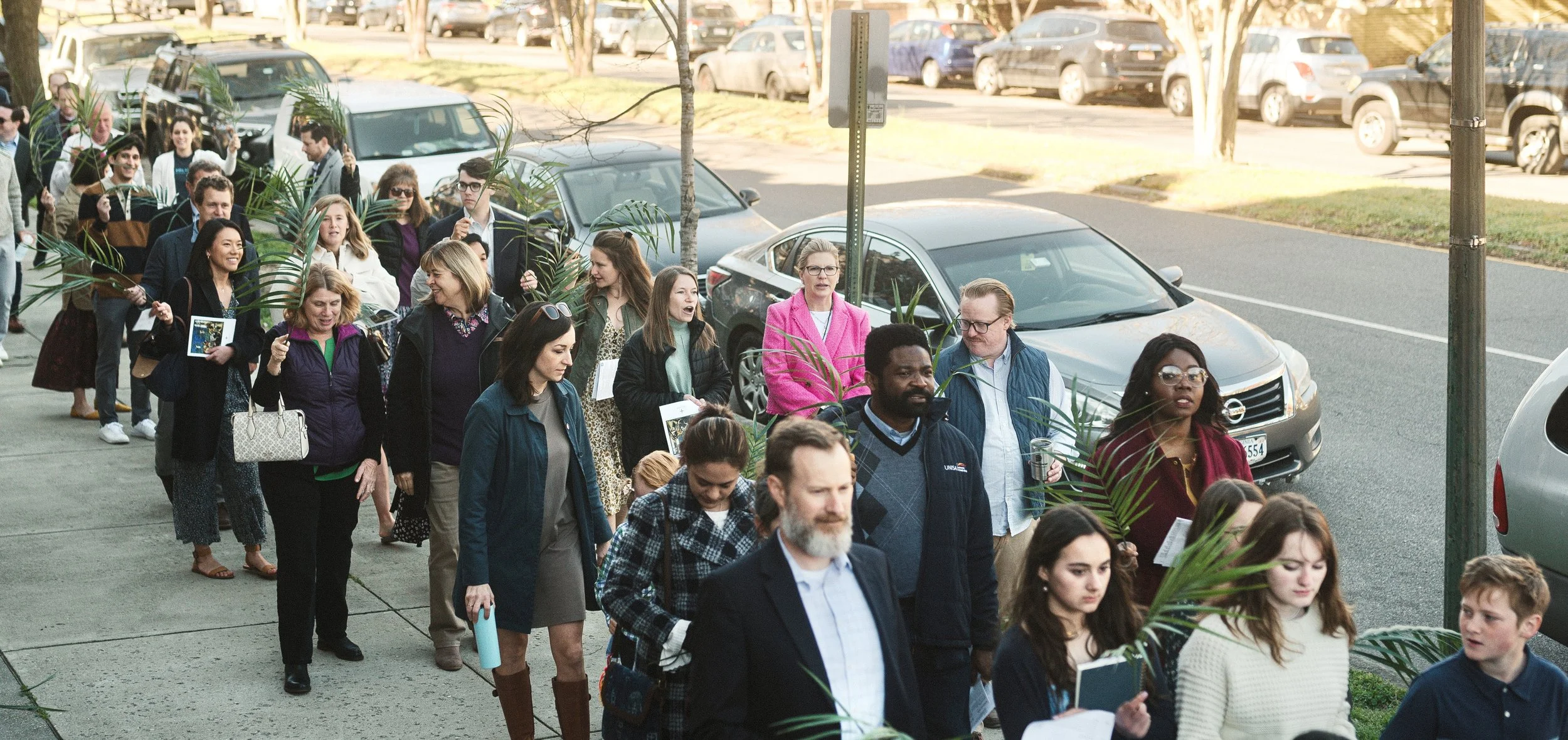
Holy Week and the Triduum
Good afternoon! Holy Week is nearly upon us. I want to take a few minutes to explain what it will be like to participate in the most important days of the year together. Please, if you can, read the following in its entirety.
Redeemer Family,
Good afternoon! Holy Week is nearly upon us. I want to take a few minutes to explain what it will be like to participate in the most important days of the year together. Please, if you can, read the following in its entirety.
PALM SUNDAY | March 24
The first day of Holy Week and the day that we remember Christ’s triumphal entry into the city of Jerusalem (recorded in all four Gospel accounts: Matthew 21:1-11, Mark 11:1-10, Luke 19:29-38, and John 12:12-15). That morning, we will begin outside, on the sidewalk along Arthur Ashe Boulevard, before we process into the sanctuary waving palm branches and singing. Now, this concept isn’t a new or creative idea. It is, in fact, a very old tradition.
So why are we doing this? There are at least three good reasons (and I’m sure many more):
It connects us to our history: By waving palm branches, singing, and processing together - we will do something with our bodies in the present that connects us to the people of God in the past. We are joined with Christian brothers and sisters from ages past, as well as with the first century citizens of Jerusalem who welcomed Jesus into their city.
It is formative for our young children (and for adults): Few things help young children (or adults for that matter) understand a story better than acting it out together. We want more than intellectual assent to the teaching of scripture, we want to receive, embody, and extend the good news of what Christ has done for us. This is why we kneel, stand, sing, eat the bread, drink the wine, and - yes - wave the palms!
It is an act of public worship: In our secular, materialist age, there are very few opportunities for acts of public worship and devotion to Christ. No doubt, as many of us adults walk down Arthur Ashe Boulevard, we will feel very silly. If that describes you, don’t worry, you’re in good company. We will all feel the strangeness of publicly worshiping Christ in the midst of neighbors who think we are lunatics. But this is not a bad thing - for us or for our neighbors. It’s good for us because it presents us with a very real opportunity to be courageous. It’s good for our neighbors because our worship serves as a reminder that, no matter what the zeitgeist of our time may say, there are real men and women and children who are continuing to find life in Christ Jesus.
So, dear friends, this Sunday morning, come ready to do a new thing, which is a very old thing, and to do a strange thing, which is a very good thing. We will wave palm branches, and sing, and walk and declare together that, minority though we be, there is still hope to be found only in the Lord Jesus.
STATIONS ON BOULEVARD
On Monday-Wednesday from 8:00 a.m.-7:00 p.m. and Thursday-Friday from 8:00 a.m. to 4:30 p.m. the 14 Stations of the Cross will be posted along Arthur Ashe Boulevard. I encourage you to set aside 30-45 minutes of time to stop by, and spend time praying and contemplating each station. A digital guidebook will be available at the installation to lead you through this exercise.
MAUNDY THURSDAY | March 28
The Paschal mystery - the death and resurrection of Jesus Christ - is at the heart of the Christian Gospel. The evening of Maundy Thursday begins the Triduum (the sacred three days). Maundy Thursday receives its name from the maudatum (commandment) given by our Lord: A new commandment I give to you, that you love one another: just as I have loved you, you also are to love one another (John 13:34). At the Last Supper, Jesus washed his disciples' feet and commanded them to love one another as he had done. This day commemorates the Lord’s example of servant ministry, the institution of the Eucharist, the agony of the Garden of Gethsemane, and the betrayal leading to the crucifixion.
Services are at 5:00 p.m. and 7:00 p.m.
Will Clark, our CCO College minister to VCU will preach at 5:00 p.m. and Tee Feyrer, one of our CCO College ministers to University of Richmond will preach at 7:00 p.m.
No Nursery or Kid’s ministry. Kids are invited to fully participate in all parts of the service.
Remember to wear sandals or slip-off shoes (to facilitate the foot-washing portion of the service).
GOOD FRIDAY | March 29
The Good Friday liturgy is the second part of the Triduum. This most somber of all days is appropriately marked by fasting, abstinence, and penitence, leading us to focus on Jesus and the meaning of his Cross. Some churches do not use musical instruments or bells on this day. The church is often darkened. The bare, stark appearance of the church serves as a reminder of the solemnity and sorrow of the day. The Lord of Life was rejected, mocked, scourged, and then put to death on the Cross. The faithful are reminded of the role which their own sin played in this suffering and agony, as Christ took all sin upon himself, in obedience to the Father’s will. By the Cross we are redeemed, set free from bondage to sin and death. The Cross is a sign of God’s never-ending love for us. It is a sign of life, in the midst of death.
Services are at 5:00 p.m. and 7:00 p.m.
Oldson Duclos, our Director of Community Formation, will preach at both the 5:00 p.m. and the 7:00 p.m. services.
No nursery or children’s ministry. Kids are invited to fully participate in all parts of the service.
Remember to wear black or gray clothing.
HOLY SATURDAY
This is a day of quiet contemplation. It is important not to start the Easter celebration and feasting too early. Consider eating simple foods and refraining from entertainment. Perhaps, in the morning or the evening, consider praying:
O God, Creator of heaven and earth: Grant that, as the crucified body of your dear Son was laid in the tomb and rested on this holy Sabbath, so we may await with him the coming of the third day, and rise with him to newness of life; through Jesus Christ our Lord. Amen.
EASTER SUNDAY | March 31
As the third day dawns, we celebrate the bodily resurrection of our Lord from the dead!
Alleluia! Christ is risen!
The Lord is risen indeed! Alleluia!
The church will resound with the ringing of bells, shouts of praise, and songs of joy! This is a dual sacrament service: with both Baptisms and Eucharist.
There are three identical services: 7:00 a.m., 9:00 a.m., and 11:00 a.m. (But only the 9:00 a.m and 11:00 a.m. provide nursery and children’s ministry).
If you are able to attend the 7:00 a.m. service, please do so! We will likely run out of space at 9:00 a.m. and 11:00 a.m.. By worshiping at the sunrise service, you show hospitality to visitors who will likely attend the later two.
There will be coffee, juice, and donuts across the street near the VMFA sculpture garden after all three services. Stay for a while and enjoy the after-party!
Redeemer family, I love you all and I’m so grateful that we get to walk through this week together. I hope and pray that our observance, practice, and worship through these services forms the Gospel more deeply within us so that we might be more missionally present to our families, neighbors, and city.
In the Father’s love,

Call to a Corporate Fast on Good Friday, March 29
Two weeks ago, we contemplated the Practice of Fasting and together we explored how this spiritual discipline has cultivated virtue in the lives of God’s people from Old Testament times through to the present. If you missed the sermon, you can listen to it here. While most of us are likely familiar with the concept of a private, personal fast, we may be less familiar with the concept of a corporate fast. Here are just a few (of the many) examples of corporate fasting in scripture:
Redeemer Family,
Two weeks ago, we contemplated the Practice of Fasting and together we explored how this spiritual discipline has cultivated virtue in the lives of God’s people from Old Testament times through to the present. If you missed the sermon, you can listen to it here. While most of us are likely familiar with the concept of a private, personal fast, we may be less familiar with the concept of a corporate fast. Here are just a few (of the many) examples of corporate fasting in scripture:
Leviticus 16: The Israelites practice an annual corporate fasting on the Day of Atonement.
Nehemiah 9: The Israelites in a national confession time of fasting, prayer, repentance, and public scripture reading.
Joel 2: God speaks to the prophet Joel and calls him to declare a time of corporate fasting and repentance.
Jonah 3: The people of Nineveh respond to Jonah’s prophetic preaching with fasting and repentance.
Acts 27: Paul and his 275 shipmates fast for 14 days through a storm at sea before breaking their fast in a manner that is a nod towards the Eucharist (vs 35).
Throughout scripture, corporate fasts are marked by themes of repentance, confession, and calling on God to show mercy and provide atonement for the sins of the people.
Therefore, how appropriate that throughout church history, it has been common for both clergy and parishioners to fast on Good Friday of Holy Week - a day devoted to repentance of our sins and remembering the mercy of God in the atoning death of Christ on the cross.
As the Book of Common Prayer states in the preface to the Good Friday service on p.564, “This most somber of days is appropriately marked by fasting, abstinence, and penitence, leading us to focus on Jesus and the meaning of his cross.”
And so Redeemer Family, on Good Friday of Holy Week (March 29), we are all invited to fast together, as a parish. No one should feel coerced or peer-pressured to participate. Fasting is most spiritually effective when it is something you choose, not something you do because other people guilted or shamed you into it!
So, if you wish to participate, here are two potential ways:
Full-Fast
The fast begins at the end of the Maundy Thursday service on March 28.
Eat an early dinner beforehand.
Come to one of the Maundy Thursday services, 5pm or 7pm.
Practice footwashing and receive the Eucharist, then the fast begins.
The bread and wine of the Eucharist are the last food in your stomach from Thursday evening, through all of Good Friday, to Saturday morning.
Attend one of the Good Friday services, 5pm or 7pm.
Break the fast on Saturday morning with a simple and light meal.
Partial Fast
If you are new to fasting or have a medical condition that makes fasting unwise, here are partial ways to participate.
Shorten the fast: Sunrise to sunset on Friday. Eat an early breakfast Friday morning and a late dinner Friday evening. Skip lunch and fast for the daylight hours.
Limit the fast to only refraining from solid foods. Replace meals with fruit juice or a smoothie.
Beloved brothers and sisters, the goal here is to not create some new law that everyone must obey. The goal is to help us participate in the passion of our Lord together. We are not in this alone; we are a church family. Let’s fast together on Good Friday and then, let’s FEAST together on Easter Sunday!
In the Father’s love,

Preparing For Lent
Whether you are new to the practices of the season of Lent or have engaged them many times before, here is a helpful overview to how we observe and practice Lent at Redeemer.
Whether you are new to the practices of the season of Lent or have engaged them many times before, here is a helpful overview of how we observe and practice Lent at Redeemer.
“The practice of Lent is a means of grace, but grace itself is a mystery that grips us however buttoned-up or sloppy our Lenten practice is.”
Tish Harrison Warren
What Is Lent?
Lent is a 40-day period of Christ-centered devotion between Ash Wednesday and Easter Sunday. The practice of Lent has been observed by Christians around the world since the early centuries of the church.
Why Practice Lent?
The most important reason to practice Lent is to draw near to Jesus Christ and become like him. Lent is a season of intentional discipleship under Christ and with Christ. We also practice Lent to bond more closely with fellow Christians who are on the same journey, not only in our local church but also around the world. Along the way, our sin and enslaving habits are put to death, and we learn to internalize and share in Christ’s resurrection power.
What are ways I can expect to become more like Christ during Lent?
There are some themes that often arise when people describe their experience of practicing Lent. However, this list is not exhaustive; God’s activity in your life cannot be predicted or controlled.
Humility
Humility is the capacity to recognize who we are in relationship to the living God. The path of Lent reveals our mortality, sin and limitations. Often, the Holy Spirit reveals personal and corporate blind spots during Lent. Our hunger pains, headaches and failures during Lent become living reminders of our great need for the salvation offered through Jesus Christ.
Reordered Loves
The gentle harness of Lent is designed to loosen our unhealthy attachments to creation (including food, drink, and money) so that we may enjoy a deeper bond to the Creator. We learn to internalize and enjoy the love of Christ during Lent.
Purity
Soren Kierkegaard said that “purity of heart is to will one thing.” During Lent, we see the incompatibility between our commitment to Jesus and our dabbling in idolatry. We confess our sins and thereby take hold of the forgiveness that is ours in the Gospel.
Joy
As we give ourselves to him in our suffering, Jesus Christ supplies us with a lasting spiritual overflow and the consolation of the Holy Spirit. This is to be distinguished from a spiritual high which cannot be sustained over time or during suffering. Easter Sunday and corporate worship during Lent grant us a taste of heaven.
Renewed Imaginations
As we progress through events of Ash Wednesday, the 40 days of Lent and the drama of Holy Week, we see ourselves and the world as they are in God. The events of Jesus’ life, death and resurrection become for us a window into the new creation (otherwise known as the Kingdom of God) in which we can participate and from which we can receive a secure identity.
Dependence
During Lent, we unlearn the lie that we are self-made, self-contained individuals. We learn to draw upon the life of God and the bonds of affection with our fellow Christians.
Invitation to Practice Lent at Redeemer
To the extent that you are able, practice Lent with your church family. Begin with an Ash Wednesday service and receive the sign of the cross on your forehead—a reminder of your own mortality. Participate in a Small Group and discover that you are not alone in your struggle. Remember to keep the balance between fasting and discipline on Mondays-Saturdays and feasting on Sundays. Plan ahead for Holy Week so that we can walk through Palm Sunday, Maundy Thursday, Good Friday, and Easter Sunday together as a church.
What we hope you’ll find is that, as we enter into these practices together, God’s grace for us is more abundant than we previously thought. We’ll try together and we’ll fail together, then we’ll confess our sins together and be forgiven together. When we come out on the other side, into a bright Easter morning, we’ll find ourselves closer to Christ and closer to each other.
A SIMPLE GUIDE FOR KEEPING LENT
In an age of endless tailoring and individualizing, consider keeping Lent the same way Christians have throughout history and around the world. Resist the natural impulse to think of yourself as special thereby requiring a specialized version of Lent. What makes you special is God’s love for you, not your particular struggles. So here is a simple list of ways that many millions of Christians will keep Lent this year. You are invited to join us.
Practices of Embrace (New Things to Take Up)
Prayer
Set aside more time to pray than usual. Consider pausing to kneel in prayer three times daily: morning, noon, and evening.Scripture
Read the Bible with special attention. Consider replacing a meal with scripture reading to remind you that you "do not live on bread alone, but on every word that comes from the mouth of God.”Confession
Practice confessing your sins aloud to a priest of the church.Silence & Solitude
Practice the foundational spiritual disciplines of silence and solitude.Giving
Give more away than you usually do - either by giving through the church or directly to one of our Justice & Mercy Partners.Volunteering
Volunteer time to visit and assist the sick, the prisoner, or the outcast.Suggestions: Retreat Doctors Hospital, Richmond City Jail, the Virginia Home.
Practices of Resistance (Good Things to Pause)
Fasting
Fast the whole day on Ash Wednesday and Good Friday.
Fast from sunrise to sunset on Fridays, or (if too difficult) abstain from meat on Fridays.
Give up sweets and alcohol, except on Sundays, which are feast days.
Remember, the purpose of keeping these spiritual disciplines during the season of Lent is to more fully enter into a season of preparation to remember the death of our Lord Jesus and to celebrate His glorious resurrection!

Preparing For Lent: Shrove Tuesday & Ash Wednesday
Next week, you are invited to participate in two of the most important days of the year in the life of the church.
Redeemer Family,
Next week, you are invited to participate in two of the most important days of the year in the life of the church.
SHROVE TUESDAY, FEBRUARY 13
Though it is a profoundly misunderstood day (largely because of the excesses of Mari Gras in New Orleans), it can be most simply understood as a day of “cleaning out”. The word shrove is derived from the Old English word shrift which means to confess one’s sins. The concept is that Shrove Tuesday is a day of cleaning everything out:
Emptying the pantry of sugary and fatty foods to prepare for the Lenten fast.
Emptying your soul of sins by confessing to a priest and receiving absolution.
And so it’s a day of preparation.
We prepare with our bodies: traditionally the church throws a feast—let’s eat and drink and be merry together, for tomorrow we remember our death.
We also prepare our souls: traditionally, people come to the priest for confession.
If you are willing, here is how to participate:
Register here to attend one of the two seatings for the Shrove Tuesday Dinner. Lee’s Chicken ‘n Biscuits will be served with drinks for adults and kids.
Schedule a 15-minute window to come to the Parish House for confession. This may be an unfamiliar practice to many of you and it would be important for you to understand that we do not believe it is necessary to confess to a priest in order to be forgiven. Jesus is the only mediator we need between us and God the Father. However, if you’re anything like me, you may sometimes struggle to honestly tell the truth about your sins and genuinely believe that you are forgiven. This is where it can be wonderfully beneficial to confess to a priest and hear, audibly, the words of grace, mercy, and forgiveness. I realize that many of you will not be able to do this on Tuesday and so I would encourage you to come in for confession at least once during the season of Lent. Here is a link to schedule a confession on Shrove Tuesday or another time during Lent.
ASH WEDNESDAY, FEBRUARY 14
We gather to receive the sign of the cross in ashes on our foreheads.
Strange as it may sound, we won’t wash off the ashes right away. Instead, we'll bear the dirty smudge right there on our faces the rest of the day. Why?
Ash Wednesday marks the beginning of the season of Lent: a time of penitence, fasting, and prayer, in preparation for the great feast of the resurrection.
The season of Lent began in the early days of the Church. The forty days refer to our Lord’s time of fasting in the wilderness, and since Sundays are never fast days, Ash Wednesday is the beginning of the Lenten Fast.
Throughout the Old Testament, ashes were used as a sign of sorrow and repentance. Christians have traditionally used ashes to indicate sorrow for our own sin and as a reminder that the wages of sin is death (Romans 6:23). Like Adam and Eve, we have disobeyed and rebelled against God, and are under the same judgment, “‘You are dust, and to dust you shall return’” (Genesis 3:19).
But as we are marked with ashes in the same manner that we were signed with the Cross at Baptism, we are also reminded of the life we share in Jesus Christ, the second Adam (Romans 5:17, 6:4). It is in this sure hope that we begin the journey of these forty days of Lent, and that by hearing and answering our Savior’s call to repent, we may enter fully into the joyful celebration of his resurrection.*
Taking things one step further, the ashes serve as an urgent reminder of something that many of us have forgotten or chosen to ignore - our own mortality. Over the past years, as I have listened to you, listened to our culture, and listened to the Holy Spirit, I have heard how so many of us seem to struggle with the paradoxical denial-and-anxiety of death. We live as if we will not die (denial), but we also have a deep, inner terror of death (anxiety).
The Christian hope is an answer to the question of death, but there is nothing less compelling than an answer without a question. If we get rid of the question, the answer will wither away. Get rid of death—tuck it away in hospitals and nursing homes, remove death from our sight—and soon the hope of resurrection will lose its luster. The good news of the Gospel will hardly seem good or much like news. Without death, the Gospel just isn’t very interesting.
But the problem of death persists. Hidden or not, death comes for us all. Which means that, interesting or not, we needthe Gospel. Therefore, we need to take a page out of the ancient church playbook and reclaim the spiritual discipline of Memento Mori; we must remember our death. We must keep our own deaths present before our eyes.
When we do this, the very opposite of what we fear will occur. In contemplating death, we fear that we will become depressed, morbid, unhappy, fearful people. However, as all who have practiced this will attest, the very opposite thing happens within us. When we hold both our death and the Gospel before our eyes, we become more joyful, more content, more grateful, and more courageous people. This happens because, in contemplating our own death in light of the Gospel, we take our deepest terror and bring it up out of the darkness and into the light where Jesus can deal with it.
So, church family, do a strange thing and come to one of the Ash Wednesday Services at 6:00 a.m., 12:00 p.m., or 5:30 p.m. Receive the ashes on your forehead and remember your death.
Let’s undertake this uncomfortable, but necessary journey together through Lent so that when we arrive at Easter, we will be ready to celebrate with authentic and enduring joy!
In the Father’s love,

The Definition and Purpose of a Vestry
Every March Redeemer members elect two members to join the vestry—our parish's governing body—for a three-year term. Any member in good standing can be nominated to serve on the vestry. If you are a member of Redeemer, we encourage you to prayerfully consider whom you might nominate for these important roles.
Every March, members of Redeemer elect new members to the Vestry—our parish's governing body. This year we are electing three new Vestry members: two for 3-year terms and one for a 1-year term. (Sarah Byrd, after serving us well for 2 years, has resigned from the Vestry for personal reasons.) Any member in good standing can be nominated to serve on the vestry. If you are a member of Redeemer, we encourage you to prayerfully consider whom you might nominate for these important roles.
Nominations are open through Sunday, February 25
Nominees will be presented on Wednesday, March 6.
Voting will be conducted online the week of Sunday, March 10 through Sunday, March 17.
Thank you for your thoughtful and prayerful consideration.
The Nominating Committee of the Vestry
Hallel Baehman
Robyn Burlew
Matt Morgan
Jim Reynolds
The Definition of a Vestry
What is a Vestry?
Our Vestry is an elected body of deeply committed, faithful lay members of the parish. The Vestry, under the leadership of the Rector, meets monthly to prayerfully steward the “temporalities” (i.e. material resources) of the church.
Demographics of a Healthy Vestry
It is desirable to have a well-balanced Vestry that accurately represents the demographics of the congregation. A healthy Vestry is composed of both men and women, young and old, single and married, parents and non-parents.
Characteristics of a Good candidate for Vestry
A good candidate for the Vestry is a deeply committed, faithful, prayerful follower of Jesus and a confirmed member of Redeemer. He or she does not need to be successful, influential, or impressive. He or she does not need to be an expert in the Anglican tradition. A good candidate wants to be on the Vestry in order to serve; he or she is humble, willing to hear others and to work well with others to reach decisions that benefit the Church.
Expected Time Commitment
Not everyone will have the time to serve on the Vestry in every season of life. In addition to one monthly meeting on a weekday evening for three years, Vestry members will be expected to serve 2-3 additional hours per week on Vestry-related tasks. Vestry members will also attend a one-night annual retreat.
Process for Submitting Nominations
Prayer: This is a process that needs to be saturated in prayer.
Please submit your nominations here.
The Purpose of Redeemer's Vestry
Safeguard the Vision
The Vestry’s primary role is to protect the stated vision of the parish. Each member of the Vestry should be able to articulate and to safeguard the overall goals and visionary direction of the congregation. For us, this includes our commitment to Gospel Formation for Missional Presence and to The 7 Essential Practices of the Church.
Ensure the Values
While the Vestry may know the vision and goals of the parish, the next question is this: How are we actually trying to live this out? What are the means and programs by which we are working toward our vision? Where do we focus our efforts? The Vestry works with the Rector to implement the vision through effective methods and programs.
Uphold Financial Integrity
The Vestry is also charged with protecting the financial integrity of the church. Through a designated Finance team, the Vestry scrutinizes the finances on a regular basis. The Vestry creates and approves a budget, provides for an annual audit of all funds, and ensures that there is an annual report to the congregation. The Vestry acts as guardians of the financial life of the parish to ensure that the church has a long-term future and is operating in a trustworthy way with all funds that have been given or borrowed.
Support the Rector
Supporting the Rector is the fourth key role of the Vestry. If the Rector is the main agent in accomplishing 1, 2, and 3 above, then the Vestry’s primary role is to help the Rector accomplish these things. Vestry leadership is never honorary: they are not rubber stamps for what the Rector decides is best. But neither are they to be ‘devil’s advocates’, the loyal opposition, or representatives of any special interest groups or programs in the parish. The Vestry has one job in a sense: help the Rector to lead the parish in 1, 2 and 3 (above) and support him however they can.
Model Sacrificial Giving
The final role of the Vestry is to model sacrificial, tithe-based giving to the parish. The Vestry should be among the most generous and financially committed members of the church. Why? Because members who give generously have often learned how to make faith-based decisions about money and thus can lead the parish well in this area. And because people who are sacrificial givers—tithers—have usually discovered in themselves a heart of generosity that will help create a parish-wide culture of generosity in the years to come.
* Language borrowed from The Rev. David Roseberry, The Rector, the Vestry and the Bishop: The Essential Guide for Anglican Leaders.

Small Groups Resume February 4—You're Invited.
A small group gives you the chance to practice belonging. Humans are made to belong to each other! Think of what a gift it is to walk into a room and have someone’s face light up because they’re so glad you’ve come. To return from a trip and have someone say they’ve missed your presence because life is not the same when you’re gone. It is a profoundly human thing to want to know who your people are and to spend time with them.
Hello Redeemer Family!
As we’ve turned the corner from the Christmas season and entered into Epiphany, we also turn from the unique rhythms of the holiday season and return to our regular routines. Our college students are back, holiday travel is finished, and we can look forward to five-day work weeks and school weeks for some time to come.
It’s in these regular, ordinary rhythms of our lives where so much of our “Gospel formation” happens – where our encounters of God through his Word and his people in the Church start to reshape our everyday lives. Here at Redeemer, we believe one of the most important regular, ordinary rhythms of our week should be participating in a Small Group.
What’s So Important About Small Groups?
A small group gives you the chance to practice belonging. Humans are made to belong to each other. Think of what a gift it is to walk into a room and have someone’s face light up because they’re so glad you’ve come. To return from a trip and have someone say they’ve missed your presence because life is not the same when you’re gone. It is a profoundly human thing to want to know who your people are and to spend time with them.
In an ideal world, community would happen effortlessly, with everyone feeling equally seen, known, wanted, and cared for from the start. That can happen, and when it does, thanks be to God! But most of us have had the more normal experience of working at community over time, with a little bit of awkwardness along the way.
There is an important spiritual muscle that gets exercised as we practice belonging in Small Groups. We get to rehearse the skill of knowing and being known by others; bringing our hopes, questions, and self-consciousness with us. Ultimately, what makes a Small Group work isn’t the balance of personalities around the table, or whether the potluck contributions are especially good. Rather, we are brought together as people who already belong to Jesus, through the power of the Gospel. The practice is letting the Gospel be the power it is to allow us to welcome each other, work to see and understand each other, and eventually feel loved as people who belong to each other.
Two Things For You To Do
If you are an adult who calls Redeemer home, please join a Small Group! You can contact Redeemer’s Director of Community Formation, Oldson Duclos, for assistance in finding a group that works best for you. Redeemer Small Groups will relaunch the week of February 4-10.
If you know of someone inside or outside of our parish who does not yet belong to Jesus or to a Gospel-practicing church, invite them to come to your Small Group with you.
Let’s practice belonging together.
Warmly,

Lane Cowin
Senior Director of Ministries

A Message for Families with School-Age Kids: Choose Holy Week Over Spring Break
The middle of January might seem like an odd time to start talking about Holy Week (this year it’s March 24-31), but both public and private school systems have scheduled Spring Break to start immediately after Easter Sunday. This poses a temptation. If you are a family with kids that hopes to travel for Spring Break, it will be convenient to leave town on Friday (Good Friday) March 29th to get in some extra days of vacation.
Redeemer Family,
The middle of January might seem like an odd time to start talking about Holy Week (this year it’s March 24-31), but public and many private schools have scheduled Spring Break to start immediately after Easter Sunday. This poses a temptation. If you are a family with kids that hopes to travel for Spring Break, it will be convenient to leave town on Friday (Good Friday) March 29 to get in some extra days of vacation.
Believe me, I have four kids in school, I get it.
However! Dear friends, I must plead with you here! Do not choose a few extra days of vacation over the most important days in the year!
Palm Sunday begins the passion week. We wave palm branches and sing hosanna. We reckon with the reality that our King enters humble, peaceful, on a donkey.
Maundy Thursday is the day we remember Jesus washing his disciples feet and instituting the Lord’s Supper. We reenact this together with real water and towels as we wash one another’s feet, the humblest act of love and service.
Good Friday is the day set aside for the church to gather to remember the death of our Lord Jesus on a Roman cross. It is a day of grief, lament, sorrow, and guilt. We stare the consequences of our sin full in the face.
Holy Saturday is a day of quiet, fasting, prayer, and waiting.
Easter Sunday is resurrection day! We greet the dawn with shouts of joy - CHRIST IS RISEN! We sing, we dance, we feast. And we do so together. Easter is not a private holiday, it is the highest point in the year for the family of God, the Church.
Holy Week tells the story of the Gospel and invites us to participate, with our bodies, together.
Vacations and times of rest are a good thing. Our crew plans to fully participate in all of Holy Week, and then we will enjoy a time of travel and rest starting on Monday, April 1st, the day after Easter Sunday.
If you have school-age kids and are planning to travel for Spring Break, I’m inviting you to do the same.
Please, please, for the welfare of your souls and the formation and discipleship of your children, do not choose Spring Break over Holy Week. Our time of rest will be all the more refreshing if we have re-centered on the one who is the source of our rest.
In the Father’s love,

2024 Spring Retreats and Conferences
From time to time, it is healthy to step away from our daily responsibilities in order to gain perspective, learn, rest, and grow. We do this so that we might return to our work refreshed by the Holy Spirit and re-engage our work with a renewed sense of purpose and energy. To that end, I would like to invite every single one of you (6th grade and up) to participate in one retreat (or conference) this Spring. College students, you are invited to the CCO Jubilee Conference in Pittsburgh and you are invited to the Women’s and Men’s Retreats. Middle and High school students, you are invited to the Youth Fellowship Retreat. Adults, you are invited to attend either the Women’s or Men’s Retreats at Roslyn (on 20 minutes from Redeemer).
Redeemer Family,
From time to time, it is healthy to step away from our daily responsibilities in order to gain perspective, learn, rest, and grow. We do this so that we might return to our work refreshed by the Holy Spirit and re-engage our work with a renewed sense of purpose and energy.
To that end, I would like to invite every single one of you (6th grade and up) to participate in one retreat (or conference) this spring. College students, you are invited to the CCO Jubilee Conference in Pittsburgh and you are invited to the Women’s and Men’s Retreats. Middle and High school students, you are invited to the Youth Fellowship Retreat. Adults, you are invited to attend either the Women’s or Men’s Retreats at Roslyn (only 20 minutes from Redeemer).
There will be a Marotta at every single one of these and we would love for you to join us!
CCO Jubilee Conference for College Students
Theme: This Changes Everything
Speaker(s): A great line up! (See any familiar faces?)
Date: February 16-18
Location: Pittsburgh, VA

Redeemer Women’s Retreat
Theme: Practicing Virtue | Being with God, Becoming Like Jesus
Speaker: April Murrie, Pastor of Formation a Church of the Good Shepherd in Charlottesville, VA
Date: March 8-9
Location: Roslyn Retreat Center
Redeemer Youth Fellowship Retreat
Theme: Practicing Virtue | Being with God, Becoming Like Jesus
Speaker: Christian Hayes, Director of Youth Fellowship
Date: March 15-17
Location: Sandbridge, VA

Redeemer Men’s Retreat
Theme: Practicing Virtue | Being with God, Becoming Like Jesus
Speaker: The Rev. Bill Haley, Executive Director of Coracle
Date: April 26-27
Location: Roslyn Retreat Center

Church Family, we have a limited number of spots available for each of these, so please mark your calendars and sign up now if you want to go!
See you there!
In the Father’s love,

Identity: Practicing the New Self
This coming Sunday, we begin the season of Epiphany, and we will kick off a 6-part series called Identity: Practicing the New Self.
Redeemer Family,
One year ago, we introduced fresh language to describe the work we do together as a parish: Gospel Formation for Missional Presence. This past fall, I wrote a series of six articles to help us understand how this work, both in our individual and collective lives.
We engage Gospel Formation and we manifest Missional Presence through the seven practices of: Story, Identity, Belonging, Virtue, Context, Vocation, and Imagination. These are seven angles or perspectives on what it means to be a human being and they are accompanied by corresponding questions:
What story am I in?
Who am I?
With whom do I belong?
How do I change?
Where do I make my life?
What is my purpose?
How do I love?
These are not Christian questions per se, they are human questions.
Our conviction is that the Gospel provides uniquely satisfying answers to the questions, but the answers are not merely data or dogma to be thought in our minds, but rather ways of life to be taken up in our bodies. In other words, our lives are our final answer to these questions.
During the season of Advent, we undertook a 3-part sermon series on Practicing the Story. You are welcome to listen in here if you missed it.
This coming Sunday, we begin the season of Epiphany, and we will kick off a 6-part series called Identity: Practicing the New Self.
We will approach this by examining some of the places to which we most naturally tend to look for a sense of identity and reveal how they fall short of giving us the stable, secure identity we all need. Here are the sermon titles for the next six weeks:
You Are Not What You Do
You Are Not Your Body Image
You Are Not Your Sexual Appetite
You Are Not How Much Money You Have
You Are Not What People Say About You
You Are Not Your Own
Church family, I know that I need to receive my identity as a child of God from my Heavenly Father through the good news of the Gospel of Jesus. But even though I know this… I so often tend to functionally live as if my identity came from my work, or my image, or my reputation, or any number of other odd and unhelpful places. There is a gap between what I know and what I practice. And so, for me, embracing my identity in Jesus must become a daily (sometimes even hourly!) practice. Perhaps you need this too.
And so, as we begin a new calendar year together, I hope that this series is re-centering and grounding for us. I hope it helps us rejoice at the words so poetically expressed in the old Heidelberg Catechism.
Q: What is your only comfort in life and in death?
A: That I am not my own, but belong—body and soul, in life and in death— to my faithful savior Jesus Christ.
See you on Sunday.
In the Father’s love,

Maternity Leave for Redeemer Kids' Staff Leaders
I wanted to keep everyone in the loop as our children’s ministry shifts a little while I am away on maternity leave. I, Sam, and our two boys, Clark and Miles, are welcoming a third boy into our family very soon! The Lord has provided richly for our family during this season of change and we are so grateful to be part of this particular church community as our little family shifts, grows, and encounters the challenges that come along with it all.
Church family,
I wanted to keep everyone in the loop as our children’s ministry shifts a little while I am away on maternity leave. I, Sam, and our two boys, Clark and Miles, are welcoming a third boy into our family very soon! The Lord has provided richly for our family during this season of change and we are so grateful to be part of this particular church community as our little family shifts, grows, and encounters the challenges that come along with it all.
A few things to note:
First of all, Mikala Thompson, our children’s ministry assistant, and I are both welcoming babies of our own this month and will be returning after a 12 week leave! Our nursery will have grown by at least two little ones by the time we return. 😊
While we’re away, Sarah Bergh and Lisa Yancey will be filling in as part-time staff to keep Redeemer Kids running smoothly. My work email will be redirecting all messages to Sarah Bergh during that time, so please reach out to her or Lisa if you have questions. I am so grateful for this team of women the Lord provided for our parish to keep up the good and fruitful work of children’s spiritual formation while we’re on leave. Thank you Sarah and Lisa!

Other than this change of leadership, nothing should look different on a Sunday morning for our children’s ministry. We are still offering spiritual formation classes for ages three through fifth grade and a full nursery at both services every week and our amazing volunteers are still working hard to love and disciple your children as they have always done.
Parents, I want to make a special request for you to continue to cooperate with the weekly safety protocols of checking your child in every Sunday and using the safety stickers at pick up for all children Pre-K and under! This small logistical step will make a huge difference for our interim team and volunteers to keep our ministry safety standards high like they strive to do. Thank you!
Parish, I want to make a special call for you to be in prayer for our interim team, our children’s ministry volunteers, and the families with young children in our parish. None of our work—the preparation, the systems, the lessons—is effective for formation without the work of the Holy Spirit. Each week, our team has to lay their work at the feet of Christ and trust that He will produce fruit in our children even on the most challenging days. That’s true of all of us though, isn’t it?
Church family, thank you for the many ways you show our children’s ministry and my own family the love of Christ year after year. We could not be more excited to bring another little imago dei into this community and I am deeply grateful for those who are stepping in to fill the gaps until I return to work after my leave. We love you all!
In Christ,
Casey Cisco
Director of Redeemer Kids
Author
- 150
- Dan Marotta 16
- Casey Cisco 15
- Christian Hayes 5
- Lane Cowin 4
- Jeff King 3
- Casey Cisco 3
- Ben Lansing 3
- Mikala Thompson 3
- Tee Feyrer 2
- 2
- Claire Lewis 2
- Rachel Capel 2
- Christian Hayes 2
- 2
- Isabelle Huggard 2
- 1
- Josh Gibbs 1
- Elizabeth King 1
- Mitchell Waters 1
- Paul Brasler 1
- Stephanie Workman 1
- Sarah Holloway 1
- Will Clark 1
- Cameron Bonsell 1
- 1