

Three Essential Practices to End the Year Well
Sometimes we’re unsure of how to end things. As this year winds to a close, here are the three essential practices to help us end the year well: Reflection, Contentment, Anticipation.
Dear Redeemer Family,
Sometimes we’re unsure of how to end things. As this year winds to a close, here are the three essential practices to help us end the year well: Reflection, Contentment, Anticipation.
Practice #1: Reflection
I will remember the deeds of the Lord; yes I will remember your wonders of old.
—Psalm 77:11
One of my greatest weaknesses is a tendency to move quickly from one thing to another without ever taking time to pause, reflect, and remember what I’ve witnessed and experienced. Reflection takes time and intentionality. This is different from nostalgia (idealizing the past) or complaining (moping about the past). Spiritual reflection is best practiced both alone and with others. Take some time by yourself. Go for a walk or sit quietly. Take your mind back to last winter, then remember the season of Lent, the coming of spring, the dawning of Easter, the brightening of summer, the fading of fall, and the emergence of Advent. What did the Lord do in your heart during those seasons? What did you witness in your work, your relationships, your neighborhood, and in our church? Now, take these questions to your closest family members and friends. They will help you remember things you have forgotten and perhaps color certain memories differently than you have. By reflecting together, you each gain a truer understanding of the Lord’s work this year.
*Note: Remember, reflection is not about how I feel about this past year, but on what God accomplished. The focus is not on feelings, but on the Lord’s work.
Practice #2: Contentment
Now there is great gain in godliness with contentment, for we brought nothing into the world, and we cannot take anything out of the world. But if we have food and clothing, with these we will be content. But those who desire to be rich fall into temptation, into a snare, into many senseless and harmful desires that plunge people into ruin and destruction.
—1 Timothy 6:6-9
Another of my weaknesses is that I give most of my emotion to unmet desires rather than to God’s provision. My list of perceived needs and wants grows ever longer. There are things I hoped to accomplish this year that did not materialize. I wanted to be in better shape, I wanted to fix up the garage, I wanted to take the kids camping, I wanted to spend more time visiting many of you in your homes, I wanted to invest more time caring for our staff, I wanted to lead our Vestry with more intentionality, I wanted to spend more time with my neighbors here on Palmyra Ave.
My mind and heart are filled with jobs not-done, trips not-taken, relationships not-strengthened, people not-cared-for, and tasks not-accomplished.
And to my end-of-year-unfinished to-do list comes the word of God—the invitation to simply be content.
In 2021 God gave to you and to me everything that we need. He did not give us the year we wanted, but He gave us a year with Him and with each other. In this, we can be content. Breath deeply, friends. Be at peace. Be satisfied. Still the anxious voice inside that tells you that you failed to be your best self this past year. Practice the spiritual discipline of contentment.
Practice #3: Anticipation
May the God of hope fill you with all joy and peace in believing, so that by the power of the Holy Spirit you may abound in hope.
—Romans 15:13
Followers of The Way of Jesus are not to be fearful about the future, but rather to look to the horizon with hope - anticipating the work of God that is to come. How will God work in us and through us in 2022? What surprises will greet us? Where will we discover that our plans are different from God’s plans? What unlooked-for goodness will our Heavenly Father bring into our midst? What challenges might we endure together?
Here are just a few glimmers of the future that we may encounter in the months of January:
J-Term will launch with 12 unique classes, each taught by members of Redeemer. There are still a few empty slots left, so sign up if you like!
January 9 is Epiphany Sunday and we will joyfully baptize many people.
During the season of Epiphany, we will begin a new sermon series on the meals of Jesus called Revealed in His Hospitality. In it, we will examine how a substantial portion of the ministry of Christ took place at the table with remarkably diverse kinds of people. Through this, we will gain a deeper understanding for how each of us may practice the hospitality of Jesus between two tables: the Communion Table and our own kitchen table.
Redeemer family, I love you dearly. With three days left in 2021, I will practice reflection, contentment, and anticipation along with you.
Let’s end the year well.
In the Father’s love,

artwork: Agnes Martin, Untitled, 1960

End-Of-Year Giving
As the year winds to a close, we are all being bombarded with solicitations for End-of-Year Giving from non-profits, schools, ministries, and other organizations. In the midst of our collective request-fatigue, I would like to offer us a few fresh things to consider regarding financial giving to the ministry of our parish.
Dear Redeemer Family,
As the year winds to a close, we are all being bombarded with solicitations for End-of-Year Giving from non-profits, schools, ministries, and other organizations. In the midst of our collective request-fatigue, I would like to offer us a few fresh things to consider regarding financial giving to the ministry of our parish.
CAVEAT: First, let me be clear on this, Redeemer is in a strong position financially. The Lord has given us an abundance of resources through your generosity over the past five years. We are on track to make budget. Thank you, church family, for your generosity. It is making a significant impact in the lives of many people both inside and outside our parish.
REAL NEEDS: Second, it is important for you to know that, even though our church is thriving financially, we have very real financial needs that will materialize in the coming year. Our parish is growing, and with growth comes increased needs across all ministries. We need to hire more staff, we need to furnish and use our recently purchased Parish House, we need to launch new ministries, and we need to send out new church plants. If we are to care for and serve the new people who have joined this Fall and the new people we anticipate joining this Spring, then the budget needs to grow.
THREE WAYS: So, with gratitude for our strong financial position and hopeful anticipation of what new challenge 2022 will bring, I’d like to invite you to consider making an End-of-Year financial gift to Redeemer in one of three ways:
Direct Giving—You can go to the giving page of our website, follow the instructions, and make a gift with a check or credit card.
Appreciated Stock—Shares of Stock, Mutual Funds, or other Securities can be given to Redeemer. Securities should be transferred to:
Wells Fargo Advisors
Name: Redeemer Anglican Church
Account #: 55298563
DTC #: 0141Please notify us of your gift at finance@redeemerrva.org to ensure an accurate tax receipt.
Name Redeemer as a Beneficiary in your Will—While this practice has faded over the years, there was a time in church history when it was common for followers of Jesus to leave a portion of their inheritance for their home parish. If you would like assistance with this, please contact our finance team.
Redeemer family, I love you all, I am so humbled by and thankful for your generosity and faithful stewardship over the years.
In the Father’s love,

Three Important Announcements!
Normally I would announce each of these things one at a time, week by week, but there are so many new and joyful things happening in our church that I need to bundle these announcements together. Please, if you can, read this all the way through to the end!
Dear Redeemer Family,
Normally I would announce each of these things one at a time, week by week, but there are so many new and joyful things happening in our church that I need to bundle these announcements together. Please, if you can, read this all the way through to the end!
PARISH HOUSE
Your Vestry has located and purchased a row house in the Museum District (3328 Hanover Ave.) for use as Redeemer Parish House!
Review: for those of you who were not able to attend the Town Hall meeting this past Sunday evening, here is how we arrived at that decision and navigated the purchase.
Over the Summer, our staff and Vestry realized that the growth of our church necessitated repurposing all of our staff offices at 2715 Grove Ave. for Redeemer Kids and Nursery ministry.
This moved our staff to working off-site at Common House on Broad Street.
We explored a wide variety of possible solutions, and decided that the most responsible financial option was to purchase a property that could be used both for worship/ministry purposes and for staff offices.
In early November, the search team identified 3328 Hanover Ave. as a viable property; having the necessary group gathering space on the first floor and the necessary staff workspace on the second floor.
The Vestry formed an LLC, New City Properties, to serve as the legal entity for purchasing and owning the property.
The LLC made an offer of $659,000 and after some negotiation, it was accepted.
Following inspection and further negotiations regarding some minor roof and electrical repairs, we closed on Dec. 1.
We expect to spend December and January painting, fixing-up, and furnishing the house so that we can all begin to use it in February of the new year.
Big thanks to our Junior Warden, Matt Morgan and our Director of Operations, Jeff King for doing the lion’s share of the work in making this purchase happen. Well done!
If you would like to read more about the vision for how the Parish House will be used, click here.
ANNUAL REPORT & TOWN HALL MEETING
Each year, our team puts out an annual report to review the past season of ministry and to look ahead to the coming season.
You can pick up a hard copy of the annual report at Sunday worship services or you can read a digital version here.
Additionally, those of you who missed the Town Hall meeting this past Sunday evening might like to listen to the audio recording. You can find that here.
HIRING NEW STAFF
As our church continues to grow, we must continue to hire new staff to shepherd people and facilitate the many expanding ministries of the church. To that end, we are searching for three new staff positions:
Parish Administrator: This is a 10 hr/week paid position that is focused on behind-the-scenes administrative tasks that assist the rest of the staff in doing their jobs with excellence and efficiency. We are searching for someone that is a detail-oriented, self-motivated, problem-solver. For a full job description, click here.
Associate Rector: This is a full-time + health benefits salaried position that is focused on a wide variety of general pastoral work across many ministries of our parish. We are searching for someone who is warm, mature, theologically trained, and gifted in discipleship and spiritual formation. For a full job description, click here.
House Manager: This is a 3-5 hr/week volunteer position to oversee the physical maintenance of the new Parish House at 3328 Hanover Ave. We are searching for someone within the church who would enjoy helping us steward this physical property and who has a flexible weekly schedule that would allow them to attend to needs at the House as they arise. For a full job description, click here.
Thank you for reading all the way to the end! I know that’s a lot of new information to take in all at once. As always, if you have any questions, please ask them!
Questions re. the Parish House: Matt Morgan, Junior Warden
Questions re. Financial aspects of the Annual Report—Ben Gurley, Treasurer or Webb Estes, Finance Team Chair
Questions re. Hiring New Staff Positions—Dan Marotta
Thanks, Redeemer family!
I love you all and I’ll see you on Sunday.
In the Father’s love,

Advent Is (Not) About Getting Ready For Christmas
Advent is not only a backwards look to the first coming of Christ, it is a forward look towards the second coming of our Lord to judge and renew all things. This means that the discipleship purpose of Advent is not to turn us backwards in reflection and nostalgia, but rather to lift our gaze to the horizon and turn our attention to the future with fearful anticipation - calling us to wake up, to be attentive, to keep watch for Christ the King.
Dear Redeemer Family,
This coming Sunday, November 28, 2021, our little parish turns five years old and we begin a new liturgical year with the season of Advent.
Now, Advent is a profoundly misunderstood and mis-practiced season. It somehow has become just popular enough for “Advent” to be a familiar word for many of us. Up until just a few years ago, I thought Advent was simply a season to get ready for Christmas. This made sense to me. Christmas is a big deal. Without the incarnation of Christ as a human child, there would be no cross, no resurrection, no church, no salvation. However, in recent years I’ve come to understand that, while Christmas is essential, the purpose of Advent is so much bigger than preparing to celebrate the birth of Christ.
Advent is not only a backwards look to the first coming of Christ, it is a forward look towards the second coming of our Lord to judge and renew all things. This means that the discipleship purpose of Advent is not to turn us backwards in reflection and nostalgia, but rather to lift our gaze to the horizon and turn our attention to the future with fearful anticipation - calling us to wake up, to be attentive, to keep watch for Christ the King.
Therefore, as we enter this season together as a church family, we will be walking through an Advent sermons series titled A Voice in the Wilderness. We will be examining the person and vocation of John the Baptist in the Gospel of Luke as a means of understanding our vocation as a church—to be that Voice in the Wilderness of our age—crying out and proclaiming the redemption of Jesus.
So friends, as this Advent season begins, enjoy the traditions, nostalgia, and cozy goodness of preparing for Christmas festivities. Our Lord loves a good party and we are right to celebrate His birth! However, let’s be careful not to give all our attention and energy to December 25th. Let’s set aside both time and emotional space to be still and wait—leaning with all our being (mind, body, and soul) towards the future coming of our Lord and Savior Jesus.
Let’s keep watch together.
In the Father’s love,

Parish Fall Fling
When the church plays together, we bring a taste of the future into the present. Therefore, we might say (with just a hint of mischief in our voice) that here at Redeemer we take our play very seriously.
“Jerusalem shall be called the faithful city, and the mountain of the Lord of hosts, the holy mountain. Thus says the Lord of hosts: Old men and old women shall again sit in the streets of Jerusalem, each with staff in hand because of great age. And the streets of the city shall be full of boys and girls playing in its streets.”
—Zechariah 8:3-5
Dear Redeemer Family,
What a rich, cheerful vision the Lord gave to the prophet Zechariah of our world restored and renewed. I find it so encouraging that one of the marks of the New Creation is play. Did you notice that? “And the streets of the city shall be full of boys and girls playing in the streets.” And who is with these boys and girls? The elderly men and women of the New City. So what are we seeing here in this vision? We are glimpsing nothing less than the future resurrected church family. Young and old, resting and playing together. Multiple generations, dwelling together as one body - having fun!
For this reason, whenever a local church family gathers for food, fellowship, and fun - we get to taste just a bit of that future reality. When the church plays together, we bring a taste of the future into the present. Therefore, we might say (with just a hint of mischief in our voice) that here at Redeemer we take our play very seriously.
So here’s something fun for us all to do together in a few weeks:
REDEEMER PARISH FALL FLING!
When: Saturday, November 13, 10:00 a.m.-12:00 p.m.
Where: Maymont Farm 1001 Spottswood Rd., Richmond, VA 23220
What: A relaxed, casual time for fellowship, fun, and play. There is a petting zoo for kids (bring quarters if you'd like to buy food to feed the animals), wide open green space, and walking trails through 100 acres of historic park.
Food: Free coffee, hot cider, and donuts!
Optional: Bring a picnic blanket, chairs, and lunch.
RSVP here—so we know how much food and drink to prepare.
Can’t wait to see you there!
In the Father’s love,

What Does Baptism Do To Us?
On Sunday October 31, All Saints Sunday, we will celebrate the sacrament of baptism and joyfully welcome new people into the resurrection family of Jesus. These are always some of my very favorite days of the year. Whether we are baptizing an adult convert, a teenage or college student professing faith for the first time, or a young child born into a Christian family - it is a transcendent joy to witness a soul united with Christ through water.
Dear Redeemer Family,
On Sunday October 31, All Saints Sunday, we will celebrate the sacrament of baptism and joyfully welcome new people into the resurrection family of Jesus. These are always some of my very favorite days of the year. Whether we are baptizing an adult convert, a teenage or college student professing faith for the first time, or a young child born into a Christian family - it is a transcendent joy to witness a soul united with Christ through water.
Traditionally, the church has baptized people on four special Sundays in the liturgical calendar.
All Saints Day (Oct. 31)
Epiphany (January 9)
Easter (April 17)
Pentecost (June 5)
Now, I know that many of you are relatively new to the Christian faith and new to participating in a local church - especially a local church that practices ancient traditions like Redeemer does! So let me say a word about what Christian baptism is:
Jesus answered, “Truly, truly, I say to you, unless one is born of water and the Spirit, he cannot enter the kingdom of God. – John 3:5
Go therefore and make disciples of all nations, baptizing them in the name of the Father and of the Son and of the Holy Spirit. – Matt. 28:19
Do you not know that all of us who have been baptized into Christ Jesus were baptized into his death? We were buried therefore with him by baptism into death, in order that, just as Christ was raised from the dead by the glory of the Father, we too might walk in newness of life. – Romans 6:4
Because they formerly did not obey, when God's patience waited in the days of Noah, while the ark was being prepared, in which a few, that is, eight persons, were brought safely through water. Baptism, which corresponds to this, now saves you, not as a removal of dirt from the body but as an appeal to God for a good conscience, through the resurrection of Jesus Christ. – 1 Peter 3:20-21
In Christian baptism, a person is united with Jesus in His death and resurrection. We call baptism a Sacrament because it is a physical, tangible, material ritual that is filled with a spiritual, intangible, immaterial grace. Something physical is happening—the person is either being immersed in water or having water poured over their head. Something spiritual is happening—that person is, mysteriously (in a way that we can only barely begin to comprehend), being joined together with the Lord Jesus and, therefore, becomes a part of the church - the body of Christ.
The Story of Baptism spans the entirety of Scripture from Genesis to Revelation.
The Old Testament prefigures baptism: In the creation of the world, in the salvation of Noah and his family from the flood, in the exodus of the Israelites through the Red Sea, and in the Israelites crossing the Jordan River out of the wilderness and into the promised land. (There are a lot more, but these are the big ones).
Christ commands us to be baptized and to baptize others.
The New Testament authors teach on the centrality of baptism in a Christian’s life.
So who should get baptized?
Any person, young or old, who wishes to put their trust wholeheartedly in Jesus for their redemption.
Any child of a baptized adult Christian who will raise that child in the faith as a part of the church.
Why do we baptize infants as well as adults?
“We start talking to our children not because they understand us, but so that they will. Baptism is God's language whereby he starts talking to his children and initiates a relationship with them. Sacraments are a word after all.” - Peter Leithart, The Baptized Body
We baptize children, not because we think that an adult profession of faith doesn’t matter (it does, and should come at Confirmation - the other side of the coin to infant baptism), but because we seek to raise Christian children within the church.
Jesus said, “Let the little children come to me and do not hinder them.” We take the Bible at its word that little children can come directly to Jesus, they do not have to grow up first.
For Further Study
I would heartily recommend Peter Leithart’s excellent little book The Baptized Body to anyone who has serious questions about Christian baptism (especially baptizing children) and would like to learn more about it.
If you are a teenager or an adult, have never received Christian baptism, and you would like to - please email me. I would be delighted to get together and talk with you about it.
If you are a parent and your child has not been baptized - same invitation! It would be a joy to baptize your little one.
In the Father’s love,
Redeemer is hosting a baptism class on October 18 for anyone who would like to learn more.

Men's Chili Cook-off!
One of the things I appreciate most about our fellowship together is our ability to both laugh with each other and also lean into the serious things of life. These are both good for the soul! We need to be both lighthearted and gravely serious.
I’d like to ask you to mark off Saturday evening, Oct. 2nd 6:00-8:00pm so that we can enjoy both of these together. Please RSVP here.
Dear Redeemer Men,
One of the things I appreciate most about our fellowship together is our ability to both laugh with each other and also lean into the serious things of life. These are both good for the soul! We need to be both lighthearted and gravely serious.
I’d like to ask you to mark off Saturday evening, October 2, from 6:00-8:00 p.m. so that we can enjoy both of these together. Please RSVP here.
THE LIGHTHEARTED
It’s high time we did a Chili Cookoff! Whether you’ve got a 100 year old secret family recipe or you’ve never cooked a meal in your life, bring a pot of your best stuff! Please indicate in your registration that you’ll be bringing a pot of chili. (Of course, if you don’t enjoy cooking, all you really need to bring in order to attend is your appetite.) We’ll provide the drinks and chips. You bring the chili and favorite dragon-lava-habanero hot sauce.
THE GRAVELY SERIOUS
After we sample the chilis and a victor is declared, we will settle in to listen to a very wise and gentle friend of mine talk to us about the way God has worked in his life. Skip Ryan is something of a spiritual father to me. He helped lead my own Dad to Christ through the ministry of Young Life at Yorktown High School in Arlington, VA. He planted Trinity Presbyterian Church in Charlottesville (where I grew up) and baptized me (at age 1). Years later, he went on to plant Park Cities Presbyterian Church in Dallas Texas, a church that grew quite large under his leadership - 5,500. During his time there, Skip also oversaw a church planting network that planted over 60+ new churches and he served as the Chancellor of Redeemer Theological Seminary in Dallas (now called Reformed Theological Seminary).
All of this work came to an abrupt halt when Skip revealed an addiction to prescription pain medication and resigned from all his many leadership positions. Since then, he and his wife Barbara have made a miraculous recovery and now spend much of their time serving and ministering to those who struggle with addiction, in all its many forms.
You can watch a brief, 14 minute, video about Skip & Barb Ryan’s story here.
Skip is now a part of our Diocese here in the Anglican Church and helps out at The Falls Church Anglican. I’ve been blessed to reconnect with him after many decades apart and continue to learn from him.
Gents, I hope you’ll make a priority to be present for this. I guarantee it will be both a fun and deeply transformative night for all of us. See you there!
In the Father’s love,

If You Want To Thrive, Part Two: Immersed in a Deluge of Grace
Last week I wrote about how essential it is for us to be consistent in our presence to the Lord and to each other. Today, I’d like to balance out the equation. Actually, balance isn’t quite the right word, is it? We don’t need a little bit of effort and a little bit of grace in order to thrive, we need 100% of both.
Dear Redeemer Family,
Last week I wrote about how essential it is for us to be consistent in our presence to the Lord and to each other. Today, I’d like to balance out the equation. Actually, balance isn’t quite the right word, is it? We don’t need a little bit of effort and a little bit of grace in order to thrive, we need 100% of both.
You see, most of us naturally default to one of three different perspectives:
It’s All On Me: There is a direct, one-to-one causation between my effort and my relationship with God. What I put in is what I get out.
God & I Are A Team: I’ll give following Jesus my best shot, and if the Gospel is true, then God’s grace will make up the difference between what I can do and what the Lord requires.
It’s All On God: The Gospel means God gives me grace and all I do is passively receive it. Therefore, my personal effort doesn’t matter. Effort is anti-gospel.
Strange as it might sound, each one of these perspectives is unbiblical. The story of scripture is not the story of human efforts to climb the mountain to reach God at the top. Nor is it the story of a partnership where humanity does a little and God does the rest. Nor is it the story of a God who does everything while humans passively observe and receive.
No, the Holy Scriptures tell a different sort of story in which people have very real agency and yet all of their acts take place within a Covenant of Grace from a loving God who upholds and sustains them.
Metaphor #1: Rowing the English Channel
Imagine attempting to row a boat across the English Channel. How much effort would that take? Just about everything you’ve got right? Now, how hard do you have to work to make your boat float? Actually, you don’t have to do anything at all to make that happen. The boat is like grace, it buoys you up so that you won’t sink. To move forward, you don’t need a little boat and a little rowing, you need all the boat and all the rowing!
Metaphor #2: Marriage
Imagine you are married to a wonderful spouse. Will planning creative date nights, romantic get-a-aways, doing the dishes, and giving thoughtful gifts make you more married? Of course not! Marriage is a covenant you are either in or not. Once you’re in, your efforts matter - they will help the marriage relationship to flourish. You don’t need a little marriage and a little romantic gesture, you need to be all in on the marriage and all in on the effort!
Metaphor #3: Son-or-Daughter-Ship
Imagine you are a child with loving parents. Will obeying your parents make you more of their child? Make you more of a son or daughter? Of course not. By virtue of your birth into the family, you are in. Now, of course your efforts and obedience to respect and honor your parents matter a lot. They will determine a lot about the ups and downs of that relationship! You don’t need a little child-status and a little obedience. You need to be 100% a son or daughter and then give 100% honor and respect.
Grace is like the boat, like the marriage covenant, like the child-status. Grace floats you, it sustains you, it holds you, it binds you, it keeps you. God’s grace is like the ground under your feet. His grace is like the air you breathe. The grace of God, given because of the shed blood of Jesus, now flows in your veins. You, my friend, are immersed in a deluge of grace.
This is why Christian effort in all things is physically and emotionally tiring, but not emotionally or spiritually stressful.
The “It’s All On Me” Person.
Q. Do we participate in Sunday worship, Small Group fellowship, acts of justice and mercy, financial generosity, prayer, Bible reading, and spiritual disciplines in order to create, sustain, and keep our relationship with God?
A. Of course not. God’s grace precedes all our efforts and is not dependent on our efforts. Our hard work takes place within the context of God’s immersive grace.
The “God-and-I-Are-A-Team” Person
Q. Do we try our best at all these things and, then once we’ve run out of steam, thank God that he makes up the difference?
A. This is treating God like the remainder in a bizarre math equation. In some ways, this is the most dangerous way to think. Thinking that you only need a little bit of God’s grace is worse than thinking you don’t need God's grace at all. Why? Because if you’re the kind of person that thinks you don’t need any grace, life will crush that idea out of you. You’ll fail spectacularly and realize you need all of God’s grace. Some people spend their whole lives thinking of themselves as 70% righteous and, therefore, thinking they need about 30% of God in their lives to make up the difference.
The “It’s All On God” Person
Q. Do we resist conversations about effort because God’s grace eliminates the need for us to try hard?
A. This would be a foreign concept to Moses, David, Ruth, Isaiah, Mary Magdalene, Paul, and especially to Jesus himself. All of these men and women tremendously and strenuously exerted themselves in the pursuit of following God’s call. Not once would they have thought, “I probably shouldn’t try too hard, otherwise I won’t be living in God’s grace.”
So church family, with Labor Day behind us and the Fall semester in front of us. Let’s immerse ourselves in the deluge that is God’s grace to us. Let’s be free, light, and cheerful - even as we take up hard things. Even as we give ourselves away in love to one another and to our neighbors.
You are in the ark of the Church, you won’t sink.
You are in the Bride of Christ, Jesus the groom will never divorce you.
You are an adopted child of God, your Heavenly Father will never disown you.
Grace surrounds you, covers you, flows in and through you, and permeates all you do.
In the Father’s love,

If You Want To Thrive, Form New Habits Through Consistent Presence
Even though most people understand that consistency in the gym leads to strength, consistency in the classroom leads to knowledge, and consistency in diet leads to health; we somehow have come to believe that consistency in our life with God and each other shouldn’t be necessary.
Redeemer Family,
Good evening friends. I hope you and yours are well. The summer is winding down and for many of us the fall semester has already kicked off. In the Marotta house, it’s a week of firsts:
First time (for some children) waking up before 7:00 a.m.!
First day of school.
First soccer practice.
First cello lesson.
First homework assignment.
In all of these firsts, we are feeling the challenge of needing to form new habits to sustain us through the fall semester. We need to go to bed earlier and we need to plan our calendars more carefully. We need to get used to all of these new things as “firsts” settle, through repetition, into seconds, thirds, fourths, etc. And, you know, we’re actually not worried about it at all. The music instructor doesn’t expect our child to master the cello in her first week. The coach doesn’t expect our kid to play like Messi right away. Rachel and I don’t expect our family to thrive immediately, we know it will take lots of intentional consistently before all these new things feel natural and automatic.
THE QUESTION
I wonder, since most of us know this in most areas of life, do we know this about our relationship with God and with each other in the Church?
THE LIKELY PROBLEM
My sense is that even though most people understand that consistency in the gym leads to strength, consistency in the classroom leads to knowledge, and consistency in diet leads to health; we somehow have come to believe that consistency in our life with God and each other shouldn’t be necessary.
Many of us have somehow come to believe that whenever we skip a Sunday worship service, or take a semester off from Small Group fellowship, or go a week or two without reading the Bible or praying - that somehow we will stay right where we are spiritually, until we return to that practice later. It’s almost as if we think that growing spiritually is like building a model plane. We leave our spiritual lives on the table and, every so often, we sit down and add a few more pieces. Read a Christian book - add a piece. Go to Small Group - add another piece. Take a class - add another piece. We think, eventually, we’ll build the whole thing and then we’ll be mature/close-to-God/grown-up.
THE DIFFICULT (BUT GLORIOUS) REALITY
However, the reality is that our bodies and souls are nothing like a model plane. We are dynamic, living creatures. The best biblical imagery for this is a person as a tree. How many days out of the year does the average tree need sunlight, water, and carbon dioxide?
Every. Single. Day.
Blessed is the man who walks not in the counsel of the wicked, nor stands in the way of sinners, nor sits in the seat of scoffers; but his delight is in the law of the Lord, and on his law he meditates day and night. He is like a tree planted by streams of water that yields its fruit in its season, and its leaf does not wither. In all that he does, he prospers.
— Psalm 1:1-3
INCONSISTENCY IS NOT NEUTRAL, IT LEADS TO DECLINE
If you put a plant in the closet for two weeks, will it still be the same when you bring it back out? No. It will have wilted. If you keep this plant on a monthly rotation where it spends one week in the sun and then one week in the closet, will it grow only half as fast as if it was in the sun all the time? No. It will get weaker and steadily decline until it dies.
IMPLICATIONS FOR US
Friends, consistency in things like daily Bible reading, daily prayer, weekly participation in corporate worship, weekly receiving of Holy Communion, Sabbath rest, weekly participation in small group fellowship… These things are not just decent options for someone who is extra-intentional about growing in their faith, these are essential habits without which our life with God and with each other will wilt, decline, and eventually die.
DON’T ADD, REPLACE
Now, most of us already have very full calendars, and so the microsecond a pastor starts talking about regular, consistent daily and weekly participation - we all start feeling either anxiety, or frustration, or both! How on earth am I supposed to do all of these things! Doesn’t the church know how busy I already am?
Yes, my friend. I hear. I am you. Our family has much to do as well and there simply isn’t time for everything. So we have to make hard choices and there will be good things that we say “no” to in order to say “yes” to Christ and to his Church.
There are invitations for weekend vacations we would like to take that we will decline in order to be present on Sundays.
There are extra-curricular activities I would like my kids to do that we will not do so that we fellowship with you, our church family.
There is work (good work I might add!) that I want to do over the weekends that I simply will not do so that our family can enjoy Sabbath Rest.
So, this is not a rallying call to add more things to your schedule. Rather, it is an invitation to replace non-essentials with essentials. To replace the good with the best.
BE REALISTIC ABOUT HOW LONG IT TAKES TO FORM A NEW HABIT
Studies have shown that it takes anywhere from 66 - 250+ days in order to establish a new habit so that it no longer requires effort, but comes automatically. So if you want healthy spiritual habits to feel natural, it is going to take at least 2-8 months of consistency. This explains why so many of us never really get the hang of worshipping every week or reading the Bible every day. Our inconsistency has prevented us from ever solidly establishing the habit. Which means that every time we do attend a worship service, or small group, or set aside time to read the Bible and pray, it takes a lot of effort! It’s hard. Hard things generally aren’t fun and they make us want to quit. It’s only once something becomes natural and automatic that we’re able to really enjoy it.
IMPLICATIONS FOR PARENTS OF YOUNG CHILDREN
OK, I know this demographic isn’t everybody, but there sure are a lot of folks in this stage of life. Let me talk directly to y’all for a minute. Back when Redeemer reopened for in-person worship services in July of 2020, the Marotta kids were (like everyone) way out of the habit of participating in a corporate worship service. It took our family a solid 14 weeks to reestablish that rhythm. For us, that meant a solid 3 ½ months of difficult Sunday morning experiences. It was hard. Worshipping with the church as a family was very challenging and often discouraging.
Now, imagine if we had only attended 6 or 7 Sundays out of those 14 weeks… we never would have made it!
So, fellow-parents-of-young-children, if you want Sunday morning worship to go better for your family… I have some good-but-hard-to-swallow news for you. The only way over that hill is through it.
IF YOU WANT TO THRIVE…
In conclusion, as we all look forward to the Fall semester, let me simply state what I hope is obvious by now - If you want to thrive in your relationship with God and with the church community, then focus on forming new habits through consistent presence. Of course, everything I’m writing today is founded upon the absolutely outrageous and audacious idea that our life together in Christ Jesus is not only the most important and only true essential thing in all of human existence, bar none; but also the very thing that makes human beings come alive and thrive.
In other words, living out the Gospel is not only right and true, it’s also good for you and leads to your everlasting joy.
So, church family, let’s live this together this Fall semester. Let’s allow the Gospel to reorder our lives, calendars, and priorities. I’m genuinely looking forward to the season that lies ahead for us and can’t wait to live it with you.
In the Father’s love,
The 'When, Why, What & How' of Redeemer Small Groups
Small groups are just around the corner, launching the week of Sunday, August 29th!
Small groups launch the week of August 28
WHEN DO SMALL GROUPS MEET?
Small groups are meeting throughout the greater Richmond area between Sunday-Thursday evenings for two hours each week for the coming year, breaking for summer.
WHAT IS THE PURPOSE OF SMALL GROUPS?
Small groups are the heartbeat of a healthy church. They are groups of 6-12 people that meet together weekly to break bread together over dinner, for fellowship and connection through the sharing of their lives, for deeper reflection on the Scripture preached the previous Sunday, and for communal prayer for each person’s individual needs, for the city, our church body, and the global Church. This time together becomes an anchor in our week. When we have the encouragement and support of a committed group of faithful Christ followers, we are grounded to face the other people and areas of our life with grace, prayerfulness, hope, faith, and love.
WHY SHOULD I PRIORITIZE PARTICIPATING IN A SMALL GROUP?
I really challenge you to prioritize Sunday worship and this small group gathering above all other commitments. These two appointed times will order your lives and provide strength and guidance for the journey. There are many other activities competing for our attention. However, by choosing to commit to a small group, you will grow deeply connected to a small group of people, see your faith and prayer life grow, be challenged by rich conversations and good theological discussions, and actively see God at work, changing hearts, answering prayers, and teaching patience and perseverance in those hard waiting periods. These people will be with you on your faith journey. You, in turn, get to extend the love of Christ to those in your small group, listening well, reflecting with them and praying for them. It is a great privilege to journey with a group of people toward greater intimacy in Christ. If you are new to Redeemer, this is a perfect opportunity to jump in and get well connected! You may very well develop a wonderful new group of friends!
OK, HOW DO I FIND A GROUP?
Click here to find a group that meets close to you and works with your schedule. Choose the one that works best for you. Please reach out to me with any questions or concerns. I am happy to chat anytime!
Stephanie Workman
Director of Community Formation

Re: The Delta Variant—Forward with Courage and Compassion
Good evening friends. I hope this finds you well. I’m writing to you today to talk about how our parish is going to approach Sunday worship services and ministry programs given the recent surge in Covid cases from the Delta Variant.
Dear Redeemer Family,
Good evening friends. I hope this finds you well. I’m writing to you today to talk about how our parish is going to approach Sunday worship services and ministry programs given the recent surge in Covid cases from the Delta Variant.
Before I get into the details, know that I’ve spent significant time this week consulting with numerous physicians, nurses, and hospital workers both inside and outside our Parish. I’m also in regular communication with our Bishop and other Rectors in our Diocese on this issue. What I share today reflects the aggregate wisdom of thoughtful, Jesus-loving health care professionals and pastors.
A SMALL, BUT IMPORTANT CHANGE
Beginning this Sunday, August 15th, masks will be recommended for all people, of all ages, both vaccinated and unvaccinated. Research continues to demonstrate that this is the highest-impact practice for protecting vulnerable people. We will have extra disposable masks and sanitizing stations available on Sunday.
THINGS REMAINING THE SAME
For the time being:
We will continue to offer two full-length worship services at 9:00 a.m. and 11:00 a.m.
We will not be adding tape to the pews. Please feel free to sit where you like. If you feel the need for physical distance, you are welcome to sit in the balcony.
We will continue to offer full Nursery and Kids Ministry.
We will not be asking folks to RSVP for services or limiting attendance. All are welcome.
We will not be policing or strictly enforcing mask wearing. We recognize that, for some people, mask-wearing has become a socially, politically charged issue. We want you to know that, at Redeemer, we don’t view masks in that light. For us, this isn’t a political issue, but rather a medical issue where we have an opportunity to care for others.
Note: If you are volunteering in a particular role on Sunday morning (especially interactive volunteer roles like Nursery, Kids Ministry, Greeting, Serving Communion, etc.), then you will need to wear a mask.
Small groups and Youth Fellowship still plan to launch the Sunday following Aug. 29th. It may be wise to host these outdoors, although we’ll probably need to wait and see what the world is like when we get there in a few weeks.
The 101 Foundations Class still plans to begin in Mid-September, although we may need to move that class outdoors as well. Stay tuned.
In sum - we are seeking for all of our services and ministries to move forward as planned, with the slight modifications of extra precautions.
KEY MOTIVATIONS TO REMEMBER
Philippians 2:3 “Do nothing from selfish ambition or conceit, but in humility count others more significant than yourselves.” The sense of this verse is not so much that we are to think of ourselves as lesser creatures, but rather that I am to consider the needs and desires of others as weightier than my own needs and desires. This is what Christ has done for each of us in his incarnation, humiliation, crucifixion, resurrection, and ascension. We in turn, embodying the love of Christ, are to look at each other and ask, “What do you need from me? How can I submit my desires to your desires?” To be clear, this kind of mutual submission within the church is not a sign of weakness, but rather a sign of strength. It takes guts and courage to lay aside your preferences and serve others.
So, if in re-engaging these Covid precautions you find yourself wondering, “Are we just giving into fear-mongering?” Let’s remember that we are not motivated by fear, but by humble love - which is far stronger.
KEY VIRTUES TO CULTIVATE
Courage: Times like these make some people feel very anxious, like you’re living under a shadow of dread. We must pray for and cultivate courage - remembering that bravery is not the absence of fear, but perseverance in the face of fear.
Grit: As much as I like the word perseverance, I like grit even better. We must pray for and cultivate the right sort of stubbornness. We must remember that we have an enemy that desires the death of our souls more than the death of bodies. We must dig in our heels a bit and declare,”No! Come what may, I will not stop worshipping, I will not stop fellowshipping, I will not stop serving, I will not stop giving. I will not stop living.”
Patience: Some of you have been relatively unimpacted by the virus. You know things are bad “out there,” but this has primarily been a season of inconvenience, not grief. Others of you have had a very different experience. Either you’ve suffered from sickness yourself or you have a close friend or family member who has suffered or even died. Others of you serve in hospitals where you have witnessed suffering and death on a large scale. It is horrifying and hellish. It haunts you.
Friends, we must be patient with one another, knowing that we have not all shared the same experience. I cannot remember a time when the parish was more diverse in the life experiences of the members. This is a crucial season to bear with one another in love.
KEY TEMPTATIONS TO RESIST
Judgement: Over the past 18 months, we learned just how easy it is to be quick to judge and slow to listen. Let’s flip that around shall we? Let’s be quick to listen and slow to judge. I’ve found that, when I really listen to how and why people are making their decisions, I can almost always appreciate their perspective. I might not agree with the person, but I can at least empathize with their rationale. To be clear, this is not to say that everyone is right all the time. Certainly not! I’m speaking as someone who is frequently wrong! But rather than taking every opportunity to point out other people’s wrongness, let’s allow God to be the judge.
Complaining: This comes so naturally doesn’t it? No one ever has to be taught how to complain. However, natural as it is, complaining is corrosive. It not only wears away at other people, it erodes our own hearts. A complaining spirit will poison both the waters of our community and your own soul. Philippians 2:14 “Do everything without complaining.”
OPEN COMMUNICATION
Now, in balance with what I just said about complaining, I really would like the channels of communication in our parish to be wide open. If you are concerned, troubled, or bothered by anything you’ve read in this letter, you are always welcome to reach out to me so that we can talk about it. I would hate for someone to be struggling in isolation with the decisions the church leadership is making. We truly, truly desire to be faithful in following the Lord Jesus and, in order to do that well, we need to help each other out. None of us will get it right all the time by ourselves!
FOR FURTHER READING
A recent article I found helpful.
Redeemer family, I love you all. It appears that, though we thought the pandemic storm was passing, we were in the eye of the hurricane and there is more storm yet to come. Whatever the future holds, we will navigate it together - bound together by the loving sacrifice of Christ and empowered by the Spirit of the risen Christ.
See you on Sunday!
In the Father’s love,

INVITATION to a CONVERSATION on Sunday, July 18th
This coming Sunday, July 18th, I’d like to invite you to attend a brief conversation about a decision our parish leadership needs to make in the coming months. If you are interested, we will gather in the upstairs library of the church building for 30 minutes in between the services (10:20-10:50am).
Dear Redeemer Family,
This coming Sunday, July 18th, I’d like to invite you to attend a brief conversation about a decision our parish leadership needs to make in the coming months. If you are interested, we will gather in the upstairs library of the church building for 30 minutes in between the services (10:20-10:50am).
Here’s a little bit of background information to tee up the conversation:
THE GOOD NEWS
PART 1: Our church continues to grow! As more new people join us, we need to do the hospitable work of making space for them. A key part of this is our Nursery and Kids ministry on Sunday mornings. We have so many babies and young children that we will need to dedicate nearly every room in the building to the care and spiritual formation of children.
PART 2: As the church grows, our staff team will need to continue to grow. We will continue to add thoughtful, talented, mature men and women to our staff and these good folks will need office space.
THE CHALLENGE
With a limited number of rooms in 2715 Grove Ave - there is not enough room for our growing Nursery and Kids ministry and our growing staff. Therefore, out of a desire to prioritize the spiritual formation of our children, we need to move the staff off-site.
THE TEMPORARY SOLUTION
Beginning August 1st, our staff will use the coworking space at Common House RVA.
This is a good short-term solution, but will not work for the long-run. Coworking space is fine for a staff member who just needs a place to sit, answer emails, plan ministry events, and coordinate with other staff members. It is not ideal for things like: pastoral counseling, sermon/teaching preparation, prayer, meetings with parishioners, etc.
POTENTIAL SOLUTION
As of right now, the Vestry is seriously considering purchasing a row house in the Fan or Museum Districts to become Redeemer’s Parish House. The Parish House would serve the dual purposes of providing space for staff offices and ministry gathering space for small groups, ministry meetings, classes, etc.
This would allow for our worshipping congregation to continue to grow at 2715 Grove Ave., and our staff to continue to grow at the Parish House.
ALTERNATIVE SOLUTIONS WE CONSIDERED
Renting Office Space: This was the first option we pursued. However, we discovered that the annual cost for renting dedicated office space exceeds the annual mortgage for a purchased property.
Renting a Different Building for both Sunday Worship and Office Space: While we are very open to potentially renting a different property, there are very few options currently available in the Fan and Museum Districts.
Also, moving worship spaces is significantly disruptive for a congregation and the mission of the church. Something as minor as expanding staff offices should not be the driving factor for a move of this size.
Requiring Staff to Work from Home: We discussed this and decided against it for two reasons:
1) Many of our staff are parents of young children and home is not a quiet, productive environment.
2) The work of ministry is highly relational and collaborative. The staff needs to be physically together in order to function well as a team.
Purchasing a Church Building: While this is certainly a long-term goal, we do not currently know of an affordable property located in the Fan or Museum Districts that is for sale.
Constructing a New Church Building: There is very little undeveloped land in the Fan or Museum Districts on which a new church building could be constructed.
Relocating the Church: Why don’t we just move out of this expensive neighborhood into the more affordable county? While may seem appealing for a number of reasons, we are committed to being a church in and for the city of Richmond.
THREE THINGS FOR YOU TO CONSIDER
Come to the conversation between the two worship services this Sunday to learn more, ask questions, and pray for a wise way forward.
Pray on your own for the Lord to provide good space for our growing congregation.
Think about who you might know here in the Metro-Richmond area that might be able to help Redeemer find a good solution.
Example: Your Great Aunt just happens to own a beautiful row house on Grove Ave. and she wants to donate it to the church…
Folks, what an exciting challenge this is! I’m confident that, through your prayers and guidance of the Holy Spirit, we will discern a wise and reasonable way forward that will bear good fruit for the Kingdom of God.
In the Father’s love,

Exciting News! Lifting of Social Distancing & Capacity Restrictions
As of today, Governor Northam has lifted COVID social distancing and capacity restrictions. Therefore, we are no longer asking folks to register for worship services in advance and we will be removing the tape for designated seating from the sanctuary before the services this Sunday.
Dear Redeemer Family,
As of today, Governor Northam has lifted COVID social distancing and capacity restrictions. Therefore, we are no longer asking folks to register for worship services in advance and we will be removing the tape for designated seating from the sanctuary before the services this Sunday.
I hope this comes as good news to all of you! These past restrictions have really dampened spontaneity and (I’m sure) given some people the wrong impression that perhaps they couldn’t just show up to church worship. We are glad to put those restrictions behind us. Of course, it’s true that some of you might still (for a variety of reasons) feel the need to social distance. That is perfectly acceptable and we understand. Let’s maintain a good healthy spirit of grace and forbearance with each other—recognizing that someone’s opinion on COVID precautions does not define them as a human being. We are glad to be flexible with one another!
Just so we’re all on the same page, here is a summary of where Redeemer currently stands on COVID-related precautions:
Masks: Wearing of masks is optional for those who are fully vaccinated and encouraged for those who are not.
Social Distancing: Optional for those who are fully vaccinated and encouraged for those who are not.
Online Registration: No longer required for anyone.
Worship Services: Still 9:00 a.m. Family Service (35 min) and 11:00 a.m. Full-length Service (75 min).
Note: We continue to hope that both services will become full length, both with full nursery and Kids Ministry within the next few weeks.
Nursery & Redeemer Kids Ministry: Currently not yet ready, but are preparing to relaunch very soon! We need 120 adult volunteers to be trained in child safety in order to sustainably get this ministry up and going again. The good news is that almost 100 of you have already volunteered! We are getting close!
Holy Communion: We are no longer making use of the high top tables and small, disposable, pre-filled bowls of bread and cups of wine. Instead, we are taking a measured step towards the historic form of receiving the elements of the Lord’s Supper. When you come to receive Communion this Sunday, the person serving you will take a small piece of bread and dip it in the wine (gently, not sopping wet) and place it in your outstretched hand.
I’m looking forward to seeing you tomorrow and taking yet another step forward in renewing our life together.
In the Father’s love,

Struggle: Opportunity Knocking
Struggle. Who has escaped it over the last twelve months? While I hope each of us can name some benefits and bright spots through this season, we have all undoubtedly weathered some amount of confusion, fear, discord, and loss. Our Struggle and Hope series has explored our paradoxical relationship to struggle. We resist it, yet we must reckon with it, because struggle always invites us to name something true about our reality, our need, and our hope.
Struggle. Who has escaped it over the last twelve months? While I hope each of us can name some benefits and bright spots through this season, we have all undoubtedly weathered some amount of confusion, fear, discord, and loss. Our Struggle and Hope series has explored our paradoxical relationship to struggle. We resist it, yet we must reckon with it, because struggle always invites us to name something true about our reality, our need, and our hope.
Struggle offers us a powerful impetus to name our reality. After eating from the tree and realizing their nakedness, Adam and Eve hide from God in the garden. In this scene, God does not sneak up on them. He does not chase them. The Lord God invites Adam and Eve out of their shame-stricken hiding with a question.
"Where are you?"
Obviously God knows exactly where they are, so we assume the question to be didactic. It appears to matter to God that His children name the place in which they find themselves.
God invites Adam to move out of hiding and name his reality. Out loud. In front of Eve and in front of his Creator. The reality Adam names is not necessarily a pleasant one. He is naked, afraid, hiding... and now also exposed.
The invitation is ours as well. Struggle invites us to move out of denial and orient ourselves to our actual reality. Not the reality of where we've been. Not the reality of where we'd like to be. Struggle invites us to name the reality of where we genuinely are, even (and perhaps especially) when the place we find ourselves differs from what we desire.
I can pretend everything is fine until my anxiety produces such terrible headaches that I need to call out from work. I can buy into a belief that my spiritual life is stable and strong until I find myself crying bitter tears during worship. I can contend my marriage is impenetrable until we slug through that same old dispute... again. Our struggles invite us to name something true of our reality.
Second, struggle invites us to name something true of our need. We observe this most clearly in God's design of our bodies. We thirst when we need water. My back aches when it's time to pause in my battle with the mulch bed weeds. That strange, dull toothache needs the attention of a dentist. The struggle of pain illuminates a need for attentive care and rest. This is equally true in our emotional and spiritual life. My work anxiety belies a need to re-evaluate my values and beliefs surrounding my vocation. My bitter tears speak to disappointment in my relationship with God that needs addressing. That same old marital dispute highlights wounding that needs understanding and forgiveness.
Though painful, struggle moves us out of denial and opens our palms to confess our need. My belief is, similar to Adam and Eve, that God designed a benefit to this confession occurring out loud, in front of each other, and in front of Him. Our confession of need names what is true: All is not well, more attention needed here.
Lastly, struggle invites us to name something true of our hope. When struggle plants me face-to-face with my reality and my need, my search for hope intensifies, and I am afforded a choice of where I might go to find it. Is my hope in the numbing effects of another cookie? Or the allure of sitting in the seat of superiority as I re-hash that bothersome conversation [again] in my head? The true beauty of an honest engagement with our struggles is that our reality and our needs offer us a path right back to the arms of our Jesus. We need not despair, disdaining our circumstances and denying our needs. We can simply take the next faithful step toward Him in hope that He will meet us and strengthen us. If we need correction, He will convict us, and no matter what, He will care for us.
I love the illustration of this we are given in Jesus' response to Mary and Martha after Lazarus' death. When Martha hears that Jesus is coming to town, she runs out to meet Him. When she reaches Him, she names plainly something true of her reality and her need. Her brother died, Jesus didn't show up in time, and now she needs it made right. Jesus responds to her with a word of hope. "Your brother will rise again... He who believes in me will live." Martha is invited to hope in Jesus' power over suffering and death.
The scene continues with Mary running to meet Jesus. Like Martha, she minces not a word, immediately naming something true of her reality and her need. Her brother died, Jesus didn't show up in time, and now she needs it made right. This time, Jesus responds to Mary with tender compassion. "He was deeply moved in spirit and troubled." Jesus weeps and Mary is invited to hope in His presence in the midst of suffering and death.
What more can be said? May God continue to compel you and me toward deeper and deeper honesty about our struggles. May He give us courage to seek conviction, care, and rest as we grow in awareness of our need, and may He lavish us with hope in His power and presence as we look for the life of the world to come. Amen.
—Claire Lewis is a Licensed Professional Counselor (LPC) in the West End.

Struggle: An Invitation to Spiritual Care
Have you ever felt God speaking directly into your life through a seemingly random verse? Have you ever stumbled into a passage that brought you to tears?
I had that experience a few weeks ago when I turned to this Psalm during a morning reading. You might remember from my previous post, that early mornings are a regular occurrence in our household and not for the sole purpose of reading the Bible.
“O God, you are my God; earnestly I seek you; my soul thirsts for you; my flesh faints for you, as in a dry and weary land where there is no water.” -Psalm 63:1
Have you ever felt God speaking directly into your life through a seemingly random verse? Have you ever stumbled into a passage that brought you to tears?
I had that experience a few weeks ago when I turned to this Psalm during a morning reading. You might remember from my previous post, that early mornings are a regular occurrence in our household and not for the sole purpose of reading the Bible. If I’m totally honest, my time in the Word is interrupted and inconsistent these days, usually with a restless baby in tow or over a quick sip of soon-to-be-cold coffee. On this particular morning, the words of Psalm 63 spoke to the frustrated longing within my soul. I feel hungry and thirsty for the Word, for the presence of God himself. And I feel it that much more acutely in a season when suffering and loneliness seem to surround me.
“So I have looked upon you in the sanctuary, beholding your power and glory. Because your steadfast love is better than life, my lips will praise you.” (63:3)
If you have been following along with the blog series on Struggle and Hope, then I hope you have been able to think about practices of personal and relational care that might be necessary in your life. Today I’d like to think more intentionally about spiritual care, but it’s important to acknowledge that all along in the series we’ve been talking about types of spiritual care. As embodied, image-bearers of God, we know that our soul is not mysteriously disconnected from our physical bodies or relational experience. In that way, sometimes caring for your soul, looks like tending to your physical body as Elizabeth King wisely reminded us. At other times, it might look like moving towards greater intimacy with a friend and nourishing our God-given relational needs. If you are struggling with a significant level of depression or anxiety, or thoughts of self-harm, I hope that Paul Brasler’s post reminded you that spiritual care might be the grace to seek out professional mental health services. All of these practices are types of care for our souls, but sometimes our spiritual life needs a unique kind of attention. Because the deepest longing, the true need of our soul can only be answered in the power and glory of our God.
“So I will bless you as long as I live; in your name I will lift up my hands. My soul will be satisfied as with fat and rich food, and my mouth will praise you with joyful lips when I remember you upon my bed and meditate on you in the watches of the night;” (63:4-7)
I don’t know how you would describe your personal spiritual health or relationship with God today, but I can imagine that there have been moments of desolation in the last year. Every household and family has been impacted by the pandemic in unique ways, but we have all shared the realities of corporate grief and trauma. Together we have watched the death toll from Coronavirus surpass half a million people in the U.S. Together we have donned masks to complete our grocery shopping and doctor’s visits, to attend church and to gather with friends. If you are anything like me, at times, it has felt like too much. But in these moments of despair and loneliness, discouragement and fear, do we remember where our surest support is found?
“My soul clings to you; your right hand upholds me.” (63:9)
Our culture is full of strategies for responding to the real and unique challenges of the pandemic. A few minutes with Google and you can find everything from quick fixes for the loneliness of social distancing to genuine approaches for coping with grief. But God has placed a longing within us that can only be satisfied with Himself. If we are looking for world-based strategies to the challenges of our daily life, even well-intentioned ones, we will inevitably be disappointed.
While God’s presence is never removed from his children, he recognizes our seasons of loneliness and despair by equipping us with practical tools for spiritual care. As I already mentioned, spiritual care can take a variety of forms and meanings, but today I would like to mention two specific ways that we can be reminded of the goodness of God in seasons of suffering.
First, let us not neglect to nourish our souls with the Word of God. In a perfect world, my morning routine would involve quite a bit more time with God and his word. But in this season, I’m clinging to even the smallest taste of Scripture, because I know that in His Word my soul finds deeper satisfaction than in my favorite comfort foods and a truer rest than a full nights sleep on a fresh linen bed. While there is a time and place for deeper study of God’s word, we don’t have to read volumes to meditate on the goodness of God. If you are struggling to find time for God’s word or simply feeling disconnected from God, I encourage you to start simply. Read through the Psalms or another book of the Bible in small sections. On some days, I am most profoundly touched by God in the form of Scripture set to children’s music that we play for our kids. No matter the medium, let us not forget that God’s word is powerful and transformative for our lives, that it can pierce directly to the place of our soul as Psalm 63 did for me.
Secondly, let us not forget to seek support in our Christian community. God never intended for us to be alone, especially in times of suffering or sorrow. The realities of physical isolation have been felt profoundly during the pandemic, so it’s even more important that we be uniquely attentive to our needs for Christian community. When we open ourselves to a level of intimate and vulnerable community with other Christians, we are able to be the hands and feet of God to one another. The practice of receiving or giving prayer with a friend, invites the Holy Spirit into our midst in a healing way. If you are searching for a deeper spiritual community, but don’t know where to start, I encourage you to reach out to Ben Lansing, Redeemer’s Small Groups Coordinator, about getting connected to one of our fellowship groups. If you think you are in need of a deeper level of relational spiritual care, I encourage you to reach out to our care team coordinator, Christa Vickers-Smith and she can help direct you based on your specific needs.
No matter where these words find you, I hope that you are reminded today that God alone sustains us and upholds us, that He satisfies and fulfills us, that ‘His steadfast love is better than life.’
—Rachel Capel is a Licensed Professional Counselor (LPC) at Haven Christian Counseling.

Redeemer Kids Resurrection Art Project
As we are moving through the season of Lent together, our eyes are on Jesus’ last days on earth and his coming death and suffering. It is a very serious season to walk through with our children as we all fast and contemplate our mortality together as a church family. But as we know, this makes the coming Easter celebration all the more glorious and anticipated, and our children can feel that excitement build even as we mourn and fast in the coming weeks!
As we are moving through the season of Lent together, our eyes are on Jesus’ last days on earth and his coming death and suffering. It is a very serious season to walk through with our children as we all fast and contemplate our mortality together as a church family. But as we know, this makes the coming Easter celebration all the more glorious and anticipated, and our children can feel that excitement build even as we mourn and fast in the coming weeks!
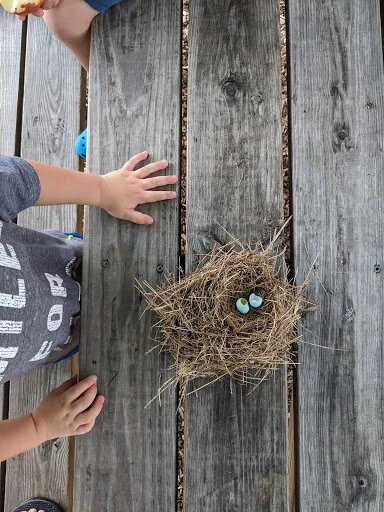
As you are moving through this season as a family, begin to point out how creation is starting to echo themes of resurrection all around us in the changing season. Bird’s eggs and butterfly cocoons seem inanimate, but they hold new life inside. Hibernating animals, leafless trees, and dirt that hides seeds underground all seem still and inactive, but they are coming to life as the seasons change. Nature points us to worship the Creator, so look closely at what it has to say about the hope of new life around us and how that echoes the hope we have in Christ’s resurrection.
Then turn those conversations into art! Draw, paint, color, build, or take pictures as you have these chats with your kids. If you build a birdhouse or plant a garden, take a picture of it! If you find a nest, a cocoon or a budding tree, paint a picture with your kids! Over the next few weeks, we will all be creating artwork that tells the story of the resurrection through His creation and then we will celebrate together by putting up all of the pictures on a large bulletin board in the church foyer during the season of Easter to share as we celebrate the resurrection of Christ together!
Ideas to get started:
Go on a nature walk and look for...
A bird’s nests with eggs or eggshells in them
Caterpillars or butterfly cocoons
Budding plants and growing gardens
Learn and observe at home by...
Planting seeds together and watching them grow over the next few weeks.
Building a simple birdhouse.
Studying how a seed becomes a plant.
Studying how some animals hibernate in the winter and reawaken in the Spring.
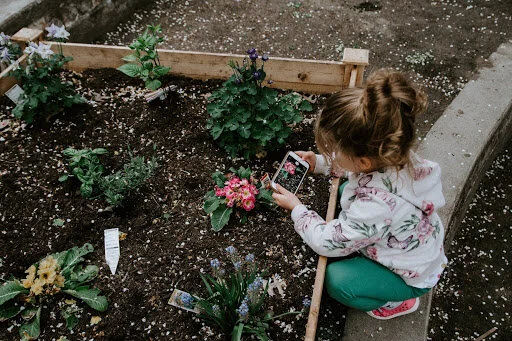
Now get creative!
Draw, paint, color, build, take photos, and then send in whatever you make to share with our church family during the season of Easter as we celebrate the resurrection of our Lord together!
Send it in:
Email pictures or artwork that you want to share to Casey Cisco or bring your artwork to church on Sunday and drop in the dropbox.





An Invitation to Care: What Tells Us We Need Professional Help?
What if you find yourself in a situation where you are dealing with thoughts of self-harm, feelings of depression and/or anxiety, or wondering if you have a problem with alcohol, medications or other substances? What if you are worried about someone you care about?
While Jesus used his life to role-model walking with God (i.e., taking time to rest and spending time alone in prayer), his ministry was incredibly focused on his relationships with a small group of followers. His relationships, not just with his disciples, but with his extended family (Mark 3: 31-34), formed the foundation of the Church.
We know little of Lazarus, except that he and his sisters were followers of Jesus. Lazarus’ biggest claim to fame is dying, followed by his resurrection by Jesus four days later. In John’s Gospel, Jesus tells his disciples that he knows that Lazarus is sick, but that everything is going to be okay. Jesus later informs his disciples that Lazarus has died, and he (Jesus) will now go to visit Lazarus and his sisters.
Upon arriving in Bethany, Jesus is confronted separately by Martha and Mary, who demonstrate their faith in Jesus AND their anger toward him for not being present when Lazarus died. When we look at this story as a whole, it is clear that Jesus knows exactly what he is going to do: Jesus will bring Lazarus to life again. But notice what happens when he walks with Martha and Mary to the tomb.
“Jesus wept.” (John 11:35).
If Jesus knew all along that things were going to turn out great, why was he crying?
John makes it clear that Jesus was not crying because he was sad about Lazarus, but that he was moved by the grief of those who also loved Lazarus. Jesus was not crying for Lazarus or for himself; he was deeply impacted by the depth of sadness, depression, anger and loss felt by those present. Jesus demonstrated this impact through his tears.
I think this is a part of Jesus that we sometimes forget. We’re aware of Jesus as a teacher, a healer, and a Savior who gives his life for us on the Cross; but Jesus also sat, listened, wept, and walked with people. Even though he knew what the outcome was going to be in his life and the lives of others, he felt deeper for others than any human could ever feel for another person.
I am certain that this continues to this day: Jesus walks with people, sits with them, listens, and often weeps.
Jesus calls us as his followers to do the same. As we have seen in the other entries in this blog series, Jesus is present with us throughout our most difficult and challenging times.
But even when we acknowledge Jesus’ presence, we must also understand that there are times when we need professional help. This could include struggling with severe depression, anxiety or trauma. It may mean struggling with a substance use or behavioral disorder. It could also mean struggling with thoughts of suicide.
I want to be clear: Having to deal with any of these issues does not mean that you are bad or unworthy. It does not mean that you are in your situation because God has given up on you, or you somehow lack the right amount of faith. It means you are human. God never promised his followers that they would be free from life’s struggles. Unfortunately, this part of Jesus’ message has been misconstrued in our society; with many churches equating good health, or material prosperity, as a sign of God’s favor. This is patently false teaching and serves to alienate people further from Jesus’ message of grace, love, and redemption.
What if you find yourself in a situation where you are dealing with thoughts of self-harm, feelings of depression and/or anxiety, or wondering if you have a problem with alcohol, medications or other substances? What if you are worried about someone you care about?
The first thing we should do is not ignore these concerns but listen. Take any expressions of self-harm and suicide seriously. If you are concerned about a person’s immediate safety, get them to a local emergency department. There, they will be assessed by professionals, and if necessary, can receive help in a safe, secure environment. Retreat Hospital, located behind our church building, does an excellent job of helping people in crisis. If you are not sure if the situation is immediate, please call the National Suicide Prevention Hotline: 1-800-273-TALK(8255).
If you are concerned about your use (or a loved one’s use) of alcohol/drugs, a good place to start is Alcoholics Anonymous. AA is not treatment; it is a community of people dedicated to helping one another in their recovery from alcohol misuse. For a list of local meetings, call 804-355-1212.
Finally, if you feel you or a loved one would benefit from counseling, please talk with a church leader. Understand that doing so is not a display of weakness, it is part of being human. And remember that Jesus is always with us, including when we are working with a professional. Our God is not a passive presence, ignorant of our pain; He took on human form and poured His life (and his tears) out for us. Jesus still walks and weeps with us today.
—Paul Brasler (LCSW) has been a clinical social worker for over 25 years. He specializes in walking with people with substance use disorders and serious mental illness and training other clinicians. His first book, High Risk Clients was published by PESI Publishing and Media in 2019.

Is It Safe To Come To The Ash Wednesday Service?
Dear Redeemer Family,
As we’re all trying to make wise decisions about exposure during this season, I thought it might be worth specifically addressing some FAQs about the Ash Wednesday services tomorrow:
Dear Redeemer Family,
As we’re all trying to make wise decisions about exposure during this season, I thought it might be worth specifically addressing some FAQs about the Ash Wednesday services tomorrow:
Q: How important is it for me to come to this service?
A: Given that we are (still) in the midst of a global pandemic, I can’t think of a time when the prayers and message of Ash Wednesday have ever been more important. In the past year, if you’ve ever found yourself asking the question, “How do Christians respond to all of the suffering and death caused by the coronavirus?” The answer is found in Ash Wednesday - where we are reminded of our mortality and offered only one source of hope - the Cross of Jesus.
Q: Can I contract the coronavirus through receiving ashes on my forehead?
A: No, ashes placed by someone’s hand on your forehead would not transmit the virus. However, there is the concern of respiratory transmission (breathing towards each other in close quarters). Therefore, those imposing ashes will be wearing a face shield in addition to a mask. This is the same level of protection that a doctor or nurse would use in a hospital setting.
Q: Why are there three services: morning, noon, and evening?
A: Ash Wednesday is one of the few days of the year when many Christians bear a visible marker of their faith in public. Therefore, you are encouraged (if possible) to attend one of the earlier services so that you might wear the ashes throughout the day. Not only does this identify you publicly as a Christian, but it will also serve as a reminder to you throughout the day whenever you catch a glimpse of yourself in a mirror.
Q: Is there an online option?
A: Unfortunately we are not able to offer an online option. Some aspects of worship, prayer, and preaching can be transferred to the internet, but other practices are uniquely embodied and there’s just no way to transfer the practice online. Receiving ashes is an embodied practice that requires your physical presence. If you are physically unable to to come to one of the services (say, you are receiving treatment for a prior medical condition and are quarantined at home under strict doctor’s orders) then someone from the parish would be glad to visit you at your home to impose ashes.
Q: Can I put ashes on my own forehead at home?
A: No, that would not be appropriate. The ashes are a sign of our mortality and our personal and corporate repentance. Therefore, they are to be received along with your brothers and sisters in the church in the midst of a service of repentance. The ashes and the corporate confession of sin go together and should not be separated.
Q: But I know of other churches that are offering an online option and self-imposed ashes at home. Why is Redeemer being so unhelpfully strict?
A: In recent years, many churches of many denominations have begun to appropriate certain aspects of liturgy and the ancient church calendar. While this is mostly to be celebrated, it does reveal the danger in embracing a practice while rejecting the theology and philosophy that accompanies it. So, while we are thrilled that many churches are taking up the practice of imposing ashes on foreheads at the beginning of Lent, we (as a church in the Anglican Communion) desire to remain consistent and integrated in both our practices and in the theology that undergirds them.
Q: Is there anything else I can do to prepare for Lent?
A: Our staff has put together a guidebook with resources for how to practice Lent. You can download a PDF or pick up a hard copy at the Ash Wednesday service or the following Sunday morning.
Q: Is there anything else I should know about the Ash Wednesday service tomorrow?
A: The service will be very brief (approx. 30 min). Historically, many Christians have fasted on Ash Wednesday, worn the colors black or grey as a sign of their penitence and mortality, and arrived at the service a bit early in order to sit or kneel in silence before the prayers begins.
Church family, as we enter the season of Lent together, we will spend much of our time focusing on aspects of our lives that we usually try to avoid! We will focus our attention on discipline, self-denial, repentance, humility, sin and our own future deaths. While these are not exactly fun topics, they are absolutely necessary for cultivating a heart of resilient joy. My hope for us is that not that we will be a gloomy bunch for the next five weeks; but rather that we will mysteriously be strengthened and emerge as more cheerful, more joyful people than ever before.
I’ll see you tomorrow.
In the Father’s love,


Struggle: An Invitation to Relational Care
One afternoon, I was sitting in a counseling session with a woman who was discontent in her marriage. They’d been married for fifteen years and have had several children together. “He doesn’t listen. He left me years ago to have an affair with his job,” she said metaphorically but with the sharp edge of truth. I asked her, “when was the last time you felt intimate with your husband?” “Ages,” she replied.
One afternoon, I was sitting in a counseling session with a woman who was discontent in her marriage. They’d been married for fifteen years and have had several children together. “He doesn’t listen. He left me years ago to have an affair with his job,” she said metaphorically but with the sharp edge of truth. I asked her, “when was the last time you felt intimate with your husband?” “Ages,” she replied.
As a young therapist, I had come prepared with my clever bag of therapeutic tricks but I didn’t know that I was about to learn one of the most important lessons of my career: how to attend to someone hurting so deeply, but do it with my presence rather than my words. This woman sat in my office and wept. She needed to. I’d seen her for weeks and heard her pain but had never seen it. We sat in silence for 15 minutes straight and that was the most helpful 15 minutes of any session we’d had up to that point. Where my words fall woefully short, Abba made the way.
In the previous Struggle article, Elizabeth brilliantly discussed emotions and self-care. This week, we’ll be diving into how these emotions might play out in relationships and our inherent need for relational care.
I define intimacy as taking the risk to know fully and to be fully known. The woman mentioned before felt that she’d never truly been known. The hill I will die on is that intimacy and relationships are fundamental for a healthy life and a healthy Christian walk. In this season of pandemics, political unrest, and calls for racial justice, the attainment and experience of intimacy and healthy relationships can sometimes seem like a fool’s errand. As many of us are still confined to our homes, it may even feel like we could use a little less intimacy, but let’s not confuse intimacy with time spent with others.
Intimacy is so important; intimacy with loved ones, intimacy with God, and intimacy with ourselves. To know and to be known, to accept and be accepted despite shortcomings is at the heart of the Gospel. In 1 John 4:7, John writes “Beloved, let us love one another, for love is from God, and whoever loves has been born of God and knows God.” God is love and love is God. Consider intimacy, friendship, and companionship acts of worship because they are of the Creator.
Intimacy is a fragile state. It is used sometimes as currency. It takes on new meaning through trauma, is made difficult when suffering from mental illness (which we all do at some point), and is often destroyed by shame. To quote Tim Keller: “to be loved but not known is comforting but superficial. To be known and not loved is our greatest fear. But to be fully known and truly loved is a lot like being loved by God. It is what we need more than anything. It liberates us from pretense, humbles us out of our self-righteousness, and fortifies us for any difficulty life can throw at us.”
What about the times we’ve opened ourselves up to others and it didn’t go so well? Perhaps you’ve been wounded by others and have found it easier and safer to keep others at a distance. First of all, your feelings are valid and good for you for surviving. We have emotions for a reason. They tell us much about our experiences but they aren’t always reliable. I like to visualize this as play fighting with a child, where you can place your hand firmly on their head and they can swing but not hit you. Sure, keeping others at an arm’s distance is a safer way to live life. We can place our heart in a box where it won’t be damaged, but the consequence is that the heart will change and it will harden. This is why intimacy is a risk, but it’s one worth taking.
When we are engaged in healthy relationships, they can look like acts such as good communication, trust, empathy, playfulness, but also knowing yourself apart from another. Sometimes relational care can look like offering words of support or wisdom. Other times it can look like just being rather than doing. If you’re married, ask your spouse what they need from you in moments of pain. This can help give you direction rather than hoping you’re doing something helpful.
How do you know when you are the one in need of relational care? If you are feeling burdened, anxious, depressed, or lonely, those are your cues. Deciding to ask for care from another can be difficult. Talking to someone in an emotionally safe, non-judgmental space can help you make sense of your thoughts and feelings and even help alleviate some that are unwanted. By asking for relational care, you are moving toward intimacy.
1 Peter 4:8 states "Above all, keep loving one another earnestly, since love covers a multitude of sins." By caring for one another, we are loving one another and, therefore, loving the Creator. God knows our hearts. He created us for communion with one another and with Him. Let’s be bold enough to take that risk.
—Mitchell Waters

Seeing and Being Seen: The Necessity of Relational Discipleship
In the last year, the various places of our lives have been swept away or altered entirely: schools, workplaces, gyms, team sports, Sunday worship. Like the rest of us, teenagers have spent nearly a year being more deeply formed in a world that is impersonal, digital, mediated by screens or, at best, by masks. The depth of isolation is something many of us have never known. The patterns of life that have come with the pandemic have worked unconsciously to conform all of us, but especially young people, to the belief that our lives are essentially private, that what we feel, think, and do is mostly unseen, and therefore of no consequence or meaning to others.
In the last year, the various places of our lives have been swept away or altered entirely: schools, workplaces, gyms, team sports, Sunday worship. Like the rest of us, teenagers have spent nearly a year being more deeply formed in a world that is impersonal, digital, mediated by screens or, at best, by masks. The depth of isolation is something many of us have never known. The patterns of life that have come with the pandemic have worked unconsciously to conform all of us, but especially young people, to the belief that our lives are essentially private, that what we feel, think, and do is mostly unseen, and therefore of no consequence or meaning to others.
Scripture teaches us something entirely different. It teaches us the truth we want those we disciple to know: God sees. His seeing is essential to his relationship with his creation. In the first few pages of Genesis, God sees the work of his hands—the heavens, the creeping things, the birds of the air, man and woman—and glories in it; he sees Adam and Eve in the shame of their sin and is moved to clothe them; he sees the blood of Abel which cries out to him from the ground and he confronts Cain; he sees the wickedness of Noah’s day and is grieved to destruction. And this is just the very beginning.
On and on, Scripture is patterned this way: God sees and he cares and he acts. He is never indifferent to us. He is never tolerant of injustice. He is never complacent with our sin. He sees everything and he cares for all of it—every thought, every secret act. It all matters.
But apart from personal relationships which prove to us that we are seen, known, and sought out, it’s hard to believe God sees, cares and acts for us. We need other people to help us believe.
This is why relational discipleship is essential to our faith and maturity. We need eyes and voices outside of ourselves that can see past our present circumstances, reinforce the natural order of God’s will, make clear the boundaries of his law, and finally offer to us the assurance of his grace for our sins (James 5:16). We all need this, and our young students especially need it.
In making disciples we have the opportunity to complete Christ’s sufferings, or as Paul says, “to fill up what is lacking in Christ’s afflictions,” both by offering the news of his love to those who need him and by embodying that love in suffering with them (Col 1:24). Our students need for us to show them and tell them how Jesus desires communion with them in all times and places and how he died to guarantee it. They need to hear that disruptions in life are inevitable, but that Jesus’ desire for them is constant. Our presence is proof of that.
We are told in the book of Hebrews to “consider how to stir up one another to love and good works, not neglecting to meet together” (10:24-25). Fulfilling this is not possible if we are distant from one another, not just physically but in spirit. (It is possible, after all, to be physically near and emotionally detached, just as it is possible to be emotionally engaged and separated by oceans.) In relational discipleship we draw near, making the gospel of Jesus personal, incarnate, particular, and meaningful. We hear the specific concerns of our students, not just the general ways that life is challenging for everyone, but the concrete obstacles to one disciple’s joy in Christ. We get to hear those personal details in the exact words that they have found to share them. And into that one person’s life we say, “I see you, God sees you, and you are not alone.”
Just as we are created in God’s image, we were also created for life with him, to be seen and known and loved fully. Our union with him was severed but is possible again now through Jesus, not abstractly in ideas and words only but also in our presence together with him and with each other. Let’s not neglect to meet together.
Gathering together will hopefully look normal very soon. But for as long as it is not, we should work diligently to meet. There will be challenges, but God will be with us and more so when we are together. For the near future it will continue to be right and good for most of us to follow safe guidelines, and that is okay.
Encouragements:
Meet outside. Six feet cannot stop us from listening well, from counseling, and prayer. Go to a park. Sit in someone’s backyard around a fire in small groups.
Wear masks. They are uncomfortable and annoying, yes. But they are a small inconvenience in light of an eternity face-to-face with Jesus.
Write letters. This is not the same as meeting, certainly. However, intentionally taking time and effort to work gospel truth into the particular context of someone’s life can have a lasting effect.
This should not replace letters. The two are very different in form and meaning. Texts are by nature informal and expendable. But we all need small, daily encouragements in the right direction.
Facetime or Zoom if you have to—it’s not ideal, but it’s better than nothing.
I often sing the words to myself that the church has sung for ages, “As it was in the beginning, is now, and ever shall be, world without end. Amen.” The times are strange, but they are not excepted from the blessings of Christ’s victory. We need each other to remind us of these eternal gifts. Because they are young in their faith, our students need them even more.
—Christian Hayes, Director of Youth Fellowship

Faith Over Flash: What makes a good Vestry member?
In a healthy, vibrant, growing young church, there are so many different ways to serve. Some of these roles are highly visible (leading music on a Sunday), some are seen only by a few (leading a fellowship group), while others are almost entirely unseen (sanitizing the sanctuary between services).
Serving on the Vestry occupies a kind of unique in-between ground between public and private service. In one sense, Vestry members have very public and visible roles. Serving as a Vestry member is the greatest responsibility that a lay person can exercise in a Parish. Yet, at the same time, almost everything a Vestry does occurs in secret, behind the scenes. Nobody ever got famous serving on a Vestry!
Dear Redeemer Family,
Soon, on March 14, we will have our next Vestry election. Two faithful members (Robyn Burlew & Jeromy Lewis) are rolling off after their three- year term, and we are voting to elect two new members. You can submit your nominations here—nominations are due by Sunday, February 14. (Remember, both you and the person you nominate must be Confirmed Members.)
In a healthy, vibrant, growing young church, there are so many different ways to serve. Some of these roles are highly visible (leading music on a Sunday), some are seen only by a few (leading a fellowship group), while others are almost entirely unseen (sanitizing the sanctuary between services).
Serving on the Vestry occupies a kind of unique in-between ground between public and private service. In one sense, Vestry members have very public and visible roles. Serving as a Vestry member is the greatest responsibility that a lay person can exercise in a Parish. Yet, at the same time, almost everything a Vestry does occurs in secret, behind the scenes. Nobody ever got famous serving on a Vestry!
Here are just a few things that the Vestry works on each year:
Annual ministry budget.
Staff salaries.
Improvements to our rented space here at 2715 Grove Ave.
Distributing the Mercy Fund to those in need.
All of these tasks (and many more) could be filed under the heading: How can we leverage all the material resources given to our Parish for the greatest Kingdom fruitfulness?
So a Vestry does not create a vision for the Parish (that’s the Rector’s job, under the oversight of the Bishop). Rather, the Vestry stewards the vision, enables the vision, and funds the vision. The Rector and the Vestry must work together, as a team, to carefully lead the Parish forward, following the Lord’s call.
So What Makes a Good Vestry Member?
Wisdom: Someone, male or female, who is wise. We don’t need rash hot-heads or passionate brawlers to storm the gates and take the hill. We need stable, even-keeled leaders who are not easily thrown off kilter.
Affection: This person must love our parish. A Vestry member is not someone who is dissatisfied with our church and is desperate to grab the wheel and (finally!) change our church to conform to their personal vision. Rather, this person must already love our little church - feeling a deep affection for the people, the staff, the clergy, the vision, and the ministry.
Experience: This is not their first rodeo. Stepping behind the curtain (so to speak) in church leadership can be difficult for an inexperienced person who might have too-rosy a view of the church. This lack of experience can lead to a person being scandalized when they find out that, yes, all Christians are sinful human beings. So we need someone who has experience working with and leading other people in ministry contexts.
What does a Vestry Member Not Need to Be?
A Gifted Bible Teacher: If the person you’re thinking of nominating to run for Vestry is a gifted Bible Teacher, then encourage them towards that seat on the bus! There are plenty of opportunities for the excellent teachers in our midst to use their gifts, but the Vestry is not an elite Bible study.
A Dynamic Leader: We are blessed with many gifted, dynamic leaders here in the Parish. While these folks are certainly welcome to serve on Vestry - what the Vestry needs most from them is their maturity, not their dynamism.
A Savvy Financial Mind: Yes the Vestry oversees the budget and the building, but that does not mean that all Vestry members need a financial background. The Finance Team serves as a Task Force of the Vestry and provides the Vestry with all the financial expertise they need to make wise decisions.
If you’d like to read more about what it means to serve on the Vestry. I would first recommend this document I put together years ago: Definition & Purpose of a Vestry.
And if you’d like to go even further, I recommend reading The Rector & the Vestry by David Roseberry. You can pick up a copy at the book table on Sunday morning.
I’m looking forward to this year’s election and to welcoming two new members to our Vestry Team.
In the Father’s love,

Dan

The Night Before
If you are anything like me, you have aspirations to be a healthy person. You envision the kind of person you’d like to be (perhaps even the kind of person you’re called to be) and you imagine yourself as disciplined, self-controlled, growing, learning, and maturing. Perhaps one aspect of this vision of this “future you” involves rising early to read scripture and pray? The morning devotion is an old standby of the people of God - dating back to the Hebew people of the Old Testament and the early church in the New. For millennia, followers of the one, true God have risen early, shaking off slumber, to keep watch in prayer and meditation on God’s word.
A LESSON LEARNED AT SUMMER CAMP
The Summer after my freshman year of college, I served as a volunteer staffer at a camp on Lake Champion in New York. My responsibilities included, amongst other things, waking up at 5:00 a.m. to drive a boat across the lake and prepare (from scratch, mind you) a campfire breakfast for a dozen teenagers who would paddle across the lake in canoes for a sunrise breakfast. The first week was brutal! As a nineteen year old, I was not accustomed to getting up this early! However, by week two, I was hitting my stride; and weeks three and four were easy. What changed? Well, the consistency of waking up at the same time helped, but what really changed was my nightly routine. During week one, I often stayed up until 11:00 p.m. or midnight chatting with fellow summer staffers. They didn’t have to get up nearly as early as me and so could afford to stay up late. However, by week two, I knew something had to change if I was going to survive! So, as much as it pained the extrovert in me, I began to go to bed earlier in order to prioritize my morning responsibilities. I learned a difficult, but very basic lesson: a good morning begins the night before.
THE KIND OF PERSON WE WANT TO BE
If you are anything like me, you have aspirations to be a healthy person. You envision the kind of person you’d like to be (perhaps even the kind of person you’re called to be) and you imagine yourself as disciplined, self-controlled, growing, learning, and maturing.
Perhaps one aspect of this vision of this “future you” involves rising early to read scripture and pray? The morning devotion is an old standby of the people of God—dating back to the Hebew people of the Old Testament and the early church in the New. For millennia, followers of the one, true God have risen early, shaking off slumber, to keep watch in prayer and meditation on God’s word.
The Bible is replete with stories and exhortations on rising early. Here are just a few examples:
The Psalmist: “Let me hear in the morning of your steadfast love, for in you I trust.” — Psalm 143:8
Christ himself: “And rising very early in the morning, while it was still dark, he departed and went out to a desolate place, and there he prayed.” — Mark 1:35
The Disciples: “And very early on the first day of the week, when the sun had risen, they went to the tomb.” — Mark 16:2
THE CHALLENGE
What makes keeping this practice especially difficult in our time is that we have options and temptations that our forebears never had to face. We have electricity, the setting of the sun does not end the day for us! We have the option of staying awake late into the night, stretching the day far past the point of exhaustion for many of us. Additionally, with the advent of the television, and then recorded videos, and then streaming internet, we have access to nearly limitless entertainment that keeps our brains so stimulated we cannot hear our bodies saying, “I’m tired, it’s time to go to sleep.” And so, for the average 21st century Western Christian, the habit of rising early to pray and read scripture remains desirable, but frustratingly unattainable.
NEW EVENING HABITS LEAD TO NEW MORNING HABITS
Unattainable, that is, unless we learn the lesson I was forced to learn at that Summer Camp (and have since had to relearn many times): a good morning begins the night before. So the habit of rising early to pray does not begin with my alarm clock annoyingly beeping at 6:00am. The habit actually begins sometime around 9:30pm the night before, when I need to be doing things like:
Cleaning the coffee pot and grinding fresh coffee (if I grind it in the morning, it will wake up the kids).
Selecting breakfast food.
Turning off screens.
Laying out clothes for tomorrow.
Setting out the Book of Common Prayer and Bible on the kitchen table.
The night before, I want to do everything I can to make it possible for me to roll out of bed, tip-toe down the stairs like a ninja (carefully avoiding the floorboard squeak), and spend a few precious minutes alone and quiet with the Lord before the hustle and grind of a new day begins. Of course, when that alarm goes off, I still face the daily challenge of waking up or hitting snooze; but a good evening routine nudges me towards discipline and away from sloth.
Friends, this stuff isn’t revolutionary, there’s “nothing new under the sun,” but you and I face a unique set of challenges in our time that make the normative spiritual habits of Christians especially difficult. I love the mental picture of Redeemer folk rising in the early hours of the morning all over the city to keep watch in prayer at our kitchen tables, in our armchairs, and on living room sofas. However, as romantic and lovely as that picture is, a more important image might be that of Redeemer people turning off TVs, closing laptops, setting coffee makers, and laying out Bibles and Prayer Books earlier in the evening, the night before.
In the Father’s love,

Dan

Struggle: An Invitation To Self-Care
At first glance we might think of self-care as little more than self-indulgence—spa treatments, iced coffees, shopping sprees, elaborate vacations, Netflix binges, alcoholic beverages, and consuming pretty much anything that is being advertised. But effective self-care is bound up in recognizing our needs and limitations. As a mental health professional, I appreciate the ways in which self-care practices are essential to health. Sleep habits, diet, exercise, and meaningful hobbies, along with nurturing expressions of community and spiritual practices are important components of our well being. Yet somehow this didn’t connect to my trials of parenting, marriage, COVID-isolation and my own mental health.
Last week we discussed how our trials invite us to greater intimacy with God. But what do we do with that invitation? This post will discuss actions we can take to posture ourselves to experience God’s presence and provision.
At first glance we might think of self-care as little more than self-indulgence—spa treatments, iced coffees, shopping sprees, elaborate vacations, Netflix binges, alcoholic beverages, and consuming pretty much anything that is being advertised. But effective self-care is bound up in recognizing our needs and limitations. As a mental health professional, I appreciate the ways in which self-care practices are essential to well being. Sleep habits, diet, exercise, and meaningful hobbies, along with nurturing expressions of community and spiritual practices are important components of our health. Yet somehow this didn’t connect to my trials of parenting, marriage, COVID-isolation and my own mental health.
At the the beginning of 2020, I was exhausting myself physically and mentally for what I believed to be the sake of my family. Self-sufficiency and self-sacrifice were clearly falling short. In fact, my worsening fatigue and irritability was making an already difficult situation worse. Little did I know how crucial taking care of myself would become. My motivation was the problem: I wanted to make my life easier by making everything else easier, happier and fulfilled. My hope was in myself and my efforts to force change. But the trials of 2020 would refine my disciplines of self-care to bring about a closeness with God I never knew before.
Despite my professional knowledge about the necessity of self care, I managed to become entrenched in neglectful patterns of self-sufficiency. The truth is, tending to our needs for sleep, healthy eating, and physical health can be an act of obedience to God. We are embodied souls: we need food, shelter and clothing for survival. Therefore, we need to care for our bodies, souls and minds so that we can love God and neighbor.
However, it’s understandable that some Christians may feel allergic to the “self” in self-care. After all, aren’t Christians are called to self-sacrifice, self-forgetfulness, and considering themselves only after serving others? Yes, but it’s important to remember that the spiritual discipline of self-care accomplishes goals that go beyond having only our physical needs met. When we pay attention to what our bodies are telling us, we do a very good thing—we recognize our status as creatures. We are not gods. We have limits that must be recognized and palpable needs that must be met. Jesus (God in flesh) expresses this in numerous instances. We read that he sometimes left the crowds who were following him to be alone or spent the night in prayer. He took time to eat with his friends. He slept. When I remember these basic features of my human condition, I’m free to recognize my limits and find a certain freedom from the anxiety of always pushing beyond them.
The discipline of self-care for the Christian is comprised of the practices that steward our bodies, minds and spirits in health. In doing so, we experience the pleasure of God’s created intentions for us—Irenaeus famously wrote that "the glory of God is a human being fully alive.” If this is true, then tending to the needs of our bodies, minds and spirits is God’s gift to us. So how can we posture ourselves to receive this gift and cultivate our experience of intimacy with him and others? Christians have freedom to practice self-care in many ways. Our bodies need medical care to stay healthy, or specialized care to address sleep issues, mental illness, diet concerns, and more. We all need deep, restorative sleep, physical exercise, and nourishing food. We are helped by healthy rhythms surrounding media consumption, screen usage, reflections on gratitude, and others.
Several new habits have eased my challenges of the past year—an early bedtime as the most important. I’d resigned myself to being a “night owl” and gave up hope for being the kind of person who does early morning prayer. But when I practice a regular and early bedtime, I have energy to rise for quiet mornings in prayer, avoid late night black holes of media overload, and enjoy the physical and mental benefits of good rest. As a result I feel better equipped to be more patient with my family, motivated to exercise, and refreshed for the inevitable challenges of a new day. While I don’t get it right every time, I’m learning to be patient with myself as healthful disciplines become more regular.
It can seem like a lot of responsibility to practice self-care. But ultimately, when we recognize our limits, we recognize our dependence on God for his provision and care. And when we rest in his provision, we are energized to do his work.
—Elizabeth King

The News as Spiritual (De)Formation
Over the past years, and especially in recent months, I have heard a consistent theme of lament from friends in ministry. When asked the question, “What’s the greatest challenge you’re facing when it comes to discipleship in your church?” The answer has been, almost universally, “the News.” When pressed for an explanation, I hear some version of an all-too-common story: “A congregation member’s preferred news source seems to be the most powerful voice in their lives. It tells them what to believe about who they are, the problems of the world, who is at fault, and what to do about it. The news has become a lens through which the Bible, the Christian faith, and (most especially) their local church is interpreted.”
“Let us throw off everything that hinders and the sin that so easily entangles.”
— Hebrews 12:1
A CHALLENGE TO DISCIPLESHIP
One of the things for which I am most grateful in ministry is the camaraderie I share with a number of other pastors, both in the city of Richmond and around the country. Over the past years, and especially in recent months, I have heard a consistent theme of lament from these friends in ministry. When asked the question, “What’s the greatest challenge you’re facing when it comes to discipleship in your church?” The answer has been, almost universally, “the News.”
When pressed for an explanation, I hear some version of an all-too-common story: “A congregation member’s preferred news source seems to be the most powerful voice in their lives. It tells them what to believe about who they are, the problems of the world, who is at fault, and what to do about it. The news has become a lens through which the Bible, the Christian faith, and (most especially) their local church is interpreted.”
The weekly rhythm seems to have become, at least for some American Christians, to ingest tens of hours of broadcast and printed news each week, and then to evaluate their pastors and churches to see if they “got it right.”
What is even more troubling (and frustrating) is that, when this problem is named, Christians often respond with some version of, “Yes, yes, you’re absolutely right. Sensationalized, politicized news is a serious problem. That’s what I only read/watch _______ because it’s not biased, it’s just the facts.” It appears that most people believe they are the exception to the rule. Other people, less intelligent than myself, are influenced by the news, but not me.
EVERYTHING IS SPIRITUAL FORMATION
I imagine that there may be some who are confused by the title of this article. Isn’t spiritual formation things like prayer, retreats, and disciplines like fasting? Of course, but let’s remember that, in this gloriously complex life the Lord has bestowed upon us, there is no such thing as a sacred/secular divide and there is no such thing as neutral. Life is sacramental, meaning that the spiritual and the material are two sides of the same coin, they are indivisible, inseparable. We know this existentially even if we do not know it intellectually. We sense this in the birth of a child, the wedding of loved ones, the lingering conversation over wine with dear friends, and a crackling fire outside under the stars. These are material events and yet something mysteriously spiritual is taking place as well. It is no wonder that the sacraments of Baptism and Holy Communion retain their power and significance in the life of the church - they point us towards the reality that all of life is both spiritual and physical.
Additionally, from a Biblical perspective, all spiritual things can be divided into that which honors and gives allegiance to the Lord Jesus and that which denies and rebels against him. If all spiritual things are either for Christ or against Christ, and all of life is spiritual - then there is no neutral territory. There are no neutral actions, no neutral words, no neutral influences.
Therefore, not only is watching or reading the news an act of spiritual formation, but given the weight of influence it holds in so many of our lives; it is growing to become, if not the most significant, at least in the top three most significant molders or shapers of who we are becoming.
Here’s another way to say the same thing: everything in your life is shaping and molding you both physically and spiritually, including the news.
THE NEWS AS A KIND OF GNOSTICISM
Before we go any further, it’s worth asking ourselves, “Why is the news so enthralling for us?” It doesn’t seem rational. We turn on the television, log onto our preferred websites, read daily, curated email news summaries… and it’s mostly depressing fare. So why do we keep coming back?
One theory to consider is that most news sources present themselves as a kind of Gnostic Gospel. For those of us who may be a little rusty on our church history, gnosticism began as a second century Christian spin-off that was soon identified as a heresy because it invited people to trust, not in repentance of sin and salvation in Christ, but in a kind of special, mystical knowledge or esoteric insight. A practicing gnostic believes that they are more enlightened than others—they have a special kind of insight that others do not have.
This is, in a sense, what contemporary news proposes to offer us. The news says to us, “It’s a big, complicated world out there and people are trying to take advantage of you. Come to us and we’ll give you the inside scoop. If you subscribe to us, you’ll be one of the enlightened few and not part of the mob of fools.” The news offers a kind of salvation through special knowledge.
THE NEWS AS TEMPTATION TO BE LIKE GOD
Let’s take things a step deeper. The news offers a sub-strain of the same temptation presented to the first humans in the Garden of Eden: the temptation to “be like God.” How? It has always been the sole purview of God to know all things happening in all places, to be omnipresent and omniscient. Humans, on the other hand, are finite creatures. We can only be in one place at one time and we can only know a few things, not all things. Therefore, in our human finitude, we only have the capacity to care about a few things, not all things. Historically, for most human beings, those few things were limited, almost exclusively, to local events. Almost all news for almost all people has, historically speaking, been local news - not national or international news. The average farmer in Minnesota was not asked to know or care about events in Nepal, or Seattle, or Texas. The average restaurateur in New Orleans would know far more about the happenings in her neighborhood than the happenings in Washington D.C.
Our contemporary news sources present our finiteness as a problem to be overcome. We are told that we will (gasp!) be uninformed if we are not tuned in to the latest goings-on all over the world. If we have imbibed the gnostic gospel of enlightenment through special insight, then there is nothing worse than being uninformed - deprived of special insight. And so we are told we must know what is happening, we must transcend our local and become global, we must leave behind the darkness of “not-knowing” and enter the light of “breaking stories.” We must, in short, become like God: knowing and caring about everything.
It’s a heady tonic. This is why watching or reading the news makes us feel important. There is something god-like about having access to so much information about people we’ve never met, places we’ve never been, and events that have nothing to do with us.
TELL ME, WHAT IS THE USE OF INACTIONABLE NEWS?
Which brings me to my point and question: Tell me, what is the use of inactionable news? By this I mean: news about which you can do nothing. Most news is bad: an earthquake, a hurricane, a murder, a scandal; and most news is inactionable—there is nothing you can do to impact the troubling situation. If ingesting news is spiritual formation, what does ingesting all this inactionable bad news form in you?
Anxiety—The sheer quantity of evil in the world being pumped at you everyday like a firehose to the face will not leave you more peaceable, more content, or more joyful. Rather, the steady hum of anxiety will begin to permeate your experience.
Loss of Agency—Moreover, because you are growing accustomed to hearing about problems you can’t fix and suffering people you can’t help, a deep feeling of having lost agency settles in.
Anger—Which, for anyone with a moral compass, leads to anger. The built-in, image-of-God, sense of justice within you rises up in rage against the bad guys.
Hate—Anger is like the evaporated alcohol that rises from fermenting grain. Over time, it can be distilled and bottled into hate.
This is why Christians who watch or read a lot of news usually end up hating, and not loving, their neighbor. They have been spiritual formed (deformed) by truckloads of voyeuristic, inactionable, horror stories that have framed a worldview in which they are part of a small, heroic, minority of good people at war against powerful multitudes of the ignorant (at best) or the wicked (at worst).
So, again, the question: What is the use of inactionable news?
It does not assist me in loving the Lord our God with all my heart, soul, mind, and strength.
It does not assist me in loving my neighbor as myself.
Therefore, it is of no use.
THE OBJECTION
“But!” You say. “Are you suggesting we should withdraw from society? Retreat? Huddle in Christian enclaves where we seek shelter from the world?” Quite the opposite in fact. I would counsel that the news only gives the illusion of engagement and thus inoculates you against actual engagement with the world.
You, my friend, are a finite creature.
No matter what grandiose claims the internet makes, you may only inhabit one space at one time.
No matter what the news insists, you cannot know everything or care about everything.
I’ll take it one step further, you should not seek to know everything or care about everything because you should not aspire to be like God.
Your opportunity for obedience to God is a local opportunity. Therefore, the primary news that should matter to a Christian is local news. By local news I do not mean state government or city council, that is still largely inactionable news for most of us with the exception of casting the occasional vote. By local news I mean something intensely local.
News about a neighbor with a cancer diagnosis.
News about the young couple that lives down the street having their first child.
News about someone in the church who has lost their job.
News about someone’s coworker visiting church for the first time.
This is actionable, human news for the average human. You may respond, as a human, to news like this. This news presents you with an opportunity to love, to pray, to serve, or to celebrate at the human level (which, I’ll remind you, is the only level at which you can do anything at all).
As you respond to such local news, a different kind of formation will go to work within you. Anxiety will be replaced with confidence, helplessness with initiative, anger with delight, and hate with love.
CONCLUSION
The chorus of John Prine’s “Spanish Pipedream” gets it half-right:
Blow up your TV, throw away the paper
Move to the country, build you a home
Plant you a garden, eat a lot of peaches
Try to find Jesus on your own.
Perhaps we might rework it just a bit:
Turn off your TV, close your computer
Stay where you are, make it a home
Get to know your neighbors, invite ‘em all over
Take the love of Jesus and make it known.
In the Father’s love,


Struggle: What Our Emotions Reveal
It might be easy to assume that the source of my anger was primarily rooted in undesirable circumstances. My children were awake earlier than I preferred so I was annoyed, though perhaps inordinately. But when I took an honest look at my anger, I could see it was much deeper than that. I was angry at the loss of control that I felt.
The day began, like many in parenthood, much too early. Just after 5 a.m. one morning, after already wrestling my daughter back to bed three times that night, I heard the sound of footsteps in the hallway approaching my bedroom. There were at least 90 more minutes before the pre-programmed light in my son’s bedroom would signal the acceptable wake time. “Go back to bed” I called into the darkness, hoping that he would magically return. Minutes later, I heard the hungry cry of our infant coming from the next room. Frustrated and short-tempered I tucked the eldest back into bed before collecting the baby from his crib. Coffee was the only way to survive this morning.
In the silence of the early morning fog, I wrestled with my anger, speaking reason and encouragement into my frustration. “It’s not their fault that they wake early. I need to let go of my anger.” Mustering the physical and mental energy needed for the day, I willed myself into a place of inner peace. As my family slowly emerged for breakfast, I imagined myself to be calm and cheerful. My pep talk was working. Within minutes an inconsequential fight broke out over a toy and as my husband tried to referee the argument, I snapped at him. My thinly veiled anger was far from resolved. I had simply redirected it onto a seemingly more acceptable target.
The events of that morning were relatively inconsequential. If you asked my husband about it today, my hope is that he would not even remember the details. It has stuck with me, however, because of my total ineffectiveness in diffusing my own anger. As I processed the intense inner struggle and my sinful heart response on that morning, it occurred to me that I made two important mistakes in my thinking. I was wrong about the source of my anger and the solution to my anger.
It might be easy to assume that the source of my anger was primarily rooted in undesirable circumstances. My children were awake earlier than I preferred so I was annoyed, though perhaps inordinately. But when I took an honest look at my anger, I could see it was much deeper than that. I was angry at the loss of control that I felt.
Whether or not you are a parent, I imagine that aspects of the pandemic have left you with similar feelings of ineffectiveness. As a global community, we are experiencing frustrating and disappointing limits on our ability to move and be and do. Pause and think for a moment about where you feel you’ve lost control.
What does our emotional response to a loss of control reveal about our relationship with God? For me the loss of control I feel over my ability to exert my will over my family invokes anger, and I suspect that my anger reveals a personal idolatry. I want to be in control because I believe my way to be best and right. When God reminds me, through the humbling moments of parenthood or the realities of the COVID-19 pandemic, that only He sits in total sovereignty, I’m forced to recognize my own idolatry of control.
For others, loss of control might evoke grief, anxiety, or doubt - doubts about the goodness of God or His plans for this world and His people. Perhaps this loss of control, reveals a lack of joy or contentment that stems from life with Christ. Perhaps it reveals our idolatrous worship of food or sex, fame or money, in place of the one true King. Whatever emotions have emerged within you by the loss of control you experienced this year through quarantine and racial unrest, through sickness and death, I invite you to press into their meaning and see what truth God may be revealing to you.
In Psalm 34:18 we hear that “God is near to the brokenhearted and saves the crushed in spirit.” When we are emotionally overwhelmed or discouraged, we are uniquely prepared to hear God’s truth spoken into our lives. For me, the reminder that God is in control and I am not brings me into a humble posture of prayer and devotion to the truth of his Word. In times of heavy struggle, I may seek out the refining wisdom of a friend or the grace-filled advice of a counselor.
It is much easier to think about a healthy solution to my anger once I have a truer understanding of its source. A strong cup of coffee and a personal pep-talk may have been sufficient to diffuse the annoyance of an early morning. But in order to address the anger I feel when reminded of both my insufficiency and my idolatry, I will need the healing power of the Lord. In fact, this internal struggle with anger may be an invitation into deeper intimacy with God.
In sum, the negative and unpleasant emotions that often come with struggling, in whatever form, can be revealing of an even deeper more fundamental struggle in our lives. We are uniquely invited through that process of wrestling to find a deeper truth beyond the superficial or circumstantial explanation. In the coming weeks, we will be exploring more individualized responses to different types of struggle. Indeed, in God’s beautiful and wildly creative creation of mankind there is no one size fits all approach. I invite you to listen in to the conversation and to reflect on those moments of struggle in your own life. Perhaps our Lord is inviting you to meet him in a place where our brokenness and his healing truth collide?
—Rachel Capel is a Licensed Professional Counselor (LPC) at Haven Christian Counseling.

We Need Epiphany (Now More Than Ever)
... as a new year dawns upon us and our nation roils in anger, we are in desperate need of the one, true Epiphany - the light of Christ breaking in upon us, scattering the darkness and revealing the presence of God in our midst. We need Jesus to manifest his Holy presence right here, right now.
Dear Redeemer Family,
Two days ago was January 6th, the Feast of Epiphany, where Christians celebrate how God became incarnate in a human to spread His light to the nations. On Epiphany we read the story from the Gospel of Matthew ch. 2 of the Magi (representing all the non-Jewish world) traveling to worship and offer gifts to the Christ child. It kicks off the season in the church liturgical calendar focused on the revealing of Jesus’ identity as the Messiah. Aptly, the word Epiphany means revelation, unveiling, manifesting, making known.
OUR DARK EPIPHANY
Two days ago, our nation and the watching world had a different sort of Epiphany as we witnessed mobs of domestic terrorists storm the Capitol building. Amongst the many nauseating things that we witnessed, we beheld throngs of violent insurrectionists chanting slogans and waving flags with phrases like: Make America Godly Again! Jesus Saves! Give it up if you believe in Jesus, give it up if you believe in Donald Trump!
What ought to be most revolting to us (no matter our political persuasion - conservative or progressive) is that the crimes committed against democracy two days ago were not only done in the name of political conviction, they were done (by some) in the name of our Lord and Savior. The Epiphany of two days ago was the revealing of just how deep the cancer of power-obsession runs within some who identify as Christians.
In light of this Epiphany, it seems necessary for us to pause and rehearse together the story of power that unfolds in the Gospel.
THE STORY OF POWER IN THE GOSPEL
CREATION — In the beginning God holds all the power. He is the creator and the life-giver. He speaks and, at the power of His Word, the cosmos is called into existence. Then God generously shares his power with humanity - bequeathing to them the power to name creatures, to be fruitful and multiply, and to steward as his Vice-Regents under his rule and over the creation.
FALL — But what do we do with this God-given power? We hunger for more. Humanity stretches out its hand to grasp for the fruit of more power, moral power, the power to determine what is right and wrong. In this power-grab, this first-great-transgression, humanity and the whole created order falls into the shadow of sin. As we read our way through the biblical story, power is wielded in increasingly destructive ways: a brother is murdered, women are abused, an idolatrous tower is built, nations rebel, people are enslaved, genocidal wars are waged - until we have what you and I now think of as “normal.”
REDEMPTION — Into this power-hungry, violent world, God himself enters in Jesus - and what might we expect from God Almighty showing up on the scene? Well, we might expect what first-century Jews expected from the long-awaited Messiah: a military leader who would drive out the Romans and reestablish the earthly kingdom of Israel. We might expect a political leader who, through cunning strategy and savvy maneuvering, would oust the infidels and make Jewish theology and culture mainstream.
Is that what we got? Is that what God did with His power?
No, Jesus used His power in limited ways to heal, to feed, to forgive, and to drive out evil… and then, in what is still the most shocking political move of all time, He surrendered His power in order to die for His political and religious enemies.
Jesus’ crucifixion subverts everything we think we know about human power - how to get it, how to wield it, and how to keep it.
In Christ’s bodily resurrection from the dead, His beautiful subversive process opens the door for his followers to walk the same counter-intuitive, counter-cultural, power-surrendering path that used to be called “The Way” and is now called the Christian Faith.
NEW CREATION — The story is not over. The glorious conclusion has already been written and all of history is rushing towards it. One day Christ will return in glory to use His power to renew and restore all things. God’s power will fully and finally drive out evil and sin forever so that eternal peace and justice will be established. In this new creation, God promises to continue to share His power with His people as we reign together forever and ever.
Now, back to present - January 8th, 2021. In light of this Gospel, how could any Christian ever assault a nation’s capitol building in an attempt to secure temporary, earthly, political power? It is impossible, unthinkable, indefensible. It is antithetical to the Gospel and profoundly un-Christian despite the use (misuse) of Christian words and symbols by the rioters.
WE NEED A TRUE EPIPHANY
And so, as a new year dawns upon us and our nation roils in anger, we are in desperate need of the one, true Epiphany - the light of Christ breaking in upon us, scattering the darkness and revealing the presence of God in our midst. We need Jesus to manifest his Holy presence right here, right now.
If you are a political conservative, your hope lies not in overturning a contested election.
If you are a political progressive, your hope lies not in the seemingly imminent inauguration of Joseph Biden.
If you are a human being, your only real hope this new year lies in experiencing an authentic Epiphany - realizing the presence of God incarnate here with you, here with us. May it be so.
In the Father’s love,

Dan
Author
- 149
- Dan Marotta 16
- Casey Cisco 14
- Christian Hayes 5
- Lane Cowin 4
- Jeff King 3
- Casey Cisco 3
- Ben Lansing 3
- Mikala Thompson 3
- 2
- Claire Lewis 2
- Rachel Capel 2
- Christian Hayes 2
- 2
- 1
- Josh Gibbs 1
- Elizabeth King 1
- Mitchell Waters 1
- Paul Brasler 1
- Stephanie Workman 1
- Will Clark 1
- Cameron Bonsell 1
- 1
- Isabelle Huggard 1