
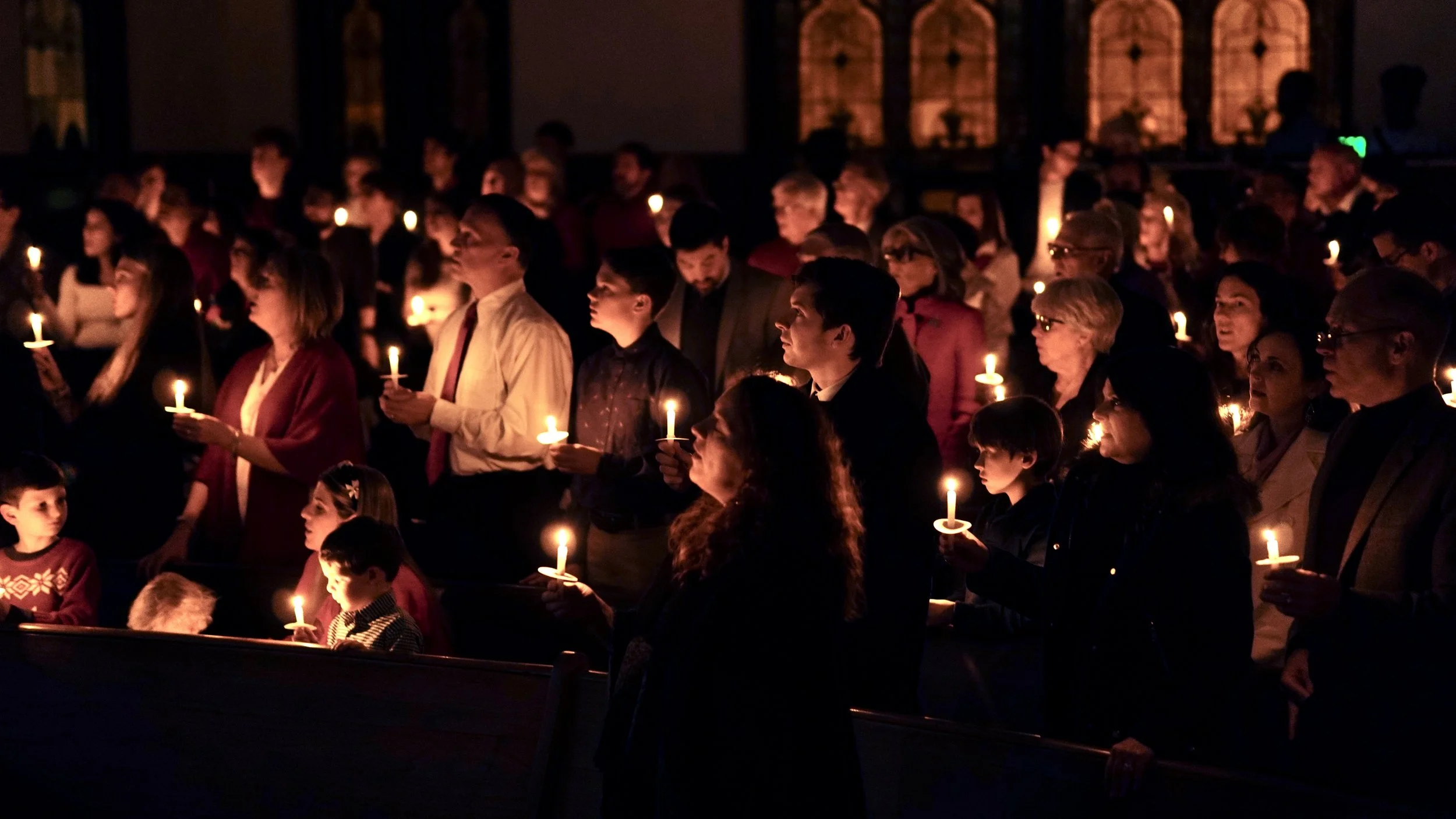
Is Christmas a Family or Church Holiday?
The answer to this question has undergone a dramatic shift in the past few decades. For hundreds of years the answer was a quick and easy “church holiday.” What else could celebrating the birth of our Savior be? Of course, there were family celebrations that often accompanied Christmas church celebrations, but these were understood to be secondary.
The answer to this question has undergone a dramatic shift in the past few decades. For hundreds of years the answer was a quick and easy “church holiday.” What else could celebrating the birth of our Savior be? Of course, there were family celebrations that often accompanied Christmas church celebrations, but these were understood to be secondary.
However, as surely all of us now recognize, the increased emphasis on family gift-giving and the overall decreased cultural acceptance of church participation has led to a quiet, but devastating swap. First the nuclear family rose to the #1 spot on the priority list for Christmas celebrations, then the church fell from #2 to basically dropping entirely off the charts all together. For many of the older generations, Christmas (along with Easter) was considered one of the most important days of the year to attend church (even if you skipped almost all the other days). However, for the younger generations, the idea of attending church on Christmas now sounds terribly inconvenient. It’s becoming normal, even amongst sincere Christians, to participate in worship on most days except Christmas.
What is fascinating about this shift is that it hasn’t produced the feelings and enjoyment of Christmas that it promised. Rather than Christmas celebrations being more fun and meaningful because they are no longer interrupted by “having to go to church,” many people are finding their Christmas celebrations empty and devoid of real meaning. Aside from ordering each other gifts online, eating a ton of unhealthy food, arguing about politics, and watching TV together… what is this even about? What is the point?
One of the most common refrains from Christians who are discouraged by the commercialization of Christmas is, “How do we keep Christ in Christmas?” The answer need not be a mystery - or rather, the answer lies in returning to the mystery. The best possible way we can enjoy the rich meaning and purpose of Christmas, the highest-impact thing we could do to “keep Christ in Christmas,” is simply to worship the Lord Jesus with our church family. Let’s gather together to wonder at the mystery of the incarnation - God has become a man. What a marvelous mystery this is!
Friends, if you are physically able, let’s gather together for worship on both Christmas Eve and Christmas Day. We can do this and celebrate with our families - and I think we will find that each enriches the other. I’ll see you there.
In the Father’s love,


Register for a J-Term Class Before the Holiday Crush
One of my favorite traditions here at Redeemer is our J-Term. Every January, we close down our Small Group gatherings and encourage everyone to take a class taught by a staff member or lay parishioner. I absolutely love seeing the diversity of gifts and variety of passions that our people have! So many of you have fascinating areas of expertise and it is a wonderful expression of generosity within the body of Christ for you to share your gift with others.
Redeemer Family,
Good afternoon! It was such a gift to see so many of you at our Parish Town Hall on Sunday night! If you missed it, you can click to read the annual report and listen to the audio.
One of my favorite traditions here at Redeemer is our J-Term. Every January, we close down our Small Group gatherings and encourage everyone to take a class taught by a staff member or lay parishioner. I absolutely love seeing the diversity of gifts and variety of passions that our people have! So many of you have fascinating areas of expertise and it is a wonderful expression of generosity within the body of Christ for you to share your gift with others.
Now, there are two invitations for you:
Would you like to teach a J-Term class? If so, fill out this application and a member of the staff will contact you.
Would you like to take a J-Term class? If so, you can view a list of J-Term offerings here.
A significant aspect of life as a follower of Jesus is learning from your fellow brothers and sisters. To that end, let’s all take a few weeks in January and intentionally give ourselves to learning from one another.
In the Father’s love,

Keep Advent Weird
If you're tripped up by the apparent false start of Advent you're in good company. Christians do New Years weird. We don't start with fanfare and champagne; we kick off with minor keys and cries from "lowly exile." Tish Harrison Warren notes that part of the usefulness of Advent is to "make Christmas weird again, to allow the shock of the incarnation to take us aback once more." I like this because the Incarnation of the Son of God is nothing less than an earthquake, and it should strike us as such.
Dear Friends,
If you're tripped up by the apparent false start of Advent you're in good company. Christians do New Years weird. We don't start with fanfare and champagne; we kick off with minor keys and cries from "lowly exile." Tish Harrison Warren notes that part of the usefulness of Advent is to "make Christmas weird again, to allow the shock of the incarnation to take us aback once more." I like this because the Incarnation of the Son of God is nothing less than an earthquake, and it should strike us as such.
Our problem is that we tend to get comfortable with strangeness. We lose the wonder. We drag glory down and call the holy works of God "normal" when they are anything but. We live in miracles.
Our Youth Fellowship is working to keep the Incarnation strange by spending a few weeks of Advent getting stuck on the miracle of God becoming man. This week we are talking about The Meaning of the Incarnation, and we'll focus on one verse from 1 John: "In this the love of God was made manifest among us, that God sent his only Son into the world, so that we might live through him" (4:9).
Not only does John offer the Incarnation as the proof of God's love, he also points to God's final purpose in it: so that we might live through him.
An easy way to lose the wonder is to forget prepositions. Christ did not come so that we could live next to God, nor near God, nor even under God. Jesus took on flesh so that we could live throughhim. In is another appropriate preposition Scripture uses.
St. Athanasius, boldly flirting with blasphemy to underscore the glory of the incarnation, put it this way: "For the Son of God became man so that we might become God." This statement should startle you. But the apparent overstatement helps us to get the shock: If we think that Jesus came to give us any other life than his very own, then we've missed the Gospel. Scripture is clear: we live in Christ. Not beside him. Not across from him. But in him. Again, we live a miracle. In taking on human form, Jesus has made us "partakers of the divine nature" not bystanders of it (2 Peter 1:4). How is that for weird?
Happy waiting,
Christian Hayes
Director of Youth Fellowship

End-of-Year Giving
As 2023 winds down and we prepare for the holidays, time off of work, and (hopefully) a time of rest with family - I’d like to invite all of us to consider a few different ways to think about giving before December 31.
Dear Redeemer Family,
This past Sunday, we examined Acts 20:35, the lost beatitude of Jesus, and we learned about the Paradox of Generosity. If you missed it, we would love for you to listen in here.
As 2023 winds down and we prepare for the holidays, time off of work, and (hopefully) a time of rest with family - I’d like to invite all of us to consider a few different ways to think about giving before December 31.
Your First Gift: Many of you are brand new and have either:
Only recently decided to make Redeemer your home church, or
Are still somewhere in the discernment process about whether or not Redeemer will be your church home.
I’d like to say to both parties - wherever you are - be all in. You may decide to stay, you may not - but either way it’s a good and healthy thing to be invested wherever you are. So I invite you to consider making your first gift.
Fulfilling Your Pledge: Those of you who are members and have already filled out a pledge card earlier in the year may want to double-check to see if you have fulfilled your Pledge (you can check your pledge status by logging in to your Church Center account, clicking your initials in the top right, then ‘my giving,’ then ‘pledges). This is a new practice for many of us - but it is such a helpful one - both for you and for the church. Pledging helps you give strategically and intentionally. Pledging helps the church plan ahead and make wise and careful decisions. So if you are able, I invite you to fulfill your pledge.
Giving Out of Abundance: Many of us begin each year wondering if we will earn enough money to make ends meet. Some of us feel a financial pinch towards the end of the year because we have not made quite as much as we had hoped, but others of us have (remarkably!) brought in more than enough income. If the Lord has blessed you with abundance this year, I invite you to consider giving to Christ’s church out of that abundance as a way of honoring His generosity and goodness to you.
How do I give? For those of you who are new to giving, please visit the giving page on our website for instructions on how to:
Give Online
Give in the offering basket at church
Mail a check
Gift appreciated assets
When is the deadline for year-end giving? All online gifts must be made and all checks must be dated by December 31 or earlier.
Thank you, dear friends. The Lord has been wonderfully generous to us this year and it’s a joy to give back to our King with grateful hearts.
In the Father’s love,

Missional Presence to the VMFA
One of the key features of city life (as compared to suburban or country life) is close, physical proximity to neighbors. We are all up in each other’s space all the time! Proximity has the potential to create either friction or blessing. Sometimes it is a gift to be close to others, but sometimes it’s a real pain! One place of potential friction or blessing is Redeemer’s proximity to the VMFA. Every Sunday we host our coffee hour on their lawn and we experience the blessing of the beautiful space they have cultivated. However, there are moments when we wonder if our proximity is a blessing to the VMFA.
Redeemer Family,
One of the key features of city life (as compared to suburban or country life) is close, physical proximity to neighbors. We are all up in each other’s space all the time! Proximity has the potential to create either friction or blessing. Sometimes it is a gift to be close to others, but sometimes it’s a real pain!
One place of potential friction or blessing is Redeemer’s proximity to the VMFA. Every Sunday we host our coffee hour on their lawn and we experience the blessing of the beautiful space they have cultivated. However, there are moments when we wonder if our proximity is a blessing to the VMFA.
As we contemplate what it means for us Redeemer folk to be good neighbors here in the city, let’s think carefully about how we conduct ourselves when we are out in public spaces like the VMFA during coffee hour on Sunday morning.
Are we warm and friendly to VMFA employees?
Are we cleaning up after ourselves?
Are we leaving spaces better or worse than we found them?
Are we ensuring that our children are not harming the art installations or the landscaping?
Are we disrupting our other city neighbors who are enjoying the outdoors?
Some of the answers might be a resounding “yes!” But we have recently learned that some of the answers are, sometimes, “not so much.”
Occasionally (not every week) we are guilty of leaving litter behind us, of our children messing with landscaping and art installations, and disrupting other city folk who are seeking a peaceful Sunday morning outdoors.
So friends, let’s see if we can do better.
Everyone, let’s give extra care and attention to cleaning up after ourselves.
Parents, please continue to parent your kids during coffee hour and not let them run wild. (Or specifically delegate care of your children to another adult).
Everyone, let’s be attentive to those around us at the VMFA and be as gracious as possible.
Ah, city life. It’s great isn’t it? Thanks everyone for giving this your attention and effort. The way the VMFA experiences our presence will inform what they think of both our parish and the Gospel we profess.
In the Father’s love,
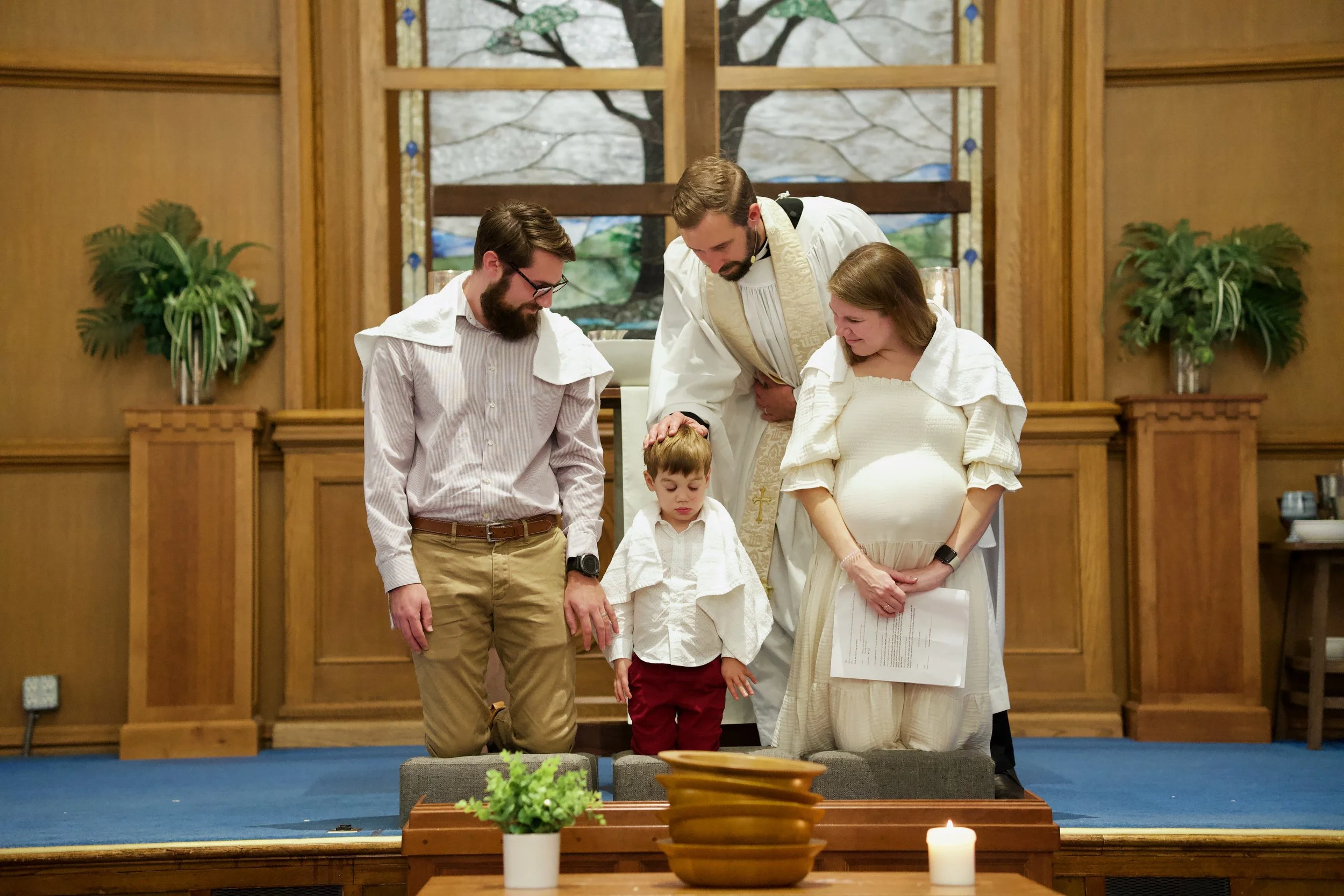
All Saints' Week
A blessed All Saints' Week to you! We are in a special week of the year in our Liturgical Calendar. Tuesday was All Hallows Eve, yesterday was All Saints Day, and today is All Souls Day. This week, we remember the saints, martyrs, and all the faithful departed who have gone before us and whose lives serve as signs, pointing and inviting us toward become more like Jesus..
Redeemer Family,
A blessed All Saints' Week to you! We are in a special week of the year in our Liturgical Calendar. Tuesday was All Hallow’s Eve, yesterday was All Saints’ Day, and today is All Souls’ Day.
This week, we remember the saints, martyrs, and all the faithful departed who have gone before us and whose lives serve as signs, pointing and inviting us toward become more like Jesus..
This Sunday, we will celebrate All Saints' Sunday together with baptisms. This is a particularly special day in the liturgical year (as mentioned above), and you will notice some of the special ways we observe this day.
Note: Often I am asked if Redeemer is “low church” or “high church.” These are phrases that are often used as a shorthand reference to how much symbolism, ritual, and tradition is used in the worship service. “Low Church” environments seek to be accessible and understandable for newcomers. These environments invite people to learn before they participate. “High Church” environments invite people to engage worship through symbolic participation (kneeling, bowing, making the sign of the cross, vestments, incense, bells, etc.) These environments invite people to learn through participation.
So which is Redeemer? Our cheeky answer to this question is that Redeemer is Lo/Hi. We seek to embody the tension between low church accessibility and high church symbolism. (I wrote an article about this previously, you can read it here.)
I’m explaining all this because this coming Sunday is All Saints’ Sunday and we will scale up towards a slightly more High Church expression. You’ll encounter the following:
Baptism: One of the many things that happens in baptism is that we are baptized into a story, the story of Jesus' life, death and resurrection. In baptism we are joined with all the saints (past, present, and future) and are invited to let each of our lives become a unique embodiment of the story of Jesus.
Vestments: Many of us who will be serving up front will be wearing robes. The robes are symbolic.
The black cassock robe represents our sin.
The white surplice robe represents the way Christ washes us clean.
The colorful stole represents the easy and light yoke of service to Jesus.
The vestments symbolically retell the Gospel story.
Incense: in the Scriptures, incense is regularly associated with prayer. The Psalms (Ps. 141) speak of our prayers rising before God like incense and the book of Revelation vividly portrays the prayers of the saints as incense before the throne (Rev. 5 & 8). And ultimately, our lives, offered sacrificially to God, are like a fragrant incense offering (Eph. 5). For these reasons and more, it is fitting for us to have incense on All Saints’ Sunday, as a way of engaging even more of our senses in worship. If you'd prefer to be a little ways away from the actual diffusion, we recommend sitting towards the edges of the sanctuary.
Redeemer friends, I’m looking forward to welcoming the newly baptized into the Church this Sunday. Let’s prepare our hearts for worship this week through prayer as we remember the Saints who have gone before us.
In the Father’s love,

Infinity Loop | What Does Formation Have To Do With Mission?
Every Tuesday morning, at 9:00 a.m., our staff meets for prayer, coffee, breakfast, and discussion. Often, what you read about in Parish Newsletters is coming from the discussion that is happening around the staff table. So today I’d like to invite you to pull up a chair and listen in to what our staff is talking about.
Redeemer Family,
Every Tuesday morning, at 9:00 a.m., our staff meets for prayer, coffee, breakfast, and discussion. Often, what you read about in Parish Newsletters is coming from the discussion that is happening around the staff table. So today I’d like to invite you to pull up a chair and listen in to what our staff is talking about.
Today we read two passages of scripture, Matthew 17:14-21 and Mark 9:14-29. Both narrate the same interaction that Jesus and the disciples have with a man whose son is possessed by a demon. The disciples failed to drive out the demon, but Jesus was able to do so. When the disciples privately asked Jesus why they failed, he gave them a fascinating answer, “This kind cannot be driven out by anything but prayer and fasting.” ¹
Pause and think about what has just happened and what Jesus has just said. The disciples are first century Jews who are apprenticing themselves to a local Rabbi. They are learning to be like their Rabbi in every way; learning to teach the way he teaches, to serve the way he serves, to heal the way he heals, to pray the way he prays, etc. Jesus is a great healer and exorcist. After spending some time (likely already a year or two) observing Jesus in action, the disciples have been sent out for a day to do some ministering of their own in the community. They have what we might call a “missional encounter” with a demon possessed boy that does not go well. You might say, they have a missional encounter that failed. What do they do? Well, they take the problem to Jesus (good move!) and Jesus’ response is not to teach them a new formula or strategy for being more effective in missions, but rather he suggests that more formation is needed - more spiritual disciplines - prayer and fasting.
There is profound significance if you pause to consider what Jesus is saying. Jesus himself was a person of prayer and fasting. He was a man of silence and solitude. He not only served the crowds, but he “often withdrew to desolate places to pray” (Luke 5:16). We might think that Jesus was able to drive out demons with power because he was divine (and that’s true), but have we considered that part of Jesus’ power in ministry was actually drawing upon his own formation? Jesus needed silence, solitude, prayer, fasting, scripture reading, sabbath rest, corporate worship, fellowship, and more. He did not practice these only to model them for us, He practiced them because they formed him for mission.
Missional encounters are exposing and revealing. They let us know how we’re doing. They show us where we are strong and where we are weak. True missional encounters are meant to stir a hunger within us to return to Jesus, to be with him, to learn from him, to seek his help.
Gospel Formation happens as we draw near to Jesus. Being near to Jesus stirs a hunger within us to go out and serve others, to seek missional encounters.
You might imagine something of an infinity loop between Gospel Formation and Missional Presence that looks something like this:

As we receive and embrace the good news of the renewal of all things in Jesus, we are changed - metamorphosized - into a new creature, a new kind of human with a new kind of presence. We bring our new presence out into the world as participants in the mission of God and we encounter other people. Some of these encounters go well and many do not! Both our successes and failures generate an appetite within us for more of Jesus and a deeper embrace of the Gospel. This deeper embrace of the Gospel sends us right back out again towards others. Again and again. Over and over.
This is the Way of Jesus.
This is the Christian Life.
This is the Work of the Church.
Anglican priest Henry Martyn (1781-1812) understood this dynamic when he wrote:
The Spirit of Christ is the spirit of missions.
The nearer we get to him, the more intensely missional we become.
The first disciples had been partially formed by their time with Rabbi Jesus. The metamorphosis had begun, but it was not yet complete. They had enough formation to begin participating in God’s missionary work in the world; but when they encountered a situation that was beyond them, they realized they were out of their depth. This sent them right back to Jesus for deeper formation. This sort of thing would keep happening to them the rest of their lives.
The same dynamic can be true for us!
In the Father’s love,
¹ Mark 9:29 reads “prayer” while Mattthew 17:21 reads “prayer and fasting.” Matthew 17:21 is a verse that is included in some manuscripts, but not all. It often is listed as a footnote in English Bibles and not included in the primary text.

Home: The First Realm of Missional Presence
As we continue this series of articles on Gospel Formation for Missional Presence, I’d like to help us understand that word presence just a bit more deeply. So let’s think about what it means to be missional in regards to our own homelife.
Redeemer Family,
As we continue this series of articles on Gospel Formation for Missional Presence, I’d like to help us understand that word presence just a bit more deeply. So let’s think about what it means to be missional in regards to our own home-life.
MISSION? AT HOME?
Now, right off the bat, this is difficult. We are so accustomed to thinking of mission as something that happens “out there” away from home. However, the Bible makes no division between the kind of life we live privately and the kind we live publicly. In fact, we are all too familiar with the humiliation that people experience when their private lives are revealed as radically different (and usually worse) than their public image. Therefore, if missional living is the way of Jesus, it starts at home.
WHAT IT’S NOT
First, let’s name the three normal Christian approaches to homelife that are not the missional presence approach exemplified by Jesus.
*Note: By home-life, we mean a person’s roommates, housemates, spouse, children, etc. Basically, anyone who lives with you.
FORTIFICATION: This approach draws a sharp dividing line between a person’s spiritual relationship with God and the other people around them. Others are essentially viewed as a threat to the vitality of your spiritual life and in order to keep your spiritual life “pure,” you must create distance between you and the people you live with. With this view, your spouse’s irritating habits, your kids' neediness, your housemates’ irresponsibility are hindrances to your relationship with God. You may be involved in some sort of Christian evangelism or justice-work outside of the home; but you take off that missionary “hat” when you walk through the door.
What it gets right: You need your own, individual relationship with God that is separate from the people around you.
What it gets wrong: Your faith is private, even from those in closest proximity to you.
Core Motivation: Fear of being “led astray” by other people’s bad influence on you.
How it does harm: Those who live with you do not really know you and you do not desire to really know them. Since you, as a Christian, represent Jesus to them, this implicitly communicates that Jesus does not really desire to know them and is not knowable by them.
ACCOMODATION: This approach seeks to erase any dividing lines between you and those with whom you live. You adopt others desires, comfort-level, and feelings about faith. What does the group want to do? How does the group want to talk? For young adult housemates, this looks like a relatively passive, go-with-the-flow posture. For spouses, it takes the form of spiritual codependency. For parents with children, it looks like “trying to make Christianity fun” so that the kids will not be hostile to the faith.
What it gets right: You are curious-about, listen-to, and genuinely care about what those around you desire. You are tuned in to their needs.
What it gets wrong: You abdicate any responsibility to represent the fullness and the realness of Jesus to the people you live with.
Core Motivation: Fear of offending or pushing others away from faith.
How it does harm: Encourages others to idolize their own desires; which, in the long run, will fail them.
DOMINATION: This approach seeks to move towards those around you in order to make them Christians. If you live in a college dorm or a house of single friends, this looks like aggressively evangelizing and debating your hallmates. If you are married, it looks like trying to disciple your spouse. If you have kids, it looks forcing your children into prayer, Bible reading, and other faith activities regardless of their emotional or spiritual receptivity.
What it gets right: You are passionate to see those closest to you to come faith and grow spiritually.
What it gets wrong: You seek a level of influence and control over the lives of others that violates their personal agency in responding to Jesus themselves.
Core Motivation: Fear that, if you do not do something, others will go to Hell and you will have failed as a Christian.
How it does harm: You will either drive others away or steam-roll them into submission. This will vaccinate them against genuine, authentic faith in Jesus.
THE TRAGEDY
Unfortunately, most Christians adopt one of these three postures towards the people in their homes. The sad part? So many Christians do this while, at the very same time, passionately pursuing mission outside the home! The hard reality is, the people outside your home only know the part of you that you show them, in limited doses, at select venues. You can curate your Christian image outside the home. But when people live with you, they really get to know you. All of you. Even (and most especially) the parts that are incongruent with your Christian faith.
The saddest part? All three of these postures are motivated by fear and the need to control outcomes. These are all downstream from an unwillingness to trust God. These approaches to mission steal your joy and leave you exhausted.
THE ANTIDOTE
What was Jesus’ missional posture like?
Did he distance himself from needy or irritating or toxic people in order to preserve the purity of his relationship with the Father? No, he constantly allowed himself to be interrupted.
Did he flex and bend to the various desires of the disciples, Pharisees, and villagers around him? No, he felt very comfortable disagreeing with those closest to him.
Did he forcefully pursue those who weren’t interested in what he had to offer? No, Jesus made invitations and let people exercise their agency in responding.
Q: So what was Jesus’ missional posture?
A: He was fully present. The consistent posture of Jesus’ ministry was his remarkable ability to be fully present to whoever was around him.
Q: What was His presence like?
A: Calm, self-controlled, peaceful, kind, merciful, gracious, brave, firm, resilient, safe for the wounded, dangerous for the arrogant… we could keep going.
The missional presence of Jesus, in other words, was not a technique, but rather a way of being, a way of life, a way of showing up as a human being. Just being around Jesus was transformative for people, because his presence gave them a taste of God’s presence. By being around Jesus, people got a feel for what it would be like to be around God.
THE QUESTION FOR US
Now, can the same be said of us? Do people get a wonderful sense of what it’s like to be around God by being around us?
Argh! This is a terrible question for me! I think there may be some people who don’t spend very much time with me who might think the answer is yes, but my family knows better! They see the real me. The selfish husband. The grumpy Dad. The forgetful brother. The ungrateful son. Pray for me. I need it.
But let’s not avoid the question simply because it’s so damning. Let’s be brave enough to face reality.
“What is it like to be around me?” is a wonderful, terrifying, exposing question that gets right to the heart of mission in the way of Jesus.
Your presence will always be the most powerful thing about you.
Your presence is more impactful than your words.
Your presence is more impactful than your deliberate actions.
Your presence is more impactful than your thoughtful beliefs.
Your presence is more impactful than your good intentions.
Your presence is what people will remember most about you long after you are gone. They won’t remember who you wanted to be, they will remember who you really were, and they will remember how it felt to be around you.
PRACTICING THE PRESENCE OF JESUS
Redeemer Family, this is why we keep honing in on this word presence when we talk about mission. The most potent thing we bring to table when it comes to mission is… just ourselves. Rightly understood, there is no distinction between Christian mission and Christian living, they are meant to be one and the same.
There is something that is both delightfully overwhelming and underwhelming about this. On one hand, the task is overwhelming. My presence is supposed to give people a sense of being in the presence of God? Are you kidding me? On the other hand, wait—you’re saying that the real instrument of mission is just little old me? That’s it?
A Christian person is not only homo sapien, made in the Imago Dei, but also a new creation baptized into union with Jesus and living as the Imago Christi. A Christian is a “little Christ,” a little image of Jesus. If you are baptized and have faith in the Gospel, then this is what you already are. You don’t have to become it, you are it!
Now, go and live according to what is already true about you in the Gospel.
In the Father’s love,
How To Become A Member At Redeemer
On Sunday, November 12th, we have the joyful opportunity for many of you to be Confirmed by our Bishop and welcomed as new Members into the Parish. This is a wonderful event that takes place only twice a year! Since this process is new to many of you, I thought I’d take a moment this afternoon to share a few details about what it means to take this important step in your faith.
Redeemer Family,
On Sunday, November 12th, we have the joyful opportunity for many of you to be Confirmed by our Bishop and welcomed as new Members into the Parish. This is a wonderful event that takes place only twice a year! Since this process is new to many of you, I thought I’d take a moment this afternoon to share a few details about what it means to take this important step in your faith.
ACTION ITEMS
(*Prerequisite: Take the Foundations Class)
Step 1: Register here to become a member on November 12.
Step 2: Fill out the membership and pledge form here.
Step 3: Sign up for a pre-membership interview with Lane Cowin or Oldson Duclos.
Step 4: Arrive 30 minutes early to one of the services on November 12.
Step 5: Participate in the Confirmation & Membership service on November 12.
Step 6: Throw a party with friends and family!
If you are ready to become a member, just follow the steps above and you’re good to go! If you are still on the fence or if you have questions, keep reading!
What is Confirmation? We see the practice of Confirmation in Scripture: the Apostles prayed for, and laid their hands on those who had already been baptized (2 Timothy 1:6-7; Acts 8:14-17; 19:6). In the Anglican practice of Confirmation, God, through the Bishop’s prayer and laying on of hands for daily increase in the Holy Spirit, strengthens the believer for Christian life in the service of Christ and his kingdom. Grace is God’s gift, and we pray that he will pour out his Holy Spirit on those who have already been made his children by adoption and grace in Baptism.
So What is Membership? We see the practice of church membership as the practical, local application of Confirmation. The Bible knows of no such creature as a Christian who is not participating in a local church. The church is the body of Christ, and so another way to say this would be that there is no such thing as a disembodied Christian! So when we stand up to take Christian vows and receive prayer from the Bishop, the very next thing we do is join the local church - saying to ourselves and each other, “I will live out these vows in this place with these people.”
How is Confirmation different from Membership?
Confirmation is about joining The Church (global) publicly as a Christian. The confirmation vows are Comprehensive-Christian, not Redeemer-specific.
Membership is about joining a local church (local) as a participant. The membership covenant is Redeemer-specific, not Comprehensive-Christian.
Summary: We recognize that following Jesus has never been and never will be a solo endeavor. We are not meant for individualized lives of faith. Rather, we acknowledge that we are meant to dwell with God and with one another in love and to invite others into a community of love. For this we will need the grace of our Lord Jesus, the love of God, and the fellowship of the Holy Spirit. We will also need each other. Confirmation is about making our faith public and communal - expressing our desire to live out what it means to be the church together.
Objection: OK, I hear you, but I actually have some issues with the idea of Church Membership
Over the years I’ve heard a number of well-intentioned and sincere objections follow this question:
Membership feels exclusive, like some people are in and some are out. This isn’t very hospitable.
Membership feels too institutional, like the church is a club and not a family.
Membership means requirements and obligations, which are anti-Gospel and anti-Grace.
It might surprise you to learn this, but I used to strongly agree with each one of these objections. However, over the years, my thinking has changed significantly and - rather than membership working against hospitality, family, and Gospel - I’ve become deeply convinced that membership actually facilitates each of these!
Here’s how:
Membership facilitates hospitality.
Luke 14:12-14. “He said also to the man who had invited him, “When you give a dinner or a banquet, do not invite your friends or your brothers or your relatives or rich neighbors, lest they also invite you in return and you be repaid. But when you give a feast, invite the poor, the crippled, the lame, the blind, and you will be blessed, because they cannot repay you.”
In Christ’s teaching, we are specifically instructed to open our doors and invite in those who are on the outside. This passage is not just about inviting in the poor vs. the rich (though it is also about that), it is about extending hospitality to outsiders vs. insiders. Now, if - in the name of hospitality - we say there’s no such thing as insiders or outsiders, then who will do the inviting and who will come to the party? You cannot invite others into the hospitality of God until you, yourself have received the goodness of the Lord’s hospitality. You must be in before you can invite others in.
Once you are in, you realize there are others who are out - which puts you in the perfect situation to obey Jesus’ teaching on true hospitality. In this way, Membership (a formal and clear way of defining who is in and who is out), actually sets us up to obey the Lord, open our doors, and demonstrate real hospitality to others.
Membership makes the church more like a family.
1 Timothy 5:1-2. “Do not rebuke an older man but encourage him as you would a father, younger men as brothers, older women as mothers, younger women as sisters, in all purity.”
This passage instructs us to treat other people in the church like family. Then, our author (the Apostle Paul) goes on to give specific instructions about who to care for, how to care for them, and how to discipline people when they stray into sin. The assumption is, you can only operate as a family when it is clear who, exactly, is a part of the family. Paul is clearly not instructing us to treat all people like fathers, mothers, brothers, and sisters - but rather the people who are a part of the church family. When such individuals stray into flagrant sin, they are (temporarily, and for the sake of encouraging repentance) removed from the church family. For this kind of familial love and discipline to work, there must be some sort of clear boundary line that delineates who is in the family and who is not.
Therefore, in order for the church to function like a family, we must know who, specifically, is a part of that family. The brothers, sisters, mothers, and fathers here is not meant to signify some abstract concept of warm relationships - rather we should be thinking of specific people. i.e. my brother-in-Christ Jeromy or my father-in-Christ David. Membership helps take us from the abstract to the specific in being a church family.
Membership showcases the Gospel.
Ephesians 2:8-10. “For by grace you have been saved through faith. And this is not your own doing; it is the gift of God, not a result of works, so that no one may boast. For we are his workmanship, created in Christ Jesus for good works, which God prepared before hand, that we should walk in them.”
“But Membership means requirements and obligations, which are anti-Gospel and anti-Grace.” This is the one I hear most often. It is also the one to which I am, simultaneously, most sympathetic and which I disagree with the most strongly! I am sympathetic because it is absolutely true that the Gospel is the good news of the free gift of mercy and forgiveness won for us in the death and resurrection of the Lord Jesus. The Gospel is primarily about something God has done for us and not something that we do for God.
However, when we receive this free gift of mercy and forgiveness, we find that it changes absolutely everything about us. Our lives are no longer our own. We belong—body, mind, and soul—to the Lord. We begin to embody the good news of the Gospel, allowing it to shape our lives and affections.
Membership clarifies the implications of the Gospel for us and, therefore, showcases the beauty of the Gospel in the transformed lives of the members. If we resist Membership on the grounds that “the Gospel is not about doing stuff,” we are saying that the church is not to have any vision for what a redeemed and renewed life in Christ should look like. A quick, cursory reading of just about any New Testament book should quickly lay that objection to rest.
ACTION ITEMS
(*Prerequisite: Take the Foundations Class)
Step 1: Register here to become a member on November 12.
Step 2: Fill out the membership and pledge form here.
Step 3: Sign up for a pre-membership interview here.
Step 4: Arrive 30 minutes early to one of the services on November 12.
Step 5: Participate in the Confirmation & Membership service on November 12.
Step 6: Throw a party with friends and family!
Redeemer family, I’m looking forward to welcoming new people into our family on Sunday November 12. If you are already a member, please pause and say a prayer for those who are discerning confirmation and membership this fall.
In the Father’s love,

Missional Presence Is Not One Way, It's The Only Way
In this next installment of this series of writings on what it means to be missional, I’d like to make the case that Missional Presence is not one of many ways to be missional as a Christian, it’s actually the only healthy way.
Redeemer Family,
In this next installment of this series of writings on what it means to be missional, I’d like to make the case that Missional Presence is not one of many ways to be missional as a Christian, it’s actually the only healthy way.
What I mean, is that alternative forms of “mission” are not simply different strategies to accomplish the same general Christian goals, but rather are deeply harmful to the work of God in the world. Consider how these alternatives play out in the three normative approaches to mission:
FORTIFICATION
In this paradigm, “mission” is primarily defensive in nature. Christian withdraw from society and start their own businesses, schools, institutions, etc. in order to protect themselves from being polluted by the world. Mission is the work of attracting/inviting outsiders to cross our boundaries and enter the goodness within Christian communities.
Emotional Motives: Fear, control, judgment, purity, pride, desire to be left alone.
Mission Activities: Invitation, personal evangelism, establishing new Christian institutions.
What it sounds like: Us vs Them. Us = good, them = bad.
What it gets right: Rightly perceives the corruption of the world and rightly seeks the purity of the Church.
What it gets wrong: Wrongly views God as against the world, therefore wrongly understands the Church to be against the world, therefore wrongly retreats from the world.
Where it does harm: Abandons neighbors to struggle on their own and deforms Christians to simultaneously fear their neighbor, look down on their neighbor and to overestimate their own goodness. In this way, Fortification-style missions actively undermine the Gospel in people’s lives by implicitly assuming that outsiders need the grace and mercy of God more than insiders. The longer people live and practice their faith in Fortification ecosystems, the less they become like Jesus.
ACCOMODATION
In this paradigm, “mission” is primarily passive in nature. Not passive in a “do nothing” sense, but passive in that there is nothing distinctly Christian about its work. In this model, Christians seek to blend in and team up with non-Christians in humanist projects. Mission is anything that makes the world a better place.
Emotional Motives: Fear, insecurity, pride, desire to be liked.
Mission Activities: Advocacy, focus on the hot-button topics of the day, we care about whatever our neighbors care about.
What it sounds like: If our church suddenly went away, would our city/neighbors miss us?
What it gets right: Rightly is implicated in the needs of neighbors and rightly moves outwards towards others for the common good.
What it gets wrong: Wrongly underestimates the corrupting nature of sin in the world and wrongly overestimates the possibility of enacting long-term good without the peculiarity of the Christian faith.
Where it does harm: Abandons neighbors to their own idols and deforms Christians to redefine “love” as “whatever makes other people feel loved.” The definition of good “mission” is displaced from the Bible and relocated to the hearts and minds of neighbors who disbelieve the Bible. Over time, this forms Christians into unstable, easily swayed people who are held hostage to other people’s impression of them. The longer people live and practice their faith in Accomodation ecosystems, the less they become like Jesus.
DOMINATION
In this paradigm, “mission” is primarily aggressive in nature. Mission-work is thought of as “front-line” work. Missionaries are often referred to as “troops” that are sent into “battle.” In this model, Christians strive to advance the Kingdom of God by winning converts and changing culture.
Emotional Motives: Fear, control, anger, desire to be right / to win.
Mission Activities: Door to door evangelism, short-term missions trips, colonialism, political warfare, seeking places of political power in order to push through “Christian” moral agendas.
What it sounds like: Taking ground, winning souls, entering the fray (lots of sports and military metaphors).
What it gets right: Rightly perceives the corrupting evil of sin in the world and rightly moves outward into every nook and cranny of life.
What it gets wrong: But wrongly identifies non-Christians as enemies and non-Christian culture as inherently wicked and therefore worthy of destruction. Wrongly assumes that they are God’s agents to bring about His kingdom in the world, by force if necessary.
Where it does harm: Antagonizes non-Christians by engaging them as spiritual and cultural enemies. This inculcates fear and anger, in ever-increasing measures, into Christians. Domination-style missions actively undermine the Gospel in people’s lives by making the Gospel either: 1) A product that is exported to people who didn’t ask for it, or 2) a symbol of the “rightness” of our tribe of people. The longer people live and practice their faith in Domination ecosystems, the less they become like Jesus.
*CONFESSION: Before I move on to our fourth, and true, invitation to mission, let me confess something to you. At times, and in various ways, I actually practice all three of the above approaches to mission. I have the tendency to pull back and seek refuge in the safety of people who are just like me. I have the tendency to care WAY too much about what other people, especially non-Christians, think about me. I have the tendency to move out into the world to win, to conquer, to “take ground.” Folks, I have a long, long way to go on this. I have an embarrassing amount of unlearning to do. I wish I could be a better role model for our parish in this way, but I’m not there yet. Please pray for me.
*REFLECTION: I wonder, as you reflect on the three paradigms above, to which one are you most naturally drawn? Which one seems “most right” and which one seems “most wrong?” If any of the assessments above makes you feel angry or anxious, pause for a moment and ask yourself “why?”
INCARNATION
In this paradigm, the goal is to closely examine the life of Jesus and seek to define mission as patterning our own lives after His. In some ways this makes mission far more simple, but in other ways it becomes far more complex. On the simplicity side, mission is essentially embodying the presence of Christ everywhere we go. Mission is simply - the way I show up in every situation - bringing with me the presence of Jesus in His Holy Spirit who dwells within me. On the complexity side, mission becomes more complicated because it involves all of me and all of my life instead of some of me and some of my life. Do I have a “Christian hat” that I put on or take off in different situations, or am I truly living a spiritual integrated life? Which is to say, a sacramental life in Christ.
Emotional Motives: Love, compassion, grief, joy, amazement, surprise
Mission Activities: Presence = showing up with your whole self, allowing yourself to be interrupted, sacrifice, mercy, healing, teaching, rebuking, feeding, etc.
What it sounds like: Curiosity towards the other. What story are you in? Who are you? Where do you belong? How will you change? Where do you live? What is your purpose? How will you love?
What it gets right: Missional presence invites the Christian to be more deeply formed by the Gospel, creating an ongoing formation cycle of Gospel Formation for Missional Presence in which people are transformed (metamorphosized) into the new creation God is making them to be.
What it gets wrong: If practiced according to the Bible, then nothing. However, if attempted with willpower instead of the ongoing work of the Holy Spirit, then it will lead to exhaustion and frustration. You cannot will yourself to be more like Jesus.
Where it does harm: Again, if practiced Biblically, empowered by the Holy Spirit, then this is deeply restorative, not harmful. It is a form of mission that heals instead of hurts.
Redeemer family, as we continue to consider our call to bear the missional presence of Jesus to our families, our workplaces, and the city of Richmond, I hope that we are beginning to sense that this invitation is not a heavy burden. It is not a cumbersome call to do more and be more, but rather a light, airy, freeing call that allows us to leave behind harmful approaches to Christian mission and embrace a healthier way, the way of Jesus.
Of course, that is not to say that the light burden is easier. It is, in many ways, far more costly. But it is better - better for our neighbors and better for ourselves.
Let’s allow the perfect love of Christ to cast out fear (1 John 4:18) so that we might move out into the world motivated by His love for us and for our neighbors.
In the Father’s love,

How Does God Do Mission?
Today I’d like to press in just a bit more into that word “mission.” It’s a word that nearly all Christians use, but that is often used to mean very different things. Often when followers of Jesus hear or use the word mission, they mistakenly assume that everyone agrees and means the same thing. This wouldn’t be a big deal if “mission” was something small and peripheral, like using the correct brand of shampoo. But it is enormous and central - it is the way in which we participate in what God is doing in the world. God Himself has a mission and we, His children, are invited to be a part of it. For a Christian, therefore, mission is not a side dish, it’s the whole meal. It’s not one aspect of life, it’s what your life is about.
Redeemer Family,
Over the past few weeks, we’ve been seeking to clarify our parish vision - Gospel Formation for Missional Presence. If you missed the first two installments, you can read them here:
Gospel Formation | Metamorphosis
Today I’d like to press in just a bit more into that word “mission.” It’s a word that nearly all Christians use, but that is often used to mean very different things. Often when followers of Jesus hear or use the word mission, they mistakenly assume that everyone agrees and means the same thing. This wouldn’t be a big deal if “mission” was something small and peripheral, like using the correct brand of shampoo. But it is enormous and central - it is the way in which we participate in what God is doing in the world. God Himself has a mission and we, His children, are invited to be a part of it. For a Christian, therefore, mission is not a side dish, it’s the whole meal. It’s not one aspect of life, it’s what your life is about.
The Bible renders and reveals to us the God whose creative and redemptive work is permeated from beginning to end with God’s own great mission, his purposeful, sovereign intentionality. All mission or missions which we initiate, or into which we invest our own vocation, gifts, and energies, flow from the prior and larger reality of the mission of God. God is on a mission, and we, in that wonderful phrase of Paul, are “coworkers with God.” (1 Corinthians 3:9) Having made that reorienting paradigm shift in our concept of the fundamental meaning of Biblical mission, then indeed the whole Bible can (and I would argue, should) be read in light of this overarching, governing perspective. The whole Bible delivers to us “the whole counsel of God” - the plan, purpose, and mission of God for the whole creation, that it will be reconciled to God through Christ by the cross (Colossians 1:20).¹
Now, if God is on a mission and the entirety of the Bible points to the missional work of God in the world, and if we are called to participate in the mission of God, then there remains a crucial question that is immediately practical for our lives today, “How does God do mission?”
James Davidson Hunter writes, “The very character of God and the heart of his word is that God is fully and faithfully present to us. On the face of it, faithful presence suggests proximity, but it is much more than this. His faithful presence is an expression of commitment.” ²
Or, more concisely, as Francis Schaffer put it, “the God Who is There.”
HOW IS GOD MISSIONALLY PRESENT TO US?
He enters our story and reveals that we are actually a part of His story. Over and again God interrupts the human narrative: Noah, Abraham, Moses, Ruth, David, Isaiah, Daniel, Hosea, Zechariah, Mary, Joseph, Peter, James, John, Paul. God speaks. He invites, calls, asks, challenges, commands, inquires, affirms, and critiques. When God enters the human story, we realize that our story is, in fact, His story. We have been conscripted into the mission of God. David was just your average blue-collar teenager until God entered His story and he became DAVID in God’s story. Mary was just a peasant girl in her parent’s house until God entered her story and she became MARY in God’s story. God’s missional presence in our story reframes and transforms our little story into His grand story.
God identifies with us and gives us a new identity in Him. “For he knows our frame; he remembers that we are dust.” (Psalm 103:14) God knows what it feels like to be us. He empathizes. What’s more, in Christ, God becomes one of us. “Born in the likeness of men.” (Philippians 2:7) Further still, Jesus remains human in his resurrection - demonstrating God’s solidarity with humanity for all eternity. He identifies with us permanently, not temporarily. God didn’t try out being human for a day. God became human in Jesus for good. It is on these grounds that God now offers us a new identity in Himself. “For you did not receive the spirit of slavery to fall back into fear, but you have received the Spirit of adoption as sons, by whom we cry, “Abba! Father!” The Spirit himself bears witness with our spirit that we are children of God, and if children, then heirs—heirs of God and fellow heirs with Christ.” (Romans 8:15-17) God’s missional presence in identifying with us transforms our own sense of identity.
God pursues us and gives us belonging in Him. “Chosen out of all the peoples on the face of the earth to be his people, his treasured possession.” (Deuteronomy 7:6) “I have called you by name, you are mine.” (Isaiah 43:1) Not only does God pursue us and call us to Himself, but through Jesus, He forms a new humanity, a new family in which we practice our belonging in Him. “Now you are the body of Christ and individually members of it.” (1 Corinthians 12:27) God’s incarnational pursuit of us not only draws us in but also sends us out to incarnationally pursue others. God’s missional presence with us, Immanuel, fosters our presence with each other.
God lives virtuously on our behalf and enables us to live a new life of virtue through Him. The life of Jesus was a life of obedience to the Father. “The son can do nothing of his own accord, but only what he sees the Father doing.” (John 5:19) But it was not only obedience for His own sake, it was vicarious obedience for us, “It will be counted to us who believe in him who raised from the dead Jesus our Lord, who was delivered up for our trespasses and raised for our justification.” (Romans 4:24-25) God’s missional presence is the life He offers to us in Jesus and the new life we are able to live through Jesus.
God becomes local and time-bound, dignifying our place and time. Not only did Jesus enter history at a particular place and time, but His Spirit now dwells within His people in their place and their time. “Do you not know that you are a temple of God and that the Spirit of God dwells within you?” (1 Corinthians 3:16) This gives tremendous dignity and honor to every place and every age. Every place is valuable, none are disposable. Every age is the age in which God is at work. For a Christian, a pilgrimage to the Holy Land may be beneficial, but it is not necessary, God is with you right where you are. Particular cultural traditions of the faith are beneficial, but they are not necessary for God to work. God can work right now, inhabiting any culture of this era. God’s missional presence in time and space enables us to faithfully live in our place and in our time.
God calls us to a vocation, and gives our life purpose. Not only does God call all of humanity in the cultural mandate, “Let us make man in our image, after our likeness. And let them have dominion over the fish of the sea and over the birds of the heavens and over the livestock and over all the earth and over every creeping thing that creeps over the earth. So God created man in his own image, in the image of God he created him, male and female he created them. And God blessed them. And God said to them, ‘Be fruitful and multiply and fill the earth and subdue it…” (Genesis 1:26-28) God’s presence is His voice calling to us - giving us purpose, direction, and meaning in our life’s work. But God’s presence does not only call us to our work, He is also with us in our work. Our work is co-laboring with God. “We are ambassadors of Christ, God making His appeal through us.” (2 Corinthians 5:20) God’s missional presence for, in, and through human work gives us purpose, no matter how difficult, dull, or painful our work may be.
God’s self-sacrificing love transforms our imaginations. “This is love: not that we loved God, but that He loved us and sent his Son as an atoning sacrifice for our sins.” (1 John 4:10) The mystery of faith is that Christ has died, Christ is risen, and Christ will come again. This new reality of Jesus’ presence has broken into our old reality with a love that our world does not understand and cannot control. The cross and the empty tomb, death and resurrection, sacrifice and hope, give birth to a new way of conceiving of beauty and the good life. The Kingdom of Heaven is present, right here on earth, right now. God’s missional presence, in the self-sacrificing love of Jesus, gives us a new imagination for how we can be missionally present with self-sacrificing love.
SUMMARY
In summary, we might say that the way God does mission is to be fully present to us: fully present in that He brings all of Himself and holds nothing back, and fully present in that He is present to all of us - our whole selves. God’s presence does not only seek to convert the beliefs of our minds or the affections of our hearts or the habits of our lives - but our whole person - making us into “a new creation” (2 Corinthians 5:17).
God’s presence does not only seek to evangelize people, but to transform all of human society and indeed the whole earth.
“Then I saw a new heaven and a new earth, for the first heaven and the first earth had passed away, and the sea was no more. And I saw the holy city, new Jerusalem, coming down out of heaven from God, prepared as a bride adorned for her husband. And I heard a loud voice from the throne saying, “Behold, the dwelling place of God is with man. He will dwell with them, and they will be his people, and God himself will be with them as their God. He will wipe away every tear from their eyes, and death shall be no more, neither shall there be mourning, nor crying, nor pain anymore, for the former things have passed away. And he who was seated on the throne said, “Behold, I am making all things new.” (Revelation 21:1-5)
God’s mission is comprehensive. He is fully present to us so that we might be fully present to Him, to ourselves, to each other, and to the world. If we grasp the magnitude of the mission of God, then our entire lives will be swept up in His mission. Everything we do and everything that we are becomes a mode of participation in His mission.
WAIT, IF MISSION IS EVERYTHING, THEN MISSION IS NOTHING. RIGHT?
I hear you. This objection is common if you’re still trying to frame mission as something you do rather than a kind Christ-like presence that you embody.
When should a Christian be filled with the Holy Spirit and embody the love of Jesus? Sometimes or always? Always, right?
THAT is what it means to live missionally God’s way. It means everywhere you show up, you show up as a missional presence - the presence of Jesus, embodied in you - in your particular personhood, complete with your personality, your life circumstance, your resources, your relationships, your work, etc.
CONCLUSION
So, when we talk about our parish being a missional presence, let’s be on the same page with each other. Missional Presence is God’s mission, God’s way. It’s being present to others the way that God is present to us. Framing mission as anything else requires you to chop up the Bible and chop up the Christian life into separate parts that, from God’s perspective, are one and the same.
Of course there’s much more we can and will say about what this means and how we become these kinds of people, but we’ll stop here for now.
Redeemer Family, I love you and I’m so grateful for your presence.
In the Father’s love,
¹ Christopher J.H. Wright. The Mission of God. p. 531-2
² James Davidson Hunter. To Change the World. p. 241

I'm Confused, What Is Missional Presence?
Today I’d like to move forward to a different, but intimately related question, “What is missional presence?” One of the ways we talk about our life together is that the Church of Jesus is called to be a missional presence in the world. But what does that mean? “Missional Presence” sounds somewhat lofty, abstract, and vague. How can I tell if I’m doing it? How can I tell if it’s working?
Redeemer Family,
Last week, I wrote a little article about Gospel Formation to help us move a bit deeper in our understanding of the “both/and” nature of whole-life transformation through Jesus. If you missed it, you are welcome to go back and read it here. If you read it and are hungry for more on that topic, I would recommend this article by Dallas Willard as a next step.
Today I’d like to move forward to a different, but intimately related question, “What is missional presence?” One of the ways we talk about our life together is that the Church of Jesus is called to be a missional presence in the world. But what does that mean? “Missional Presence” sounds somewhat lofty, abstract, and vague. How can I tell if I’m doing it? How can I tell if it’s working?
Mission, a Fraught Word
The first challenge with the phrase is the word “mission.” Often the word mission is used exclusively to describe a person (usually a white westerner) who travels to another country in order to engage in cross-cultural evangelism. We are accustomed to calling this person a missionary - and rightly so. A missionary is someone who is living every aspect of life intentionally as a kind of missional presence. Whether they are grocery shopping, talking with neighbors, taking their kids to school, coaching soccer, or ordering a latte; everything they do, they do as a missionary - with the motive to represent the transforming love of Jesus to everyone they encounter.
Establishment Mentality
Now, those of us who grew up in what we might call “Establishment Christendom”¹ in the United States or Europe think of this kind of missionary as special, a kind of super-Christian. The tendency is to think that most average Christians live “normal” lives here that are categorically different from the lives lived by professional missionaries. The problem with this kind of attitude is not what it says about overseas, cross-cultural missionaries. Those dear brothers and sisters deserve our financial, prayer, and relational support. Many of them are doing great work and that is to be celebrated. The problem lies in what this attitude says (or does not say) about everyone else, the Christians who live in their homeland. It says they are not missionaries.
The Christian Life = A Missional Life
Ah, here is the problem. There is no such thing as a follower of Jesus who is not called to a missional life. All Christians are to live all of life with the motive to represent the transforming love of Jesus to everyone they encounter. “Whatever you do, in word or deed, do everything in the name of the Lord Jesus, giving thanks to God the Father through him.” - Colossians 3:17. The Bible, and especially the New Testament epistles, have much to say about varying spiritual gifts (prophecy, teaching, leading, giving, mercy, healing, etc.) and varying ecclesial offices (Bishop, priest/presbyter, deacon), but nothing about some being called to missions and others not.
A better, fuller understanding of the Christian life would mean recognizing that every man, woman, and child in the Church has a missionary calling and is to live with a missional “lens” through which they see every aspect of their lives.
Seeing Through a Missional Lens
Back in my youth ministry days, I would take high schoolers, college students, and adults on short-term “missions” trips to New Orleans to do Katrina relief work and to Nicaragua to partner with a ministry there. One of the things that I noticed on those trips was how everyone (and I mean everyone) took on a whole different view of life during the trip. The participants were eager to understand what life was like for the people we met. They listened with empathy and compassion as they heard stories of trauma, suffering, and loss. They never complained about the rough accommodations (no air conditioning), the simple food (rice and beans) or the long days of hard work. Every interaction was viewed as an opportunity to share the love of Jesus because we were there as missionaries. When people didn’t want to talk to us, ignored us, were rude to us, or treated us with disrespect because of our faith, we didn’t get offended and we didn’t think less of those people. After all, this kind of thing is expected in missions work! And so we prayed for the Holy Spirit to soften their hearts towards the Gospel and we prayed that God would make us kind, gentle, winsome people so that we wouldn’t get in the way of what He wanted to do in their lives. In sum, during those weeks we viewed every aspect of our existence as directed towards the purposes of God - partnering with God in His work in the world.
And, as so often happens, we gained more than we gave. Invariably, towards the end of those trips, the reports always went something like, “I came here to serve, but these people served me. I came here thinking I had something to offer, but instead I was the one who needed to learn.” In other words the missional work was not only an outflow of the Gospel Formation in these people’s lives, it was actually part of the formation. Mission wasn’t just something we did, it was something that changed us.
But then we returned home.
And at home we were no longer missionaries, we were just back to being normal Christians. We went back to our normal jobs, lived in our normal homes, and took up all of our former habits and practices - just the normal, non-missional stuff of life. We took off the missional lens and put back the “establishment” lens. And you know what happened? Of course you do. You’re way ahead of me. All of our interactions, and indeed our whole experience of life, returned to what it was before. Other people’s problems became burdensome or annoying. People who disrespected the Christian faith became political opponents to conquer in the next election. Discomforts, failures, and disappointments became a sign that maybe God isn’t real. We would look back on the short-term mission trip with disillusionment (was what we experienced there even real?) and begin to refer to it in derogatory terms (oh, it was just a mountain-top experience, normal life isn’t like that).
Which Lens?
Now, of course intense emotional seasons of faith are not sustainable, nor are they meant to be. We are not to be spiritual thrill-seekers moving from experience to experience trying to “keep the feeling alive.”
However, I and many others have become convinced that this dynamic is not actually fundamentally a problem with the short-term missions trip, but rather with the rest of what we call “normal life” back at home. It’s a problem with the lens, the filter through which we understand and interpret all of life.
The Establishment Lens — takes the Gospel and the Church for granted as good and important features of the landscape, and wants to move on to more pressing questions like, “Should I redesign my kitchen?” “Will our party win the next election?” “Do I have enough in my retirement account?” “Why won’t my neighbors turn their music down?” I’m not saying that the Establishment lens is always selfish, often it is quite generous! Generous Establishment questions might sound something like, “What can our church do about homelessness in our city?” or “Will our church support missionaries to build schools in Peru?” These are great questions. They should be asked and answered. But can you hear that these are not the questions of a missionary who is on the field?
The Missional Lens — sees the Gospel as the most important thing every day of the week and twice on Sundays. The Gospel is what the missionary clings to in order to make sense of their life. The Gospel is what gets them out of bed in the morning. The Gospel is what motivates them to know their neighbors (even, perhaps most especially, the irritating ones). The Gospel is what shapes their interactions at the grocery store, in the coffee shop, at the PTA meeting, with the other parents at soccer practice. Seeing one’s life through a missional lens fundamentally changes one’s posture towards everything and everybody. The mission field isn’t somewhere else, it’s right here. You’re on it. It’s where you live.
(Note: Some of you will read this and think that I’m against sending international missionaries. I am not. Some of my best friends have served as international missionaries. I’m not lowering their water level, I’m seeking to raise ours).
The Surprising Twist
At this point (if I haven’t lost you yet!) you are likely feeling either one of three very different things:
You’re fired up and ready to get out there and mission with the best of them. No one will mission as hard as you.
You disagree with everything I’ve written and are drafting a nice long email to point out my errors. I can’t wait to read it 😀
You’re feeling exhausted and worn out by life and this Parish Newsletter has served to heap guilt and shame on your head. On top of all the heavy burdens you’re already carrying, now you’re supposed to be a missionary too? It makes you want to lie down and take a nap.
Two quick responses and then a slightly longer one:
To the fired-up person. I love your energy, but check yourself for a minute. Missional presence is not about conquest. This is not about winning or proving, but about participating in what God is already doing - right where you are, with the people around you.
If you disagree with much of what I’ve written, it might be good for you to know what kind of sources have shaped my thinking. Here are just a few (if you like reading):
If all this missionary talk just makes you feel guilty, tired, and just a little bit resentful about being made to feel guilty and tired… then I have wonderful news for you. Jesus says that his yoke is easy and his burden is light and he is not lying to you. This is not a bait and switch. The invitation to a missional life is not one of adding more and more missionary activities into your already-full calendar. But rather one of transformation - where the Gospel transforms and re-frames the way that you approach all of your calendar and all of your relationships. It’s not about addition, it’s about having new eyes to see and new ears to hear. Questions like, “Where do I see God already at work in my neighbors/coworkers/friends/family member’s life and how can I be a part of that work?” become missional questions that change the way I approach every relationship.
The wonderful good news for tired souls is that, when your posture shifts from Establishment Christendom to Missional Presence, your inner life shifts from anxiety to trust, from restlessness to contentment, from fear to hope. Establishment Christendom frames missionary work in terms of “taking ground,” “winning souls,” and “changing culture.” It can therefore only be done by the strongest, sharpest, most extroverted Christians. Wimps and losers need not apply.
Missional Presence returns missionary work back to its source in the Bible - where the people of God are salt and light, a city on a hill, a lamp on a stand. In this paradigm, “mission” is not relegated to certain forms of Christian activity, but rather it is a way of being, a way of life, a posture, a way of inhabiting the world as God’s new humanity.
Full Circle
Let’s pretend for a moment that you’re persuaded. If you desired a life of missional presence, how would your life take on that posture and shape? How does one become a missional presence?
Answer: Gospel Formation. The good news of Jesus’ redeeming work on your behalf so deeply transforms and changes you, that, over time, you come to inhabit the world in a new and different way. The old self dies and a new self is born. There will still be moments (or even seasons of life!) when you revert back to your old ways, but through partnering with the ongoing work of the Holy Spirit of Jesus in your life, you metamorphosize into a new creation.
Your new-creation-life-in-Jesus is a missional presence in the world, as you point beyond yourself to the source of life itself - God.
Redeemer Family, I love you dearly and I’m so very proud of you. Wherever you are right now and whomever you are with, the Spirit of the risen Christ is in you to make you His missional presence. Through Jesus, you can become this right here, right now.
In the Father’s love,
¹By Establishment Christendom, I mean a churches that enjoys a respected place within society. White protestant churches in the USA and parts of Canada and Europe, Catholic churches in Spain and Italy, Orthodox churches in Greece or Russia - are all examples of Establishment Christendom.

Metamorphosis | Gospel Formation
Over the past few weeks I’ve found myself in numerous conversations about the first phrase in Redeemer’s Vision, “Gospel Formation.” As I’ve listened, I’ve heard some confusion on what exactly Gospel Formation is and is not. Is it something God does? Is it something we do? How can you tell if it’s happening?
Redeemer Family,
Over the past few weeks I’ve found myself in numerous conversations about the first phrase in Redeemer’s Vision, “Gospel Formation.” As I’ve listened, I’ve heard some confusion on what exactly Gospel Formation is and is not. Is it something God does? Is it something we do? How can you tell if it’s happening?
Strange as it might sound, I’ve actually been delighted to hear that this phrase is not obviously and immediately understandable. I know that I like most things in my life to fall neatly into my ready-made categories and I grow frustrated with anything that doesn’t fit neatly with everything I already believe and practice. However, the very definition of a change-agent is something that very much does not fit with what I already believe and practice. A change-agent disrupts. This is, of course, initially uncomfortable. But all true change begins this way.
So let’s seek clarity together, what is Gospel Formation?
GOSPEL: In Jesus Christ, God takes his creation—which has, because of sin, fallen into ruin—and redemptively restores it in every part, until the time of consummation, in which all things will at last be made new.
FORMATION: The intentional adoption of practices and habits in order to re-shape one’s internal life with God and self and one’s external life with others and the world.
We’ll take them one at a time. First, Gospel:
The Gospel is the good news about what God has done. The Gospel includes the good news of personal salvation that Jesus offers through His death and resurrection, but it is so much more than that. Often presentations of the Gospel leave off the bookends of Creation and New Creation. The Gospel includes the good news that God made this world for good and that He has promised to restore and renew all things in a New Creation. The Gospel therefore, is more than good news for individuals, it is good news for the whole world.
So here at Redeemer we behold the Gospel whenever we open a Bible and read from scripture. We believe the theology of the Gospel intellectually. We receive the good news of the Gospel in our hearts. We know that it is only by the Gospel that we are made right with God, right with ourselves, right with one another, and right with the world.
The Gospel is an unmerited gift of grace. It is God’s unconditional love given to us through the incarnation, life, death, resurrection, and ascension of Jesus.
And what do you do with a gift? You simply receive it with a grateful heart.
Now, Formation:
Ah, but what does a gift do to you? Well it depends on the size of the gift and the size of your need. A free new car means nothing to a billionaire, but a glass of cold water means everything to a child dying of thirst in the desert.
If we grasp the magnitude of our need for God and the magnitude of His love for us, then the gift of the Gospel becomes life-changing. We can never go back to the way things were before. Every aspect of our lives must reorient around this gift.
This is where formation comes into play. Christian Formation is the re-orienting of the whole self in response to the good news of the Gospel. It is intentional whole-life/whole-person transformation, top to bottom, inside out.
This is what the apostle Paul was getting at when he wrote Romans 12:1-2:
I appeal to you therefore, brothers, by the mercies of God, to present your bodies as a living sacrifice, holy and acceptable to God, which is your spiritual worship. Do not be conformed to this world, but be transformed by the renewal of your mind, that by testing you may discern what is the will of God, what is good and acceptable and perfect.
The word that our English Bibles translate as “transformed” is metamorphousthe from which we get our contemporary word metamorphosis - describing a creature that completely changes from one kind to another. The most vivid example we have of this is a caterpillar into a butterfly.
But Formation is not something that just happens to us that we passively accept. Rather, it is something that requires our active participation. Formation requires intentionality, effort, will power, time, hard labor, accountability, and much more. Formation is never completed in this life, though we may make real progress.
Q: So what is Gospel Formation?
A: It is the convergence of God’s work and our work. The Gospel is God’s work on our behalf. Formation is our response, our participation in our own transformation, our own metamorphosis.
This requires rejecting “either/or thinking” and embracing “both/and thinking.” This is difficult and it does not fall neatly into my (or anyone else’s) pre-existing categories.
Gospel Formation is a challenge to those who love the good news of God’s grace, but struggle with words like: “obedience,” “discipline,” “law,” or “duty.”
Gospel Formation is a challenge to those who love clear action items and manageable to-do lists, but struggle with words like: “gift,” “grace,” “free,” or “acceptance.”
The Gospel without Formation is a cheap gift that leaves you unchanged. Ultimately it’s a form of ingratitude.
Formation without the Gospel is a new form of religious law that ultimately leaves the person crushed by their inability to practice it well or prideful in their false assumption that they have arrived.
We must, MUST hold these together.
The story of the Bible holds them together beautifully.
The lives of the Saints, the faithful men and women throughout church history, illustrate this tension beautifully.
Redeemer Family, let’s be people who both receive and are transformed by the Gospel.
Let’s revel in our freedom and let’s get to work on changing.
Let’s rest in the peace of God’s love and rise to labor in obedience.
Let’s embrace the metamorphosis that God is enacting in us through Jesus.
In the Father’s love,

Dan's Sabbatical Report
What a joy to be back in the parish and to worship together this past Sunday! From the whole Marotta family to all of you - thank you! Thank you for the gift of Sabbatical rest and for the privilege of returning to shepherd such a wonderful parish. Our hearts are full with gratitude. What follows is a brief report of our time away:
Redeemer Family,
What a joy to be back in the parish and to worship together this past Sunday! From the whole Marotta family to all of you - thank you! Thank you for the gift of sabbatical rest and for the privilege of returning to shepherd such a wonderful parish. Our hearts are full with gratitude.
What follows is a brief report of our time away:
COACHING
Back in the spring, we asked our friends the Rev. Patrick and Jordan Ware to be our Sabbatical coaches. The Wares are just a bit ahead of us in life and ministry and we knew they would be wise counselors to advise us on how to best make use of this time. We met with them multiple times before leaving and then had occasional Zoom calls with them to check in throughout the Summer. Thank you Patrick and Jordan! Your advice to us was invaluable.
MONASTERY RETREAT
One of the most impactful things I did this Summer was to spend the better part of a week at Holy Cross Monastery in West Park, NY. This was absolutely essential in helping me to slow down and take stock of where I was with the Lord. The days were spent in prayer, reading, sleeping, walking and honestly not much else.
TECHNOLOGY LIMITS
When I walked out of 2715 Grove Ave. on May 28th, I stopped by the Parish House on my way home to drop off my iPhone and laptop. I did not have them with me for any part of the Summer. I used a WisePhone with a number that only family and emergency contacts had. I did not use email or the internet at all. For writing, I used a FreeWrite typewriter that does not have an internet browser. I’ve jokingly told people, when they ask where I went for Sabbatical, that I went to “the 1990’s.” It was a very low-tech Summer.
ENJOYING CREATION
A major theme for our family this Summer was enjoying the beauty of creation outdoors together. Most days involved some kind of outdoor exploration: hiking, biking, swimming, fishing, boating, ect.
One element of this that we enjoyed more than we anticipated was aligning our days more intimately with the natural world: waking up with the sunrise, going to bed with the sunset. Our days were intimately connected to the weather, the temperature, the tides, wildlife activity, etc.
FAMILY LIFE
Perhaps the most important thing that happened this Summer was that the six of us (me, Rachel, June, Selah Rose, Wills, and John) became more of a family unit. Our crew is almost always around lots of other people (which is overall a great thing!) Between church, school, sports, music lessons, and a big extended family - we are hardly ever just with the six of us. This Summer that changed and it was wonderful to have a lot of “this is us” time.
READING
I almost needed a separate suitcase for all the books. While I didn’t come close to getting through everything I planned, this is what I ended up reading:
The Second Mountain - David Brooks
The Sabbatical - Michael O'brien
Leaves, Roots, & Fruit - Nicole Johnsey Burke
Surrender - Bono
The River Why - David James Duncan
Jack: A Life of CS Lewis - George Sayer
Inferno - Dante Alighieri
The Father’s Tale - Michael O'Brien
The Advantage - Patrick Lencioni
Timothy Keller: His Spiritual and Intellectual Formation - Colin Hansen
Biblical Books: Galatians, 1 Corinthians, Joshua, Judges, Ruth, 1 Samuel, Matthew, Acts.
WHAT WE MISSED
We truly missed all of you and our life here in the city of Richmond. We missed worshiping with you on Sundays. We missed living in our neighborhood and seeing so many of you day in and day out. We missed face to face conversations over coffee. We missed the fun of Richmond in the Summer! We missed everything. Yep. That sums it up. We missed everything and are SO. GLAD. TO. BE. HOME.
LOOKING AHEAD
On Sunday, we kicked off a new sermon series for the Fall - Paradox Manifesto: a series on the beatitudes of Jesus in the Gospel of Matthew. I’m very much looking forward to teaching on these incredible, fascinating, comforting sayings of Jesus and to exploring their implications together. Beyond that, I’m really just very grateful for our family to re-integrate into parish life here.
Redeemer family, we love you and we missed you.
We’re so glad to be HOME with you!
In the Father’s love,

How To Lead A Redeemer Summer Book Club
Every summer we ask our Small Groups to take a break from meeting to create space for what we call “Redeemer Summer Book Clubs.” These gatherings are (hopefully) exactly what they sound like - groups of people who all agree to read a book together and gather a few times over the course of the Summer to discuss what they are learning from the book. If you would like to lead one this Summer, here are your next steps
Redeemer Family,
Good afternoon! I hope this finds you well. As many of you will know, every summer we ask our Small Groups to take a break from meeting to create space for what we call “Redeemer Summer Book Clubs.” These gatherings are (hopefully) exactly what they sound like—groups of people who all agree to read a book together and gather a few times over the course of the summer to discuss what they are learning from the book.
If you would like to lead one this summer, here are your next steps:
Select a book off Redeemer’s Book Table. You can find that list here.
Fill out this form. Our Senior Director of Ministries, Lane Cowin will follow up with you.
Invite people you know from both inside and outside the church to participate.
Instruct those people to purchase the book and mark their calendars for the gatherings.
Read the book.
Gather with your people. Discuss what you’re learning. Resist the temptation to teach the book to others and instead ask open-ended questions. Have fun!
F.A.Q.
Q: What if I want to pick a book that isn’t on Redeemer’s book table?
A: Two-Part Answer:
For this Summer, go ahead and select one off the book table even if it isn’t your favorite.
Suggest your preferred book to our staff and ask if it can be added to the book table for the coming year. We’d be glad to give it a look!
Note: The reason for the guidelines here is that in a world with a lot of available content for consumption, we take seriously our role to curate a pre-vetted set of resources for people. We hope to offer to the parish a curated list of books that are trustworthy.
Q: What if I want to lead one of these, but nobody signs up for my club? Can the staff find people to participate in my club?
A: Well that’s a bummer. Alas, no - it’s on you to invite people to your book club.
Q: Can we all purchase the book on Audible and listen to it instead of read?
A: Sure.
Q: I don’t like reading. Can I watch the movie version and discuss that instead?
A: You’re really pushing it here.
Q: Can the church purchase the books for people to make it free for them?
A: Nope. Most people don’t read books they receive for free, they read books they pay for. Get some skin in the game.
Q: OK, I want to lead a Summer book club. Should I pick a book off the table that I’ve read before or a new one that I haven’t read yet?
A: Definitely go for a new one. If you’re new to the book, you’ll be more likely to approach the discussions as a curious facilitator and less like a teacher.
Redeemer family, let’s continue to be lifelong students and learners together. I hope everyone can read at least one book this Summer so that we can continue to grow together.
In the Father’s love,

Understanding Redeemer’s Place in the Global Anglican Communion
From time to time it’s appropriate for us to pause and remember that our young little parish here in Richmond is part of a much larger, much older network of churches called the Anglican Communion. This history of this larger body stretches back 500+ years to the Protestant Reformation and presently includes more than 85 million members.
Redeemer Family,
From time to time it’s appropriate for us to pause and remember that our young little parish here in Richmond is part of a much larger, much older network of churches called the Anglican Communion. This history of this larger body stretches back 500+ years to the Protestant Reformation and presently includes more than 85 million members.
Now, some of you will already know this, but I suspect many of you may not – the unity of the global Anglican Communion has been threatened for the past 25 years by unbiblical teaching and practice by some (not all) Provinces of the Communion (namely, the Church of the England and the Episcopal Church in the United States). These unbiblical teachings and practices include, but are not limited to, denial of the bodily resurrection of Jesus, denial of the authority of the Bible, and embracing of unorthodox practices of human sexuality and gender identity.
This has led to repeated warnings, cautionings, and rebukes from other Provinces (namely, Nigeria, Rwanda, and Uganda) that have been seeking to call these wayward Provinces back to historic biblical fidelity. These attempts have largely failed and, a few weeks ago, representatives from the majority of the Anglican Provinces all over the world met in Kigali, Rwanda to “reset the Communion.” This marks a fracture point in the Anglican Communion. It’s difficult to overstate how significant this is.
If you would like to more fully understand this, click on the following links, especially the first one:
Video of Nigerian Archbishop Henry Ndukuba reading the Kigali Commitment
A reflection on the Kigali Commitment from our Bishop Chris Warner
A reflection from my friend and Rector of The Falls Church Anglican, Sam Ferguson
Now, at the ground level, this does not change anything about the day-to-day operations of Redeemer. We continue to be grateful to be a part of the Diocese of the Mid-Atlantic as a part of the Anglican Church in North America. However, even though our regular rhythms of parish life are not disrupted by this, it still matters for the fellowship we share with our brothers and sisters in Christ around the world. We are not an independent congregation any more than we are independent Christians. We need each other and our interconnectedness with fellow followers of Jesus matters!
HOW TO RESPOND?
You might be wondering, is there any action item for me here? How do I respond to this? I think the healthiest and best way for us to respond to this is the way that I have seen so many of the faithful Bishops around the world respond:
With Humility - never for a moment believing that we are morally superior than those with whom we disagree.
With Repentance - remembering that we continue to need the mercy and grace of Jesus because we ourselves are sinners.
With Grief - lamenting the fracturing of unity.
With Prayer - continually beseeching the Lord to change the hearts of those who have turned away from Him.
With Confidence - knowing that even though we live in troubling, confusing, difficult times, we can be secure in our confidence in the Gospel found in Word of God revealed in scripture.
With Hope - trusting that, despite all our failings, the Lord Jesus has the power to work all things for the good of those who love Him.
Redeemer family, what a strange time to be alive; yet, this is the time that the Lord has given to us. Let’s be clear-eyed about the challenges of our secular age and let’s continue our journey through the wilderness, following the path laid for us by our Lord Jesus.
In the Father’s love,
Re-Upping on Our Membership Practices
I have one very important action item for you this month—for every member and non-member alike. When new members join the parish, we ask you to take what we call Membership Practices of giving Time, Talent, and Treasure to the Lord Jesus through his body, the Church.
Redeemer Family,
I have one very important action item for you this month—for every member and non-member alike. When new members join the parish, we ask you to take what we call Membership Practices of giving Time, Talent, and Treasure to the Lord Jesus through his body, the Church.
I’m writing to you today to ask that, during the month of May, our whole parish re-up / re-commit / re… something? :) to these practices.
Now, if you are not yet a member, this is for you as well. One of the best ways to “try Redeemer on for size to see if it fits” is to practice living as a member before actually taking that step of commitment.
If you know what I’m talking about and are ready to do that, here’s the link. Every adult is encouraged to submit a pledge. Households can make their financial pledges together.
If you’re a little fuzzy on what those practices are or if you’d like a refresher, keep reading!
MEMBERSHIP PRACTICES
PREAMBLE
The practices of membership are not designed to be burdensome or onerous. Though our sinful human tendency is to view all rules and expectations as constraining our freedom, we want to embrace these practices wholeheartedly - recognizing that they are for our good and the good our fellow members in the church and our neighbors outside the church.
PRACTICES
TIME—A member commits to making participation in Sunday worship and in small group fellowship a regular part of their weekly habit. Of course, while it is understood that travel schedules and illness may often keep us from participating 100% of the time; we want to say together as members - “we will make it a priority to be together.”
Catchphrase: There is no such creature as a member who rarely worships with us on Sunday or refuses to join a small group.
Key Action Item: Register to lead or participate in a Small Group.
TALENT—A member commits to volunteering their talents and gifts within the church. This may take the shape of formally joining a ministry team (or two or three), or volunteering in some other special capacity. Of course, while it is understood that travel and work schedules may make this a challenge; we want to say together as members, - “we will make it a priority to serve one another and our neighbors.”
Catchphrase: There is no such creature as a member who is too busy to ever volunteer their time for the church.
Key Action Item: Register to volunteer on a ministry team for the coming year.
TREASURE—A member commits to filling out a pledge card each year and giving of their financial resources to the mission and work of the church. Of course, the resources of each individual and household will vary widely (within an economically diverse church - this is expected). Our generosity is not predicated upon achievement of a particular level of financial success or comfort, but rather upon Christ’s call for us to simply give sacrificially. Our giving honors the Lord (who is the giver of all good gifts), forms us (helping us grow in dependence on God), and provides for the work of the church (which is a benefit to ourselves and others.
Catchphrase: There is no such creature as a member who is unwilling to give any of their resources back to the Lord by giving to the church.
Key Action Item: Register your financial pledge for the September 2023 - August 2024 fiscal year.
Now, if you’re ready to take these steps, here is the link.
If you still have more questions, here are some commonly asked questions:
What is a Pledge?
A pledge is you communicating with our Finance Team what you anticipate you will be able to financially give to the church for the next fiscal year (September 1, 2023 - August 31, 2024).
Why is it Important for the Vestry & Finance Team?
Redeemer’s fiscal year runs from September 1 - August 31. So the Vestry and Finance Team will be spending the summer drafting a new budget for the coming year of ministry. What a gift it would be to them if they knew ahead of time what the congregation planned to give! Your clear communication helps our church draft careful, informed, strategic plans for funding the ministry of the coming year.
Why is it Important for You?
While pledging is imminently practical and helpful for our church leadership, it’s more than that. Pledging is also an opportunity for your heart to be shaped by God. Why? Because how we use our resources both reveals and guides what God is doing in our hearts. When your church asks you to pledge, you are being asked to open your bank account to the Lord and ask Him, “How would you have me use the resources you have entrusted to me?” It’s a wonderful question that all of us should be asking on a regular basis.
What Pledging is NOT
Pledging is not an attempt to raise Redeemer’s Budget or meet a financial shortfall. I’m very grateful to report that our parish is in a healthy and strong position financially. Pledging is not about fixing something that is broken, but rather about us continuing to grow spiritually together.
Deadline for Pledging
The deadline for pledging is Wednesday, May 31. Please do not wait until the last minute! Very real decisions and plans for the coming year of ministry will be made based on the pledging data that the Vestry and Finance Team receive.
If you have more questions, please feel free to reach out to a member of our Staff or Vestry and they would be glad to assist you with this. Let’s aim for 100% participation here! Don’t be that person that we have to email over and over again!
Redeemer family, I love you so very much and I’m looking forward to another great year together.
In the Father’s love,


Children in Worship: an Invitation for the Summer
As our parish moves into the season of Ordinary Time and we find ways to practice our faith in, well, ordinary ways, this is a wonderful time to shift the way we teach our children spiritual formation for a season as well.
Dear Redeemer family,
Our parish is growing every year and we continue to prayerfully seek the best ways to lead our children’s ministry at Redeemer. Learning from older, more established children’s ministries in our diocese, we see the summer months provide two opportunities for our parish. One is to allow our hard-working Sunday school volunteers a much needed chance to slow down. The other is to embrace more child participation during the worship service for the summer season, for the sake of both our children and the adults around them! As our parish moves into the season of Ordinary Time and we find ways to practice our faith in, well, ordinary ways, this is a wonderful time to shift the way we teach our children spiritual formation for a season as well.
WHEN WILL THIS TAKE PLACE?
Redeemer Kids will only offer Three’s Room, Pre-K Room, and the full nursery for both services starting Sunday June 4-July 30. In August, our full children’s spiritual formation classes will be offered again and spend 3 weeks getting back into the weekly rhythms of meeting before we fully relaunch our curriculum in the fall with the rest of the parish.
WHAT THIS MEANS FOR OUR KIDS
We will be creating a children’s liturgy specifically for our young children to help guide them through the service (and to doodle on of course) as well as ziploc bags of crayons to borrow. Our school-aged children will have the opportunity to be welcomed into portions of the service that they have not been in before, to learn alongside our older members during the sermon and to practice corporate prayer during Prayers of the People. This is not a break from children’s spiritual formation, rather, a new way to practice it together!
WHAT THIS MEANS FOR PARENTS
If your child is a rising kindergartener or older, she’ll be sitting with you for the whole service! We will offer some resources specifically for these children to engage with the service. As I am envisioning this change, I picture my own 5 year old boy needing a few weeks to adjust to the new rhythm of sitting for longer stretches and finding ways to engage during the sermon. It will be a challenge for him and our family alike as we all adapt, but I urge each family to allow for the time needed to adjust as well as grace for everyone around you.
WHAT THIS MEANS FOR REDEEMER KIDS VOLUNTEERS
Our hope is to give our hard-working Redeemer Kids teachers, assistants, coordinators, and more a season to slow down in the year! Many of you might not know that we ask our teachers and assistants to serve every 3 weeks and our coordinators and nursery volunteers to serve every 4 weeks. As the year has gone on, many of our team members have served more frequently than that in order to have the 30 volunteers needed every Sunday to run our children’s ministry. For those who are not currently serving in Redeemer Kids, take this season to thank our Redeemer Kids volunteers and to prayerfully consider how you could use your own gifts to volunteer as well; you’re needed!
WHAT THIS MEANS FOR EVERYONE ELSE
This is a wonderful opportunity to engage in a new way with the children of our parish! There will be opportunities to stretch and grow as a congregation together as we extend hospitality to the school-aged children of our church in different ways and to support and interact with families with young children in the pews next around you. Here are a few practical guidelines to consider:
The first way you can help is to model attentive and fully engaged behavior for the kids around you! Children learn the most by observing, and by staying focused when listening and then using your body to kneel, stand, extend your hands, etc., you are already discipling the children around you.
Get to know the names of the children who sit near you in particular and then ask after them by name each week. This small gesture can mean the world to children (or anybody for that matter) who can often feel overlooked in a crowd.
When a child near you is noisy (drops a pen, cries, giggles, talks out loud) during the silent portions of the service, don’t react. This could take practice for each of us, but stay engaged in the prayer/silence/liturgy and take this time as an opportunity to grow in focus and to model still and calm posture for your neighbors. (This is a spiritual “muscle” we can all exercise!)
Be open to how you can grow from this experience. During this summer and beyond, be attentive to how children already naturally engage with the service on their own. Do they shout the creeds or dance when they sing? Do they find it hard to be attentive during the scripture reading or to withhold their enthusiasm when they are able to participate in a call and response? Children reflect our emotions, desires, and sin patterns, but are often more open about it! Be open to what you can learn about yourself from watching these children, and how you can grow in your own faith through this!
In Christ,
Casey Cisco
Director of Redeemer Kids
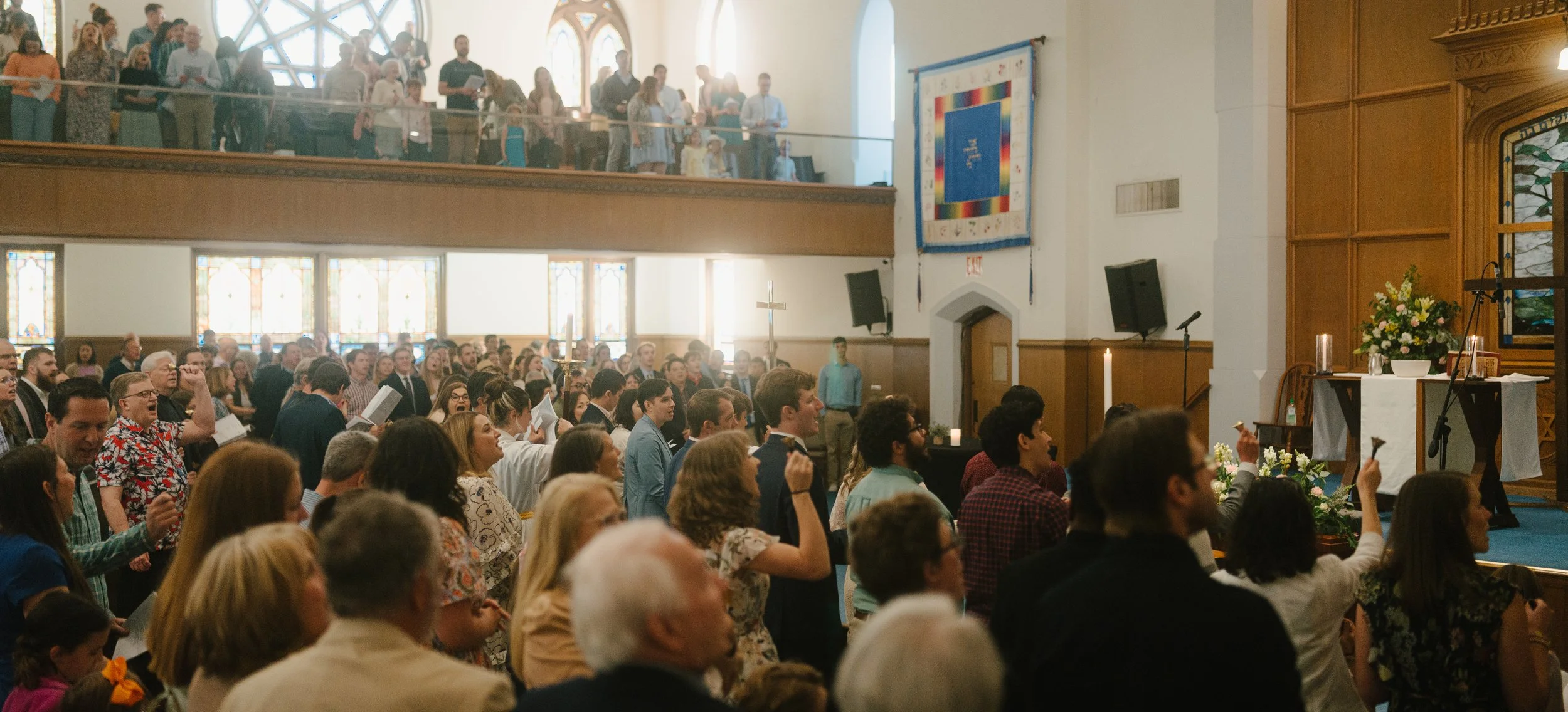
Summer Staff Transitions & Openings
Every year or so, as our parish grows and changes, there is some reorganizing that happens at the staff level. Some leaders conclude seasons of ministry and new opportunities and roles emerge. This Summer, two of our staff are transitioning off the team and there are two new positions on staff that are opening up.
Dear Redeemer Family,
Every year or so, as our parish grows and changes, there is some reorganizing that happens at the staff level. Some leaders conclude seasons of ministry and new opportunities and roles emerge. This summer, two of our staff are transitioning off the team and there are two new positions on staff that are opening up.
The Rev. Alex Riffee | Chaplain

Alex has prayerfully decided (with his wife Yinghao and their kids) to join our church plant in the West End, Church of the Incarnation in Richmond. Incarnation was the first church plant sent out from Redeemer, back in 2019.
The Riffees moved to Richmond in the Summer of 2020 and have been with Redeemer throughout that time. Alex served primarily as a chaplain in the healthcare setting. He has assisted behind the scenes in providing pastoral care for those in our community. Though they regularly attend the 11:00 a.m. service, Alex has also assisted at the Communion table and in preaching.
Quite soon, Alex will begin serving as associate dean of hospital chaplains within the Jurisdiction of the Armed Forces & Chaplaincy. As this role unfolds for him, his family believe worshiping closer to home in Short Pump will aid in these new responsibilities.
Alex, we love you, will miss you, and are excited for this new season for you and your family!
Stephanie Workman | Director of Community Formation
Stephanie joined our staff as our ½ time (20 hr/wk) Dir. of Community Formation in the Fall of 2021. Over the past 20 months she has provided both wonderful shepherding care and necessary organization to our Small Groups.
Beginning this coming Fall (2023) this role is expanding to become a full-time job. As our parish grows, the importance of every member practicing Gospel Formation for Missional Presence in a Small Group setting becomes ever more vital.
Stephanie, we love you, will miss you, and are excited for this new season for you and your family!
Redeemer Family, if you see Alex or Stephanie, please thank them for all the time and energy they have invested in our common life here together!
Now, as we look towards the future, there are two new positions that are now open:
Director of Community Formation (Full-Time). As I mentioned earlier, this is becoming a full-time position and we are searching for the right person to step into this important leadership role of recruiting, training, and equipping Small Group leaders and of leading the people of the parish to engage and participate in Gospel Formation in Small Groups.
Communications Coordinator (10 hr/wk). As our parish continues to grow, our staff becomes increasingly specialized. Up until this point, almost all parish communications have come from either me (Dan) or Jeff King, our Senior Director of Operations. It’s time to bring in someone who can serve as something of “Chief Storyteller” for the parish. This includes our website, social media, parish newsletters, printed materials, and more.
Redeemer family, please pray that the Lord would provide the right people to step into these important leadership roles. If you know of someone who might be a good fit, please send them our way!
In the Father’s love,
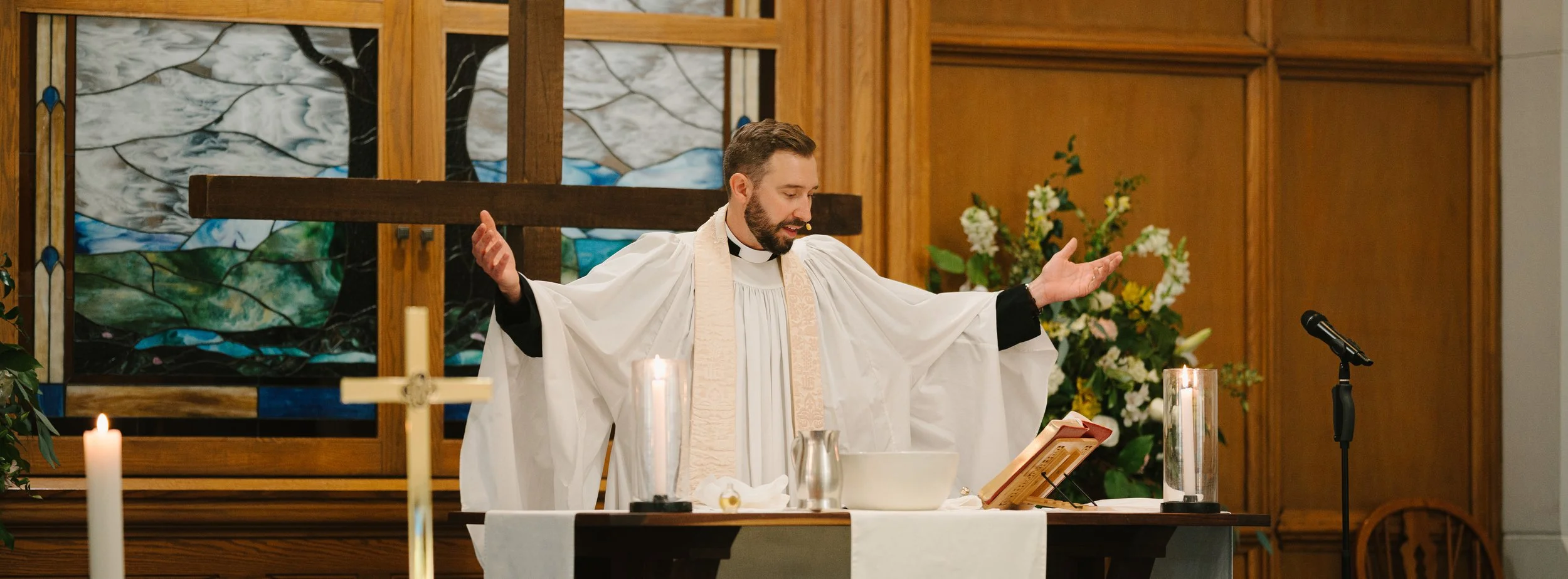
What You Need To Know About Dan's Summer Sabbatical
This Summer, after fifteen years of full-time ministry (6 in Charlottesville, 2 in Falls Church, and 7 in Richmond), I will be taking my first Sabbatical. This is something that we originally planned back in 2016, before our family had yet moved to Richmond to plant Redeemer. We told ourselves, back then, that at the seven year mark, we would take a three month Sabbatical. And now the time is here! I can hardly believe it…
Dear Redeemer Family,
This Summer, after fifteen years of full-time ministry (6 in Charlottesville, 2 in Falls Church, and 7 in Richmond), I will be taking my first Sabbatical. This is something that we originally planned back in 2016, before our family had yet moved to Richmond to plant Redeemer. We told ourselves, back then, that at the seven year mark, we would take a three month Sabbatical. And now the time is here! I can hardly believe it…

I’ve put together the following FAQ section to help address any questions or concerns that anyone might have.
If you have any questions, please feel free to reach out to one of our excellent Wardens or Senior Directors:
Senior Warden, Jim Reynolds
Junior Warden, Sarah Byrd
Senior Director of Ministries, Lane Cowin
Senior Director of Operations, Jeff King
Redeemer family, I am so grateful for this time of rest and I pray that it provides refreshment for our family so that we can continue to be on mission together for many, many years to come!
SABBATICAL F.A.Q’S
WHAT IS A SABBATICAL?
The word Sabbatical has its roots in the word Sabbath - a stopping, a pausing, a time of rest, a time to slow down and remember that the Lord is God. Throughout the story of the Bible, God continually calls and commands His people to practice Sabbath rest. This takes the form of the weekly sabbath for the people (one day out of seven) and annual sabbath for the land (one year out of seven).
A Sabbatical is “a healthy and effective means of preventing burnout and of renewing and enhancing a professional’s capabilities for dealing effectively with problems facing those who need help...the overall goal is rest and renewal, not rigid adherence to a prescribed plan of action. [A sabbatical] might involve study, travel, writing or some combination of all three, blended with a good measure of relaxation and family time.”
“The sabbatical tradition began in the universities at the time when the university was part of the church. The idea was that the university professors (who were often ministers) needed one year in every seven to become students again and to refresh their spiritual calling.”
Over the centuries, the practice of a priestly or pastoral sabbatical developed. This has taken different shapes and forms in different denominations and times in history, but the norm seems to have settled around something like three-to-six months off every seven years or so.
WHAT IS REDEEMER’S STAFF SABBATICAL POLICY?
To that end, Redeemer has developed a Sabbatical Policy for all full-time staff.
Rector — 3 months every 7 years
Senior Director — 2 months every 7 years
Director — 1 month every 7 years
Before embarking on a sabbatical, a staff person must cheerfully, and without reservation, commit to 2 additional years on staff. Our hope is to develop a leadership culture where staff can be regularly refreshed for new seasons of ministry.
WHEN IS MY SABBATICAL HAPPENING?
My last Sunday will be May 28th, Pentecost Sunday.
I will return to Redeemer on August 27th for our Fall Kick-off.
IS SOMETHING WRONG? AM I LEAVING?
No! There isn’t anything wrong that is causing the Sabbatical (this was planned back in 2016). I have absolutely no plans to leave or to do anything else. When invitations to pastor other churches have come, I have gently, but firmly refused all of them. No interviews. No visits. Nothing.
Of course, the Lord may do whatever He likes with me and our family, but for now - the only plan we have is to return to Richmond and re-up for another great season with Redeemer.
WHAT WILL THE MAROTTA FAMILY DO?
We will be out of town for nearly all of the three months. The goal is not to “go on vacation,” but rather to relocate family life and settle into new rhythms there. We are so grateful for friends and relatives who have offered us free or discounted places to stay during this time in:
Charlottesville
Chesapeake Bay
Montana
North Carolina
We plan to enjoy spending a lot of time outdoors in God’s beautiful creation. We will likely focus much of our time on things like hiking, swimming, fishing, reading, writing, drawing, painting, cooking, and saying “yes” when my kids ask me if I can play with them!
WHAT ASPECTS OF MINISTRY WILL I STOP?
On the afternoon of May 28th, I will take off my clergy collar and, barring an emergency, I will not put it back on until the morning of August 27th. I will be taking a break from my priestly work of celebrating the Eucharist, preaching, administering the sacraments, counseling, and leading our parish. This also means no guest preaching or speaking anywhere else!
WHAT NEW INTENTIONAL PRACTICES WILL I TAKE UP?
I will begin the Sabbatical by spending a week in silence and solitude at a Benedictine monastery in New York.
Bible reading and prayer will be a significant part of every day.
My fly rod will be coming with me everywhere I go this Summer and I hope to spend many golden evening hours knee-deep in a river hoping for a fish to rise.
I also plan to do a little bit of writing for a new book. However, this is not supposed to be a writing sabbatical, so I won’t be working under any deadlines.
I have a stack of books that I’ll be bringing with me that includes:
The Sabbatical by Michael O'brien
Jayber Crow by Wendell Berry
Jack: A Life of C.S. Lewis by George Sayer
The City of God by Saint Augustine
The Divine Comedy by Dante
Timothy Keller: His Spiritual & Intellectual Formation by Collin Hansen
Surrender by Bono
A Burning in My Bones by Winn Collier
A River Runs Through It by Norman Maclean
And, of course, Tolkien's Lord of the Rings, which I reread every year.
WHAT IF YOU WANT TO CONTACT ME WHILE I’M GONE?
Unfortunately, I will not be having any contact with Vestry, Staff, or parishioners while on Sabbatical. My email address will be suspended and all emails sent over the Summer will be deleted. I also plan to leave my laptop and my cell phone in my office and not touch them until we return.
If you need anything in the way of pastoral help while I’m gone, please contact another member of our staff.
I am doing this on the recommendation of other older, wiser pastors who have encouraged me to be truly gone so that upon returning I can be truly present.
*Note: The exception for this would be if a parishioner passes away while I’m gone. If that happens, then I will immediately drive or fly back to be with the family and to conduct the funeral. The Senior Directors and Wardens will have contact information for me and they will get in touch with me if there is any emergency.
WHO IS IN CHARGE WHILE I’M GONE?

According to our bylaws, our Senior Warden, Jim Reynolds, is in charge while the Rector is away. However, to share the burden of leadership, our Senior Directors - Lane Cowin and Jeff King will be in charge of running most of the day-to-day operations and ministries of the parish. Additionally, the Canon for Church Planting for our Diocese, the Rev. Tuck Bartholomew, has agreed to serve as Redeemer’s Priest-in-Charge in my absence. He will be present to celebrate the Eucharist, preach, and provide pastoral guidance to our staff and Vestry when needed.
All told, I think Redeemer will be in great (probably better!) hands while I’m gone!
WHY IS THIS TIME IMPORTANT FOR REDEEMER?
Now, when the Lead Pastor or Rector goes on Sabbatical, it’s an important time for everyone in the church. This is an opportunity for all of us to grow. I know that my temptation is to find too much of my identity in being the Rector of this parish. So one big challenge for me this Summer is to remember my identity is in Christ and not in this job!
In the same way, it can be a temptation for parishioners to overly identify a church with the Lead Pastor or Rector. So one big challenge for some of you will be to embrace a version of Redeemer that doesn’t include me!
There is an invitation here, from the Lord, for all of us. Let’s all go into this Summer season with a heart that is open and receptive to whatever the Spirit of Jesus wants to reveal to us. May we all become more fully devoted to and dependent on God through this time.
IS THERE ANYTHING FOR YOU TO DO?
Yes! There are three very important things for you to do this Summer while I’m gone:
Pray: Would you please pray for me and for our family?
Support: Would you please support the leadership of our Wardens, our Senior Directors, and Tuck?
Own: For many of you, this Summer will be an opportunity for you to step up and take more ownership and responsibility for an aspect of our parish life. Please do so with humility and courage.
Redeemer Family, I love you all dearly. I will miss you terribly! I’m glad we have a few more weeks together before we spend some time apart.
May our Lord continue to guide our little parish as we take this maturing step together.
In the Father’s love,
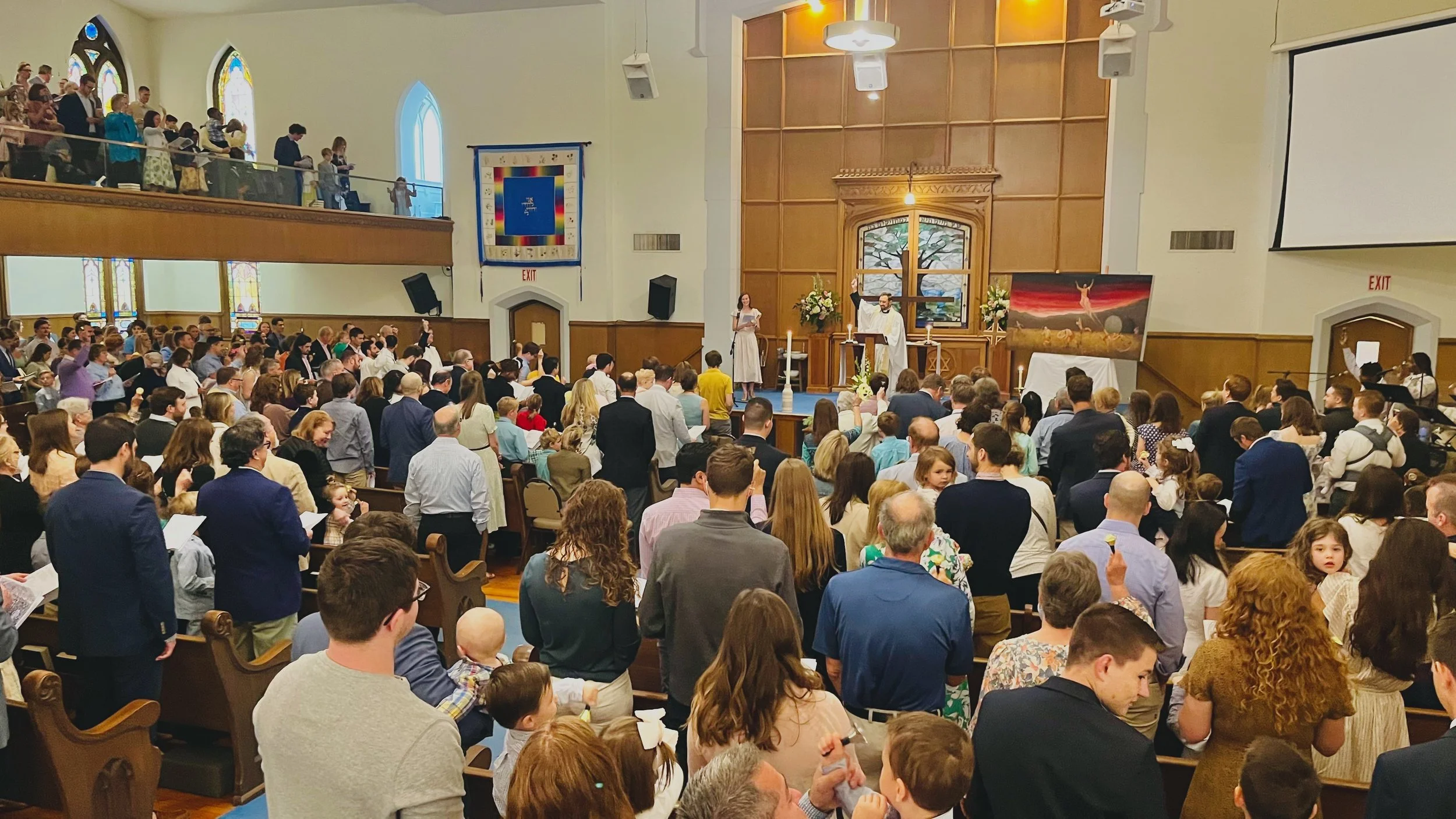
Come to the 7:00 a.m. Sunrise Service on Easter (If Possible)
Good afternoon! A blessed Holy Week to you. I want to take a moment to ask you to consider attending the 7AM Sunrise Worship Service on Easter Morning. Now, of course not everyone is able to do this and we understand! However, if you are able to flex your schedule, here are three good reasons to attend the 7AM:
Redeemer Family,
Good afternoon! A blessed Holy Week to you. I want to take a moment to ask you to consider attending the 7:00 a.m. Sunrise Worship Service on Easter Morning. Now, of course not everyone is able to do this and we understand! However, if you are able to flex your schedule, here are three good reasons to attend the 7:00 a.m. service:
Align worship of God with the rhythms of God’s creation:
Greet the rising of our Lord as we greet the rising Sun. Followers of Jesus have always understood the daily rhythm of sleeping and waking to be a form of practicing death and resurrection.Make worship the first thing you do on Easter:
Before breakfast, parties, and other festivities, begin the day with Worship.Make room for visitors at the 9:00 a.m. & 11:00 a.m. services:
Easter is one of the most important days for us to show hospitality to outsiders.
Church family, I hope this doesn’t sound trite, but as we head into the Triduum of Maundy Thursday, Good Friday, and Easter Sunday, I just want to say how much I love each of you and how much I love our parish. The Holy Spirit has drawn us together and has knit us together in Christ - making us one with Jesus and one with each other.
It continues to be a deeply humbling honor to serve as your Rector and I’m so grateful that we will make the journey together over the next few days.
In the Father’s love,

Holy Week and The Triduum
Good afternoon! Holy Week is nearly upon us. I want to take a few minutes to explain what it will be like to participate in the most important days of the year together. Please, if you can, read the following in its entirety.
Redeemer Family,
Good afternoon! Holy Week is nearly upon us. I want to take a few minutes to explain what it will be like to participate in the most important days of the year together. Please, if you can, read the following in its entirety.
PALM SUNDAY - April 2
The first day of Holy Week and the day that we remember Christ’s triumphal entry into the city of Jerusalem (recorded in all four Gospel accounts: Matthew 21:1-11, Mark 11:1-10, Luke 19:29-38, and John 12:12-15). That morning, we will begin outside, on the sidewalk along Arthur Ashe Boulevard, before we process into the sanctuary waving palm branches and singing. Now, this concept isn’t a new or creative idea. It is, in fact, a very old tradition.
So why are we doing this? There are at least three good reasons (and I’m sure many more):
It connects us to our history: By waving palm branches, singing, and processing together - we will do something with our bodies in the present that connects us to the people of God in the past. We are joined with Christian brothers and sisters from ages past, as well as with the first century citizens of Jerusalem who welcomed Jesus into their city.
It is formative for our young children (and for us): Few things help young children (or adults for that matter) understand a story better than acting it out together. We want more than intellectual assent to the teaching of scripture, we want to receive, embody, and extend the good news of what Christ has done for us. This is why we kneel, stand, sing, eat the bread, drink the wine, and - yes - wave the palms!
It is an act of public worship: In our secular, materialist age, there are very few opportunities for acts of public worship and devotion to Christ. No doubt, as many of us adults walk the streets of Grove, Floyd, Mulberry, and Boulevard, we will feel very silly. If that describes you, don’t worry, you’re in good company. We will all feel the strangeness of publicly worshiping Christ in the midst of neighbors who think we are lunatics. But this is not a bad thing - for us or for our neighbors. It’s good for us because it presents us with a very real opportunity to be courageous. It’s good for our neighbors because our worship serves as a reminder that, no matter what the zeitgeist of our time may say, there are real men and women and children who are continuing to find life in Christ Jesus.
So, dear friends, this Sunday morning, come ready to do a new thing, which is a very old thing, and to do a strange thing, which is a very good thing. We will wave palm branches, and sing, and walk and declare together that, minority though we be, there is still hope to be found only in the Lord Jesus.
STATIONS ON BOULEVARD—April 3-7
From 8:00 a.m.-7:00 p.m., Monday-Friday, the 14 Stations of the Cross will be posted along Arthur Ashe Boulevard. I encourage you to set aside 30-45 minutes of time to stop by, and spend time praying and contemplating each station. We have put together both a printed and digital guidebook to lead you through this exercise.
MAUNDY THURSDAY—April 6
The Paschal mystery - the death and resurrection of Jesus Christ - is at the heart of the Christian Gospel. The evening of Maundy Thursday begins the Triduum (the sacred three days). Maundy Thursday receives its name from the maudatum (commandment) given by our Lord: A new commandment I give to you, that you love one another: just as I have loved you, you also are to love one another (John 13:34). At the Last Supper, Jesus washed his disciples' feet and commanded them to love one another as he had done. This day commemorates the Lord’s example of servant ministry, the institution of the Eucharist, the agony of the Garden of Gethsemane, and the betrayal leading to the crucifixion.
Services are at 5:00 p.m. and 7:00 p.m.
Will Clark, our CCO College minister to VCU will preach at the 5:00pm and Tee Feyrer, one of our CCO College ministers to University of Richmond will preach at the 7:00pm.
No Nursery or Kid’s ministry. Kids are invited to fully participate in all parts of the service.
Remember to wear sandals or slip-off shoes (to facilitate the foot-washing portion of the service).
GOOD FRIDAY—April 7
The Good Friday liturgy is the second part of the Triduum. This most somber of all days is appropriately marked by fasting, abstinence, and penitence, leading us to focus on Jesus and the meaning of his Cross. Some churches do not use musical instruments or bells on this day. The church is often darkened. The bare, stark appearance of the church serves as a reminder of the solemnity and sorrow of the day. The Lord of Life was rejected, mocked, scourged, and then put to death on the Cross. The faithful are reminded of the role which their own sin played in this suffering and agony, as Christ took all sin upon himself, in obedience to the Father’s will. By the Cross we are redeemed, set free from bondage to sin and death. The Cross is a sign of God’s never-ending love for us. It is a sign of life, in the midst of death.
Services are at 5:00 p.m. and 7:00 p.m.
The Rev. Lewis Lovett, our Church Planter-in-Residence, will preach at the 5:00pm and Lane Cowin, our Senior Director of Ministries, will preach at the 7:00pm.
No nursery or children’s ministry. Kids are invited to fully participate in all parts of the service.
Remember to wear black or gray clothing.
HOLY SATURDAY—April 8
This is a day of quiet contemplation. It is important not to start the Easter celebration and feasting too early. Consider eating simple foods and refraining from entertainment. Perhaps, in the morning or the evening, consider praying:
O God, Creator of heaven and earth: Grant that, as the crucified body of your dear Son was laid in the tomb and rested on this holy Sabbath, so we may await with him the coming of the third day, and rise with him to newness of life; through Jesus Christ our Lord. Amen
EASTER SUNDAY—April 9
As the third day dawns, we celebrate the bodily resurrection of our Lord from the dead!
Alleluia! Christ is risen!
The Lord is risen indeed! Alleluia
The church will resound with the ringing of bells, shouts of praise, and songs of joy! This is a dual sacrament service: with both Baptisms and Eucharist.
There are three identical services: 7:00 a.m., 9:00 a.m., and 11:00 a.m. (But only the 9:00 a.m. and 11:00 a.m. provide nursery and children’s ministry).
If you are able to attend the 7:00 a.m. service, please do so! We will likely run out of space at 9:00 a.m. and 11:00 a.m. By worshiping at the sunrise service, you show hospitality to visitors who will likely attend the later two.
There will be coffee, juice, and donuts across the street near the VMFA sculpture garden after all three services. Stay for a while and enjoy the after-party!
Redeemer family, I love you all and I’m so grateful that we get to walk through this week together. I hope and pray that our observance, practice, and worship through these services forms the Gospel more deeply within us so that we might be more missionally present to our families, neighbors, and city.
In the Father’s love,

Vestry Election This Sunday
Our annual Vestry election is taking place this Sunday. We have five excellent candidates and must elect two of them to serve a three year term.
Dear Redeemer Family,
Our annual Vestry election is taking place online now and in-person this Sunday. We have five excellent candidates and must elect two of them to serve a three year term.
Who are our candidates?

Trey Arnold
My family and I have been blessed to worship at Redeemer since we moved to Richmond in 2016. I am committed to serving the Lord and loving our neighbors in this parish. It would be an honor to serve again as a faithful steward on the vestry.
Alex Burlingame
When Emily and I joined Redeemer 5 years ago, we developed a deep commitment to the Anglican tradition and this parish in particular. It would be an honor to apply my personal mission of creating order, clarity, and excellence in the world to this context.


Matt Harper
Vestry service is one of the best ways I can serve and add value to Redeemer, while helping to safeguard its vision and carry out its values. As a career-long HR professional and with prior vestry service at other churches, I would join the Vestry with energy, experience and drive to prayerfully help move us forward in the future.

Lisa Yancey
I desire to serve on Vestry because I love Jesus Christ and I want to serve him obediently and faithfully. I’ve covered the decision in prayer and wise counsel and would be honored to serve the parish in this way. I’m enthusiastic about supporting Redeemer’s vision; Gospel Formation through Missional Presence and trust the Lord to guide this process.
Rachel Yowell
I would like to serve on Vestry because of the immense respect I have for our leadership and the structure of our leadership. It would be an honor to serve our parish alongside such great leaders. I would like to spend my time, energy, and attention on being thoughtful and wise about our resources, and ask good questions as we discern and make decisions that I hope would allow our parish to sustainably flourish.

Who Votes?
Voting is for confirmed members only. If you have completed our Foundations Class, been confirmed by our Bishop by the laying on of hands, and signed our Membership Covenant & Commitments then you are a member here at Redeemer and should participate in this election by prayerfully voting.
How & When to Vote?
You may vote online this week using this link, or you may vote in-person at one of our worship services on Sunday morning. The ballots close Sunday evening.
Remember that the vestry election is not a popularity contest, but rather a matter of careful, prayerful, strategic discernment. The Vestry shoulders the enormous responsibility of stewarding all the financial resources of the parish. We need wise, virtuous, mature followers of Jesus to step into this role.
In the Father’s love,


Our 2023 Vestry Candidates
Our Vestry Election takes place the Sunday before Holy Week, which is April 3rd this year. In between now and then, I would encourage you to prayerfully consider which two of the following five people would be best suited to serve and lead our parish in the coming years.
Dear Redeemer Family,
It’s that time of year again—time for us to prepare to thank two Vestry members (Bethany Lansing and Matt Morgan) for completing their three years of faithful service and time for us to vote in two new people.
Our Vestry Election takes place the Sunday before Holy Week, which is March 26 this year. In between now and then, I would encourage you to prayerfully consider which two of the following five people would be best suited to serve and lead our parish in the coming years.
Trey Arnold
My family and I have been blessed to worship at Redeemer since we moved to Richmond in 2016. I am committed to serving the Lord and loving our neighbors in this parish. It would be an honor to serve again as a faithful steward on the vestry.
Alex Burlingame
When Emily and I joined Redeemer 5 years ago, we developed a deep commitment to the Anglican tradition and this parish in particular. It would be an honor to apply my personal mission of creating order, clarity, and excellence in the world to this context.
Matt Harper
Vestry service is one of the best ways I can serve and add value to Redeemer, while helping to safeguard its vision and carry out its values. As a career-long HR professional and with prior vestry service at other churches, I would join the Vestry with energy, experience and drive to prayerfully help move us forward in the future.
Lisa Yancey
I desire to serve on Vestry because I love Jesus Christ and I want to serve him obediently and faithfully. I’ve covered the decision in prayer and wise counsel and would be honored to serve the parish in this way. I’m enthusiastic about supporting Redeemer’s vision; Gospel Formation through Missional Presence and trust the Lord to guide this process.
Rachel Yowell
I would like to serve on Vestry because of the immense respect I have for our leadership and the structure of our leadership. It would be an honor to serve our parish alongside such great leaders. I would like to spend my time, energy, and attention on being thoughtful and wise about our resources, and ask good questions as we discern and make decisions that I hope would allow our parish to sustainably flourish.
I can attest that each of these people is a mature, thoughtful, wise, compassionate follower of Jesus. There are no bad choices here! I want to remind us all that the Vestry election is not a popularity contest, but rather a matter of spiritual, strategic discernment.
As a reminder, here is a document that lays out the responsibilities of the Vestry. Please give a read if you need a refresher.
Bethany and Matt, thank you for your three years of service! It has been a joy to work with you! And to these five new candidates, thank you for allowing your names to go forward and your willingness to serve in the years ahead. We are grateful for your courage!
In the Father’s love,

One Week Left to Sign Up for the Foundations Class!
On Sunday evening, March 19th, at 5:30pm in the basement of 2715 Grove Ave., we will kick off Foundations Class for the Spring semester.
Dear Redeemer Family,
On Sunday evening, March 19, at 5:30 p.m. in the basement of 2715 Grove Ave., we will kick off Foundations Class for the spring semester.
WHO SHOULD TAKE THIS CLASS?
There are three different kinds of people who should participate in this class.
People who are curious about Redeemer and want to learn more about our parish.
People who are sure that Redeemer is their church home and want to become members.
People who are already members and want a refresher course to help them re-center their lives on practices that will help them grow and thrive.
WHAT IS THE CONTENT?
The class is focused on the seven practices of Gospel Formation for Missional Presence.

Telling the story of the Bible as the true and better narrative in which to understand God, ourselves, each other, and this world.
Q: What story am I in?
Embracing a new identity in Jesus that is received, stable, and secure.
Q: Who am I?
Finding belonging in the church community and extending hospitality to strangers.
Q: Where do I belong?
Cultivating virtue through redemptive habits.
Q: How do I change?
Seeking to understand our context in the city in this cultural moment.
Q: Where do I make my life?
Laboring in renewed vocations for the common good.
Q: What is my purpose?
Reordering our imaginations through beauty.
Q: How do I love?
WHY DOES IT COST $25?
I have found over the years that we only care about things we pay for. In other words, in order for something to really impact us, we need to have some skin in the game. Therefore, for these types of classes here at Redeemer, we charge a small fee. The $25 doesn’t even come close to paying for the cost of the class (which includes a 50+ page workbook, a 2019 Book of Common Prayer, 7 dinners, and 7 nights of child care), but it does help the participants take the class more seriously.
Note: If the $25 is financially impossible for you or your family, just let me know and we’ll adjust it downward or drop it altogether.
As of right now, we have 32 adults signed up for the class, which is great! If a few more of you would like to jump in, you have one week left to register.
You can register online by clicking this link.
In the Father’s love,
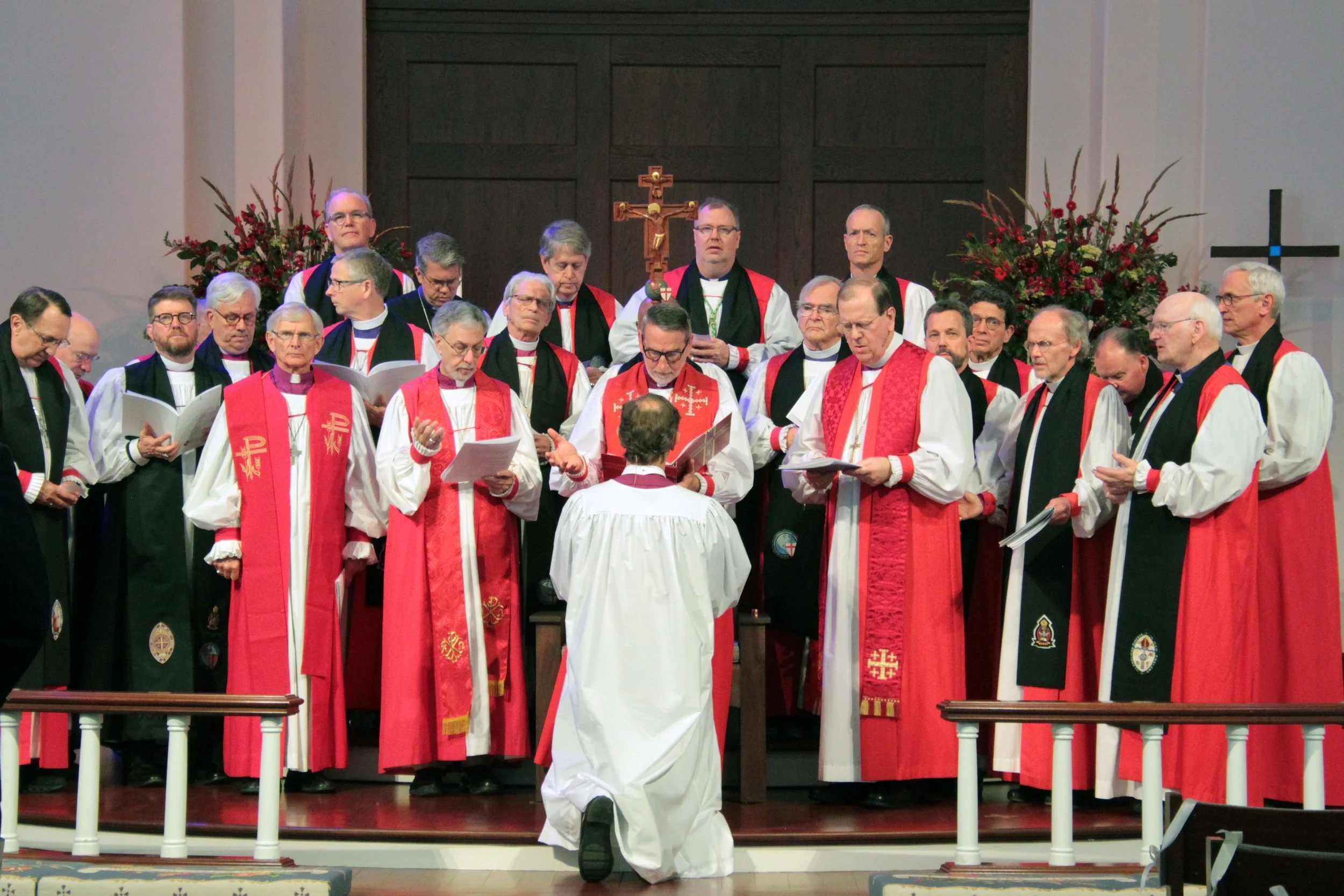
A Peaceful Transfer of Power
This past Saturday was a significant day for us, our diocese, and the Anglican Church in North America. Our beloved Bishop, John Guernsey, officially handed over his spiritual authority and retired from the role of Bishop of the Diocese of the Mid-Atlantic. At the very same time, a new Bishop was consecrated and the Rt. Rev. Chris Warner will now serve as our Bishop. We look forward to welcoming him and his wife Catherine when they come visit us on Sunday, May 14th.
Redeemer Family,
This past Saturday was a significant day for us, our diocese, and the Anglican Church in North America. Our beloved Bishop, John Guernsey, officially handed over his spiritual authority and retired from the role of Bishop of the Diocese of the Mid-Atlantic. At the very same time, a new Bishop was consecrated and the Rt. Rev. Chris Warner will now serve as our Bishop. We look forward to welcoming him and his wife Catherine when they come visit us on Sunday, May 14th.
If you’d like to read more about this transition, you can read an article here.
And if you’d like to watch the consecration service that took place on Saturday, you can watch it here.

Redeemer family, the inner workings of church polity (governance) are rarely of interest to the average Christian and rarely do they impact our day-to-day lives. However, they are vitally important to the long-term health of the church and, when crisis hits (as it inevitably does) it is essential to have clear leadership structures already in place.
I’m so very grateful to Bishop John and his wife Meg for the ways they have cared for me, our family, and our parish over the years. I’m also very much looking forward to serving under Bishop Chris’ authority and grateful for his willingness to step into such an important role in the Church of our Lord Jesus.
In the Father’s love,

Ash Wednesday: A Vital Practice For Remembering Your Death... And Your Joy
Next week you are invited to participate in one of the most important days of the year in the life of our church. February 22nd is Ash Wednesday and we will all gather to receive the sign of the cross in ashes on our foreheads. Strange as it may sound, we won’t wash off the ashes right away, we'll bear the dirty smudge right there on our faces the rest of the day.
Redeemer Family,
Next week you are invited to participate in one of the most important days of the year in the life of our church. February 22 is Ash Wednesday and we will all gather to receive the sign of the cross in ashes on our foreheads. Strange as it may sound, we won’t wash off the ashes right away, we'll bear the dirty smudge right there on our faces the rest of the day.
Now, why do this? Why participate in an Ash Wednesday service?
Ash Wednesday marks the beginning of the season of Lent: a time of penitence, fasting, and prayer, in preparation for the great feast of the resurrection.
The season of Lent began in the early days of the Church… The forty days refer to our Lord’s time of fasting in the wilderness; and since Sundays are never fast days, Ash Wednesday is the beginning of the Lenten Fast.
Throughout the Old Testament, ashes were used as a sign of sorrow and repentance. Christians have traditionally used ashes to indicate sorrow for our own sin and as a reminder that the wages of sin is death (Romans 6:23). Like Adam and Eve, we have disobeyed and rebelled against God, and are under the same judgment, “‘You are dust, and to dust you shall return’” (Genesis 3:19).
But as we are marked with ashes in the same manner that we were signed with the Cross at Baptism, we are also reminded of the life we share in Jesus Christ, the second Adam (Romans 5:17, 6:4). It is in this sure hope that we begin the journey of these forty days of Lent, that by hearing and answering our Savior’s call to repent, we may enter fully into the joyful celebration of his resurrection.*
Taking things one step further, the ashes serve as an urgent reminder of something that many of us have forgotten or chosen to ignore - our own mortality. Over the past years, as I have listened to you, listened to our culture, and listened to the Holy Spirit, I have heard how so many of us seem to struggle with the paradoxical denial-and-anxiety of death. We live as if we will not die (denial), but we also have a deep, inner terror of death (anxiety).
The Christian hope is an answer to the question of death; and there is nothing less compelling than an answer without a question. Get rid of the question and the answer will wither away on its own. Get rid of death—tuck it away in hospitals and nursing homes, remove death from our sight—and soon the hope of resurrection will lose its luster. The good news of the Gospel will hardly seem good or much like news. Without death, the Gospel just isn’t very interesting.
But the problem of death persists. Hidden or not, death comes for us all. Which means that, interesting or not, we need the Gospel. Therefore, we need to take a page out of the ancient church playbook and reclaim the spiritual discipline of Memento Mori. We must remember our death. We must keep our own deaths present before our eyes.
When we do this, the very opposite of what we fear will occur. In contemplating death, we fear that we will become depressed, morbid, unhappy, fearful people. However, as all who have practiced this will attest, the very opposite thing happens within us. When we hold both our death and the Gospel before our eyes, we become more joyful, more content, more grateful, more courageous people. This happens because, in contemplating our own death in light of the Gospel, we take our deepest terror and bring it up out of the darkness and into the light where Jesus can deal with it.
So, church family, do a strange thing and come to one of the Ash Wednesday Services: 6:00 a.m., 12:00 p.m., 5:30 p.m. Receive the ashes on your forehead and remember your death.
Let’s undertake this uncomfortable, but necessary journey together through Lent so that, when we arrive at Easter, we will be ready to celebrate with authentic and enduring joy!
In the Father’s love,

Practice #2: Context
On Sunday, we introduced Practice #5: Context in our Gospel Formation for Missional Presence series. If you missed the sermon, here’s the link. I would encourage you to find some time to listen this week so we can continue to track together as a parish.
This is the second article in the series 7 Practices of Gospel Formation for Missional Presence
Redeemer Family,
On Sunday, we introduced Practice #5: Context in our Gospel Formation for Missional Presence series. If you missed the sermon, here’s the link. I would encourage you to find some time to listen this week so we can continue to track together as a parish.
Practices of Context are ways of answering that basic human question, “Where do I make my life?”
Place and time matter. To be human is to be embodied in a particular place and time. Therefore to live a life of placelessness and timelessness is dehumanizing.
Embracing Our Time
I was raised in Ivy, just outside of Charlottesville, VA. Ivy is semi-famous as the place where Meriwether Lewis, co-leader of the Corps of Discovery, grew up. As a kid I would daydream about what it would have been like to lead that band of adventurers across our continent. I used to say things like,”I was born in the right place, but the wrong century.” I loved my place, but I did not love my time.
I think this is true of many of us. We love our homes, our neighborhoods, our city, and our country; but we do not love our culture or our secular age. We feel out of step with our time.
But we are alive now! We are not an accident, the Lord has placed us in this age; and therefore the only time we have to live faithfully is right now. Today.
Embracing Our Place
In a similar way, there are many of us who feel right at home in our time and age, but out of step with our place. Perhaps the place where we lay our head does not feel like home. Perhaps you wish you could afford a different house, a different neighborhood, maybe escape Richmond to move to a different city. Did you move here intentionally? Or do you feel stuck?
What might it mean for you to choose to willingly, intentionally, voluntarily put down roots right here, in this place? What might it mean for you to quiet the restlessness inside of you that keeps suggesting that there is a better place for you somewhere else?
The Incarnation is Both Our Model & Means
The incarnation of the second person of the Holy Trinity, the Son of God in the flesh - Jesus - is both our model and our means when it comes to practicing our context. Christ was incarnate in both time and place, living as a first century Jewish rabbi, fully embracing His context every way.
We look to Jesus as our model. How did Jesus inhabit his context? How might I do the same?
But more than that, Jesus is also our means or our resource for practicing our context. Jesus is here, fully present, in time and space now. Last week we talked about Practice #4: Cultivating Virtue and we said that to truly cultivate Christian Virtue, we must take up practices that help us to abide in Jesus. He is the vine, we are the branches. As we abide in the vine-who-is-Jesus, we who-are-the-branches become more fully incarnate in our place and time the way He is. We begin to see through the eyes of Jesus, listen through His ears, love with His heart, serve through His hands.
As we contemplate together what it might mean for us to be church that practices our context, here are some things we might consider:
Practices of Stability
Commit to Richmond for the long haul. Resist job opportunities or career advancement that might take you away from this place.
If you live in the city, within walking distance of neighbors, consider staying in your home, even if you could afford a larger, nicer one elsewhere.
Practices of Proximity
If you live out in the county, consider moving into the city. Giving up space and comfort to prioritize proximity to both neighbors and fellow brothers and sisters in the church.
Get to know the people and things nearby. What businesses can you walk to from your front door? What people live within 0.5 miles of you?
Practices of Understanding
Get to know Richmond more deeply. Consider reading Richmond’s Unhealed History by Ben Campbell.
Get to know the importance of the church being embedded in a city. Consider reading Sidewalks in the Kingdom by Eric Jacobsen.
Get to know the importance of cities for the spread of the Gospel. Consider reading Loving the City by Tim Keller.
Seek to understand our culture and time in history. Consider reading How (Not) to be Secular by James K Smith.
These are potential practices not mandates or requirements. They are also just a handful of ways to get started.
Redeemer family, I love you and I am learning to love our place and time. Let’s practice our context together.
In the Father’s love,

Practicing Belonging—Why We Think Every Adult Should Be In A Small Group
If you’ve been around our parish for any length of time, you’ve likely picked up on the fact that we take Small Groups pretty seriously. We like to say that, “If the Sunday morning worship service is one anchor, Small Groups are the second anchor.”
Redeemer Small Groups will relaunch the week of Feb. 5th-11th.
Click here to join a group, or contact Redeemer’s Director of Community Formation, Stephanie Workman
Redeemer Family,
If you’ve been around our parish for any length of time, you’ve likely picked up on the fact that we take Small Groups pretty seriously. We like to say that, “If the Sunday morning worship service is one anchor, Small Groups are the second anchor.”
WHY 2 ANCHORS?
Now, why would anyone or anything need two anchors? Why not just the one? The handful of you sailors out there will know that if you only use one anchor for your boat, it will float around a decent amount as the tides rise and fall and the current changes. If you want your boat to be truly stable, you’ll need two anchors.
Our lives are not so different. We all tend to drift about in the tides and currents of our cultural moment and we need multiple anchors to keep us steady.
PRACTICING VS EXPERIENCING
One of the ways that Small Groups keep us steady is that they provide a place to practice belonging. Notice, I did not say experience belonging. This is one of the great fallacies that most of us unintentionally bring with us into Small Group. We tend to walk in the door thinking/hoping/wanting that the Small Group will be a place where we are seen, known, understood, appreciated, cared for, and loved.
Now, that really does happen sometimes, and it’s wonderful! What a balm to our souls when our presence is welcomed and embraced. Huzzah! Three cheers. Pop the champagne.
However, sometimes our Small Group experience falls a bit short. Other members are awkward or simply very different from us. I’ve been in Small Groups in the past where I remember thinking, “I have nothing in common with these people!”
And that’s exactly where the Lord was at work, in my lack of common ground with the other men and women in my Small Group. We had little in common, but we had Jesus. We shared our need for the good news of the Gospel. And it was enough for us all to belong. The Gospel gave us a means of welcoming one another, dignifying one another, and eventually - truly caring for and loving one another.
2 ACTION ITEMS FOR YOU
If you are an adult who calls Redeemer home, we implore you to join a Small Group! Or contact Redeemer’s Director of Community Formation, Stephanie Workman, for assistance in finding a group that works best for you. Redeemer Small Groups will relaunch the week of Feb. 5th-11th.
If you know of someone inside or outside of our parish who does not yet belong to Jesus or to a Gospel-practicing church, invite them to come to your Small Group with you.
Redeemer Family, we are a parish that exists to practice Gospel Formation for Missional Presence. Let’s press into this together by practicing Gospel belonging around our kitchen tables and in living rooms. Let’s open our doors in hospitality to strangers. Let’s courageously walk through stranger’s doors into their homes.
We all long to belong with God and one another, and it doesn’t come naturally for any of us. So let’s practice.
In the Father’s love,

Practice #1: Story
Now, some of you have asked about what it means to move deeper into Story Practices and so I want to take a moment to share some helpful resources.
This is the first article in the series 7 Practices of Gospel Formation for Missional Presence
Redeemer Family,
Good afternoon! I hope this finds you well today.
REVIEW
This past Sunday we kicked off a very important season in the life of our parish. Redeemer is now six years old and it’s time for us to clarify and focus our reason for existing. We must hone in on our why.
Difficult as it may be to distill the why of a church like ours into one sentence, I think this one comes pretty close: Redeemer exists to practice Gospel Formation for Missional Presence.
We do this through the Seven Essential Practices of the ancient church:
STORY: Telling the story of the Bible as the true and better narrative in which to understand God, ourselves, each other, and the world.
Q: What story am I in?
IDENTITY: Embracing a new identity in Jesus that is received, stable, and secure.
Q: Who am i?
BELONGING: Finding belonging in the church family and extending hospitality to strangers.
Q: With whom do I belong?
VIRTUE: Cultivating virtue through redemptive habits.
Q: How do I change?
CONTEXT: Seeking to understand our context in the city in this cultural moment.
Q: Where do I make my life?
VOCATION: Laboring in renewed vocations for the common good.
Q: What is my purpose?
IMAGINATION: Reordering our imaginations through mystery and beauty.
Q: How do I love?
Now, some of you have asked about what it means to move deeper into Story Practices and so I want to take a moment to share some helpful resources.
Listen to Teaching on Practice #1: Story
If you missed Sunday’s sermon on this first practice, you can listen to it here.
Books to Read on Understanding the Biblical Story
101 - A Walk Through the Bible by Leslie Newbigin
201 - The Drama of Scripture by Bartholomew & Goheen
301 - The Mission of God by Christopher JH Wright
Re-Storying Habits to Take Up
Daily Bible Reading. Consider using the Lectionary in the Book of Common Prayer which assigns various texts to each day of the year.
Reading great fictional stories.
Participate in a Redeemer Small Group starting the first week of February.
Un-Storying Habits to Drop
Binge-watching tv shows and movies whose narratives tell a false story about the meaning of happiness, love, life, joy, etc.
Near-addiction levels of immersion in social media and news stories.
Beginning and ending every day with your smartphone.
Classes to Take
Redeemer’s Foundations Class [Begins Sunday evenings on March 19th]
Resources to Deepen Your Understanding of the Power of Story
Tending the Heart of Virtue by Vigen Guroian
Reading Black Books by Claude Atcho
A Landscape with Dragons by Michael O’Brien
Redeemer family, I don’t want to throw the word “excited” around too casually… but I am genuinely excited to walk through this 7 Practices series together! I hope it clarifies and focuses our why and I hope we grow together along the way.
In the Father’s love,

Don't Miss The Next 7 Sundays
This coming Sunday, January 8th, we will kick off a very important season in the life of our parish. Throughout the seven weeks of the Epiphany season, we will walk through a seven-part sermon series that is designed to focus and clarify why we exist as a parish.
Dear Redeemer Family,
Good afternoon! I hope this finds you well.
This coming Sunday, January 8th, we will kick off a very important season in the life of our parish. Throughout the seven weeks of the Epiphany season, we will walk through a seven-part sermon series that is designed to focus and clarify why we exist as a parish.
[We previewed this at the Parish Town Hall. If you missed it, you can listen here and read the annual report here.]
Here’s where we’re going:
Redeemer Anglican Church exists to practice GOSPEL FORMATION for MISSIONAL PRESENCE. The good news of the Gospel holistically transforms us, enabling us to participate in the mission of God right here, right now. The ancient church has historically embodied this through 7 PRACTICES that address the seven essential questions that every human being seeks to answer:
STORY
Telling the story of the Bible as the true and better narrative in which to understand God, ourselves, each other, and the world.
Q: What story am I in?
IDENTITY
Embracing a new identity in Jesus that is received, stable, and secure.
Q: Who am I?
BELONGING
Finding belonging in the church family and extending hospitality to strangers.
Q: With whom do I belong?
VIRTUE
Cultivating virtue through redemptive habits.
Q: How do I change?
CONTEXT
Seeking to understand our context in the city in this cultural moment.
Q: Where do I make my life?
VOCATION
Laboring in renewed vocations for the common good.
Q: What is my purpose?
IMAGINATION
Reordering our imaginations through mystery and beauty.
Q: How do I love?
Church family, as much as I’m looking forward to preaching through these seven practices, I am far more excited about seeing these practices integrated into everything we do together.
Let’s begin the new year by moving further up and further in to this GOSPEL FORMATION together. As we do this, I have every confidence that, by the grace of our Lord, we will also become more missionally present to our families, our neighbors, and to our coworkers here in the city.
In the Father’s love,
Author
- 150
- Dan Marotta 16
- Casey Cisco 15
- Christian Hayes 5
- Lane Cowin 4
- Jeff King 3
- Casey Cisco 3
- Ben Lansing 3
- Mikala Thompson 3
- Tee Feyrer 2
- 2
- Claire Lewis 2
- Rachel Capel 2
- Christian Hayes 2
- 2
- Isabelle Huggard 2
- 1
- Josh Gibbs 1
- Elizabeth King 1
- Mitchell Waters 1
- Paul Brasler 1
- Stephanie Workman 1
- Sarah Holloway 1
- Will Clark 1
- Cameron Bonsell 1
- 1