
Bringing Beauty to Our City
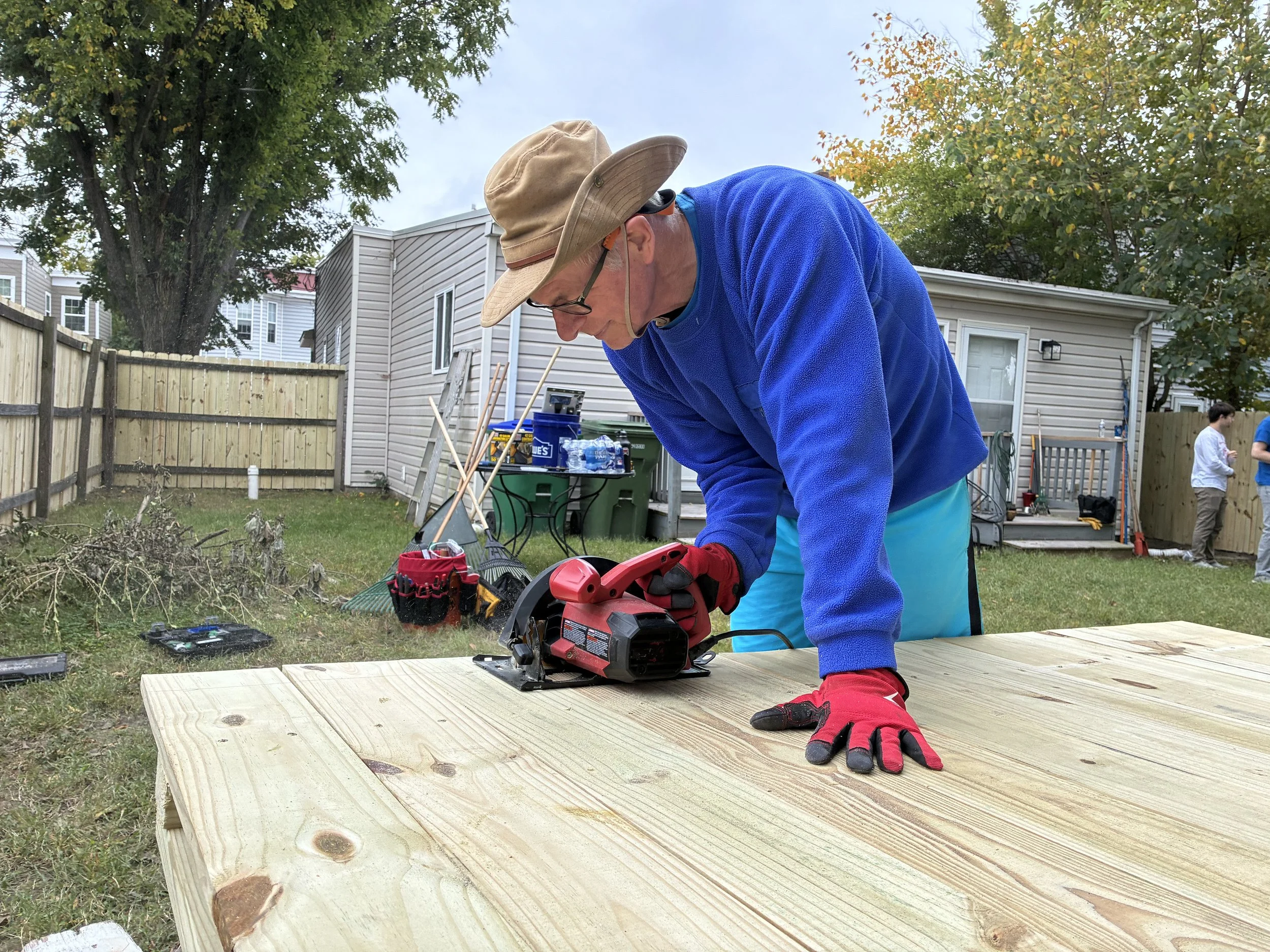
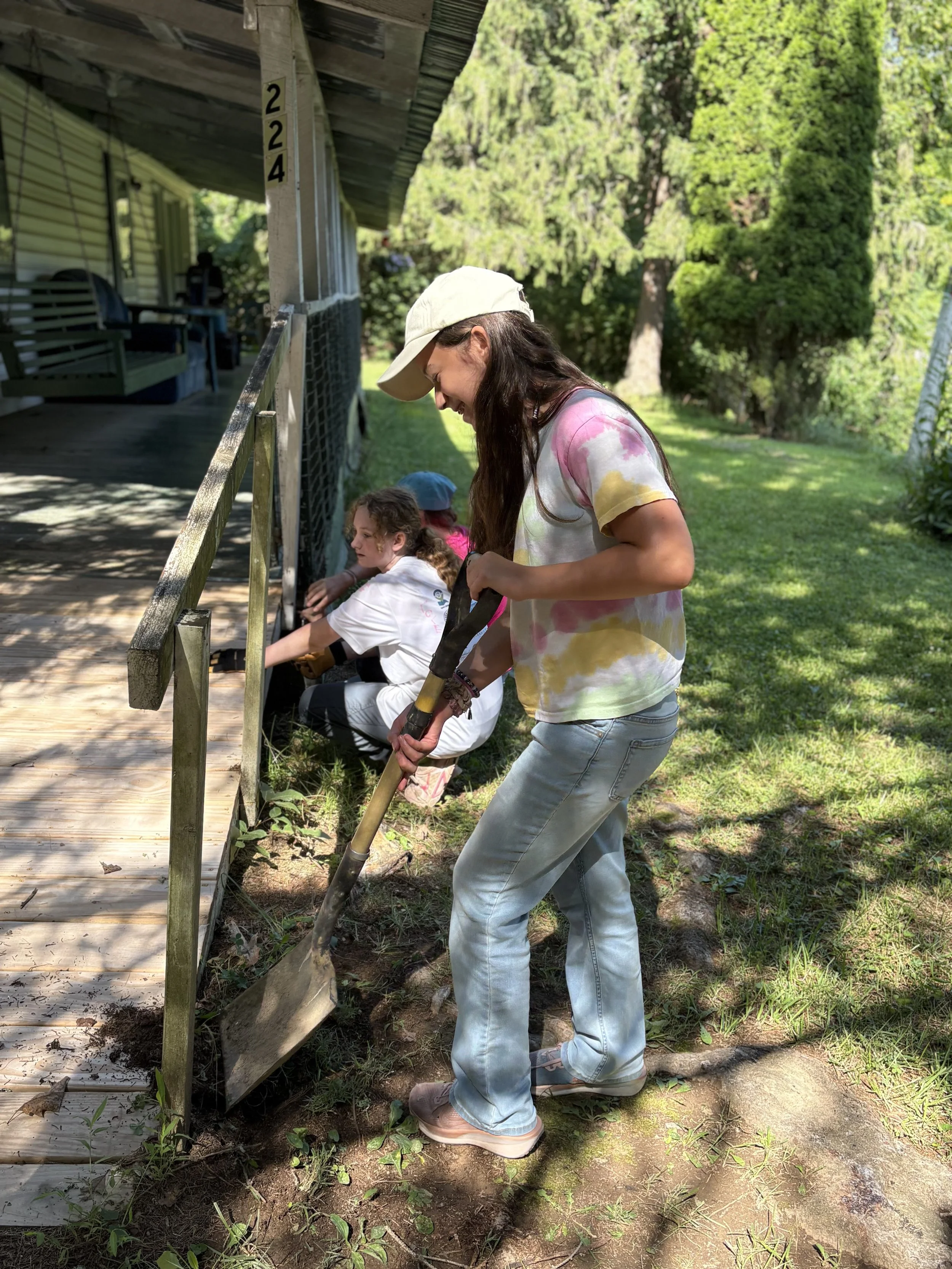
Celebrating another work day at Urban Hope with four houses benefiting from an exterior freshen up as fall begins. God was gracious and the rain held off until lunch time, allowing the groups to complete their jobs.
Celebrating another work day at Urban Hope with four houses benefiting from an exterior freshen up as fall begins. God was gracious and the rain held off until lunch time, allowing the groups to complete their jobs.
Group 1
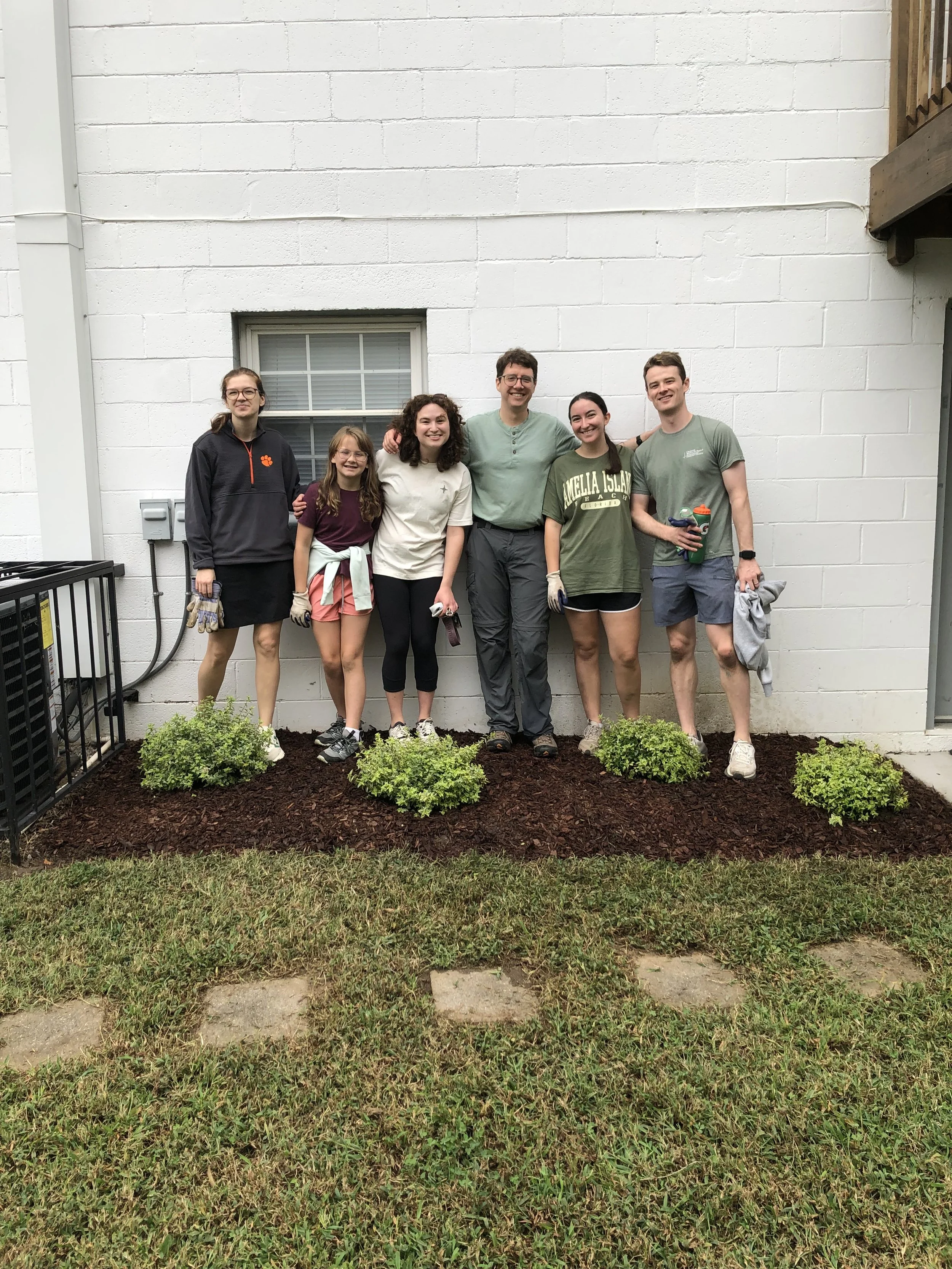
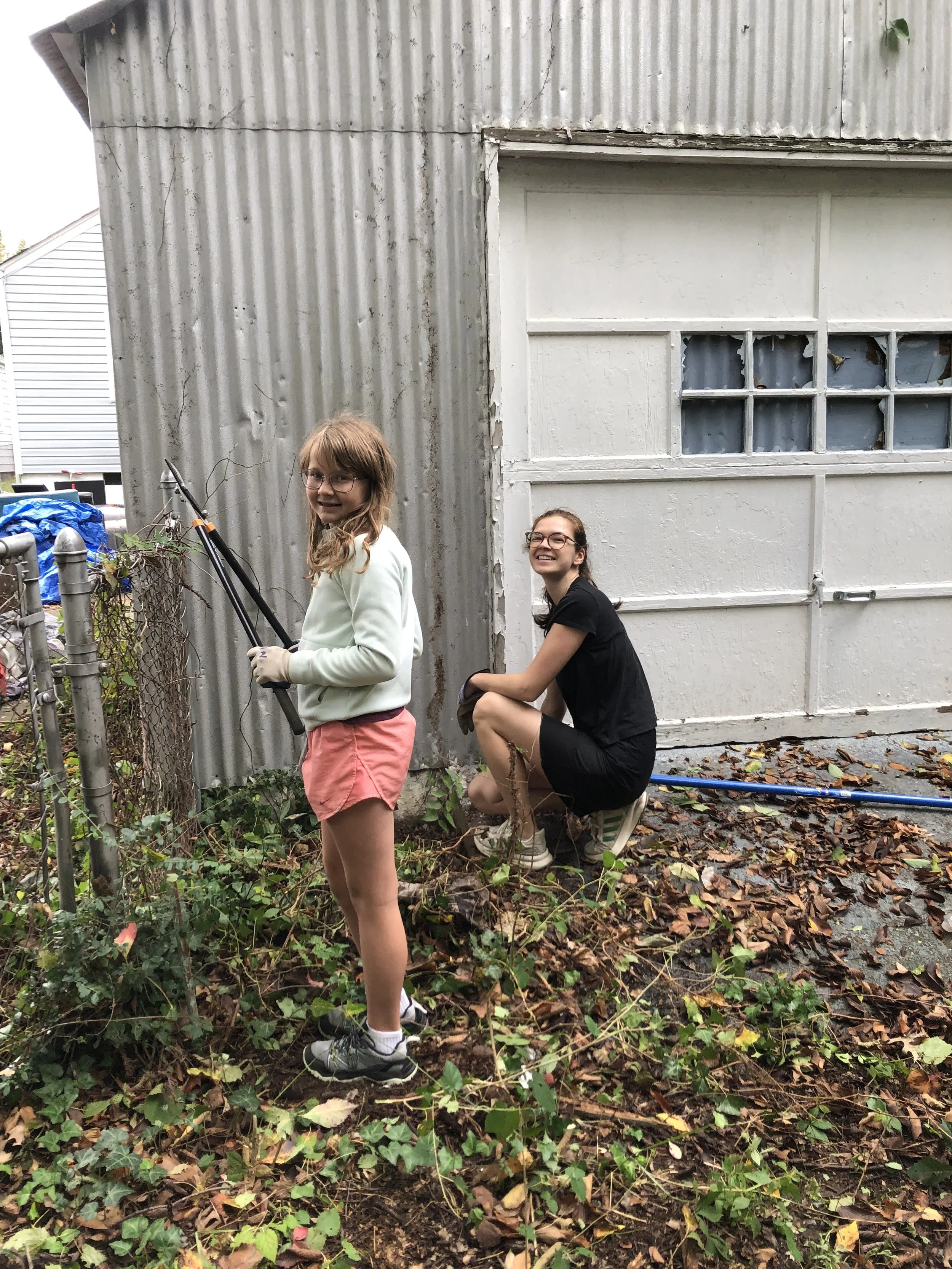
This group of volunteers completed not one, but two houses. Starting out at a quad unit right off Mosby that Redeemer members planted at last year. They re-mulched, trimmed, and planted. Then moving to house 2, they used their muscles to clear out the backyard of unused material, really freshening up the space. It was especially fun to see youth fellowship leaders work alongside their student in the effort.
Group 2
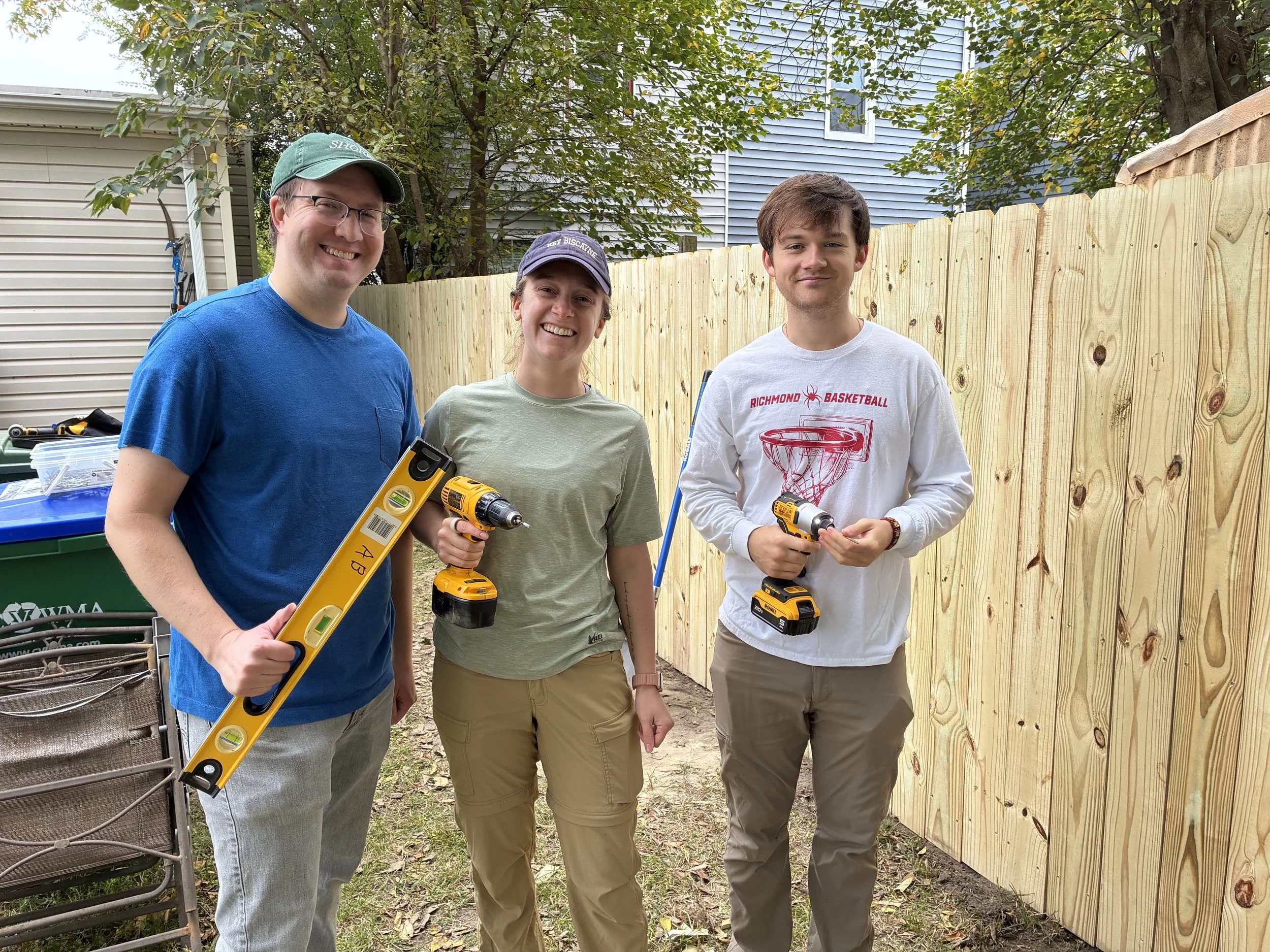
Returning to another house that has had some landscaping work in the past done by Redeemer, our largest group worked alongside Urban Hope volunteers to build a fence and an especially well-crafted gate. This work will bless two family units living in the duplex, one just recently moved in, giving them privacy and a space to gather and play. Urban Hope shared that since our work on this home the residents have spent more time outside and when asked about it one lady responded “well I have to come out here and enjoy the flowers, since it looks so nice now.” It’s a gift to offer our labor to enhance the experience of our neighbors.
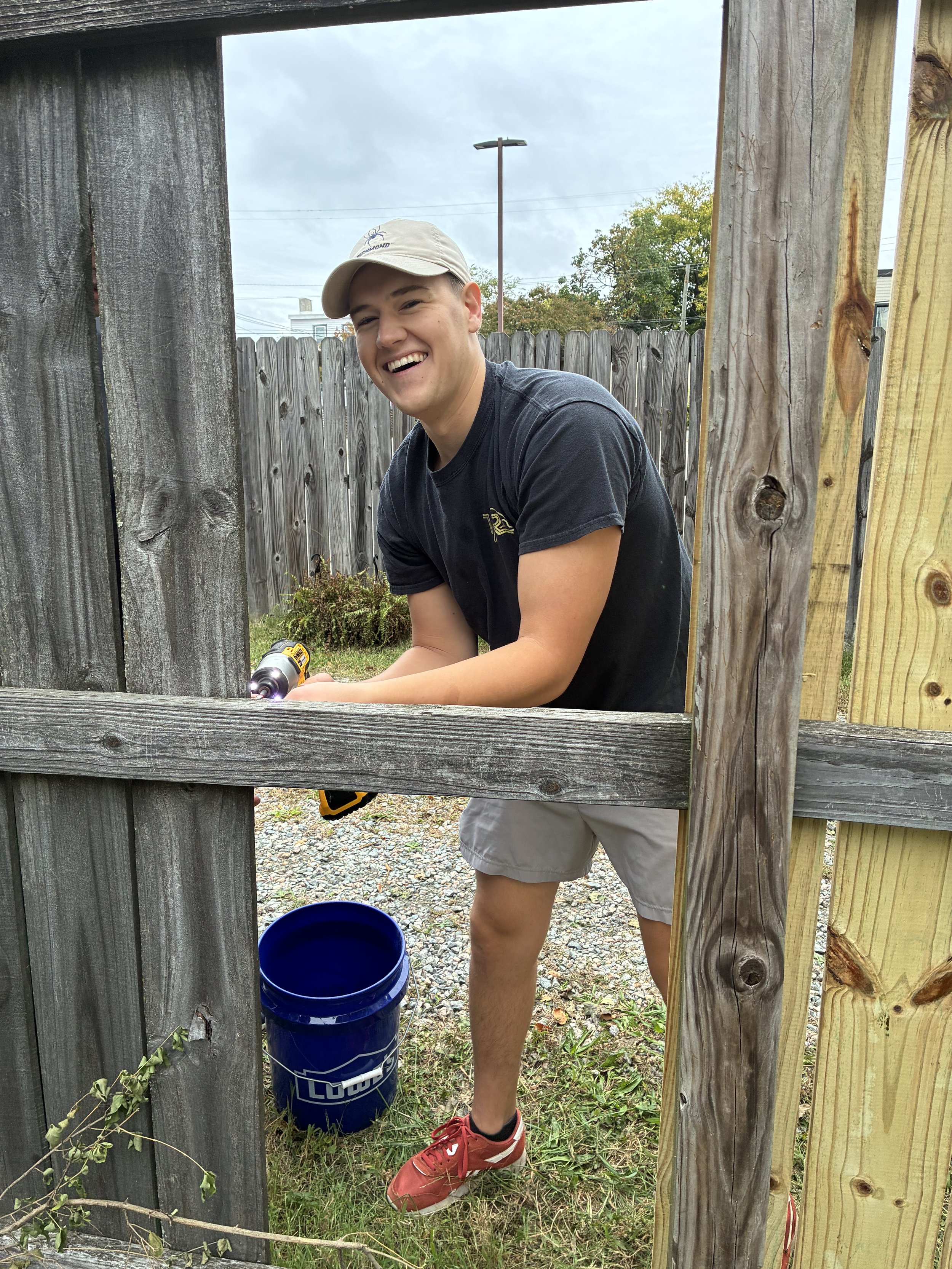
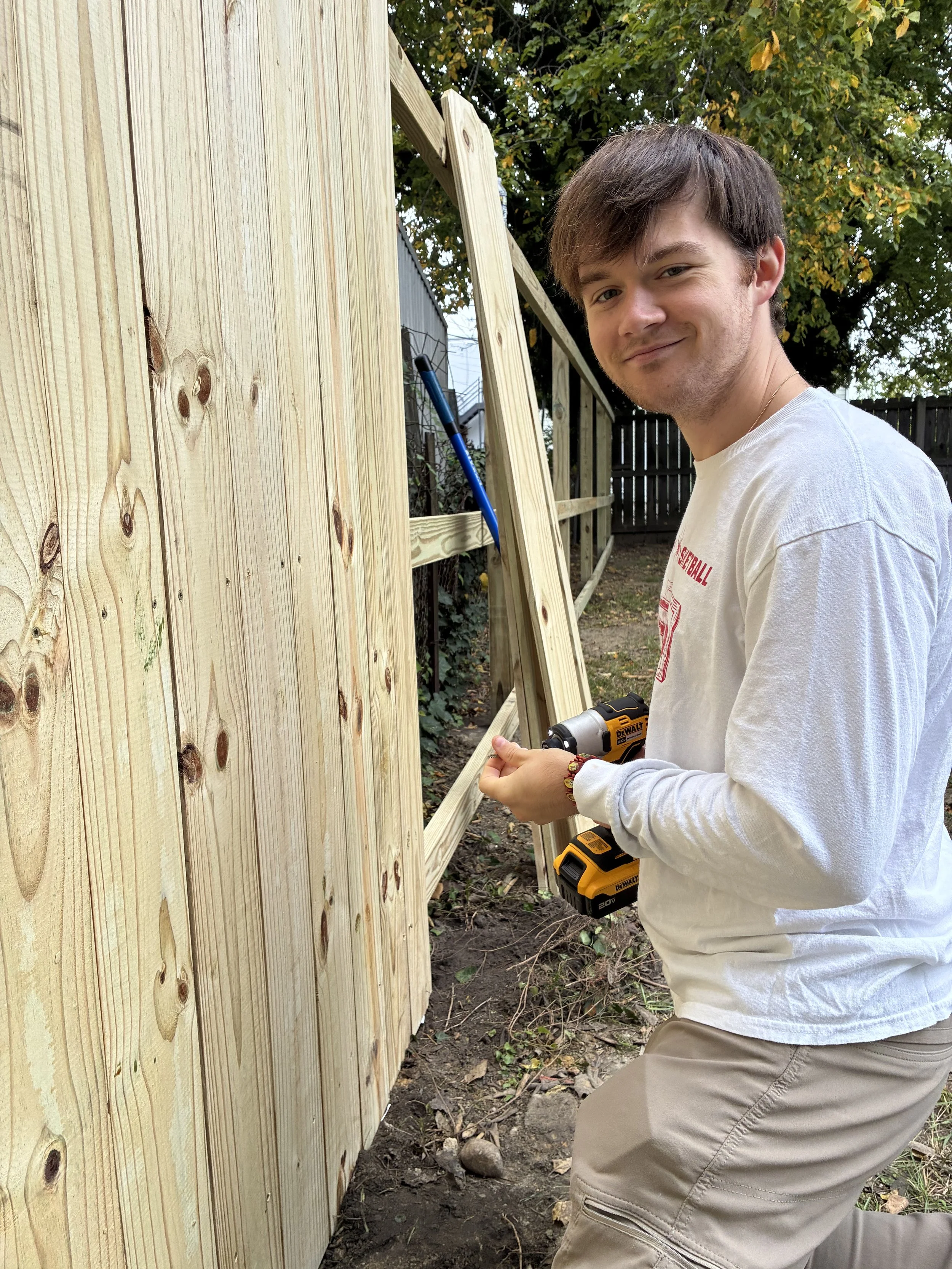
Group 3
The outcome of this group’s work was two massive piles of debris after trimming back multiple bushes, a large tree, and some nasty vines. The work brought more light into the front porch and freed up the backyard to more easily be mowed and used. The current resident was grateful for the jump start we gave her in keeping up with the property. It was sweet time spent getting to know other members of our church. You’d often overhear “what service do you go to?” That first question lead to many more, ending with “see you Sunday.”
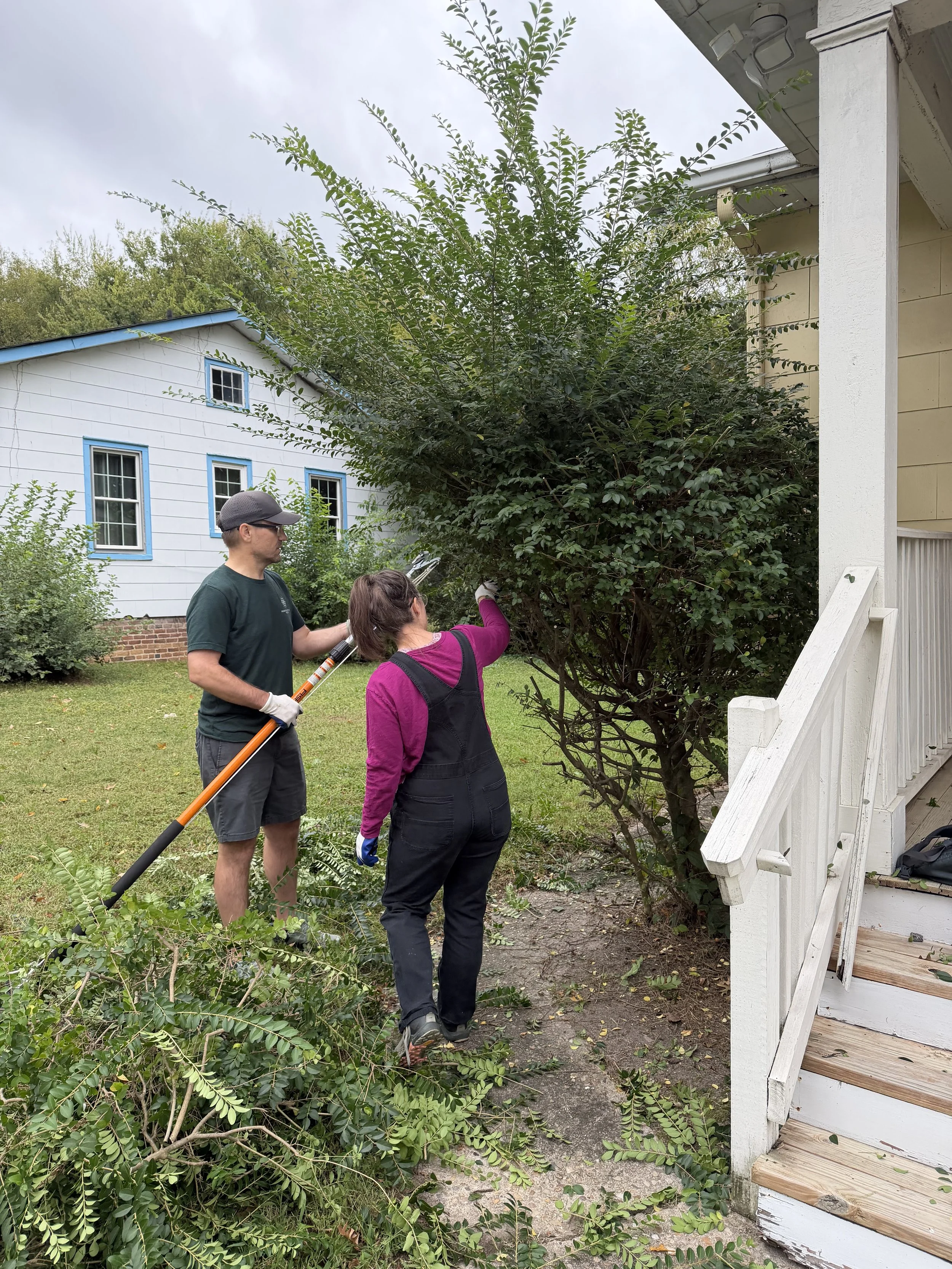
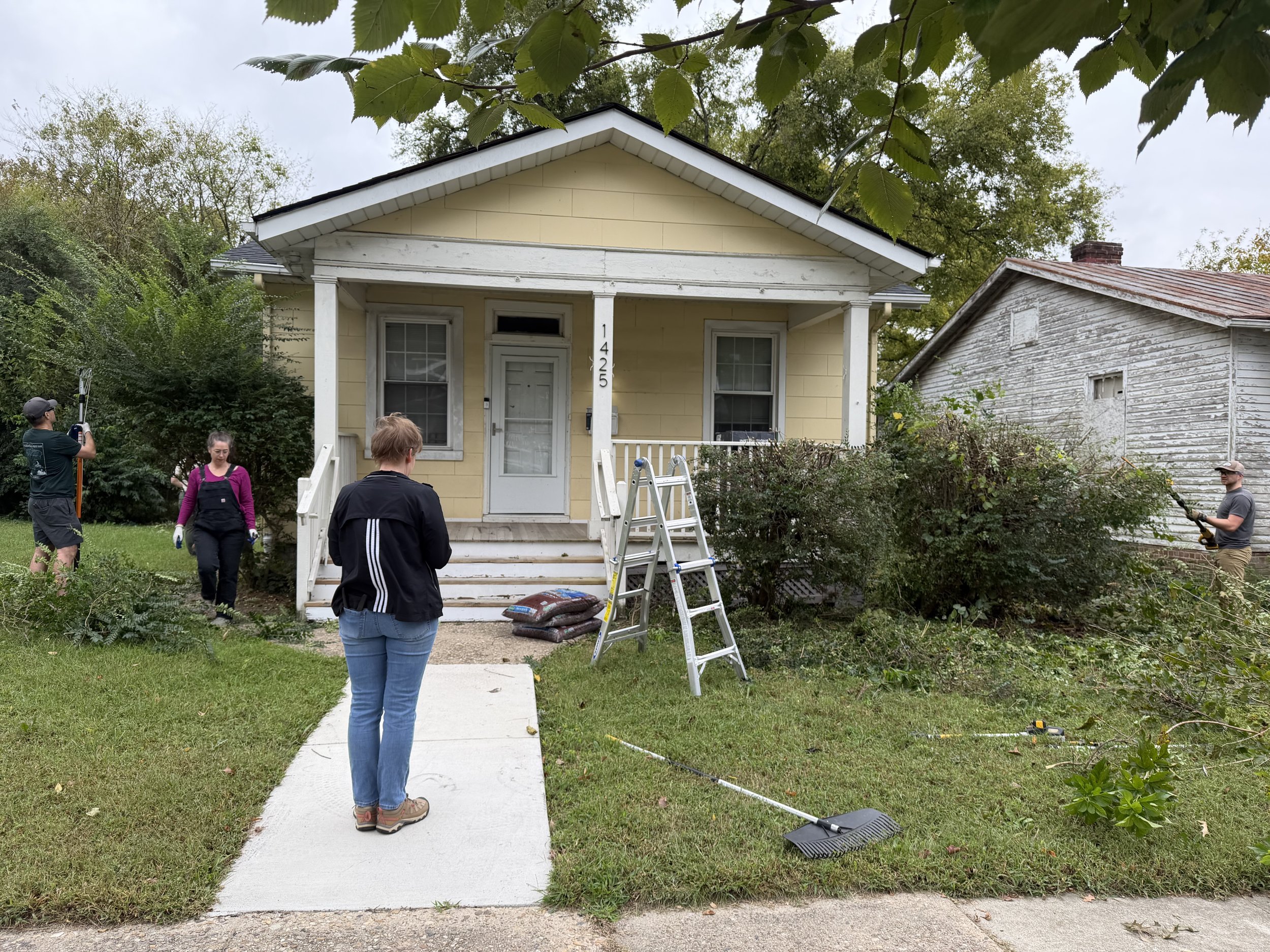
I am overwhelmed with the generosity Redeemer parishioners show in giving up their Saturday morning to do yard work at someone else’s house. What a testament to God’s good work in shaping our hearts to be other’s centered, as well as our longing to do good work. After Saturday, these houses shine brighter in this neighborhood. Urban Hope has shared that over the course of the past two years that we’ve been doing these biannual work days they’ve noticed other nearby houses cleaning up their flower beds and cutting the lawn. How cool to see that kind of effect begin with houses owned by a faith-based organization. What a blessing to use our time and effort to bring beauty to the front yard of someone’s home and support Urban Hope’s desire to be a light on a hill.

Isabelle Huggard
Justice & Mercy Liaison — Urban Hope
The Politics of Neighbor-Love
I am writing to bring an issue to your attention, provide Biblical moral clarity on it, and request your prayer (and potentially) your action.
As you may already know, there is a proposed amendment to the Virginia State Constitution that, amongst other things, enshrines the right to abortion.
Engagement with the Proposed
Amendment to the Virginia State Constitution
Dear Redeemer Family,
I am writing to bring an issue to your attention, provide Biblical moral clarity on it, and request your prayer (and potentially) your action.
As you may already know, there is a proposed amendment to the Virginia State Constitution that, amongst other things, enshrines the right to abortion.
You can read the proposed amendment here.
(While my primary concern in this letter is with Amendment Question 1, I also believe that Question 2 warrants opposition as it seeks to enshrine same-sex marriage, which is already legal, as a constitutional right. However, because the right to abortion carries with it the gravity of death, I have chosen to focus exclusively on that topic in this letter. Amendment Question 3 addresses felon voting rights and seems a fairly debatable issue. I’ve chosen not to weigh in on that one.)
Our Bishop, the Rt. Rev. Christopher Warner, has sent a letter to our diocese on this topic, which you can read here. Additionally, he has expanded on this letter in this article - the Sacredness of Life.
REDEEMER’S POLITICAL ETHOS
Now, before I go any further, I’m sure there are some of you who might feel a bit thrown that I am directly addressing a political matter. After all, Redeemer is a parish that intentionally seeks to create space within the congregation for a plurality of political convictions, under and within the moral bounds of Holy Scripture and the ethics of the church. We have been, are, and will remain a parish that is not partisan in any way, nor are we distracted by the constant churn of political outrage that saturates our current cultural moment.
An important point of clarity for all of us to recognize is that, while our parish is not partisan, there has never been such a thing as a church that is not political. The story of scripture contains frequent, if not constant, political engagement as God’s people seek to participate in the missio dei in this world. Our Lord Jesus died in a political confrontation and the Gospel we proclaim bears political implications for every one who goes by the name Christian.
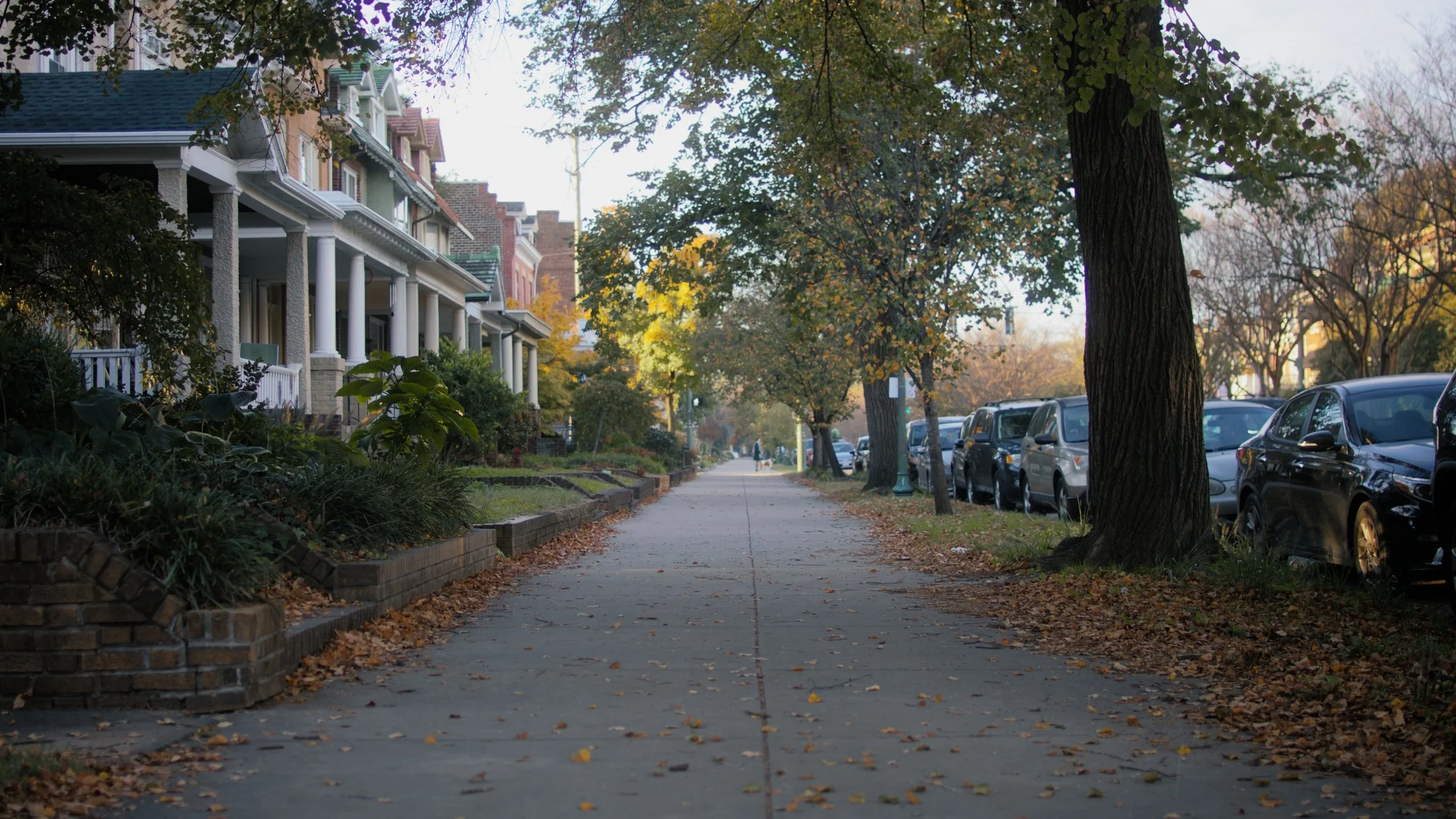
In this, we are using the word politic in it’s broadest and most comprehensive sense. Because we are not only called to love God, but also our neighbor; we are concerned with the wellbeing and health of the polis which we share with our neighbors. Our neighbors are not only adults, but children as well. Our neighbors are not only the children running and biking down our sidewalks, but also those curled inside the wombs of the women in our neighborhoods as well. These are our littlest, weakest, most vulnerable neighbors; and neighbor-love can never be completely shorn from political participation.
Though there is generous elbow-room within the parish for passionate-yet-charitable debate on many political matters that happen to fall into partisan camps, there are other political issues that transcend partisanship and provide opportunities for followers of Jesus to unite around the shared ethics of the Kingdom of God.
Examples of this are:
The preservation, nurture, and care of creation.
The equality of all human races and ethnicities who bear the Imago Dei.
The equality of dignity and value of male and female as co-bearers of the Imago Dei.
The equality and value of both rich and poor in the eyes of God.
Because these Kingdom ethics lead to political implications, there is a long history within the church of political activism where society is faced with a choice on which the Bible provides moral clarity. This particular vote in November, on this particular amendment, offers us a choice on which the Bible provides moral clarity.
A (VERY) BRIEF BIBLICAL ANTHROPOLOGY OF CHILDREN
Scripture is unequivocally consistent in celebrating the goodness of children, including children in utero. God’s mind, expressed within sacred Scripture, is clear. We, His Church, the Body of Christ in this world, must be of the same mind. It is a great evil to kill a child under any circumstances. No exceptions. There is absolutely no elbow room to be of a different mind on this issue. Abortion is a moral issue because all human beings are made in the image of God, human life is sacred, and abortion ends a human life.
For you formed my inward parts;
you knitted me together in my mother’s womb.
I praise you, for I am fearfully and wonderfully made.
Wonderful are your works;
my soul knows it very well.
My frame was not hidden from you,
when I was being made in secret,
intricately woven in the depths of the earth.
Your eyes saw my unformed substance;
in your book were written, every one of them,
the days that were formed for me,
when as yet there was none of them.
Psalm 139:13-16
If you have the time, you might also consider looking up the following verses. I won’t put the full text in this post in order to keep it reasonably short.
The very same Biblical theology that undergirds our belief that we are to labor for racial healing, mercy for the poor, and justice for the oppressed also leads us to believe that all abortion is evil and that we are to work for justice and life for children.
If you are a member at Redeemer or someone considering membership, it would be good for you to know that we seek to be absolutely clear in our Biblical anthropology (what the Bible teaches about human beings). We want to be clear that, because all human beings bear the dignity of God Himself, racism, abuse of the poor, violence against women, and yes, abortion, are evils that are to be opposed on all fronts.
Let me also be clear that we hold these beliefs based upon an unswerving loyalty to the Bible as the Word of God and not to any particular political party or tribe.
PRAYER & ACTION
Therefore, as followers of Jesus who believe and trust in the authority, truth, and goodness of the Holy Scriptures, I believe that we must:
Pray that this amendment not pass.
Vote against the amendment.
Encourage others to do the same.
CONVICTION & HUMILITY
Now, a word about how we hold our convictions. Two people can believe the same doctrine, and yet hold their convictions with very different attitudes: one prideful, the other humble. We, at Redeemer, seek to embody the latter. This means that, while we hold our Biblical convictions about a comprehensive ethic of human life, we do so acknowledging our own sinful complicity in the injustice and corruption of our society and world. In other words, we do not keep our distance, imagining ourselves standing on some sort of culturally neutral ground, and pridefully condemn the wickedness of others while proclaiming our own righteousness. Rather, we admit and confess that we live out our days embedded and intertwined with this sinful world.
None of us is innocent. No one. Not one.
All of us have, pardon the graphic metaphor, blood on our hands. I know that I am not only guilty for wrong things I have done - for ways I have actively (knowingly or unknowingly) participated in injustice (I suspect the cotton T-shirt on my back as I write this came from a sweatshop in Vietnam… yikes). But I am also guilty for all the good things that I have not done! The help I did not give. The love I did not extend. The refuge I did not provide.
Therefore, my conviction about the Bible teaching a comprehensive ethic of human life must also be held along with my convictions about my own sin and need for the grace and mercy of Jesus. I am not better than a woman who chooses to have an abortion or superior to the doctor who performs the violent procedure.
As the Apostle Paul writes, “The saying is trustworthy and deserving of full acceptance, Christ Jesus came into the world to save sinners, of whom I am the foremost.” 1 Timothy 1:15
When you and I truly know the depths of our own brokenness and sin, we will lose any and all feelings of superiority towards others. This will transform the attitude with which we hold our convictions about abortion. This will not weaken our convictions, not at all! If anything, humility should make our convictions all the stronger and more resolute. This is because they will be founded, not upon personal feelings of moral superiority, but upon the Word of God in the Bible and the Word made Flesh in Christ Jesus. This is a far firmer foundation.
Additionally, we must hold our conviction with humility because we are surrounded by people, some within our parish, who have participated in abortions in the past. We share our Lord’s desire that any who have, knowingly or unknowingly, participated in the destruction of human life - would encounter the love of Jesus through the church. We desire for all to repent, receive forgiveness, be healed and made whole by the sanctifying mercy of the Holy Spirit. The good news of the Gospel is for sinners and no one is beyond hope of redemption.
A note: If you are someone who has participated in an abortion in the past, please know that in our Parish you will not be condemned, but rather welcomed, loved, forgiven, and offered the full Grace of our Lord Jesus. Though it may sound like a terrible risk, you are invited to confess this to a priest so that you can hear, with your own ears, the good news of the Gospel and the absolution that is offered and made possible by the sacrifice of Jesus.
COMPASSION & NEIGHBOR-LOVE
As we move forward to greet whatever future the Lord has in store for us, we must be prepared to compassionately care for mothers who find themselves unexpectedly pregnant and do not feel they have the strength to navigate a pregnancy, nor have the desire or the resources to raise a child. This kind of compassionate care may take many forms. It certainly includes, but is not limited to:
Prayer.
Giving financially to and volunteering at crisis pregnancy centers.
Being trained and serving as Foster parents.
Adopting a child.
Supporting couples and families who serve as foster parents or adopt children.
Redeemer Family, thank you for reading this.
I love you dearly.
I hope that our opportunities to shelter, protect, feed, cloth, care-for, and love our neighbor’s children extend far beyond the voting polls.
In the Father’s love,

Why We Need Parent Catechesis
When I became a mother in my early twenties, I was in a panic. I knew very little about caring for small children and even less about raising them into godly adulthood. I can look back now with over a decade’s perspective and say with confidence that the smartest thing my husband and I did then was “copy homework,” as we called it, from other parents in our church and extended family to figure out what to do. I turned to the parents in my small group and other family members to learn how to swaddle, to wean, and to know what products to buy. I would call my sister-in-law to figure out how to sleep train, I would attend local mom groups to learn how to use a baby sling, and I would have long, rambling phone conversations with my older sister on the woes of raising a toddler boy. Exhausted and intimidated, we clung to the life raft of community in order to survive those early years in particular. But what was motivated by survival became the soil for rich relationships that would sustain us beyond the diaper years.
When I became a mother in my early twenties, I was in a panic. I knew very little about caring for small children and even less about raising them into godly adulthood. I can look back now with over a decade’s perspective and say with confidence that the smartest thing my husband and I did then was “copy homework,” as we called it, from other parents in our church and extended family to figure out what to do. I turned to the parents in my small group and other family members to learn how to swaddle, to wean, and to know what products to buy. I would call my sister-in-law to figure out how to sleep train, I would attend local mom groups to learn how to use a baby sling, and I would have long, rambling phone conversations with my older sister on the woes of raising a toddler boy. Exhausted and intimidated, we clung to the life raft of community in order to survive those early years in particular. But what was motivated by survival became the soil for rich relationships that would sustain us beyond the diaper years.
As parents—as humans—we need each other. We have a lot to learn from the community in which we live our daily lives and in which we are raising our children. We have the opportunity to seek teachers in our local parishes to lead us, those who know the particular context of what it means to raise a child in our city and in our current social milieu. We have the chance to seek out experts from afar and study their work together, side by side, and translate their knowledge into our own context. We have the privilege to learn from each other and to be known by each other as we all ask the same questions and grow along side one another right here at Redeemer.
In a technologically advanced age where you can find an expert on any niche topic you desire with a few clicks on any social media page, we often ignore what is offered by living in committed, sustained Christian community. Instead of running to the soothing voice of a content creator with tidy, short-form video solutions to our deepest parenting fears and questions, we can find a family a few years further along the journey who knows us deeply, can speak words of wisdom, and pray for us by name. This takes a level of vulnerability that a screen and a thousand miles of separation doesn’t require, but it also offers a depth of relationship and spiritual connection that can sustain us beyond our immediate needs. There are certainly moments for seeking out experts in a field of study, but we also have so much to learn from the stories, cautionary or aspirational, from the people sitting beside us in the pews.
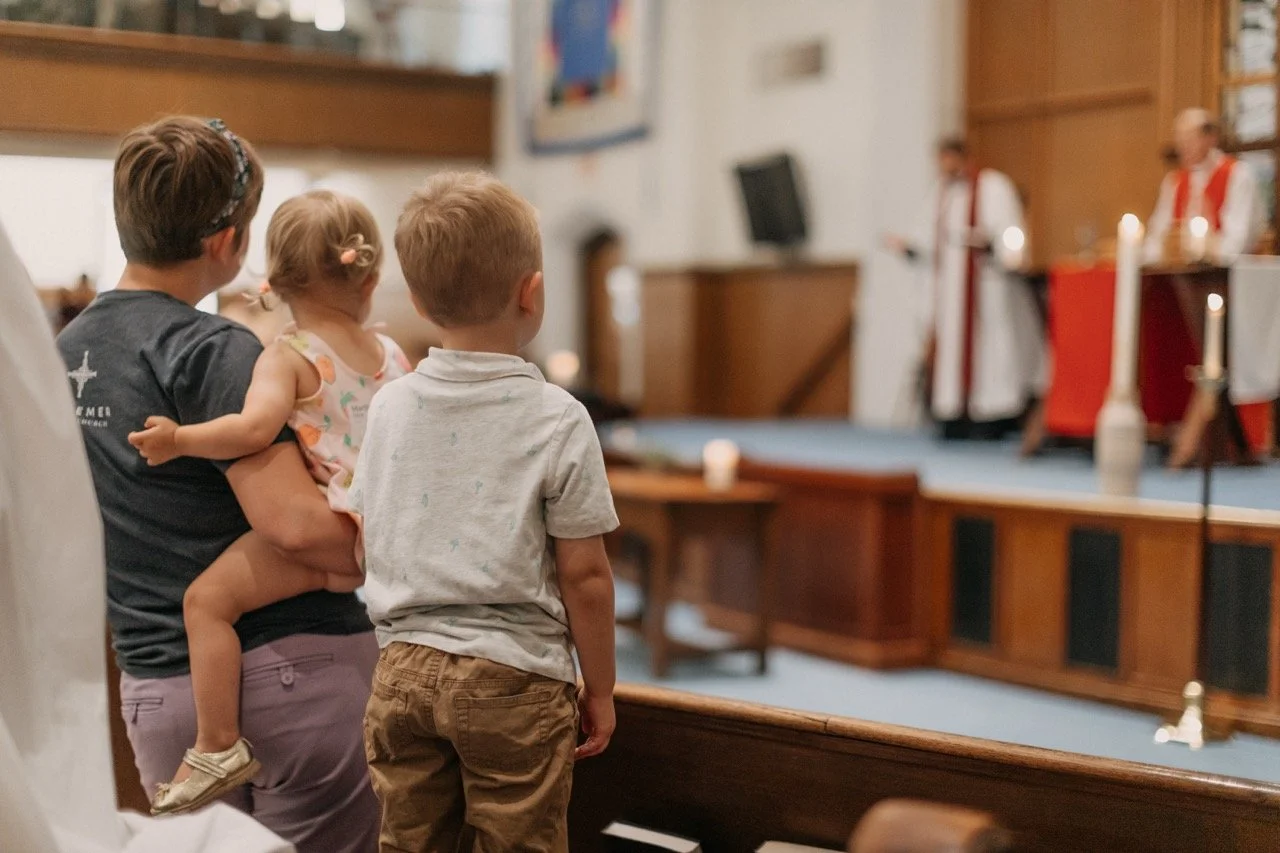
Join me as a student of our own community here at Redeemer as we begin parent catechesis courses this fall! (More details about each class below.) Redeemer offers adult catechesis each quarter to help our parish bear the missional presence of Christ into our city, and that includes our own homes and families. There are wise leaders among us whom I have had the privilege of learning from and now want to provide the opportunity for other parents to learn from as well. Let’s join in the rich biblical tradition of learning in our own community (Deut. 6) for the glory of the Lord. We cannot do this noble and exhausting work of parenthood alone, so let’s come together to encourage one another and hear from those in our congregation and our city who have wisdom to share.
In Christ,

Casey Cisco
Director of Redeemer Kids
Fall Parent Catechesis
Parenting with the End in View | October 4
I approached Jim and Nancy earlier this year to ask if they would be a voice of wisdom for younger families in our parish as we begin these catechesis courses. I have known the Reynolds for 7 years and have had the privilege of watching them serve our communities in many ways (not the least of which was as a children’s director: Nancy led this ministry before I started in 2020!). They have 3 grown children and welcomed their 2nd grandbaby this summer! They spoke of a desire to offer hope and perspective to parents of little children who are feeling the weight of anxiety and worldly pressure to “produce” a good person. I am so excited to get to sit under their teaching alongside you all and to meet others in our parish who are asking the same questions and seeking wisdom from more experienced parents in our community.
Redemptive Imagination in the Digital World | October 28
As a parent of a preteen child, the question of how to introduce/monitor/not lose my mind over technology creeps into my daily life. How can we engage our ever-growing technological world as parents and believers without giving in to the fear of or putting too much hope in the digital world? Dr. Charlie Cisco spoke on a podcast recently around the topic of guiding students to be wise stewards of AI as those who are seeking to honor the Lord with their work now and in their future vocations, and I asked him to lead a parent catechesis for the families in our parish who are asking these same questions on behalf of their children. Our hope is that we can ask these hard and relevant questions together and can return to the Scriptures as a base of truth in a rapidly developing world.
Raising Men of Virtue | November 5
Men’s Fellowship is partnering with our catechesis team to welcome author and speaker Zachary Wagner to Redeemer for a weekend of teaching! He will speak to parents of boys on the subject of raising them into virtuous men, then will follow by speaking at the men’s retreat on being men of virtue. You can check out his work more in depth here.
Presence & Practice | November 15
As a long-time fan of and participant in the work of the local counseling group the Barnabas Center, I reached out to ask what it would look like to bring their good work of studying redemptive relationships to a parenting course in our parish. I was so encouraged by their heart for our city and for seeing the church thrive through healthy relationships, with each other and with our Creator. I am so excited to welcome Kim Greene and Severin Yaccarino of the Barnabas Center team to speak to our parish about nurturing strong, healthy relationships with our children through different ages and stages, and to benefit from their extensive clinical experience.

Women’s & Men’s Fellowship: Finding Belonging This Fall
As Hebrews 10:24–25 reminds us: "And let us consider how to stir up one another to love and good works, not neglecting to meet together as is the habit of some, but encouraging one another, and all the more as you see the Day drawing near."
Belonging is the core practice of missional presence for both Men’s and Women’s Fellowship. While our shared vision is the same, the way each group lives it out looks a little different.
As Hebrews 10:24–25 reminds us: "And let us consider how to stir up one another to love and good works, not neglecting to meet together as is the habit of some, but encouraging one another, and all the more as you see the Day drawing near."
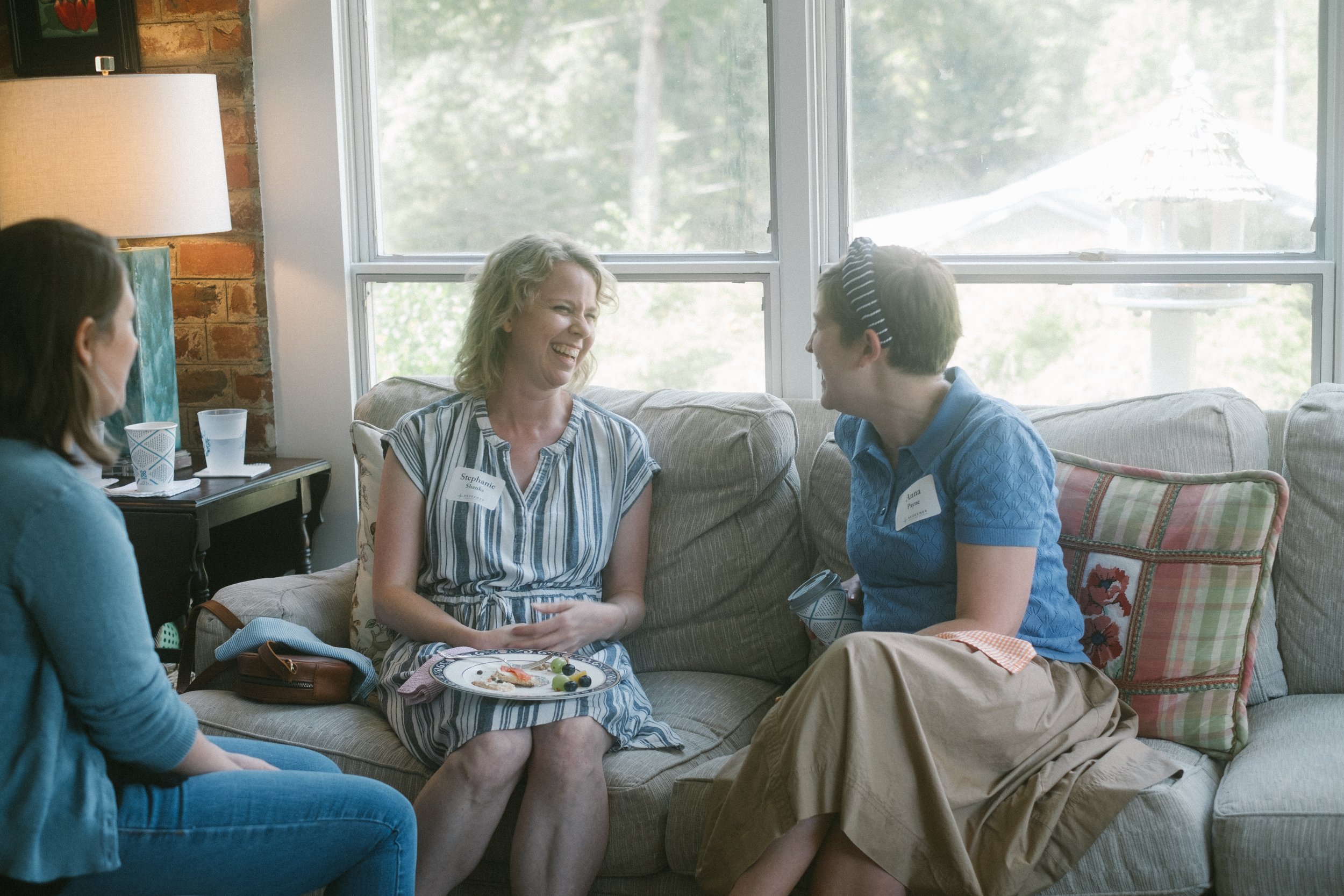
Belonging is the core practice of missional presence for both Men’s and Women’s Fellowship. While our shared vision is the same, the way each group lives it out looks a little different.
Women's Fellowship cultivates belonging by creating space to be present—to God and to one another—through fellowship, prayer, and friendship. Our hope is to see women take the first step by attending women's events, then grow to invite others into that same experience, all while welcoming and connecting those who haven't yet felt that sense of belonging.
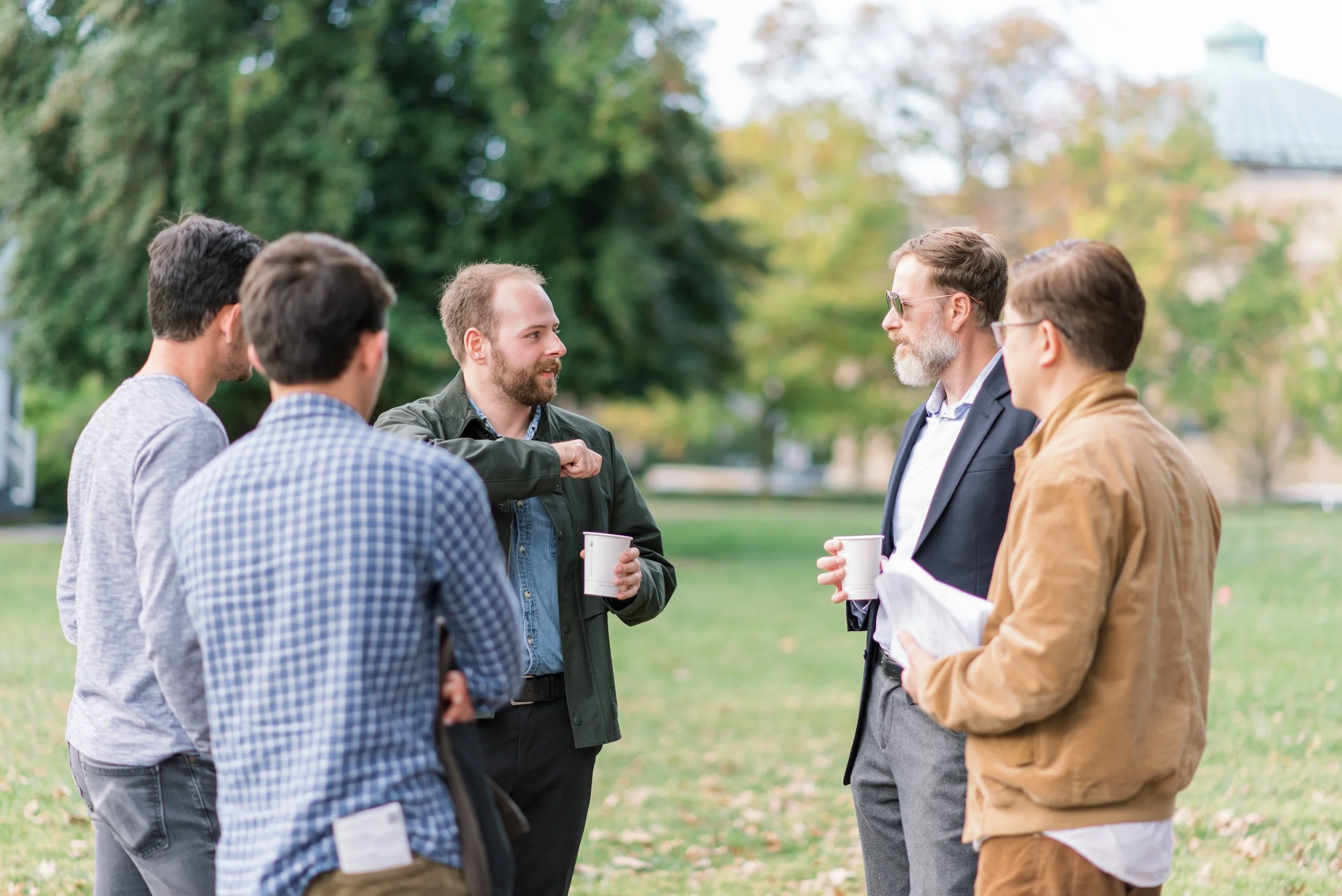
Men's Fellowship shares a similar heart: to see men at Redeemer live open-heartedly with one another, building trust and friendship through shared experience. More specifically, we long to see men on the fringes of our parish find belonging, men within our parish being formed into the image of Christ, and men throughout our parish stepping out to serve their neighbors.
This fall, you are invited to find belonging through our Women’s and Men’s Fellowship events.
Women are invited to gather for our upcoming Fellowship Brunch on Saturday, September 19, and join a Still Waters morning retreat. Men are invited to a Fall Cookout on Friday, September 11, and an All Saints Chili Cook-Off in November.
Whether you’ve been connected for a while or looking for where you fit, we hope you’ll join us and consider inviting others who may be looking for a place to belong, too. As we gather this fall we hope these opportunities provide a chance for the men and women in our parish to make new connections, deepen old friendships, and grow together in their relationships with Christ.
The Rev. Tee Feyrer, Men’s Fellowship Coordinator
& Lisa Yancey, Women’s Fellowship Coordinator
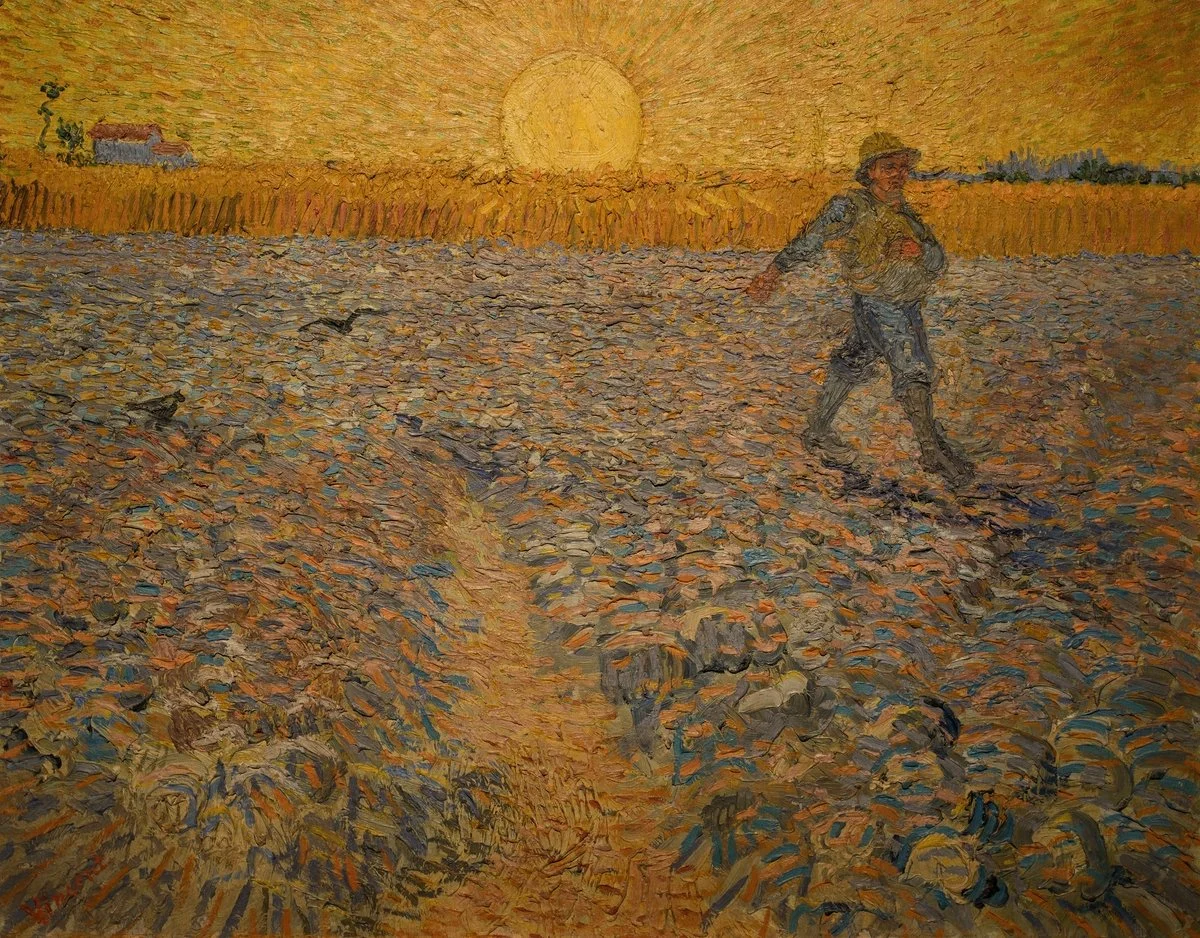
Stewards of the King
As we turn our attention towards the Fall, I want to give you a sense of what will be thinking, discussing, and praying about as a church family. As you likely know, our parish is ramping up a capital campaign to raise funds to renovate 1801 Park Ave. to be a future home and mission base for our congregation.
Redeemer Family,
I hope your summer has been both fun and restful! I hope you’ve played in an ocean, lake, or river. I hope you’ve hiked a mountain or two. I hope you’ve gone to bed without setting an alarm and slept until your body was fully refreshed. I hope you’ve grilled a burger and sipped a cold beverage on a hot afternoon. I hope you’ve read a book or ten. I hope you lingered over a meal with friends and watched kids chase fireflies as the summer daylight faded.
If your summer has been glorious, thanks be to God! And if your summer has not included anything like these, then… well… it’s almost over and there’s hope for the fall!
As we turn our attention towards the fall, I want to give you a sense of what will be thinking, discussing, and praying about as a church family. As you likely know, our parish is ramping up a capital campaign to raise funds to renovate 1801 Park Ave. to be a future home and mission base for our congregation. If you missed some of those announcements, you can catch up here.
In order to lay a good and healthy foundation for this work, there are a number of important things for us to do together.
First, we need to pray. We must continually ask the Holy Spirit of the risen Christ to lead us and guide us every step of the way.
Second, we need to be changed by God’s Word. We need to go to the Holy Scriptures to deeply understand how our relationship to wealth and resources can honor God and participate in His Kingdom.
Third, we need to dream with each other and with the Lord. As God’s children, we have the privilege of imagining what God might do in us and through us in the years to come.
You’ll hear more about all of these in the weeks ahead, but for now, here is the plan for the second part: our need to be changed by God’s Word.
I have drafted a sermon series for the first half of the fall semester that is designed to give us sure and certain grounding on a Biblical theology of wealth and generosity. Now, of course we all recognize that money is generally the most private of matters in our society. As one author put it, “What’s in your wallet is more private than who’s in your bedroom.” And yet, despite our desire for privacy, Jesus talks about money more than almost any other topic! In fact, throughout the entirety of scripture, wealth is consistently a theme that nearly all Biblical authors name as vital to a faithful life of obedience to God. What’s more, as I mentioned in a sermon during the season of Lent, our money is one of the most powerful resources we have at our disposal to affect our own spiritual formation.
And so, in the weeks ahead, here’s what you can anticipate:
STEWARDS OF THE KING
8/23 —All Wealth is From God (1 Chronicles 29:10-14)
8/30 —Jesus Transforms Our Relationship to Wealth (Luke 19:1-10)
9/6 —The Habit of Tithing (Leviticus 27:30)
9/13 —Your Work, Your Wealth, & the Poor (Ephesians 4:28)
9/20 —The Pleasures of Contentment (1 Timothy 6:6-9)
9/27 —A Free & Generous Heart (Exodus 35:4-29)
10/4 —In All Things, Gratitude (James 1:17-18 )
Along the way, I will share plenty of absurd and ridiculous personal stories about my own mistakes when it comes to money and what God has, in His kindness, taught me along the way. My hope that is that, far from being a burdensome series that weighs us down, this can be a cheerful, open, honest conversation where we all lean in and grow together as a church family.
Redeemer, I love you all and am grateful to share a church community with such excellent people.
In the Father’s love,
Youth Fellowship: The Joy of Living on Mission
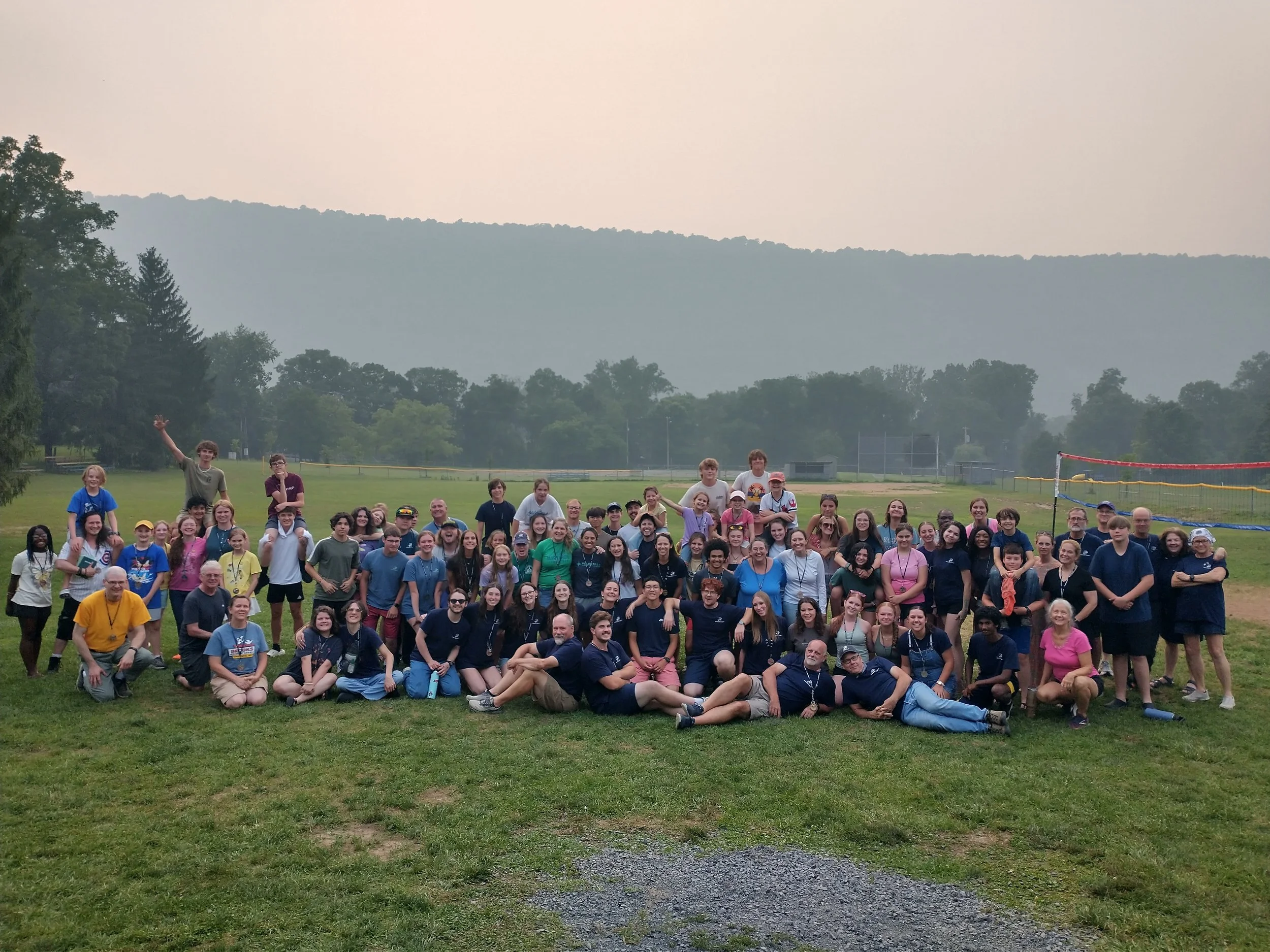
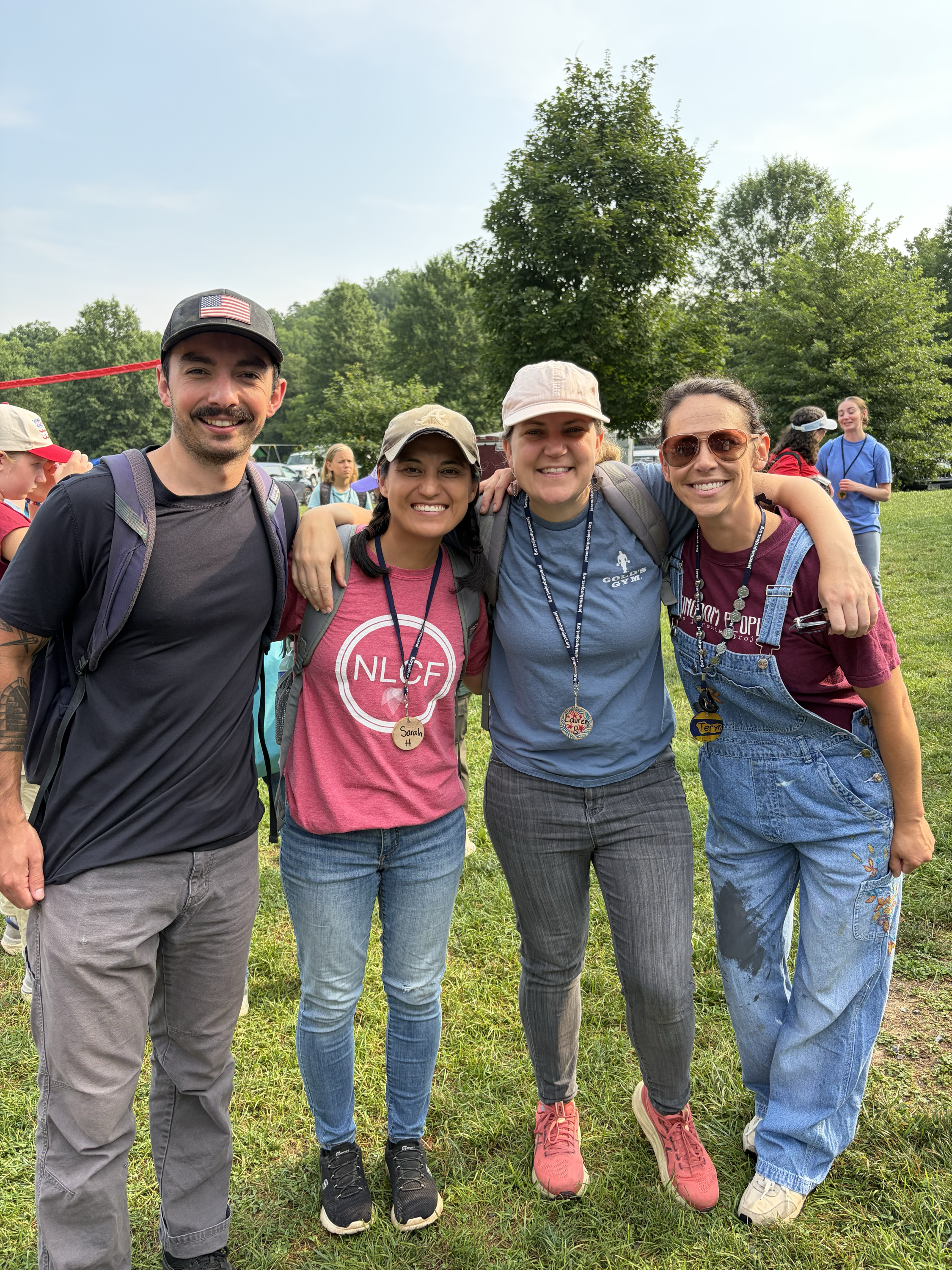
The Sunday after returning from Jeremiah Project (JP), a number of people asked me how it went. My answer was that though I had so many potential reasons to complain — It was so hot outside! No A/C in the bunks! The work was hard! — I actually couldn’t stop gushing about what a great week it was. And if you’ve ever gone away on a mission trip, I bet you know the feeling. I went on mission trips in high school and college, and they were always some of the most fun and memorable times in my life. JP was the same. You don’t look back and think about how hard the work was or how uncomfortable the conditions were, you think about the bonds that were formed when a group of people decided to come together and commit to a specific purpose: to live on mission.
The Sunday after returning from Jeremiah Project (JP), a number of people asked me how it went. My answer was that though I had so many potential reasons to complain — It was so hot outside! No A/C in the bunks! The work was hard! — I actually couldn’t stop gushing about what a great week it was. And if you’ve ever gone away on a mission trip, I bet you know the feeling. I went on mission trips in high school and college, and they were always some of the most fun and memorable times in my life. JP was the same. You don’t look back and think about how hard the work was or how uncomfortable the conditions were, you think about the bonds that were formed when a group of people decided to come together and commit to a specific purpose: to live on mission.
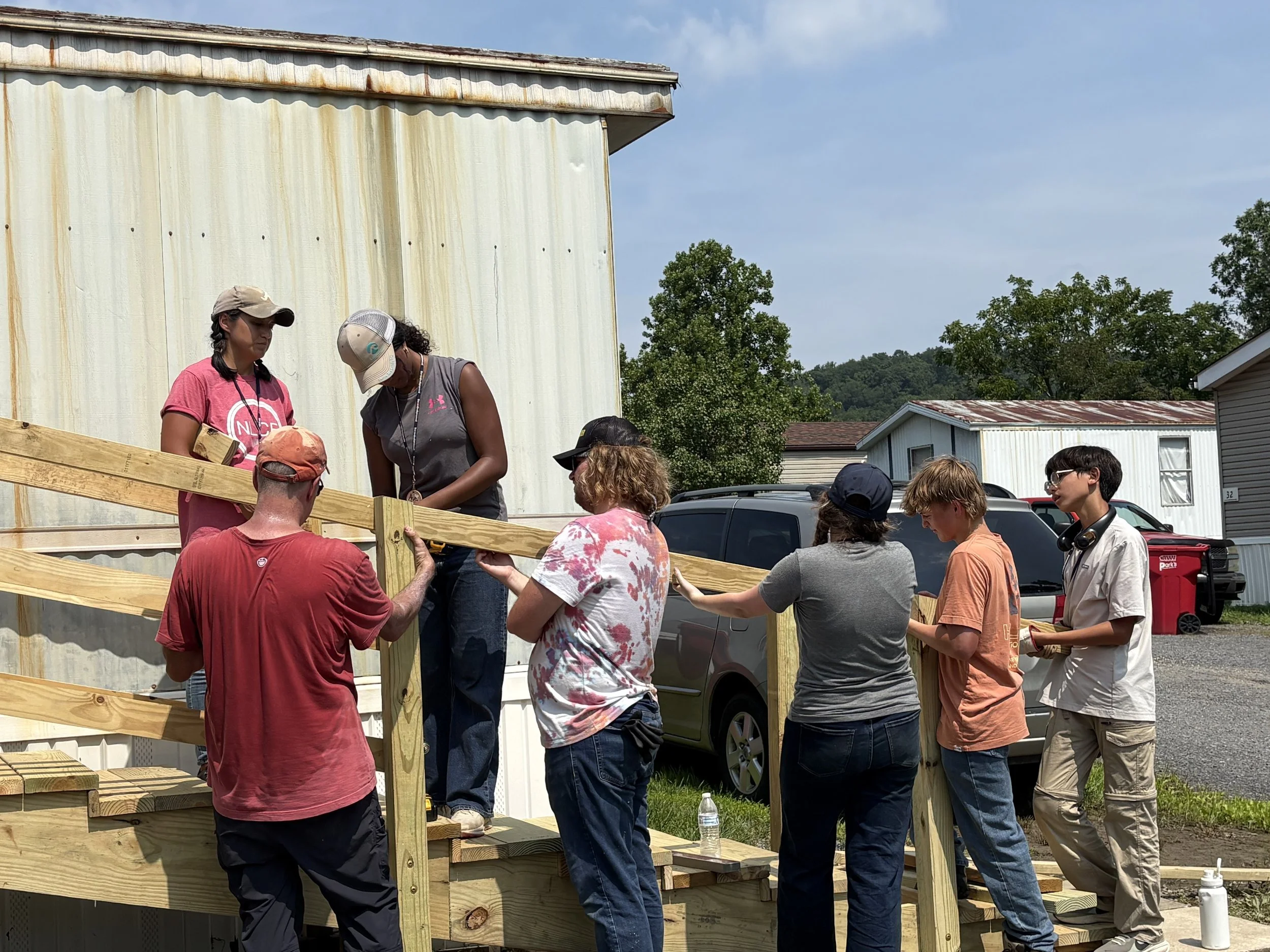
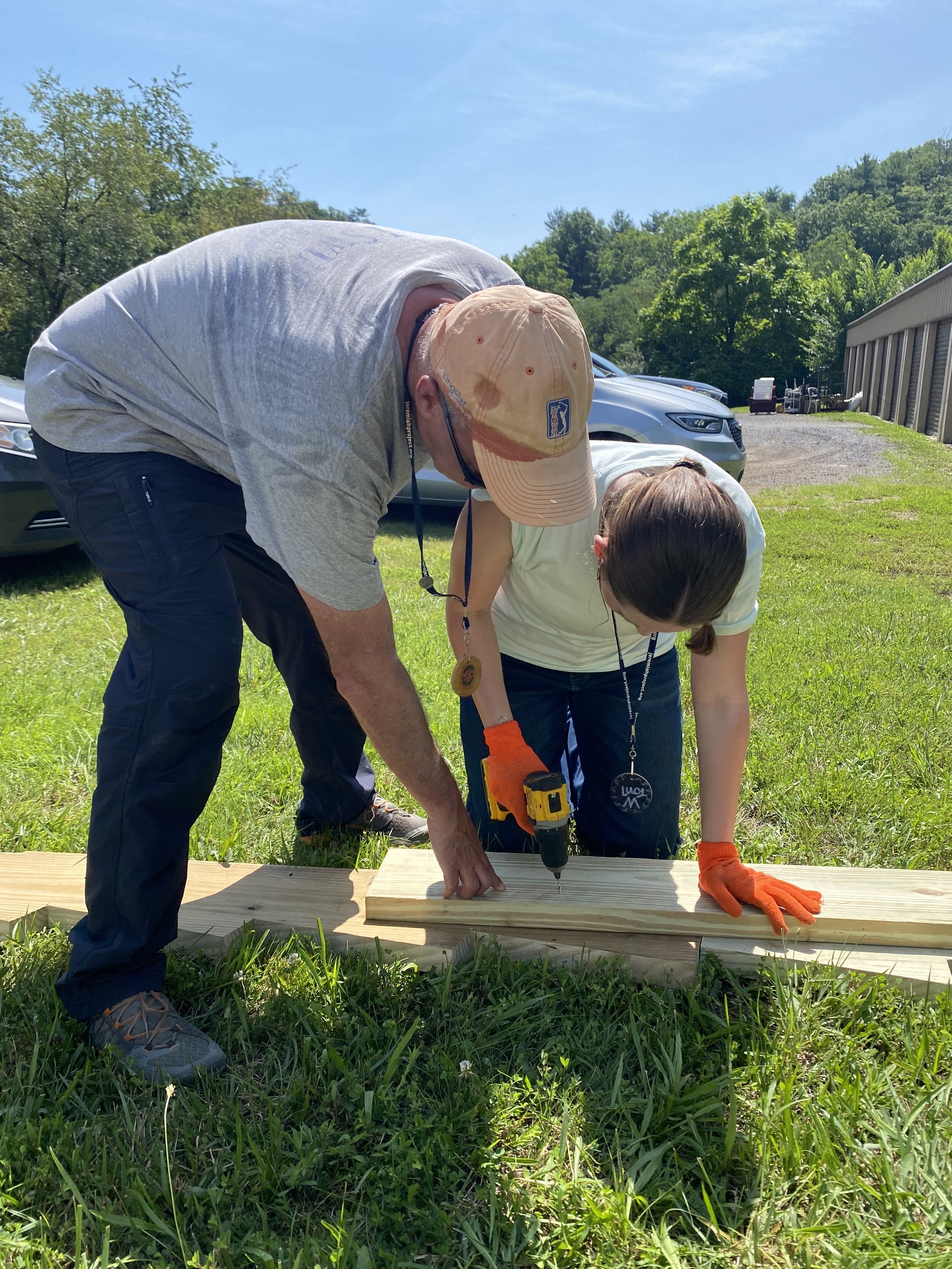
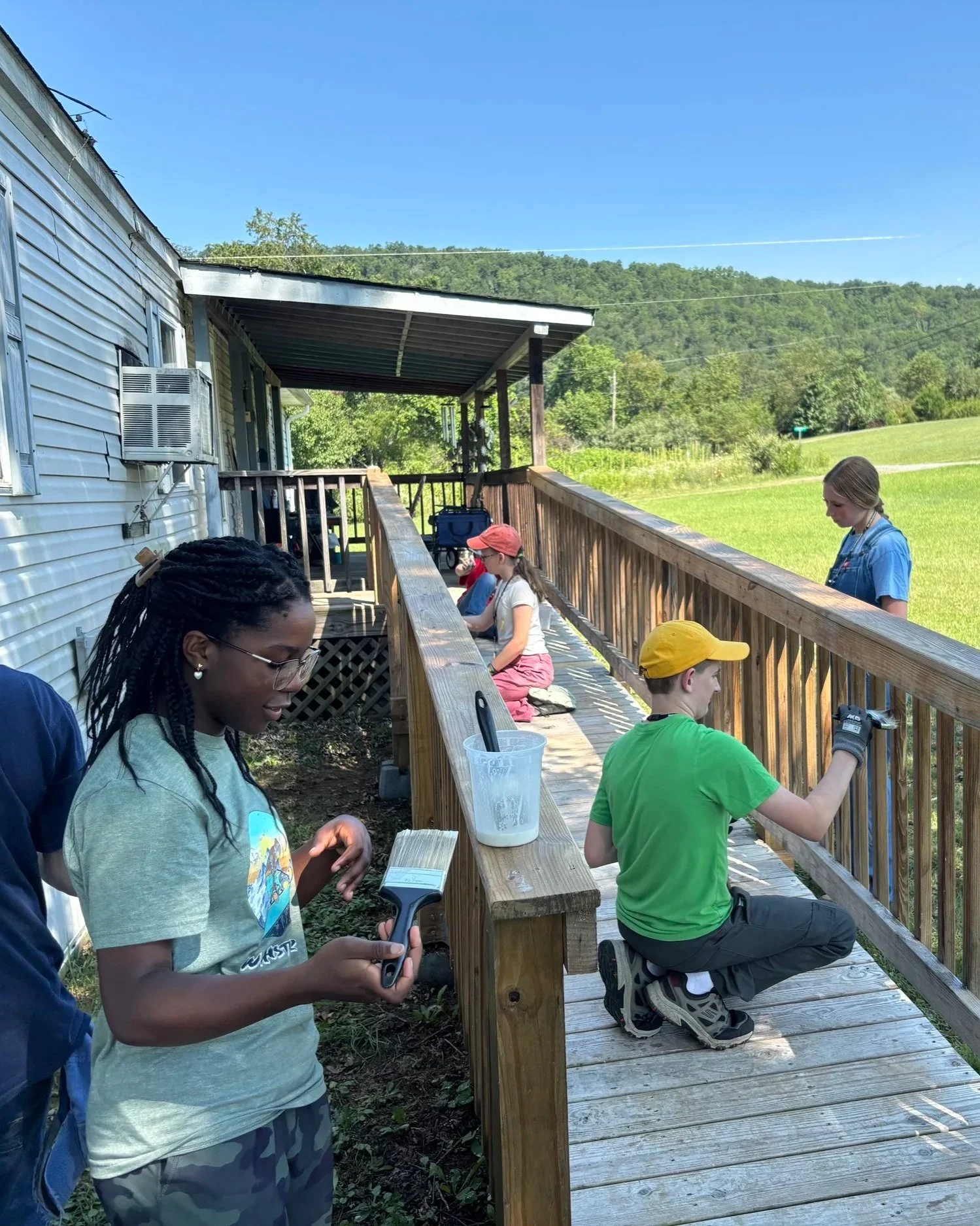
I worked with some of our high school girls and we spent most of our week building a staircase for a homeowner. On Thursday, the homeowners that were served during the week by the various work teams were invited to our camp to be served dinner. The homeowners also had an opportunity to share how they were impacted by JP. Our homeowner came to dinner and also shared with the camp about how wonderful the young people were that had spent the week with him, how much of a difference the new staircase was going to make in his life, and how he hoped he could give back to JP next year. He even stayed for our “evening program” in which our very own Matt and Teryn Morgan led us in worship, games, reflection, and teaching.
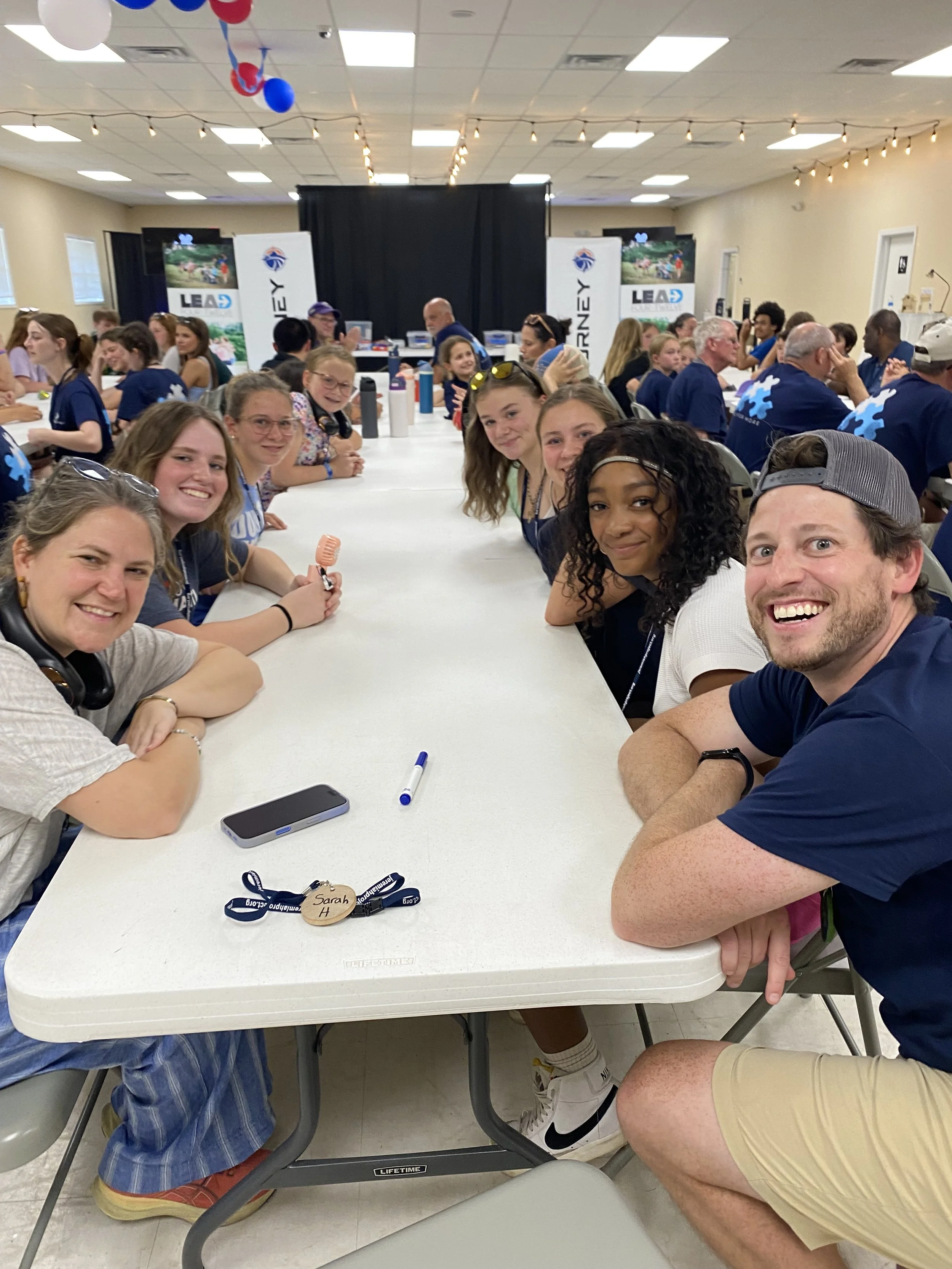
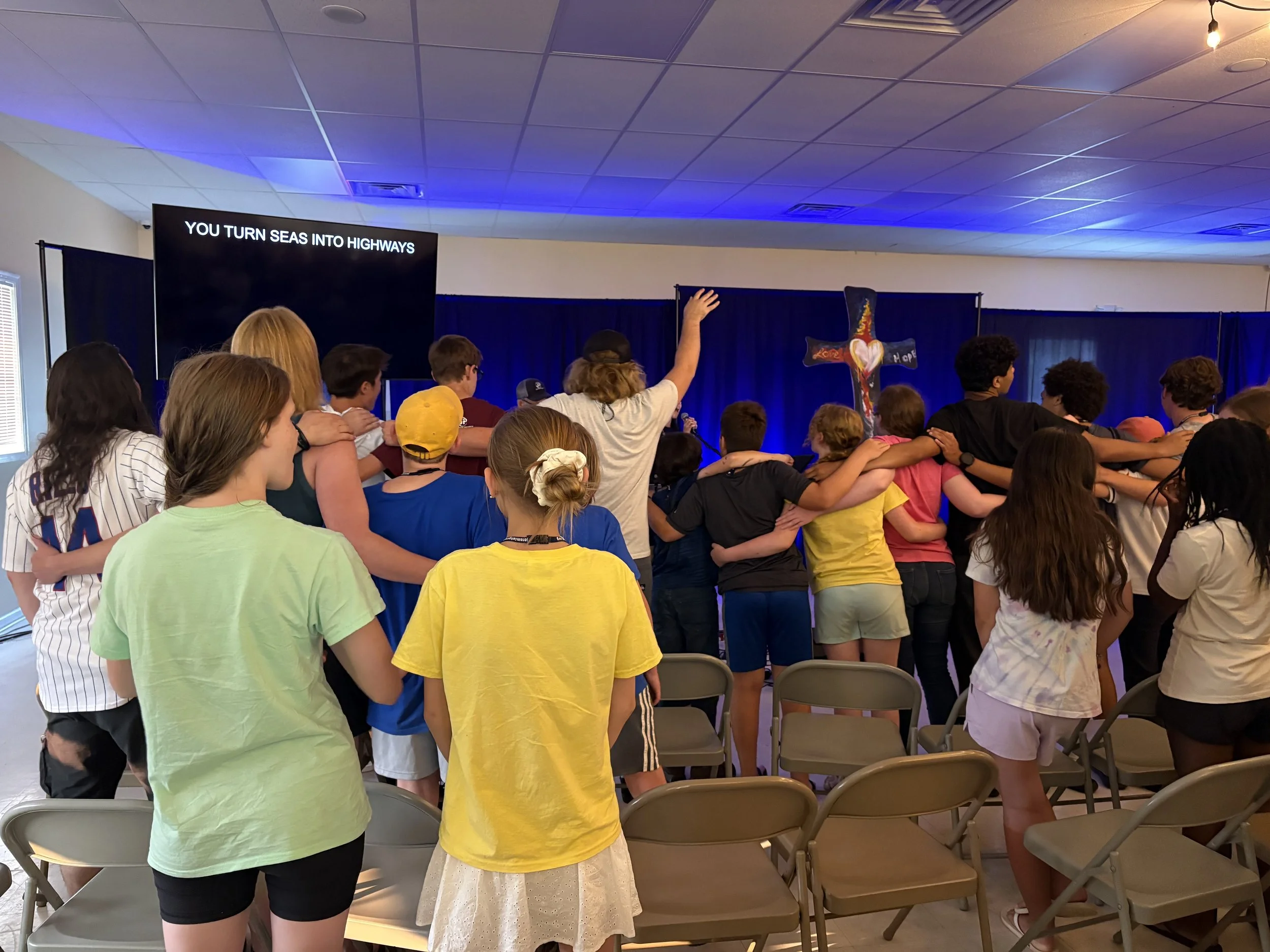
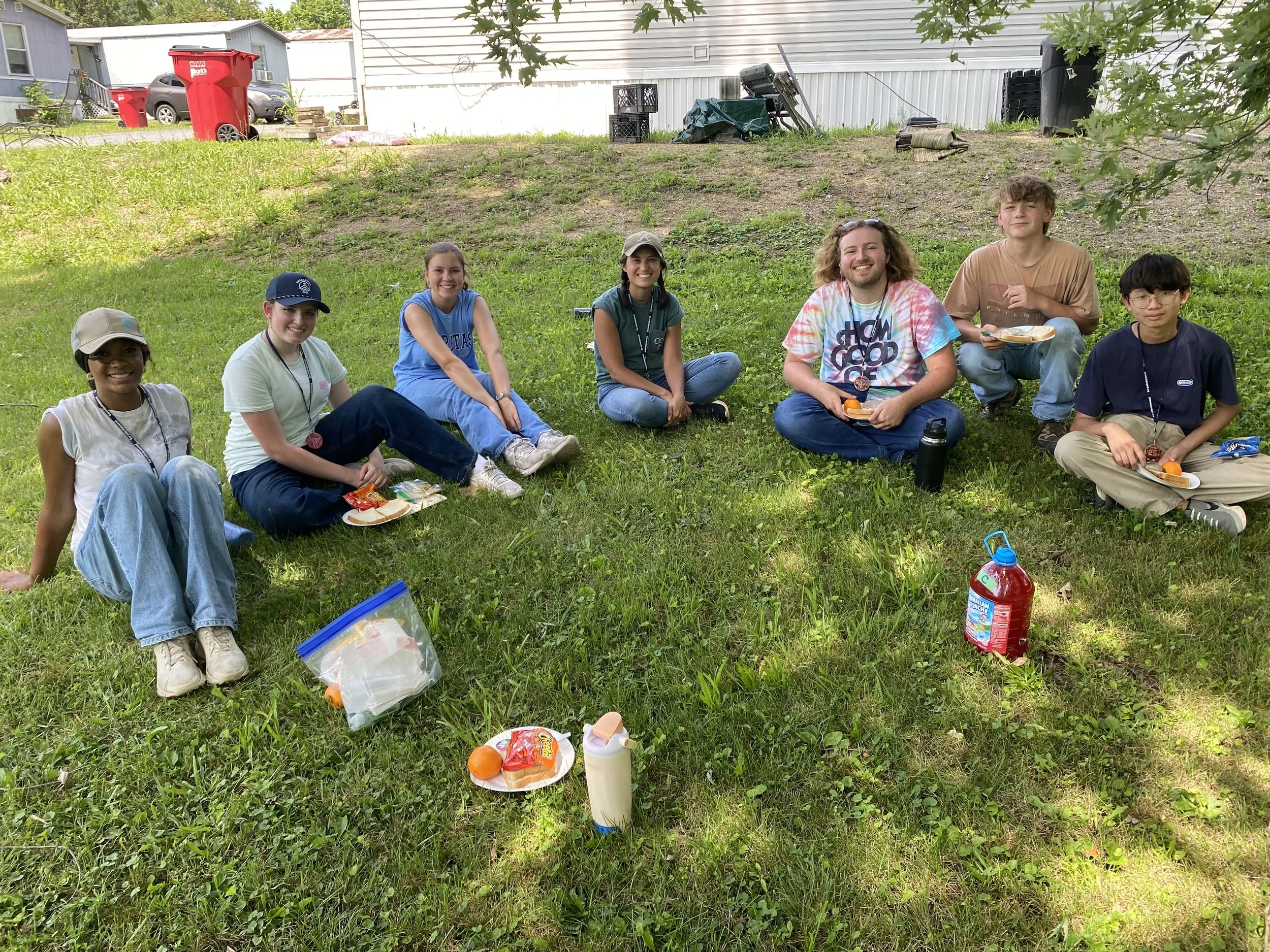
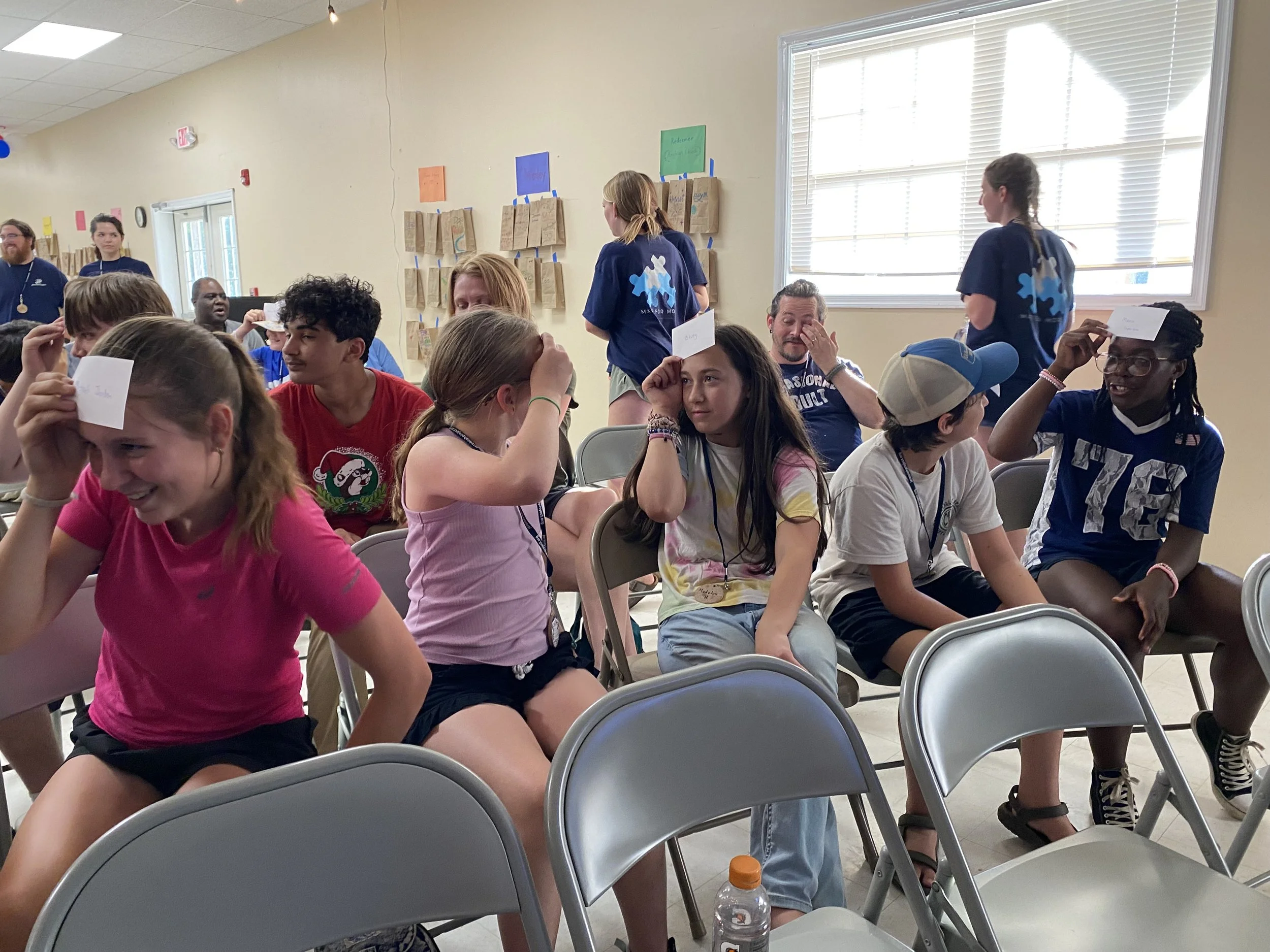
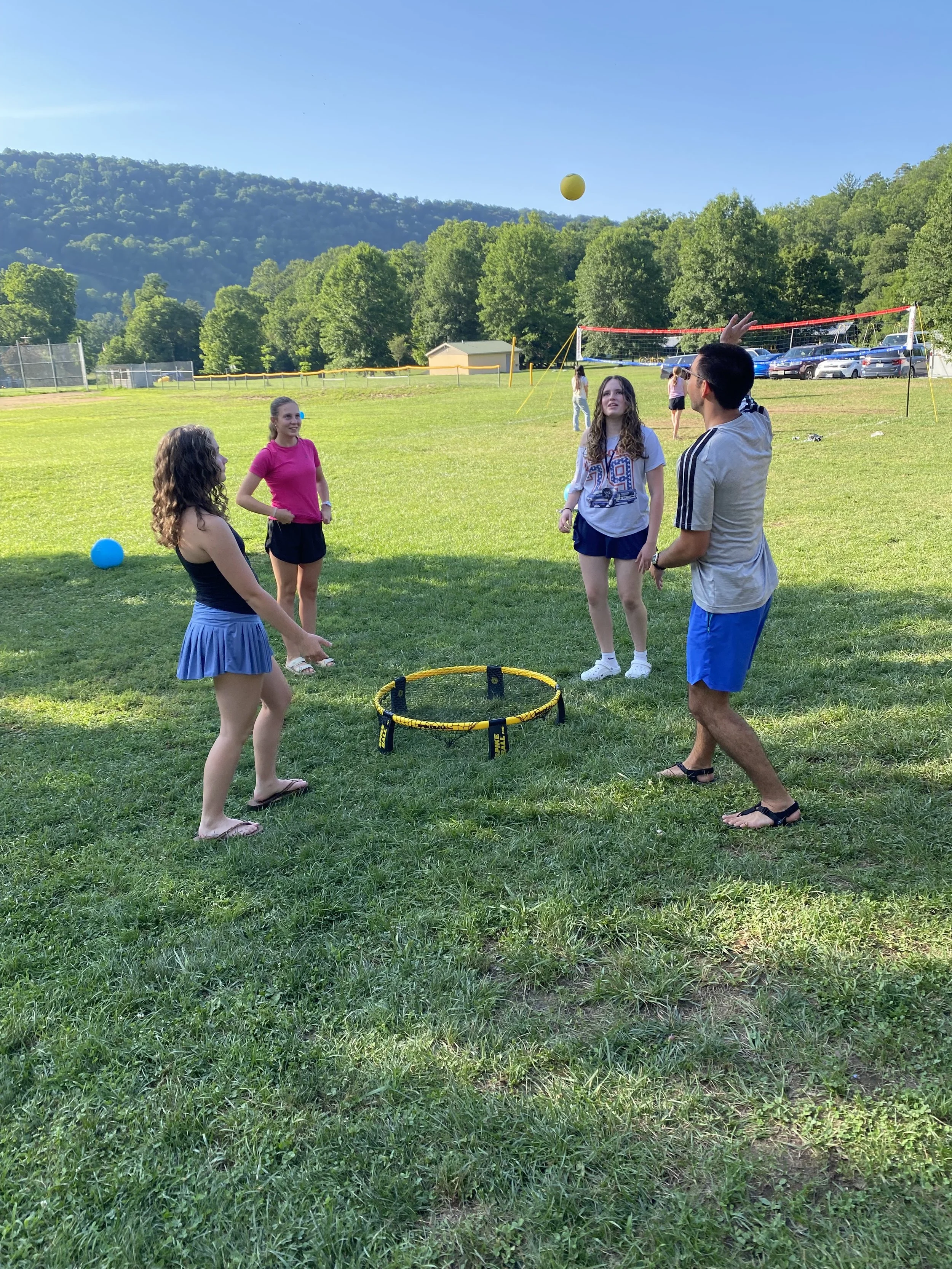
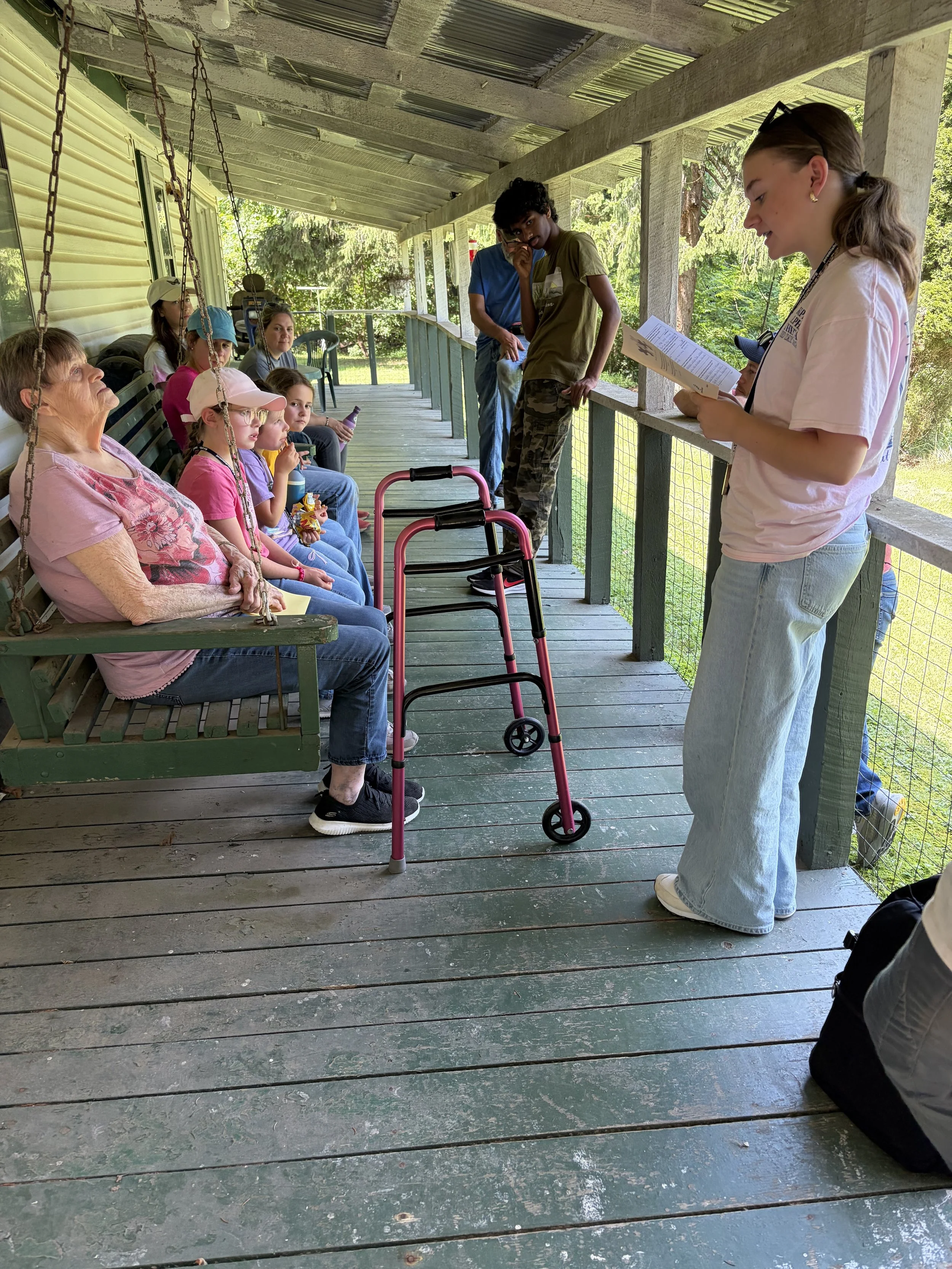
After evening program, our homeowner shared how hard it is to live alone. Some of the other homeowners we spent time with during the week also spoke about being alone or feeling unseen. One of the most valuable lessons we learned at JP is that more important than the physical work we did for these homeowners was our presence with them. Our young ladies did an amazing job being present with our homeowner, listening to his stories, asking him about his life, and showing him the love of Christ by helping meet not only a physical need, but the emotional and spiritual needs of being seen, heard, and cared for.
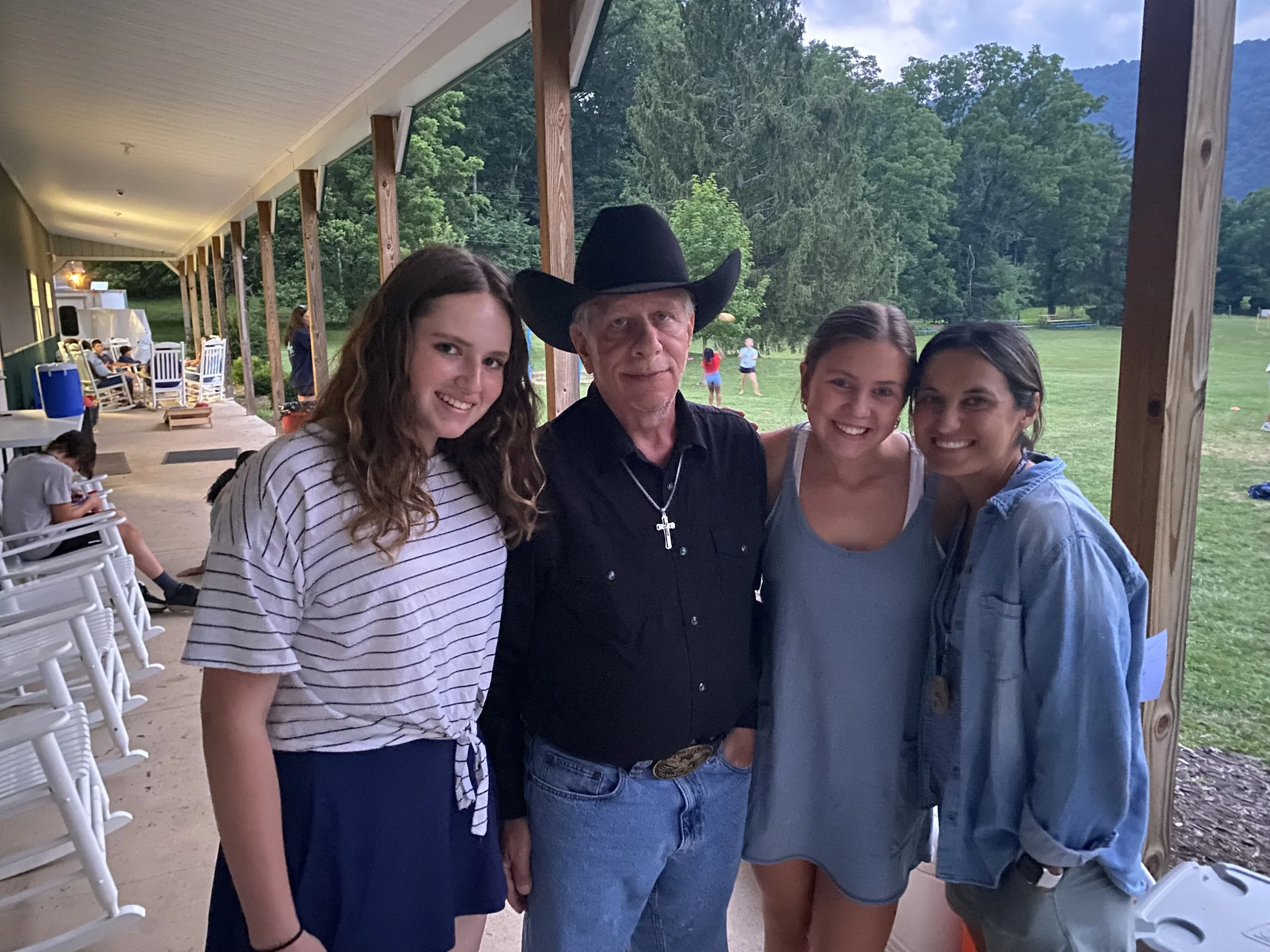
The week wasn’t just all work and no play, however. The students had a great time with the water balloon volleyball tournament, tubing down the river (even among the spiders and water snakes!), numerous runs to Dairy Queen and Sheetz, and getting to know students and leaders from the other churches present. Many games of Uno and nine-square were played during free time. Participants were asked to write notes of encouragement to each other and put them in little brown paper bags that were taped all over the walls of the main building. I witnessed many of our students furiously writing so they could give each person they had met a note before the week was over. It was great to see our Redeemer students’ friendships and bonds deepen with each other and these new friends as they worshiped, worked, and played together.
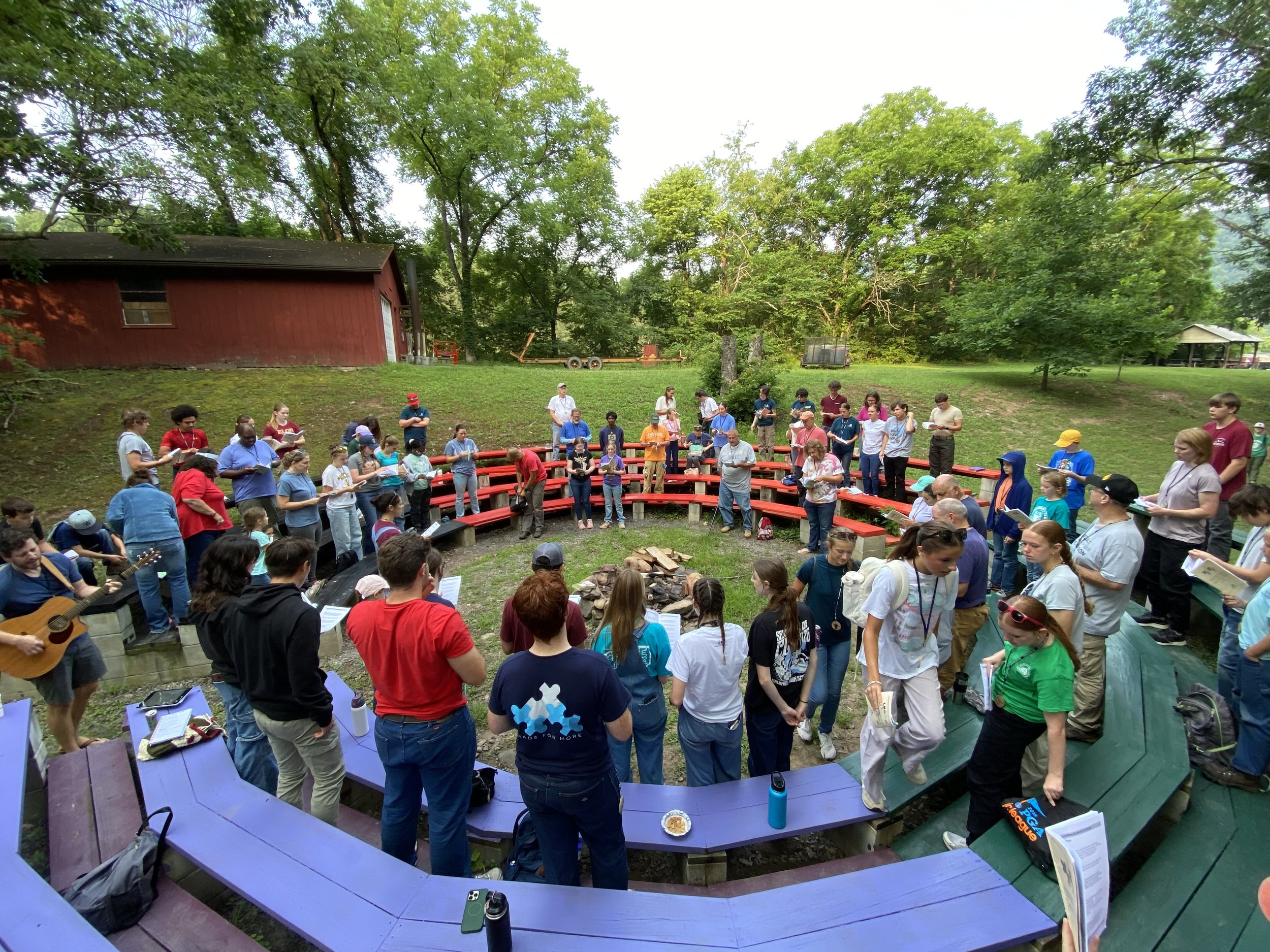
As you read the testimonies below from some of our students and leaders that went on the trip, I think you’ll see that the common line running through them is how impactful it was for them to serve others and to enjoy the special joy and unique bonds of friendship that form through serving with others. The paradoxical truth is that though we go to be a blessing to those we serve, we often come away being more blessed by those we serve.

Sarah Holloway
Youth Fellowship Parent
Jeremiah Project Volunteer
Josiah M. (rising 6th grade):
“The staff at Jeremiah project were super nice and it was encouraging to see everyone willing to work and make sacrifices for everyone else. The home owners who we were there to serve were also really generous and kind, even though we were there to help them and not the other way around.
I was worried about being the only boy going but I immediately made new friends from other churches and got to know the girls from our youth group much better too.
And it was a lot or fun to work with so many power tools. Even though it was a service trip, it felt like fun instead of work.”
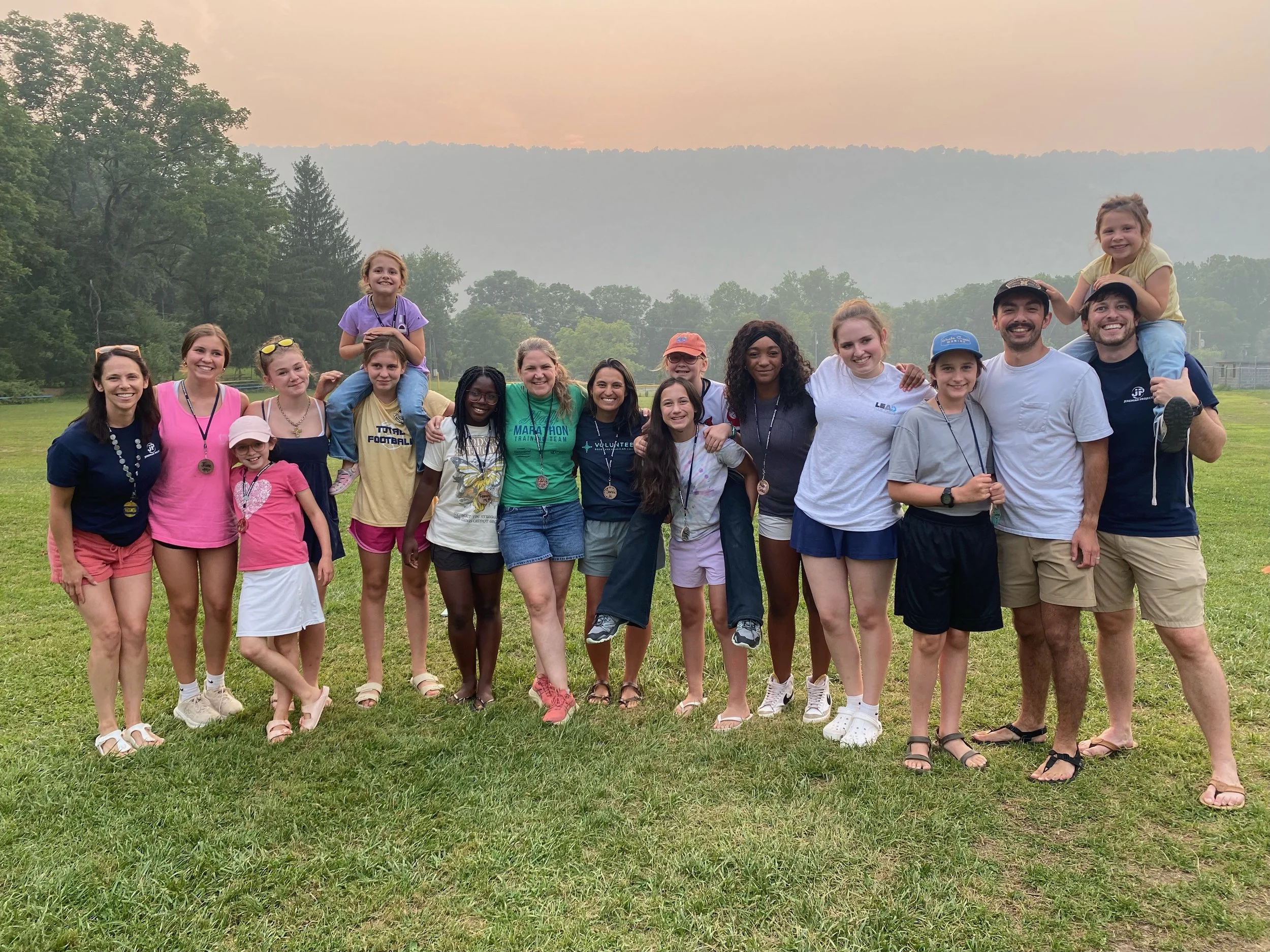
Madelyn Holloway (rising 7th grade):
“My favorite part about JP is that I had the ability to help people. Normally I'm too young to do things, but JP had a variety of tasks for middle-school age kids. I really loved that we made a real difference in these people's lives, and it was't just a couple days. We had a whole week to change people's lives.”
June Marotta (rising 10th grade):
“I really got to see God’s love through the leaders there, the way our work affected the people we were serving, and the beauty of the land around us. I felt like I was able to grow in my faith through evangelizing to some of the non-believers there. One of my favorite memories from the trip was going tubing on the third day with the other people from Redeemer. I got to know the leaders and other students better and the river we were on was beautiful.”

Lauren Bleam (leader):
“It was humbling for me as a leader to see the positive attitudes of the students and their willingness to serve in any way that was needed. They showed God’s heart toward the people we were serving by being eager to talk with the homeowners and listen to them.
One of the homeowners also showed God’s love to me in several small, powerful ways. She was continually seeking to serve us, providing food and encouragement, even though we were there to serve her. She participated in the devotional time and it was clear that she has a strong and vibrant faith. Seeing such strong faith in the midst of difficult experiences and financial struggles was beautiful.
I was blessed by the beauty of nature that surrounded us, especially the morning quiet times with the Lord while looking out over the misty mountains. The river tubing was also refreshing, as we were able to witness gorgeous scenery and swim in the clear, cold water.”
A Summer Invite
A couple weeks ago, I arrived late to a Wednesday night gathering and met a student on crutches I hadn't seen before.
Our CCO summer programming doesn't emphasize invitations — we're just trying to offer a space for students around campus to experience community, pray, eat, and study the Bible. However, students doing summer research have found an avenue for outreach by inviting their labmates.
A couple weeks ago, I arrived late to a Wednesday night gathering and met a student on crutches I hadn't seen before.
Our CCO summer programming doesn't emphasize invitations — we're just trying to offer a space for students around campus to experience community, pray, eat, and study the Bible. However, students doing summer research have found an avenue for outreach by inviting their labmates.
I later found out that the student on crutches, Luke, was a labmate of one of our own students, Caleb. Caleb, who had invited him, served him food and made introductions. It didn't take long for Luke to feel at home and welcome — he even jumped right into Bible study and shared his own observations and insights on the text.
The next day, I received this message from him:
“Thanks so much for having me last night. I felt the love of God in other people in a way I haven’t been able to access in just one night of knowing y’all. You don’t know how powerful last night was for me — basically with the first word of the Bible, I almost broke down sobbing. Thank you, Tee.”
I had coffee with Luke soon after and heard more about why coming to CCO was so moving for him. Coming off a challenging first year at UR, he was desperately searching for purpose and belonging. In just one encounter with God and His people, he felt like he’d found what he had been looking for.
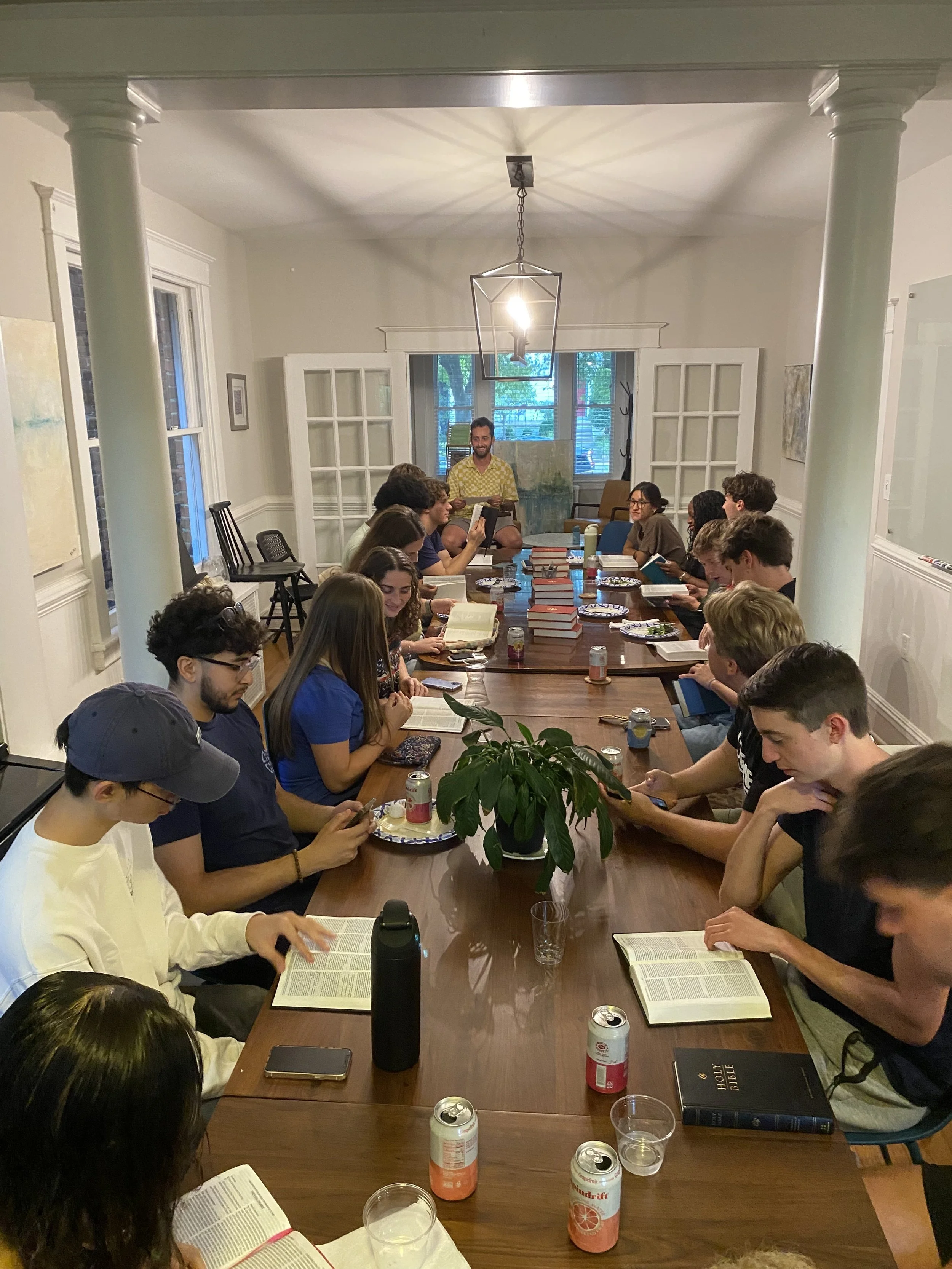
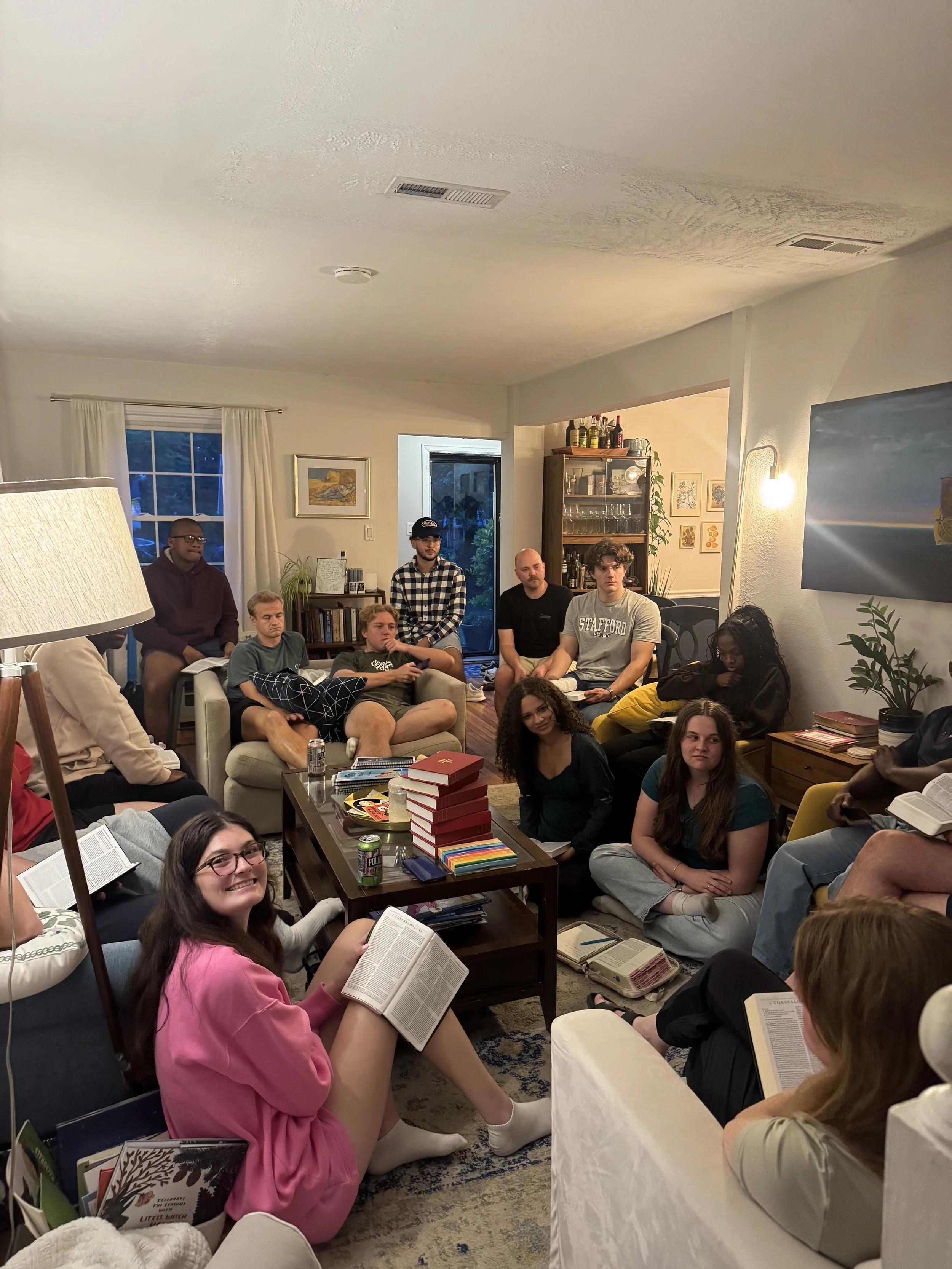
This is the power of Christ’s work through the ministry of CCO! Please be in prayer for Audrey, Will, and myself as we prepare for the year ahead. And if you’re interested in serving Richmond’s college students alongside us, please reach out to either Audrey Cisco or Will Clark.
The Rev. Tee Feyrer
CCO Campus Director: Metro Richmond
Preparing for a Capital Campaign
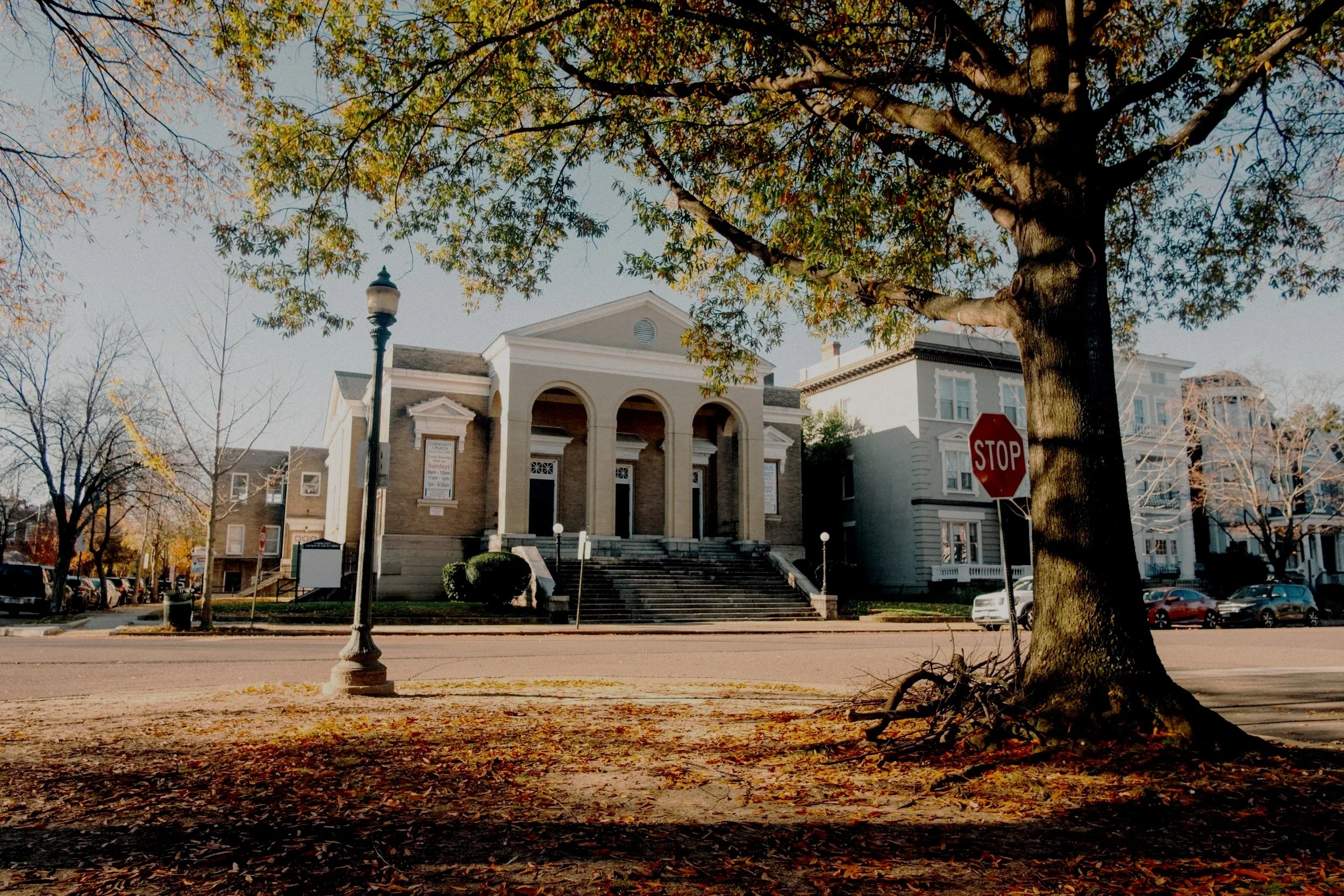
I’m writing to you today about our upcoming capital campaign to raise funds for renovating and outfitting our parish’s future home: 1801 Park Ave.
In my experience, most people have fairly strong feelings about things like capital campaigns and fund-raising, but we don’t all feel the same thing.
Some of us absolutely love the excitement of building for the future and are thrilled that our parish is doing this!
Others of us have had bad experiences with fund-raising in the past and may feel a strong sense of distaste or cynicism about Redeemer running a capital campaign.
Still others feel a mix of conflicting emotions: excitement about renovating 1801 Park Ave., but also annoyance that a capital campaign is necessary to do so - almost as if a campaign is a “necessary evil”.
For starters, I want you to know that I myself have cycled through all of these over the past year. So one of the things that I want to do today is be totally transparent about the campaign so we can have clarity and unity together as a church in this vitally important season.
Redeemer Family,
I’m writing to you today about our upcoming capital campaign to raise funds for renovating and outfitting our parish’s future home: 1801 Park Ave.
In my experience, most people have fairly strong feelings about things like capital campaigns and fund-raising, but we don’t all feel the same thing.
Some of us absolutely love the excitement of building for the future and are thrilled that our parish is doing this!
Others of us have had bad experiences with fund-raising in the past and may feel a strong sense of distaste or cynicism about Redeemer running a capital campaign.
Still others feel a mix of conflicting emotions: excitement about renovating 1801 Park Ave., but also annoyance that a capital campaign is necessary to do so - almost as if a campaign is a “necessary evil”.
For starters, I want you to know that I myself have cycled through all of these over the past year. So one of the things that I want to do today is be totally transparent about the campaign so we can have clarity and unity together as a church in this vitally important season.
This past winter and spring, in addition to all the normal day-in-day-out rhythms of parish life, your campaign leadership has been preparing for a capital campaign. As you might imagine, if you want to do anything in a thoughtful, Biblical, God-honoring manner, it takes time to prepare. I would imagine that this has led some of you to feel like nothing is happening because we haven’t been talking about a campaign publicly. I assure you - work is being done! It’s just the quiet, unglamorous work of preparation.
Additionally, your campaign leadership has decided that the best way for Redeemer to pursue a capital campaign is in a slow, relational, less-flashy way than some other organizations might choose. We know that many people in our parish have either never been part of a campaign before or perhaps have had a variety of experiences with fund-raising in the past. For these reasons, we think slow, steady, and relational is a better approach than big, flashy, and fast.
Now, if we are going to lead our parish through a capital campaign that is slow and relational, that means creating small-to-mid-sized gatherings where people can learn more about the process and ask questions. We want every single person that calls Redeemer home to have a chance to participate. This means that some people will participate 1st, some 2nd, some 15th, some 37th, etc. The only way for everyone to participate in a campaign at the exact same time is to start with something big up front. However, starting with a big, up-front thing is also fairly impersonal and non-relational. Do you see the problem?
So! Here’s what you can expect going forward:
Summer - Mid-Fall
Gatherings: Lots of small-to-mid-sized gatherings in people’s homes to talk about the vision for 1801 Park Ave., the financial needs, and what it means to give financially to this project. Lots of opportunities for Q&A.
Small Groups: Launching August 23.
Tours: In-person tours of 1801 Park Ave.
Teaching: A sermon series on a Biblical understanding of financial stewardship and how the Gospel transforms our practice of generosity.
Prayer: Prayer meetings for the faithfulness and health of our parish as we take these steps.
Mid-Fall
Gatherings: Potentially more small-to-mid-sized gatherings if needed.
Small Groups: Discussions around what God is doing in us and in our church through this process.
Tours: More in-person tours of 1801 Park Ave.
Teaching: October 11 - November 15: A sermon series on the vision and mission of our parish as we anticipate moving to 1801 Park Ave.
Late Fall
Public call for everyone to participate in the campaign as they are able and according to the way they are being led by the Holy Spirit.
Early Winter
Celebration! We’ll take time to celebrate what God has done in us and our church during the campaign.
More celebration! We’ll celebrate Redeemer’s tenth anniversary the weekend of December 5-7.
OK, this is as much detail as I know at this point. As our team solidifies more details, dates, and events, we will share them with you! All along the way, please don’t be a stranger - especially if you have questions, concerns, ideas, or curiosities. If there’s something on your mind, go ahead and ask! (The best person to whom you can direct your questions about the Campaign is Mallory Nix who has graciously stepped up to serve as our Campaign Manager.)
Redeemer family, I love you all and I’m genuinely growing in my excitement and gratitude for what God is doing in our church through this process. This has the potential to be a very healthy season for us, so let’s lean into it.
In the Father’s love,
On behalf of:
Campaign Chair: Mike Mcclure
Campaign Manager: Mallory Nix
Redeemer Vestry:
Alex Griffith, Senior Warden
Kate Kemp, Junior Warden
Brewster Rawls
Morgan Fogleman
Jenn Kilmer
Caleb Boyer
Campaign Steering Committee:
Mike Mcclure
Mallory Nix
Chaney Widmer
Morgan Fogleman
Jeff King
Victoria Strout
the Rev. Dan Marotta
Youth Fellowship Updates
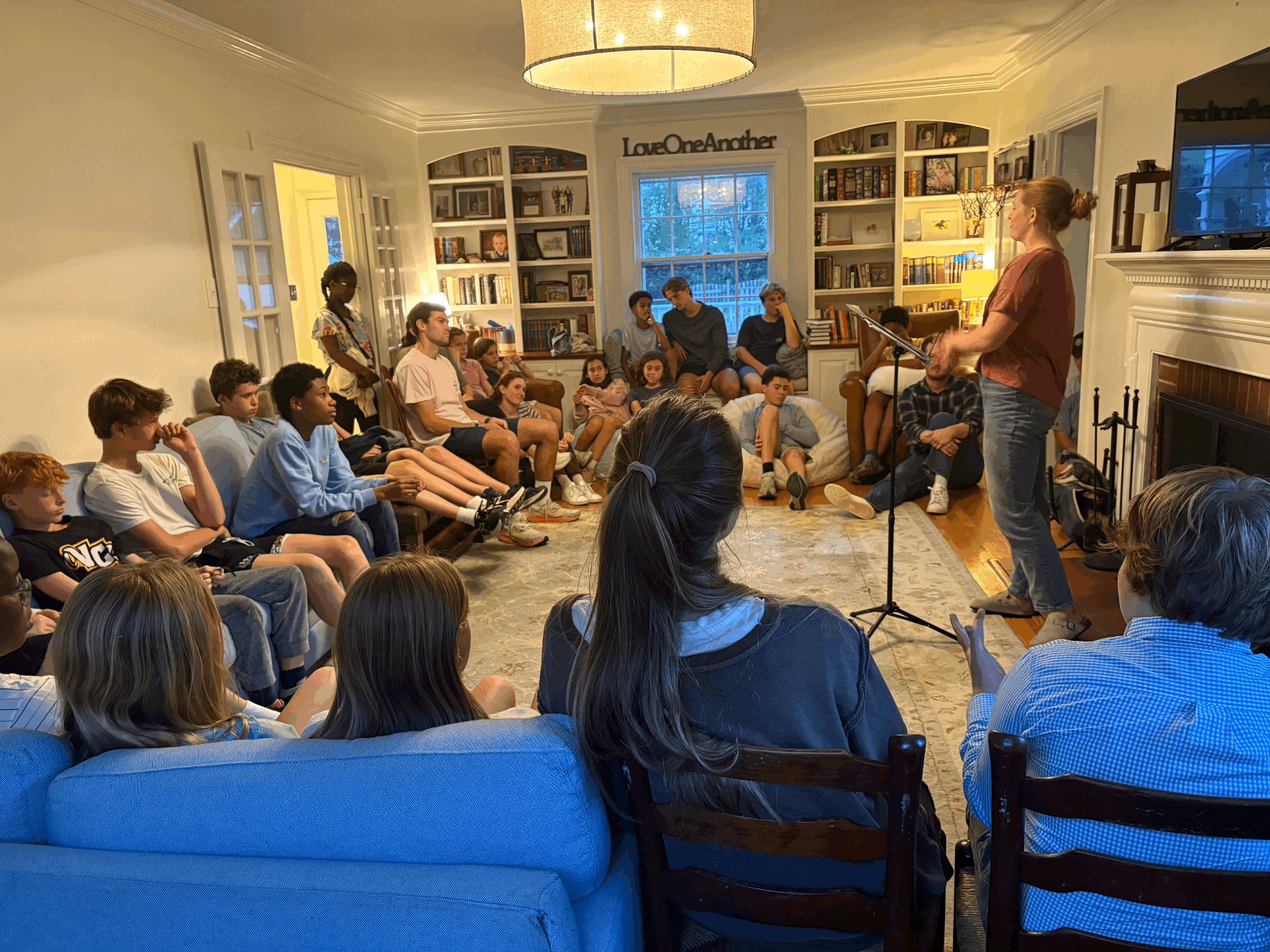
As we have reached the conclusion of another school year, we wanted to take a moment and share what our Youth Fellowship will look like in the year ahead, including some important dates and new leadership. Programmatically, here are some changes that you can expect along with a brief explanation of the reason for some of these changes.
Hello Friends,
As we have reached the conclusion of another school year, we wanted to take a moment and share what our Youth Fellowship will look like in the year ahead, including some important dates and new leadership. Programmatically, here are some changes that you can expect along with a brief explanation of the reason for some of these changes.
Weekly Programming
We will be starting a new time for our students that will take place on Sunday mornings between the 9:00 a.m. and 11:00 a.m services. Sunday morning is a time when many of our leaders and students are already gathered together to worship with our whole church. We want to make best use of this time and give students and leaders another space to build fellowship and grow in faith together. We’re calling this time “Sunday Devotionals” and it will be an opportunity for students to sit down with their leaders for some breakfast and hear a brief devotional from one of our Youth Fellowship leaders on a passage of scripture. Then students will have a short time to talk and pray with leaders. These Sunday Devotionals will begin on Sunday, August 30 and will take place from 10:25-10:55 a.m. Look for more details as we approach August.
Our weekly Youth Fellowship meetings will be on Wednesday evenings from 6:30-8:30 p.m. at 2715 Grove Ave. There are several reasons for this change and we hope it serves our Redeemer families and students well. In the past our Youth Fellowship has met on Wednesday evenings, though we tried Sunday evenings for the past year. It was not clear that this move to Sunday evenings served our families best, plus we wanted to provide a time Sunday morning as mentioned above. Tikvat has enough space for us all, middle school and high school students and leaders, to gather together. Both our leaders and our students see a value in being together as a larger group and we are looking forward to having our high school students begin to take on some forms of leadership and service in our ministry. At the same time, we recognize the developmental differences between 6th grade students and seniors in high school, and so, the second hour of our time together will involve middle school and high school separating into different groups. Each group will hear a lesson given from God’s word and then break off into small groups based on grade and gender.
We believe that having this middle-of-the-week touchpoint with students is valuable, even if a Wednesday evening gathering is difficult for some students to attend during certain seasons. In the event that a student cannot attend on a Wednesday night, our Sunday Devotionals are still a time set apart for them to be with leaders and grow in their faith.
Fall Retreat
The dates for our Fall Retreat are confirmed, so please mark your calendar for the weekend of September 25-27. This retreat takes place in a few different beach houses located in Sandbridge, Virginia. We will depart Friday evening and return Sunday morning. These retreats are a great opportunity for our team of volunteer leaders to form strong relationships with all our students and to create a strong foundation for the school year ahead. These retreats are also a big logistical undertaking and we could use help in making this retreat a success, particularly as it relates to food planning, preparation and the execution of meals during the weekend. If you believe you have relevant skills and are interested in helping, please email me.
Youth Fellowship Leadership

Finally, a few words regarding the leadership of our Youth Fellowship ministry here at Redeemer. As we have finished the school year and are looking to the year ahead I (Nathan Horner) will continue to give leadership and oversight to our Youth Fellowship for the year ahead. We also want to officially announce the hire of a new “Co-Director of Youth Fellowship” named Kenzie White. Kenzie is an alumni of James Madison University and has spent years working with middle school and high school students as a leader in the ministry of Young Life. More recently, Kenzie served on staff at The Church of The Incarnation Anglican Church in Harrisonburg, Virginia. Her official start date is August 1, at which point she will come alongside me in leading our Youth Fellowship.
We are delighted to have a strong team of volunteer leaders who are looking forward to discipling and coming alongside our students for the year ahead. We recently had 4 new leaders join the team who will be paired with our rising 6th grade students as they join our Youth Fellowship. Our volunteer leaders are central to the way our Youth Fellowship operates here at Redeemer and so if you are not sure which volunteer leader is specifically assigned to your child’s grade and gender, please email me and I would be glad to make the connection.
Friends, thank you for your attention. We are so excited for the year ahead in our Youth Fellowship. Please take the time to pray a blessing over our Youth Fellowship as a whole, our volunteer leaders, and over all the students of our church as we seek to disciple them into mature followers of Jesus, rooted deeply in the Gospel, and living in the love of the Father.
Thanks and Blessings,

Nathan Horner
Church Planter-in-Residence
Children in Worship: an Invitation for the Summer
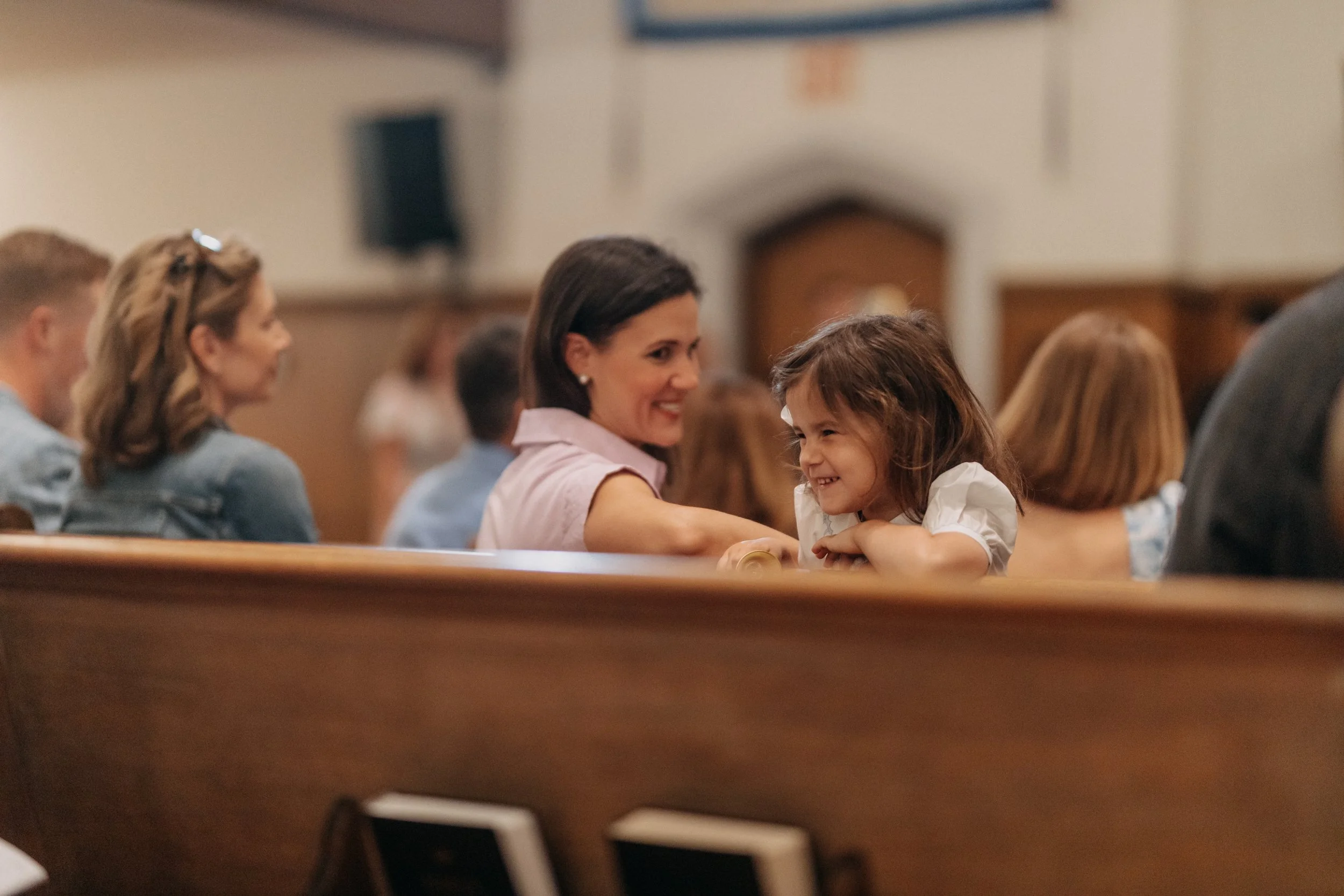
It’s almost that time of year again! We have learned from older, more established ministries that the summer months provide two unique opportunities for our parish. The first is to allow our hard-working Redeemer Kids volunteers a much-needed chance to slow down. The other is the chance to embrace more participation from children during the worship service for the summer season for the sake of both our children themselves and the adults around them! As our parish moves into the season of Ordinary Time and we find ways to practice our faith in, well, ordinary ways, this is a wonderful time to shift the way we teach our children as well.
Dear Redeemer Family,
It’s almost that time of year again! We have learned from older and more established ministries that the summer months provide two unique opportunities for our parish. The first is to allow our hard-working Redeemer Kids volunteers a much-needed chance to slow down. The other is the chance to embrace more participation from children during the worship service for the summer season for the sake of both our children themselves and the adults around them! As our parish moves into the season of Ordinary Time and we find ways to practice our faith in, well, ordinary ways, this is a wonderful time to shift the way we teach our children as well.
When will this take place?
Redeemer Kids will only offer a Three’s Room, Pre-K Room, K-1st Grade Room and the full nursery for both services starting Sunday, June 7 through August 16.
What does this mean for our kids?
We will offer a children’s liturgy specifically for our young children to help guide them through the service (and to doodle on, of course) as well as providing crayons to use. Our 2nd grade+ aged children will be welcomed into portions of the service that they have not been in before to learn alongside our older members during the sermon and to practice corporate prayer during Prayers of the People. This is not a break from children’s spiritual formation—rather, a new way to practice it together!
What does this mean for parents?
If your child is a rising 2nd grader or older, they will be sitting with you for the whole service! We will offer some resources specifically for these children to engage with the service. I can speak from experience that it is no small task to help my own squirmy son sit through long stretches of the service and I don’t want to minimize that challenge for you parents. I urge you to see this not only as an opportunity for your child to form new habits around worship (like when to sit, listen, stand, sing, and kneel), but to find their place in the whole body of Christ by participating in new ways!
What does this mean for Redeemer Kids volunteers?
Our hope is to give our hard-working Redeemer Kids teachers, assistants, coordinators, and more a season to slow down. Many of you might not know that we ask our teachers and assistants to serve every three weeks and our coordinators and nursery volunteers to serve every four weeks. As the year has gone on, many of our team members have served more frequently than this in order to have the 30 volunteers needed every Sunday to run our children’s ministry. For those who are not currently serving in Redeemer Kids, take this season to thank our Redeemer Kids volunteers and to prayerfully consider how you could use your own gifts to volunteer as well—you’re needed!
What does this mean for everyone else?
This is a wonderful opportunity to engage in a new way with the children of our parish! There will be opportunities to stretch and grow as a congregation as we extend hospitality to the school-aged children of our church and by supporting families with young children in the pews around you. Here are a few practical guidelines to consider:
The first way you can help is to model attentive and fully engaged behavior for the kids around you. You disciple the kids nearby when you attentively observe the sermon, stay focused when listening, and use your body to kneel, stand, and extend your hands. After all, children learn the most by observing!
Get to know the names of the children who sit near you in particular and then ask after them by name each week. This small gesture can mean the world to children (or anybody for that matter) who can often feel overlooked in a crowd.
When a child near you is noisy (drops a pen, cries, giggles, talks out loud) during the silent portions of the service, don’t react. This could take practice for each of us, but stay engaged in the prayer/silence/liturgy and take this time as an opportunity to grow in focus and to model a still and calm posture for your neighbors. This is a spiritual “muscle” we can all exercise.
Be open to how you can grow from this experience. During this summer and beyond, be attentive to how children already naturally engage with the service on their own. Do they shout the creeds or dance when they sing? Do they find it hard to be attentive during the scripture reading or to withhold their enthusiasm when they are able to participate in a call and response? Children reflect our own emotions, desires, and sin patterns, but are often more obvious about it. Be open to what you can learn about yourself from watching these children and how you can grow in your own faith through this.
Pray with me now and each week to come: Almighty God, heavenly Father, you have blessed us with the joy and care of children; Give us calm strength and patient wisdom so to train them, that they may love all that is true, and pure, and lovely, and of good report, following the example of their Savior Jesus Christ. Amen.
In Christ,
Casey Cisco
Director of Redeemer Kids
What You Need To Know About Jeff’s Summer Sabbatical
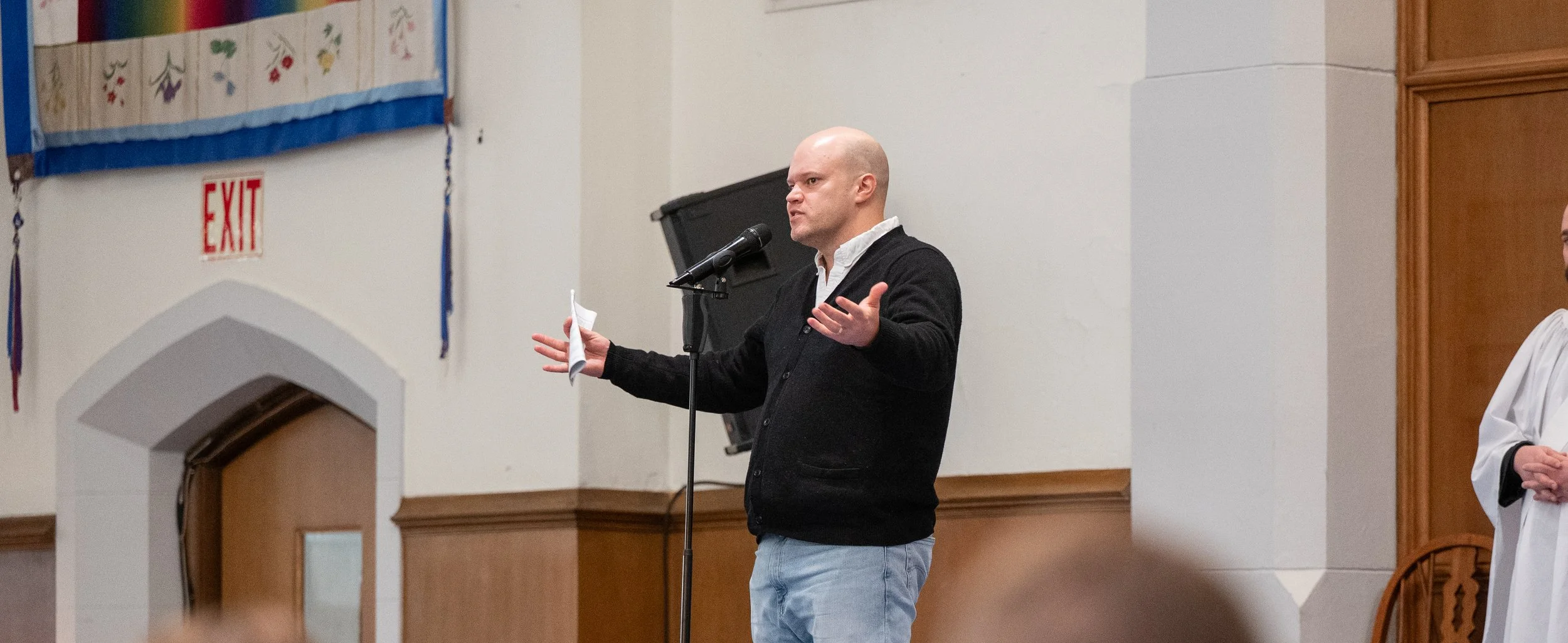
This summer, after seven years of full-time ministry serving our parish as our Senior Director of Operations, Jeff King will be taking a two-month sabbatical. This upcoming time away is part of our staffing policy and has been in the works for a while!
We are so grateful Jeff is able to take this time to rest, and we pray it provides refreshment for him and his family so he can continue to work on mission together with us for many, many years to come!
This summer, after seven years of full-time ministry serving our parish as our Senior Director of Operations, Jeff King will be taking a two-month sabbatical. This upcoming time away is part of our staffing policy and has been in the works for a while!
We are so grateful Jeff is able to take this time to rest, and we pray it provides refreshment for him and his family so he can continue to work on mission together with us for many, many years to come!
What is a Sabbatical?
The word Sabbatical has its roots in the word ‘Sabbath’ - a stopping, a pausing, a time of rest, a time to slow down and remember that the Lord is God. Sabbath is a recognition that the deepest layer of reality is rest in God, not strenuous effort and achievement. Throughout the story of the Bible, God continually calls and commands His people to practice Sabbath rest. This takes the form of the weekly sabbath for the people (one day out of seven) and annual sabbath for the land (one year out of seven).
A Sabbatical is “a healthy and effective means of preventing burnout and of renewing and enhancing a professional’s capabilities for dealing effectively with problems facing those who need help...the overall goal is rest and renewal, not rigid adherence to a prescribed plan of action. [A sabbatical] might involve study, travel, writing or some combination of all three, blended with a good measure of relaxation and family time.” (Anglican Diocese of Pittsburgh Clergy Compensation Guide)
“The sabbatical tradition began in the universities at the time when the university was part of the church. The idea was that the university professors (who were often ministers) needed one year in every seven to become students again and to refresh their spiritual calling.” (Lifeway, “Five Gidelines for a Successful Sabbatical)
What is Redeemer’s Staff Sabbatical Policy?
Redeemer’s Sabbatical Policy is applicable to all full-time staff.
Rector — 3 months every 7 years
Senior Director — 2 months every 7 years
Director — 1 month every 7 years
Before embarking on a sabbatical, a staff person must cheerfully, and without reservation, commit to 2 additional years on staff. Our hope is to develop a leadership culture where staff can be regularly refreshed for new seasons of ministry.
When is Jeff’s Sabbatical happening?
Jeff’s last Sunday and final day of work will be Sunday, June 14.
Jeff will return to Redeemer for work on Sunday, August 16.
Is something wrong? Is Jeff leaving?
No! There isn’t anything wrong that is causing the Sabbatical. This is an expected time away. The only plan he has is to return to Richmond and re-up for another great season with Redeemer.
What will Jeff do during his sabbatical?
Jeff will be out of town for most of the two months. The goal is not to “go on vacation,” but rather to intentionally shift away from the regular rhythms of life in Richmond, technology use, busyness, and hurry, to slow down, enjoy the company of good friends he doesn’t get to see as often, cook slowly while blasting good tunes, lazily play the guitar, visit a few restaurants he’s been wanting to get to up the east coast, travel with his family, read some good books, spend time in nature, and rest. Specific days are also being planned for silence, solitude, and engagement with a spiritual director.
What if you want to contact Jeff while he’s gone?
Unfortunately, Jeff will not be having any contact with Vestry, Staff, or parishioners while on Sabbatical.
If you need anything in the way of operational help while he’s gone, please contact Sarah Holloway, Redeemer’s administrator, or another member of the staff.
Is there anything for you to do?
Yes! There are three very important things for you to do while Jeff is gone:
Pray: Pray for Jeff and for his family during this time away.
Support: Continue to support the leadership of our Staff and Wardens as they maintain additional work in Jeff’s absence.
Own: For some of you, Jeff’s time away may provide an opportunity for you to step up and take more ownership and responsibility for an aspect of our parish life. Please do so with humility and courage.

Redeemer Kids: A Year in Review
The ministry year in Redeemer Kids is coming to a close. From September through May, our children’s ministry follows the cycle of the church calendar and the narrative of the Bible to hear stories ranging from the beginning of Creation during Ordinary Time through the start of the liturgical new year and the Advent season all the way through the life and ministry of Jesus and the start of the church on Pentecost. I get the immense privilege of having a front row seat to see our children learn and grow during this time and to witness the love of the volunteers as they shepherd these littles ones.
From September through May, our children’s ministry follows the cycle of the church calendar and the narrative of the Bible to hear stories ranging from the beginning of Creation during Ordinary Time through the start of the church on Pentecost. Throughout the year, I get the immense privilege of having a front row seat to see our children learn and grow during this time and to witness the love of the volunteers as they shepherd these littles ones!
This year, I saw God at work in the faithful presence of each man and woman who showed up on Sunday mornings to teach the Gospel to kids, wipe runny noses, greet new families, and hand out countless goldfish crackers week after week. They have all loved these children and supported each other faithfully during the year and I am profoundly grateful to get to be a witness to this often unseen work of the Lord in our parish!
I want to share some of those stories with you, so here at the end of the year I’ve asked our volunteers to reflect on their time with the kids and share where they have had eyes to see and ears to hear God at work. Here are some of their responses…
Casey Cisco
Director of Redeemer Kids
Q. How did you see God at work in the lives of the children in our parish over the past ministry year?
“The 4th and 5th grade children are excellent readers. During our class I’ve rarely read the lesson’s Bible verses. Instead, I’ve seen God at work as the children volunteered to read and did so with voice, expression and feeling.”

“Caring for the children in our nursery is such a gift. In just an hour on Sunday mornings, we are witnesses to God's steady hand over their lives, their relationships with their peers, and their growth as human beings.”
“I have watched children in my class learn how to have fun with each other and how to include others in order to create a welcoming environment. I have witnessed kids learn how to take initiative on their own and apologize when an apology is needed, and I love seeing them treat each other with respect and learn how to be kind, even when they might not want to.”
“[In the children’s] growth in awareness that Jesus is with us in the room.”
“I saw so many children eager to read the passages out loud, happy to announce what time in the church calendar it was, and do a wonderful job of watching the lesson.”
“Children are learning the meta narrative of scripture and being able to answer the questions, what's in the Old and New Testaments.”
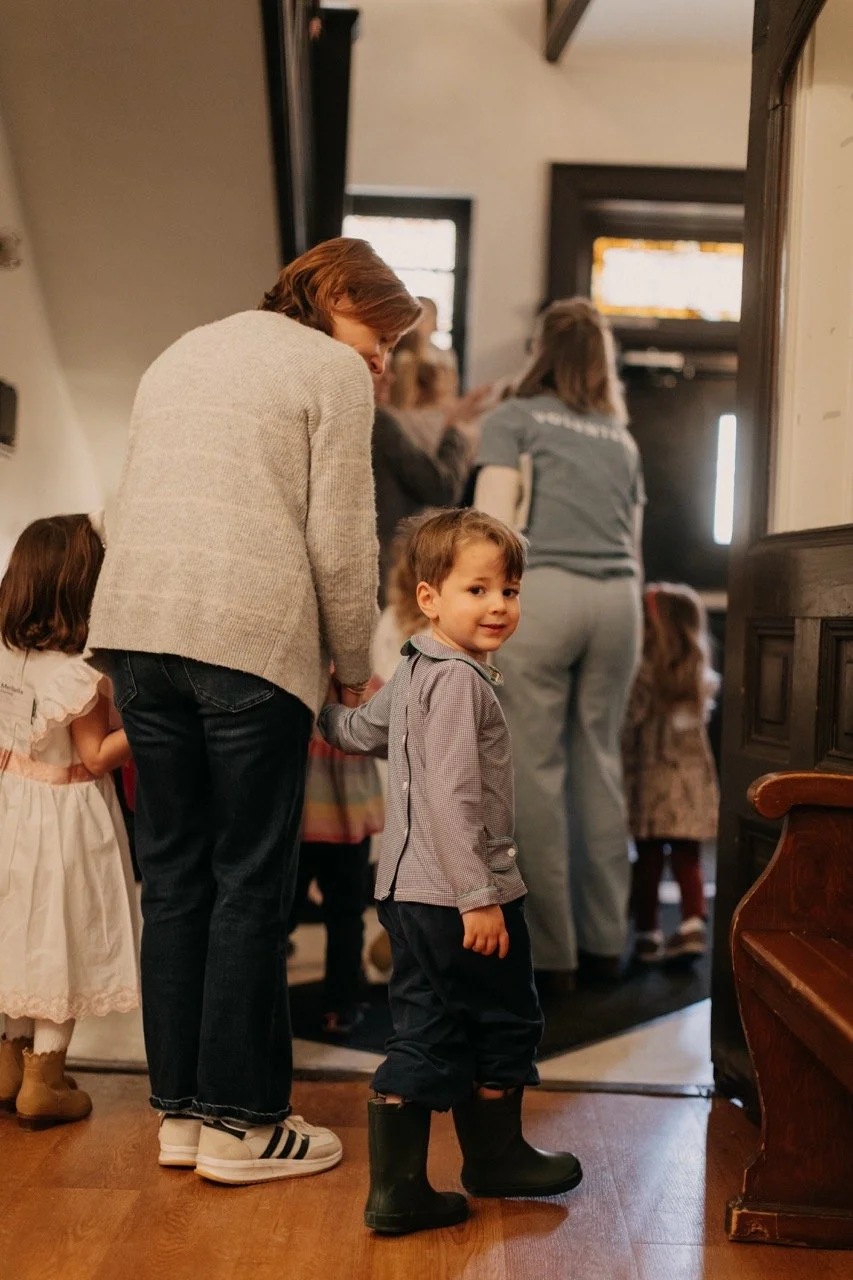
“I saw God’s work in the lives of the children… through their laughter and curiosity. I’ve been reminded that the most simplistic questions that children ask are the ones that we should be circling back to even as mature believers. I’ve learned so much by being asked simple questions and things that seem very ordinary to us as believers can be easily forgotten about or under appreciated. I like to believe that if I can explain something then I understand it and that’s why I love the kids curiosity.”
“In the 9:00 a.m. PreK class there was so much growth and excitement surrounding the church calendar that I had never seen before. They were eager to start new church seasons, excited to share what they knew about or had experienced in past seasons and engaged with Easter in a new way.”
“After a year of serving in the nursery with my two daughters, I see the toddlers in the congregation recognize them outside the classroom, want to be held by them. It's wonderful to see the bonding happen in both directions.”
“[I see this in] children who comfort their friends if they're sad, and children who recite Bible verses and songs.”
Q. Where did you see God at work through another volunteer?
“Our volunteer class assistants are, without exception, wonderful and dedicated teachers of God’s word. One Sunday morning when I was grappling with how to get across the ‘big idea’ of the lesson my assistant stepped in and gracefully took over. He began asking questions, focusing our restless class and leading them to discernment and understanding. God was definitely at work that day!”
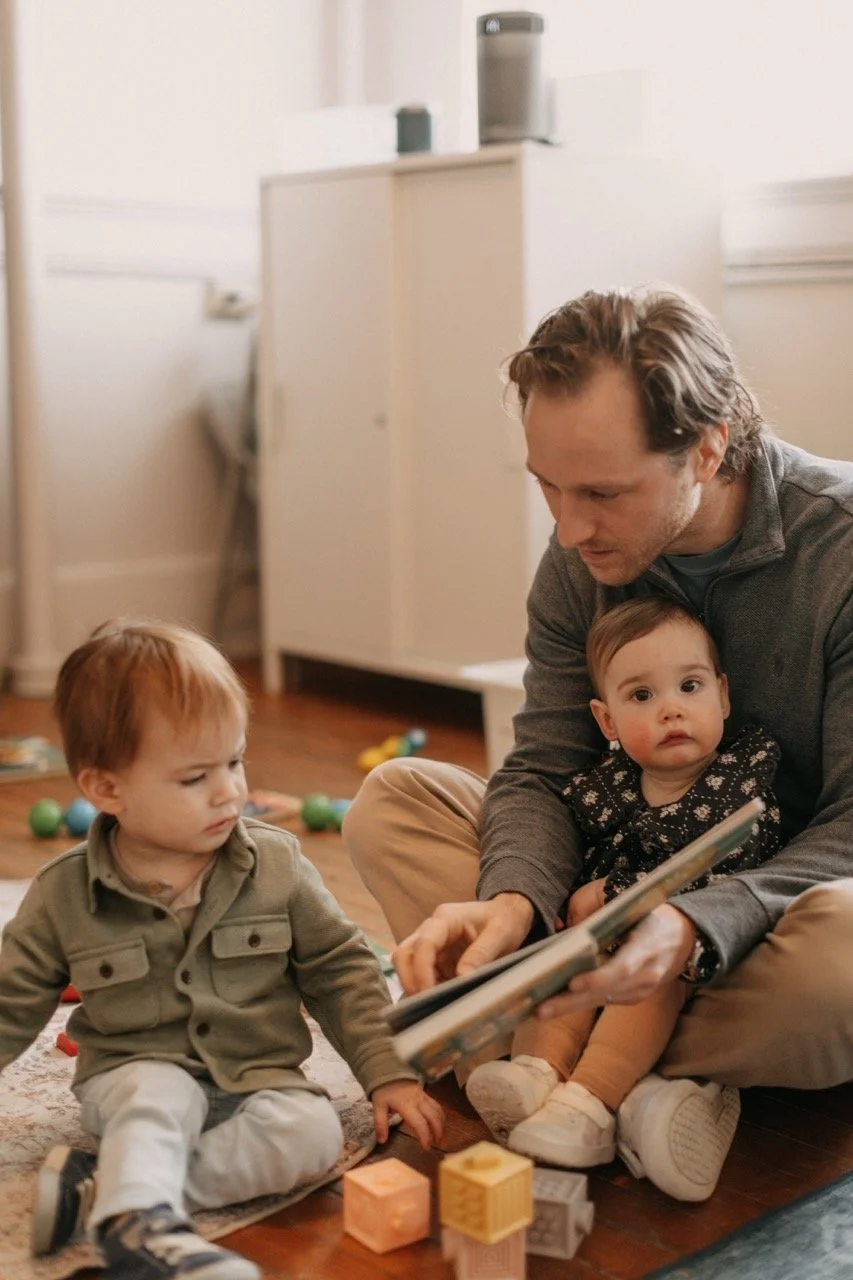
“The men who have served in the nursery this year have been so loving and generous to our children… These moments have opened my eyes to how the Lord truly designed men and women in His image to work together in the mission of raising up our children; it is a blessing to serve alongside men on the nursery team!”
“DJ had such a gentle yet firm approach to the kids and was helpful in redirecting their attention.”
“Naomi is an incredible, joyful teacher! I adore how she engages the children, knows them all, gives them time to speak, responds in a way that they feel heard, and creates an engaging lesson for them!”
“Honestly, seeing Casey Scheetz wipe snotty nose after snotty nose feels like a beautiful example of someone serving like Christ served, like foot-washing but for babies.”
“Will has consistently showed patience and compassion to a child in our class that struggles with transitions. He is able to redirect energy, infuse a stabilizing presence, and mitigate the various stimuli that make it hard for this child to be with their peers.”
“I see God working through Mrs. Cody, as she learns that each class that she teaches in her life will require different kinds of teaching skills and ‘strategies’.”
“Callie Dickens has such a gift for capturing the children's sense of wonder.”
“All of the teachers I assisted were fantastic. Their passion for teaching, their enthusiasm and their patience with the kids was so evident and so impactful in working with and teaching the kids.”

“I saw God at work through Callie Dickens. I’ve had the privilege to be her assistant and I can see her heart for the Lord by her expressions through lessons. She kept the children engaged and never failed to give attention to every curious question.”
“I see volunteers who show up with a few days notice and also with a few hours notice. I see volunteers who are very tender with children who are crying or hesitant to go to their classrooms. I see volunteers who choose to serve for weeks or months at a time so they can establish rapport and consistency in their classrooms.”
”The insightful questions that Becca Goodall always asks the kids.”
Q. Whether silly or serious, what did you hear a child say that has stuck with you?
“One of our early lessons this year was from Samuel 1 about how the Israelites decided to use the God’s power in the Ark of the Covenant to win their coming battle with the Philistines. They did so without asking God for His guidance or permission. Disaster was the result. After reading the Bible story we’d barely begun the discussion when I was struck by how the class quickly, very profoundly and without my prompts grasped what the lesson was all about… You can’t put God in a box!”
“One little girl singing all the lyrics to All I Want For Christmas Is You . . . after not speaking for 2.5 years in the nursery.”
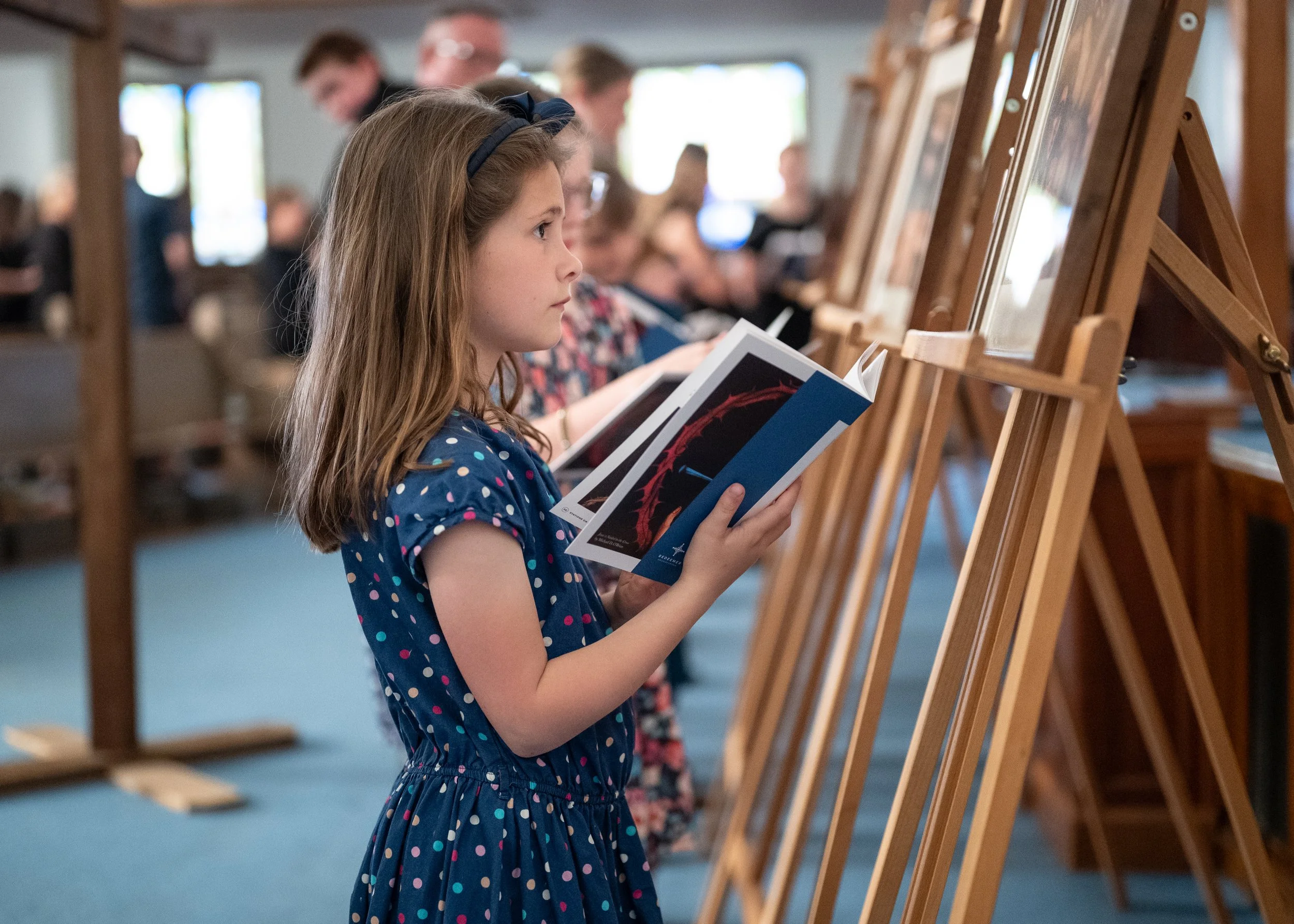
“Several children from our small group participated in Holy Week services this year. Several of them described feeling ‘the sad room’ during the Good Friday service, stating that they didn't know why it was all so sad, but they felt like crying, and described a heaviness to that service that was unusual for them. This stands out to me because it showed me how our services helped these children experience Holy Week, even though they could not articulate the theological truths being reflected through those services. Can my 5-year-old explain why we call "Good Friday" good? No — but she got to experience Good Friday anyway. And I believe that it is laying the rich soil for their minds and hearts and souls to receive the seeds of faith — and as their minds grow to better understand the sacrifice and suffering of Jesus, his sinlessness, and the depths of his love for us, their bodies will already be familiar with these rhythms and rituals. They'll be able to overlay that story onto what their bodies have been participating in for years. That makes me so grateful for services that are multi-sensory, and for a church body that is reassuring that children are welcome, regardless of their level of participation.”
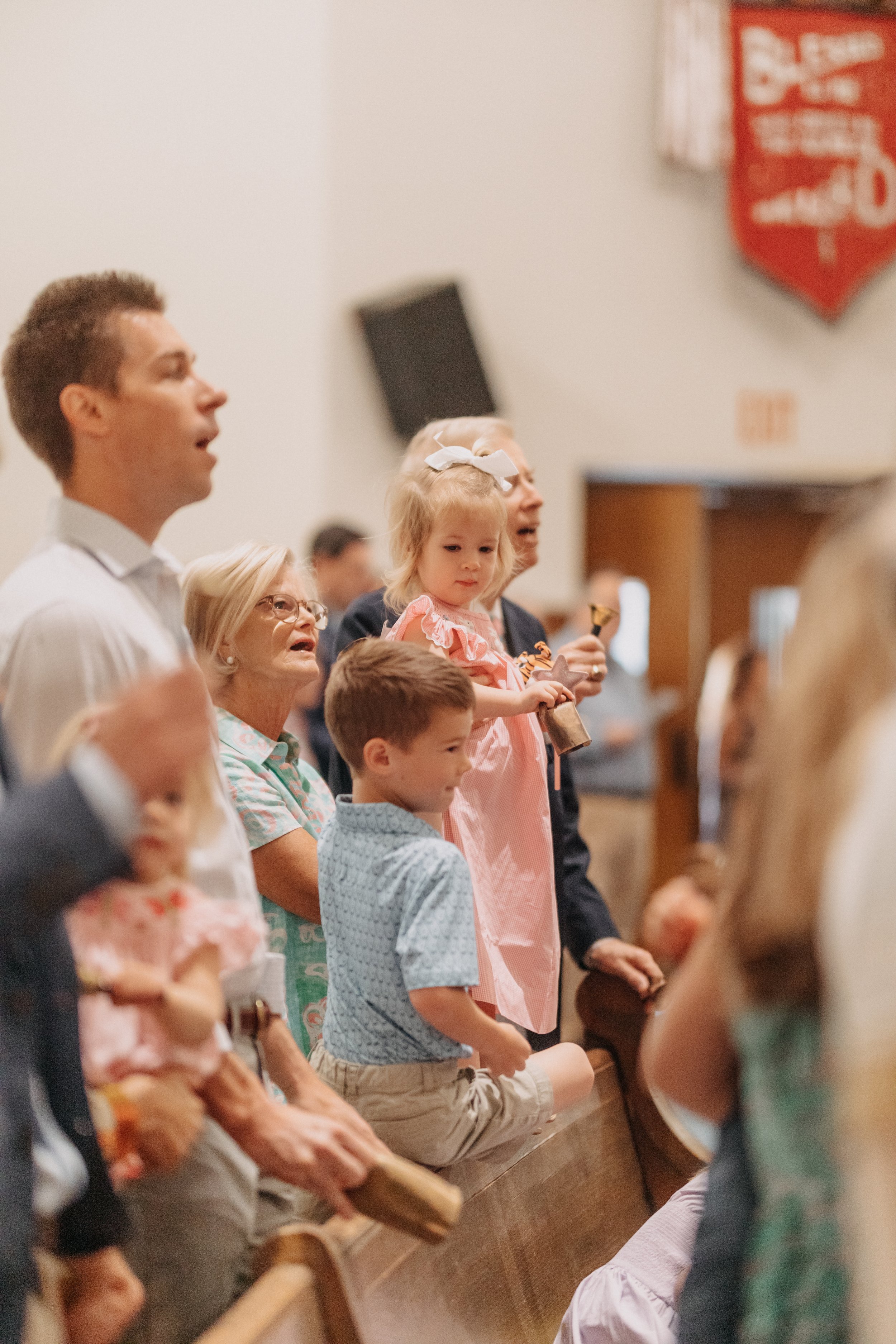
“One girl's favorite part of Easter was remembering her own baptism!”
“‘I can wait’ (from a child who has struggled to wait).”
“At the Shrove Tuesday dinner, one of the toys set out for the kids broke, so one little girl tracked down Rev. Dan in the crowd to get him to fix it. I love her conviction that the pastor of her (fairly large!) church was someone who would know her and care about her problems.”
“One of the children a few weeks ago randomly came up to me and told me that her sister was sick. I asked what was wrong and she told me that she had a cold and that her mommy gave her medicine. I offered to pray for her sister and she said ‘no’, smiled, and the skipped away to go play with the blocks. It stuck with me because this happened in less than a minute and was absolutely hilarious, but I still prayed for her sister in my own personal time. It made me realize that we still get the privilege to pray for people that we’ve never met and sometimes people don’t want a prayer in the moment. They just want someone to talk to. I may not have been able to heal her sister or give her a lesson on what the meaning of prayer was in that particular moment, but I was able to be an available ear and show concern and I hope one day she gets that same personal experience with God if she hasn’t already.”
“Without being prompted to apologize, one boy looked at his friend right in the eye and said, ‘I’m sorry for being mean, will you forgive me.’”
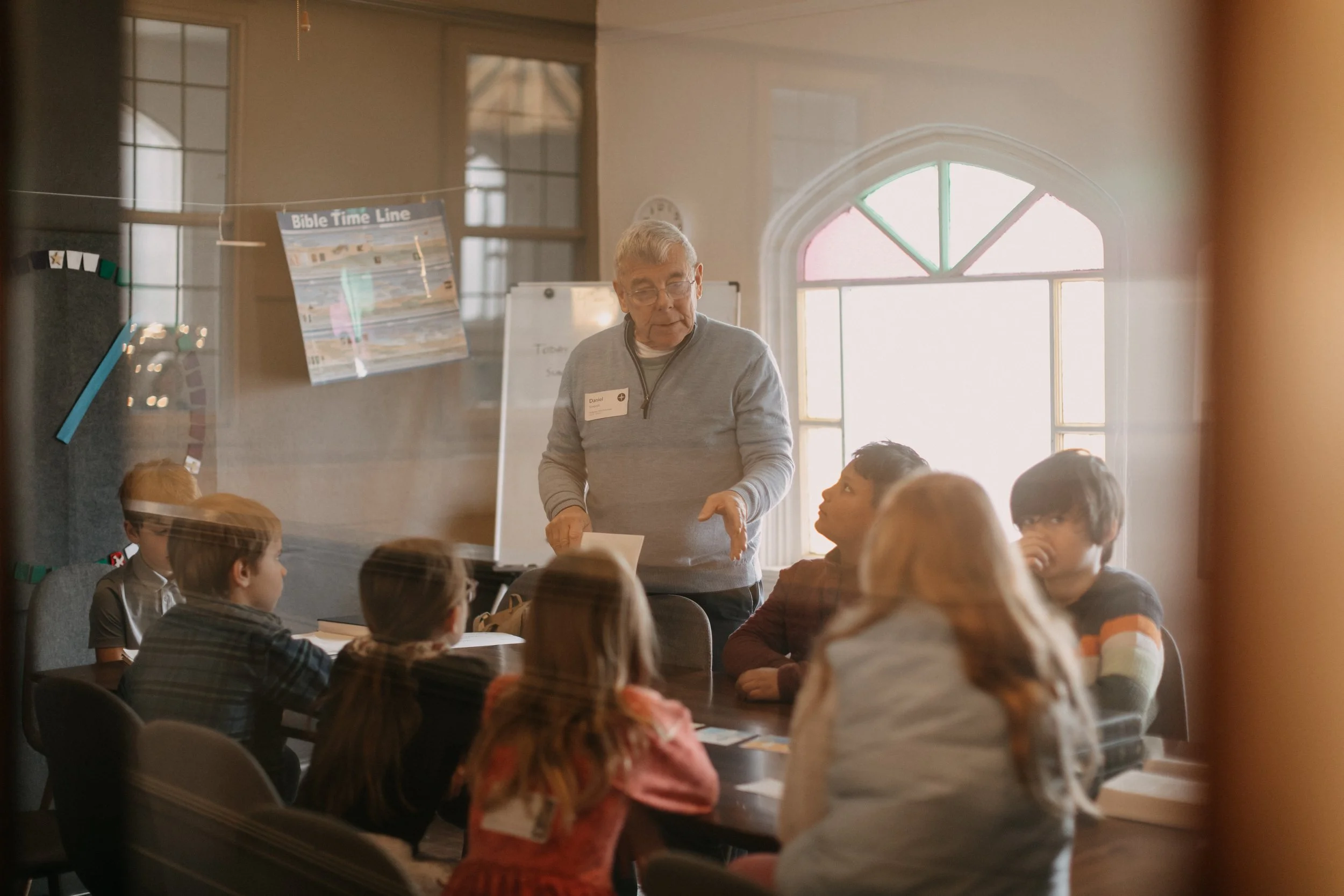
“A little girl in the nursery has made it very clear that she's a big fan of Aubie the Tiger.”
“One girl patiently held her hand high in the air for the majority of our teaching time, and when she was finally called upon for her urgent question, she proceeded to tell us all about the new record player that she got in her house.”
“One teacher asked the kids to share their name and then one thing they wanted to tell God. When we got to one boy, we asked him to say his name and with so much emotion he said, ‘I can’t answer that question, I need to answer the next one. I want God to know that my family is going to have a new baby!!!’”

Renewing Our Membership Commitments
May is pledge month at Redeemer. During this time we encourage all members to make Membership Commitments which involve giving Time, Talent, and Treasure to the Lord Jesus through his body, the Church. Whether you are becoming a new member this month or are a returning member, this is an important action item for all of us. Pledging provides important information to our Vestry and Ministry Leaders to make wise and strategic plans for our parish.
Redeemer Family,
May is pledge month at Redeemer. During this time we encourage all members to make Membership Commitments which involve giving Time, Talent, and Treasure to the Lord Jesus through his body, the Church. Whether you are becoming a new member this month or are a returning member, this is an important action item for all of us. Pledging provides specific information to our Vestry and Ministry Leaders to make wise and strategic plans for our parish.
Now, if you are not yet a member, this is for you as well. One of the best ways to “try Redeemer on” is to practice living as a member before actually taking that step of commitment.
If you are ready to pledge, here’s the link. Every adult is required to submit a pledge (households can make their financial pledges together.) Every adult regular attender is encouraged to make a pledge, but not required. Please note that your yearly financial pledge goes towards our standard operational budget. Redeemer staff is in the process of planning an upcoming capital campaign for 1801 Park Ave., and we’ll share more details as plans take shape.
If you’re a little fuzzy on what those membership commitments are or if you’d like a refresher, keep reading!
MEMBERSHIP COMMITMENTS
PREAMBLE
The commitments of membership are not designed to be burdensome or onerous. Though our sinful human tendency is to view all rules and expectations as constraints on our freedom, we want to embrace these commitments wholeheartedly - recognizing that they are for our good and the good of our fellow members in the church and our neighbors outside the church.
THE 3 MEMBERSHIP COMMITMENTS
TIME — A member commits to making participation in Sunday worship and in small group fellowship a regular part of their weekly habits. Of course while it is understood that travel schedules and illness may often keep us from participating 100% of the time, we want to say together as members, “we will make it a priority to be together.”
Key Belief: There is no such creature as a member who rarely worships with us on Sunday or refuses to join a small group.
Key Action Item: Register to lead or participate in a Small Group for the fall of 2026.
TALENT — A member commits to volunteering their talents and gifts within the church. This may take the shape of formally joining a ministry team (or two or three), or volunteering in some other special capacity. Of course while it is understood that travel and work schedules may make this a challenge; we want to say together as members, “we will make it a priority to serve one another and our neighbors.”
Key Belief: There is no such creature as a member who is too busy to ever volunteer their time for the church.
Key Action Item: Register to volunteer on a ministry team for the coming year.
TREASURE — A member commits to submitting a financial pledge each year and giving of their financial resources to the mission and work of the church. Of course, the resources of each individual and household will vary widely; this is to be expected within an economically diverse church. Our generosity is not predicated upon the achievement of a particular level of financial success or comfort, but rather upon Christ’s call for us to simply give sacrificially. Our giving honors the Lord (who is the giver of all good gifts), forms us (helping us grow in dependence on God), and provides for the work of the church (which is a benefit to ourselves and others).
Key Belief: There is no such creature as a member who is unwilling to give any of their resources back to the Lord by giving to the church.
Key Action Item: Register your financial pledge for the September 2026 - August 2027 fiscal year.
If you’re ready to take these steps, click here to submit your pledge.
Here are some commonly asked questions about membership commitments:
What is a Pledge?
A pledge is your communication with our Ministry Leaders, Vestry, and Finance Team regarding what you anticipate you will be able to contribute to Redeemer in the next ministry year (September 1, 2026 - August 31, 2027). Your commitment allows Redeemer’s leadership to accurately assess what resources we have to steward and how they can best be utilized.
Why are Pledges Important for the Vestry & Finance Team?
Redeemer’s fiscal year runs from September 1 - August 31. The Vestry and Finance Team will be spending the summer drafting a new budget for the coming year of ministry. What a gift it would be to them if they knew ahead of time what the congregation planned to give! Your clear communication helps our church draft careful, informed, strategic plans for funding the ministry of the coming year.
Why are Pledges Important for Me?
While pledging is imminently practical and helpful for our church leadership, it’s more than that. Pledging is also an opportunity for your heart to be shaped by God. Why? Because how we use our resources both reveals and guides what God is doing in our hearts. When your church asks you to pledge, you are being asked to open your calendar and bank account to the Lord and ask Him, “How would you have me use the resources you have entrusted to me?” It’s a wonderful question that all of us should be asking on a regular basis.
What Pledging is NOT
Pledging is not an attempt to raise Redeemer’s volunteer and small group rosters. Nor are we trying to increase our budget or meet a financial shortfall. We are grateful to report that our parish is in a healthy and strong position financially. Pledging is not about fixing something that is broken, but rather about us continuing to grow spiritually together.
Can my financial pledge be designated for 1801 Park Ave.?
Your yearly financial pledge goes towards our standard operational budget. Redeemer staff is in the process of planning an upcoming capital campaign for 1801 Park Ave., and we’ll share more details as plans take shape.
Deadline for Pledging
The deadline for pledging is Friday, May 29. Please do not wait until the last minute! Very real decisions and plans for the coming year of ministry will be made based on the pledging data that our leadership receives.
If you have more questions, please feel free to reach out to a member of our Staff, Vestry, or Finance Team and they will be glad to assist you. Let’s aim for 100% participation here!
Warmly,
Redeemer’s Staff, Ministry Leaders, Vestry and Finance Team

Ascension, Pentecost, and Trinity Sunday
As Eastertide draws to a close we look towards significant days in our church calendar: Ascension Day, Pentecost, and Trinity Sunday. Each of these days are invitations to remember and enter more deeply into the story of Christ and the life of his Church.
The following devotionals have been prepared for meditating on Christ’s reign, the gift of the Holy Spirit, and the mystery of a Triune God, written and illustrated by one of our deacons, Ben Lansing.
As Eastertide draws to a close we look towards significant days in our church calendar: Ascension Day, Pentecost, and Trinity Sunday. Each of these days are invitations to remember and enter more deeply into the story of Christ and the life of his Church.
The following devotionals have been prepared for meditating on Christ’s reign, the gift of the Holy Spirit, and the mystery of a Triune God, written and illustrated by one of our deacons, Ben Lansing.
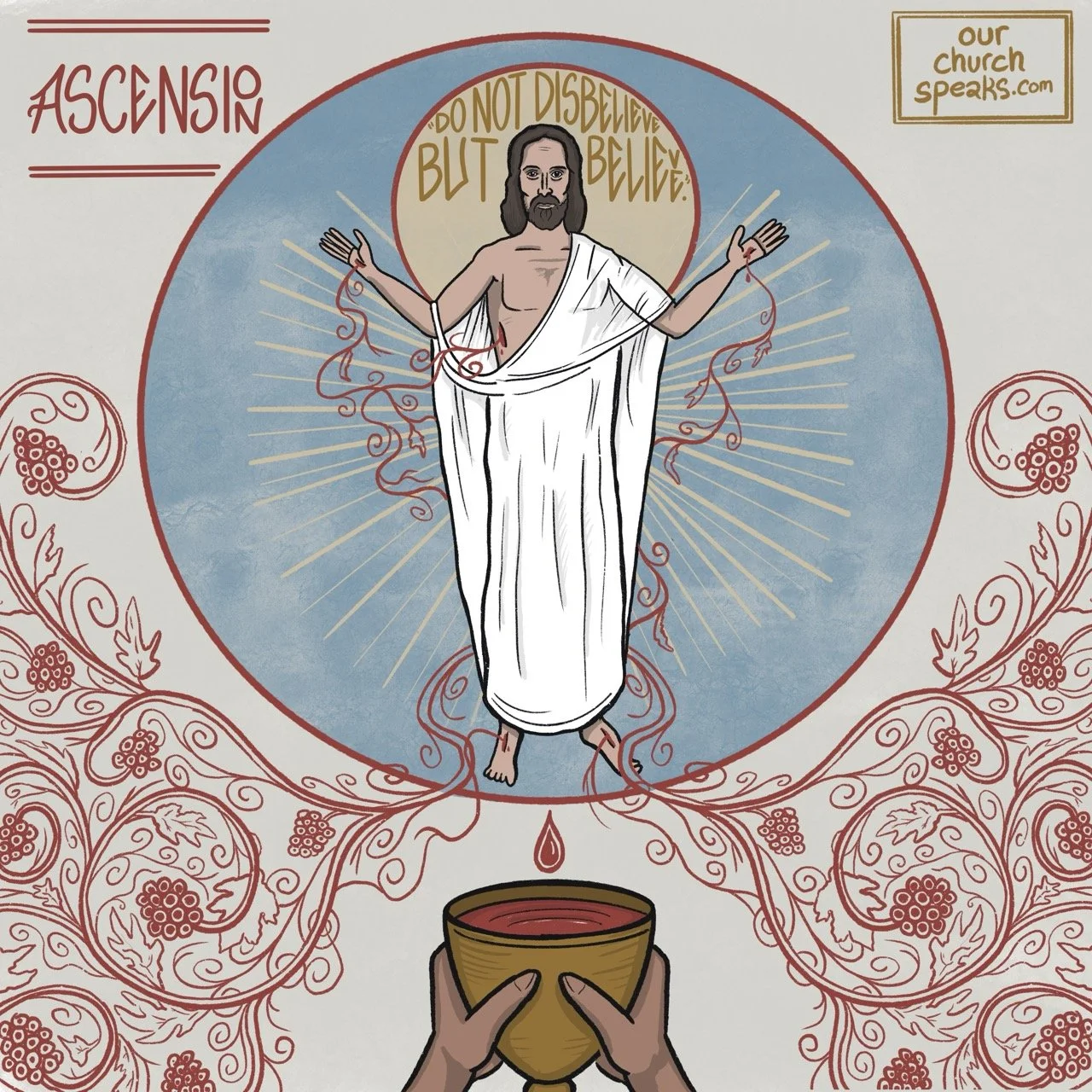
ASCENSION DAY
May 14, 2026 (Forty Days after Easter)
“So then the Lord Jesus, after he had spoken to them, was taken up into heaven and sat down at the right hand of God.” — Mark 16:19
“I am with you always” — Jesus (John 20:27)
Forty days after Easter Day, the church observes Ascension Day, recognizing the astonishing moment when the resurrected Jesus ascended, body and soul, into heaven. After his resurrection, Jesus didn’t fade away like a ghost after a single, dramatic appearance; no, he remained with his disciples for an astonishing forty days. Over these five and a half weeks, over five hundred people witnessed the resurrected Christ. Jesus’ death had been publicly confirmed and now he was publicly confirmed as alive. This was no magic trick or religious illusion. It would be impossible to maintain such an elaborate deception for even a day, much less forty days. The resurrected Messiah fellowshipped with his disciples, took walks with them, taught them, and ministered to them during this period. He even cooked for them and ate with them. There was no denying that Jesus truly had been raised from the dead. He was alive. For decades after, the hundreds of stories of the resurrection witnesses were cross-examined and investigated by skeptics and proven true time and time again and the gospel spread with new generations of converts, convinced that Jesus Christ was the living God.
At the culmination of these forty days, Jesus lifted up his hands and blessed his disciples and was suddenly “taken up before their very eyes, and a cloud hid him from their sight.” (Acts 1:9) Yet Jesus had not abandoned his disciples. “I am with you always,” Jesus said in his Great Commission (Matthew 28:20). And so he is. Jesus is the true vine (John 15:1) and all who are in Christ are grafted into him (Romans 11:17). He is still present in his body and his blood, giving us life and love, wisdom and truth. He is interceding for us now before the Father (Hebrews 7:25), giving us a seat with him in the heavenly places (Ephesians 2:6). He continues to minister to us today, through his Spirit, as we await his coming again in glory and power at the very end of the age.
Practice
Take an Ascension Hike. Hike up a hillside or climb a mountain the week of Ascension Day in imitation of the Lord’s journey up the Mount of Olives on the way to his ascension.
Prayer for Ascension Day
Almighty God, whose only-begotten Son our Lord Jesus Christ ascended into heaven: May our hearts and minds also there ascend, and with him continually dwell; who lives and reigns with you and the Holy Spirit, one God, for ever and ever. Amen.
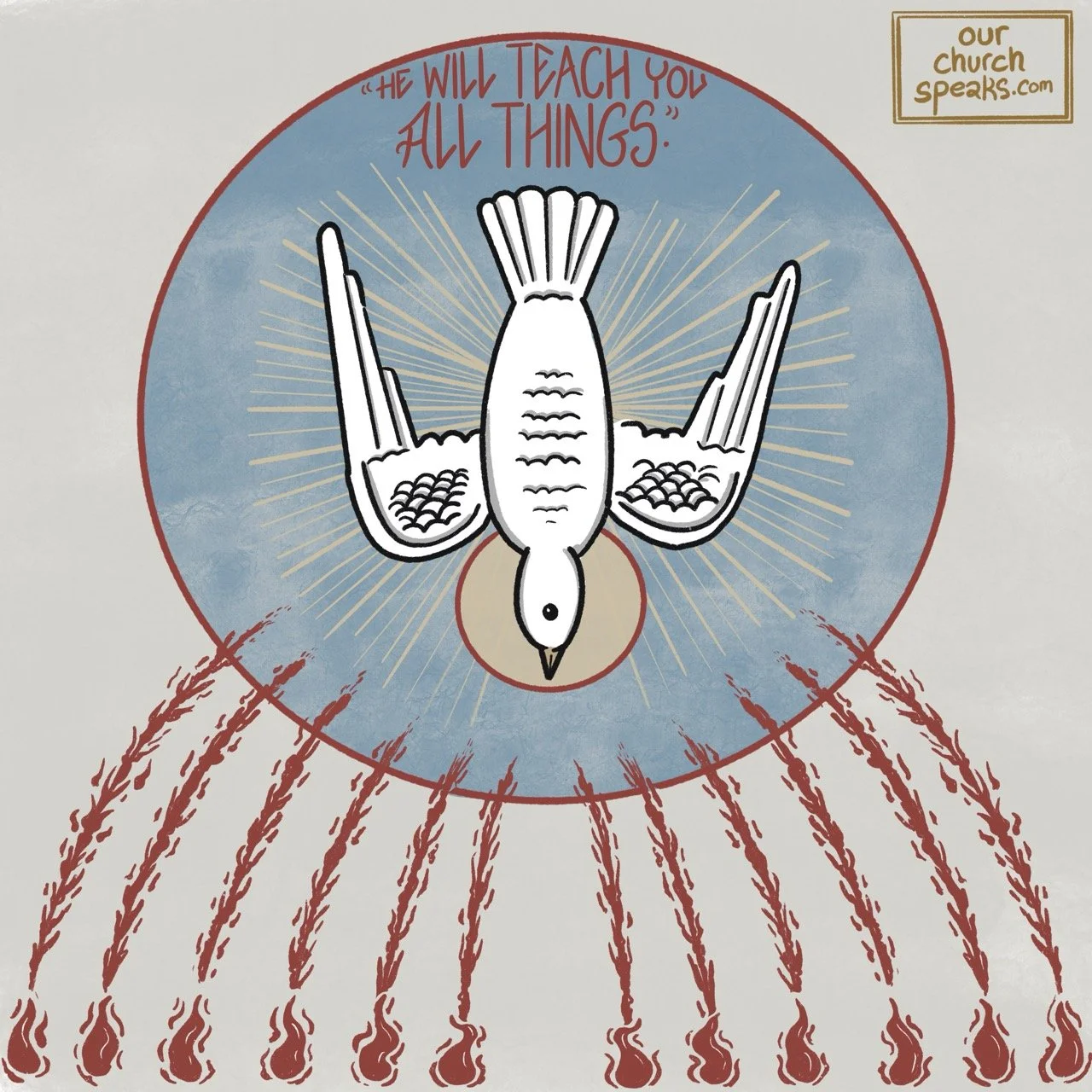
Pentecost
May 24, 2026 (Fifty Days after Easter)
“He will teach you all things.” — John 14:26
“When the day of Pentecost arrived, they were all together in one place. And suddenly there came from heaven a sound like a mighty rushing wind, and it filled the entire house where they were sitting. And divided tongues as of fire appeared to them and rested on each one of them. And they were all filled with the Holy Spirit and began to speak in other tongues as the Spirit gave them utterance.” — Acts 2:1-4
After his resurrection, Jesus gave his disciples the Great Commission, “Go therefore and make disciples of all nations, baptizing them in the name of Father and of the Son and of the Holy Spirit, teaching them to observe all that I have commanded you.” (Matthew 28:19-20) The good news of Jesus’ resurrection was intended for the entire world, and the disciples would be the ones to share it. But before they went, Jesus commanded them to wait. “Stay in the city,” Jesus said, “until you are clothed with power from on high.” (Luke 24:49) “You will receive power when the Holy Spirit has come upon you, and you will be my witnesses in Jerusalem and in Judea and Samaria, and to the end of the earth.” (Acts 1:8)
After Christ’s ascension into heaven, his disciples returned to the Temple in Jerusalem and worshipped God continually. As observant Jews, they believed that their Messiah had truly come and defeated sin and death through the power of his resurrection. But what next? Ten days later, when the Jewish feast of Shavuot arrived, the disciples met together in Jerusalem for the festival. Shavuot, called “Pentecost” by Greek-speaking Jews, because it fell fifty days after Passover, was a festival of first fruits, when God was given an offering from the land’s early produce. Ancient Jewish tradition connected this feast with the giving of the Ten Commandments to Moses on Mt. Sinai. But soon, Pentecost would take on the meaning of a new gift from God.
The book of Acts tells us that when the disciples were all together in one place, the sound of a rushing wind filled the room and the Holy Spirit fell upon everyone, manifesting himself in flames of fire. The disciples began speaking in the languages of the Gentile nations and they were enabled to fulfill Jesus’ Great Commission. Centuries earlier, the prophet Joel foretold, “God declares, that I will pour out my Spirit on all flesh, and your sons and your daughters shall prophesy.” (Joel 2:28) Now, in the presence of all, these promises were fulfilled. The disciples were once a scattered group, without direction. Now, through the Spirit, they were empowered for mission. Because of this, Pentecost is the birthday of the church.
On Pentecost Sunday, the church commemorates this great day of the Holy Spirit with red liturgical colors. Congregants are encouraged to wear red to church on Pentecost as a visible reminder that, through the power of the Holy Spirit, the church is now “clothed with power from on high.”
Practice
On Pentecost Sunday, be sure to wear red as a visual reminder of the descent of the Holy Spirit, manifested in tongues of fire.
Prayer for Pentecost
Almighty God, on this day, through the outpouring of the Holy Spirit, you revealed the way of eternal life to every race and nation: Pour out this gift anew, that by the preaching of the gospel your salvation may reach to the ends of the earth; through Jesus Christ our Lord, who lives and reigns with you, in the unity of the Holy Spirit, one God, for ever and ever. Amen.
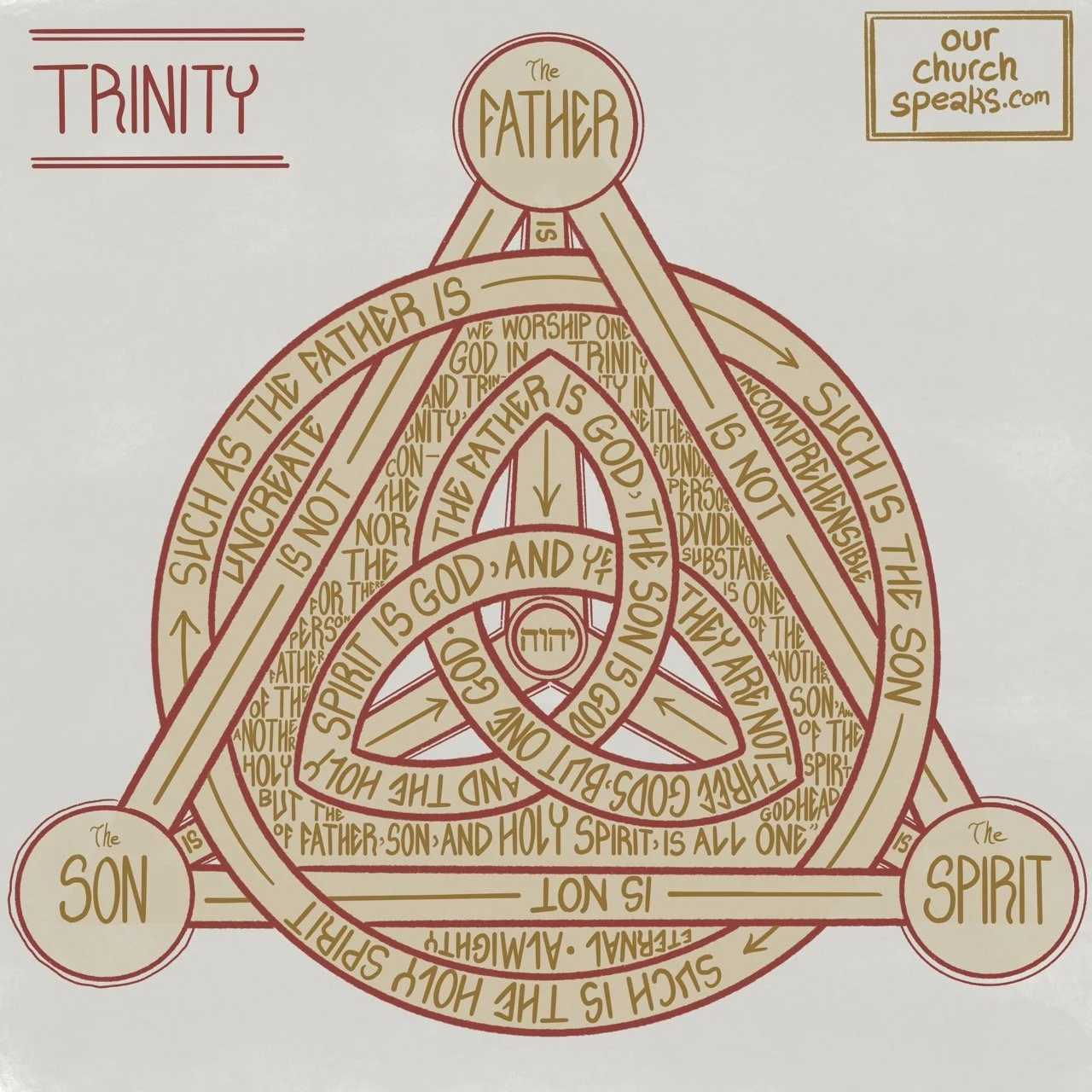
TRINITY SUNDAY
May 31, 2026 (The Sunday after Pentecost)
“Go therefore and make disciples of all nations, baptizing them in the name of the Father and of the Son and of the Holy Spirit.” — Matthew 28:19
“We worship one God in Trinity and Trinity in unity, neither confounding the person nor dividing the substance. For there is one person of the Father, another of the Son, another of the Holy Spirit. But the godhead of the Father, Son, and Holy Spirit, is all one… The Father is God, the Son is God and the Holy spirit is God, and yet they are not three gods, but one God.” — From the Athanasian Creed
On the Sunday after Pentecost, the church turns its attention to the mysteries of the Trinity. In both the Old and New Testaments, God reveals that he is One God in three persons, and throughout Scripture we are given insights into the eternal relationship of love within the Godhead. Christians since the 1st century have marveled at this intricate revelation and have carefully defined what Scripture says about this loving God we worship. The word “Trinity” does not appear in the Bible, but the identity of God that this word represents is found throughout Scripture. We have seen these Biblical, Trinitarian descriptions featured throughout the liturgical feasts. On Epiphany Sunday, the Father, Son, and Holy Spirit manifested at Jesus’ baptism, where God the Father proclaimed “this is my beloved Son” as the Holy Spirit descended upon Jesus. On Ascension Day, we heard Jesus tell his disciples to “go into all of the world, baptizing in the name of the Father, and of the Son, and of the Holy Spirit.” In the Nicene Creed, the word “Trinity” is used to describe God’s revelation of himself and, later, the much longer Athanasian Creed was written to elaborate on the truths defined by the Nicene Creed. In many churches, the Athanasian Creed is read or sung in the Trinity Sunday liturgy as an act of praise and recognition of the profound and glorious nature of the God we serve.
Practice
Take several minutes to read through the Athanasian Creed, one of Christianity’s most detailed statements of Trinitarian doctrine (you can find it in the Book of Common Prayer 2019 edition on pg. 769). Named after the African theologian Athanasius of Alexandria (c. 296-373), this creed’s complexity points to the fathomless, infinite, incomprehensible holiness of our loving God who is simultaneously the author and origin of humility and simplicity.
Prayer for Trinity Sunday
Almighty and everlasting God, you have given to us your servants grace, by the confession of a true faith, to acknowledge the glory of the eternal Trinity, and in the power of your divine Majesty to worship the Unity: Keep us steadfast in this faith and worship, and bring us at last to see you in your one and eternal glory, O Father; who with the Son and the Holy Spirit live and reign, one God, for ever and ever. Amen.
Additional Resources
Our Church Speaks
A teaching series about saints from every era and place, with art and history by Ben Lansing (includes art and biographies of over 250 saints, along with a podcast cohosted with D.J. Marotta, and an illustrated devotional book written with D.J. Marotta.)Our Church Year
An upcoming illustrated book by Ben Lansing & D.J. Marotta about feasts and fasts of the church liturgical calendar. Sign up here to stay in the loop on updates about this book.Prints of the artwork featured in this article are available here.
A downloadable version of these devotionals are available here.
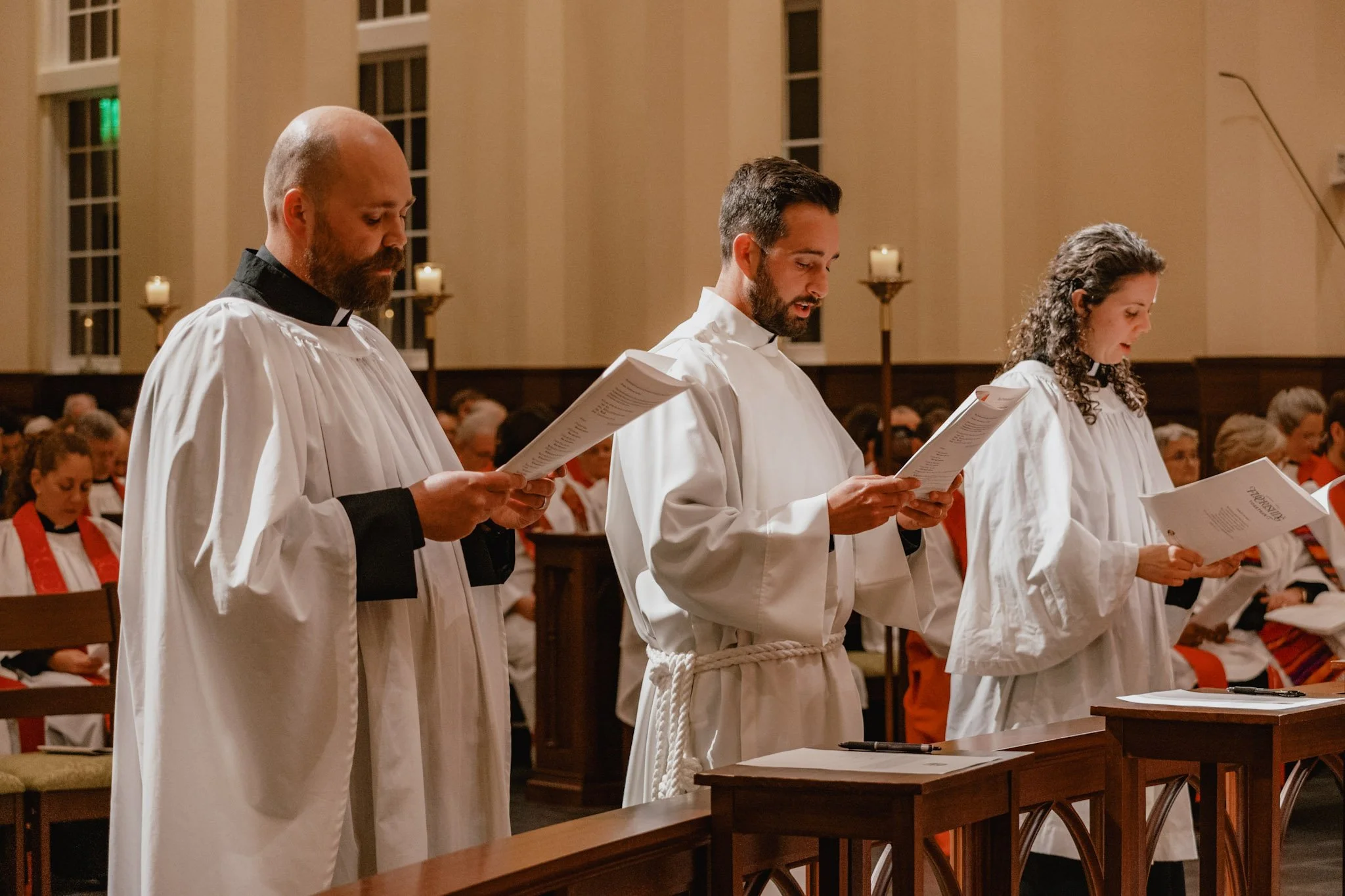
Celebrating the Ordination of Will Clark
-
Redeemer Family,
On Sunday evening, May 17, one of our CCO college ministers, Will Clark, will be ordained to the priesthood!
Now, I would imagine that some of those words may be unfamiliar to a few of you, so let’s brush up on our old-school vocabulary:
Ordained: This refers to the New Testament practice of church leaders laying hands on a person and praying for them in order to ask the Holy Spirit to set them apart for a particular area of responsibility and ministry in the church. There are three orders of ordination practiced by most Christian traditions: Deacons, Priests, and Bishops.
Priest: The word “priest” actually comes from the Greek word for “elder,” presbuteros. (Presbuteros -> presbyter -> proster -> priest, if you were curious.) The priest is a chosen leader in a congregation, vetted by members of the church and approved by them and the bishop for ordination, and is responsible for maintaining orthodoxy in the teaching and overseeing the proper celebration of the sacraments within the parish. We may also call him or her, appropriately, pastor (shepherd) since they are responsible for caring for the spiritual needs of the members of the church. The priest celebrates Communion, baptizes, marries couples, and proclaims God’s forgiveness and absolution of the people’s sins after they confess either in the service or in private.
Deacon: This word comes from the Greek for slave or servant, diakonos. The deacon is responsible for helping serve at the Communion Table during worship and leading the congregation in serving the poor, hungry, and needy both inside and outside the church. Two types of deacons exist: transitional deacons seek to be ordained as priests and vocational deacons intend to remain deacons.
Diocesan: This word refers to our diocese (The Diocese of the Mid-Atlantic) which, for us, is a regional network of churches in Virginia, D.C., and Maryland.
Synod: This is simply an old word for an annual gathering of clergy and other church leaders.
Will Clark has been in ordination process for a number of years now which includes a written application, in-person interviews and exams, psychiatric evaluation, seminary study, assigned reading, ministry experience, and recommendations from the Vestry and Rector of their parish. He was ordained to the diaconate last year, and I’m grateful for the continued hard work and dedication that Will has shown through this process.
Well done, brother!
If you are able, please join us in celebration by attending Will’s ordination service at 2715 Grove Ave., followed by a reception (*reception details to come). It is also appropriate to take a moment to pray for Will, that the Holy Spirit would further equip him for the labors that lie ahead.
O Lord Jesus, who art the Good Shepherd that careth for thy flock: We beseech thee to bestow upon thy Church the gifts of the Holy Spirit in abundance, and to raise up from among us faithful and able persons called to the ministries of Deacon, Priest, and Bishop. Inspire them to spend and be spent for the sake of the Gospel, and make them holy and loving servants and shepherds of the flock for whom thou didst shed thy most precious blood. Grant this for the sake of thy love. Amen.
INVITATION FOR THOSE WHO SENSE A CALL TO MINISTRY
Now, as you’re reading this, you may be someone who has wondered whether or not you are called to ordained ministry. If that’s you, we would love to hear from you and help you with the discernment process.
Christian discernment is best practiced together, not alone.
You can find further information about the ordination process here, and we would be glad to walk you through it if you have any questions.
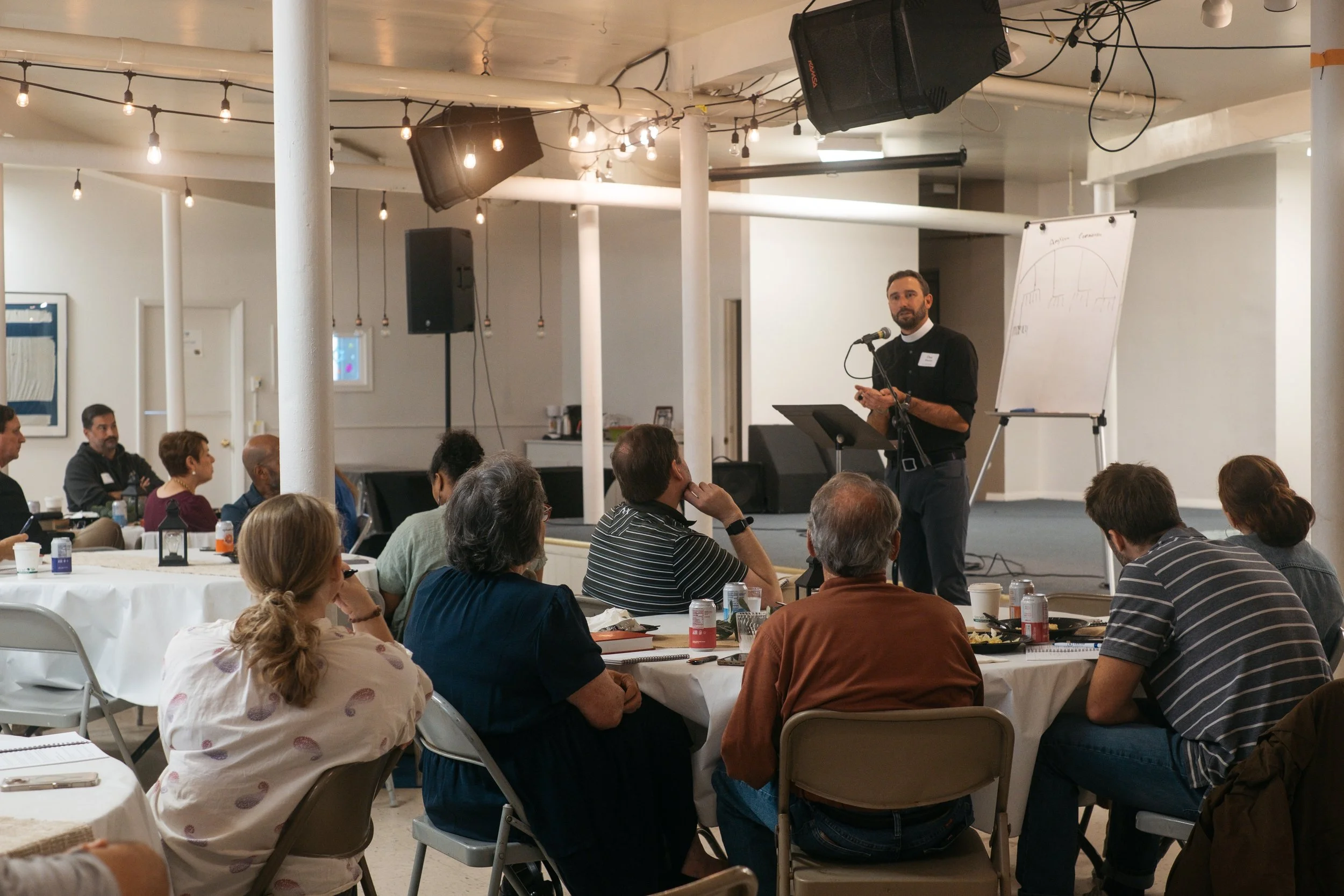
Summer Catechesis Classes
As summer approaches each year, there’s a word that starts to echo in my mind – “scatter.” It often feels like our church scatters for the months of June and July, as we plan trips to see family, or cross off beautiful and far-off destinations from our bucket lists, or lug trunks and duffel bags to campgrounds in the mountains.
As summer approaches each year, there’s a word that starts to echo in my mind – “scatter.” It often feels like our church scatters for the months of June and July, as we plan trips to see family, or cross off beautiful and far-off destinations from our bucket lists, or lug trunks and duffel bags to campgrounds in the mountains.
Many of you might be used to seeing Redeemer’s summer calendar dedicated to Book Clubs. Some of you have led thoughtful discussions on great works of history, theology, fiction, art, and so on. Thank you for your labors! Please keep reading good books and gathering to share what you’ve learned! This summer, we’re trying on something new. We're going to focus our program calendar towards a more intentional and comprehensive Christian catechesis.
If you’re not familiar with the word “catechesis,” it's simply an old word the church has used for a long time to describe the work of teaching children and adults the ways of God’s people. We actually get the word “echo” from the same Greek root. Picture generations of Christians “echoing” back and forth to each other and to those who come after them the story of who God is and what he has done for his people in the person and the work of Jesus Christ. Of how then we are meant to live out our days in light of that truth.
As we continue to grow as a church family, we hope to provide more regular opportunities for Catechesis classes each year that will teach the basics of the Christian faith and address a wide reach of applications. Over the course of one year, you’ll see core classes like Beginning with Christ, Believing in Christ, Belonging to Christ, and Becoming Like Christ. And throughout a given year you’ll see classes that address more specific themes of the Christian life like how to care for your body, how to navigate seasons of singleness, dating, and marriage faithfully, or how to parent with abundant grace. And so, Redeemer family, the more years we spend together, the deeper and wider the chance for a thorough catechesis to form us in the gospel story, and the more we bear out a missional presence in all areas of our lives.
Amidst all the scattering you and your household may do this summer, I want to encourage you to save time for one of our Catechesis classes.

The Rev. Lane Cowin
Senior Director of Ministries
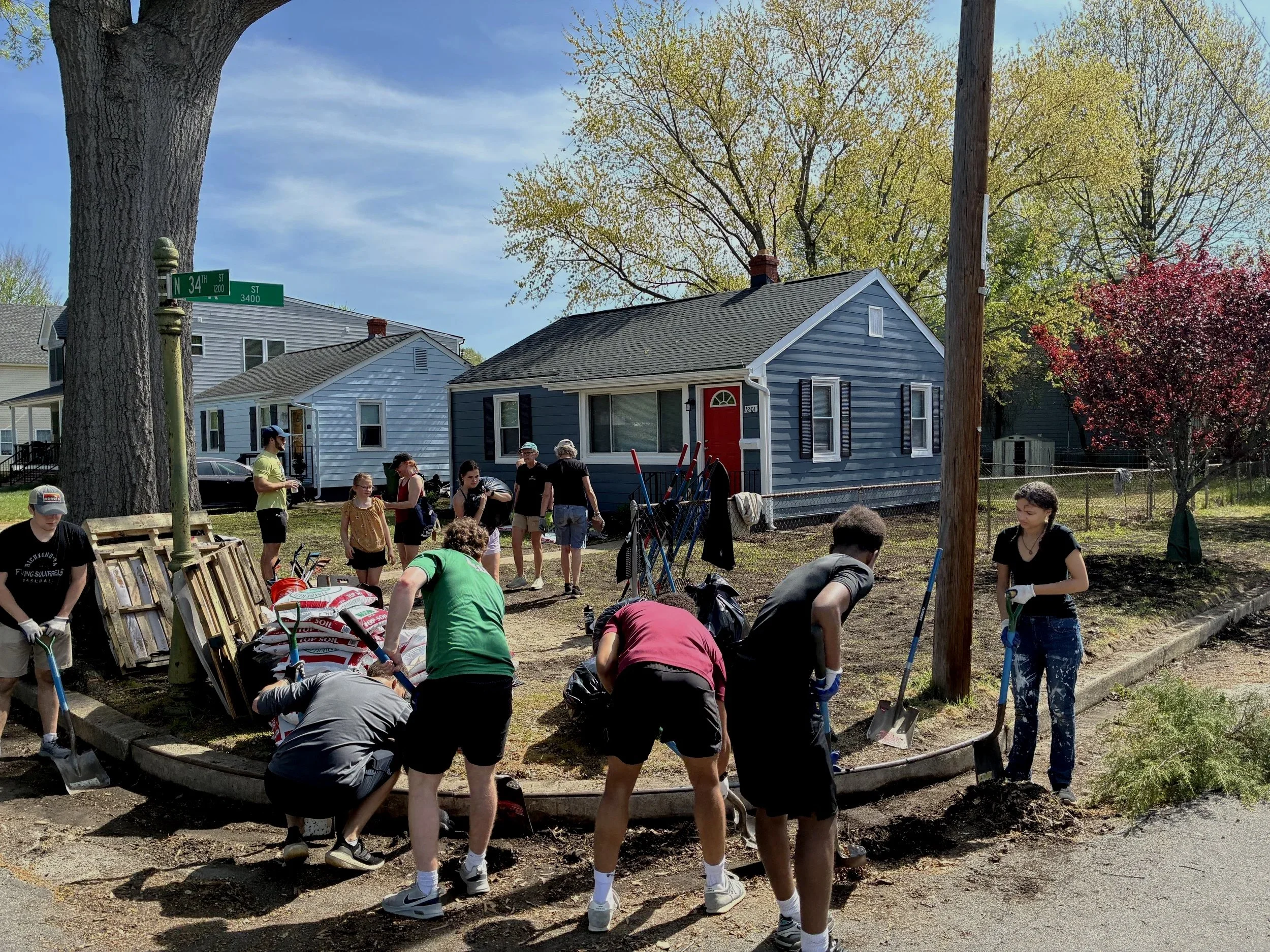
Anticipating New Life: Serving Our City on Holy Saturday
On Holy Saturday, volunteers of all ages gathered in Richmond’s East End to serve alongside one of Redeemer’s Justice & Mercy partners, Urban Hope, preparing newly acquired homes for families through landscaping and care. In the midst of hard work and tired bodies, the day became a living reflection of the hope of the cross.
What do we do on Holy Saturday as we wait with growing anticipation to celebrate the Resurrection? How about rip out weeds, lug mulch, and prep the ground for new life?
About forty volunteers, ranging from Youth Fellowship and college students to adults, gathered Saturday morning in the East End of Richmond to come alongside Urban Hope in their mission to provide affordable housing. Redeemer's past three work days have been spent on outdoor maintenance and landscaping, allowing Urban Hope to provide not only a shelter for families, but space to build community and houses to reflect the light of Jesus to the neighborhood. One of the ways Urban Hope gets to show care for their tenants is by taking good care of the outsides of these houses.
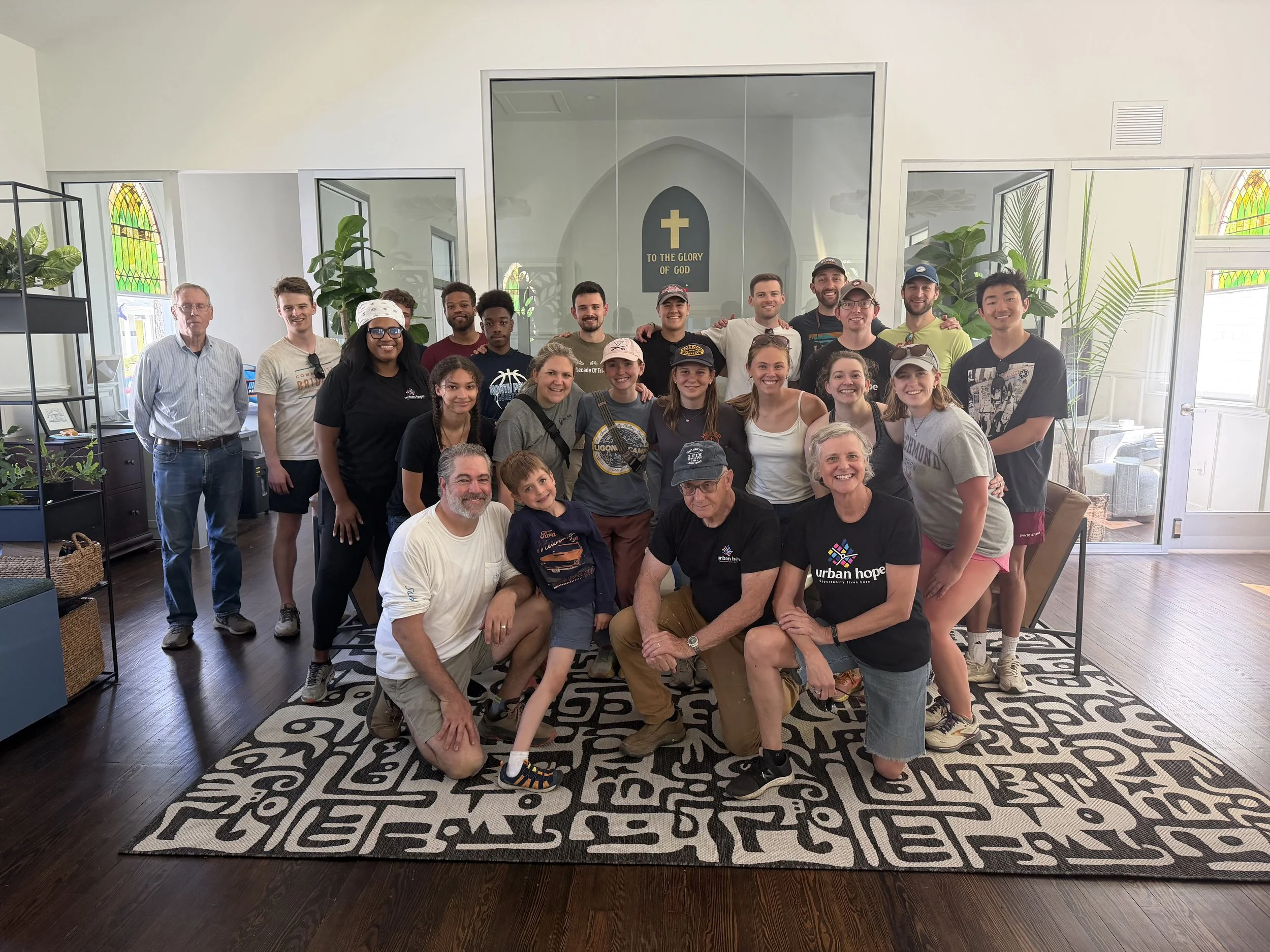
This year, we were at two houses acquired by Urban Hope in December. Families have already moved in (the insides were move-in-ready), but the outside of both needed some work. CCO students from UofR and leaders were busy prepping the yard for seeding and cutting new flower beds along the house. They made quick work of it. Redeemer volunteers and Youth Fellowship students joined other regular Urban Hope volunteers in building fences, laying top soil, cutting out and mulching new beds, and prepping the raised bed for planting.
While sweat dripped as I stood over a weed that was giving me particular trouble, I made eye contact with a friend. We both agreed this was hard, but I was reminded of my reflection on Good Friday. The cross would have been bloody, the ground around stained with the blood that had dripped from the wounds of Jesus. And yet that blood was exactly what, three days later, would cause flowers to bloom (an image beautifully represented by the flowering of the cross outside of Redeemer on Easter). Because of the cross, our sweat working against the evil of weeds that overtake, and grass that spreads in all the wrong places, is not in vain. Our sweat leads to new life. It was a gift to work hard and struggle alongside my brothers and sisters. We were tired, many weak from fasting, but hopeful too. Because of the cross, the hardships of this world don’t get the final say. Sunday is coming!
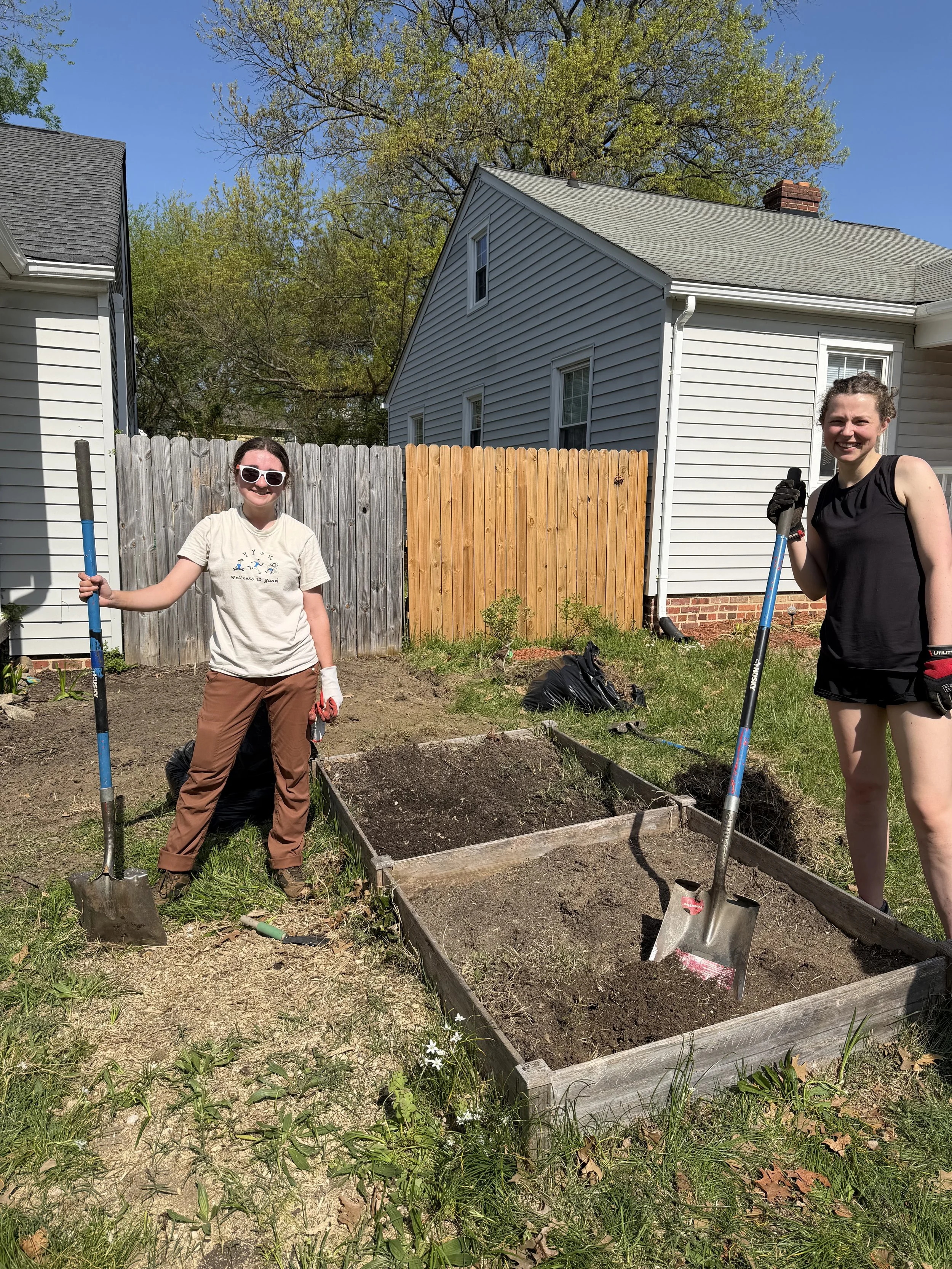
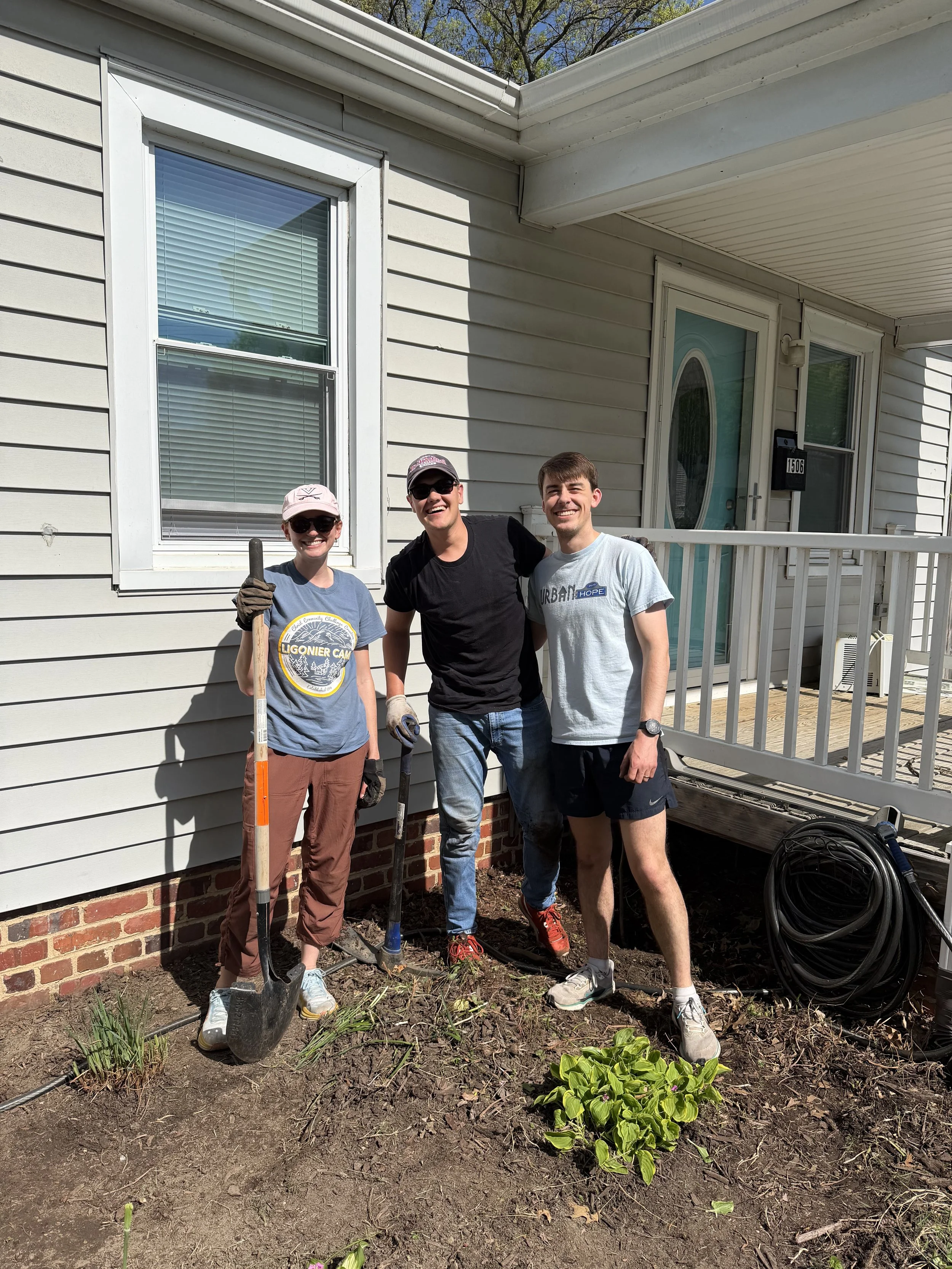
Finished and tired, we gathered together for lunch and heard a bit more about Urban Hope's vision. They currently have 45 units being rented to families at a range of affordable prices, matching their ability to pay. Nine more units are in the pipeline. Urban Hope also offers financial health classes open to the community. They seek to care for and teach individuals about finances with a heart for the whole person, not just their budget. Carolyn, the director of programs and teacher of these classes, explained beautifully that the goal isn't just for participants to have a different relationship with money, it's that they themselves become different, and from that place they are able to use their money differently. That's the only way change lasts.
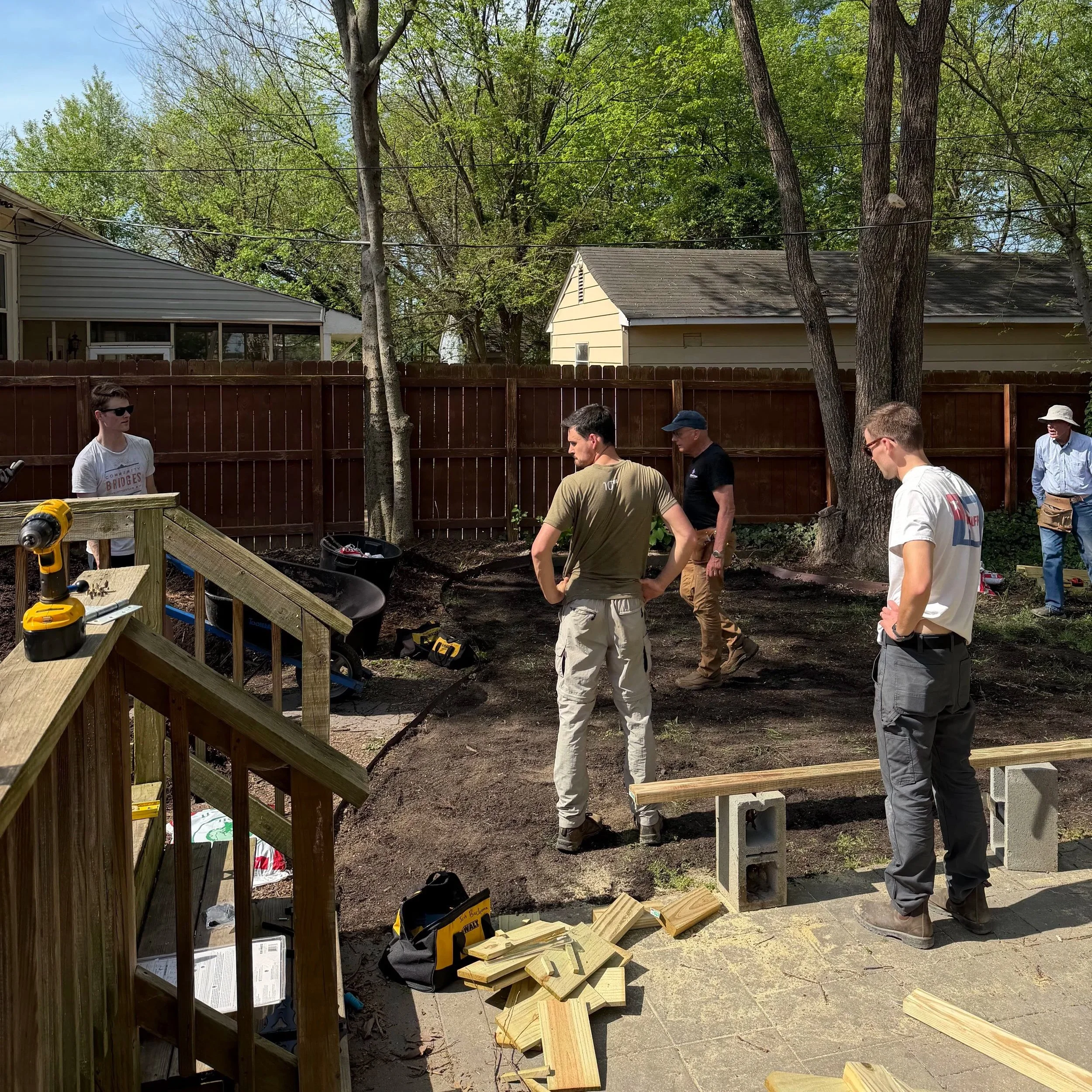
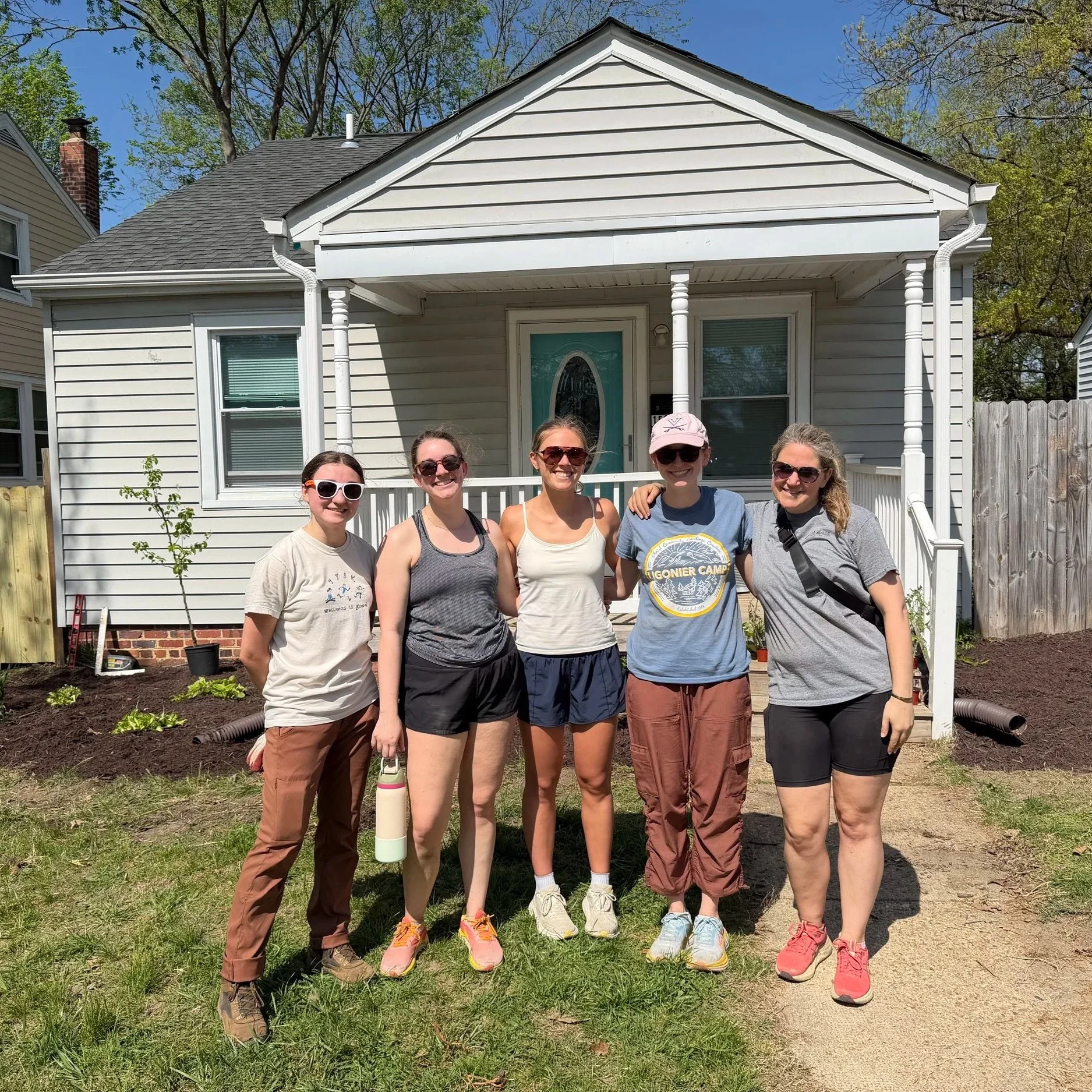
It’s truly an honor to support Urban Hope financially as a Justice & Mercy partner, as well as physically in our work days. In the fall, we plan to return to these two houses to plant. If you are knowledgeable about plants and/or may have plants to share (split from your own garden or purchased) please reach out to Isabelle Huggard. Redeemer is excited to continue to grow our relationship with Urban Hope and be a part of the great work they are doing.
Isabelle Huggard
Justice & Mercy Liaison — Urban Hope
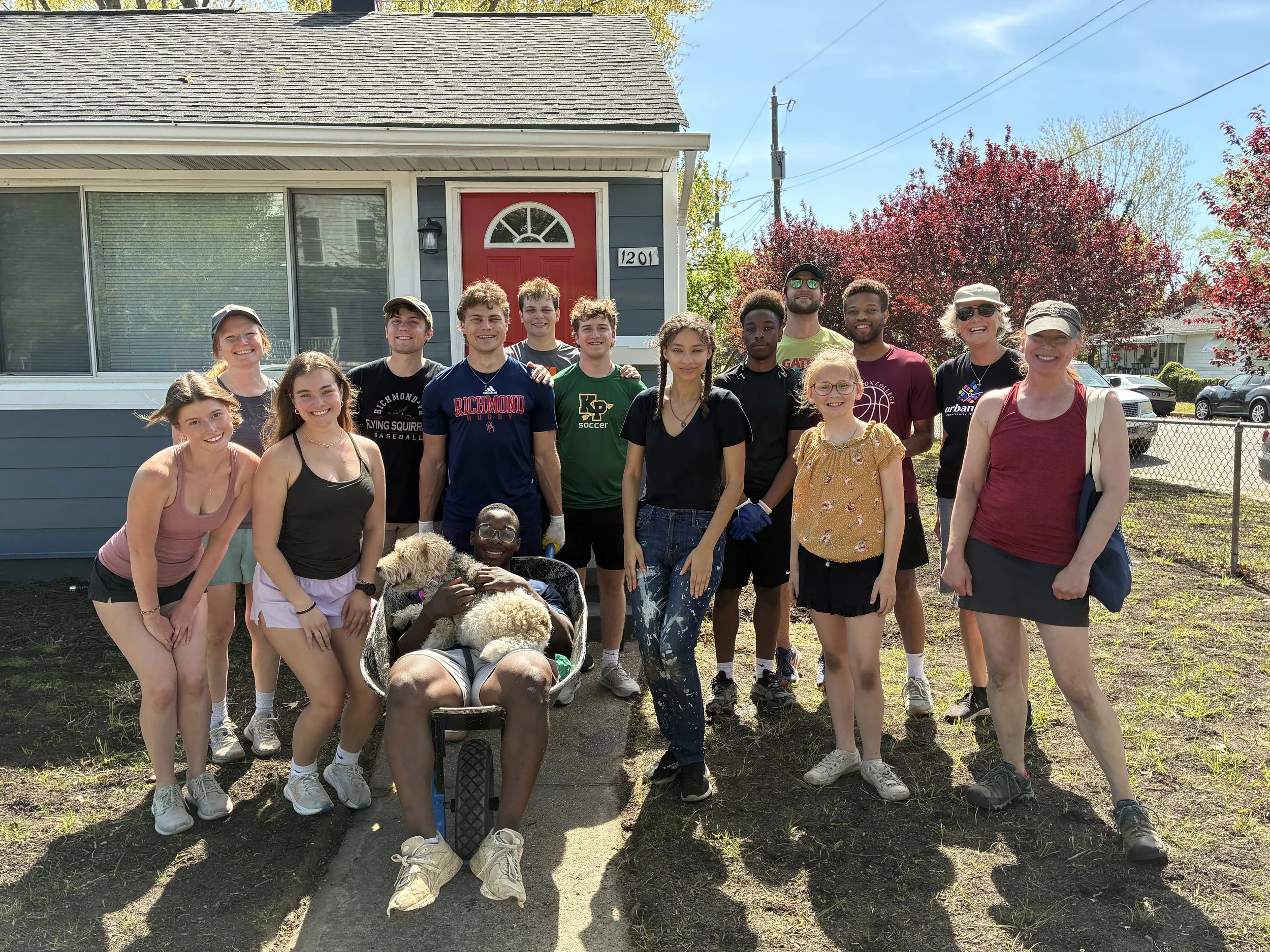
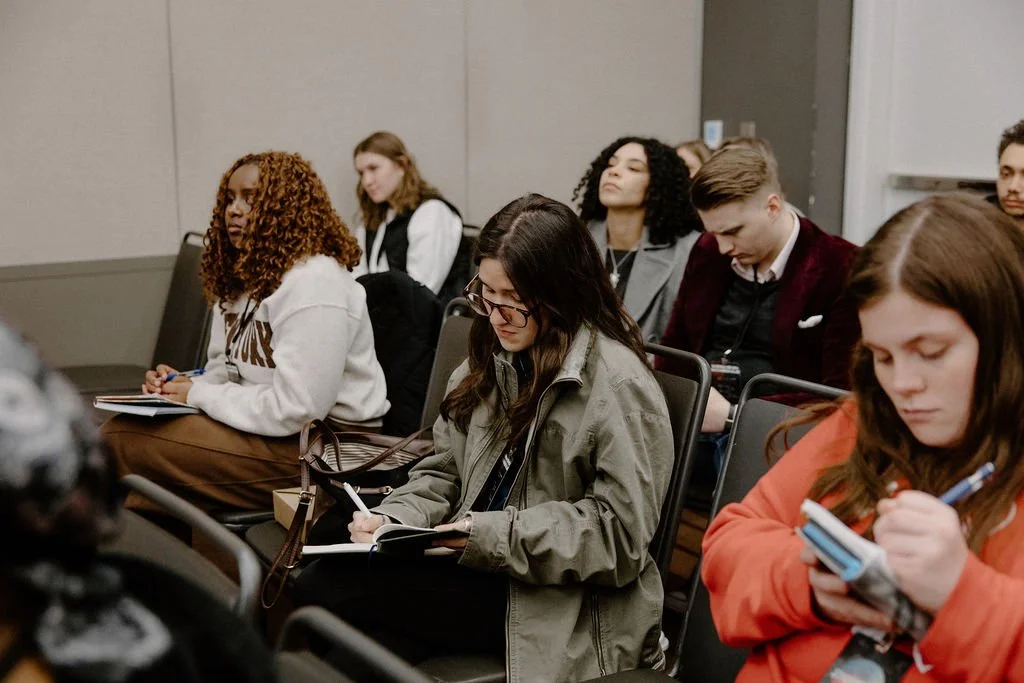
Living the Gospel Story
One of the core aims of CCO, the national college ministry which our parish partners with for our college ministries at UR and VCU, is for college students to gain a vision for following Christ in every area of life. One of the ways that we try to equip our students with this whole life vision for discipleship is through CCO’s annual Jubilee Conference.
One of the core aims of CCO, the national college ministry which our parish partners with for our college ministries at UR and VCU, is for college students to gain a vision for following Christ in every area of life. One of the ways that we try to equip our students with this whole life vision for discipleship is through CCO’s annual Jubilee Conference.
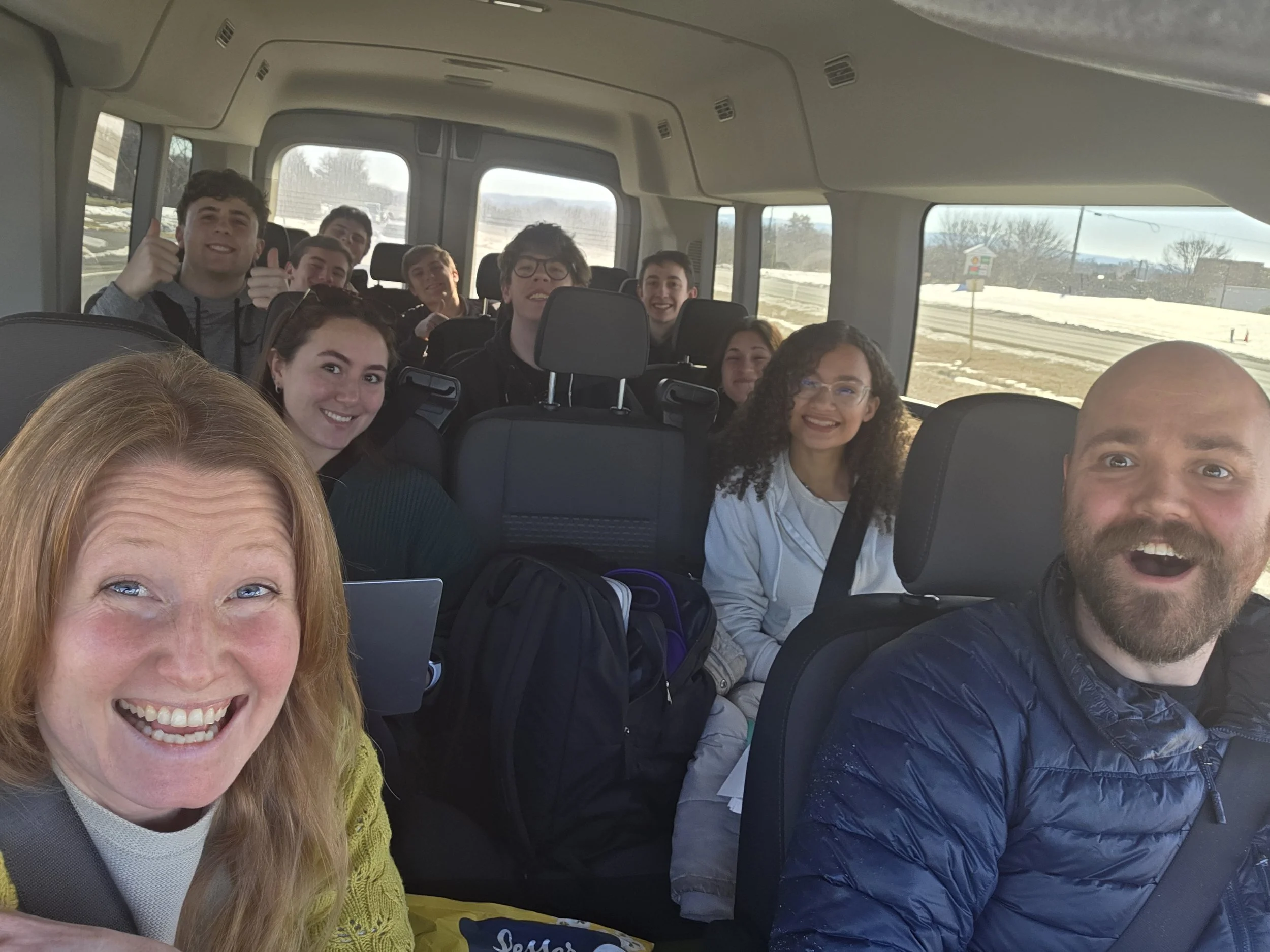
This year, Tee, Audrey, and I traveled with 18 students from UR and VCU to participate in Jubilee. We joined with CCO ministries from around the country for three days of worship, fellowship, and plenary sessions organized around the gospel story: Creation, Fall, Redemption, and Restoration. Perhaps the most unique thing about Jubilee is the diversity of the breakout sessions. Students are able to choose from a broad array of workshops, to learn about how the gospel applies to every area of life: friendship, business, medicine, education, visual arts, law, social media, artificial intelligence, evangelism, creation care, the Church, farming, poetry, and more.
“One thing I really loved about Jubilee was the breakout sessions, and especially the breakout about why you should join a local church. It taught me to really lean into the church and take advantage of things like intergenerational fellowship, corporate worship, and participation in the sacraments… Jubilee was a great experience, especially in college years when you are defining the ways you are going to live for the rest of your life.”
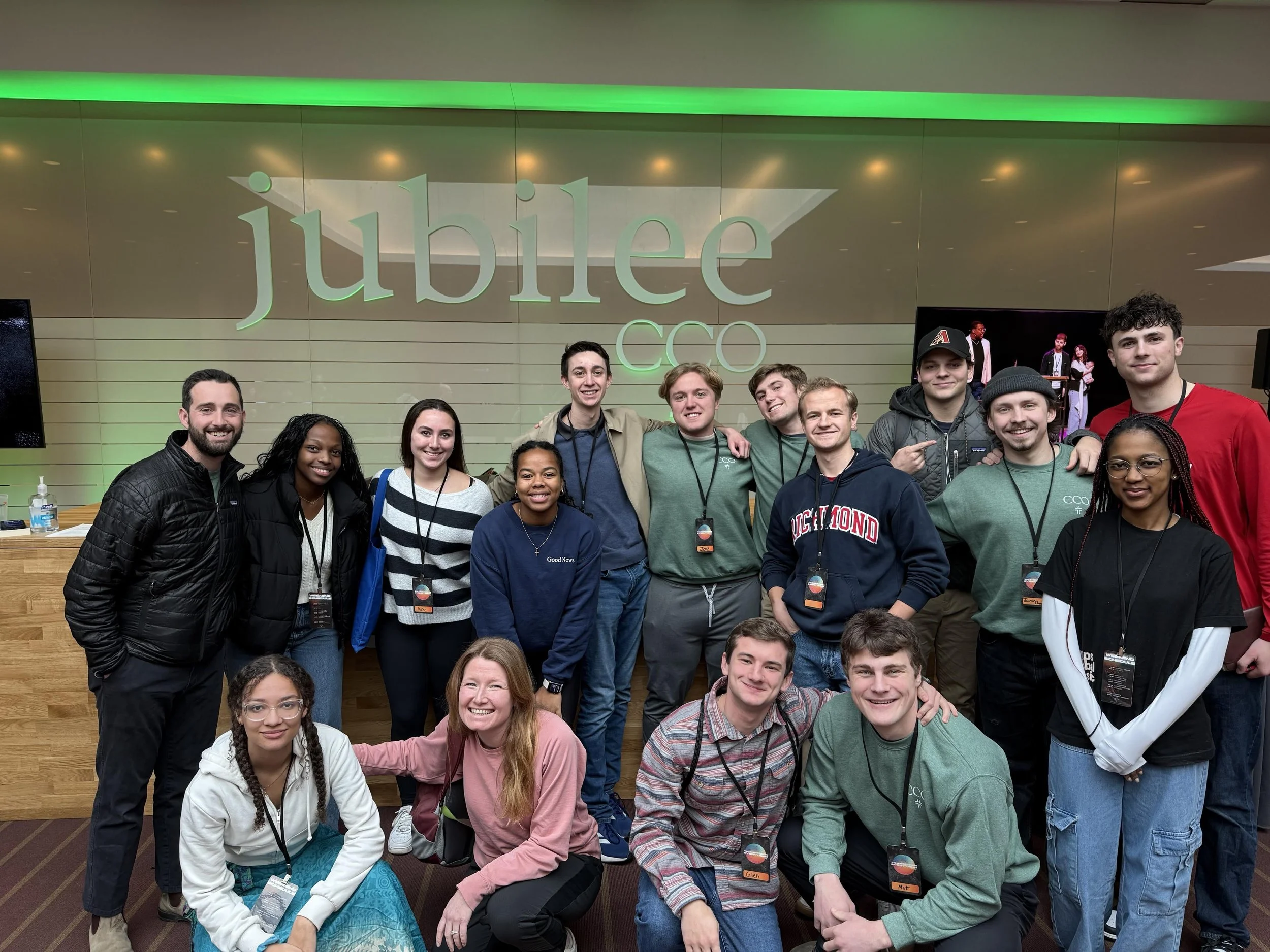
“Jubilee was beautiful! I really felt God’s hand on my heart. I learned so much about applying the gospel to different aspects of my life, and it opened my eyes to what it can look like to truly love my neighbors.”
Coming back to Richmond, it has been encouraging to see students learning to live inside the gospel story, applying the gospel to the specifics of their actual, everyday lives—in their callings as students, friends, roommates, church members, and members of our CCO campus ministries.
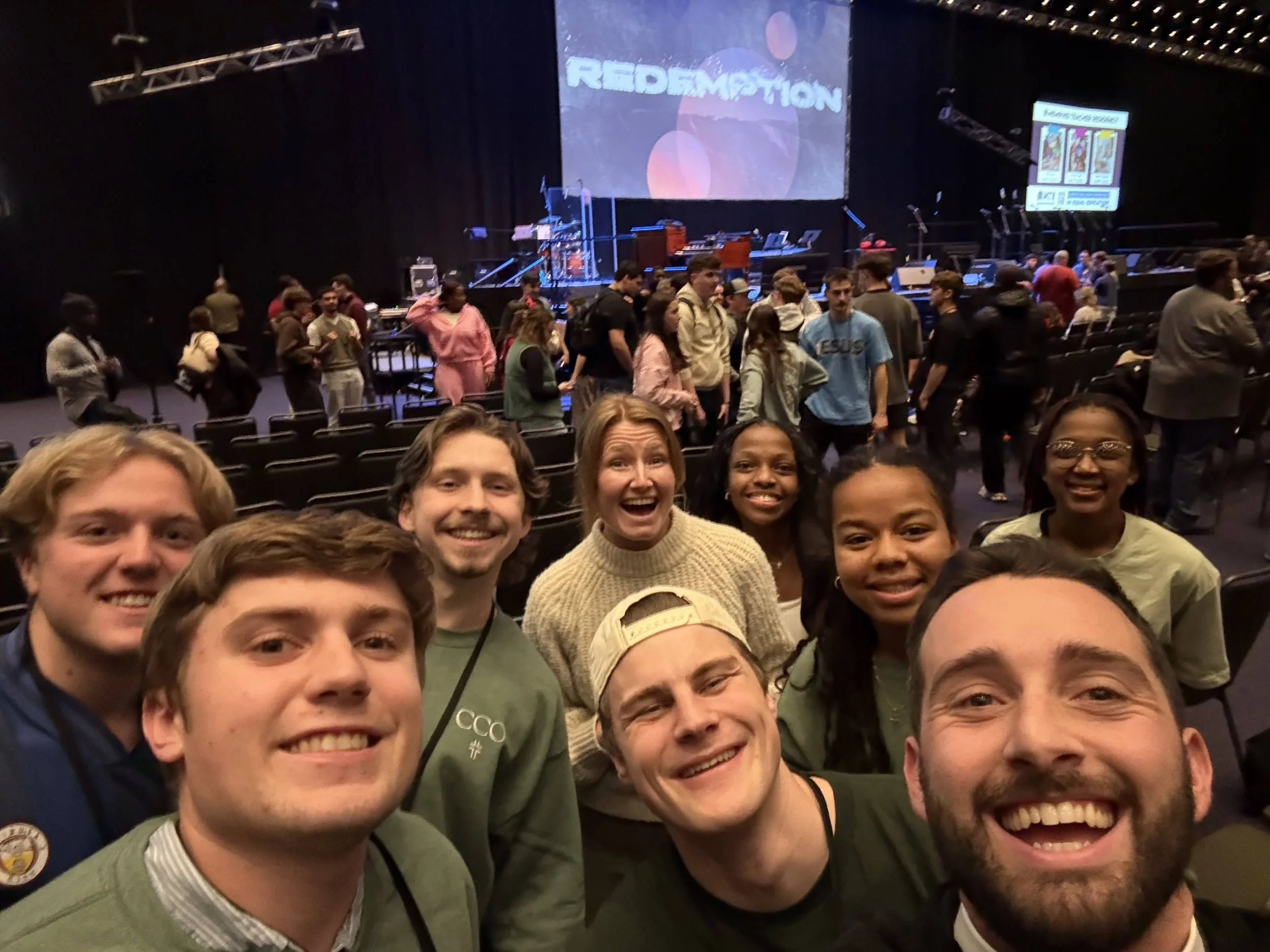
“My time at Jubilee was very enjoyable! I got to spend some time away from campus and fellowship with friends old and new. I hope every student in CCO will take advantage of this opportunity and all that we can learn from spaces like this.”
Please pray for our ministries on campus at UR and VCU, that CCO would continue to be a place where students experience gospel formation for missional presence on these two campuses, and that the Lord would use our ministries to draw college students to himself.
The Rev. Will Clark
College Minister — V.C.U.
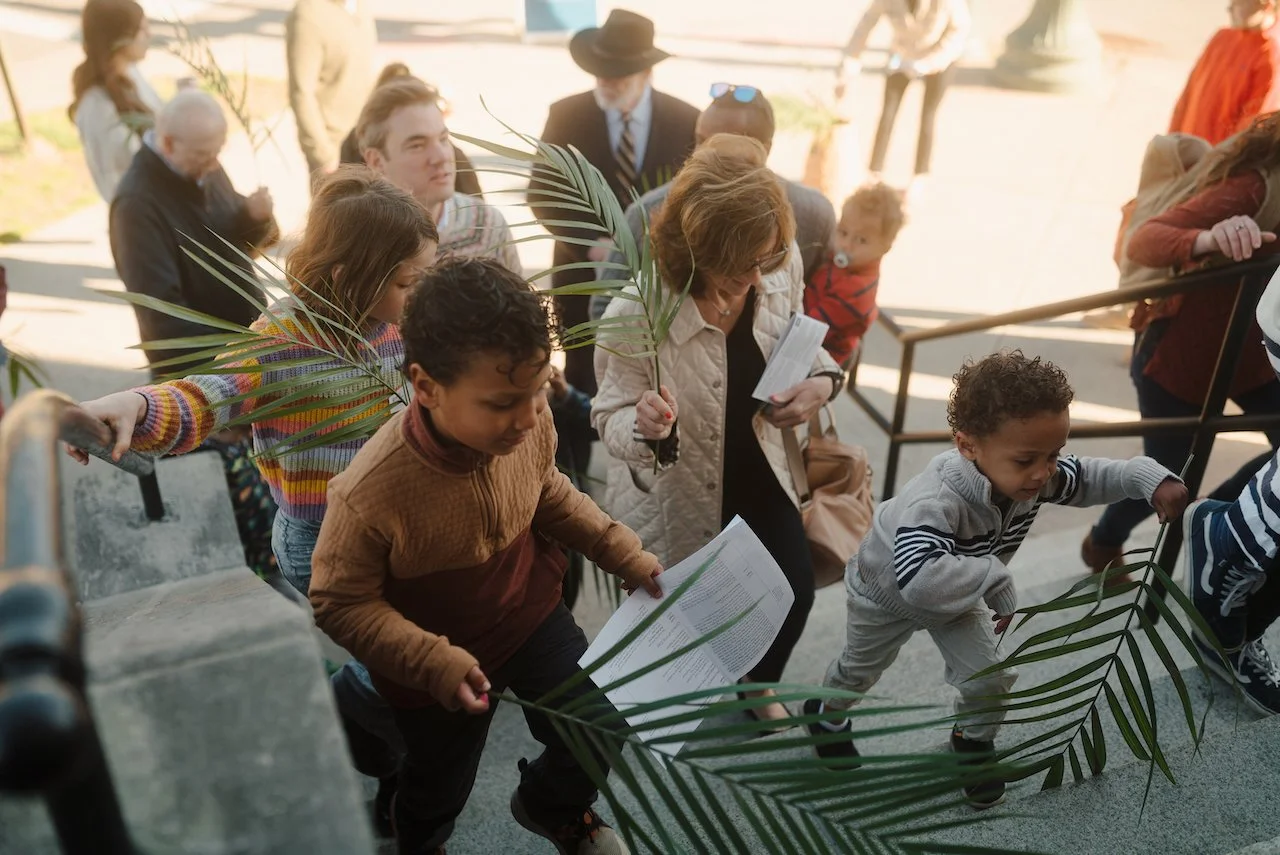
Holy Week and the Triduum
Holy Week is nearly upon us. I want to take a few minutes to explain what it will be like to participate in the most important days of the year together. Please, if you can, read the following in its entirety.
Good afternoon! Holy Week is nearly upon us. I want to take a few minutes to explain what it will be like to participate in the most important days of the year together. Please, if you can, read the following in its entirety.
PALM SUNDAY | March 29
This is the first day of Holy Week and the day that we remember Christ’s triumphal entry into the city of Jerusalem (recorded in all four Gospel accounts: Matthew 21:1-11, Mark 11:1-10, Luke 19:29-38, and John 12:12-15). That morning, we will begin by gathering outside on the sidewalk along Grove Avenue before we process into the sanctuary waving palm branches and singing. Now, this concept isn’t a new or creative idea. It is, in fact, a very old tradition.
So why are we doing this? There are at least three good reasons (and I’m sure many more):
It connects us to our history: By waving palm branches, singing, and processing together, we will do something with our bodies in the present that connects us to the people of God in the past. We are joined with Christian brothers and sisters from ages past, as well as with the first century citizens of Jerusalem, who welcomed Jesus into their city.
It is formative for our young children (and for adults): Few things help young children (or adults for that matter) understand a story better than acting it out together. We want more than intellectual assent to the teaching of scripture; we want to receive, embody, and extend the good news of what Christ has done for us. This is why we kneel, stand, sing, eat the bread, drink the wine, and - yes - wave the palms!
It is an act of public worship: In our secular, materialist age, there are very few opportunities for acts of public worship and devotion to Christ. No doubt, as many of us adults walk down Arthur Ashe Boulevard, we will feel very silly. If that describes you, don’t worry, you’re in good company. We will all feel the strangeness of publicly worshiping Christ in the midst of neighbors who might think we are lunatics. But this is not a bad thing - for us or for our neighbors. It’s good for us because it presents us with a very real opportunity to be courageous. It’s good for our neighbors because our worship serves as a reminder that no matter what the zeitgeist of our time may say, there are real men and women and children who are continuing to find life in Christ Jesus.
So, dear friends, on Palm Sunday, come ready to do a new thing, which is a very old thing, and to do a strange thing, which is a very good thing. We will wave palm branches, sing, walk, and declare together that, minority though we be, there is still hope to be found only in the Lord Jesus.
STATIONS ON BOULEVARD
On Monday-Wednesday from 8:00 a.m.-7:00 p.m. and Thursday-Friday from 8:00 a.m. to 4:30 p.m., the 12 Stations of the Cross will be posted along Arthur Ashe Boulevard. I encourage you to set aside 30-45 minutes of time to stop by and spend time praying and contemplating each station. A guidebook will be available at the installation to lead you through this exercise.
MAUNDY THURSDAY | April 2
The Paschal mystery - the death and resurrection of Jesus Christ - is at the heart of the Christian Gospel. The evening of Maundy Thursday begins the Triduum (the sacred three days). Maundy Thursday receives its name from the maudatum (commandment) given by our Lord: A new commandment I give to you, that you love one another: just as I have loved you, you also are to love one another (John 13:34). At the Last Supper, Jesus washed his disciples' feet and commanded them to love one another as he had done. This day commemorates the Lord’s example of servant ministry, the institution of the Eucharist, the agony of the Garden of Gethsemane, and the betrayal leading to the crucifixion.
No nursery or children's ministry. Kids are invited to fully participate in all parts of the service. Click here to download a Parent Guide for this service.
Remember to wear sandals or slip-off shoes (to facilitate the foot-washing portion of the service).
GOOD FRIDAY | April 3
The Good Friday liturgy is the second part of the Triduum. This most somber of all days is appropriately marked by fasting, abstinence, and penitence, leading us to focus on Jesus and the meaning of his Cross. Some churches do not use musical instruments or bells on this day. The church is often darkened. The bare, stark appearance of the church serves as a reminder of the solemnity and sorrow of the day. The Lord of Life was rejected, mocked, scourged, and then put to death on the Cross. The faithful are reminded of the role their own sin played in this suffering and agony as Christ took all sin upon himself in obedience to the Father’s will. By the Cross we are redeemed, set free from bondage to sin and death. The Cross is a sign of God’s never-ending love for us. It is a sign of life in the midst of death.
No nursery or children’s ministry. Kids are invited to fully participate in all parts of the service. Click here to download a Parent Guide for this service.
Remember to wear black or gray clothing.
EASTER VIGIL | April 4
This is an ancient church tradition that begins outside the sanctuary in the dark of the evening. A fire is kindled, torches and candles are lit, and we process into the darkened sanctuary together. The atmosphere is pregnant with brooding mystery and drama. Scriptures and prayers are chanted, sung, and read. The story of the Bible is traced and then together we wait - in stillness, in silence, in the dark - we keep watch.
Then, suddenly, with bursting shouts of "Alleluia!" the lights go up and bells are rung as we celebrate the unlooked-for resurrection of Christ.
From there, the service proceeds to the Eucharist and, after the service concludes, we feast together.
If you have experienced an Easter Vigil before, you have some idea of what to expect.
If you never have, then come for the first time.
The service begins at 8:00 p.m. outside the sanctuary and concludes at 10:00 p.m.
Join us for an Easter Vigil Nacho Feast following the vigil!
No nursery or children’s ministry. Kids are invited to fully participate in all parts of the service (though young children may struggle or fall asleep in the pews, which is no problem at all).
EASTER SUNDAY | April 5
As the third day dawns, we celebrate the bodily resurrection of our Lord from the dead!
Alleluia! Christ is risen! The Lord is risen indeed! Alleluia!
The church will resound with the ringing of bells, shouts of praise, and songs of joy! This is a dual sacrament service with both Baptisms and Eucharist.
There are three identical services: 7:00 a.m., 9:00 a.m., and 11:00 a.m. (But only the 9:00 a.m. and 11:00 a.m. provide nursery and children’s ministry). Click here to download a Parent Guide for this service.
If you are able to attend the 7:00 a.m. service, please do so! We will likely run out of space at 9:00 a.m. and 11:00 a.m. By worshiping at the sunrise service, you show hospitality to visitors who will likely attend the later two.
Also, if you are a member of Redeemer, this is a day of service and hospitality to newcomers. Join the staff in rolling up your sleeves and offering the warmest of welcomes to our neighbors.
There will be coffee, juice, and donuts across the street near the VMFA sculpture garden after all three services. Stay for a while and enjoy the after-party!
Redeemer family, I love you all and I’m so grateful that we get to walk through this week together. I hope and pray that our observance, practice, and worship through these services forms the Gospel more deeply within us so that we might be more missionally present to our families, neighbors, and city.
In the Father’s love,
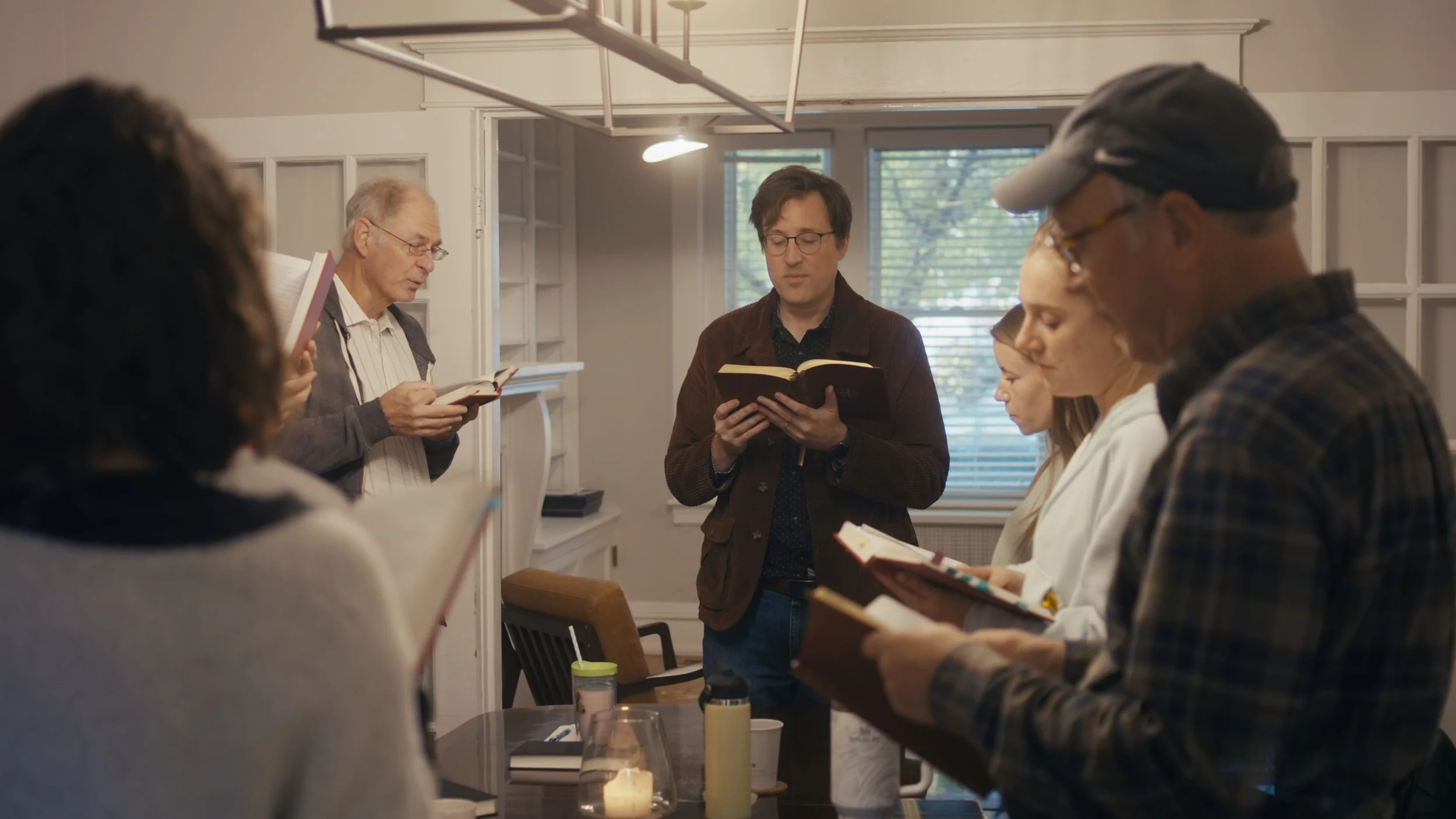
Call to a Corporate Fast on Good Friday, April 3
While most of us are likely familiar with the concept of a private, personal fast, we may be less familiar with the concept of a corporate fast. Here are just a few (of the many) examples of corporate fasting in scripture.
Redeemer Family,
While most of us are likely familiar with the concept of a private, personal fast, we may be less familiar with the concept of a corporate fast. Here are just a few (of the many) examples of corporate fasting in scripture:
Leviticus 16: The Israelites practice an annual corporate fasting on the Day of Atonement.
Nehemiah 9: The Israelites practice a national time of confession, fasting, prayer, repentance, and public scripture reading.
Joel 2: God speaks to the prophet Joel and calls him to declare a time of corporate fasting and repentance.
Jonah 3: The people of Nineveh respond to Jonah’s prophetic preaching with fasting and repentance.
Acts 27: Paul and his 275 shipmates fast for 14 days through a storm at sea before breaking their fast in a manner that is a nod towards the Eucharist (vs 35).
Throughout scripture, corporate fasts are marked by themes of repentance, confession, and calling on God to show mercy and provide atonement for the sins of the people.
Therefore, how appropriate that throughout church history, it has been common for both clergy and parishioners to fast on Good Friday of Holy Week - a day devoted to repentance of our sins and remembering the mercy of God in the atoning death of Christ on the cross.
As the Book of Common Prayer states in the preface to the Good Friday service on p.564, “This most somber of days is appropriately marked by fasting, abstinence, and penitence, leading us to focus on Jesus and the meaning of his cross.”
And so Redeemer Family, on Good Friday of Holy Week (April 3), we are all invited to fast together, as a parish. No one should feel coerced or peer-pressured to participate. Fasting is most spiritually effective when it is something you choose, not something you do because other people guilted or shamed you into it!
So, if you wish to participate, here are two potential ways:
Full-Fast
The fast begins at the end of the Maundy Thursday service on April 2.
Eat an early dinner beforehand.
Come to one of the Maundy Thursday services, 5:00 p.m. or 7:00 p.m.
Practice foot-washing and receive the Eucharist, then the fast begins.
The bread and wine of the Eucharist are the last food in your stomach from Thursday evening, through all of Good Friday, to Saturday morning.
Attend one of the Good Friday services, 5:00 p.m. or 7:00 p.m.
Break the fast on Saturday morning with a simple and light meal.
Partial Fast
If you are new to fasting or have a medical condition that makes fasting unwise, here are partial ways to participate:
Shorten the fast: Sunrise to sunset on Friday. Eat an early breakfast Friday morning and a late dinner Friday evening. Skip lunch and fast for the daylight hours.
Limit the fast to only refraining from solid foods. Replace meals with fruit juice or a smoothie.
Beloved brothers and sisters, the goal here is to not create some new law that everyone must obey. The goal is to help us participate in the passion of our Lord together. We are not in this alone; we are a church family.
Let’s fast together on Good Friday and then, let’s FEAST together on Easter Sunday!
In the Father’s love,
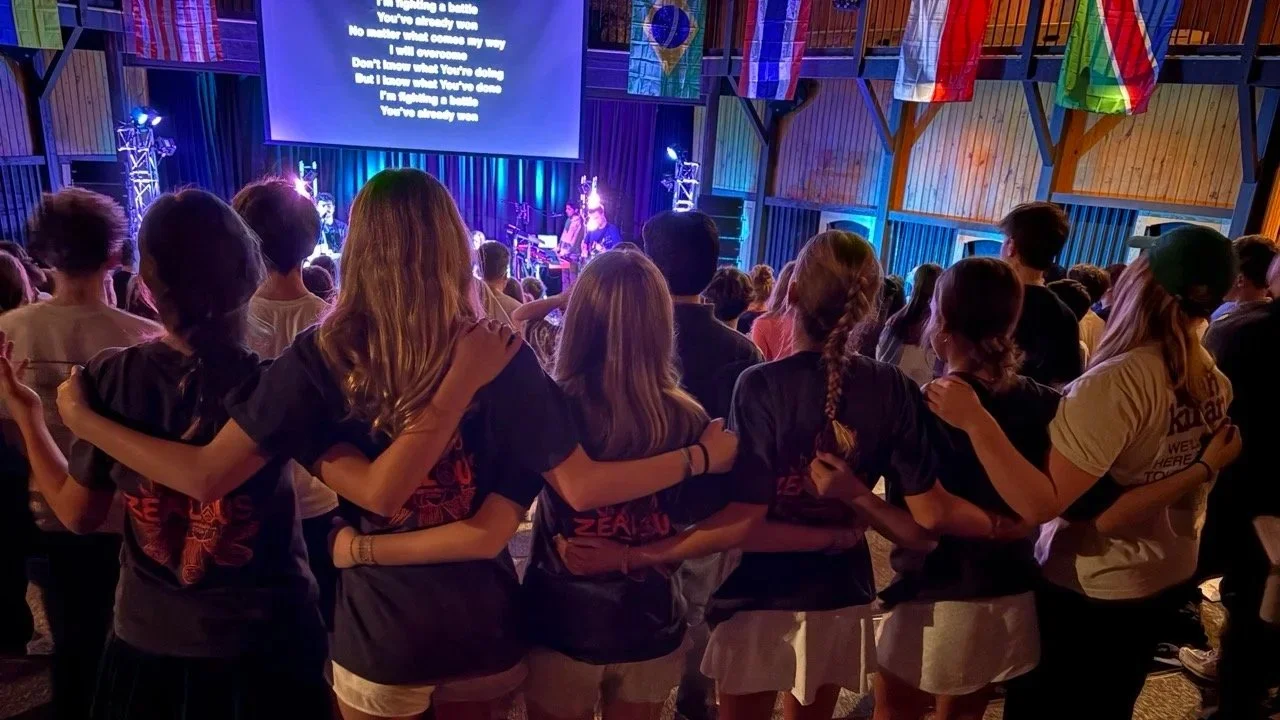
Growing Faith Through Risk: Reflections from Our Youth Fellowship Retreats
In February and March, the Youth Fellowship team joined the Falls Church Anglican on their Breakaway retreats at Rockbridge for the first time. It was a great experience, and one that caused me to reflect on many levels. As soon as we traveled down the winding drive and pulled up at the Blue Ridge cabins, I was hit with nostalgia remembering my own days in high school going on retreats and staying in these very cabins. As the girls lugged what seemed like an impossible amount of luggage into the cabins, I hoped that this experience would be as meaningful for them as it had been for me.
In February and March, the Youth Fellowship team joined the Falls Church Anglican on their Breakaway retreats at Rockbridge for the first time. It was a great experience, and one that caused me to reflect on many levels. As soon as we traveled down the winding drive and pulled up at the Blue Ridge cabins, I was hit with nostalgia remembering my own days in high school going on retreats and staying in these very cabins. As the girls lugged what seemed like an impossible amount of luggage into the cabins, I hoped that this experience would be as meaningful for them as it had been for me.
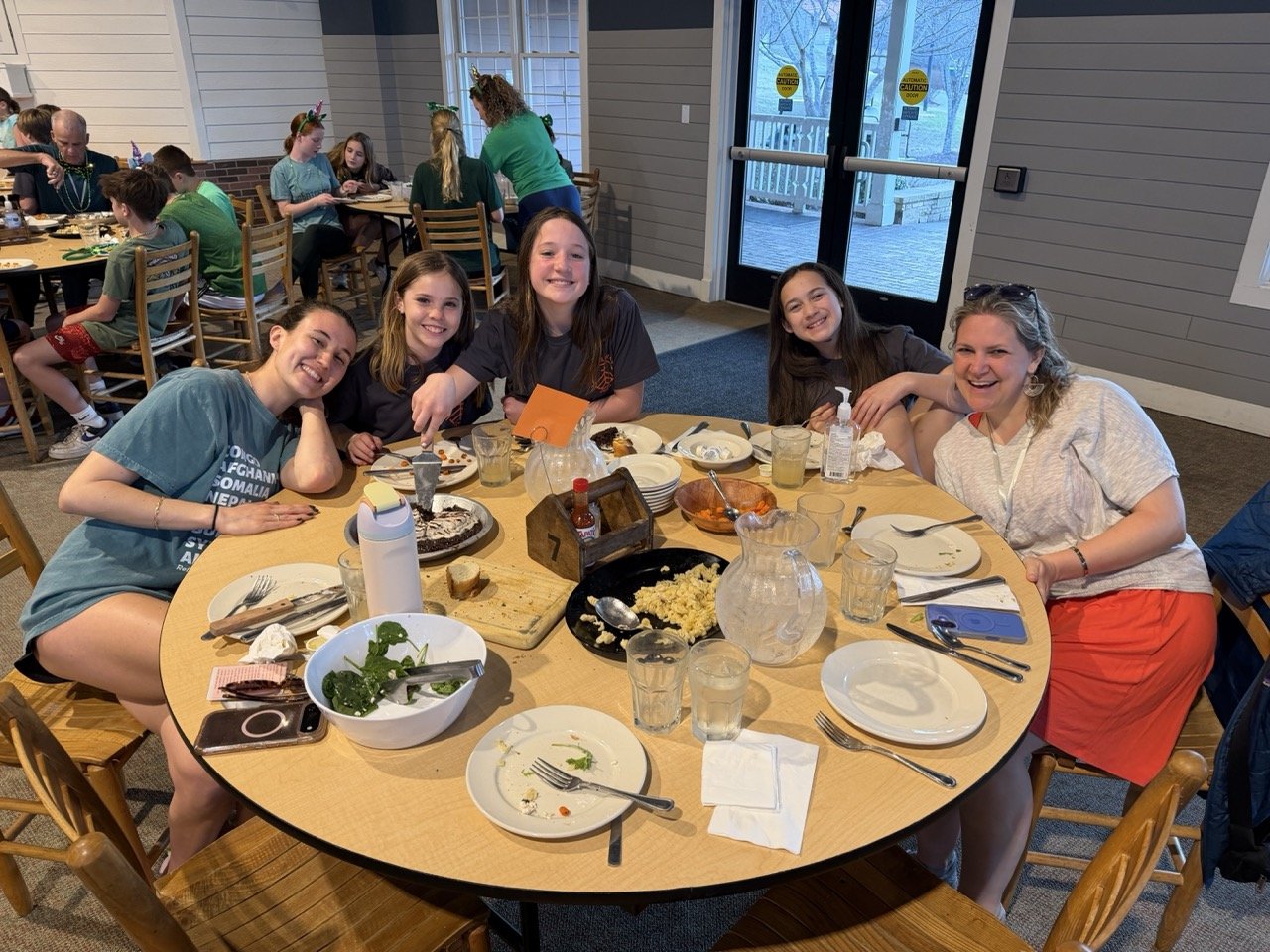
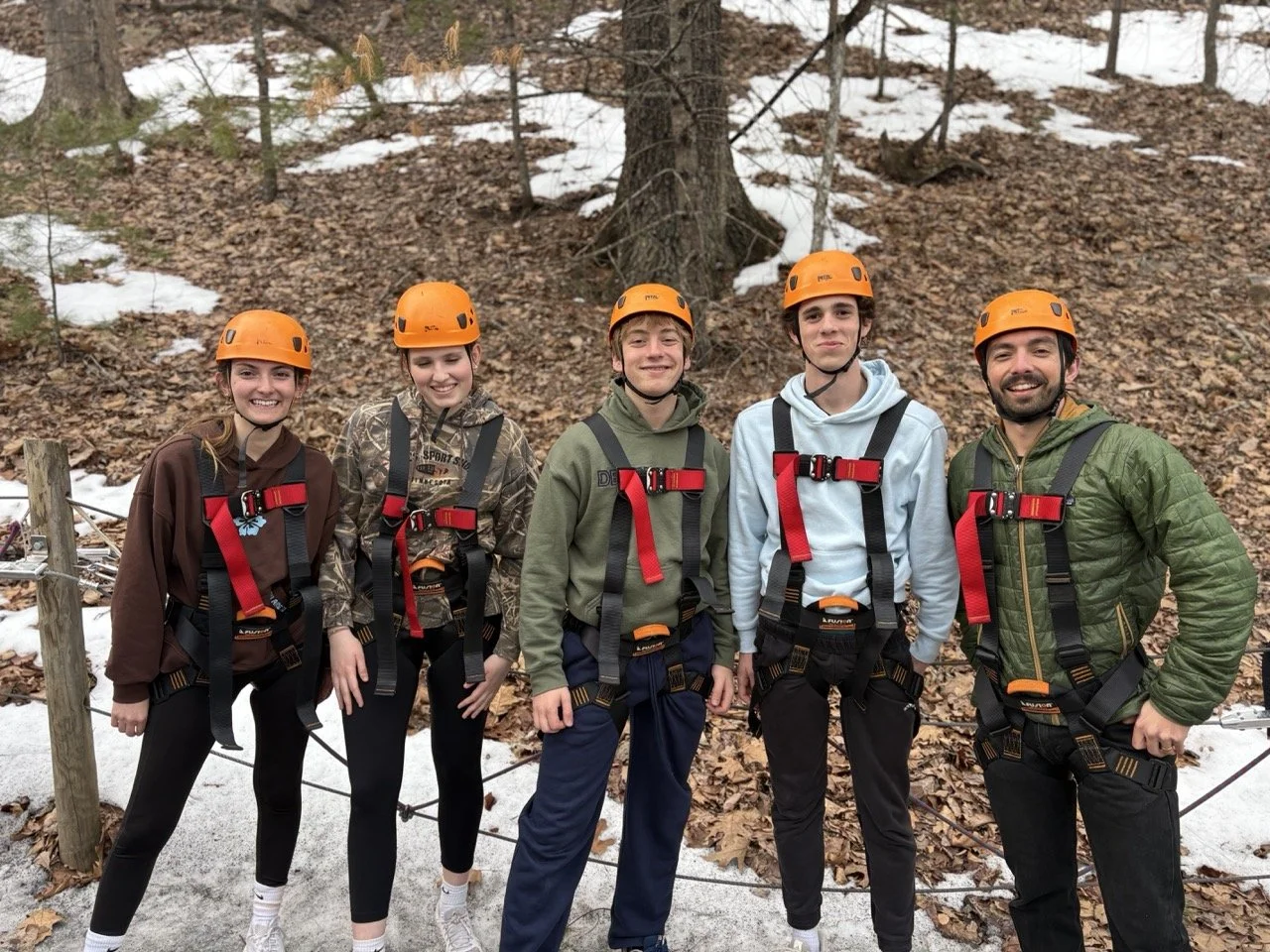
When I look back on those retreats, besides remembering some amazing experiences listening to sermons and bonding with friends, what stands out are some of the free time activities. I remember navigating the ropes course, my heart in my throat, and climbing the rock wall, determined not to give up. These activities stand out not just because of the fun and adrenaline involved, but because they took me and my friends outside of our comfort zones. We may have been intimidated, but we were able to overcome our fears and do them anyway.
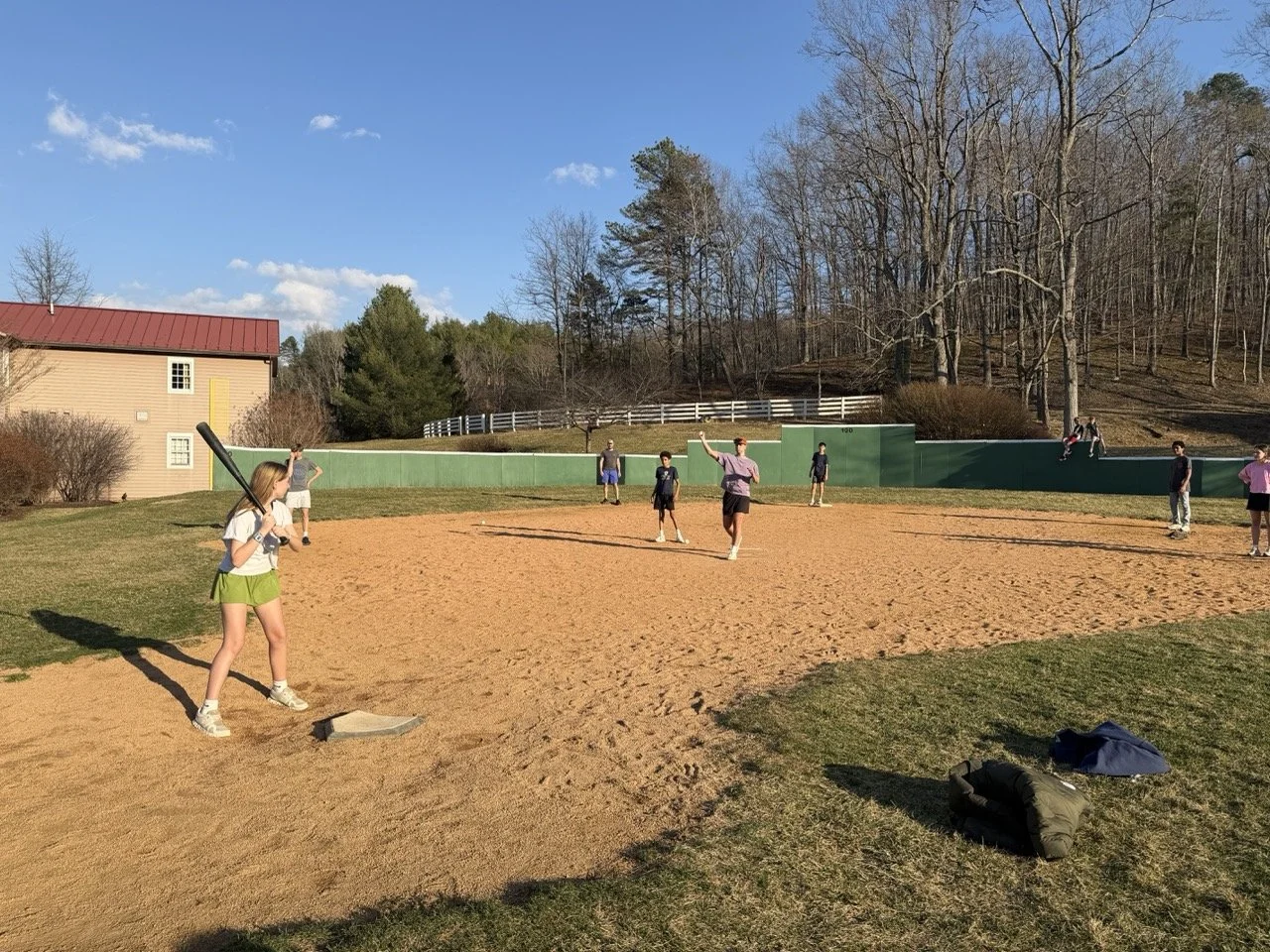
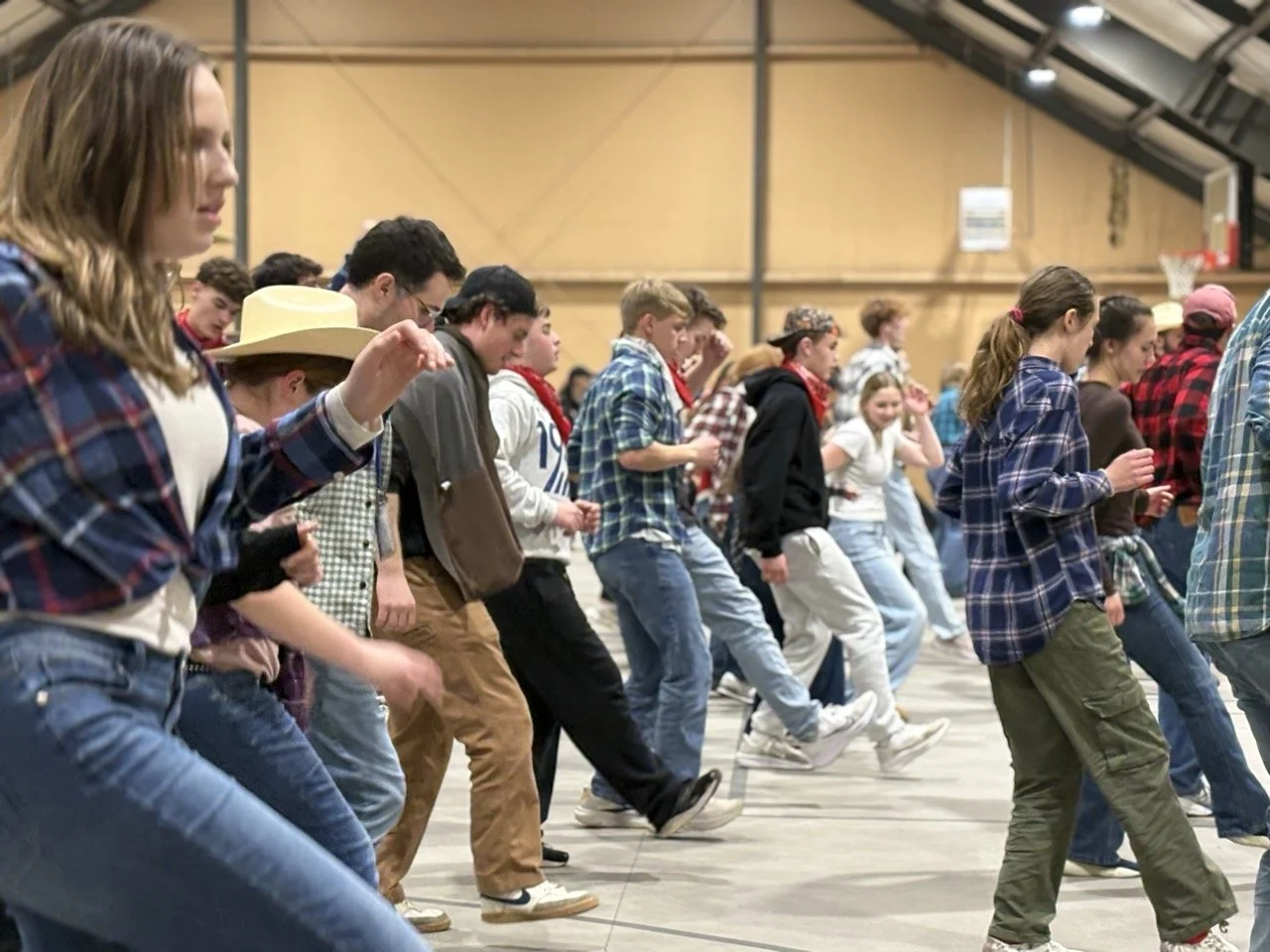
During both the high school and middle school retreats, we talked about risk. Leaders asked students how they had taken risks that weekend, and affirmed them for the ones we witnessed. During one of these conversations, Annie, a middle school girl, looked at us curiously and asked, “Why is it important to take risks?” It was a GREAT question! The leaders and I explained that taking risks is how we grow, and especially how we grow in dependence on God. Students were encouraged that if they felt God was inviting them to take a risk, it could be a powerful way to grow in their faith. As Nathan Horner, our Church-Planter-in-Residence put it, “Without risk there is no faith.” Since the definition of faith involves trusting in something we do not see, risk is a prerequisite to faith.
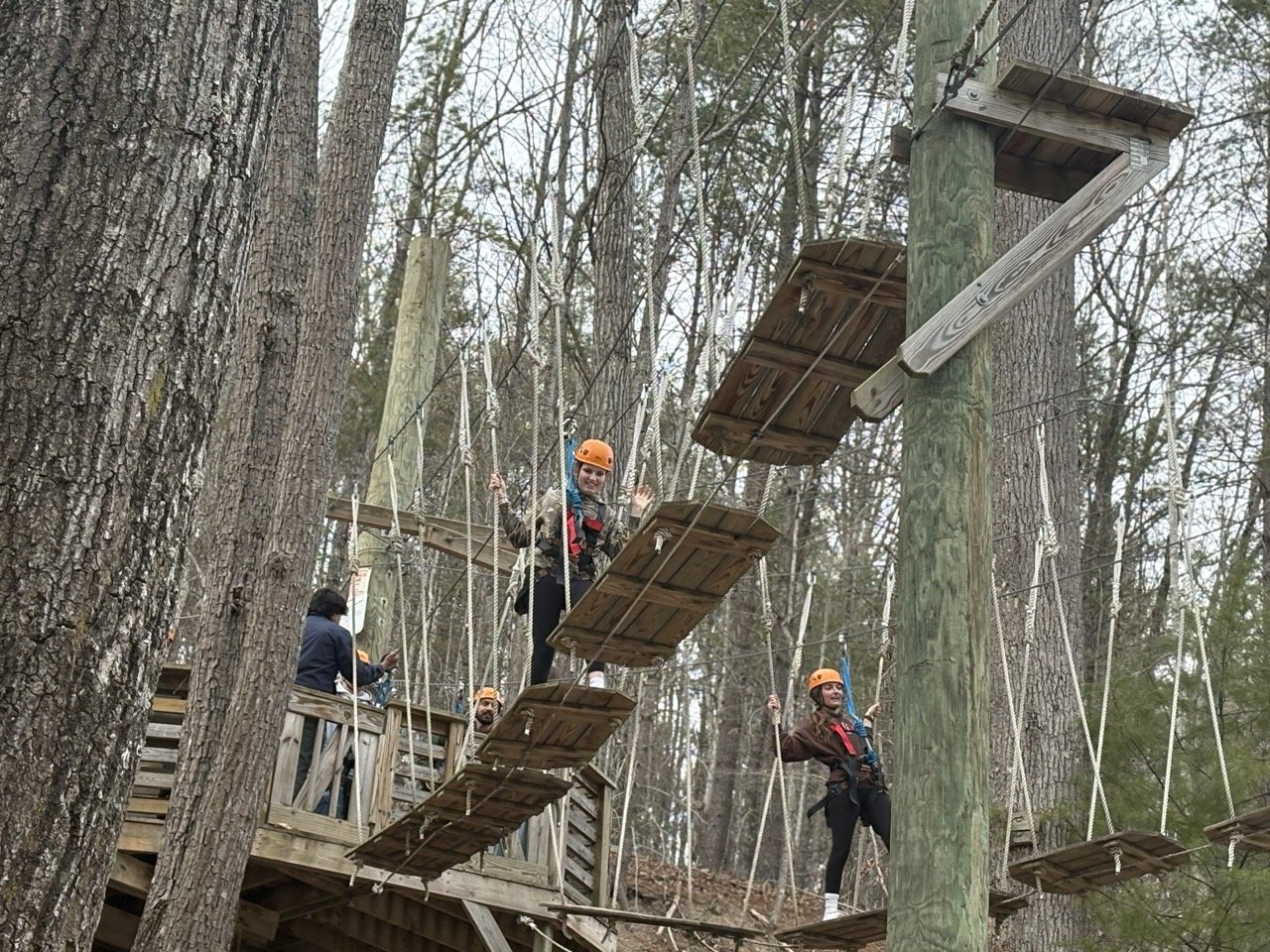

Over both retreat weekends students stepped out of their comfort zones and took several meaningful risks. Like me, they stepped out in faith on the ropes course and braved the rock wall. They flew from great heights on the screamer swing, participated in sports tournaments, formed friendships with strangers, and hopped up on stage to participate in club games. Most importantly, students opened up and shared vulnerably with one another and their leaders, creating opportunities for new levels of relationship. I could see the pride and empowerment on their faces when we talked about these experiences. This is the power of offsite events for students: they are able to take risks outside of the bounds of their everyday life, within the safety and care of Youth Fellowship. Being able to step outside their comfort zone is a great gift to students, one that stretches and grows their faith in a God who is always faithful.
We are excited to give students more opportunities to take risks and grow their faith this summer through our Summer Service Trips. These trips will allow students to take risks not only for themselves, but in the service of others. In my opinion, this is one of the most life-changing trips that a student can take. They will have the opportunity to not only hear and talk about their faith, but to live it out boldly. Students are bound to take risks at some point in their lives, and service trips are a great way to encourage healthy risk-taking as they continue practicing their faith.

Laren Bleam
Youth Fellowship Assistant
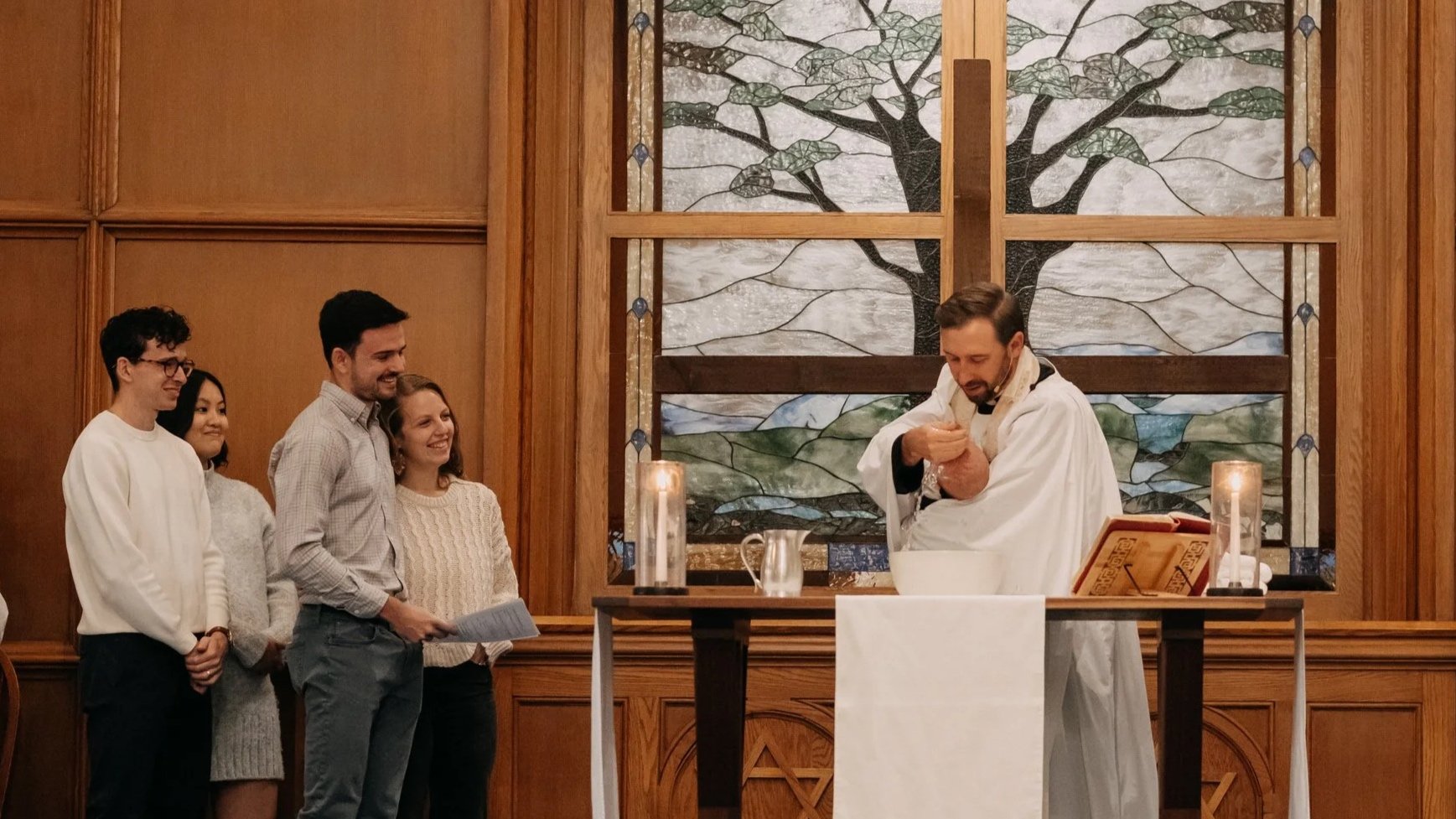
Listening at the Waters: Sacred Listening with Babies & Toddlers
Marked as Christ’s Own
Every Baptism Sunday, Dan cradles a baby in his arms, gently tracing the sign of the cross with oil on their forehead and proclaiming, “You are sealed by the Holy Spirit in Baptism and marked as Christ’s own forever.” In that moment, something both tender and profound is declared: God is at work.
In our Anglican tradition, baptism is not first about what a person can understand, articulate, or confess—though those gifts will unfold as a child grows and later stands to confirm their faith. Baptism begins with God’s action. It rests on the promise that God is already moving, already claiming, already loving.
And there, in Dan’s arms, is an infant—wholly and utterly dependent. Nothing is required of them. They do not need to reason, respond, or speak in order to receive. They may be sleeping peacefully or crying in protest. Still, the promise stands. The Church speaks confidently of God’s work in the baptismal waters, trusting that grace is not constrained by language, comprehension, or developmental stage.
If God’s grace precedes understanding and God’s Spirit moves before words, then it reshapes the way we see our children, the way we listen to the Spirit, and even the way we see ourselves.
Learning to Listen to God at Work
In baptism, we proclaim a truth that both comforts and unsettles us: God is already at work from the very beginning of our children’s lives. Our children are not blank slates waiting to be filled, nor are their spiritual lives on hold until they can speak the right words. Scripture reminds us that “the Spirit helps us in our weakness… with groanings too deep for words” (Romans 8:26). God meets us precisely where words fail. If this is true for us, it is certainly true for our children.
It is easy to overlook the spiritual lives of babies and toddlers. However, when we assume that the Spirit’s work depends on abilities they have not yet developed, we risk placing limits where God does not. In doing so, we may miss the communication that is already happening—even if at times it is difficult to see.
Much of babies’ and toddlers’ communication is embodied, emotional, and relational. A reaching hand, a searching gaze, the comfort found in a familiar face, the insistence on hearing the same story again and again—these moments are rich with glimpses of the Spirit at work. They express deeper longings, longings that echo the very questions we continue to carry into adulthood: With whom do I belong? Who am I? What story am I part of?
To notice this, we must slow down. We must learn to watch and to listen for what Lacy Finn Borgo calls “the unspoken language of the heart.” The invitation is not to make something happen, but to pay attention—to listen for the Spirit who is already moving.
Becoming like Children
If we are learning to listen for the Spirit at work in our young children, we soon discover that the invitation turns toward us as well. In Matthew 18:3, we are called to become like little children. At the heart of that call is a posture children embody so naturally: dependence. A newborn’s cry, a toddler’s outstretched arms, a child returning again and again to the safety of a parent’s presence—these gestures are not only signs of need, they are invitations to listen. In their reliance, we hear something true about the way we all stand before God.
As we witness their dependence, we begin to recognize our own. Romans 5:8 reminds us that God’s love did not wait for our readiness or righteousness; it met us while we were still sinners. Our lives in Christ begin not in strength, but in need. The baby’s cry and the toddler’s trust echo our own story: we are completely reliant, utterly held. When we listen closely, their small, daily gestures become a living reminder of our need.
This shared dependence reshapes the way we attend to the children entrusted to us. We listen not as those who have mastered faith, but as fellow recipients of mercy. We listen with trust—trusting that the Spirit who has been faithful in our story is faithfully at work in theirs.
And we listen expectantly. We listen to their questions, their repetitions, their joys, and even their meltdowns. We listen for what God might be revealing through their need and through our own. In this mutual posture of dependence, listening becomes more than attentiveness or awareness; it becomes an act of faith. We wait, we watch, and we trust that the God who met us in our weakness is already speaking and moving in them.
Listening at the Waters
Baptism declares that God speaks first. Before we understand, before we articulate, before we respond—God acts. At the font, we witness a grace that does not wait for readiness. We see a child who cannot yet profess faith, and we proclaim over them a promise that rests entirely on God’s faithfulness. Baptism anchors us in this reality: we belong to Christ not because we have mastered the language of belief, but because he has marked us as his own.
But baptism also teaches us how to listen.
If God is at work before words, then our task is not to manufacture spiritual life in our children, but to pay attention to the Spirit already working. The same waters that mark them as Christ’s own invite us to watch for the Spirit’s movement in their gestures, their attachments, their questions, and their quiet longings. We listen at the font. We listen in the nursery. We listen in the everyday moments that seem small but are, in fact, filled with holy mystery.
Grace,

Mikala Thompson
Assistant Director of Redeemer Kids
Holy Listening
Our parish professes that children are a vital part the body of Christ and are capable of a rich spiritual life. Our children’s ministry therefore takes care in how we teach children about the gospel, the Scriptures, and the Triune God, knowing that children are capable of receiving this eternal truth. But I wonder if we can overemphasize our role as teachers who input knowledge and truth in this setting and miss out on what we can receive when we lead children to consider what the Holy Spirit is teaching them directly in these sacred spaces.
I remember a moment many years ago when my family was new to town. It’s an exhausting season to be in when you find yourself asking everyone around you the same mundane get-to-know-you questions, and you find yourself repeating your own elevator-speech version of your story again and again. I was discouraged by the transactional nature of these shallow connections that seemed to determine whether or not someone gets a place in a new community. I came home from an evening that had involved introducing myself to new people yet again, and I tried to articulate to my husband how my interactions with a couple that we had just met made me feel. I described it at first as weird and even unsettling, but after processing the various conversations I had with both of them, I came to an important realization. They had listened to me. They had really, truly listened to me even in a buzzy social setting with a lot of distractions and—let’s face it—not a lot to gain by my acquaintance. I recalled their posture, their follow-up questions, and their eye contact that at the time had felt odd, but was the unfamiliar sensation of having a stranger’s full attention. That experience was so impactful that it eventually lead me to intentionally study the ministry of listening and ultimately, to never undervalue offering someone on the margins the gift of my full attention. All because that initial demonstration of sacrificial attention at a vulnerable time of my life felt healing. It felt holy.
Years later, I found myself reading Spiritual Conversations with Children and recalling that feeling from so long ago.“Holy Listening” is what author and theologian Lacy Finn Borgo calls the work she and other godly adults do for children at Haven House, a ministry for homeless families in transition. She describes in detail the conversations she has had with children of various ages in her “sessions,” where she allows children to talk and interact at their own pace with little interference on her part. Borgo outlines dialogues in her book that she has had with particular children, illustrating the often long and winding roads of conversation that children traverse when given the rare chance to process their inner life externally. Through the many examples she offers, some that span many sessions with a single child, we are given a glimpse into the patient work of building a safe environment for this growth and what it can produce. Children are invited into play as a way of engaging their deepest thoughts as they verbally process, and the adult is poised here as the calm facilitator of their time, nudging them to invite Jesus into their memories and feelings as they go.
But how does that practice go for those of us who are not in a space and time set aside for the art of holy listening? During hard conversations with children, whether about national news or family struggles or personal challenges, when we are rightfully measuring and analyzing our words, we have to recognize the invitation there to listen as well. What are children hearing from the Spirit as they process the painful realities of life? What can we do to help guide children to their Creator in these moments by asking thoughtful questions that turn their minds to him? What can we learn about the Lord in turn as we do? Children pick up on alarmingly more than we realize and are wired to observe how their caretakers navigate the world in order to learn how to survive in turn. They can tell when we speak of the peace in God’s sovereignty and still live in anxiety and discord. They notice when we pray for God’s justice and grace and speak words soaked in rage, disdain, or hopelessness. Children are often, for better or for worse, mirrors for us to see ourselves more clearly. It would take courage to intentionally move towards small children in vulnerable times and allow ourselves to be known, as well as to get to know what is in their hearts. It takes courage to listen well.
Not only do we have an invitation, we have a responsibility to value what we gain by listening to children intentionally. As Dietrich Bonhoeffer says in his book Life Together, “In a Christian community everything depends upon whether each individual is an indispensible link in a chain. Only when even the smallest link is securely interlocked is the chain unbreakable…Every Christian community must realize that not only do the weak need the strong, but also that the strong cannot exist without the weak.” There is a lot at stake if we do not place proper value on the voice of every member of our communities, including the children. Our ability to be the church God has called us to be depends on valuing the voices of those we would be tempted to call “weak” in our midst. Jesus himself modeled slow, intentional ministry by not only caring for the crowds who thronged him, and the officials, leaders, and wealthy who sought him out, but also for the poor, the unseen, the marginalized, and the young. If we are to live like Christ, we have to actively practice this same kind of ministry.
The call to be compassionately present to those around us is clear, but listening, holy listening, is a skill like any other that may not come natural to most of us. Borgo offers concrete guidelines to help our frazzled, fatigued adult minds begin asking good, meaningful questions of the children in our care (or even to seek out children to care for; there is no lack of them). She is clear that this is not a simple task and will take practice. Open-ended questions like “I am ready to listen; is there something you would like to talk about?” and follow up prompts such as “Can you say more about that?” or “Where do you think God was when that happened/you felt that way?” continually redirect the role of speaker in the conversation back to the child and allow space for the child to move freely in their thoughts as they do. The hardest part of holy listening is the enormous amount of patience it takes to not fill silences ourselves or to rush results. She provides guidelines to reading children’s body language and paying attention to developmentally-appropriate ways children might be answering questions indirectly.
Our parish professes that children are a vital part the body of Christ and are capable of a rich spiritual life. Our children’s ministry therefore takes care in how we teach children about the gospel, the Scriptures, and the Triune God, knowing that children are capable of receiving this eternal truth. But I wonder if we can overemphasize our role as teachers who input knowledge and truth in this setting and miss out on what we can receive when we lead children to consider what the Holy Spirit is teaching them directly in these sacred spaces. As we consider together ways to begin listening more intentionally, both to the children in our care and to those on the margins, let’s pray that God will establish the work of our hands—and ears—to show them that Christ’s love doesn’t measure the time he gives us against what we can do for him, but instead rushes to fill any empty cup we hold up to him.
Casey Cisco
Director of Redeemer Kids
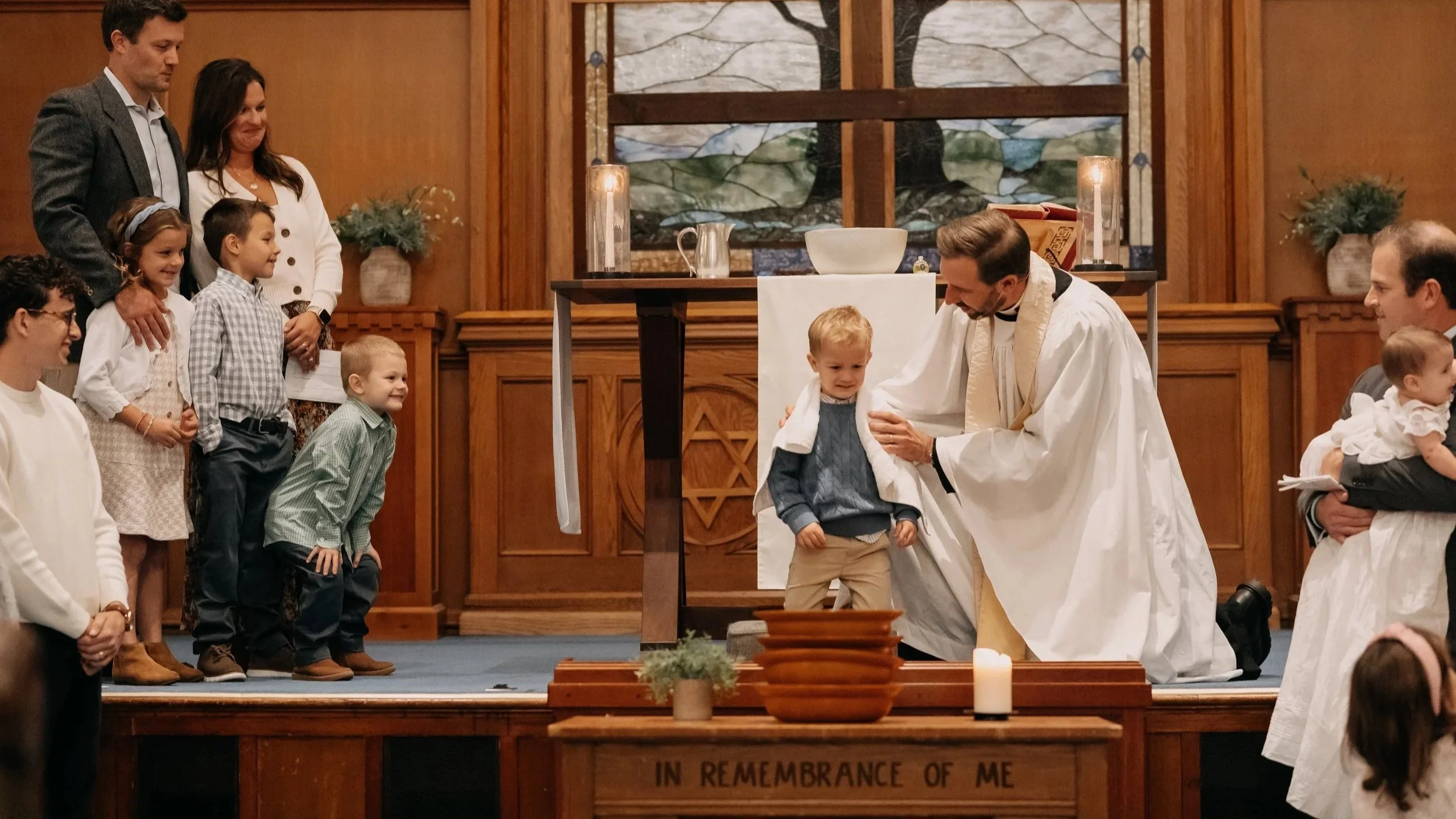
Celebrating the Sacrament of Baptism
On April 5 we will have the joy of celebrating the sacrament of baptism. Here’s who should consider participating.
Dear Redeemer Family,
In the near future, on April 5, we will have the joy of celebrating the sacrament of baptism. Here’s who should consider participating:
You have already given yourself to Jesus in faith but for whatever reason, have never taken the step of baptism. If that describes you, then this is a good opportunity to seal your belonging to Jesus and to his church.
You are right on the edge of converting to the Christian faith. You haven’t made the decision yet, but you’re seriously considering it. If that’s you, think of this as a good opportunity to make up your mind and commit.
You are a Christian parent of an unbaptized child. If that is you, bring your child to receive baptism! The Lord Jesus loves your little one.
Now it may be helpful to offer a brief refresher on what we believe about the sacrament of baptism. If you would benefit from that, keep reading!
WHAT IS BAPTISM?
Many of you are relatively new to the Christian faith and new to participating in a local church, especially a local church that practices ancient traditions like Redeemer does. So let me say a word about what Christian baptism is.
Jesus answered, “Truly, truly, I say to you, unless one is born of water and the Spirit, he cannot enter the kingdom of God." - John 3:5
Go therefore and make disciples of all nations, baptizing them in the name of the Father and of the Son and of the Holy Spirit. - Matt. 28:19
Do you not know that all of us who have been baptized into Christ Jesus were baptized into his death? We were buried therefore with him by baptism into death, in order that, just as Christ was raised from the dead by the glory of the Father, we too might walk in newness of life. - Romans 6:4
Because they formerly did not obey, when God's patience waited in the days of Noah, while the ark was being prepared, in which a few, that is, eight persons, were brought safely through water. Baptism, which corresponds to this, now saves you, not as a removal of dirt from the body but as an appeal to God for a good conscience, through the resurrection of Jesus Christ. - 1 Peter 3:20-21
In Christian baptism, a person is united with Jesus in His death and resurrection. We call baptism a sacrament because it is a physical, tangible, material ritual that is filled with a spiritual, intangible, immaterial grace. Something physical is happening: the person is either being immersed in water or having water poured over their head. Something spiritual is happening: that person is mysteriously (in a way that we can only barely begin to comprehend) being joined together with the Lord Jesus and, therefore, becomes a part of the church - the body of Christ.
THE STORY OF BAPTISM IN THE OLD AND NEW TESTAMENTS
The Old Testament prefigures baptism. There are many examples, but here are the big ones: the creation of the world, the salvation of Noah and his family from the flood, the exodus of the Israelites through the Red Sea, and the Israelites crossing the Jordan River out of the wilderness and into the Promised Land.
Christ commands us to be baptized and to baptize others.
The New Testament authors teach on the centrality of baptism in a Christian’s life.
WHO SHOULD BE BAPTIZED?
Any person, young or old, who wishes to put their trust wholeheartedly in Jesus for their redemption.
Any child of a baptized adult Christian who will raise that child in the faith as a part of the church.
WHY DO WE BAPTIZE INFANTS AND LITTLE CHILDREN?
“We start talking to our children not because they understand us, but so that they will. Baptism is God's language whereby he starts talking to his children and initiates a relationship with them. Sacraments are a word after all.” - Peter Leithart, The Baptized Body
We baptize children, not because we think that an adult profession of faith doesn’t matter (it does and should come at Confirmation - the other side of the coin to infant baptism), but because we seek to raise Christian children within the church.
Jesus said, “Let the little children come to me and do not hinder them.” We take the Bible at its word when it says that little children can come directly to Jesus; they do not have to grow up first.
FOR FURTHER STUDY
I would heartily recommend Peter Leithart’s excellent little book The Baptized Body to anyone who has serious questions about Christian baptism (especially baptizing children) and would like to learn more about it. Copies are available for sale at the book table on Sunday mornings.
You are also invited to join our upcoming Baptism Class on March 10. Together we’ll learn more about the sacrament of baptism—what it is, what it means and symbolizes, how it's done, who it's for, and what the church has historically understood about baptism. All are welcome regardless of whether you or your children are planning to be baptized. Click here to register.
Finally, if you are a teenager or an adult who has never received Christian baptism and you would like to, please email me. I would be delighted to get together and talk with you about it. If you are a parent and your child has not been baptized, same invitation! It would be a joy to baptize your little one. You can click here to register to be baptized on April 5.
In the Father’s love,

Invitation to Private Confession
Over the years, I have found confession, in all its forms, to be a deeply helpful and encouraging practice. I find that, once I get over my fears, God is more tender than I expected, my friends are more understanding than I anticipated, and the priest to whom I confess is utterly without judgement or condemnation.
Redeemer Family,
Over the years I have found confession, in all its forms, to be a deeply helpful and encouraging practice. I find that once I get over my fears, God is more tender than I expected, my friends are more understanding than I anticipated, and the priest to whom I confess is utterly without judgement or condemnation. Confession has helped me receive and experience the grace that God offers to me every day.
I hope the same can be true for you, and to that end I want to offer some potential next steps if you’d like to practice confession during this season of Lent:
Confess directly to God: Read Psalm 32:1-4 and then spend some time writing down the things you want to confess to God. This will help your stream of consciousness not get derailed by random thoughts, to-do lists, or other worries. After reading your list aloud to the Lord, conclude by reading the rest of Psalm 32, verses 5-11.
Confess to a Priest: Schedule a 15-minute confession with either me or the Rev. Lane Cowin.
This is not a time for chit-chat or small talk. We will not be catching up on how things are going.
This is a solemn time (with deep joy waiting on the other side).
Prepare for this time by writing down a list of both your sins of commission (wrong things done) and sins of omission (right things left undone).
When you arrive for your session, we will sit down side by side, light a candle, and use the brief liturgy in the Book of Common Prayer to give structure to our time.
When the liturgy concludes, we will thank each other and bid each other farewell, but will not slide into small talk.
This formal structure allows the priest to serve as simply an aid to your conversation with the Lord. The focus is on you and God, not the priest.
Confess to Trusted Friends: Reach out to a close friend or friends who are mature in their faith, not prone to gossiping, overreacting, or minimizing sin. Let them know ahead of time that you desire to confess to them (instead of springing it on them without warning). Talk about what happened and why. Do your best to be straightforward and honest, not exaggerating or slipping into defensiveness. Ask your trusted friends to pray for you, that you might be forgiven and have the courage to truly repent - turning away from sin and turning towards the goodness of Christ.
Redeemer family, I love you all dearly. I hope that we can be the kind of parish where, instead of posturing our virtue we can be open, honest, and vulnerable about weaknesses, failures, and sins. While a church community should never be a “safe place” to commit sins, it absolutely must be a safe place to confess our sins.
In the Father’s love,
The Definition and Purpose of a Vestry
Every March Redeemer members elect two members to join the vestry—our parish's governing body—for a three-year term. Any member in good standing can be nominated to serve on the vestry. If you are a member of Redeemer, we encourage you to prayerfully consider whom you might nominate for these important roles.
Every March, members of Redeemer elect new members to the Vestry—our parish's governing body. This year we are electing two new Vestry members. Any member in good standing can be nominated to serve on the vestry. If you are a member of Redeemer, we encourage you to prayerfully consider whom you might nominate for these important roles.
Nominations are open through Sunday, February 22.
Nominees will be announced in our Parish Newsletter on Thursday, March 5, and during our worship services on Sunday, March 8.
Voting will be conducted online the week of Sunday, March 8 through Sunday, March 15.
Thank you for your thoughtful and prayerful consideration.
The Definition of a Vestry
What is a Vestry?
Our Vestry is an elected body of deeply committed, faithful lay members of the parish. The Vestry, under the leadership of the Rector, meets monthly to prayerfully steward the “temporalities” (i.e. material resources) of the church.
Demographics of a Healthy Vestry
It is desirable to have a well balanced Vestry that accurately represents the demographics of the congregation. A healthy Vestry is composed of both men and women, young and old, single and married, parents and non-parents.
Characteristics of a Good candidate for Vestry
A good candidate for the Vestry is a deeply committed, faithful, prayerful follower of Jesus and confirmed member of Redeemer. He or she does not need to be successful, influential, or impressive. He or she does not need to be an expert in the Anglican tradition. A good candidate wants to be on the Vestry in order to serve, not to be important or to try to impose their will on the church.
Expected Time Commitment
Not everyone will have the time to serve on the Vestry in every season of life. In addition to one monthly meeting on a weekday morning for three years, Vestry members will be expected to serve 2-3 additional hours per week on Vestry-related tasks. Vestry members will also attend a one-night annual retreat.
Process for Submitting Nominations
Prayer: This is a process that needs to be saturated in prayer.
Please submit your nominations here.
The Purpose of Redeemer's Vestry
Safeguard the Vision
The Vestry’s primary role is to protect the stated vision of the parish. Each member of the Vestry should be able to articulate and safeguard the primary visionary direction of the congregation. They should each know and believe the answer to this question: What is it we are trying to do here?
Insure the Values
While the Vestry may know the direction and what they are trying to do as a parish, the Values question is this: How are we actually trying to live out our vision? What are the means and programs by which we are working toward our Vision? Where do we focus our efforts? What are we going to do now?
Uphold Financial Integrity
The Vestry is also charged with protecting the financial integrity of the church. Through a designated Finance team, the Vestry should scrutinize the finances on a monthly basis. They should provide for an annual audit of all funds; approve budgets and make routine reports to the congregation. They should approve long-term financial contracts and basically act as guardians of the financial life of the parish to insure that the church has a long-term future and is operating in a trustworthy way with all funds that have been given or borrowed.
Support the Rector
Supporting the Rector is the fourth key role of the Vestry. If the Rector is the main agent in accomplishing 1, 2, and 3 above, then the Vestrys’ primary role then is to help the Rector accomplish these things. Vestry leadership is never honorary; they are not rubber stamps for what the Rector decides is best. But they are not either to be ‘devil’s advocates’, the loyal opposition, or representatives of any special interest groups or programs in the parish. The Vestry has one job in a sense: help the Rector to lead the parish in 1, 2 and 3 (above) and support him however they can.
Model Sacrificial Giving
The final role of the Vestry is to model sacrificial, tithe-based giving to the parish. The Vestry should be among the most generous and financially committed members of the church. Why? Obviously, the leadership should never ask members to give beyond their own willingness to give; their own personal level of commitment. Leaders lead in every area, but the Vestry should be strong givers because people who are sacrificial givers…tithers…have usually discovered in themselves a heart of generosity that will help create a parish-wide culture of generosity in the years to come.*
*Language borrowed from our friend The Rev. David Rosenberry.
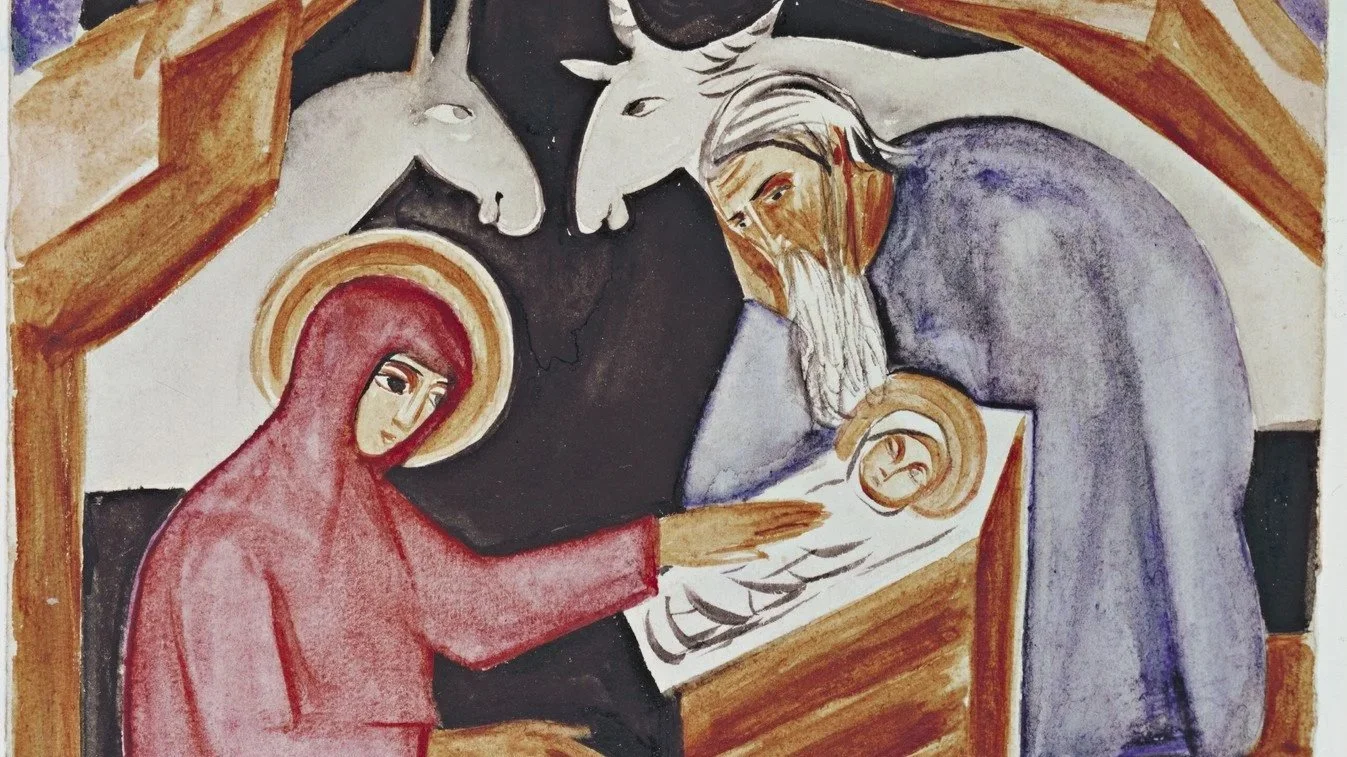
Epiphany: The Brightness of Christ’s Revealed Presence
The Christmas season is only the beginning of the liturgical calendar’s narrative of the life of Christ. The story continues with Epiphany. “[N]ations shall come to your light, and kings to the brightness of your rising.” (Isaiah 60:3) These prophetic words set the theme for the season of Epiphany, a meditation on the light of the world revealed to all people in our Savior, Jesus Christ. The word Epiphany means ‘the manifestation of God to man,’ and this season reflects on the many ways Christ manifested himself as the fully-God and fully-human Savior through his life and ministry. This guide is designed to walk you through the seasonal feasts that signify these Epiphany moments.
The Christmas season is only the beginning of the liturgical calendar’s narrative of the life of Christ. The story continues with Epiphany. “[N]ations shall come to your light, and kings to the brightness of your rising.” (Isaiah 60:3) These prophetic words set the theme for the season of Epiphany, a meditation on the light of the world revealed to all people in our Savior, Jesus Christ. The word Epiphany means ‘the manifestation of God to man,’ and this season reflects on the many ways Christ manifested himself as the fully-God and fully-human Savior through his life and ministry. This guide is designed to walk you through the seasonal feasts that signify these Epiphany moments. May the shining presence of Christ be manifest in your heart this season.

Deacon, Redeemer Anglican Church

THE FEAST OF THE EPIPHANY
January 6
Just as the Christmas season begins with Christmas Day, so the Epiphany season begins with the feast of the Epiphany, on January 6. The Feast of the Epiphany celebrates the adoration of the wise men. In the coming of the wise men, the rulers of the Gentiles offered gifts, tribute, and worship to the revealed Savior of Israel. Together, the wise men presented Jesus with gold (a gift signifying royalty), frankincense (an incense intended for worship), and myrrh (used for anointing bodies for burial). In this act of mystical significance, ancient prophecies were fulfilled, that kings and nations would serve and worship the Messianic king.
The Feast of the Epiphany is one of the most ancient celebrations in the Christian calendar. There was a time when the church considered Epiphany, Easter, and Pentecost to be the three most special days of the church year. While Christmas has now overshadowed Epiphany, there are many ways that we as the church can keep Epiphany traditions alive and well. After 12 Days of Christmas celebration, keep the charcuterie board stocked for one more day! The Eve of Epiphany (the night of January 5, known to Shakespeare aficionados as “Twelfth Night”) is a final opportunity to enjoy your Christmas decorations and eggnog – a great, last hurrah as the decorations come down. But even taking down the decorations becomes an occasion for merriment. The feast of Epiphany is a time for celebration, bonfires, and parties. Epiphany is often celebrated by taking the old Christmas tree into the backyard and setting it ablaze, creating an enormous bonfire that fills the cold winter darkness with brilliant light; a fitting representation of the light of Christ that has entered our dark and cold world.
Epiphany is also a traditional time for house blessings, when a church leader or family elder will pray in each room and anoint the doorposts with oil, asking that the Light of Christ’s Epiphany would shine forth from the home to the neighborhood and the world. As part of this act, some will mark their front door with chalk, writing a pattern of four crosses positioned in between the initials for the Latin phrase, Christus Mansione Benedicat (“May Christ bless this dwelling place”), surrounded by the first two and last two digits of the new year (example: “20+C+M+B+28”).. C, M, and B are also the initials for the traditional names of the three wisemen ( ‘Caspar,’ ‘Melchior,’ and ‘Balthazar’) and this act of prayer and devotion petitions the Lord to visit the home, just as the wise men visited the Holy Family at Epiphany.
Hymn for Epiphany
We three kings of Orient are;
Bearing gifts we traverse a-far,
Field and fountain, Moor and mountain,
Following yonder star.
O star of wonder, star of night,
Star with royal beauty bright,
Westward leading, Still proceeding, Guide us to thy perfect light!
Prayer for Epiphany
O God, by the leading of a star you manifested your only Son to the peoples of the earth: Lead us, who know you now by faith, to your presence, where we may see your glory face to face; through Jesus Christ our Lord, who lives and reigns with you and the Holy Spirit, one God, now and for ever. Amen.
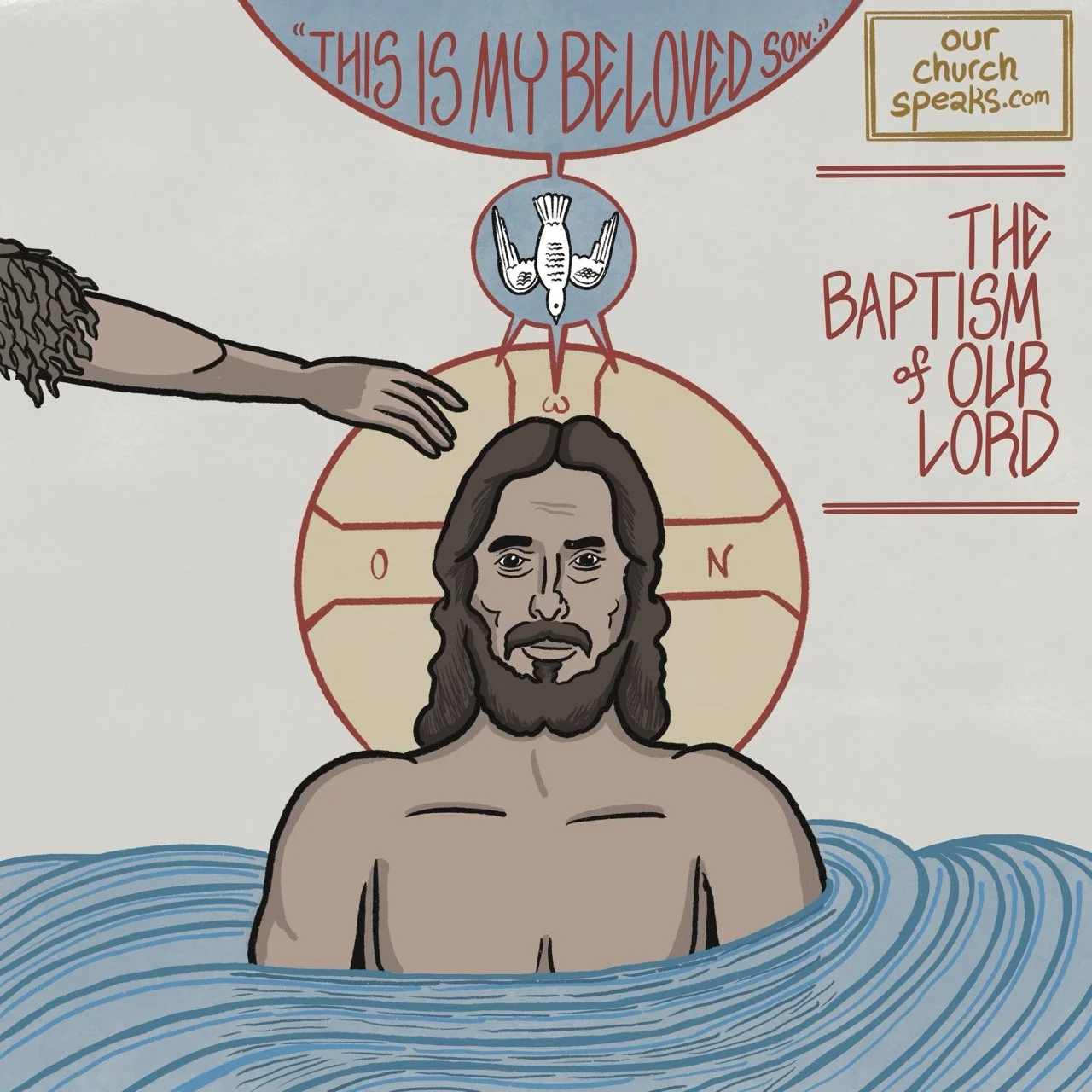
Baptism of Jesus
The First Sunday of Epiphany
The first Sunday of Epiphany remembers the Baptism of Jesus and the church often celebrates with the baptisms of babies and adult converts. At the launch of his ministry, Jesus journeyed to the Jordan river, where his cousin, John the Baptist, was baptizing in the Jordan river and calling the people of Israel to repentance, in anticipation of the coming Messiah. Quoting the prophet Isaiah, John cried out, “Make straight the way of the Lord!” (John 1:23) When Jesus arrived, John identified Jesus as this Messiah, “Behold, the Lamb of God, who takes away the sin of the world!” (John 1:29) Jesus asked that John baptize him and John protested, saying, “I need to be baptized by you, and do you come to me?” But Jesus insisted, “Let it be so now, for thus it is fitting for us to fulfill all righteousness.” (Matthew 3:14-15) John then baptized Jesus in the Jordan, the same river through which the people of Israel crossed on dry ground on their way to the promised land (Joshua 1:1-9). Rising from the baptismal water, Jesus was revealed in Trinitarian glory when the Holy Spirit descended in the form of a dove and the Father in Heaven was heard to say, “This is my beloved Son, with whom I am well pleased.” (Matthew 3:17) Jesus’ divinity was manifested, and his ministry of calling his people to the promised land of his heavenly kingdom had begun.
Hymn for The Baptism of Jesus
Hail to the Lord’s Anointed,
Great David’s greater Son!
Hail in the time appointed,
His reign on earth begun!
He comes to break oppression,
To set the captive free,
To take away transgression,
And rule in equity.
Prayer for The Baptism of Jesus
Eternal Father, who at the baptism of Jesus revealed him to be your Son, anointing him with the Holy Spirit: grant to us, who are born again by water and the Spirit, that we may be faithful to our calling as your adopted children; through Jesus Christ your Son our Lord, who is alive and reigns with you, in the unity of the Holy Spirit, one God, now and for ever. Amen.
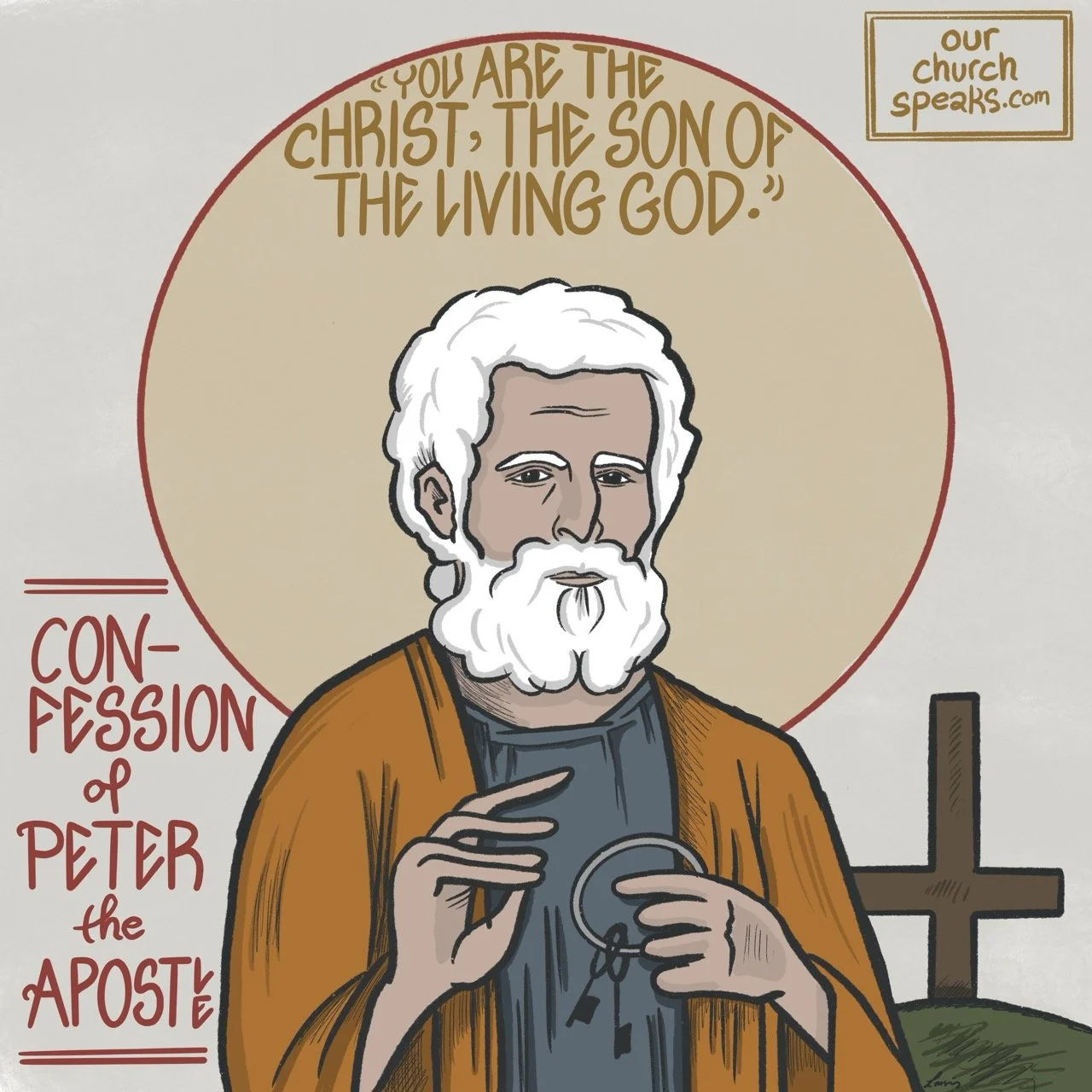
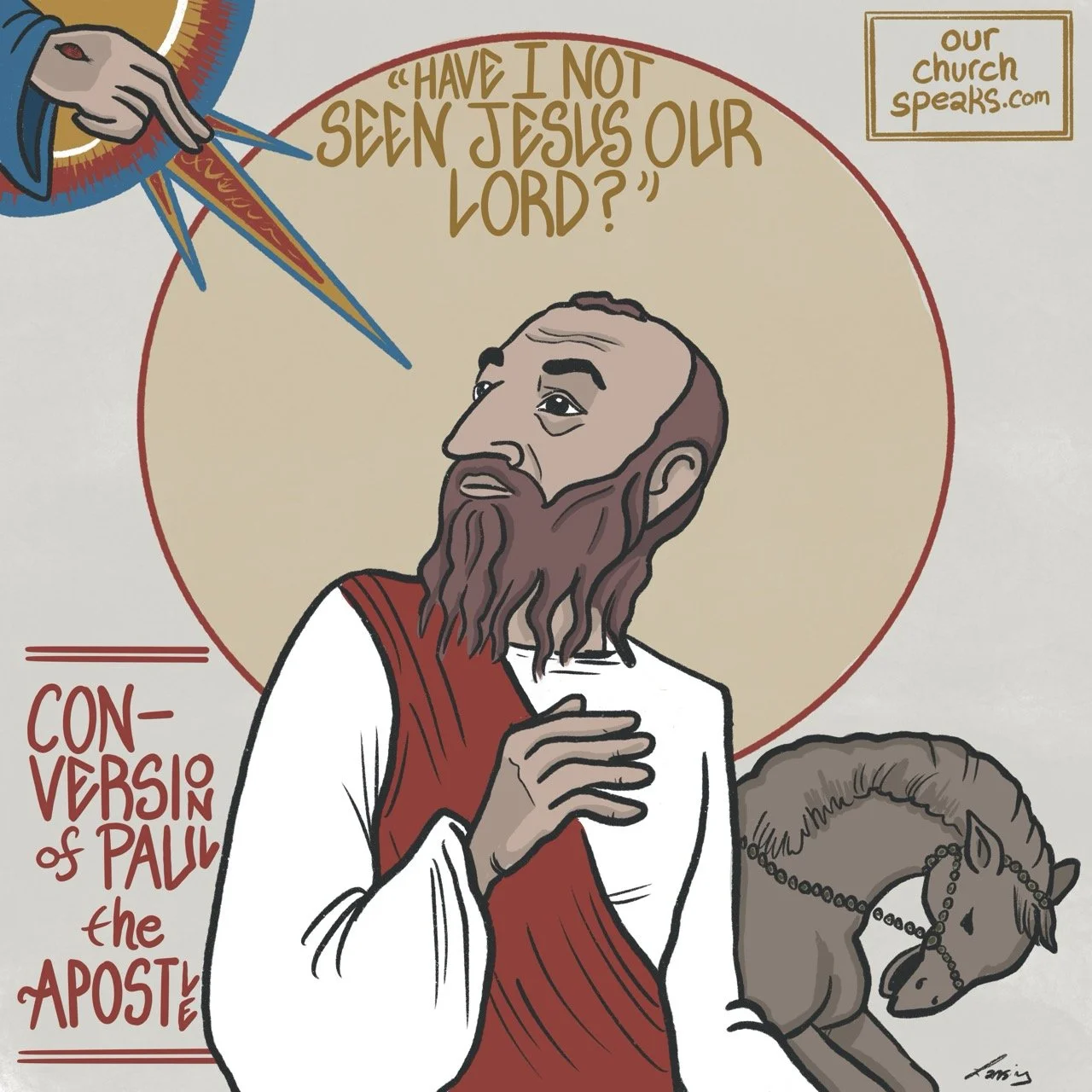
WEEK OF PRAYER FOR CHRISTIAN UNITY
January 18 - 25, 2026
The Feast of the Confession of Peter (January 18) and the Feast of the Conversion of Paul (January 25) bookend the Week of Prayer for Christian Unity, where churches of all traditions join in Jesus’ prayer that all “might be one” so that the light of Christ may be shared with the world and that the fellowship of Christ’s body might be whole. Peter and Paul had their conflicts (Galatians 2:11) and were restored to unity because of their common confession of the truth in Jesus. In the hours before his death, Jesus issued his own heartfelt prayer for the unity of his people, “Holy Father, protect them by the power of your name, the name you gave me, so that they may be one as we are one… That they may be one, just as you, Father, are in me, and I in you, that they also may be in us, so that the world may believe that you have sent me… I in them and you in me, that they may become perfectly one, so that the world may know that you sent me and loved them even as you loved me.” (John 17:6, 21, 23) Jesus clearly tied the unity of his people to the manifestation (the “epiphany”) of his identity to the world. As we observe the epiphany of Christ this season, it is appropriate to set aside time to pray earnestly for unity in the church, that the world may know Christ and his love.
Hymn for The Week of Christian Unity
The Church’s one foundation is Jesus Christ her Lord;
She is the new creation by water and by word;
From heaven he came and sought her to be his holy bride;
With his own blood he bought her, and for her life he died.
Prayer for The Week of Christian Unity
Lord Jesus Christ, you said to your apostles, “Peace I give to you; my own peace I leave with you.”: Regard not our sins, but the faith of your Church, and give to us the peace and unity of that heavenly city, where with the Father and the Holy Spirit you live and reign, now and for ever. Amen.
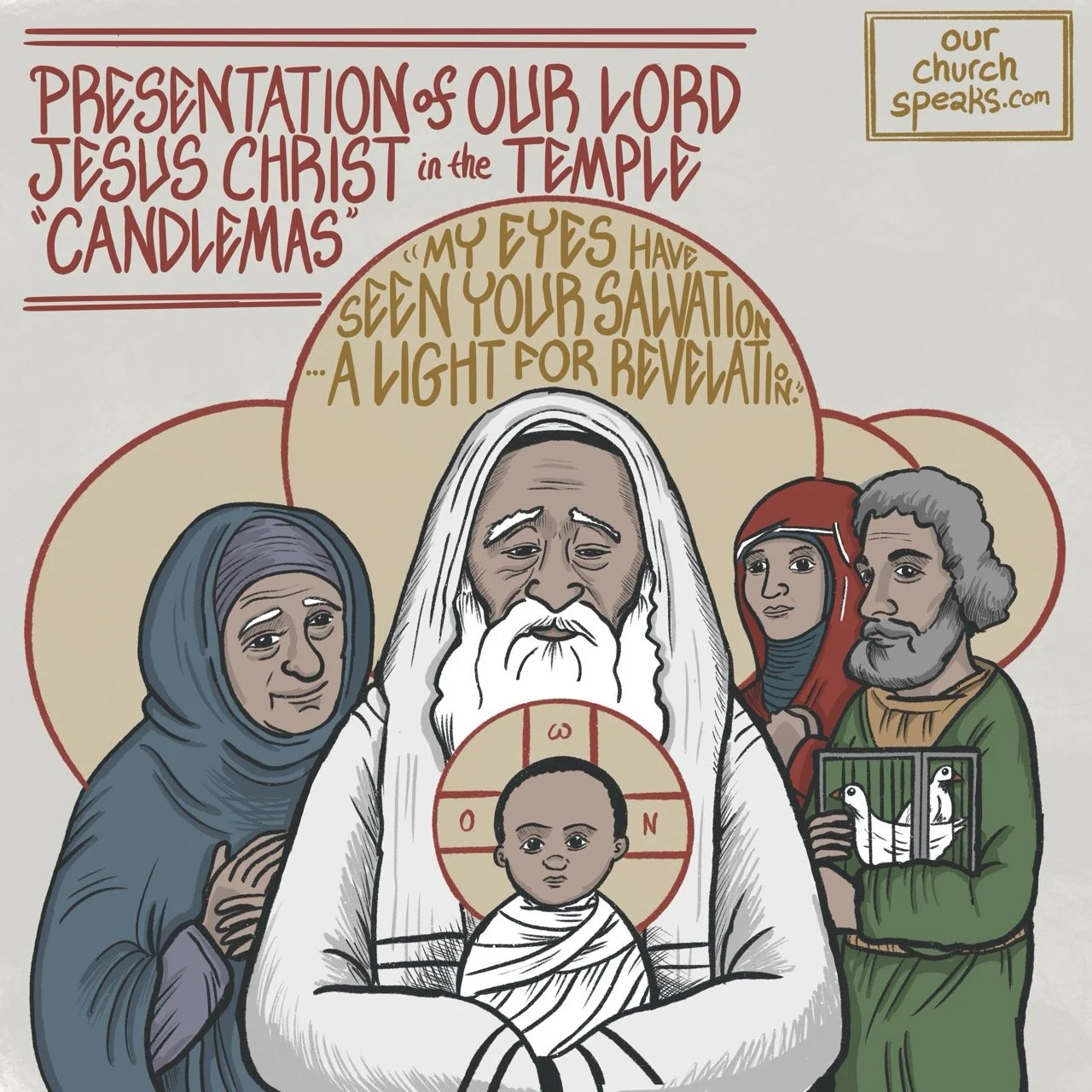
CANDLEMAS
February 2, 2026
The day Americans and Canadians call “Groundhog Day” is actually a significant moment in the church’s liturgical calendar. February 2 marks forty days after Christmas Day and commemorates the events of Luke 2:22-40. This passage recounts that 40 days after Jesus’ birth, his mother and father presented him at the Temple in Jerusalem. This profound moment marked the first time God incarnate entered his temple. There, two prophets, Simeon and Anna, welcomed the child with joy. Like many prophets before them, Simeon and Anna had longed to see the Messiah who would bring salvation, and they recognized that this moment had now come. The Lord would be “a light of revelation to the Gentiles,” said Simeon, “and the glory of [his] people, Israel.” (Luke 2:32)
This light of revelation is traditionally celebrated with the abundant lighting of candles, and the blessing of their continued use throughout the year. In the Northern hemisphere, the Candlemas feast falls in mid-winter, and the theme of light advancing in the darkness has held particular resonance on this day. Candlemas is the final holiday in the liturgical calendar tied to the narrative arc of the Christmas story. Because of this, it is the final traditional date to display Christmas decorations. Though most have their decorations boxed up by the feast of the Epiphany on January 6th, hardcore Christmas enthusiasts choose to finally take down their manger scenes and Christmas trees on Candlemas.
Hymn for Candlemas
Lift up your heads, ye mighty gates;
Behold, the King of glory waits!
The King of kings is drawing near;
The Savior of the World is here.
Prayer for Candlemas
Almighty and everliving God, we humbly pray that, as your only-begotten Son was this day presented in the temple in the substance of our flesh, so we may be presented to you with pure and clean hearts by Jesus Christ our Lord; who lives and reigns with you and the Holy Spirit, one God, now and for ever. Amen.
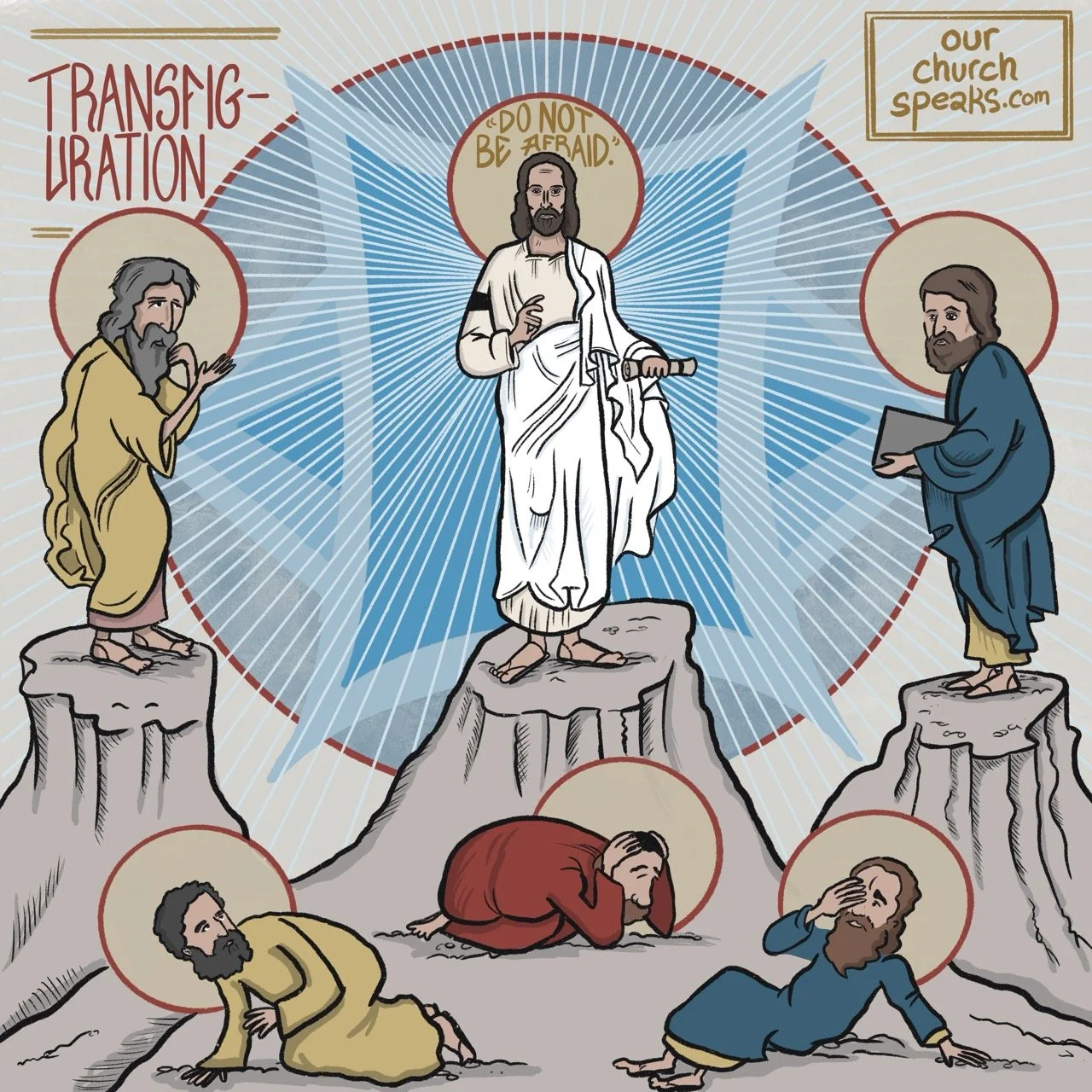
TRANSFIGURATION SUNDAY
The Last Sunday of Epiphany
Epiphany concludes with Transfiguration Sunday, commemorating the moment when Christ’s divine glory was revealed on the holy mountain as Old Testament prophets gave Jesus honor. Jesus shone with the bright radiance of the sun and, just as at Jesus’ baptism, the Father once again spoke, “This is my beloved Son, hear him.” (Matthew 17:5) Peter, who witnessed this mystical moment with James and John, later reflected, “We were eyewitnesses of [Jesus’] majesty. He received honor and glory from God the Father… We ourselves heard this voice that came from heaven when we were with him on the sacred mountain.” (2 Peter 1:18) On the mount of Transfiguration, the disciples witnessed human nature glorified in Jesus, a foretaste of the triumphant and resurrected Christ. After this glorious epiphany moment, the Gospels tell us that Jesus began his journey to the suffering and humiliation of the cross and we, the church, walk in his steps by taking our descent into the penitential season of Lent.
Hymn for Transfiguration Day
O wondrous type! O vision fair,
of glory that the church may share,
which Christ upon the mountain shows,
where brighter than the sun he glows!
Prayer for Transfiguration Day
O God, who on the holy mount revealed to chosen witnesses your well-beloved Son, wonderfully transfigured, in raiment white and glistening: Mercifully grant that we, being delivered from the disquietude of this world, may by faith behold the King in his beauty; who with you and the Holy Spirit lives and reigns, one God, forever and ever. Amen.
Additional Resources
Our Church Speaks
A teaching series about saints from every era and place, with art and history by Ben Lansing (includes art and biographies of over 250 saints, along with a podcast cohosted with D.J. Marotta, and an illustrated devotional book written with D.J. Marotta.)Our Church Year
An upcoming illustrated book by Ben Lansing & D.J. Marotta about feasts and fasts of the church liturgical calendar. Sign up here to stay in the loop on updates about this book.Prints of the artwork featured in this article are available here.
A downloadable version of this article is available here.
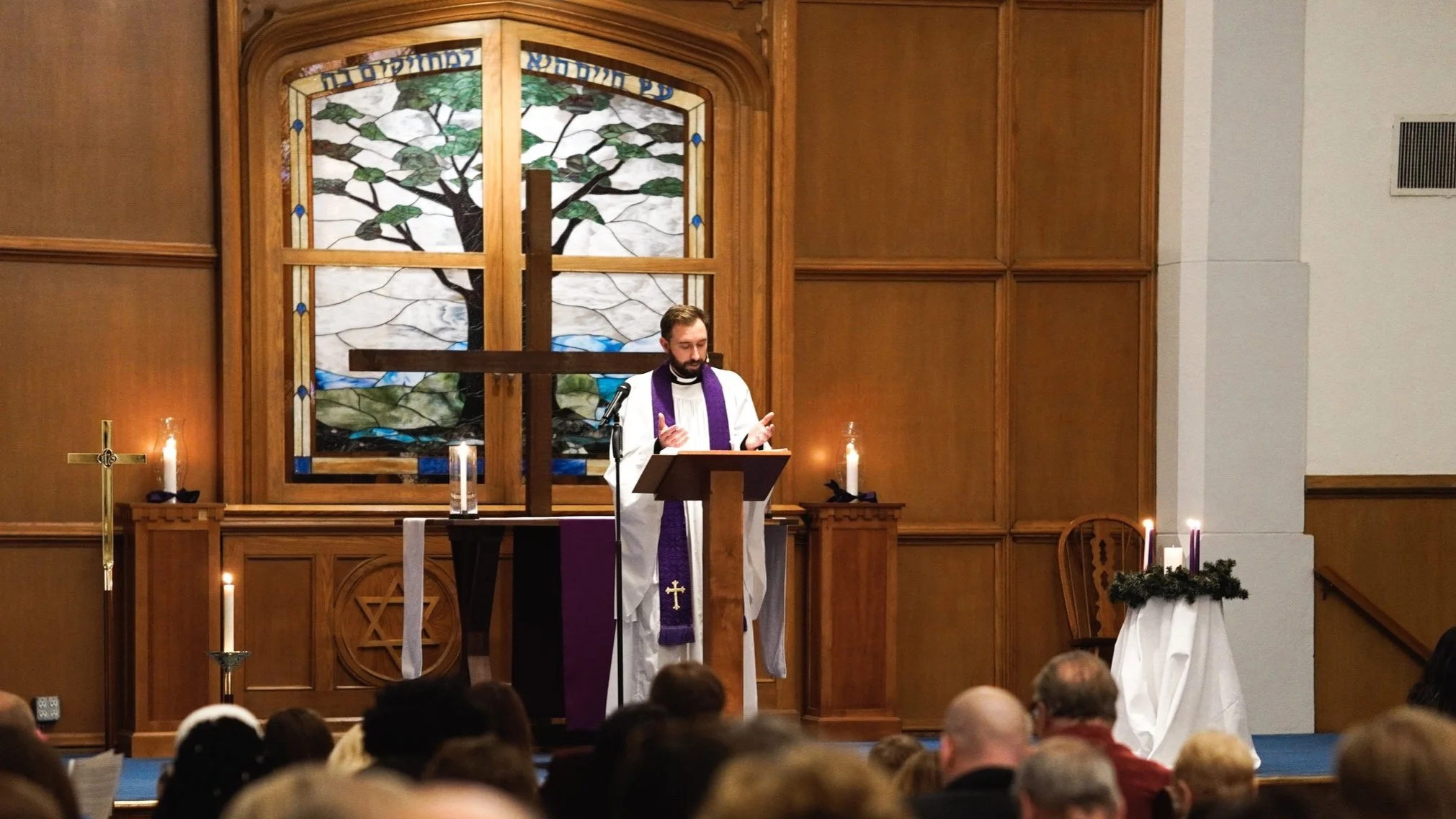
Is Christmas a Family or Church Holiday?
The answer to this question has undergone a dramatic shift in the past few decades. For hundreds of years the answer was a quick and easy “church holiday.” What else could celebrating the birth of our Savior be? Of course, there were family celebrations that often accompanied Christmas church celebrations, but these were understood to be secondary.
Is Christmas a Family or Church Holiday?
The answer to this question has undergone a dramatic shift in the past few decades. For hundreds of years the answer was a quick and easy “church holiday.” What else could celebrating the birth of our Savior be? Of course, there were family celebrations that often accompanied Christmas church celebrations, but these were understood to be secondary.
However, as surely all of us now recognize, the increased emphasis on family gift-giving and the overall decreased cultural acceptance of church participation has led to a quiet, but devastating swap. First the nuclear family rose to the #1 spot on the priority list for Christmas celebrations, then the church fell from #2 to basically dropping entirely off the charts all together. For many of the older generations, Christmas (along with Easter) was considered one of the most important days of the year to attend church (even if you skipped almost all the other days). However, for the younger generations, the idea of attending church on Christmas now sounds terribly inconvenient. It’s becoming normal, even amongst sincere Christians, to participate in worship on most days except Christmas.
What is fascinating about this shift is that it hasn’t produced the feelings and enjoyment of Christmas that it promised. Rather than Christmas celebrations being more fun and meaningful because they are no longer interrupted by “having to go to church,” many people are finding their Christmas celebrations empty and devoid of real meaning. Aside from ordering each other gifts online, eating a ton of unhealthy food, arguing about politics, and watching TV together… what is this even about? What is the point?
One of the most common refrains from Christians who are discouraged by the commercialization of Christmas is, “How do we keep Christ in Christmas?” The answer need not be a mystery - or rather, the answer lies in returning to the mystery. The best possible way we can enjoy the rich meaning and purpose of Christmas, the highest-impact thing we could do to “keep Christ in Christmas,” is simply to worship the Lord Jesus with our church family. Let’s gather together to wonder at the mystery of the incarnation - God has become a man. What a marvelous mystery this is!
Friends, if you are physically able, let’s gather together for worship on both Christmas Eve and Christmas Day. We can do this and celebrate with our families - and I think we will find that each enriches the other. I’ll see you there.
In the Father’s love,
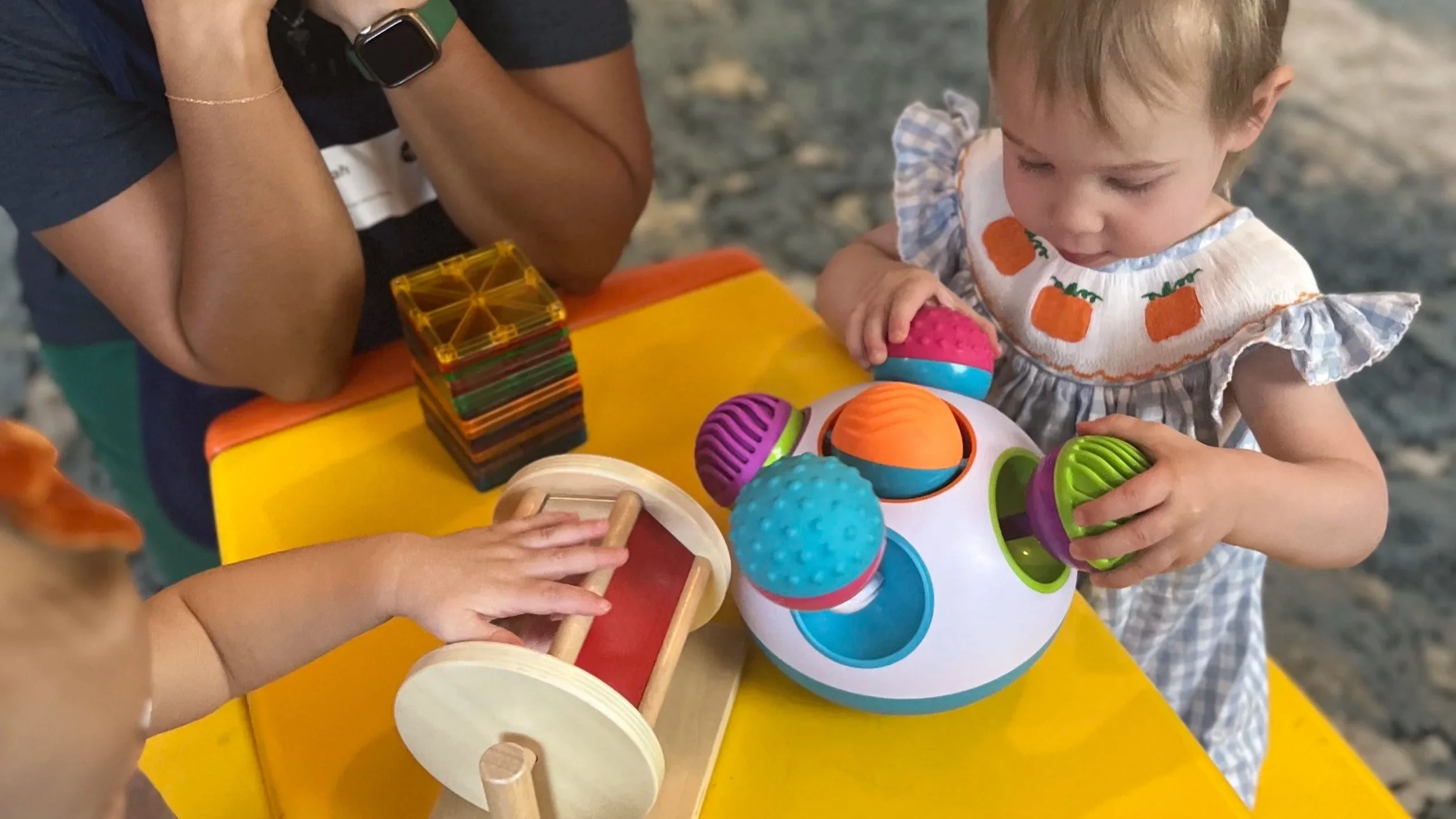
There’s Room for Your Messy Kids in the House of the Lord
When I became a parent, I started noticing things I had never paid attention to before, like how loud life can be, how quickly things get messy, and how rarely anything goes according to plan. It has changed the way I see church life as well. We often put a lot of effort into keeping our worship services calm, our spaces neat, and our communities welcoming. Those are good desires, and there is nothing wrong with wanting beauty, peace, and order in the house of God. But sometimes, in pursuing those things, we can miss an important truth: the sacred often meets us right in the middle of our ordinary messiness.
When I became a parent, I started noticing things I had never paid attention to before, like how loud life can be, how quickly things get messy, and how rarely anything goes according to plan. It has changed the way I see church life as well.
We often put a lot of effort into keeping our worship services calm, our spaces neat, and our communities welcoming. Those are good desires, and there is nothing wrong with wanting beauty, peace, and order in the house of God. But sometimes, in pursuing those things, we can miss an important truth: the sacred often meets us right in the middle of our ordinary messiness.
I have felt that tension myself, wondering if a cry, a dropped toy, or a sudden shout might be distracting someone or disrupting the “peace.” Yet maybe those sounds are not interruptions at all. They can be reminders that God’s presence is not limited to quiet moments.
When Sacred Meets Messy
That tension between sacred order and the messiness of real life isn’t new. Every Christmas, I’m reminded of it when we sing “Infant holy, infant lowly.” This song points to a profound truth: the One who is most sacred, the Son of God Himself, was brought to earth not in silence but in the cries of a newborn, wrapped in swaddling clothes. God entered the world as a baby, and in that moment, the sacred sounded like a newborn’s cry. If God chose to enter the world as a crying baby, surely the Church can welcome the sound of one too.
Not long ago, a new parent came to pick up their crying baby from the nursery and immediately began apologizing. I gently said, “Please don’t ever apologize for a baby being a baby.” He looked surprised, but that small moment stuck with me. We live in a culture that often treats children and their messiness as inconveniences. They’re loud, unpredictable, weak, and not particularly “productive,” and in this, they are exactly opposite of what our culture values. This mindset shapes more than we realize and can make parents feel the need to apologize for their child just existing in certain spaces, even in the Church.
If the heart of God is to send his only Son as a baby, how much more should we as the church welcome the little ones, messes and all! So please don’t ever apologize for your baby being a baby. For our Savior was one too. Their cries and their need for comfort are not interruptions to worship but reminders of how God enters our lives in the most ordinary, vulnerable way. If we can see the sacred in that, it shapes how we care for both children and parents in every moment of church life.
Remembering How We Are Made
Believing that the sacred is present even in cries and messiness shapes everything about how we care for children, especially in the nursery. It guides how we respond in even the smallest moments. When we call a parent because their baby is struggling, it might feel like we’re saying, “Your child is too much,” or worse, “You’re not welcome.” That couldn’t be further from the truth. What’s actually happening is this: your child is growing exactly as they should.
Separation anxiety, big feelings, or sudden tears are all natural parts of early childhood development. They reflect a still-developing understanding of object permanence, an active amygdala, and a prefrontal cortex that hasn’t fully matured. Some children are more sensitive, others might be tired, under the weather, or just having a rough morning. Whatever the reason, our care for them doesn’t change.
Our goal isn’t to manage emotions but to meet children in them—to stay steady, compassionate, and safe while they navigate what they’re feeling. In these moments, we honor both the child and the presence of God who first entered the world as a vulnerable, crying infant. This is one of the many places where the sacred meets the ordinary, and our theology becomes tangible.
Extending an Invitation
That’s why, when we call you, it’s not because your child is a disruption. We want to partner with you and remind you that this is a space where you and your child belong. Our goal is not simply to hand your child back and wave good-bye but to extend an invitation that reflects the welcome God has already offered to each of us.
It might sound like:
“We’re about to have snack—if you’d like to come in for a few minutes, we’d love to have you join us.”
Or:
“We’re starting storytime soon—feel free to come sit with us if you’re not heading back into the service.”
Some parents prefer to take their little one to the Auxiliary Room, and that’s completely fine. The point isn’t where you go, but that you know that you and your child, no matter how messy, belong in the church. We want every parent to know this: your child is wanted here. And so are you. No amount of crying or bad days will scare us off. You’re not “failing” if your baby doesn’t make it through the entire service. You’re parenting, and we’re with you.
This posture of invitation doesn’t just shape how we care for babies in the nursery. It shapes who we are as a community. It transforms our church from a place of quiet order into a home alive with life, where the fingerprints on the walls and sounds of real families are signs that God’s presence dwells here too.
What This Means for Our Parish
God is deeply present in the noise, motion, and unpredictability of our shared life together. When a baby cries during the sermon or a toddler drops their snack in the aisle, it’s not a distraction from what’s sacred—it’s a reminder of how the sacred entered our world. God showed up as a baby—crying, needy, and dependent—and in doing so, made it clear that holiness is not afraid of our humanity or our mess.
Our church should look like that—a place alive with signs of life and evidence that real families are growing here. The nursery is where it begins, with cuddles and tearful good-byes. From there, they’ll move into their Redeemer Kids classrooms at age three, sit in Youth Fellowship, and one day maybe join our CCO ministries. And through it all, we want to make sure there are spaces where they can bring their full selves and know they belong.
Because this is how faith is formed—not in perfection, but in practice. Not apart from our ordinary lives, but right in the middle of them. There is room for your messy children in the house of the Lord. And there is room for you, too.
Grace,
Mikala Thompson
Assistant Director of Redeemer Kids
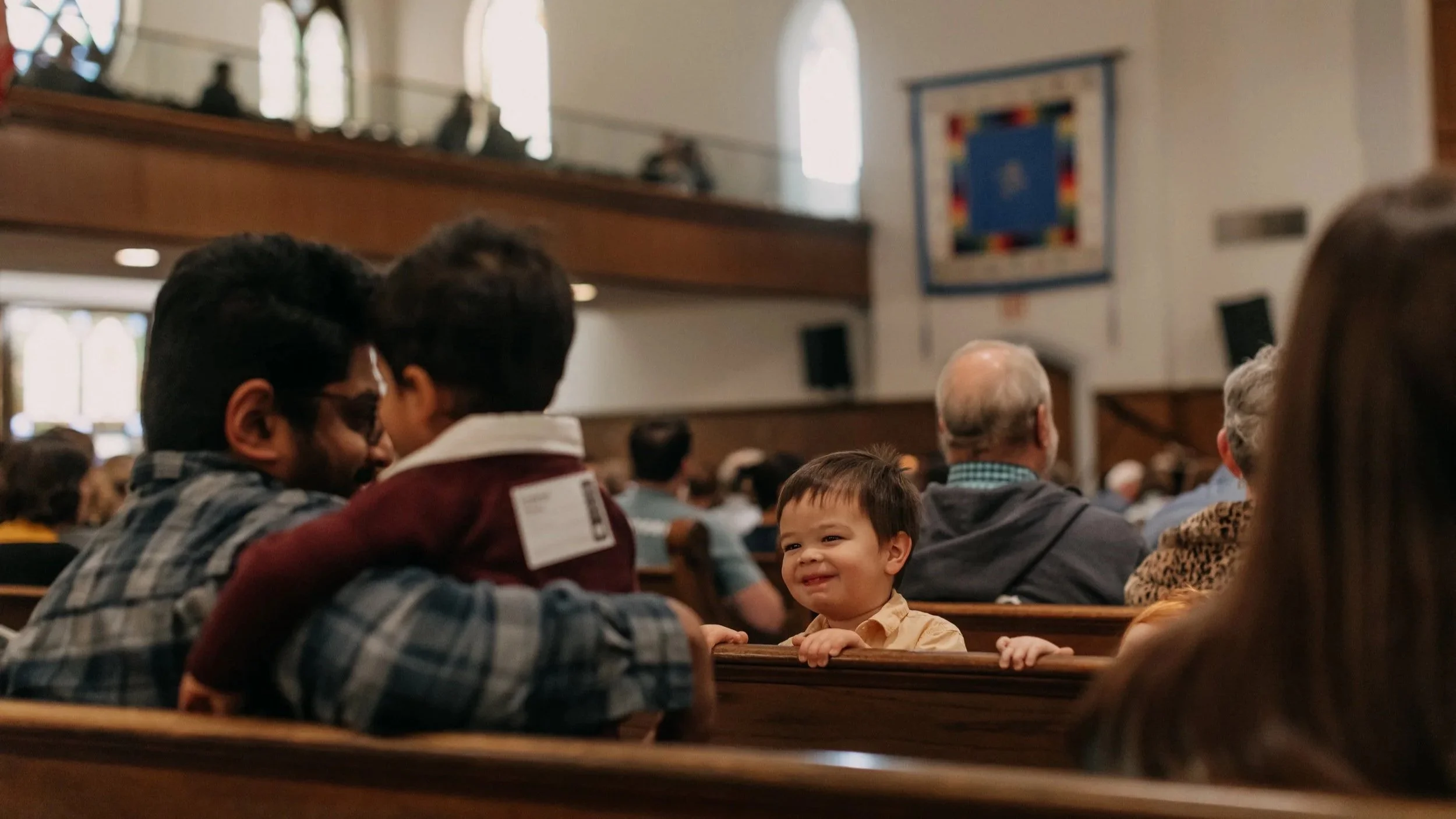
Saints as Way-Finders in Children’s Ministry
When we talk about spiritual formation here in our parish, we often start with seven questions that every person—no matter what age—asks of themselves. Two in particular,“Who am I?” and “With whom do I belong?”, are questions that children encounter early in life.
When we talk about spiritual formation here in our parish, we often start with seven questions that every person—no matter what age—asks of themselves. Two in particular,“Who am I?” and “With whom do I belong?”, are questions that children encounter early in life. The sacrament of baptism (BCP 2009, pg. 165) answers them; it communicates to them “you are a child of God” and “you belong here, in the body of Christ.” We, as the adults who have sworn to do all in our power to support them in their lives with Christ, then have the privilege, the duty even, to tell them the stories of the men and women of their faith who have gone before them and shown them what it means to be a child of God in the body of Christ. The stories of these saints are a powerful tool to feed the spiritual growth of our children and to fulfill those vows we take as we witness their baptism into the family of God.
So, who are the saints?

St. George & The Dragon
In Stories of the Saints, a children’s book here on the shelves at Redeemer, the author Carrey Wallace puts it this way: “Saints aren't people who are always good and never afraid. They are people who believe there must be more to life than just what we can see. This world may be hard and unfair, but saints believe in a God who is bigger than the world, whose law is love and whose justice is mercy. And this faith gives them courage: to stand up to evil kings, to care for people everyone else forgets or hates, to slay dragons.”
When it comes to teaching our children about the faith, it can be so tempting for us as the adults to package important content about faith, Scripture, the nature of God, and all things high and heavenly into little bite-sized lessons that our children can easily gobble up Pac-Man-style during their week and expect it to produce robust Christians. But a life of faith is a dynamic and living thing that is more like a tree growing slowly and mysteriously than like a brick house built piece by piece. The growth is hard to measure day by day, and we have much less control over how quickly or what shape it might take as it goes. This can feel daunting when we are holding the little “seeds” of our children’s faith and must entrust them to the Lord, praying for a strong and mighty faith to take root. We have the beautiful and crucially important job to keep speaking words of life to those seeds: “you are a child of God” and “you belong here, in the body of Christ,” and to feed them rich stories of how children of God can live a meaningful life at every age and in every circumstance.

St. Perpetua’s Dream
A few times a year, our parish gets to watch families bring their small children to get baptized, our parish vows together to support their growth in the faith, and we celebrate! But there are other places in our church, less visible and celebrated, where children are reminded of who they are every week. Each Sunday morning in Redeemer Kids classrooms, our volunteers crack open the Bible and read stories of men and women who lived imperfect lives but whose stories are sufficient for “teaching, rebuking, correcting and training in righteousness” (2 Timothy 3:16). Through them, we are called to be faithful like Abraham, bold like Peter, and obedient like Mary. During the curriculum year, we will also tell our children about St. Patrick and Martin Luther King Jr., men who lived courageous lives for Christ and whose stories tell us something about what it means to live for God’s glory in adversity. We get to tell our children here that these men and women are children of God, just like us. They belong in the body of Christ, just like us. And, just like us, they were imperfect and flawed, in need of God’s grace. They tell those who listen to keep going, it’s worth the battle! Their light was meant to illuminate the path we are meant to follow and “flicker like candles along a dark corridor,” (Our Church Speaks, pg. 7) a light in the dark and a city on a hill. Let’s gift our children with these stories as way-finders to guide them in their spiritual growth.
Casey Cisco
Director of Redeemer Kids
SUGGESTED READING
for telling the stories of Saints to children:
Our Church Speaks by Ben Lansing and D.J. Marotta
Deborah and the Very Big Battle by Tim Thornborough and Jennifer Davison
Stories of the Saints by Carey Wallace and Nick Thornborrow
Augustine of Hippo by Simonetta Carr
Patrick: Patron Saint of Ireland by Tomie dePaola
Saintly Creatures by Alexi Sergeant and Anita Barghigiani
*Images above from the book Stories of the Saints, illustrated by Nick Thornbarrow.

Hallowtide: Remembering Death in Light of Christ’s Victory
Jack-o-lanterns, front porch skeletons, and cotton spiderwebs are everywhere this time of year. Here in Richmond, the Carytown Zombie Walk and Halloween on Hanover are major neighborhood events that attract thousands. It’s easy to assume we know Halloween. After all, “Halloween,” as our consumerist culture defines it, is all around us. But there is a deeper level of meaning to this spooky holiday than costumes and a sugar rush.
Jack-o-lanterns, front porch skeletons, and cotton spiderwebs are everywhere this time of year. Here in Richmond, the Carytown Zombie Walk and Halloween on Hanover are major neighborhood events that attract thousands. It’s easy to assume we know Halloween. After all, “Halloween,” as our consumerist culture defines it, is all around us. But there is a deeper level of meaning to this spooky holiday than costumes and a sugar rush. While you may have heard a case that this holiday is rooted in the occult, Halloween, in fact, is the first day of a Christian triduum called “Hallowtide,” a three-day religious observance made up of Halloween, All Saints Day, and All Souls Day.
This Hallowtide is designed to posture our hearts and imaginations toward anticipating the end of our lives in the glorious context of Christ’s victorious defeat of death through a specific theme for each day of Hallowtide. On Halloween we remember our own mortality, on All Saints Day we remember the great saints of old, and on All Souls Day we remember our departed loved ones. Understanding Hallowtide can help us recover the original vision of this meaningful three-day observance and reorient our hearts toward gratitude for Christ’s saving work. I hope that the Hallowtide overview below will provide helpful context and resources through this season.
Deacon, Redeemer Anglican Church
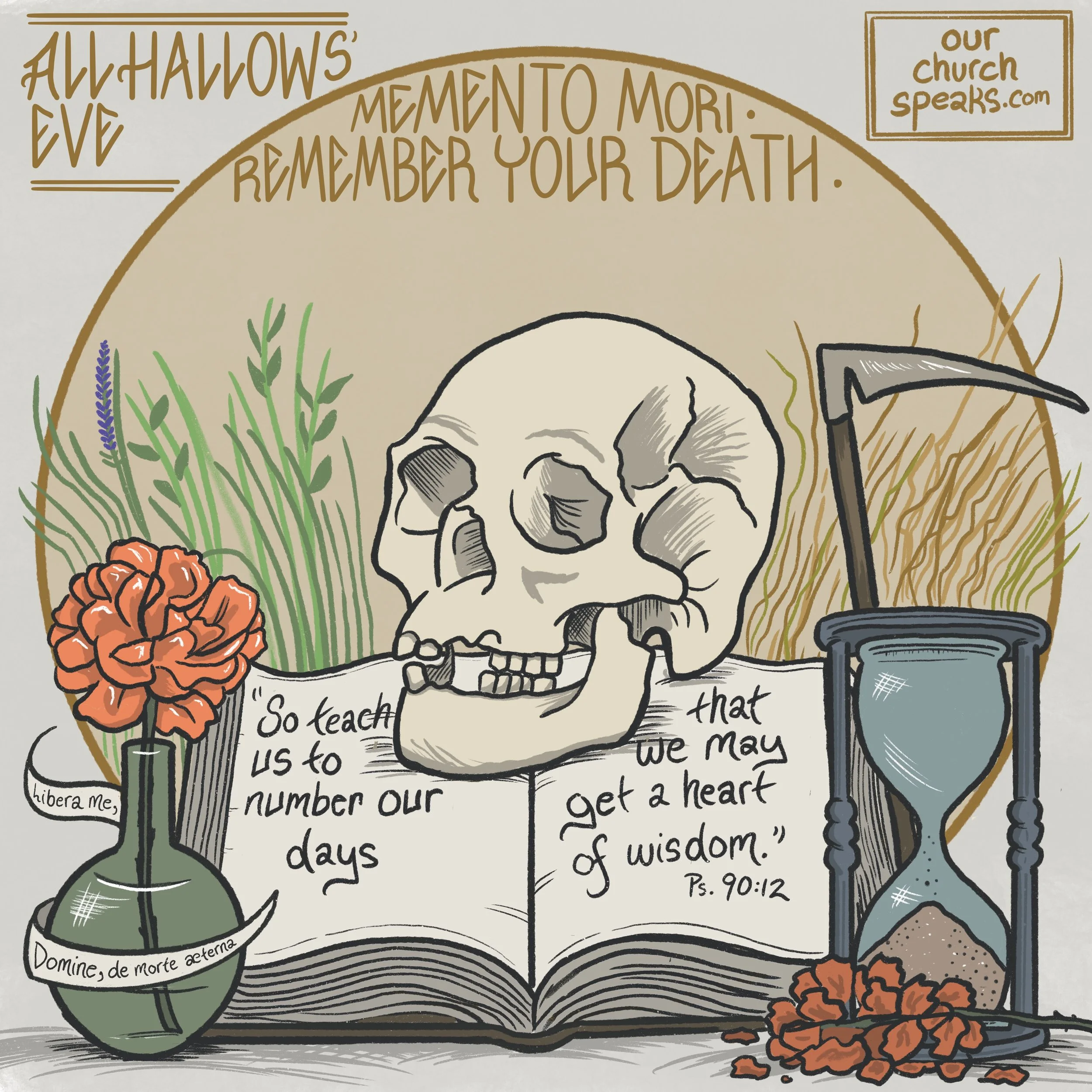
October 31 — Hallowtide Day 1: Halloween
“All Hallows’ Eve”
The changing seasons can serve as a catechesis for our souls. As the weather grows chilly, the daylight grows shorter, and crunchy leaves fall to the ground, we are inspired to reflect on our own mortality. This time of year, the ancient Christian phrase “Remember Your Death” (“Memento Mori”) seems to be interwoven into the very tapestry of nature. The year is drawing to a close and we are left asking, “Where does the time go?” As our bodies are seasonally oriented toward reflecting on time and mortality, we may find our souls drawn into nostalgia, sadness, or even anxiety and fear. Halloween is an acknowledgement of these seasonal, biological, and spiritual realities. Yes, we will die. But because of Jesus, death is not the end.
“O death, where is your victory? O death, where is your sting? The sting of death is sin, and the power of sin is the law. But thanks be to God, who gives us the victory through our Lord Jesus Christ.”
The Christian mockery of death in 1 Corinthians 15 is at the heart of Halloween. Because of Jesus, death doesn’t have the final say. Jesus has “disarmed the rulers and authorities and put them to open shame, by triumphing over them in him.” (Colossians 2:15) The demonic forces that once held our souls captive are now defeated, as long as our lives are hidden in Christ. Because of this, the change of the seasons and our reflection on mortality becomes an opportunity for celebration and praise.
But the devil, knowing that his time is short, is still filled with fury (Revelation 12:12) and is seeking to deceive as many as he can before his time runs out. For those without the hope of Christ, death’s sting remains and a holiday about remembering death can be dark and terrifying. As our culture has increasingly embraced secularism, so Halloween has increasingly become about the gruesome, the pagan, and even the occult. Add to this many imaginative origin stories for Halloween, such as historically dubious notions about Halloween’s connection to a pagan Celtic festival called “Samhain,” and we could feel inclined to ignore Halloween altogether or modify the holiday into an innocuous harvest festival. But be assured, the credible history of Halloween leaves no doubt that it is actually a Christian observance known as “All Hallow’s Eve” that prepares our hearts for All Saints Day and points our inevitable reflection on mortality toward the hope found in Christ. (See Dr. Ryan Reeves’ lecture on the history of Halloween for more information about Samhain and Halloween’s origins).
So enjoy your liberty to celebrate with plastic skeletons, candy corn, and costumes if you choose, and whatever you choose, do so in the spirit of 1 Corinthians 15’s playful mockery of death, not as an expression of the terror of those without hope. We who have joined with Christ in faith and baptism are participants in our Lord Jesus Christ’s victory and our traditions should reflect this reality. Halloween is an opportunity to pray for our neighbors and friends who do not yet know Jesus and to pray against the defeated spiritual powers of evil who seek to hold them captive.
Hymn for All Hallow’s Eve
Abide with me: fast falls the eventide;
The darkness deepens; Lord, with me abide:
When other helpers fail, and comforts flee,
Help of the helpless, O abide with me.
I fear no foe, with Thee at hand to bless:
Ills have no weight, and tears no bitterness.
Where is death’s sting? Where, grave, thy victory?
I triumph still, if Thou abide with me.
Prayer for All Hallow’s Eve
O most merciful and mighty God, your son Jesus Christ was born of the Blessed Virgin Mary to bring us salvation and to establish your kingdom on earth: Grant that Michael and all your angels may defend your people against Satan and every evil foe, and that at the last we may come to that heavenly country where your saints for ever sing your praise, through Jesus Christ our Lord. Amen.
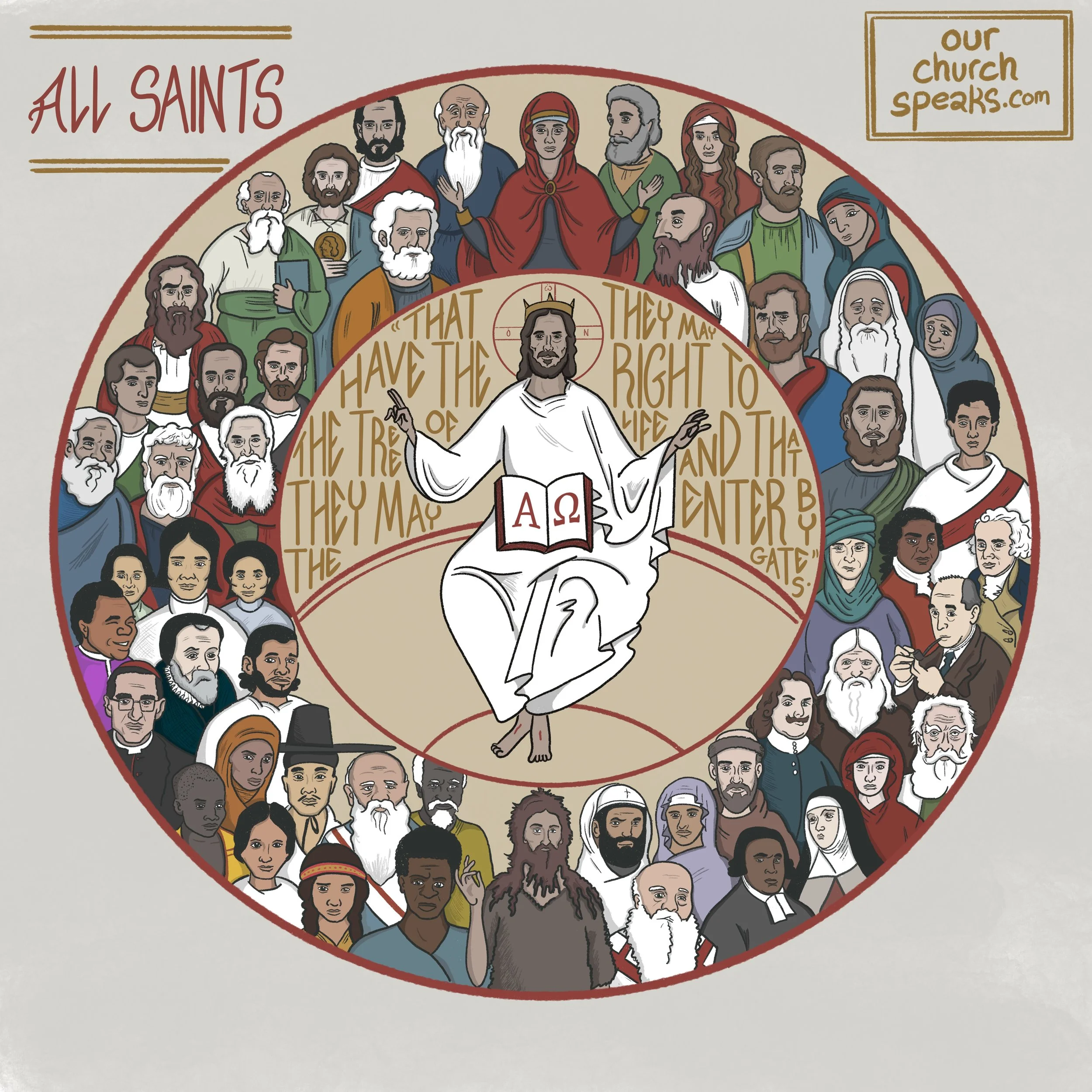
November 1 — Hallowtide Day 2: All Saints’ Day
“Hallowmas” or “All Hallows”
The reflective tone of Halloween turns victorious as All Hallows’ Eve transitions into The Feast of All Hallows (“All Saints’ Day”), a day commemorating the saints of the Church Triumphant.
“Therefore, since we are surrounded by so great a cloud of witnesses, let us also lay aside every weight, and sin which clings so closely, and let us run with endurance the race that is set before us, looking to Jesus, the founder and perfecter of our faith, who for the joy that was set before him endured the cross, despising the shame, and is seated at the right hand of the throne of God.”
On All Saints’ Day, we celebrate the famous saints of the past whose legacies have left a lasting impact on the church and the lives of Christians. The church year is filled with Saint Days, each usually marking the date when a great saint of the past has died. In a sense, their death date is their new birthday, the day they were received into life eternal through the powerful grace of their Savior.
All Saints Day is when all of the diverse voices of the saints merge into one, triumphant chorus. Many of these saints were considered insignificant in their own day; they were often overlooked, ridiculed, and sometimes killed because of their hope in Christ. On All Saints Day, we rejoice that they now fill the throne room of Jesus. While these saints may have achieved great things in the Kingdom of Heaven, the book of Revelation tells us that the saints cast their crowns before the throne of Jesus as they sing, “Worthy are you, our Lord and God, to receive glory and honor and power…” (Revelation 4:8) While we groan under the weight of sin and pain now, as Christians we know that we will soon be joining this eternal chorus, united forever in this family, called together as one in Jesus’ love.
On All Saints’ Day, you may consider reflecting on the stories of great saints of old and celebrating their lives with your friends and family, recounting the work of Christ throughout the centuries in the church. You may consider getting to know a saint previously unfamiliar to you. To that end, Dan Marotta and I have created a few resources that we hope contribute to preserving the memory of the saints, including the Our Church Speaks podcast and the devotional, Our Church Speaks: An Illustrated Devotional of Saints from Every Era and Place (IVP, 2024). These saints lived the victory of Christ and even the grave could not silence their witness or rob them of their eternal reward. Each of these great saints demonstrated that death, indeed, has lost its sting.
Hymn for All Saints’ Day
For all the saints, who from their labors rest,
Who Thee by faith before the world confessed,
Thy Name, O Jesus, be forever blessed,
Alleluia, Alleluia!
O blest communion, fellowship divine!
We feebly struggle, they in glory shine;
Yet all are one in Thee, for all are Thine.
Alleluia, Alleluia!
Prayer for All Saints’ Day
Almighty God, you have knit together your elect in one communion and fellowship in the mystical Body of your Son: Give us grace so to follow your blessed saints in all virtuous and godly living, that we may come to those ineffable joys that you have prepared for those who truly love you; through Jesus Christ our Lord, who with you and the Holy Spirit lives and reigns, one God, in glory everlasting. Amen.
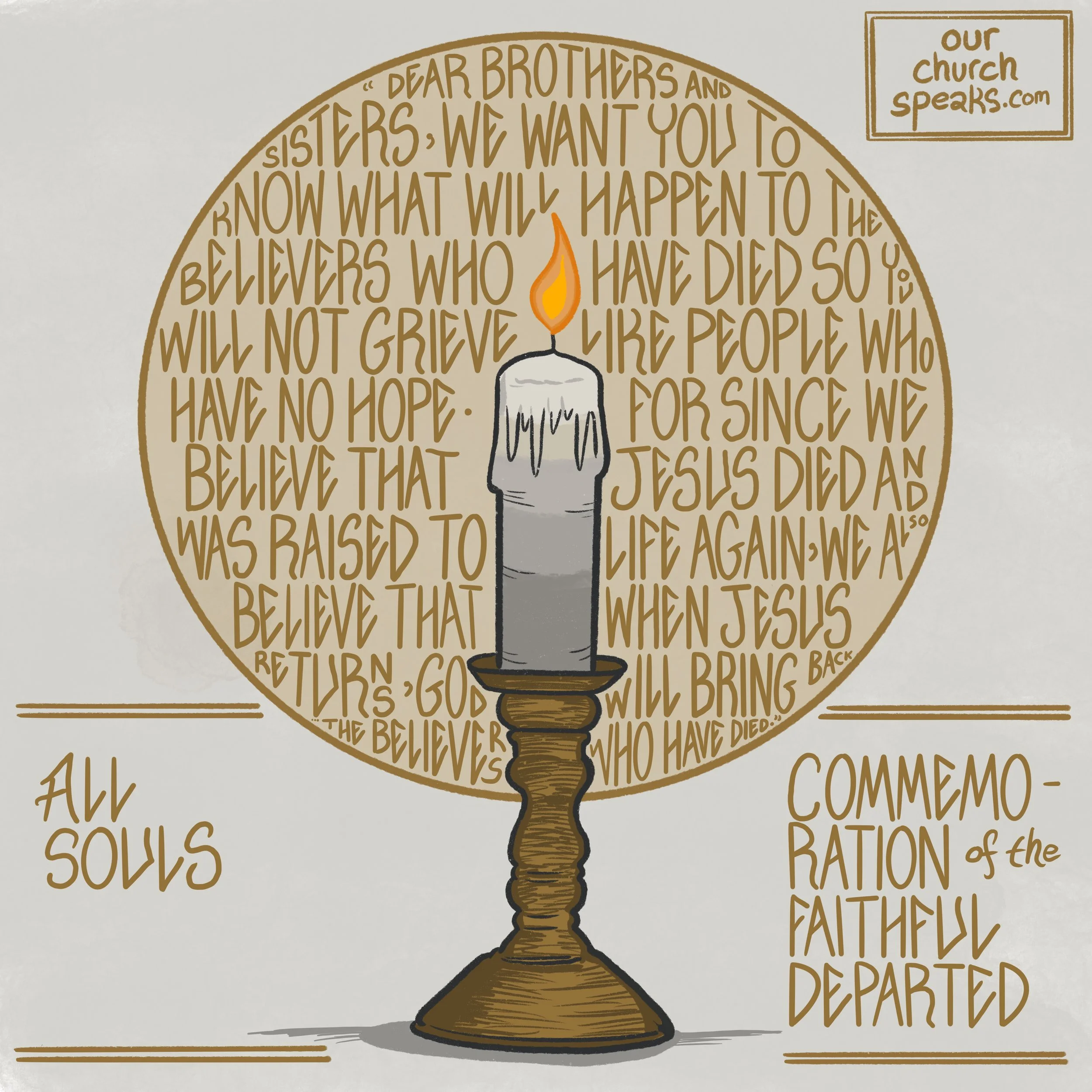
November 2 — Hallowtide Day 3: All Souls Day
“The Commemoration of the Faithful Departed”
All Souls Day (also known as “The Commemoration of the Faithful Departed”) is the conclusion of the three days of Hallowtide. On this day, Christians remember and give thanks for departed believers, including loved ones who may not have received wide recognition but have impacted our life and faith personally. This is a day to give thanks to God for the lives of those who have died, to commend their souls to God’s loving mercy, and to rejoice that in Christ, all who have been separated by death will be reunited once again in victory.
All Souls Day is a traditional time for Christians to visit the graves of loved ones or light candles in their memory. Many will pray, sing, or read Scripture at their loved one’s resting place. Christians often come together on this day to repair, clean, and decorate the church graveyard together. Grave visits like these are practiced by Christian cultures around the world, with the Mexican Roman Catholic Día de los Muertos being the most famous expression. Anglican observance of All Souls day is usually quiet and reflective, mixing mourning with hope.
Like the other days of Hallowtide, All Souls Day has ancient origins. In the early church of Rome, believers would gather for prayer in the catacombs where the faithful were buried. Medieval children in England and Ireland went from house to house on All Souls Day, often dressed as the saints of old and offering to pray for their neighbors’ departed loved ones in exchange for sweet raisin cakes spiced with nutmeg and cinnamon called “Soul Cakes.” This practice may be an origin for the Trick-or-Treating we now associate with Halloween.
Many of our rituals for grief, remembrance, and reflection have been stifled by the hectic pace of modern life. All Souls Day, and Hallowtide as a whole, provide us with an annual pattern of remembrance and thanksgiving for the love that Jesus has shown us through the lives of our departed loved ones. We grieve with hope, holding fast to the truths revealed in God’s Word, that all who are dead in Christ will be raised “up with him and seated… with him in the heavenly places in Jesus Christ, so that in the coming ages he might show the immeasurable riches of his grace and kindness toward us in Christ Jesus.” (Ephesians 2:5-7)
Hymn for All Souls Day
Be still, my soul! The hour is hastening on,
when we shall be forever in God’s peace;
when disappointment, grief, and fear are gone,
Love’s joys restored, our strivings all shall cease.
Be still, my soul! When change and tears are past,
all safe and blessed we shall meet at last.
Prayer for All Souls Day
O God, the Maker and Redeemer of all believers: Grant to the faithful departed the unsearchable benefits of the passion of your Son; that on the day of his appearing they may be manifested as your children; through Jesus Christ our Lord, who lives and reigns with you and the Holy Spirit, one God, now and for ever. Amen.
Additional Resources
Below are a few links with additional resources about Hallowtide:
Our Church Speaks
A teaching series about saints from every era and place, with art and history by Ben Lansing (includes art and biographies of over 250 saints, along with a podcast cohosted with D.J. Marotta, and an illustrated devotional book written with D.J. Marotta.)Our Church Year
An upcoming illustrated book by Ben Lansing & D.J. Marotta about feasts and fasts of the church liturgical calendar. Sign up here to stay in the loop on updates about this book.The History of Halloween by Dr. Ryan Reeves, Professor of Theology & Church History, Gordon Conwell Theological Seminary and Kairos University.
Halloween and the Victory of Christ by Jacob A. Davis (Anglican Compass)
The Liturgical Home: All Saints Day by Ashley Tumlin Wallace (Anglican Compass)
Prints of the artwork featured in this article are available here.
A downloadable version of this article is available here.

Accusations Against ACNA Archbishop Steve Wood
You may have already seen a sobering article this morning published by Washington Post about the ACNA's Archbishop, Steve Wood. If you feel a complicated mix of emotions: revulsion, anger, grief, worry, embarrassment, and more, you're not alone. We encourage you to join us in these next steps.
Redeemer Family,
You may have already seen a sobering article this morning published by The Washington Post about the ACNA's Archbishop, Steve Wood. If you feel a complicated mix of emotions: revulsion, anger, grief, worry, embarrassment, and more, you're not alone. We encourage you to join us in three next steps:
Pray for all involved. Pray for the truth to be brought to light, facts to be determined fairly, justice for all victims, and for a sound process to get there.
Search ourselves for selfishness, pride, lust, privilege, manipulation, and entitlement. If and when we excavate hidden places of secret sin, let's bring them out of the darkness into the light. Let's be people who initiate confession rather than wait for someone else to expose our sin or injured parties to accuse.
Let's do everything we can to ensure a healthy, safe, protective environment for everyone who calls Redeemer home. We will continue to uphold our guidelines for the safeguarding and protecting of our children. If you are aware of misconduct at Redeemer you are encouraged to report to our Rector, Senior Warden, or Senior Directors on staff. Further, our diocese offers resources for reporting misconduct against children or adults by any clergy or ministry leader. If you have any questions about Redeemer’s Guidelines, or our diocese’s policies for the Protection of Children and Adults, please contact Lane Cowin.
In Peace,
The Rev. Dan Marotta
The Rev. Lane Cowin
2025 Vestry: Alex Burlingame (Senior Warden), Alex Griffith (Junior Warden), Trey Arnold (Treasurer), Morgan Fogleman, Brewster Rawls, Kate Kemp

Celebrating the Ordination of Will Clark and Tee Feyer
On Friday Evening, November 14, two of our CCO college ministers, Will Clark and Tee Feyrer, will be ordained to the diaconate at the annual Diocesan Synod!
Redeemer Family,
On Friday evening, November 14, two of our CCO college ministers, Tee Feyrer and Will Clark, will be ordained to the diaconate at the annual Diocesan Synod!
Now, I would imagine that some of those words may be unfamiliar to a few of you, so let’s brush up on our old-school vocabulary:
Ordained: This refers to the New Testament practice of church leaders laying hands on a person and praying for them in order to ask the Holy Spirit to set them apart for a particular area of responsibility and ministry in the church. There are three orders of ordination practiced by most Christian traditions: Deacons, Priests, and Bishops.
Diaconate: The word "diaconate" refers to the offices of deacons which is the entry-level form of ordination and is practiced in humble service. There is an old saying that goes, “If you cut open a Bishop you find a priest, if you cut open a priest, you find a deacon - because the humble service of a deacon is at the heart of Christian ministry.”
Diocesan: This word refers to our diocese (The Diocese of the Mid-Atlantic) which, for us, is a regional network of churches in Virginia, D.C., and Maryland.
Synod: This is simply an old word for an annual gathering of clergy and other church leaders.
Both Tee Feyrer and Will Clark have been in ordination process for a number of years now which includes a written application, in-person interviews and exams, psychiatric evaluation, seminary study, assigned reading, ministry experience, and recommendations from the Vestry and Rector of their parish.
I am grateful for the hard work and dedication that Tee and Will have both shown through this process.
Well done, brothers!
While most of us will not be able to be present for the service (since Synod is taking place in Maryland this year), it would be good for all of us to take a moment to pray for both of these men that the Holy Spirit would further equip them for the labors that lie ahead.
O Lord Jesus, who art the Good Shepherd that careth for thy flock: We beseech thee to bestow upon thy Church the gifts of the Holy Spirit in abundance, and to raise up from among us faithful and able persons called to the ministries of Deacon, Priest, and Bishop. Inspire them to spend and be spent for the sake of the Gospel, and make them holy and loving servants and shepherds of the flock for whom thou didst shed thy most precious blood. Grant this for the sake of thy love. Amen.
Additionally, our new Church Planter-in-Residence, Nathan Horner, has officially entered the ordination process, and we can support him with prayer over the next three years.
INVITATION FOR THOSE WHO SENSE A CALL TO MINISTRY
Now, as you’re reading this, you may be someone who has wondered whether or not you are called to ordained ministry. If that’s you, we would love to hear from you and help you with the discernment process.
Christian discernment is best practiced together, not alone.
You can find further information about the ordination process here, and we would be glad to walk you through it if you have any questions.

A Glimpse into Small Groups
Every week, just shy of three hundred Redeemer adults gather in small groups across the greater metro Richmond area. Some of these groups meet early in the morning before the work day hustle begins. Others meet later in the evening after little ones are bathed and fed and tucked away. Most groups meet over dinner, where a hundred of those little ones join their parents as they eat together at the dining table. And all of these groups are faithfully reading through the same scriptures each week and asking how God’s word to us is meant to shape how we live.
Every week, just shy of three hundred Redeemer adults gather in small groups across the greater metro Richmond area. Some of these groups meet early in the morning before the work day hustle begins. Others meet later in the evening after little ones are bathed and fed and tucked away. Most groups meet over dinner, where a hundred of those little ones join their parents as they eat together at the dining table. And all of these groups are faithfully reading through the same scriptures each week and asking how God’s word to us is meant to shape how we live.
Why do we do this? Because this is what Christians have always done! From the very beginning, as the Holy Spirit brought people into the Church, they didn’t just hear good teaching and preaching. These first Christians spent time each day enjoying each other’s company, sharing meals around their tables, and praying for each other as they sought to follow Jesus’ way and live as part of God’s family (Acts 2:42). As the miracle of Jesus’ living and dying on their behalf began to sink in, they helped each other make sense of how to live now that their own lives were tied to his and to each other’s.
Simply put, we need each other. It is one (very important!) thing to hear the scriptures taught to you. And it is another thing to have someone sit across from you over many months and tell you how they see the scriptures lived out in you.
Below is a glimpse into our small groups this fall. And if you’re not already in a group, it’s not too late to join one! You can check out the list of groups meeting this year, and please email me if you have any questions or need help finding a group.
Peace,

Lane Cowin
Senior Director of Ministries
“Each week, coming as myself to the dinner table with those unified in mind, heart, and body to center Christ in their lives, is incredibly grounding. We share our love of Jesus and how he is at work in each of us, laughing with gratitude and learning from one another. By contemplating God’s message and praying together in this intimate, familial setting, I’ve finally begun to experience the unique presence of a community through God that I craved, but did not realize I truly needed.”
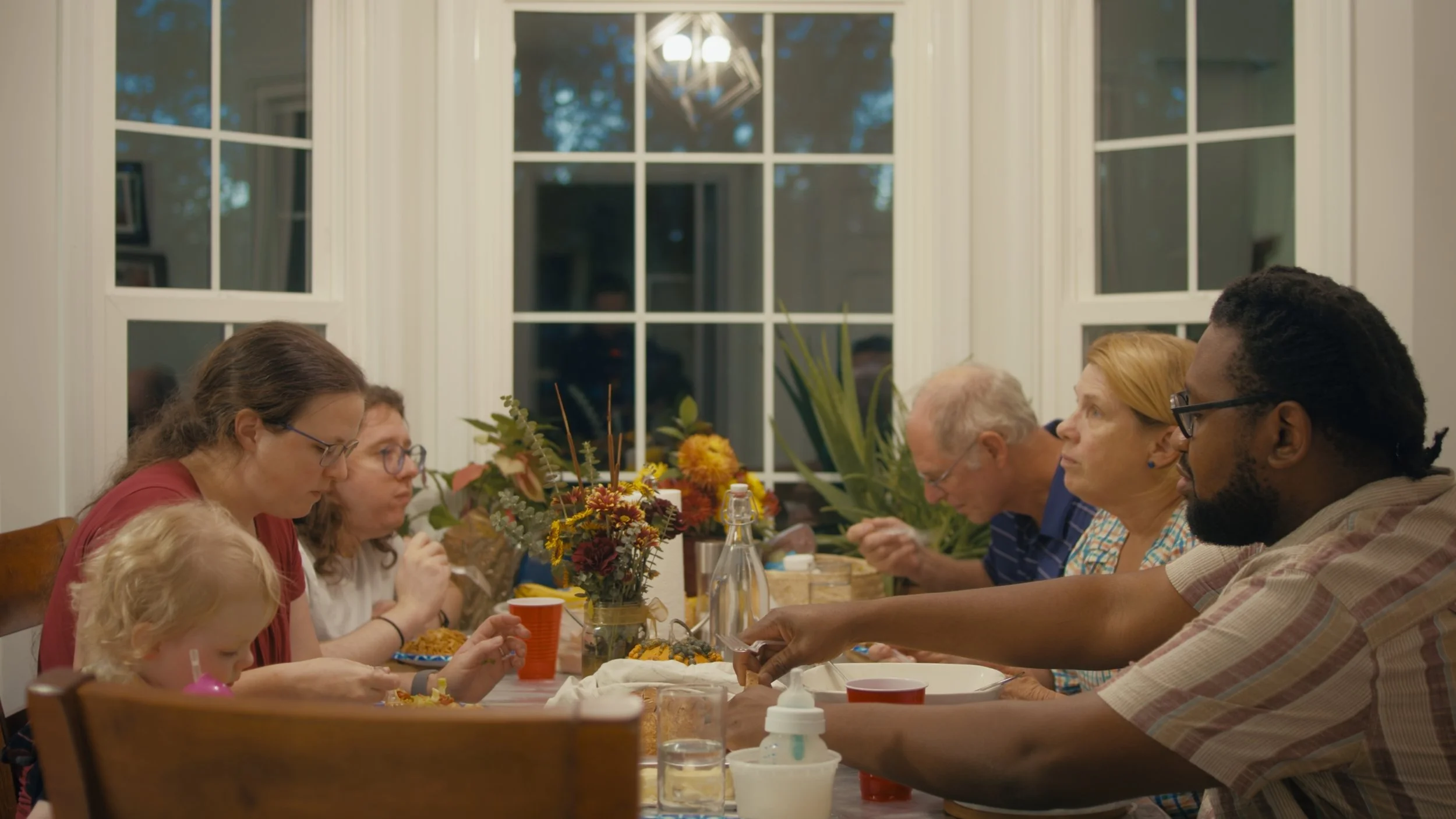
“As a small group leader, I have been comforted by the fact that I don’t have to be the smartest person in the room, the most scholarly, or the one who always knows what to do in every situation. Instead, I have been blessed by the myriad of life experiences, wisdom, and strengths represented by each person around the table. I’m there to help present the opportunity for us to minister to each other: to speak a word of encouragement here or bring deep insight into a scripture passage there, as we all do our best to keep our eyes on Jesus and point each other back to him.”
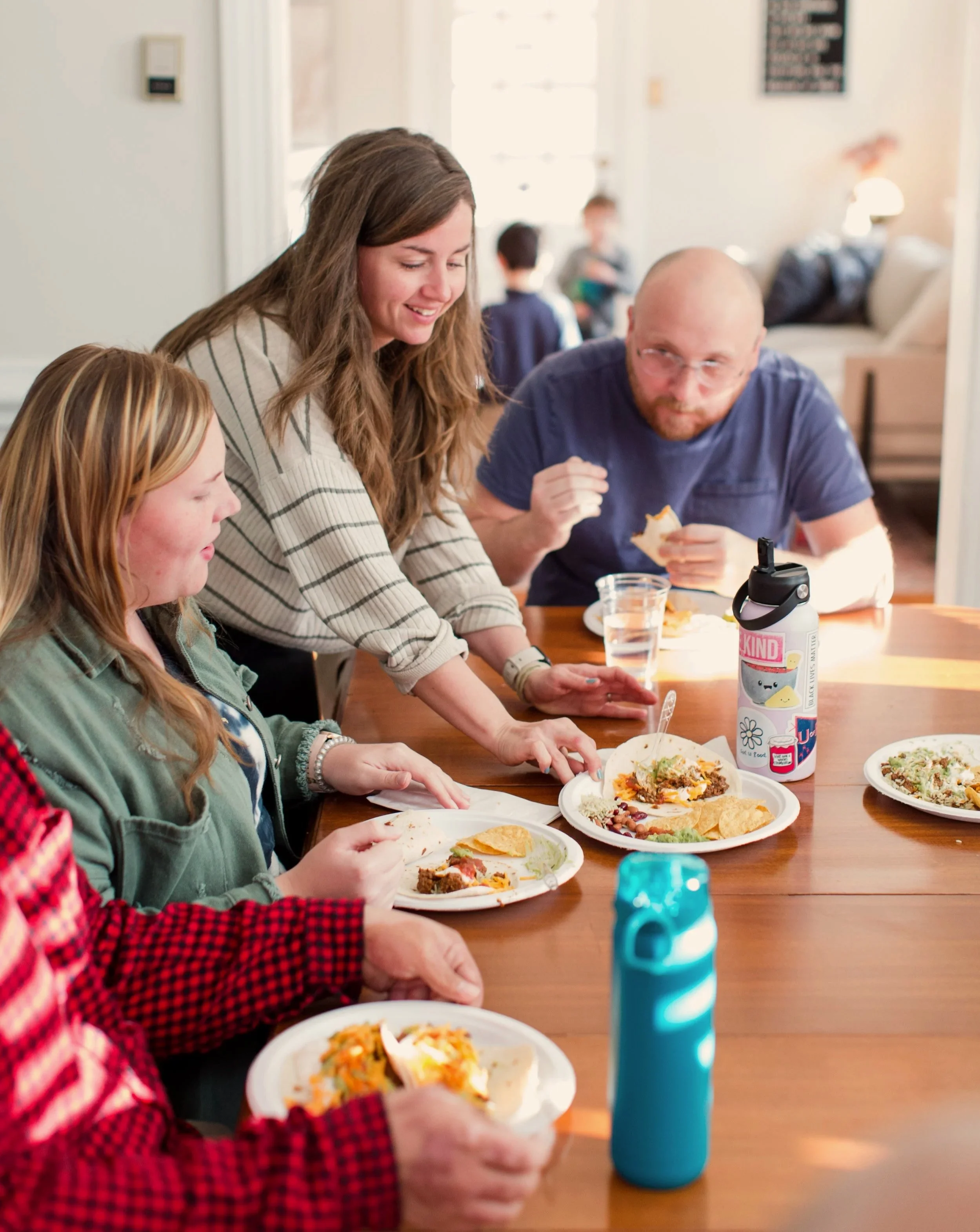
“We have had the joy of having several families with young children gather in our home every week over the past few years to discuss Scripture, sermons, and the general challenges and triumphs of our daily lives. It’s been such a gift over time to get to see these children grow and to form connections with the other families in our group and to share the milestones of their lives with them.”
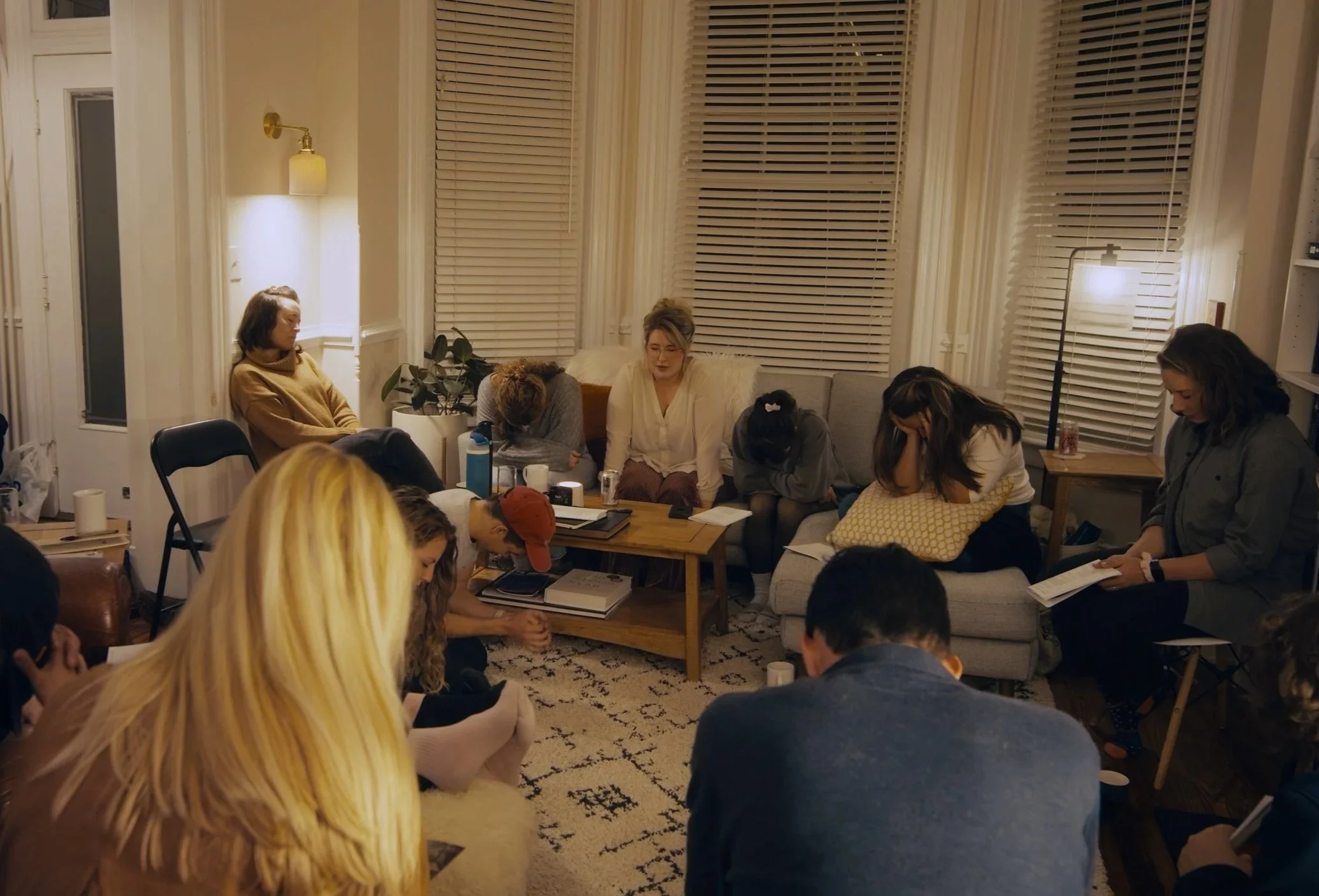
“Participating in a women’s lectio group has given me a new imagination for how to listen to God through reading his word. It’s been such a gift to sit with other women and hear how they are learning to listen to God too. It has helped me grow my confidence in recognizing God at work.”
“I am so glad I joined a Redeemer men’s small group. The group has been a great way to get more plugged into the life of the church, make new friends, and be an encouragement to each other. The men in my group are all balancing the demands of careers, while striving to be good husbands and fathers, and I am grateful to be able to share those challenges with them and hear their perspectives.”

An Upcoming Staff Transition
I am writing to you today with bittersweet news. Oldson Duclos, our Director of Community Care, and I have been in conversation for a few months about the form of ministry to which he senses a particular call. After much prayer and discernment, he has chosen to depart from Redeemer staff and move towards exciting plans he has for a new ministry here in the city.
Redeemer Family,
I am writing to you today with bittersweet news.
Over the last few months Oldson Duclos, our Director of Community Care, and I have been in conversation about the form of ministry to which he senses a particular call. After much prayer and discernment, he has chosen to depart from Redeemer staff and move towards exciting plans he has for a new ministry here in the city.

If you’ve spent any time with Oldson or his wife Bree, undoubtedly you would have heard them talk about their heart for the urban poor and their commitment to ensuring that the poor and marginalized in our city encounter “an accurate and accessible representation of the gospel of Jesus Christ.” It is an integral part of their family’s personal mission statement. Over the last year, Oldson and Bree have been spending their Friday and Saturday evenings hosting pick-up basketball for middle school boys and men at a gym in Fairfield Court (one of Richmond’s six public housing courts). They have used this opportunity to build meaningful relationships with those who attend their open gym. Many of these relationships have begun to produce buds of transformation in the lives of these boys and men.
Oldson now desires to focus the majority of his time and energy on ministry to boys and men among the urban poor in Richmond. Unfortunately for us, this means that at the end of this month, Oldson will officially transition off of Redeemer staff.
On behalf of all of Redeemer’s leadership and our parish, I want to thank Oldson for his years of service with us and give our prayers and support towards this new ministry!
Oldson - we love you and will miss you, but are glad that you’re not going far! We look forward to seeing the ways you will continue to love, serve, and lead our neighbors in the city.
Note: If you’d like to connect with Oldson to thank him for his service to us these past two years or to learn more about this new ministry, you can email him at oldson.duclos@servantpartners.org.
Redeemer family, if you’re wondering how to think or feel about this, let me encourage us all to remember that the Kingdom of God is vast, diverse, and includes so many different kinds of churches and ministries. Our little parish is just a tiny part of the whole.
Our brother may be laboring in another part of our city but we are never to forget that we are co-laborers in the Kingdom! It’s okay to be sad. In Acts 21, Luke describes a parting of friends as “tearing ourselves away.” Anytime one of our own is sent out, we feel the tearing.
On the other hand, it’s okay to be excited for Oldson as well. He is following the Lord’s call on his life, and we are glad to pray for him and celebrate it.
In the Father’s love,

Introducing Our New Senior Director of Music & Arts
It is my pleasure to introduce you to our new Senior Director of Music + Arts, Matt Spainhour!
Many of you will remember that our parish has been conducting a search process for this role over the past 6-9 months, and after receiving over 20 applications, interviewing 7 candidates, and hosting four interview weekends, our team agreed to extend an invitation to Matt.
The Spainhours come to us from Knoxville, TN, where Matt is married to Kelley and they have three beautiful children and a fourth due in November!
Redeemer Family,
It is my pleasure to introduce you to our new Senior Director of Music + Arts, Matt Spainhour!
Many of you will remember that our parish has been conducting a search process for this role over the past 6-9 months, and after receiving over 20 applications, interviewing 7 candidates, and hosting four interview weekends, our team agreed to extend an invitation to Matt.
The Spainhours come to us from Knoxville, TN, where Matt is married to Kelley and they have three beautiful children and a fourth due in November!
Here’s a brief message from Matt to you:
I have been a long-distance admirer of Redeemer for years and have followed the liturgical life, teaching, and creative ministry with gratitude and curiosity. For many years now, I have led and pastored Music and Arts Ministries in diverse liturgical contexts. I have led a broad blend of ancient hymns, modern and Gospel songs, and original compositions that reflects the rhythms of the church calendar, the life of the local congregation, the landscape of the lectionary, and the emotional range of the Psalter (in St. Ambrose’s “gymnasium of the soul”), all with an eye toward spiritual formation.
In earlier seasons of ministry, I have directed music, curated liturgies, pastored and collaborated with visual artists, and helped form a community centered around faithful worship and missional presence. Throughout my ministry, I’ve been committed to seeking and stewarding music, art, and beauty—not as decorative trimmings, but as gifts and means of spiritual formation that can reshape our imaginations and soften our hearts to the voice and work of God. I have experience equipping and shepherding musicians and artists, working with both professionals and volunteers, and integrating music, liturgy, and visuals in a way that strives to tell the Gospel story in every season. I’m also energized by the pastoral and organizational aspects of this role.
Our family has lived in historically under-resourced neighborhoods downtown and, in our often flailing attempts to become good neighbors, we are daily reminded that the work of the Kingdom is often slow, small, and deeply relational—and that it depends far less on extraordinary efforts and giftedness than on the willingness to remain faithfully present in a place, rooted among people and rooted in the trust that God is quietly at work in the intentional practices and ordinary rhythms of our days. These threads run through all that I have come to know and admire about Redeemer Anglican Church—and they are much of what drew me to apply.
I am honored to join Redeemer in continuing to cultivate a music and arts ministry that is not only excellent, but spiritually formative for the whole parish and marked by beauty, depth, and presence.
Matt plans to come on board in early January and we look forward to welcoming the Spainhours into the Redeemer family!
In the Father’s love,

Our Vestry's Decision Regarding 1801 Park Ave.
I’m writing to you from our Parish House at 10:30 p.m. Tuesday evening, September 23, where your Vestry has just concluded a thoughtful, prayerful, and very exciting meeting.
I’ll give you the headline and then a bit more detail.
Your Vestry has unanimously voted to close on 1801 Park Avenue!
Redeemer Family,
I’m writing to you from our Parish House at 10:30 p.m. Tuesday evening, September 23, where your Vestry has just concluded a thoughtful, prayerful, and very exciting meeting.
I’ll give you the headline and then a bit more detail.
Your Vestry has unanimously voted to close on 1801 Park Avenue!
Now, for more details:
Who is on the Vestry this year? Scroll to the bottom of this page.
Here is a summary of the decision timeline that led to putting 1801 Park Ave. under contract back in July.
The 90-day due diligence period gave us time to conduct structural and environmental studies of the building, as well as time to work with an architect and contractor to assess the potential costs of a renovation. All of the due diligence studies came back with what we expected to find. There were no surprises.
After working with our contractor and architect, we determined that the total cost of renovating the building is within the scope of our feasibility study.
At tonight’s meeting, the Vestry received a thorough briefing of the feasibility study, the decision-making process, the search team’s recommendations, the due diligence findings, and the projected costs of the project.
After carefully reviewing all the information, asking many good questions, and spending time praying together, each member of the Vestry took a few minutes to describe to the group what they sensed would be a wise decision for our parish.
As each Vestry member spoke, I was deeply encouraged by their caution, thoughtfulness, faith, and insight.
After each member shared, a vote was taken, and it was unanimous. All of us have a deep sense of alignment, unity, and confidence that this is the property that God has, in his kindness, chosen to provide for our parish.
Next Steps
After we close on the building (likely in late October/early November), the next steps are to replace the roof (which is leaking) and demo/gut the interior of the building. This will prevent any further water damage and prepare the property for renovation.
We will continue to work with our architect and contractor to develop real plans for the renovation and, as soon as we have digital renderings, they will be shown to the parish!
FAQ’s
Q: Will there be a capital campaign?
A: Yes, likely during Lent of 2026.Q: When can we tour the building?
A: We aren’t currently able to offer tours of the property, however we plan to provide more visuals of the building over the coming months and will continue to keep you updated during the renovation process.Q: When do you anticipate Redeemer might move into the building and begin holding worship services?
A: There is a long road ahead of us and so we have signed a 2-year lease with Tikvat Israel that will run through fall of 2027. It will likely be at least 2-3 years until we can occupy, so nothing is changing anytime soon!Q: What about parking for 1801 Park Ave.?
A: From what we can tell, the parking situation there is actually slightly better than what we currently have at 2715 Grove Ave. There is street parking available on both the left and right sides of Monument Ave. on Sundays (double what there normally is the rest of the week). And One Monument Garage is two blocks from 1801 Park Ave. The other day, I tested it out by parking at the garage and measuring the distance: it took me exactly 3 minutes and 58 seconds to walk the 392 steps.Q: Are historic tax credits available for this project?
A: We believe so and are exploring that option.Q: To whom should I direct my questions about 1801 Park Ave.?
A: For now, you are welcome to direct them to me by emailing dan@redeemerrva.org.
Redeemer family, this is a tremendously important milestone in the life of our parish, but I would stop far short of saying it’s the most important. A building is merely an asset for us, as the body of Christ, to use in pursuing Gospel Formation for Missional Presence. Will this building help us do the work together of being formed and shaped by the gospel of Jesus? We believe so. Will this building help us be a parish that is missionally present to our neighbors and city? We believe it will.
Let’s give this exactly the appropriate amount of celebration it is due, no more, no less.
Tonight, for me and the Vestry, that looked like prayer and champagne toasts with lots of laughter and good cheer!
I invite you to join us in celebrating God’s provision, raise a toast to our King, and together we’ll take the next steps into the future.
In the Father’s love,
Listen below to Senior Warden Alex Burlingame sharing this exciting news with the parish on Sunday, September 28.

Celebrating the Sacrament of Baptism
On November 2 we will have the joy of celebrating the sacrament of baptism. Here’s who should consider participating.
Dear Redeemer Family,
In the near future, on November 2, we will have the joy of celebrating the sacrament of baptism. Here’s who should consider participating:
You have already given yourself to Jesus in faith but for whatever reason, have never taken the step of baptism. If that describes you, then this is a good opportunity to seal your belonging to Jesus and to his church.
You are right on the edge of converting to the Christian faith. You haven’t made the decision yet, but you’re seriously considering it. If that’s you, think of this as a good opportunity to make up your mind and commit.
You are a Christian parent of an unbaptized child. If that is you, bring your child to receive baptism! The Lord Jesus loves your little one.
Now it may be helpful to offer a brief refresher on what we believe about the sacrament of baptism. If you would benefit from that, keep reading!
WHAT IS BAPTISM?
Many of you are relatively new to the Christian faith and new to participating in a local church, especially a local church that practices ancient traditions like Redeemer does. So let me say a word about what Christian baptism is.
Jesus answered, “Truly, truly, I say to you, unless one is born of water and the Spirit, he cannot enter the kingdom of God." - John 3:5
Go therefore and make disciples of all nations, baptizing them in the name of the Father and of the Son and of the Holy Spirit. - Matt. 28:19
Do you not know that all of us who have been baptized into Christ Jesus were baptized into his death? We were buried therefore with him by baptism into death, in order that, just as Christ was raised from the dead by the glory of the Father, we too might walk in newness of life. - Romans 6:4
Because they formerly did not obey, when God's patience waited in the days of Noah, while the ark was being prepared, in which a few, that is, eight persons, were brought safely through water. Baptism, which corresponds to this, now saves you, not as a removal of dirt from the body but as an appeal to God for a good conscience, through the resurrection of Jesus Christ. - 1 Peter 3:20-21
In Christian baptism, a person is united with Jesus in His death and resurrection. We call baptism a sacrament because it is a physical, tangible, material ritual that is filled with a spiritual, intangible, immaterial grace. Something physical is happening: the person is either being immersed in water or having water poured over their head. Something spiritual is happening: that person is mysteriously (in a way that we can only barely begin to comprehend) being joined together with the Lord Jesus and, therefore, becomes a part of the church - the body of Christ.
THE STORY OF BAPTISM IN THE OLD AND NEW TESTAMENTS
The Old Testament prefigures baptism. There are many examples, but here are the big ones: the creation of the world, the salvation of Noah and his family from the flood, the exodus of the Israelites through the Red Sea, and the Israelites crossing the Jordan River out of the wilderness and into the Promised Land.
Christ commands us to be baptized and to baptize others.
The New Testament authors teach on the centrality of baptism in a Christian’s life.
WHO SHOULD BE BAPTIZED?
Any person, young or old, who wishes to put their trust wholeheartedly in Jesus for their redemption.
Any child of a baptized adult Christian who will raise that child in the faith as a part of the church.
WHY DO WE BAPTIZE INFANTS AND LITTLE CHILDREN?
“We start talking to our children not because they understand us, but so that they will. Baptism is God's language whereby he starts talking to his children and initiates a relationship with them. Sacraments are a word after all.” - Peter Leithart, The Baptized Body
We baptize children, not because we think that an adult profession of faith doesn’t matter (it does and should come at Confirmation - the other side of the coin to infant baptism), but because we seek to raise Christian children within the church.
Jesus said, “Let the little children come to me and do not hinder them.” We take the Bible at its word when it says that little children can come directly to Jesus; they do not have to grow up first.
FOR FURTHER STUDY
I would heartily recommend Peter Leithart’s excellent little book The Baptized Body to anyone who has serious questions about Christian baptism (especially baptizing children) and would like to learn more about it. Copies are available for sale at the book table on Sunday mornings.
You are also invited to join our upcoming Baptism Class on October 7. Together we’ll learn more about the sacrament of baptism—what it is, what it means and symbolizes, how it's done, who it's for, and what the church has historically understood about baptism. All are welcome regardless of whether you or your children are planning to be baptized. Click here to register.
Finally, if you are a teenager or an adult who has never received Christian baptism and you would like to, please email me. I would be delighted to get together and talk with you about it. If you are a parent and your child has not been baptized, same invitation! It would be a joy to baptize your little one. You can click here to register to be baptized on November 2.
In the Father’s love,

How to Buy a Building Without the Building Owning You
As we anticipate our Vestry voting on whether or not to close on 1801 Park Ave. and prepare to fast and pray for wisdom and discernment in this process over the next two weeks, I want to share something that I’ve been thinking about because I wonder if some of you have been thinking about it too.
How do we cultivate an appropriately biblical and healthy mentality towards the idea of owning a church building?
Redeemer Family,
As we anticipate our Vestry voting on whether or not to close on 1801 Park Ave. and prepare to fast and pray for wisdom and discernment in this process over the next two weeks, I want to share something that I’ve been thinking about because I wonder if some of you have been thinking about it too.
How do we cultivate an appropriately biblical and healthy mentality towards the idea of owning a church building?
I’ve been thinking about this a lot recently for three reasons:
Redeemer has never owned a church building before; this is new territory for us as a parish.
I’ve noticed that some people have a tendency to overvalue and idolize church buildings.
I’ve noticed that sometime people tend to undervalue and disparage church buildings.
Overvaluing and idolizing church buildings often looks and sounds like the following:
We’ve “arrived” as a church once we own a building.
Owning a building makes us a “real” church.
Obsessing over the look, feel, style, vibe, historicity, legacy, prominence, cost etc. of a building.
Undervaluing and disparaging church buildings often looks and sounds like this:
All this talk about a church building takes away from the real work of ministry.
Capital campaigns are just squeezing rich people for money.
The early church didn’t own a building, so we don’t need to either!
The first often comes from a place of pride (and frequently, comparison to other congregations). The second comes from a place of fear (that only scrappy, tight-budget church plants practice the authentic Gospel).
Before I go any further, let me just say that I empathize with both kinds of people! On the one hand, there is something special about putting down roots in a neighborhood and investing in a long-term home for our congregation. On the other hand, church buildings can become idolatrous barriers to the humble work of ministering the Gospel of Jesus.
It seems there is a healthy tension that must be held if we are to be truly, biblically faithful in our posture towards a church building.
Here are a few perspectives for your consideration:
God takes place and home deeply seriously for his people. God made a home for the first humans in the Garden of Eden. It was sin that cast them out and made humanity wandering, restless, nomadic creatures. Humans are made to have homes. We see this theme again and again in through the Old Testament, especially in God giving the promised land of Canaan to the Israelites. Exile and losing the land was a devastating blow to Israel. They lost their home. Of course, what Israel was to learn during their exile was that their true home was in God. But that does not mean that having a physical home is not important! In this sense, we must take the “both/and” nature of a sacramental worldview seriously. Our spiritual home in God is real AND our physical homes are important too. Revelation gives us a most compelling and beautiful picture of this p when God renews and remakes the physical world to be a place where he dwells with his people forever and ever.
The Incarnation tells us something about the nature of being a church in the city. As Eugene Peterson translated John 1 in The Message, “The Word became flesh and blood and moved into the neighborhood.” When a Christian family buys a house or a church buys a building, we have the opportunity to follow in the way of Jesus and incarnate the presence of God to our neighbors.
Never love the gift more than the giver. One of the significant sins of Israel was an over-identification with their land (specifically with the temple in Jerusalem) and an under-identification with the living God and His commands. In short, Israel loved the gifts of God more than God himself. This is the great temptation that always accompanies any kind of material possession. God has given you many wonderful things. Now the question for you is, how will you respond? With a life of thanksgiving, gratitude, and generosity? Or with a life of obsession, selfishness, and greed?
Ownership can bring stability. In the same way we know that a family is the people and not the physical structure, we know that the church is the people, not the building. But, can owning a home help a family thrive? You bet it can. Because once the question “Where is home?” has a settled, secure answer, the family is able to turn their attention and energy towards other important questions. The same dynamic is at play in churches. “Where is home? Where will we gather? Will there be room for children? Can all of our members easily access the building?” Once these questions have settled, secure answers, a congregation is free to ask other, more interesting, outward-facing questions like, “Who are our neighbors? What are their needs? How can we be of service?”
Owners think differently than renters. Locals think differently than tourists. I’ve been both, and I bet many of you have too, and we know the difference. Tourists and renters are (usually) not making a long-term investment in a place. They are there to visit, to see, to take, to sample, and then leave. Owners and locals view the same little patch of planet earth differently. Good owners and good locals love their place. They care deeply about the long-term good of a street, a neighborhood, and a city. Their heart is invested and they are willing to sacrifice for the good of their place.
Redeemer family, my concluding thought (and one that you’ll hear more about in the future) is this: The process is the point. What I mean is this: the discernment process, the prayer process, the seeking-the-Lord process, the feasibility process, the due diligence process… these all are part of our spiritual formation. As we engage the process, we are invited to meet and be met by God and grow through the uncertainty, the curiosity, the wonderful, the faith, and the trust.
Let’s not waste the process and try to fast-forward to the end of the movie.
If there was ever a good time to grow healthier in the way we think about church buildings, neighborhood relationships, the city of Richmond, and the long-term health of our parish, this is it!
I love you all dearly and we are in this together.
In the Father’s love,

Youth Fellowship Fall Kickoff and An Introduction
It is a great privilege and honor to introduce myself to you as I begin my new role here at Redeemer. My name is Nathan Horner and I recently began working as Redeemer’s Church Planter-in-Residence. I will serve in this role for the next three years filling a variety of different positions and responsibilities as I continue to learn the knowledge and work required in church ministry.
Friends,
It is a great privilege and honor to introduce myself to you as I begin my new role here at Redeemer. My name is Nathan Horner and I recently began working as Redeemer’s Church Planter-in-Residence. I will serve in this role for the next three years filling a variety of different positions and responsibilities as I continue to learn the knowledge and work required in church ministry.

For the entirety of this coming school year, I will be serving as Redeemer’s Director of Youth Fellowship. I’m overjoyed to serve in this way as I have spent the last 9 years serving in student ministries in a variety of different settings and roles. Most recently, I spent 3 years as the Director of Student Ministry at Galilee Church in Virginia Beach. I was profoundly impacted by a youth ministry when I was a high school student myself, and it really laid the foundation for my life of faith to this day. So know that I greatly value the work of youth ministry and consider it a great privilege to serve each of you and your sons and daughters in the year ahead!
I join Redeemer alongside my wonderful wife, Erin, and our 10-month-old son, Theodore. We cannot wait to meet and get to know many of you in the weeks and months ahead.
I am also joined in serving our Youth Fellowship by Lauren Bleam, our new Youth Fellowship Assistant. Together, Lauren and I are excited to oversee the growth and development of our Youth Fellowship program and to help see the students here at Redeemer grow in their love of and discipleship to Jesus.
With that being said, here are a few reminders for our Youth Fellowship:
Our Youth Fellowship Fall Kick-off is this Sunday, September 7th from 5:00-7:00 p.m. Middle schoolers will meet at Dan and Rachel Marotta’s (1210 Palmyra Ave) and high schoolers will meet at Doug and Elizabeth Paul’s (1203 Laburnum Park Blvd). You can click here to RSVP.
Our meetings will occur on Sunday evenings from 5:00-7:00 p.m. throughout this fall and into the Advent season. Students can expect to receive a warm welcome, play a fun game or two, share a meal together, hear a lesson, and then discuss in small groups led by our volunteer leaders. We would encourage students to bring a Bible, pen and notebook.
Teaching Series - The Gospel of Matthew: Who is Christ? This fall both of our groups will be working their way through the Gospel of Matthew and looking to the works and teachings of Jesus to give us an understanding of who Christ is and what that means for our lives together. I will primarily teach the high school group and Tee Feyrer will primarily teach the middle school group.
We are eager to begin this fall. If you have any questions or would like to get to know us more, please contact either myself, Nathan Horner (540-421-5038, nathan@redeemerrva.org), or Lauren Bleam (434-249-1248, lauren@redeemerrva.org).
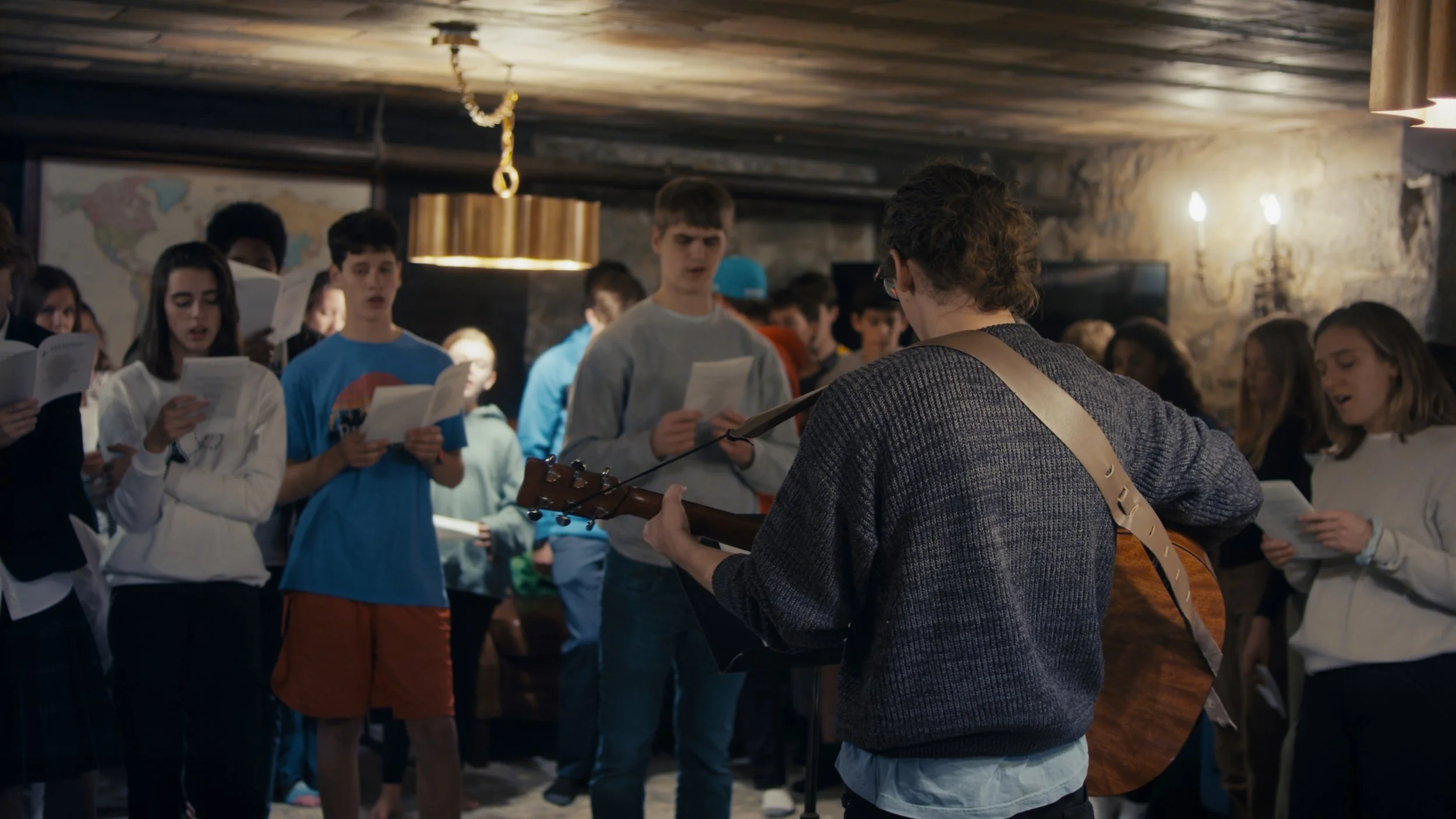
A Look Towards the Fall
Good afternoon! I hope you have navigated the school year relaunch and that your kids have handled the transition well.
I’m writing to you today as both a priest and father. As a priest, I have a responsibility to oversee our Youth Fellowship and the staff who lead it, and as a dad, I have two daughters that participate in the ministry.
We have a truly incredible year lined up and there are a lot of changes we have made that we hope will bless and benefit your students and your whole family.
Dear Fellow Parents,
Good afternoon! I hope you have navigated the school year relaunch and that your kids have handled the transition well.
I’m writing to you today as both a priest and father. As a priest, I have a responsibility to oversee our Youth Fellowship and the staff who lead it, and as a dad, I have two daughters that participate in the ministry.
We have a truly incredible year lined up and there are a lot of changes we have made that we hope will bless and benefit your students and your whole family. Below you will find information on the following topics:
Philosophy of Youth Fellowship
New Youth Staff
Sunday Night Youth Fellowship
Fall & Spring Retreats
Confirmation & Membership
Summer Service Trips
PHILOSOPHY OF YOUTH FELLOWSHIP
We are convinced that meaningful relationships between loving, mature Christian adults and teenagers are the most effective and powerful means of communicating the good news of the Gospel to students.
The programs, the teaching content, the games, the retreats, the trips, the small group discussions… all of the activities of our Youth Fellowship rise and fall on the quality of the relationships our students have with our volunteers.
This year, we are fortunate to have an amazing group of 20-somethings who are volunteering with Youth Fellowship. The unique value-add of this group of volunteers, who are younger than our students' parents, is how they will help our kids catch a vision for what it looks like to follow Jesus after high school.
We want every teenager who grows up at Redeemer to have one or more of these young adult volunteers reaching out to them, interested in their life, helping them take the next steps in their faith, and inviting them further up and further in to the life of the church.
In the young years, parents are the primary influencers in the spiritual lives of their children. However, during the teenage years, a sociological transfer occurs (at varying ages from kid to kid) where peers and older students become the primary influencers.
Rather than fight this transfer, we want to equip parents to guide their teenagers through this transition in healthy ways and the multigenerational church can step in and help.
Our young adult volunteers serve as role models and bridges showing students what the next phase of life could look like for them and helping them step more intentionally into embracing faith for themselves.
NEW YOUTH STAFF
This year, our youth fellowship will be led by Nathan Horner, our Church Planter-in-Residence and Lauren Bleam, our new Youth Fellowship Assistant.

SUNDAY NIGHT YOUTH FELLOWSHIP
When? Sunday evenings, 5:00 - 7:00 p.m., starting Sept. 7
Where?
Middle School (grades 6-8): Marotta’s Home, 1210 Palmyra Ave.
High School (grades 9-12): Paul’s Home, 1203 Laburnum Park Blvd
What happens?
A typical evening includes games, dinner, worship, teaching, small group breakout discussions, and prayer.
Who teaches?
Middle School: Tee Feyrer & Will Clark
High School: Nathan Horner
FALL & SPRING RETREATS
Fall Retreat
Date: October 31 - November 2 (Yes, we know this overlaps with Halloween and there will be some fun elements incorporated into the weekend!)
Location: Smith Mountain Lake
Note: Middle Schoolers and High Schoolers will stay in separate houses and experience separate retreat activities.
Spring Retreat
Date: March 20-22
Location: Sandbridge, VA - at the beach!
Note: This is a combined Middle School and High School retreat.
SUMMER SERVICE TRIPS 2026
For the first time, we plan to offer two service trips next summer - one domestic trip for Middle School students and one international trip for High School students!
While we have not yet finalized the dates or locations yet (stay tuned), we do know that we plan to work with existing churches and/or Christian organizations with experience hosting students.
Our heart behind these trips is to broaden our students' experiences of the kingdom of God and help them practice putting others before themselves.
We know that summer youth trips can sometimes devolve into adventure-tourism and occasionally do more harm than good to the locations they visit. And so we are committed to carefully researching these trips and ensuring that we are partnering with wise, established, trusted ministries.
Fellow parents, I know that the activities calendar is already filling up (or perhaps full!) for your family. I know that just getting a meal together at home can sometimes feel like a challenge. Let’s decide together that we want our sons and daughters to see our love for Jesus and his church reflected in our family calendar just as much as it is in our hearts.
Here are some ways that the Marottas are going to try this, and you’re invited to try with us!
We are going to reserve Sunday mornings for worshipping together as a family with our parish. Out of the 52 Sundays in a year, we plan to be at Redeemer for at least 50 of them.
We’re going to reserve Sunday evenings, 5:00 - 7:00 p.m., for Youth Fellowship. It gets on the calendar first.
We’re going to set aside the two retreat weekends in the fall and spring and the dates for the summer trips (when they come out). We won’t let family vacations or other activities compete with those dates. If something is going to get cut, let it be something else.
We are going to encourage our youth-age kids to spend time with their volunteer leaders outside of program time by inviting those leaders over to join for a family meal, to our kid’s sports games, etc.
We are going to pray regularly with and for our kids to develop great friendships with Christian peers and with their leaders, knowing that our role as parents is in a season of transition.
We are going to trust God with our kids and not do anything out of fear or attempts to gain control!
Of course, here in our house, we won’t do any or all of these perfectly. We are pretty normal parents, but we are trying to make these things the norm in our house.
Worshipping together as a family is normal.
Participating in Youth Fellowship is normal.
Going on retreats and trips is normal.
Praying with Mom and Dad is normal.
Having intentional Christian friendships is normal.
Spending time with your leader is normal.
Parents, it’s rough out there and we’ve all got a lot going on!
I’m praying for YOU and I’m here for you if you need anything.
This year, I’m inviting you to join me in making these things normal in your house as well.
In the Father’s love,
A Call to Fasting & Prayer
I’m writing to you today with two things in mind: 1) An update on the due diligence process for 1801 Park Ave. and 2) A call to fasting and prayer for all of us.
First, an update. The due diligence process on 1801 Park Ave. has gone very well thus far.
Redeemer Family,
I’m writing to you today with two things in mind: 1) An update on the due diligence process for 1801 Park Ave. and 2) A call to fasting and prayer for all of us.
First, an update:
The due diligence process on 1801 Park Ave. has gone very well thus far. Our team has worked with a variety of specialists to ascertain the structural soundness of the building and potential environmental issues. Additionally, we have selected an architecture firm and contractor to pull together estimates for the scope of renovation. To the best of our knowledge, the building is structurally sound, but requires what is colloquially known as “a full gut job.”
While this may initially feel overwhelming, it actually makes the project simpler than it might be otherwise and easier to predict the overall cost. Since we know ahead of time that we need new electrical, HVAC, plumbing, roofing, floors, walls, ceilings, etc., we can plan ahead and budget appropriately.
Another upside to the deteriorated condition of the building is that it allows for some very exciting dreaming about how this historic space could be restored to something truly beautiful.
As we near the end of the due diligence phase, your Vestry has targeted Tuesday, September 23, as the day they will meet to pray and make a final yes/no decision about whether or not to close on 1801 Park Ave. So we have a little less than one month left at this discernment stage.
Second, a call:
For that reason, I believe the timing is appropriate to call all of us to fast and pray on behalf of the Vestry for this decision.
When? I am asking you to set aside 24 hours sometime between September 17-23.
What to Do? Fast from solid food and spend an hour or two intentionally, consciously praying.
What to pray for? That our Heavenly Father, through the Holy Spirit, would give wisdom and discernment to our Vestry so that they can make a decision that 1) Honors the Lord and 2) Serves the telos of our parish - Gospel Formation/Missional Presence.
We are seeking a property where our parish can be more deeply formed by the good news of the Gospel of Jesus so that we can participate in the mission of God to our neighbors here in the city of Richmond.
How to share? If, in the course of your prayers, you sense the leading of the Holy Spirit in some way regarding this process, we would love to hear from you! You are welcome to share with me and I will bring it to the Vestry.
Church Family,
From time to time we face key points of decision, forks in the road, where we must slow down and seek God’s guidance.
We have done nearly all we can do to discern, using our finite wisdom, if 1801 Park Ave. would be a good home for our parish.
Now it is time to open ourselves to the Lord and allow him to speak to us, if he chooses to.
Let’s seek the Lord together.
In the Father’s love,
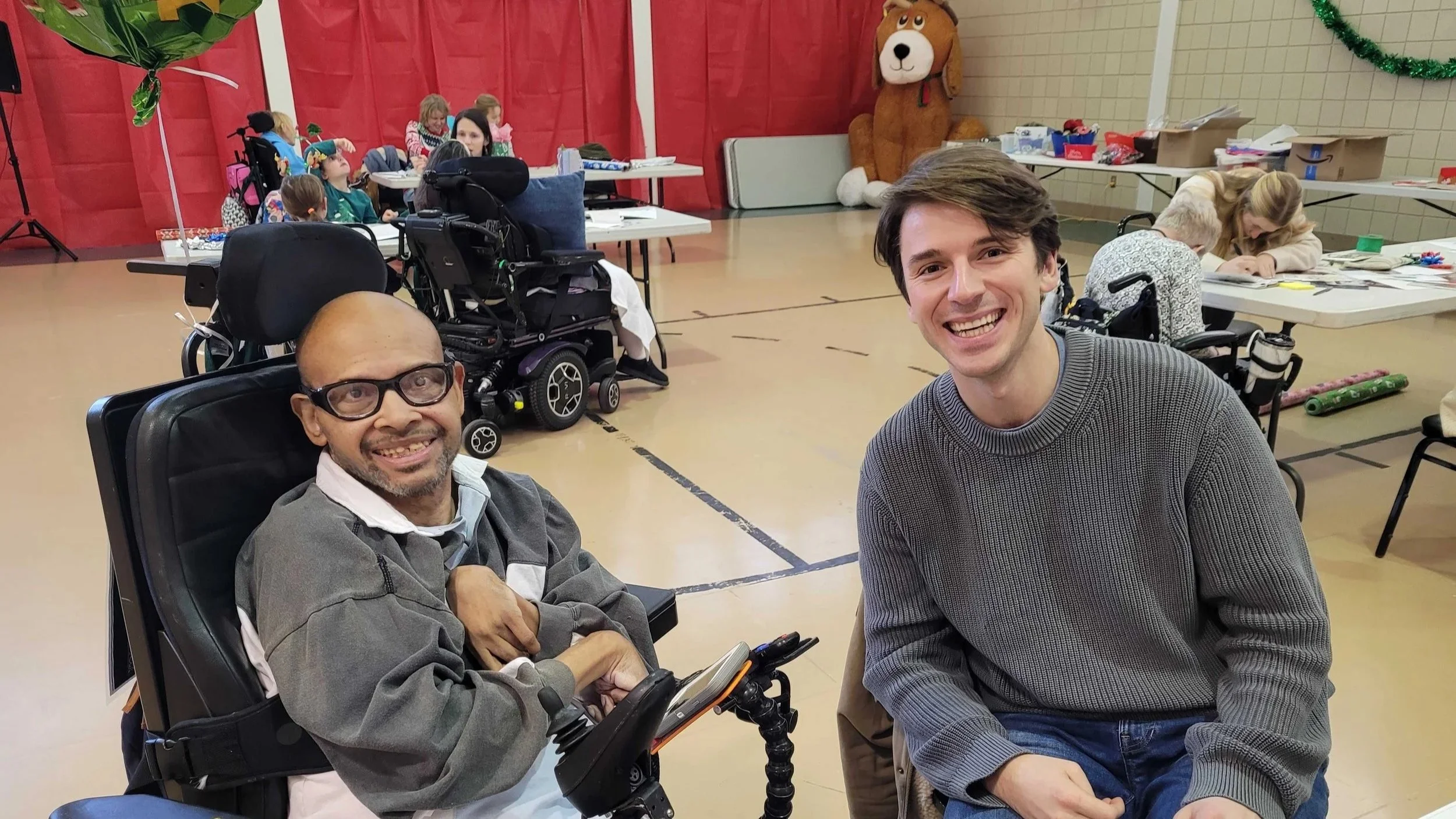
Formation Through Service
I began volunteering at The Virginia Home in the summer of 2022. During college, serving people with disabilities was a personal priority—it shaped my experience and deepened my relationship with God. But in my senior year, COVID cut my time at school short, and those places of community and service were suddenly inaccessible. Isolated, I became more self-focused. I realized I did not want to give up time for others, preferring to pursue my own interests. Recognizing this, I knew I had to find a place to volunteer for the sake of my soul. So, I looked up our Redeemer community partners, and with experience working with people with disabilities, The Virginia Home felt like a natural fit.
““‘Truly, I say to you, as you did it to one of the least of these my brothers, you did it to me.’” ”
I began volunteering at The Virginia Home in the summer of 2022. During college, serving people with disabilities was a personal priority—it shaped my experience and deepened my relationship with God. But in my senior year, COVID cut my time at school short, and those places of community and service were suddenly inaccessible. Isolated, I became more self-focused. I realized I did not want to give up time for others, preferring to pursue my own interests. Recognizing this, I knew I had to find a place to volunteer for the sake of my soul. So, I looked up our Redeemer community partners, and with experience working with people with disabilities, The Virginia Home felt like a natural fit.
When I began at TVH, it wasn’t the smooth transition I expected. I was used to feeling capable and fulfilled in these settings. But TVH was different. I realized I had always served in spaces where I felt comfortable—usually church buildings. At TVH, I was going to people in need and meeting them where they were. That shift has been critical to my spiritual growth.
In the beginning, I wandered with my list of residents to check in on, feeling like I didn’t belong. I often retreated to the volunteer room to label clothing, intimidated by the idea of visiting. It didn’t feel good—but I kept going, and two years later, I can honestly say, it’s one of the highlights of my week!
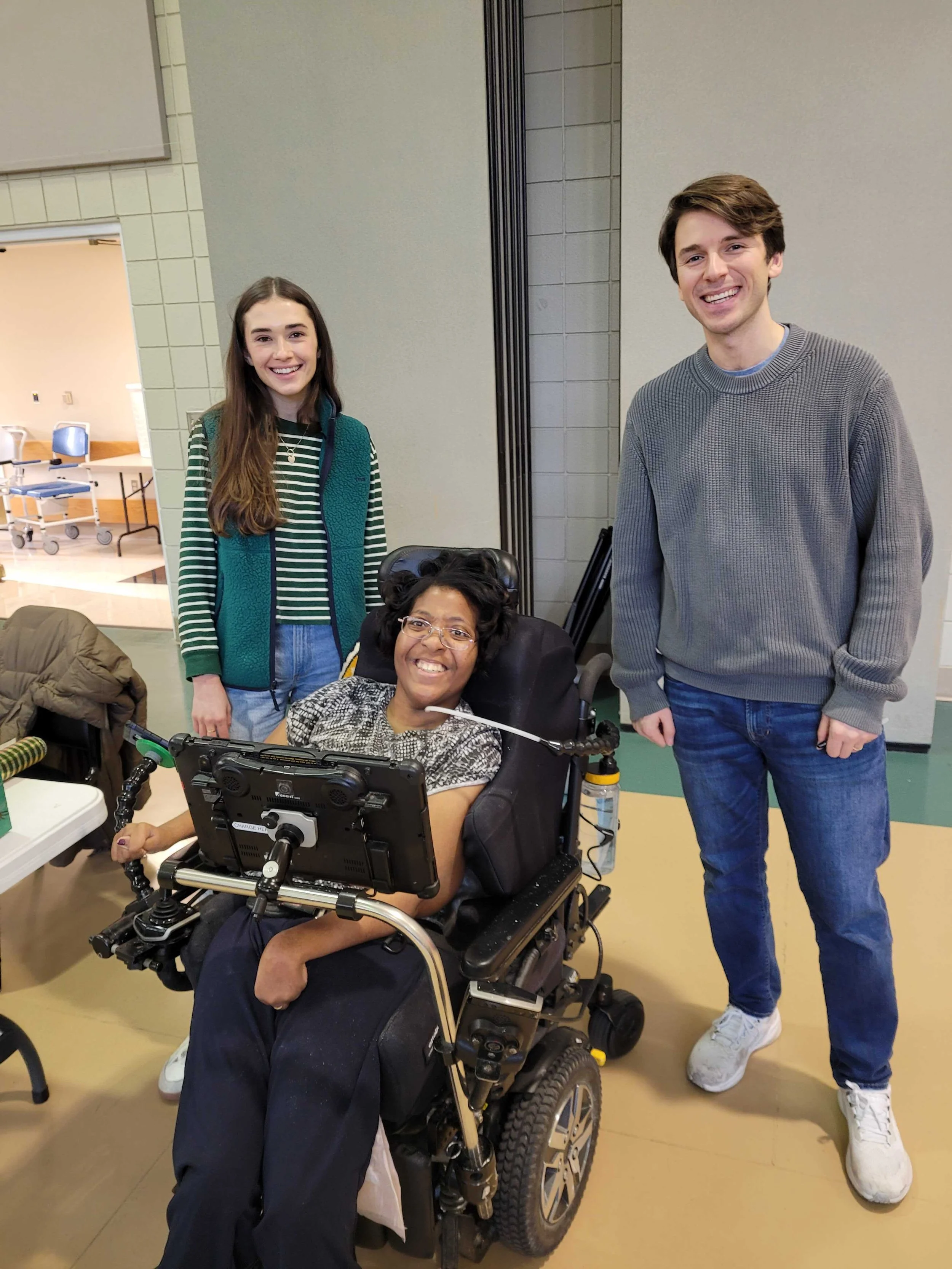
There are many ways to describe TVH, but I want to highlight three things that have made it such a vital part of my spiritual formation.
First, it’s a place where you can’t ignore the brokenness of the world. In modern American life, we often avoid suffering. But at TVH, there’s no faking it. The residents are fully reliant on staff for every need, and many struggle to communicate or do what they want to do. The suffering is unavoidable.
Second, despite that brokenness, there is great joy. As I’ve settled into rhythms, I’ve had the privilege of sharing in that joy. Sometimes it’s playing Rummikub with my friend Chris—full of laughter and trash talk (he once asked if I was ready for my “whooping”). Chris even called another resident’s mom to celebrate her daughter’s first win. Other times it’s talking through plays with Jack and Trevor, watching Jeopardy with Larry, or playing video games with Jim. At TVH, I’ve truly been able to experience abundant joy.
Finally, I want to highlight the source of much of that joy, which I believe is because many residents have placed their hope in Jesus. With some residents, I have that privilege of getting to talk with them about our walks with the Lord and walk through scripture together. With others, it’s a shared “God is good all the time” as they pass by. Regardless, we share in the joy of the Lord. This only begins to describe the joy of serving at TVH and others in our parish can speak to it as well.
At Redeemer, we’re committed to Gospel Formation for Missional Presence. Henri Nouwen writes, “A true disciple of Jesus will always go to where people are feeling weak, broken, sick, in pain, poor, lonely, forgotten, anxious, and lost... It is possible only when we discover the presence of Jesus among the poor and weak and realize the many gifts they have to offer.” I’m under no illusion that the folks at TVH need me—or even Redeemer. But I need them. And I believe we all need to go to places of brokenness to discover the presence of Jesus and be formed into His image.
If you’d like to explore this kind of formation, please reach out and I would love to talk more about this ministry to you. We also have a Board Game Event on September 6 from 2:00–3:30 p.m.—a great way to get a sense of whether God might be calling you to serve in this way. My prayer is that, at Redeemer, we would be people increasingly formed into the image of Jesus through service to others.
Cameron Bonsell

Philippians: Church as a Colony of Heaven
The apostle Paul’s letter to the church in Philippi is one of the most encouraging, joyful, and best-loved of all the New Testament epistles, and indeed, in the whole of scripture. Differing from the rigorous theological precision of Romans or the pastoral rebuke of 1 Corinthians, the letter to the Philippians is marked by affection, gratitude, exhortation, and encouragement.
Redeemer family,
The apostle Paul’s letter to the church in Philippi is one of the most encouraging, joyful, and best-loved of all the New Testament epistles, and indeed, in the whole of scripture. Differing from the rigorous theological precision of Romans or the pastoral rebuke of 1 Corinthians, the letter to the Philippians is marked by affection, gratitude, exhortation, and encouragement.
WHAT MADE THE PHILIPPIAN CHURCH DIFFERENT?
The reason for the warm tone of the letter was that Paul experienced true partnership (koinonia) with the Philippian church. He loved them and they loved him back. He labored for their good, and they labored for his good. Together, they were co-laborers in the work of establishing not only a new church in the city of Philippi, but in Paul’s larger missionary work of church planting around the Mediterranean.
The apostle Paul understood that every local church congregation exists as a little colony of heaven - an outpost of the Kingdom of God living and working in the midst of the kingdom of the world. The Philippian church was doing this well. They weren’t perfect (as we shall see, Paul did have a few mild corrections to offer them), but on the whole, they were a faithful church.
CONTEXT
The city of Philippi in Macedonia was conquered and colonized by Rome in 42 BC, shortly before the birth of Christ. The Roman soldiers who occupied Philippi were there to bring the culture, society, and ethos of Rome first to the city, then to the surrounding region.
This posture and method of cultural colonization is in the backdrop of Paul’s imagination when he conceives of church planting. In Acts 16 we learn how Paul and his apprentice, Timothy, first came to Philippi and there proclaimed the good news of the Gospel of Jesus. While he was later required to move on to other cities, the church that he established and left behind him in Philippi was to continue to grow both numerically and also in learning to live the Jesus-way in the world. The church was to live as a communal counter-culture, embodying the ethos of the Kingdom of God in the midst of the Macedonian-now-Roman-colonized city of Philippi.
THIS FALL AT REDEEMER
I’ve chosen the Letter to the Philippians for us to read, study, and meditate on together this fall, and I have more than one reason!
I wanted to choose a single book of the Bible for the sermon series in order to help all of our Small Groups move more deeply and intentionally towards the reading, study, and discussion of scripture.
We are seeking to be a healthy, Jesus-following church in the midst of a profoundly unhealthy culture and society that has rejected the wisdom of God. How can we do this well? The church in Philippi can be a role model for us.
At the risk of sounding trite and a bit cheesy, I feel very much towards Redeemer what Paul felt towards the Philippian church (truly!) These were his friends. I love you all dearly and I have felt the Holy Spirit draw me towards Philippians as a letter that is timely for our parish.
PREACHING + SMALL GROUP SCHEDULE
8/24 - Philippians 1:1-11
8/31 - Philippians 1:12-18a
9/7 - Philippians 1:18b-30
9/14 - Philippians 2:1-5
9/21 - Philippians 2:3-11
9/28 - Philippians 2:12-18
10/5 - Philippians 2:19-30
10/12 - Philippians 3:1-11
10/19 - Philippians 3:12-16
10/26 - Philippians 3:17-21
11/2 - Philippians 4:2-7
11/9 - Philippians 4:8-9
11/16 - Philippians 4:10-13
11/23 - Philippians 4:14-23
Saints of Redeemer, we are to be a little colony of heaven here in the city of Richmond. To say this is not boastful or prideful. We are not this in or of ourselves. Rather, by the grace of the Lord Jesus and the good news of his Gospel, we are what he is making us to be as his Spirit lives within us and as we cooperate with him.
This fall, let’s give our attention to this beautiful letter and let’s allow it to give us a vision for the kind of church we, through the love of Jesus, can be.
In the Father’s love,

Ordinary People
Here in the month of August, I can feel the pressure of the fall schedule closing in. With it comes a familiar feeling of being intimidated by the challenges of keeping up with it all — maybe more honestly worded, the challenge of performing well. In a culture that puts immense pressure on us and our children to be extraordinary, the greater challenge might be to instead resist that impulse. In this aptly named season of Ordinary Time, the longest and most uneventful portion of the Christian calendar, we find the invitation to lean into our limitations and subsequently the grace it takes to sustain us in our work.
Dear Redeemer Family,
Author GK Chesterton once served as a juror in his small town. That experience inspired him to write an essay called “Twelve Men,” in which he marvels at the significant role that average men are called to play in our society:
“Our civilization has decided, and very justly decided, that determining the guilt or innocence of men is a thing too important to be trusted to trained men. When it wishes for light upon that awful matter, it asks men who know no more law than I know, but who can feel the things that I felt in the jury box. When it wants a library catalogued, or the solar system discovered, or any trifle of that kind it uses up its specialists. But when it wishes anything done which is really serious, it collects twelve of the ordinary men standing round. The same thing was done, if I remember right, by the Founder of Christianity.”
Here in the month of August, I can feel the pressure of the fall schedule closing in. With it comes a familiar feeling of being intimidated by the challenges of keeping up with it all — maybe more honestly worded, the challenge of performing well. In a culture that puts immense pressure on us and our children to be extraordinary, the greater challenge might be to instead resist that impulse. In this aptly named season of Ordinary Time, the longest and most uneventful portion of the Christian calendar, we find the invitation to lean into our limitations and subsequently the grace it takes to sustain us in our work.
“Lean into your limitations” is not going to make the inspirational quotes posters on any office walls, but it is part of the paradox of Christian living. In 2 Corinthians 12:9, Paul writes, “But he said to me, ‘My grace is sufficient for you, for my power is made perfect in weakness.’ Therefore I will boast all the more gladly of my weaknesses, so that the power of Christ may rest upon me.” If our main goal is to be and to raise ordinary men and women who have the perfect strength of Christ in them, the challenge, then, is to have courage to trust that our lives have value solely because of who our God is, not by anything we become or produce.
Jesus elevated the ordinary people around him and entrusted them with the most important work to be done on earth. It is the fact that the disciples were chosen and equipped by God that made them qualified for the work he prepared for them, not any amount of special training or innate skill they possessed. In fact, their ordinariness was an important qualifier for their work. So in this season of the academic year, in this season of the liturgical year, let’s allow ourselves and our children to be ordinary followers of Christ who lead with their weakness and, in his perfect strength, accomplish the work he has laid before us. After all, to Chesterton’s point, when there is serious work to be done, we need ordinary people.
In Christ,
Casey Cisco
Director of Redeemer Kids

My Love/Hate Relationship with Our Foundations Class
May I confess something to you? I have a love/hate relationship with Redeemer’s Foundations Class. Now, this class is my baby so let me explain! I have poured so much of my heart, energy, time, and love into this class over the past 8 years. I’ve edited and re-edited the content dozens of times and yet, every time I conclude another round of Foundations Class, I feel very mixed emotions. There are two things I absolutely love about the class…
Redeemer Family,
May I confess something to you?
I have a love/hate relationship with Redeemer’s Foundations Class.
Now, this class is my baby, so let me explain!
I have poured so much of my heart, energy, time, and love into this class over the past 8 years.
I’ve edited and re-edited the content dozens of times and yet, every time I conclude another round of Foundations Class, I feel very mixed emotions.
There are two things I absolutely love about the class:
Getting to know the new people in our parish and hearing the questions that are on their hearts. This is the absolute highlight for me!
Teaching on our seven practices – Story, Identity, Belonging, Virtue, Context, Vocation, Imagination. These take us to the core of what it means to be human and I find the conversation invigorating every time.
But here’s what I do not love about the class:
It’s too long. The seven week commitment is tricky for many people and, invariably, some folks end up missing a session or two.
There’s too much content. You saw this coming a million miles away and I see it too. I’ve sought to cram far too much spiritual formation content into what should effectively be a membership class.
I’ve spent significant time this past spring and summer reflecting on this double-sided question: “How can our parish effectively educate and orient prospective new members, and also provide ongoing teaching and spiritual formation practices to help our people grow deeper in their faith?”
Up until this point, I have tried to answer both of these challenges with one jam-packed Foundations Class.
No more.
It is time to both simplify and expand.
Let’s simplify our Membership Process and expand our Adult Education and Catechesis offerings.
Simplifying the Membership Process: I will teach a 3-part Membership and Confirmation Class on October 12, 19, and 26 from 1:00-3:00 p.m. You can sign-up here.
Expanding Adult Education + Catechesis: This fall I will begin putting together a curriculum of class offerings for adults with the hope of launching these classes in 2026. I know that our parish is blessed to have a number of people with formal theological education. If you are one of these people, I’d be delighted to hear from you and would value your input.
Redeemer family, I love you all dearly and I hope that this decision serves everyone well.
Onward!
In the Father’s love,

Six Adjustments to Small Groups This Fall
As our parish leadership has been preparing for the fall semester, we have been doing some serious thinking and praying about how to best answer a perennial challenge: “How can we make it possible for every adult man and woman at Redeemer to be a part of a Small Group?”
Small Groups are not Redeemer’s invention (lots of churches do them), nor are they a recent innovation (Christians have intentionally met together to help each other grow in their faith since the earliest days of the Church).
Redeemer Family,
Good afternoon! As you read this, I hope you have a cold drink in hand and your toes splashing in a pool/river/creek/ocean/bay/marsh/puddle. This letter is a long one, but it is VERY important! Please read all the way to the end. You can do it. I believe in you.
As our parish leadership has been preparing for the fall semester, we have been doing some serious thinking and praying about how to best answer a perennial challenge: “How can we make it possible for every adult man and woman at Redeemer to be a part of a Small Group?”
Small Groups are not Redeemer’s invention (lots of churches do them), nor are they a recent innovation (Christians have intentionally met together to help each other grow in their faith since the earliest days of the Church).
“And they devoted themselves to the apostles' teaching and the fellowship, to the breaking of bread and the prayers. And awe came upon every soul, and many wonders and signs were being done through the apostles. And all who believed were together and had all things in common. And they were selling their possessions and belongings and distributing the proceeds to all, as any had need. And day by day, attending the temple together and breaking bread in their homes, they received their food with glad and generous hearts, praising God and having favor with all the people. And the Lord added to their number day by day those who were being saved.” Acts 2:42-47
This is a beautiful, simple, yet powerful description of how the first followers of Jesus organized themselves and their time. And, as you might have noticed, they engaged a regular rhythm of corporate worship (attending the temple together) and small group fellowship (breaking bread in their homes).
*Note: Lest you be tempted to think that this is a relatively small gathering of close friends, remember that this description immediately follows Saint Peter’s sermon at Pentecost which led to 3,000 people converting, being baptized, and becoming a part of the church. They needed a way to organize this big, new family. And while we are not a church of 3,000, we do need a way to organize our growing family as well.
As you might imagine, with all the different ages, life-stages, and diversity of work and family schedules in our parish, this is rather difficult. Our Monday - Saturday weeks do not all look the same.
But despite the complexity of calendars and schedules, we want to cheerfully (and stubbornly) resist the cultural tendency to become busier and lonelier and instead swim upstream in the opposite direction. We want to make time for the Lord and for each other.
So, with all this in mind, here are 6 adjustments that we are going to make to the way Redeemer offers Small Groups:
Adjustment #1: Change in Staff Leadership for Small Groups
Oldson Duclos has been serving as our Director of Community Formation for the past two years and, in order to best serve the needs of our parish, his job description is shifting towards an outward-facing Justice & Mercy engagement with our neighbors in the city. His new title is “Director of Community Care”.
The Rev. Lane Cowin will be taking over as the primary point person for all things related to Small Groups.
Adjustment #2: Expanding Small Group Meeting Times
In the past, we mostly offered Small Groups that met on Sunday or weekday evenings. Fear not, this is not going away! If your group meets in the evening and that time slot works for everyone, then rock on - keep it up.
However, to accommodate the diversity of work and school schedules, we will begin offering more Small Groups that meet in the mornings or mid-day times.
Adjustment #3: Adding All-Men / All-Women Small Groups
In the past, we only offered co-ed Small Groups. Fear not, this is not going away! If your group is co-ed and it’s working for everyone, then keep going!
However, to accommodate the diverse needs of so many different people, we will begin offering all-men and all-women small groups.
As you might imagine, this creates some overlap between our Small Group ministry and our Men’s and Women’s Fellowship ministries (which we think is great).
*Note: But what about kids? Some of our groups have the tremendous joy of whole families participating in the group together. Kids may share the evening meal with adults, play together while adults read scripture and discuss, and join in for the prayer time. These beautiful, multi-generational gatherings are some of best examples of the church acting like the spiritual family that it is.
But one of the things we’ve learned over the years is that not every person, family, or kid is able to participate in this kind of multi-generational Small Group. Therefore, by expanding our Small Group meeting times and creating groups where a Mom or Dad can participate in separate groups, we are hoping to make group scripture reading and prayer possible for everyone across a diversity of life stages, availabilities, and maturity levels.
Q: Does that mean we no longer care about kids?
A: Absolutely not! Our Nursery, Kids, and Youth ministries are all focused on engaging kids at their particular age and life stage.
Of course if you are a parent and you feel ready and able to bring your kids with you to Small Group, then band together with some other like-minded parents and go for it!
Adjustment #4: From Printed to Digital Guides
In the past, we designed and printed a new guidebook to accompany each sermon series and serve as a bridge between the Sunday worship service and the weekday small group. While we are keeping the same general concept, we will be shifting towards a digital guide in order to provide a more detailed resource for leaders.
Adjustment #5: Shift Focus from Sermon to Scripture
This is an adjustment that, from my perspective, is not a change but rather a reinforcement of what Redeemer has always intended. While I certainly care deeply about sermons, I think it is far more important for every person in our parish to read, study, meditate, and apply scripture together.
Sermons should be timely, but scripture is timeless.
Sermons are fallible, but scripture is the inspired, revealed Word of God.
Therefore, it is important that every Small Group major on reading and discussing scripture and minor on discussing the sermon.
Depending on the particular gifts of each Small Group leader, this may look a little bit different from group to group. Some groups may adopt a more intellectual, academic approach to studying the text of scripture, while other groups may adopt a more contemplative, Lectio Divina approach to meditating on God’s Word.
Either way, the important thing is that scripture is central to the Small Group meeting.
Of course many of our Small Groups already do this - great! However, for some of our groups, this will be a change.
To help with this adjustment, the fall sermon series will focus on simply expounding a beautiful little book of the Bible: the apostle Paul’s letter to the Philippians.
Adjustment #6: Recognize that Some Groups are Full
In the past, we often repeated the mantra, “There is no such thing as a closed Small Group.” While I believe our intentions were pure, I have come to see that our strategy left much to be desired. For example, many of the homes in which our groups meet are already maxed out for space. We wanted (and continue to want!) to be a hospitable, open community that welcomes strangers and visitors to join us. But going forward, I think the best way to do that is not to require that all groups be open, but rather to train more leaders and start more new groups.
We will open Small Group Enrollment in early August and all groups will launch the week following Sunday, August 24! If you would like to volunteer to lead a new group or if you are not yet part of a Small Group, we want to talk to you! Please reach out to Lane Cowin and she would love to help you take the next step.
Redeemer Family, I love you all so dearly and I hope that these adjustments are clear, make sense, and will lead to everyone’s good.
In the Father’s love,
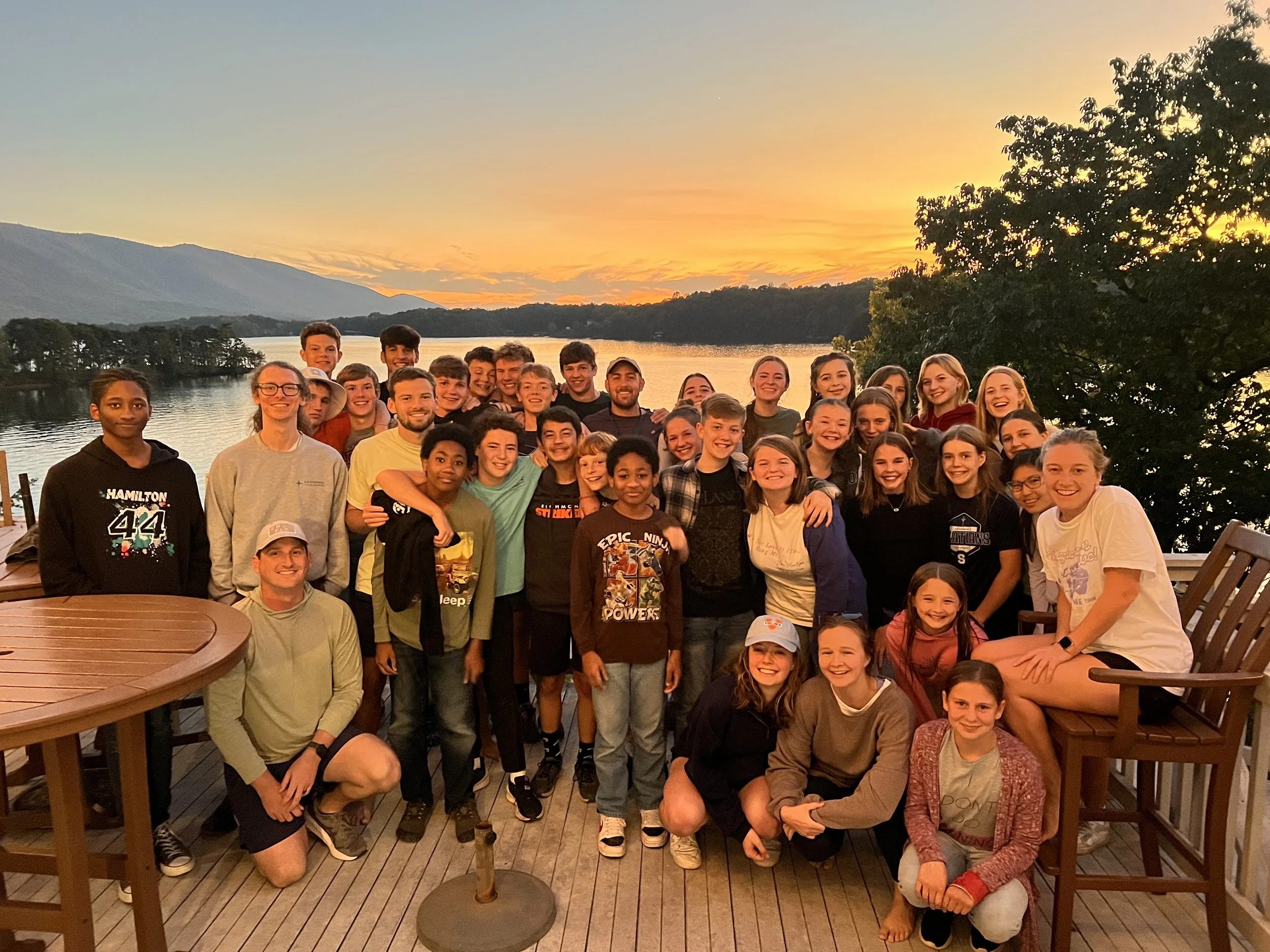
Consider Serving In Redeemer’s Youth Fellowship
Redeemer Family,
Some of the most important and influential people in my life story are those men who served as Youth Ministry volunteers in my city back when I was a teenager. They wrote me letters, called me, visited me at school, came to my sports games, gave me rides to and from events before I was old enough to drive, and in so many ways - they showed me the pursuing love of Jesus.
I don’t know where or who I would be without them.
They changed my life.
Today I’m writing to invite some of you young adult men and women to consider volunteering in our Youth Fellowship: to be those same kind of people who change lives by pursuing our teenagers with the love of Jesus.
We already have a fantastic group of 14 young adults who serve as Youth Fellowship Leaders and, ideally, we would like to add 14 more to the team.
If you’re interested, keep reading!
Profile of a Youth Fellowship Leader
A young man or woman who has received the good news of salvation through Jesus, has been baptized, and is actively seeking to grow in their faith.
Attends Redeemer regularly, and is either already a member or intentionally moving towards membership.
Passes a background check and participates in child safety training.
Has a genuine desire to see students encounter the love of Jesus and to grow in the practice of their faith.
Commitments of a Youth Fellowship Leader
In the Fall and Spring semesters, help lead weekly Youth Fellowship gatherings on Sunday evenings, 5:00 - 7:00 p.m.
Give at least 1 hour/week to relationally pursuing students outside of program time (we call this “contact work”).
Help lead Fall and Spring Youth Fellowship Retreats.
Help lead 1 Summer trip (either middle school or high school).
Help lead weekly Summer Bible studies.
Now, if you’ve made it this far, you might be thinking something along the lines of, “This sounds like a lot.”
You’re not wrong.
The teen years are an absolutely crucial season of identity formation and decision making. Our Youth Fellowship is an incredibly important ministry, and, therefore, we ask a lot of our volunteer leaders and believe it is 100% worth it!
One of the greatest joys of the past few years has been watching the camaraderie amongst the young adults who currently serve on this team. It is an incredible group that is so much fun to be around. They work hard, they give of their time generously, and they have a front row seat to witness what God is doing in the lives of our students.
If you are interested in volunteering with our Youth Fellowship, email Kate Ramsdell, and she would love to talk with you about it.
In the Father’s love,
Property Search Update: We are under contract!
Redeemer Family, I am writing to inform you that our church is officially under contract to purchase a property. This is good news! However, it’s not a done deal yet, and so I am adopting a posture of “cautious excitement and prayerful discernment” and I invite you to join me in this. Now, there are a lot of nuanced details to communicate, so please read the following carefully!
Redeemer Family,
I am writing to inform you that our church is officially under contract to purchase a property.
This is good news!
However, it’s not a done deal yet, and so I am adopting a posture of “cautious excitement and prayerful discernment” and I invite you to join me in this.
Now, there are a lot of nuanced details to communicate, so please read the following carefully!
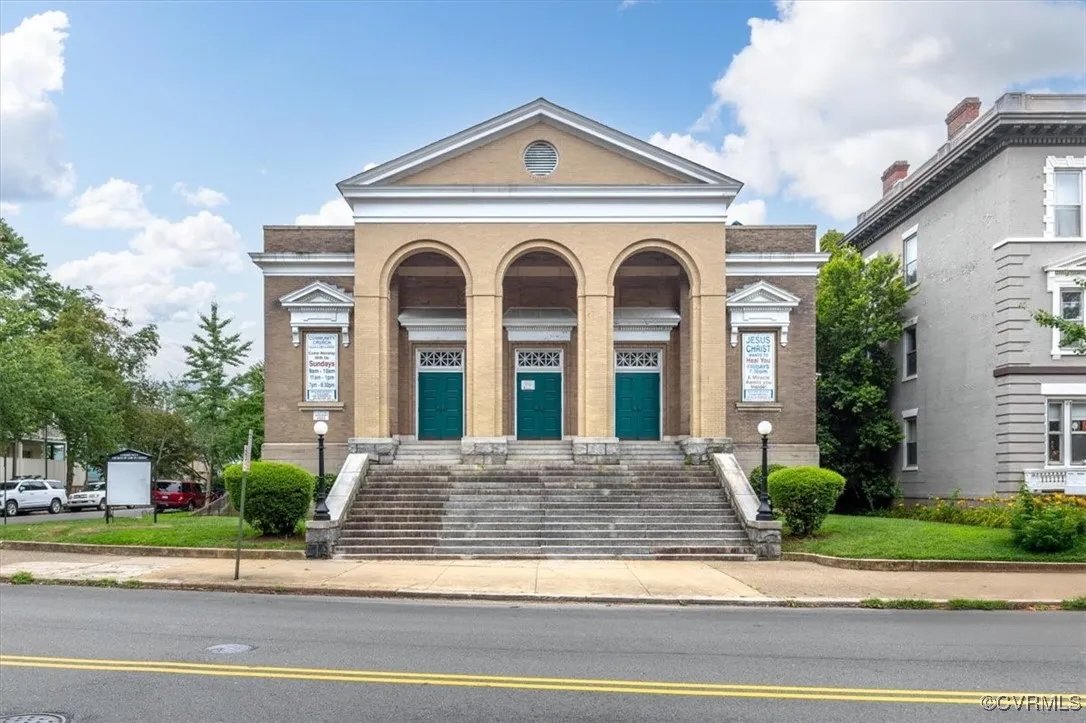
THE PROPERTY
Address: 1801 Park Ave. Richmond, VA 23220
History: Originally built in 1910 and listed on the National Register of Historic Places, this building has been a house of worship and prayer for multiple congregations over the years, including Monument Methodist Church (which merged with Union Station Methodist in 1951 to become Reveille United Methodist) and Community Church of God in Christ (CCOGIC), which purchased the building in 1976. CCOGIC, a majority black congregation, has enjoyed a beautiful and fruitful ministry to the city, especially in planting many new congregations in the Metro-Richmond area.
Description: Located on the corner of Park Ave and N. Allen Ave in the Fan District, the 25,000 sq ft property sits on .35 acres, just one block off of Monument Ave. The sanctuary offers seating for 350 and there is ample room for children’s ministry classrooms, bathrooms, youth/college/adult fellowship gathering areas, and staff offices.
Current State: In recent years, the building has fallen into disrepair and is in need of significant renovation and refurbishing.
THE PROCESS
2024 Feasibility Study: As some of you might remember, Redeemer conducted a financial feasibility study back in August of 2024 to determine if our parish could afford to purchase a building. The results demonstrated that a purchase is possible, but that renovating an old building would likely be more within our financial range than a new build.
Vestry: Upon conclusion of the feasibility study, your Vestry voted to move forward with the search. As a reminder, here are your elected Vestry members.
New City Properties LLC: As a reminder, in 2020 the Vestry of Redeemer formed an LLC to purchase the Parish House - 3328 Hanover Ave. This LLC is the legal entity that owns the Parish House and is under contract with 1801 Park Ave.
Search Team: Your Vestry subsequently put together a search team comprised of members who possessed relevant experience and expertise:
Valerie Holland (Chair)
Jason Vickers-Smith
Alex Griffith
Kim Nix
Mark Kronenthal
Broker: The search team, with authorization from the Vestry, contracted with a local commercial real estate broker, Isaac DeRegibus, to do much of the leg work in the search process.
Waiting & Praying: September 2024 - June 2025, the search team met once a month to discuss potential properties to explore and to pray together. Every Sunday, in our worship services, we all prayed for the Lord’s guidance in our property search.
Touring: From time to time, our broker would bring the search team a property to tour. The team gained valuable experience as we spent many hours walking through a wide variety of building options.
Tuesday, June 24th: Our broker discovered that there were some new developments with 1801 Park Ave. that indicated it would move to sale and likely go quickly. The search team quickly communicated and arranged for a group tour on Monday, June 30th.
Wednesday, June 25th: The Vestry met at 7:00am and voted to give provisional authorization for the broker to make an offer (up to a certain dollar amount) on 1801 Park Ave. if the search team was able to tour the property and discerned that it would be a good fit for Redeemer.
Monday, June 30th: Our search team, along with our broker, toured 1801 Park Ave. and held a meeting afterwards to discuss the potential wisdom of making an offer on the property. After talking and praying together on the front steps of the building, the search team unanimously agreed that this property would not only provide the physical space for our parish to continue to practice Gospel Formation, but also a strategic location in the city for us to embody the Missional Presence of Jesus to our neighbors.
Wednesday, July 2nd: Our broker submitted an offer to the seller.
Thursday, July 3rd: The seller accepted the offer, signed the contract, and we countersigned, placing the property under contract.
90 Day Feasibility Period: We are now in a 90 day feasibility period, which expires on October 1st 2025 (with an option to extend an additional 30 days, for a cost, if necessary), during which we will conduct a number of studies, a thorough investigation on the building, and consult with architects and contractors.
Note: We believe that we will be able to move forward; however this period of time allows for the outside possibility of discovering unexpected negative issues and the subsequent right to terminate the agreement.

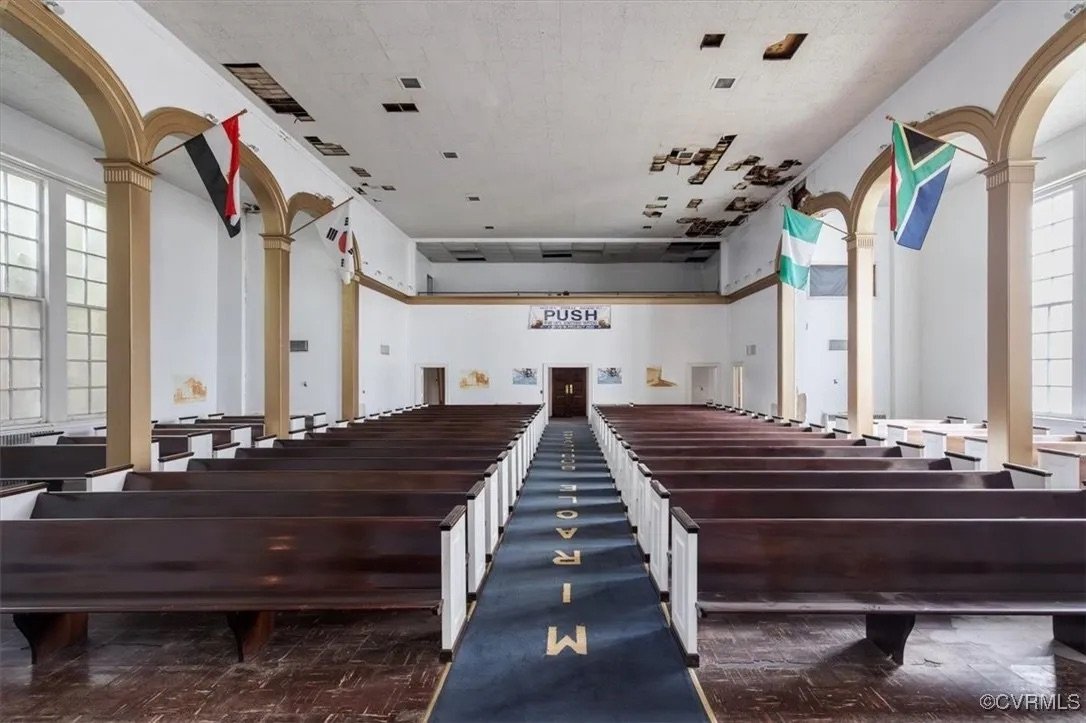
THE BIG QUESTION
The question we are seeking to answer during this period of time is simply, Can we afford to do what is necessary to bring this historic property fully back to life?
Note: There is no such thing as a property that is a 100% perfect fit. No matter where we end up, there will be trade-offs. For example: We are already considering ways to ensure handicap accessibility and parking is a priority. The feasibility study allows us time to confirm these issues.
If the answer is “No,” then we will terminate the agreement and continue the search. This is an unlikely and undesirable possibility, but it is possible; hence our posture of “cautious excitement and prayerful discernment.”
If the answer is “Yes,” then we will move to close and then put together plans for a capital campaign and a major renovation project that would likely take 2-3 years.
HOW WILL THE DECISION BE MADE?
A quick refresher on how Anglican church governance works:
In financial and property matters, the Finance Team and Search Team have authority to make recommendations and the Vestry has the authority to make decisions.
On Oct. 1st of this year, the elected Vestry of Redeemer will vote to either close on the property or walk away and continue the search.


WHAT TO DO RIGHT NOW?
Pray: Please join me, the Vestry, the Staff, and the Search Team in praying for God to lead and guide our church through this process. We don’t want to be overly-cautious or fearful, neither do we want to blunder forward in pride or over-confidence. We want to keep step with the Holy Spirit, trusting and waiting on God’s provision.
Think: Join our parish leadership in thinking carefully through all the questions we should be asking at this stage. Do we have a good team in place? Yes. Does that mean we have thought of everything? Of course not. So feel free to email me your thoughts, questions, and insights.
Offer: If you happen to possess a relevant skill set that may lend itself to this process, we would like to know; especially in the areas of: architecture, construction, and design. Again, feel free to email me and tell me about your area of expertise.
Note: With so many talented folks in a parish like ours, there is a chance I may be overwhelmed by the sheer number of people’s offers and so please do not be offended if you offer to help and then our team declines. A kitchen needs cooks, but too many cooks… you know the saying!
Redeemer family, I could write a lot more about all the hopes and dreams that we have for what this property could mean for the ministry of our parish and the work of the Gospel in this part of the city. However, in an effort not to make this letter any longer (and to practice some self-restraint on my part!) I will refrain from doing that now.
Thank you Vestry for your wisdom and responsiveness.
Thank you Staff for continuing to lead the ministries of our parish.
Thank you Search Team for your diligence, skill, and perseverance.
Thank you Isaac for serving as our broker and representing us well.
Thank you to Community Church of God in Christ for your many decades of faithful and fruitful service to the Lord Jesus at 1801 Park Ave.
May the Spirit of the Living God lead us and guide us in wisdom.
In the Father’s love,
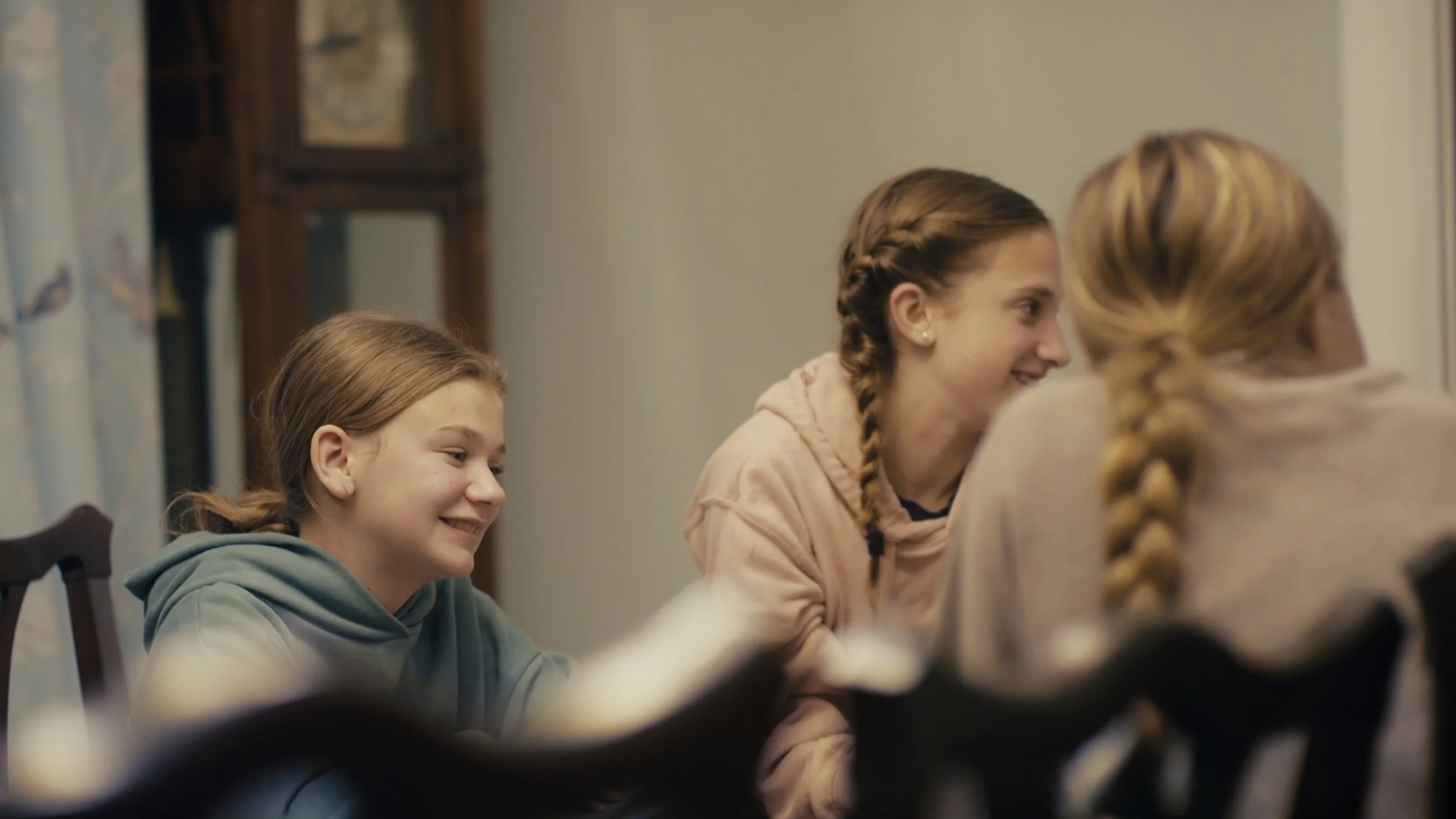
Youth Fellowship is Moving to Sunday Afternoons!
I’m excited to announce two programming changes we are making this fall to our Youth Fellowship. Parents of rising 6th graders - rising 12th graders, please pull out those family calendars and make note!
Redeemer Family,
I’m excited to announce two programming changes we are making this fall to our Youth Fellowship. Parents of rising 6th graders - rising 12th graders, please pull out those family calendars and make note!
Change #1: From Wednesday to Sunday.
For the past few years, our Youth Fellowship has met on Wednesday evenings. While many of our students and families have enjoyed this midweek anchor, the challenges of navigating homework, sports, and other extracurricular activities presents a constant challenge.
Here at Redeemer, we don’t want our church programs to pull students out of engagement with school, neighborhood, or teams, but rather equip our students to engage all of these with the hope of the Gospel and the love of Christ.
For this reason, starting this fall, we are moving the weekly Youth Fellowship Gathering from Wednesday evening to Sunday evening. We hope this eases family calendars and allows more students to participate in our Youth Fellowship.
Change #2: From Late Evening (7:00 - 9:00 p.m.) to Early Evening (5:00 - 7:00 p.m.)
Additionally, we are moving the time-slot for Youth Fellowship two hours earlier, from late evening (7:00 - 9:00 p.m.) to early evening (5:00 - 7:00 p.m.).
Again, we hope this move eases family calendars and allows more students to participate in our Youth Fellowship.
Location: Staying the Same!
While the day and time-slot are changing, the locations for High School and Middle School Youth Fellowships are remaining the same for this fall as they were this past spring:
High School Location: Home of the Paul Family - 1203 Laburnum Park Blvd
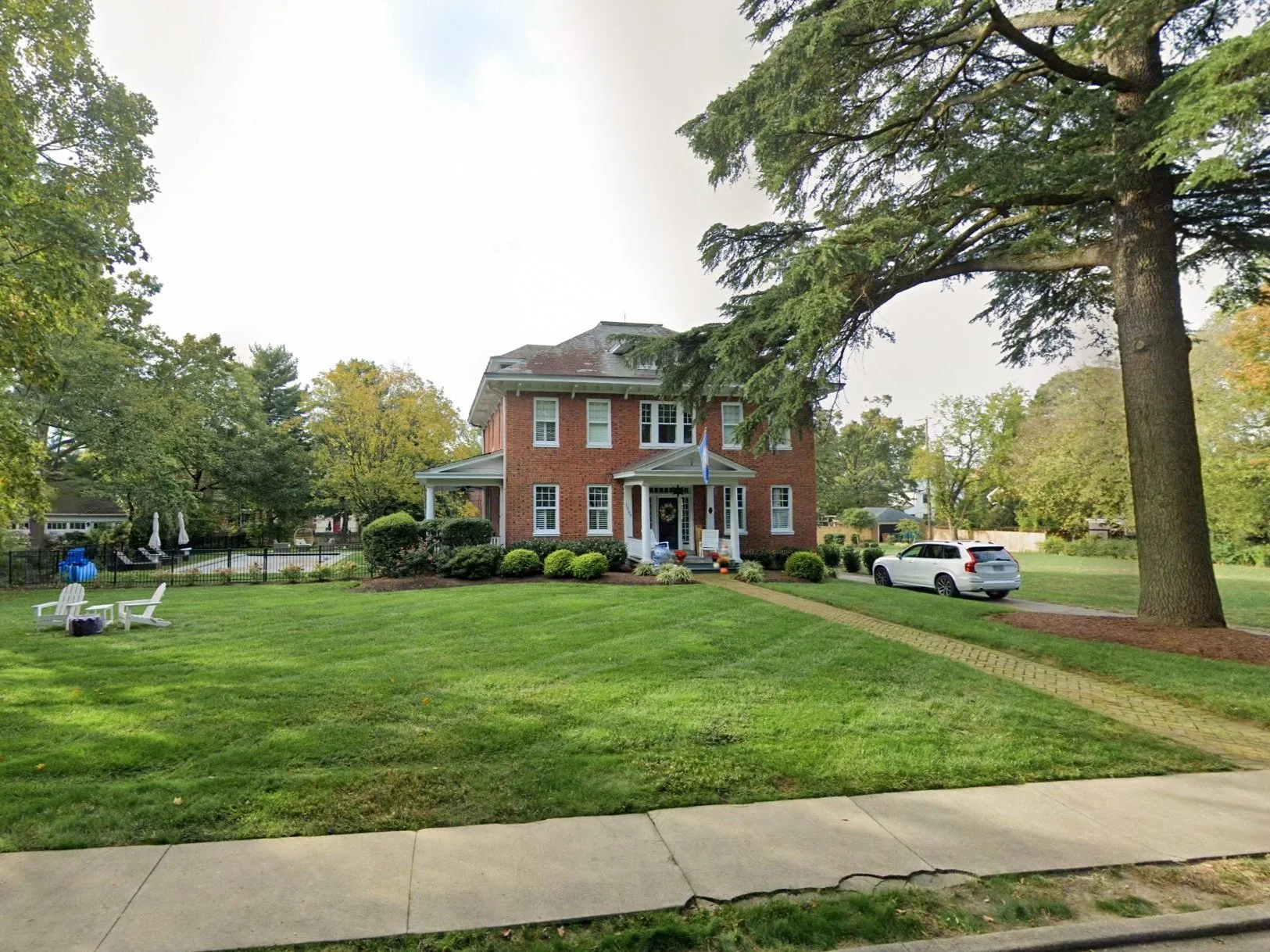
Middle School Location: Home of the Marotta Family - 1210 Palmyra Ave.

Request to Parents: Would you join me in reserving Sunday 5:00 - 7:00 p.m. for the spiritual formation, discipleship, and life-giving fellowship of your sons and daughters? Our family is making this a top priority and we would love for you to do so as well.
Thank you!
In the Father’s love,

Finding Rhythms of Rest this Summer
Summer brings many welcome changes to our rhythms of life and I’m looking forward to them just as much as you are. The season of Eastertide is behind us. The school semester is complete. Many of you are anticipating a slower pace of work, more time with family and friends, and perhaps some travel away from Richmond - all good and lovely things.
Redeemer Family,
Summer brings many welcome changes to our rhythms of life and I’m looking forward to them just as much as you are. The season of Eastertide is behind us. The school semester is complete. Many of you are anticipating a slower pace of work, more time with family and friends, and perhaps some travel away from Richmond - all good and lovely things.
If you’re anything like me, summer can also be a time (for some of us) to unintentionally put the disciplines of the academic year on hold. Isn’t it ironic that more free time somehow usually means less time given to things like reading scripture, prayer, and service to others? I’ve heard this from many of you as well. One of you has quoted,
“It’s like I’m an intentional Christian 8-9 months out of the year, and then in the summer I take a break from following Jesus.”
I love the honesty and I completely empathize. I feel this tendency in myself as well.
While there are, no doubt, many potential sources beneath this trend, one of them is certainly the reality that many of us live an overly-busy, unsustainable pace of life September through May. Many of us crash-land into June in an exhausted heap. After living with a packed calendar for most of the year, we overcorrect the other direction and step back from too many things. Back and forth the pendulum swings.
The solution, I think, is not a rousing call to spiritual activity during the summer months. Fear not, this letter is not a pitch to “just do more Christian things!” Rather, my sense is that the invitation before us from the Lord is to lean into the soul-nourishing rhythms of true rest. True rest, in a biblical, Gospel sense, looks a lot less like three hours of late night Netflix and more like a quiet moment reading scripture, a morning walk with a friend, an afternoon siesta, or an evening cook-out with a neighbor.
So, dear brothers and sisters, as we enter this season, I’d like to invite you to consider how these opportunities might be ways of refreshing and replenishing your soul this summer:
Summer in the Psalms: As is our practice, we have returned to preaching through the Psalms this summer, picking up where we left off with Psalm 89 this past Sunday. The Psalms are the prayer book of the Bible and help us learn to pray the fullness of our emotional life to God. In addition to listening to the sermons this Summer, consider reading through most or all 150 Psalms over the next three months. This is not an “accomplishment goal”; there are not gold stars available for earning here. Rather, think of it as an “immersion goal.” I want to immerse myself in the prayers of the Psalms.
Note: It has been my habit throughout Redeemer’s years to step back from preaching for a good bit of the summer to share the pulpit with other voices. I’m thrilled and thankful to Lane Cowin, Oldson Duclos, Tee Feyrer, and Will Clark for stepping in to each preach during this series.
Join a Book Club: With Small Groups on break until the fall semester, consider shifting into a different gear and joining a Summer Book Club. For those book-lover/speed-readers out there, this is an easy one. For those of you who don’t normally read books, this might stretch you a bit. Fear not— this is not school and there’s no grade. The goal is learningin community together.
Practice Sabbath: Look at the calendar for the entire summer and set aside as many Sundays (ideally) or Saturdays (if Sunday doesn’t work) for whole days of intentional Sabbath Rest. If you would like to learn more about why and how to practice Sabbath Rest, we did a series on this back in Eastertide of 2021.
Retreat to Silence & Solitude: Consider looking ahead at the summer calendar and setting aside a 24-hour solo, silent retreat. For many of you, this may feel intimidating. If this is the case, start smaller and try just a few hours. If you missed it, we did a sermon on this practice and you can listen or re-listen to it here.
Redeemer family, there are many more opportunities to lean in this summer and you can learn more about them on our Events page. But please hear me ask, do you need rest? Are you tired and worn out? If so, take Christ up on his invitation to find true, soul-nourishing rest in Him this summer.
In the Father’s love,
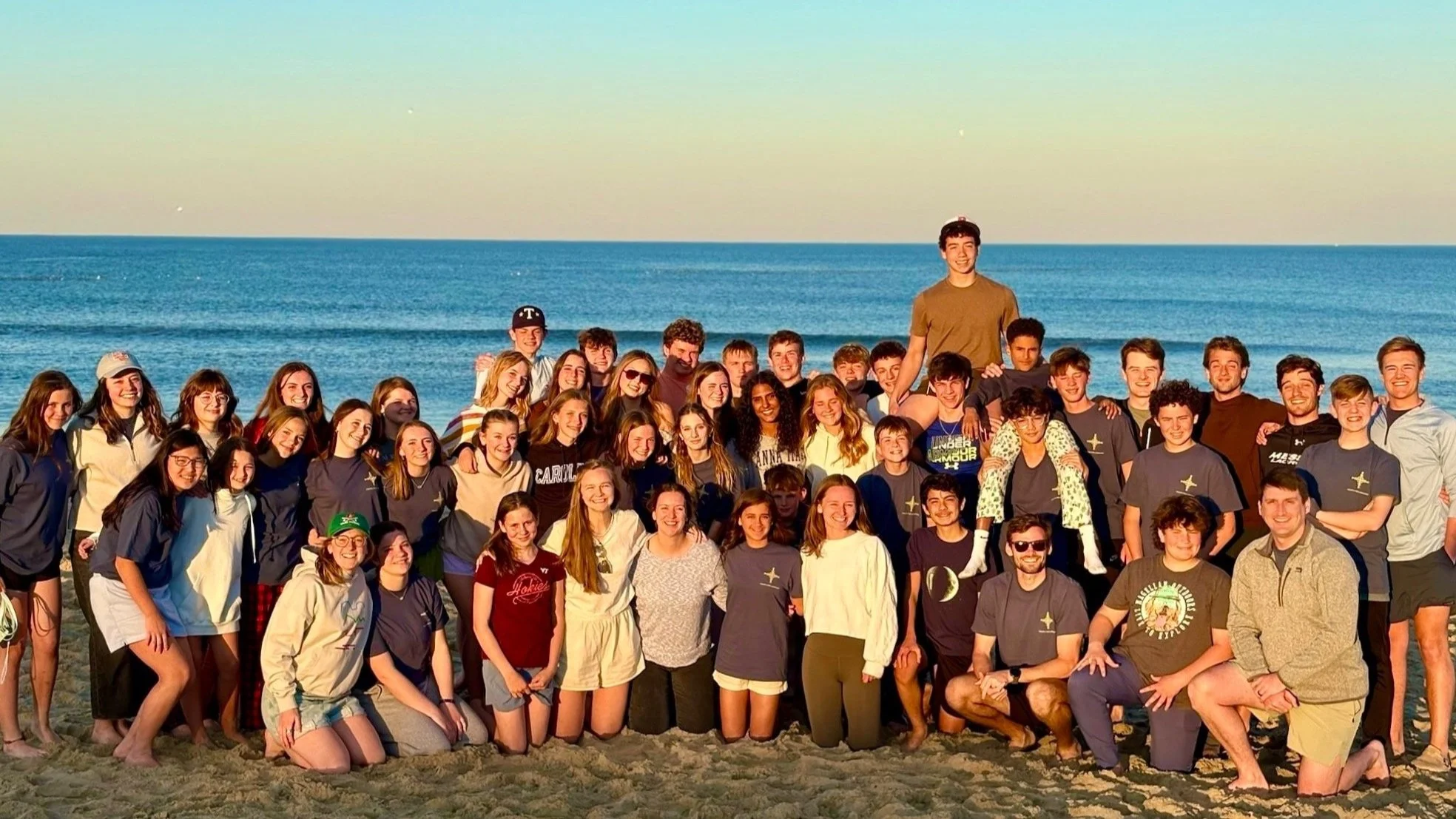
Recounting the Gifts
At the end of this ministry year, I am remembering how much there is to be grateful for and celebrate. As I step aside from my role leading the Youth Fellowship, I continue to appreciate the milestones and memories of this year and give thanks to Jesus who made all of it possible.
Dear Friends,
At the end of this ministry year, I am remembering how much there is to be grateful for and celebrate. As I step aside from my role leading the Youth Fellowship, I continue to appreciate the milestones and memories of this year and give thanks to Jesus who made all of it possible.
In recounting these milestones, it seems that God is creating room for us to minister to more people. This year we connected with over 70 different students! Our leadership team is aiming to nearly double this summer. In January we successfully created distinct gatherings for our middle and high school students. We were also blessed with huge efforts of hospitality as four different families pitched in to host our large gatherings of students and leaders – the Murrays, the Kleinschusters, the Marottas and the Pauls. (Thank you all once again for your generosity!) These are all worth noting because they show God’s willingness to multiply the little that we entrust to him.
But more personally, my own heart is turning over the vivid memories of the people God is drawing to himself in our Youth Fellowship—the sons and daughters of dear friends, our volunteer team who have become like brothers and sisters together, so many of you who have prayed for and encouraged us, and not least of all those students who have shared their confessions, hopes and prayers with one another. I hold all of them in my heart with gratitude and hope.
These things have me thinking about how Jesus compares the Kingdom of God to something of great value – a treasure buried in a field or a pearl of inestimable worth. The worth of these, like the Kingdom of Heaven, is not obvious or known until found. The worth is hidden in a promise, and it invites us to come find it, and only in having found it can we truly know the blessing.
Dear friends, I know the blessing that God has given to this fellowship, and I praise him for it. And I look forward to the grace to come as this ministry presses on.
With gratitude,

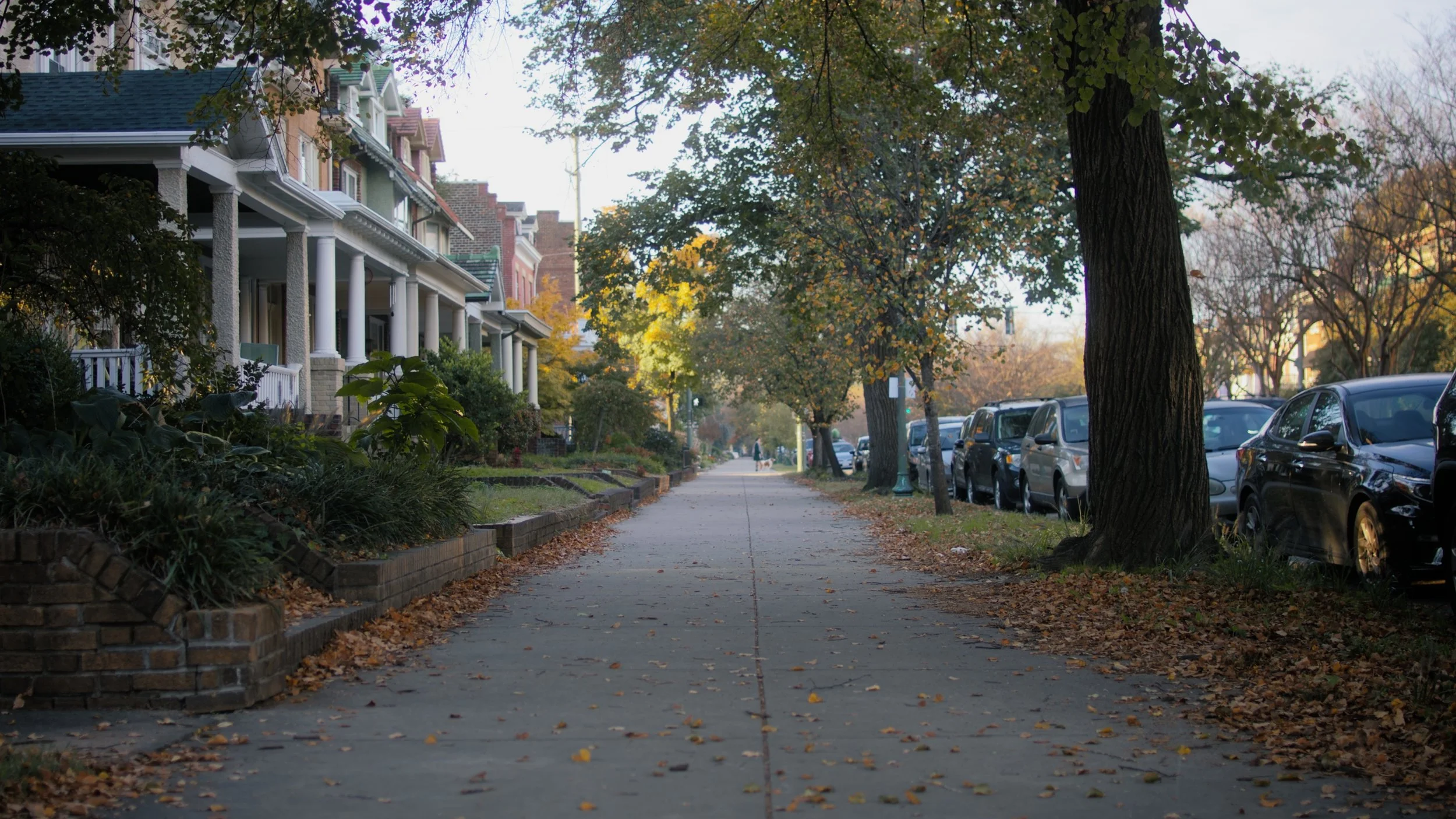
Introducing Our New Church Planter-in-Residence
One of the greatest joys over the past eight years has been the role our parish has played in helping to plant new churches. Every time we send out a new church plant, it reminds us that the Kingdom of God is so much bigger than merely what is happening here within our local congregation. It also reminds us that the work of the church is never solely for itself; we exist for the sake of others who do not yet know and love the Lord Jesus.
Redeemer Family,
One of the greatest joys over the past eight years has been the role our parish has played in helping to plant new churches. Every time we send out a new church plant, it reminds us that the Kingdom of God is so much bigger than merely what is happening here within our local congregation. It also reminds us that the work of the church is never solely for itself; we exist for the sake of others who do not yet know and love the Lord Jesus.
Partnership with Made to Flourish
Because of Redeemer’s track record of raising up new leaders and sending them out, we have been selected by a national ministry called Made to Flourish to receive grant funding so that we might continue to train and equip new church planters. This is a tremendous privilege and a weighty responsibility.

New Church Planter-in-Residence: Nathan Horner
Today I am pleased to announce that we have selected and hired our next Church Planter-in-Residence: Nathan Horner! He and his lovely wife Erin and their son Theo will move to Richmond in August and he will begin a three-year residency on our staff team on September 1st.
Nathan grew up in Harrisonburg, Virginia where he attended James Madison University for his undergraduate degree. Nathan spent much of his college career working with Middle and High School students through the ministry of Young Life. After graduating, Nathan spent two years working in the field of mental health, particularly with teenage boys and girls. He moved to Virginia Beach in 2021 to join the staff of Galilee Church as the Director of Student Ministry and is now pursuing a Masters of Divinity through Gordon-Conwell Theological Seminary. Nathan loves to play soccer, surf and is passionate about music. He is an avid reader of fiction and loves the art of storytelling.
How Will Nathan Serve at Redeemer?
Now, some of you may have connected the dots between Redeemer’s current youth staff, Christian Hayes and Kate Ramsdell, transitioning back to their former volunteer roles and Nathan’s experience in youth ministry. While we did not orchestrate this intentionally, we are grateful for the Lord’s provision in bringing Nathan to our parish for this particular season. We anticipate Nathan serving in a variety of roles at Redeemer, but chief among them will be with our Youth Fellowship.
Redeemer family, even as we consider the needs of our parish and contemplate the future purchase of a building, I’m so grateful that, at the very same time, we will also continue the outward-looking work of sending out church planters!
I love you all dearly, and let’s give the Horner family a warm welcome when they join us in August.
In the Father’s love,

About Redeemer’s Prayer Ministry
At Redeemer, we believe prayer is not just a ministry—it is central to our life together. Prayer is where we meet people in their deepest places of joy, grief, longing, and hope, and stand together before the Lord who hears, knows, and acts. Through prayer, we participate in God’s ongoing work of healing, freedom, and redemption in the lives of his people, including those who find themselves in places of pain, despair, or brokenness.
Redeemer Family,
At Redeemer, we believe prayer is not just a ministry—it is central to our life together. Prayer is where we meet people in their deepest places of joy, grief, longing, and hope, and stand together before the Lord who hears, knows, and acts. Through prayer, we participate in God’s ongoing work of healing, freedom, and redemption in the lives of his people, including those who find themselves in places of pain, despair, or brokenness.
Our Prayer Ministry exists to meet people where they are—with open hands, listening hearts, and a posture of trust. We carry the burdens of others before the Lord, interceding on their behalf, asking boldly for his care, his provision, and his transforming work in their lives.
This is a quiet, behind-the-scenes ministry, but one that touches the very center of God’s heart for his people. You don’t need to be an expert in prayer or have the right words; we ask only that you have a willingness to be an instrument in the Redeemer’s hands, a desire to grow more deeply in the practice of prayer, and a sensitivity to the Spirit to learn to listen to the requests from our parish with one ear, and His still, small voice directing our prayers with the other.
If you are interested to learn more or explore joining the Prayer Ministry team, please join us for an end of year celebration event on Thursday, June 5! This is a great opportunity to connect with other Prayer Team volunteers and hear about the vision for this ministry of our parish. If you have questions, please reach out to me. Further training opportunities will be coming soon, and we would love to invite you into this sacred work.
Christa Vickers-Smith
Prayer Team Coordinator
Redeemer’s Search Team Update
The Search Team meets monthly to evaluate potential long-term home options for our parish. Our criteria are based on preferences and needs shared by both the staff and the congregation, including:
Desired location
Aesthetic considerations
Programmatic needs
Cost of purchase and potential renovations
Redeemer Family,
The Search Team meets monthly to evaluate potential long-term home options for our parish. Our criteria are based on preferences and needs shared by both the staff and the congregation, including:
Desired location
Aesthetic considerations
Programmatic needs
Cost of purchase and potential renovations
With these parameters in mind, we've compiled a list of buildings that could be a good fit—if the current occupants were open to selling. We’ve engaged a broker (a friend to many in our congregation, though not a member himself) who has reached out directly to each church on our list. Most responses are along the lines of, “We’re not interested, but you should call X—they might be.”
This process has surfaced a few potential opportunities, and we are in the early stages of exploring them. Progress is slow by nature—these are not buildings actively for sale, and even starting the conversation often involves multiple stakeholders.
Please know that “no news” from the Search Team doesn’t mean no work is happening. It simply means we haven’t yet found a concrete option that meets our criteria. Given our parameters, it may take time to identify a viable recommendation for the Vestry.
If you hear of a congregation that may be considering a move or a sale, our broker would be grateful for the lead. Most importantly, please continue to pray for our search—that we would trust the Lord’s guidance in leading us to the right long-term home.
Alex Griffith
Junior Warden & Search Team Member

Three Questions with our Volunteers: Stories from Redeemer Kids
Every Sunday about ten minutes after the hour, a wave of parishioners (mainly under 4 ft tall) swells through the sanctuary and into the classrooms, where they stay until they come flooding back in before Holy Communion begins. For many sitting in a service at Redeemer, this sweet movement begins and ends as they pass through the doors of the sanctuary. But what happens on the other side of those doors?
Over the past few years in Redeemer Kids, I've enjoyed a unique view of a vibrant part of our parish that happens mainly behind the scenes. Each Sunday about ten minutes after the hour, a wave of parishioners (mainly under 4 ft tall) swells through the sanctuary and into the classrooms where they stay until they come flooding back in before Holy Communion begins. For many sitting in a service at Redeemer, this sweet movement begins and ends as they pass through the doors of the sanctuary. But what happens on the other side of those doors?
As I think about telling the story of our children’s ministry to those who don’t know the answer to that question, I would start by inviting you to come meet our volunteers! The individual stories of each volunteer do more to tell the bigger story of our ministry than I could on my own. Please enjoy reading these testimonies, and next time you watch that wave of children flow into the back for their spiritual formation classes, look for the men and women in blue volunteer t-shirts walking back with them, and say a prayer for those who are doing the kingdom work of forming the future generations of the Church.
Casey Cisco
Director of Redeemer Kids
Q: What role do you currently serve in Redeemer Kids, and how long have you been in this role? What led you to first signing up to volunteer in children’s ministry?
”I still remember going to Sunday School long ago when I was in fourth and fifth grade. Although I can’t remember specifics lessons, I look back at those lessons and the teachers who taught them as being important in the start of my walk with the Lord. The chance I could play a small role in giving that same experience to the children here at Redeemer led me to volunteer for the children’s ministry shortly after I joined Redeemer in early 2019. Six years later I consider it a privilege and a blessing to continue as part of our wonderful 4th-5th grade teacher team.”
-Dan Simonds
“I began assisting the lead teachers for the combined 3s-Pre-K class in September 2024. I signed up in response to an expressed need for volunteers; I really wanted to contribute to my Redeemer family.”
-Meg Hardt
“I currently serve in the nursery. I chose to volunteer out of a shared sense of responsibility to care for the children of our parish and nourish the well-being of families in our midst.”
-Claire Lewis
“We started volunteering with Redeemer Kids upon becoming members in 2018. We volunteered in the nursery when we first joined, and then transitioned to the pre-K class after resuming services after COVID. We've served in the pre-K class or 3s class for all of the time since then! We signed up to volunteer for children's ministry for 3 main reasons: 1. We have kids that use this ministry regularly, so we wanted to understand it better and give back to the service that serves our kids so well. 2. It was the volunteer opportunity that fit best with our varying work and travel schedules. 3. It was the easiest way for us to learn about other families in our church community that we don't regularly interact with in small groups or other ministries.”
-Will & Jenn Killmer
“I've been serving as an assistant with the 2nd and 3rd graders at Redeemer Kids since the summer of 2024. My decision to volunteer stemmed from a genuine desire to build deeper connections with the children and families within our Redeemer community, while also contributing to the vital work of the ministry team. On a more personal level, I was profoundly influenced early in my faith journey by a childhood Bible teacher who truly knew me, invested in me, and shared the Gospel in a way that resonated deeply. Volunteering at Redeemer Kids provides an opportunity for me to, in some small way, offer that same kind of influence and support to these kids.”
-Drew Goodwyn
“I have been serving in the Redeemer Nursery for the past two years. When we first arrived at Redeemer, we had a 3 year old and a 1.5 year old, and I spent many of my first Sundays back in the nursery helping our boys feel comfortable in a new place. As a young mom, I felt pulled between wanting to be in the service to experience the liturgy and worship and, on the other hand, knowing that our boys were struggling with the separation and newness of it all (we had also just moved from Chicago!). I realized that committing to consistently serving and building relationships with the littlest ones in our congregation allows parents space to worship and receive from God each week, trusting that their kiddos are nurtured and held.”
-Ally Berttucci
“I teach the 4th and 5th grade class, which I’ve done for several years. I volunteered for children’s ministry for two reasons: First, I wanted to help with a ministry that my own kids were benefitting from and second, it was lonely to be stuck in the half-empty sanctuary when the exodus of children occurred!”
-Jeromy Lewis
“I’ve been serving in the 4-5th grade classroom since around 2019. I started volunteering after feeling convicted after responding to the corporate baptismal vows we make.”
-Alex Burlingame
Q: What is something you wish more people at our church knew about this area of our children’s ministry?
“Seeing how the truth of the gospel translates to different ages is awe-inspiring. The children's ministry makes it easy for people to get involved because the lessons and materials are readily available, which is good because I don't know how I would independently teach 4 year olds about the Tabernacle! It's also a rare space where I can be questioned about my faith in a good-natured, curious way, instead of a combative/skeptical way. I appreciate the challenge of having to articulate to kids some complex spiritual truths, and I appreciate the opportunity to regularly say, 'I don't know! That's the mystery of faith!"about a faith that I still feel secure in.”
-Will & Jenn Killmer
“You don't have to have any special talents, just a friendly and welcoming face, ready to play! [The nursery-aged kids] are so sweet and they LOVE to be read to! They love to build, to play a good game of peek-a-boo, and they make some delicious food in their play kitchen!”
-Ally Berttucci
“It is so fun! The kids are so smart, well-behaved, and kind. They can really engage with serious theological questions or inductive bible study, while also being willing to act out a dramatic skit.”
-Alex Burlingame
“I wish others knew how thoughtfully and deliberately the youngest members of our parish are cared for. Our volunteers and paid nursery staff seek to understand the preferences of each family and serve with a fairly robust understanding of infant and toddler development, attachment, and emotion regulation. I also wish folks in our parish knew how frequently each child is prayed for by name and how well each child’s temperament and preferences are seen and known by our volunteers and paid staff.”
-Claire Lewis
“Participating in children's ministry is a good way to get to know more of your congregation than you might otherwise meet. Not only does serving in children's ministry allow us to know the younger members of our congregation, we also get to know the parents. In many good ways, the hour or so in the classroom is a glimpse into the family lives of our church. Even at 3 years old, a child's unique personality is coming through. God has done a good work in creating these young people.”
-Kaity Hauter
“It's a blast and can be an incredible way to participate in the spiritual formation of the children at Redeemer. You don't need to be a Bible scholar or ministry expert, just a willing spirit to love kids and share God's Word with them.”
-Mike Berttucci
“As an older woman who has never had her own children, I value yours in a way that is hard to describe. I am deeply touched by every interaction, no matter how small. A smile, a hand, a hug - it all means so much. Some Sundays feel challenging, but I am learning to lean into God's presence for confidence and wisdom to say or do whatever is needed. I pray for your kids continuously. I count it a great privilege to grow with you in community, to love your children, to consider them family. Thank you for sharing them with me.”
-Meg Hardt
“Parents already know this, but children between 1-5 years old are developing incredibly quickly and have an extraordinary capacity for absorbing information. They are constantly observing, listening, and learning about the world around them, all of which is shaping their worldview. Even if they aren't as verbally expressive, they're internalizing a lot, especially through their interactions with adults. I also love spending time with children at this age because they're so funny — just listen closely!”
-Jodie Lee
Q: How has your faith been impacted by investing in children’s spiritual formation in this way?
“I’ve been reminded that change is often hard to notice day-to-day or even week-to-week, but it is happening and requires commitment and consistency because over time, it all adds up. The difference becomes more apparent over the years, both in our walk with God and in raising children. I love seeing the kids I've known in Threes and Pre-K now growing into elementary schoolers and reflecting on the many people who have poured into their lives at different stages. It truly takes the faithfulness and dedication of the whole church body, as God has blessed us with 'the joy and care of children.'”
-Jodie Lee
”For me, teaching in general and teaching children in particular, requires a more thoughtful approach and deeper reflection on the content. I’ve found that to be especially true with our RK curriculum. My investment of time and effort in the children of Redeemer has definitely had a positive and powerful impact on my own faith and how I live it out.”
-Dan Simonds
“There are some Sundays when I feel the pull to be in corporate worship rather than in the nursery, but I am reminded that my time in the nursery is in fact worship— just worship in a different shape. I find myself sitting cross-legged while reading books about God as the Good Shepherd, or bouncing a baby on a hip to soothe and console, or playfully reflecting the delight of the Father to a child while playing peek-a-boo. It’s a very embodied kind of worship and it is shaping me as I receive God’s presence in the midst of the tears, the laughter, the pretend play, the towers built and the runny noses!”
-Ally Berttucci
“Investing in the spiritual formation of Redeemer Kids has profoundly impacted my own formation. Their insightful questions often lead me to explore Scripture with fresh eyes. Turning to prayer for their growth, engagement, and obedience has cultivated my own reliance on God's Spirit and witnessing their simple faith through prayer requests, both big and small, is deeply moving and encourages my trust in the Lord. Guiding their growth has functioned as scheduled reminders for myself of foundational truths and a source of renewed joy in my walk with Christ.”
-Drew Goodwyn
“Going through the Signs of John has been a very formative experience for me as I sit with each of these miracles week by week. Asking the kids to memorize scripture calls me to memorize scripture. I also see them growing in the church calendar as I seek to do the same.”
-Alex Burlingame
“I am always encouraged by the genuineness of kids' faith, and their eagerness to learn and grow. Also, having kids in class for two years, it is a true gift to see how God works in their life over that time.”
-Mike Berttucci
“As I learn to teach Bible stories in accessible ways to young children, I find the child of my adult heart is also ministered to. Our adult spirits still often need the mystery of the Gospel given to us in the simplicity and majesty of language designed for children, full of imagery and wonder. The structure of the 3's and PreK classroom is also valuable for adults as well as children. Just as we have our liturgy in the sanctuary, the children have their liturgy in class. We greet each other with "The Lord be With You". We light the Christ candle to remind ourselves that Jesus is always present. We sing songs of praise and learn stories about the Triune God. We pray to God, thanking Him for loving us and we learn the Lord's Prayer. The Lord's Prayer has been particularly powerful for me. In the 3's and PreK class, we use hand motions to move through the prayer given to us by Jesus. The repetition of the words and the motions of this simple and profound prayer work the truths of scripture further into my heart. Ask your children to teach you the motions! My prayer for your children is that, over time, these building blocks formed in the children's ministry will be some of the stepping stones of accepting faith in Christ for themselves.”
-Kaity Hauter
“We have felt the Holy Spirit lead us and support our classroom time. The children's questions and answers amaze us and make us delve deeper into our understanding of the scripture.”
-Kim & Kevin Hankins
“Serving in the nursery has grown my faith by deepening my awareness of the image of God within each of us. It is good to appreciate how fearfully and wonderfully we are each made - infants and toddlers haven’t yet learned to work or perform in order to convince others of their goodness - they just show up and their identity as image-bearers is on brilliant display. Serving in the nursery offers a front-row view to the unique way each of our infants and toddlers reflects something of who God is and helps me know Him more. It has honed my eye to see and appreciate God’s image in myself and those in my midst each day.”
-Claire Lewis
“I benefit from seeing the manner in which other adults faithfully and creatively serve our children in a small but significant way. I also am challenged by the simplicity of faith in 9-10 year olds who pray to their Father for their daily needs and then wait for Him to move.”
-Jeromy Lewis
“It feels like most of the other spiritual disciplines-- I can't always tell if the actions I'm performing or the words I'm saying are 'doing any good' in the moment, but over time I can see the seeds that have been planted begin to take root. When kids make connections about God and his character through the stories we're teaching, it reminds me that He is doing the work and we just get the opportunity to participate. But my favorite part of serving in children's ministry is how it highlights every part of the church calendar-- Ordinary Time is boooooring and the kids reflect that easily... and the kids' enthusiasm for seasons of celebration like Easter and Christmas is the best reminder that our story doesn't end in Lent or Ordinary Time. Kids lament and celebrate so enormously and so easily, and that has been a beautiful gift and challenge to me every year.”
-Will & Jenn Killmer
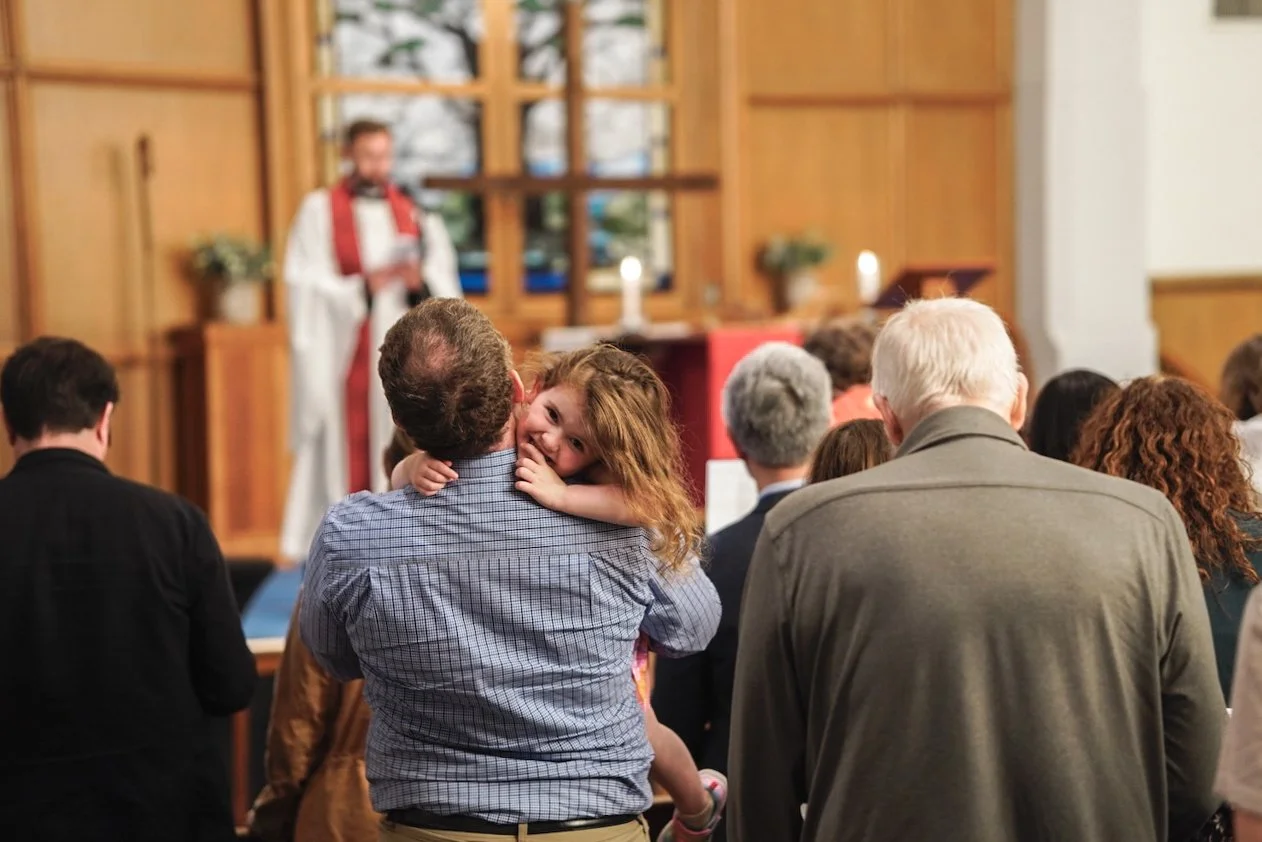
Children in Worship: an Invitation for the Summer
It’s almost that time of year again! We have learned from older, more established ministries that the summer months provide two unique opportunities for our parish. The first is to allow our hard-working Redeemer Kids volunteers a much-needed chance to slow down. The other is the chance to embrace more participation from children during the worship service for the summer season for the sake of both our children themselves and the adults around them! As our parish moves into the season of Ordinary Time and we find ways to practice our faith in, well, ordinary ways, this is a wonderful time to shift the way we teach our children as well.
Dear Redeemer Family,
It’s almost that time of year again! We have learned from older and more established ministries that the summer months provide two unique opportunities for our parish. The first is to allow our hard-working Redeemer Kids volunteers a much-needed chance to slow down. The other is the chance to embrace more participation from children during the worship service for the summer season for the sake of both our children themselves and the adults around them! As our parish moves into the season of Ordinary Time and we find ways to practice our faith in, well, ordinary ways, this is a wonderful time to shift the way we teach our children as well.
When will this take place?
Redeemer Kids will only offer a Three’s Room, Pre-K Room, K-1st Grade Room and the full nursery for both services starting Sunday, June 16 through August 1.
What does this mean for our kids?
We will offer a children’s liturgy specifically for our young children to help guide them through the service (and to doodle on, of course) as well as providing crayons to use. Our 2nd grade+ aged children will be welcomed into portions of the service that they have not been in before to learn alongside our older members during the sermon and to practice corporate prayer during Prayers of the People. This is not a break from children’s spiritual formation—rather, a new way to practice it together!
What does this mean for parents?
If your child is a rising 2nd grader or older, they will be sitting with you for the whole service! We will offer some resources specifically for these children to engage with the service. I can speak from experience that it is no small task to help my own squirmy son sit through long stretches of the service and I don’t want to minimize that challenge for you parents. I urge you to see this not only as an opportunity for your child to form new habits around worship (like when to sit, listen, stand, sing, and kneel), but to find their place in the whole body of Christ by participating in new ways!
What does this mean for Redeemer Kids volunteers?
Our hope is to give our hard-working Redeemer Kids teachers, assistants, coordinators, and more a season to slow down. Many of you might not know that we ask our teachers and assistants to serve every three weeks and our coordinators and nursery volunteers to serve every four weeks. As the year has gone on, many of our team members have served more frequently than this in order to have the 30 volunteers needed every Sunday to run our children’s ministry. For those who are not currently serving in Redeemer Kids, take this season to thank our Redeemer Kids volunteers and to prayerfully consider how you could use your own gifts to volunteer as well—you’re needed!
What does this mean for everyone else?
This is a wonderful opportunity to engage in a new way with the children of our parish! There will be opportunities to stretch and grow as a congregation as we extend hospitality to the school-aged children of our church and by supporting families with young children in the pews around you. Here are a few practical guidelines to consider:
The first way you can help is to model attentive and fully engaged behavior for the kids around you. You disciple the kids nearby when you attentively observe the sermon, stay focused when listening, and use your body to kneel, stand, and extend your hands. After all, children learn the most by observing!
Get to know the names of the children who sit near you in particular and then ask after them by name each week. This small gesture can mean the world to children (or anybody for that matter) who can often feel overlooked in a crowd.
When a child near you is noisy (drops a pen, cries, giggles, talks out loud) during the silent portions of the service, don’t react. This could take practice for each of us, but stay engaged in the prayer/silence/liturgy and take this time as an opportunity to grow in focus and to model a still and calm posture for your neighbors. This is a spiritual “muscle” we can all exercise.
Be open to how you can grow from this experience. During this summer and beyond, be attentive to how children already naturally engage with the service on their own. Do they shout the creeds or dance when they sing? Do they find it hard to be attentive during the scripture reading or to withhold their enthusiasm when they are able to participate in a call and response? Children reflect our own emotions, desires, and sin patterns, but are often more obvious about it. Be open to what you can learn about yourself from watching these children and how you can grow in your own faith through this.
Pray with me now and each week to come: Almighty God, heavenly Father, you have blessed us with the joy and care of children; Give us calm strength and patient wisdom so to train them, that they may love all that is true, and pure, and lovely, and of good report, following the example of their Savior Jesus Christ. Amen.
In Christ,
Casey Cisco
Director of Redeemer Kids

Staff Transitions
The author of Ecclesiastes reminds us that “for everything there is a season,” and this is certainly true in every space of life, including the life of a parish like ours. Seasons begin, seasons end, and new seasons begin. There are ebbs and flows to parish life.
Redeemer Family,
The author of Ecclesiastes reminds us that “for everything there is a season,” and this is certainly true in every space of life, including the life of a parish like ours. Seasons begin, seasons end, and new seasons begin. There are ebbs and flows to parish life.
This letter is off to a bittersweet start; can you feel it? I do.
We have some people who are rolling off our staff team this year. Our season of enjoying their leadership is coming to an end:

Christian Hayes: Has served as our part-time Director of Youth Fellowship for many years and, under his leadership, the ministry has grown and flourished. What some of you may not know is that Christian also works full timeas an ICU nurse at VCU! As you might imagine, with our Youth Fellowship continuing to grow, this arrangement is not long-term sustainable for the Hayes family. We are thrilled that even though Christian will no longer be on staff as the Director, he will still be involved with Youth Fellowship as a volunteer.
Transition Date: June 2025

Kate Ramsdell: Has served as our part-time Youth Fellowship Assistant for the past year under Christian’s leadership. Again, what some of you may not know is that Kate also works full time as a therapist. Again, as you are already imagining, it has been challenging! Kate has agreed to lead the Youth Fellowship through the Summer in Christian’s absence before she rolls off at the end of the Summer. We are so grateful that, come the Fall semester, even though Kate will no longer serve on staff, she will still be involved in the Youth Fellowship as a volunteer.
Transition Date: August 2025

Orlando Palmer: We knew this announcement was coming at some point, we just hoped we had more time! Our beloved Orlando, his wife Doe, and their beautiful boy Shiloh are moving to Nashville this fall at the end of October. With both Orlando’s and Doe’s public music careers growing, this is a timely and strategic move for them. Orlando has served as our Artist-in-Residence for 5 years and has blessed us tremendously with his leadership, skill, and vision for integrating Anglican hymnody, Americana folk, and Gospel music into a unique sound that represents the music traditions of Richmond.
Transition Date: October 2025
While we will feel the loss Christian’s and Kate’s excellent leadership from a staff perspective, we will continue to enjoy their presence in our parish and in the Youth Fellowship. However, Orlando really is moving out of state and we will not only miss his leadership, but also his presence amongst us!
Now, some of you forward-thinkers are already beginning to wonder about how we are going to hire new staff to step into these vacancies. I’m right there with you and have been in deep conversation and prayer with our leadership about how we can recruit new team members to serve and lead us. I’ll send out more communication about these new positions and job descriptions in the weeks to come. Stay tuned.
For now, let’s simply celebrate these three and all the time, energy, love, and hard work they have offered to the Lord and to our parish.
Christian, Kate, and Orlando - THANK YOU and we LOVE YOU!
In the Father’s love,
Renewing Our Membership Commitments
May is pledge month at Redeemer. During this time we encourage all members to make Membership Commitments which involve giving Time, Talent, and Treasure to the Lord Jesus through his body, the Church. Whether you are becoming a new member this month or are a returning member, this is an important action item for all of us. Pledging provides important information to our Vestry and Ministry Leaders to make wise and strategic plans for our parish.
Redeemer Family,
May is pledge month at Redeemer. During this time we encourage all members to make Membership Commitments which involve giving Time, Talent, and Treasure to the Lord Jesus through his body, the Church. Whether you are becoming a new member this month or are a returning member, this is an important action item for all of us. Pledging provides specific information to our Vestry and Ministry Leaders to make wise and strategic plans for our parish.
Now, if you are not yet a member, this is for you as well. One of the best ways to “try Redeemer on” is to practice living as a member before actually taking that step of commitment.
If you are ready to pledge, here’s the link. Every adult is required to submit a pledge (households can make their financial pledges together.) Every adult regular attender is encouraged to make a pledge, but not required.
If you’re a little fuzzy on what those membership commitments are or if you’d like a refresher, keep reading!
MEMBERSHIP COMMITMENTS
PREAMBLE
The commitments of membership are not designed to be burdensome or onerous. Though our sinful human tendency is to view all rules and expectations as constraints on our freedom, we want to embrace these commitments wholeheartedly - recognizing that they are for our good and the good of our fellow members in the church and our neighbors outside the church.
THE 3 MEMBERSHIP COMMITMENTS
TIME — A member commits to making participation in Sunday worship and in small group fellowship a regular part of their weekly habits. Of course while it is understood that travel schedules and illness may often keep us from participating 100% of the time, we want to say together as members, “we will make it a priority to be together.”
Key Belief: There is no such creature as a member who rarely worships with us on Sunday or refuses to join a small group.
Key Action Item: Register to lead or participate in a Small Group for the fall of 2025.
TALENT — A member commits to volunteering their talents and gifts within the church. This may take the shape of formally joining a ministry team (or two or three), or volunteering in some other special capacity. Of course while it is understood that travel and work schedules may make this a challenge; we want to say together as members, “we will make it a priority to serve one another and our neighbors.”
Key Belief: There is no such creature as a member who is too busy to ever volunteer their time for the church.
Key Action Item: Register to volunteer on a ministry team for the coming year.
TREASURE — A member commits to submitting a financial pledge each year and giving of their financial resources to the mission and work of the church. Of course, the resources of each individual and household will vary widely; this is to be expected within an economically diverse church. Our generosity is not predicated upon the achievement of a particular level of financial success or comfort, but rather upon Christ’s call for us to simply give sacrificially. Our giving honors the Lord (who is the giver of all good gifts), forms us (helping us grow in dependence on God), and provides for the work of the church (which is a benefit to ourselves and others).
Key Belief: There is no such creature as a member who is unwilling to give any of their resources back to the Lord by giving to the church.
Key Action Item: Register your financial pledge for the September 2025 - August 2026 fiscal year.
If you’re ready to take these steps, click here to submit your pledge.
Here are some commonly asked questions about membership commitments:
What is a Pledge?
A pledge is your communication with our Ministry Leaders, Vestry, and Finance Team regarding what you anticipate you will be able to contribute to Redeemer in the next ministry year (September 1, 2025 - August 31, 2026). Your commitment allows Redeemer’s leadership to accurately assess what resources we have to steward and how they can best be utilized.
Why are Pledges Important for the Vestry & Finance Team?
Redeemer’s fiscal year runs from September 1 - August 31. The Vestry and Finance Team will be spending the summer drafting a new budget for the coming year of ministry. What a gift it would be to them if they knew ahead of time what the congregation planned to give! Your clear communication helps our church draft careful, informed, strategic plans for funding the ministry of the coming year.
Why are Pledges Important for Me?
While pledging is imminently practical and helpful for our church leadership, it’s more than that. Pledging is also an opportunity for your heart to be shaped by God. Why? Because how we use our resources both reveals and guides what God is doing in our hearts. When your church asks you to pledge, you are being asked to open your calendar and bank account to the Lord and ask Him, “How would you have me use the resources you have entrusted to me?” It’s a wonderful question that all of us should be asking on a regular basis.
What Pledging is NOT
Pledging is not an attempt to raise Redeemer’s volunteer and small group rosters. Nor are we trying to increase our budget or meet a financial shortfall. We are grateful to report that our parish is in a healthy and strong position financially. Pledging is not about fixing something that is broken, but rather about us continuing to grow spiritually together.
Deadline for Pledging
The deadline for pledging is Friday, May 30. Please do not wait until the last minute! Very real decisions and plans for the coming year of ministry will be made based on the pledging data that our leadership receives.
If you have more questions, please feel free to reach out to a member of our Staff, Vestry, or Finance Team and they will be glad to assist you. Let’s aim for 100% participation here!
Warmly,
Redeemer’s Staff, Ministry Leaders, Vestry and Finance Team

Becoming a Member at Redeemer
On Sunday, May 18th, we have the joyful opportunity for you to be Confirmed by The Rev. John Guernsey and welcomed as new Members into the Parish. This is a wonderful event that takes place only twice a year, and is available to all who have been baptized and attended our Foundations class! I thought I’d take a moment to share a few details about what it means to take this important step in your faith.
“Why should I become a member of a local church?”
Over the years I’ve heard a number of well-intentioned and sincere objections follow this question:
Membership feels exclusive, like some people are in and some are out. This isn’t very hospitable.
Membership feels too institutional, like the church is a club and not a family.
Membership means requirements and obligations, which are anti-Gospel and anti-Grace.
It might surprise you to learn this, but I used to strongly agree with each one of these objections. However, over the years, my thinking has changed significantly and - rather than membership working against hospitality, family, and Gospel - I’ve become deeply convinced that membership actually facilitates each of these!
Here’s how:
1. Membership facilitates hospitality.
Luke 14:12-14. He said also to the man who had invited him, “When you give a dinner or a banquet, do not invite your friends or your brothers or your relatives or rich neighbors, lest they also invite you in return and you be repaid. But when you give a feast, invite the poor, the crippled, the lame, the blind, and you will be blessed, because they cannot repay you.”
In Christ’s teaching, we are specifically instructed to open our doors and invite in those who are on the outside. This passage is not just about inviting in the poor vs the rich (though it is also about that), it is about extending hospitality to outsiders vs insiders. Now, if - in the name of hospitality - we say there’s no such thing as insiders or outsiders, then who will do the inviting and who will come to the party? You cannot invite others into the hospitality of God until you, yourself have received the goodness of the Lord’s hospitality. You must be in before you can invite others in.
Once you are in, you realize there are others who are out - which puts you in the perfect situation to obey Jesus’ teaching on true hospitality. In this way, Membership (a formal and clear way of defining who is in and who is out), actually sets us up to obey the Lord, open our doors, and demonstrate real hospitality to others.
2. Membership makes the church more like a family.
1 Timothy 5:1-2. “Do not rebuke an older man but encourage him as you would a father, younger men as brothers, older women as mothers, younger women as sisters, in all purity.”
This passage instructs us to treat other people in the church like family. Then, our author (the Apostle Paul) goes on to give specific instructions about who to care for, how to care for them, and how to discipline people when they stray into sin. The assumption is, you can only operate as a family when it is clear who, exactly, is a part of the family. Paul is clearly not instructing us to treat all people like fathers, monthers, brothers, and sisters - but rather the people who are a part of the church family. When such individuals stray into flagrant sin, they are (temporarily, and for the sake of encouraging repentance) removed from the church family. For this kind of familial love and discipline to work, there must be some sort of clear boundary line that delineates who is in the family and who is not.
Therefore, in order for the church to function like a family, we must know who, specifically, is a part of that family. The brothers, sisters, mothers, and fathers here is not meant to signify some abstract concept of warm relationships - rather we should be thinking of specific people. i.e. my brother-in-Christ Jeromy or my father-in-Christ David. Membership helps take us from the abstract to the specific in being a church family.
3. Membership showcases the Gospel.
Ephesians 2:8-10. “For by grace you have been saved through faith. And this is not your own doing; it is the gift of God, not a result of works, so that no one may boast. For we are his workmanship, created in Christ Jesus for good works, which God prepared before hand, that we should walk in them.”
“But Membership means requirements and obligations, which are anti-Gospel and anti-Grace.” This is the one I hear most often. It is also the one to which I am, simultaneously, most sympathetic and which I disagree with the most strongly! I am sympathetic because it is absolutely true that the Gospel is the good news of the free gift of mercy and forgiveness won for us in the death and resurrection of the Lord Jesus. The Gospel is primarily about something God has done for us and not something that we do for God.
However, when we receive this free gift of mercy and forgiveness, we find that it changes absolutely everything about us. Our lives are no longer our own. We belong, body - mind - and soul - to the Lord. We begin to embody the good news of the Gospel, allowing it to shape our lives and affections.
Membership clarifies the implications of the Gospel for us and, therefore, showcases the beauty of the Gospel in the transformed lives of the members. If we resist Membership on the grounds that “the Gospel is not about doing stuff,” we are saying that the church is not have any vision for what a redeemed and renewed life in Christ should look like. A quick, cursory reading of just about any New Testament book should quickly lay that objection to rest.
Dear friends, on May 18, 2025 - The Rev. John Guernsey will visit Redeemer to confirm and welcome in new members. I want to warmly and joyfully extend the invitation to membership to absolutely all of you! If you would like to move forward here are your action items:
(*Prerequisite: Take the Foundations Class)
• Step 1: Register to become a member on May 18.
• Step 2: Fill out the membership and pledge form.
• Step 3: Sign up for a pre-membership interview with Lane Cowin or Oldson Duclos.
• Step 4: Arrive 30 minutes early to one of the services on May 18.
• Step 5: Participate in the Confirmation & Membership service on May 18.
• Step 6: Celebrate with your fellow parishioners at the Eastertide Picnic!
This wonderful event only takes place twice a year, and is available to all who have been baptized and attended our Foundations class! If you have any questions about what it means to be a Member at Redeemer, or about the Membership process, please reach out to me: dan@redeemerva.org.
In the Father’s love,
Call to a Corporate Fast on Good Friday, April 18
Redeemer Family,
Two weeks ago, we contemplated the Practice of Fasting and together we explored how this spiritual discipline has cultivated virtue in the lives of God’s people from Old Testament times through to the present. If you missed the sermon, you can listen to it here. While most of us are likely familiar with the concept of a private, personal fast, we may be less familiar with the concept of a corporate fast. Here are just a few (of the many) examples of corporate fasting in scripture:
Leviticus 16: The Israelites practice an annual corporate fasting on the Day of Atonement.
Nehemiah 9: The Israelites practice a national time of confession, fasting, prayer, repentance, and public scripture reading.
Joel 2: God speaks to the prophet Joel and calls him to declare a time of corporate fasting and repentance.
Jonah 3: The people of Nineveh respond to Jonah’s prophetic preaching with fasting and repentance.
Acts 27: Paul and his 275 shipmates fast for 14 days through a storm at sea before breaking their fast in a manner that is a nod towards the Eucharist (vs 35).
Throughout scripture, corporate fasts are marked by themes of repentance, confession, and calling on God to show mercy and provide atonement for the sins of the people.
Therefore, how appropriate that throughout church history, it has been common for both clergy and parishioners to fast on Good Friday of Holy Week - a day devoted to repentance of our sins and remembering the mercy of God in the atoning death of Christ on the cross.
As the Book of Common Prayer states in the preface to the Good Friday service on p.564, “This most somber of days is appropriately marked by fasting, abstinence, and penitence, leading us to focus on Jesus and the meaning of his cross.”
And so Redeemer Family, on Good Friday of Holy Week (April 18th), we are all invited to fast together, as a parish. No one should feel coerced or peer-pressured to participate. Fasting is most spiritually effective when it is something you choose, not something you do because other people guilted or shamed you into it!
So, if you wish to participate, here are two potential ways:
Full-Fast
The fast begins at the end of the Maundy Thursday service on March 28.
Eat an early dinner beforehand.
Come to one of the Maundy Thursday services, 5:00 p.m. or 7:00 p.m.
Practice foot-washing and receive the Eucharist, then the fast begins.
The bread and wine of the Eucharist are the last food in your stomach from Thursday evening, through all of Good Friday, to Saturday morning.
Attend one of the Good Friday services, 5:00 p.m. or 7:00 p.m.
Break the fast on Saturday morning with a simple and light meal.
Partial Fast
If you are new to fasting or have a medical condition that makes fasting unwise, here are partial ways to participate:
Shorten the fast: Sunrise to sunset on Friday. Eat an early breakfast Friday morning and a late dinner Friday evening. Skip lunch and fast for the daylight hours.
Limit the fast to only refraining from solid foods. Replace meals with fruit juice or a smoothie.
Beloved brothers and sisters, the goal here is to not create some new law that everyone must obey. The goal is to help us participate in the passion of our Lord together. We are not in this alone; we are a church family.
Let’s fast together on Good Friday and then, let’s FEAST together on Easter Sunday!
In the Father’s love,
Holy Week and the Triduum
Holy Week is nearly upon us. I want to take a few minutes to explain what it will be like to participate in the most important days of the year together. Please, if you can, read the following in its entirety.
Good afternoon! Holy Week is nearly upon us. I want to take a few minutes to explain what it will be like to participate in the most important days of the year together. Please, if you can, read the following in its entirety.
PALM SUNDAY | April 13
This is the first day of Holy Week and the day that we remember Christ’s triumphal entry into the city of Jerusalem (recorded in all four Gospel accounts: Matthew 21:1-11, Mark 11:1-10, Luke 19:29-38, and John 12:12-15). That morning, we will begin by gathering outside on the sidewalk along Arthur Ashe Boulevard before we process into the sanctuary waving palm branches and singing. Now, this concept isn’t a new or creative idea. It is, in fact, a very oldtradition.
So why are we doing this? There are at least three good reasons (and I’m sure many more):
It connects us to our history: By waving palm branches, singing, and processing together, we will do something with our bodies in the present that connects us to the people of God in the past. We are joined with Christian brothers and sisters from ages past, as well as with the first century citizens of Jerusalem, who welcomed Jesus into their city.
It is formative for our young children (and for adults): Few things help young children (or adults for that matter) understand a story better than acting it out together. We want more than intellectual assent to the teaching of scripture; we want to receive, embody, and extend the good news of what Christ has done for us. This is why we kneel, stand, sing, eat the bread, drink the wine, and - yes - wave the palms!
It is an act of public worship: In our secular, materialist age, there are very few opportunities for acts of public worship and devotion to Christ. No doubt, as many of us adults walk down Arthur Ashe Boulevard, we will feel very silly. If that describes you, don’t worry, you’re in good company. We will all feel the strangeness of publicly worshiping Christ in the midst of neighbors who might think we are lunatics. But this is not a bad thing - for us or for our neighbors. It’s good for us because it presents us with a very real opportunity to be courageous. It’s good for our neighbors because our worship serves as a reminder that no matter what the zeitgeist of our time may say, there are real men and women and children who are continuing to find life in Christ Jesus.
So, dear friends, on Palm Sunday, come ready to do a new thing, which is a very old thing, and to do a strange thing, which is a very good thing. We will wave palm branches, sing, walk, and declare together that, minority though we be, there is still hope to be found only in the Lord Jesus.
STATIONS ON BOULEVARD
On Monday-Wednesday from 8:00 a.m.-7:00 p.m. and Thursday-Friday from 8:00 a.m. to 4:30 p.m., the 12 Stations of the Cross will be posted along Arthur Ashe Boulevard. I encourage you to set aside 30-45 minutes of time to stop by and spend time praying and contemplating each station. A guidebook will be available at the installation to lead you through this exercise.
MAUNDY THURSDAY | April 17
The Paschal mystery - the death and resurrection of Jesus Christ - is at the heart of the Christian Gospel. The evening of Maundy Thursday begins the Triduum (the sacred three days). Maundy Thursday receives its name from the maudatum (commandment) given by our Lord: A new commandment I give to you, that you love one another: just as I have loved you, you also are to love one another (John 13:34). At the Last Supper, Jesus washed his disciples' feet and commanded them to love one another as he had done. This day commemorates the Lord’s example of servant ministry, the institution of the Eucharist, the agony of the Garden of Gethsemane, and the betrayal leading to the crucifixion.
Services are at 5:00 p.m. and 7:00 p.m.
No nursery or children's ministry. Kids are invited to fully participate in all parts of the service.
Remember to wear sandals or slip-off shoes (to facilitate the foot-washing portion of the service).
GOOD FRIDAY | April 18
The Good Friday liturgy is the second part of the Triduum. This most somber of all days is appropriately marked by fasting, abstinence, and penitence, leading us to focus on Jesus and the meaning of his Cross. Some churches do not use musical instruments or bells on this day. The church is often darkened. The bare, stark appearance of the church serves as a reminder of the solemnity and sorrow of the day. The Lord of Life was rejected, mocked, scourged, and then put to death on the Cross. The faithful are reminded of the role their own sin played in this suffering and agony as Christ took all sin upon himself in obedience to the Father’s will. By the Cross we are redeemed, set free from bondage to sin and death. The Cross is a sign of God’s never-ending love for us. It is a sign of life in the midst of death.
Services are at 5:00 p.m. and 7:00 p.m.
No nursery or children’s ministry. Kids are invited to fully participate in all parts of the service.
Remember to wear black or gray clothing.
EASTER VIGIL | April 19
This is an ancient church tradition that begins outside the sanctuary in the dark of the evening. A fire is kindled, torches and candles are lit, and we process into the darkened sanctuary together. The atmosphere is pregnant with brooding mystery and drama. Scriptures and prayers are chanted, sung, and read. The story of the Bible is traced and then together we wait - in stillness, in silence, in the dark - we keep watch.
Then, suddenly, with bursting shouts of "Alleluia!" the lights go up and bells are rung as we celebrate the unlooked-for resurrection of Christ.
From there, the service proceeds to the Eucharist and, after the service concludes, we feast with the frivolity of champagne and cake toasts.
If you have experienced an Easter Vigil before, you have some idea of what to expect.
If you never have, then come for the first time.
The service begins at 8:00 p.m. outside the sanctuary and concludes at 10:30 p.m.
No nursery or children’s ministry. Kids are invited to fully participate in all parts of the service [though young children may struggle or fall asleep in the pews, which is no problem at all].
EASTER SUNDAY | April 20
As the third day dawns, we celebrate the bodily resurrection of our Lord from the dead!
Alleluia! Christ is risen! The Lord is risen indeed! Alleluia!
The church will resound with the ringing of bells, shouts of praise, and songs of joy! This is a dual sacrament service with both Baptisms and Eucharist.
There are three identical services: 7:00 a.m., 9:00 a.m., and 11:00 a.m. (But only the 9:00 a.m. and 11:00 a.m. provide nursery and children’s ministry).
If you are able to attend the 7:00 a.m. service, please do so! We will likely run out of space at 9:00 a.m. and 11:00 a.m. By worshiping at the sunrise service, you show hospitality to visitors who will likely attend the later two.
Also, if you are a member of Redeemer, this is a day of service and hospitality to newcomers. Join the staff in rolling up your sleeves and offering the warmest of welcomes to our neighbors.
There will be coffee, juice, and donuts across the street near the VMFA sculpture garden after all three services. Stay for a while and enjoy the after-party!
Redeemer family, I love you all and I’m so grateful that we get to walk through this week together. I hope and pray that our observance, practice, and worship through these services forms the Gospel more deeply within us so that we might be more missionally present to our families, neighbors, and city.
In the Father’s love,
Invitation to Private Confession
Over the years, I have found confession, in all its forms, to be a deeply helpful and encouraging practice. I find that, once I get over my fears, God is more tender than I expected, my friends are more understanding than I anticipated, and the priest to whom I confess is utterly without judgement or condemnation.
Redeemer Family,
This past Sunday we explored the Practice of Confession and how it helps us tear down the idol of self-image. (If you missed the sermon, you can listen to it here.)
Over the years I have found confession, in all its forms, to be a deeply helpful and encouraging practice. I find that once I get over my fears, God is more tender than I expected, my friends are more understanding than I anticipated, and the priest to whom I confess is utterly without judgement or condemnation. Confession has helped me receive and experience the grace that God offers to me every day.
I hope the same can be true for you, and to that end I want to offer some potential next steps if you’d like to practice confession during this season of Lent:
Confess directly to God: Read Psalm 32:1-4 and then spend some time writing down the things you want to confess to God. This will help your stream of consciousness not get derailed by random thoughts, to-do lists, or other worries. After reading your list aloud to the Lord, conclude by reading the rest of Psalm 32, verses 5-11.
Confess to a Priest: Schedule a 15-minute confession with either me or the Rev. Lane Cowin.
This is not a time for chit-chat or small talk. We will not be catching up on how things are going.
This is a solemn time (with deep joy waiting on the other side).
Prepare for this time by writing down a list of both your sins of commission (wrong things done) and sins of omission (right things left undone).
When you arrive for your session, we will sit down side by side, light a candle, and use the brief liturgy in the Book of Common Prayer to give structure to our time.
When the liturgy concludes, we will thank each other and bid each other farewell, but will not slide into small talk.
This formal structure allows the priest to serve as simply an aid to your conversation with the Lord. The focus is on you and God, not the priest.
Confess to Trusted Friends: Reach out to a close friend or friends who are mature in their faith, not prone to gossiping, overreacting, or minimizing sin. Let them know ahead of time that you desire to confess to them (instead of springing it on them without warning). Talk about what happened and why. Do your best to be straightforward and honest, not exaggerating or slipping into defensiveness. Ask your trusted friends to pray for you, that you might be forgiven and have the courage to truly repent - turning away from sin and turning towards the goodness of Christ.
Redeemer family, I love you all dearly. I hope that we can be the kind of parish where, instead of posturing our virtue we can be open, honest, and vulnerable about weaknesses, failures, and sins. While a church community should never be a “safe place” to commit sins, it absolutely must be a safe place to confess our sins.
In the Father’s love,
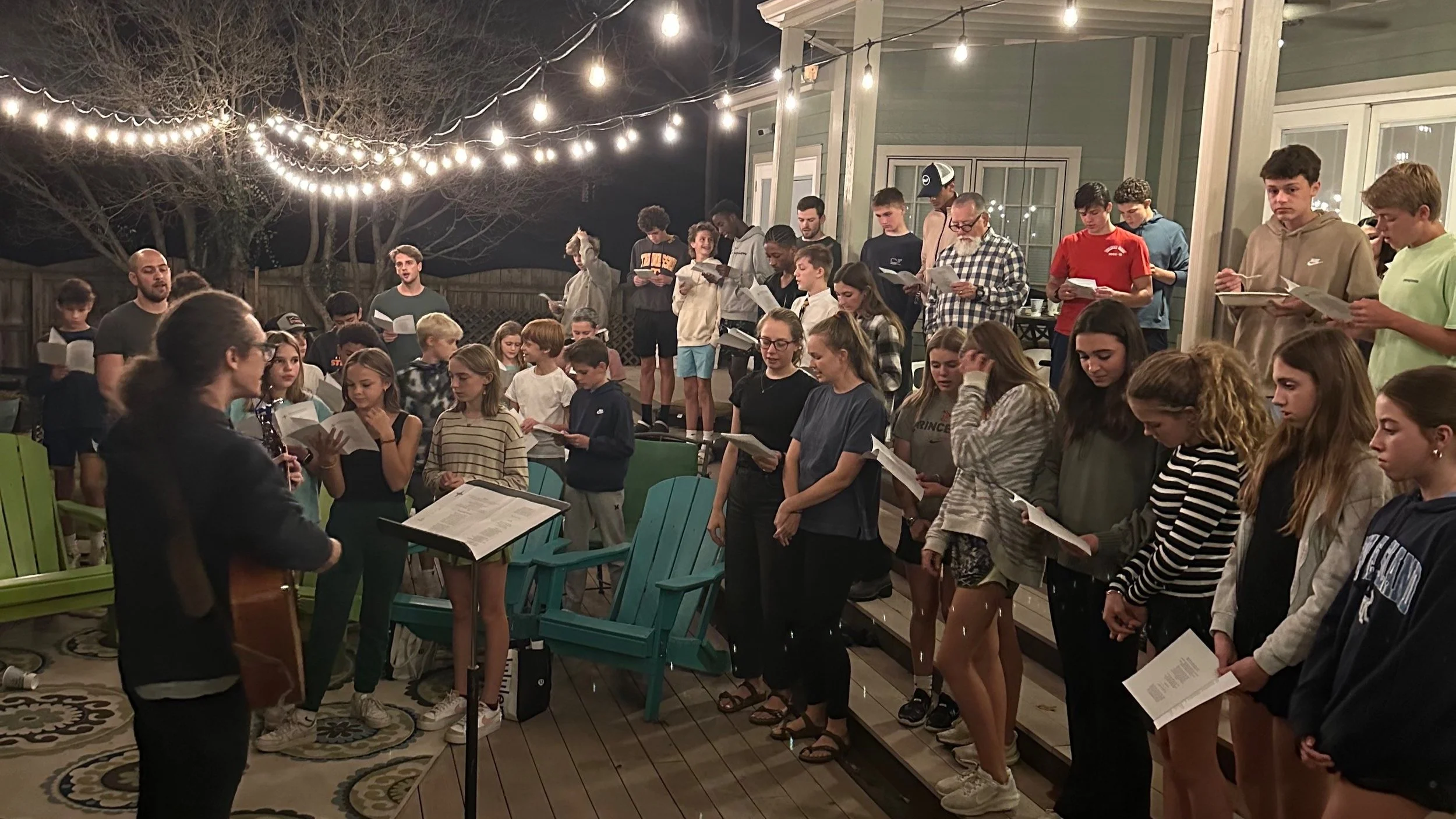
Spring Retreat! Tell All Stones We’re Going to Make a Building
As I greet our students each week on their walk into our homes, I witness a quiet miracle as they move from the dark silence of the street and settle into the bright noise of fellowship. This miracle is the assembly of a spiritual house, as one by one the stones are gathered and find their place among the others.
As I greet our students each week on their walk into our homes, I witness a quiet miracle as they move from the dark silence of the street and settle into the bright noise of fellowship. This miracle is the assembly of a spiritual house, as one by one the stones are gathered and find their place among the others.
In his first letter, this is how St. Peter illuminates the meaning of the church: a spiritual house made up of living stones (1 Peter 2: 4-5). The stones are those who believe in Christ, and the house is the dwelling place of God built on the cornerstone who is Christ.
But there is a long-standing temptation to mislocate this purpose—to be the place where God dwells—as if someplace else was meant for that.
We miss this purpose, in part, because we can’t believe it’s true. That God — who we confess is above all things and created all things — would draw so near as to dwell in us is beyond what we could ask or imagine of being human. How could this be? How could the Creator of the stars be housed in the hearts of a tiny people among them? It is also true that we resist the nearness of God. It is difficult to allow him near, just as it is to allow ourselves to be known by those we love.
For all of these reasons, we need to be restored to the purpose for which God made us.
As we prepare for our spring retreat, consider that this is one of the instrumental ways that God restores our purpose. One of the great gifts of a retreat together is unbroken fellowship. Minutes that turn into hours that turn into days. Where a thought leads to a comment which leads to a conversation which leads to an expression of trust which make bonds that forge lasting friendships. Retreats are one of the places where we learn to dwell in the house of the Lord together.
So as our spring retreat approaches, I invite you to tell them—tell all the stones we’re going to make a building. Tell them they have a place in that house. And not just a place, but that they are a part of building it.
Then sign them up.


The History & Significance of Nursery Childcare Staff
Today, as an 8-year-old parish, we are blessed with more babies than ever before. Looking back on our childcare staff, I’m thankful for the leadership team that made the early decision to address the needs of our nursery. What started as a practical solution to an overcrowded nursery has become a beautiful partnership that supports our mission of creating a space where families with young children can find belonging in our church community.
In the last blog post, we highlighted the work our volunteers do each Sunday in our nursery. But they aren’t alone in creating a welcoming space for our youngest members. At Redeemer, we also have a dedicated childcare staff who help care for our little ones during both the 9:00 a.m. and 11:00 a.m. services.
I am deeply grateful for the partnership between our volunteers and childcare staff. The spiritual guidance our volunteers provide, paired with the practical support of our childcare team, enables us to faithfully fulfill the work God has entrusted to us in caring for the babies in our parish. As our parish continues to grow, I want to share more about the history and importance of our childcare staff and give you a glimpse into the work these women do each Sunday.
History of the Childcare Staff at Redeemer
In the early days of our church plant, children (especially those under age 3) were a large percentage of our parish. With only one service and a limited number of adults, our leadership decided to hire a paid childcare staff to better meet the needs of our growing congregation. This allowed more adults to attend the service, supported other volunteer roles, and brought much-needed stability to the nursery.
Today, as an 8-year-old parish, we are blessed with more babies than ever before. Looking back on our childcare staff, I’m thankful for the leadership team that made the early decision to address the needs of our nursery. What started as a practical solution to an overcrowded nursery has become a beautiful partnership that supports our mission of creating a space where families with young children can find belonging in our church community.

Three Ways Our Staff Supports Our Nursery
Our childcare staff at Redeemer is responsible for caring for the physical wellbeing of children in the Redeemer Nursery while assisting Redeemer volunteers and staff with the general schedule and rhythms of a Sunday morning. Within those duties, there are three primary ways that our staff supports our nursery.
Capacity
Our nursery cares for a large number of babies each Sunday. If all our regular attendees were present at a single service, we could care for over 50 babies! To ensure each child receives proper attention, we maintain a 1:3 adult-to-child ratio, which requires many staff members and volunteers. Over the past year, we’ve seen an increase in younger babies, particularly those between 6 months and 1.5 years old. As a result, our staff often needs to engage with babies individually rather than in larger groups. To provide this hands-on, individual care, we rely on a significant number of people in the room.
While we have the privilege of having volunteers each week, the number of volunteers required to cover both services without childcare staff members would be equal to the total volunteer number needed for all our older Redeemer Kids classes. Many people have asked me if we could run the nursery entirely with volunteers. While I believe God would provide if necessary, the main reason this isn’t the best option at the moment is that babies need consistent caregivers.
Consistency
Child development research shows the importance of consistent caregivers for babies to feel secure in their environment, especially at the ages when separation anxiety is at its peak. Each childcare staff member works about three Sundays a month for both services, allowing them to build strong, dependable relationships with the children. This stability helps babies feel more comfortable. When you watch the nursery drop-off, you’ll see me carefully choosing who to hand each baby to based on the relationships I’ve observed between the babies and our staff.
This consistency not only makes the children feel safe but also reassures their parents. Many parents feel anxiety during drop-off, especially when leaving their child in a new setting. For regular attendees, it gives parents peace of mind knowing their child is cared for by a familiar face who can provide personalized attention each week.
First Impressions
When a parent speaks with me at the nursery door and notices that the babies already in the nursery are calm, it creates a better first impression. Parents feel more at ease seeing babies who are settled and engaged with caregivers who know each child by name. This sense of trust makes parents more comfortable leaving their children in our care, allowing them to fully participate in the service and experience the community. This is essential in helping new families feel welcomed at Redeemer.
For all of us, participating in the service—singing with the congregation, engaging in the liturgy, taking part in Holy Communion, and greeting one another—are vital expressions of belonging. For parents, especially newcomers, the ability to participate is crucial in helping them feel at home. While it’s natural for babies and parents to feel some anxiety in a new space, a calm nursery with familiar caregivers is one of the best ways we can offer hospitality to parents with young children as they find their place in our church family.

The Result
The partnership between our childcare staff and volunteers is vital in creating a nurturing environment for our youngest parishioners. The history of our childcare team highlights how a practical solution evolved into a cornerstone of our ministry, enabling us to faithfully care for babies while supporting the spiritual life of our parish. As our church grows, we are incredibly grateful for their commitment, and for the ways they help further our church's dedication to fostering a sense of belonging for families with young children at Redeemer.
Grace,
Mikala Thompson
Assistant Director of Redeemer Kids

Let the Kids Come Along
Over the past few years of ministry, I’ve heard a common refrain from adults in our congregation who are new to the practices of our church, either Anglicanism or Christianity altogether, that they feel a reluctance to fully engage in what Redeemer is up to that season. They want to spend some time observing before they try out a new practice or attend a new kind of service. Perhaps more honestly worded, they want to gain more information before they run the risk of not being good at something new. What naturally flows downstream of this hesitation is that they wait to bring kids into a spiritual practice until they are able to articulate their decision well.
Recently, I was sitting on the couch in my living room with my seven-year-old, helping him wade through his little to-do list, like every evening. I will admit that I can do a poor job hiding the fact that I have barely enough patience to knock out my adult task list, let alone nudge/guide/drag my kids through their own; but there I was, faking positivity and half-zoned out as we barreled through his evening work. We were wrapping up the last one, running through this memory verse:
“And behold, a lawyer stood up to put him to the test, saying, 'Teacher, what shall I do to inherit eternal life?' He said to him, 'What is written in the Law? How do you read it?' And he answered, 'You shall love the Lord your God with all your heart and with all your soul and with all your strength and with all your mind, and your neighbor as yourself.' And he said to him, 'You have answered correctly; do this, and you will live.'”
Luke 10: 25-28
He did a decent job with it, needing a few prompts along the way. I was seeing the finish line looming where I could release my squirmy son from the couch and maybe get a few minutes to scroll my phone before I started dinner. So close. Almost done…
“Is that true?”
I blinked at him. “What?”
“Is that true? Will people not die if they believe in Jesus?”
In characteristic Miles-fashion, this pivot from goofing off to considering the weight of his mortality was made as seamlessly as if he had just asked what’s for dinner. And in characteristic me-fashion, I was struggling to keep up with him.
What followed felt like a very messy review of the promise of salvation, the weight of death, and the gift of eternal life. It ended with his sobering confession of being confused about it all before a distraction stole his attention and he jumped off the couch laughing to go mess with his baby brother. He was gone.
I sat there, staring after him, still a bit stunned. I ran the conversation over and over in my head and wondered what I should have said. I feel this way a lot around children, to be honest. Their goofiness and preoccupation with the moment can deceive me so quickly into thinking that they are not engaging with matters of the eternal. But when I get glimpses into the inner workings of their souls, I’m in awe. They are much less likely to compartmentalize their faith like you and I are prone to do, jumping back and forth between the “sacred” and the “secular.” The spiritual world is not something so easily boxed up for kids.
Over the past few years of ministry, I’ve heard a common refrain from adults in our congregation who are new to the practices of our church, either Anglicanism or Christianity altogether, that they feel a reluctance to fully engage in what Redeemer is up to that season. They want to spend some time observing before they try out a new practice or attend a new kind of service. Perhaps more honestly worded, they want to gain more information before they run the risk of not being good at something new. What naturally flows downstream of this hesitation is that they wait to bring kids into a spiritual practice until they are able to articulate their decision well.
The problem is that spirituality is not a quantifiable skill. Rather, it’s a practice in partnership with the Holy Spirit where we submit our growth—and measure of success—to the Lord. Spirituality is not something we have to instill in children, it’s already there! In Matthew 18:2-4, Jesus calls us to be like little children to enter into the kingdom of heaven and to humble ourselves like a child in order to be great in his kingdom. Not only do we not have to be experts to lead children, but we have something to learn from them on the journey. There is value for everyone when the kids come, too.
As our parish is on the cusp of entering the season of Lent and Easter together, I want to urge both the volunteers in children’s ministry and my fellow parents at Redeemer to not only lean into the practices of the church seasons, but to let the kids come along with you. It’s okay if they aren’t being “serious enough” or you are afraid to use words or concepts they don’t know. This is a journey we are all on together, so take them along too. At your Shrove Tuesday feast, talk to them about fasting and confession, then try it out together the next day. Sit with them in an Ash Wednesday service and don’t shy away from questions about death. Pray with them to teach them how to give their questions to God, the trivial and the weighty alike. When Holy Week comes around, bring them to look at the Stations of the Cross artwork with you, to wash one another’s feet on Maundy Thursday, and to reverence the cross on Good Friday. Let them sit in the sober darkness of that week with you and don't try to hustle them through the discomfort too quickly. It will be tempting to soften this story for little ears, to play down the violence of the cross and the grief of the tomb; but I encourage you to speak words of life straight from Scripture and answer any questions with honesty and humility as you’re able. The pure joy of the resurrection is most vivid in the context of the horror that proceeded it, and I speak from first-hand experience that children are not only able to bear the weight of the full story, by the power of God, but crave it desperately. Then, when Easter finally arrives, teach them to rejoice! Show them that even when life isn’t easy or we aren’t in the mood for it right now, we rejoice anyway because this is something so much bigger than us. We rejoice as an act of defiance, even, in our broken world. We rejoice together because what Jesus did and is doing is so, so much bigger than us and our lives are more significant when they disappear into that Story.
I have seasons with my own sons when they ask questions about death, life, and God for which I have no answer. We have combed the Scriptures together and don’t find any easy answers, so we have to pray together and allow the mysteries to sit. We are still sitting together in those mysteries and probably will be until we are all together in His kingdom one day. We are all stumbling to the cross with our messy lives in hand this year, asking Him to carry our burdens and to give our struggles meaning.
Let the kids come, too.
Casey Cisco
Director of Redeemer Kids

How to Celebrate Shrove Tuesday with Your Small Group
This year, instead of throwing one big Shrove Tuesday party in the basement of 2715 Grove Ave. like we have done in past years, we are going to celebrate this feast in homes with our Redeemer Small Groups.
Redeemer Family,
The season of Epiphany is winding down and the season of Lent is nearly upon us. Lent begins with Ash Wednesday, which falls on March 5th this year. Plan to attend one of the Ash Wednesday services at 6:00 a.m., 1:00 p.m. (please note this adjusted service time), or 5:30 p.m. at 2715 Grove Ave.!
Now, some of you will know that the day before Ash Wednesday is historically a feast day in the church liturgical calendar that goes by a variety of names: Shrove Tuesday, Pancake Day, Mardi Gras, or Carnival.
If you are new to this tradition, take a look at this helpful article - Shrove Tuesday is a lot of fun!
This year, instead of throwing one big Shrove Tuesday party in the basement of 2715 Grove Ave. like we have done in past years, we are going to celebrate this feast in homes with our Redeemer Small Groups.
So depending on who you are, you might have some prepping to do:
If you are a Small Group leader, shift your gathering that week to Tuesday 3/4, communicate with the folks in your group, and divvy up the responsibilities. Who will bring the drinks? Who’s cooking food? Who is making dessert? Who might plan a game or two for the kids?
If you are a Small Group participant, it’s time to roll up your sleeves and help throw the party!
If you have been at Redeemer for a while and, for whatever reason, have not yet joined a Small Group, then now is the time to join! Contact Oldson Duclos, our Director of Community Formation, and he will help you find a group that fits your needs.
If you are relatively new to Redeemer, then you are invited to my house for a Newcomer’s Shrove Tuesday Feast! My wife Rachel and I would love to host you, get to know you, and help you get a bit more connected to our parish.
When March 4th rolls around, here’s a sample flow for the evening:
Fling Wide the Door: This is a great opportunity to invite friends, neighbors, co-workers, and others to come experience Redeemer’s parish for the first time.
Spread the Table: The host can provide some of the food and drink, but not all! This is a great chance for everyone to pitch in and bring something. Do we care if the dishes go together? We do not. Thai spring rolls with beef burgundy? Let it rip.
Toast the King: Hoist a glass to the master of the feast (that would be Jesus).
Throw Caution to the Wind: This is no time to be dainty. A second helping? Yes please! A third scoop of ice cream? Why not?
Make it Fun: If kids are present, start up some games. Have a pancake relay race or how-high-can-you-flip-it-and-catch-it-in-the-pan contest. Play Jenga with breadsticks or make art on your plate with partially eaten foods.
Conclude with Scripture: Read Isaiah 25:6-9 aloud together.
The contrast is part of the point.
One of the things that you will notice if you participate in a Shrove Tuesday feast followed by the Ash Wednesday service the next day, is the remarkable High/Low contrast. One day we are eating and drinking and making merry. The next day we are reminded that we are dust, and that to dust we shall return.
This dramatic juxtaposition throws the joys and sorrows of life into sharp relief.
Christ is with us in both.
This is how the liturgical calendar is a means of embodied spiritual formation. It gives us something to do that helps us become disciples of Jesus.
Redeemer family, I can’t wait to see the pictures and hear the stories of the parties you throw! And new folks, see you at my house. Come hungry!
In the Father’s love,

Preparing for Lent
Redeemer Family,
We are in still in Epiphany, but Lent is coming soon (March 5th), and it is such an important season that it warrants some forethought and preparation. For those of you unfamiliar with Lent or in need of a refresher, keep reading!
“The practice of Lent is a means of grace, but grace itself is a mystery that grips us however buttoned-up or sloppy our Lenten practice is.”
-Tish Harrison Warren
Redeemer Family,
We are in still in Epiphany, but Lent is coming soon (March 5th), and it is such an important season that it warrants some forethought and preparation. For those of you unfamiliar with Lent or in need of a refresher, keep reading!
What Is Lent?
Lent is a 40 day period of Christ-centered devotion between Ash Wednesday and Easter Sunday. The practice of Lent has been observed by Christians around the world since the early centuries of the church.
Why Practice Lent?
The most important reason to practice Lent is to draw near to Jesus Christ and become like him. Lent is a season of intentional discipleship under Christ and with Christ. We also practice Lent to bond more closely with fellow Christians who are on the same journey, not only in our local church but also around the world. Along the way, our sin and enslaving habits are put to death, and we learn to internalize and share in Christ’s resurrection power.
We Practice Lent Together, Not Alone
To the extent that you are able, practice Lent with your church family. Begin with an Ash Wednesday service and receive the sign of the cross on your forehead - reminding you of your own mortality. Participate in a Small Group and discover that you are not alone in your struggle. Remember to keep the balance between fasting and discipline on Mondays-Saturdays and feasting on Sundays. Plan ahead for Holy Week so that we can walk through Maundy Thursday, Good Friday, and Easter Sunday together as a church.
What we hope you’ll find is that, as we enter into these practices together, God’s grace for us is more abundant than we previously thought. We’ll try together and we’ll fail together, then we’ll confess our sins together and be forgiven together. When we come out on the other side, into a bright Easter morning, we’ll find ourselves closer to Christ and closer to each other.
What Specific Practices Do We Take Up During Lent?
In an age of endless tailoring and individualizing, consider keeping Lent the same way Christians have throughout history and around the world. Resist the natural impulse to think of yourself as special, and therefore requiring a specialized version of Lent. What makes you special is God’s love for you, not your particular struggles. So here is a simple list of ways that many millions of Christians will keep Lent this year. You are invited to join us.
PRACTICES OF EMBRACE (NEW THINGS TO TAKE UP)
PRAYER: Set aside more time to pray than usual. Consider pausing to kneel in prayer three times daily: morning, noon, and evening.
SCRIPTURE: Read the Bible with special attention: consider replacing a meal with scripture reading to remind you that you "do not live on bread alone, but on every word that comes from the mouth of God.” - Matthew 4:4
CONFESSION: Practice confessing your sins aloud to a priest, deacon, or otherwise qualified spiritual father or mother in the church.
SILENCE + SOLITUDE: Practice the foundational spiritual disciplines of silence and solitude.
GIVING: Give more away than you usually do.
To give directly to Redeemer, click here.
SERVING: Volunteer time to visit and assist the sick, the prisoner, or the outcast.
Suggestions: Retreat Doctors Hospital, Richmond City Jail, the Virginia Home.
PRACTICES OF RESISTANCE (THINGS TO PAUSE)
FASTING:
Fast from sunrise to sunset on Fridays, or (if too difficult) abstain from meat on Fridays.
Give up sweets and alcohol, except on Sundays, which are feast days.
Fast the whole day on Ash Wednesday and Good Friday.
DIGITAL LIMITS
Turn your phone completely off for 1 hour per day.
Turn your phone completely off for 1 day per week.
Remember, the purpose of keeping these spiritual disciplines during the season of Lent is to more fully enter into a season of preparation to remember the death of our Lord Jesus and to celebrate His glorious resurrection!
What Are Ways I Can Expect to Grow More Like Christ during Lent?
There are some themes that often arise when people describe their experience of practicing Lent, however this list is not exhaustive; God’s activity in your life cannot be predicted or controlled.
Humility – Humility is the capacity to recognize who we are in relationship to the living God. The path of Lent reveals our mortality, sin and limitations. Often, the Holy Spirit reveals personal and corporate blind spots during Lent. Our hunger pains, headaches and failures during Lent become living reminders of our great need for the salvation offered through Jesus Christ.
Reordered Loves – The gentle harness of Lent is designed to loosen our unhealthy attachments to creation (including food, drink, and money) so that we may enjoy a deeper bond to the Creator. We learn to internalize and enjoy the love of Christ during Lent.
Purity – Soren Kierkegaard said that “purity of heart is to will one thing.” During Lent, we see the incompatibility between our commitment to Jesus and our dabbling in idolatry. We confess our sins and thereby take hold of the forgiveness that is ours in the Gospel.
Joy – As we give ourselves to him in our suffering, Jesus Christ supplies us with a lasting spiritual overflow and the consolation of the Holy Spirit. This is to be distinguished from a spiritual high which cannot be sustained over time or during suffering. Easter Sunday and corporate worship during Lent grants us a taste of heaven.
Renewed Imaginations – As we progress through events of Ash Wednesday, the 40 days of Lent and the drama of Holy Week, see ourselves and the world as they are in God. The events of Jesus’ life, death and resurrection become for us a window into the new creation (otherwise known as the Kingdom of God) in which we can participate and from which we can receive a secure identity.
Dependence – During Lent, we unlearn the lie that we are self-made, self-contained individuals. We learn to draw upon the life of God and the bonds of affection with our fellow Christians.
A Word to Parents on Helping Your Kids Practice Lent
Rachel and I know firsthand how challenging it can be to introduce your kids to the traditions and practices of the church, especially when they are not immediately enjoyable. How can we help our kids understand the value of keeping Lent? How can we assist them in experiencing God’s love and grace, even in the midst of spiritual disciplines?
What follows is by no means a comprehensive take on practicing Lent with young kids, rather this is simply a collection of suggestions to help us get started (and perhaps an attempt at overcoming some of the fears and hesitations we might have).
Practice #1: No sweets Monday-Saturday, but feast on Sundays!
Explanation: This isn't easy, but at least it’s straightforward! No sweets for breakfast (sorry Sugar Shack Donuts), or lunch, or dinner.
Hope: That our children would learn the value of self-denial and sacrifice for God; that they would learn to prize Sunday and, through feasting, taste and see that the Lord is good.
Typical Kid Response: Lots of griping and complaining! Why do we have to do this? Why doesn’t God like dessert? I hate Lent! Our church is the worst!
Wise Parent Response: We’re not giving up sweets because they’re bad or because God doesn’t want us to have fun. We are remembering that these are good gifts from God and sometimes we forget that. Sometimes we forget that all the good things in life come from God. Kids, we’ll have dessert together on Sunday and let’s make it a good one! When we feast together on Sunday, it’ll be like a taste of heaven.
Side Note: Practice this as a whole family (i.e. parents, don’t go and have dessert after your kids go to bed). This gives you the resource of empathizing with your kids. “I know honey - I want dessert too, but we’re fasting together.”
Practice #2: “I’m sorry” Prayers.
Explanation: During family prayer time, whether in the morning around the dinner table, or before bedtime, focus on repentance - prayers that begin with the words, “Dear God, I am sorry….”
Pro Tip: Kneeling around a candle can help kids focus.
Level 2: Once you make prayer together as a family part of your daily habit, you might consider adding some liturgical structure around it. The Family Prayers found in the Book of Common Prayer are very helpful. Use them regularly enough and your kids will have them memorized after a few weeks.
Hope: That our children would learn to practice regular repentance, and through doing so, they would become more aware of their own sin and therefore more aware of their need for the Gospel.
Redeemer family, as Ecclesiastes taught us last Sunday, for everything there is a season. Let’s prepare our calendars, pantries, bank accounts, and hearts to keep the season of Lent together.
After all, Easter is right around the corner.
In the Father’s love,
The Definition and Purpose of a Vestry
Every March Redeemer members elect two members to join the vestry—our parish's governing body—for a three-year term. Any member in good standing can be nominated to serve on the vestry. If you are a member of Redeemer, we encourage you to prayerfully consider whom you might nominate for these important roles.
Every March, members of Redeemer elect new members to the Vestry—our parish's governing body. This year we are electing two new Vestry members. Any member in good standing can be nominated to serve on the vestry. If you are a member of Redeemer, we encourage you to prayerfully consider whom you might nominate for these important roles.
Nominations are open through Sunday, February 23.
Nominees will be presented on Sunday, March 2.
Voting will be conducted online the week of Sunday, March 9 through Sunday, March 15.
Thank you for your thoughtful and prayerful consideration.
The Nominating Committee of the Vestry
David Williamson
Rachel White
Matt Morgan
Jeromy Lewis
The Definition of a Vestry
What is a Vestry?
Our Vestry is an elected body of deeply committed, faithful lay members of the parish. The Vestry, under the leadership of the Rector, meets monthly to prayerfully steward the “temporalities” (i.e. material resources) of the church.
Demographics of a Healthy Vestry
It is desirable to have a well balanced Vestry that accurately represents the demographics of the congregation. A healthy Vestry is composed of both men and women, young and old, single and married, parents and non-parents.
Characteristics of a Good candidate for Vestry
A good candidate for the Vestry is a deeply committed, faithful, prayerful follower of Jesus and confirmed member of Redeemer. He or she does not need to be successful, influential, or impressive. He or she does not need to be an expert in the Anglican tradition. A good candidate wants to be on the Vestry in order to serve, not to be important or to try to impose their will on the church.
Expected Time Commitment
Not everyone will have the time to serve on the Vestry in every season of life. In addition to one monthly meeting on a weekday morning for three years, Vestry members will be expected to serve 2-3 additional hours per week on Vestry-related tasks. Vestry members will also attend a one-night annual retreat.
Process for Submitting Nominations
Prayer: This is a process that needs to be saturated in prayer.
Please submit your nominations here.
The Purpose of Redeemer's Vestry
Safeguard the Vision
The Vestry’s primary role is to protect the stated vision of the parish. Each member of the Vestry should be able to articulate and safeguard the primary visionary direction of the congregation. They should each know and believe the answer to this question: What is it we are trying to do here?
Insure the Values
While the Vestry may know the direction and what they are trying to do as a parish, the Values question is this: How are we actually trying to live out our vision? What are the means and programs by which we are working toward our Vision? Where do we focus our efforts? What are we going to do now?
Uphold Financial Integrity
The Vestry is also charged with protecting the financial integrity of the church. Through a designated Finance team, the Vestry should scrutinize the finances on a monthly basis. They should provide for an annual audit of all funds; approve budgets and make routine reports to the congregation. They should approve long-term financial contracts and basically act as guardians of the financial life of the parish to insure that the church has a long-term future and is operating in a trustworthy way with all funds that have been given or borrowed.
Support the Rector
Supporting the Rector is the fourth key role of the Vestry. If the Rector is the main agent in accomplishing 1, 2, and 3 above, then the Vestrys’ primary role then is to help the Rector accomplish these things. Vestry leadership is never honorary; they are not rubber stamps for what the Rector decides is best. But they are not either to be ‘devil’s advocates’, the loyal opposition, or representatives of any special interest groups or programs in the parish. The Vestry has one job in a sense: help the Rector to lead the parish in 1, 2 and 3 (above) and support him however they can.
Model Sacrificial Giving
The final role of the Vestry is to model sacrificial, tithe-based giving to the parish. The Vestry should be among the most generous and financially committed members of the church. Why? Obviously, the leadership should never ask members to give beyond their own willingness to give; their own personal level of commitment. Leaders lead in every area, but the Vestry should be strong givers because people who are sacrificial givers…tithers…have usually discovered in themselves a heart of generosity that will help create a parish-wide culture of generosity in the years to come.*
*Language borrowed from our friend The Rev. David Rosenberry.

What Does Practicing a Reordered Imagination Have To Do With Redeemer’s Search for a Building?
The first bit of underlying logic motivating our Epiphany series is the conviction that we human beings live out of our imaginations. Many of you have heard me say this before and I have written elsewhere, “From the imagination springs desires; from desires flow actions, which over time wear grooves into habits; from habits develop beliefs that justify; and from beliefs come doctrine.”
We are homo imaginari.
The second bit of underlying logic is the conviction that our imaginations can be molded, shaped, and changed by our practices. The human imagination is dynamic, not static.
Therefore, our practices (especially the ones we take for granted) are of profoundly deep importance to the spiritual wellbeing of our souls.
Now, what does all this have to do with Redeemer’s search for a building?
Redeemer family,
Two weeks ago, we launched into an Epiphany sermon series on Practicing a Reordered Imagination. Thus far, we have contemplated:
In the coming weeks, we will examine:
Beholding - The Gaze of Our Eyes
Food - The Fruit of the Ground
Time - Temporality & Transcendence
Embodied Attention - Digital Limits
Narration - Restored Through Story
Eucharist - The Mystery of Presence
The first bit of underlying logic motivating this series is the conviction that we human beings live out of our imaginations. Many of you have heard me say this before and I have written elsewhere, “From the imagination springs desires; from desires flow actions, which over time wear grooves into habits; from habits develop beliefs that justify; and from beliefs come doctrine.”
We are homo imaginari.
The second bit of underlying logic is the conviction that our imaginations can be molded, shaped, and changed by our practices. The human imagination is dynamic, not static.
Therefore, our practices (especially the ones we take for granted) are of profoundly deep importance to the spiritual wellbeing of our souls.
Now, what does all this have to do with Redeemer’s search for a building?
If Winston Churchill was correct when he said, “We shape our buildings, thereafter they shape us,” then the location and shape of Redeemer’s future building will have an immensely formative effect on us. We will choose and shape a building, and thereafter the building will shape us.
And so as we pray and seek the Lord’s guidance and provision for a building, what sorts of things might we ask of our Heavenly Father?
We might ask for a building that is affordable and functional. Yes and Amen.
But we might also ask for a building that, location-wise, places us in close proximity to neighbors who are in need of the hope of the Gospel. Few things will shape a missional imagination more than regularly experiencing missional encounters with neighbors who do not yet have faith in Christ.
We might also ask for a building with a kind of beauty that points us to the beauty of God and hospitable architecture that points to the hospitality of God.
As we evaluate various potential buildings, one of the most important questions we can ask (after “Can we afford it?” and “Does it have the space we need?”) is “What kind of people would this building shape us to be?”
Redeemer family, I met with our Search Team this morning and I’m so grateful for the wisdom and expertise of the people on this team. While we don’t have any concrete updates for you as of yet, I am encouraged by how the process is going.
Let’s continue to pray together for the Lord to provide whatever building He deems best for us.
In the Father’s Love,
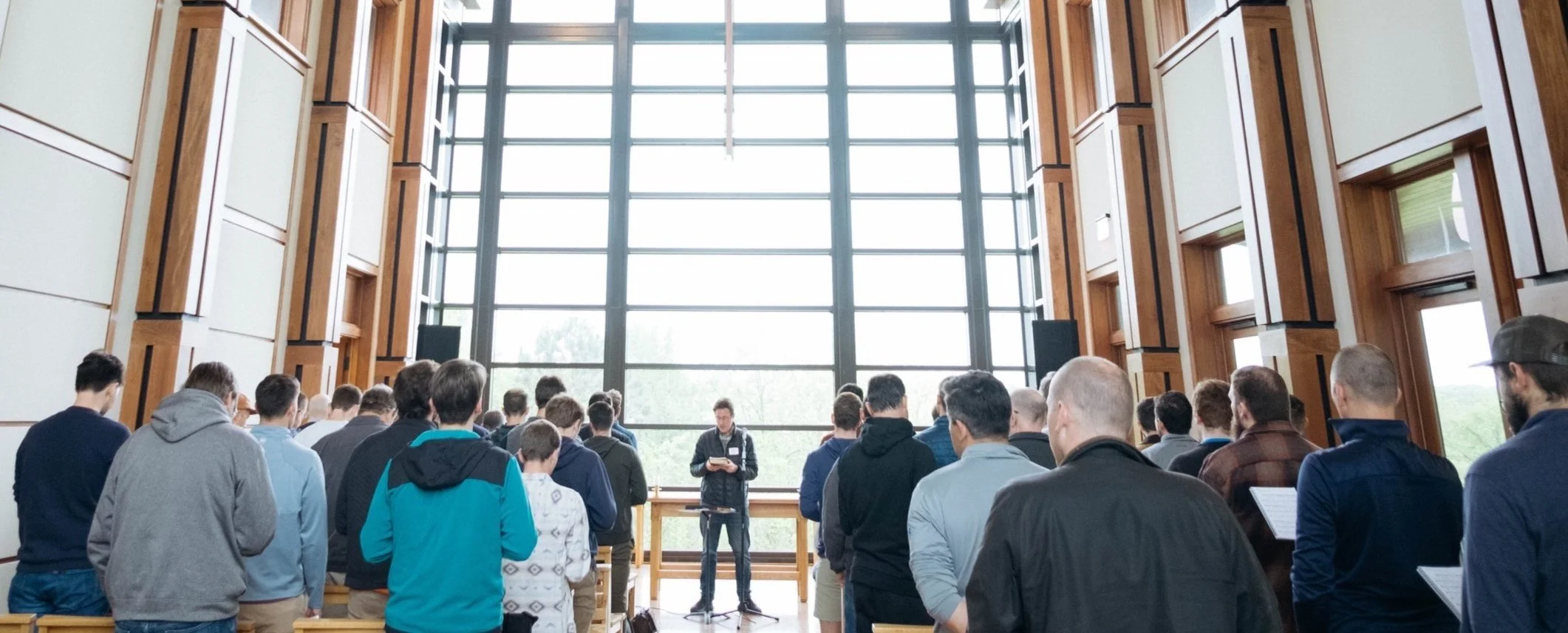
Join a Retreat This Spring
Jesus often withdrew to quiet places and prayed (Luke 5:16), even amidst the busiest moments of his life. He didn’t allow the stress — or success! — of his work to outweigh his need to break from his regular rhythms and get away to spend time with his Heavenly Father. We’d like to invite all of our Redeemer family to attend our Men’s or Women’s Fellowship retreats this spring. Each will have some good biblical teaching, conversations for connection and encouragement as we listen for God’s direction, and plenty of time for rest and play.
“When should I make a retreat? When there is no time to do it, that’s when you most need to unclutter the calendar and go apart to pray. When the gridlock of your schedule relentlessly forbids it is the time you most need a retreat. That is when your heart beats against the prison walls of your enslavement and says, “Yes, Lord, I want to spend time with you.””
Jesus often withdrew to quiet places and prayed (Luke 5:16), even amidst the busiest moments of his life. He didn’t allow the stress — or success! — of his work to outweigh his need to break from his regular rhythms and get away to spend time with his Heavenly Father. We’d like to invite all of our Redeemer family to attend our Men’s or Women’s Fellowship retreats this spring. Each will have some good biblical teaching, conversations for connection and encouragement as we listen for God’s direction, and plenty of time for rest and play.
Both retreats will be at the Roslyn Retreat Center. Though it’s a short drive from the city limits, we encourage you to do all you can to stay overnight. Interrupting a two-day retreat with a night back home is like walking away from a newly lit fire just after the spark has caught. When you return, even if you’re gone for just a short time, you’ve lost some momentum and will likely have to start over again. The tasks and concerns awaiting us at home come rushing back. Those who do stay overnight know the gift of unhurried conversations where old friendships are deepened and new friendships are made in a way that is much harder to do when everyone is scattered in their different every-day routines. Come retreat with us!

“I have attended the Women’s retreat the past few years and have found it to be such a spiritually and relationally enriching time. Even though I live close by, I’ve chosen to stay the night and have loved the extra time in fellowship with others. Staying overnight helps the retreat to feel like a real getaway and a reset from the busyness of life.” Becca Goodall
“I believe in sleepovers. There is something powerful about stepping away from the demands of daily life and fully entering into the content, rest, and fellowship offered in a retreat. In a culture more interpersonally isolated than ever, we can proclaim the goodness of the incarnation to one another as we offer our presence for 24 hours. Is your bed more comfortable? Probably. Is your coffee better? Definitely. Is it beneficial for you and our parish to invest in time away together? Absolutely. Intentionally doing life together may bring us out of our comfort zones, but it provides a beautiful context for embodied connection. Our lived experience of the Word becoming flesh and dwelling among us creates a place where our stories can be held. As Curt Thompson says, these encounters weave "a community of disparate people into the tapestry of God's family." We desire to become that together. Please consider this my most sincere invitation to join us overnight at the beautiful Roslyn Retreat Center, where we will practice the goodness of being known together.” Lindsay Fauver
Is Christmas a Family or Church Holiday?
The answer to this question has undergone a dramatic shift in the past few decades. For hundreds of years the answer was a quick and easy “church holiday.” What else could celebrating the birth of our Savior be? Of course, there were family celebrations that often accompanied Christmas church celebrations, but these were understood to be secondary.
Is Christmas a Family or Church Holiday?
The answer to this question has undergone a dramatic shift in the past few decades. For hundreds of years the answer was a quick and easy “church holiday.” What else could celebrating the birth of our Savior be? Of course, there were family celebrations that often accompanied Christmas church celebrations, but these were understood to be secondary.
However, as surely all of us now recognize, the increased emphasis on family gift-giving and the overall decreased cultural acceptance of church participation has led to a quiet, but devastating swap. First the nuclear family rose to the #1 spot on the priority list for Christmas celebrations, then the church fell from #2 to basically dropping entirely off the charts all together. For many of the older generations, Christmas (along with Easter) was considered one of the most important days of the year to attend church (even if you skipped almost all the other days). However, for the younger generations, the idea of attending church on Christmas now sounds terribly inconvenient. It’s becoming normal, even amongst sincere Christians, to participate in worship on most days except Christmas.
What is fascinating about this shift is that it hasn’t produced the feelings and enjoyment of Christmas that it promised. Rather than Christmas celebrations being more fun and meaningful because they are no longer interrupted by “having to go to church,” many people are finding their Christmas celebrations empty and devoid of real meaning. Aside from ordering each other gifts online, eating a ton of unhealthy food, arguing about politics, and watching TV together… what is this even about? What is the point?
One of the most common refrains from Christians who are discouraged by the commercialization of Christmas is, “How do we keep Christ in Christmas?” The answer need not be a mystery - or rather, the answer lies in returning to the mystery. The best possible way we can enjoy the rich meaning and purpose of Christmas, the highest-impact thing we could do to “keep Christ in Christmas,” is simply to worship the Lord Jesus with our church family. Let’s gather together to wonder at the mystery of the incarnation - God has become a man. What a marvelous mystery this is!
Friends, if you are physically able, let’s gather together for worship on both Christmas Eve and Christmas Day. We can do this and celebrate with our families - and I think we will find that each enriches the other. I’ll see you there.
In the Father’s Love,
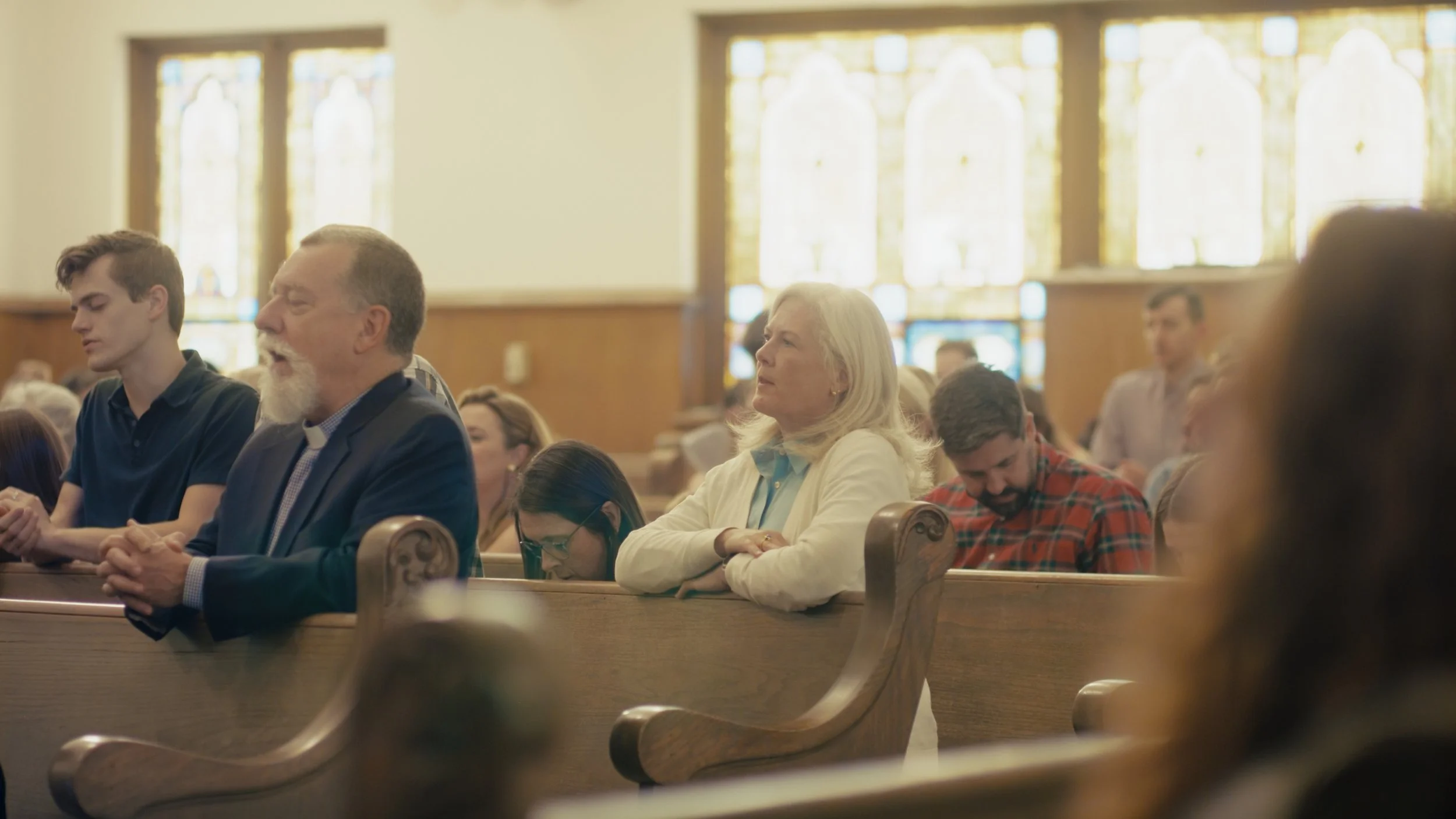
A New Way to Begin Sunday Worship for Advent and Christmastide
During the seasons of Advent and Christmastide, we will begin our worship services on a more contemplative note to help our hearts, minds, and bodies prepare.
Dear Redeemer Family,
During the seasons of Advent and Christmastide, we will begin our worship services on a more contemplative note to help our hearts, minds, and bodies prepare.
Here is the new flow, beginning at 8:55 a.m. and 10:55 a.m.:
Five-minute musical prelude. A time to sit or kneel, be still, and reflect.
A bell chimes three times, calling us to worship the triune God, Father, Son, and Holy Spirit.
Ten seconds of silence.
A poetic invitation is read aloud.
The processional song begins and the service continues as usual.
The Advent season is not merely preparation for the celebration of Christmas (although it certainly is that), it is also preparation for the return of the Lord Jesus to judge, renew, and restore all things. Therefore, in keeping with the theme of preparation, let’s lean into this new (actually, quite old) way of beginning the worship service.
What does this require of you? Arriving 10 minutes before the service begins. So, 8:50 a.m. before the 9:00 a.m. service and 10:50 a.m. before the 11:00 a.m. service. For some, this may be too much of a stretch and we understand. However, if you are able, give it a try!
I’ll see you tomorrow as Redeemer turns 8 years old and we begin a new church year.
In the Father’s Love,

Keep Advent Weird
If you're tripped up by the apparent false start of Advent, you're in good company. Christians do New Years weird. We don't start with fanfare and champagne; we kick off with minor keys and cries from “lowly exile.” Tish Harrison Warren notes that part of the usefulness of Advent is to “make Christmas weird again, to allow the shock of the incarnation to take us aback once more.” I like this because the Incarnation of the Son of God is nothing less than an earthquake, and it should strike us as such.
Dear Friends,
If you're tripped up by the apparent false start of Advent, you're in good company. Christians do New Years weird. We don't start with fanfare and champagne; we kick off with minor keys and cries from “lowly exile.” Tish Harrison Warren notes that part of the usefulness of Advent is to “make Christmas weird again, to allow the shock of the incarnation to take us aback once more.” I like this because the Incarnation of the Son of God is nothing less than an earthquake, and it should strike us as such.
Our problem is that we tend to get comfortable with strangeness. We lose the wonder. We drag glory down and call the holy works of God “normal” when they are anything but. We live in miracles.
Our Youth Fellowship is working to keep the Incarnation strange by spending a few weeks of Advent getting stuck on the miracle of God becoming man. This week we are talking about the meaning of the Incarnation, and we'll focus on one verse from 1 John: “In this the love of God was made manifest among us, that God sent his only Son into the world, so that we might live through him” (4:9).
Not only does John offer the Incarnation as the proof of God's love, he also points to God's final purpose in it: so that we might live through him.
An easy way to lose the wonder is to forget prepositions. Christ did not come so that we could live next to God, near God, or even under God. Jesus took on flesh so that we could live through him. “In” is another appropriate preposition Scripture uses.
St. Athanasius, boldly flirting with blasphemy to underscore the glory of the Incarnation, put it this way: “For the Son of God became man so that we might become God.” This statement should startle you. But the apparent overstatement helps us to get the shock: If we think that Jesus came to give us any other life than his very own, we've missed the Gospel. Scripture is clear: we live in Christ. Not beside him. Not across from him. But in him. Again, we live a miracle. In taking on human form, Jesus has made us “partakers of the divine nature” not bystanders of it (2 Peter 1:4). How is that for weird?
Happy waiting,
Director of Youth Fellowship

Leading with Christian Friendship
“I come to see my friends.”
It was a tentative answer preceded by silence and knowing glances. I had just asked our students, “Why do you come to Youth Fellowship?” I think they all wondered if Christian friendship was a sufficient answer.
Even if it’s not everything, it’s a perfect start.
“I come to see my friends.”
It was a tentative answer preceded by silence and knowing glances. I had just asked our students, “Why do you come to Youth Fellowship?” I think they all wondered if Christian friendship was a sufficient answer.
Even if it’s not everything, it’s a perfect start.
Christian friendship in no way falls short of God’s desires for us. It is at the heart of the gospel. While we were still sinners, Christ died to reconcile us to God. Friendship is one of the graces of faith. Friendship with God was accorded to Abraham, the father of our faith, and it was the name Jesus gave to his disciples before he went to the cross when he said they they were no longer called servants but friends (John 15:15).
I am so grateful that friendship marks the experience of our students within our ministry because we also lead with it.
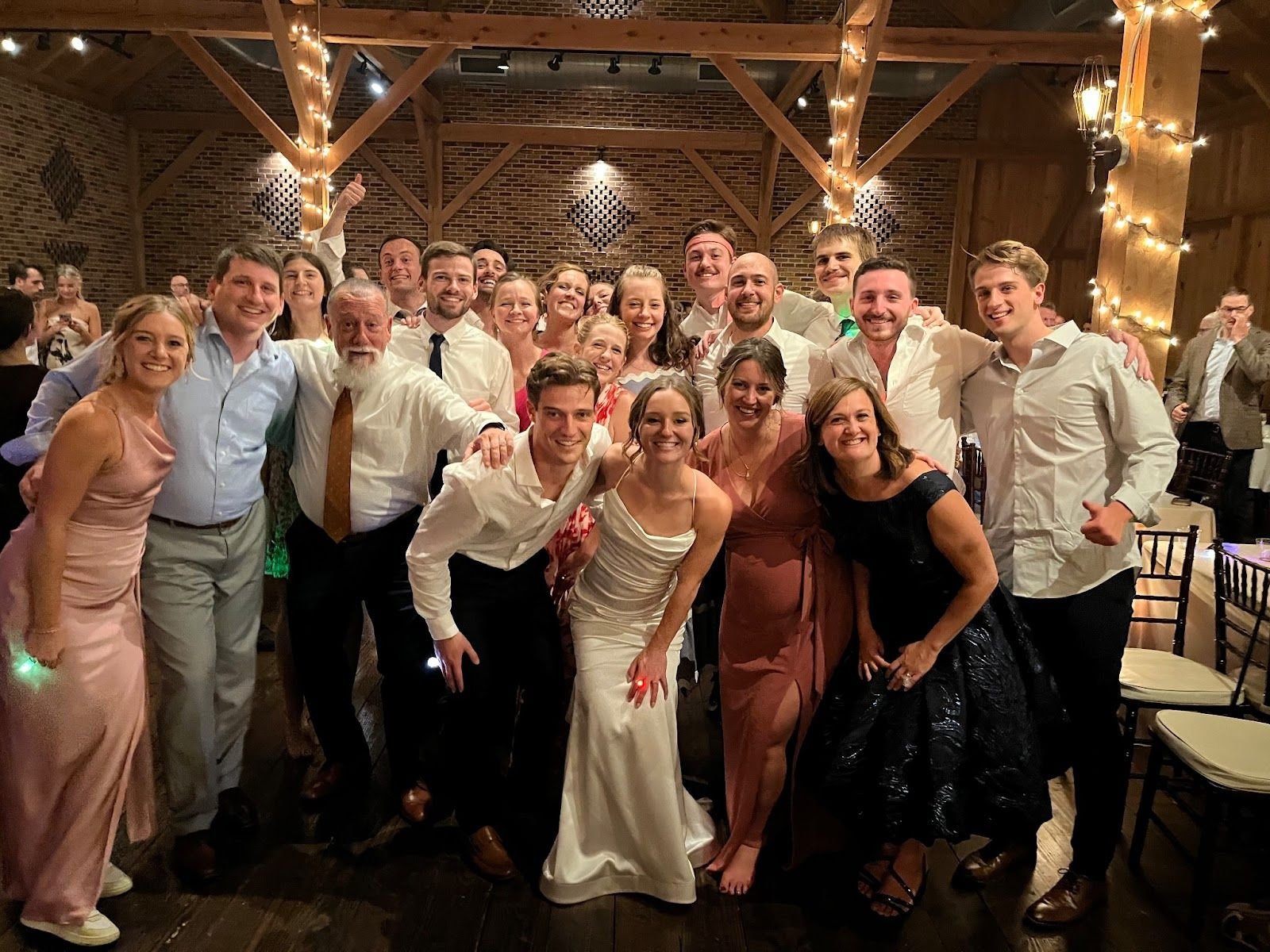
This picture tells a wonderful story of Christian friendship that God has been working in for years through the fellowship of Redeemer Anglican Church. It is our Youth Fellowship team celebrating the wedding of Natalie Gillisse and Jake Davis.
Four years ago, we were largely strangers to one another who began serving the students of Redeemer. Now we are friends – good friends. The kind of friends that make up your wedding party. The kind of friends that you ask to be godparents after the birth of your child. The kind of friends that you hold in mind as you begin to plan your life. The kind of friends you pray and fast for as they are job hunting in Richmond.
Two of our leaders, Kate Ramsdell and Emily Murray, stood with Natalie as her bridesmaids. I (Christian) got to pray the blessing after Natalie and Jake made their vows. Our former worship leaders, Spencer and Meg Mamo, flew in from Colorado. Jake will also hold the honor of becoming the first leader we’ve ever recruited to our team through marriage!
We highlight these stories because we are always teaching our kids, even when we’re not trying. And one of the beautiful things that our Youth Fellowship team is modeling for your sons and daughters is the goodness and the potential for friendship in the Church as they become adults.
We want our kids to see the joy of serving Christ together as we serve his Body. We want our kids to see that coming together even after a long day at the office or the hospital or law school classes brings us life.
God has made us friends.
And so when you catch glimpses of the friendships that your sons and daughters are forging in our fellowship together, pray that the roots of these friendships will grow deep.
With Peace,
RETREAT TESTIMONY
It’s 3:55pm on Friday, October 18. Retreat weekend is finally here. Students begin to gather at the Parish House with duffle bags, backpacks, pillows (or pillow pets) and all those extra items that didn’t quite make it into the first round of packing. The energy of students greeting their friends and saying final goodbyes to parents bubbles to the surface. After circling the block twice and repacking to make more room in the van, we set off to Smith Mountain Lake. I hear the dull hum of conversation and laughter emanating from the backseat.

While the students look forward to a weekend to relax, fellowship with friends, and connect with their faith on a deeper level, I’m anticipating how God might use these relationships to draw us closer to one another and, in turn, to learn a bit more about His goodness. I’ve experienced a taste of His unfailing love in the mutual bonds of friendship developed with my co-leaders and I hoped to model Christ-like friendship to our students.
One of the joys of leading in this Fellowship is witnessing relationships formed in real-time. I had the opportunity to catch up with one of our 10th grade students, Riley Helms, to recap the weekend. She described the dynamic of that van ride to Smith Mountain Lake. She shared that being an “older” student on the retreat meant that younger students wanted her perspective and opinions. She said, “They were very much wanting all the details on [my life], but, at the end of the day, you have to know God before understanding how to love others.” She described her experience in Youth Fellowship like this, “It has strengthened friendships and helped me remember and relate to [these] girls a lot better. You are human and you feel these same emotions I feel.”
I’m struck by Riley’s wisdom. As I was focusing on what lessons I could impart on the students in our Fellowship, she was doing the work of the Gospel in the backseat of the van. She faithfully listened to younger students and pointed them to Christ – to have a relationship with Him as the ultimate priority. Wow! Riley spoke about the retreat as a “moment to relax” and yet she’s loving others through mere presence in our Fellowship as an image-bearer of Christ’s love for the least of these and the youngest in our Youth Fellowship.
“But if we walk in the light, as he is in the light, we have fellowship with one another, and the blood of Jesus, his Son, purifies us from all sin.” 1 John 1:7


What does it mean to be a nursery volunteer?
Over the past few weeks, several people have approached me about volunteering in the nursery. While they initially ask about logistics—arrival times, expectations, and so on—the conversation invariably leads to this question: "Is volunteering in the nursery just babysitting?"
Over the past few weeks, several people have approached me about volunteering in the nursery. While they initially ask about logistics—arrival times, expectations, and so on—the conversation invariably leads to this question: "Is volunteering in the nursery just babysitting?"
For many who grew up in church, the nursery was often seen as a place where babies were whisked away so their sounds, bodily functions, and general "baby-ness" wouldn't interrupt the flow of the service. After all, we have all experienced the harried local pastor or priest trying to talk over the din of screaming babies.
Alternatively, you might recognize a nursery as a place that provides a safe, developmentally-appropriate environment where babies can receive care as their parents have a break from caring for their children and can worship, listen to a sermon, and hopefully greet their neighbor before picking up their child from the nursery.
Whether you're in one camp or the other—or both—you're not wrong! A nursery provides a space where little ones and their parents can receive care. By entrusting their child to a volunteer or staff member, parents can receive a brief respite. And if it helps keep the parish priest sane, all the better! However, there's an even deeper dimension to our work, rooted in our beliefs about children and their relationships with God.
Our Beliefs About Children
Around Redeemer you will hear us saying, “We believe that children have a full spiritual life.” This life does not begin the minute they can fully form sentences, go to the bathroom independently, or regulate their emotions—it starts in the womb.
Multiple places in the Bible show us that God knows us in our mother’s womb.
“Before I formed you in the womb I knew you, and before you were born I consecrated you; I appointed you a prophet to the nations.” - Jeremiah 1:5
"For you created my inmost being; you knit me together in my mother's womb. Your eyes saw my unformed body; all the days ordained for me were written in your book before one of them came to be.” - Psalm 139:13–16
“Listen to me, O coastlands, and give attention, you peoples from afar. The Lord called me from the womb, from the body of my mother he named my name.” - Isaiah 49.1
Not only does God know us, but in some miraculous way, we can recognize Him. The Gospel of Luke describes when Elizabeth, pregnant with John, greets the pregnant Mary: "And when Elizabeth heard the greeting of Mary, the baby leaped in her womb. And Elizabeth was filled with the Holy Spirit." Elizabeth describes this event in Luke 1:44: “For behold, when the sound of your greeting came to my ears, the baby in my womb leaped for joy.” In this passage, John the Baptist knew and recognized his Savior while still in the womb, long before reaching any outward developmental milestones.
If we believe that God can meet our littlest brothers and sisters even in the womb, how much more should we seek to inhabit God's story with them, recognizing them as our “fellow heirs according to the promise”?


Tell the Story
Like us, these children are part of the same grand narrative of Creation, Fall, Redemption, and New Creation. On Sundays, we practice this reality through our liturgy and Holy Communion. In the nursery, we follow a similar pattern by remembering God’s story through reading books based on scripture, singing songs, and praying with and for these little ones.
As we care for these babies and pray in their presence, we are not only practicing our remembrance of God's story but also actively reminding these little ones that they have a place; they belong in God’s story and in the fellowship of the saints. Our prayers serve as a powerful instrument of spiritual formation—both for us as we strive to care for these little ones, and for the babies themselves.
Through partnership with parents in care and prayer, we consistently convey the message: "You belong!" This refrain echoes through the books we read, the songs we sing, and our commitment to praying with and for these families and their children. As we steward not just the physical needs of these babies, but their spiritual lives as well, we are participating in the work that God has already started in welcoming these smallest members into his family.

Join Us
So is serving in the nursery just babysitting? In one sense, yes! However, this doesn't mean something beautiful and holy isn't happening during our seemingly ordinary Sunday morning.
May we at Redeemer Anglican Church become a community where children, from the tiniest babies to the most energetic toddlers, hear the comforting refrain of "You belong! You belong! You belong!" May this resonate in every nursery volunteer's gentle care and in every prayer whispered over a child. As we nurture these young souls, may they grow deeply rooted in the knowledge that they have a place in God's story and in our church family.
If you'd like to volunteer in our nursery, I would love to meet with you. If you would like to support this ministry but can't serve on Sunday mornings, we invite you to pray for the children at Redeemer. Below, I've included one of the prayers from the Book of Common Prayer that our nursery volunteers pray on Thursdays.
"Watch over thy child N., O Lord, as his days increase; bless and guide him wherever he may be, keeping him unspotted from the world. Strengthen him when he stands; comfort him when discouraged or sorrowful; raise him up if he falls; and in his heart may thy peace which passeth understanding abide all the days of his life; through Jesus Christ our Lord. Amen"
Grace,
Mikala Thompson
Assistant Director of Redeemer Kids

Sacred Time and The Liturgical Calendar
“Church time is sacred time with a story. And in sacred time, memory, imagination, and meaning work together so we can celebrate the shared stories of God’s activity in human history by remembering them as though they were happening to us. Memory enables us to remember and recall the story; imagination enables us to relive it, make it new again; and meaning interprets and applies it to our actions.” – Young Children & Worship, Steward & Berryman
“Church time is sacred time with a story. And in sacred time, memory, imagination, and meaning work together so we can celebrate the shared stories of God’s activity in human history by remembering them as though they were happening to us. Memory enables us to remember and recall the story; imagination enables us to relive it, make it new again; and meaning interprets and applies it to our actions.” – Young Children & Worship, Steward & Berryman
If you’ve been around Redeemer Kids at all in the past couple of years, you’ve seen a giant piece of gray felt hanging in several of the kids’ rooms with what looks like a clock face on the front. Only instead of numbers, there are blocks of color that create a circle and a felt arrow that moves around that circle by ticking around the 52 blocks each week; it moves steadily and slowly like the minute hand on a watch face. This simple felt art on the wall is how we introduce the children in our ministry to the "sacred time with a story" we call the liturgical calendar, and it has become one of my very favorite lessons in the curriculum year.

This is one of the few lessons that sync up every room in Redeemer Kids on the same Sunday, and children who grow up in Redeemer Kids will hopefully know this story by heart by the time they finish 5th grade! Every year on Christ the King Sunday – the very last Sunday of Ordinary Time and the last green block of the long, long stretch of green blocks that make up half the church calendar – we break from our pattern of listening to Old Testament stories of judges, prophets, and temples to position ourselves for the transition into the New Testament in Advent. The stories of the Old Testament that the children have heard are put in the metanarrative of Jesus as King: the King who will rule over every mighty king in history and defeat the death and sorrow that plagued Creation from the moment Adam and Eve were cast out of the Garden of Eden. We will close the old year out by remembering that every story points to Jesus the King. Then in two weeks, on December 1st, the capital-C Church will celebrate the start of the Christian new year! Only instead of entering the new year with fireworks and parties, we enter quietly, somberly, and with rich anticipation. We enter the new year through Advent, the season of waiting and watching, remembering how the Israelites waited on the Messiah, and now we all await his second coming together. Our felt calendar-clock ticks to the purple blocks — four of them — where we watch them move steadily each week, lighting candles in our Advent wreaths as we go. While our culture gets noisy with parades and parties and presents, our little rooms at church get quiet.

“[The Church calendar] is a powerful means of shaping our lives around God’s one big unfolding story as laid out in scripture. Rather than our lives turning around our own agenda, it turns around Christ. Rather than being about my own achievements and acclaim, my life becomes about what God has done in Christ.” — "The Church Year" from God's Big Story
Time is a funny thing, especially for children. We say the Messiah is coming, the Messiah has come, and the Messiah is here, all at once. We say time moves in a line and in a circle. The language we use about time can feel disorienting instead of enlightening! The Church calendar invites us to use our collective memory and imagination to help each child, and the rest of us, find our place in God’s time together across centuries and continents. In the next couple of months, particularly the months of December through February, the church will move through three seasons of the liturgical year – Advent, Christmastide, and Epiphanytide. During those months there are tangible and compelling ways to draw our children into the story of the Gospel, "God's one big unfolding story": by lighting candles on wreaths in Advent, celebrating the Eucharist together on Christmas morning, witnessing baptisms in Epiphany, and so much more. Telling the story of our faith by the way we inhabit time together is a powerful tool to unify our congregation, old and young, with the ancient church and believers around the world.”
Casey Cisco
Director of Redeemer Kids

What is a Pre-Election Prayer Vigil?
As the presidential election draws near and tensions in our country run high, it would be wise for us, as the people of the living God, to draw together in prayer for the peace, justice, health, and flourishing of our nation.
Redeemer Family,
As the presidential election draws near and tensions in our country run high, it would be wise for us, as the people of the living God, to draw together in prayer for the peace, justice, health, and flourishing of our nation.
Therefore, I am inviting all of you (plus any friends, family, or neighbors) to a Pre-Election Prayer Vigil, 7:00 - 8:00 p.m. on Monday evening, November 4.
Now, here’s what this IS and what it IS NOT:
What the Prayer Vigil is:
Liturgical prayer and free, extemporaneous prayer.
Space for stillness and silence.
Seeking the Lord and His will for our nation together.
Crying out before God for peace, justice, good governance, and just laws.
Humility before the Lord Jesus who is our true King.
What the Prayer Vigil is not:
A time of teaching in which Redeemer weighs in on political candidates.
An attempt to convince God to elect whichever candidate we prefer.
A space to be passive-aggressive in our prayers where we pretend to talk to God but are really using our prayers to criticize people who are politically different from us (my personal favorite!).
(Note: If you are interested in leaning into this time a bit more, you might consider re-listening to this sermon I preached on Palm Sunday earlier this year: The Posture & Purpose of Jesus’ Politics.)
Redeemer family, I love you all and I’ve been so encouraged by the thoughtful, nuanced, careful way that so many of you are engaging the political process. Well done! Keep it up. Let’s move forward into the coming weeks as people who are truly and delightfully different from what we hear on the news and read online.
In the midst of stress, let’s be cheerfully unfazed.
In the face of outrage, let’s use gentle words to turn away wrath.
In the presence of fear, let’s remain confident in our God.
And no matter what may come our way, let’s continue to find ways to pray for, love, serve, and honor those who appear to be our enemies. All with the deep resource that is the grace and mercy of the Lord Jesus in the good news of the Gospel.
I’ll see you in the sanctuary at 2715 Grove Ave. on Monday evening, November 4. It will be a quiet, simple time for us to kneel before the Lord together on behalf of our nation.
In the Father’s love,
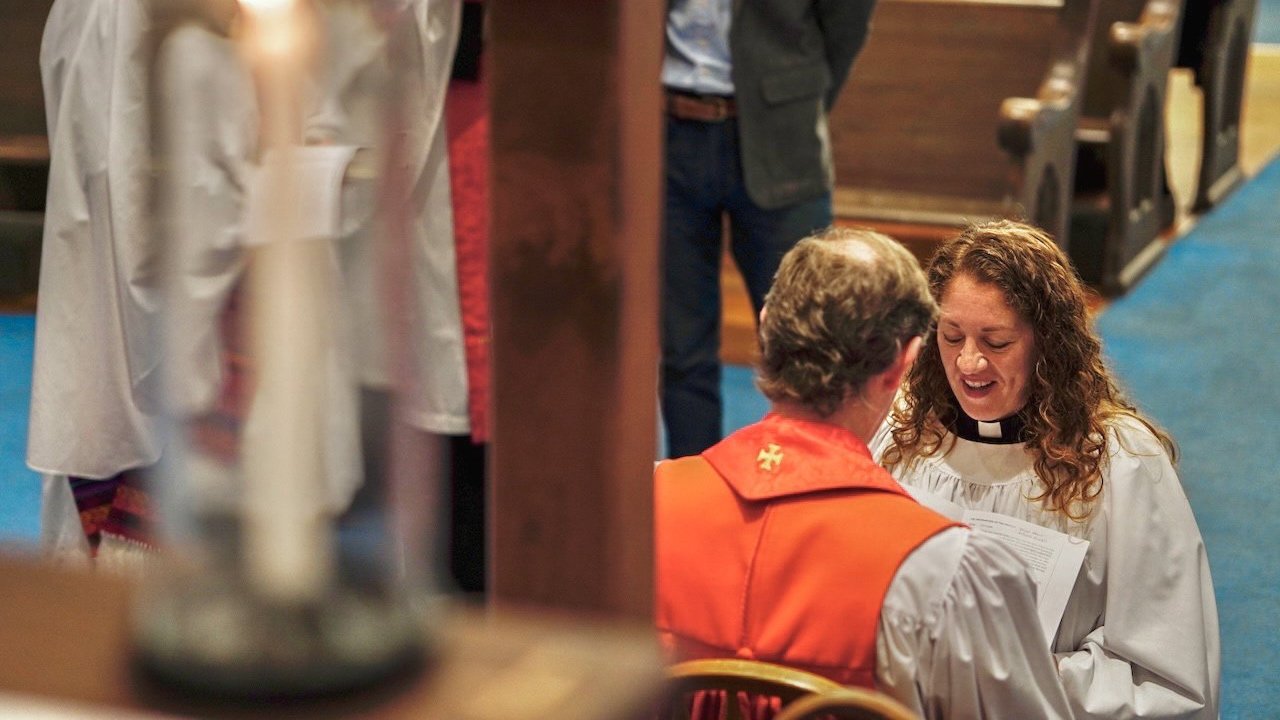
Clergy Development at Redeemer
During the Q&A portion of our Parish Town Hall last year, one of you asked me, very kindly, what sort of challenges our parish is facing. I answered that, amongst other things, a lack of ordained clergy to serve our parish was (and still is) one of the most difficult handicaps that Redeemer faces. While we have a fantastic team of people in leadership, both on staff and Vestry, we have very few ordained deacons and priests for a parish of our size.
Redeemer Family,
During the Q&A portion of our Parish Town Hall last year, one of you asked me, very kindly, what sort of challenges our parish is facing. I answered that, amongst other things, a lack of ordained clergy to serve our parish was (and still is) one of the most difficult handicaps that Redeemer faces. While we have a fantastic team of people in leadership, both on staff and Vestry, we have very few ordained deacons and priests for a parish of our size.
I want to give you a hopeful and encouraging update on this front! A number of our staff are in the ordination process and, Lord willing, in a few years' time, we may very well have A LOT more clergy to serve our parish.



The Rev. Steve Byrd, Deacon, ordained 2022.
The Rev. Ben Lansing, Deacon, ordained 2023.
The Rev. Lane Cowin, Transitional Deacon, will be ordained to the priesthood on November 9, 2024.
Will Clark, Has completed seminary training. Currently in the preparation stage, seeking ordination to the priesthood, will likely be ordained sometime between 2025-2027.
Oldson Duclos, Has completed seminary training. Currently in the preparation stage,seeking ordination to the priesthood, will likely be ordained sometime between 2025-2027.
Tee Feyrer, Currently in seminary, seeking ordination to the priesthood, will likely be ordained sometime between 2026-2028.
Of course, this only details our current staff who intend to stay at Redeemer. It does not include the following people:



The Rev. David Comeau, ordained 2021.
The Rev. Danny Hindman, ordained 2022.
The Rev. Lewis Lovett, ordained 2023.
These men were all ordained to the transitional diaconate and priesthood during their time at Redeemer before being sent out to plant All Souls Anglican Church (David and Danny) and Resurrection Anglican Church (Lewis).
INVITATION
In just a few weeks time on November 9, our Bishop, the Rt. Rev. Chris Warner, will be with us to ordain Lane Cowin from the diaconate to the priesthood. This is a great opportunity to celebrate not only what the Lord is doing in and through our sister Lane but also the way in which our God is faithfully raising up new servants to care for his Church.
Thanks be to God!
In the Father’s love,

Confirmation + Membership: A Way to Practice Belonging
On Sunday, November 10th, we have the joyful opportunity for you to be Confirmed by our Bishop and welcomed as new Members into the Parish. This is a wonderful event that takes place only twice a year, and is available to all who have been baptized and attended our Foundations class! I thought I’d take a moment to share a few details about what it means to take this important step in your faith.
“Why should I become a member of a local church?”
Over the years I’ve heard a number of well-intentioned and sincere objections follow this question like the following:
Membership feels exclusive, like some people are in and some are out. This isn’t very hospitable.
Membership feels too institutional, like the church is a club and not a family.
Membership means requirements and obligations which are anti-Gospel and anti-Grace.
It might surprise you to learn this, but I used to strongly agree with each one of these objections. However, over the years, my thinking has changed significantly and - rather than membership working against hospitality, family, and Gospel - I’ve become deeply convinced that membership actually facilitates each of these!
Here’s how:
1. Membership facilitates hospitality.
Luke 14:12-14. "He said also to the man who had invited him, 'When you give a dinner or a banquet, do not invite your friends or your brothers or your relatives or rich neighbors, lest they also invite you in return and you be repaid. But when you give a feast, invite the poor, the crippled, the lame, the blind, and you will be blessed, because they cannot repay you.'”
In Christ’s teaching, we are specifically instructed to open our doors and invite in those who are on the outside. This passage is not just about inviting in the poor vs the rich (though it is also about that), it is about extending hospitality to outsiders vs insiders. Now, if in the name of hospitality we say there’s no such thing as insiders or outsiders, then who will do the inviting and who will come to the party? You cannot invite others into the hospitality of God until you yourself have received the goodness of the Lord’s hospitality. You must be in before you can invite others in.
Once you are in, you realize there are others who are out - which puts you in the perfect situation to obey Jesus’ teaching on true hospitality. In this way, Membership (a formal and clear way of defining who is in and who is out) actually sets us up to obey the Lord, open our doors, and demonstrate real hospitality to others.
2. Membership makes the church more like a family.
1 Timothy 5:1-2. “Do not rebuke an older man but encourage him as you would a father, younger men as brothers, older women as mothers, younger women as sisters, in all purity.”
This passage instructs us to treat other people in the church like family. Then, our author (the Apostle Paul) goes on to give specific instructions about who to care for, how to care for them, and how to discipline people when they stray into sin. The assumption is, you can only operate as a family when it is clear exactly who is a part of the family. Paul is clearly not instructing us to treat all people like fathers, mothers, brothers, and sisters but rather the people who are a part of the church family. When such individuals stray into flagrant sin, they are (temporarily, and for the sake of encouraging repentance) removed from the church family. For this kind of familial love and discipline to work, there must be some sort of clear boundary line that delineates who is in the family and who is not.
Therefore, in order for the church to function like a family, we must know who, specifically, is a part of that family. The brothers, sisters, mothers, and fathers here is not meant to signify some abstract concept of warm relationships, rather we should be thinking of specific people. i.e. my brother-in-Christ Jeromy or my father-in-Christ David. Membership helps take us from the abstract to the specific in being a church family.
3. Membership showcases the Gospel.
Ephesians 2:8-10. “For by grace you have been saved through faith. And this is not your own doing; it is the gift of God, not a result of works, so that no one may boast. For we are his workmanship, created in Christ Jesus for good works, which God prepared before hand, that we should walk in them.”
“But Membership means requirements and obligations which are anti-Gospel and anti-Grace.” This is the one I hear most often. It is also the one to which I am, simultaneously, most sympathetic and which I disagree with the most strongly! I am sympathetic because it is absolutely true that the Gospel is the good news of the free gift of mercy and forgiveness won for us in the death and resurrection of the Lord Jesus. The Gospel is primarily about something God has done for us and not something that we do for God.
However, when we receive this free gift of mercy and forgiveness, we find that it changes absolutely everything about us. Our lives are no longer our own. We belong - body, mind, and soul - to the Lord. We begin to embody the good news of the Gospel, allowing it to shape our lives and affections.
Membership clarifies the implications of the Gospel for us and, therefore, showcases the beauty of the Gospel in the transformed lives of the members. If we resist Membership on the grounds that “the Gospel is not about doing stuff,” we are saying that the church is not to have any vision for what a redeemed and renewed life in Christ should look like. A quick, cursory reading of just about any New Testament book should quickly lay that objection to rest.
Dear friends, on November 10, 2024, our Bishop (the Rt. Rev. Christopher Warner) will visit Redeemer to confirm and welcome in new Members. I want to warmly and joyfully extend the invitation to Membership to absolutely all of you! If you would like to move forward here are your action items:
*(Prerequisite: Take the Foundations Class)
Step 1: Register to become a member on November 10.
Step 2: Fill out the membership and pledge form.
Step 3: Sign up for a pre-membership interview with Lane Cowin or Oldson Duclos.
Step 4: Arrive 30 minutes early to one of the services on November 10.
Step 5: Participate in the Confirmation & Membership service on November 10.
Step 6: Join the Bishop and other new members for lunch after the 11:00AM service.
This wonderful event only takes place twice a year, and is available to all who have been baptized and attended our Foundations class! If you have any questions about what it means to be a Member at Redeemer, or about the Membership process, please reach out to me.
In the Father’s love,
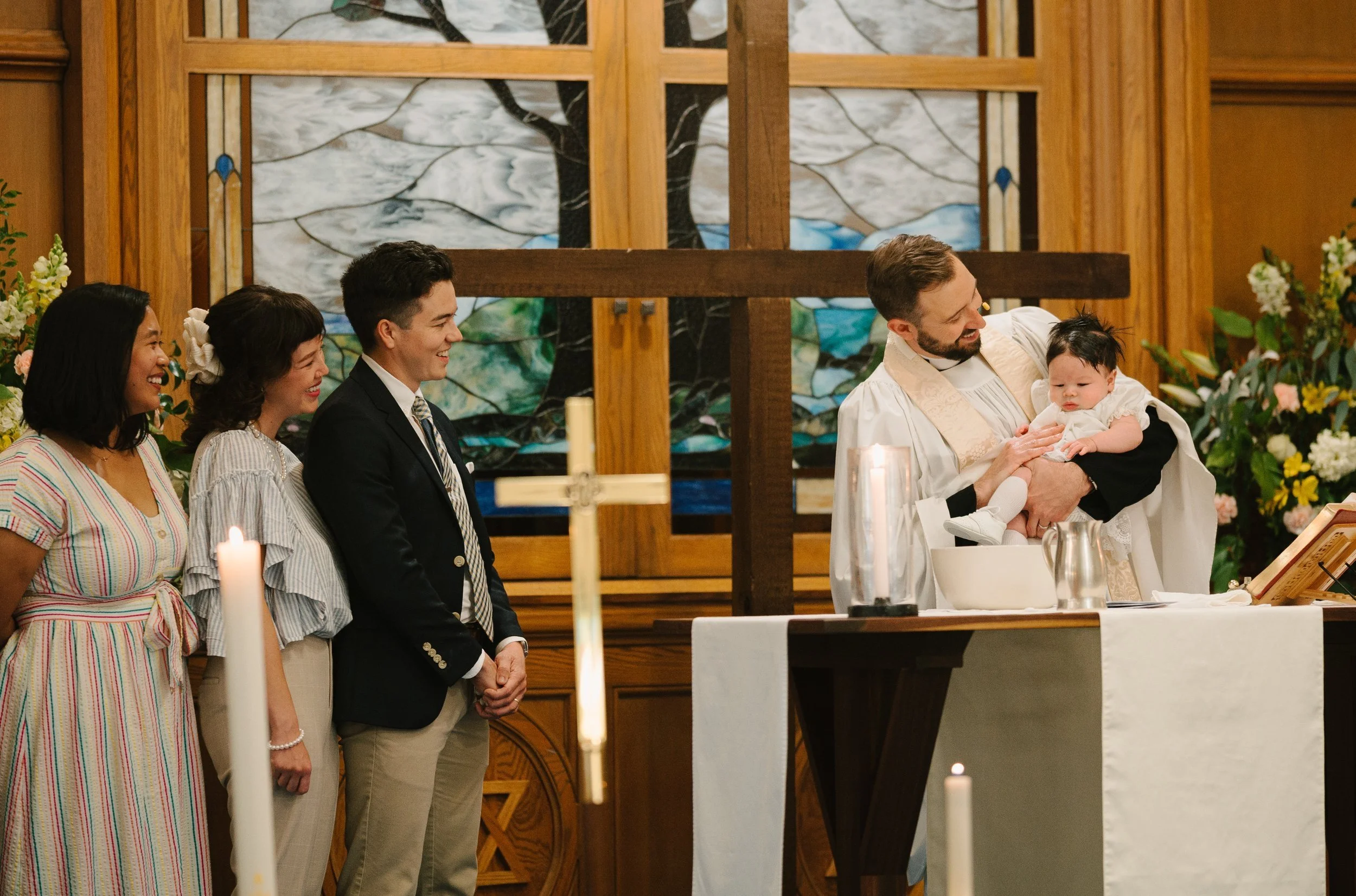
Invitation for Baptism
In just a few weeks time, on November 3, we will have the joy of celebrating the sacrament of baptism. Here’s who should consider participating.
Dear Redeemer Family,
In just a few weeks time, on November 3, we will have the joy of celebrating the sacrament of baptism. Here’s who should consider participating:
You have already given yourself to Jesus in faith but for whatever reason, have never taken the step of baptism. If that describes you, then this is a good opportunity to seal your belonging to Jesus and to his church.
You are right on the edge of converting to the Christian faith. You haven’t made the decision yet, but you’re seriously considering it. If that’s you, think of this as a good opportunity to make up your mind and commit.
You are a Christian parent of an unbaptized child. If that is you, bring your child to receive baptism! The Lord Jesus loves your little one.
Note: For an occasion as special as a baptism, we often want to plan ahead, invite friends, family, and godparents, and prepare a special celebration of some kind. So, in the interest of helping us all plan ahead, I thought I’d send out the dates for Baptism Sundays for 2024-25. These four special days are the traditional Baptism Sundays of the liturgical calendar.
January 12: Epiphany Sunday
April 20: Easter Sunday
June 8: Pentecost Sunday
Now it may be helpful to offer a brief refresher on what we believe about the sacrament of baptism. If you would benefit from that, keep reading!
WHAT IS BAPTISM?
Many of you are relatively new to the Christian faith and new to participating in a local church, especially a local church that practices ancient traditions like Redeemer does. So let me say a word about what Christian baptism is.
Jesus answered, “Truly, truly, I say to you, unless one is born of water and the Spirit, he cannot enter the kingdom of God." - John 3:5
Go therefore and make disciples of all nations, baptizing them in the name of the Father and of the Son and of the Holy Spirit. - Matt. 28:19
Do you not know that all of us who have been baptized into Christ Jesus were baptized into his death? We were buried therefore with him by baptism into death, in order that, just as Christ was raised from the dead by the glory of the Father, we too might walk in newness of life. - Romans 6:4
Because they formerly did not obey, when God's patience waited in the days of Noah, while the ark was being prepared, in which a few, that is, eight persons, were brought safely through water. Baptism, which corresponds to this, now saves you, not as a removal of dirt from the body but as an appeal to God for a good conscience, through the resurrection of Jesus Christ. - 1 Peter 3:20-21
In Christian baptism, a person is united with Jesus in His death and resurrection. We call baptism a sacrament because it is a physical, tangible, material ritual that is filled with a spiritual, intangible, immaterial grace. Something physical is happening: the person is either being immersed in water or having water poured over their head. Something spiritual is happening: that person is mysteriously (in a way that we can only barely begin to comprehend) being joined together with the Lord Jesus and, therefore, becomes a part of the church - the body of Christ.
THE STORY OF BAPTISM IN THE OLD AND NEW TESTAMENTS
The Old Testament prefigures baptism. There are many examples, but here are the big ones: the creation of the world, the salvation of Noah and his family from the flood, the exodus of the Israelites through the Red Sea, and the Israelites crossing the Jordan River out of the wilderness and into the Promised Land.
Christ commands us to be baptized and to baptize others.
The New Testament authors teach on the centrality of baptism in a Christian’s life.
WHO SHOULD BE BAPTIZED?
Any person, young or old, who wishes to put their trust wholeheartedly in Jesus for their redemption.
Any child of a baptized adult Christian who will raise that child in the faith as a part of the church.
WHY DO WE BAPTIZE INFANTS AND LITTLE CHILDREN?
“We start talking to our children not because they understand us, but so that they will. Baptism is God's language whereby he starts talking to his children and initiates a relationship with them. Sacraments are a word after all.” - Peter Leithart, The Baptized Body
We baptize children, not because we think that an adult profession of faith doesn’t matter (it does and should come at Confirmation - the other side of the coin to infant baptism), but because we seek to raise Christian children within the church.
Jesus said, “Let the little children come to me and do not hinder them.” We take the Bible at its word when it says that little children can come directly to Jesus; they do not have to grow up first.
FOR FURTHER STUDY
I would heartily recommend Peter Leithart’s excellent little book The Baptized Body to anyone who has serious questions about Christian baptism (especially baptizing children) and would like to learn more about it. Copies are available for sale at the book table on Sunday mornings.
If you are a teenager or an adult who has never received Christian baptism and you would like to, please email me. I would be delighted to get together and talk with you about it.
If you are a parent and your child has not been baptized, same invitation! It would be a joy to baptize your little one.
Click accordingly to register for the upcoming Baptism Class on October 7 and Baptism Sunday on November 3.
In the Father’s love,

First Impressions Gathering Follow Up
Thank you for those of you who were able to participate in our First Impressions Gathering (and thank you to everyone who helped with childcare!). If you were not able to attend, or if you were upstairs helping with little ones, I have 3 favors to ask of you.
Redeemer Family,
Thank you for those of you who were able to participate in our First Impressions Gathering (and thank you to everyone who helped with childcare!). If you were not able to attend, or if you were upstairs helping with little ones, I have 3 favors to ask of you:
Please set aside 1 hr and 6 minutes to watch this video and another 15 minutes to read this Case for Support. I don't want anyone to feel left behind as our parish goes through this discernment process.
Please email any thoughts, suggestions, or questions to Jeff King.
Please set aside some time to pray for the Holy Spirit to lead us, either a few minutes a day or a longer bit of time each week. And consider joining me for prayer at one or all of these Discerning Prayer Sessions at the Parish House.
October 2, 7:30-8:30 p.m.
October 30, 7:30-8:30 p.m.
November 20, 7:30-8:30 p.m.
Thank you! I love you all and I'm looking forward to learning and discovering the next steps along with you.
In the Father's love,

Here's to You, Summer (hey fall, didn’t see you there!)
I’m never ready for this week.
I see it coming a mile away and I’m still unprepared.
Summer has boarded the ship and is waving farewell as she sails off and away.
Let us raise a glass, toast her splendor, and fondly remember how we felt that first week of June.
Alright, enough that.
Fall is here!
Dear Redeemer Family,
I’m never ready for this week.
I see it coming a mile away and I’m still unprepared.
Summer has boarded the ship and is waving farewell as she sails off and away.
Let us raise a glass, toast her splendor, and fondly remember how we felt that first week of June.
Alright, enough that.
Fall is here!
For many of us, there are so many things that will begin to clamor for our attention as we head into September. Our calendars will fill up and before we know it, we’ll be saying things like, “I don’t know how I got so busy!”
This happens to the Marotta family as well! One way that Rachel and I have found to combat the back-to-fall busyness is to sit down with our family calendar before the summer ends and make sure that the most important things get scheduled first. For us, the spiritual health of our family and the church is the most important thing. Everything else is negotiable.
So, church commitments go first on the calendar:
Sunday Morning Worship
Saturday Sabbath
Wednesday Night Youth Fellowship
Thursday nights for hosting people within the parish
Sunday evening Foundations Class
Men’s & Women’s Fellowship Events
Vestry & Staff Meetings & Retreats
Next on the calendar go important dates for our little family:
Birthdays and Holidays
Days of rest and play
Trips to visit relatives and friends
Quarterly overnight getaways for me and Rachel without the kids
Next go important school dates for the kids:
Monday-Friday classes
Field trips
Recitals and special programs
Next go Youth Sports
Soccer (x3)
Volleyball (x1)
I could keep going, but I’ll stop there. The point is, we have found over the years that this is key:
Unless we proactively claim the calendar for the spiritual, relational, and emotional health of our family and the church, then someone or something else will claim it for us.
This helps us know how to navigate calendar conflicts and to consistently choose what is best for us and the church over what feels easy at the moment.
Example #1: Most weekday evenings, I don’t feel like I have the energy for much besides getting the kids to bed and perhaps reading a book before falling asleep with the lights on. However, if I’ve already scheduled an evening to host some key leaders in our church or a Small Group gathering, then I find myself led by the calendar into something that is genuinely good for my soul. And afterwards, I’m always glad that I did.
Example #2: Often we have to choose between multiple good things. Should our child go to soccer practice or youth fellowship? Should I take Saturday off or work on Sunday’s sermon for a few more hours? If I wait until the last minute to decide, I will be swayed by whatever feels like the path of least resistance. However, if I prayerfully and thoughtfully plan out my calendar ahead of time, I am more likely to make a wise decision.
So, here’s what I am asking all of us to do.
Take some intentional time in the next few days and claim the Fall Calendar for the spiritual well-being of your family and church:
Sunday Worship: First, schedule every Sunday morning for worship.
Small Group: Second, schedule one day a week for Small Group and sign up! Here’s the link.
Sabbath: Third, schedule one day per week for Sabbath rest. Though Sunday or Saturday are ideal, it could be another day depending on your work schedule.
Fellowship & Service: Depending on your situation and life stage, mark your calendar for church fellowship and service opportunities:
Men’s Fellowship & Women’s Fellowship Events
Justice & Mercy Partners service opportunities
Volunteering with one of Redeemer’s ministries
Some of you already do this so very well and you’re probably way ahead of us!
Others of us are not yet accustomed to committing to things (especially church things) in advance. Consider this an invitation to try it out for the first time and see if it bears good fruit in your life.
Looking forward to a great fall together.
In the Father’s love,

Gospel Formation: An Invitation to Redeemer’s Youth
As we prepare to gather this fall, I want to share how we approach ministering to our youth and invite you to take another step forward into the life of our Youth Fellowship.
At Redeemer, we describe our life together with the phrase "Gospel Formation for Missional Presence," and because our Youth Fellowship is an integral part of the whole of Redeemer, this is true for us as well.
Dear Friends,
As we prepare to gather this fall, I want to share how we approach ministering to our youth and invite you to take another step forward into the life of our Youth Fellowship.
At Redeemer, we describe our life together with the phrase "Gospel Formation for Missional Presence," and because our Youth Fellowship is an integral part of the whole of Redeemer, this is true for us as well.
Gospel Formation presses on every way that we relate to Jesus; it involves how we think about Jesus, who we believe he is, and how we choose to follow his teachings.
When we say that we want to be formed in the gospel, we make an essential pivot away from the gospel as an abstraction, concept, or memory tucked away in our minds, and we move towards its full claim: Jesus is the life of the world, and we are invited to make our life in him.
The gospel is essentially about new life in God. It is about being born again, the resurrection of the dead, and the life of the world to come – a whole new creation in Jesus. The Gospel could never be just another commodity that we can choose to fit – or not fit – into our lives. It encompasses everything, and it calls us to give everything we are and everything we have to the hope of renewal in Jesus.
This is all to say that what we believe about the gospel shapes everything about how we share it with our students.
As we, the Youth Fellowship team, pursue formation in the gospel together as we practice our new life in Jesus, we will invite our students to be formed along with us.
We want them to practice with us the new identity that Jesus gives us as sons and daughters of God; we want them to know that the true stories of their lives are not defined by the victories and defeats of middle or high school but by the victory of Jesus over all things and all time. On and on, we want to be formed completely in the life of Jesus together.
In the end, it is our own formation in the gospel, our own practiced life in the new creation, that is our missional presence to one another. This is what Redeemer Youth Fellowship is all about, and we are excited to begin again!
With Peace,
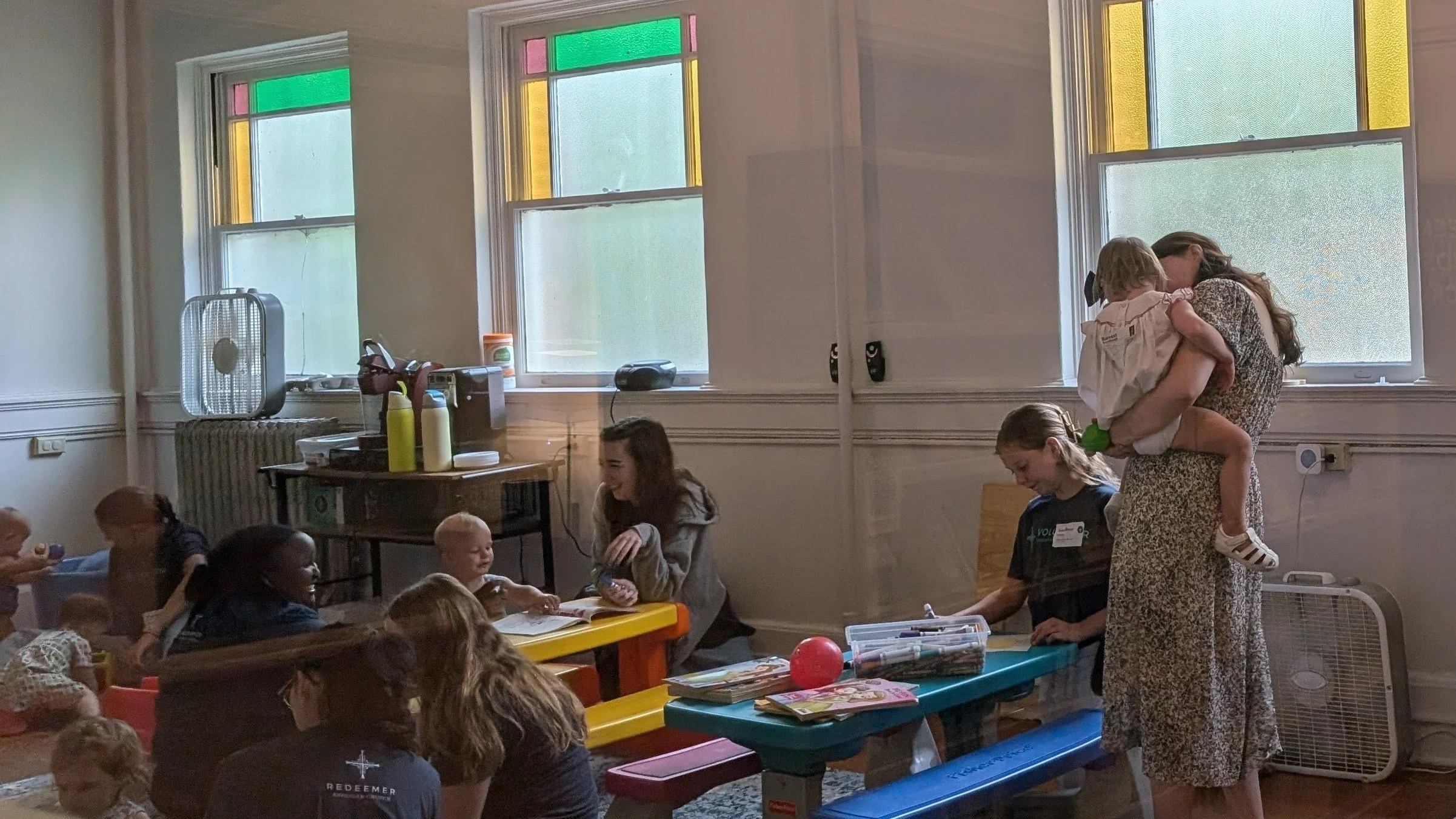
2024 Redeemer Nursery Updates
The nursery at Redeemer is growing! Over the summer, we have had 40 babies in regular attendance between the ages of 6 months-3 years old. With that growth, we are making changes to extend the spiritual formation we practice in Redeemer Kids to our tiniest parishioners. From the moment they are born, we want to build their sense of belonging in the context of the church and God’s story and help them develop a sense of wonder in the beauty of their identity in Christ.
The nursery at Redeemer is growing! Over the summer, we have had 40 babies in regular attendance between the ages of 6 months-3 years old. With that growth, we are making changes to extend the spiritual formation we practice in Redeemer Kids to our tiniest parishioners. From the moment they are born, we want to build their sense of belonging in the context of the church and God’s story and help them develop a sense of wonder in the beauty of their identity in Christ.
With this goal in mind, starting August 25th, we will have story time in our nursery with books and stories that follow the church calendar, as well as an interactive music time with shakers, rhythm sticks, and see-through scarves. This story time would not be possible without the rotating set of 14 women in our church who serve these babies once a month and our seven paid childcare staff members who work every week.
Our nursery volunteers—some of whom have served in the nursery since the early days of Redeemer Kids—are actively engaging in the spiritual formation of your children through praying over each child’s name during the week, leading snack time prayer, and being an active presence in the room to care for any child who might be struggling with the transition into the nursery space.
The work of our volunteers is supported by our childcare staff members who are responsible for caring for the hygiene, physical well-being, and safety of children while assisting with the general schedule and rhythms of the nursery. Our childcare staff are CPR trained and most are undergoing continued training in childhood development. It has been a joy to get to know these women and work with them to improve how we interact with each baby that enters our nursery on Sunday mornings.
Finally, I would love to introduce you to our newest childcare staff member, Aliyah. You can learn more about her below!
Mikala Thompson
Assistant Director of Redeemer Kids

"Hi everyone! My name is Aliyah Murrell. I am in my second year of the Doctor of Occupational Therapy program at VCU. My passion is to one day become a NICU Occupational Therapist. I truly believe the work they do for the babies in their care lays the groundwork for their future development, and I would love to be a part of that. That is also why I am excited to join the childcare staff here at Redeemer Anglican Church. I want to gain experience caring for children of different ages to get a better understanding of childhood developmental milestones and to be of service to my community. I have already felt so welcomed by everyone, and I look forward to continuing to grow and learn!"

Storied Little Creatures
We are creatures who live by our stories…Narrative is the ‘central function of the human mind.’ We turn everything into a story in order to make sense of life. We dream in narrative, day-dream in narrative, remember, anticipate, hope, despair, believe, doubt, plan, revise, criticize, construct, gossip, learn, hate, and love by narrative. In fact we cannot avoid it.
“We are creatures who live by our stories…Narrative is the ‘central function of the human mind.’ We turn everything into a story in order to make sense of life. We dream in narrative, day-dream in narrative, remember, anticipate, hope, despair, believe, doubt, plan, revise, criticize, construct, gossip, learn, hate, and love by narrative. In fact we cannot avoid it. We are storied creatures.”
I love this quote by James Bryan Smith in his book The Good and Beautiful God. This idea, that each of us is deeply and innately storied in our daily life, rings true to me. Jonathan Gottshall, a psychologist who authored The Storytelling Animal, paints a vivid picture of the biological framework of the human mind to prove this point. He states that our minds are spinning stories in our sleep every night, whether we remember them or not. In our waking hours, an average person will daydream about 2,000 times per day, each daydream lasting around 14 seconds each. That would mean that we spend nearly half of our waking hours in a daydream of some kind! The math adds up to an average person spending two-thirds of his or her life in a subconscious story of their own creation. If this is true, then imagination, which moves these stories, is not reserved for those who have the time or capacity to rise above the grind of daily life; rather, it is subconsciously, universally, and continuously a part of that daily life. “Storied creatures,” indeed.
Gottschall, who does not profess faith in God, came to this conclusion by being a student of humanity and observing what is true historically and universally about human behavior. What does this mean, then, for those of us who have staked our lives on the belief that there is a greater Story that we are all a part of found in the narrative of the Bible? It would mean that imagination is a key part of our identity as image-bearers and points to something that is true of the One whose image we carry. Malcolm Guite, in his book Lifting the Veil, states that imagination and the arts can “awaken the mind’s attention, to help us, just as much as science might help us, to look out and see what is really there and to discover that reality is itself numinous, translucent with glimmerings of the ‘supernatural’, of something holy shining through it.” Imagination is a key part of how we experience God and the invitation to know Him more through the story of the Bible. If God has given us imagination as a way to know Him more intimately, then it follows that those with the most uninhibited imaginations would have an advantage in knowing Him, right? And who are the most imaginative people you know? They’re probably under four feet tall and are engaging in some form of story right now as you read this.
It’s an easy leap to say that children do story better than anyone else. Or at least more prolifically. Story and imagination are so intrinsically part of their being, particularly from the ages of 3-7 years old, that they can’t escape it! It flows out of them in their play and words and desires. That ability to "do story" is a profound gift when engaging with spirituality in particular because imagination holds mystery so well. In The Religious Potential of the Child, Sophia Cavelletti makes a compelling case that children are deeply spiritual beings and are capable of having rich lives of faith even from a very tender age. Their capacity for engaging with the spiritual world is a natural extension of their uninhibited imaginations. Children are spiritual before they are rational!
We who are charged with the spiritual formation of these very storied little creatures should recognize this if we are to do the sacred work in front of us. Spirituality is not something we have to plant in children; it’s already there. We don’t have to convince children that there is a richer world than their eyes can see and we don’t have to strain in order to communicate with them about an invisible God. Their imaginations hold this mystery easier than many adults do. Our work is to nurture that Story in them, with fear and trembling, knowing that their posture is naturally attuned to God and that same holy God has a posture attuned towards them as well. The work of nurturing their faith is important, urgent, and thankfully, communal. We have the privilege and responsibility as the church to tell this Story to the children in our care, and to nurture that Story as they grow.
Casey Cisco
Director of Redeemer Kids

Practice Seven: Imagination
In the same way art appreciation was superseded by the demand for easy entertainment, so now our entertainment culture is being devoured by a cultural addiction to distraction. While the algorithms at work behind our content consumption may technically be amoral, their effects are anything but; the human imagination is actively being hijacked and suffocated in pursuit of financial profit. How can we reflect the selfless love of Christ when the predominant forces shaping our imaginations are gaming, pornography, clickbait, newsreels meant to invoke political outrage, and 15-second video clips?
How do I love?
Reordering our imaginations through mystery and beauty.
In the same way art appreciation was superseded by the demand for easy entertainment, so now our entertainment culture is being devoured by a cultural addiction to distraction. While the algorithms at work behind our content consumption may technically be amoral, their effects are anything but; the human imagination is actively being hijacked and suffocated in pursuit of financial profit. How can we reflect the selfless love of Christ when the predominant forces shaping our imaginations are gaming, pornography, clickbait, newsreels meant to invoke political outrage, and 15-second video clips?
Listen
“How Do I Love?” — The Rev. Dan Marotta
Read
Art and Faith by Makoto Fujimura
Lifting the Veil by Malcolm Guite
The Supper of the Lamp by Robert Farrar Capon
Practice
EUCHARIST
Weekly on Sundays. Grow by increasing to daily participation (when offered).DIGITAL LIMITS
No screens before prayer. One screen at a time. No screens in the bedroom. Fast from screens 1 day/wk. Fast from screens 1 wk/yr. Use accountability software.MAKING
Co-create with God using your hands on a weekly basis.ART
Regularly chose to engage art over entertainment or distraction.FOOD
Farm to Table isn’t a new trend. Engage the process somewhere in addition to buying and eating.MUSIC/SINGING
Sing and/or make music with those in your household at least once a week.

Practice Six: Vocation
Modern culture’s rejection of a dominant meta-narrative results in the tragic loss of a shared understanding of the purpose of life. Individuals are subsequently left to generate their own personal sense of purpose. Where is that purpose to be found? Work? Pleasure? Health? Wealth? Positive impact on the world? Social justice causes? Concurrent with the loss of a shared purpose is the increase in meaningless work - work that serves no greater purpose than to generate profit and pay salaries. Such flimsy purposes can rarely withstand the rigors of life’s disappointments, trials, and pains.
What is my purpose?
Laboring in renewed vocations for the common good.
Modern culture’s rejection of a dominant meta-narrative results in the tragic loss of a shared understanding of the purpose of life. Individuals are subsequently left to generate their own personal sense of purpose. Where is that purpose to be found? Work? Pleasure? Health? Wealth? Positive impact on the world? Social justice causes? Concurrent with the loss of a shared purpose is the increase in meaningless work - work that serves no greater purpose than to generate profit and pay salaries. Such flimsy purposes can rarely withstand the rigors of life’s disappointments, trials, and pains.
Listen
“What is My Purpose?” — The Rev. Dan Marotta
Read
Every Good Endeavor by Timothy Keller
In the Name of Jesus by Henri J.M. Nouwen
Liturgy of the Ordinary by Tish Harrison Warren
Kingdom Calling by Amy L. Sherman
Practicing The King’s Economy by Michael Rhodes and Robby Holt
The Ruthless Elimination of Hurry by John Mark Comer
Practice
WORK FOR THE COMMON GOOD
Given the choice, choose a paid occupation that contributes to the common good.
GENEROSITY
Give generously from what is earned from occupational work, beginning with a tithe, and then going beyond.
JUSTICE
Volunteer your time and resources to foster justice for the poor, beginning with those nearby.
CREATION CARE
The cultural mandate in Genesis 2 still applies to all. Consider your habits of consumption and adjust to foster health for the created world.

Practice Five: Context
The transience of modern life is one of the variables that actively works against our best efforts to practice the missional presence of Jesus in Richmond. Many of us have the option to leave our current context whenever a new job opportunity presents itself or the dream of a better life begins to materialize in a new locale. The Christian commitment to incarnation is a radical response to this impulse. When we choose to stay and live more deeply into the communities we are a part of, we experience the unique fruit that can only be produced through love over lengthy amounts of time.
Where do I make my life?
Seeking to understand our context in the city in this cultural moment.
The transience of modern life is one of the variables that actively works against our best efforts to practice the missional presence of Jesus in Richmond. Many of us have the option to leave our current context whenever a new job opportunity presents itself or the dream of a better life begins to materialize in a new locale. The Christian commitment to incarnation is a radical response to this impulse. When we choose to stay and live more deeply into the communities we are a part of, we experience the unique fruit that can only be produced through love over lengthy amounts of time.
Listen
“Where Do I Make My Life?” — The Rev. Dan Marotta
Read
The Color of Compromise by Jemar Tisby
Loving the City by Timothy Keller
Reading While Black by Esau McCaulley
Sidewalks in the Kingdom by Eric O. Jacobsen
When Helping Hurts by Steve Corbett and Brian Fikkert
Practice
PROXIMITY
Move into the the city and live in close proximity to neighbors.
STABILITY
Resist the temptation to move somewhere else for a better life. Put down roots.
CURIOSITY
Cultivate a genuine interest in your neighbors and in the complexities of the city.
Note: Some Redeemer parishioners who live in the county neighborhoods or countryside surrounding the city of Richmond may, for financial or other reasons, be unable to move into the city in this season of life. If this is the case, they should practice proximity, stability, and curiosity as best they can in their current context while recognizing that Redeemer’s parish will always have an emphasis on the city.
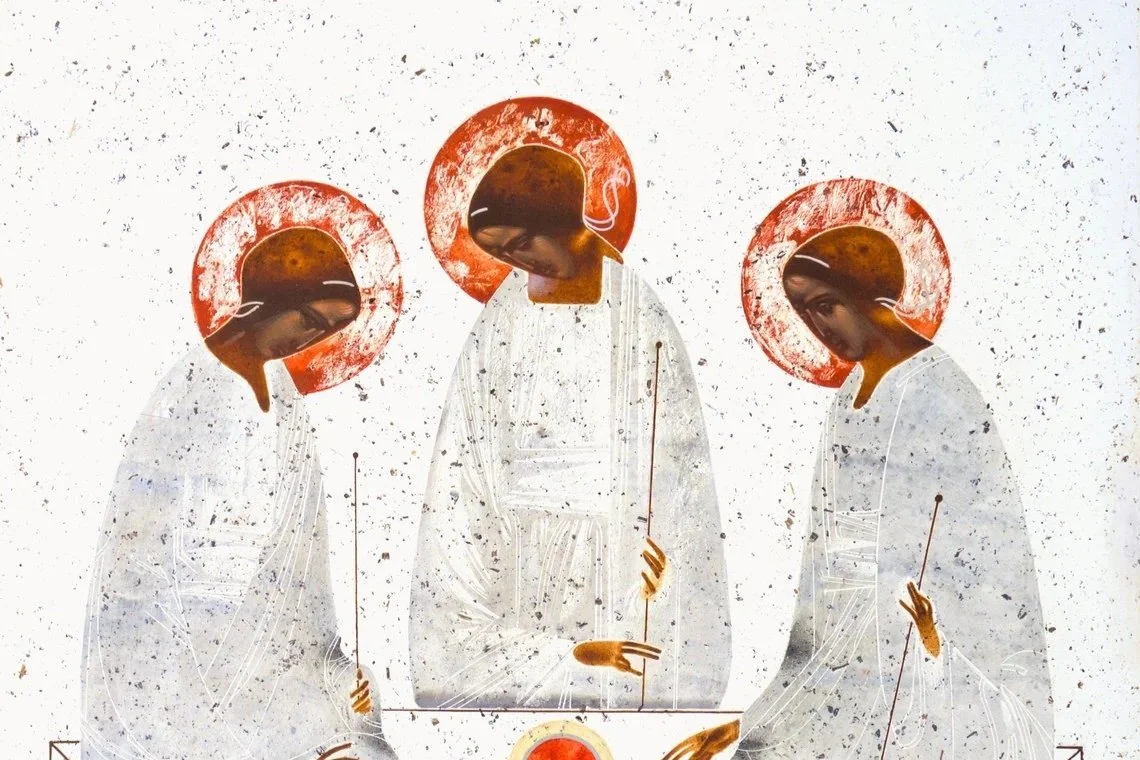
Practice Four: Virtue
Modern life is disorienting. We feel the need to organize our time around life-giving practices like life-hacking, habit-stacking, mindfulness, diet, exercise, and technological limits. We live in the age of “Project Self”, and while these self-edits can be a tremendous help in moving us toward greater health, many of us come to see that they require a significant amount of self-discipline.
How do I change?
Cultivating virtue through redemptive habits.
Modern life is disorienting. We feel the need to organize our time around life-giving practices like life-hacking, habit-stacking, mindfulness, diet, exercise, and technological limits. We live in the age of “Project Self”, and while these self-edits can be a tremendous help in moving us toward greater health, many of us come to see that they require a significant amount of self-discipline. Our wills and determination are often feeble. Here it’s important to note that Christians understand the reformation of the self not just as the development of ideal habits, but as conformity to the image of Jesus; we aim to become people of virtue, like him. This alternate vision of “human beings fully alive” is one that takes into account our deep dependence on the Holy Spirit’s activity in us and our participation in this activity. As St. Augustine said, “without God, we cannot; without us, God will not.” This is an opportunity to take up the ancient spiritual practices of the Church.
Listen
“How Do I Change?” — The Rev. Dan Marotta
Read
The Abolition of Man by C.S. Lewis
The Common Rule by Justin Whitmel Earley
Liturgy in the Wilderness by D. J. Marotta
The Meaning of Marriage by Timothy Keller
The Tech-Wise Family by Andy Crouch
Practice
Remembering Death
Annually on Ash Wednesday.
Grow through daily meditation.
Silence + Solitude
Daily: Set aside a few moments.
Retreats: At least once annually.
Fasting
Annually on Ash Wednesday and Good Friday.
Focus during Lent.
Weekly on Wednesdays and Fridays.
Prayer + Examen
Daily Prayer In the morning or evening.
Grow through use of the offices in the BCP.
Examen at the end of every day.
Sabbath Rest
One 24-hour period of rest each week.
Ideally practiced on Sunday with the church (or on Saturday if you work on Sundays)
Submission
Mutually to brothers and sisters in the church.
Mutually between husbands and wives.
Spiritually to the Bishop.

Practice Three: Belonging
In May 2023, the U.S. Surgeon General Vivek Murthy released a report declaring that the United States is suffering from an “epidemic of loneliness and isolation.” In his report it was stated that “half of Americans (49%) in 2021 reported having three or fewer close friends,” an increase from 27% in 1990. Twelve percent of respondents said they had no close friends at all. Suffice it to say, community is something that almost everyone is hungry for, yet many have overly romanticized views of. It often doesn’t take long for us to realize that the church is full of people that are just as flawed and difficult to be in relationship with as we are. Churches can some times be places that offer community, but fail to deliver on their promise. This is where we must begin to reimagine what it looks like to practice belonging in the community of the church.
With whom do I belong?
Finding belonging in the church community and extending hospitality to strangers.
In May 2023, the U.S. Surgeon General, Vivek Murthy, released a report declaring that the United States is suffering from an “epidemic of loneliness and isolation.” It states that “half of Americans (49%) in 2021 reported having three or fewer close friends,” an increase from 27% in 1990. Twelve percent of respondents said they had no close friends at all.
Suffice it to say, community is something that almost everyone is hungry for and simultaneously have overly romanticized. It often doesn’t take long for us to realize that the church is full of people that are just as flawed and difficult to be in relationship with as we are. Churches can some times be places that offer community, but can also fail to deliver on their promises. This is where we must begin to reimagine what it looks like to practice belonging in the community of the church.
Listen
“With Whom Do I Belong?” — The. Rev. Dan Marotta
Read
The Anglican Way by Thomas McKenzie
The Beautiful Community by Irwyn L. Ince Jr.
The Gospel Comes with a House Key by Rosaria Butterfield
Life Together by Dietrich Bonhoeffer
Where God Happens by Rowan Williams
Practice
Hospitality to Strangers—
Axiom #1: The front porch of the church is your front porch.
Axiom #2: Your kitchen table one of the most powerful tools you have for ministry. Extend invitations to belong to those who are new, friendless, and in need.
Register for Redeemer’s Foundation Class.
Confirmation and Membership—Confirmation by the Bishop of our Diocese is a one-time initiation practice that makes one an adult member of the global Anglican Communion and our local parish. Membership is annually renewed through pledging and participating in membership commitments.
Join a Redeemer Small Group—Weekly gathering with fellow parishioners for table fellowship, Bible reading, discussion, prayer, and care for one another.
Axiom: This is where we practice being Christians in close quarters. Small Groups participants are not necessarily your best friends, but you are practicing the basics of spiritual friendship together.

Practice Two: Identity
Traditional identities are rooted in an over-identification with the family to the detriment of the individual. Modern identities are rooted in the self and demand that all expressions of human community subordinate themselves to the rights and desires of the individual. Both the traditional and modern expressions of identity attempt to provide a stability and security that will endure. And yet both are deeply fragile. Neither can ultimately deliver on their promises. Both demand your constant best efforts in order to receive their benefits. Over time this proves to be exhausting.
Who am I?
Embracing a new identity in Jesus that is received, stable, and secure.
Traditional identities are rooted in an over-identification with the family to the detriment of the individual. Modern identities are rooted in the self and demand that all expressions of human community subordinate themselves to the rights and desires of the individual. Both the traditional and modern expressions of identity attempt to provide a stability and security that will endure. And yet both are deeply fragile. Neither can ultimately deliver on their promises. Both demand your constant best efforts in order to receive their benefits. Over time this proves to be exhausting.
Christian identity is fundamentally different than both traditional and modern identities because it is not an identity you achieve. Rather, it is an identity you receive as a gift. Understanding this allows us to begin to respond to Jesus’s counterintuitive invitation to ‘take his yoke’ upon ourselves and ‘find rest’ (Mt. 11:29-30).
Listen
“Who Am I?”— The Rev. Dan Marotta
Read
The Baptized Body by Peter J. Leithart
The Gift of Being Yourself by David G. Benner
Is God anti-gay? by Sam Allberry
Love Thy Body by Nancy R. Pearcey
You Are What You Love by James K. A. Smith
7 Myths about Singleness by Same Allberry
Practice
If you have not yet been baptized, please reach out to a Redeemer staff member for more information.
Receive the gift of God’s love to you in the bread and wine each week during communion.
Join a Redeemer Small Group.
Register for Redeemer’s Foundation Class.
Daily Bible Reading. (Consider using the Lectionary in the Book of Common Prayer, which assigns various texts to each day of the year.)

Practice One: Story
Human beings are “story creatures”. We are invariably attracted to, shaped inside of, and animated by the stories we hear and internalize and those that we tell. We cannot help but live out of the stories we find most deeply compelling, even if we are not consciously aware of this compulsion. It follows, then, that the story of life inside God’s Kingdom naturally conflicts with many of the alternate stories that we believe about ourselves, others, and the world.
What story am I in?
Telling the story of the Bible as the true and better narrative in which to understand God, ourselves, each other, and this world.
Human beings are “story creatures”. We are invariably attracted to, shaped inside of, and animated by the stories we hear and internalize and those that we tell. We cannot help but live out of the stories we find most deeply compelling, even if we are not consciously aware of this compulsion. It follows, then, that the story of life inside God’s Kingdom naturally conflicts with many of the alternate stories that we believe about ourselves, others, and the world. These stories are often unknowingly providing us with answers to some of the deepest questions of our hearts, questions like “Where have I come from?”, “Who am I?”, “What is my purpose?” and “Where am I going?” The Christian faith is not just a set of ideas to be ascribed to, but a story of the world—its good beginning, tragedy, and restoration—in which we find ourselves.
Listen
“What Story Am I In?” — The Rev. Dan Marotta
“Teaching Our Children the Story” — The Rev. Dan Marotta
Read
A Walk Through the Bible by Leslie Newbigin
The Drama of Scripture by Bartholomew & Goheen
The Mission of God by Christopher JH Wright
Concise Theology by J. I. Packer
Church History in Plain Language by Bruce L. Shelley
The Drama of Scripture by Craig G. Bartholomew
Mere Christianity by C.S. Lewis
Simply Christian by N. T. Wright
To Be A Christian by J. I. Packer
Reading Black Books by Claude Atcho
Tending the Heart of Virtue by Vigen Guroian
A Landscape with Dragons by Michael O’Brien
The Jesus Storybook Bible by Sally Lloyd-Jones
Practice
Join a Redeemer Small Group.
Register for Redeemer’s Foundation Class.
Daily Bible Reading. (Consider using the Lectionary in the Book of Common Prayer, which assigns various texts to each day of the year.)
Read great fictional stories.
Avoid beginning and ending every day with your smartphone and choose not to binge-watch tv shows and movies whose narratives tell a false story about the meaning of happiness, love, life, joy, etc.
Artwork: The Arc of Noah, Ivanka Demchuk
Finding Rhythms of Rest This Summer
Summer brings many welcome changes to our rhythms of life and I’m looking forward to them just as much as you are. The season of Eastertide is behind us. The school semester is wrapping up. Many of you are anticipating a slower pace of work, more time with family and friends, and perhaps some travel away from Richmond - all good and lovely things.
Redeemer Family,
Summer brings many welcome changes to our rhythms of life and I’m looking forward to them just as much as you are. The season of Eastertide is behind us. The school semester is wrapping up. Many of you are anticipating a slower pace of work, more time with family and friends, and perhaps some travel away from Richmond - all good and lovely things.
If you’re anything like me, summer can also be a time (for some of us) to unintentionally put the disciplines of the academic year on hold. Isn’t it ironic that more free time somehow usually means less time given to things like reading scripture, prayer, and service to others? I’ve heard this from many of you as well. One of you has quoted,
“It’s like I’m an intentional Christian 8-9 months out of the year, and then in the summer I take a break from following Jesus.”
I love the honesty and I completely empathize. I feel this tendency in myself as well.
While there are, no doubt, many potential sources beneath this trend, one of them is certainly the reality that many of us live an overly-busy, unsustainable pace of life September through May. Many of us crash-land into June in an exhausted heap. After living with a packed calendar for most of the year, we overcorrect the other direction and step back from too many things. Back and forth the pendulum swings.
The solution, I think, is not a rousing call to spiritual activity during the summer months. Fear not, this letter is not a pitch to “just do more Christian things!” Rather, my sense is that the invitation before us from the Lord is to lean into the soul-nourishing rhythms of true rest. True rest, in a Biblical, Gospel sense, looks a lot less like three hours of late night Netflix and more like a quiet moment reading scripture, a morning walk with a friend, an afternoon siesta, or an evening cook-out with a neighbor.
So, dear brothers and sister, as we enter the new season, I’d like to invite you to consider how these opportunities might be ways of refreshing and replenishing your soul this Summer:
Summer in the Psalms: As is our practice, we will return to preaching through the Psalms this Summer, picking up where we left off with Psalm 77 this coming Sunday. The Psalms are the prayer book of the Bible and help us learn to pray the fullness of our emotional life to God. In addition to listening to the sermons this Summer, consider reading through most or all 150 Psalms over the next three months. This is not an “Accomplishment Goal.” There are not gold stars available for earning here. Rather, think of it as an “Immersion Goal.” I want to immerse myself in the prayers of the Psalms.
*Note: It has been my habit throughout Redeemer’s years to step back from preaching for a good bit of the Summer to share the pulpit with other voices. I’m thrilled and thankful for Lane Cowin, Oldson Duclos, Tee Feyrer, and Will Clark stepping in to each preach twice in this series.
Join a Book Club: With Small Groups on break until the fall semester, consider shifting into a different gear and joining a Summer Book Club. For those book-lover/speed-readers out there, this is an easy one. For those of you who don’t normally read books, this might stretch you a bit. Fear not, this is not school and there’s no grade. The goal is learning in community together.
Practice Sabbath: Look at the calendar for the entire summer and set aside as many Sundays (ideally) or Saturdays (if Sunday doesn’t work) for whole days of intentional Sabbath Rest. If you would like to learn more about why and how to practice Sabbath Rest, we did a series on this back in Eastertide of 2021.
Retreat to Silence & Solitude: Consider looking ahead at the summer calendar and setting aside a 24-hour solo, silent retreat. For many of you, this may feel intimidating. If this is the case, start smaller and try just a few hours. If you missed it, we did a sermon on this practice and you can listen or re-listen to it here.
Redeemer family, there are many more opportunities to lean in this summer and you can learn more about them on our Events page. But please hear me ask, do you need rest? Are you tired and worn out? If so, take Christ up on his invitation to find true, soul-nourishing rest in Him this summer.
In the Father’s love,
Children in Worship: an Invitation for the Summer
It’s almost that time of year again! We have learned from older, more established ministries that the summer months provide two unique opportunities for our parish. The first is to allow our hard-working Redeemer Kids volunteers a much-needed chance to slow down. The other is the chance to embrace more participation from children during the worship service for the summer season for the sake of both our children themselves and the adults around them! As our parish moves into the season of Ordinary Time and we find ways to practice our faith in, well, ordinary ways, this is a wonderful time to shift the way we teach our children as well.
Dear Redeemer Family,
It’s almost that time of year again! We have learned from older and more established ministries that the summer months provide two unique opportunities for our parish. The first is to allow our hard-working Redeemer Kids volunteers a much-needed chance to slow down. The other is the chance to embrace more participation from children during the worship service for the summer season for the sake of both our children themselves and the adults around them! As our parish moves into the season of Ordinary Time and we find ways to practice our faith in, well, ordinary ways, this is a wonderful time to shift the way we teach our children as well.
When will this take place?
Redeemer Kids will only offer a Three’s Room, Pre-K Room, and the full nursery for both services starting Sunday, June 2nd through July 28th. In August, our full children’s spiritual formation classes will be offered again; we will spend three weeks getting back into the regular rhythms of meeting before we fully relaunch our curriculum in the Fall with the rest of the parish.
What does this mean for our kids?
We will offer a children’s liturgy specifically for our young children to help guide them through the service (and to doodle on, of course) as well as providing crayons to use. Our school-aged children will be welcomed into portions of the service that they have not been in before to learn alongside our older members during the sermon and to practice corporate prayer during Prayers of the People. This is not a break from children’s spiritual formation—rather, a new way to practice it together!
What does this mean for parents?
If your child is a rising kindergartener or older, they will be sitting with you for the whole service! We will offer some resources specifically for these children to engage with the service. I can speak from experience that it is no small task to help my squirmy 7-year-old boy sit through long stretches of the service and I don’t want to minimize that challenge for you parents. I urge you to see this not only as an opportunity for your child to form new habits around worship (like when to sit, listen, stand, sing, and kneel), but to find their place in the whole body of Christ by participating in new ways!
What does this mean for Redeemer Kids volunteers?
Our hope is to give our hard-working Redeemer Kids teachers, assistants, coordinators, and more a season to slow down. Many of you might not know that we ask our teachers and assistants to serve every three weeks and our coordinators and nursery volunteers to serve every four weeks. As the year has gone on, many of our team members have served more frequently than this in order to have the 30 volunteers needed every Sunday to run our children’s ministry. For those who are not currently serving in Redeemer Kids, take this season to thank our Redeemer Kids volunteers and to prayerfully consider how you could use your own gifts to volunteer as well—you’re needed!
What does this mean for everyone else?
This is a wonderful opportunity to engage in a new way with the children of our parish! There will be opportunities to stretch and grow as a congregation as we extend hospitality to the school-aged children of our church and by supporting families with young children in the pews around you. Here are a few practical guidelines to consider:
The first way you can help is to model attentive and fully engaged behavior for the kids around you. You disciple the kids nearby when you attentively observe the sermon, stay focused when listening, and use your body to kneel, stand, and extend your hands. After all, children learn the most by observing!
Get to know the names of the children who sit near you in particular and then ask after them by name each week. This small gesture can mean the world to children (or anybody for that matter) who can often feel overlooked in a crowd.
When a child near you is noisy (drops a pen, cries, giggles, talks out loud) during the silent portions of the service, don’t react. This could take practice for each of us, but stay engaged in the prayer/silence/liturgy and take this time as an opportunity to grow in focus and to model a still and calm posture for your neighbors. This is a spiritual “muscle” we can all exercise.
Be open to how you can grow from this experience. During this summer and beyond, be attentive to how children already naturally engage with the service on their own. Do they shout the creeds or dance when they sing? Do they find it hard to be attentive during the scripture reading or to withhold their enthusiasm when they are able to participate in a call and response? Children reflect our own emotions, desires, and sin patterns, but are often more obvious about it. Be open to what you can learn about yourself from watching these children and how you can grow in your own faith through this.
Pray with me now and each week to come: Almighty God, heavenly Father, you have blessed us with the joy and care of children; Give us calm strength and patient wisdom so to train them, that they may love all that is true, and pure, and lovely, and of good report, following the example of their Savior Jesus Christ. Amen.
In Christ,
Casey Cisco

Renewing Our Membership Commitments
May is pledge month at Redeemer. During this time we encourage all members to make Membership Commitments which involve giving Time, Talent, and Treasure to the Lord Jesus through his body, the Church. Whether you are becoming a new member this month or are a returning member, this is an important action item for all of us. Pledging provides important information to our Vestry and Ministry Leaders to make wise and strategic plans for our parish.
Redeemer Family,
May is pledge month at Redeemer. During this time we encourage all members to make Membership Commitments which involve giving Time, Talent, and Treasure to the Lord Jesus through his body, the Church. Whether you are becoming a new member this month or are a returning member, this is an important action item for all of us. Pledging provides specific information to our Vestry and Ministry Leaders to make wise and strategic plans for our parish.
Now, if you are not yet a member, this is for you as well. One of the best ways to “try Redeemer on” is to practice living as a member before actually taking that step of commitment.
If you are ready to pledge, here’s the link. Every adult is required to submit a pledge (households can make their financial pledges together.) Every adult regular attender is encouraged to make a pledge, but not required.
If you’re a little fuzzy on what those membership commitments are or if you’d like a refresher, keep reading!
MEMBERSHIP COMMITMENTS
PREAMBLE
The commitments of membership are not designed to be burdensome or onerous. Though our sinful human tendency is to view all rules and expectations as constraints on our freedom, we want to embrace these commitments wholeheartedly - recognizing that they are for our good and the good of our fellow members in the church and our neighbors outside the church.
THE 3 MEMBERSHIP COMMITMENTS
TIME — A member commits to making participation in Sunday worship and in small group fellowship a regular part of their weekly habits. Of course while it is understood that travel schedules and illness may often keep us from participating 100% of the time, we want to say together as members, “we will make it a priority to be together.”
Key Belief: There is no such creature as a member who rarely worships with us on Sunday or refuses to join a small group.
Key Action Item: Register to lead or participate in a Small Group.
TALENT — A member commits to volunteering their talents and gifts within the church. This may take the shape of formally joining a ministry team (or two or three), or volunteering in some other special capacity. Of course while it is understood that travel and work schedules may make this a challenge; we want to say together as members, “we will make it a priority to serve one another and our neighbors.”
Key Belief: There is no such creature as a member who is too busy to ever volunteer their time for the church.
Key Action Item: Register to volunteer on a ministry team for the coming year. (The greatest volunteer need we have at the moment is in Nursery and Redeemer Kids!)
TREASURE — A member commits to submitting a financial pledge each year and giving of their financial resources to the mission and work of the church. Of course, the resources of each individual and household will vary widely; this is to be expected within an economically diverse church. Our generosity is not predicated upon the achievement of a particular level of financial success or comfort, but rather upon Christ’s call for us to simply give sacrificially. Our giving honors the Lord (who is the giver of all good gifts), forms us (helping us grow in dependence on God), and provides for the work of the church (which is a benefit to ourselves and others).
Key Belief: There is no such creature as a member who is unwilling to give any of their resources back to the Lord by giving to the church.
Key Action Item: Register your financial pledge for the September 2024 - August 2025 fiscal year.
If you’re ready to take these steps, click here to submit your pledge.
Here are some commonly asked questions about membership commitments:
What is a Pledge?
A pledge is your communication with our Ministry Leaders, Vestry, and Finance Team regarding what you anticipate you will be able to contribute to Redeemer in the next ministry year (September 1, 2024 - August 31, 2025). Your commitment allows Redeemer’s leadership to accurately assess what resources we have to steward and how they can best be utilized.
Why are Pledges Important for the Vestry & Finance Team?
Redeemer’s fiscal year runs from September 1 - August 31. The Vestry and Finance Team will be spending the summer drafting a new budget for the coming year of ministry. What a gift it would be to them if they knew ahead of time what the congregation planned to give! Your clear communication helps our church draft careful, informed, strategic plans for funding the ministry of the coming year.
Why are Pledges Important for Me?
While pledging is imminently practical and helpful for our church leadership, it’s more than that. Pledging is also an opportunity for your heart to be shaped by God. Why? Because how we use our resources both reveals and guides what God is doing in our hearts. When your church asks you to pledge, you are being asked to open your calendar and bank account to the Lord and ask Him, “How would you have me use the resources you have entrusted to me?” It’s a wonderful question that all of us should be asking on a regular basis.
What Pledging is NOT
Pledging is not an attempt to raise Redeemer’s volunteer and small group rosters. Nor are we trying to increase our budget or meet a financial shortfall. We are grateful to report that our parish is in a healthy and strong position financially. Pledging is not about fixing something that is broken, but rather about us continuing to grow spiritually together. Our more immediate needs are for volunteers to step into roles in Redeemer Kids and Small Group leadership.
Deadline for Pledging
The deadline for pledging is Wednesday, May 31. Please do not wait until the last minute! Very real decisions and plans for the coming year of ministry will be made based on the pledging data that our leadership receives.
If you have more questions, please feel free to reach out to a member of our Staff, Vestry, or Finance Team and they will be glad to assist you. Let’s aim for 100% participation here!
Warmly,
Redeemer’s Staff, Ministry Leaders, Vestry and Finance Team

An Important Diocese Update
I am writing to you today to share with you a very important letter from our Bishop, the Rt. Rev. Christopher Warner and to inform you of an investigation that has recently been released regarding sexual abuse that took place between 1990-2002 at The Falls Church Anglican (TFCA) in Northern Virginia.
Note: The following letter and attached PDF contain references to sexual abuse. Please read cautiously if this is triggering for you.
Dear Redeemer Family,
I am writing to you today to share with you a very important letter from our Bishop, the Rt. Rev. Christopher Warner and to inform you of an investigation that has recently been released regarding sexual abuse that took place between 1990-2002 at The Falls Church Anglican (TFCA) in Northern Virginia. This coming Sunday (tomorrow, April 28), I will read the Bishop’s letter publicly at both the 9:00 a.m. and 11:00 a.m. worship services.
In the following, I will try to provide some context for those of you who are unfamiliar with The Falls Church Anglican or with the sexual abuse prevention policies that are in place here at Redeemer.
REDEEMER’S RELATIONSHIP TO THE FALLS CHURCH ANGLICAN (TFCA)
Redeemer is a church plant that came out of TFCA in 2016. You might say that TFCA is our mother church and we are their daughter church. I (Dan) was on staff at TFCA from 2014-2016 in what was then called the “Timothy Program,” a multi-year church planting and clergy development residency.
It is also important to note that the Falls Church Anglican is what might be termed a “flagship church” in our Diocese (Diocese of the Mid-Atlantic) and in our denomination (Anglican Church in North America).
Additionally, a number of Redeemer parishioners are either former members of TFCA or have close relational connections with that parish. This is important to note because there are real men and women who call Redeemer home that are deeply impacted and hurt by what has transpired at TFCA.
WHAT ABOUT OUR PARISH?
Now, for many of us, when we hear stories about the evil of abuse and the pain it causes people, it is natural for us to immediately begin to wonder what kind of systems are in place in our parish and what we can do to prevent such atrocities from happening here.
So in the next few sections, I’d like to walk us through a few different items that will help us understand and care well for our own parish.
REDEEMER’S SEXUAL ABUSE PREVENTION POLICIES
Redeemer complies with the Diocese of the Mid-Atlantic Protection of Children Policies by requiring all volunteers who work with minors (both in Children’s and Youth ministry) to undergo background checks, reference checks, and to complete Child Safety Training every two years through Ministry Safe. Additionally, all Staff and Vestry members are required to complete this Child Safety Training regardless of whether or not they actively volunteer with Children’s or Youth Ministry.
COULD ABUSE HAPPEN AT REDEEMER?
Though the Vestry and Staff here at Redeemer desire to make every effort to protect our parish from abuse, we recognize that no church, no matter how healthy, is able to guarantee safety.
Dr. Diane Langberg, noted Christian trauma specialist and counselor, in observing repeatedly that “sexual abuse can happen anywhere,” states as follows:
The first lesson for preventing abuse is a recognition that sexual abuse is not a problem out there; it is in here. It sits in our pews, it happens in our homes and schools. It occurs in churches, on mission fields, and within our organizations. We need to know how to speak about it, teach truth about it, and protect the vulnerable and care for those whose lives have been shattered by it.¹
I doubt that Dr. Langberg means we should never trust anyone in the church, but she appears to be saying that church leaders and staff need to be humble enough to recognize that they do not know everything, and wise enough to know that no organization, including the church, can ever view itself as being above the possibility of abuse happening in its midst.²
Every family, church, school, or social organization would like to think that their group is above this sort of thing. We would like to think, “that would never happen here.” But when we begin to think that our group is special or somehow less sinful than other groups, we not only delude ourselves, we open the door wider for abuse.
PROTECT THE INSTITUTION?
When abuse happens, sometimes people take on a “protect the institution” mentality that can lead them to diminish the pain of victims in an effort to preserve the good name of their beloved institution. We must remember, the church is the people. So in a church setting, it would be nonsensical to protect the people at the expense of the people. Therefore, when we protect victims by telling the truth about abuse, we are protecting the church.
Our hope here at Redeemer is that we will always remember that our Lord Jesus loves the poor, the vulnerable, the wounded, the oppressed, the abused, and the hurt. We must never seek to protect Redeemer’s “good name” at the expense of caring for individuals. We must be people of compassionate care and people of the truth.
HELP FOR THOSE WHO HAVE SUFFERED ABUSE
I am aware that many of you who call Redeemer home have suffered abuse in the past and are in various stages of the healing process. Others of you have suffered abuse, or know someone who has, and perhaps have never come forward and spoken about it. So at this point, I want to offer an invitation for any of you who have suffered abuse to talk to someone. For this, you have a number of options:
You can always come to me (Dan) or any of the staff or Vestry members of our parish.
There are a number of excellent Christian counseling groups in town that offer safe spaces to tell the truth. In particular we recommend The Barnabas Center and Haven Christian Counseling.
Our Diocese also has a number of helpful resources for reporting abuse and misconduct and receiving care. I would recommend visiting this page on the diocesan website.
A WAY FOR EVERYONE TO HELP REDEEMER BE A SAFE PARISH
There are many ways in which you can help Redeemer be a safe parish going forward. Here are two:
The first is, if you see something, say something. If you have concerns or suspicions about potential abuse, it is better to speak up than to remain silent.
The second is, you might consider taking our Child Safety and Sexual Abuse Awareness Training. There are three offerings coming up on: May 26, June 23, and July 21. You can register for a class here.
PRAYER FOR THOSE WHO HAVE SUFFERED ABUSE
In all of this, we are entirely dependent on the Lord’s mercy, help, and healing. So let’s pray together using these words. If you are able, I would recommend pausing to pray this out loud.
God of endless love, ever caring, ever strong, always present, always just: You gave your only Son to save us by his blood on the cross. Gentle Jesus, shepherd of peace, join to your own suffering the pain of all who have been hurt in body, mind, and spirit by those who betrayed the trust placed in them. Hear the cries of our brothers and sisters who have been gravely harmed, and the cries of those who love them. Soothe their restless hearts with hope, steady their shaken spirits with faith. Grant them justice for their cause, enlightened by your truth. Holy Spirit, comforter of hearts, heal your people's wounds and transform brokenness into wholeness. Grant us the courage and wisdom, humility and grace, to act with justice. Breathe wisdom into our prayers and labors. Grant that all harmed by abuse may find peace in justice. We ask this through Christ, our Lord. Amen.
Redeemer family, I am grieved that these horrible evils were committed against precious children of God. Tomorrow (Sunday, April 28) I will read the Bishop’s letter and speak about this briefly up front at both services. If you are able, please be in prayer for the victims involved in this investigation and for all who have suffered abuse.
I’ll see you tomorrow.
In the Father’s love,
¹ Langberg, Diane. When The Church Becomes Complicit In Sin: Lessons On Preventing and Combatting Sexual Abuse
² In this paragraph, I quote directly from p. 81 of the Investigation Report.
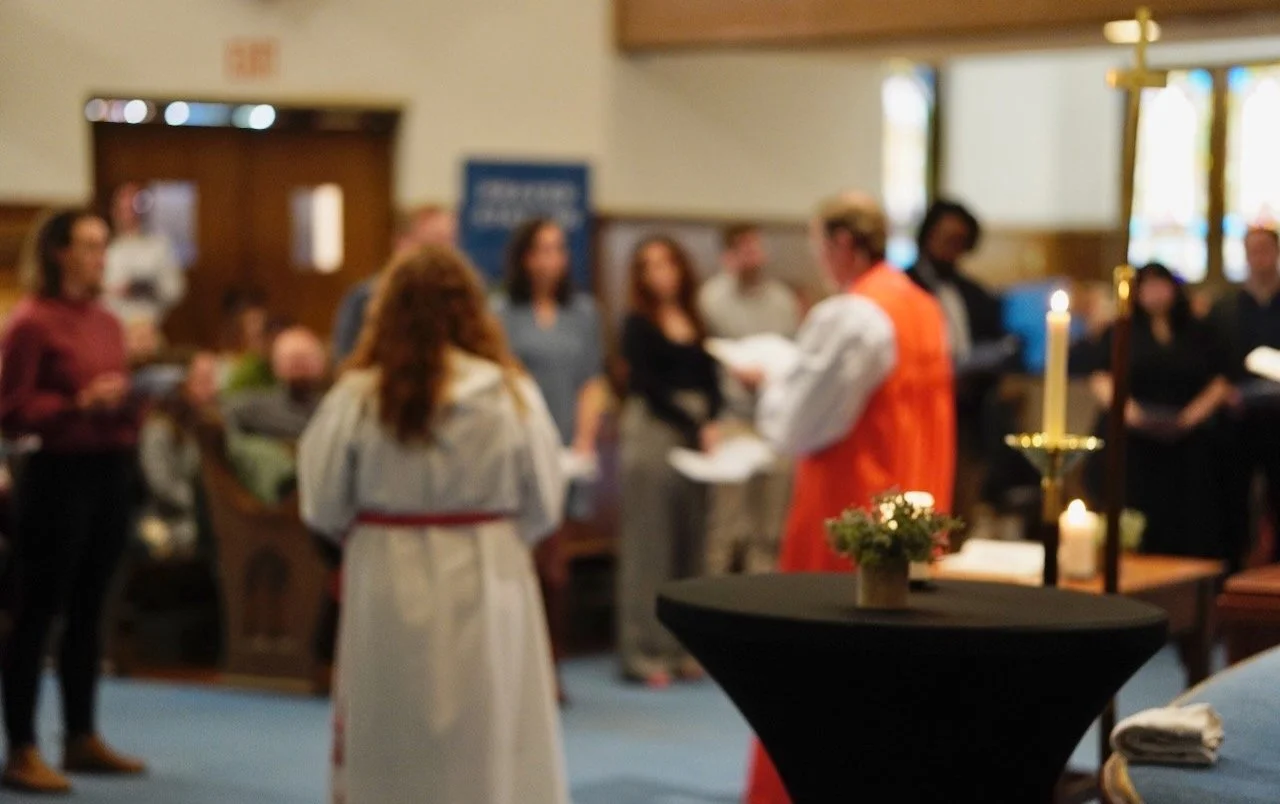
Becoming a Member at Redeemer
On Sunday, May 12th, we have the joyful opportunity for you to be Confirmed by our Bishop and welcomed as new Members into the Parish. This is a wonderful event that takes place only twice a year, and is available to all who have been baptized and attended our Foundations class! I thought I’d take a moment to share a few details about what it means to take this important step in your faith.
“Why should I become a member of a local church?”
Over the years I’ve heard a number of well-intentioned and sincere objections follow this question:
Membership feels exclusive, like some people are in and some are out. This isn’t very hospitable.
Membership feels too institutional, like the church is a club and not a family.
Membership means requirements and obligations, which are anti-Gospel and anti-Grace.
It might surprise you to learn this, but I used to strongly agree with each one of these objections. However, over the years, my thinking has changed significantly and - rather than membership working against hospitality, family, and Gospel - I’ve become deeply convinced that membership actually facilitates each of these!
Here’s how:
1. Membership facilitates hospitality.
Luke 14:12-14. He said also to the man who had invited him, “When you give a dinner or a banquet, do not invite your friends or your brothers or your relatives or rich neighbors, lest they also invite you in return and you be repaid. But when you give a feast, invite the poor, the crippled, the lame, the blind, and you will be blessed, because they cannot repay you.”
In Christ’s teaching, we are specifically instructed to open our doors and invite in those who are on the outside. This passage is not just about inviting in the poor vs the rich (though it is also about that), it is about extending hospitality to outsiders vs insiders. Now, if - in the name of hospitality - we say there’s no such thing as insiders or outsiders, then who will do the inviting and who will come to the party? You cannot invite others into the hospitality of God until you, yourself have received the goodness of the Lord’s hospitality. You must be in before you can invite others in.
Once you are in, you realize there are others who are out - which puts you in the perfect situation to obey Jesus’ teaching on true hospitality. In this way, Membership (a formal and clear way of defining who is in and who is out), actually sets us up to obey the Lord, open our doors, and demonstrate real hospitality to others.
2. Membership makes the church more like a family.
1 Timothy 5:1-2. “Do not rebuke an older man but encourage him as you would a father, younger men as brothers, 2 older women as mothers, younger women as sisters, in all purity.”
This passage instructs us to treat other people in the church like family. Then, our author (the Apostle Paul) goes on to give specific instructions about who to care for, how to care for them, and how to discipline people when they stray into sin. The assumption is, you can only operate as a family when it is clear who, exactly, is a part of the family. Paul is clearly not instructing us to treat all people like fathers, monthers, brothers, and sisters - but rather the people who are a part of the church family. When such individuals stray into flagrant sin, they are (temporarily, and for the sake of encouraging repentance) removed from the church family. For this kind of familial love and discipline to work, there must be some sort of clear boundary line that delineates who is in the family and who is not.
Therefore, in order for the church to function like a family, we must know who, specifically, is a part of that family. The brothers, sisters, mothers, and fathers here is not meant to signify some abstract concept of warm relationships - rather we should be thinking of specific people. i.e. my brother-in-Christ Jeromy or my father-in-Christ David. Membership helps take us from the abstract to the specific in being a church family.
3. Membership showcases the Gospel.
Ephesians 2:8-10. “For by grace you have been saved through faith. And this is not your own doing; it is the gift of God, not a result of works, so that no one may boast. For we are his workmanship, created in Christ Jesus for good works, which God prepared before hand, that we should walk in them.”
“But Membership means requirements and obligations, which are anti-Gospel and anti-Grace.” This is the one I hear most often. It is also the one to which I am, simultaneously, most sympathetic and which I disagree with the most strongly! I am sympathetic because it is absolutely true that the Gospel is the good news of the free gift of mercy and forgiveness won for us in the death and resurrection of the Lord Jesus. The Gospel is primarily about something God has done for us and not something that we do for God.
However, when we receive this free gift of mercy and forgiveness, we find that it changes absolutely everything about us. Our lives are no longer our own. We belong, body - mind - and soul - to the Lord. We begin to embody the good news of the Gospel, allowing it to shape our lives and affections.
Membership clarifies the implications of the Gospel for us and, therefore, showcases the beauty of the Gospel in the transformed lives of the members. If we resist Membership on the grounds that “the Gospel is not about doing stuff,” we are saying that the church is not have any vision for what a redeemed and renewed life in Christ should look like. A quick, cursory reading of just about any New Testament book should quickly lay that objection to rest.
Dear friends, on May 12, 2024 - our Bishop (the Rt. Rev. Christopher Warner) will visit Redeemer to confirm and welcome in new members. I want to warmly and joyfully extend the invitation to membership to absolutely all of you! If you would like to move forward here are your action items:
(*Prerequisite: Take the Foundations Class)
• Step 1: Register to become a member on May 12.
• Step 2: Fill out the membership and pledge form.
• Step 3: Sign up for a pre-membership interview with Lane Cowin or Oldson Duclos.
• Step 4: Arrive 30 minutes early to one of the services on May 12.
• Step 5: Participate in the Confirmation & Membership service on May 12.
• Step 6: Throw a party with friends and family!
This wonderful event only takes place twice a year, and is available to all who have been baptized and attended our Foundations class! If you have any questions about what it means to be a Member at Redeemer, or about the Membership process, please reach out to me: dan@redeemerva.org.
In the Father’s love,

Come to the 7AM Sunrise Service on Easter (If possible!)
Good afternoon! A blessed Holy Week to you. I want to take a moment to ask you to consider attending the 7AM Sunrise Worship Service on Easter Morning. Now, of course not everyone is able to do this and we understand! However, if you are able to flex your schedule, here are three good reasons to attend the 7AM:
Redeemer Family,
Good evening! A blessed Holy Week to you. I want to take a moment to ask you to consider attending the 7:00 a.m. Sunrise Worship Service on Easter Morning. Now, of course not everyone is able to do this and we understand! However, if you are able to flex your schedule, here are three good reasons to attend the 7:00 a.m.:
Align Worship of God with the Rhythms of God’s Creation: Greet the rising of our Lord as we greet the rising sun. Followers of Jesus have always understood the daily rhythm of sleeping and waking to be a form of practicing death and resurrection.
Make Worship the First Thing You Do on Easter: Before breakfast, parties, and other festivities, begin the day with worship.
Make Room for Visitors at the 9:00 a.m. & 11:00 a.m. Services: Easter is one of the most important days for us to show hospitality to outsiders.
Church family, I hope this doesn’t sound fake, but as we head into the Triduum of Maundy Thursday, Good Friday, and Easter Sunday, I just want to say how very fond I am of each of you and how much I love our parish.
The Holy Spirit has drawn us together and has knit us as one in Christ - making us both united with Jesus and united with each other. Of course, life doesn’t always feel this way, but our union is real regardless of the highs and lows of our feelings.
It continues to be a tremendous privilege to serve as your Rector and I’m so grateful that we will make the journey together over the next few days.
In the Father’s love,
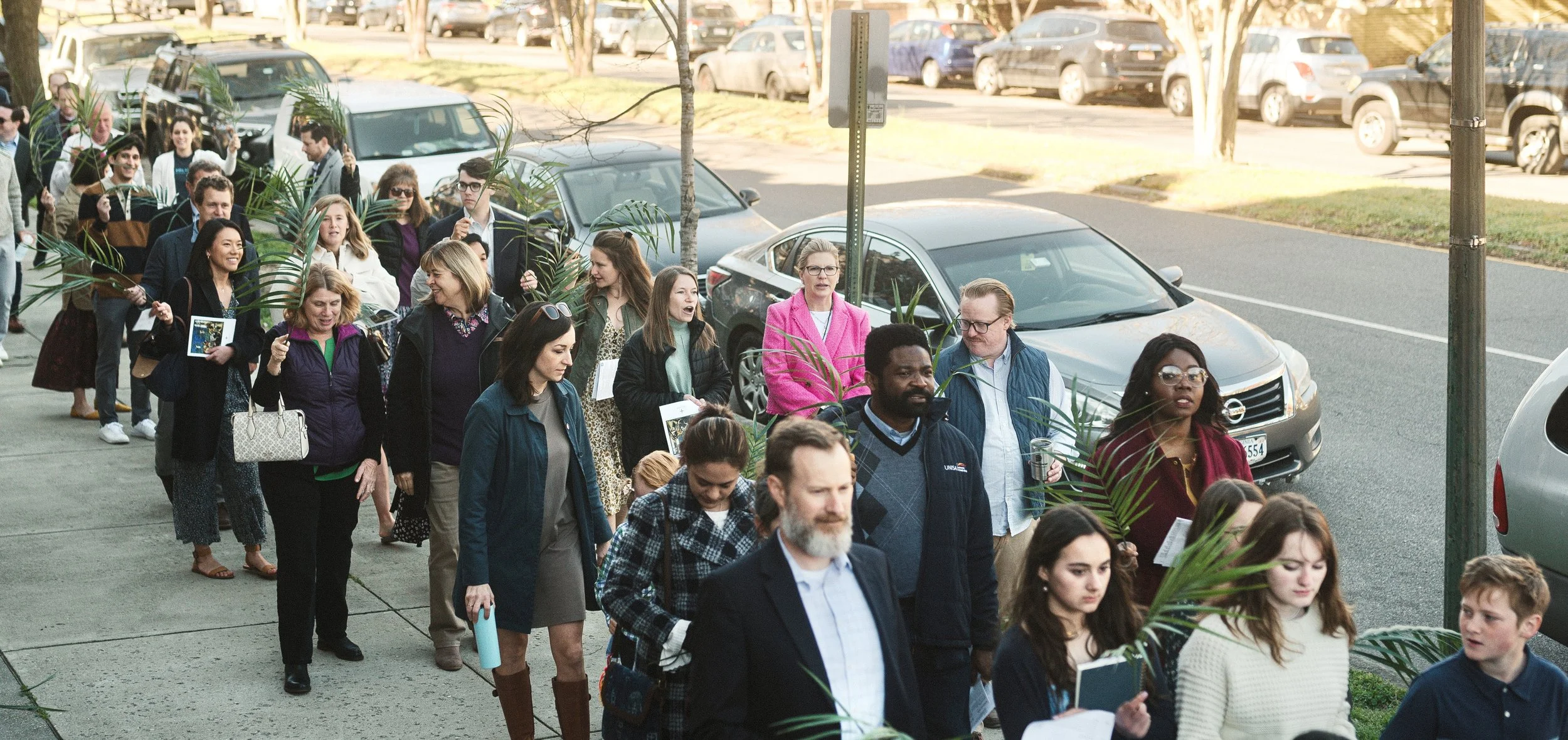
Holy Week and the Triduum
Good afternoon! Holy Week is nearly upon us. I want to take a few minutes to explain what it will be like to participate in the most important days of the year together. Please, if you can, read the following in its entirety.
Redeemer Family,
Good afternoon! Holy Week is nearly upon us. I want to take a few minutes to explain what it will be like to participate in the most important days of the year together. Please, if you can, read the following in its entirety.
PALM SUNDAY | March 24
The first day of Holy Week and the day that we remember Christ’s triumphal entry into the city of Jerusalem (recorded in all four Gospel accounts: Matthew 21:1-11, Mark 11:1-10, Luke 19:29-38, and John 12:12-15). That morning, we will begin outside, on the sidewalk along Arthur Ashe Boulevard, before we process into the sanctuary waving palm branches and singing. Now, this concept isn’t a new or creative idea. It is, in fact, a very old tradition.
So why are we doing this? There are at least three good reasons (and I’m sure many more):
It connects us to our history: By waving palm branches, singing, and processing together - we will do something with our bodies in the present that connects us to the people of God in the past. We are joined with Christian brothers and sisters from ages past, as well as with the first century citizens of Jerusalem who welcomed Jesus into their city.
It is formative for our young children (and for adults): Few things help young children (or adults for that matter) understand a story better than acting it out together. We want more than intellectual assent to the teaching of scripture, we want to receive, embody, and extend the good news of what Christ has done for us. This is why we kneel, stand, sing, eat the bread, drink the wine, and - yes - wave the palms!
It is an act of public worship: In our secular, materialist age, there are very few opportunities for acts of public worship and devotion to Christ. No doubt, as many of us adults walk down Arthur Ashe Boulevard, we will feel very silly. If that describes you, don’t worry, you’re in good company. We will all feel the strangeness of publicly worshiping Christ in the midst of neighbors who think we are lunatics. But this is not a bad thing - for us or for our neighbors. It’s good for us because it presents us with a very real opportunity to be courageous. It’s good for our neighbors because our worship serves as a reminder that, no matter what the zeitgeist of our time may say, there are real men and women and children who are continuing to find life in Christ Jesus.
So, dear friends, this Sunday morning, come ready to do a new thing, which is a very old thing, and to do a strange thing, which is a very good thing. We will wave palm branches, and sing, and walk and declare together that, minority though we be, there is still hope to be found only in the Lord Jesus.
STATIONS ON BOULEVARD
On Monday-Wednesday from 8:00 a.m.-7:00 p.m. and Thursday-Friday from 8:00 a.m. to 4:30 p.m. the 14 Stations of the Cross will be posted along Arthur Ashe Boulevard. I encourage you to set aside 30-45 minutes of time to stop by, and spend time praying and contemplating each station. A digital guidebook will be available at the installation to lead you through this exercise.
MAUNDY THURSDAY | March 28
The Paschal mystery - the death and resurrection of Jesus Christ - is at the heart of the Christian Gospel. The evening of Maundy Thursday begins the Triduum (the sacred three days). Maundy Thursday receives its name from the maudatum (commandment) given by our Lord: A new commandment I give to you, that you love one another: just as I have loved you, you also are to love one another (John 13:34). At the Last Supper, Jesus washed his disciples' feet and commanded them to love one another as he had done. This day commemorates the Lord’s example of servant ministry, the institution of the Eucharist, the agony of the Garden of Gethsemane, and the betrayal leading to the crucifixion.
Services are at 5:00 p.m. and 7:00 p.m.
Will Clark, our CCO College minister to VCU will preach at 5:00 p.m. and Tee Feyrer, one of our CCO College ministers to University of Richmond will preach at 7:00 p.m.
No Nursery or Kid’s ministry. Kids are invited to fully participate in all parts of the service.
Remember to wear sandals or slip-off shoes (to facilitate the foot-washing portion of the service).
GOOD FRIDAY | March 29
The Good Friday liturgy is the second part of the Triduum. This most somber of all days is appropriately marked by fasting, abstinence, and penitence, leading us to focus on Jesus and the meaning of his Cross. Some churches do not use musical instruments or bells on this day. The church is often darkened. The bare, stark appearance of the church serves as a reminder of the solemnity and sorrow of the day. The Lord of Life was rejected, mocked, scourged, and then put to death on the Cross. The faithful are reminded of the role which their own sin played in this suffering and agony, as Christ took all sin upon himself, in obedience to the Father’s will. By the Cross we are redeemed, set free from bondage to sin and death. The Cross is a sign of God’s never-ending love for us. It is a sign of life, in the midst of death.
Services are at 5:00 p.m. and 7:00 p.m.
Oldson Duclos, our Director of Community Formation, will preach at both the 5:00 p.m. and the 7:00 p.m. services.
No nursery or children’s ministry. Kids are invited to fully participate in all parts of the service.
Remember to wear black or gray clothing.
HOLY SATURDAY
This is a day of quiet contemplation. It is important not to start the Easter celebration and feasting too early. Consider eating simple foods and refraining from entertainment. Perhaps, in the morning or the evening, consider praying:
O God, Creator of heaven and earth: Grant that, as the crucified body of your dear Son was laid in the tomb and rested on this holy Sabbath, so we may await with him the coming of the third day, and rise with him to newness of life; through Jesus Christ our Lord. Amen.
EASTER SUNDAY | March 31
As the third day dawns, we celebrate the bodily resurrection of our Lord from the dead!
Alleluia! Christ is risen!
The Lord is risen indeed! Alleluia!
The church will resound with the ringing of bells, shouts of praise, and songs of joy! This is a dual sacrament service: with both Baptisms and Eucharist.
There are three identical services: 7:00 a.m., 9:00 a.m., and 11:00 a.m. (But only the 9:00 a.m and 11:00 a.m. provide nursery and children’s ministry).
If you are able to attend the 7:00 a.m. service, please do so! We will likely run out of space at 9:00 a.m. and 11:00 a.m.. By worshiping at the sunrise service, you show hospitality to visitors who will likely attend the later two.
There will be coffee, juice, and donuts across the street near the VMFA sculpture garden after all three services. Stay for a while and enjoy the after-party!
Redeemer family, I love you all and I’m so grateful that we get to walk through this week together. I hope and pray that our observance, practice, and worship through these services forms the Gospel more deeply within us so that we might be more missionally present to our families, neighbors, and city.
In the Father’s love,

Call to a Corporate Fast on Good Friday, March 29
Two weeks ago, we contemplated the Practice of Fasting and together we explored how this spiritual discipline has cultivated virtue in the lives of God’s people from Old Testament times through to the present. If you missed the sermon, you can listen to it here. While most of us are likely familiar with the concept of a private, personal fast, we may be less familiar with the concept of a corporate fast. Here are just a few (of the many) examples of corporate fasting in scripture:
Redeemer Family,
Two weeks ago, we contemplated the Practice of Fasting and together we explored how this spiritual discipline has cultivated virtue in the lives of God’s people from Old Testament times through to the present. If you missed the sermon, you can listen to it here. While most of us are likely familiar with the concept of a private, personal fast, we may be less familiar with the concept of a corporate fast. Here are just a few (of the many) examples of corporate fasting in scripture:
Leviticus 16: The Israelites practice an annual corporate fasting on the Day of Atonement.
Nehemiah 9: The Israelites in a national confession time of fasting, prayer, repentance, and public scripture reading.
Joel 2: God speaks to the prophet Joel and calls him to declare a time of corporate fasting and repentance.
Jonah 3: The people of Nineveh respond to Jonah’s prophetic preaching with fasting and repentance.
Acts 27: Paul and his 275 shipmates fast for 14 days through a storm at sea before breaking their fast in a manner that is a nod towards the Eucharist (vs 35).
Throughout scripture, corporate fasts are marked by themes of repentance, confession, and calling on God to show mercy and provide atonement for the sins of the people.
Therefore, how appropriate that throughout church history, it has been common for both clergy and parishioners to fast on Good Friday of Holy Week - a day devoted to repentance of our sins and remembering the mercy of God in the atoning death of Christ on the cross.
As the Book of Common Prayer states in the preface to the Good Friday service on p.564, “This most somber of days is appropriately marked by fasting, abstinence, and penitence, leading us to focus on Jesus and the meaning of his cross.”
And so Redeemer Family, on Good Friday of Holy Week (March 29), we are all invited to fast together, as a parish. No one should feel coerced or peer-pressured to participate. Fasting is most spiritually effective when it is something you choose, not something you do because other people guilted or shamed you into it!
So, if you wish to participate, here are two potential ways:
Full-Fast
The fast begins at the end of the Maundy Thursday service on March 28.
Eat an early dinner beforehand.
Come to one of the Maundy Thursday services, 5pm or 7pm.
Practice footwashing and receive the Eucharist, then the fast begins.
The bread and wine of the Eucharist are the last food in your stomach from Thursday evening, through all of Good Friday, to Saturday morning.
Attend one of the Good Friday services, 5pm or 7pm.
Break the fast on Saturday morning with a simple and light meal.
Partial Fast
If you are new to fasting or have a medical condition that makes fasting unwise, here are partial ways to participate.
Shorten the fast: Sunrise to sunset on Friday. Eat an early breakfast Friday morning and a late dinner Friday evening. Skip lunch and fast for the daylight hours.
Limit the fast to only refraining from solid foods. Replace meals with fruit juice or a smoothie.
Beloved brothers and sisters, the goal here is to not create some new law that everyone must obey. The goal is to help us participate in the passion of our Lord together. We are not in this alone; we are a church family. Let’s fast together on Good Friday and then, let’s FEAST together on Easter Sunday!
In the Father’s love,

Preparing For Lent
Whether you are new to the practices of the season of Lent or have engaged them many times before, here is a helpful overview to how we observe and practice Lent at Redeemer.
Whether you are new to the practices of the season of Lent or have engaged them many times before, here is a helpful overview of how we observe and practice Lent at Redeemer.
“The practice of Lent is a means of grace, but grace itself is a mystery that grips us however buttoned-up or sloppy our Lenten practice is.”
Tish Harrison Warren
What Is Lent?
Lent is a 40-day period of Christ-centered devotion between Ash Wednesday and Easter Sunday. The practice of Lent has been observed by Christians around the world since the early centuries of the church.
Why Practice Lent?
The most important reason to practice Lent is to draw near to Jesus Christ and become like him. Lent is a season of intentional discipleship under Christ and with Christ. We also practice Lent to bond more closely with fellow Christians who are on the same journey, not only in our local church but also around the world. Along the way, our sin and enslaving habits are put to death, and we learn to internalize and share in Christ’s resurrection power.
What are ways I can expect to become more like Christ during Lent?
There are some themes that often arise when people describe their experience of practicing Lent. However, this list is not exhaustive; God’s activity in your life cannot be predicted or controlled.
Humility
Humility is the capacity to recognize who we are in relationship to the living God. The path of Lent reveals our mortality, sin and limitations. Often, the Holy Spirit reveals personal and corporate blind spots during Lent. Our hunger pains, headaches and failures during Lent become living reminders of our great need for the salvation offered through Jesus Christ.
Reordered Loves
The gentle harness of Lent is designed to loosen our unhealthy attachments to creation (including food, drink, and money) so that we may enjoy a deeper bond to the Creator. We learn to internalize and enjoy the love of Christ during Lent.
Purity
Soren Kierkegaard said that “purity of heart is to will one thing.” During Lent, we see the incompatibility between our commitment to Jesus and our dabbling in idolatry. We confess our sins and thereby take hold of the forgiveness that is ours in the Gospel.
Joy
As we give ourselves to him in our suffering, Jesus Christ supplies us with a lasting spiritual overflow and the consolation of the Holy Spirit. This is to be distinguished from a spiritual high which cannot be sustained over time or during suffering. Easter Sunday and corporate worship during Lent grant us a taste of heaven.
Renewed Imaginations
As we progress through events of Ash Wednesday, the 40 days of Lent and the drama of Holy Week, we see ourselves and the world as they are in God. The events of Jesus’ life, death and resurrection become for us a window into the new creation (otherwise known as the Kingdom of God) in which we can participate and from which we can receive a secure identity.
Dependence
During Lent, we unlearn the lie that we are self-made, self-contained individuals. We learn to draw upon the life of God and the bonds of affection with our fellow Christians.
Invitation to Practice Lent at Redeemer
To the extent that you are able, practice Lent with your church family. Begin with an Ash Wednesday service and receive the sign of the cross on your forehead—a reminder of your own mortality. Participate in a Small Group and discover that you are not alone in your struggle. Remember to keep the balance between fasting and discipline on Mondays-Saturdays and feasting on Sundays. Plan ahead for Holy Week so that we can walk through Palm Sunday, Maundy Thursday, Good Friday, and Easter Sunday together as a church.
What we hope you’ll find is that, as we enter into these practices together, God’s grace for us is more abundant than we previously thought. We’ll try together and we’ll fail together, then we’ll confess our sins together and be forgiven together. When we come out on the other side, into a bright Easter morning, we’ll find ourselves closer to Christ and closer to each other.
A SIMPLE GUIDE FOR KEEPING LENT
In an age of endless tailoring and individualizing, consider keeping Lent the same way Christians have throughout history and around the world. Resist the natural impulse to think of yourself as special thereby requiring a specialized version of Lent. What makes you special is God’s love for you, not your particular struggles. So here is a simple list of ways that many millions of Christians will keep Lent this year. You are invited to join us.
Practices of Embrace (New Things to Take Up)
Prayer
Set aside more time to pray than usual. Consider pausing to kneel in prayer three times daily: morning, noon, and evening.Scripture
Read the Bible with special attention. Consider replacing a meal with scripture reading to remind you that you "do not live on bread alone, but on every word that comes from the mouth of God.”Confession
Practice confessing your sins aloud to a priest of the church.Silence & Solitude
Practice the foundational spiritual disciplines of silence and solitude.Giving
Give more away than you usually do - either by giving through the church or directly to one of our Justice & Mercy Partners.Volunteering
Volunteer time to visit and assist the sick, the prisoner, or the outcast.Suggestions: Retreat Doctors Hospital, Richmond City Jail, the Virginia Home.
Practices of Resistance (Good Things to Pause)
Fasting
Fast the whole day on Ash Wednesday and Good Friday.
Fast from sunrise to sunset on Fridays, or (if too difficult) abstain from meat on Fridays.
Give up sweets and alcohol, except on Sundays, which are feast days.
Remember, the purpose of keeping these spiritual disciplines during the season of Lent is to more fully enter into a season of preparation to remember the death of our Lord Jesus and to celebrate His glorious resurrection!

Preparing For Lent: Shrove Tuesday & Ash Wednesday
Next week, you are invited to participate in two of the most important days of the year in the life of the church.
Redeemer Family,
Next week, you are invited to participate in two of the most important days of the year in the life of the church.
SHROVE TUESDAY, FEBRUARY 13
Though it is a profoundly misunderstood day (largely because of the excesses of Mari Gras in New Orleans), it can be most simply understood as a day of “cleaning out”. The word shrove is derived from the Old English word shrift which means to confess one’s sins. The concept is that Shrove Tuesday is a day of cleaning everything out:
Emptying the pantry of sugary and fatty foods to prepare for the Lenten fast.
Emptying your soul of sins by confessing to a priest and receiving absolution.
And so it’s a day of preparation.
We prepare with our bodies: traditionally the church throws a feast—let’s eat and drink and be merry together, for tomorrow we remember our death.
We also prepare our souls: traditionally, people come to the priest for confession.
If you are willing, here is how to participate:
Register here to attend one of the two seatings for the Shrove Tuesday Dinner. Lee’s Chicken ‘n Biscuits will be served with drinks for adults and kids.
Schedule a 15-minute window to come to the Parish House for confession. This may be an unfamiliar practice to many of you and it would be important for you to understand that we do not believe it is necessary to confess to a priest in order to be forgiven. Jesus is the only mediator we need between us and God the Father. However, if you’re anything like me, you may sometimes struggle to honestly tell the truth about your sins and genuinely believe that you are forgiven. This is where it can be wonderfully beneficial to confess to a priest and hear, audibly, the words of grace, mercy, and forgiveness. I realize that many of you will not be able to do this on Tuesday and so I would encourage you to come in for confession at least once during the season of Lent. Here is a link to schedule a confession on Shrove Tuesday or another time during Lent.
ASH WEDNESDAY, FEBRUARY 14
We gather to receive the sign of the cross in ashes on our foreheads.
Strange as it may sound, we won’t wash off the ashes right away. Instead, we'll bear the dirty smudge right there on our faces the rest of the day. Why?
Ash Wednesday marks the beginning of the season of Lent: a time of penitence, fasting, and prayer, in preparation for the great feast of the resurrection.
The season of Lent began in the early days of the Church. The forty days refer to our Lord’s time of fasting in the wilderness, and since Sundays are never fast days, Ash Wednesday is the beginning of the Lenten Fast.
Throughout the Old Testament, ashes were used as a sign of sorrow and repentance. Christians have traditionally used ashes to indicate sorrow for our own sin and as a reminder that the wages of sin is death (Romans 6:23). Like Adam and Eve, we have disobeyed and rebelled against God, and are under the same judgment, “‘You are dust, and to dust you shall return’” (Genesis 3:19).
But as we are marked with ashes in the same manner that we were signed with the Cross at Baptism, we are also reminded of the life we share in Jesus Christ, the second Adam (Romans 5:17, 6:4). It is in this sure hope that we begin the journey of these forty days of Lent, and that by hearing and answering our Savior’s call to repent, we may enter fully into the joyful celebration of his resurrection.*
Taking things one step further, the ashes serve as an urgent reminder of something that many of us have forgotten or chosen to ignore - our own mortality. Over the past years, as I have listened to you, listened to our culture, and listened to the Holy Spirit, I have heard how so many of us seem to struggle with the paradoxical denial-and-anxiety of death. We live as if we will not die (denial), but we also have a deep, inner terror of death (anxiety).
The Christian hope is an answer to the question of death, but there is nothing less compelling than an answer without a question. If we get rid of the question, the answer will wither away. Get rid of death—tuck it away in hospitals and nursing homes, remove death from our sight—and soon the hope of resurrection will lose its luster. The good news of the Gospel will hardly seem good or much like news. Without death, the Gospel just isn’t very interesting.
But the problem of death persists. Hidden or not, death comes for us all. Which means that, interesting or not, we needthe Gospel. Therefore, we need to take a page out of the ancient church playbook and reclaim the spiritual discipline of Memento Mori; we must remember our death. We must keep our own deaths present before our eyes.
When we do this, the very opposite of what we fear will occur. In contemplating death, we fear that we will become depressed, morbid, unhappy, fearful people. However, as all who have practiced this will attest, the very opposite thing happens within us. When we hold both our death and the Gospel before our eyes, we become more joyful, more content, more grateful, and more courageous people. This happens because, in contemplating our own death in light of the Gospel, we take our deepest terror and bring it up out of the darkness and into the light where Jesus can deal with it.
So, church family, do a strange thing and come to one of the Ash Wednesday Services at 6:00 a.m., 12:00 p.m., or 5:30 p.m. Receive the ashes on your forehead and remember your death.
Let’s undertake this uncomfortable, but necessary journey together through Lent so that when we arrive at Easter, we will be ready to celebrate with authentic and enduring joy!
In the Father’s love,

The Definition and Purpose of a Vestry
Every March Redeemer members elect two members to join the vestry—our parish's governing body—for a three-year term. Any member in good standing can be nominated to serve on the vestry. If you are a member of Redeemer, we encourage you to prayerfully consider whom you might nominate for these important roles.
Every March, members of Redeemer elect new members to the Vestry—our parish's governing body. This year we are electing three new Vestry members: two for 3-year terms and one for a 1-year term. (Sarah Byrd, after serving us well for 2 years, has resigned from the Vestry for personal reasons.) Any member in good standing can be nominated to serve on the vestry. If you are a member of Redeemer, we encourage you to prayerfully consider whom you might nominate for these important roles.
Nominations are open through Sunday, February 25
Nominees will be presented on Wednesday, March 6.
Voting will be conducted online the week of Sunday, March 10 through Sunday, March 17.
Thank you for your thoughtful and prayerful consideration.
The Nominating Committee of the Vestry
Hallel Baehman
Robyn Burlew
Matt Morgan
Jim Reynolds
The Definition of a Vestry
What is a Vestry?
Our Vestry is an elected body of deeply committed, faithful lay members of the parish. The Vestry, under the leadership of the Rector, meets monthly to prayerfully steward the “temporalities” (i.e. material resources) of the church.
Demographics of a Healthy Vestry
It is desirable to have a well-balanced Vestry that accurately represents the demographics of the congregation. A healthy Vestry is composed of both men and women, young and old, single and married, parents and non-parents.
Characteristics of a Good candidate for Vestry
A good candidate for the Vestry is a deeply committed, faithful, prayerful follower of Jesus and a confirmed member of Redeemer. He or she does not need to be successful, influential, or impressive. He or she does not need to be an expert in the Anglican tradition. A good candidate wants to be on the Vestry in order to serve; he or she is humble, willing to hear others and to work well with others to reach decisions that benefit the Church.
Expected Time Commitment
Not everyone will have the time to serve on the Vestry in every season of life. In addition to one monthly meeting on a weekday evening for three years, Vestry members will be expected to serve 2-3 additional hours per week on Vestry-related tasks. Vestry members will also attend a one-night annual retreat.
Process for Submitting Nominations
Prayer: This is a process that needs to be saturated in prayer.
Please submit your nominations here.
The Purpose of Redeemer's Vestry
Safeguard the Vision
The Vestry’s primary role is to protect the stated vision of the parish. Each member of the Vestry should be able to articulate and to safeguard the overall goals and visionary direction of the congregation. For us, this includes our commitment to Gospel Formation for Missional Presence and to The 7 Essential Practices of the Church.
Ensure the Values
While the Vestry may know the vision and goals of the parish, the next question is this: How are we actually trying to live this out? What are the means and programs by which we are working toward our vision? Where do we focus our efforts? The Vestry works with the Rector to implement the vision through effective methods and programs.
Uphold Financial Integrity
The Vestry is also charged with protecting the financial integrity of the church. Through a designated Finance team, the Vestry scrutinizes the finances on a regular basis. The Vestry creates and approves a budget, provides for an annual audit of all funds, and ensures that there is an annual report to the congregation. The Vestry acts as guardians of the financial life of the parish to ensure that the church has a long-term future and is operating in a trustworthy way with all funds that have been given or borrowed.
Support the Rector
Supporting the Rector is the fourth key role of the Vestry. If the Rector is the main agent in accomplishing 1, 2, and 3 above, then the Vestry’s primary role is to help the Rector accomplish these things. Vestry leadership is never honorary: they are not rubber stamps for what the Rector decides is best. But neither are they to be ‘devil’s advocates’, the loyal opposition, or representatives of any special interest groups or programs in the parish. The Vestry has one job in a sense: help the Rector to lead the parish in 1, 2 and 3 (above) and support him however they can.
Model Sacrificial Giving
The final role of the Vestry is to model sacrificial, tithe-based giving to the parish. The Vestry should be among the most generous and financially committed members of the church. Why? Because members who give generously have often learned how to make faith-based decisions about money and thus can lead the parish well in this area. And because people who are sacrificial givers—tithers—have usually discovered in themselves a heart of generosity that will help create a parish-wide culture of generosity in the years to come.
* Language borrowed from The Rev. David Roseberry, The Rector, the Vestry and the Bishop: The Essential Guide for Anglican Leaders.

Small Groups Resume February 4—You're Invited.
A small group gives you the chance to practice belonging. Humans are made to belong to each other! Think of what a gift it is to walk into a room and have someone’s face light up because they’re so glad you’ve come. To return from a trip and have someone say they’ve missed your presence because life is not the same when you’re gone. It is a profoundly human thing to want to know who your people are and to spend time with them.
Hello Redeemer Family!
As we’ve turned the corner from the Christmas season and entered into Epiphany, we also turn from the unique rhythms of the holiday season and return to our regular routines. Our college students are back, holiday travel is finished, and we can look forward to five-day work weeks and school weeks for some time to come.
It’s in these regular, ordinary rhythms of our lives where so much of our “Gospel formation” happens – where our encounters of God through his Word and his people in the Church start to reshape our everyday lives. Here at Redeemer, we believe one of the most important regular, ordinary rhythms of our week should be participating in a Small Group.
What’s So Important About Small Groups?
A small group gives you the chance to practice belonging. Humans are made to belong to each other. Think of what a gift it is to walk into a room and have someone’s face light up because they’re so glad you’ve come. To return from a trip and have someone say they’ve missed your presence because life is not the same when you’re gone. It is a profoundly human thing to want to know who your people are and to spend time with them.
In an ideal world, community would happen effortlessly, with everyone feeling equally seen, known, wanted, and cared for from the start. That can happen, and when it does, thanks be to God! But most of us have had the more normal experience of working at community over time, with a little bit of awkwardness along the way.
There is an important spiritual muscle that gets exercised as we practice belonging in Small Groups. We get to rehearse the skill of knowing and being known by others; bringing our hopes, questions, and self-consciousness with us. Ultimately, what makes a Small Group work isn’t the balance of personalities around the table, or whether the potluck contributions are especially good. Rather, we are brought together as people who already belong to Jesus, through the power of the Gospel. The practice is letting the Gospel be the power it is to allow us to welcome each other, work to see and understand each other, and eventually feel loved as people who belong to each other.
Two Things For You To Do
If you are an adult who calls Redeemer home, please join a Small Group! You can contact Redeemer’s Director of Community Formation, Oldson Duclos, for assistance in finding a group that works best for you. Redeemer Small Groups will relaunch the week of February 4-10.
If you know of someone inside or outside of our parish who does not yet belong to Jesus or to a Gospel-practicing church, invite them to come to your Small Group with you.
Let’s practice belonging together.
Warmly,
Lane Cowin
Senior Director of Ministries

A Message for Families with School-Age Kids: Choose Holy Week Over Spring Break
The middle of January might seem like an odd time to start talking about Holy Week (this year it’s March 24-31), but both public and private school systems have scheduled Spring Break to start immediately after Easter Sunday. This poses a temptation. If you are a family with kids that hopes to travel for Spring Break, it will be convenient to leave town on Friday (Good Friday) March 29th to get in some extra days of vacation.
Redeemer Family,
The middle of January might seem like an odd time to start talking about Holy Week (this year it’s March 24-31), but public and many private schools have scheduled Spring Break to start immediately after Easter Sunday. This poses a temptation. If you are a family with kids that hopes to travel for Spring Break, it will be convenient to leave town on Friday (Good Friday) March 29 to get in some extra days of vacation.
Believe me, I have four kids in school, I get it.
However! Dear friends, I must plead with you here! Do not choose a few extra days of vacation over the most important days in the year!
Palm Sunday begins the passion week. We wave palm branches and sing hosanna. We reckon with the reality that our King enters humble, peaceful, on a donkey.
Maundy Thursday is the day we remember Jesus washing his disciples feet and instituting the Lord’s Supper. We reenact this together with real water and towels as we wash one another’s feet, the humblest act of love and service.
Good Friday is the day set aside for the church to gather to remember the death of our Lord Jesus on a Roman cross. It is a day of grief, lament, sorrow, and guilt. We stare the consequences of our sin full in the face.
Holy Saturday is a day of quiet, fasting, prayer, and waiting.
Easter Sunday is resurrection day! We greet the dawn with shouts of joy - CHRIST IS RISEN! We sing, we dance, we feast. And we do so together. Easter is not a private holiday, it is the highest point in the year for the family of God, the Church.
Holy Week tells the story of the Gospel and invites us to participate, with our bodies, together.
Vacations and times of rest are a good thing. Our crew plans to fully participate in all of Holy Week, and then we will enjoy a time of travel and rest starting on Monday, April 1st, the day after Easter Sunday.
If you have school-age kids and are planning to travel for Spring Break, I’m inviting you to do the same.
Please, please, for the welfare of your souls and the formation and discipleship of your children, do not choose Spring Break over Holy Week. Our time of rest will be all the more refreshing if we have re-centered on the one who is the source of our rest.
In the Father’s love,

2024 Spring Retreats and Conferences
From time to time, it is healthy to step away from our daily responsibilities in order to gain perspective, learn, rest, and grow. We do this so that we might return to our work refreshed by the Holy Spirit and re-engage our work with a renewed sense of purpose and energy. To that end, I would like to invite every single one of you (6th grade and up) to participate in one retreat (or conference) this Spring. College students, you are invited to the CCO Jubilee Conference in Pittsburgh and you are invited to the Women’s and Men’s Retreats. Middle and High school students, you are invited to the Youth Fellowship Retreat. Adults, you are invited to attend either the Women’s or Men’s Retreats at Roslyn (on 20 minutes from Redeemer).
Redeemer Family,
From time to time, it is healthy to step away from our daily responsibilities in order to gain perspective, learn, rest, and grow. We do this so that we might return to our work refreshed by the Holy Spirit and re-engage our work with a renewed sense of purpose and energy.
To that end, I would like to invite every single one of you (6th grade and up) to participate in one retreat (or conference) this spring. College students, you are invited to the CCO Jubilee Conference in Pittsburgh and you are invited to the Women’s and Men’s Retreats. Middle and High school students, you are invited to the Youth Fellowship Retreat. Adults, you are invited to attend either the Women’s or Men’s Retreats at Roslyn (only 20 minutes from Redeemer).
There will be a Marotta at every single one of these and we would love for you to join us!
CCO Jubilee Conference for College Students
Theme: This Changes Everything
Speaker(s): A great line up! (See any familiar faces?)
Date: February 16-18
Location: Pittsburgh, VA

Redeemer Women’s Retreat
Theme: Practicing Virtue | Being with God, Becoming Like Jesus
Speaker: April Murrie, Pastor of Formation a Church of the Good Shepherd in Charlottesville, VA
Date: March 8-9
Location: Roslyn Retreat Center
Redeemer Youth Fellowship Retreat
Theme: Practicing Virtue | Being with God, Becoming Like Jesus
Speaker: Christian Hayes, Director of Youth Fellowship
Date: March 15-17
Location: Sandbridge, VA

Redeemer Men’s Retreat
Theme: Practicing Virtue | Being with God, Becoming Like Jesus
Speaker: The Rev. Bill Haley, Executive Director of Coracle
Date: April 26-27
Location: Roslyn Retreat Center

Church Family, we have a limited number of spots available for each of these, so please mark your calendars and sign up now if you want to go!
See you there!
In the Father’s love,

Identity: Practicing the New Self
This coming Sunday, we begin the season of Epiphany, and we will kick off a 6-part series called Identity: Practicing the New Self.
Redeemer Family,
One year ago, we introduced fresh language to describe the work we do together as a parish: Gospel Formation for Missional Presence. This past fall, I wrote a series of six articles to help us understand how this work, both in our individual and collective lives.
We engage Gospel Formation and we manifest Missional Presence through the seven practices of: Story, Identity, Belonging, Virtue, Context, Vocation, and Imagination. These are seven angles or perspectives on what it means to be a human being and they are accompanied by corresponding questions:
What story am I in?
Who am I?
With whom do I belong?
How do I change?
Where do I make my life?
What is my purpose?
How do I love?
These are not Christian questions per se, they are human questions.
Our conviction is that the Gospel provides uniquely satisfying answers to the questions, but the answers are not merely data or dogma to be thought in our minds, but rather ways of life to be taken up in our bodies. In other words, our lives are our final answer to these questions.
During the season of Advent, we undertook a 3-part sermon series on Practicing the Story. You are welcome to listen in here if you missed it.
This coming Sunday, we begin the season of Epiphany, and we will kick off a 6-part series called Identity: Practicing the New Self.
We will approach this by examining some of the places to which we most naturally tend to look for a sense of identity and reveal how they fall short of giving us the stable, secure identity we all need. Here are the sermon titles for the next six weeks:
You Are Not What You Do
You Are Not Your Body Image
You Are Not Your Sexual Appetite
You Are Not How Much Money You Have
You Are Not What People Say About You
You Are Not Your Own
Church family, I know that I need to receive my identity as a child of God from my Heavenly Father through the good news of the Gospel of Jesus. But even though I know this… I so often tend to functionally live as if my identity came from my work, or my image, or my reputation, or any number of other odd and unhelpful places. There is a gap between what I know and what I practice. And so, for me, embracing my identity in Jesus must become a daily (sometimes even hourly!) practice. Perhaps you need this too.
And so, as we begin a new calendar year together, I hope that this series is re-centering and grounding for us. I hope it helps us rejoice at the words so poetically expressed in the old Heidelberg Catechism.
Q: What is your only comfort in life and in death?
A: That I am not my own, but belong—body and soul, in life and in death— to my faithful savior Jesus Christ.
See you on Sunday.
In the Father’s love,

Maternity Leave for Redeemer Kids' Staff Leaders
I wanted to keep everyone in the loop as our children’s ministry shifts a little while I am away on maternity leave. I, Sam, and our two boys, Clark and Miles, are welcoming a third boy into our family very soon! The Lord has provided richly for our family during this season of change and we are so grateful to be part of this particular church community as our little family shifts, grows, and encounters the challenges that come along with it all.
Church family,
I wanted to keep everyone in the loop as our children’s ministry shifts a little while I am away on maternity leave. I, Sam, and our two boys, Clark and Miles, are welcoming a third boy into our family very soon! The Lord has provided richly for our family during this season of change and we are so grateful to be part of this particular church community as our little family shifts, grows, and encounters the challenges that come along with it all.
A few things to note:
First of all, Mikala Thompson, our children’s ministry assistant, and I are both welcoming babies of our own this month and will be returning after a 12 week leave! Our nursery will have grown by at least two little ones by the time we return. 😊
While we’re away, Sarah Bergh and Lisa Yancey will be filling in as part-time staff to keep Redeemer Kids running smoothly. My work email will be redirecting all messages to Sarah Bergh during that time, so please reach out to her or Lisa if you have questions. I am so grateful for this team of women the Lord provided for our parish to keep up the good and fruitful work of children’s spiritual formation while we’re on leave. Thank you Sarah and Lisa!
Other than this change of leadership, nothing should look different on a Sunday morning for our children’s ministry. We are still offering spiritual formation classes for ages three through fifth grade and a full nursery at both services every week and our amazing volunteers are still working hard to love and disciple your children as they have always done.
Parents, I want to make a special request for you to continue to cooperate with the weekly safety protocols of checking your child in every Sunday and using the safety stickers at pick up for all children Pre-K and under! This small logistical step will make a huge difference for our interim team and volunteers to keep our ministry safety standards high like they strive to do. Thank you!
Parish, I want to make a special call for you to be in prayer for our interim team, our children’s ministry volunteers, and the families with young children in our parish. None of our work—the preparation, the systems, the lessons—is effective for formation without the work of the Holy Spirit. Each week, our team has to lay their work at the feet of Christ and trust that He will produce fruit in our children even on the most challenging days. That’s true of all of us though, isn’t it?
Church family, thank you for the many ways you show our children’s ministry and my own family the love of Christ year after year. We could not be more excited to bring another little imago dei into this community and I am deeply grateful for those who are stepping in to fill the gaps until I return to work after my leave. We love you all!
In Christ,
Casey Cisco
Director of Redeemer Kids
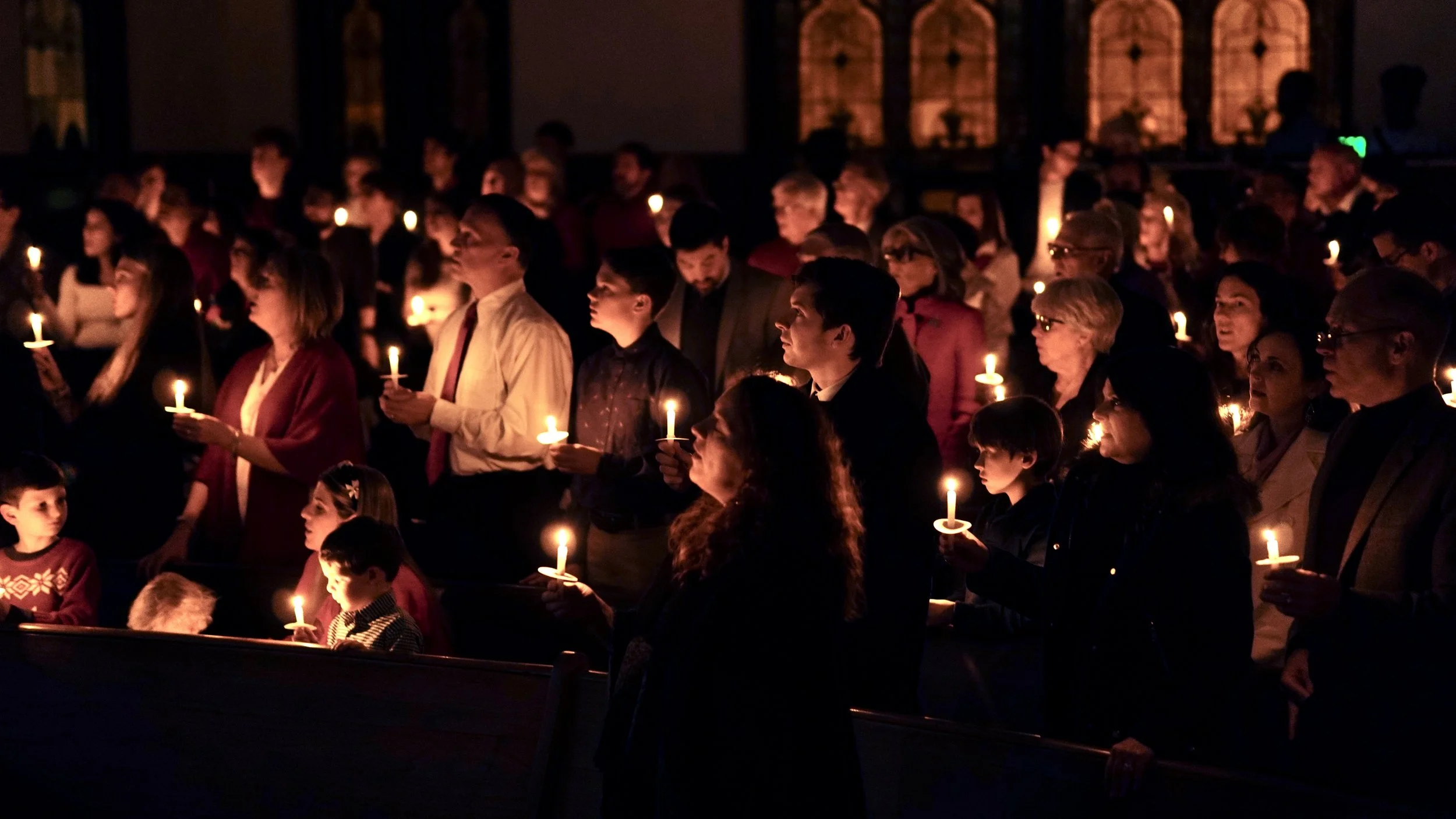
Is Christmas a Family or Church Holiday?
The answer to this question has undergone a dramatic shift in the past few decades. For hundreds of years the answer was a quick and easy “church holiday.” What else could celebrating the birth of our Savior be? Of course, there were family celebrations that often accompanied Christmas church celebrations, but these were understood to be secondary.
The answer to this question has undergone a dramatic shift in the past few decades. For hundreds of years the answer was a quick and easy “church holiday.” What else could celebrating the birth of our Savior be? Of course, there were family celebrations that often accompanied Christmas church celebrations, but these were understood to be secondary.
However, as surely all of us now recognize, the increased emphasis on family gift-giving and the overall decreased cultural acceptance of church participation has led to a quiet, but devastating swap. First the nuclear family rose to the #1 spot on the priority list for Christmas celebrations, then the church fell from #2 to basically dropping entirely off the charts all together. For many of the older generations, Christmas (along with Easter) was considered one of the most important days of the year to attend church (even if you skipped almost all the other days). However, for the younger generations, the idea of attending church on Christmas now sounds terribly inconvenient. It’s becoming normal, even amongst sincere Christians, to participate in worship on most days except Christmas.
What is fascinating about this shift is that it hasn’t produced the feelings and enjoyment of Christmas that it promised. Rather than Christmas celebrations being more fun and meaningful because they are no longer interrupted by “having to go to church,” many people are finding their Christmas celebrations empty and devoid of real meaning. Aside from ordering each other gifts online, eating a ton of unhealthy food, arguing about politics, and watching TV together… what is this even about? What is the point?
One of the most common refrains from Christians who are discouraged by the commercialization of Christmas is, “How do we keep Christ in Christmas?” The answer need not be a mystery - or rather, the answer lies in returning to the mystery. The best possible way we can enjoy the rich meaning and purpose of Christmas, the highest-impact thing we could do to “keep Christ in Christmas,” is simply to worship the Lord Jesus with our church family. Let’s gather together to wonder at the mystery of the incarnation - God has become a man. What a marvelous mystery this is!
Friends, if you are physically able, let’s gather together for worship on both Christmas Eve and Christmas Day. We can do this and celebrate with our families - and I think we will find that each enriches the other. I’ll see you there.
In the Father’s love,

Register for a J-Term Class Before the Holiday Crush
One of my favorite traditions here at Redeemer is our J-Term. Every January, we close down our Small Group gatherings and encourage everyone to take a class taught by a staff member or lay parishioner. I absolutely love seeing the diversity of gifts and variety of passions that our people have! So many of you have fascinating areas of expertise and it is a wonderful expression of generosity within the body of Christ for you to share your gift with others.
Redeemer Family,
Good afternoon! It was such a gift to see so many of you at our Parish Town Hall on Sunday night! If you missed it, you can click to read the annual report and listen to the audio.
One of my favorite traditions here at Redeemer is our J-Term. Every January, we close down our Small Group gatherings and encourage everyone to take a class taught by a staff member or lay parishioner. I absolutely love seeing the diversity of gifts and variety of passions that our people have! So many of you have fascinating areas of expertise and it is a wonderful expression of generosity within the body of Christ for you to share your gift with others.
Now, there are two invitations for you:
Would you like to teach a J-Term class? If so, fill out this application and a member of the staff will contact you.
Would you like to take a J-Term class? If so, you can view a list of J-Term offerings here.
A significant aspect of life as a follower of Jesus is learning from your fellow brothers and sisters. To that end, let’s all take a few weeks in January and intentionally give ourselves to learning from one another.
In the Father’s love,

Keep Advent Weird
If you're tripped up by the apparent false start of Advent you're in good company. Christians do New Years weird. We don't start with fanfare and champagne; we kick off with minor keys and cries from "lowly exile." Tish Harrison Warren notes that part of the usefulness of Advent is to "make Christmas weird again, to allow the shock of the incarnation to take us aback once more." I like this because the Incarnation of the Son of God is nothing less than an earthquake, and it should strike us as such.
Dear Friends,
If you're tripped up by the apparent false start of Advent you're in good company. Christians do New Years weird. We don't start with fanfare and champagne; we kick off with minor keys and cries from "lowly exile." Tish Harrison Warren notes that part of the usefulness of Advent is to "make Christmas weird again, to allow the shock of the incarnation to take us aback once more." I like this because the Incarnation of the Son of God is nothing less than an earthquake, and it should strike us as such.
Our problem is that we tend to get comfortable with strangeness. We lose the wonder. We drag glory down and call the holy works of God "normal" when they are anything but. We live in miracles.
Our Youth Fellowship is working to keep the Incarnation strange by spending a few weeks of Advent getting stuck on the miracle of God becoming man. This week we are talking about The Meaning of the Incarnation, and we'll focus on one verse from 1 John: "In this the love of God was made manifest among us, that God sent his only Son into the world, so that we might live through him" (4:9).
Not only does John offer the Incarnation as the proof of God's love, he also points to God's final purpose in it: so that we might live through him.
An easy way to lose the wonder is to forget prepositions. Christ did not come so that we could live next to God, nor near God, nor even under God. Jesus took on flesh so that we could live throughhim. In is another appropriate preposition Scripture uses.
St. Athanasius, boldly flirting with blasphemy to underscore the glory of the incarnation, put it this way: "For the Son of God became man so that we might become God." This statement should startle you. But the apparent overstatement helps us to get the shock: If we think that Jesus came to give us any other life than his very own, then we've missed the Gospel. Scripture is clear: we live in Christ. Not beside him. Not across from him. But in him. Again, we live a miracle. In taking on human form, Jesus has made us "partakers of the divine nature" not bystanders of it (2 Peter 1:4). How is that for weird?
Happy waiting,
Christian Hayes
Director of Youth Fellowship

End-of-Year Giving
As 2023 winds down and we prepare for the holidays, time off of work, and (hopefully) a time of rest with family - I’d like to invite all of us to consider a few different ways to think about giving before December 31.
Dear Redeemer Family,
This past Sunday, we examined Acts 20:35, the lost beatitude of Jesus, and we learned about the Paradox of Generosity. If you missed it, we would love for you to listen in here.
As 2023 winds down and we prepare for the holidays, time off of work, and (hopefully) a time of rest with family - I’d like to invite all of us to consider a few different ways to think about giving before December 31.
Your First Gift: Many of you are brand new and have either:
Only recently decided to make Redeemer your home church, or
Are still somewhere in the discernment process about whether or not Redeemer will be your church home.
I’d like to say to both parties - wherever you are - be all in. You may decide to stay, you may not - but either way it’s a good and healthy thing to be invested wherever you are. So I invite you to consider making your first gift.
Fulfilling Your Pledge: Those of you who are members and have already filled out a pledge card earlier in the year may want to double-check to see if you have fulfilled your Pledge (you can check your pledge status by logging in to your Church Center account, clicking your initials in the top right, then ‘my giving,’ then ‘pledges). This is a new practice for many of us - but it is such a helpful one - both for you and for the church. Pledging helps you give strategically and intentionally. Pledging helps the church plan ahead and make wise and careful decisions. So if you are able, I invite you to fulfill your pledge.
Giving Out of Abundance: Many of us begin each year wondering if we will earn enough money to make ends meet. Some of us feel a financial pinch towards the end of the year because we have not made quite as much as we had hoped, but others of us have (remarkably!) brought in more than enough income. If the Lord has blessed you with abundance this year, I invite you to consider giving to Christ’s church out of that abundance as a way of honoring His generosity and goodness to you.
How do I give? For those of you who are new to giving, please visit the giving page on our website for instructions on how to:
Give Online
Give in the offering basket at church
Mail a check
Gift appreciated assets
When is the deadline for year-end giving? All online gifts must be made and all checks must be dated by December 31 or earlier.
Thank you, dear friends. The Lord has been wonderfully generous to us this year and it’s a joy to give back to our King with grateful hearts.
In the Father’s love,

Missional Presence to the VMFA
One of the key features of city life (as compared to suburban or country life) is close, physical proximity to neighbors. We are all up in each other’s space all the time! Proximity has the potential to create either friction or blessing. Sometimes it is a gift to be close to others, but sometimes it’s a real pain! One place of potential friction or blessing is Redeemer’s proximity to the VMFA. Every Sunday we host our coffee hour on their lawn and we experience the blessing of the beautiful space they have cultivated. However, there are moments when we wonder if our proximity is a blessing to the VMFA.
Redeemer Family,
One of the key features of city life (as compared to suburban or country life) is close, physical proximity to neighbors. We are all up in each other’s space all the time! Proximity has the potential to create either friction or blessing. Sometimes it is a gift to be close to others, but sometimes it’s a real pain!
One place of potential friction or blessing is Redeemer’s proximity to the VMFA. Every Sunday we host our coffee hour on their lawn and we experience the blessing of the beautiful space they have cultivated. However, there are moments when we wonder if our proximity is a blessing to the VMFA.
As we contemplate what it means for us Redeemer folk to be good neighbors here in the city, let’s think carefully about how we conduct ourselves when we are out in public spaces like the VMFA during coffee hour on Sunday morning.
Are we warm and friendly to VMFA employees?
Are we cleaning up after ourselves?
Are we leaving spaces better or worse than we found them?
Are we ensuring that our children are not harming the art installations or the landscaping?
Are we disrupting our other city neighbors who are enjoying the outdoors?
Some of the answers might be a resounding “yes!” But we have recently learned that some of the answers are, sometimes, “not so much.”
Occasionally (not every week) we are guilty of leaving litter behind us, of our children messing with landscaping and art installations, and disrupting other city folk who are seeking a peaceful Sunday morning outdoors.
So friends, let’s see if we can do better.
Everyone, let’s give extra care and attention to cleaning up after ourselves.
Parents, please continue to parent your kids during coffee hour and not let them run wild. (Or specifically delegate care of your children to another adult).
Everyone, let’s be attentive to those around us at the VMFA and be as gracious as possible.
Ah, city life. It’s great isn’t it? Thanks everyone for giving this your attention and effort. The way the VMFA experiences our presence will inform what they think of both our parish and the Gospel we profess.
In the Father’s love,
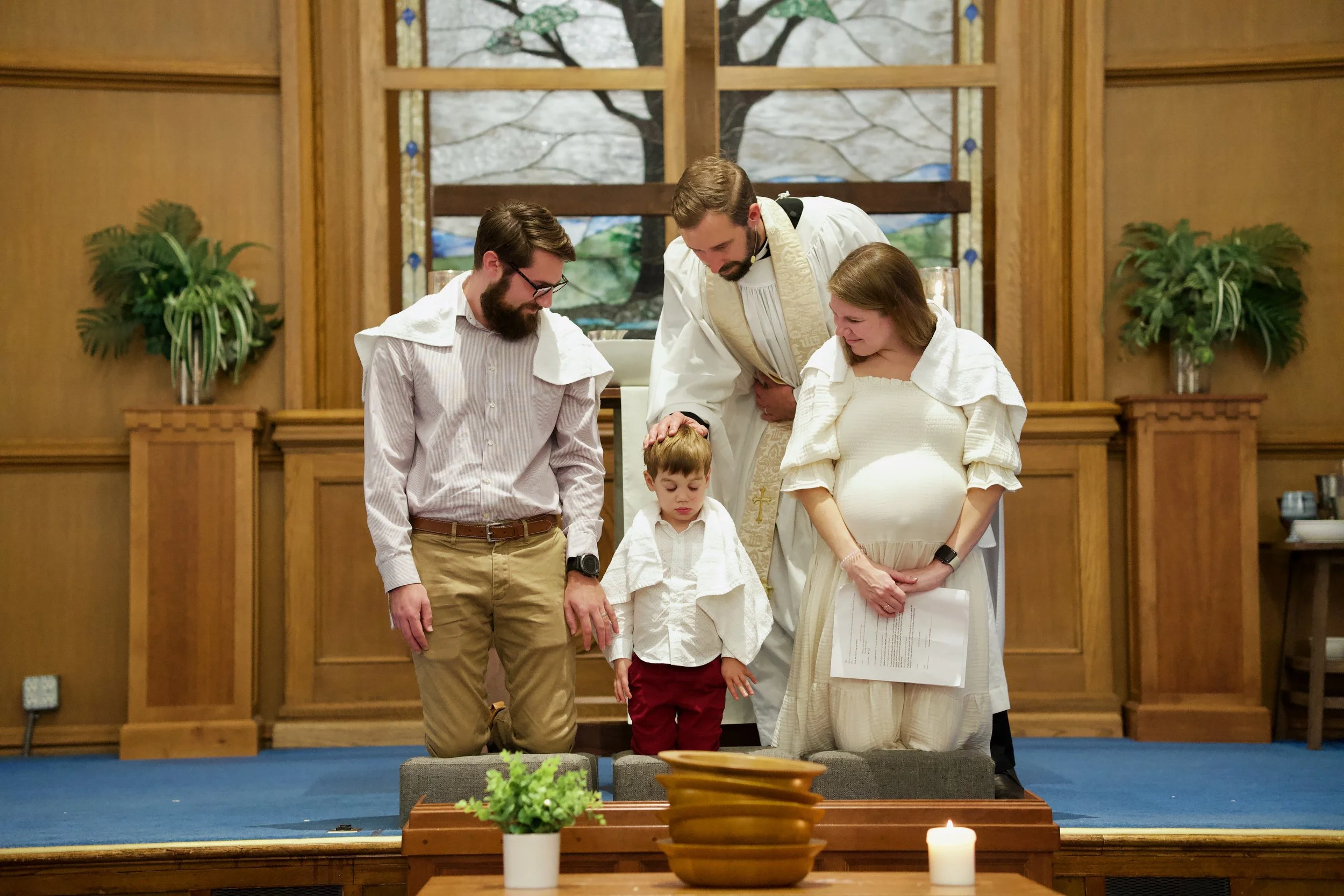
All Saints' Week
A blessed All Saints' Week to you! We are in a special week of the year in our Liturgical Calendar. Tuesday was All Hallows Eve, yesterday was All Saints Day, and today is All Souls Day. This week, we remember the saints, martyrs, and all the faithful departed who have gone before us and whose lives serve as signs, pointing and inviting us toward become more like Jesus..
Redeemer Family,
A blessed All Saints' Week to you! We are in a special week of the year in our Liturgical Calendar. Tuesday was All Hallow’s Eve, yesterday was All Saints’ Day, and today is All Souls’ Day.
This week, we remember the saints, martyrs, and all the faithful departed who have gone before us and whose lives serve as signs, pointing and inviting us toward become more like Jesus..
This Sunday, we will celebrate All Saints' Sunday together with baptisms. This is a particularly special day in the liturgical year (as mentioned above), and you will notice some of the special ways we observe this day.
Note: Often I am asked if Redeemer is “low church” or “high church.” These are phrases that are often used as a shorthand reference to how much symbolism, ritual, and tradition is used in the worship service. “Low Church” environments seek to be accessible and understandable for newcomers. These environments invite people to learn before they participate. “High Church” environments invite people to engage worship through symbolic participation (kneeling, bowing, making the sign of the cross, vestments, incense, bells, etc.) These environments invite people to learn through participation.
So which is Redeemer? Our cheeky answer to this question is that Redeemer is Lo/Hi. We seek to embody the tension between low church accessibility and high church symbolism. (I wrote an article about this previously, you can read it here.)
I’m explaining all this because this coming Sunday is All Saints’ Sunday and we will scale up towards a slightly more High Church expression. You’ll encounter the following:
Baptism: One of the many things that happens in baptism is that we are baptized into a story, the story of Jesus' life, death and resurrection. In baptism we are joined with all the saints (past, present, and future) and are invited to let each of our lives become a unique embodiment of the story of Jesus.
Vestments: Many of us who will be serving up front will be wearing robes. The robes are symbolic.
The black cassock robe represents our sin.
The white surplice robe represents the way Christ washes us clean.
The colorful stole represents the easy and light yoke of service to Jesus.
The vestments symbolically retell the Gospel story.
Incense: in the Scriptures, incense is regularly associated with prayer. The Psalms (Ps. 141) speak of our prayers rising before God like incense and the book of Revelation vividly portrays the prayers of the saints as incense before the throne (Rev. 5 & 8). And ultimately, our lives, offered sacrificially to God, are like a fragrant incense offering (Eph. 5). For these reasons and more, it is fitting for us to have incense on All Saints’ Sunday, as a way of engaging even more of our senses in worship. If you'd prefer to be a little ways away from the actual diffusion, we recommend sitting towards the edges of the sanctuary.
Redeemer friends, I’m looking forward to welcoming the newly baptized into the Church this Sunday. Let’s prepare our hearts for worship this week through prayer as we remember the Saints who have gone before us.
In the Father’s love,

Infinity Loop | What Does Formation Have To Do With Mission?
Every Tuesday morning, at 9:00 a.m., our staff meets for prayer, coffee, breakfast, and discussion. Often, what you read about in Parish Newsletters is coming from the discussion that is happening around the staff table. So today I’d like to invite you to pull up a chair and listen in to what our staff is talking about.
Redeemer Family,
Every Tuesday morning, at 9:00 a.m., our staff meets for prayer, coffee, breakfast, and discussion. Often, what you read about in Parish Newsletters is coming from the discussion that is happening around the staff table. So today I’d like to invite you to pull up a chair and listen in to what our staff is talking about.
Today we read two passages of scripture, Matthew 17:14-21 and Mark 9:14-29. Both narrate the same interaction that Jesus and the disciples have with a man whose son is possessed by a demon. The disciples failed to drive out the demon, but Jesus was able to do so. When the disciples privately asked Jesus why they failed, he gave them a fascinating answer, “This kind cannot be driven out by anything but prayer and fasting.” ¹
Pause and think about what has just happened and what Jesus has just said. The disciples are first century Jews who are apprenticing themselves to a local Rabbi. They are learning to be like their Rabbi in every way; learning to teach the way he teaches, to serve the way he serves, to heal the way he heals, to pray the way he prays, etc. Jesus is a great healer and exorcist. After spending some time (likely already a year or two) observing Jesus in action, the disciples have been sent out for a day to do some ministering of their own in the community. They have what we might call a “missional encounter” with a demon possessed boy that does not go well. You might say, they have a missional encounter that failed. What do they do? Well, they take the problem to Jesus (good move!) and Jesus’ response is not to teach them a new formula or strategy for being more effective in missions, but rather he suggests that more formation is needed - more spiritual disciplines - prayer and fasting.
There is profound significance if you pause to consider what Jesus is saying. Jesus himself was a person of prayer and fasting. He was a man of silence and solitude. He not only served the crowds, but he “often withdrew to desolate places to pray” (Luke 5:16). We might think that Jesus was able to drive out demons with power because he was divine (and that’s true), but have we considered that part of Jesus’ power in ministry was actually drawing upon his own formation? Jesus needed silence, solitude, prayer, fasting, scripture reading, sabbath rest, corporate worship, fellowship, and more. He did not practice these only to model them for us, He practiced them because they formed him for mission.
Missional encounters are exposing and revealing. They let us know how we’re doing. They show us where we are strong and where we are weak. True missional encounters are meant to stir a hunger within us to return to Jesus, to be with him, to learn from him, to seek his help.
Gospel Formation happens as we draw near to Jesus. Being near to Jesus stirs a hunger within us to go out and serve others, to seek missional encounters.
You might imagine something of an infinity loop between Gospel Formation and Missional Presence that looks something like this:

As we receive and embrace the good news of the renewal of all things in Jesus, we are changed - metamorphosized - into a new creature, a new kind of human with a new kind of presence. We bring our new presence out into the world as participants in the mission of God and we encounter other people. Some of these encounters go well and many do not! Both our successes and failures generate an appetite within us for more of Jesus and a deeper embrace of the Gospel. This deeper embrace of the Gospel sends us right back out again towards others. Again and again. Over and over.
This is the Way of Jesus.
This is the Christian Life.
This is the Work of the Church.
Anglican priest Henry Martyn (1781-1812) understood this dynamic when he wrote:
The Spirit of Christ is the spirit of missions.
The nearer we get to him, the more intensely missional we become.
The first disciples had been partially formed by their time with Rabbi Jesus. The metamorphosis had begun, but it was not yet complete. They had enough formation to begin participating in God’s missionary work in the world; but when they encountered a situation that was beyond them, they realized they were out of their depth. This sent them right back to Jesus for deeper formation. This sort of thing would keep happening to them the rest of their lives.
The same dynamic can be true for us!
In the Father’s love,
¹ Mark 9:29 reads “prayer” while Mattthew 17:21 reads “prayer and fasting.” Matthew 17:21 is a verse that is included in some manuscripts, but not all. It often is listed as a footnote in English Bibles and not included in the primary text.

Home: The First Realm of Missional Presence
As we continue this series of articles on Gospel Formation for Missional Presence, I’d like to help us understand that word presence just a bit more deeply. So let’s think about what it means to be missional in regards to our own homelife.
Redeemer Family,
As we continue this series of articles on Gospel Formation for Missional Presence, I’d like to help us understand that word presence just a bit more deeply. So let’s think about what it means to be missional in regards to our own home-life.
MISSION? AT HOME?
Now, right off the bat, this is difficult. We are so accustomed to thinking of mission as something that happens “out there” away from home. However, the Bible makes no division between the kind of life we live privately and the kind we live publicly. In fact, we are all too familiar with the humiliation that people experience when their private lives are revealed as radically different (and usually worse) than their public image. Therefore, if missional living is the way of Jesus, it starts at home.
WHAT IT’S NOT
First, let’s name the three normal Christian approaches to homelife that are not the missional presence approach exemplified by Jesus.
*Note: By home-life, we mean a person’s roommates, housemates, spouse, children, etc. Basically, anyone who lives with you.
FORTIFICATION: This approach draws a sharp dividing line between a person’s spiritual relationship with God and the other people around them. Others are essentially viewed as a threat to the vitality of your spiritual life and in order to keep your spiritual life “pure,” you must create distance between you and the people you live with. With this view, your spouse’s irritating habits, your kids' neediness, your housemates’ irresponsibility are hindrances to your relationship with God. You may be involved in some sort of Christian evangelism or justice-work outside of the home; but you take off that missionary “hat” when you walk through the door.
What it gets right: You need your own, individual relationship with God that is separate from the people around you.
What it gets wrong: Your faith is private, even from those in closest proximity to you.
Core Motivation: Fear of being “led astray” by other people’s bad influence on you.
How it does harm: Those who live with you do not really know you and you do not desire to really know them. Since you, as a Christian, represent Jesus to them, this implicitly communicates that Jesus does not really desire to know them and is not knowable by them.
ACCOMODATION: This approach seeks to erase any dividing lines between you and those with whom you live. You adopt others desires, comfort-level, and feelings about faith. What does the group want to do? How does the group want to talk? For young adult housemates, this looks like a relatively passive, go-with-the-flow posture. For spouses, it takes the form of spiritual codependency. For parents with children, it looks like “trying to make Christianity fun” so that the kids will not be hostile to the faith.
What it gets right: You are curious-about, listen-to, and genuinely care about what those around you desire. You are tuned in to their needs.
What it gets wrong: You abdicate any responsibility to represent the fullness and the realness of Jesus to the people you live with.
Core Motivation: Fear of offending or pushing others away from faith.
How it does harm: Encourages others to idolize their own desires; which, in the long run, will fail them.
DOMINATION: This approach seeks to move towards those around you in order to make them Christians. If you live in a college dorm or a house of single friends, this looks like aggressively evangelizing and debating your hallmates. If you are married, it looks like trying to disciple your spouse. If you have kids, it looks forcing your children into prayer, Bible reading, and other faith activities regardless of their emotional or spiritual receptivity.
What it gets right: You are passionate to see those closest to you to come faith and grow spiritually.
What it gets wrong: You seek a level of influence and control over the lives of others that violates their personal agency in responding to Jesus themselves.
Core Motivation: Fear that, if you do not do something, others will go to Hell and you will have failed as a Christian.
How it does harm: You will either drive others away or steam-roll them into submission. This will vaccinate them against genuine, authentic faith in Jesus.
THE TRAGEDY
Unfortunately, most Christians adopt one of these three postures towards the people in their homes. The sad part? So many Christians do this while, at the very same time, passionately pursuing mission outside the home! The hard reality is, the people outside your home only know the part of you that you show them, in limited doses, at select venues. You can curate your Christian image outside the home. But when people live with you, they really get to know you. All of you. Even (and most especially) the parts that are incongruent with your Christian faith.
The saddest part? All three of these postures are motivated by fear and the need to control outcomes. These are all downstream from an unwillingness to trust God. These approaches to mission steal your joy and leave you exhausted.
THE ANTIDOTE
What was Jesus’ missional posture like?
Did he distance himself from needy or irritating or toxic people in order to preserve the purity of his relationship with the Father? No, he constantly allowed himself to be interrupted.
Did he flex and bend to the various desires of the disciples, Pharisees, and villagers around him? No, he felt very comfortable disagreeing with those closest to him.
Did he forcefully pursue those who weren’t interested in what he had to offer? No, Jesus made invitations and let people exercise their agency in responding.
Q: So what was Jesus’ missional posture?
A: He was fully present. The consistent posture of Jesus’ ministry was his remarkable ability to be fully present to whoever was around him.
Q: What was His presence like?
A: Calm, self-controlled, peaceful, kind, merciful, gracious, brave, firm, resilient, safe for the wounded, dangerous for the arrogant… we could keep going.
The missional presence of Jesus, in other words, was not a technique, but rather a way of being, a way of life, a way of showing up as a human being. Just being around Jesus was transformative for people, because his presence gave them a taste of God’s presence. By being around Jesus, people got a feel for what it would be like to be around God.
THE QUESTION FOR US
Now, can the same be said of us? Do people get a wonderful sense of what it’s like to be around God by being around us?
Argh! This is a terrible question for me! I think there may be some people who don’t spend very much time with me who might think the answer is yes, but my family knows better! They see the real me. The selfish husband. The grumpy Dad. The forgetful brother. The ungrateful son. Pray for me. I need it.
But let’s not avoid the question simply because it’s so damning. Let’s be brave enough to face reality.
“What is it like to be around me?” is a wonderful, terrifying, exposing question that gets right to the heart of mission in the way of Jesus.
Your presence will always be the most powerful thing about you.
Your presence is more impactful than your words.
Your presence is more impactful than your deliberate actions.
Your presence is more impactful than your thoughtful beliefs.
Your presence is more impactful than your good intentions.
Your presence is what people will remember most about you long after you are gone. They won’t remember who you wanted to be, they will remember who you really were, and they will remember how it felt to be around you.
PRACTICING THE PRESENCE OF JESUS
Redeemer Family, this is why we keep honing in on this word presence when we talk about mission. The most potent thing we bring to table when it comes to mission is… just ourselves. Rightly understood, there is no distinction between Christian mission and Christian living, they are meant to be one and the same.
There is something that is both delightfully overwhelming and underwhelming about this. On one hand, the task is overwhelming. My presence is supposed to give people a sense of being in the presence of God? Are you kidding me? On the other hand, wait—you’re saying that the real instrument of mission is just little old me? That’s it?
A Christian person is not only homo sapien, made in the Imago Dei, but also a new creation baptized into union with Jesus and living as the Imago Christi. A Christian is a “little Christ,” a little image of Jesus. If you are baptized and have faith in the Gospel, then this is what you already are. You don’t have to become it, you are it!
Now, go and live according to what is already true about you in the Gospel.
In the Father’s love,
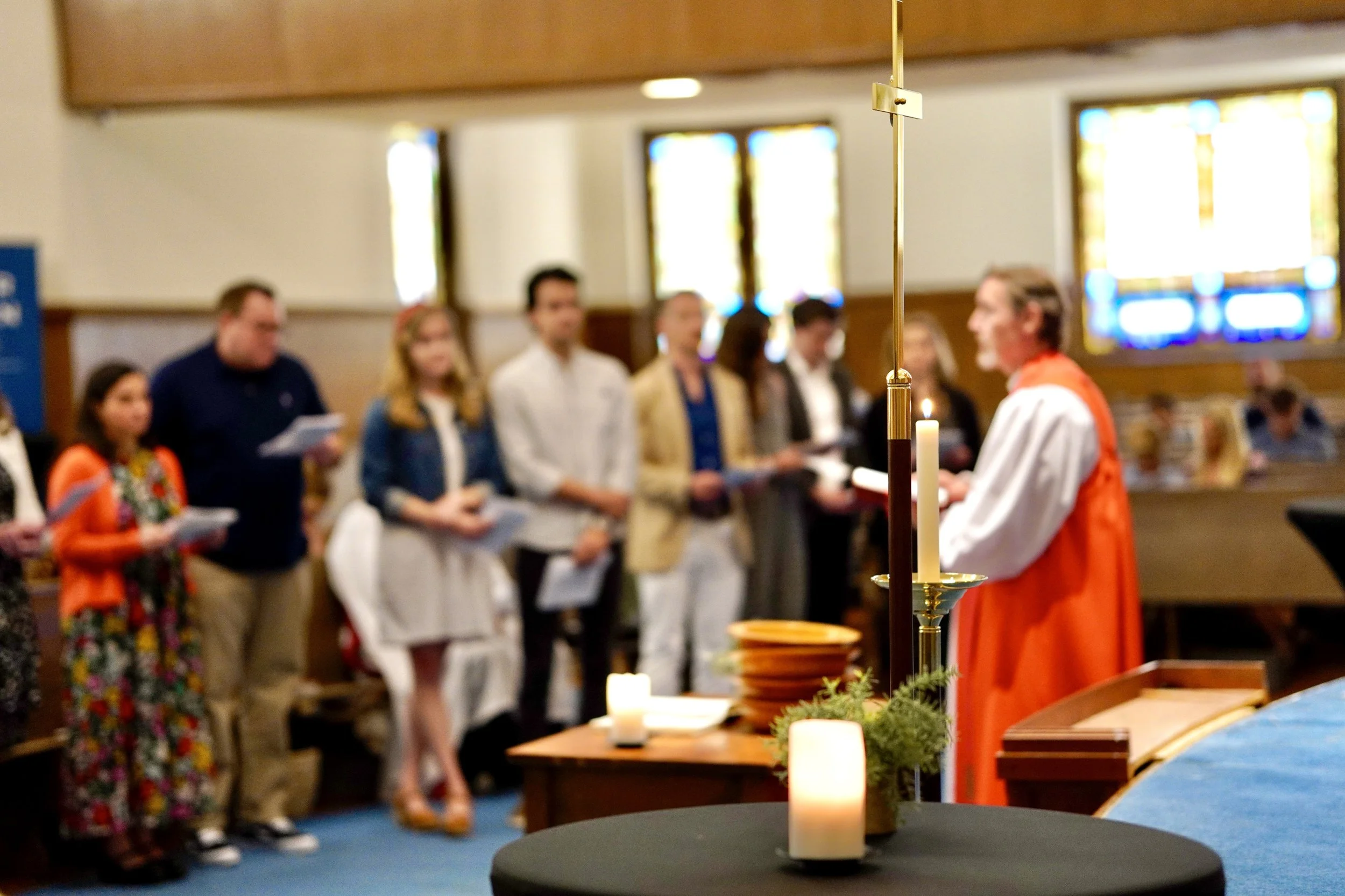
How To Become A Member At Redeemer
On Sunday, November 12th, we have the joyful opportunity for many of you to be Confirmed by our Bishop and welcomed as new Members into the Parish. This is a wonderful event that takes place only twice a year! Since this process is new to many of you, I thought I’d take a moment this afternoon to share a few details about what it means to take this important step in your faith.
Redeemer Family,
On Sunday, November 12th, we have the joyful opportunity for many of you to be Confirmed by our Bishop and welcomed as new Members into the Parish. This is a wonderful event that takes place only twice a year! Since this process is new to many of you, I thought I’d take a moment this afternoon to share a few details about what it means to take this important step in your faith.
ACTION ITEMS
(*Prerequisite: Take the Foundations Class)
Step 1: Register here to become a member on November 12.
Step 2: Fill out the membership and pledge form here.
Step 3: Sign up for a pre-membership interview with Lane Cowin or Oldson Duclos.
Step 4: Arrive 30 minutes early to one of the services on November 12.
Step 5: Participate in the Confirmation & Membership service on November 12.
Step 6: Throw a party with friends and family!
If you are ready to become a member, just follow the steps above and you’re good to go! If you are still on the fence or if you have questions, keep reading!
What is Confirmation? We see the practice of Confirmation in Scripture: the Apostles prayed for, and laid their hands on those who had already been baptized (2 Timothy 1:6-7; Acts 8:14-17; 19:6). In the Anglican practice of Confirmation, God, through the Bishop’s prayer and laying on of hands for daily increase in the Holy Spirit, strengthens the believer for Christian life in the service of Christ and his kingdom. Grace is God’s gift, and we pray that he will pour out his Holy Spirit on those who have already been made his children by adoption and grace in Baptism.
So What is Membership? We see the practice of church membership as the practical, local application of Confirmation. The Bible knows of no such creature as a Christian who is not participating in a local church. The church is the body of Christ, and so another way to say this would be that there is no such thing as a disembodied Christian! So when we stand up to take Christian vows and receive prayer from the Bishop, the very next thing we do is join the local church - saying to ourselves and each other, “I will live out these vows in this place with these people.”
How is Confirmation different from Membership?
Confirmation is about joining The Church (global) publicly as a Christian. The confirmation vows are Comprehensive-Christian, not Redeemer-specific.
Membership is about joining a local church (local) as a participant. The membership covenant is Redeemer-specific, not Comprehensive-Christian.
Summary: We recognize that following Jesus has never been and never will be a solo endeavor. We are not meant for individualized lives of faith. Rather, we acknowledge that we are meant to dwell with God and with one another in love and to invite others into a community of love. For this we will need the grace of our Lord Jesus, the love of God, and the fellowship of the Holy Spirit. We will also need each other. Confirmation is about making our faith public and communal - expressing our desire to live out what it means to be the church together.
Objection: OK, I hear you, but I actually have some issues with the idea of Church Membership
Over the years I’ve heard a number of well-intentioned and sincere objections follow this question:
Membership feels exclusive, like some people are in and some are out. This isn’t very hospitable.
Membership feels too institutional, like the church is a club and not a family.
Membership means requirements and obligations, which are anti-Gospel and anti-Grace.
It might surprise you to learn this, but I used to strongly agree with each one of these objections. However, over the years, my thinking has changed significantly and - rather than membership working against hospitality, family, and Gospel - I’ve become deeply convinced that membership actually facilitates each of these!
Here’s how:
Membership facilitates hospitality.
Luke 14:12-14. “He said also to the man who had invited him, “When you give a dinner or a banquet, do not invite your friends or your brothers or your relatives or rich neighbors, lest they also invite you in return and you be repaid. But when you give a feast, invite the poor, the crippled, the lame, the blind, and you will be blessed, because they cannot repay you.”
In Christ’s teaching, we are specifically instructed to open our doors and invite in those who are on the outside. This passage is not just about inviting in the poor vs. the rich (though it is also about that), it is about extending hospitality to outsiders vs. insiders. Now, if - in the name of hospitality - we say there’s no such thing as insiders or outsiders, then who will do the inviting and who will come to the party? You cannot invite others into the hospitality of God until you, yourself have received the goodness of the Lord’s hospitality. You must be in before you can invite others in.
Once you are in, you realize there are others who are out - which puts you in the perfect situation to obey Jesus’ teaching on true hospitality. In this way, Membership (a formal and clear way of defining who is in and who is out), actually sets us up to obey the Lord, open our doors, and demonstrate real hospitality to others.
Membership makes the church more like a family.
1 Timothy 5:1-2. “Do not rebuke an older man but encourage him as you would a father, younger men as brothers, older women as mothers, younger women as sisters, in all purity.”
This passage instructs us to treat other people in the church like family. Then, our author (the Apostle Paul) goes on to give specific instructions about who to care for, how to care for them, and how to discipline people when they stray into sin. The assumption is, you can only operate as a family when it is clear who, exactly, is a part of the family. Paul is clearly not instructing us to treat all people like fathers, mothers, brothers, and sisters - but rather the people who are a part of the church family. When such individuals stray into flagrant sin, they are (temporarily, and for the sake of encouraging repentance) removed from the church family. For this kind of familial love and discipline to work, there must be some sort of clear boundary line that delineates who is in the family and who is not.
Therefore, in order for the church to function like a family, we must know who, specifically, is a part of that family. The brothers, sisters, mothers, and fathers here is not meant to signify some abstract concept of warm relationships - rather we should be thinking of specific people. i.e. my brother-in-Christ Jeromy or my father-in-Christ David. Membership helps take us from the abstract to the specific in being a church family.
Membership showcases the Gospel.
Ephesians 2:8-10. “For by grace you have been saved through faith. And this is not your own doing; it is the gift of God, not a result of works, so that no one may boast. For we are his workmanship, created in Christ Jesus for good works, which God prepared before hand, that we should walk in them.”
“But Membership means requirements and obligations, which are anti-Gospel and anti-Grace.” This is the one I hear most often. It is also the one to which I am, simultaneously, most sympathetic and which I disagree with the most strongly! I am sympathetic because it is absolutely true that the Gospel is the good news of the free gift of mercy and forgiveness won for us in the death and resurrection of the Lord Jesus. The Gospel is primarily about something God has done for us and not something that we do for God.
However, when we receive this free gift of mercy and forgiveness, we find that it changes absolutely everything about us. Our lives are no longer our own. We belong—body, mind, and soul—to the Lord. We begin to embody the good news of the Gospel, allowing it to shape our lives and affections.
Membership clarifies the implications of the Gospel for us and, therefore, showcases the beauty of the Gospel in the transformed lives of the members. If we resist Membership on the grounds that “the Gospel is not about doing stuff,” we are saying that the church is not to have any vision for what a redeemed and renewed life in Christ should look like. A quick, cursory reading of just about any New Testament book should quickly lay that objection to rest.
ACTION ITEMS
(*Prerequisite: Take the Foundations Class)
Step 1: Register here to become a member on November 12.
Step 2: Fill out the membership and pledge form here.
Step 3: Sign up for a pre-membership interview here.
Step 4: Arrive 30 minutes early to one of the services on November 12.
Step 5: Participate in the Confirmation & Membership service on November 12.
Step 6: Throw a party with friends and family!
Redeemer family, I’m looking forward to welcoming new people into our family on Sunday November 12. If you are already a member, please pause and say a prayer for those who are discerning confirmation and membership this fall.
In the Father’s love,

Missional Presence Is Not One Way, It's The Only Way
In this next installment of this series of writings on what it means to be missional, I’d like to make the case that Missional Presence is not one of many ways to be missional as a Christian, it’s actually the only healthy way.
Redeemer Family,
In this next installment of this series of writings on what it means to be missional, I’d like to make the case that Missional Presence is not one of many ways to be missional as a Christian, it’s actually the only healthy way.
What I mean, is that alternative forms of “mission” are not simply different strategies to accomplish the same general Christian goals, but rather are deeply harmful to the work of God in the world. Consider how these alternatives play out in the three normative approaches to mission:
FORTIFICATION
In this paradigm, “mission” is primarily defensive in nature. Christian withdraw from society and start their own businesses, schools, institutions, etc. in order to protect themselves from being polluted by the world. Mission is the work of attracting/inviting outsiders to cross our boundaries and enter the goodness within Christian communities.
Emotional Motives: Fear, control, judgment, purity, pride, desire to be left alone.
Mission Activities: Invitation, personal evangelism, establishing new Christian institutions.
What it sounds like: Us vs Them. Us = good, them = bad.
What it gets right: Rightly perceives the corruption of the world and rightly seeks the purity of the Church.
What it gets wrong: Wrongly views God as against the world, therefore wrongly understands the Church to be against the world, therefore wrongly retreats from the world.
Where it does harm: Abandons neighbors to struggle on their own and deforms Christians to simultaneously fear their neighbor, look down on their neighbor and to overestimate their own goodness. In this way, Fortification-style missions actively undermine the Gospel in people’s lives by implicitly assuming that outsiders need the grace and mercy of God more than insiders. The longer people live and practice their faith in Fortification ecosystems, the less they become like Jesus.
ACCOMODATION
In this paradigm, “mission” is primarily passive in nature. Not passive in a “do nothing” sense, but passive in that there is nothing distinctly Christian about its work. In this model, Christians seek to blend in and team up with non-Christians in humanist projects. Mission is anything that makes the world a better place.
Emotional Motives: Fear, insecurity, pride, desire to be liked.
Mission Activities: Advocacy, focus on the hot-button topics of the day, we care about whatever our neighbors care about.
What it sounds like: If our church suddenly went away, would our city/neighbors miss us?
What it gets right: Rightly is implicated in the needs of neighbors and rightly moves outwards towards others for the common good.
What it gets wrong: Wrongly underestimates the corrupting nature of sin in the world and wrongly overestimates the possibility of enacting long-term good without the peculiarity of the Christian faith.
Where it does harm: Abandons neighbors to their own idols and deforms Christians to redefine “love” as “whatever makes other people feel loved.” The definition of good “mission” is displaced from the Bible and relocated to the hearts and minds of neighbors who disbelieve the Bible. Over time, this forms Christians into unstable, easily swayed people who are held hostage to other people’s impression of them. The longer people live and practice their faith in Accomodation ecosystems, the less they become like Jesus.
DOMINATION
In this paradigm, “mission” is primarily aggressive in nature. Mission-work is thought of as “front-line” work. Missionaries are often referred to as “troops” that are sent into “battle.” In this model, Christians strive to advance the Kingdom of God by winning converts and changing culture.
Emotional Motives: Fear, control, anger, desire to be right / to win.
Mission Activities: Door to door evangelism, short-term missions trips, colonialism, political warfare, seeking places of political power in order to push through “Christian” moral agendas.
What it sounds like: Taking ground, winning souls, entering the fray (lots of sports and military metaphors).
What it gets right: Rightly perceives the corrupting evil of sin in the world and rightly moves outward into every nook and cranny of life.
What it gets wrong: But wrongly identifies non-Christians as enemies and non-Christian culture as inherently wicked and therefore worthy of destruction. Wrongly assumes that they are God’s agents to bring about His kingdom in the world, by force if necessary.
Where it does harm: Antagonizes non-Christians by engaging them as spiritual and cultural enemies. This inculcates fear and anger, in ever-increasing measures, into Christians. Domination-style missions actively undermine the Gospel in people’s lives by making the Gospel either: 1) A product that is exported to people who didn’t ask for it, or 2) a symbol of the “rightness” of our tribe of people. The longer people live and practice their faith in Domination ecosystems, the less they become like Jesus.
*CONFESSION: Before I move on to our fourth, and true, invitation to mission, let me confess something to you. At times, and in various ways, I actually practice all three of the above approaches to mission. I have the tendency to pull back and seek refuge in the safety of people who are just like me. I have the tendency to care WAY too much about what other people, especially non-Christians, think about me. I have the tendency to move out into the world to win, to conquer, to “take ground.” Folks, I have a long, long way to go on this. I have an embarrassing amount of unlearning to do. I wish I could be a better role model for our parish in this way, but I’m not there yet. Please pray for me.
*REFLECTION: I wonder, as you reflect on the three paradigms above, to which one are you most naturally drawn? Which one seems “most right” and which one seems “most wrong?” If any of the assessments above makes you feel angry or anxious, pause for a moment and ask yourself “why?”
INCARNATION
In this paradigm, the goal is to closely examine the life of Jesus and seek to define mission as patterning our own lives after His. In some ways this makes mission far more simple, but in other ways it becomes far more complex. On the simplicity side, mission is essentially embodying the presence of Christ everywhere we go. Mission is simply - the way I show up in every situation - bringing with me the presence of Jesus in His Holy Spirit who dwells within me. On the complexity side, mission becomes more complicated because it involves all of me and all of my life instead of some of me and some of my life. Do I have a “Christian hat” that I put on or take off in different situations, or am I truly living a spiritual integrated life? Which is to say, a sacramental life in Christ.
Emotional Motives: Love, compassion, grief, joy, amazement, surprise
Mission Activities: Presence = showing up with your whole self, allowing yourself to be interrupted, sacrifice, mercy, healing, teaching, rebuking, feeding, etc.
What it sounds like: Curiosity towards the other. What story are you in? Who are you? Where do you belong? How will you change? Where do you live? What is your purpose? How will you love?
What it gets right: Missional presence invites the Christian to be more deeply formed by the Gospel, creating an ongoing formation cycle of Gospel Formation for Missional Presence in which people are transformed (metamorphosized) into the new creation God is making them to be.
What it gets wrong: If practiced according to the Bible, then nothing. However, if attempted with willpower instead of the ongoing work of the Holy Spirit, then it will lead to exhaustion and frustration. You cannot will yourself to be more like Jesus.
Where it does harm: Again, if practiced Biblically, empowered by the Holy Spirit, then this is deeply restorative, not harmful. It is a form of mission that heals instead of hurts.
Redeemer family, as we continue to consider our call to bear the missional presence of Jesus to our families, our workplaces, and the city of Richmond, I hope that we are beginning to sense that this invitation is not a heavy burden. It is not a cumbersome call to do more and be more, but rather a light, airy, freeing call that allows us to leave behind harmful approaches to Christian mission and embrace a healthier way, the way of Jesus.
Of course, that is not to say that the light burden is easier. It is, in many ways, far more costly. But it is better - better for our neighbors and better for ourselves.
Let’s allow the perfect love of Christ to cast out fear (1 John 4:18) so that we might move out into the world motivated by His love for us and for our neighbors.
In the Father’s love,

How Does God Do Mission?
Today I’d like to press in just a bit more into that word “mission.” It’s a word that nearly all Christians use, but that is often used to mean very different things. Often when followers of Jesus hear or use the word mission, they mistakenly assume that everyone agrees and means the same thing. This wouldn’t be a big deal if “mission” was something small and peripheral, like using the correct brand of shampoo. But it is enormous and central - it is the way in which we participate in what God is doing in the world. God Himself has a mission and we, His children, are invited to be a part of it. For a Christian, therefore, mission is not a side dish, it’s the whole meal. It’s not one aspect of life, it’s what your life is about.
Redeemer Family,
Over the past few weeks, we’ve been seeking to clarify our parish vision - Gospel Formation for Missional Presence. If you missed the first two installments, you can read them here:
Gospel Formation | Metamorphosis
Today I’d like to press in just a bit more into that word “mission.” It’s a word that nearly all Christians use, but that is often used to mean very different things. Often when followers of Jesus hear or use the word mission, they mistakenly assume that everyone agrees and means the same thing. This wouldn’t be a big deal if “mission” was something small and peripheral, like using the correct brand of shampoo. But it is enormous and central - it is the way in which we participate in what God is doing in the world. God Himself has a mission and we, His children, are invited to be a part of it. For a Christian, therefore, mission is not a side dish, it’s the whole meal. It’s not one aspect of life, it’s what your life is about.
The Bible renders and reveals to us the God whose creative and redemptive work is permeated from beginning to end with God’s own great mission, his purposeful, sovereign intentionality. All mission or missions which we initiate, or into which we invest our own vocation, gifts, and energies, flow from the prior and larger reality of the mission of God. God is on a mission, and we, in that wonderful phrase of Paul, are “coworkers with God.” (1 Corinthians 3:9) Having made that reorienting paradigm shift in our concept of the fundamental meaning of Biblical mission, then indeed the whole Bible can (and I would argue, should) be read in light of this overarching, governing perspective. The whole Bible delivers to us “the whole counsel of God” - the plan, purpose, and mission of God for the whole creation, that it will be reconciled to God through Christ by the cross (Colossians 1:20).¹
Now, if God is on a mission and the entirety of the Bible points to the missional work of God in the world, and if we are called to participate in the mission of God, then there remains a crucial question that is immediately practical for our lives today, “How does God do mission?”
James Davidson Hunter writes, “The very character of God and the heart of his word is that God is fully and faithfully present to us. On the face of it, faithful presence suggests proximity, but it is much more than this. His faithful presence is an expression of commitment.” ²
Or, more concisely, as Francis Schaffer put it, “the God Who is There.”
HOW IS GOD MISSIONALLY PRESENT TO US?
He enters our story and reveals that we are actually a part of His story. Over and again God interrupts the human narrative: Noah, Abraham, Moses, Ruth, David, Isaiah, Daniel, Hosea, Zechariah, Mary, Joseph, Peter, James, John, Paul. God speaks. He invites, calls, asks, challenges, commands, inquires, affirms, and critiques. When God enters the human story, we realize that our story is, in fact, His story. We have been conscripted into the mission of God. David was just your average blue-collar teenager until God entered His story and he became DAVID in God’s story. Mary was just a peasant girl in her parent’s house until God entered her story and she became MARY in God’s story. God’s missional presence in our story reframes and transforms our little story into His grand story.
God identifies with us and gives us a new identity in Him. “For he knows our frame; he remembers that we are dust.” (Psalm 103:14) God knows what it feels like to be us. He empathizes. What’s more, in Christ, God becomes one of us. “Born in the likeness of men.” (Philippians 2:7) Further still, Jesus remains human in his resurrection - demonstrating God’s solidarity with humanity for all eternity. He identifies with us permanently, not temporarily. God didn’t try out being human for a day. God became human in Jesus for good. It is on these grounds that God now offers us a new identity in Himself. “For you did not receive the spirit of slavery to fall back into fear, but you have received the Spirit of adoption as sons, by whom we cry, “Abba! Father!” The Spirit himself bears witness with our spirit that we are children of God, and if children, then heirs—heirs of God and fellow heirs with Christ.” (Romans 8:15-17) God’s missional presence in identifying with us transforms our own sense of identity.
God pursues us and gives us belonging in Him. “Chosen out of all the peoples on the face of the earth to be his people, his treasured possession.” (Deuteronomy 7:6) “I have called you by name, you are mine.” (Isaiah 43:1) Not only does God pursue us and call us to Himself, but through Jesus, He forms a new humanity, a new family in which we practice our belonging in Him. “Now you are the body of Christ and individually members of it.” (1 Corinthians 12:27) God’s incarnational pursuit of us not only draws us in but also sends us out to incarnationally pursue others. God’s missional presence with us, Immanuel, fosters our presence with each other.
God lives virtuously on our behalf and enables us to live a new life of virtue through Him. The life of Jesus was a life of obedience to the Father. “The son can do nothing of his own accord, but only what he sees the Father doing.” (John 5:19) But it was not only obedience for His own sake, it was vicarious obedience for us, “It will be counted to us who believe in him who raised from the dead Jesus our Lord, who was delivered up for our trespasses and raised for our justification.” (Romans 4:24-25) God’s missional presence is the life He offers to us in Jesus and the new life we are able to live through Jesus.
God becomes local and time-bound, dignifying our place and time. Not only did Jesus enter history at a particular place and time, but His Spirit now dwells within His people in their place and their time. “Do you not know that you are a temple of God and that the Spirit of God dwells within you?” (1 Corinthians 3:16) This gives tremendous dignity and honor to every place and every age. Every place is valuable, none are disposable. Every age is the age in which God is at work. For a Christian, a pilgrimage to the Holy Land may be beneficial, but it is not necessary, God is with you right where you are. Particular cultural traditions of the faith are beneficial, but they are not necessary for God to work. God can work right now, inhabiting any culture of this era. God’s missional presence in time and space enables us to faithfully live in our place and in our time.
God calls us to a vocation, and gives our life purpose. Not only does God call all of humanity in the cultural mandate, “Let us make man in our image, after our likeness. And let them have dominion over the fish of the sea and over the birds of the heavens and over the livestock and over all the earth and over every creeping thing that creeps over the earth. So God created man in his own image, in the image of God he created him, male and female he created them. And God blessed them. And God said to them, ‘Be fruitful and multiply and fill the earth and subdue it…” (Genesis 1:26-28) God’s presence is His voice calling to us - giving us purpose, direction, and meaning in our life’s work. But God’s presence does not only call us to our work, He is also with us in our work. Our work is co-laboring with God. “We are ambassadors of Christ, God making His appeal through us.” (2 Corinthians 5:20) God’s missional presence for, in, and through human work gives us purpose, no matter how difficult, dull, or painful our work may be.
God’s self-sacrificing love transforms our imaginations. “This is love: not that we loved God, but that He loved us and sent his Son as an atoning sacrifice for our sins.” (1 John 4:10) The mystery of faith is that Christ has died, Christ is risen, and Christ will come again. This new reality of Jesus’ presence has broken into our old reality with a love that our world does not understand and cannot control. The cross and the empty tomb, death and resurrection, sacrifice and hope, give birth to a new way of conceiving of beauty and the good life. The Kingdom of Heaven is present, right here on earth, right now. God’s missional presence, in the self-sacrificing love of Jesus, gives us a new imagination for how we can be missionally present with self-sacrificing love.
SUMMARY
In summary, we might say that the way God does mission is to be fully present to us: fully present in that He brings all of Himself and holds nothing back, and fully present in that He is present to all of us - our whole selves. God’s presence does not only seek to convert the beliefs of our minds or the affections of our hearts or the habits of our lives - but our whole person - making us into “a new creation” (2 Corinthians 5:17).
God’s presence does not only seek to evangelize people, but to transform all of human society and indeed the whole earth.
“Then I saw a new heaven and a new earth, for the first heaven and the first earth had passed away, and the sea was no more. And I saw the holy city, new Jerusalem, coming down out of heaven from God, prepared as a bride adorned for her husband. And I heard a loud voice from the throne saying, “Behold, the dwelling place of God is with man. He will dwell with them, and they will be his people, and God himself will be with them as their God. He will wipe away every tear from their eyes, and death shall be no more, neither shall there be mourning, nor crying, nor pain anymore, for the former things have passed away. And he who was seated on the throne said, “Behold, I am making all things new.” (Revelation 21:1-5)
God’s mission is comprehensive. He is fully present to us so that we might be fully present to Him, to ourselves, to each other, and to the world. If we grasp the magnitude of the mission of God, then our entire lives will be swept up in His mission. Everything we do and everything that we are becomes a mode of participation in His mission.
WAIT, IF MISSION IS EVERYTHING, THEN MISSION IS NOTHING. RIGHT?
I hear you. This objection is common if you’re still trying to frame mission as something you do rather than a kind Christ-like presence that you embody.
When should a Christian be filled with the Holy Spirit and embody the love of Jesus? Sometimes or always? Always, right?
THAT is what it means to live missionally God’s way. It means everywhere you show up, you show up as a missional presence - the presence of Jesus, embodied in you - in your particular personhood, complete with your personality, your life circumstance, your resources, your relationships, your work, etc.
CONCLUSION
So, when we talk about our parish being a missional presence, let’s be on the same page with each other. Missional Presence is God’s mission, God’s way. It’s being present to others the way that God is present to us. Framing mission as anything else requires you to chop up the Bible and chop up the Christian life into separate parts that, from God’s perspective, are one and the same.
Of course there’s much more we can and will say about what this means and how we become these kinds of people, but we’ll stop here for now.
Redeemer Family, I love you and I’m so grateful for your presence.
In the Father’s love,
¹ Christopher J.H. Wright. The Mission of God. p. 531-2
² James Davidson Hunter. To Change the World. p. 241

I'm Confused, What Is Missional Presence?
Today I’d like to move forward to a different, but intimately related question, “What is missional presence?” One of the ways we talk about our life together is that the Church of Jesus is called to be a missional presence in the world. But what does that mean? “Missional Presence” sounds somewhat lofty, abstract, and vague. How can I tell if I’m doing it? How can I tell if it’s working?
Redeemer Family,
Last week, I wrote a little article about Gospel Formation to help us move a bit deeper in our understanding of the “both/and” nature of whole-life transformation through Jesus. If you missed it, you are welcome to go back and read it here. If you read it and are hungry for more on that topic, I would recommend this article by Dallas Willard as a next step.
Today I’d like to move forward to a different, but intimately related question, “What is missional presence?” One of the ways we talk about our life together is that the Church of Jesus is called to be a missional presence in the world. But what does that mean? “Missional Presence” sounds somewhat lofty, abstract, and vague. How can I tell if I’m doing it? How can I tell if it’s working?
Mission, a Fraught Word
The first challenge with the phrase is the word “mission.” Often the word mission is used exclusively to describe a person (usually a white westerner) who travels to another country in order to engage in cross-cultural evangelism. We are accustomed to calling this person a missionary - and rightly so. A missionary is someone who is living every aspect of life intentionally as a kind of missional presence. Whether they are grocery shopping, talking with neighbors, taking their kids to school, coaching soccer, or ordering a latte; everything they do, they do as a missionary - with the motive to represent the transforming love of Jesus to everyone they encounter.
Establishment Mentality
Now, those of us who grew up in what we might call “Establishment Christendom”¹ in the United States or Europe think of this kind of missionary as special, a kind of super-Christian. The tendency is to think that most average Christians live “normal” lives here that are categorically different from the lives lived by professional missionaries. The problem with this kind of attitude is not what it says about overseas, cross-cultural missionaries. Those dear brothers and sisters deserve our financial, prayer, and relational support. Many of them are doing great work and that is to be celebrated. The problem lies in what this attitude says (or does not say) about everyone else, the Christians who live in their homeland. It says they are not missionaries.
The Christian Life = A Missional Life
Ah, here is the problem. There is no such thing as a follower of Jesus who is not called to a missional life. All Christians are to live all of life with the motive to represent the transforming love of Jesus to everyone they encounter. “Whatever you do, in word or deed, do everything in the name of the Lord Jesus, giving thanks to God the Father through him.” - Colossians 3:17. The Bible, and especially the New Testament epistles, have much to say about varying spiritual gifts (prophecy, teaching, leading, giving, mercy, healing, etc.) and varying ecclesial offices (Bishop, priest/presbyter, deacon), but nothing about some being called to missions and others not.
A better, fuller understanding of the Christian life would mean recognizing that every man, woman, and child in the Church has a missionary calling and is to live with a missional “lens” through which they see every aspect of their lives.
Seeing Through a Missional Lens
Back in my youth ministry days, I would take high schoolers, college students, and adults on short-term “missions” trips to New Orleans to do Katrina relief work and to Nicaragua to partner with a ministry there. One of the things that I noticed on those trips was how everyone (and I mean everyone) took on a whole different view of life during the trip. The participants were eager to understand what life was like for the people we met. They listened with empathy and compassion as they heard stories of trauma, suffering, and loss. They never complained about the rough accommodations (no air conditioning), the simple food (rice and beans) or the long days of hard work. Every interaction was viewed as an opportunity to share the love of Jesus because we were there as missionaries. When people didn’t want to talk to us, ignored us, were rude to us, or treated us with disrespect because of our faith, we didn’t get offended and we didn’t think less of those people. After all, this kind of thing is expected in missions work! And so we prayed for the Holy Spirit to soften their hearts towards the Gospel and we prayed that God would make us kind, gentle, winsome people so that we wouldn’t get in the way of what He wanted to do in their lives. In sum, during those weeks we viewed every aspect of our existence as directed towards the purposes of God - partnering with God in His work in the world.
And, as so often happens, we gained more than we gave. Invariably, towards the end of those trips, the reports always went something like, “I came here to serve, but these people served me. I came here thinking I had something to offer, but instead I was the one who needed to learn.” In other words the missional work was not only an outflow of the Gospel Formation in these people’s lives, it was actually part of the formation. Mission wasn’t just something we did, it was something that changed us.
But then we returned home.
And at home we were no longer missionaries, we were just back to being normal Christians. We went back to our normal jobs, lived in our normal homes, and took up all of our former habits and practices - just the normal, non-missional stuff of life. We took off the missional lens and put back the “establishment” lens. And you know what happened? Of course you do. You’re way ahead of me. All of our interactions, and indeed our whole experience of life, returned to what it was before. Other people’s problems became burdensome or annoying. People who disrespected the Christian faith became political opponents to conquer in the next election. Discomforts, failures, and disappointments became a sign that maybe God isn’t real. We would look back on the short-term mission trip with disillusionment (was what we experienced there even real?) and begin to refer to it in derogatory terms (oh, it was just a mountain-top experience, normal life isn’t like that).
Which Lens?
Now, of course intense emotional seasons of faith are not sustainable, nor are they meant to be. We are not to be spiritual thrill-seekers moving from experience to experience trying to “keep the feeling alive.”
However, I and many others have become convinced that this dynamic is not actually fundamentally a problem with the short-term missions trip, but rather with the rest of what we call “normal life” back at home. It’s a problem with the lens, the filter through which we understand and interpret all of life.
The Establishment Lens — takes the Gospel and the Church for granted as good and important features of the landscape, and wants to move on to more pressing questions like, “Should I redesign my kitchen?” “Will our party win the next election?” “Do I have enough in my retirement account?” “Why won’t my neighbors turn their music down?” I’m not saying that the Establishment lens is always selfish, often it is quite generous! Generous Establishment questions might sound something like, “What can our church do about homelessness in our city?” or “Will our church support missionaries to build schools in Peru?” These are great questions. They should be asked and answered. But can you hear that these are not the questions of a missionary who is on the field?
The Missional Lens — sees the Gospel as the most important thing every day of the week and twice on Sundays. The Gospel is what the missionary clings to in order to make sense of their life. The Gospel is what gets them out of bed in the morning. The Gospel is what motivates them to know their neighbors (even, perhaps most especially, the irritating ones). The Gospel is what shapes their interactions at the grocery store, in the coffee shop, at the PTA meeting, with the other parents at soccer practice. Seeing one’s life through a missional lens fundamentally changes one’s posture towards everything and everybody. The mission field isn’t somewhere else, it’s right here. You’re on it. It’s where you live.
(Note: Some of you will read this and think that I’m against sending international missionaries. I am not. Some of my best friends have served as international missionaries. I’m not lowering their water level, I’m seeking to raise ours).
The Surprising Twist
At this point (if I haven’t lost you yet!) you are likely feeling either one of three very different things:
You’re fired up and ready to get out there and mission with the best of them. No one will mission as hard as you.
You disagree with everything I’ve written and are drafting a nice long email to point out my errors. I can’t wait to read it 😀
You’re feeling exhausted and worn out by life and this Parish Newsletter has served to heap guilt and shame on your head. On top of all the heavy burdens you’re already carrying, now you’re supposed to be a missionary too? It makes you want to lie down and take a nap.
Two quick responses and then a slightly longer one:
To the fired-up person. I love your energy, but check yourself for a minute. Missional presence is not about conquest. This is not about winning or proving, but about participating in what God is already doing - right where you are, with the people around you.
If you disagree with much of what I’ve written, it might be good for you to know what kind of sources have shaped my thinking. Here are just a few (if you like reading):
If all this missionary talk just makes you feel guilty, tired, and just a little bit resentful about being made to feel guilty and tired… then I have wonderful news for you. Jesus says that his yoke is easy and his burden is light and he is not lying to you. This is not a bait and switch. The invitation to a missional life is not one of adding more and more missionary activities into your already-full calendar. But rather one of transformation - where the Gospel transforms and re-frames the way that you approach all of your calendar and all of your relationships. It’s not about addition, it’s about having new eyes to see and new ears to hear. Questions like, “Where do I see God already at work in my neighbors/coworkers/friends/family member’s life and how can I be a part of that work?” become missional questions that change the way I approach every relationship.
The wonderful good news for tired souls is that, when your posture shifts from Establishment Christendom to Missional Presence, your inner life shifts from anxiety to trust, from restlessness to contentment, from fear to hope. Establishment Christendom frames missionary work in terms of “taking ground,” “winning souls,” and “changing culture.” It can therefore only be done by the strongest, sharpest, most extroverted Christians. Wimps and losers need not apply.
Missional Presence returns missionary work back to its source in the Bible - where the people of God are salt and light, a city on a hill, a lamp on a stand. In this paradigm, “mission” is not relegated to certain forms of Christian activity, but rather it is a way of being, a way of life, a posture, a way of inhabiting the world as God’s new humanity.
Full Circle
Let’s pretend for a moment that you’re persuaded. If you desired a life of missional presence, how would your life take on that posture and shape? How does one become a missional presence?
Answer: Gospel Formation. The good news of Jesus’ redeeming work on your behalf so deeply transforms and changes you, that, over time, you come to inhabit the world in a new and different way. The old self dies and a new self is born. There will still be moments (or even seasons of life!) when you revert back to your old ways, but through partnering with the ongoing work of the Holy Spirit of Jesus in your life, you metamorphosize into a new creation.
Your new-creation-life-in-Jesus is a missional presence in the world, as you point beyond yourself to the source of life itself - God.
Redeemer Family, I love you dearly and I’m so very proud of you. Wherever you are right now and whomever you are with, the Spirit of the risen Christ is in you to make you His missional presence. Through Jesus, you can become this right here, right now.
In the Father’s love,
¹By Establishment Christendom, I mean a churches that enjoys a respected place within society. White protestant churches in the USA and parts of Canada and Europe, Catholic churches in Spain and Italy, Orthodox churches in Greece or Russia - are all examples of Establishment Christendom.

Metamorphosis | Gospel Formation
Over the past few weeks I’ve found myself in numerous conversations about the first phrase in Redeemer’s Vision, “Gospel Formation.” As I’ve listened, I’ve heard some confusion on what exactly Gospel Formation is and is not. Is it something God does? Is it something we do? How can you tell if it’s happening?
Redeemer Family,
Over the past few weeks I’ve found myself in numerous conversations about the first phrase in Redeemer’s Vision, “Gospel Formation.” As I’ve listened, I’ve heard some confusion on what exactly Gospel Formation is and is not. Is it something God does? Is it something we do? How can you tell if it’s happening?
Strange as it might sound, I’ve actually been delighted to hear that this phrase is not obviously and immediately understandable. I know that I like most things in my life to fall neatly into my ready-made categories and I grow frustrated with anything that doesn’t fit neatly with everything I already believe and practice. However, the very definition of a change-agent is something that very much does not fit with what I already believe and practice. A change-agent disrupts. This is, of course, initially uncomfortable. But all true change begins this way.
So let’s seek clarity together, what is Gospel Formation?
GOSPEL: In Jesus Christ, God takes his creation—which has, because of sin, fallen into ruin—and redemptively restores it in every part, until the time of consummation, in which all things will at last be made new.
FORMATION: The intentional adoption of practices and habits in order to re-shape one’s internal life with God and self and one’s external life with others and the world.
We’ll take them one at a time. First, Gospel:
The Gospel is the good news about what God has done. The Gospel includes the good news of personal salvation that Jesus offers through His death and resurrection, but it is so much more than that. Often presentations of the Gospel leave off the bookends of Creation and New Creation. The Gospel includes the good news that God made this world for good and that He has promised to restore and renew all things in a New Creation. The Gospel therefore, is more than good news for individuals, it is good news for the whole world.
So here at Redeemer we behold the Gospel whenever we open a Bible and read from scripture. We believe the theology of the Gospel intellectually. We receive the good news of the Gospel in our hearts. We know that it is only by the Gospel that we are made right with God, right with ourselves, right with one another, and right with the world.
The Gospel is an unmerited gift of grace. It is God’s unconditional love given to us through the incarnation, life, death, resurrection, and ascension of Jesus.
And what do you do with a gift? You simply receive it with a grateful heart.
Now, Formation:
Ah, but what does a gift do to you? Well it depends on the size of the gift and the size of your need. A free new car means nothing to a billionaire, but a glass of cold water means everything to a child dying of thirst in the desert.
If we grasp the magnitude of our need for God and the magnitude of His love for us, then the gift of the Gospel becomes life-changing. We can never go back to the way things were before. Every aspect of our lives must reorient around this gift.
This is where formation comes into play. Christian Formation is the re-orienting of the whole self in response to the good news of the Gospel. It is intentional whole-life/whole-person transformation, top to bottom, inside out.
This is what the apostle Paul was getting at when he wrote Romans 12:1-2:
I appeal to you therefore, brothers, by the mercies of God, to present your bodies as a living sacrifice, holy and acceptable to God, which is your spiritual worship. Do not be conformed to this world, but be transformed by the renewal of your mind, that by testing you may discern what is the will of God, what is good and acceptable and perfect.
The word that our English Bibles translate as “transformed” is metamorphousthe from which we get our contemporary word metamorphosis - describing a creature that completely changes from one kind to another. The most vivid example we have of this is a caterpillar into a butterfly.
But Formation is not something that just happens to us that we passively accept. Rather, it is something that requires our active participation. Formation requires intentionality, effort, will power, time, hard labor, accountability, and much more. Formation is never completed in this life, though we may make real progress.
Q: So what is Gospel Formation?
A: It is the convergence of God’s work and our work. The Gospel is God’s work on our behalf. Formation is our response, our participation in our own transformation, our own metamorphosis.
This requires rejecting “either/or thinking” and embracing “both/and thinking.” This is difficult and it does not fall neatly into my (or anyone else’s) pre-existing categories.
Gospel Formation is a challenge to those who love the good news of God’s grace, but struggle with words like: “obedience,” “discipline,” “law,” or “duty.”
Gospel Formation is a challenge to those who love clear action items and manageable to-do lists, but struggle with words like: “gift,” “grace,” “free,” or “acceptance.”
The Gospel without Formation is a cheap gift that leaves you unchanged. Ultimately it’s a form of ingratitude.
Formation without the Gospel is a new form of religious law that ultimately leaves the person crushed by their inability to practice it well or prideful in their false assumption that they have arrived.
We must, MUST hold these together.
The story of the Bible holds them together beautifully.
The lives of the Saints, the faithful men and women throughout church history, illustrate this tension beautifully.
Redeemer Family, let’s be people who both receive and are transformed by the Gospel.
Let’s revel in our freedom and let’s get to work on changing.
Let’s rest in the peace of God’s love and rise to labor in obedience.
Let’s embrace the metamorphosis that God is enacting in us through Jesus.
In the Father’s love,

Dan's Sabbatical Report
What a joy to be back in the parish and to worship together this past Sunday! From the whole Marotta family to all of you - thank you! Thank you for the gift of Sabbatical rest and for the privilege of returning to shepherd such a wonderful parish. Our hearts are full with gratitude. What follows is a brief report of our time away:
Redeemer Family,
What a joy to be back in the parish and to worship together this past Sunday! From the whole Marotta family to all of you - thank you! Thank you for the gift of sabbatical rest and for the privilege of returning to shepherd such a wonderful parish. Our hearts are full with gratitude.
What follows is a brief report of our time away:
COACHING
Back in the spring, we asked our friends the Rev. Patrick and Jordan Ware to be our Sabbatical coaches. The Wares are just a bit ahead of us in life and ministry and we knew they would be wise counselors to advise us on how to best make use of this time. We met with them multiple times before leaving and then had occasional Zoom calls with them to check in throughout the Summer. Thank you Patrick and Jordan! Your advice to us was invaluable.
MONASTERY RETREAT
One of the most impactful things I did this Summer was to spend the better part of a week at Holy Cross Monastery in West Park, NY. This was absolutely essential in helping me to slow down and take stock of where I was with the Lord. The days were spent in prayer, reading, sleeping, walking and honestly not much else.
TECHNOLOGY LIMITS
When I walked out of 2715 Grove Ave. on May 28th, I stopped by the Parish House on my way home to drop off my iPhone and laptop. I did not have them with me for any part of the Summer. I used a WisePhone with a number that only family and emergency contacts had. I did not use email or the internet at all. For writing, I used a FreeWrite typewriter that does not have an internet browser. I’ve jokingly told people, when they ask where I went for Sabbatical, that I went to “the 1990’s.” It was a very low-tech Summer.
ENJOYING CREATION
A major theme for our family this Summer was enjoying the beauty of creation outdoors together. Most days involved some kind of outdoor exploration: hiking, biking, swimming, fishing, boating, ect.
One element of this that we enjoyed more than we anticipated was aligning our days more intimately with the natural world: waking up with the sunrise, going to bed with the sunset. Our days were intimately connected to the weather, the temperature, the tides, wildlife activity, etc.
FAMILY LIFE
Perhaps the most important thing that happened this Summer was that the six of us (me, Rachel, June, Selah Rose, Wills, and John) became more of a family unit. Our crew is almost always around lots of other people (which is overall a great thing!) Between church, school, sports, music lessons, and a big extended family - we are hardly ever just with the six of us. This Summer that changed and it was wonderful to have a lot of “this is us” time.
READING
I almost needed a separate suitcase for all the books. While I didn’t come close to getting through everything I planned, this is what I ended up reading:
The Second Mountain - David Brooks
The Sabbatical - Michael O'brien
Leaves, Roots, & Fruit - Nicole Johnsey Burke
Surrender - Bono
The River Why - David James Duncan
Jack: A Life of CS Lewis - George Sayer
Inferno - Dante Alighieri
The Father’s Tale - Michael O'Brien
The Advantage - Patrick Lencioni
Timothy Keller: His Spiritual and Intellectual Formation - Colin Hansen
Biblical Books: Galatians, 1 Corinthians, Joshua, Judges, Ruth, 1 Samuel, Matthew, Acts.
WHAT WE MISSED
We truly missed all of you and our life here in the city of Richmond. We missed worshiping with you on Sundays. We missed living in our neighborhood and seeing so many of you day in and day out. We missed face to face conversations over coffee. We missed the fun of Richmond in the Summer! We missed everything. Yep. That sums it up. We missed everything and are SO. GLAD. TO. BE. HOME.
LOOKING AHEAD
On Sunday, we kicked off a new sermon series for the Fall - Paradox Manifesto: a series on the beatitudes of Jesus in the Gospel of Matthew. I’m very much looking forward to teaching on these incredible, fascinating, comforting sayings of Jesus and to exploring their implications together. Beyond that, I’m really just very grateful for our family to re-integrate into parish life here.
Redeemer family, we love you and we missed you.
We’re so glad to be HOME with you!
In the Father’s love,

How To Lead A Redeemer Summer Book Club
Every summer we ask our Small Groups to take a break from meeting to create space for what we call “Redeemer Summer Book Clubs.” These gatherings are (hopefully) exactly what they sound like - groups of people who all agree to read a book together and gather a few times over the course of the Summer to discuss what they are learning from the book. If you would like to lead one this Summer, here are your next steps
Redeemer Family,
Good afternoon! I hope this finds you well. As many of you will know, every summer we ask our Small Groups to take a break from meeting to create space for what we call “Redeemer Summer Book Clubs.” These gatherings are (hopefully) exactly what they sound like—groups of people who all agree to read a book together and gather a few times over the course of the summer to discuss what they are learning from the book.
If you would like to lead one this summer, here are your next steps:
Select a book off Redeemer’s Book Table. You can find that list here.
Fill out this form. Our Senior Director of Ministries, Lane Cowin will follow up with you.
Invite people you know from both inside and outside the church to participate.
Instruct those people to purchase the book and mark their calendars for the gatherings.
Read the book.
Gather with your people. Discuss what you’re learning. Resist the temptation to teach the book to others and instead ask open-ended questions. Have fun!
F.A.Q.
Q: What if I want to pick a book that isn’t on Redeemer’s book table?
A: Two-Part Answer:
For this Summer, go ahead and select one off the book table even if it isn’t your favorite.
Suggest your preferred book to our staff and ask if it can be added to the book table for the coming year. We’d be glad to give it a look!
Note: The reason for the guidelines here is that in a world with a lot of available content for consumption, we take seriously our role to curate a pre-vetted set of resources for people. We hope to offer to the parish a curated list of books that are trustworthy.
Q: What if I want to lead one of these, but nobody signs up for my club? Can the staff find people to participate in my club?
A: Well that’s a bummer. Alas, no - it’s on you to invite people to your book club.
Q: Can we all purchase the book on Audible and listen to it instead of read?
A: Sure.
Q: I don’t like reading. Can I watch the movie version and discuss that instead?
A: You’re really pushing it here.
Q: Can the church purchase the books for people to make it free for them?
A: Nope. Most people don’t read books they receive for free, they read books they pay for. Get some skin in the game.
Q: OK, I want to lead a Summer book club. Should I pick a book off the table that I’ve read before or a new one that I haven’t read yet?
A: Definitely go for a new one. If you’re new to the book, you’ll be more likely to approach the discussions as a curious facilitator and less like a teacher.
Redeemer family, let’s continue to be lifelong students and learners together. I hope everyone can read at least one book this Summer so that we can continue to grow together.
In the Father’s love,

Understanding Redeemer’s Place in the Global Anglican Communion
From time to time it’s appropriate for us to pause and remember that our young little parish here in Richmond is part of a much larger, much older network of churches called the Anglican Communion. This history of this larger body stretches back 500+ years to the Protestant Reformation and presently includes more than 85 million members.
Redeemer Family,
From time to time it’s appropriate for us to pause and remember that our young little parish here in Richmond is part of a much larger, much older network of churches called the Anglican Communion. This history of this larger body stretches back 500+ years to the Protestant Reformation and presently includes more than 85 million members.
Now, some of you will already know this, but I suspect many of you may not – the unity of the global Anglican Communion has been threatened for the past 25 years by unbiblical teaching and practice by some (not all) Provinces of the Communion (namely, the Church of the England and the Episcopal Church in the United States). These unbiblical teachings and practices include, but are not limited to, denial of the bodily resurrection of Jesus, denial of the authority of the Bible, and embracing of unorthodox practices of human sexuality and gender identity.
This has led to repeated warnings, cautionings, and rebukes from other Provinces (namely, Nigeria, Rwanda, and Uganda) that have been seeking to call these wayward Provinces back to historic biblical fidelity. These attempts have largely failed and, a few weeks ago, representatives from the majority of the Anglican Provinces all over the world met in Kigali, Rwanda to “reset the Communion.” This marks a fracture point in the Anglican Communion. It’s difficult to overstate how significant this is.
If you would like to more fully understand this, click on the following links, especially the first one:
Video of Nigerian Archbishop Henry Ndukuba reading the Kigali Commitment
A reflection on the Kigali Commitment from our Bishop Chris Warner
A reflection from my friend and Rector of The Falls Church Anglican, Sam Ferguson
Now, at the ground level, this does not change anything about the day-to-day operations of Redeemer. We continue to be grateful to be a part of the Diocese of the Mid-Atlantic as a part of the Anglican Church in North America. However, even though our regular rhythms of parish life are not disrupted by this, it still matters for the fellowship we share with our brothers and sisters in Christ around the world. We are not an independent congregation any more than we are independent Christians. We need each other and our interconnectedness with fellow followers of Jesus matters!
HOW TO RESPOND?
You might be wondering, is there any action item for me here? How do I respond to this? I think the healthiest and best way for us to respond to this is the way that I have seen so many of the faithful Bishops around the world respond:
With Humility - never for a moment believing that we are morally superior than those with whom we disagree.
With Repentance - remembering that we continue to need the mercy and grace of Jesus because we ourselves are sinners.
With Grief - lamenting the fracturing of unity.
With Prayer - continually beseeching the Lord to change the hearts of those who have turned away from Him.
With Confidence - knowing that even though we live in troubling, confusing, difficult times, we can be secure in our confidence in the Gospel found in Word of God revealed in scripture.
With Hope - trusting that, despite all our failings, the Lord Jesus has the power to work all things for the good of those who love Him.
Redeemer family, what a strange time to be alive; yet, this is the time that the Lord has given to us. Let’s be clear-eyed about the challenges of our secular age and let’s continue our journey through the wilderness, following the path laid for us by our Lord Jesus.
In the Father’s love,
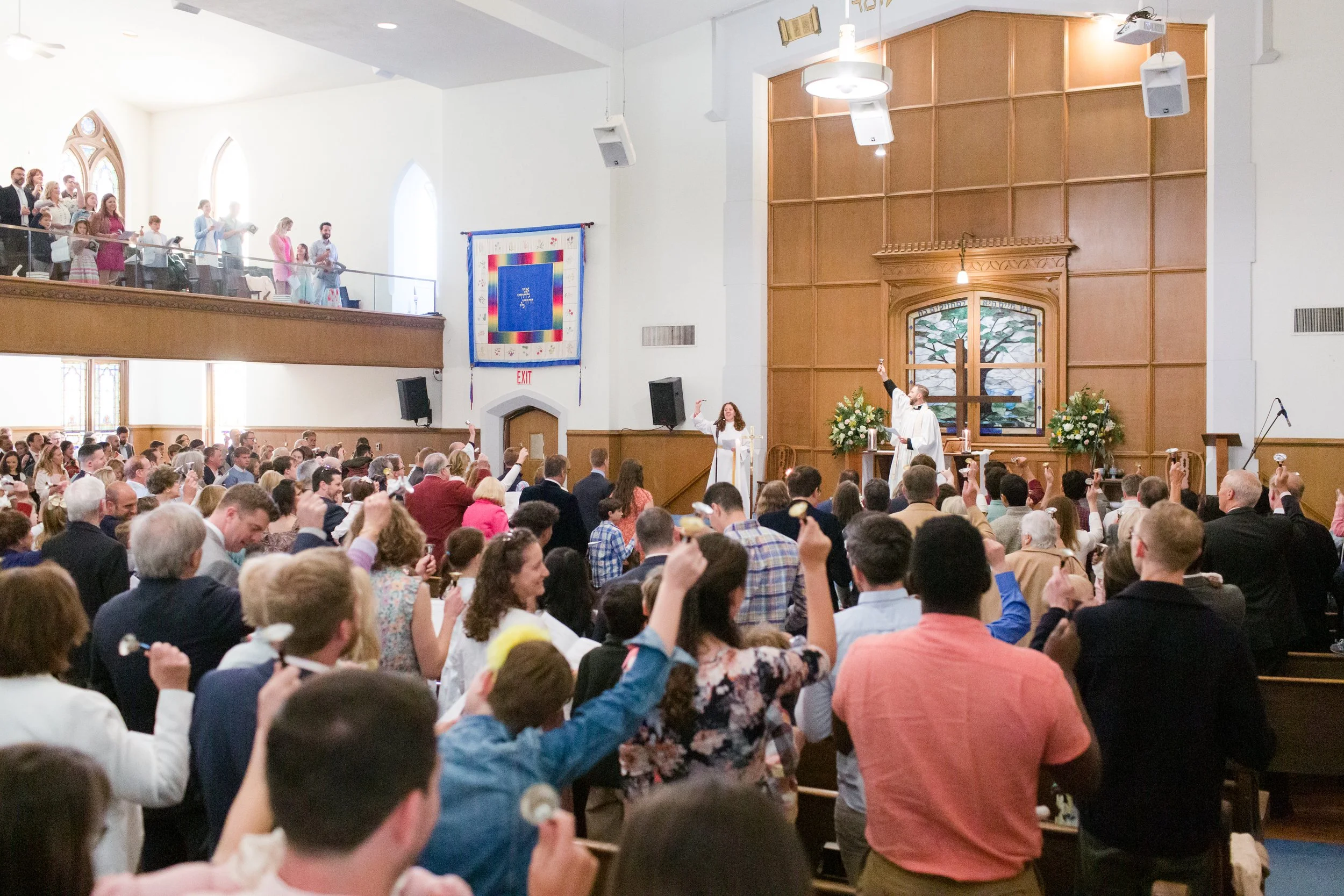
Re-Upping on Our Membership Practices
I have one very important action item for you this month—for every member and non-member alike. When new members join the parish, we ask you to take what we call Membership Practices of giving Time, Talent, and Treasure to the Lord Jesus through his body, the Church.
Redeemer Family,
I have one very important action item for you this month—for every member and non-member alike. When new members join the parish, we ask you to take what we call Membership Practices of giving Time, Talent, and Treasure to the Lord Jesus through his body, the Church.
I’m writing to you today to ask that, during the month of May, our whole parish re-up / re-commit / re… something? :) to these practices.
Now, if you are not yet a member, this is for you as well. One of the best ways to “try Redeemer on for size to see if it fits” is to practice living as a member before actually taking that step of commitment.
If you know what I’m talking about and are ready to do that, here’s the link. Every adult is encouraged to submit a pledge. Households can make their financial pledges together.
If you’re a little fuzzy on what those practices are or if you’d like a refresher, keep reading!
MEMBERSHIP PRACTICES
PREAMBLE
The practices of membership are not designed to be burdensome or onerous. Though our sinful human tendency is to view all rules and expectations as constraining our freedom, we want to embrace these practices wholeheartedly - recognizing that they are for our good and the good our fellow members in the church and our neighbors outside the church.
PRACTICES
TIME—A member commits to making participation in Sunday worship and in small group fellowship a regular part of their weekly habit. Of course, while it is understood that travel schedules and illness may often keep us from participating 100% of the time; we want to say together as members - “we will make it a priority to be together.”
Catchphrase: There is no such creature as a member who rarely worships with us on Sunday or refuses to join a small group.
Key Action Item: Register to lead or participate in a Small Group.
TALENT—A member commits to volunteering their talents and gifts within the church. This may take the shape of formally joining a ministry team (or two or three), or volunteering in some other special capacity. Of course, while it is understood that travel and work schedules may make this a challenge; we want to say together as members, - “we will make it a priority to serve one another and our neighbors.”
Catchphrase: There is no such creature as a member who is too busy to ever volunteer their time for the church.
Key Action Item: Register to volunteer on a ministry team for the coming year.
TREASURE—A member commits to filling out a pledge card each year and giving of their financial resources to the mission and work of the church. Of course, the resources of each individual and household will vary widely (within an economically diverse church - this is expected). Our generosity is not predicated upon achievement of a particular level of financial success or comfort, but rather upon Christ’s call for us to simply give sacrificially. Our giving honors the Lord (who is the giver of all good gifts), forms us (helping us grow in dependence on God), and provides for the work of the church (which is a benefit to ourselves and others.
Catchphrase: There is no such creature as a member who is unwilling to give any of their resources back to the Lord by giving to the church.
Key Action Item: Register your financial pledge for the September 2023 - August 2024 fiscal year.
Now, if you’re ready to take these steps, here is the link.
If you still have more questions, here are some commonly asked questions:
What is a Pledge?
A pledge is you communicating with our Finance Team what you anticipate you will be able to financially give to the church for the next fiscal year (September 1, 2023 - August 31, 2024).
Why is it Important for the Vestry & Finance Team?
Redeemer’s fiscal year runs from September 1 - August 31. So the Vestry and Finance Team will be spending the summer drafting a new budget for the coming year of ministry. What a gift it would be to them if they knew ahead of time what the congregation planned to give! Your clear communication helps our church draft careful, informed, strategic plans for funding the ministry of the coming year.
Why is it Important for You?
While pledging is imminently practical and helpful for our church leadership, it’s more than that. Pledging is also an opportunity for your heart to be shaped by God. Why? Because how we use our resources both reveals and guides what God is doing in our hearts. When your church asks you to pledge, you are being asked to open your bank account to the Lord and ask Him, “How would you have me use the resources you have entrusted to me?” It’s a wonderful question that all of us should be asking on a regular basis.
What Pledging is NOT
Pledging is not an attempt to raise Redeemer’s Budget or meet a financial shortfall. I’m very grateful to report that our parish is in a healthy and strong position financially. Pledging is not about fixing something that is broken, but rather about us continuing to grow spiritually together.
Deadline for Pledging
The deadline for pledging is Wednesday, May 31. Please do not wait until the last minute! Very real decisions and plans for the coming year of ministry will be made based on the pledging data that the Vestry and Finance Team receive.
If you have more questions, please feel free to reach out to a member of our Staff or Vestry and they would be glad to assist you with this. Let’s aim for 100% participation here! Don’t be that person that we have to email over and over again!
Redeemer family, I love you so very much and I’m looking forward to another great year together.
In the Father’s love,


Children in Worship: an Invitation for the Summer
As our parish moves into the season of Ordinary Time and we find ways to practice our faith in, well, ordinary ways, this is a wonderful time to shift the way we teach our children spiritual formation for a season as well.
Dear Redeemer family,
Our parish is growing every year and we continue to prayerfully seek the best ways to lead our children’s ministry at Redeemer. Learning from older, more established children’s ministries in our diocese, we see the summer months provide two opportunities for our parish. One is to allow our hard-working Sunday school volunteers a much needed chance to slow down. The other is to embrace more child participation during the worship service for the summer season, for the sake of both our children and the adults around them! As our parish moves into the season of Ordinary Time and we find ways to practice our faith in, well, ordinary ways, this is a wonderful time to shift the way we teach our children spiritual formation for a season as well.
WHEN WILL THIS TAKE PLACE?
Redeemer Kids will only offer Three’s Room, Pre-K Room, and the full nursery for both services starting Sunday June 4-July 30. In August, our full children’s spiritual formation classes will be offered again and spend 3 weeks getting back into the weekly rhythms of meeting before we fully relaunch our curriculum in the fall with the rest of the parish.
WHAT THIS MEANS FOR OUR KIDS
We will be creating a children’s liturgy specifically for our young children to help guide them through the service (and to doodle on of course) as well as ziploc bags of crayons to borrow. Our school-aged children will have the opportunity to be welcomed into portions of the service that they have not been in before, to learn alongside our older members during the sermon and to practice corporate prayer during Prayers of the People. This is not a break from children’s spiritual formation, rather, a new way to practice it together!
WHAT THIS MEANS FOR PARENTS
If your child is a rising kindergartener or older, she’ll be sitting with you for the whole service! We will offer some resources specifically for these children to engage with the service. As I am envisioning this change, I picture my own 5 year old boy needing a few weeks to adjust to the new rhythm of sitting for longer stretches and finding ways to engage during the sermon. It will be a challenge for him and our family alike as we all adapt, but I urge each family to allow for the time needed to adjust as well as grace for everyone around you.
WHAT THIS MEANS FOR REDEEMER KIDS VOLUNTEERS
Our hope is to give our hard-working Redeemer Kids teachers, assistants, coordinators, and more a season to slow down in the year! Many of you might not know that we ask our teachers and assistants to serve every 3 weeks and our coordinators and nursery volunteers to serve every 4 weeks. As the year has gone on, many of our team members have served more frequently than that in order to have the 30 volunteers needed every Sunday to run our children’s ministry. For those who are not currently serving in Redeemer Kids, take this season to thank our Redeemer Kids volunteers and to prayerfully consider how you could use your own gifts to volunteer as well; you’re needed!
WHAT THIS MEANS FOR EVERYONE ELSE
This is a wonderful opportunity to engage in a new way with the children of our parish! There will be opportunities to stretch and grow as a congregation together as we extend hospitality to the school-aged children of our church in different ways and to support and interact with families with young children in the pews next around you. Here are a few practical guidelines to consider:
The first way you can help is to model attentive and fully engaged behavior for the kids around you! Children learn the most by observing, and by staying focused when listening and then using your body to kneel, stand, extend your hands, etc., you are already discipling the children around you.
Get to know the names of the children who sit near you in particular and then ask after them by name each week. This small gesture can mean the world to children (or anybody for that matter) who can often feel overlooked in a crowd.
When a child near you is noisy (drops a pen, cries, giggles, talks out loud) during the silent portions of the service, don’t react. This could take practice for each of us, but stay engaged in the prayer/silence/liturgy and take this time as an opportunity to grow in focus and to model still and calm posture for your neighbors. (This is a spiritual “muscle” we can all exercise!)
Be open to how you can grow from this experience. During this summer and beyond, be attentive to how children already naturally engage with the service on their own. Do they shout the creeds or dance when they sing? Do they find it hard to be attentive during the scripture reading or to withhold their enthusiasm when they are able to participate in a call and response? Children reflect our emotions, desires, and sin patterns, but are often more open about it! Be open to what you can learn about yourself from watching these children, and how you can grow in your own faith through this!
In Christ,
Casey Cisco
Director of Redeemer Kids
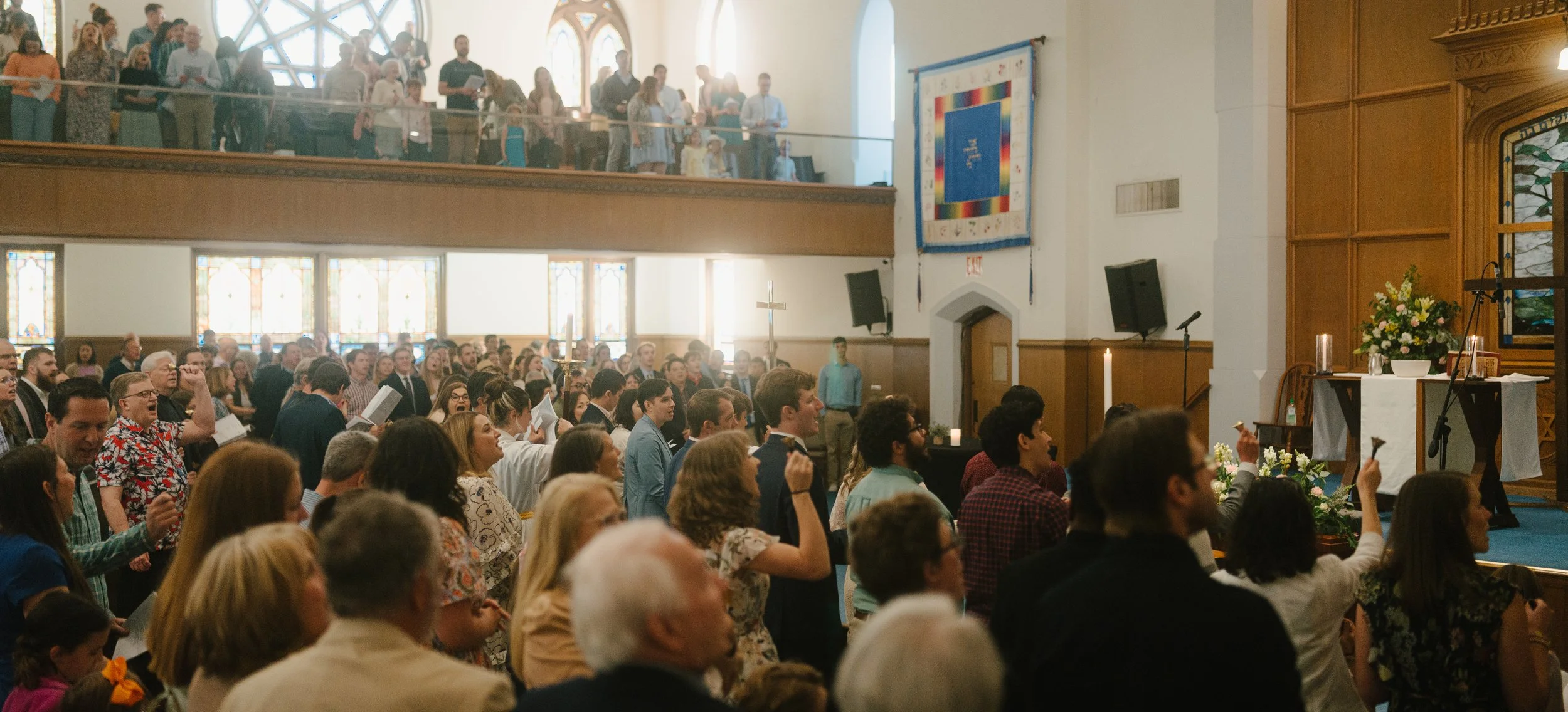
Summer Staff Transitions & Openings
Every year or so, as our parish grows and changes, there is some reorganizing that happens at the staff level. Some leaders conclude seasons of ministry and new opportunities and roles emerge. This Summer, two of our staff are transitioning off the team and there are two new positions on staff that are opening up.
Dear Redeemer Family,
Every year or so, as our parish grows and changes, there is some reorganizing that happens at the staff level. Some leaders conclude seasons of ministry and new opportunities and roles emerge. This summer, two of our staff are transitioning off the team and there are two new positions on staff that are opening up.
The Rev. Alex Riffee | Chaplain

Alex has prayerfully decided (with his wife Yinghao and their kids) to join our church plant in the West End, Church of the Incarnation in Richmond. Incarnation was the first church plant sent out from Redeemer, back in 2019.
The Riffees moved to Richmond in the Summer of 2020 and have been with Redeemer throughout that time. Alex served primarily as a chaplain in the healthcare setting. He has assisted behind the scenes in providing pastoral care for those in our community. Though they regularly attend the 11:00 a.m. service, Alex has also assisted at the Communion table and in preaching.
Quite soon, Alex will begin serving as associate dean of hospital chaplains within the Jurisdiction of the Armed Forces & Chaplaincy. As this role unfolds for him, his family believe worshiping closer to home in Short Pump will aid in these new responsibilities.
Alex, we love you, will miss you, and are excited for this new season for you and your family!
Stephanie Workman | Director of Community Formation
Stephanie joined our staff as our ½ time (20 hr/wk) Dir. of Community Formation in the Fall of 2021. Over the past 20 months she has provided both wonderful shepherding care and necessary organization to our Small Groups.
Beginning this coming Fall (2023) this role is expanding to become a full-time job. As our parish grows, the importance of every member practicing Gospel Formation for Missional Presence in a Small Group setting becomes ever more vital.
Stephanie, we love you, will miss you, and are excited for this new season for you and your family!
Redeemer Family, if you see Alex or Stephanie, please thank them for all the time and energy they have invested in our common life here together!
Now, as we look towards the future, there are two new positions that are now open:
Director of Community Formation (Full-Time). As I mentioned earlier, this is becoming a full-time position and we are searching for the right person to step into this important leadership role of recruiting, training, and equipping Small Group leaders and of leading the people of the parish to engage and participate in Gospel Formation in Small Groups.
Communications Coordinator (10 hr/wk). As our parish continues to grow, our staff becomes increasingly specialized. Up until this point, almost all parish communications have come from either me (Dan) or Jeff King, our Senior Director of Operations. It’s time to bring in someone who can serve as something of “Chief Storyteller” for the parish. This includes our website, social media, parish newsletters, printed materials, and more.
Redeemer family, please pray that the Lord would provide the right people to step into these important leadership roles. If you know of someone who might be a good fit, please send them our way!
In the Father’s love,
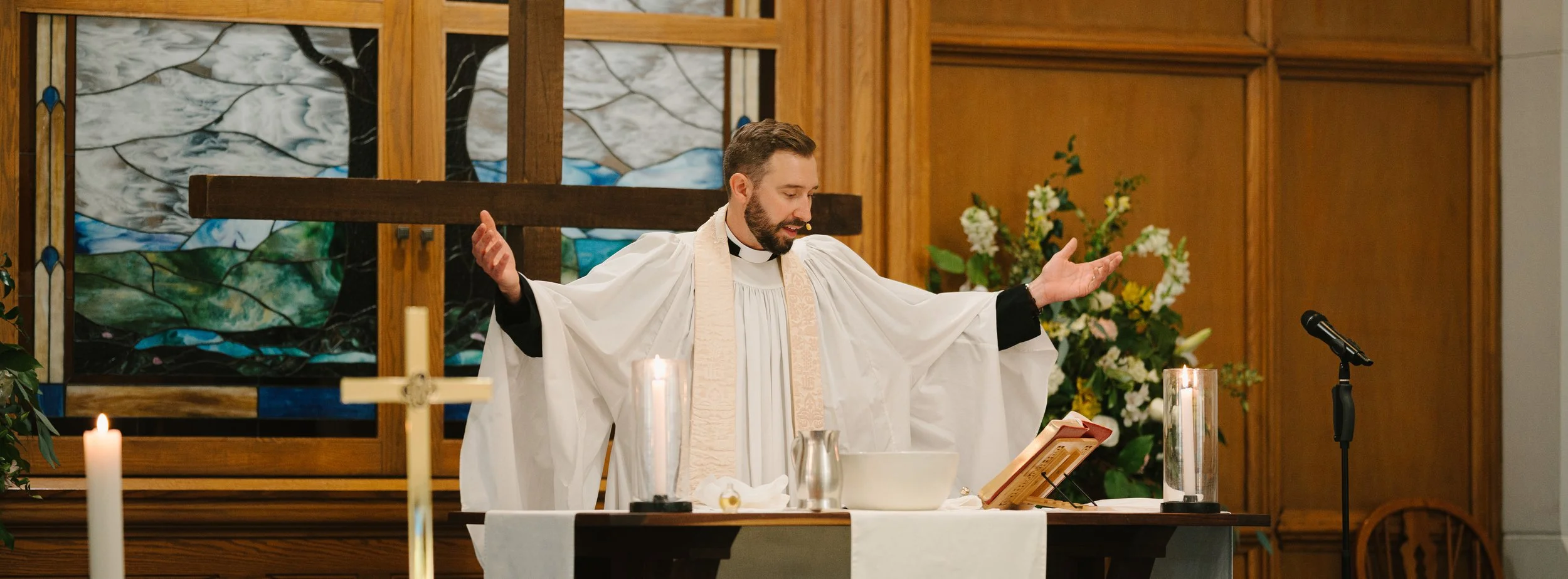
What You Need To Know About Dan's Summer Sabbatical
This Summer, after fifteen years of full-time ministry (6 in Charlottesville, 2 in Falls Church, and 7 in Richmond), I will be taking my first Sabbatical. This is something that we originally planned back in 2016, before our family had yet moved to Richmond to plant Redeemer. We told ourselves, back then, that at the seven year mark, we would take a three month Sabbatical. And now the time is here! I can hardly believe it…
Dear Redeemer Family,
This Summer, after fifteen years of full-time ministry (6 in Charlottesville, 2 in Falls Church, and 7 in Richmond), I will be taking my first Sabbatical. This is something that we originally planned back in 2016, before our family had yet moved to Richmond to plant Redeemer. We told ourselves, back then, that at the seven year mark, we would take a three month Sabbatical. And now the time is here! I can hardly believe it…

I’ve put together the following FAQ section to help address any questions or concerns that anyone might have.
If you have any questions, please feel free to reach out to one of our excellent Wardens or Senior Directors:
Senior Warden, Jim Reynolds
Junior Warden, Sarah Byrd
Senior Director of Ministries, Lane Cowin
Senior Director of Operations, Jeff King
Redeemer family, I am so grateful for this time of rest and I pray that it provides refreshment for our family so that we can continue to be on mission together for many, many years to come!
SABBATICAL F.A.Q’S
WHAT IS A SABBATICAL?
The word Sabbatical has its roots in the word Sabbath - a stopping, a pausing, a time of rest, a time to slow down and remember that the Lord is God. Throughout the story of the Bible, God continually calls and commands His people to practice Sabbath rest. This takes the form of the weekly sabbath for the people (one day out of seven) and annual sabbath for the land (one year out of seven).
A Sabbatical is “a healthy and effective means of preventing burnout and of renewing and enhancing a professional’s capabilities for dealing effectively with problems facing those who need help...the overall goal is rest and renewal, not rigid adherence to a prescribed plan of action. [A sabbatical] might involve study, travel, writing or some combination of all three, blended with a good measure of relaxation and family time.”
“The sabbatical tradition began in the universities at the time when the university was part of the church. The idea was that the university professors (who were often ministers) needed one year in every seven to become students again and to refresh their spiritual calling.”
Over the centuries, the practice of a priestly or pastoral sabbatical developed. This has taken different shapes and forms in different denominations and times in history, but the norm seems to have settled around something like three-to-six months off every seven years or so.
WHAT IS REDEEMER’S STAFF SABBATICAL POLICY?
To that end, Redeemer has developed a Sabbatical Policy for all full-time staff.
Rector — 3 months every 7 years
Senior Director — 2 months every 7 years
Director — 1 month every 7 years
Before embarking on a sabbatical, a staff person must cheerfully, and without reservation, commit to 2 additional years on staff. Our hope is to develop a leadership culture where staff can be regularly refreshed for new seasons of ministry.
WHEN IS MY SABBATICAL HAPPENING?
My last Sunday will be May 28th, Pentecost Sunday.
I will return to Redeemer on August 27th for our Fall Kick-off.
IS SOMETHING WRONG? AM I LEAVING?
No! There isn’t anything wrong that is causing the Sabbatical (this was planned back in 2016). I have absolutely no plans to leave or to do anything else. When invitations to pastor other churches have come, I have gently, but firmly refused all of them. No interviews. No visits. Nothing.
Of course, the Lord may do whatever He likes with me and our family, but for now - the only plan we have is to return to Richmond and re-up for another great season with Redeemer.
WHAT WILL THE MAROTTA FAMILY DO?
We will be out of town for nearly all of the three months. The goal is not to “go on vacation,” but rather to relocate family life and settle into new rhythms there. We are so grateful for friends and relatives who have offered us free or discounted places to stay during this time in:
Charlottesville
Chesapeake Bay
Montana
North Carolina
We plan to enjoy spending a lot of time outdoors in God’s beautiful creation. We will likely focus much of our time on things like hiking, swimming, fishing, reading, writing, drawing, painting, cooking, and saying “yes” when my kids ask me if I can play with them!
WHAT ASPECTS OF MINISTRY WILL I STOP?
On the afternoon of May 28th, I will take off my clergy collar and, barring an emergency, I will not put it back on until the morning of August 27th. I will be taking a break from my priestly work of celebrating the Eucharist, preaching, administering the sacraments, counseling, and leading our parish. This also means no guest preaching or speaking anywhere else!
WHAT NEW INTENTIONAL PRACTICES WILL I TAKE UP?
I will begin the Sabbatical by spending a week in silence and solitude at a Benedictine monastery in New York.
Bible reading and prayer will be a significant part of every day.
My fly rod will be coming with me everywhere I go this Summer and I hope to spend many golden evening hours knee-deep in a river hoping for a fish to rise.
I also plan to do a little bit of writing for a new book. However, this is not supposed to be a writing sabbatical, so I won’t be working under any deadlines.
I have a stack of books that I’ll be bringing with me that includes:
The Sabbatical by Michael O'brien
Jayber Crow by Wendell Berry
Jack: A Life of C.S. Lewis by George Sayer
The City of God by Saint Augustine
The Divine Comedy by Dante
Timothy Keller: His Spiritual & Intellectual Formation by Collin Hansen
Surrender by Bono
A Burning in My Bones by Winn Collier
A River Runs Through It by Norman Maclean
And, of course, Tolkien's Lord of the Rings, which I reread every year.
WHAT IF YOU WANT TO CONTACT ME WHILE I’M GONE?
Unfortunately, I will not be having any contact with Vestry, Staff, or parishioners while on Sabbatical. My email address will be suspended and all emails sent over the Summer will be deleted. I also plan to leave my laptop and my cell phone in my office and not touch them until we return.
If you need anything in the way of pastoral help while I’m gone, please contact another member of our staff.
I am doing this on the recommendation of other older, wiser pastors who have encouraged me to be truly gone so that upon returning I can be truly present.
*Note: The exception for this would be if a parishioner passes away while I’m gone. If that happens, then I will immediately drive or fly back to be with the family and to conduct the funeral. The Senior Directors and Wardens will have contact information for me and they will get in touch with me if there is any emergency.
WHO IS IN CHARGE WHILE I’M GONE?

According to our bylaws, our Senior Warden, Jim Reynolds, is in charge while the Rector is away. However, to share the burden of leadership, our Senior Directors - Lane Cowin and Jeff King will be in charge of running most of the day-to-day operations and ministries of the parish. Additionally, the Canon for Church Planting for our Diocese, the Rev. Tuck Bartholomew, has agreed to serve as Redeemer’s Priest-in-Charge in my absence. He will be present to celebrate the Eucharist, preach, and provide pastoral guidance to our staff and Vestry when needed.
All told, I think Redeemer will be in great (probably better!) hands while I’m gone!
WHY IS THIS TIME IMPORTANT FOR REDEEMER?
Now, when the Lead Pastor or Rector goes on Sabbatical, it’s an important time for everyone in the church. This is an opportunity for all of us to grow. I know that my temptation is to find too much of my identity in being the Rector of this parish. So one big challenge for me this Summer is to remember my identity is in Christ and not in this job!
In the same way, it can be a temptation for parishioners to overly identify a church with the Lead Pastor or Rector. So one big challenge for some of you will be to embrace a version of Redeemer that doesn’t include me!
There is an invitation here, from the Lord, for all of us. Let’s all go into this Summer season with a heart that is open and receptive to whatever the Spirit of Jesus wants to reveal to us. May we all become more fully devoted to and dependent on God through this time.
IS THERE ANYTHING FOR YOU TO DO?
Yes! There are three very important things for you to do this Summer while I’m gone:
Pray: Would you please pray for me and for our family?
Support: Would you please support the leadership of our Wardens, our Senior Directors, and Tuck?
Own: For many of you, this Summer will be an opportunity for you to step up and take more ownership and responsibility for an aspect of our parish life. Please do so with humility and courage.
Redeemer Family, I love you all dearly. I will miss you terribly! I’m glad we have a few more weeks together before we spend some time apart.
May our Lord continue to guide our little parish as we take this maturing step together.
In the Father’s love,
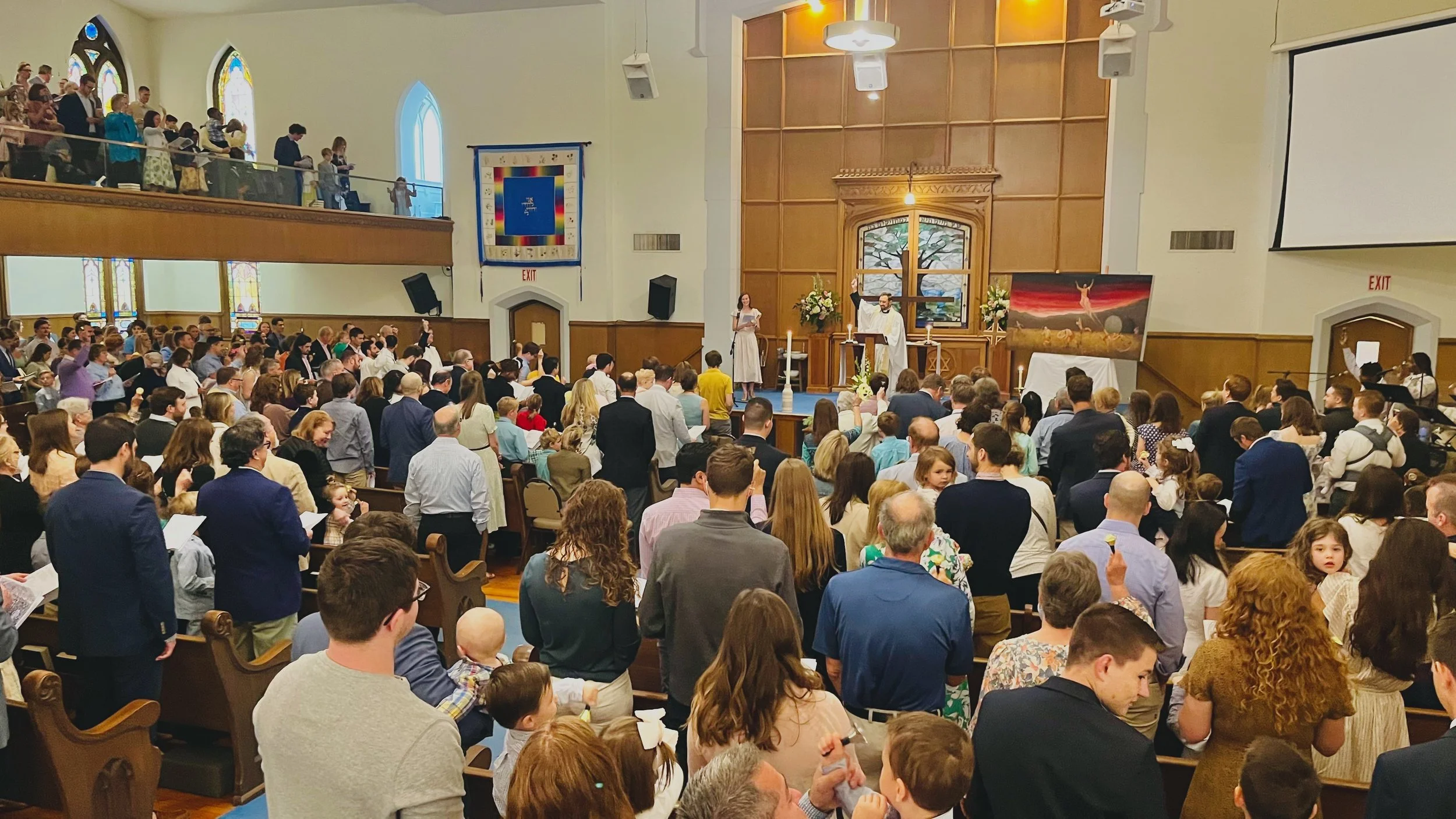
Come to the 7:00 a.m. Sunrise Service on Easter (If Possible)
Good afternoon! A blessed Holy Week to you. I want to take a moment to ask you to consider attending the 7AM Sunrise Worship Service on Easter Morning. Now, of course not everyone is able to do this and we understand! However, if you are able to flex your schedule, here are three good reasons to attend the 7AM:
Redeemer Family,
Good afternoon! A blessed Holy Week to you. I want to take a moment to ask you to consider attending the 7:00 a.m. Sunrise Worship Service on Easter Morning. Now, of course not everyone is able to do this and we understand! However, if you are able to flex your schedule, here are three good reasons to attend the 7:00 a.m. service:
Align worship of God with the rhythms of God’s creation:
Greet the rising of our Lord as we greet the rising Sun. Followers of Jesus have always understood the daily rhythm of sleeping and waking to be a form of practicing death and resurrection.Make worship the first thing you do on Easter:
Before breakfast, parties, and other festivities, begin the day with Worship.Make room for visitors at the 9:00 a.m. & 11:00 a.m. services:
Easter is one of the most important days for us to show hospitality to outsiders.
Church family, I hope this doesn’t sound trite, but as we head into the Triduum of Maundy Thursday, Good Friday, and Easter Sunday, I just want to say how much I love each of you and how much I love our parish. The Holy Spirit has drawn us together and has knit us together in Christ - making us one with Jesus and one with each other.
It continues to be a deeply humbling honor to serve as your Rector and I’m so grateful that we will make the journey together over the next few days.
In the Father’s love,

Holy Week and The Triduum
Good afternoon! Holy Week is nearly upon us. I want to take a few minutes to explain what it will be like to participate in the most important days of the year together. Please, if you can, read the following in its entirety.
Redeemer Family,
Good afternoon! Holy Week is nearly upon us. I want to take a few minutes to explain what it will be like to participate in the most important days of the year together. Please, if you can, read the following in its entirety.
PALM SUNDAY - April 2
The first day of Holy Week and the day that we remember Christ’s triumphal entry into the city of Jerusalem (recorded in all four Gospel accounts: Matthew 21:1-11, Mark 11:1-10, Luke 19:29-38, and John 12:12-15). That morning, we will begin outside, on the sidewalk along Arthur Ashe Boulevard, before we process into the sanctuary waving palm branches and singing. Now, this concept isn’t a new or creative idea. It is, in fact, a very old tradition.
So why are we doing this? There are at least three good reasons (and I’m sure many more):
It connects us to our history: By waving palm branches, singing, and processing together - we will do something with our bodies in the present that connects us to the people of God in the past. We are joined with Christian brothers and sisters from ages past, as well as with the first century citizens of Jerusalem who welcomed Jesus into their city.
It is formative for our young children (and for us): Few things help young children (or adults for that matter) understand a story better than acting it out together. We want more than intellectual assent to the teaching of scripture, we want to receive, embody, and extend the good news of what Christ has done for us. This is why we kneel, stand, sing, eat the bread, drink the wine, and - yes - wave the palms!
It is an act of public worship: In our secular, materialist age, there are very few opportunities for acts of public worship and devotion to Christ. No doubt, as many of us adults walk the streets of Grove, Floyd, Mulberry, and Boulevard, we will feel very silly. If that describes you, don’t worry, you’re in good company. We will all feel the strangeness of publicly worshiping Christ in the midst of neighbors who think we are lunatics. But this is not a bad thing - for us or for our neighbors. It’s good for us because it presents us with a very real opportunity to be courageous. It’s good for our neighbors because our worship serves as a reminder that, no matter what the zeitgeist of our time may say, there are real men and women and children who are continuing to find life in Christ Jesus.
So, dear friends, this Sunday morning, come ready to do a new thing, which is a very old thing, and to do a strange thing, which is a very good thing. We will wave palm branches, and sing, and walk and declare together that, minority though we be, there is still hope to be found only in the Lord Jesus.
STATIONS ON BOULEVARD—April 3-7
From 8:00 a.m.-7:00 p.m., Monday-Friday, the 14 Stations of the Cross will be posted along Arthur Ashe Boulevard. I encourage you to set aside 30-45 minutes of time to stop by, and spend time praying and contemplating each station. We have put together both a printed and digital guidebook to lead you through this exercise.
MAUNDY THURSDAY—April 6
The Paschal mystery - the death and resurrection of Jesus Christ - is at the heart of the Christian Gospel. The evening of Maundy Thursday begins the Triduum (the sacred three days). Maundy Thursday receives its name from the maudatum (commandment) given by our Lord: A new commandment I give to you, that you love one another: just as I have loved you, you also are to love one another (John 13:34). At the Last Supper, Jesus washed his disciples' feet and commanded them to love one another as he had done. This day commemorates the Lord’s example of servant ministry, the institution of the Eucharist, the agony of the Garden of Gethsemane, and the betrayal leading to the crucifixion.
Services are at 5:00 p.m. and 7:00 p.m.
Will Clark, our CCO College minister to VCU will preach at the 5:00pm and Tee Feyrer, one of our CCO College ministers to University of Richmond will preach at the 7:00pm.
No Nursery or Kid’s ministry. Kids are invited to fully participate in all parts of the service.
Remember to wear sandals or slip-off shoes (to facilitate the foot-washing portion of the service).
GOOD FRIDAY—April 7
The Good Friday liturgy is the second part of the Triduum. This most somber of all days is appropriately marked by fasting, abstinence, and penitence, leading us to focus on Jesus and the meaning of his Cross. Some churches do not use musical instruments or bells on this day. The church is often darkened. The bare, stark appearance of the church serves as a reminder of the solemnity and sorrow of the day. The Lord of Life was rejected, mocked, scourged, and then put to death on the Cross. The faithful are reminded of the role which their own sin played in this suffering and agony, as Christ took all sin upon himself, in obedience to the Father’s will. By the Cross we are redeemed, set free from bondage to sin and death. The Cross is a sign of God’s never-ending love for us. It is a sign of life, in the midst of death.
Services are at 5:00 p.m. and 7:00 p.m.
The Rev. Lewis Lovett, our Church Planter-in-Residence, will preach at the 5:00pm and Lane Cowin, our Senior Director of Ministries, will preach at the 7:00pm.
No nursery or children’s ministry. Kids are invited to fully participate in all parts of the service.
Remember to wear black or gray clothing.
HOLY SATURDAY—April 8
This is a day of quiet contemplation. It is important not to start the Easter celebration and feasting too early. Consider eating simple foods and refraining from entertainment. Perhaps, in the morning or the evening, consider praying:
O God, Creator of heaven and earth: Grant that, as the crucified body of your dear Son was laid in the tomb and rested on this holy Sabbath, so we may await with him the coming of the third day, and rise with him to newness of life; through Jesus Christ our Lord. Amen
EASTER SUNDAY—April 9
As the third day dawns, we celebrate the bodily resurrection of our Lord from the dead!
Alleluia! Christ is risen!
The Lord is risen indeed! Alleluia
The church will resound with the ringing of bells, shouts of praise, and songs of joy! This is a dual sacrament service: with both Baptisms and Eucharist.
There are three identical services: 7:00 a.m., 9:00 a.m., and 11:00 a.m. (But only the 9:00 a.m. and 11:00 a.m. provide nursery and children’s ministry).
If you are able to attend the 7:00 a.m. service, please do so! We will likely run out of space at 9:00 a.m. and 11:00 a.m. By worshiping at the sunrise service, you show hospitality to visitors who will likely attend the later two.
There will be coffee, juice, and donuts across the street near the VMFA sculpture garden after all three services. Stay for a while and enjoy the after-party!
Redeemer family, I love you all and I’m so grateful that we get to walk through this week together. I hope and pray that our observance, practice, and worship through these services forms the Gospel more deeply within us so that we might be more missionally present to our families, neighbors, and city.
In the Father’s love,

Vestry Election This Sunday
Our annual Vestry election is taking place this Sunday. We have five excellent candidates and must elect two of them to serve a three year term.
Dear Redeemer Family,
Our annual Vestry election is taking place online now and in-person this Sunday. We have five excellent candidates and must elect two of them to serve a three year term.
Who are our candidates?

Trey Arnold
My family and I have been blessed to worship at Redeemer since we moved to Richmond in 2016. I am committed to serving the Lord and loving our neighbors in this parish. It would be an honor to serve again as a faithful steward on the vestry.
Alex Burlingame
When Emily and I joined Redeemer 5 years ago, we developed a deep commitment to the Anglican tradition and this parish in particular. It would be an honor to apply my personal mission of creating order, clarity, and excellence in the world to this context.


Matt Harper
Vestry service is one of the best ways I can serve and add value to Redeemer, while helping to safeguard its vision and carry out its values. As a career-long HR professional and with prior vestry service at other churches, I would join the Vestry with energy, experience and drive to prayerfully help move us forward in the future.

Lisa Yancey
I desire to serve on Vestry because I love Jesus Christ and I want to serve him obediently and faithfully. I’ve covered the decision in prayer and wise counsel and would be honored to serve the parish in this way. I’m enthusiastic about supporting Redeemer’s vision; Gospel Formation through Missional Presence and trust the Lord to guide this process.
Rachel Yowell
I would like to serve on Vestry because of the immense respect I have for our leadership and the structure of our leadership. It would be an honor to serve our parish alongside such great leaders. I would like to spend my time, energy, and attention on being thoughtful and wise about our resources, and ask good questions as we discern and make decisions that I hope would allow our parish to sustainably flourish.

Who Votes?
Voting is for confirmed members only. If you have completed our Foundations Class, been confirmed by our Bishop by the laying on of hands, and signed our Membership Covenant & Commitments then you are a member here at Redeemer and should participate in this election by prayerfully voting.
How & When to Vote?
You may vote online this week using this link, or you may vote in-person at one of our worship services on Sunday morning. The ballots close Sunday evening.
Remember that the vestry election is not a popularity contest, but rather a matter of careful, prayerful, strategic discernment. The Vestry shoulders the enormous responsibility of stewarding all the financial resources of the parish. We need wise, virtuous, mature followers of Jesus to step into this role.
In the Father’s love,


Our 2023 Vestry Candidates
Our Vestry Election takes place the Sunday before Holy Week, which is April 3rd this year. In between now and then, I would encourage you to prayerfully consider which two of the following five people would be best suited to serve and lead our parish in the coming years.
Dear Redeemer Family,
It’s that time of year again—time for us to prepare to thank two Vestry members (Bethany Lansing and Matt Morgan) for completing their three years of faithful service and time for us to vote in two new people.
Our Vestry Election takes place the Sunday before Holy Week, which is March 26 this year. In between now and then, I would encourage you to prayerfully consider which two of the following five people would be best suited to serve and lead our parish in the coming years.
Trey Arnold
My family and I have been blessed to worship at Redeemer since we moved to Richmond in 2016. I am committed to serving the Lord and loving our neighbors in this parish. It would be an honor to serve again as a faithful steward on the vestry.
Alex Burlingame
When Emily and I joined Redeemer 5 years ago, we developed a deep commitment to the Anglican tradition and this parish in particular. It would be an honor to apply my personal mission of creating order, clarity, and excellence in the world to this context.
Matt Harper
Vestry service is one of the best ways I can serve and add value to Redeemer, while helping to safeguard its vision and carry out its values. As a career-long HR professional and with prior vestry service at other churches, I would join the Vestry with energy, experience and drive to prayerfully help move us forward in the future.
Lisa Yancey
I desire to serve on Vestry because I love Jesus Christ and I want to serve him obediently and faithfully. I’ve covered the decision in prayer and wise counsel and would be honored to serve the parish in this way. I’m enthusiastic about supporting Redeemer’s vision; Gospel Formation through Missional Presence and trust the Lord to guide this process.
Rachel Yowell
I would like to serve on Vestry because of the immense respect I have for our leadership and the structure of our leadership. It would be an honor to serve our parish alongside such great leaders. I would like to spend my time, energy, and attention on being thoughtful and wise about our resources, and ask good questions as we discern and make decisions that I hope would allow our parish to sustainably flourish.
I can attest that each of these people is a mature, thoughtful, wise, compassionate follower of Jesus. There are no bad choices here! I want to remind us all that the Vestry election is not a popularity contest, but rather a matter of spiritual, strategic discernment.
As a reminder, here is a document that lays out the responsibilities of the Vestry. Please give a read if you need a refresher.
Bethany and Matt, thank you for your three years of service! It has been a joy to work with you! And to these five new candidates, thank you for allowing your names to go forward and your willingness to serve in the years ahead. We are grateful for your courage!
In the Father’s love,

One Week Left to Sign Up for the Foundations Class!
On Sunday evening, March 19th, at 5:30pm in the basement of 2715 Grove Ave., we will kick off Foundations Class for the Spring semester.
Dear Redeemer Family,
On Sunday evening, March 19, at 5:30 p.m. in the basement of 2715 Grove Ave., we will kick off Foundations Class for the spring semester.
WHO SHOULD TAKE THIS CLASS?
There are three different kinds of people who should participate in this class.
People who are curious about Redeemer and want to learn more about our parish.
People who are sure that Redeemer is their church home and want to become members.
People who are already members and want a refresher course to help them re-center their lives on practices that will help them grow and thrive.
WHAT IS THE CONTENT?
The class is focused on the seven practices of Gospel Formation for Missional Presence.

Telling the story of the Bible as the true and better narrative in which to understand God, ourselves, each other, and this world.
Q: What story am I in?
Embracing a new identity in Jesus that is received, stable, and secure.
Q: Who am I?
Finding belonging in the church community and extending hospitality to strangers.
Q: Where do I belong?
Cultivating virtue through redemptive habits.
Q: How do I change?
Seeking to understand our context in the city in this cultural moment.
Q: Where do I make my life?
Laboring in renewed vocations for the common good.
Q: What is my purpose?
Reordering our imaginations through beauty.
Q: How do I love?
WHY DOES IT COST $25?
I have found over the years that we only care about things we pay for. In other words, in order for something to really impact us, we need to have some skin in the game. Therefore, for these types of classes here at Redeemer, we charge a small fee. The $25 doesn’t even come close to paying for the cost of the class (which includes a 50+ page workbook, a 2019 Book of Common Prayer, 7 dinners, and 7 nights of child care), but it does help the participants take the class more seriously.
Note: If the $25 is financially impossible for you or your family, just let me know and we’ll adjust it downward or drop it altogether.
As of right now, we have 32 adults signed up for the class, which is great! If a few more of you would like to jump in, you have one week left to register.
You can register online by clicking this link.
In the Father’s love,
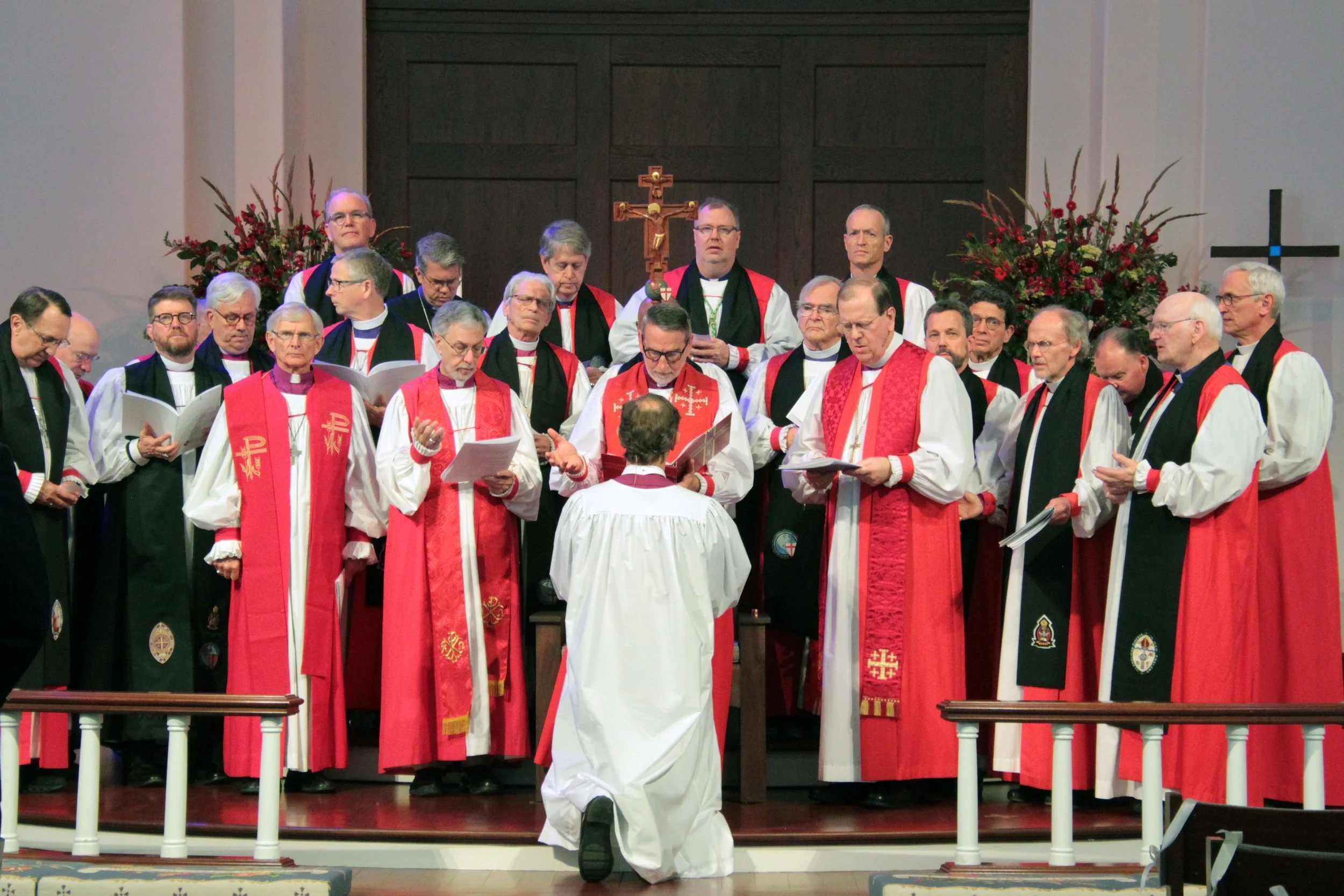
A Peaceful Transfer of Power
This past Saturday was a significant day for us, our diocese, and the Anglican Church in North America. Our beloved Bishop, John Guernsey, officially handed over his spiritual authority and retired from the role of Bishop of the Diocese of the Mid-Atlantic. At the very same time, a new Bishop was consecrated and the Rt. Rev. Chris Warner will now serve as our Bishop. We look forward to welcoming him and his wife Catherine when they come visit us on Sunday, May 14th.
Redeemer Family,
This past Saturday was a significant day for us, our diocese, and the Anglican Church in North America. Our beloved Bishop, John Guernsey, officially handed over his spiritual authority and retired from the role of Bishop of the Diocese of the Mid-Atlantic. At the very same time, a new Bishop was consecrated and the Rt. Rev. Chris Warner will now serve as our Bishop. We look forward to welcoming him and his wife Catherine when they come visit us on Sunday, May 14th.
If you’d like to read more about this transition, you can read an article here.
And if you’d like to watch the consecration service that took place on Saturday, you can watch it here.

Redeemer family, the inner workings of church polity (governance) are rarely of interest to the average Christian and rarely do they impact our day-to-day lives. However, they are vitally important to the long-term health of the church and, when crisis hits (as it inevitably does) it is essential to have clear leadership structures already in place.
I’m so very grateful to Bishop John and his wife Meg for the ways they have cared for me, our family, and our parish over the years. I’m also very much looking forward to serving under Bishop Chris’ authority and grateful for his willingness to step into such an important role in the Church of our Lord Jesus.
In the Father’s love,

Ash Wednesday: A Vital Practice For Remembering Your Death... And Your Joy
Next week you are invited to participate in one of the most important days of the year in the life of our church. February 22nd is Ash Wednesday and we will all gather to receive the sign of the cross in ashes on our foreheads. Strange as it may sound, we won’t wash off the ashes right away, we'll bear the dirty smudge right there on our faces the rest of the day.
Redeemer Family,
Next week you are invited to participate in one of the most important days of the year in the life of our church. February 22 is Ash Wednesday and we will all gather to receive the sign of the cross in ashes on our foreheads. Strange as it may sound, we won’t wash off the ashes right away, we'll bear the dirty smudge right there on our faces the rest of the day.
Now, why do this? Why participate in an Ash Wednesday service?
Ash Wednesday marks the beginning of the season of Lent: a time of penitence, fasting, and prayer, in preparation for the great feast of the resurrection.
The season of Lent began in the early days of the Church… The forty days refer to our Lord’s time of fasting in the wilderness; and since Sundays are never fast days, Ash Wednesday is the beginning of the Lenten Fast.
Throughout the Old Testament, ashes were used as a sign of sorrow and repentance. Christians have traditionally used ashes to indicate sorrow for our own sin and as a reminder that the wages of sin is death (Romans 6:23). Like Adam and Eve, we have disobeyed and rebelled against God, and are under the same judgment, “‘You are dust, and to dust you shall return’” (Genesis 3:19).
But as we are marked with ashes in the same manner that we were signed with the Cross at Baptism, we are also reminded of the life we share in Jesus Christ, the second Adam (Romans 5:17, 6:4). It is in this sure hope that we begin the journey of these forty days of Lent, that by hearing and answering our Savior’s call to repent, we may enter fully into the joyful celebration of his resurrection.*
Taking things one step further, the ashes serve as an urgent reminder of something that many of us have forgotten or chosen to ignore - our own mortality. Over the past years, as I have listened to you, listened to our culture, and listened to the Holy Spirit, I have heard how so many of us seem to struggle with the paradoxical denial-and-anxiety of death. We live as if we will not die (denial), but we also have a deep, inner terror of death (anxiety).
The Christian hope is an answer to the question of death; and there is nothing less compelling than an answer without a question. Get rid of the question and the answer will wither away on its own. Get rid of death—tuck it away in hospitals and nursing homes, remove death from our sight—and soon the hope of resurrection will lose its luster. The good news of the Gospel will hardly seem good or much like news. Without death, the Gospel just isn’t very interesting.
But the problem of death persists. Hidden or not, death comes for us all. Which means that, interesting or not, we need the Gospel. Therefore, we need to take a page out of the ancient church playbook and reclaim the spiritual discipline of Memento Mori. We must remember our death. We must keep our own deaths present before our eyes.
When we do this, the very opposite of what we fear will occur. In contemplating death, we fear that we will become depressed, morbid, unhappy, fearful people. However, as all who have practiced this will attest, the very opposite thing happens within us. When we hold both our death and the Gospel before our eyes, we become more joyful, more content, more grateful, more courageous people. This happens because, in contemplating our own death in light of the Gospel, we take our deepest terror and bring it up out of the darkness and into the light where Jesus can deal with it.
So, church family, do a strange thing and come to one of the Ash Wednesday Services: 6:00 a.m., 12:00 p.m., 5:30 p.m. Receive the ashes on your forehead and remember your death.
Let’s undertake this uncomfortable, but necessary journey together through Lent so that, when we arrive at Easter, we will be ready to celebrate with authentic and enduring joy!
In the Father’s love,

Practice #2: Context
On Sunday, we introduced Practice #5: Context in our Gospel Formation for Missional Presence series. If you missed the sermon, here’s the link. I would encourage you to find some time to listen this week so we can continue to track together as a parish.
This is the second article in the series 7 Practices of Gospel Formation for Missional Presence
Redeemer Family,
On Sunday, we introduced Practice #5: Context in our Gospel Formation for Missional Presence series. If you missed the sermon, here’s the link. I would encourage you to find some time to listen this week so we can continue to track together as a parish.
Practices of Context are ways of answering that basic human question, “Where do I make my life?”
Place and time matter. To be human is to be embodied in a particular place and time. Therefore to live a life of placelessness and timelessness is dehumanizing.
Embracing Our Time
I was raised in Ivy, just outside of Charlottesville, VA. Ivy is semi-famous as the place where Meriwether Lewis, co-leader of the Corps of Discovery, grew up. As a kid I would daydream about what it would have been like to lead that band of adventurers across our continent. I used to say things like,”I was born in the right place, but the wrong century.” I loved my place, but I did not love my time.
I think this is true of many of us. We love our homes, our neighborhoods, our city, and our country; but we do not love our culture or our secular age. We feel out of step with our time.
But we are alive now! We are not an accident, the Lord has placed us in this age; and therefore the only time we have to live faithfully is right now. Today.
Embracing Our Place
In a similar way, there are many of us who feel right at home in our time and age, but out of step with our place. Perhaps the place where we lay our head does not feel like home. Perhaps you wish you could afford a different house, a different neighborhood, maybe escape Richmond to move to a different city. Did you move here intentionally? Or do you feel stuck?
What might it mean for you to choose to willingly, intentionally, voluntarily put down roots right here, in this place? What might it mean for you to quiet the restlessness inside of you that keeps suggesting that there is a better place for you somewhere else?
The Incarnation is Both Our Model & Means
The incarnation of the second person of the Holy Trinity, the Son of God in the flesh - Jesus - is both our model and our means when it comes to practicing our context. Christ was incarnate in both time and place, living as a first century Jewish rabbi, fully embracing His context every way.
We look to Jesus as our model. How did Jesus inhabit his context? How might I do the same?
But more than that, Jesus is also our means or our resource for practicing our context. Jesus is here, fully present, in time and space now. Last week we talked about Practice #4: Cultivating Virtue and we said that to truly cultivate Christian Virtue, we must take up practices that help us to abide in Jesus. He is the vine, we are the branches. As we abide in the vine-who-is-Jesus, we who-are-the-branches become more fully incarnate in our place and time the way He is. We begin to see through the eyes of Jesus, listen through His ears, love with His heart, serve through His hands.
As we contemplate together what it might mean for us to be church that practices our context, here are some things we might consider:
Practices of Stability
Commit to Richmond for the long haul. Resist job opportunities or career advancement that might take you away from this place.
If you live in the city, within walking distance of neighbors, consider staying in your home, even if you could afford a larger, nicer one elsewhere.
Practices of Proximity
If you live out in the county, consider moving into the city. Giving up space and comfort to prioritize proximity to both neighbors and fellow brothers and sisters in the church.
Get to know the people and things nearby. What businesses can you walk to from your front door? What people live within 0.5 miles of you?
Practices of Understanding
Get to know Richmond more deeply. Consider reading Richmond’s Unhealed History by Ben Campbell.
Get to know the importance of the church being embedded in a city. Consider reading Sidewalks in the Kingdom by Eric Jacobsen.
Get to know the importance of cities for the spread of the Gospel. Consider reading Loving the City by Tim Keller.
Seek to understand our culture and time in history. Consider reading How (Not) to be Secular by James K Smith.
These are potential practices not mandates or requirements. They are also just a handful of ways to get started.
Redeemer family, I love you and I am learning to love our place and time. Let’s practice our context together.
In the Father’s love,

Practicing Belonging—Why We Think Every Adult Should Be In A Small Group
If you’ve been around our parish for any length of time, you’ve likely picked up on the fact that we take Small Groups pretty seriously. We like to say that, “If the Sunday morning worship service is one anchor, Small Groups are the second anchor.”
Redeemer Small Groups will relaunch the week of Feb. 5th-11th.
Click here to join a group, or contact Redeemer’s Director of Community Formation, Stephanie Workman
Redeemer Family,
If you’ve been around our parish for any length of time, you’ve likely picked up on the fact that we take Small Groups pretty seriously. We like to say that, “If the Sunday morning worship service is one anchor, Small Groups are the second anchor.”
WHY 2 ANCHORS?
Now, why would anyone or anything need two anchors? Why not just the one? The handful of you sailors out there will know that if you only use one anchor for your boat, it will float around a decent amount as the tides rise and fall and the current changes. If you want your boat to be truly stable, you’ll need two anchors.
Our lives are not so different. We all tend to drift about in the tides and currents of our cultural moment and we need multiple anchors to keep us steady.
PRACTICING VS EXPERIENCING
One of the ways that Small Groups keep us steady is that they provide a place to practice belonging. Notice, I did not say experience belonging. This is one of the great fallacies that most of us unintentionally bring with us into Small Group. We tend to walk in the door thinking/hoping/wanting that the Small Group will be a place where we are seen, known, understood, appreciated, cared for, and loved.
Now, that really does happen sometimes, and it’s wonderful! What a balm to our souls when our presence is welcomed and embraced. Huzzah! Three cheers. Pop the champagne.
However, sometimes our Small Group experience falls a bit short. Other members are awkward or simply very different from us. I’ve been in Small Groups in the past where I remember thinking, “I have nothing in common with these people!”
And that’s exactly where the Lord was at work, in my lack of common ground with the other men and women in my Small Group. We had little in common, but we had Jesus. We shared our need for the good news of the Gospel. And it was enough for us all to belong. The Gospel gave us a means of welcoming one another, dignifying one another, and eventually - truly caring for and loving one another.
2 ACTION ITEMS FOR YOU
If you are an adult who calls Redeemer home, we implore you to join a Small Group! Or contact Redeemer’s Director of Community Formation, Stephanie Workman, for assistance in finding a group that works best for you. Redeemer Small Groups will relaunch the week of Feb. 5th-11th.
If you know of someone inside or outside of our parish who does not yet belong to Jesus or to a Gospel-practicing church, invite them to come to your Small Group with you.
Redeemer Family, we are a parish that exists to practice Gospel Formation for Missional Presence. Let’s press into this together by practicing Gospel belonging around our kitchen tables and in living rooms. Let’s open our doors in hospitality to strangers. Let’s courageously walk through stranger’s doors into their homes.
We all long to belong with God and one another, and it doesn’t come naturally for any of us. So let’s practice.
In the Father’s love,

Practice #1: Story
Now, some of you have asked about what it means to move deeper into Story Practices and so I want to take a moment to share some helpful resources.
This is the first article in the series 7 Practices of Gospel Formation for Missional Presence
Redeemer Family,
Good afternoon! I hope this finds you well today.
REVIEW
This past Sunday we kicked off a very important season in the life of our parish. Redeemer is now six years old and it’s time for us to clarify and focus our reason for existing. We must hone in on our why.
Difficult as it may be to distill the why of a church like ours into one sentence, I think this one comes pretty close: Redeemer exists to practice Gospel Formation for Missional Presence.
We do this through the Seven Essential Practices of the ancient church:
STORY: Telling the story of the Bible as the true and better narrative in which to understand God, ourselves, each other, and the world.
Q: What story am I in?
IDENTITY: Embracing a new identity in Jesus that is received, stable, and secure.
Q: Who am i?
BELONGING: Finding belonging in the church family and extending hospitality to strangers.
Q: With whom do I belong?
VIRTUE: Cultivating virtue through redemptive habits.
Q: How do I change?
CONTEXT: Seeking to understand our context in the city in this cultural moment.
Q: Where do I make my life?
VOCATION: Laboring in renewed vocations for the common good.
Q: What is my purpose?
IMAGINATION: Reordering our imaginations through mystery and beauty.
Q: How do I love?
Now, some of you have asked about what it means to move deeper into Story Practices and so I want to take a moment to share some helpful resources.
Listen to Teaching on Practice #1: Story
If you missed Sunday’s sermon on this first practice, you can listen to it here.
Books to Read on Understanding the Biblical Story
101 - A Walk Through the Bible by Leslie Newbigin
201 - The Drama of Scripture by Bartholomew & Goheen
301 - The Mission of God by Christopher JH Wright
Re-Storying Habits to Take Up
Daily Bible Reading. Consider using the Lectionary in the Book of Common Prayer which assigns various texts to each day of the year.
Reading great fictional stories.
Participate in a Redeemer Small Group starting the first week of February.
Un-Storying Habits to Drop
Binge-watching tv shows and movies whose narratives tell a false story about the meaning of happiness, love, life, joy, etc.
Near-addiction levels of immersion in social media and news stories.
Beginning and ending every day with your smartphone.
Classes to Take
Redeemer’s Foundations Class [Begins Sunday evenings on March 19th]
Resources to Deepen Your Understanding of the Power of Story
Tending the Heart of Virtue by Vigen Guroian
Reading Black Books by Claude Atcho
A Landscape with Dragons by Michael O’Brien
Redeemer family, I don’t want to throw the word “excited” around too casually… but I am genuinely excited to walk through this 7 Practices series together! I hope it clarifies and focuses our why and I hope we grow together along the way.
In the Father’s love,

Don't Miss The Next 7 Sundays
This coming Sunday, January 8th, we will kick off a very important season in the life of our parish. Throughout the seven weeks of the Epiphany season, we will walk through a seven-part sermon series that is designed to focus and clarify why we exist as a parish.
Dear Redeemer Family,
Good afternoon! I hope this finds you well.
This coming Sunday, January 8th, we will kick off a very important season in the life of our parish. Throughout the seven weeks of the Epiphany season, we will walk through a seven-part sermon series that is designed to focus and clarify why we exist as a parish.
[We previewed this at the Parish Town Hall. If you missed it, you can listen here and read the annual report here.]
Here’s where we’re going:
Redeemer Anglican Church exists to practice GOSPEL FORMATION for MISSIONAL PRESENCE. The good news of the Gospel holistically transforms us, enabling us to participate in the mission of God right here, right now. The ancient church has historically embodied this through 7 PRACTICES that address the seven essential questions that every human being seeks to answer:
STORY
Telling the story of the Bible as the true and better narrative in which to understand God, ourselves, each other, and the world.
Q: What story am I in?
IDENTITY
Embracing a new identity in Jesus that is received, stable, and secure.
Q: Who am I?
BELONGING
Finding belonging in the church family and extending hospitality to strangers.
Q: With whom do I belong?
VIRTUE
Cultivating virtue through redemptive habits.
Q: How do I change?
CONTEXT
Seeking to understand our context in the city in this cultural moment.
Q: Where do I make my life?
VOCATION
Laboring in renewed vocations for the common good.
Q: What is my purpose?
IMAGINATION
Reordering our imaginations through mystery and beauty.
Q: How do I love?
Church family, as much as I’m looking forward to preaching through these seven practices, I am far more excited about seeing these practices integrated into everything we do together.
Let’s begin the new year by moving further up and further in to this GOSPEL FORMATION together. As we do this, I have every confidence that, by the grace of our Lord, we will also become more missionally present to our families, our neighbors, and to our coworkers here in the city.
In the Father’s love,

Consider Inviting a Friend to Redeemer's Christmas Eve Service
All of us have family members, friends, neighbors, and coworkers who are either unbelievers or Christians who do not currently have a church home. Our Christmas Eve Lessons & Carols service is a low-bar of entry for anyone who is outside our parish.
Redeemer Family,
All of us have family members, friends, neighbors, and coworkers who are either unbelievers or Christians who do not currently have a church home. Our Christmas Eve Lessons & Carols service is a low-bar of entry for anyone who is outside our parish.
Think about it:
It’s Christmas Eve. Even those who have never darkened the door of a church are familiar with some of the songs and stories of the season.
Lessons & Carols is not nearly as complex or intimidating as our normal, Sunday morning Eucharistic liturgy. If someone asks you what the service will be like, the answer is delightfully simple, “It’s just 7 readings and 7 carols/songs.”
It is a sensory service. Lights, candles, music, art - a feast for the senses!
It’s short! Less than 1 hour.
The Gospel message will be accessible and clear. At the end of the 7 lessons and carols, I will give a very brief (5-7 min) homily that ties the whole service together and presents the good news of the Gospel. This is especially important for people who are lonely, suffering, or grieving during this season.
Pause for a moment and make a mental (or physical) list of people you know who are either unbelievers or Christians who do not have a church home. Consider inviting all of those people to come with you to either the 4:00 p.m. or 6:00 p.m. service.
Advent is drawing to a close and the Feast of Christmas is nearly here. This is not only a moment of waiting and celebration, but also a moment of hospitality. Just as we sing “let every heart prepare Him room,” we may also prepare our calendars and homes with room for our neighbors.
I’ll be inviting my friends from outside Redeemer and I’d love for you to do so as well.
In the Father’s love,
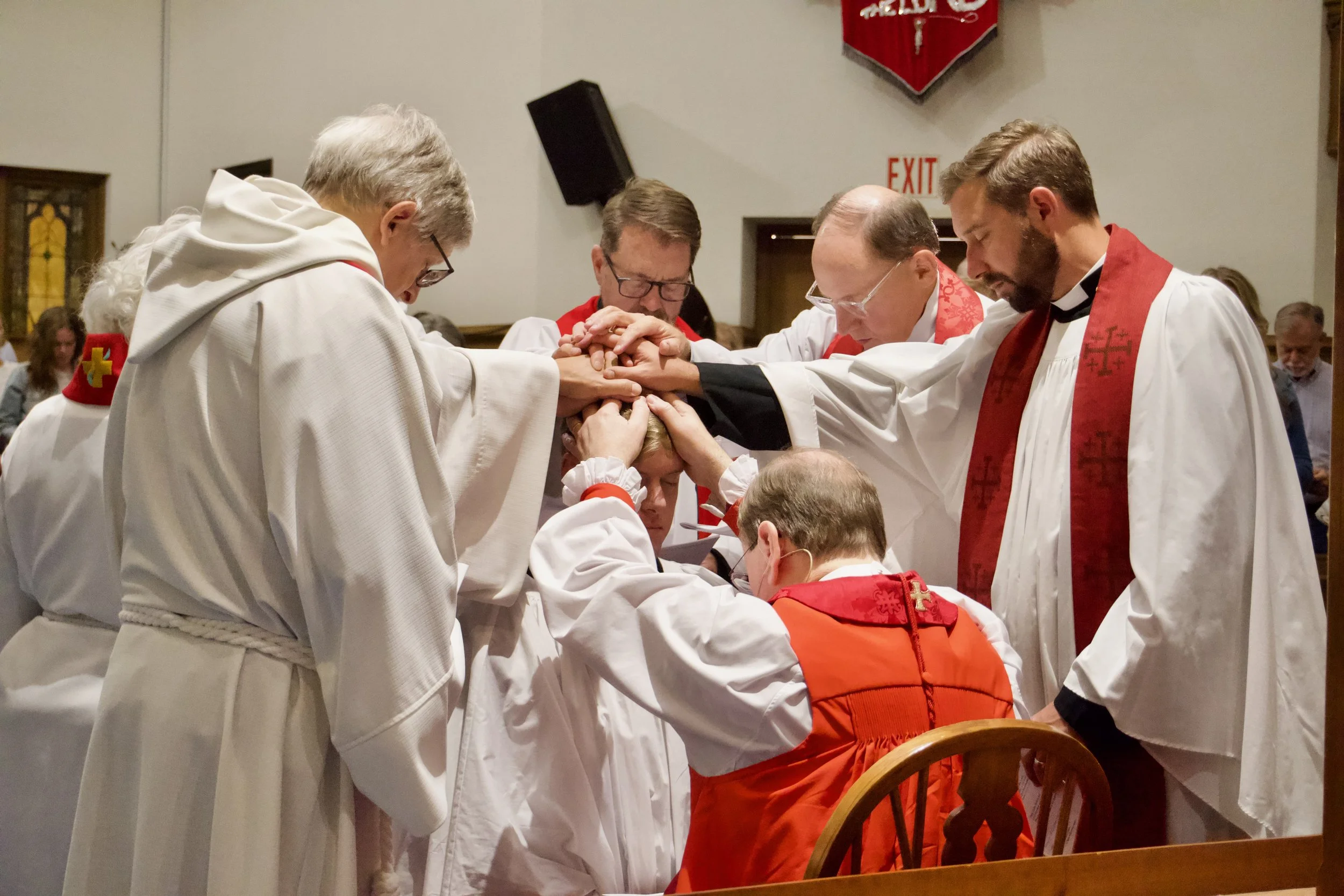
WELCOME → FORM → SEND—Missional Movements in our Parish
There are so many good, missional movements happening within the life of our parish. Consider what we are participating in together just in the month of November:
Dear Redeemer Family,
There are so many good, missional movements happening within the life of our parish. Consider what we are participating in together just in the month of November:
WELCOME: This past Sunday, November 6, we witnessed the baptisms of 12 children and adults. In the baptisms of these dear people, we joyfully welcomed them into the fellowship of the Church.
FORM: This coming Sunday, November 13, we will celebrate 29 adults (bringing with them 14 children, 43 total people) into membership through Confirmation. Having completed the 7-week Foundations Class, passed their membership interview, and made the threefold commitment to Small Group participation, volunteering, and financial giving—these households have been engaged in gospel formation and are prepared to actively follow Jesus here as members of Redeemer’s Parish.
SEND: The following Sunday, November 20, we will commission 60 people (36 adults and 24 children) to leave Redeemer in order to plant All Souls Anglican Church in the Manchester neighborhood, South of the River.
Now pause with me for a moment and consider these movements.
WELCOME & FORM
New people are coming into our parish and making their home in Christ and His Church here at Redeemer. Our family is growing. As with any growing family, this is both a thrilling joy and a difficult change. When a new baby is born and a family of four becomes a family of five, everyone must adjust. Old ways and habits are exchanged for new ones. Rooms are rearranged. Space is created for the new humans that are present.
All growth means change, all change means loss, all loss is painful.
So growth is painful. I feel this. Do you?
I used to know every single person in our parish. I knew most of your middle names. I knew a lot of your birth dates. I knew details about your jobs, homes, families, hopes, dreams, and disappointments. I didn’t have to ask how to pray for you because I just knew. We didn’t have to catch up, we were always caught up.
Now I struggle to get my brain to remember a new person’s name because there are So. Many. New. People!
Now, this may cause some of us to think (or even say out loud!) things like, “Redeemer is getting too big, I miss the days when it was smaller…”
I hear you, but growth is not only painful, it is also a great joy! Remember when you first arrived here? I do. It was a great day. I’m so glad that you are here! I wouldn’t have wanted the doors to be close to you. We need you and we wouldn’t be us without you.
And so as we witness baptisms and confirmations, we may appropriately reminisce about the good old days when Redeemer was a small parish of 100 people who all knew each other. I’m a nostalgic kind-of-guy and you have permission to be nostalgic as well!
However, we can also rejoice at the good, healthy growth and the wonderful new people it brings to us. Let’s not stop being the warm, good-hearted, hospitable people that we know we are called to be in Christ. Let’s not only welcome these new people in the liturgies of baptism and confirmation, let’s welcome them into our homes and lives.
SEND
Just as Jesus gathered the disciples to Himself in order to send them out to minister to others, so we welcome in people only to turn around and commission them to go forth into the world proclaiming and embodying the good news of the Gospel.
We do this every week in our worship liturgy, where we are all sent to our homes, our jobs, our neighborhoods, and our small groups as bearers of the good news of God’s love in Jesus.
When we commission the team of 60 people to leave Redeemer to plant All Souls Anglican, we are doing this in a heightened form. Church Planting is simply a more extreme and intense form of the week-in-week-out commissioning that we do together every Sunday.
As we send friends, brothers and sisters, fathers and mothers, sons and daughters - we will all feel the bittersweetness of living as missionaries here in the city of Richmond. There is a real bitterness to planting new churches. The challenges of raising money and drafting strategy pale in comparison to the challenge of saying farewell to people we love so dearly.
And so to everyone who is going with All Souls, we love you and we will miss you!
But in the bitterness there is also a note of honey. This is not an eternal farewell. We shall all be reunited sooner or later, and we know that the parting of ways is necessary and good. It is the tree that lets go of the apple so that it might fall to the ground, roll a little ways down the hill, sink into the soil, sprout, take root, grow up, and bear new fruit.
Just as the first church we helped plant, Church of the Incarnation in the West End, is bearing new fruit that Redeemer could never cultivate, so we have every expectation and hope that our second plant, All Souls Anglican, will produce wonderful new fruit for the glory of God and the common good of the city.
Redeemer family, I’m so grateful for these missional movements within the life of our parish. Let’s participate in all of this together, the highs and lows, the bitter and the sweet.
In the Father’s love,

In Review: Youth Fellowship Fall Retreat
Last weekend, our Youth Fellowship ministry took 15 students to Smith Mountain Lake for our first ever Fall Retreat. To give you a glimpse into our weekend, it was filled with laughter, games (including an egg toss), food, singing, swimming, hiking, and studying scripture together. Smith Mountain Lake is one of the most beautiful places I have been, and it was fitting to be able to enjoy such a beautiful part of God’s creation together on our retreat.
Last weekend, our Youth Fellowship ministry took 15 students to Smith Mountain Lake for our first ever Fall Retreat. To give you a glimpse into our weekend, it was filled with laughter, games (including an egg toss), food, singing, swimming, hiking, and studying scripture together. Smith Mountain Lake is one of the most beautiful places I have been, and it was fitting to be able to enjoy such a beautiful part of God’s creation together on our retreat.
Our theme for the weekend was “experiencing scripture” and we did this by practicing Lectio Divina together. Throughout this time, we were sharing and discussing what stood out to us and how we related to the passage. One of the most special parts of the weekend was Saturday evening worship and Lectio Divina. This was our third session of worship and Lectio Divina for the weekend. In previous sessions during the weekend, mostly just the leaders were sharing. Saturday night was different. This was the point in the weekend where we had felt like we had been together for way more than the 24 hours we had been (if you have ever been on a youth retreat, you probably know what I am talking about). We spend every Wednesday night together, but having the extended time on a retreat brings groups of students closer in a different way. It felt like we had reached a point where we all felt comfortable with each other.
Christian (our Director of Youth Fellowship) led us through Luke 15:11-24 (The Parable of the Prodigal Son) and our group was small enough to be able to have a discussion all together. Both leaders and students were sharing and asking questions and we had a deep and rich conversation about the passage. The coolest part of this was that it did not feel like adults trying to explain the passage to students but rather just brothers and sisters discussing scripture together. In a group where the age range was 11 to 65, it was really special to fellowship in this way together. I was amazed at the honesty of students during this time. Leaving this discussion it felt like our community had deepened.
Another one of the best parts of the weekend was our Saturday afternoon swim in the lake. We had a beautiful, sunny and 70 degree October day and the group decided to head out to the dock for most of the afternoon. This consisted of swimming, kayaking, paddle boarding, jumping off the dock, throwing the football around, laying on the water trampoline. When we weren't in the water, we were playing the Hot Ones hot sauce game in which you try to see how hot of a hot sauce you can withstand (and by “we”, I mean everyone else).
Swimming in the lake and hanging out on the dock gave us an opportunity to have everyone together in one place and it felt like it brought the group together. The water was indeed freezing (if you were to ask me), but we spent hours out there. It was such a gift to have nice enough weather to be outside and in the water. Not everyone wanted to swim, but it was special to be all together laughing and playing for hours. For a few minutes I was pretty far towards the middle of the lake on a paddle board and I could hear the beautiful sound of faint laughter and chatter coming from the dock and the water around it, which was a sweet picture of our weekend at Smith Mountain Lake.
The best part of the fall retreat was being able to fellowship with one another and encounter God together. Taking part in community with our students for an entire weekend and getting to build and deepen relationships was such a gift.
—Natalie Gillesse, Young Adult Fellowship Volunteer Leader


Do you Sing, Play an Instrument, or Have a Good Ear for Music?
As we prepare to send out our second church plant - All Souls Anglican - in just a few weeks, we are realizing that we are sending many of our best musicians, vocalists, and sound techs! This leaves some significant roles open that you could fill.
Dear Redeemer Family,
We are blessed to have Orlando Palmer as our Artist-in-Residence. Not only is he writing and recording fantastic new songs, but he also works with musicians, vocalists, and sound techs here in the parish to create beautiful music for our Sunday morning worship services.
As we prepare to send out our second church plant—All Souls Anglican—in just a few weeks, we are realizing that we are sending many of our best musicians, vocalists, and sound techs! This leaves some significant roles open that you could fill.
So,
Do you love to sing and have a decent voice?
Do you play a musical instrument?
Do you have a good ear for music?
If the answer to any of the above is “yes,” then I would encourage you to contact Orlando and schedule a practice session with him.
You don’t have to be a professional or expert. We’re looking for folks with a modicum of skill who have the desire to serve the Lord and the church with their talent.
Thanks, Orlando, for putting together such great teams every Sunday morning and thanks in advance to you new folks who might be willing to jump in and help!
In the Father’s love,

Save the Date: Parish Town Hall, December 11, 7:00 p.m.
There are a handful of times each year where it is vitally important for us to pull together as a church to look back in celebration of what God has done and to look ahead in anticipation of where the Lord might be leading us next.
Dear Redeemer Family,
There are a handful of times each year where it is vitally important for us to pull together as a church to look back in celebration of what God has done and to look ahead in anticipation of where the Lord might be leading us next.
Two ACTION ITEMS: Please pause right now and:
Reserve the evening of Sunday, December 11 on your personal calendar.
RSVP online for the Town Hall so that we can provide enough food and drink for everyone.
What happens at the Parish Town Hall?
A presentation of the annual report from the Finance Team and Vestry.
A remembrance and celebration of the goodness of the Lord to us this past year.
An update on our hopes for owning a church building in a permanent location.
A presentation of fresh vision language from our Rector, Dan.
Open Q&A on all of the above.
This promises to be a fun, informative, and encouraging evening together! As our parish continues to grow and flourish, let’s ensure that we are setting aside time to both celebrate with gratitude and strategically look ahead with hope.
See you there!
In the Father’s love,
Your Vestry
Your Finance Team
Your Rector
Vestry
Matt Morgan, Senior Warden
Jim Reynolds, Junior Warden
Halle Basco
Bethany Lansing
David Williamson
Sarah Byrd
Finance Team
Webb Estes, Chair
Ben Gurley, Treasurer
Jeff King, Senior Director of Operations
Steve Godfrey
Sean Rutherford
Kerri Swaim
Rector: The Rev. Dan Marotta
A New Bishop
This past Saturday was an important day in the life and history of our church as the clergy and lay delegates from parishes in our Diocese of the Mid-Atlantic all over Virgina, D.C., Maryland, West VA, and Delaware voted to elect The Rev. Chris Warner to be our next Bishop (effective 2/18/23).
Dear Redeemer Family,
This past Saturday was an important day in the life and history of our church as the clergy and lay delegates from parishes in our Diocese of the Mid-Atlantic (Virgina, D.C., Maryland, West VA, and Delaware) voted to elect The Rev. Chris Warner to be our next Bishop—effective February 18, 2023.
*Note: For further reading on the role of a Bishop in the Anglican Communion, see this helpful article.
As many of you will know, The Rt. Rev. John Guernsey currently serves as our Bishop and he is planning to retire in early 2023 after faithfully serving and leading us since 2011. Our Diocese has been through a year+ discernment process in search of our next Bishop and, after hundreds of hours of research, careful vetting, prayer, interviewing, and (on Saturday) voting, we are relieved and delighted that the process has concluded.
Pending the consent of the Anglican Church in North America’s College of Bishops in January, Bishop-Elect Warner will be consecrated at The Falls Church Anglican in Falls Church, VA on February 18, 2023.
Our future Bishop is currently serving as the Rector of the Church of the Holy Cross, Sullivan’s Island/Daniel Island, SC. Prior to his time as Rector, he was an Associate Rector at Church of the Holy Cross, Rector at St. Christopher Camp and Conference Center, and Curate at Trinity Episcopal Church in Columbus, GA. He married Catherine in 1993, and they have three children (27, 24, and 23).
After the election, The Rev. Chris Warner addressed the delegates saying:
“I’m honored and humbled to have been selected to serve DOMA as bishop-elect. I’m aware that those of us who serve the Lord in vocational ministry must never believe we do so because we ‘qualify.’ We serve because the Lord calls. And those whom He calls, He then equips. This keeps us dependent upon the Lord and Jesus receives the glory he rightly deserves. I ask your prayers and I pledge my prayers for you. I’m truly excited to see what God will do as we serve together in the years to come.”
I hope you all will join me in thanking Bishop John Guernsey and his wife Meg when they visit us for the last time on Sunday, November 13, and in welcoming Bishop-Elect Chris Warner and his wife Catherine when they visit us in the spring of 2023.
In the Father’s love,

Planning Ahead: Special Sundays This Fall
Good afternoon! I hope this finds you well. We have a number of special Sundays approaching through the Fall as we head towards the season of Advent and so I’d like to take a minute to give you a preview of what lies ahead. Take a look and mark your calendars appropriately.
Redeemer Family,
Good afternoon! I hope this finds you well. We have a number of special Sundays approaching through the Fall as we head towards the season of Advent and so I’d like to take a minute to give you a preview of what lies ahead. Take a look and mark your calendars appropriately.
Oct. 23—Lane Cowin’s First Sermon
Lane joined our staff on Sept. 1st as our Senior Director of Ministries. Her primary responsibilities include overseeing the majority of our ministry staff and providing shepherding care for parishioners in need. Because Lane is a gifted teacher and theologian, we are also inviting her to join the preaching rotation and anticipate her preaching a few times per year.
Sunday, October 23, will be her first sermon here amongst us and I’m taking the opportunity to note this because I know there are a few of you who may be unaccustomed to hearing a woman exposit scripture from the pulpit in a Sunday worship service. Some of us may celebrate this as a victory for women’s rights and others may fret over it as a departure from traditional, conservative polity. To both categories of folks, I would like to cheerfully communicate that both interpretations would be a mistake.
Redeemer remains, as it always has, unswervingly committed to the historic, orthodox faith found in the Bible, passed down through the church. This high view of both scripture and church leads us, at the very same time, to value the ministry leadership of women while celebrating the complementary, Image-of-God-Reflecting differences between men and women. This is a both/and situation, not an either/or situation.
If any of this is concerning or confusing, please come to me directly and let’s talk about it over coffee.
Nov. 6—Baptism Sunday
What a joy to welcome new people, young and old, into the family of God through the Sacrament of Baptism. If you or your child are not yet baptized and would like to be, you can register to be baptized here.
Nov. 13—Confirmation/New Members Sunday
And the very next Sunday, our Bishop, The Rt. Rev. John Guernsey, will be here with us to preach to us and to pray for new members! If you would like to become an official member of Redeemer, you can register here.
Nov. 20—Commissioning All Souls Anglican Church
It is with great joy (and also very natural heartache!) that we will commission The Rev. Danny Hindman and over 50+ Redeemer members to go forth to establish a new parish in the Manchester neighborhood South of the River - All Souls Anglican Church.
The hardest part of planting new churches is not raising the money, or determining strategy, or figuring out logistics, it’s saying goodbye to people we love! And so, to all of you who are preparing to depart Redeemer to plant All Souls, we want to say that we love you and will miss you! We are absolutely thrilled for what the Lord has in store for you in this new adventure and we are committed to praying for and supporting you every step of the way.
The Rev. Tuck Bartholomew, the Canon for Church Planting for our Diocese, will be present to help lead this service
Nov. 27—First Sunday of Advent / Redeemer turns Six!
With the beginning of a new church year, our little parish (now, not so little anymore) turns six years old! I can hardly believe it. Let’s celebrate this together!
Dec. 4—Tee Feyrer Preaches
As college students head into their final exams, we thought it would be appropriate to invite one of our college ministers, Tee Feyrer, to preach to them and to all of us. Thank you Tee!
Dec. 11—Parish Town Hall
This Sunday evening, 7-9pm, all adult members are invited to gather in the basement of 2715 Grove Ave. to hear a presentation of Redeemer’s Annual Report, to ask questions, and to gain clarity on our mission as a parish. This is always a highlight of the year, so please mark your calendars and RSVP here!
Dec. 18—Lewis Lovett Preaches
Church Planter-in-Residence #3, Lewis Lovett, will preach for us this Sunday. Lewis and his family are preparing to establish a new parish in Midlothian in the Spring of 2024. You can read more about their family and their plans here.
Dec. 24—Christmas Eve Lessons & Carols
It’s not too early to mark your calendars! We will have two identical Lessons & Carols services at 4pm and 6pm.
Dec. 25—Christmas Day
Continuing our (almost) six year campaign to Take-Back-Christmas, we resist the cultural trend of putting presents and nuclear family at the heart of Christmas, and instead practice putting Christ at the center of our celebrations by actually gathering for worship on Christmas Day. Join us!
In the Father’s love,

What Does Baptism Do To Us?
On Sunday November 6, All Saints Sunday, we will celebrate the sacrament of baptism and joyfully welcome new people into the resurrection family of Jesus. These are always some of my very favorite days of the year. Whether we are baptizing an adult convert, a teenage or college student professing faith for the first time, or a young child born into a Christian family - it is a transcendent joy to witness a soul united with Christ through water.
Dear Redeemer Family,
On Sunday, November 6, All Saints Sunday, we will celebrate the sacrament of baptism and joyfully welcome new people into the resurrection family of Jesus. These are always some of my very favorite days of the year. Whether we are baptizing an adult convert, a teenage or college student professing faith for the first time, or a young child born into a Christian family - it is a transcendent joy to witness a soul united with Christ through water.
Traditionally, the church has baptized people on four special Sundays in the liturgical calendar.
All Saints Day (November 6)
Epiphany (January 9)
Easter (April 9)
Pentecost (May 28)
Now, I know that many of you are relatively new to the Christian faith and new to participating in a local church - especially a local church that practices ancient traditions like Redeemer does! So let me say a word about what Christian baptism is:
Jesus answered, “Truly, truly, I say to you, unless one is born of water and the Spirit, he cannot enter the kingdom of God. – John 3:5
Go therefore and make disciples of all nations, baptizing them in the name of the Father and of the Son and of the Holy Spirit. – Matt. 28:19
Do you not know that all of us who have been baptized into Christ Jesus were baptized into his death? We were buried therefore with him by baptism into death, in order that, just as Christ was raised from the dead by the glory of the Father, we too might walk in newness of life. – Romans 6:4
Because they formerly did not obey, when God's patience waited in the days of Noah, while the ark was being prepared, in which a few, that is, eight persons, were brought safely through water. Baptism, which corresponds to this, now saves you, not as a removal of dirt from the body but as an appeal to God for a good conscience, through the resurrection of Jesus Christ. – 1 Peter 3:20-21
In Christian baptism, a person is united with Jesus in His death and resurrection. We call baptism a Sacrament because it is a physical, tangible, material ritual that is filled with a spiritual, intangible, immaterial grace. Something physical is happening—the person is either being immersed in water or having water poured over their head. Something spiritual is happening—that person is, mysteriously (in a way that we can only barely begin to comprehend), being joined together with the Lord Jesus and, therefore, becomes a part of the church - the body of Christ.
The Story of Baptism spans the entirety of Scripture from Genesis to Revelation.
The Old Testament prefigures baptism: In the creation of the world, in the salvation of Noah and his family from the flood, in the exodus of the Israelites through the Red Sea, and in the Israelites crossing the Jordan River out of the wilderness and into the promised land. (There are a lot more, but these are the big ones).
Christ commands us to be baptized and to baptize others.
The New Testament authors teach on the centrality of baptism in a Christian’s life.
So who should get baptized?
Any person, young or old, who wishes to put their trust wholeheartedly in Jesus for their redemption.
Any child of a baptized adult Christian who will raise that child in the faith as a part of the church.
Why do we baptize infants as well as adults?
“We start talking to our children not because they understand us, but so that they will. Baptism is God's language whereby he starts talking to his children and initiates a relationship with them. Sacraments are a word after all.”
– Peter Leithart, The Baptized Body
We baptize children, not because we think that an adult profession of faith doesn’t matter (it does, and should come at Confirmation - the other side of the coin to infant baptism), but because we seek to raise Christian children within the church.
Jesus said, “Let the little children come to me and do not hinder them.” We take the Bible at its word that little children can come directly to Jesus, they do not have to grow up first.
For Further Study
I would heartily recommend Peter Leithart’s excellent little book The Baptized Body to anyone who has serious questions about Christian baptism (especially baptizing children) and would like to learn more about it.
If you are a teenager or an adult, have never received Christian baptism, and you would like to - please email me. I would be delighted to get together and talk with you about it.
If you are a parent and your child has not been baptized - same invitation! It would be a joy to baptize your little one.
In the Father’s love,
Redeemer is hosting a baptism class on October 17 for anyone who would like to learn more.
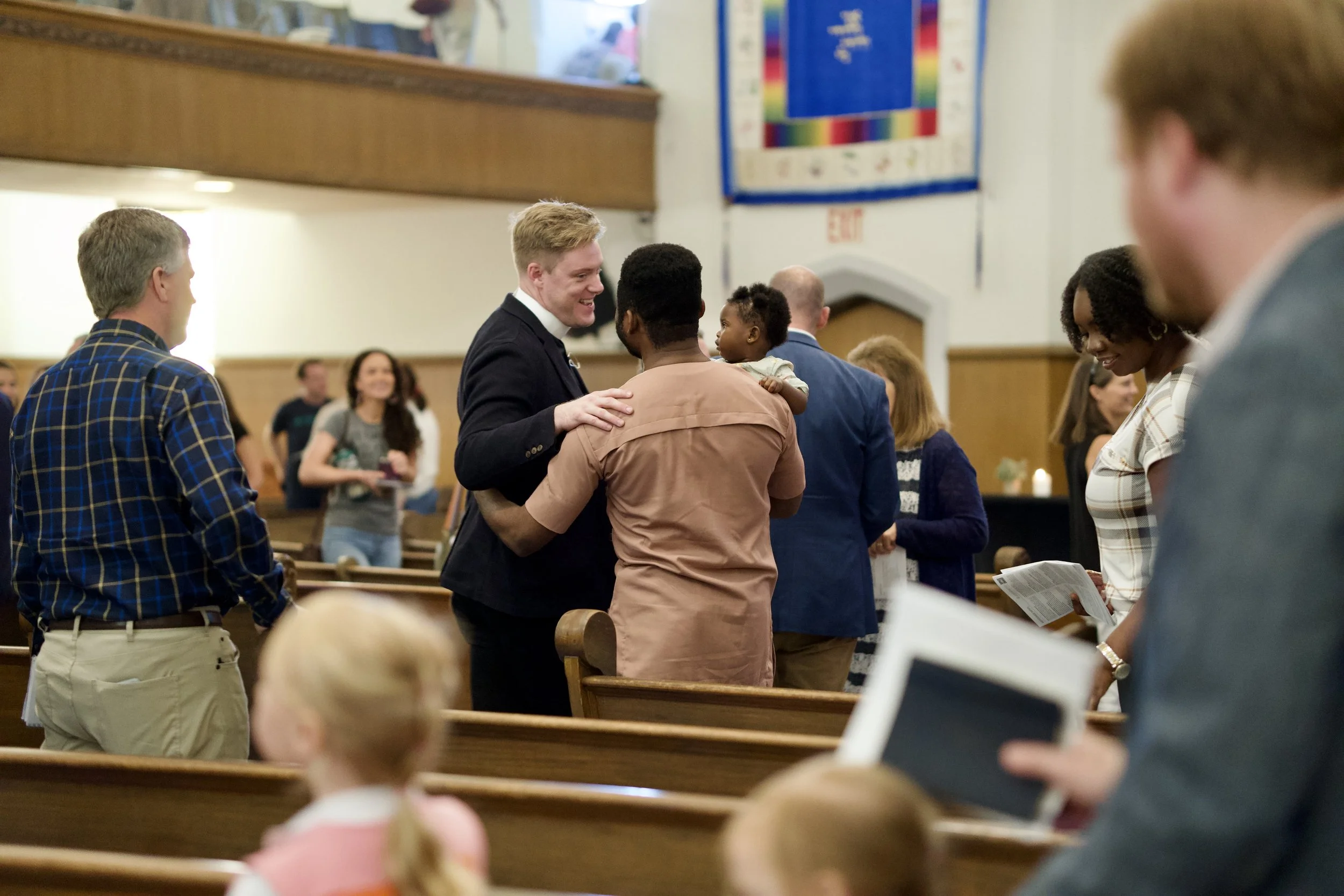
Why Our Church Needs Vocational Deacons
A vocational deacon is a “deacon for life.” In other words, someone who is ordained to serve out the remainder of their days in the church as a deacon, and who does not sense a call to move on towards the priesthood. A vocational deacon is typically a man or woman who is not on paid church staff, but rather works in the marketplace full or part-time while serving the church in an unpaid capacity.
Dear Redeemer Family,
On Saturday Evening, November 12, we will witness the ordination of our parish’s first Vocational Deacon - Steve Byrd! You can register to attend here.
Steve, congratulations brother. You have long served the Lord, the church, and the city of Richmond in humble, patient, gracious ways. We rejoice to see you respond to the Lord’s call on your life by submitting yourself in service to Christ’s church. Well done.
As we celebrate Steve’s ordination, it seems the right time to let everyone know how much we need vocational deacons to serve here in our parish.
Are you called to be ordained as a vocational deacon?
If you are interested in learning more about what this means, sign up here to come to a lunch meeting after worship services on Sunday, October 2 at the Parish House.
Now, I would imagine that many (if not most) of you are wondering, “What is a vocational deacon?”
A vocational deacon is a “deacon for life.” In other words, someone who is ordained to serve out the remainder of their days in the church as a deacon, and who does not sense a call to move on towards the priesthood. A vocational deacon is typically a man or woman who is not on paid church staff, but rather works in the marketplace full or part-time while serving the church in an unpaid capacity.
Note: In the Anglican tradition, everyone who is ordained starts as a deacon, and then some deacons are ordained as priests, some priests are ordained as bishops, etc. You might think of Anglican ordination a bit like a Russian doll. Inside every Archbishop is a Bishop, inside every Bishop is a priest, inside every priest is a deacon. There are stories of deceased Anglican Archbishops asking to be buried in their deacons robes - symbolizing that, at the heart of all ministry, is humble service.
The following description is lifted from our Diocesan website’s general Application for Holy Orders.
What Is a Vocational Deacon?
From the very earliest days of the church, Deacons were understood to occupy a special place in the Christian community, set apart along with the Bishops and Priests for a servant role modeled on that of Christ himself.
According to the Ordinal of the Anglican Church in North America, “It belongs to the Office of a Deacon to assist the Priest in public worship, especially in the administration of Holy Communion; to lead in public prayer; to read the Gospel, and to instruct both young and old in the Catechism; and at the direction of the Priest, to baptize and to preach. Furthermore, it is the Deacon’s Office to work with the laity in searching for the sick, the poor, and the helpless, that they may be relieved.”
Vocational Deacons are called and empowered by God, ordained by the Bishop, and dedicated to a Christian ministry of service, sent out by the Bishop with the authority of the Church to engage in servant ministry for others. The particular order of vocational Deacon carries with it the intent of permanency, in contrast to a transitional Deacon, who is further called to the Priesthood.
In addition to the liturgical ministry of Word and Sacrament, the Deacon leads the Church into the world as an example and as a reminder that Christ calls us all to go out to serve him as we serve others. While vocational Deacons may be employed by a local church or Christian ministry, most vocational Deacons have secular employment. They live out their office and ministry in a variety of callings. For example, vocational Deacons serve in a wide range of servant-ministries, including:
Pastoral care to the aged, homebound, poor, homeless and relationally broken
One-on-one spiritual support/discipling/counseling
Ministry in prison
Evangelism and outreach
Healing Prayer
Community Chaplaincy
Administration
Worship Leader
Parish support
Cross-cultural missions
Teaching
Art & Music
All those exploring ordained ministry should consider whether God might be calling them to the ministry of the vocational Deacon.
“Have this mind among yourselves, which is yours in Christ Jesus, who, though he was in the form of God, did not count equality with God a thing to be grasped, but emptied himself, by taking the form of a servant, being born in the likeness of men. And being found in human form, he humbled himself by becoming obedient to the point of death, even death on a cross.”
—Philippians 2:5-8
Church family, Redeemer needs vocational deacons in order to be a healthy parish. This calling is not to be taken lightly. It is a serious, life-transforming vocation. I pray that the Lord will raise up among us many men and women to serve the people of our parish and our city in the name of Jesus in the years to come.
In the Father’s love,

One Day Left to Sign Up for the Foundations Class!
This coming Sunday evening, at 5:30 p.m. in the basement of 2715 Grove Ave., we will kick off Foundations Class for the Fall semester.
Dear Redeemer Family,
This coming Sunday evening, at 5:30 p.m. in the basement of 2715 Grove Ave., we will kick off Foundations Class for the fall semester.
WHO SHOULD TAKE THIS CLASS?
There are three different kinds of people who should participate in this class.
People who are curious about Redeemer and want to learn more about our parish.
People who are sure that Redeemer is their church home and want to become members.
People who are already members and want a refresher course to help them re-center their lives on practices that will help them grow and thrive.
WHAT IS THE CONTENT?
The class is focused on the seven practices of Gospel Formation for Missional Presence.
Telling the story of the Bible as the true and better narrative in which to understand God, ourselves, each other, and this world.
Q: What story am I in?
Embracing a new identity in Jesus that is received, stable, and secure.
Q: Who am I?
Finding belonging in the church community and extending hospitality to strangers.
Q: Where do I belong?
Cultivating virtue through redemptive habits.
Q: How do I change?
Seeking to understand our context in the city in this cultural moment.
Q: Where do I make my life?
Laboring in renewed vocations for the common good.
Q: What is my purpose?
Reordering our imaginations through beauty.
Q: How do I love?
WHY DOES IT COST $25?
I have found over the years that we only care about things we pay for. In other words, in order for something to really impact us, we need to have some skin in the game. Therefore, for these types of classes here at Redeemer, we charge a small fee. The $25 doesn’t even come close to paying for the cost of the class (which includes a 50+ page workbook, a 2019 Book of Common Prayer, 7 dinners, and 7 nights of child care), but it does help the participants take the class more seriously.
Note: If the $25 is financially impossible for you or your family, just let me know and we’ll adjust it downward or drop it altogether.
As of right now, we have 45 adults and 23 kids signed up for the class, which is great! If a few more of you would like to jump in, you have one day left to register.
You can register online by clicking this link.
See you on Sunday!
In the Father’s love,

Five Things To Know About Our Fall Kickoff
This Sunday, August 28th, is officially Redeemer’s Fall Kickoff!
Dear Redeemer Family,
This Sunday, August 28, is officially Redeemer’s Fall Kickoff!
Here’s what that means:
A New Sermon Series: We will begin an 11 weeks series on the Old Testament book of Daniel called Faithful Presence in the City. In this series we will see how the book of Daniel shows us what it means to be a faithful follower of God even when living as a minority in a pagan context. My hope is that we will draw much comfort and encouragement from this series. I am praying that our imaginations will be fired up with creative ideas for how we, as followers of Jesus today, can be faithful citizens of the Kingdom of God even as we make our lives here in the city of Richmond.
Small Groups Re-Start: If you have not yet signed up for a Small Group, please stop everything and do so right away by clicking here. We have 34 groups meeting on Sunday-Thursday evenings all over Metro-Richmond. I’m sure you can find a location and time that works for you.
Youth Fellowship Re-Starts: Next Wednesday, a week from today, our Youth Fellowship re-starts its weekly meetings. If you have a child 6th-12th grade, please make it a priority for them to participate every week!
Redeemer Kids Classes Resume: Our Kids ministry makes a big switch from Summer Worship & Play to Fall Classes. If you are a parent with young children, we have a fantastic curriculum led by wonderfully thoughtful teachers who are ready to engage with your children on Sunday mornings.
College Ministries Re-Start: While we are still on the search for our next CCO campus minister for VCU, our ministry at the University of Richmond just had their kickoff event this past Monday with 77 students gathering in the Feyrer’s backyard!
I’m looking forward to a great fall semester.
We’ll see you on Sunday!
In the Father’s love,

How To Claim The Fall Calendar
We all feel it. The Summer is winding down and the Fall semester is nearly upon us. For many of us, there are so many things that will begin to clamor for our attention as we head into September. Our calendars will fill up and before we know it, we’ll be saying things like, “I don’t know how I got so busy!”
Dear Redeemer Family,
We all feel it. The summer is winding down and the fall semester is nearly upon us. For many of us, there are so many things that will begin to clamor for our attention as we head into September. Our calendars will fill up and before we know it, we’ll be saying things like, “I don’t know how I got so busy!”
This happens to the Marotta family as well! One way that Rachel and I have found to combat the back-to-fall business is to sit down with our family calendar before the summer ends and make sure that the most important things get scheduled first. For us, the spiritual health of our family and the church is the most important thing. Everything else is negotiable.
So, first on the calendar goes church commitments:
Sunday Morning Worship
Saturday Sabbath
Wednesday Night Youth Fellowship
Newcomer’s Dinners
Thursday nights for hosting people within the parish.
Sunday evening Foundations Class.
Men’s & Women’s Fellowship Events
Vestry & Staff Meetings & Retreats
Next on the calendar go important dates for our little family:
Birthdays and holidays
Days of rest and play
Trips to visit relatives and friends
Quarterly overnight get-a-ways for me and Rachel without the kids
Next goes important School dates for the kids:
Monday-Friday classes
Field trips
Recitals and special programs
Next go Youth Sports:
Soccer practices and games
Swim meets
Basketball practices and games
Rock climbing (indoors, our kids love it on a rainy day!)
I could keep going, but I’ll stop there. The point is, we have found over the years that unless we proactively claim the calendar for the spiritual, relational, emotional health of our family and the church, then someone or something else will claim it for us. This helps us know how to navigate calendar conflicts and to consistently choose what is best for us and the church over what feels easy in the moment.
Example #1: Most weekday evenings, I don’t feel like I have the energy for much besides getting the kids to bed and perhaps reading a book before falling asleep with the lights on. However, if I’ve already scheduled a Newcomer’s Dinner, or an evening to host some key leaders in our church, or a Small Group gathering, then I find myself led by the calendar into something that is genuinely good for my soul. And afterwards, I’m always glad that I did.
Example #2: Often we have to choose between multiple good things. Should our child go to soccer practice or youth fellowship? Should I take Saturday off or work on Sunday’s sermon for a few more hours? If I wait until the last minute to decide, I will be swayed by whatever feels like the path of least resistance. However, if I prayerfully and thoughtfully plan out my calendar ahead of time, I am more likely to make a wise decision.
So, here’s what I am asking all of us to do: take some intentional time in the next few days and claim the fall calendar for the spiritual well being of your family and church:
Sunday Worship: First, schedule every Sunday morning for worship.
Small Group: Second, schedule one weekday evening for Small Group and sign up! Here’s the link.
Sabbath: Third, schedule one day per week for Sabbath rest. Ideally Sunday or Saturday, but it could be another day depending on your work schedule.
Fellowship & Service: Depending on your situation and life stage, mark your calendar for church fellowship and service opportunities:
Wednesday Night Youth Fellowship
Young Adult First Fridays
Men’s & Women’s Fellowship Events
CCO college ministry at VCU or U. of R.
Justice & Mercy Partners service opportunities.
Volunteering with one of Redeemer’s ministries.
Some of you already do this so very well and you’re probably way ahead of us!
Others of us are not yet accustomed to committing to things (especially church things) in advance. Consider this an invitation to try it out for the first time and see if it bears good fruit in your life.
Looking forward to a great fall together.
In the Father’s love,

Everything You Need To Know About Our Church Planter In-Residence Program
Over the past few months, a number of you have reached out with questions about our Church Planter-in-Residence program. I’ve spoken on this a number of times and have written a few things here and there, but I thought it might be helpful to put it all down in one, concise document. So, here goes folks - this is everything you need to know about Redeemer’s Church Planter-in-Residence Program!
Redeemer Family,
Over the past few months, a number of you have reached out with questions about our Church Planter-in-Residence program. I’ve spoken on this a number of times and have written a few things here and there, but I thought it might be helpful to put it all down in one, concise document. So, here goes folks - this is everything you need to know about Redeemer’s Church Planter-in-Residence Program!
MEET THE PLANTERS

CHURCH PLANTER #1
The Rev. Steven Breedlove
The concept of Redeemer hosting a Church Planter came about in the Summer of 2017 when our parish was just 9 months old. I had the opportunity to meet with three Bishops (very intimidating!) to discuss the potential of a new Anglican church planter moving to Richmond in the following year. We decided together that the best and healthiest way to help this new person get started was to bring them “on board” (so to speak) and then send them out. Our hope is that this would communicate to those within our Anglican movement and to our neighbors here in the city that our church plants are not in competition with each other, but rather partnered together.
This is how Steven & Courtney Breedlove ended up spending February 2018 - May 2019 here at Redeemer before launching Church of the Incarnation in the West End. It was a wonderful privilege to have Steven and his family serve “in Residence” with us for a season and we are grateful to have a small part in the story of Church of the Incarnation.
CHURCH PLANTER #2
The Rev. Danny Hindman
A short time later, through the kindness of a few mutual friends, Danny Hindman and I got connected with one another. At the time he was serving as a college minister at the University of Wisconsin. He expressed interest in planting a new Anglican parish in the Metro-Richmond area and, after much deliberation with Redeemer’s Vestry, we formulated a plan to bring the Hindman family to Richmond in the Summer of 2021 as our second Church Planter-in-Residence. Danny has been a wonderful blessing to our parish during his time here with us and we are excited to send him out to plant All Souls Anglican Church this Winter 2022/23.
CHURCH PLANTER #3
The Rev. Lewis Lovett
In the Fall of 2021, our family had the opportunity to spend a weekend in the mountains with some of our dearest friends, Lewis & Maggie Lovett and their four girls. One late evening, over glasses of bourbon, Lewis and I discussed the idea of him joining Redeemer’s team as our third Church Planter-in-Residence. Weeks later, the Lovetts decided to accept the position and in June of this year (2022) they uprooted their family from Lexington, VA and moved to Midlothian. While Lewis’ timeline for planting a new church has not yet solidified, we expect that it will likely be in 2024.

THE STRUCTURE
SELECTION: How do we select our church planters? The application process is long and thorough. Not only must our church planters undergo an interview process with Redeemer’s search team - comprised of staff, vestry members, and personnel team members, but they must also interview with our Bishop and the Diocese. In a good church planter, we are searching for men or women who fit the following profile:
Deep, sincere Christian virtue and character.
Experience in ministry leadership with evidence of good fruit.
Desire and eligibility to be ordained in the Anglican Communion.
Personal chemistry with Redeemer’s leadership.
Relational gifts to gather and lead people.
OVERSIGHT: To whom does the church planter report? A church planter at Redeemer reports directly to The Rev. Tuck Bartholomew, the Canon for Church Planting in the Diocese of the Mid-Atlantic.
EMPLOYMENT: For whom does the Church Planter officially work? A church planter is technically an employee of the Diocese, not of Redeemer. This is why we call them “in-residence” and not “on staff.”
FUNDING: How is the church planter funded? The planter receives a stipend from Redeemer for five years: $15k / year for Years 1-3, $10k for Year 4, and $5k for Year 5. Additionally, they receive a stipend from the Diocese and are then personally responsible for raising the rest of their funding.
LOCATION: How is the location for the next church plant chosen? When a prospective church planter is being interviewed, they are given a list of neighborhoods in Metro-Richmond that would benefit from a new church. The planter has the freedom to select a neighborhood location from the list.
THE WHY
One of the most frequent questions I get asked is, “So why are you helping to plant these new churches?” Here are the real reasons and, just for fun, here is some clarity on what the reasons are NOT:
REASONS TO PLANT NEW CHURCHES
Metro-Richmond is growing rapidly and church growth has not kept pace with population growth. Purely based on population growth, there is a legitimate need for more churches.
Metro-Richmond has far more church buildings than healthy, thriving congregations. New church plants can revitalize the spiritual health of a neighborhood.
Active followers of Jesus are a minority in Metro-Richmond and new church plants are one of the most effective strategies for reaching new people with the good news of the Gospel.
Recruiting, training, and sending church planters is one of the most effective ways to develop the next generation of pastors/priests.
REASONS NOT TO PLANT NEW CHURCHES
Redeemer is getting too big, we need to off-load some of these people.
Redeemer is exporting its “brand” to more neighborhoods in Metro-Richmond.
Anglican churches are better than other kinds of churches and so we need to plant more of “our kind of church.”
*Not only are these not true, they’re also dumb. Don’t believe anyone who says that these are the reasons why Redeemer is planting new churches.
YOUR ROLE
Now, what does all this mean for you? Well it means a few things:
PRAY: Pray for our church planters, for their leadership, for their pastoral ministry, and for the healthy and vitality of the parishes they lead.
ENCOURAGE: Encourage our church planters. Call/text/email them to let them know that you support their work and see it’s worthiness.
GIVE: Give to our church planters. You might consider giving a financial gift to help them raise the support they need. You can give to Church of the Incarnation directly via their website and to Danny and Lewis via the Diocesan website.
SHOULD YOU LEAVE REDEEMER TO GO WITH A CHURCH PLANT?
This is a very real question that some of you are considering. What a great question!
When we sent out the Rev. Steven Breedlove to plant Church of the Incarnation, we sent Redeemer members with them. These are dear people who faithfully participated in the life of our parish, and now they are doing the good work of establishing a new parish. We love them. We miss them. We rejoice at the new work they are called to do.
As the Rev. Danny Hindman prepares to plant All Souls Anglican and as Lewis Lovett prepares to plant in Midlothian, I imagine that a number of you might consider leaving Redeemer to go with one of them. While it is always hard to say farewell to people we love, it is also a privilege to commission people.
So, how to do this kind of spiritual discernment? (And how not to go about it!)
THREE GOOD CRITERIA FOR GOING
If the three following criteria are met, then it is possible that the Lord may be leading you to leave Redeemer and to go with a church plant:
LOCATION: You live in, or are planning to move to, the neighborhood where the new church is being planted. Local outreach in the immediate neighborhood of the church plant is critical. Therefore, physically living proximate to the people the new church plant is seeking to reach is essential.
DESIRE: Your heart is genuinely pulled towards the work of planting the new church. There is something in your spirit that comes alive at the thought of rolling up your sleeves and doing the hard work of establishing a new parish. You are ready to dive into things like: arriving early to set up chairs, volunteering in children’s ministry, inviting new visitors over for dinner, cooking food for church events. New church plants need people who do not only live proximate, but are emotionally all-in. They want to be there.
RELEASE: Your season of participation and work at Redeemer is at a close and you are released to go and begin a new work. In other words, you didn’t recently just start a new form of working/serving/volunteering at Redeemer. You want to complete the work you are currently doing before moving on to the next new thing.
THREE LAME CRITERIA FOR GOING
The following are super-unhealthy and won’t do you (or the new church plant) any good in the long run.
SELF-IMPORTANCE: All of us want to feel important. The reality is that sometimes we bring that desire with us to the church and demand that the church be a place where we can feel important. If we don’t get the kind of attention we feel we deserve, then we leave and move on to another place. If, in your time at Redeemer, you haven’t felt like you’ve received the attention, credit, accolades that you deserve, the answer is not to leave, the answer is to stay and continue to ask of the Lord, “How can these needs be met in you - Jesus.”
BOREDOM / NOVELTY: New things are interesting and exciting! Staying in the same place for the long haul can be dull and boring. It’s true for churches just as much as it’s true for homes, marriages, and jobs. However, if you want to cultivate long-term intimacy, stability, and health… then you’ve got to stay in the same place, with the same people, doing the same thing. Changing churches to “keep things interesting” won’t lead to spiritual health any more than changing spouses will lead to marital health.
STYLISTIC PREFERENCE: Each pastor and church has their own unique feel/vibe. A great temptation is to think that, if I finally found the right pastor, with whom I can connect emotionally/relationally, and the right worship service and church programs that fit my stylistic preferences and tastes…. Then (and only then) I would thrive spiritually! Alas, this is not the path to God, this is the path to the self.
So, to summarize, if you live in the neighborhood of the new church plant, you have a genuine desire to serve that neighborhood, and you are released from your work at Redeemer, then going with one of our church plants might just be the thing the Lord is leading you to do! If that describes you, please let us know so that we can pray for you and support you.
If, on the other hand, you are feeling some of those other things…. Then perhaps not.
And of course, there are many of us who enthusiastically support the work of our church plants, but know that we are called to stay at Redeemer. This is, funny enough, the exact boat I find myself in. I am thrilled for the good work that our church planters are doing and will do! There is something in me that rises up and wants to go with each of them! But I know that my role is to be on the sending side of things.
As always, if anything in this article has stirred up questions within you, please just reach out and let me know.
Redeemer family, I am so grateful that we have the remarkable opportunity to participate in the work that God is doing here in Metro-Richmond in establishing His Church. Thanks be to God and God bless our church planters.
In the Father’s love,

Introducing Two New Volunteer Staff
One of the unique features of our parish is the use of what we call our “Volunteer Staff.” If this has ever struck you as a bit of an oxymoron, along the lines of “Jumbo Shrimp” or “A cool Summer day in Richmond,” then you’re not crazy - it does sound like two things that don’t go together.
Dear Redeemer Family,
One of the unique features of our parish is the use of what we call our “Volunteer Staff.” If this has ever struck you as a bit of an oxymoron, along the lines of “Jumbo Shrimp” or “A cool Summer day in Richmond,” then you’re not crazy - it does sound like two things that don’t go together.
Here’s what we mean by Volunteer Staff: We mean a key lay leader in the parish who has generously agreed to donate a significant amount of their time towards leading an area of ministry. In order for them to lead in their ministries in integration with the other ministries of the parish, they have a seat at the table with the rest of the staff - participating in staff meetings, retreats, etc.
Here are our current Volunteer Staff:
Christa Vickers-Smith - Care Team Coordinator
Alex Riffee - Chaplain
Rachel Yowell - Justice & Mercy Coordinator
Marie Jeffery - Parish House Coordinator
Matt Rose - Men’s Fellowship Coordinator
This Summer, Chaney Widmer, who has been serving faithfully as our Volunteer Women’s Fellowship Coordinator, has transitioned out of this position. Thank you Chaney for your leadership and service! Well done!
Now, joining the team at the end of the Summer are two new volunteer staff:

Nancy Reynolds | Women’s Fellowship Coordinator
Some of you will remember that Nancy actually served on paid staff as our Redeemer Kids Director (back in the day, before Casey Cisco stepped into that role). We are delighted to have Nancy back on the team!
Celeste Meadows | Young Adult Fellowship Coordinator

Now that FIRST FRIDAYS, our monthly Young Adult Fellowship is up and running, we need someone to step into the roll of running point for that gathering and for helping integrate new young adults into the larger life of our parish. Celeste and I have been talking about Young Adult ministry at Redeemer for quite a while now and we think she’s the perfect person to take the lead here. Welcome Celeste!
If you are interested in volunteering to help with Womens or Young Adult Fellowship events this year, please reach out and contact Nancy or Celeste.
Thanks!
In the Father’s love,

How Do I Support Our Children’s Ministry At Redeemer?
If you have attended a Sunday service at Redeemer at all, you will know that the Lord has blessed us with many many young children. There are currently around 170 children 12 years old and under at Redeemer (and more on the way!). To love and serve our parish is to love and serve the youngest among us as well. So what does it look like to care for such a large percentage of our church body here? Here are four suggestions on where to start:
If you have attended a Sunday service at Redeemer you will know that the Lord has blessed us with many, many young children. There are currently around 170 children 12 years-old and under at Redeemer (and more on the way!). To love and serve our parish is to love and serve the youngest among us as well. So what does it look like to care for such a large percentage of our church body? Here are four suggestions on where to start:
Pray
The most obvious and natural way to care for our children is through regular, intentional prayer for their spiritual formation. These little ones who run through the pews on Sunday mornings and doodle in the margins of the liturgies will one day be the leaders of the body of Christ! The importance of these formative years as they worship in church with their families and friends cannot be overstated. Pray for the parents, guardians, church staff, Redeemer Kids volunteers, and nursery staff as they all come together to do the hard and beautiful work of investing in the spiritual life of the children in our parish. If you would like to join our Redeemer Kids prayer team, please email me!

Take the Child Safety Training
Whether or not you are able to actively serve in our children’s ministry or are unsure of how to get started, this training is a wonderful way to support our ministry. The more godly adults in our parish who are equipped on how to keep our children safe from the very real dangers that exist in our fallen world, the more effective our ministry can be. This training empowers us with the tools needed to identify and address specific threats to the most vulnerable members of our parish. Come join us one Sunday afternoon, eat lunch, and learn how to keep our ministry accountable and equipped to be a safe place for children and the adults who serve them! Register here.

Donate or Create Children’s Ministry Supplies
We are always on the lookout for beautiful, durable materials for our children’s classes and would love your help! Creating costumes for creative play, building shelving for craft supplies, and designing beautiful art for our classrooms are just some of the creative ways to love our kids in a very practical way. We have a wish list of materials that would enrich our ministry; just reach out if you’d like to chat about it!

Volunteer!
Here is where the rubber meets the road, so to speak—the work of being physically present and active in the often messy work of children’s ministry. This is the heartbeat of our ministry and where the work of setting up effective safety measures, stocking beautiful, stimulating classrooms, and preparing thoughtful, intentional lessons comes to fruition. In short: showing up. Children’s spiritual formation happens when godly adults show up and invest in their lives on a regular basis. It is the embodied work of showing them that they are seen, known, and matter. We do not have a children’s ministry without volunteers. There are many ways to connect, but here are a few below:
Nursery volunteer—once a month at one service, caring for the children under 3 years old for the length of the service.
Classroom teacher—connecting with a team of adults to lead thoughtful lessons every week and invest deeply in a small group of children on a regular basis on Sunday mornings.
Classroom assistant—coming alongside teachers to manage and care for Sunday morning classes and taking care of practical needs of the class on Sunday mornings.
Monitor—patrolling the halls and spaces when Sunday Redeemer classes are meeting, taking up attendance sheets, and helping to escort kids to the bathroom during classtime when needed.

The Lord is doing good work here in our children’s ministry and I am encouraged by the amazing people I have the opportunity to partner with in this work here at Redeemer. I would love to chat with any of you if you have thoughts, questions, concerns, or unique gifts to bring to our ministry. Please reach out to me and let’s meet up or click the button below to indicate how you’d like to participate.
In Christ,
Casey Cisco
Director of Redeemer Kids

What Does It Mean To Be People With Roots?
One of the most frequent things that I hear people say when they move to Richmond and visit Redeemer is that they are looking for (amongst other things) this elusive thing called “Roots.”
Dear Redeemer Family,
One of the most frequent things that I hear people say when they move to Richmond and visit Redeemer is that they are looking for (amongst other things) this elusive thing called “Roots.” To the best of my understanding, what I think most people mean when they say this is that they are looking for:
Stability, in a rapidly changing culture and world.
Security, in a hostile and threatening social landscape.
Confidence in belonging, when so many relationships feel transactional.
These are good things. Essential things. Without these, life feels unstable, insecure, and deeply lonely. But how do we get them?
I imagine that a few of us have felt something like tumbleweeds, blown about from city to city, neighborhood to neighborhood, maybe even church to church, in search of a people and a place and way of life that won’t dissolve or suddenly shift under our feet.
There are many ways in which we might seek to slake this thirst, but one of the most clear answers offered to us by Jesus is to make our home in Him through making our home in and amongst His people, the Church.
Let me say that again, slowly, just to be perfectly clear.
We make our home in Jesus through making our home in His people, the Church.
In other words, your average Christian would likely agree with the sentiment of making our home in Jesus. (When in doubt, Jesus is the answer, right?) However, the rub comes when it is suggested that the means by which we do this is by making our home with people as ordinary and uninspiring as church people. And thus so many of us have spent years attempting to make our home in Jesus apart from His local body. This has left many chronically disappointed and discouraged - still longing for roots, but now even less sure that they will ever get them.
On the other hand, there are plenty of us who have never thought to look for Roots in Jesus (that does, after all, sound like a vague spiritual abstraction) and instead we have sought Roots in the American Dream Combo of: City/Neighborhood/House/Career/School/Social Status.
If this is you, I just have one question, “How’s that going?”
The offer on the table (literally) from Jesus is something altogether different, a home in Him through a home within His Church. This is wonderfully simple; so simple that we’re liable to miss it.
It’s as concrete as staying put in one place for a very, very long time.
It’s as dynamic as the relationships with the people in the parish.
It’s as stable as the historic Creeds of the global church.
It’s as secure as God’s love for you in Jesus.
It gives a kind of belonging that cannot be found anywhere else, not even in a nuclear family. Where else do people gather weekly to recommit and pledge themselves in fidelity to one another?
This all leads to a kind of confidence that cannot be found anywhere else - where else can you: know exactly who you are, what kind of story you are in, where you belong, what your purpose in life is, how to grow, and how to love?
So friends, if you’re already a member here, cheers!
I’m so glad we get to put down roots in Christ together as His Church.
If you’re reading this and you’re new, then consider sticking around.
Rent an apartment, buy a home, settle in, make some friends, adopt new habits.
Life can feel inherently unstable, insecure, and lonely.
But when we put down our roots into the life of Jesus in and amongst His people in our own time and place, we can experience a stability, security, and belonging that cannot be shaken.
In the Father’s love,

Responding to Roe with Clarity, Conviction, and Compassion
Unless you’re even more disconnected from the News than I am, you’ve no doubt heard that the Supreme Court recently reversed its decision on Roe v. Wade. This effectively removes a constitutional right to abortion and places abortion laws in the hands of the States, with some states quickly seeking to pass legislation banning abortions and other states seeking to secure abortion rights with the same urgency. As of now, to my knowledge, there has been no change to abortion laws in Virginia.
Dear Redeemer Family,
Unless you’re even more disconnected from the news than I am, you’ve no doubt heard that the Supreme Court recently reversed its decision on Roe v. Wade. This effectively removes a constitutional right to abortion and places abortion laws in the hands of the States, with some states quickly seeking to pass legislation banning abortions and other states seeking to secure abortion rights with the same urgency. As of now, to my knowledge, there has been no change to abortion laws in Virginia.
Now, one of the strange things about serving as a pastor in our current cultural moment is that it seems I am expected to weigh in and provide commentary on current events and political legislation. For the most part, as you’ve surely noticed, I tend to ignore this expectation—for two reasons:
I don’t read, watch, or listen to the news. I am far more interested in knowing, praying for, and responding to what is happening locally—in your lives, and in the lives of my neighbors.
I am thoroughly convinced that our attention as a parish is better spent caring for our literal neighbors, coworkers, and family members. I’ve previously written on this here.
Notwithstanding, whenever I sense concern, confusion, or angst within our Parish around a particular issue, then it seems appropriate to speak up and provide a bit of direction. So, with that in mind, since Redeemer is a politically diverse congregation, I want to help us all understand a few things regarding the recent Supreme Court ruling.
True to form, I have three points, and they all begin with the letter “C.” (I can hear some of you chuckling already…)
CLARITY
When the Bible doesn’t directly speak to an issue or scriptural interpretation seems a bit vague, then it is appropriate to leave an issue in the proverbial “gray area.” We would call these kinds of issues non-moral or amoral issues. For example, “What style of music should we play in a church worship service?” Of course, this is important and most people hold strong beliefs on this, but Biblically-speaking it is not a moral issue because scripture’s teaching is not ethically prescriptive on this.
However, the issue of abortion is of a different kind and order. According to the Bible, abortion is a moral issue because all human beings are made in the image of God, human life is sacred, and abortion ends a human life.
For you formed my inward parts;
you knitted me together in my mother’s womb.
I praise you, for I am fearfully and wonderfully made.
Wonderful are your works;
my soul knows it very well.
My frame was not hidden from you,
when I was being made in secret,
intricately woven in the depths of the earth.
Your eyes saw my unformed substance;
in your book were written, every one of them,
the days that were formed for me,
when as yet there was none of them.-Psalm 139:13-16
If you have the time, you might also consider looking up the following verses. I won’t put the full text in this post in order to keep it reasonably short.
Exodus 20:13
Jeremiah 1:5
Psalm 127:3-5
Genesis 1:27
Proverbs 6:16-19
Psalm 8:5-7
Job 31:15
Psalm 22:10
The very same Biblical theology that undergirds our belief that we are to labor for racial healing, mercy for the poor, and justice for the oppressed also leads us to believe that all abortion is evil and that we are to work for justice and life for children.
If you are a member at Redeemer or someone considering membership, it would be good for you to know that we seek to be absolutely clear in our Biblical anthropology (what the Bible teaches about human beings). We want to be clear that, because all human beings bear the dignity of God Himself, racism, abuse of the poor, violence against women, and yes, abortion, are evils that are to be opposed on all fronts.
Let me also be clear that we hold these beliefs based upon an unswerving loyalty to the Bible as the Word of God and not to any particular political party or tribe. If you’re reading this and you’re thinking that somehow I’m tipping my hands towards the right or the left… you really don’t know me very well. Let’s get coffee and change that!
CONVICTION
Now, a word about how we hold our convictions. Two people can believe the same doctrine, and yet hold their convictions with very different attitudes: one prideful, the other humble. We, at Redeemer, seek to embody the latter. This means that, while we hold our Biblical convictions about a comprehensive ethic of human life, we do so acknowledging our own sinful complicity in the injustice and corruption of our society and world. In other words, we do not keep our distance, imagining ourselves standing on some sort of culturally neutral ground, and pridefully condemn the wickedness of others while proclaiming our own righteousness. Rather, we admit and confess that we live out our days embedded and intertwined with this sinful world.
None of us is innocent. No one. Not one.
All of us have, pardon the graphic metaphor, blood on our hands. I know that I am not only guilty for wrong things I have done - for ways I have actively (knowingly or unknowingly) participated in injustice (I suspect the cotton T-shirt on my back as I write this came from a sweatshop in Vietnam… yikes). But I am also guilty for all the good things that I have not done! The help I did not give. The love I did not extend. The refuge I did not provide.
Therefore, my conviction about the Bible teaching a comprehensive ethic of human life must also be held along with my convictions about my own sin and need for the grace and mercy of Jesus. I am not better than a woman who chooses to have an abortion or superior to the doctor who performs the violent procedure.
As the Apostle Paul writes, “The saying is trustworthy and deserving of full acceptance, Christ Jesus came into the world to save sinners, of whom I am the foremost.” - 1 Timothy 1:15
When you and I truly know the depths of our own brokenness and sin, we will lose any and all feelings of superiority towards others. This will transform the attitude with which we hold our convictions about abortion. This will not weaken our convictions, not at all! If anything, humility should make our convictions all the stronger and more resolute. This is because they will be founded, not upon personal feelings of moral superiority, but upon the Word of God in the Bible and the Word made Flesh in Christ Jesus. This is a far firmer foundation.
COMPASSION
As we move forward to greet whatever future the Lord has in store for us, we must be prepared to compassionately care for mothers (and fathers) who find themselves unexpectedly pregnant and do not have the desire or the resources to raise a child. This kind of compassionate care may take many forms. It certainly includes, but is not limited to:
Prayer.
Giving financially to and volunteering at crisis pregnancy centers.
Being trained and serving as foster parents.
Adopting a child.
Supporting couples and families who serve as foster parents or adopt children.
Some of you may know that Redeemer has a number of Justice & Mercy Partners, one of which is Anglicans for Life. If you’re ready to get involved in compassionate care for mothers, children, or families in need, I would highly recommend contacting either:
Redeemer member contact for Anglicans for Life: Johnston Moore.
Justice & Mercy Coordinator: Rachel Yowell.
Redeemer family, if anything that you’ve read today causes alarm, frustration, concern, or surprise, please know that you are always welcome to reach out to me. More than writing an online blog post, I prefer to talk about these things over a cup of Colombian Finca El Obraje at Blanchard’s on Broad St.
First cup is on me.
In the Father’s love,

What Does It Mean To Carry The Message To Garcia?
I have a friend who once took a college course in which the professor assigned a very short book (a pamphlet really) to the entire class on the first day of each semester. The book’s title is A Message to Garcia (You can read it for free here, it takes less than 5 minutes.)
The book contains piercing insight into our human tendency to abdicate responsibility and how vitally important it is for every society to have men and women who can get the job done, no questions asked. Whenever the professor was away from his office, he would leave a note on the door that simply read, “Go find Garcia.” It was his way of encouraging and challenging his students to figure out the answers to their questions without his help.
Redeemer Family,
I have a friend who once took a college course in which the professor assigned a very short book (a pamphlet really) to the entire class on the first day of each semester. The book’s title is A Message to Garcia (You can read it for free here, it takes less than 5 minutes.)
The book contains piercing insight into our human tendency to abdicate responsibility and how vitally important it is for every society to have men and women who can get the job done, no questions asked. Whenever the professor was away from his office, he would leave a note on the door that simply read, “Go find Garcia.” It was his way of encouraging and challenging his students to figure out the answers to their questions without his help.
A good friend first put this book in my hands back in 2006 and it has become an annual re-read for me. I have also begun to inflict this little book on our staff here at Redeemer. The word Garcia has become, for us, a kind of short-hand for, “Work hard, don’t complain, no flaking, get the job done.”
*Flaking, for the uninitiated, is the technical term for not-really-doing-the-job-with-the-excellence-and-attentiveness-it-deserves. It comes from the Greek word flakio` and was historically used by Galilean fisherman to describe someone who said they would go fishing with you, but wasn’t willing to get up before sunrise to meet you at the boat.
Now, please don’t misunderstand and imagine that the work environment amongst our staff is one of ruthless productivity at the cost of kindness, warmth, and grace. Not at all! Rather, we are seeking to cultivate the kind of atmosphere where we can truly depend on each other, take one another at our word. A follow-up phrase to the word Garcia that we use has been, “If a Redeemer staff person says they’ll do something, you can consider it done.” If we live this way with one another, trust is built and all of our jobs and relationships actually become simpler, easier, and less stressful.
Now, here’s the pivot. Are you ready?
What if that wasn’t just the culture of Redeemer’s staff, but of our whole parish?
What if, when a member of Redeemer said they would do something, you could consider it done?
What if you knew that, if you asked a fellow member for help with something, you knew they would not only say a polite “yes,” but that they would really come through for you?
In other words, what if we knew, in the depths of our bones, that each other was trustworthy, dependable, reliable, and steadfast?
How much lighter would your own burdens be if you lived in a church family of men and women upon whom you could count to be there for you at a moment’s notice?
Let’s pivot again.
What if our neighbors, coworkers, and fellow Richmonders became aware that we were the kind of people who could be depended on, no exceptions?
How much lighter would their burdens be if the Christ-followers around them were utterly and predictably reliable and trustworthy?
In Matthew 5:37, Jesus famously says, “Let what you say be simply Yes or No.”
In nine short words, Christ calls us to be the sort of people who, with our words and our correlating actions, carry the proverbial message to Garcia.
We do this when we agree to bring a salad to Small Group and actually bring said salad.
We do this when we say we’ll read the next chapter before Book Club and we fully read the chapter, beginning to end.
We do this when our week to serve in Kids Ministry rolls around and we show up, on time, Volunteer T-shirt on, lesson plan prepared, ready to go.
We do this when we text someone, “I’m praying for you…” and then we physically drop to our knees and speak a real prayer to the Lord on their behalf.
We also do this when we arrive late, and instead of inventing an excuse, “Did you know I hit every red light on Boulevard from the stadium to Grove?” we simply apologize, “I’m sorry I am late, I did not plan enough margin in my day, please forgive me.”
Every day, in the thousands of interactions between the hundreds of church members, we are either cultivating an ethos of Garcia or an ethos of flakiness.
Church family, let’s be a parish of people who carry the message to Garcia.
In the Father’s love,

Christ In The Psalms
Summer is nearly here! And with it comes a return to our annual practice of preaching through the Psalms through June, July and August. During this time, it is my practice to take a step back from preaching in order to focus my attention on prayer, study, and preparation for leading our parish in the coming year. I will still be present here through the Summer and plan to return to preaching in Mid-August.
Redeemer Family,
Summer is nearly here! And with it comes a return to our annual practice of preaching through the Psalms through June, July and August. During this time, it is my practice to take a step back from preaching in order to focus my attention on prayer, study, and preparation for leading our parish in the coming year. I will still be present here through the Summer and plan to return to preaching in Mid-August.
This is also a wonderful opportunity for us to all listen and learn from new and different voices from the pulpit. We have a fantastic lineup of preachers, from both inside and outside our parish. Take a look below!
REDEEMER SUMMER PREACHERS

The Rev. David Comeau
Date: June 19
Text: Psalm 57

Tee Feyrer
Date: June 26
Text: Psalm 58

The Rev. Danny Hindman
Date: July 3
Text: Psalm 59

Claude Atcho
Date: July 10
Text: Psalm 60

Lewis Lovett
Date: July 17
Text: Psalm 61

Bethany Hoang
Date: July 24
Text: Psalm 62

The Rev. Alex Riffee
Date: July 31
Text: Psalm 63

David Bailey
Date: August 7
Text: Psalm 64
Church family, I will genuinely miss preaching to you for the next ten weeks! However, I think this is a healthy practice for me and for our parish. I will be sitting in the pews listening, taking notes, and learning right alongside you.
In the Father’s love,

What Is Pledging And Why Do We Do It?
As many of you know, one of the traditions we have sought to develop is that of intentionally and prayerfully cultivating generosity through the practice of annual Pledging. I’m writing to you today to share with you that our Vestry and Finance Team have requested that all members and regular attenders make a pledge before the end of May. Now, this may be unfamiliar to some of us, so here are some quick need-to-know details:
Dear Redeemer Family,
As many of you know, one of the traditions we have sought to develop is that of intentionally and prayerfully cultivating generosity through the practice of annual Pledging. I’m writing to you today to share with you that our Vestry and Finance Team have requested that all members and regular attenders make a pledge before the end of May. Now, this may be unfamiliar to some of us, so here are some quick need-to-know details:
What is a Pledge?
A pledge is you communicating with our Finance Team what you anticipate you will be able to give to the church for the next fiscal year (Sept 1st, 2022 - Aug. 31st, 2023). You can do this via our website - redeeemerrva.org/give. Click on the PLEDGE button in the middle of the screen and fill out the form. It only takes a minute or two.
Why is it Important for the Vestry & Finance Team?
Redeemer’s fiscal year runs from Sept. 1st - Aug. 31st. So the Vestry and Finance Team will be spending the Summer drafting a new budget for the coming year of ministry. What a gift it would be to them if they knew ahead of time what the congregation planned to give! Your clear communication helps our church draft careful, informed, strategic plans for funding the ministry of the coming year.
Why is it Important for You?
While pledging is imminently practical and helpful for our church leadership, it’s more than that. Pledging is also an opportunity for your heart to be shaped by God. Why? Because how we use our resources both reveals and guides what God is doing in our hearts. When your church asks you to pledge, you are being asked to open your bank account to the Lord and ask Him, “How would you have me use the resources you have entrusted to me?” It’s a wonderful question that all of us should be asking on a regular basis.
What Pledging is NOT
Pledging is not an attempt to raise Redeemer’s Budget or meet a financial shortfall. I’m very grateful to report that our parish is in a healthy and strong position financially. Pledging is not about fixing something that is broken, but rather about us continuing to grow spiritually together.
Deadline for Pledging
Remember, the deadline for pledging is May 31st. Please do not wait until the last minute! Very real decisions and plans for the coming year of ministry will be made based on the pledging data that the Vestry and Finance Team receive.
Church family, Rachel and I will be prayerfully discussing our pledge over the next couple of weeks. We invite you to join us in this practice and let’s all move forward together in cheerful, grateful generosity.
In the Father’s love,

Introducing Lane Cowin, Our New Senior Director of Ministries
Dear Redeemer Family,

I have exciting news! Our search team has unanimously voted to extend an invitation to a very wise and talented woman, Lane Cowin, to join our staff as Senior Director of Ministries. (Click to view a video interview with Lane.)
Lane holds an M.Div. from Gordon-Conwell Theological Seminary and comes to us from Charlottesville where she has served for years as Director of Spiritual Formation at Trinity Presbyterian Church and before that as Director of Undergraduate Ministries for Women at the Center for Christian Study at UVA.
Lane is a gifted Bible teacher, counselor, spiritual director, and leader. One of the things that I have had the opportunity to observe about her ministry over the years is that people tend to thrive under her care.
If you are wondering, “What exactly is a Senior Director of Ministries? I thought we were searching for an Associate Rector.” Then you’re not crazy! Here’s what the position is and here’s how we got there.
When we began this search process, I thought an Associate Rector (pastor) was the next staff position our parish most needed. Our little church is not so little anymore and there is more pastoral care and leadership needed than I alone can offer. However, as we began the search process, two things became clear:
Most of the things we would be asking this new staff person to do did not necessarily require the person to already be ordained. Therefore, they could be a ministry leader and perhaps not be clergy. We decided that ordination would help the person do the job more effectively, but was not essential to the job.
Most of our top candidates were not already ordained in the Anglican Communion; therefore, no matter who we hired, it would be at least 2+ years before they would be ordained.
So, our search team decided that ordination was not a prerequisite for this role and we switched the job title to Senior Director of Ministries.
What does a Senior Director of Ministries do? Think of this position as having two primary “buckets” or areas of responsibility.
Responsibility #1: Assist me (Dan) in leading our staff. This means overseeing both individual staff and ministry teams. Many of our staff will now report directly to Lane instead of to me. This will, undoubtedly, be a positive change for many of our staff!
Responsibility #2: Provide care and spiritual direction for parishioners. A significant part of Lane’s job will be to meet with anyone in the church who is in need of counsel, care, direction, or simply a listening ear. As you have likely already guessed, there are many folks in our parish and in our city that will find Lane more approachable than they find me! Our hope is that, in hiring Lane, we are expanding our shepherding care for people both inside and outside the parish.
Of course, along the way, Lane will do a host of other things as well. She will lead us in the Sunday liturgy from up front, she will teach classes, lead discussions, organize events, preach the occasional sermon, and much more.
Lane plans to move to Richmond this summer and her official start date is September 1.
Welcome Lane!
We are grateful for your willingness to join our parish and share our mission.
In the Father’s love,
Dan & the Search Team
Andrew Smith — Personnel Committee Member
Rose Estes — Personnel Committee Member
Matt Morgan — Senior Warden
Jim Reynolds — Junior Warden
Hallel Basco — Vestry Member
Bethany Lansing — Vestry Member

Sending Our Best
David Comeau to join Danny Hindman in planting All Souls Anglican Church

David Comeau to join Danny Hindman
in planting All Souls Anglican Church
Dear Redeemer Family,
I can’t decide whether this news is sad, exciting, or both… let’s go with both. Our own beloved David Comeau has prayerfully decided (with his wife Halie and their kids) to join the Hindman family in planting All Souls Anglican Church. This truly is the definition of bittersweet! The Comeaus moved to Richmond in the Summer of 2017 and have been with Redeemer ever since, serving and leading in a variety of roles. And now, a new season begins for them as they join the All Souls team where David will serve as an assisting priest.
At the end of the Spring semester, David will transition off of CCO staff, which means that we have begun to search for a new CCO campus minister for VCU. (If you or someone you know are interested, please contact me).
Church family - this really brings us to the heart of what it means to send out new church plants. It doesn’t just mean raising money, carefully strategizing, and casting vision, it means sending out our best people. This is a costly joy. We already knew it would be hard to send out the Hindmans, and now we know it will be even more costly as we send out the Comeaus!
However, it is also a joy, truly. We have the tremendous privilege of helping launch a new parish. Do we want them to grow and thrive and flourish? Of course we do! Therefore, we are glad to send out our best - for the glory of God and the good of our neighbors here in Richmond.
David & Halie, we love you and will miss you. We’re glad we get to keep you for a few more months as the All Souls team forms and works towards launching!
In the Father’s love,

New Sermon Series & Guest Preachers | Renewing Our Vocation
In the weeks ahead, we will enter into a new sermon series during Eastertide, called RENEWING OUR VOCATION. Through the six week series, we will explore the following:
Dear Redeemer Family,
Christ is risen! What a gift it was to celebrate with all of you on Sunday. I can honestly say that our time of worship together has already become one of my all-time favorite memories. After a long Lenten fast, the sheer volume of your voices, the infectious joy of your laughter, and the bright peal of the ringing bells testified to the glory of our Lord’s resurrection. Well done church family! Your faithfulness ministered to my heart. Thank you!
Here’s what’s coming next: In the weeks ahead, we will enter into a new sermon series during Eastertide, called RENEWING OUR VOCATION. Through the six week series, we will explore the following:
Week 1 Renewed Motivation for Our Work Colossians 3:22-24
Week 2 Renewed Conception of Our Work Genesis 1:26-28, 2:15
Week 3 Renewed Ethics for Our Work Proverbs 11:1
Week 4 Renewed Method for Our Work Ephesians 4:28-29
Week 5 Renewed Power for Our Work Ephesians 3:14-21
Week 6 Renewed Authority for Our Work Mark 16:9-20
Now, in order to help us continue to deepen in our understanding and practice of our vocational calling as Christ-followers, I have asked three guests to preach into our series:

Name: The Rev. Robert Cunningham
Date: April 24
Text: Colossians 3:22-24
Title: Renewed Motivation for Our Work
Connection: Robert is a friend who is currently preparing for ordination to the Anglican priesthood in our diocese and will be planting a new parish in Charlottesville later this year. He has spent many years ministering to college students at the University of Virginia, helping them understand and discern their callings. I am confident that he will help us grasp the magnitude of what it means for us to do all of our work as for the Lord.

Name: Kate Harris
Date: May 1
Text: Genesis 1:26-28, 2:15
Title: Renewed Conception of Our Work
Connection: Kate is a good friend, a member of Restoration Anglican in Arlington, VA, and specialist in the area of Biblical Vocation. Kate is the former Executive Director of the Washington Institute for Faith, Vocation, & Culture, and has written and taught for Q conference, Denver Institute for Faith & Work, Theological Horizons, Chesterton House, Comment Magazine, Christianity Today, and more. I am confident she will help us expand our conception of our work as Christians.
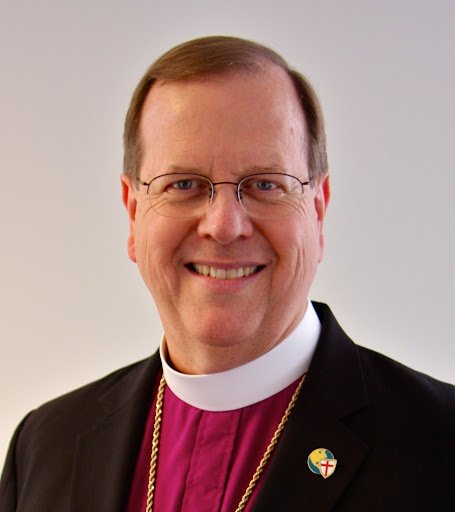
Name: Bishop John Guernsey
Date: May 22
Text: Ephesians 3:14-21
Title: Renewed Power for Our Work
Connection: Bishop John leads our Diocese, is a pastor to me and all the clergy in our Diocese, and is especially gifted in teaching on the work of the Holy Spirit in our lives. It is always a special occasion when our Bishop visits; and, since he is retiring next year, this one of our last times to have him with us! I am confident that Bishop John will help us deepen our trust in the power of the Spirit working within us and through us.
Church family, I’m looking forward to both preaching and listening and learning along with you in this series over the next six weeks. I hope our imaginations are stirred, our doubts assuaged, and our hearts encouraged as we contemplate what it means to go about our daily work in light of the Gospel of Jesus Christ.
In the Father’s love,

Participating in the Triduum
Good afternoon! A blessed Holy Week to us all. I want to take a few minutes to explain what it will be like to participate in the most important days of Holy Week together.
Dear Redeemer Family,
Good afternoon! A blessed Holy Week to us all. I want to take a few minutes to explain what it will be like to participate in the most important days of Holy Week together. Please, if you can, read the following in its entirety:
STATIONS ON BOULEVARD
From 8:00 a.m.-7:00 p.m., Monday-Friday, the 14 Stations of the Cross will be posted along Arthur Ashe Boulevard. I encourage you to set aside 30-45 minutes of time to stop by, and spend time praying and contemplating each station. We have put together both a printed and digital guidebook to lead you through this exercise.
MAUNDY THURSDAY
The Paschal mystery - the death and resurrection of Jesus Christ - is at the heart of the Christian Gospel. The evening of Maundy Thursday begins the Triduum (the sacred three days). Maundy Thursday receives its name from the maudatum (commandment) given by our Lord: A new commandment I give to you, that you love one another: just as I have loved you, you also are to love one another (John 13:34). At the Last Supper, Jesus washed his disciples' feet and commanded them to love one another as he had done. This day commemorates the Lord’s example of servant ministry, the institution of the Eucharist, the agony of the Garden of Gethsemane, and the betrayal leading to the crucifixion.
Services are at 5:00 p.m. and 6:30 p.m.
No nursery or children’s ministry. Kids are invited to fully participate in all parts of the service.
Remember to wear sandals or slip-off shoes (to facilitate the foot-washing portion of the service).
GOOD FRIDAY
The Good Friday liturgy is the second part of the Triduum. This most somber of all days is appropriately marked by fasting, abstinence, and penitence, leading us to focus on Jesus and the meaning of his Cross. Some churches do not use musical instruments or bells on this day. The church is often darkened. The bare, stark appearance of the church serves as a reminder of the solemnity and sorrow of the day. The Lord of Life as rejected, mocked, scourged, and then put to death on the Cross. The faithful are reminded of the role which their own sin played in this suffering and agony, as Christ took all sin upon himself, in obedience to the Father’s will. By the Cross we are redeemed, set free from bondage to sin and death. The Cross is a sign of God’s never-ending love for us. It is a sign of life, in the midst of death.
Services are at 5:00 p.m. and 6:30 p.m.
No nursery or children’s ministry. Kids are invited to fully participate in all parts of the service.
Remember to wear black or gray clothing.
HOLY SATURDAY
This is a day of quiet contemplation. It is important not to start the Easter celebration and feasting too early. Consider eating simple foods and refraining from entertainment. Perhaps, in the morning or the evening, consider praying:
O God, Creator of heaven and earth: Grant that, as the crucified body of your dear Son was laid in the tomb and rested on this holy Sabbath, so we may await with him the coming of the third day, and rise with him to newness of life; through Jesus Christ our Lord. Amen
EASTER SUNDAY
As the third day dawns, we celebrate the bodily resurrection of our Lord from the dead!
Alleluia! Christ is risen!
The Lord is risen indeed! Alleluia!
The church will resound with the ringing of bells, shouts of praise, and songs of joy! This is a dual sacrament service: with both Baptisms and Eucharist.
There are three identical services: 7:00 a.m., 9:00 a.m., and 11:00 a.m. (But only the 9:00 a.m. and 11:00 a.m. provide nursery and children’s ministry).
If you are able to attend the 7:00 a.m. service, please do so! We will likely run out of space at 9:00 a.m. and 11:00 a.m.. By worshiping at the sunrise service, you show hospitality to visitors who will likely attend the later two.
There will be coffee, juice, and donuts across the street near the VMFA sculpture garden after all three services. Stay for a while and enjoy the after-party!
Redeemer family, I love you all and I’m so grateful that we get to walk through this week together. I hope and pray that our observance, practice, and worship through this time forms the virtues of the Gospel within us.
In the Father’s love,

Introducing Our New Vestry Candidates
What a pleasure it is to introduce our newest Vestry members: Sarah Byrd and David Williamson! Welcome to the both of you. I look forward to working closely with you in the years to come.
Dear Redeemer Family,
What a pleasure it is to introduce our newest Vestry members: Sarah Byrd and David Williamson! Welcome to the both of you. I look forward to working closely with you in the years to come.


In late April, after Holy Week, our two Vestry members who have completed their three year term (Carrie Finch and Fras Bax) will roll off and Sarah and David will roll on. Well done Carrie and Frans, we are so thankful for your service to the Lord and to our parish!
And a big thank you as well to Jackie Griffith and Alex Burlingame. You are both already serving our parish well in many capacities and we will need the two of you in the years to come. (The vote was close by the way!)
Church family, Holy Week is upon us. If you have not yet volunteered to serve in the coming week, please pause right now and contact one of our staff to do so. We still have needs in the following three areas:
Nursery and Kids Ministry — Email Casey.
Hosting Coffee Hour for Easter Sunday — Email Jeff.
Stations on Boulevard Monday-Friday — Sign up here.
See you in a few days for Palm Sunday!
In the Father’s love,

Vestry Election This Sunday
Our annual Vestry election is taking place this Sunday. We have four excellent candidates and must elect two of them to serve a three year term.
Dear Redeemer Family,
I have two quick things for you today:
First, our annual Vestry election is taking place this Sunday. We have four excellent candidates and must elect two of them to serve a three year term.
Who are our candidates?
Dr. Jackie Griffith
Neighborhood: Glen Allen
Occupation: Therapist
Currently Serving Redeemer by:
Teaching classes.

David Williamson
Neighborhood: Bon Air
Occupation: Director of Content Strategy at Unboxed Technologies
Currently Serving Redeemer by:
Leading a Small Group

Alex Burlingame
Neighborhood: The Fan District
Occupation: Director of Sales & Marketing at Fringe
Currently Serving Redeemer by:
Leading a Small Group
Sarah Byrd
Neighborhood: Near West End
Occupation: Wealth Management Advisor at Alpha Advisors
Currently Serving Redeemer by:
Leading a Small Group
Who Votes?
Voting is for confirmed members only. If you have completed our Foundations Class, been confirmed by our Bishop by the laying on of hands, and signed our Membership Covenant & Commitments then you are a member here at Redeemer and should participate in this election by prayerfully voting.
How & When to Vote?
You may vote online this week using this link, or you may vote in-person at one of our worship services on Sunday morning. The ballots close Sunday evening.
Note: Remember that the vestry election is not a popularity contest, but rather a matter of careful, prayerful, strategic discernment. The Vestry shoulders the enormous responsibility of stewarding all the financial resources of the parish. We need wise, virtuous, mature followers of Jesus to step into this role.
Second, you may have noticed that we originally had five good candidates for this election, but are now down to four. Our beloved Rachel Rigdon has spent the past few weeks in cautious discernment regarding what it means to serve on Vestry and has concluded that it is not a good fit for her particular gifts and talents in this season of life.
I think this is a great moment to celebrate that we are truly the body of Christ together and that we each bear a wide diversity of gifts from our Lord. No one has all the gifts and no one has zero gifts. Discerning the right place to serve within the body is a spiritual matter and I applaud Rachel for giving serious thought and prayer to this decision.
That’s all for today. I love you church family and I’ll see you on Sunday!
In the Father’s love,
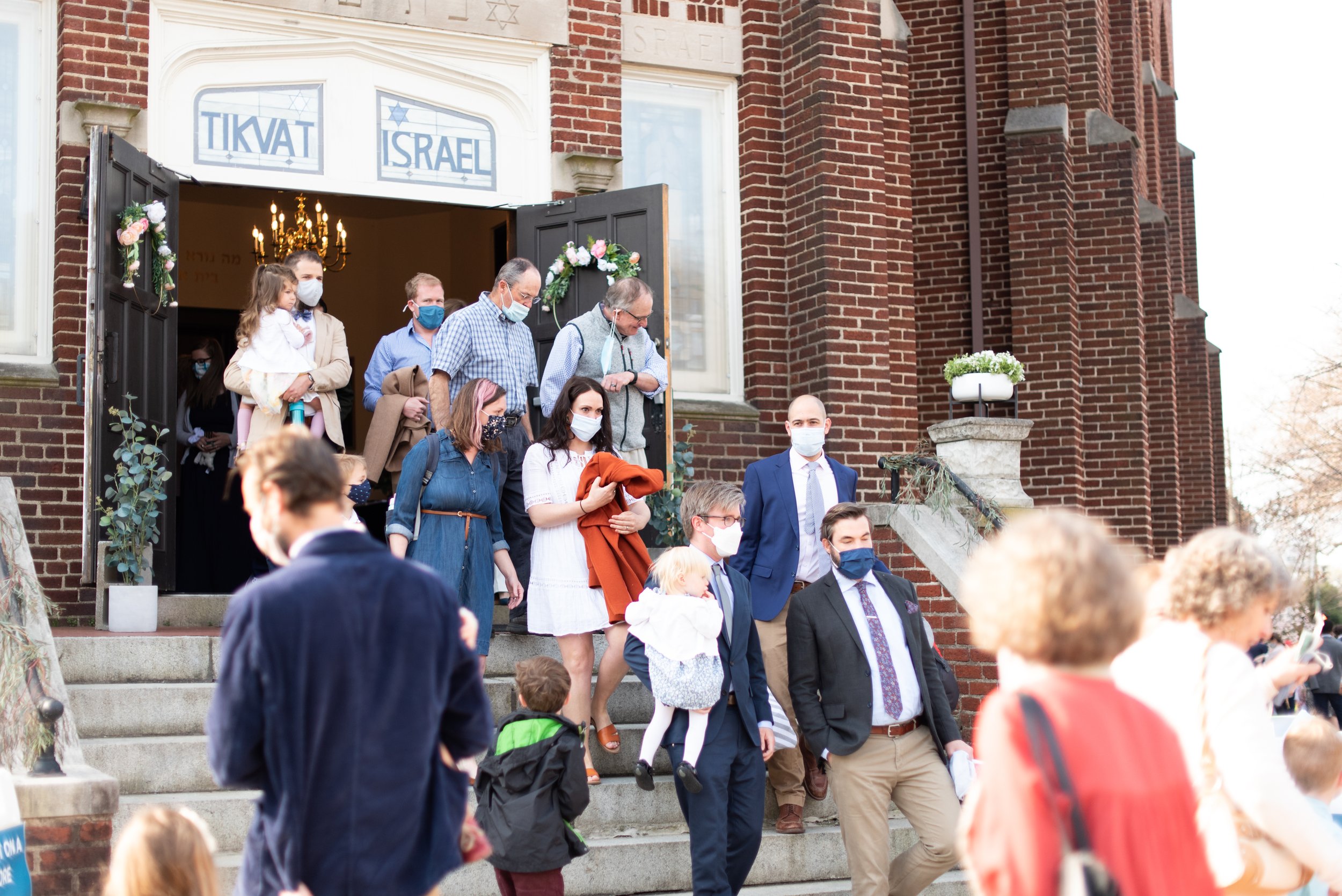
All Hands On Deck—Calling Volunteers For Holy Week
Holy Week, April 10-17, is the most important week of the year for followers of Jesus. Through it, we remember Christ’s entry into Jerusalem (Palm Sunday), His washing of the disciple’s feet and last supper (Maundy Thursday), His crucifixion and death on the cross (Good Friday), and His glorious resurrection from the dead on Sunday (Easter). It is also the time during the year when we receive the most visitors to our services and, therefore, the time when we have the greatest opportunity to show hospitality to strangers and outsiders.
Dear Redeemer Family,
Holy Week, April 10-17, is the most important week of the year for followers of Jesus.
Through it, we remember Christ’s entry into Jerusalem (Palm Sunday), His washing of the disciple’s feet and last supper (Maundy Thursday), His crucifixion and death on the cross (Good Friday), and His glorious resurrection from the dead on Sunday (Easter).
It is also the time during the year when we receive the most visitors to our services and, therefore, the time when we have the greatest opportunity to show hospitality to strangers and outsiders.
THE CALL
Therefore, I am asking everyone who is a member or regular attender to volunteer during Holy Week - prioritizing volunteering on Easter Sunday. Now, if you’re anything like me, you probably think of special holidays as a time not to volunteer, because you want to enjoy celebrations with family and friends. I get it. Really, I do.
However, your staff cannot pull off Holy Week (and especially Easter Sunday) alone! I want to encourage all of us to think of Holy Week, especially Easter Sunday, as a time to serve and welcome others.
THE NUMBERS
Consider the following data:
Last year, in March 2021, we had an average Sunday attendance of 200 and then an Easter (April 4) attendance of 488.
Last Sunday (March 20), we had 426 in attendance and 115 of those were kids! I don’t know what we should project for attendance on Easter, but it is likely we will welcome more people than we ever have before!
SIGN UP
Here are some important ways you can serve during Holy Week:
PALM SUNDAY
Nursery or Kids - contact Casey Cisco
Host Coffee Hour - contact Jeff King
STATIONS ON BOULEVARD
Sign up to serve for a two-hour time slot.
MAUNDY THURSDAY
Assist with prepping foot washing stations - contact Danny Hindman
GOOD FRIDAY
No more volunteers needed. Thanks!
EASTER
7:00 a.m. Service
Host Coffee & Donuts Hour - contact Jeff King
9:00 a.m. & 11:00 a.m. Services
Nursery or Kids - contact Casey Cisco
Host Coffee & Donuts Hour - contact Jeff King
Redeemer family, I’m continually surprised at the growth of our church and the changes it brings to all of us. Thank you for your willingness to roll up your sleeves, pitch in, and help welcome our neighbors so that they might hear and receive the good news of the Gospel.
In the Father’s love,
Our 2022 Vestry Candidates
Our Vestry Election takes place the Sunday before Holy Week, which is April 3rd this year. In between now and then, I would encourage you to prayerfully consider which two of the following five people would be best suited to serve and lead our parish in the coming years.
Dear Redeemer Family,
It’s that time of year again—time for us to prepare to thank two Vestry members (Carrie Finch and Frans Bax) for completing their three years of faithful service and time for us to vote in two new people.
Our Vestry Election takes place the Sunday before Holy Week, which is April 3rd this year. In between now and then, I would encourage you to prayerfully consider which two of the following five people would be best suited to serve and lead our parish in the coming years.
Dr. Jackie Griffith
Neighborhood: Glen Allen
Occupation: Therapist
Currently Serving Redeemer by:
Teaching classes.
David Williamson
Neighborhood: Bon Air
Occupation: Director of Content Strategy at Unboxed Technologies
Currently Serving Redeemer by:
Leading a Small Group
Alex Burlingame
Neighborhood: The Fan District
Occupation: Director of Sales & Marketing at Fringe
Currently Serving Redeemer by:
Leading a Small Group
Sarah Byrd
Neighborhood: Near West End
Occupation: Wealth Management Advisor at Alpha Advisors
Currently Serving Redeemer by:
Leading a Small Group
I can attest that each of these people is a mature, thoughtful, wise, compassionate follower of Jesus. There are no bad choices here! I want to remind us all that the Vestry election is not a popularity contest, but rather a matter of spiritual, strategic discernment.
As a reminder, here is a document that lays out the responsibilities of the Vestry. Please give a read if you need a refresher.
Carrie & Frans, thank you for your three years of service! It has been a joy to work with you! And to these five new candidates, thank you for allowing your names to go forward and your willingness to serve in the years ahead. We are grateful for your courage!
In the Father’s love,

Introducing Lewis Lovett, Church Planter-In-Residence #3
I continue to be amazed at the tremendous privilege and opportunity our parish has in helping to plant and establish new churches in the Metro-Richmond area.
Dear Redeemer Family,
I continue to be amazed at the tremendous privilege and opportunity our parish has in helping to plant and establish new churches in the Metro-Richmond area.
It began in 2016 when Redeemer was itself planted by a faithful group of 50+ people.
It continued in 2019 when we, in partnership with the Diocese of Christ Our Hope and Church of the Holy Spirit in Roanoke, sent out The Rev. Steven Breedlove to plant Church of the Incarnation in the West End.
It continues now with The Rev. Danny Hindman who is actively working to plant All Souls Anglican in the Forest Hills/Manchester neighborhood. They will likely launch in late 2022 or early 2023.
And now, it seems, it will continue on with Lewis Lovett, our third Church Planter-in-Residence, who will join our staff this Summer.

Lewis is a native of Knoxville, TN and graduated from Wofford College and Covenant Theological Seminary. Before attending seminary, Lewis worked as a youth director in Charlottesville, VA for 4 years. His wife, Maggie was born in Madison, VA and graduated from Washington & Lee in 2007. Lewis and Maggie were married in Lee Chapel at W&L in 2008 and have four wonderful daughters, Ellie Kate, Ruthie, Caroline, and Betsy.
Recently, Lewis has been serving as a campus minister with Reformed University Fellowship (RUF) at Washington & Lee University as an ordained minister in the Presbyterian Church in America (PCA). He has now transitioned into the ordination process with our Diocese (Diocese of the Mid-Atlantic) in preparation for the Anglican priesthood.
The Lovett family has purchased a home in the Salisbury neighborhood in Midlothian and plans to move in sometime early this Summer.
Some of you may see Lewis and his family around Redeemer occasionally this Spring and you certainly will this Summer. When you do, please give them a warm welcome!
In the Father’s love,

A New Sermon Series For Lent: Disenchanted
As we begin the season of Lent together, I want to take a minute to tell you about where we are headed in our Lenten sermon series. The title of the series is: Disenchanted | Losing & Regaining Our Connection with the Natural World & with God.
Dear Redeemer Family,
Good afternoon! A blessed Ash Wednesday to you.
As we begin the season of Lent together, I want to take a minute to tell you about where we are headed in our Lenten sermon series. The title of the series is: Disenchanted | Losing & Regaining Our Connection with the Natural World & with God.
This series will explore the ways in which technological advancements and cultural shifts are estranging people from their bodies and the material world, resulting in profound disconnection with God. Leaning heavily on the historic church’s understanding that God has written two books: scripture and creation - Disenchanted seeks to unveil to us the ways in which our lives are missing essential raw, gritty, embodied practices and experiences.
God has given us two "books" that reveal who God is and what God is about. These are the Book of Nature (which is the natural world itself) and the Book of Scripture, the Bible. They complement one another; and both Scripture and the natural world reveal God's truth, as both have God's hand on them. Together, they speak a single truth, and they are, at their deepest level, in accord.
—Saint Augustine
Together, we will consider how reappropriating basic human acts like: assisting with the birth of a child, creating music, experiencing sexual intimacy, growing food, telling stories, and caring for the dying are experiences that connect us to the God who is creator of the material world and author of life.
Week 1—Re-Enchantment through Birth
Week 2—Re-Enchantment through Music
Week 3—Re-Enchantment through Sex
Week 4—Re-Enchantment through Memory
Week 5—Re-Enchantment through Death
When we take up these practices, our lives, our homes, and our church will be infused afresh with the mystery and glory of life as creatures of God in a created world.
Download the Lent guidebook here.
See you Sunday.
In the Father’s love,

A Week That Forms You—Shrove Tuesday and Ash Wednesday
Next week you are invited to do a strange and yet important thing. On Wednesday, March 2, you are invited to come and receive the sign of the cross in ashes on your forehead. Stranger still, you won’t wash off the ashes right away, rather - you’ll bear the dirty smudge right there on your face the rest of the day.
Now, why do this? Why participate in an Ash Wednesday service?
Dear Redeemer Family,
Next week is a very important, formative time for us in the life of the global and historic church as we celebrate Shrove Tuesday and observe Ash Wednesday.
SHROVE TUESDAY
Also called Mardi Gras or Fat Tuesday, this is a traditional feast day for the church. In the past, the goal was to use up all the fat and sugar in the house in preparation for the austere fasting season of Lent. For us here at Redeemer, we will give a fresh spin to this very old practice. On Tuesday evening, at 5:00 p.m. and 6:30 p.m., we will have two seatings for a Southern Chicken ‘n Biscuits Dinner down in the basement of 2715 Grove Ave. And for those of us who have dietary restrictions, fear not - there will be fruit and veggies on hand.
During the dinner we will distribute the guidebook for Lent and talk about how to practice the season of Lent as a church family.
RSVP here and we’ll see you there!
ASH WEDNESDAY
The following day, at 6:00 a.m, 12:00 p.m. and 5:30 p.m. there will be worship services in the sanctuary at 2715 Grove Ave.
All of you are invited to come and receive the sign of the cross in ashes on your forehead. Though it may sound strange, you won’t wash off the ashes right away. Rather, you’ll bear the dirty smudge right there on your face the rest of the day.
Now, why do this? Why participate in an Ash Wednesday service?
Ash Wednesday marks the beginning of the season of Lent: a time of penitence, fasting, and prayer, in preparation for the great feast of the resurrection. The season of Lent began in the early days of the Church… the forty days refer to our Lord’s time of fasting in the wilderness; and since Sundays are never fast days, Ash Wednesday is the beginning of the Lenten Fast.
Throughout the Old Testament, ashes are used as a sign of sorrow and repentance, and Christians have traditionally used ashes to indicate sorrow for our own sin, and as a reminder that the wages of sin is death (Romans 6:23). Like Adam and Eve, we have disobeyed and rebelled against God, and are under the same judgment, ‘you are dust, and to dust you shall return’ (Genesis 3:19).
But as we are marked with ashes in the same manner that we were signed with the Cross at Baptism, we are also reminded of the life we share in Jesus Christ, the second Adam (Romans 5:17, 6:4). It is in this sure hope that we begin the journey of these forty days of Lent, that by hearing and answering our Savior’s call to repent, we may enter fully into the joyful celebration of his resurrection.
Church family, I heartily encourage all of you to lean into this coming week. Small Groups, Youth Fellowship, and other church programs are on pause next week so that we can all prioritize feasting together on Shrove Tuesday and repenting together on Ash Wednesday.
YOUR ACTION ITEMS
If you do one thing next week, come to an Ash Wednesday service.
If you do two things next week, come to a Shrove Tuesday Feast and an Ash Wednesday service.
I’ll see you there. Let’s allow this coming week to form our hearts, minds, and bodies more fully into the image of our crucified and risen Lord.
In the Father’s love,


Why Redeemer is Both Low and High Church
Have you noticed that our Sunday worship and weekly parish life contain both traditionally high church and low church elements? Have you ever wondered why? Are we a mish-mash of competing philosophies of ministry? Are we trying to “split the difference” between different styles of church? Today I’d like to invite our whole church family in on a conversation that your Staff and Vestry have been having for a number of years now.
Dear Redeemer Family,
Have you noticed that our Sunday worship and weekly parish life contain both traditionally high church and low church elements? Have you ever wondered why? Are we a mish-mash of competing philosophies of ministry? Are we trying to “split the difference” between different styles of church? Today I’d like to invite our whole church family in on a conversation that your Staff and Vestry have been having for a number of years now.
The Book of Common Prayer, which is the foundational document of the Anglican Communion, exemplifies what we might call a “Lo/Hi” approach to practicing the way of Jesus. During the era of the reformation, English reformer Thomas Cranmer labored for years to produce an English language translation of the Roman Catholic Latin prayer book. This was not only the hard work of translation, it was also the essential work of mission. The average person then living in what is now called the U.K. did not understand the Latin mass, nor could they pray with the church on their own throughout the week. But on Easter Sunday 1548, every parish across England began praying, confessing, and hearing the good news of the Gospel in their own vernacular, in their common language.
This missional move took the riches of traditional “high” church practices, filled with symbolism, metaphor, art, and mystery, and brought them “low” by making them accessible to the average, common person. It was a condescending move (in a positive sense!). In the incarnation of Christ, God condescends to humanity by becoming one of us. And so, if we would live and minister in the way of Jesus, then we must adopt his condescending posture.
Therefore, this incarnational, condescending, missional posture must be the posture of any church that confesses and proclaims the good news of the Gospel of Jesus. And it especially should be true of an Anglican parish!
Our shorthand phrase for this posture is LO/HI.
So, at Redeemer, we seek to embody the tension between low church / high church culture.
Low
We seek to create low bars of entry for the average secular, materialist, humanist Richmonder.
Our front porch is inviting and the front door is easy to open.
Our communication, preaching, music, and programming seeks to be accessible and understandable for the average person.
We are not a church that only caters to spiritual elites and picky church consumers.
High
There is no ceiling for how high you can grow.
The spiritual riches of the Great Tradition are the desired destination for all Christ-followers here.
We desire for people to move deeper into a liturgically and sacramentally ordered life.
We recognize that symbol, metaphor, art, and mystery are key in forming maturity in faith.
There are no short-cuts on the path to maturity.
Redeemer family, I hope this helps us all better understand the unique ethos we are seeking to cultivate within our parish (and how it is actually not so unique!).
I hope and pray that in the months and years ahead, we continue to stretch both lower and higher: running further up and further in to the riches of the Gospel embodied in the traditions and practices of the historic church; and stooping lower, doing the hard work of translation to make the beauty of the Gospel accessible to our average, common neighbors.
I believe this stretching in both directions is called - growth.
In the Father’s love,

Meet Our New Staff Members!
It’s a pleasure to introduce four new faces to our staff team! I say “new,” but if you’ve been around our Parish for a while, these might be folks you already know…
Dear Redeemer Family,
It’s a pleasure to introduce four new faces to our staff team! I say “new,” but if you’ve been around our Parish for a while, these might be folks you already know…

Sarah Bergh | Parish Administrator
We recently hired Sarah to step into the role of our 10 hr/week Parish Administrator. In this role she assists me (Dan) and Jeff King (our Dir. of Operations) in many behind-the-scenes tasks that keep our ministries and programs running smoothly. Welcome Sarah!
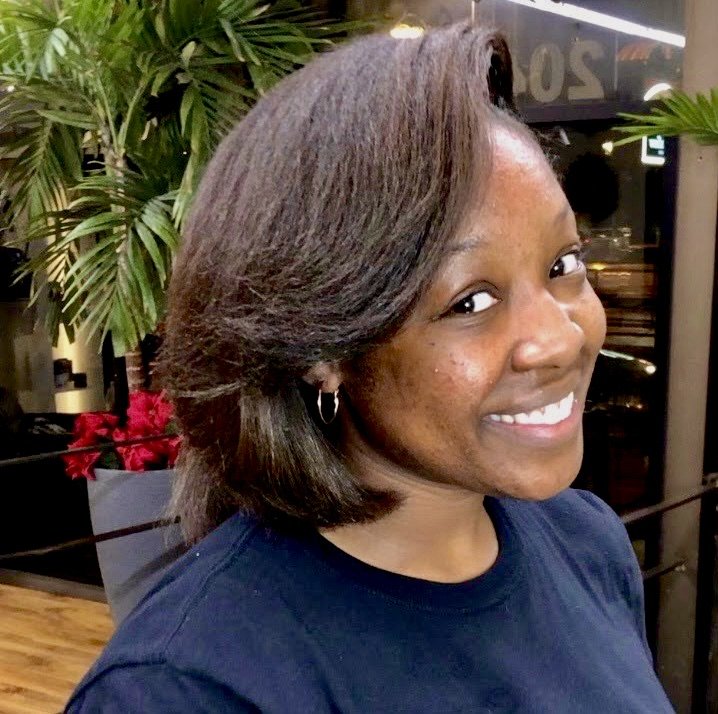
Brandee Green | Nursery Coordinator
Brandee has already been serving faithfully in our Nursery for the past couple years! Recently, we asked her if she would be willing to take on a bit more responsibility in running the Nursery and managing volunteers and paid nursery staff. Welcome Brandee!
Matt Rose | Men’s Fellowship Coordinator
Matt has graciously volunteered to step up into the role of coordinating Men’s Fellowship events for the year. These will likely include evening events 4-6x / year and perhaps an annual retreat. Welcome Matt!


Marie Jeffery | Parish House Manager
Marie has also cheerfully volunteered to step into the role of Parish House Manager. This means that she has the delightful duty of ensuring that the property is clean, orderly, and well cared for. When issues with the Parish House at 3328 Hanover Ave. arise, Marie gets to deal with them! Thank you Marie, and welcome to the team!
Sarah, Brandee, Matt, and Marie, we are so grateful for your service and leadership. Thank you for selflessly giving your time and energy to the mission of Redeemer here in the city. We trust that your work will yield good fruit both inside and outside our parish.
In the Father’s love,

Want To Help Outfit The Parish House?
As you might remember, back in December we purchased 3328 Hanover Ave. as Redeemer’s Parish House! Our staff is hard at work getting the house ready to open to welcome you and for use by the many ministries of our church. If you missed hearing about how the Parish House will be used, check out this vision doc.
Dear Redeemer Family,
As you might remember, back in December we purchased 3328 Hanover Ave. as Redeemer’s Parish House! Our staff is hard at work getting the house ready to open to welcome you and for use by the many ministries of our church. If you missed hearing about how the Parish House will be used, check out this vision document.
As we’ve been purchasing furniture, painting walls, and fixing things up, we realized that there were a lot of folks in the church who wanted to contribute to the house. Artists have offered to loan their paintings, designers have donated their time and expertise, some folks have even offered furniture from their own homes! I’ve been overwhelmed by the generosity of our congregation. Thank you!
For those of you who would like to contribute to outfitting the house, but are unsure of how to help, we have created an online registry with items that you can purchase. You’ll find items as simple and small as can openers and cutting boards, all the way up to items as large and fun as swivel chairs and a 250 gallon smoker! (And, of course, everything in between).
To be clear, our staff and finance team considered just going ahead and purchasing all of these items. After all, you all have been incredibly generous and Redeemer is in a very strong position financially. However, this house really is for all of us. It’s to be a place of prayer, hospitality, and art for the whole parish and for newcomers as well. Therefore, we thought it would be appropriate (and fun!) to give everyone the opportunity to contribute a little something.
If you purchase a bowl, you’re saying, “I want someone hungry to have their belly filled here.”
If you purchase a fire pit, you’re saying, “I want someone who feels left out to experience the warmth of fellowship sitting around the fire here.”
If you purchase a chair, you’re saying, “I want someone who is tired to rest here.”
If you’re not sure what to purchase, you can also make a financial donation and it will be used to purchase whatever is needed for the Parish House in the months ahead.
Also, if you happen to own some particularly nice furniture, art, or appliances and you’d like to donate them, then our team would be glad to consider it!
*Note: This is not an opportunity to offload that old Cuisinart mixer that only sometimes works. We aim for excellence in hospitality here! If you would consider giving it to Goodwill, please don’t ditch it here.
Church family, I’ve already moved my study over to the Parish House and have been working here this week. As I’ve walked around the empty rooms, I’ve imagined all the laughter, singing, prayer, teaching, and fellowship that will take place here.
I can’t wait to open the doors and welcome you in!
In the Father’s love,

Why a Sermon Series on Hospitality?
During the season of Epiphany, the church around the world and throughout history gives her attention to the way in which Jesus is revealed to be the light of the world. Therefore, during this time, it is customary for us to read from the Gospel accounts and see how, in the ministry of Jesus, He uncovers His identity as the long-awaited Messiah.
Dear Redeemer Family,
During the season of Epiphany, the church around the world and throughout history gives her attention to the way in which Jesus is revealed to be the light of the world. Therefore, during this time, it is customary for us to read from the Gospel accounts and see how, in the ministry of Jesus, He uncovers His identity as the long-awaited Messiah.
To that end, over the past few years, we have examined the ministry of Jesus from a variety of angles. We’ve looked at how Jesus was:
Revealed in His Stories - 2019
Revealed in His Questions - 2020
Revealed in His Miracles - 2021
This year, we will see how Christ is Revealed in His Hospitality. Each week we will read a text from the Gospel of Luke where Jesus shares a meal with someone. We will see how the ordinariness of meals was so often the context for Jesus’ ministry. I have found this both convicting and encouraging as I contemplate what shape my own ministry should take.
I find it convicting, because I usually think that, in order for me to be an effective minister of the Gospel, I need to craft extraordinary experiences for other people. The table ministry of Jesus reminds me that, more often than not, transformation takes place right in the midst of life-as-usual.
I find it encouraging for the very same reason! I have a kitchen table. It may very well be the most important tool our family has for ministry.
Ah, and you have a kitchen table as well don’t you? It may very well be the most important tool you own for sharing the love of Christ with others.
Right now, there are 21 households that are hosting Small Groups. You are opening your doors and your tables to share the welcome and hospitality of Jesus with others. It costs you time, money, energy, emotion, health, and much more. It costs you! And yet, it is a tremendous blessing to the people you welcome.
Our little parish continues to grow. There are many new people who want to make Redeemer their home. They want to come to someone’s table and experience warmth, friendship, care, and love.
By my estimate, we need close to 30 Small Groups, nine more than we have right now, if everyone is to make their way to someone’s table. So, one question for you to ask yourself (if you dare) during this Epiphany season is, “How might the Lord Jesus want to use my kitchen table to show hospitality to others?”
Redeemer Family, I absolutely love the way you show the hospitality of Christ to each other. Well done!
Let’s continue to find wise and wonderful ways to invite new people to our tables.
In the Father’s love,
artwork: Eric Feather, Christ Feeding the 5000

Test Positive? Let’s Help Each Other Out!
Surely you’ve noticed, as I have, that there has been a sharp uptick in the number of positive Covid cases in our parish this past week. While we are grateful that most of these are mild cases, there are still a lot of people that are feeling really crummy and are now quarantined at home.
Dear Redeemer Family,
Surely you’ve noticed, as I have, that there has been a sharp uptick in the number of positive COVID cases in our parish this past week. While we are grateful that most of these are mild cases, there are still a lot of people that are feeling really crummy and are now quarantined at home.
If you’ve tested positive, or are simply not feeling well and need some help, please let us know! We have a generous Mercy Fund and a fantastic Care Team ready to visit you, pray for you, bring you a meal, or help in some other way.
You can email me or Christa Vickers-Smith our Care Team Coordinator.
We will help mobilize people who live near you to pitch in and help out.
Now, you might be thinking, “Oh this isn’t necessary. I have food, heat, and a computer here at home. No need for anyone to inconvenience themselves.” Folks, inconveniencing ourselves for the sake of others is the stuff that community is made of! Sure, we could all buckle down and get through it alone. And if we do, we’ll come out on the other side a little weirder and a little lonelier than before. Or, we can help each other out and use this as an opportunity to strengthen the bonds of friendship (or to forge new bonds!)
Church family, let’s look for every opportunity to love, serve, help, and care for each other.
In the Father’s love,

Three Essential Practices to End the Year Well
Sometimes we’re unsure of how to end things. As this year winds to a close, here are the three essential practices to help us end the year well: Reflection, Contentment, Anticipation.
Dear Redeemer Family,
Sometimes we’re unsure of how to end things. As this year winds to a close, here are the three essential practices to help us end the year well: Reflection, Contentment, Anticipation.
Practice #1: Reflection
I will remember the deeds of the Lord; yes I will remember your wonders of old.
—Psalm 77:11
One of my greatest weaknesses is a tendency to move quickly from one thing to another without ever taking time to pause, reflect, and remember what I’ve witnessed and experienced. Reflection takes time and intentionality. This is different from nostalgia (idealizing the past) or complaining (moping about the past). Spiritual reflection is best practiced both alone and with others. Take some time by yourself. Go for a walk or sit quietly. Take your mind back to last winter, then remember the season of Lent, the coming of spring, the dawning of Easter, the brightening of summer, the fading of fall, and the emergence of Advent. What did the Lord do in your heart during those seasons? What did you witness in your work, your relationships, your neighborhood, and in our church? Now, take these questions to your closest family members and friends. They will help you remember things you have forgotten and perhaps color certain memories differently than you have. By reflecting together, you each gain a truer understanding of the Lord’s work this year.
*Note: Remember, reflection is not about how I feel about this past year, but on what God accomplished. The focus is not on feelings, but on the Lord’s work.
Practice #2: Contentment
Now there is great gain in godliness with contentment, for we brought nothing into the world, and we cannot take anything out of the world. But if we have food and clothing, with these we will be content. But those who desire to be rich fall into temptation, into a snare, into many senseless and harmful desires that plunge people into ruin and destruction.
—1 Timothy 6:6-9
Another of my weaknesses is that I give most of my emotion to unmet desires rather than to God’s provision. My list of perceived needs and wants grows ever longer. There are things I hoped to accomplish this year that did not materialize. I wanted to be in better shape, I wanted to fix up the garage, I wanted to take the kids camping, I wanted to spend more time visiting many of you in your homes, I wanted to invest more time caring for our staff, I wanted to lead our Vestry with more intentionality, I wanted to spend more time with my neighbors here on Palmyra Ave.
My mind and heart are filled with jobs not-done, trips not-taken, relationships not-strengthened, people not-cared-for, and tasks not-accomplished.
And to my end-of-year-unfinished to-do list comes the word of God—the invitation to simply be content.
In 2021 God gave to you and to me everything that we need. He did not give us the year we wanted, but He gave us a year with Him and with each other. In this, we can be content. Breath deeply, friends. Be at peace. Be satisfied. Still the anxious voice inside that tells you that you failed to be your best self this past year. Practice the spiritual discipline of contentment.
Practice #3: Anticipation
May the God of hope fill you with all joy and peace in believing, so that by the power of the Holy Spirit you may abound in hope.
—Romans 15:13
Followers of The Way of Jesus are not to be fearful about the future, but rather to look to the horizon with hope - anticipating the work of God that is to come. How will God work in us and through us in 2022? What surprises will greet us? Where will we discover that our plans are different from God’s plans? What unlooked-for goodness will our Heavenly Father bring into our midst? What challenges might we endure together?
Here are just a few glimmers of the future that we may encounter in the months of January:
J-Term will launch with 12 unique classes, each taught by members of Redeemer. There are still a few empty slots left, so sign up if you like!
January 9 is Epiphany Sunday and we will joyfully baptize many people.
During the season of Epiphany, we will begin a new sermon series on the meals of Jesus called Revealed in His Hospitality. In it, we will examine how a substantial portion of the ministry of Christ took place at the table with remarkably diverse kinds of people. Through this, we will gain a deeper understanding for how each of us may practice the hospitality of Jesus between two tables: the Communion Table and our own kitchen table.
Redeemer family, I love you dearly. With three days left in 2021, I will practice reflection, contentment, and anticipation along with you.
Let’s end the year well.
In the Father’s love,
artwork: Agnes Martin, Untitled, 1960

End-Of-Year Giving
As the year winds to a close, we are all being bombarded with solicitations for End-of-Year Giving from non-profits, schools, ministries, and other organizations. In the midst of our collective request-fatigue, I would like to offer us a few fresh things to consider regarding financial giving to the ministry of our parish.
Dear Redeemer Family,
As the year winds to a close, we are all being bombarded with solicitations for End-of-Year Giving from non-profits, schools, ministries, and other organizations. In the midst of our collective request-fatigue, I would like to offer us a few fresh things to consider regarding financial giving to the ministry of our parish.
CAVEAT: First, let me be clear on this, Redeemer is in a strong position financially. The Lord has given us an abundance of resources through your generosity over the past five years. We are on track to make budget. Thank you, church family, for your generosity. It is making a significant impact in the lives of many people both inside and outside our parish.
REAL NEEDS: Second, it is important for you to know that, even though our church is thriving financially, we have very real financial needs that will materialize in the coming year. Our parish is growing, and with growth comes increased needs across all ministries. We need to hire more staff, we need to furnish and use our recently purchased Parish House, we need to launch new ministries, and we need to send out new church plants. If we are to care for and serve the new people who have joined this Fall and the new people we anticipate joining this Spring, then the budget needs to grow.
THREE WAYS: So, with gratitude for our strong financial position and hopeful anticipation of what new challenge 2022 will bring, I’d like to invite you to consider making an End-of-Year financial gift to Redeemer in one of three ways:
Direct Giving—You can go to the giving page of our website, follow the instructions, and make a gift with a check or credit card.
Appreciated Stock—Shares of Stock, Mutual Funds, or other Securities can be given to Redeemer. Securities should be transferred to:
Wells Fargo Advisors
Name: Redeemer Anglican Church
Account #: 55298563
DTC #: 0141Please notify us of your gift at finance@redeemerrva.org to ensure an accurate tax receipt.
Name Redeemer as a Beneficiary in your Will—While this practice has faded over the years, there was a time in church history when it was common for followers of Jesus to leave a portion of their inheritance for their home parish. If you would like assistance with this, please contact our finance team.
Redeemer family, I love you all, I am so humbled by and thankful for your generosity and faithful stewardship over the years.
In the Father’s love,

Three Important Announcements!
Normally I would announce each of these things one at a time, week by week, but there are so many new and joyful things happening in our church that I need to bundle these announcements together. Please, if you can, read this all the way through to the end!
Dear Redeemer Family,
Normally I would announce each of these things one at a time, week by week, but there are so many new and joyful things happening in our church that I need to bundle these announcements together. Please, if you can, read this all the way through to the end!
PARISH HOUSE
Your Vestry has located and purchased a row house in the Museum District (3328 Hanover Ave.) for use as Redeemer Parish House!
Review: for those of you who were not able to attend the Town Hall meeting this past Sunday evening, here is how we arrived at that decision and navigated the purchase.
Over the Summer, our staff and Vestry realized that the growth of our church necessitated repurposing all of our staff offices at 2715 Grove Ave. for Redeemer Kids and Nursery ministry.
This moved our staff to working off-site at Common House on Broad Street.
We explored a wide variety of possible solutions, and decided that the most responsible financial option was to purchase a property that could be used both for worship/ministry purposes and for staff offices.
In early November, the search team identified 3328 Hanover Ave. as a viable property; having the necessary group gathering space on the first floor and the necessary staff workspace on the second floor.
The Vestry formed an LLC, New City Properties, to serve as the legal entity for purchasing and owning the property.
The LLC made an offer of $659,000 and after some negotiation, it was accepted.
Following inspection and further negotiations regarding some minor roof and electrical repairs, we closed on Dec. 1.
We expect to spend December and January painting, fixing-up, and furnishing the house so that we can all begin to use it in February of the new year.
Big thanks to our Junior Warden, Matt Morgan and our Director of Operations, Jeff King for doing the lion’s share of the work in making this purchase happen. Well done!
If you would like to read more about the vision for how the Parish House will be used, click here.
ANNUAL REPORT & TOWN HALL MEETING
Each year, our team puts out an annual report to review the past season of ministry and to look ahead to the coming season.
You can pick up a hard copy of the annual report at Sunday worship services or you can read a digital version here.
Additionally, those of you who missed the Town Hall meeting this past Sunday evening might like to listen to the audio recording. You can find that here.
HIRING NEW STAFF
As our church continues to grow, we must continue to hire new staff to shepherd people and facilitate the many expanding ministries of the church. To that end, we are searching for three new staff positions:
Parish Administrator: This is a 10 hr/week paid position that is focused on behind-the-scenes administrative tasks that assist the rest of the staff in doing their jobs with excellence and efficiency. We are searching for someone that is a detail-oriented, self-motivated, problem-solver. For a full job description, click here.
Associate Rector: This is a full-time + health benefits salaried position that is focused on a wide variety of general pastoral work across many ministries of our parish. We are searching for someone who is warm, mature, theologically trained, and gifted in discipleship and spiritual formation. For a full job description, click here.
House Manager: This is a 3-5 hr/week volunteer position to oversee the physical maintenance of the new Parish House at 3328 Hanover Ave. We are searching for someone within the church who would enjoy helping us steward this physical property and who has a flexible weekly schedule that would allow them to attend to needs at the House as they arise. For a full job description, click here.
Thank you for reading all the way to the end! I know that’s a lot of new information to take in all at once. As always, if you have any questions, please ask them!
Questions re. the Parish House: Matt Morgan, Junior Warden
Questions re. Financial aspects of the Annual Report—Ben Gurley, Treasurer or Webb Estes, Finance Team Chair
Questions re. Hiring New Staff Positions—Dan Marotta
Thanks, Redeemer family!
I love you all and I’ll see you on Sunday.
In the Father’s love,

Advent Is (Not) About Getting Ready For Christmas
Advent is not only a backwards look to the first coming of Christ, it is a forward look towards the second coming of our Lord to judge and renew all things. This means that the discipleship purpose of Advent is not to turn us backwards in reflection and nostalgia, but rather to lift our gaze to the horizon and turn our attention to the future with fearful anticipation - calling us to wake up, to be attentive, to keep watch for Christ the King.
Dear Redeemer Family,
This coming Sunday, November 28, 2021, our little parish turns five years old and we begin a new liturgical year with the season of Advent.
Now, Advent is a profoundly misunderstood and mis-practiced season. It somehow has become just popular enough for “Advent” to be a familiar word for many of us. Up until just a few years ago, I thought Advent was simply a season to get ready for Christmas. This made sense to me. Christmas is a big deal. Without the incarnation of Christ as a human child, there would be no cross, no resurrection, no church, no salvation. However, in recent years I’ve come to understand that, while Christmas is essential, the purpose of Advent is so much bigger than preparing to celebrate the birth of Christ.
Advent is not only a backwards look to the first coming of Christ, it is a forward look towards the second coming of our Lord to judge and renew all things. This means that the discipleship purpose of Advent is not to turn us backwards in reflection and nostalgia, but rather to lift our gaze to the horizon and turn our attention to the future with fearful anticipation - calling us to wake up, to be attentive, to keep watch for Christ the King.
Therefore, as we enter this season together as a church family, we will be walking through an Advent sermons series titled A Voice in the Wilderness. We will be examining the person and vocation of John the Baptist in the Gospel of Luke as a means of understanding our vocation as a church—to be that Voice in the Wilderness of our age—crying out and proclaiming the redemption of Jesus.
So friends, as this Advent season begins, enjoy the traditions, nostalgia, and cozy goodness of preparing for Christmas festivities. Our Lord loves a good party and we are right to celebrate His birth! However, let’s be careful not to give all our attention and energy to December 25th. Let’s set aside both time and emotional space to be still and wait—leaning with all our being (mind, body, and soul) towards the future coming of our Lord and Savior Jesus.
Let’s keep watch together.
In the Father’s love,

Parish Fall Fling
When the church plays together, we bring a taste of the future into the present. Therefore, we might say (with just a hint of mischief in our voice) that here at Redeemer we take our play very seriously.
“Jerusalem shall be called the faithful city, and the mountain of the Lord of hosts, the holy mountain. Thus says the Lord of hosts: Old men and old women shall again sit in the streets of Jerusalem, each with staff in hand because of great age. And the streets of the city shall be full of boys and girls playing in its streets.”
—Zechariah 8:3-5
Dear Redeemer Family,
What a rich, cheerful vision the Lord gave to the prophet Zechariah of our world restored and renewed. I find it so encouraging that one of the marks of the New Creation is play. Did you notice that? “And the streets of the city shall be full of boys and girls playing in the streets.” And who is with these boys and girls? The elderly men and women of the New City. So what are we seeing here in this vision? We are glimpsing nothing less than the future resurrected church family. Young and old, resting and playing together. Multiple generations, dwelling together as one body - having fun!
For this reason, whenever a local church family gathers for food, fellowship, and fun - we get to taste just a bit of that future reality. When the church plays together, we bring a taste of the future into the present. Therefore, we might say (with just a hint of mischief in our voice) that here at Redeemer we take our play very seriously.
So here’s something fun for us all to do together in a few weeks:
REDEEMER PARISH FALL FLING!
When: Saturday, November 13, 10:00 a.m.-12:00 p.m.
Where: Maymont Farm 1001 Spottswood Rd., Richmond, VA 23220
What: A relaxed, casual time for fellowship, fun, and play. There is a petting zoo for kids (bring quarters if you'd like to buy food to feed the animals), wide open green space, and walking trails through 100 acres of historic park.
Food: Free coffee, hot cider, and donuts!
Optional: Bring a picnic blanket, chairs, and lunch.
RSVP here—so we know how much food and drink to prepare.
Can’t wait to see you there!
In the Father’s love,

What Does Baptism Do To Us?
On Sunday October 31, All Saints Sunday, we will celebrate the sacrament of baptism and joyfully welcome new people into the resurrection family of Jesus. These are always some of my very favorite days of the year. Whether we are baptizing an adult convert, a teenage or college student professing faith for the first time, or a young child born into a Christian family - it is a transcendent joy to witness a soul united with Christ through water.
Dear Redeemer Family,
On Sunday October 31, All Saints Sunday, we will celebrate the sacrament of baptism and joyfully welcome new people into the resurrection family of Jesus. These are always some of my very favorite days of the year. Whether we are baptizing an adult convert, a teenage or college student professing faith for the first time, or a young child born into a Christian family - it is a transcendent joy to witness a soul united with Christ through water.
Traditionally, the church has baptized people on four special Sundays in the liturgical calendar.
All Saints Day (Oct. 31)
Epiphany (January 9)
Easter (April 17)
Pentecost (June 5)
Now, I know that many of you are relatively new to the Christian faith and new to participating in a local church - especially a local church that practices ancient traditions like Redeemer does! So let me say a word about what Christian baptism is:
Jesus answered, “Truly, truly, I say to you, unless one is born of water and the Spirit, he cannot enter the kingdom of God. – John 3:5
Go therefore and make disciples of all nations, baptizing them in the name of the Father and of the Son and of the Holy Spirit. – Matt. 28:19
Do you not know that all of us who have been baptized into Christ Jesus were baptized into his death? We were buried therefore with him by baptism into death, in order that, just as Christ was raised from the dead by the glory of the Father, we too might walk in newness of life. – Romans 6:4
Because they formerly did not obey, when God's patience waited in the days of Noah, while the ark was being prepared, in which a few, that is, eight persons, were brought safely through water. Baptism, which corresponds to this, now saves you, not as a removal of dirt from the body but as an appeal to God for a good conscience, through the resurrection of Jesus Christ. – 1 Peter 3:20-21
In Christian baptism, a person is united with Jesus in His death and resurrection. We call baptism a Sacrament because it is a physical, tangible, material ritual that is filled with a spiritual, intangible, immaterial grace. Something physical is happening—the person is either being immersed in water or having water poured over their head. Something spiritual is happening—that person is, mysteriously (in a way that we can only barely begin to comprehend), being joined together with the Lord Jesus and, therefore, becomes a part of the church - the body of Christ.
The Story of Baptism spans the entirety of Scripture from Genesis to Revelation.
The Old Testament prefigures baptism: In the creation of the world, in the salvation of Noah and his family from the flood, in the exodus of the Israelites through the Red Sea, and in the Israelites crossing the Jordan River out of the wilderness and into the promised land. (There are a lot more, but these are the big ones).
Christ commands us to be baptized and to baptize others.
The New Testament authors teach on the centrality of baptism in a Christian’s life.
So who should get baptized?
Any person, young or old, who wishes to put their trust wholeheartedly in Jesus for their redemption.
Any child of a baptized adult Christian who will raise that child in the faith as a part of the church.
Why do we baptize infants as well as adults?
“We start talking to our children not because they understand us, but so that they will. Baptism is God's language whereby he starts talking to his children and initiates a relationship with them. Sacraments are a word after all.” - Peter Leithart, The Baptized Body
We baptize children, not because we think that an adult profession of faith doesn’t matter (it does, and should come at Confirmation - the other side of the coin to infant baptism), but because we seek to raise Christian children within the church.
Jesus said, “Let the little children come to me and do not hinder them.” We take the Bible at its word that little children can come directly to Jesus, they do not have to grow up first.
For Further Study
I would heartily recommend Peter Leithart’s excellent little book The Baptized Body to anyone who has serious questions about Christian baptism (especially baptizing children) and would like to learn more about it.
If you are a teenager or an adult, have never received Christian baptism, and you would like to - please email me. I would be delighted to get together and talk with you about it.
If you are a parent and your child has not been baptized - same invitation! It would be a joy to baptize your little one.
In the Father’s love,
Redeemer is hosting a baptism class on October 18 for anyone who would like to learn more.

Men's Chili Cook-off!
One of the things I appreciate most about our fellowship together is our ability to both laugh with each other and also lean into the serious things of life. These are both good for the soul! We need to be both lighthearted and gravely serious.
I’d like to ask you to mark off Saturday evening, Oct. 2nd 6:00-8:00pm so that we can enjoy both of these together. Please RSVP here.
Dear Redeemer Men,
One of the things I appreciate most about our fellowship together is our ability to both laugh with each other and also lean into the serious things of life. These are both good for the soul! We need to be both lighthearted and gravely serious.
I’d like to ask you to mark off Saturday evening, October 2, from 6:00-8:00 p.m. so that we can enjoy both of these together. Please RSVP here.
THE LIGHTHEARTED
It’s high time we did a Chili Cookoff! Whether you’ve got a 100 year old secret family recipe or you’ve never cooked a meal in your life, bring a pot of your best stuff! Please indicate in your registration that you’ll be bringing a pot of chili. (Of course, if you don’t enjoy cooking, all you really need to bring in order to attend is your appetite.) We’ll provide the drinks and chips. You bring the chili and favorite dragon-lava-habanero hot sauce.
THE GRAVELY SERIOUS
After we sample the chilis and a victor is declared, we will settle in to listen to a very wise and gentle friend of mine talk to us about the way God has worked in his life. Skip Ryan is something of a spiritual father to me. He helped lead my own Dad to Christ through the ministry of Young Life at Yorktown High School in Arlington, VA. He planted Trinity Presbyterian Church in Charlottesville (where I grew up) and baptized me (at age 1). Years later, he went on to plant Park Cities Presbyterian Church in Dallas Texas, a church that grew quite large under his leadership - 5,500. During his time there, Skip also oversaw a church planting network that planted over 60+ new churches and he served as the Chancellor of Redeemer Theological Seminary in Dallas (now called Reformed Theological Seminary).
All of this work came to an abrupt halt when Skip revealed an addiction to prescription pain medication and resigned from all his many leadership positions. Since then, he and his wife Barbara have made a miraculous recovery and now spend much of their time serving and ministering to those who struggle with addiction, in all its many forms.
You can watch a brief, 14 minute, video about Skip & Barb Ryan’s story here.
Skip is now a part of our Diocese here in the Anglican Church and helps out at The Falls Church Anglican. I’ve been blessed to reconnect with him after many decades apart and continue to learn from him.
Gents, I hope you’ll make a priority to be present for this. I guarantee it will be both a fun and deeply transformative night for all of us. See you there!
In the Father’s love,

If You Want To Thrive, Part Two: Immersed in a Deluge of Grace
Last week I wrote about how essential it is for us to be consistent in our presence to the Lord and to each other. Today, I’d like to balance out the equation. Actually, balance isn’t quite the right word, is it? We don’t need a little bit of effort and a little bit of grace in order to thrive, we need 100% of both.
Dear Redeemer Family,
Last week I wrote about how essential it is for us to be consistent in our presence to the Lord and to each other. Today, I’d like to balance out the equation. Actually, balance isn’t quite the right word, is it? We don’t need a little bit of effort and a little bit of grace in order to thrive, we need 100% of both.
You see, most of us naturally default to one of three different perspectives:
It’s All On Me: There is a direct, one-to-one causation between my effort and my relationship with God. What I put in is what I get out.
God & I Are A Team: I’ll give following Jesus my best shot, and if the Gospel is true, then God’s grace will make up the difference between what I can do and what the Lord requires.
It’s All On God: The Gospel means God gives me grace and all I do is passively receive it. Therefore, my personal effort doesn’t matter. Effort is anti-gospel.
Strange as it might sound, each one of these perspectives is unbiblical. The story of scripture is not the story of human efforts to climb the mountain to reach God at the top. Nor is it the story of a partnership where humanity does a little and God does the rest. Nor is it the story of a God who does everything while humans passively observe and receive.
No, the Holy Scriptures tell a different sort of story in which people have very real agency and yet all of their acts take place within a Covenant of Grace from a loving God who upholds and sustains them.
Metaphor #1: Rowing the English Channel
Imagine attempting to row a boat across the English Channel. How much effort would that take? Just about everything you’ve got right? Now, how hard do you have to work to make your boat float? Actually, you don’t have to do anything at all to make that happen. The boat is like grace, it buoys you up so that you won’t sink. To move forward, you don’t need a little boat and a little rowing, you need all the boat and all the rowing!
Metaphor #2: Marriage
Imagine you are married to a wonderful spouse. Will planning creative date nights, romantic get-a-aways, doing the dishes, and giving thoughtful gifts make you more married? Of course not! Marriage is a covenant you are either in or not. Once you’re in, your efforts matter - they will help the marriage relationship to flourish. You don’t need a little marriage and a little romantic gesture, you need to be all in on the marriage and all in on the effort!
Metaphor #3: Son-or-Daughter-Ship
Imagine you are a child with loving parents. Will obeying your parents make you more of their child? Make you more of a son or daughter? Of course not. By virtue of your birth into the family, you are in. Now, of course your efforts and obedience to respect and honor your parents matter a lot. They will determine a lot about the ups and downs of that relationship! You don’t need a little child-status and a little obedience. You need to be 100% a son or daughter and then give 100% honor and respect.
Grace is like the boat, like the marriage covenant, like the child-status. Grace floats you, it sustains you, it holds you, it binds you, it keeps you. God’s grace is like the ground under your feet. His grace is like the air you breathe. The grace of God, given because of the shed blood of Jesus, now flows in your veins. You, my friend, are immersed in a deluge of grace.
This is why Christian effort in all things is physically and emotionally tiring, but not emotionally or spiritually stressful.
The “It’s All On Me” Person.
Q. Do we participate in Sunday worship, Small Group fellowship, acts of justice and mercy, financial generosity, prayer, Bible reading, and spiritual disciplines in order to create, sustain, and keep our relationship with God?
A. Of course not. God’s grace precedes all our efforts and is not dependent on our efforts. Our hard work takes place within the context of God’s immersive grace.
The “God-and-I-Are-A-Team” Person
Q. Do we try our best at all these things and, then once we’ve run out of steam, thank God that he makes up the difference?
A. This is treating God like the remainder in a bizarre math equation. In some ways, this is the most dangerous way to think. Thinking that you only need a little bit of God’s grace is worse than thinking you don’t need God's grace at all. Why? Because if you’re the kind of person that thinks you don’t need any grace, life will crush that idea out of you. You’ll fail spectacularly and realize you need all of God’s grace. Some people spend their whole lives thinking of themselves as 70% righteous and, therefore, thinking they need about 30% of God in their lives to make up the difference.
The “It’s All On God” Person
Q. Do we resist conversations about effort because God’s grace eliminates the need for us to try hard?
A. This would be a foreign concept to Moses, David, Ruth, Isaiah, Mary Magdalene, Paul, and especially to Jesus himself. All of these men and women tremendously and strenuously exerted themselves in the pursuit of following God’s call. Not once would they have thought, “I probably shouldn’t try too hard, otherwise I won’t be living in God’s grace.”
So church family, with Labor Day behind us and the Fall semester in front of us. Let’s immerse ourselves in the deluge that is God’s grace to us. Let’s be free, light, and cheerful - even as we take up hard things. Even as we give ourselves away in love to one another and to our neighbors.
You are in the ark of the Church, you won’t sink.
You are in the Bride of Christ, Jesus the groom will never divorce you.
You are an adopted child of God, your Heavenly Father will never disown you.
Grace surrounds you, covers you, flows in and through you, and permeates all you do.
In the Father’s love,

If You Want To Thrive, Form New Habits Through Consistent Presence
Even though most people understand that consistency in the gym leads to strength, consistency in the classroom leads to knowledge, and consistency in diet leads to health; we somehow have come to believe that consistency in our life with God and each other shouldn’t be necessary.
Redeemer Family,
Good evening friends. I hope you and yours are well. The summer is winding down and for many of us the fall semester has already kicked off. In the Marotta house, it’s a week of firsts:
First time (for some children) waking up before 7:00 a.m.!
First day of school.
First soccer practice.
First cello lesson.
First homework assignment.
In all of these firsts, we are feeling the challenge of needing to form new habits to sustain us through the fall semester. We need to go to bed earlier and we need to plan our calendars more carefully. We need to get used to all of these new things as “firsts” settle, through repetition, into seconds, thirds, fourths, etc. And, you know, we’re actually not worried about it at all. The music instructor doesn’t expect our child to master the cello in her first week. The coach doesn’t expect our kid to play like Messi right away. Rachel and I don’t expect our family to thrive immediately, we know it will take lots of intentional consistently before all these new things feel natural and automatic.
THE QUESTION
I wonder, since most of us know this in most areas of life, do we know this about our relationship with God and with each other in the Church?
THE LIKELY PROBLEM
My sense is that even though most people understand that consistency in the gym leads to strength, consistency in the classroom leads to knowledge, and consistency in diet leads to health; we somehow have come to believe that consistency in our life with God and each other shouldn’t be necessary.
Many of us have somehow come to believe that whenever we skip a Sunday worship service, or take a semester off from Small Group fellowship, or go a week or two without reading the Bible or praying - that somehow we will stay right where we are spiritually, until we return to that practice later. It’s almost as if we think that growing spiritually is like building a model plane. We leave our spiritual lives on the table and, every so often, we sit down and add a few more pieces. Read a Christian book - add a piece. Go to Small Group - add another piece. Take a class - add another piece. We think, eventually, we’ll build the whole thing and then we’ll be mature/close-to-God/grown-up.
THE DIFFICULT (BUT GLORIOUS) REALITY
However, the reality is that our bodies and souls are nothing like a model plane. We are dynamic, living creatures. The best biblical imagery for this is a person as a tree. How many days out of the year does the average tree need sunlight, water, and carbon dioxide?
Every. Single. Day.
Blessed is the man who walks not in the counsel of the wicked, nor stands in the way of sinners, nor sits in the seat of scoffers; but his delight is in the law of the Lord, and on his law he meditates day and night. He is like a tree planted by streams of water that yields its fruit in its season, and its leaf does not wither. In all that he does, he prospers.
— Psalm 1:1-3
INCONSISTENCY IS NOT NEUTRAL, IT LEADS TO DECLINE
If you put a plant in the closet for two weeks, will it still be the same when you bring it back out? No. It will have wilted. If you keep this plant on a monthly rotation where it spends one week in the sun and then one week in the closet, will it grow only half as fast as if it was in the sun all the time? No. It will get weaker and steadily decline until it dies.
IMPLICATIONS FOR US
Friends, consistency in things like daily Bible reading, daily prayer, weekly participation in corporate worship, weekly receiving of Holy Communion, Sabbath rest, weekly participation in small group fellowship… These things are not just decent options for someone who is extra-intentional about growing in their faith, these are essential habits without which our life with God and with each other will wilt, decline, and eventually die.
DON’T ADD, REPLACE
Now, most of us already have very full calendars, and so the microsecond a pastor starts talking about regular, consistent daily and weekly participation - we all start feeling either anxiety, or frustration, or both! How on earth am I supposed to do all of these things! Doesn’t the church know how busy I already am?
Yes, my friend. I hear. I am you. Our family has much to do as well and there simply isn’t time for everything. So we have to make hard choices and there will be good things that we say “no” to in order to say “yes” to Christ and to his Church.
There are invitations for weekend vacations we would like to take that we will decline in order to be present on Sundays.
There are extra-curricular activities I would like my kids to do that we will not do so that we fellowship with you, our church family.
There is work (good work I might add!) that I want to do over the weekends that I simply will not do so that our family can enjoy Sabbath Rest.
So, this is not a rallying call to add more things to your schedule. Rather, it is an invitation to replace non-essentials with essentials. To replace the good with the best.
BE REALISTIC ABOUT HOW LONG IT TAKES TO FORM A NEW HABIT
Studies have shown that it takes anywhere from 66 - 250+ days in order to establish a new habit so that it no longer requires effort, but comes automatically. So if you want healthy spiritual habits to feel natural, it is going to take at least 2-8 months of consistency. This explains why so many of us never really get the hang of worshipping every week or reading the Bible every day. Our inconsistency has prevented us from ever solidly establishing the habit. Which means that every time we do attend a worship service, or small group, or set aside time to read the Bible and pray, it takes a lot of effort! It’s hard. Hard things generally aren’t fun and they make us want to quit. It’s only once something becomes natural and automatic that we’re able to really enjoy it.
IMPLICATIONS FOR PARENTS OF YOUNG CHILDREN
OK, I know this demographic isn’t everybody, but there sure are a lot of folks in this stage of life. Let me talk directly to y’all for a minute. Back when Redeemer reopened for in-person worship services in July of 2020, the Marotta kids were (like everyone) way out of the habit of participating in a corporate worship service. It took our family a solid 14 weeks to reestablish that rhythm. For us, that meant a solid 3 ½ months of difficult Sunday morning experiences. It was hard. Worshipping with the church as a family was very challenging and often discouraging.
Now, imagine if we had only attended 6 or 7 Sundays out of those 14 weeks… we never would have made it!
So, fellow-parents-of-young-children, if you want Sunday morning worship to go better for your family… I have some good-but-hard-to-swallow news for you. The only way over that hill is through it.
IF YOU WANT TO THRIVE…
In conclusion, as we all look forward to the Fall semester, let me simply state what I hope is obvious by now - If you want to thrive in your relationship with God and with the church community, then focus on forming new habits through consistent presence. Of course, everything I’m writing today is founded upon the absolutely outrageous and audacious idea that our life together in Christ Jesus is not only the most important and only true essential thing in all of human existence, bar none; but also the very thing that makes human beings come alive and thrive.
In other words, living out the Gospel is not only right and true, it’s also good for you and leads to your everlasting joy.
So, church family, let’s live this together this Fall semester. Let’s allow the Gospel to reorder our lives, calendars, and priorities. I’m genuinely looking forward to the season that lies ahead for us and can’t wait to live it with you.
In the Father’s love,
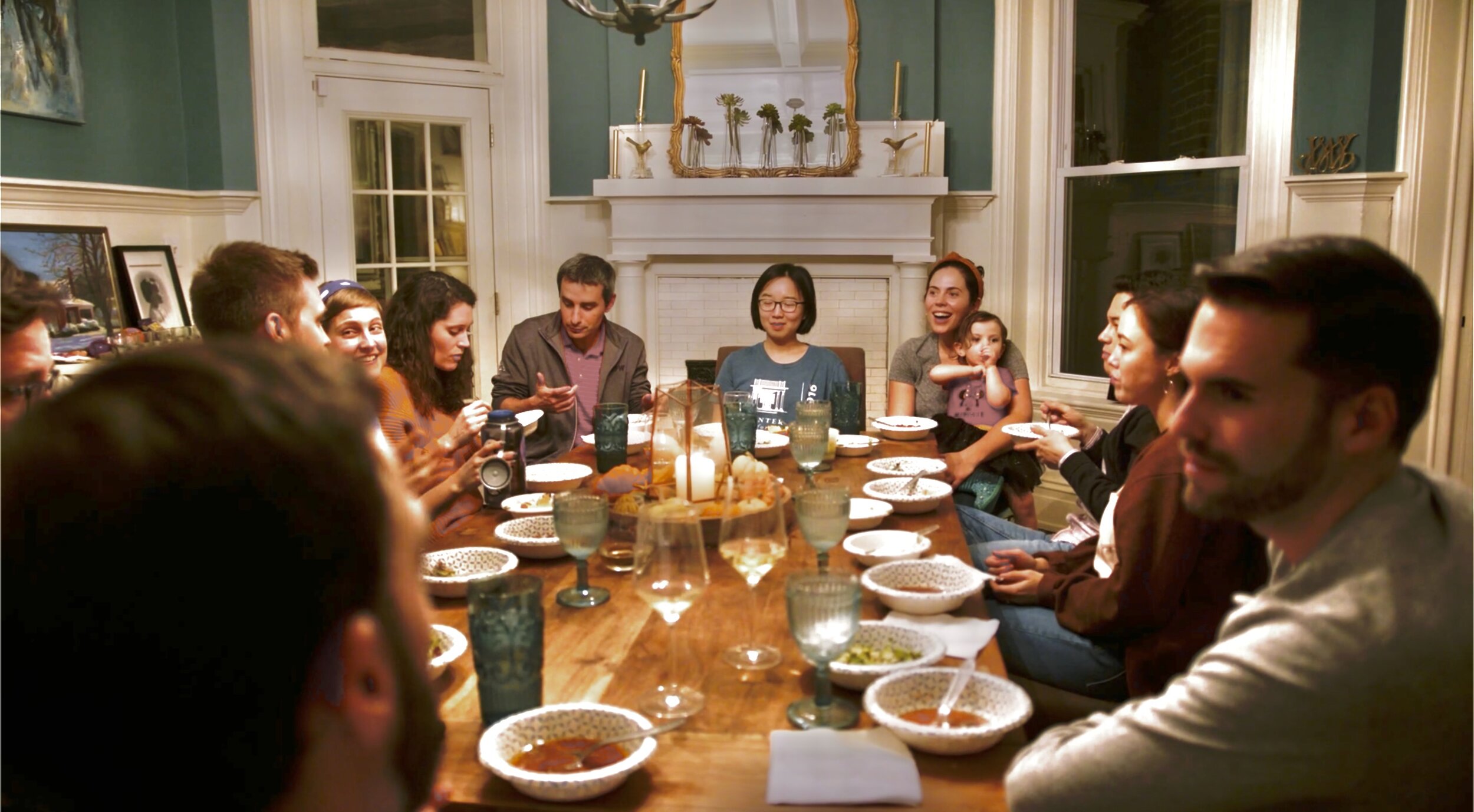
The 'When, Why, What & How' of Redeemer Small Groups
Small groups are just around the corner, launching the week of Sunday, August 29th!
Small groups launch the week of August 28
WHEN DO SMALL GROUPS MEET?
Small groups are meeting throughout the greater Richmond area between Sunday-Thursday evenings for two hours each week for the coming year, breaking for summer.
WHAT IS THE PURPOSE OF SMALL GROUPS?
Small groups are the heartbeat of a healthy church. They are groups of 6-12 people that meet together weekly to break bread together over dinner, for fellowship and connection through the sharing of their lives, for deeper reflection on the Scripture preached the previous Sunday, and for communal prayer for each person’s individual needs, for the city, our church body, and the global Church. This time together becomes an anchor in our week. When we have the encouragement and support of a committed group of faithful Christ followers, we are grounded to face the other people and areas of our life with grace, prayerfulness, hope, faith, and love.
WHY SHOULD I PRIORITIZE PARTICIPATING IN A SMALL GROUP?
I really challenge you to prioritize Sunday worship and this small group gathering above all other commitments. These two appointed times will order your lives and provide strength and guidance for the journey. There are many other activities competing for our attention. However, by choosing to commit to a small group, you will grow deeply connected to a small group of people, see your faith and prayer life grow, be challenged by rich conversations and good theological discussions, and actively see God at work, changing hearts, answering prayers, and teaching patience and perseverance in those hard waiting periods. These people will be with you on your faith journey. You, in turn, get to extend the love of Christ to those in your small group, listening well, reflecting with them and praying for them. It is a great privilege to journey with a group of people toward greater intimacy in Christ. If you are new to Redeemer, this is a perfect opportunity to jump in and get well connected! You may very well develop a wonderful new group of friends!
OK, HOW DO I FIND A GROUP?
Click here to find a group that meets close to you and works with your schedule. Choose the one that works best for you. Please reach out to me with any questions or concerns. I am happy to chat anytime!
Stephanie Workman
Director of Community Formation

Re: The Delta Variant—Forward with Courage and Compassion
Good evening friends. I hope this finds you well. I’m writing to you today to talk about how our parish is going to approach Sunday worship services and ministry programs given the recent surge in Covid cases from the Delta Variant.
Dear Redeemer Family,
Good evening friends. I hope this finds you well. I’m writing to you today to talk about how our parish is going to approach Sunday worship services and ministry programs given the recent surge in Covid cases from the Delta Variant.
Before I get into the details, know that I’ve spent significant time this week consulting with numerous physicians, nurses, and hospital workers both inside and outside our Parish. I’m also in regular communication with our Bishop and other Rectors in our Diocese on this issue. What I share today reflects the aggregate wisdom of thoughtful, Jesus-loving health care professionals and pastors.
A SMALL, BUT IMPORTANT CHANGE
Beginning this Sunday, August 15th, masks will be recommended for all people, of all ages, both vaccinated and unvaccinated. Research continues to demonstrate that this is the highest-impact practice for protecting vulnerable people. We will have extra disposable masks and sanitizing stations available on Sunday.
THINGS REMAINING THE SAME
For the time being:
We will continue to offer two full-length worship services at 9:00 a.m. and 11:00 a.m.
We will not be adding tape to the pews. Please feel free to sit where you like. If you feel the need for physical distance, you are welcome to sit in the balcony.
We will continue to offer full Nursery and Kids Ministry.
We will not be asking folks to RSVP for services or limiting attendance. All are welcome.
We will not be policing or strictly enforcing mask wearing. We recognize that, for some people, mask-wearing has become a socially, politically charged issue. We want you to know that, at Redeemer, we don’t view masks in that light. For us, this isn’t a political issue, but rather a medical issue where we have an opportunity to care for others.
Note: If you are volunteering in a particular role on Sunday morning (especially interactive volunteer roles like Nursery, Kids Ministry, Greeting, Serving Communion, etc.), then you will need to wear a mask.
Small groups and Youth Fellowship still plan to launch the Sunday following Aug. 29th. It may be wise to host these outdoors, although we’ll probably need to wait and see what the world is like when we get there in a few weeks.
The 101 Foundations Class still plans to begin in Mid-September, although we may need to move that class outdoors as well. Stay tuned.
In sum - we are seeking for all of our services and ministries to move forward as planned, with the slight modifications of extra precautions.
KEY MOTIVATIONS TO REMEMBER
Philippians 2:3 “Do nothing from selfish ambition or conceit, but in humility count others more significant than yourselves.” The sense of this verse is not so much that we are to think of ourselves as lesser creatures, but rather that I am to consider the needs and desires of others as weightier than my own needs and desires. This is what Christ has done for each of us in his incarnation, humiliation, crucifixion, resurrection, and ascension. We in turn, embodying the love of Christ, are to look at each other and ask, “What do you need from me? How can I submit my desires to your desires?” To be clear, this kind of mutual submission within the church is not a sign of weakness, but rather a sign of strength. It takes guts and courage to lay aside your preferences and serve others.
So, if in re-engaging these Covid precautions you find yourself wondering, “Are we just giving into fear-mongering?” Let’s remember that we are not motivated by fear, but by humble love - which is far stronger.
KEY VIRTUES TO CULTIVATE
Courage: Times like these make some people feel very anxious, like you’re living under a shadow of dread. We must pray for and cultivate courage - remembering that bravery is not the absence of fear, but perseverance in the face of fear.
Grit: As much as I like the word perseverance, I like grit even better. We must pray for and cultivate the right sort of stubbornness. We must remember that we have an enemy that desires the death of our souls more than the death of bodies. We must dig in our heels a bit and declare,”No! Come what may, I will not stop worshipping, I will not stop fellowshipping, I will not stop serving, I will not stop giving. I will not stop living.”
Patience: Some of you have been relatively unimpacted by the virus. You know things are bad “out there,” but this has primarily been a season of inconvenience, not grief. Others of you have had a very different experience. Either you’ve suffered from sickness yourself or you have a close friend or family member who has suffered or even died. Others of you serve in hospitals where you have witnessed suffering and death on a large scale. It is horrifying and hellish. It haunts you.
Friends, we must be patient with one another, knowing that we have not all shared the same experience. I cannot remember a time when the parish was more diverse in the life experiences of the members. This is a crucial season to bear with one another in love.
KEY TEMPTATIONS TO RESIST
Judgement: Over the past 18 months, we learned just how easy it is to be quick to judge and slow to listen. Let’s flip that around shall we? Let’s be quick to listen and slow to judge. I’ve found that, when I really listen to how and why people are making their decisions, I can almost always appreciate their perspective. I might not agree with the person, but I can at least empathize with their rationale. To be clear, this is not to say that everyone is right all the time. Certainly not! I’m speaking as someone who is frequently wrong! But rather than taking every opportunity to point out other people’s wrongness, let’s allow God to be the judge.
Complaining: This comes so naturally doesn’t it? No one ever has to be taught how to complain. However, natural as it is, complaining is corrosive. It not only wears away at other people, it erodes our own hearts. A complaining spirit will poison both the waters of our community and your own soul. Philippians 2:14 “Do everything without complaining.”
OPEN COMMUNICATION
Now, in balance with what I just said about complaining, I really would like the channels of communication in our parish to be wide open. If you are concerned, troubled, or bothered by anything you’ve read in this letter, you are always welcome to reach out to me so that we can talk about it. I would hate for someone to be struggling in isolation with the decisions the church leadership is making. We truly, truly desire to be faithful in following the Lord Jesus and, in order to do that well, we need to help each other out. None of us will get it right all the time by ourselves!
FOR FURTHER READING
A recent article I found helpful.
Redeemer family, I love you all. It appears that, though we thought the pandemic storm was passing, we were in the eye of the hurricane and there is more storm yet to come. Whatever the future holds, we will navigate it together - bound together by the loving sacrifice of Christ and empowered by the Spirit of the risen Christ.
See you on Sunday!
In the Father’s love,

INVITATION to a CONVERSATION on Sunday, July 18th
This coming Sunday, July 18th, I’d like to invite you to attend a brief conversation about a decision our parish leadership needs to make in the coming months. If you are interested, we will gather in the upstairs library of the church building for 30 minutes in between the services (10:20-10:50am).
Dear Redeemer Family,
This coming Sunday, July 18th, I’d like to invite you to attend a brief conversation about a decision our parish leadership needs to make in the coming months. If you are interested, we will gather in the upstairs library of the church building for 30 minutes in between the services (10:20-10:50am).
Here’s a little bit of background information to tee up the conversation:
THE GOOD NEWS
PART 1: Our church continues to grow! As more new people join us, we need to do the hospitable work of making space for them. A key part of this is our Nursery and Kids ministry on Sunday mornings. We have so many babies and young children that we will need to dedicate nearly every room in the building to the care and spiritual formation of children.
PART 2: As the church grows, our staff team will need to continue to grow. We will continue to add thoughtful, talented, mature men and women to our staff and these good folks will need office space.
THE CHALLENGE
With a limited number of rooms in 2715 Grove Ave - there is not enough room for our growing Nursery and Kids ministry and our growing staff. Therefore, out of a desire to prioritize the spiritual formation of our children, we need to move the staff off-site.
THE TEMPORARY SOLUTION
Beginning August 1st, our staff will use the coworking space at Common House RVA.
This is a good short-term solution, but will not work for the long-run. Coworking space is fine for a staff member who just needs a place to sit, answer emails, plan ministry events, and coordinate with other staff members. It is not ideal for things like: pastoral counseling, sermon/teaching preparation, prayer, meetings with parishioners, etc.
POTENTIAL SOLUTION
As of right now, the Vestry is seriously considering purchasing a row house in the Fan or Museum Districts to become Redeemer’s Parish House. The Parish House would serve the dual purposes of providing space for staff offices and ministry gathering space for small groups, ministry meetings, classes, etc.
This would allow for our worshipping congregation to continue to grow at 2715 Grove Ave., and our staff to continue to grow at the Parish House.
ALTERNATIVE SOLUTIONS WE CONSIDERED
Renting Office Space: This was the first option we pursued. However, we discovered that the annual cost for renting dedicated office space exceeds the annual mortgage for a purchased property.
Renting a Different Building for both Sunday Worship and Office Space: While we are very open to potentially renting a different property, there are very few options currently available in the Fan and Museum Districts.
Also, moving worship spaces is significantly disruptive for a congregation and the mission of the church. Something as minor as expanding staff offices should not be the driving factor for a move of this size.
Requiring Staff to Work from Home: We discussed this and decided against it for two reasons:
1) Many of our staff are parents of young children and home is not a quiet, productive environment.
2) The work of ministry is highly relational and collaborative. The staff needs to be physically together in order to function well as a team.
Purchasing a Church Building: While this is certainly a long-term goal, we do not currently know of an affordable property located in the Fan or Museum Districts that is for sale.
Constructing a New Church Building: There is very little undeveloped land in the Fan or Museum Districts on which a new church building could be constructed.
Relocating the Church: Why don’t we just move out of this expensive neighborhood into the more affordable county? While may seem appealing for a number of reasons, we are committed to being a church in and for the city of Richmond.
THREE THINGS FOR YOU TO CONSIDER
Come to the conversation between the two worship services this Sunday to learn more, ask questions, and pray for a wise way forward.
Pray on your own for the Lord to provide good space for our growing congregation.
Think about who you might know here in the Metro-Richmond area that might be able to help Redeemer find a good solution.
Example: Your Great Aunt just happens to own a beautiful row house on Grove Ave. and she wants to donate it to the church…
Folks, what an exciting challenge this is! I’m confident that, through your prayers and guidance of the Holy Spirit, we will discern a wise and reasonable way forward that will bear good fruit for the Kingdom of God.
In the Father’s love,

Exciting News! Lifting of Social Distancing & Capacity Restrictions
As of today, Governor Northam has lifted COVID social distancing and capacity restrictions. Therefore, we are no longer asking folks to register for worship services in advance and we will be removing the tape for designated seating from the sanctuary before the services this Sunday.
Dear Redeemer Family,
As of today, Governor Northam has lifted COVID social distancing and capacity restrictions. Therefore, we are no longer asking folks to register for worship services in advance and we will be removing the tape for designated seating from the sanctuary before the services this Sunday.
I hope this comes as good news to all of you! These past restrictions have really dampened spontaneity and (I’m sure) given some people the wrong impression that perhaps they couldn’t just show up to church worship. We are glad to put those restrictions behind us. Of course, it’s true that some of you might still (for a variety of reasons) feel the need to social distance. That is perfectly acceptable and we understand. Let’s maintain a good healthy spirit of grace and forbearance with each other—recognizing that someone’s opinion on COVID precautions does not define them as a human being. We are glad to be flexible with one another!
Just so we’re all on the same page, here is a summary of where Redeemer currently stands on COVID-related precautions:
Masks: Wearing of masks is optional for those who are fully vaccinated and encouraged for those who are not.
Social Distancing: Optional for those who are fully vaccinated and encouraged for those who are not.
Online Registration: No longer required for anyone.
Worship Services: Still 9:00 a.m. Family Service (35 min) and 11:00 a.m. Full-length Service (75 min).
Note: We continue to hope that both services will become full length, both with full nursery and Kids Ministry within the next few weeks.
Nursery & Redeemer Kids Ministry: Currently not yet ready, but are preparing to relaunch very soon! We need 120 adult volunteers to be trained in child safety in order to sustainably get this ministry up and going again. The good news is that almost 100 of you have already volunteered! We are getting close!
Holy Communion: We are no longer making use of the high top tables and small, disposable, pre-filled bowls of bread and cups of wine. Instead, we are taking a measured step towards the historic form of receiving the elements of the Lord’s Supper. When you come to receive Communion this Sunday, the person serving you will take a small piece of bread and dip it in the wine (gently, not sopping wet) and place it in your outstretched hand.
I’m looking forward to seeing you tomorrow and taking yet another step forward in renewing our life together.
In the Father’s love,

Struggle: Opportunity Knocking
Struggle. Who has escaped it over the last twelve months? While I hope each of us can name some benefits and bright spots through this season, we have all undoubtedly weathered some amount of confusion, fear, discord, and loss. Our Struggle and Hope series has explored our paradoxical relationship to struggle. We resist it, yet we must reckon with it, because struggle always invites us to name something true about our reality, our need, and our hope.
Struggle. Who has escaped it over the last twelve months? While I hope each of us can name some benefits and bright spots through this season, we have all undoubtedly weathered some amount of confusion, fear, discord, and loss. Our Struggle and Hope series has explored our paradoxical relationship to struggle. We resist it, yet we must reckon with it, because struggle always invites us to name something true about our reality, our need, and our hope.
Struggle offers us a powerful impetus to name our reality. After eating from the tree and realizing their nakedness, Adam and Eve hide from God in the garden. In this scene, God does not sneak up on them. He does not chase them. The Lord God invites Adam and Eve out of their shame-stricken hiding with a question.
"Where are you?"
Obviously God knows exactly where they are, so we assume the question to be didactic. It appears to matter to God that His children name the place in which they find themselves.
God invites Adam to move out of hiding and name his reality. Out loud. In front of Eve and in front of his Creator. The reality Adam names is not necessarily a pleasant one. He is naked, afraid, hiding... and now also exposed.
The invitation is ours as well. Struggle invites us to move out of denial and orient ourselves to our actual reality. Not the reality of where we've been. Not the reality of where we'd like to be. Struggle invites us to name the reality of where we genuinely are, even (and perhaps especially) when the place we find ourselves differs from what we desire.
I can pretend everything is fine until my anxiety produces such terrible headaches that I need to call out from work. I can buy into a belief that my spiritual life is stable and strong until I find myself crying bitter tears during worship. I can contend my marriage is impenetrable until we slug through that same old dispute... again. Our struggles invite us to name something true of our reality.
Second, struggle invites us to name something true of our need. We observe this most clearly in God's design of our bodies. We thirst when we need water. My back aches when it's time to pause in my battle with the mulch bed weeds. That strange, dull toothache needs the attention of a dentist. The struggle of pain illuminates a need for attentive care and rest. This is equally true in our emotional and spiritual life. My work anxiety belies a need to re-evaluate my values and beliefs surrounding my vocation. My bitter tears speak to disappointment in my relationship with God that needs addressing. That same old marital dispute highlights wounding that needs understanding and forgiveness.
Though painful, struggle moves us out of denial and opens our palms to confess our need. My belief is, similar to Adam and Eve, that God designed a benefit to this confession occurring out loud, in front of each other, and in front of Him. Our confession of need names what is true: All is not well, more attention needed here.
Lastly, struggle invites us to name something true of our hope. When struggle plants me face-to-face with my reality and my need, my search for hope intensifies, and I am afforded a choice of where I might go to find it. Is my hope in the numbing effects of another cookie? Or the allure of sitting in the seat of superiority as I re-hash that bothersome conversation [again] in my head? The true beauty of an honest engagement with our struggles is that our reality and our needs offer us a path right back to the arms of our Jesus. We need not despair, disdaining our circumstances and denying our needs. We can simply take the next faithful step toward Him in hope that He will meet us and strengthen us. If we need correction, He will convict us, and no matter what, He will care for us.
I love the illustration of this we are given in Jesus' response to Mary and Martha after Lazarus' death. When Martha hears that Jesus is coming to town, she runs out to meet Him. When she reaches Him, she names plainly something true of her reality and her need. Her brother died, Jesus didn't show up in time, and now she needs it made right. Jesus responds to her with a word of hope. "Your brother will rise again... He who believes in me will live." Martha is invited to hope in Jesus' power over suffering and death.
The scene continues with Mary running to meet Jesus. Like Martha, she minces not a word, immediately naming something true of her reality and her need. Her brother died, Jesus didn't show up in time, and now she needs it made right. This time, Jesus responds to Mary with tender compassion. "He was deeply moved in spirit and troubled." Jesus weeps and Mary is invited to hope in His presence in the midst of suffering and death.
What more can be said? May God continue to compel you and me toward deeper and deeper honesty about our struggles. May He give us courage to seek conviction, care, and rest as we grow in awareness of our need, and may He lavish us with hope in His power and presence as we look for the life of the world to come. Amen.
—Claire Lewis is a Licensed Professional Counselor (LPC) in the West End.

Struggle: An Invitation to Spiritual Care
Have you ever felt God speaking directly into your life through a seemingly random verse? Have you ever stumbled into a passage that brought you to tears?
I had that experience a few weeks ago when I turned to this Psalm during a morning reading. You might remember from my previous post, that early mornings are a regular occurrence in our household and not for the sole purpose of reading the Bible.
“O God, you are my God; earnestly I seek you; my soul thirsts for you; my flesh faints for you, as in a dry and weary land where there is no water.” -Psalm 63:1
Have you ever felt God speaking directly into your life through a seemingly random verse? Have you ever stumbled into a passage that brought you to tears?
I had that experience a few weeks ago when I turned to this Psalm during a morning reading. You might remember from my previous post, that early mornings are a regular occurrence in our household and not for the sole purpose of reading the Bible. If I’m totally honest, my time in the Word is interrupted and inconsistent these days, usually with a restless baby in tow or over a quick sip of soon-to-be-cold coffee. On this particular morning, the words of Psalm 63 spoke to the frustrated longing within my soul. I feel hungry and thirsty for the Word, for the presence of God himself. And I feel it that much more acutely in a season when suffering and loneliness seem to surround me.
“So I have looked upon you in the sanctuary, beholding your power and glory. Because your steadfast love is better than life, my lips will praise you.” (63:3)
If you have been following along with the blog series on Struggle and Hope, then I hope you have been able to think about practices of personal and relational care that might be necessary in your life. Today I’d like to think more intentionally about spiritual care, but it’s important to acknowledge that all along in the series we’ve been talking about types of spiritual care. As embodied, image-bearers of God, we know that our soul is not mysteriously disconnected from our physical bodies or relational experience. In that way, sometimes caring for your soul, looks like tending to your physical body as Elizabeth King wisely reminded us. At other times, it might look like moving towards greater intimacy with a friend and nourishing our God-given relational needs. If you are struggling with a significant level of depression or anxiety, or thoughts of self-harm, I hope that Paul Brasler’s post reminded you that spiritual care might be the grace to seek out professional mental health services. All of these practices are types of care for our souls, but sometimes our spiritual life needs a unique kind of attention. Because the deepest longing, the true need of our soul can only be answered in the power and glory of our God.
“So I will bless you as long as I live; in your name I will lift up my hands. My soul will be satisfied as with fat and rich food, and my mouth will praise you with joyful lips when I remember you upon my bed and meditate on you in the watches of the night;” (63:4-7)
I don’t know how you would describe your personal spiritual health or relationship with God today, but I can imagine that there have been moments of desolation in the last year. Every household and family has been impacted by the pandemic in unique ways, but we have all shared the realities of corporate grief and trauma. Together we have watched the death toll from Coronavirus surpass half a million people in the U.S. Together we have donned masks to complete our grocery shopping and doctor’s visits, to attend church and to gather with friends. If you are anything like me, at times, it has felt like too much. But in these moments of despair and loneliness, discouragement and fear, do we remember where our surest support is found?
“My soul clings to you; your right hand upholds me.” (63:9)
Our culture is full of strategies for responding to the real and unique challenges of the pandemic. A few minutes with Google and you can find everything from quick fixes for the loneliness of social distancing to genuine approaches for coping with grief. But God has placed a longing within us that can only be satisfied with Himself. If we are looking for world-based strategies to the challenges of our daily life, even well-intentioned ones, we will inevitably be disappointed.
While God’s presence is never removed from his children, he recognizes our seasons of loneliness and despair by equipping us with practical tools for spiritual care. As I already mentioned, spiritual care can take a variety of forms and meanings, but today I would like to mention two specific ways that we can be reminded of the goodness of God in seasons of suffering.
First, let us not neglect to nourish our souls with the Word of God. In a perfect world, my morning routine would involve quite a bit more time with God and his word. But in this season, I’m clinging to even the smallest taste of Scripture, because I know that in His Word my soul finds deeper satisfaction than in my favorite comfort foods and a truer rest than a full nights sleep on a fresh linen bed. While there is a time and place for deeper study of God’s word, we don’t have to read volumes to meditate on the goodness of God. If you are struggling to find time for God’s word or simply feeling disconnected from God, I encourage you to start simply. Read through the Psalms or another book of the Bible in small sections. On some days, I am most profoundly touched by God in the form of Scripture set to children’s music that we play for our kids. No matter the medium, let us not forget that God’s word is powerful and transformative for our lives, that it can pierce directly to the place of our soul as Psalm 63 did for me.
Secondly, let us not forget to seek support in our Christian community. God never intended for us to be alone, especially in times of suffering or sorrow. The realities of physical isolation have been felt profoundly during the pandemic, so it’s even more important that we be uniquely attentive to our needs for Christian community. When we open ourselves to a level of intimate and vulnerable community with other Christians, we are able to be the hands and feet of God to one another. The practice of receiving or giving prayer with a friend, invites the Holy Spirit into our midst in a healing way. If you are searching for a deeper spiritual community, but don’t know where to start, I encourage you to reach out to Ben Lansing, Redeemer’s Small Groups Coordinator, about getting connected to one of our fellowship groups. If you think you are in need of a deeper level of relational spiritual care, I encourage you to reach out to our care team coordinator, Christa Vickers-Smith and she can help direct you based on your specific needs.
No matter where these words find you, I hope that you are reminded today that God alone sustains us and upholds us, that He satisfies and fulfills us, that ‘His steadfast love is better than life.’
—Rachel Capel is a Licensed Professional Counselor (LPC) at Haven Christian Counseling.

Redeemer Kids Resurrection Art Project
As we are moving through the season of Lent together, our eyes are on Jesus’ last days on earth and his coming death and suffering. It is a very serious season to walk through with our children as we all fast and contemplate our mortality together as a church family. But as we know, this makes the coming Easter celebration all the more glorious and anticipated, and our children can feel that excitement build even as we mourn and fast in the coming weeks!
As we are moving through the season of Lent together, our eyes are on Jesus’ last days on earth and his coming death and suffering. It is a very serious season to walk through with our children as we all fast and contemplate our mortality together as a church family. But as we know, this makes the coming Easter celebration all the more glorious and anticipated, and our children can feel that excitement build even as we mourn and fast in the coming weeks!
As you are moving through this season as a family, begin to point out how creation is starting to echo themes of resurrection all around us in the changing season. Bird’s eggs and butterfly cocoons seem inanimate, but they hold new life inside. Hibernating animals, leafless trees, and dirt that hides seeds underground all seem still and inactive, but they are coming to life as the seasons change. Nature points us to worship the Creator, so look closely at what it has to say about the hope of new life around us and how that echoes the hope we have in Christ’s resurrection.
Then turn those conversations into art! Draw, paint, color, build, or take pictures as you have these chats with your kids. If you build a birdhouse or plant a garden, take a picture of it! If you find a nest, a cocoon or a budding tree, paint a picture with your kids! Over the next few weeks, we will all be creating artwork that tells the story of the resurrection through His creation and then we will celebrate together by putting up all of the pictures on a large bulletin board in the church foyer during the season of Easter to share as we celebrate the resurrection of Christ together!
Ideas to get started:
Go on a nature walk and look for...
A bird’s nests with eggs or eggshells in them
Caterpillars or butterfly cocoons
Budding plants and growing gardens
Learn and observe at home by...
Planting seeds together and watching them grow over the next few weeks.
Building a simple birdhouse.
Studying how a seed becomes a plant.
Studying how some animals hibernate in the winter and reawaken in the Spring.
Now get creative!
Draw, paint, color, build, take photos, and then send in whatever you make to share with our church family during the season of Easter as we celebrate the resurrection of our Lord together!
Send it in:
Email pictures or artwork that you want to share to Casey Cisco or bring your artwork to church on Sunday and drop in the dropbox.




An Invitation to Care: What Tells Us We Need Professional Help?
What if you find yourself in a situation where you are dealing with thoughts of self-harm, feelings of depression and/or anxiety, or wondering if you have a problem with alcohol, medications or other substances? What if you are worried about someone you care about?
While Jesus used his life to role-model walking with God (i.e., taking time to rest and spending time alone in prayer), his ministry was incredibly focused on his relationships with a small group of followers. His relationships, not just with his disciples, but with his extended family (Mark 3: 31-34), formed the foundation of the Church.
We know little of Lazarus, except that he and his sisters were followers of Jesus. Lazarus’ biggest claim to fame is dying, followed by his resurrection by Jesus four days later. In John’s Gospel, Jesus tells his disciples that he knows that Lazarus is sick, but that everything is going to be okay. Jesus later informs his disciples that Lazarus has died, and he (Jesus) will now go to visit Lazarus and his sisters.
Upon arriving in Bethany, Jesus is confronted separately by Martha and Mary, who demonstrate their faith in Jesus AND their anger toward him for not being present when Lazarus died. When we look at this story as a whole, it is clear that Jesus knows exactly what he is going to do: Jesus will bring Lazarus to life again. But notice what happens when he walks with Martha and Mary to the tomb.
“Jesus wept.” (John 11:35).
If Jesus knew all along that things were going to turn out great, why was he crying?
John makes it clear that Jesus was not crying because he was sad about Lazarus, but that he was moved by the grief of those who also loved Lazarus. Jesus was not crying for Lazarus or for himself; he was deeply impacted by the depth of sadness, depression, anger and loss felt by those present. Jesus demonstrated this impact through his tears.
I think this is a part of Jesus that we sometimes forget. We’re aware of Jesus as a teacher, a healer, and a Savior who gives his life for us on the Cross; but Jesus also sat, listened, wept, and walked with people. Even though he knew what the outcome was going to be in his life and the lives of others, he felt deeper for others than any human could ever feel for another person.
I am certain that this continues to this day: Jesus walks with people, sits with them, listens, and often weeps.
Jesus calls us as his followers to do the same. As we have seen in the other entries in this blog series, Jesus is present with us throughout our most difficult and challenging times.
But even when we acknowledge Jesus’ presence, we must also understand that there are times when we need professional help. This could include struggling with severe depression, anxiety or trauma. It may mean struggling with a substance use or behavioral disorder. It could also mean struggling with thoughts of suicide.
I want to be clear: Having to deal with any of these issues does not mean that you are bad or unworthy. It does not mean that you are in your situation because God has given up on you, or you somehow lack the right amount of faith. It means you are human. God never promised his followers that they would be free from life’s struggles. Unfortunately, this part of Jesus’ message has been misconstrued in our society; with many churches equating good health, or material prosperity, as a sign of God’s favor. This is patently false teaching and serves to alienate people further from Jesus’ message of grace, love, and redemption.
What if you find yourself in a situation where you are dealing with thoughts of self-harm, feelings of depression and/or anxiety, or wondering if you have a problem with alcohol, medications or other substances? What if you are worried about someone you care about?
The first thing we should do is not ignore these concerns but listen. Take any expressions of self-harm and suicide seriously. If you are concerned about a person’s immediate safety, get them to a local emergency department. There, they will be assessed by professionals, and if necessary, can receive help in a safe, secure environment. Retreat Hospital, located behind our church building, does an excellent job of helping people in crisis. If you are not sure if the situation is immediate, please call the National Suicide Prevention Hotline: 1-800-273-TALK(8255).
If you are concerned about your use (or a loved one’s use) of alcohol/drugs, a good place to start is Alcoholics Anonymous. AA is not treatment; it is a community of people dedicated to helping one another in their recovery from alcohol misuse. For a list of local meetings, call 804-355-1212.
Finally, if you feel you or a loved one would benefit from counseling, please talk with a church leader. Understand that doing so is not a display of weakness, it is part of being human. And remember that Jesus is always with us, including when we are working with a professional. Our God is not a passive presence, ignorant of our pain; He took on human form and poured His life (and his tears) out for us. Jesus still walks and weeps with us today.
—Paul Brasler (LCSW) has been a clinical social worker for over 25 years. He specializes in walking with people with substance use disorders and serious mental illness and training other clinicians. His first book, High Risk Clients was published by PESI Publishing and Media in 2019.

Is It Safe To Come To The Ash Wednesday Service?
Dear Redeemer Family,
As we’re all trying to make wise decisions about exposure during this season, I thought it might be worth specifically addressing some FAQs about the Ash Wednesday services tomorrow:
Dear Redeemer Family,
As we’re all trying to make wise decisions about exposure during this season, I thought it might be worth specifically addressing some FAQs about the Ash Wednesday services tomorrow:
Q: How important is it for me to come to this service?
A: Given that we are (still) in the midst of a global pandemic, I can’t think of a time when the prayers and message of Ash Wednesday have ever been more important. In the past year, if you’ve ever found yourself asking the question, “How do Christians respond to all of the suffering and death caused by the coronavirus?” The answer is found in Ash Wednesday - where we are reminded of our mortality and offered only one source of hope - the Cross of Jesus.
Q: Can I contract the coronavirus through receiving ashes on my forehead?
A: No, ashes placed by someone’s hand on your forehead would not transmit the virus. However, there is the concern of respiratory transmission (breathing towards each other in close quarters). Therefore, those imposing ashes will be wearing a face shield in addition to a mask. This is the same level of protection that a doctor or nurse would use in a hospital setting.
Q: Why are there three services: morning, noon, and evening?
A: Ash Wednesday is one of the few days of the year when many Christians bear a visible marker of their faith in public. Therefore, you are encouraged (if possible) to attend one of the earlier services so that you might wear the ashes throughout the day. Not only does this identify you publicly as a Christian, but it will also serve as a reminder to you throughout the day whenever you catch a glimpse of yourself in a mirror.
Q: Is there an online option?
A: Unfortunately we are not able to offer an online option. Some aspects of worship, prayer, and preaching can be transferred to the internet, but other practices are uniquely embodied and there’s just no way to transfer the practice online. Receiving ashes is an embodied practice that requires your physical presence. If you are physically unable to to come to one of the services (say, you are receiving treatment for a prior medical condition and are quarantined at home under strict doctor’s orders) then someone from the parish would be glad to visit you at your home to impose ashes.
Q: Can I put ashes on my own forehead at home?
A: No, that would not be appropriate. The ashes are a sign of our mortality and our personal and corporate repentance. Therefore, they are to be received along with your brothers and sisters in the church in the midst of a service of repentance. The ashes and the corporate confession of sin go together and should not be separated.
Q: But I know of other churches that are offering an online option and self-imposed ashes at home. Why is Redeemer being so unhelpfully strict?
A: In recent years, many churches of many denominations have begun to appropriate certain aspects of liturgy and the ancient church calendar. While this is mostly to be celebrated, it does reveal the danger in embracing a practice while rejecting the theology and philosophy that accompanies it. So, while we are thrilled that many churches are taking up the practice of imposing ashes on foreheads at the beginning of Lent, we (as a church in the Anglican Communion) desire to remain consistent and integrated in both our practices and in the theology that undergirds them.
Q: Is there anything else I can do to prepare for Lent?
A: Our staff has put together a guidebook with resources for how to practice Lent. You can download a PDF or pick up a hard copy at the Ash Wednesday service or the following Sunday morning.
Q: Is there anything else I should know about the Ash Wednesday service tomorrow?
A: The service will be very brief (approx. 30 min). Historically, many Christians have fasted on Ash Wednesday, worn the colors black or grey as a sign of their penitence and mortality, and arrived at the service a bit early in order to sit or kneel in silence before the prayers begins.
Church family, as we enter the season of Lent together, we will spend much of our time focusing on aspects of our lives that we usually try to avoid! We will focus our attention on discipline, self-denial, repentance, humility, sin and our own future deaths. While these are not exactly fun topics, they are absolutely necessary for cultivating a heart of resilient joy. My hope for us is that not that we will be a gloomy bunch for the next five weeks; but rather that we will mysteriously be strengthened and emerge as more cheerful, more joyful people than ever before.
I’ll see you tomorrow.
In the Father’s love,


Struggle: An Invitation to Relational Care
One afternoon, I was sitting in a counseling session with a woman who was discontent in her marriage. They’d been married for fifteen years and have had several children together. “He doesn’t listen. He left me years ago to have an affair with his job,” she said metaphorically but with the sharp edge of truth. I asked her, “when was the last time you felt intimate with your husband?” “Ages,” she replied.
One afternoon, I was sitting in a counseling session with a woman who was discontent in her marriage. They’d been married for fifteen years and have had several children together. “He doesn’t listen. He left me years ago to have an affair with his job,” she said metaphorically but with the sharp edge of truth. I asked her, “when was the last time you felt intimate with your husband?” “Ages,” she replied.
As a young therapist, I had come prepared with my clever bag of therapeutic tricks but I didn’t know that I was about to learn one of the most important lessons of my career: how to attend to someone hurting so deeply, but do it with my presence rather than my words. This woman sat in my office and wept. She needed to. I’d seen her for weeks and heard her pain but had never seen it. We sat in silence for 15 minutes straight and that was the most helpful 15 minutes of any session we’d had up to that point. Where my words fall woefully short, Abba made the way.
In the previous Struggle article, Elizabeth brilliantly discussed emotions and self-care. This week, we’ll be diving into how these emotions might play out in relationships and our inherent need for relational care.
I define intimacy as taking the risk to know fully and to be fully known. The woman mentioned before felt that she’d never truly been known. The hill I will die on is that intimacy and relationships are fundamental for a healthy life and a healthy Christian walk. In this season of pandemics, political unrest, and calls for racial justice, the attainment and experience of intimacy and healthy relationships can sometimes seem like a fool’s errand. As many of us are still confined to our homes, it may even feel like we could use a little less intimacy, but let’s not confuse intimacy with time spent with others.
Intimacy is so important; intimacy with loved ones, intimacy with God, and intimacy with ourselves. To know and to be known, to accept and be accepted despite shortcomings is at the heart of the Gospel. In 1 John 4:7, John writes “Beloved, let us love one another, for love is from God, and whoever loves has been born of God and knows God.” God is love and love is God. Consider intimacy, friendship, and companionship acts of worship because they are of the Creator.
Intimacy is a fragile state. It is used sometimes as currency. It takes on new meaning through trauma, is made difficult when suffering from mental illness (which we all do at some point), and is often destroyed by shame. To quote Tim Keller: “to be loved but not known is comforting but superficial. To be known and not loved is our greatest fear. But to be fully known and truly loved is a lot like being loved by God. It is what we need more than anything. It liberates us from pretense, humbles us out of our self-righteousness, and fortifies us for any difficulty life can throw at us.”
What about the times we’ve opened ourselves up to others and it didn’t go so well? Perhaps you’ve been wounded by others and have found it easier and safer to keep others at a distance. First of all, your feelings are valid and good for you for surviving. We have emotions for a reason. They tell us much about our experiences but they aren’t always reliable. I like to visualize this as play fighting with a child, where you can place your hand firmly on their head and they can swing but not hit you. Sure, keeping others at an arm’s distance is a safer way to live life. We can place our heart in a box where it won’t be damaged, but the consequence is that the heart will change and it will harden. This is why intimacy is a risk, but it’s one worth taking.
When we are engaged in healthy relationships, they can look like acts such as good communication, trust, empathy, playfulness, but also knowing yourself apart from another. Sometimes relational care can look like offering words of support or wisdom. Other times it can look like just being rather than doing. If you’re married, ask your spouse what they need from you in moments of pain. This can help give you direction rather than hoping you’re doing something helpful.
How do you know when you are the one in need of relational care? If you are feeling burdened, anxious, depressed, or lonely, those are your cues. Deciding to ask for care from another can be difficult. Talking to someone in an emotionally safe, non-judgmental space can help you make sense of your thoughts and feelings and even help alleviate some that are unwanted. By asking for relational care, you are moving toward intimacy.
1 Peter 4:8 states "Above all, keep loving one another earnestly, since love covers a multitude of sins." By caring for one another, we are loving one another and, therefore, loving the Creator. God knows our hearts. He created us for communion with one another and with Him. Let’s be bold enough to take that risk.
—Mitchell Waters

Seeing and Being Seen: The Necessity of Relational Discipleship
In the last year, the various places of our lives have been swept away or altered entirely: schools, workplaces, gyms, team sports, Sunday worship. Like the rest of us, teenagers have spent nearly a year being more deeply formed in a world that is impersonal, digital, mediated by screens or, at best, by masks. The depth of isolation is something many of us have never known. The patterns of life that have come with the pandemic have worked unconsciously to conform all of us, but especially young people, to the belief that our lives are essentially private, that what we feel, think, and do is mostly unseen, and therefore of no consequence or meaning to others.
In the last year, the various places of our lives have been swept away or altered entirely: schools, workplaces, gyms, team sports, Sunday worship. Like the rest of us, teenagers have spent nearly a year being more deeply formed in a world that is impersonal, digital, mediated by screens or, at best, by masks. The depth of isolation is something many of us have never known. The patterns of life that have come with the pandemic have worked unconsciously to conform all of us, but especially young people, to the belief that our lives are essentially private, that what we feel, think, and do is mostly unseen, and therefore of no consequence or meaning to others.
Scripture teaches us something entirely different. It teaches us the truth we want those we disciple to know: God sees. His seeing is essential to his relationship with his creation. In the first few pages of Genesis, God sees the work of his hands—the heavens, the creeping things, the birds of the air, man and woman—and glories in it; he sees Adam and Eve in the shame of their sin and is moved to clothe them; he sees the blood of Abel which cries out to him from the ground and he confronts Cain; he sees the wickedness of Noah’s day and is grieved to destruction. And this is just the very beginning.
On and on, Scripture is patterned this way: God sees and he cares and he acts. He is never indifferent to us. He is never tolerant of injustice. He is never complacent with our sin. He sees everything and he cares for all of it—every thought, every secret act. It all matters.
But apart from personal relationships which prove to us that we are seen, known, and sought out, it’s hard to believe God sees, cares and acts for us. We need other people to help us believe.
This is why relational discipleship is essential to our faith and maturity. We need eyes and voices outside of ourselves that can see past our present circumstances, reinforce the natural order of God’s will, make clear the boundaries of his law, and finally offer to us the assurance of his grace for our sins (James 5:16). We all need this, and our young students especially need it.
In making disciples we have the opportunity to complete Christ’s sufferings, or as Paul says, “to fill up what is lacking in Christ’s afflictions,” both by offering the news of his love to those who need him and by embodying that love in suffering with them (Col 1:24). Our students need for us to show them and tell them how Jesus desires communion with them in all times and places and how he died to guarantee it. They need to hear that disruptions in life are inevitable, but that Jesus’ desire for them is constant. Our presence is proof of that.
We are told in the book of Hebrews to “consider how to stir up one another to love and good works, not neglecting to meet together” (10:24-25). Fulfilling this is not possible if we are distant from one another, not just physically but in spirit. (It is possible, after all, to be physically near and emotionally detached, just as it is possible to be emotionally engaged and separated by oceans.) In relational discipleship we draw near, making the gospel of Jesus personal, incarnate, particular, and meaningful. We hear the specific concerns of our students, not just the general ways that life is challenging for everyone, but the concrete obstacles to one disciple’s joy in Christ. We get to hear those personal details in the exact words that they have found to share them. And into that one person’s life we say, “I see you, God sees you, and you are not alone.”
Just as we are created in God’s image, we were also created for life with him, to be seen and known and loved fully. Our union with him was severed but is possible again now through Jesus, not abstractly in ideas and words only but also in our presence together with him and with each other. Let’s not neglect to meet together.
Gathering together will hopefully look normal very soon. But for as long as it is not, we should work diligently to meet. There will be challenges, but God will be with us and more so when we are together. For the near future it will continue to be right and good for most of us to follow safe guidelines, and that is okay.
Encouragements:
Meet outside. Six feet cannot stop us from listening well, from counseling, and prayer. Go to a park. Sit in someone’s backyard around a fire in small groups.
Wear masks. They are uncomfortable and annoying, yes. But they are a small inconvenience in light of an eternity face-to-face with Jesus.
Write letters. This is not the same as meeting, certainly. However, intentionally taking time and effort to work gospel truth into the particular context of someone’s life can have a lasting effect.
This should not replace letters. The two are very different in form and meaning. Texts are by nature informal and expendable. But we all need small, daily encouragements in the right direction.
Facetime or Zoom if you have to—it’s not ideal, but it’s better than nothing.
I often sing the words to myself that the church has sung for ages, “As it was in the beginning, is now, and ever shall be, world without end. Amen.” The times are strange, but they are not excepted from the blessings of Christ’s victory. We need each other to remind us of these eternal gifts. Because they are young in their faith, our students need them even more.
—Christian Hayes, Director of Youth Fellowship

Faith Over Flash: What makes a good Vestry member?
In a healthy, vibrant, growing young church, there are so many different ways to serve. Some of these roles are highly visible (leading music on a Sunday), some are seen only by a few (leading a fellowship group), while others are almost entirely unseen (sanitizing the sanctuary between services).
Serving on the Vestry occupies a kind of unique in-between ground between public and private service. In one sense, Vestry members have very public and visible roles. Serving as a Vestry member is the greatest responsibility that a lay person can exercise in a Parish. Yet, at the same time, almost everything a Vestry does occurs in secret, behind the scenes. Nobody ever got famous serving on a Vestry!
Dear Redeemer Family,
Soon, on March 14, we will have our next Vestry election. Two faithful members (Robyn Burlew & Jeromy Lewis) are rolling off after their three- year term, and we are voting to elect two new members. You can submit your nominations here—nominations are due by Sunday, February 14. (Remember, both you and the person you nominate must be Confirmed Members.)
In a healthy, vibrant, growing young church, there are so many different ways to serve. Some of these roles are highly visible (leading music on a Sunday), some are seen only by a few (leading a fellowship group), while others are almost entirely unseen (sanitizing the sanctuary between services).
Serving on the Vestry occupies a kind of unique in-between ground between public and private service. In one sense, Vestry members have very public and visible roles. Serving as a Vestry member is the greatest responsibility that a lay person can exercise in a Parish. Yet, at the same time, almost everything a Vestry does occurs in secret, behind the scenes. Nobody ever got famous serving on a Vestry!
Here are just a few things that the Vestry works on each year:
Annual ministry budget.
Staff salaries.
Improvements to our rented space here at 2715 Grove Ave.
Distributing the Mercy Fund to those in need.
All of these tasks (and many more) could be filed under the heading: How can we leverage all the material resources given to our Parish for the greatest Kingdom fruitfulness?
So a Vestry does not create a vision for the Parish (that’s the Rector’s job, under the oversight of the Bishop). Rather, the Vestry stewards the vision, enables the vision, and funds the vision. The Rector and the Vestry must work together, as a team, to carefully lead the Parish forward, following the Lord’s call.
So What Makes a Good Vestry Member?
Wisdom: Someone, male or female, who is wise. We don’t need rash hot-heads or passionate brawlers to storm the gates and take the hill. We need stable, even-keeled leaders who are not easily thrown off kilter.
Affection: This person must love our parish. A Vestry member is not someone who is dissatisfied with our church and is desperate to grab the wheel and (finally!) change our church to conform to their personal vision. Rather, this person must already love our little church - feeling a deep affection for the people, the staff, the clergy, the vision, and the ministry.
Experience: This is not their first rodeo. Stepping behind the curtain (so to speak) in church leadership can be difficult for an inexperienced person who might have too-rosy a view of the church. This lack of experience can lead to a person being scandalized when they find out that, yes, all Christians are sinful human beings. So we need someone who has experience working with and leading other people in ministry contexts.
What does a Vestry Member Not Need to Be?
A Gifted Bible Teacher: If the person you’re thinking of nominating to run for Vestry is a gifted Bible Teacher, then encourage them towards that seat on the bus! There are plenty of opportunities for the excellent teachers in our midst to use their gifts, but the Vestry is not an elite Bible study.
A Dynamic Leader: We are blessed with many gifted, dynamic leaders here in the Parish. While these folks are certainly welcome to serve on Vestry - what the Vestry needs most from them is their maturity, not their dynamism.
A Savvy Financial Mind: Yes the Vestry oversees the budget and the building, but that does not mean that all Vestry members need a financial background. The Finance Team serves as a Task Force of the Vestry and provides the Vestry with all the financial expertise they need to make wise decisions.
If you’d like to read more about what it means to serve on the Vestry. I would first recommend this document I put together years ago: Definition & Purpose of a Vestry.
And if you’d like to go even further, I recommend reading The Rector & the Vestry by David Roseberry. You can pick up a copy at the book table on Sunday morning.
I’m looking forward to this year’s election and to welcoming two new members to our Vestry Team.
In the Father’s love,

Dan

The Night Before
If you are anything like me, you have aspirations to be a healthy person. You envision the kind of person you’d like to be (perhaps even the kind of person you’re called to be) and you imagine yourself as disciplined, self-controlled, growing, learning, and maturing. Perhaps one aspect of this vision of this “future you” involves rising early to read scripture and pray? The morning devotion is an old standby of the people of God - dating back to the Hebew people of the Old Testament and the early church in the New. For millennia, followers of the one, true God have risen early, shaking off slumber, to keep watch in prayer and meditation on God’s word.
A LESSON LEARNED AT SUMMER CAMP
The Summer after my freshman year of college, I served as a volunteer staffer at a camp on Lake Champion in New York. My responsibilities included, amongst other things, waking up at 5:00 a.m. to drive a boat across the lake and prepare (from scratch, mind you) a campfire breakfast for a dozen teenagers who would paddle across the lake in canoes for a sunrise breakfast. The first week was brutal! As a nineteen year old, I was not accustomed to getting up this early! However, by week two, I was hitting my stride; and weeks three and four were easy. What changed? Well, the consistency of waking up at the same time helped, but what really changed was my nightly routine. During week one, I often stayed up until 11:00 p.m. or midnight chatting with fellow summer staffers. They didn’t have to get up nearly as early as me and so could afford to stay up late. However, by week two, I knew something had to change if I was going to survive! So, as much as it pained the extrovert in me, I began to go to bed earlier in order to prioritize my morning responsibilities. I learned a difficult, but very basic lesson: a good morning begins the night before.
THE KIND OF PERSON WE WANT TO BE
If you are anything like me, you have aspirations to be a healthy person. You envision the kind of person you’d like to be (perhaps even the kind of person you’re called to be) and you imagine yourself as disciplined, self-controlled, growing, learning, and maturing.
Perhaps one aspect of this vision of this “future you” involves rising early to read scripture and pray? The morning devotion is an old standby of the people of God—dating back to the Hebew people of the Old Testament and the early church in the New. For millennia, followers of the one, true God have risen early, shaking off slumber, to keep watch in prayer and meditation on God’s word.
The Bible is replete with stories and exhortations on rising early. Here are just a few examples:
The Psalmist: “Let me hear in the morning of your steadfast love, for in you I trust.” — Psalm 143:8
Christ himself: “And rising very early in the morning, while it was still dark, he departed and went out to a desolate place, and there he prayed.” — Mark 1:35
The Disciples: “And very early on the first day of the week, when the sun had risen, they went to the tomb.” — Mark 16:2
THE CHALLENGE
What makes keeping this practice especially difficult in our time is that we have options and temptations that our forebears never had to face. We have electricity, the setting of the sun does not end the day for us! We have the option of staying awake late into the night, stretching the day far past the point of exhaustion for many of us. Additionally, with the advent of the television, and then recorded videos, and then streaming internet, we have access to nearly limitless entertainment that keeps our brains so stimulated we cannot hear our bodies saying, “I’m tired, it’s time to go to sleep.” And so, for the average 21st century Western Christian, the habit of rising early to pray and read scripture remains desirable, but frustratingly unattainable.
NEW EVENING HABITS LEAD TO NEW MORNING HABITS
Unattainable, that is, unless we learn the lesson I was forced to learn at that Summer Camp (and have since had to relearn many times): a good morning begins the night before. So the habit of rising early to pray does not begin with my alarm clock annoyingly beeping at 6:00am. The habit actually begins sometime around 9:30pm the night before, when I need to be doing things like:
Cleaning the coffee pot and grinding fresh coffee (if I grind it in the morning, it will wake up the kids).
Selecting breakfast food.
Turning off screens.
Laying out clothes for tomorrow.
Setting out the Book of Common Prayer and Bible on the kitchen table.
The night before, I want to do everything I can to make it possible for me to roll out of bed, tip-toe down the stairs like a ninja (carefully avoiding the floorboard squeak), and spend a few precious minutes alone and quiet with the Lord before the hustle and grind of a new day begins. Of course, when that alarm goes off, I still face the daily challenge of waking up or hitting snooze; but a good evening routine nudges me towards discipline and away from sloth.
Friends, this stuff isn’t revolutionary, there’s “nothing new under the sun,” but you and I face a unique set of challenges in our time that make the normative spiritual habits of Christians especially difficult. I love the mental picture of Redeemer folk rising in the early hours of the morning all over the city to keep watch in prayer at our kitchen tables, in our armchairs, and on living room sofas. However, as romantic and lovely as that picture is, a more important image might be that of Redeemer people turning off TVs, closing laptops, setting coffee makers, and laying out Bibles and Prayer Books earlier in the evening, the night before.
In the Father’s love,

Dan

Struggle: An Invitation To Self-Care
At first glance we might think of self-care as little more than self-indulgence—spa treatments, iced coffees, shopping sprees, elaborate vacations, Netflix binges, alcoholic beverages, and consuming pretty much anything that is being advertised. But effective self-care is bound up in recognizing our needs and limitations. As a mental health professional, I appreciate the ways in which self-care practices are essential to health. Sleep habits, diet, exercise, and meaningful hobbies, along with nurturing expressions of community and spiritual practices are important components of our well being. Yet somehow this didn’t connect to my trials of parenting, marriage, COVID-isolation and my own mental health.
Last week we discussed how our trials invite us to greater intimacy with God. But what do we do with that invitation? This post will discuss actions we can take to posture ourselves to experience God’s presence and provision.
At first glance we might think of self-care as little more than self-indulgence—spa treatments, iced coffees, shopping sprees, elaborate vacations, Netflix binges, alcoholic beverages, and consuming pretty much anything that is being advertised. But effective self-care is bound up in recognizing our needs and limitations. As a mental health professional, I appreciate the ways in which self-care practices are essential to well being. Sleep habits, diet, exercise, and meaningful hobbies, along with nurturing expressions of community and spiritual practices are important components of our health. Yet somehow this didn’t connect to my trials of parenting, marriage, COVID-isolation and my own mental health.
At the the beginning of 2020, I was exhausting myself physically and mentally for what I believed to be the sake of my family. Self-sufficiency and self-sacrifice were clearly falling short. In fact, my worsening fatigue and irritability was making an already difficult situation worse. Little did I know how crucial taking care of myself would become. My motivation was the problem: I wanted to make my life easier by making everything else easier, happier and fulfilled. My hope was in myself and my efforts to force change. But the trials of 2020 would refine my disciplines of self-care to bring about a closeness with God I never knew before.
Despite my professional knowledge about the necessity of self care, I managed to become entrenched in neglectful patterns of self-sufficiency. The truth is, tending to our needs for sleep, healthy eating, and physical health can be an act of obedience to God. We are embodied souls: we need food, shelter and clothing for survival. Therefore, we need to care for our bodies, souls and minds so that we can love God and neighbor.
However, it’s understandable that some Christians may feel allergic to the “self” in self-care. After all, aren’t Christians are called to self-sacrifice, self-forgetfulness, and considering themselves only after serving others? Yes, but it’s important to remember that the spiritual discipline of self-care accomplishes goals that go beyond having only our physical needs met. When we pay attention to what our bodies are telling us, we do a very good thing—we recognize our status as creatures. We are not gods. We have limits that must be recognized and palpable needs that must be met. Jesus (God in flesh) expresses this in numerous instances. We read that he sometimes left the crowds who were following him to be alone or spent the night in prayer. He took time to eat with his friends. He slept. When I remember these basic features of my human condition, I’m free to recognize my limits and find a certain freedom from the anxiety of always pushing beyond them.
The discipline of self-care for the Christian is comprised of the practices that steward our bodies, minds and spirits in health. In doing so, we experience the pleasure of God’s created intentions for us—Irenaeus famously wrote that "the glory of God is a human being fully alive.” If this is true, then tending to the needs of our bodies, minds and spirits is God’s gift to us. So how can we posture ourselves to receive this gift and cultivate our experience of intimacy with him and others? Christians have freedom to practice self-care in many ways. Our bodies need medical care to stay healthy, or specialized care to address sleep issues, mental illness, diet concerns, and more. We all need deep, restorative sleep, physical exercise, and nourishing food. We are helped by healthy rhythms surrounding media consumption, screen usage, reflections on gratitude, and others.
Several new habits have eased my challenges of the past year—an early bedtime as the most important. I’d resigned myself to being a “night owl” and gave up hope for being the kind of person who does early morning prayer. But when I practice a regular and early bedtime, I have energy to rise for quiet mornings in prayer, avoid late night black holes of media overload, and enjoy the physical and mental benefits of good rest. As a result I feel better equipped to be more patient with my family, motivated to exercise, and refreshed for the inevitable challenges of a new day. While I don’t get it right every time, I’m learning to be patient with myself as healthful disciplines become more regular.
It can seem like a lot of responsibility to practice self-care. But ultimately, when we recognize our limits, we recognize our dependence on God for his provision and care. And when we rest in his provision, we are energized to do his work.
—Elizabeth King

The News as Spiritual (De)Formation
Over the past years, and especially in recent months, I have heard a consistent theme of lament from friends in ministry. When asked the question, “What’s the greatest challenge you’re facing when it comes to discipleship in your church?” The answer has been, almost universally, “the News.” When pressed for an explanation, I hear some version of an all-too-common story: “A congregation member’s preferred news source seems to be the most powerful voice in their lives. It tells them what to believe about who they are, the problems of the world, who is at fault, and what to do about it. The news has become a lens through which the Bible, the Christian faith, and (most especially) their local church is interpreted.”
“Let us throw off everything that hinders and the sin that so easily entangles.”
— Hebrews 12:1
A CHALLENGE TO DISCIPLESHIP
One of the things for which I am most grateful in ministry is the camaraderie I share with a number of other pastors, both in the city of Richmond and around the country. Over the past years, and especially in recent months, I have heard a consistent theme of lament from these friends in ministry. When asked the question, “What’s the greatest challenge you’re facing when it comes to discipleship in your church?” The answer has been, almost universally, “the News.”
When pressed for an explanation, I hear some version of an all-too-common story: “A congregation member’s preferred news source seems to be the most powerful voice in their lives. It tells them what to believe about who they are, the problems of the world, who is at fault, and what to do about it. The news has become a lens through which the Bible, the Christian faith, and (most especially) their local church is interpreted.”
The weekly rhythm seems to have become, at least for some American Christians, to ingest tens of hours of broadcast and printed news each week, and then to evaluate their pastors and churches to see if they “got it right.”
What is even more troubling (and frustrating) is that, when this problem is named, Christians often respond with some version of, “Yes, yes, you’re absolutely right. Sensationalized, politicized news is a serious problem. That’s what I only read/watch _______ because it’s not biased, it’s just the facts.” It appears that most people believe they are the exception to the rule. Other people, less intelligent than myself, are influenced by the news, but not me.
EVERYTHING IS SPIRITUAL FORMATION
I imagine that there may be some who are confused by the title of this article. Isn’t spiritual formation things like prayer, retreats, and disciplines like fasting? Of course, but let’s remember that, in this gloriously complex life the Lord has bestowed upon us, there is no such thing as a sacred/secular divide and there is no such thing as neutral. Life is sacramental, meaning that the spiritual and the material are two sides of the same coin, they are indivisible, inseparable. We know this existentially even if we do not know it intellectually. We sense this in the birth of a child, the wedding of loved ones, the lingering conversation over wine with dear friends, and a crackling fire outside under the stars. These are material events and yet something mysteriously spiritual is taking place as well. It is no wonder that the sacraments of Baptism and Holy Communion retain their power and significance in the life of the church - they point us towards the reality that all of life is both spiritual and physical.
Additionally, from a Biblical perspective, all spiritual things can be divided into that which honors and gives allegiance to the Lord Jesus and that which denies and rebels against him. If all spiritual things are either for Christ or against Christ, and all of life is spiritual - then there is no neutral territory. There are no neutral actions, no neutral words, no neutral influences.
Therefore, not only is watching or reading the news an act of spiritual formation, but given the weight of influence it holds in so many of our lives; it is growing to become, if not the most significant, at least in the top three most significant molders or shapers of who we are becoming.
Here’s another way to say the same thing: everything in your life is shaping and molding you both physically and spiritually, including the news.
THE NEWS AS A KIND OF GNOSTICISM
Before we go any further, it’s worth asking ourselves, “Why is the news so enthralling for us?” It doesn’t seem rational. We turn on the television, log onto our preferred websites, read daily, curated email news summaries… and it’s mostly depressing fare. So why do we keep coming back?
One theory to consider is that most news sources present themselves as a kind of Gnostic Gospel. For those of us who may be a little rusty on our church history, gnosticism began as a second century Christian spin-off that was soon identified as a heresy because it invited people to trust, not in repentance of sin and salvation in Christ, but in a kind of special, mystical knowledge or esoteric insight. A practicing gnostic believes that they are more enlightened than others—they have a special kind of insight that others do not have.
This is, in a sense, what contemporary news proposes to offer us. The news says to us, “It’s a big, complicated world out there and people are trying to take advantage of you. Come to us and we’ll give you the inside scoop. If you subscribe to us, you’ll be one of the enlightened few and not part of the mob of fools.” The news offers a kind of salvation through special knowledge.
THE NEWS AS TEMPTATION TO BE LIKE GOD
Let’s take things a step deeper. The news offers a sub-strain of the same temptation presented to the first humans in the Garden of Eden: the temptation to “be like God.” How? It has always been the sole purview of God to know all things happening in all places, to be omnipresent and omniscient. Humans, on the other hand, are finite creatures. We can only be in one place at one time and we can only know a few things, not all things. Therefore, in our human finitude, we only have the capacity to care about a few things, not all things. Historically, for most human beings, those few things were limited, almost exclusively, to local events. Almost all news for almost all people has, historically speaking, been local news - not national or international news. The average farmer in Minnesota was not asked to know or care about events in Nepal, or Seattle, or Texas. The average restaurateur in New Orleans would know far more about the happenings in her neighborhood than the happenings in Washington D.C.
Our contemporary news sources present our finiteness as a problem to be overcome. We are told that we will (gasp!) be uninformed if we are not tuned in to the latest goings-on all over the world. If we have imbibed the gnostic gospel of enlightenment through special insight, then there is nothing worse than being uninformed - deprived of special insight. And so we are told we must know what is happening, we must transcend our local and become global, we must leave behind the darkness of “not-knowing” and enter the light of “breaking stories.” We must, in short, become like God: knowing and caring about everything.
It’s a heady tonic. This is why watching or reading the news makes us feel important. There is something god-like about having access to so much information about people we’ve never met, places we’ve never been, and events that have nothing to do with us.
TELL ME, WHAT IS THE USE OF INACTIONABLE NEWS?
Which brings me to my point and question: Tell me, what is the use of inactionable news? By this I mean: news about which you can do nothing. Most news is bad: an earthquake, a hurricane, a murder, a scandal; and most news is inactionable—there is nothing you can do to impact the troubling situation. If ingesting news is spiritual formation, what does ingesting all this inactionable bad news form in you?
Anxiety—The sheer quantity of evil in the world being pumped at you everyday like a firehose to the face will not leave you more peaceable, more content, or more joyful. Rather, the steady hum of anxiety will begin to permeate your experience.
Loss of Agency—Moreover, because you are growing accustomed to hearing about problems you can’t fix and suffering people you can’t help, a deep feeling of having lost agency settles in.
Anger—Which, for anyone with a moral compass, leads to anger. The built-in, image-of-God, sense of justice within you rises up in rage against the bad guys.
Hate—Anger is like the evaporated alcohol that rises from fermenting grain. Over time, it can be distilled and bottled into hate.
This is why Christians who watch or read a lot of news usually end up hating, and not loving, their neighbor. They have been spiritual formed (deformed) by truckloads of voyeuristic, inactionable, horror stories that have framed a worldview in which they are part of a small, heroic, minority of good people at war against powerful multitudes of the ignorant (at best) or the wicked (at worst).
So, again, the question: What is the use of inactionable news?
It does not assist me in loving the Lord our God with all my heart, soul, mind, and strength.
It does not assist me in loving my neighbor as myself.
Therefore, it is of no use.
THE OBJECTION
“But!” You say. “Are you suggesting we should withdraw from society? Retreat? Huddle in Christian enclaves where we seek shelter from the world?” Quite the opposite in fact. I would counsel that the news only gives the illusion of engagement and thus inoculates you against actual engagement with the world.
You, my friend, are a finite creature.
No matter what grandiose claims the internet makes, you may only inhabit one space at one time.
No matter what the news insists, you cannot know everything or care about everything.
I’ll take it one step further, you should not seek to know everything or care about everything because you should not aspire to be like God.
Your opportunity for obedience to God is a local opportunity. Therefore, the primary news that should matter to a Christian is local news. By local news I do not mean state government or city council, that is still largely inactionable news for most of us with the exception of casting the occasional vote. By local news I mean something intensely local.
News about a neighbor with a cancer diagnosis.
News about the young couple that lives down the street having their first child.
News about someone in the church who has lost their job.
News about someone’s coworker visiting church for the first time.
This is actionable, human news for the average human. You may respond, as a human, to news like this. This news presents you with an opportunity to love, to pray, to serve, or to celebrate at the human level (which, I’ll remind you, is the only level at which you can do anything at all).
As you respond to such local news, a different kind of formation will go to work within you. Anxiety will be replaced with confidence, helplessness with initiative, anger with delight, and hate with love.
CONCLUSION
The chorus of John Prine’s “Spanish Pipedream” gets it half-right:
Blow up your TV, throw away the paper
Move to the country, build you a home
Plant you a garden, eat a lot of peaches
Try to find Jesus on your own.
Perhaps we might rework it just a bit:
Turn off your TV, close your computer
Stay where you are, make it a home
Get to know your neighbors, invite ‘em all over
Take the love of Jesus and make it known.
In the Father’s love,


Struggle: What Our Emotions Reveal
It might be easy to assume that the source of my anger was primarily rooted in undesirable circumstances. My children were awake earlier than I preferred so I was annoyed, though perhaps inordinately. But when I took an honest look at my anger, I could see it was much deeper than that. I was angry at the loss of control that I felt.
The day began, like many in parenthood, much too early. Just after 5 a.m. one morning, after already wrestling my daughter back to bed three times that night, I heard the sound of footsteps in the hallway approaching my bedroom. There were at least 90 more minutes before the pre-programmed light in my son’s bedroom would signal the acceptable wake time. “Go back to bed” I called into the darkness, hoping that he would magically return. Minutes later, I heard the hungry cry of our infant coming from the next room. Frustrated and short-tempered I tucked the eldest back into bed before collecting the baby from his crib. Coffee was the only way to survive this morning.
In the silence of the early morning fog, I wrestled with my anger, speaking reason and encouragement into my frustration. “It’s not their fault that they wake early. I need to let go of my anger.” Mustering the physical and mental energy needed for the day, I willed myself into a place of inner peace. As my family slowly emerged for breakfast, I imagined myself to be calm and cheerful. My pep talk was working. Within minutes an inconsequential fight broke out over a toy and as my husband tried to referee the argument, I snapped at him. My thinly veiled anger was far from resolved. I had simply redirected it onto a seemingly more acceptable target.
The events of that morning were relatively inconsequential. If you asked my husband about it today, my hope is that he would not even remember the details. It has stuck with me, however, because of my total ineffectiveness in diffusing my own anger. As I processed the intense inner struggle and my sinful heart response on that morning, it occurred to me that I made two important mistakes in my thinking. I was wrong about the source of my anger and the solution to my anger.
It might be easy to assume that the source of my anger was primarily rooted in undesirable circumstances. My children were awake earlier than I preferred so I was annoyed, though perhaps inordinately. But when I took an honest look at my anger, I could see it was much deeper than that. I was angry at the loss of control that I felt.
Whether or not you are a parent, I imagine that aspects of the pandemic have left you with similar feelings of ineffectiveness. As a global community, we are experiencing frustrating and disappointing limits on our ability to move and be and do. Pause and think for a moment about where you feel you’ve lost control.
What does our emotional response to a loss of control reveal about our relationship with God? For me the loss of control I feel over my ability to exert my will over my family invokes anger, and I suspect that my anger reveals a personal idolatry. I want to be in control because I believe my way to be best and right. When God reminds me, through the humbling moments of parenthood or the realities of the COVID-19 pandemic, that only He sits in total sovereignty, I’m forced to recognize my own idolatry of control.
For others, loss of control might evoke grief, anxiety, or doubt - doubts about the goodness of God or His plans for this world and His people. Perhaps this loss of control, reveals a lack of joy or contentment that stems from life with Christ. Perhaps it reveals our idolatrous worship of food or sex, fame or money, in place of the one true King. Whatever emotions have emerged within you by the loss of control you experienced this year through quarantine and racial unrest, through sickness and death, I invite you to press into their meaning and see what truth God may be revealing to you.
In Psalm 34:18 we hear that “God is near to the brokenhearted and saves the crushed in spirit.” When we are emotionally overwhelmed or discouraged, we are uniquely prepared to hear God’s truth spoken into our lives. For me, the reminder that God is in control and I am not brings me into a humble posture of prayer and devotion to the truth of his Word. In times of heavy struggle, I may seek out the refining wisdom of a friend or the grace-filled advice of a counselor.
It is much easier to think about a healthy solution to my anger once I have a truer understanding of its source. A strong cup of coffee and a personal pep-talk may have been sufficient to diffuse the annoyance of an early morning. But in order to address the anger I feel when reminded of both my insufficiency and my idolatry, I will need the healing power of the Lord. In fact, this internal struggle with anger may be an invitation into deeper intimacy with God.
In sum, the negative and unpleasant emotions that often come with struggling, in whatever form, can be revealing of an even deeper more fundamental struggle in our lives. We are uniquely invited through that process of wrestling to find a deeper truth beyond the superficial or circumstantial explanation. In the coming weeks, we will be exploring more individualized responses to different types of struggle. Indeed, in God’s beautiful and wildly creative creation of mankind there is no one size fits all approach. I invite you to listen in to the conversation and to reflect on those moments of struggle in your own life. Perhaps our Lord is inviting you to meet him in a place where our brokenness and his healing truth collide?
—Rachel Capel is a Licensed Professional Counselor (LPC) at Haven Christian Counseling.

We Need Epiphany (Now More Than Ever)
... as a new year dawns upon us and our nation roils in anger, we are in desperate need of the one, true Epiphany - the light of Christ breaking in upon us, scattering the darkness and revealing the presence of God in our midst. We need Jesus to manifest his Holy presence right here, right now.
Dear Redeemer Family,
Two days ago was January 6th, the Feast of Epiphany, where Christians celebrate how God became incarnate in a human to spread His light to the nations. On Epiphany we read the story from the Gospel of Matthew ch. 2 of the Magi (representing all the non-Jewish world) traveling to worship and offer gifts to the Christ child. It kicks off the season in the church liturgical calendar focused on the revealing of Jesus’ identity as the Messiah. Aptly, the word Epiphany means revelation, unveiling, manifesting, making known.
OUR DARK EPIPHANY
Two days ago, our nation and the watching world had a different sort of Epiphany as we witnessed mobs of domestic terrorists storm the Capitol building. Amongst the many nauseating things that we witnessed, we beheld throngs of violent insurrectionists chanting slogans and waving flags with phrases like: Make America Godly Again! Jesus Saves! Give it up if you believe in Jesus, give it up if you believe in Donald Trump!
What ought to be most revolting to us (no matter our political persuasion - conservative or progressive) is that the crimes committed against democracy two days ago were not only done in the name of political conviction, they were done (by some) in the name of our Lord and Savior. The Epiphany of two days ago was the revealing of just how deep the cancer of power-obsession runs within some who identify as Christians.
In light of this Epiphany, it seems necessary for us to pause and rehearse together the story of power that unfolds in the Gospel.
THE STORY OF POWER IN THE GOSPEL
CREATION — In the beginning God holds all the power. He is the creator and the life-giver. He speaks and, at the power of His Word, the cosmos is called into existence. Then God generously shares his power with humanity - bequeathing to them the power to name creatures, to be fruitful and multiply, and to steward as his Vice-Regents under his rule and over the creation.
FALL — But what do we do with this God-given power? We hunger for more. Humanity stretches out its hand to grasp for the fruit of more power, moral power, the power to determine what is right and wrong. In this power-grab, this first-great-transgression, humanity and the whole created order falls into the shadow of sin. As we read our way through the biblical story, power is wielded in increasingly destructive ways: a brother is murdered, women are abused, an idolatrous tower is built, nations rebel, people are enslaved, genocidal wars are waged - until we have what you and I now think of as “normal.”
REDEMPTION — Into this power-hungry, violent world, God himself enters in Jesus - and what might we expect from God Almighty showing up on the scene? Well, we might expect what first-century Jews expected from the long-awaited Messiah: a military leader who would drive out the Romans and reestablish the earthly kingdom of Israel. We might expect a political leader who, through cunning strategy and savvy maneuvering, would oust the infidels and make Jewish theology and culture mainstream.
Is that what we got? Is that what God did with His power?
No, Jesus used His power in limited ways to heal, to feed, to forgive, and to drive out evil… and then, in what is still the most shocking political move of all time, He surrendered His power in order to die for His political and religious enemies.
Jesus’ crucifixion subverts everything we think we know about human power - how to get it, how to wield it, and how to keep it.
In Christ’s bodily resurrection from the dead, His beautiful subversive process opens the door for his followers to walk the same counter-intuitive, counter-cultural, power-surrendering path that used to be called “The Way” and is now called the Christian Faith.
NEW CREATION — The story is not over. The glorious conclusion has already been written and all of history is rushing towards it. One day Christ will return in glory to use His power to renew and restore all things. God’s power will fully and finally drive out evil and sin forever so that eternal peace and justice will be established. In this new creation, God promises to continue to share His power with His people as we reign together forever and ever.
Now, back to present - January 8th, 2021. In light of this Gospel, how could any Christian ever assault a nation’s capitol building in an attempt to secure temporary, earthly, political power? It is impossible, unthinkable, indefensible. It is antithetical to the Gospel and profoundly un-Christian despite the use (misuse) of Christian words and symbols by the rioters.
WE NEED A TRUE EPIPHANY
And so, as a new year dawns upon us and our nation roils in anger, we are in desperate need of the one, true Epiphany - the light of Christ breaking in upon us, scattering the darkness and revealing the presence of God in our midst. We need Jesus to manifest his Holy presence right here, right now.
If you are a political conservative, your hope lies not in overturning a contested election.
If you are a political progressive, your hope lies not in the seemingly imminent inauguration of Joseph Biden.
If you are a human being, your only real hope this new year lies in experiencing an authentic Epiphany - realizing the presence of God incarnate here with you, here with us. May it be so.
In the Father’s love,

Dan
Struggle: A Wrestling Match
This is the beginning of a biweekly blog series in which we seek to address struggle, our tenuous relationship with it, and our hope in the midst of it. As we enter into some of the coldest and darkest months of an already tumultuous season in our nation's history, may we take heart that the struggles we face are no surprise to our Lord and in Him we have reason to hope.
It was an exchange I'd found myself in more than once before. Another mom friend was musing aloud with me about various schooling options for her oldest child. After a few minutes, I couldn't keep track of where we were in the conversation. This school emphasized strong academics while that school prioritized spiritual formation. The university acceptances reported by this school appeared more impressive than that school. That school seemed more well-rounded while this other school swelled with elitism. I understood the reality of these considerations, but in the moment, the obvious overwhelm on my friend's face felt more important. "How are you doing with the decision making process?" I asked.
It turns out, not so well. She went on to explain how, as a young girl, school had been rife with struggle. Peer relationships never felt easy or secure, academic life was so full of competition that learning lost its joy, and school days regularly ended with an exhausted collapse into bed. What felt significant was not so much the content of our conversation, but the anxious question that pulsed just below her musings. Which schooling option for her son would protect him from the struggles she had endured?
The drive to answer this question seemed to almost burn within her, as did the twin beliefs that a "struggle-less" option existed and, if she ruminated long enough about it, it was within her power to discover it. The impulse felt familiar. I thought of my own wonderings. "Maybe if I could just master this parenting technique..." "If only we lived in that kind of house..." "If I could just say the exact right thing at the exact right time in the exact right tone..." It would be never-ending to name all the ways I've tried to problem solve myself and those I love out of the reality that in this life, we struggle.
We wouldn't argue with it on paper. It is through the struggle of labor pains that we are introduced to this world and it abides with us all the days thereafter. None of us can escape the indelible marks left by various forms of sin and suffering. I doubt I'm alone in my struggle with relationships, full of richness as much as they are also full of unmet longings. I struggle with my capacity for impact, satisfied one minute with the work of my hands and disappointed the next. I see my children struggle in their own ways and my heart aches because I know there is more to come.
I am aware that life in this world is marked by struggle and yet, like my friend, I long for an "out," or at least a way to minimize it, particularly for those I love. We all sense our design for Eden, for shalom, for a perfectly "struggle-less" existence. We feel our souls aching for it, even as our lived experience unabashedly and frequently reminds us that we find ourselves elsewhere. It's quite the wrestling match, really. Struggle is unavoidable but nevertheless, we can't help but try to outrun it.
I wonder if Jesus' words in John 16 were spoken with this wrestling in mind. In this world you will have trouble. But take heart! I have overcome the world. Struggle is a given, Jesus names, but so too is the offering of hope. In Christ, we can cozy up to the idea that we struggle and in Christ, our hope is given a face and a name.
This is the beginning of a biweekly blog series in which we seek to address struggle, our tenuous relationship with it, and our hope in the midst of it. As we enter into some of the coldest and darkest months of an already tumultuous season in our nation's history, may we take heart that the struggles we face are no surprise to our Lord and in Him we have reason to hope.
—Claire Lewis

Merry Christmas From Your Rector
Wherever you are my friends, know that you are loved and greatly valued by your church family. It’s been an especially hard year to feel that love and value. You might be tempted to wonder, “Do these people even miss me?” “Are these relationships still real?”
The answer is simply and unequivocally, YES.
Dear Redeemer Family,
Our beautiful Christmas Eve Lessons & Carols and our cheery Christmas Day Communion services are behind us. We’re halfway through our 12 days of Christmas and most of us are scattered far and wide - having a wide variety of holiday experiences I’m sure.
Some of us are snuggled in front of cozy fires with good books and family.
Some of us are still out and about on travels, enjoying sweet reunions with loved ones.
Some of us quarantined at home, watching other people enjoy the celebrations we long to experience.
Still others of us struggle to even want to celebrate. Loss of a dear loved one or loss of a job has made even the light of Christmas feel dark.
Wherever you are my friends, know that you are loved and greatly valued by your church family. It’s been an especially hard year to feel that love and value. You might be tempted to wonder, “Do these people even miss me?” “Are these relationships still real?”
The answer is simply and unequivocally, YES.
As I write this, I’ve opened up our church roster and am reading through the list of names, imagining your faces, and giving thanks to God for you.
I hear from many of you how much you miss being with each other. I know you value one another.
But more than that, I know that our Lord Jesus loves you and values you. Some of us may feel unseen, unknown, and unpursued - but the glorious news of Christmas is that God sees you, knows you, and pursues you. Thanks be to God!
Take comfort dear ones, you are greatly valued by God and loved by your church family.
Merry Christmas!
In the Father’s love,


Pre-Election Prayer Vigil
Join us for a Pre-Election PRAYER VIGIL - Monday evening, November 2 from 7:00-8:00PM as we remind each other of our shared hope which transcends partisanship, and pray for the peace and unity of our city and country.All are welcome. Please invite friends, neighbors and Christians from other churches who may be encouraged by our time together.
Dear Redeemer Family,
There is always a temptation for Christians in the United States —especially in election years—to shift our hope to the relative success or failure of our preferred political party. But we must remember that the Christian hope is rooted in a much deeper reality than politics: the triumph of Jesus over all worldly powers, including the seemingly-ultimate powers of sin and death.
Join us for a Pre-Election PRAYER VIGIL - Monday evening, November 2 from 7:00-8:00PM as we remind each other of our shared hope which transcends partisanship, and pray for the peace and unity of our city and country.
All are welcome. Please invite friends, neighbors and Christians from other churches who may be encouraged by our time together. Please RSVP here.
In the Father's love,
Your Rector, Vestry, & Staff

Drawing Us Back Together As A Church Family
This coming Sunday, October 25th, we are going to shift from four services (8:30 a.m., 9:30 a.m., 11:00 a.m., and 4:00 p.m.) to two services (9:00 a.m. and 11:00 a.m.) with an all-parish outdoor Coffee Hour in the VMFA Sculpture Garden in-between.
Dear Redeemer Family,
This coming Sunday, October 25th, we are going to shift from four services (8:30 a.m., 9:30 a.m., 11:00 a.m., and 4:00 p.m.) to two services (9:00 a.m. and 11:00 a.m.) with an all-parish outdoor Coffee Hour in the VMFA Sculpture Garden in-between.
The Sunday schedule will look like this:
9:00 - 9:30 a.m. — Family Service
9:45 - 10:45 a.m. — Coffee Hour in the VMFA Sculpture Garden
11:00 - 12:15 p.m. — Full-length Service
For many reasons, I am very excited about this move and I think it will be a healthy step forward for our community!
For the past few months, we have been learning how to worship together in person with all the extra restrictions that come with this season. I think most of us agree that it has been challenging, but overall worlds better than online services! Now that we’ve got a few months under our belt and many of us have acclimated to engaging the world with Covid-19 precautions, it’s time for us to take steps towards drawing back together as a church family.
I’ve been thinking recently about what this parish was founded on:
We’re a church that cares about musical excellence, but this church wasn’t founded on the quality of the music.
We’re a church that cares about faithful, Biblical preaching, but this church wasn’t founded on the quality of the preaching.
We’re a church that cares about doing things well, but this church wasn’t founded on the quality of the programming.
We’re a church that cares about the wisdom in our ancient traditions, but this church wasn’t founded on the traditions of church history.
No, I think what makes us “us” is you - the people. We are a church that gathers in order to be the church together. The music, preaching, programming, and traditions all serve a greater purpose in helping us be a church family. This is why the most common refrain I’ve heard from many of you since mid-March is “I just miss everyone.”
Friends, this is a painful-but-good sign. We should miss each other! We’re family!
Now, what can we do about this right now? I think we still need to offer two different kinds of services until we’re able to run Redeemer Kids ministry and nursery again (and it might be a while). So we still need to offer a 30-minute family service and a 75-minute full-length service. However, to help provide opportunities for us to be together, we’re going to provide space between the two services for an all-parish coffee hour outdoors on the VMFA lawn. You are welcome to bring your own coffee/tea/hot beverage or (if you feel safe doing so) you are welcome to help yourself to freshly brewed Blanchard’s Coffee which we will have available.
Now, lest you worry we are throwing caution to the wind, let me assure you that we will still be following all CDC and governmental precautions:
Everyone who enters our building will be required to wear a mask.
We will continue to have sanitizing stations available.
We will still tape off sections of the pews to ensure safe social distancing within the sanctuary.
We will still ask everyone to RSVP for services online in advance so that we can cap attendance at 125 (which is still less than ⅓ of our max seating capacity) so that we can ensure that our space does not become too crowded.
When we gather for coffee at the VMFA, we will remember our public witness and intentionally spread out so as not to create a densely packed group of people that appears (to those who don’t know us) to not care about the pandemic.
Folks, being a church together has never required more intentional effort, but it has also never been more necessary. Let’s not allow anything to prevent us from following our Lord Jesus as a community together. None of us can do this alone, we need each other.
In the Father’s love,

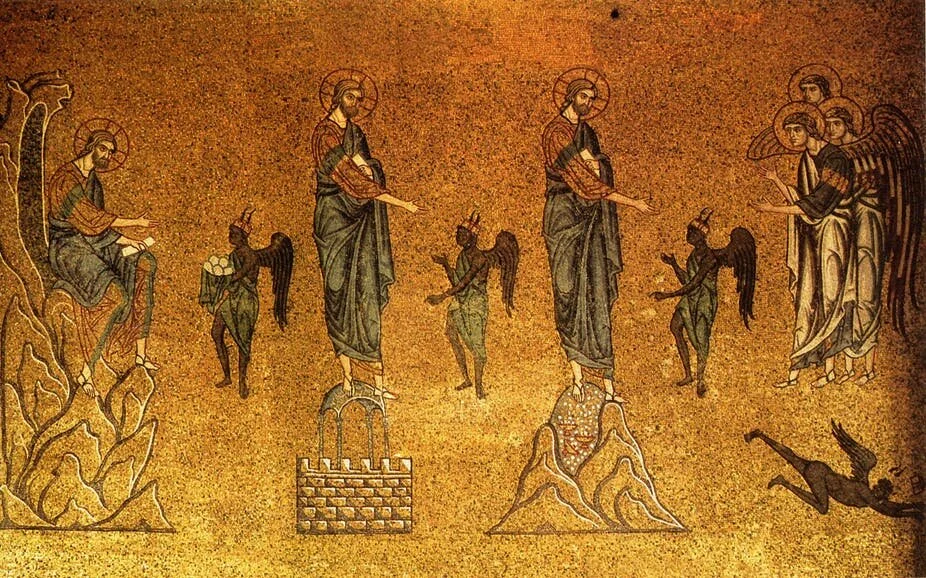
An Invitation To Join Us For Fasting Fridays
As we navigate the murky waters of this season of life we find ourselves in, something that has impressed me as being a BIT more important and relevant than I realized it was is the spiritual discipline of fasting.
As we navigate the murky waters of this season of life we find ourselves in, something that has impressed me as being a BIT more important and relevant than I realized it was is the spiritual discipline of fasting.
From the earliest stories in the OT, to the early church in Acts, through church history to contemporary times, we have an abundance of evidence that God’s people approach trials, tribulations, national emergencies, impending attack or disasters as an opportunity to cry out, and seek His guidance, healing, deliverance, forgiveness, and protection among other things!
Daniel fasted and received revelation about the future of his nation. Hannah sought God in fasting and prayer for the desire of her heart, and He gave her one of the greatest leaders in the Old Testament. Moses was a rock star in this discipline and after 40 days (twice) He got to see, hear and experience God while everyone else got a cloud and pillar.
Isaiah laid out a pretty awesome explanation for why God called us to fast and what it accomplishes for His purposes.
Ezra proclaimed a corporate fast for protection, Esther did as well as she confronted their impending destruction. Jesus recommends it. In Acts the church fasted and prayed corporately before making big decisions to seek God’s will, not their own.
John Wesley marveled as it averted disaster in London in 1756. King George VI called for a day of prayer and fasting before the miracle of Dunkirk. Thomas Aquinas found it noble. Martin Luther
I think my favorite example of corporate prayer and fasting right now is in 2 Chronicles 20- I love this story! This is the Christa paraphrase, but the full story is here.
Jehoshaphat gets word that his nation is in grave danger from 3 different armies. The armies of Pandemic, Financial Collapse and Conflict and Division. (Kidding! Moabites, Ammonites and the inhabitants of Mt. Seir-way more terrifying)
It says he was afraid, AND he set himself to seek the Lord. So he proclaims a fast to cry out for help for his country, and I love his prayer, because you can just hear him looking up, not around.
He cries out and says, "You are God, right, and you are bigger than this threat, right? You rule over all the kingdoms of all the nations, You hold power and might in your hand, so this isn’t too big for You, right?
You’ve helped us before, so (v 9) if disaster comes upon us-judgment, pestilence, famine, recessions, pandemics (ok last 2 I added!)…. (vs 12) we will stand before you and cry out in our affliction and You will hear and save. We have no power against everything coming against us, nor do we know what to do…..but our eyes are upon You."
The next verse says men, women and children were standing before the Lord (I take that as a corporate posture of seeking, knocking, inquiring), and THEN the Spirit came, and spoke reassurance as well as strategy and guidance and a promise.
They bow low, they worship and praise Him, they believe Him, did what He said, and then watched as their enemies turned and completely destroyed each other! They just got to march in and take the spoils of God’s victory over their lives. I love that it says they return home with joy. And his realm was quiet, for his God gave him rest all around.
Friends, are you discouraged? Do you feel trapped from all sides? Are you afraid of what you’re reading, hearing, seeing or experiencing? Are you concerned about what could happen next? Do you long for change? Do you long to see bonds break, oppressed go free, light to shine in dark places, truth to expose lies?
Me too. This is my invitation to us to be like Jehoshaphat. We might be afraid, but may we set ourselves-RESOLVE to seek the Lord! Because He is found by those who seek Him. (Deut 4:29, Is 55:6, Lam 3:25, Jer 29:13, Mt 7:7)
We will find what we are looking for….
We have a unique hope because we get to look up, not just around at the mess around us. My hardest days are the ones where I don’t look up, and I let my circumstances, my fears, my emotions, or my news feed inform me of how I’m doing.
So, please consider joining me every Friday, to inquire of the Lord- to mourn, to grieve, to repent, to cry out, to ask, to listen, to hear, to respond to all that our God is up to in this time.
Because I promise you, He is up to something redemptive. Even if we don’t see it, feel it or believe it, He’s on the move. And I want to stand with Him and witness all that He can accomplish even when it feels like hope is just beyond our reach. When it feels like we’re surrounded, we’re trapped. Lift up your heads! The King of Glory is coming- strong and mighty! (Ps 24:7-10)
For the sake of brevity (or my attempt at it anyway!), if you’re interested in joining me and want to email me, please do! I’d love to hear from you as we as a staff and vestry ask the Lord for help.
In hope,
Christa Vickers-Smith
Care Team Coordinator

A Letter from Your Rector, Your Bishop, and Your Archbishop
If you’ve been giving any of your attention to the national news, you’ll have heard about the disturbing murder of George Floyd, the riots in Minneapolis, and the subsequent riots in Atlanta and in other cities around our nation
Dear Redeemer Family,
If you’ve been giving any of your attention to the national news, you’ll have heard about the disturbing murder of George Floyd, the riots in Minneapolis, and the subsequent riots in Atlanta and in other cities around our nation. As I began to draft a letter to you, I received one from Archbishop Foley Beach that was written collaboratively by four Bishops in the Anglican Church in North America. Immediately after that, I received an email from the Bishop of our Diocese, John Guernsey, adding his name to the list of signatories on the first letter.
I’m grateful for the wise, Biblical, and courageous guidance of our leaders in this time and I commend the following to you wholeheartedly. Additionally, I’d like to draw your attention to this paragraph towards the end of the letter.
“Our hope is that our churches become places where our life together as disciples demonstrates the power of the gospel to bring together the nations of the earth (Rev 7:9). Such work cannot be carried out by one letter written in the time of crisis. We commit to educating ourselves and the churches under our charge within a biblical and theological frame to face the problems of our day. We likewise commit to partnering with like minded churches in the work of justice and reconciliation.”
I’ll remind us that a letter is only encouragement along the way in the work of justice and reconciliation, it is not the work itself. May our parish be a beacon of light in a dark time and may we all be agents of mercy and peace in the way of Jesus.
In the Father’s love,
Dan
Dear Friends,
The letter below was written by four of my brother bishops in the Anglican Church in North America, responding to the horrific death in Minneapolis last week. I, along with many other bishops, have added my name as a signatory to the letter.
I commend it to you and ask for your prayers for an end to racism, for the healing of our nation, and for the Church in our ministries of reconciliation.
Faithfully yours in Christ,
The Rt. Rev. John A. M. Guernsey
George Floyd was made in the image of God and as such is a person of utmost value. This is not true because a few Anglican bishops issue a letter. This conviction arises from our reading of Scripture. The Psalmist said:
For you formed my inward parts; you knitted me together in my mother’s womb. I praise you, for I am fearfully and wonderfully made. Wonderful are your works; my soul knows it very well. (Psalm 139:13-14)
The opening book of our Scriptures declares the value of all human life:
So God created man in his own image, in the image of God he created him; male and female he created them. (Gen 1:27)
What happened to George is an affront to God because George’s status as an image bearer was not respected. He was treated in a way that denied his basic humanity. Our lament is real. But our lament is not limited to George and his family. We mourn alongside the wider Black community for whom this tragedy awakens memories of their own traumas and the larger history of systemic oppression that still plagues this country.
George’s death is not merely the most recent evidence that proves racism exists against Black people in this country. But it is a vivid manifestation of the ongoing devaluation of black life. At the root of all racism is a heretical anthropology that devalues the imago dei in us all. The gospel reveals that all are equally created, sinful and equally in need of the saving work of Christ. The racism we lament is not just interpersonal. It exists in the implicit and explicit customs and attitudes that do disproportionate harm to ethnic minorities in our country. In other words, too often racial bias has been combined with political power to create inequalities that still need to be eradicated.
As bishops in the ACNA we commit ourselves to standing alongside those in the Black community as they contend for a just society, not as some attempt to transform America into the kingdom of God, but as a manifestation of neighborly love and bearing one another’s burdens and so fulfilling the law of Christ. We confess that too often ethnic minorities have felt that contending for biblical justice is a burden they bear alone.
In the end, our hope is not in our efforts, but in the shed blood of Jesus that reconciles God to humanity and humans to each other. Our hope is that our churches become places where our life together as disciples demonstrates the power of the gospel to bring together the nations of the earth (Rev 7:9). Such work cannot be carried out by one letter written in the time of crisis. We commit to educating ourselves and the churches under our charge within a biblical and theological frame to face the problems of our day. We likewise commit to partnering with likeminded churches in the work of justice and reconciliation.
The Feast of Pentecost is here in a couple of days. The power of the Spirit is loosed to convict of sin and deliver us from its power. We pray that in a country as diverse as these United States, the Church will be united in the essential truths of Christianity, including its concern for the most vulnerable. So…come Holy Spirit. Mediate to us and all the earth, we pray, the victory of Jesus over the principalities and powers that seek to rule and cause death and destruction in this time between the times. Come Holy Spirit.
Almighty God, on this day, through the outpouring of the Holy Spirit, you revealed the way of eternal life to every race and nation: Pour out this gift anew, that by the preaching of the Gospel your salvation may reach to the ends of the earth; through Jesus Christ our Lord, who lives and reigns with you, in the unity of the Holy Spirit, one God, for ever and ever. Amen.
Almighty God, you created us in your own image: Grant us grace to contend fearlessly against evil and to make no peace with oppression; and help us to use our freedom rightly in the establishment of justice in our communities and among the nations, to the glory of your holy Name; through Jesus Christ our Lord, who lives and reigns with you and the Holy Spirit, one God, now and forever. Amen.
Sincerely in Christ,
Bishop Jim Hobby
Bishop Todd Hunter
Bishop Stewart Ruch
Bishop Steve Wood
Bishop John Guernsey
*Read the original ACNA post here.

It's Hard To Wait
I’m sure that many of you have been hoping (as have I) that we will be able to meet together, in person, soon. There seems to be an awful lot of chatter this week about “reopening” - with a pretty wide variety of opinions about what we should all do next. Rest assured, I am in regular conversation about this with our Bishop, pastors of other churches, knowledgeable health care providers, our Staff, and our Vestry.
Dear Redeemer Family,
I’m sure that many of you have been hoping (as have I) that we will be able to meet together, in person, soon. There seems to be an awful lot of chatter this week about “reopening” - with a pretty wide variety of opinions about what we should all do next. Rest assured, I am in regular conversation about this with our Bishop, pastors of other churches, knowledgeable health care providers, our Staff, and our Vestry.
I know, I know - we want a plan. I want a plan! Dear friends, those of you who know me, know that I love strategic planning. Few things are as exciting for me as brewing a fresh pot of coffee and breaking out the white board. However, that is exactly what we do not need to do right now. We don’t have enough information and we do not have a clear enough vision of what the next few months will look like for us to roll out a step-by-step plan for reopening.
Fear not. The minute we have enough data - that’s exactly what we’ll do.
In the meantime, we get to hear what my kids hear from me 5,438 times a day, “You just need to be patient.”
Oh, the joy of waiting. I was thinking this afternoon about some of the hard things we may be feeling as we all wait for church, school, and the economy to reopen.
This is a Frustration to our Independence: I think one of the most annoying and difficult things about waiting to reopen is that this is a decision that is, largely, made for us and not made by us. We are not in control, and we feel that reality more viscerally with every passing day.
This is a Challenge to our Individuality: Additionally, waiting to reopen is (for the most part) not an individual decision, but a communal one. This requires our society to act as a group for the good of the whole. While that sounds like a nice principle in theory, what it feels like in practice is sacrificing what I want to do for the good of other people.
This is a Drain on Our Energy: Talking about reopening, strategizing about reopening, watching the news as other people argue about reopening, reading articles online about reopening… are you tired yet? Me too.
It’s hard to wait. It’s even harder to wait when you don’t know how long you’re going to be waiting.
In that sense, this time is (give me some rope here) a bit like what all of life is like for a Christian. We await the return of our King, but we don’t know how long we’re going to be waiting.
The whole Christian life is lived between two Advents, the first and second coming of the Lord Jesus. If we knew how long we’d be waiting, this whole thing would be a heck of a lot easier. However, it would also require far less faith. You see - you can “white knuckle” just about anything if you know how long you have to hold on.
A lot of us have been “white knuckling” this quarantine. We’ve been hanging on through sheer will power - determined to “get through this.” However - as this time stretches on and on - our ability to hang in there is going to weaken and one of two things will happen:
We’ll break. “I just can’t take this anymore. I don’t care what anyone says, I'm going to do what I want.”
We’ll grow. We’ll finally enter into the rhythms and practices that God has been inviting us to take up all along. Praying throughout the day, reading scripture every day, communicating with our neighbors and seeking to meet their needs, serving the poor and vulnerable in our city.
Here’s just a little something to help us while we wait. This is a song written by Flo Paris Oaks from Rain for Roots. It’s called, appropriately, “It’s Hard to Wait.” I’ve been humming it as I putter around the house this week. The chorus goes like this:
There is gonna be a day
Every low valley He will raise
There is gonna be a day
Hills and mountains gonna be made plain
There is gonna be a day
Winding roads gonna be made straight
Comfort, comfort, comfort, comfort
It's hard to wait
So hard to wait
You can listen to the whole song here (written by Flo Paris Oakes, ©2015 Flo Paris Music).
Friends, we have a lot of waiting to do. Let’s not “white knuckle” it and let’s not waste it. I am eager for us to reopen and we will just as soon as our Bishop, our elected officials, our studied and credentialed health organizations, and your Vestry deem it wise to do so.
Until then, I am waiting with you and (more importantly) the Lord is waiting with you.
In the Father’s love,
Dan

Ahmaud Arbery & Our Need For Exorcism
“Stronger medicine is needed. Christians who worship whiteness don’t just need education; we need exorcism.”
Dear Redeemer Family,
On the afternoon of February 23, 2020, Ahmaud Arbery, an unarmed 25-year-old African-American man, was fatally shot after being pursued and confronted by Travis McMichael and his father Gregory McMichael, who were armed and driving a pickup truck.
Some of you may have followed this story in the news recently. If this is unfamiliar to you, you can read more about it here.
Friends, this atrocity is sickening… it makes us both nauseous with grief and livid with rage. So many people are asking, “Why does this keep happening?” “When will this kind of racist violence end?”
This week, as I was praying for the Arbery family and reflecting on the ongoing racial strife in our nation, I was also (by necessity) preparing for the sermon for this coming Sunday. We are in the midst of a series on the Lord’s Prayer and the phrase for this coming Sunday is “Lead us not into temptation, but deliver us from evil.” Some translations of the last part of that line read “deliver us from the evil one.” As I reflected on both this tragedy, the evil of our time, and this phrase that the Lord Jesus taught us to pray - I happened to stumble upon a chapter in a book that addressed all of these together. Rather than attempt to summarize what I read, I’ll just quote it verbatim. The following was written by the Rev. Dr. Wesley Hill, Professor of New Testament Studies at Trinity School for Ministry in Ambridge, PA.
“One of the fascinating developments in recent science, both in the hard sciences as well as the social sciences, has been the focus on how human beings are at all times at the mercy of powers greater than themselves. Contrary to sunny notions of free will and self-expression, we all are shaped by powers as small as microscopic biochemical forces, some of which are microbial interlopers in our bodies, to those as large as inherited notions of what constitutes acceptable gender performance.
Think, for instance, of how racism makes itself manifest in a society. Older generations of white Americans may have more readily thought, “So long as I am paying my black employee a fair wage and greeting her warmly each day, I’m not a racist.”
But racism operates more covertly and insidiously than that. In a recent experiment, for instance, a sociologist asked participants to stare at a screen on which a series of black and white faces flashed. These images appeared and disappeared so quickly that the viewers were not even consciously aware of having seen them. Immediately after seeing a black or white face, the participants were then shown a picture of a gun or a tool. These images were quickly removed from the screen but not quite as quickly as the facial images, so as to allow the participants to register having seen them.
It turned out that when participants viewed a black face followed by a tool, they were more apt to remember the tool as having been a gun than they were when the image of a tool followed that of a white face. The racialized tendency to associate black faces with a violent weapon, the sociologist concluded, “requires no intentional racial animus, occurring even for those who are actively trying to avoid it.” People are, in a very real way, enslaved to something outside of their control. As one theorist has put it, racism has “a life of its own.”
So modern Western minds actually might be catching up with the inspired wisdom of Scripture rather than the other way around. Evil is not just what we do, but—more hauntingly—it is what we suffer, what we are mired in and encrusted with. And if that is the case, we are unable to extricate ourselves from it by any direct action.
No amount of good intentions—to return to our example from above—can cause a white person to disassociate black skin from the threat of harm. The prince of racism—and of so many other forms of evil—hinders even the most virtuous white people from ending their own racist habits of mind by sheer decision.
Stronger medicine is needed. And that is what Jesus urges us to pray for: we must, in the end, appeal to God to deliver us from the grip of the Evil One. Christians who worship whiteness don’t just need education; we need exorcism.”
—
“Stronger medicine is needed.
Christians who worship whiteness don’t just need education;
we need exorcism.”
—
I think fellow Anglican pastor the Rev. Dr. Hill is absolutely right. The past racial wounds and the ongoing racial malevolence here in the city of Richmond and in the United States of America will not be healed by mere education (or by even the best material, social, financial, relational efforts). These are all a good start, but they are just that - a start. We dwell in a time and place of far deeper spiritual oppression that cannot be accurately described as anything other than demonic.
Therefore, when we hear the stories of Ahmaud Arbery, or Breonna Taylor, or Oscar Grant - we, the church, must fall to our knees and (with the words of the Lord Jesus on our lips) pray for our nation, for our culture, for our neighbors, and even for ourselves,, “Deliver us from the evil one.” We pray this for Ahmaud, for his family, for his friends and community, for the black community in Brunswick and all over the nation.
We must also pray this for the McMichael family. Though we are tempted to hatred, we must pray for their souls - that they would be delivered from the evil that has made them instruments of death.
As we pray these Jesus words, we must then get up off our knees and go about the Jesus work of loving and serving our neighbors, our city, and even our nation.
Jesus’ words and Jesus’ work always go hand in hand - and the church must be a people of both. In the face of such blatant racism, we must pray the Lord’s Prayer and then we must live the Lord’s Prayer.
Dear church family, the days are troubled - may Christ deliver us from evil. Amen.
In the Father’s love,
Dan

Prayer and The Material World
I know you’ve experienced this.
In a moment of well-intentioned extroversion you ask someone, “Is there anything I can do for you?” They kindly and predictably reply, “Please just pray about ________.” To which you instinctively feel the desire to respond, “But, is there anything I can ACTUALLY do for you?”
Me too. It happens all the time. We don’t feel as if we are truly doing someone for each other unless it involves using our hands and feet.
Now - this instinct is both right and wrong - or rather, right and insufficient.
I know you’ve experienced this.
In a moment of well-intentioned extroversion you ask someone, “Is there anything I can do for you?” They kindly and predictably reply, “Please just pray about ________.” To which you instinctively feel the desire to respond, “But, is there anything I can ACTUALLY do for you?”
Me too. It happens all the time. We don’t feel as if we are truly doing something for each other unless it involves using our hands and feet.
Now - this instinct is both right and wrong - or rather, right and insufficient.
RIGHT: The instinct is right insofar as it reveals our desires to impact the real, physical, material world. We are not Christian/Buddhist hybrids who think the spiritual is superior to the physical and therefore a spiritual act (like prayer) is more meaningful than a physical act (bringing someone a meal).
The Christian faith takes the material world seriously. God made it, called it good, gave it for our stewardship and blessing, and has redeemed it with his material death and resurrection. His promise is to restore the material world. He cares for it, loves it, and is committed to it - and so, as Christians, are we.
So, our desire to serve each other by doing something physical is a good instinct - it takes the materialism of our Christian faith seriously.
INSUFFICIENT: However, it is also wrong, or - more precisely - insufficient. When we pray, we are not doing something merely spiritual. But rather something that is both spiritual and material. To be clear, this is only true of Christian prayer, not all forms prayer.
Christian prayer is distinct because we pray with and in the Spirit of the risen Jesus Christ. Jesus is God made flesh. The spiritual eternally fused with the material. God becoming part of His creation.
So when we pray in the Spirit of Jesus, we stand with Him between the spiritual realm and the earthly realm to speak and listen back and forth. The words we speak into and hear from “the heavens” shape and change both us and our world.
SO WHAT? Now (this is going somewhere, I promise) we are all quarantined in this time of coronavirus pandemic. We want to be doing more for and with each other - but the answer the question, “how can I help you?” will (for the next few weeks) be answered 90% of the time with some version of, “Can you pray for ______?”
So, my friends, since we are unable to do the things we would normally prefer to do rather than pray, let’s seize the opportunity to give ourselves to prayer in a new way. Not as an alternative to doing something material, but as a means of impacting the material world.
SOME HELPERS: As a reminder that our prayers impact the physical world, the church has historically taken up embodied practices during prayer.
Crossing Oneself: Touching your forehead, left shoulder, right shoulder, and center chest while repeating “In the name of the Father, Son, and Holy Spirit.” A reminder that the cross of Christ is your forgiveness and redemption.
Kneeling: Reminding you to approach God with humility.
Lying Prostrate: A sign of complete submission to the will of God.
Lifting One’s Arms: Originally an Orthodox posture of prayer, this has been more recently adopted by the Charismatic movement - a sign of worship and adoration.
Holding a Cross: Gripping a small, wooden cross in your hand while you pray - to remind you that, it is only because of the cross of Jesus that your prayers of heard and accepted.
Friends, you might use all or none of these, the point is - prayer is one of the few things we have left to do for one another, for our neighbors, and for our city.
What if, in this strange time of quarantine, we labored long and faithfully in prayer?
What if this was the season where you learned how to pray consistently?
What if (if you have kids) this was the season you learned to pray as a family?
What if you came out on the other side of quarantine a changed person because you spent such significant time in prayer?
In the Father’s love,
Dan

We Need The Contours of Holy Week (Now More Than Ever)
The gift of Holy Week for us, in the time of quarantine and coronavirus, is not only it’s content (the passion of Jesus), but also its contours (the lowest of lows and highest of highs).
Dear Redeemer Family,
Yesterday, when Virginia Governor Ralph Northam issued the Stay-At-Home order - (which will remain until at least June 10) our need for a prescribed sense of order and routine went from a felt-need to an absolute-essential. Whether we’re trapped in an apartment by ourselves, or marooned in a retirement community house, or sequestered in a brick rancher with toddlers - we are all experiencing the tendency for the hours and days to stretch on and on endlessly. Someone sent me a meme the other day with this phrase, “In case you forgot the date, today is March 97th.” Amen. Me too. Here here.
As I call, text, email, zoom with many of you - I keep hearing stories about some of you finding yourself still in pajamas at 2pm, eating 7 meals a day out of boredom, and giving in to the temptation to watch Netflix past midnight. I’m also hearing lots of stories from parents of young children who are going stir crazy and have already exhausted every activity, craft, lesson, story, game idea they have!
Yall, this is hard, and the bad news is, it’s about to get much more difficult. All of us will either descend into a kind of depressed, anxious, boredom; or we will exercise and develop the kind of inner and outer disciplines that are necessary to give structure and order to an otherwise flattened season of life.
*Aside: For the handful of us that think we are the exception to the rule - that we can skate by without sliding into lethargy or strengthening into discipline - let’s not fool ourselves. We are all on a trajectory here: are we growing and taking steps forward in faith or are we backsliding? It is always one or the other. There is no neutral ground. Ever.
And to give us the kickstart we need to begin ordering our days with great intentionality, we have the most important week of the year - HOLY WEEK.
The gift of Holy Week for us, in the time of quarantine and coronavirus, is not only it’s content (the passion of Jesus), but also its contours (the lowest of lows and highest of highs).
We need the content of Holy Week - more than ever before.
We need to reenact the triumphal entry, the footwashing, the crucifixion, and the resurrection. We need to be reminded that Jesus comes to be our King, to serve us, to give Himself as a ransom for us, and to secure our eternal future.
But we also need the contours - we need days that are different from one another.
Days that are set apart, special, holy.
This is the gift of going through Holy Week in the time of coronavirus.
Yes, we are lamenting being separated from one another and bemoaning the total lameness of doing Holy Week services online. I feel it too. Trust me.
However, there is a hidden gift for us here. More than ever we are in need of structure - an order that is imposed upon us, from the outside. So many of us are not all that good at running our own schedules! We are not good masters, not even to ourselves!
We need to be told what to do and how to do it. Holy Week gives us the order and structure that we need.
So dear friends, next week, I invite you to give yourself to fully participating in Palm Sunday, Maundy Thursday, Good Friday, and Easter Sunday. Throw yourself headlong into these times of worship, prayer, service, fasting, and celebration. Allow Holy Week to be something of a bootcamp, a pre-season training of sorts, to whip us all into spiritual, emotional, mental, and physical shape for the challenging season that lies ahead of us.
Who knows what the next few months will be like? No matter what comes our way, we will be prepared if we have allowed the death and resurrection of Christ Jesus to shape our hearts, minds, bodies, and even our schedules.
In the Father’s love,
Dan

Life in the Crucible
“The crucible is for silver, and the furnace is for gold, and the Lord tests hearts”. - Proverbs 17:3
“The crucible is for silver, and the furnace is for gold, and the Lord tests hearts”.
— Proverbs 17:3
Simple. Beautiful. Sobering.
The simple elegance of a Hebrew proverb - crucibles and furnaces are designed for the purification of precious metals.
The beautiful imagery - our minds conjure up scenes of noble blacksmiths hard at work heating and hammering.
The sober realization - this is the way of the Lord when it comes to our hearts.
Now, to be sure, it is not the only way of the Lord in the tending of human hearts. The Lord is also our comforter, protector, and provider. He heals and binds up wounded souls. As we’ve been examining the Parable of the Prodigal Son, we’ve considered God the Father as the welcomer of broken and contrite hearts.
All true.
Now, to the consolation of God as comforter, we add the challenge of God as tester. This is equally true, and (perhaps surprisingly) equally loving. Our Heavenly Father cares for us far too much to let warped desires and bent trajectories fester and twist within us. Like a caring parent cradling a child with a skinned knee on His lap… first he hugs, then he scrubs the wound with soap.
To be clear - I’m not claiming any special knowledge or spiritual insight by claiming that our present season of quarantine is a test from the Lord. Rather, I think all of us can observe what is happening in our own lives and easily conclude - this is a test for me.
Speaking autobiographically, I’ve been knocked off my rhythm. My daily and weekly routine, crafted and solidified over decades, has suddenly, dramatically, and forcibly changed.
I don’t quite feel myself.
Which makes sense I suppose, if we really are homo liturgicus (the liturgical creature).
In the heat of this crucible season, all sorts of unpleasant and unsightly things are bubbling to the surface in my life. My self-narrative (the story I tell myself about who I am) is crumbling in the face of new and incontrovertible evidence. Here’s what I’ve seen thus far:
My self-narrative of easy-going flexibility has been disrupted and exposed me to be a person of rigid, deeply ingrained habits.
My self-narrative of generosity has been disrupted and exposed me to be a person with subtle, but unyielding selfishness.
My self-narrative of gracious love has been disrupted and exposed me to be a person who is basically annoyed almost all the time.
I could keep going… but you get the picture. My secret vanities and my private selfishness are being brought to the surface in very unsightly, unbecoming-to-a-pastor ways. I am not a fan.
But in the long run, I trust that it’s good. It stings like soap on a skinned knee.
Friends, why does the Lord do this to us? Why does the Lord test us?
Because who you are when you’re alone is who you really are. Because who you are when you’re under stress is who you really are. This is the wisdom of the crucible: that when we are isolated and under pressure, all the worst parts of us come out. When these ugly things come out of us, we have a choice - we can blameshift, or we can offer them to the Lord for purification.
A word on blame shifting: Y’all, it’s the oldest defense in the book. Literally - Genesis 3. The woman made me do it. The serpent made me do it. Coronavirus made me do it. Can we agree that, in the stressful, uncomfortable days ahead, blame shifting should have no place amongst us? Let me not be too quick to excuse my behavior and let myself off the hook.
Rather, let me be quick to do what the crucible is meant to do in me, which is to lead me to deeper repentance and heart transformation. The Lord is testing my heart, and - dear friends - He may be testing your heart as well. This testing is not a punishment for past sin, nor an evaluation of spiritual performance, but rather a crucible, furnace-like testing that is designed to lead us to more deeply and fully repent by exposing sin that we didn’t even know was there.
So in the days ahead, let’s embrace life in the crucible and allow the Lord who loves us to test our hearts. What we see will not be pleasant. But if we allow it to drive us to our knees and to more fully repent, then we will discover a newfound joy and appreciation for the Gospel - for the Lord who tests is also the Lord who forgives.
In the Father’s love,
Dan
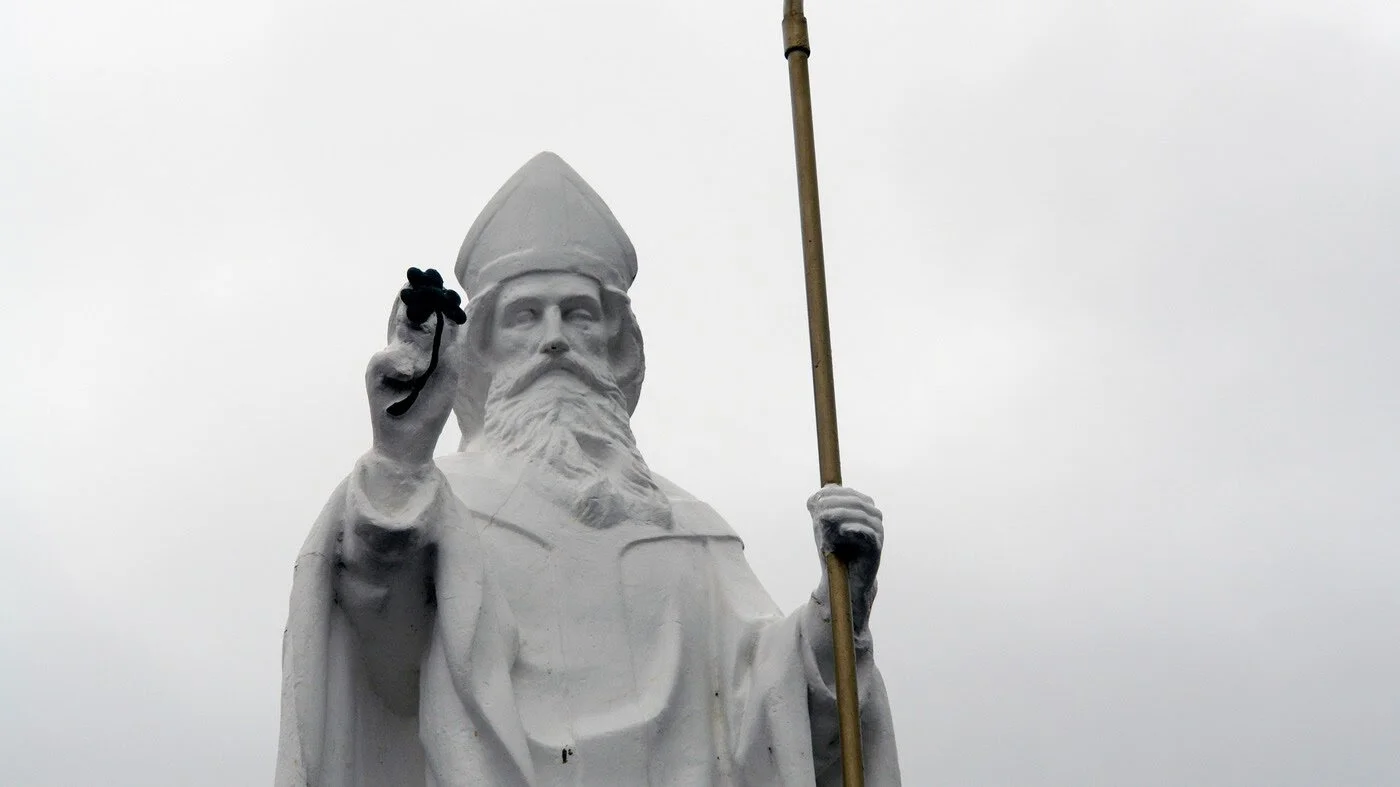
Saint Patrick, C.S. Lewis, & the Next Eight Weeks
What a strange and trying time this is for all of us. So much has changed so quickly. Just a couple weeks ago, very few of us were taking the threat of coronavirus seriously; and now here we are - social distancing, quarantine, watching countries close their borders, and wondering how long it will be before things return to normal. It’s that last sentiment that I want to address today, “how long will it be before things return to normal?”
Dear Redeemer Family,
What a strange and trying time this is for all of us. So much has changed so quickly. Just a couple weeks ago, very few of us were taking the threat of coronavirus seriously; and now here we are - social distancing, quarantine, watching countries close their borders, and wondering how long it will be before things return to normal.
THE QUESTION
It’s that last sentiment that I want to address today, “how long will it be before things return to normal?” I spent some time yesterday on a call with our Bishop and the 40+ Rectors of other churches in our Diocese (what a gift it is to be a part of a network of wise, thoughtful pastors). With the CDC recommending postponing all gatherings of more than 50 people for the next eight weeks, with our President calling for no gatherings of 10 or more people, and with many health care experts predicting that that the virus may impact our lives well into the Summer months, it is reasonable to expect that it may very well be two months or longer before we are able to gather together as a church family. Therefore, it is time for all of us to undergo a difficult, but necessary mental and emotional paradigm shift. What I mean is, if we spend the next days and weeks thinking, “it’s almost over,” or “any day now things will go back to normal,” then we will be essentially treading spiritual water - thinking that this season is a blip on the radar - something for which we just need to grit our teeth and ride it out. If we maintain that kind of attitude, not only may we be unprepared for the serious challenge of the days ahead, but we will also miss out on the invitation that the Lord has placed in front of us.
So, for the foreseeable future, here is a tentative gameplan (which we will adjust as needed):
Sunday Worship—will be facilitated through our website. Similar to what was posted this past Sunday, there will be a prayer liturgy, a video-recorded sermon, and some video-recorded songs with which you can sing along. The goal of this time is not a passive viewing experience, but rather tools to help you actively worship and pray in your home.
Small Groups—will be facilitated via video conferencing—we recommend Zoom. Ben Lansing, our Small Groups Coordinator is working with all of our small group leaders to help them set up the right technology for the needs of their group. We’re in the process of figuring out how to move our small groups into a virtual space; thanks for your patience. If you have a question about what your group is doing, please email your leader. If you are not yet in a Small Group, now is the right time to join! Please email Ben and he will connect you with one.
Prayer Requests & Physical Needs—are welcome to be shared within Small Groups and/or with members of the Care Team and Staff. You are welcome to email me or Christa Vickers-Smith, our Care Team Coordinator with any prayer requests or physical needs you may have.
Pastoral Care—is still available to you in two different ways.
First, you are welcome to come and meet with me in person outdoors. We can sit 8 feet apart from one another in the metal chairs in the VMFA Sculpture Garden.
Second, we can always talk on the phone or video chat together.
Justice & Mercy—for our neighbors and city are still something we are committed to as a body. If you are young, healthy, and able - contact Teryn Morgan for ways to serve the most vulnerable people in our community. We will also include justice and mercy service opportunities in every Parish Newsletter.
THE INVITATION
So what is the real invitation here? Whenever the Lord led his people into the wilderness or into exile, He did so in order to invite them to trust Him more fully and to obey Him more faithfully. The wilderness is where God’s people learned how to follow Him, exile is where they learned that He was with them no matter what. Now, I’m not saying that we are being led into the wilderness or exile in a biblical/theological sense, but I do think we all recognize that we are being led into a unique season of testing where we will either learn to trust the Lord more deeply, or we will slip into self-centeredness, apathy, and fear.
Thankfully, the church knows something of what it means to grow and even thrive spiritually when cloistered away from society. I’m referring to the monastic movement which began as early as the 3rd and 4th century. Distancing oneself from society in order to devote oneself to prayer, fasting, and simple labor - and then, at times, to reenter society in order to serve the poor, the sick, and the needy is a rhythm and style of life practiced by thousands (if not millions) of men and women for the past 1,700 years! In other words, the kind of lifestyle that we are being forced into is not a foreign one in the history of the church - this is something we know how to do!
(More on this in the days to come) For now I’ll encourage all of us to begin thinking of our apartments and homes as mini-churches, mini-monasteries - places of order, prayer, work, and dependence on God - places from which we then (in intentional and strategic ways) launch out into the city to serve those who are most in need.
The sooner that we allow ourselves to undergo this mental and emotional shift and embrace a “new normal,” the more likely we are to discover that the Lord is here to meet with us, even in this troubling time.
ENCOURAGEMENT FROM SAINT PATRICK
Some of you may know the story of Saint Patrick - whose day our society remembered and celebrated yesterday. Patrick was kidnapped by pirates and sold into slavery in Ireland at sixteen years of age. He survived six years as a slave before escaping and returning to Britain, where he studied the Christian faith and was ordained as a priest. Then, in a move that shocked his contemporaries (and continues to shock us today), he returned to Ireland as a missionary - seeking to love the very people who tormented and abused him.
The fruit of his courage was beyond what he or anyone else could have expected. Thousands and thousands of Irish men, women, and children came to put their faith in Christ as a direct result of the surprising love and bravery of Patrick. In the story of Saint Patrick, we see a model for what it looks like to walk into danger motivated only by love for Jesus and love for others - even those who pose threat to our wellbeing.
ENCOURAGEMENT FROM C.S. LEWIS
A dear friend of mine posted this quote from C.S. Lewis a few days ago, and I thought it was so helpful that I want to share it with you. This is Lewis reflecting on the fear of nuclear attack that society had in his time. Simply replace “atomic bomb” with “coronavirus,” and his words are highly relevant to us in our present moment.
“In one way we think a great deal too much of the atomic bomb. “How are we to live in an atomic age?” I am tempted to reply: “Why, as you would have lived in the sixteenth century when the plague visited London almost every year, or as you would have lived in a Viking age when raiders from Scandinavia might land and cut your throat any night; or indeed, as you are already living in an age of cancer, an age of syphilis, an age of paralysis, an age of air raids, an age of railway accidents, an age of motor accidents.”
In other words, do not let us begin by exaggerating the novelty of our situation. Believe me, dear sir or madam, you and all whom you love were already sentenced to death before the atomic bomb was invented: and quite a high percentage of us were going to die in unpleasant ways. We had, indeed, one very great advantage over our ancestors—anesthetics; but we have that still. It is perfectly ridiculous to go about whimpering and drawing long faces because the scientists have added one more chance of painful and premature death to a world which already bristled with such chances and in which death itself was not a chance at all, but a certainty.
This is the first point to be made: and the first action to be taken is to pull ourselves together. If we are all going to be destroyed by an atomic bomb, let that bomb when it comes find us doing sensible and human things—praying, working, teaching, reading, listening to music, bathing the children, playing tennis, chatting to our friends over a pint and a game of darts—not huddled together like frightened sheep and thinking about bombs. They may break our bodies (a microbe can do that) but they need not dominate our minds.”
—“On Living in an Atomic Age” (1948) in Present Concerns: Journalistic Essays
Dear friends - let us give ourselves to sensible and human and Christ-like things. Let’s order our time in the ways that Christians have always ordered their time when in danger or separated from society. Let’s resist anxiety and embrace the deep wisdom and cheerful courage of the Lord Jesus.
Our Lord is with us, He is inviting us to follow Him into the foggy and uncertain days ahead, and we may accept this invitation in full trust that His presence will always be our comfort.
In the Father’s love,
Dan

Precautions & Practices During COVID-19
As concerns Dear regarding the coronavirus have escalated around the world and in our own country, I have spent much time over the past two weeks talking with our Bishop, other Rectors in our Diocese, many other lead pastors of Richmond churches, as well as our church Wardens and staff about how we as a church can respond wisely and courageously. While we do not yet have a comprehensive strategic plan for the coming weeks and months, here is the temporary plan for the next week.
Dear Redeemer Family,
As concerns Dear regarding the coronavirus have escalated around the world and in our own country, I have spent much time over the past two weeks talking with our Bishop, other Rectors in our Diocese, many other lead pastors of Richmond churches, as well as our church Wardens and staff about how we as a church can respond wisely and courageously. While we do not yet have a comprehensive strategic plan for the coming weeks and months, here is the temporary plan for the next week.
THE GRAVITY OF SARS-CoV-2 & COVID-19
We continue to monitor closely the CDC and VA Department of Health recommendations regarding SARS-CoV-2 (the virus) COVID-19 (the disease caused by the virus). Governor Ralph Northam has declared a state of emergency in the Commonwealth of Virginia and the City of Richmond recommends postponement or cancellation of all large events.
Now, I know that, within our congregation, we are all over the map regarding how serious we feel the situation is. Some of us feel that public officials have been too slow to take action. Others feel that the threat is overblown and that everyone else is overreacting. Still others have not been paying much attention to this and will be surprised to learn that University of Richmond, Virginia Commonwealth University, Richmond City, Henrico Co., and Chesterfield Co. Public School, and many other schools and institutions are temporarily shutting down.
No matter how we may feel personally, let’s remember that our top priority as a church family is not preserving our way of life and ministry, but rather love for God and neighbor.
OUR MOTIVATION
Which brings me to my second point - and let me be clear on this one: Our motivation in taking significant action in response to the pandemic is love, not fear.
Fear seeks to protect the self at all costs; love seeks the protection of others at cost to the self.
As the author of 1 John writes, “There is no fear in love, but perfect love casts out fear.” Therefore, in the coming days, the most important question we can ask ourselves as a church family is, “How can we protect our neighbors and our city in these troubled times?” Answering this question will no doubt require much sacrifice on our part. It will cost us something. But dear friends - this is the way of Jesus in the face of threat. And, surprisingly, this is also the path of joy.
IMMEDIATE CHANGES
So, motivated by love and desire to protect our neighbors and city, here are the immediate changes we are implementing.
Our March 15 Sunday morning worship service is canceled. Yes, this breaks my heart. I’m one of those, “we-always-do-church-no-matter-what-kind-of-guys” - but if we are to slow the spread of the virus and avoid overwhelming our city’s health care system, we must do everything we can to slow the transmission from person to person. We cannot stop it (that is outside of our control), but we can do things to slow it down.
We will send out prayer liturgies, songs, and a recorded message for you to use to worship the Lord and pray in your home.
Small Group gatherings and all other ministry programs for the Week of March 15-21 are also canceled. I do think there are wise and cautionary ways that some people can gather (and I will send out some guidelines for how we can do small gatherings), but our current format for Small Group gatherings and other ministries are not conducive for this. So, until we are able to establish best practices for small gatherings, we are temporarily suspending all ministry programs.
Note: Though our Small Groups are not able to gather together, that does not mean that we are unable to pray for, communicate with, and care for one another.
THE WEEKS AHEAD
At this stage, so much is changing so quickly that I do not think we can accurately predict what we will need to do weeks and months in advance.So, at this stage, here’s what I can tell you:
Your Vestry and Staff are praying for you and working to create a strategic plan to help our church navigate the difficult days that lie ahead.
You can expect that things will, most likely, not return to “normal” for a little while. Let’s all commit to suspending our expectations and allowing a mental and emotional shift to take place within us. Our world is fraught with anxiety. Our neighbors are fearful. This not a time for us to wish that life were easier. Rather - this is a time for us to find our deep security and hope in Christ and to be a stable, courageous, compassionate, non-anxious presence to our families, friends, neighbors, and co-workers. Remember the words of our Lord, “In the world you will have tribulation. But take heart; I have overcome the world.” I love the old King James translation of this verse. Instead of “take heart” it reads, “be of good cheer.” Though we face many challenges ahead, we need not face them with gloom and doom, but rather with good cheer because our hope is in Jesus.
WAYS TO CARE
Friends, the church has a long and robust history of caring for others during times of sickness. Now what shape might that take for us?
Praying on our knees for each Other & for Neighbors: What if, as anxiety in our city heightens, we spend more time on our knees praying (not for our own protection) but for the health of others?
Food & Sustenance for Each Other & Neighbors: What if, when some of us are quarantined at home, we drop off food, hydration, and basic over-the-counter medicines for each other?
Writing Real Letters: What if, when some of us are separated from one another, we take up that old practice of putting pen to paper and writing real letters to one another?
Make Real Phone Calls: Texting is easy, phone calls take more effort. What if, when we are apart from one another, we do that old-fashioned thing where we pick up the phone and call for no other purpose than just to talk?
Additionally, our friends at ForRichmond.org have sent out a list of helpful steps in loving our neighbors:
Make a list of your neighbors – the neighbors on your block and the folks in your broader network. Take 5 minutes to think about who might need your help right now.
Do you have a 65+ neighbor? Call, text, or knock and keep a safe distance and ask if they need anything – groceries, a prescription refilled, a good book to read to pass the day.
Do you have a nurse, doctor, EMT or a first responder in your life?Mow their lawn while they’re at work. It one less thing for them to think about and a simple way to show you care.
Do you have working parents with school-aged children who need childcare support now that schools are closed? Offer to watch their kids for a day. Ask other neighbors if they would be willing to help too.
Do you have a sick neighbor that is quarantining him or herself? Call or text to find out what they might need and leave it on their doorstep so they can access it without exposing you to sickness.
Do you know someone in a nursing home or hospital who no longer is allowed to have visitors? Give them a call and let them know they’re not alone.
Do you have neighbors or friends who struggle with anxiety? Check in on them and encourage them to embrace self-care strategies like limiting social media and news consumption. If they are open to prayer, pray with them.
Do you know a family that struggles with food insecurity? Share some of the groceries you picked up for own family.
Do you have Asian-American neighbors? Many are experiencing a lot of ignorant comments and racism right now. Talk to your kids about why that’s wrong and if you hear others saying racist things, gently but firmly confront it.
Are you a block captain or an admin on a neighborhood message board? Use your existing network to reach out and see if there are neighbors in need.
These are just a few, simple starters. No doubt you will think of many more creative ways we can care for one another and for our neighbors outside our church family.
Dear ones - we do not yet know what kind of storm we are headed into as a city and as a church family. But we do know that our Lord is with us, and therefore we have nothing to fear.
May the peace of Christ rule in your hearts.
In the Father’s love,
Dan
*POST-SCRIPT | PERSONAL PRECAUTIONS
To keep germs from spreading, the Virginia Department of Health recommends you do the following:
Wash your hands often with soap and water for at least 20 seconds. Use an alcohol-based hand sanitizer only if soap and water are not available.
Avoid touching your eyes, nose, and mouth.
Cover your mouth and nose with a tissue or your sleeve (not your hands) when coughing or sneezing.
Clean and disinfect frequently touched objects and surfaces.
Stay home when you are sick.
Avoid contact with sick people.
Avoid non-essential travel.

A Letter from Bishop John Guernsey regarding COVID-19
The global spread of COVID-19, the coronavirus, has become a focus of attention and concern for many of us. I have been reading extensively about it. I have consulted with diocesan leaders, including doctors and scientists with advanced degrees and expertise in virology, immunology and infectious diseases. Drawing on their wisdom, I offer these points:


Dear Friends,
“Do not be anxious about anything, but in everything by prayer and supplication with thanksgiving let your requests be made known to God. And the peace of God, which surpasses all understanding, will guard your hearts and your minds in Christ Jesus” (Philippians 4:6–7).
The global spread of COVID-19, the coronavirus, has become a focus of attention and concern for many of us. I have been reading extensively about it. I have consulted with diocesan leaders, including doctors and scientists with advanced degrees and expertise in virology, immunology and infectious diseases. Drawing on their wisdom, I offer these points:
1. Trust God.
In the midst of uncertainty, we trust God. He is sovereign over human history and over our lives. He is the Lord, “our refuge and strength, a very present help in trouble” (Psalm 46:1). And he is loving and merciful. Psalm 100:5 assures us, “For the LORD is good; his steadfast love endures forever, and his faithfulness to all generations.”
We witness to our Christian faith when we resist panic, knowing that our times are in the Lord’s hand (Psalm 31:15). No one can snatch us out of the Father’s hand (John 10:28-29). And so, “for those who love God all things work together for good, for those who are called according to his purpose” (Romans 8:28).
The Book of Common Prayer offers on page 269 a list of suggested Psalms on many helpful themes, including God’s sovereignty, providence and mercy, trust in God, and living faithfully in times of trouble. If reading from the Psalms in not a part of your daily prayers, I’d encourage you to turn to one of these psalms each day to keep your heart focused on the Lord and his presence and care.
2. Be informed.
There is much on the internet from unhelpful extreme perspectives that encourage either panic or complacency. Neither is appropriate. Pay attention to health advisories from the Centers for Disease Control and Prevention and your state and local governments. Experts in our own diocese are tracking and helping us to implement, as needed, recommendations from these and other sources.
The CDC website provides a wealth of information about the disease and appropriate steps for individuals, churches, schools, and businesses to take.
You may wish to subscribe to the CDC’s COVID-19 newsletter to get regular updates. Go to their newsletter subscription page and choose the newsletter entitled, “Coronavirus Disease 2019 (COVID-19).”
The Virginia Department of Health website also offers resources and information, including up-to-date statistics on the number of COVID-19 cases in Virginia (there are none) and even the number of people currently who have been tested or are being monitored. Other states and some local governments have similar websites, as well.
3. Be prudent.
Wash your hands! Wash them frequently and thoroughly, for a minimum of 20 seconds using soap and warm water. There is no substitute for this. While alcohol-based hand sanitizers can kill bacteria, they have not been shown to be adequate against COVID-19 or other viruses. The U.S. Food and Drug Administration has recently warned that an alcohol-based hand sanitizer is not an effective agent against viruses such as COVID-19.
For cleaning surfaces, such as doorknobs, telephones, countertops, etc., the CDC and our experts recommend using bleach (1 part bleach to 100 parts water).
If you have symptoms of a cough, disease or a fever within the last 24 hours, please stay at home. An infectious disease specialist in our diocese emphasized how vitally important this is, though COVID-19 can also be spread by people who have not developed symptoms of illness.
If you are returning from known areas of higher prevalence of COVID-19, we encourage you not to attend church for two weeks. The list of affected areas and the period of self-quarantine will likely change in the weeks ahead.
Prudence and care, especially for those who are susceptible to this and other viral illness, may lead to temporary changes at your church. I have written to our clergy and church wardens with specific steps for your church to consider, particularly in worship. They have my permission to make these changes as they deem appropriate, and this may result in adjustments in, for example, your church’s pattern of passing the Peace and administering Holy Communion.
The World Health Organization now reports that the mortality rate of COVID-19 is many times higher than that of influenza. While we will know more in the coming weeks, the present circumstances warrant steps beyond what we do in a normal flu season to prevent the spread of disease. If we wait until there is a local outbreak, it will be too late for the effective preventative action.
Know that the plans being considered will be undertaken wisely, prayerfully, and in compliance with governmental directives and in consultation with local physicians and scientists.
4. Act in love.
Reach out to your neighbors, particularly the elderly and those who are vulnerable or alone.
And pray. Pray…
for those suffering from COVID-19 around the world;
for doctors and nurses and other medical personnel who care for them;
for researchers seeking a vaccine to prevent it;
for wisdom for public health officials and other government leaders;
for peace and for deliverance from fear or anxiety;
for the witness and ministry of the Church to those in need.
Faithfully yours in Christ,
+John

On The Keeping of a Holy Lent
We are about to enter a special, albeit, mysterious season of the year - the Season of Lent. For some of us, we are already anticipating certain rhythms of fasting and discipline that we will take up. For others of us, we’ve heard people talk about Lent, but the meaning and purpose of this season remain strange and confusing to us. So, to help us as a church family all get on the same page, here is some information that I hope you find helpful…
Dear Redeemer Family,
We are about to enter a special, albeit, mysterious season of the year - the Season of Lent. For some of us, we are already anticipating certain rhythms of fasting and discipline that we will take up. For others of us, we’ve heard people talk about Lent, but the meaning and purpose of this season remain strange and confusing to us. So, to help us as a church family all get on the same page, here is some information that I hope you find helpful:
What Is Lent? Lent is a 40 day period (not counting Sundays) of Christ-centered devotion between Ash Wednesday and Easter Sunday. The practice of Lent has been observed by Christians around the world since the second century. This season is meant to mirror the 40 days of fasting that Jesus spent in the wilderness preparing for His ministry.
Why Practice Lent? The most important reason to practice Lent is to draw near to Jesus Christ and become like him. Lent is a season of intentional discipleship under Christ and with Christ. We also practice Lent to bond more closely with fellow Christians who are on the same journey, not only in our local church but also around the world. Along the way, our sin and enslaving habits are put to death, and we learn to internalize and share in Christ’s resurrection power.
INVITATION TO PRACTICE LENT AT REDEEMER
To the extent that you are able, practice Lent with your church family.
Begin with an Ash Wednesday service and receive the sign of the cross in ashes on your forehead - reminding you of your own mortality.
Participate in a Small Group and discover that you are not alone in your struggles.
Give up comforts like: sweets, alcohol, and some forms of technology and entertainment on Monday-Saturdays.
Take up new disciplines like: daily scripture reading, daily confession, giving away extra time and money to our Justice & Mercy Partners.
Feast on Sundays!
Plan ahead for Holy Week, so that we can walk through Palm Sunday, Maundy Thursday, Good Friday, and Easter Sunday together as a church.
What we hope you’ll find is that, as we enter into these practices together, God’s grace for us is more abundant than we previously thought. We’ll try together and we’ll fail together, then we’ll confess our sins together and be forgiven together. When we come out on the other side, into a bright Easter morning, we’ll find ourselves closer to Christ and closer to each other.
HOW MIGHT WE GROW SPIRITUALLY DURING LENT?
There are some themes that often arise when people describe their experience of practicing Lent; however, this list is not exhaustive, God’s activity in your life cannot be predicted or controlled.
➤ Humility – Humility is the capacity to recognize who we are in relationship to the living God. The path of Lent reveals our mortality, sin and limitations. Often, the Holy Spirit reveals personal and corporate blind spots during Lent. Our hunger pains, headaches and failures during Lent become living reminders of our great need for the salvation offered through Jesus Christ.
➤ Reordered Loves – The gentle harness of Lent is designed to loosen our unhealthy attachments to creation (including food, drink, and money) so that we may enjoy a deeper bond to the Creator. We learn to internalize and enjoy the love of Christ during Lent.
➤ Purity – Soren Kierkegaard said that “purity of heart is to will one thing.” During Lent, we see the incompatibility between our commitment to Jesus and our dabbling in idolatry. We confess our sins and thereby take hold of the forgiveness that is ours in the Gospel.
➤ Joy – As we give ourselves to him in our suffering, Jesus Christ supplies us with a lasting spiritual overflow and the consolation of the Holy Spirit. This is to be distinguished from a spiritual high, which cannot be sustained over time or during suffering. Easter Sunday and corporate worship during Lent grants us a taste of heaven.
➤ Renewed Imaginations – As we progress through events of Ash Wednesday, the 40 days of Lent and the drama of Holy Week, see ourselves and the world as they are in God. The events of Jesus’ life, death and resurrection become for us a window into the new creation (otherwise known as the Kingdom of God) in which we can participate and from which we can receive a secure identity.
➤ Dependence – During Lent, we unlearn the lie that we are self-made, self-contained individuals. We learn to draw upon the life of God and the bonds of affection with our fellow Christians.
Friends, the season ahead is not fun per se, but it is good. Starting tomorrow - let’s begin this journey towards the cross and the empty tomb together.
In the Father’s love,
Dan
GO DEEPER | ADDITIONAL RESOURCES FOR KEEPING LENT
PRACTICES & SCHEDULES
Lent in the Common Rule by Justin Early
An American Lent by The Repentance Project
ARTICLES TO READ
What’s the Point of Lent? by Greg Goebel
Keeping a Holy Lent by Craig Higgins
SUGGESTED BOOKS TO READ DURING LENT
The Good of Giving Up by Aaron Damiani
A Way Other Than Our Own by Walter Bruggeman
The Spirit of the Disciplines by Dallas Willard
Spiritual Disciplines for the Christian Life by Donald Whitney
Celebration of Discipline by Richard Foster
Spiritual Disciplines Handbook by Adele Calhoun
MUSIC
Lamentations by Bifrost Arts
Lent to Maundy Thursday by Page CXVI
Resurrection Letters: Prologue by Andrew Peterson
Fortunate Fall by Audrey Assad
VIDEOS
What is Lent? By Immanuel Anglican Church
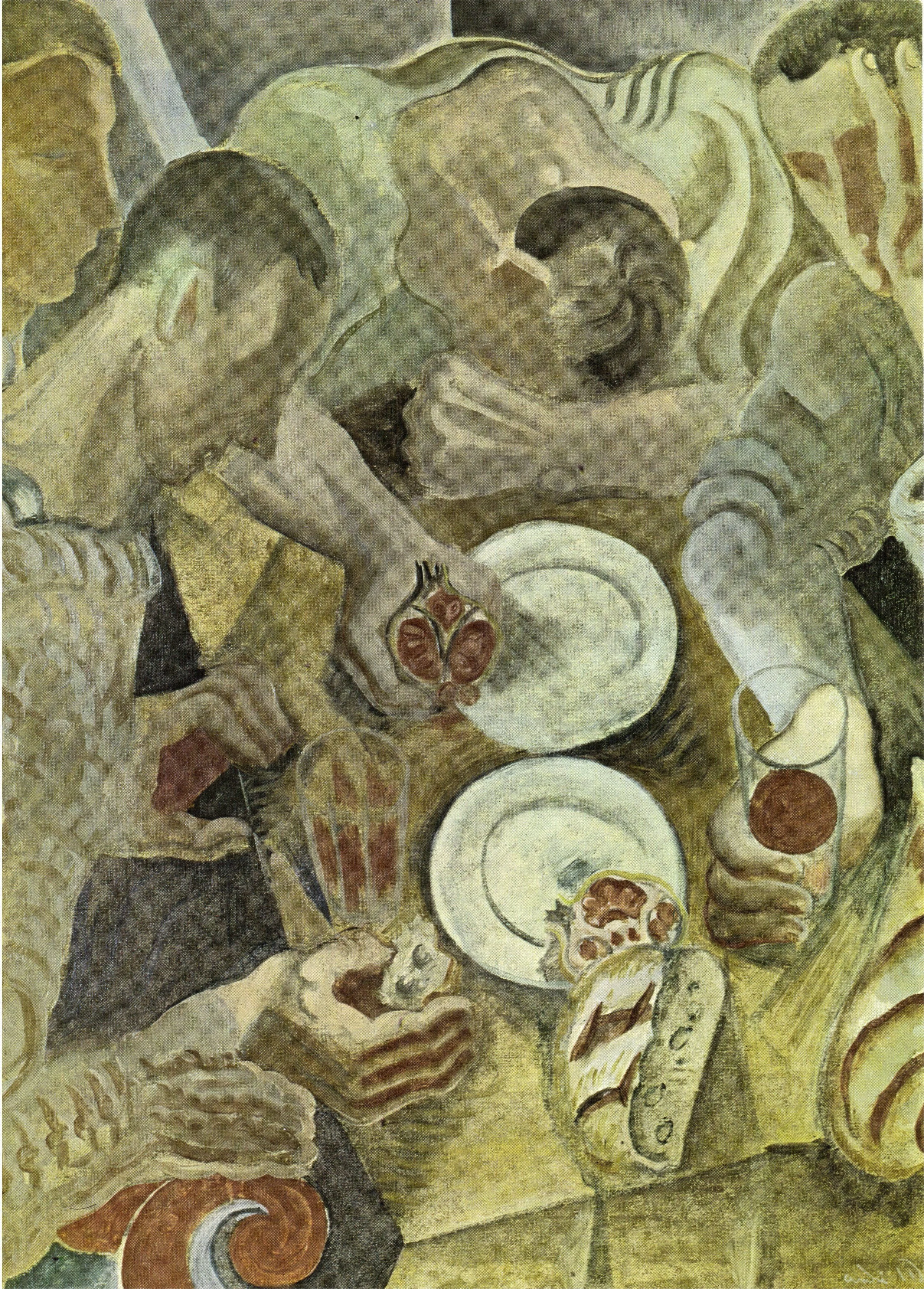
Freedom and Community
Midway through every 7 year old-girl’s favorite musical, Frozen, Elsa delivers a line that summarizes so much of our cultural moment. Having put aside the constraining expectations of her family and the royal court at Arendelle, she sings:
“I’m alone. But I’m free.”
Midway through every 7 year-old girl’s favorite musical, Frozen, Elsa delivers a line that summarizes so much of our cultural moment. Having put aside the constraining expectations of her family and the royal court at Arendelle, she sings:
“I’m alone. But I’m free.”
What a line. It so concisely summarizes the predicament of our modern understanding of freedom. You and I tend to think of freedom as the absence of all constraints, of anything that would inhibit the fulfillment of our deepest desires and wishes: “anything that makes demands upon my time, money, pleasure, and resources that I don’t prefer must be at least an undesirable (if not a categorically bad) thing.” Unfortunately, there is no such thing as a society, institution, career, or even another person who perfectly aligns with each of our individual desires.
As a result, we settle for a kind of freedom that leaves us feeling deeply alone.
We know that we have needs for relationship and community, but how can we reconcile their constraints with our insistence on being able to do what we want whenever we please? How do we navigate between our desire for freedom and our desire for community?
In the Christian story, freedom is not something that we achieve by throwing off all constraints. Rather, true freedom is the presence of the right restraints. A fish that has thrown off the constraint of only living in water is not free. It’s dead. Similarly, a person who shirks all attachments that demand any form of sacrifice is not a true person, but a diminished person.
If we want to know what it means to be truly free, we have to know what it means to be a person. We have to understand what it means that we are made in God’s image, that we bear resemblance to God himself and are imbued with longings that are a part of God’s good design for us.
Part of what it means that we bear God’s image is that we are inherently relational creatures. Christianity is different from all other religions because it asserts that love is not a created thing, but an eternal thing. God didn’t create us so that love could exist. Rather, God is love and has been dwelling in perfect love (shared between Father, Son, and Holy Spirit) from forever. This means that our longing for relationships is not primarily the result of the brokenness of the world (though the world is certainly full of relational dysfunction), but part of a good desire God placed in us to reflect his character.
We can’t be healthy people without some healthy relationships.
So, (strong pivot!) let me invite you to consider what it might look like for you to enter into this strange freedom that is Christian community and find a satisfaction you can’t know without it.
At Redeemer, one of the forms community takes is found in small groups—which are exactly that: gatherings of people meeting throughout the week and throughout Richmond to eat, pray, and read the Scriptures together. Click here for a full list of small groups and leaders’ contact information.
Small groups relaunch tonight (January 14) and you are warmly invited.
We look forward to seeing you there as we discover more of God’s freedom together.
All of grace and peace,
Jeff

Three Ways To Think About End-Of-Year Giving
Dear Redeemer Family,
As 2019 winds down and we prepare for Christmas celebrations, time off of work, and (hopefully) a time of rest with family - I’d like to invite all of us to consider a few different ways to think about giving before Dec. 31st.
Dear Redeemer Family,
As 2019 winds down and we prepare for Christmas celebrations, time off of work, and (hopefully) a time of rest with family - I’d like to invite all of us to consider a few different ways to think about giving before Dec. 31st.
Your First Gift: Many of you are brand new and have either: 1) Only recently decided to make Redeemer your home church, or 2) Are still somewhere in the discernment process about whether or not Redeemer will be your church home. I’d like to say to both parties - wherever you are - be all in. You may decide to stay, you may not - but either way it’s a good and healthy thing to be invested wherever you are. So I invite you to consider making your first gift.
Fulfilling Your Pledge: Those of you who are Members and have already filled out a Pledge card earlier in the year may want to double-check to see if you have fulfilled your Pledge. This is a new practice for many of us - but it is such a helpful one - both for you and for the church. Pledging helps you give strategically and intentionally. Pledging helps the church plan ahead and make wise and careful decisions. So if you are able, I invite you to fulfill your pledge.
Giving Out of Abundance: Many of us begin each year wondering if we will earn enough money to make ends meet. Some of us feel a financial pinch towards the end of the year because we had not made quite as much as we had hoped, but others of us have (remarkably!) brought in more than enough income. If the Lord has blessed you with abundance this year, I invite you to consider giving to Christ’s church out of that abundance as a way of honoring His generosity and goodness to you.
Now, many of you know that Redeemer has intentionally budgeted for a deficit this year. We have done this because, with a growing church, we wanted to staff for future growth. This means that we must grow into our budget. Additional Year-End giving is a great way you can help off-set the deficit, which will allow our little church to continue to grow and thrive in the year to come.
How do I Give? For those of you who are new to giving, please visit the GIVING PAGE on our website for instructions on how to:
Give Online
Give in the Offering Basket at Church
Mail a Check
Gift Appreciated Assets
When is the Deadline for Year-End Giving? All online gifts must be made and all checks must be dated by Dec. 31st or earlier.
Thank you dear friends. The Lord has been wonderfully generous to us this year and it’s a joy to give back to our King with grateful hearts.
In the Father’s love,
Dan
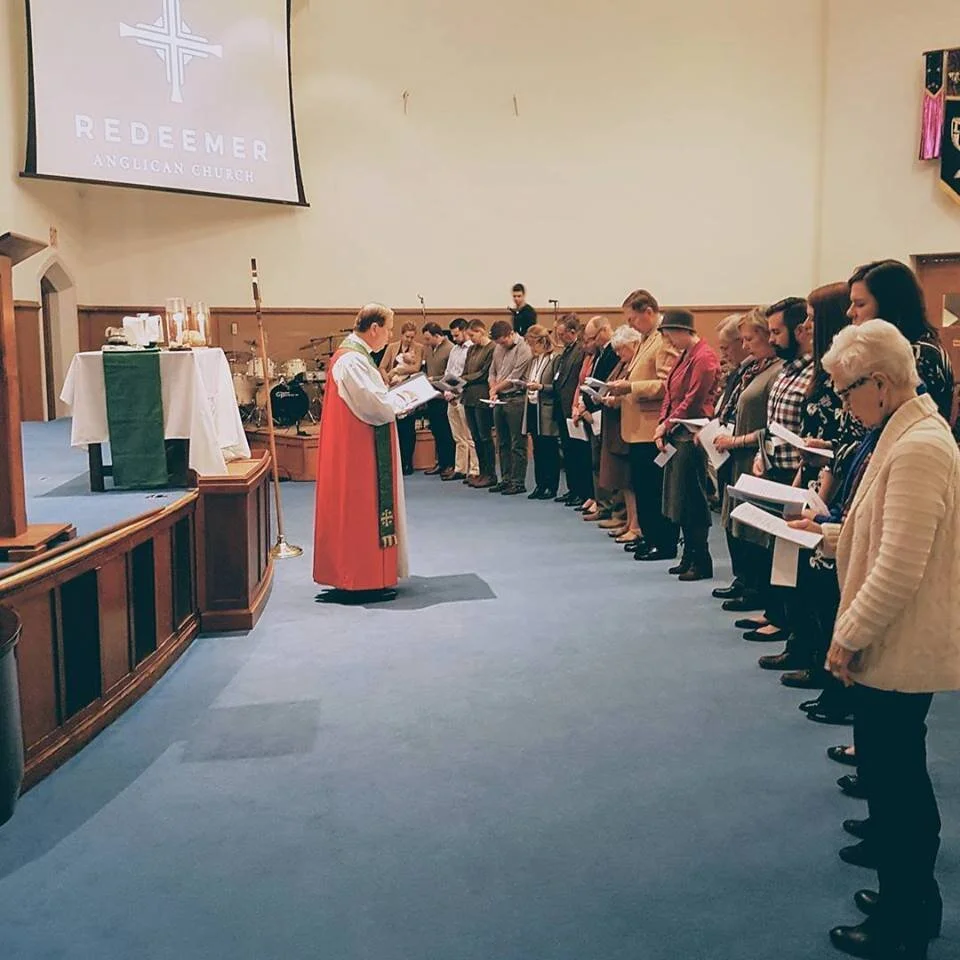
A Case For Church Membership
“Why should I become a member of a local church?”
Over the years I’ve heard a number of well-intentioned and sincere objections follow this question:
“Why should I become a member of a local church?”
Over the years I’ve heard a number of well-intentioned and sincere objections follow this question:
Membership feels exclusive, like some people are in and some are out. This isn’t very hospitable.
Membership feels too institutional, like the church is a club and not a family.
Membership means requirements and obligations, which are anti-Gospel and anti-Grace.
It might surprise you to learn this, but I used to strongly agree with each one of these objections. However, over the years, my thinking has changed significantly and - rather than membership working against hospitality, family, and Gospel - I’ve become deeply convinced that membership actually facilitates each of these!
Here’s how:
1. Membership facilitates hospitality.
Luke 14:12-14. He said also to the man who had invited him, “When you give a dinner or a banquet, do not invite your friends or your brothers or your relatives or rich neighbors, lest they also invite you in return and you be repaid. But when you give a feast, invite the poor, the crippled, the lame, the blind, and you will be blessed, because they cannot repay you.”
In Christ’s teaching, we are specifically instructed to open our doors and invite in those who are on the outside. This passage is not just about inviting in the poor vs the rich (though it is also about that), it is about extending hospitality to outsiders vs insiders. Now, if - in the name of hospitality - we say there’s no such thing as insiders or outsiders, then who will do the inviting and who will come to the party? You cannot invite others into the hospitality of God until you, yourself have received the goodness of the Lord’s hospitality. You must be in before you can invite others in.
Once you are in, you realize there are others who are out - which puts you in the perfect situation to obey Jesus’ teaching on true hospitality. In this way, Membership (a formal and clear way of defining who is in and who is out), actually sets us up to obey the Lord, open our doors, and demonstrate real hospitality to others.
2. Membership makes the church more like a family.
1 Timothy 5:1-2. “Do not rebuke an older man but encourage him as you would a father, younger men as brothers, 2 older women as mothers, younger women as sisters, in all purity.”
This passage instructs us to treat other people in the church like family. Then, our author (the Apostle Paul) goes on to give specific instructions about who to care for, how to care for them, and how to discipline people when they stray into sin. The assumption is, you can only operate as a family when it is clear who, exactly, is a part of the family. Paul is clearly not instructing us to treat all people like fathers, monthers, brothers, and sisters - but rather the people who are a part of the church family. When such individuals stray into flagrant sin, they are (temporarily, and for the sake of encouraging repentance) removed from the church family. For this kind of familial love and discipline to work, there must be some sort of clear boundary line that delineates who is in the family and who is not.
Therefore, in order for the church to function like a family, we must know who, specifically, is a part of that family. The brothers, sisters, mothers, and fathers here is not meant to signify some abstract concept of warm relationships - rather we should be thinking of specific people. i.e. my brother-in-Christ Jeromy or my father-in-Christ David. Membership helps take us from the abstract to the specific in being a church family.
3. Membership showcases the Gospel.
Ephesians 2:8-10. “For by grace you have been saved through faith. And this is not your own doing; it is the gift of God, not a result of works, so that no one may boast. For we are his workmanship, created in Christ Jesus for good works, which God prepared before hand, that we should walk in them.”
“But Membership means requirements and obligations, which are anti-Gospel and anti-Grace.” This is the one I hear most often. It is also the one to which I am, simultaneously, most sympathetic and which I disagree with the most strongly! I am sympathetic because it is absolutely true that the Gospel is the good news of the free gift of mercy and forgiveness won for us in the death and resurrection of the Lord Jesus. The Gospel is primarily about something God has done for us and not something that we do for God.
However, when we receive this free gift of mercy and forgiveness, we find that it changes absolutely everything about us. Our lives are no longer our own. We belong, body - mind - and soul - to the Lord. We begin to embody the good news of the Gospel, allowing it to shape our lives and affections.
Membership clarifies the implications of the Gospel for us and, therefore, showcases the beauty of the Gospel in the transformed lives of the members. If we resist Membership on the grounds that “the Gospel is not about doing stuff,” we are saying that the church is not have any vision for what a redeemed and renewed life in Christ should look like. A quick, cursory reading of just about any New Testament book should quickly lay that objection to rest.
Dear friends, on February 9, 2020 - our Bishop (the Rt. Rev. John Guernsey) will visit Redeemer to confirm and welcome in new members. I want to warmly and joyfully extend the invitation to membership to absolutely all of you!
There is a simple, three-session, course to prepare you for this next step - we call it Redeemer 101 | Foundations. The goal is simply to orient you to the Gospel, the Anglican Communion, and the local vision for Redeemer.
If you have not yet taken this course, let me just say that it is a really good way to get to know our church better and discern if you’d like to become a Member.
If you have any questions about what it means to be a Member at Redeemer, or about the Membership process, please reach out to me - dan@redeemerva.org
In the Father’s love,
Dan

Celebrating Three Years of God's Faithfulness
So many wonderful things have taken place in our midst in the past twelve months. Before we turn towards the future and consider where the Lord might take us next, let’s pause and reflect on the good gifts our Heavenly Father gave to us this year:
Dear Redeemer Family,
So many wonderful things have taken place in our midst in the past twelve months. Before we turn towards the future and consider where the Lord might take us next, let’s pause and reflect on the good gifts our Heavenly Father gave to us this year:
Formalizing: Towards the end of 2018 our Diocese (the Diocese of the Mid-Atlantic) voted to receive us as a member congregation, and on January 13th 2019 I was officially installed as your Rector. (Which I count a tremendous honor and privilege).
Church Planting: On May 5th we commissioned the Rev. Steven Breedlove, along with about 40 of our own people, to plant Church of the Incarnation in Short Pump. They are off to a strong start and we
Building the Team: Our Staff has really grown this year, adding: Paul Zach - Director of Worship, Jeff King - Director of Operations, Casey Cisco - Parish Administrator, Rachel Capel - Women’s Ministry, and Ben Lansing - Small Groups Coordinator.
College Fellowships: We also brought on two, full-time college ministers, David Comeau and Tee Feyrer, who are raising their own support in order to launch Redeemer College Fellowship on campus at VCU and U. of R. respectively.
Justice & Mercy: Our work in the areas of Justice and Mercy for our City took a big step forward, with new partnerships with Youth Life Foundation, Arrabon, and Adoption & Foster Care.
Children’s Ministry: As you might have noticed, there are more than a few kids here at Redeemer! We are blessed with growing families and grateful for the work Nancy Reynolds (Dir. of Children’s Ministry) and her army of volunteers are doing to care for and disciple our youngest members.
It has indeed been a year of abundance. Thanks be to God!
As we look ahead to the coming year, we might imagine both the challenges and opportunities we will face:
CHALLENGES
Facilities: We love our location and we are deeply grateful for our partnership with Tikvat Israel. However, we have all probably felt the limits of our rented facility. Moving is difficult and should be approached cautiously. Staying would require some creative solutions - especially if we continue to grow! For the coming year, the plan is to stay put at 2715 Grove Ave. and I invite your prayers for our Vestry as we make facility decisions going forward.
Formation: With almost 100 infants, children, and teenagers that call Redeemer home, we bear (along with their parents) the enormous responsibility of their spiritual formation. As members, we take vows - whenever a child is baptized - to assist parents in raising their children. In 2020, we will all be called to fulfill those vows!
OPPORTUNITIES
Love of Neighbor: Most of our neighbors do not know the love of Christ or the hope of His resurrection. In 2020, what if that began to change? I’m not talking about some dramatic door-to-door evangelism campaign. (I’m sure we can all agree that would be more off-putting than helpful). Rather, what if unusually gracious hospitality became a means by which we reach out to our neighbors in love? From day one, we’ve said, “the front porch of Redeemer is your front porch.” I pray, in the coming year, that many of your neighbors experience the warmth of God’s love through you and your home.
Community & Belonging: So many of us are new. So rather than concluding with some rousing charge to go forth and do a bunch of stuff, I’d rather end by saying that one of the very best things we can do this year is to spend time together. The Lord has, in His kindness, gathered us into a church family. This is a good gift to be enjoyed! I pray that this is a year of deepening in community and an experience of belonging with one another.
May the Lord bless you and keep you.
In the Father’s love,
Dan

On The Odd Practice of Advent
For Christians today, the practice of observing the season of Advent can feel just as odd. In Advent we are told that we were made for life in God’s Kingdom, and that we are merely sojourners in this present world. Advent tells us that our hearts are, deep down, filled with longings which will only be satisfied in the New Creation. In this way, Advent points us forward towards the second coming (second Advent) of Christ - at which time this world will be renewed and restored.
Redeemer Family,
Imagine your great, great grandparents were born on Mars. So your great grandparents grew up hearing stories about life on Mars and what a wonderful place it was to live. They, in turn, passed on the stories to your grandparents; and they to your parents, and your parents to you. The story would go something like this:
Long ago, our family lived on Mars. Life was wonderful, the land was good, and everyone had enough to eat and drink. We were at peace. But then, things went horribly wrong. We were exiled from Mars, were sent to Earth, and have been living here in captivity ever since. One day, a rescuer is going to come and take us home, and we must live in longing, anticipation, and readiness for that day.
Can you imagine how difficult it would be to connect to that story emotionally? You’re told that you were made for another life on another world, but all you’ve ever known is this life in this world. How can you long for a land you’ve never seen? How can you anticipate something you’ve never experienced? How can you prepare yourself for something other-wordly?
For Christians today, the practice of observing the season of Advent can feel just as odd. In Advent we are told that we were made for life in God’s Kingdom, and that we are merely sojourners in this present world. Advent tells us that our hearts are, deep down, filled with longings which will only be satisfied in the New Creation. In this way, Advent points us forward towards the second coming (second Advent) of Christ - at which time this world will be renewed and restored.
(Note: The second Advent of Jesus is not about escape from this world, but rather the renewal and restoration of our world).
But how are we to engage this at any level deeper than mere intellectual assent? How can we long for a land we’ve never seen? How can we anticipate something we’ve never experienced? How can we prepare ourselves for a world unlike this world?
We need more than information, we need practices - embodied knowledge. We need traditions and liturgies and songs and readings and decorations and candles and smells and food and fasting and celebrations and much, much more. If you’ve ever wondered why churches put all this effort into Advent and Christmas, you should know that the goal is not to make a big fuss about a special occasion (although I do love a big fuss!), but rather to help us cultivate a deep knowledge, in our very bones, that a day is coming when - at long last - all will be made right.
It’s odd, I’ll give you that - about as odd as being told you’re supposed to long for Mars when all you’ve ever known is Earth. But what Christian men, women, and children have - throughout history and around the world - discovered during the season of Advent is that there is something real here. There really is a deep longing within our hearts and yearns for thing which nothing in this world can satisfy. As CS Lewis memorably wrote, “If I find in myself desires which nothing in this world can satisfy, the only logical explanation is that I was made for another world.”
Dear church family, we were - all of us - made for the New Creation. Shalom at Peace. A restored life with God, each other, ourselves, and the land.
And the odd promise of Advent is that this will, in fact, come true.
In the Father’s love,
Dan

Proverbs and Marriage
If you want to learn from proverbs, you must think yourself a usual man. If you want proverbs to have anything to do with you, you cannot think yourself atypical. You must think yourself ordinary, the kind of fellow that warning labels and parables were written for. If you want to learn from the wisdom of the ages, you have to give up thinking yourself special. If you’re special, proverbs don’t have anything to do with you.
[This is the manuscript of a talk given at the Redeemer Men’s Gathering at Canon and Draw Brewery, October 28, 2019 by Josh Gibbs—author, lecturer, and teacher of classical literature at Veritas School.]
I would like to spend my time with you explaining two proverbs— one from the poet Petrarch, the other from the Greek sage Hesiod. I will begin by reading both proverbs, but it will take me a little while to return to them.
The first proverb is from Petrarch, and it is: He who can say how much he loves, loves but little.
The second proverb is from Hesiod, and it is: At the beginning of the cask and at the end take thy fill, but be saving in the middle; for at the bottom saving comes too late.
Before speaking on these particular proverbs, I need to say something about proverbs in general.
“Honor the Lord with your wealth, then your barns will be overflowing.”
So says Solomon. However, I would wager we have all heard of a man who honored the Lord with his wealth and died poor, or that we have all heard of a man who didn’t honor the Lord with his wealth and his barns were overflowing nonetheless.
“A wise son brings joy to his father, but a foolish son brings grief to his mother.”
Again, Solomon. Although, I suppose we’ve all heard of a wise son whose father took no delight in his son, and as a teacher, I have known a few foolish sons whose mothers delighted in them anyway, and sometimes even delighted in their foolishness.
Such cases are rare, but they are not impossible, and so we must understand that proverbs are not scientific laws. Proverbs are not mathematical equations. The fact that Hugh Hefner died with fifty million dollars in the bank stands in defiance of half the things Solomon wrote.
While proverbs do not use words like “usually,” “commonly,” “often,” or “typically”, proverbs describe the world as it usually, commonly, typically is. Not all wise sons bring joy to their fathers, but most of them do. Not all girls like flowers, but most of them do. Not all men like to grill, but most of them do. The wager of a proverb is that it is better to know most women like flowers than to know some women don’t.
Of course, this is true not only of the proverbs of Solomon, but the proverbs of Kierkegaard, Nietzsche, Marcus Aurelius, Confucius, not to mention all the cultural proverbs we have inherited from the English and the French about agrarian life.
Proverbs describe the world as it is right down the middle. Proverbs describe the world as it is 98.1% of the time. It is telling that most of the proverbs in Scripture come from Solomon because the proverb is kingly wisdom. A king does not need to understand individuals so much as he needs to understand human nature. A king needs to know what will please most of the people, what will alarm most of the people. A king needs to know what people are like, which means he needs to know what husbands are like, what cops are like, what prostitutes are like. A king needs to know the nature of things and proverbs report human nature. Proverbs are based on surveys of mankind. When I refer to human nature, I mean the conditions under which men tend to thrive or tend to fall apart. Whenever we discover what usually happens to a thing under certain conditions, we have discovered something about it’s nature. And so proverbs describe what usually becomes of men who touch other men’s wives, what usually becomes of women who seduce men, what usually becomes of children who honor their parents, what usually becomes of men who drink before noon.
If you want to learn from proverbs, you must think yourself a usual man. If you want proverbs to have anything to do with you, you cannot think yourself atypical. You must think yourself ordinary, the kind of fellow that warning labels and parables were written for. If you want to learn from the wisdom of the ages, you have to give up thinking yourself special. If you’re special, proverbs don’t have anything to do with you.
As someone who has been a teacher for fifteen years, I have spoken to hundreds of parents about the souls of their teenage children, and I can say with confidence that people who think themselves special are some of the unhappiest and least productive people you will ever meet. They do not readily take advice, they are generally adverse to common sense, they do not think they will suffer by breaking the rules, and generally have very little sense of self-awareness and thus often cannot tell when they have embarrassed themselves horribly.
Of course, having set the word “special” within the context of proverbial wisdom, being special sounds very silly. However, there is a realm of human experience where men who think themselves common nonetheless have great difficulty releasing hold on the claim to be special. That is their marriages. It is one thing to say, “I am an average man,” but most men feel some shame at saying, “I have an average marriage.” Christian men especially feel shame at confessing their marriages average.
In a 2014 article for First Things entitled “The Good-Enough Marriage,” Mark Regnerus wrote:
Amid well-intentioned efforts to reinforce or rebuild a disappearing marriage culture, there remains a persistent hazard—that in belaboring the beauty of marriage very many people in challenging unions will feel more discouraged, not less. Their marriages haven’t felt wonderful for a very long time. Or the dismal follows the wonderful in a predictably cyclical fashion. Or misunderstanding seems chronic. Bedrooms become battlegrounds. It’s not how marriage was intended to be, but it is how many turn and how some remain.
When I was a very young man, the idea of someday having a “good-enough marriage” was terrifying. In fact, the very expression “good-enough marriage” was self-defeating, self-contradictory, for any marriage I might describe as “good-enough” was, by definition, not good enough. I wanted a special marriage. And I thought myself equal to the task.
The desire for a special marriage was born of the fact that by the time I got married, I’d had three serious girlfriends, the third of whom I married, and all three had been long-distance relationships. Long-distance relationships skew a fellow’s understanding of marriage because in a long-distance relationship, the relationship is always about itself. This is broadly true of all young romances, but it especially true of love-distance romances.
“How can you say you love God, whom you cannot see, when you do not love men, whom you can see?” asks St. John, thus confirming our suspicions that it is harder to love someone who is far off than someone near. Long-distance romances are constantly on the verge of dissolving into nothingness and so, in order to last, they must constantly reassert themselves, even though there is very little to reassert. Many long-distance relationships end up chiefly concerning not the love of the other, but the love of love.
The participants in a long-distance relationship cannot really do anything together, they cannot accomplish anything, they cannot produce anything, cannot labor together— even though joint labor is what most healthy marriages consist of, day in and day out. The beginning of a marriage is not like this, though. The preface to most marriages is six months to a year of planning a wedding. Engaged or nearly engaged couples think constantly of the relationship itself which is emerging— how physically intimate should they be before marrying? Is it wise to spend so much time alone given the temptations which arise? Do their friends think it a good match? Will their families get on with one another?
Speaking and thinking of the relationship prior to marriage is far easier, though, than speaking of the marriage after the fact. This is because a man is free to marry for whatever reasons he likes. A man may marry a woman because she is kind, wise, virtuous, beautiful, rich, from a good family, or because he believes she will be a good mother, supportive wife. A man rarely has any difficulty explaining why he is marrying a woman.
But every great love ultimately involves taking an oath. Husbands make oaths to wives. Christians make oaths to God and church. Soldiers make oaths to their countries. And something strange happens to love the moment it passes through an oath. A man may marry a woman because she is kind and beautiful, but he cannot stay married to her for these reasons. His reasons for marrying are, in the act of marriage, sublimated into something higher, something beyond reason, something beyond words. I married my wife because she was good and beautiful, but when my students ask me why I love my wife, I typically give one of two responses. The first, “Because I have made an oath to God that I would love her,” and the second is, “I don’t know.” The second is, to be honest, the far more truthful. It is a far more accurate assessment of the situation. She is still good and beautiful, but these are reasons I like her. These are reasons she is pleasant to live with. Were she to lose her beauty and her goodness, I would not be free to dissolve our marriage.
Oaths transcend rationality. For this very reason, the earliest Enlightenment philosophers were not fond of marriage. If it makes sense to live with someone and have children with someone, do it, and when it stops making sense, the relationship should obviously be dissolved. There is no need for some superstitious love incantation pronounced in a church before many witnesses to bind two people together eternally when they no longer love one another, no longer need one another, and would prefer the sexual company of others.
Returning to the quote from Petrarch, though, allow me to suggest, that when a relationship moves beyond reason, it has largely moved beyond words, as well. Not every arrangement of words is purely rational, of course, and so old married couples talk of the marriage itself from time to time. Nonetheless, the happiest marriages I have observed tend to be the ones wherein little time is given to the discussion of marriage. I mean the happiest husbands do not speak often of marriage theories, marriage theologies, gender roles, submission, complementarianism, or whatever Christian theology of marriage is fashionable at the moment. The same is true of childrearing, as well. Some of the worst parents I have ever known — the parents least competent to raise happy, pious children — are constantly reading books on childrearing, constantly commenting on the childrearing techniques of others, constantly describing the theories and research and books which stand behind their decision to sleep train, to spank or not spank, to give or not give an allowance.
Many older Christian men advise younger men that marriage is hard work and compromise, which is true, but we too often conceive of this hard work and compromise as being about marriage itself. Consider for a moment the staggering volume of popular, trendy Christian books on the subject of marriage. Every few years or so, some new concept is introduced by Christian book publishers as being the key to a good marriage, and a spate of books are issued which offer insights into achieving this quality. Thus, the “holy marriage,” the “biblical marriage,” the “vertical” marriage, the marriage which “restores,” the marriage which teaches you to “cherish” your partner, “respect” your partner, or instructional guides to what “radical” husbands do. Having written book proposals before, I can tell you that every fashionable book on marriage involved the author selling their unique, special take on the subject to Thomas Nelson, Zondervan or whoever.
Reading books on marriage is not part of the hard work of marriage. What is more, a great many marriage books advise readers on how to talk about their marriage, how to talk about their feelings about their spouse, how to talk about “needs” – in short, how to make the marriage itself a subject of conversation.
Ours is an age which believes— despite a staggering amount of evidence to the contrary— that sitting down and talking is a good way of sorting out our problems.
As a teacher, I can report that sitting down and talking with parents who are angry with me almost always makes things much, much worse. On average, my wife and I have two long conversations about a substantial disagreement every year. In these conversations, we talk about us, we talk about our feelings, our needs. We do not shout, we do not trot out our respective records of wrongs, and yet, on average, one of those conversations leads us to resolve our disagreement and the other makes the disagreement more pronounced and acrimonious. To be frank, we have been trained by rationalists and atheists to believe that “sitting down and talking” is the way sane humans solve their problems. While I have talked through some problems and disagreements in my life, the idea we can talk through our problems sounds lovely, but it’s just far too easy. It suggests we need not suffer much to solve our problems. There’s a lot of longsuffering which attends not presenting your case, which means not talking. Being quick to listen and slow to speak does not mean being quick to have conversation.
More than most people, writers feel and know the limitations of words. In Till We Have Faces, Lewis writes, from the perspective of Orual, his protagonist:
Lightly men talk of saying what they mean. Often when he was teaching me to write in Greek [my old teacher] would say, 'Child, to say the very thing you really mean, the whole of it, nothing more or less or other than what you really mean; that's the whole art and joy of words.'
A glib saying. When the time comes to you at which you will be forced at last to utter the speech which has lain at the center of your soul for years which you have, all that time, idiot-like, been saying over and over, you'll not talk about the joy of words.
The late Catholic short story writer Andre Dubus has a remarkable essay entitled “On Charon’s Wharf,” wherein he meditates on the silence required to take the Lord’s Supper and the wordless meals he often enjoyed with his wife. I would like to read a portion of that essay now.
Since we are all terminally ill, each breath and step and day one closer to the last, I must consider those sacraments which soothe our passage. I write on a Wednesday morning in December when snow covers the earth, the sky is grey, and only the evergreens seem alive. This morning I received the sacrament I still believe in: at seven-fifteen the priest elevated the host, then the chalice, and spoke the words of the ritual, and the bread became flesh, the wine became blood, and minutes later I placed on my tongue the taste of forgiveness and of love that affirmed, perhaps celebrated, my being alive, my being mortal. This has nothing to do with immortality, with eternity; I love the earth too much to contemplate a life apart from it, although I believe in that life. No, this has to do with mortality and the touch of flesh, and my belief in the sacrament of the Eucharist is simple: without touch, God is a monologue, an idea, a philosophy; he must touch and be touched, the tongue on flesh, and that touch is the result of the monologues, the idea, the philosophies which led to faith; but in the instant of the touch there is no place for thinking, for talking; the silent touch affirms all that and goes deeper: it affirms the mysteries of love and mortality….
So many of us fail: we divorce wives and husbands, we leave the roofs of our lovers, go once again into the lonely march, mustering our courage with work, friends, half-pleasures which are not whole because they are not shared. Yet still I believe in love’s possibility, in its presence on the earth; as I believe I can approach the altar on any morning of any day which may be the last and receive the touch that does not, for me, say: There is no death; but does say: In this instant I recognize, with you, that you must die.
And I believe I can do this in an ordinary kitchen with an ordinary woman and five eggs. I scramble them in a saucepan, as my now-dead friend taught me; they stand deeper and cook softer, he said. I take our plates, spoon eggs on them, we sit and eat. She and I in the kitchen have become extraordinary: we are not simply eating; we are pausing in the march to perform an act together; we are in love; and the meal offered and received is a sacrament which says: I know you will die; I am sharing food with you; it is all I can do, and it is everything.
As lovers we must have these sacraments, these actions which restore our focus, and therefore ourselves. For our lives are hurried and much too distracted, and one of the strangest and most dangerous of all distractions is this lethargy of self we suffer from, this part of ourselves that does not want to get out of bed and once out of bed does not want to dress and once dressed does not want to prepare breakfast and once fed does not want to work. And what does it want? Perhaps it wants nothing at all. It is a mystery, a lovely one because it is human, but it is also dangerous. Some days it does not want to love, and we yield to it, we drop into an abyss whose walls echo with strange dialogues. These dialogues are with the beloved, and at their center is a repetition of the word I and sometimes you, but neither word now is uttered with a nimbus of blessing. These are the nights when we sit in that kitchen and talk too long and too much, so that the words multiply each other, and what they express — pain, doubt, anxiousness, dread — become emotions which are not rooted in our true (or better) selves, which exist apart from those two gentle people who shared eggs at this same table which now is soiled with ashes and glass-rings.
These nights can destroy us. With words we create genies which rise on the table between us, and fearfully we watch them hurt each other; they look like us, they sound like us, but they are not us, and we want to call them back, see them disappear like shriveling clouds back into our throats, down into our hearts where they can join our other selves and be forced again into their true size: a small I among many other I‘s. We try this with more words and too often the words are the wrong ones, the genies grow, and we are approaching those hours after midnight when lovers should never quarrel, for the night has its mystery too and will not be denied, it loves to distort the way we feel and if we let it, it will. We say: But wait a minute … But you said … But I always thought that …Well how do you think I feel, who do you think you are anyway? Just who in the hell do you think you are?
I need and want to give the intimacy we achieve with words. But words are complex: at times too powerful or fragile or simply wrong; and they are affected by a tone of voice, a gesture of a hand, a light in the eyes. And words are sometimes autonomous little demons who like to form their own parade and march away, leaving us behind. Once in a good counselor’s office I realized I was not telling the truth. She was asking me questions and I was trying to answer them, and I was indeed answering them. But I left out maybe, perhaps, I wonder. … Within minutes I was telling her about emotions I had not felt. But by then I was feeling what I was telling her, and that is the explosive nitroglycerin seeping through the hearts of lovers.
So what I want and want to give, more than the intimacy of words, is shared ritual, the sacraments. I believe that, without those, all our talking, no matter how enlightened, will finally drain us, divide us into two confused and frustrated people, then destroy us as lovers. We are of the flesh, and we must turn with faith toward that truth. We need the companion on the march, the arms and lips and body against the dark of the night. It is our flesh which lives in time and will die, and it is our love which comforts the flesh. Beneath all the words we must have this daily acknowledgement from the beloved, and we must give it too or pay the lonely price of not living fully in the world: that as lovers we live on Charon’s wharf, and he’s out there somewhere in that boat of his, and today he may row in to where we sit laughing, and reach out to grasp an ankle, hers or mine.
It would be madness to try to live so intensely as lovers that every word and every gesture between us was a sacrament, a pure sign that our love exists despite and perhaps even because of our mortality. But we can do what the priest does, with his morning consecration before entering the routine of his day; what the communicant does in that instant of touch, that quick song of the flesh, before he goes to work. We can bring our human, distracted love into focus with an act that doesn’t need words, an act which dramatizes for us what we are together. The act itself can be anything: five beaten and scrambled eggs, two glasses of wine, running beside each other in rhythm with the pace and breath of the beloved. They are all parts of that loveliest of all sacraments between man and woman, that passionate harmony of flesh whose breath and dance and murmur says: We are, we are, we are …
Dubus’ marriage sounds like a common one to me. It sounds “good enough.”
Hesiod says: At the beginning of the cask and at the end take thy fill, but be sparing in the middle; for at the bottom saving comes too late.
The sparing middle Hesiod refers to is not just the common marriage but the common years of a marriage. In the beginning of the marriage, we drink deeply. The marriage itself is referred to often, considered, planned, forged. During times of great difficulty, the marriage returns to focus. When the bread winner is fired, when a child dies, we drink deeply. The great ceremonies of life always refer to beginnings and endings— this is true not only in your life and mine, but in the life of Christ Himself, for the greatest events in the Church calendar are Annunciation, Nativity, Good Friday, and Easter— all beginnings and endings. In the middle, though, we have ordinary time. Most of the liturgical year is ordinary time and so most of life and most of your life is the sparing middle.
We take our fill at the beginning and end because beginnings and endings are inherently holy and uncommon. New life comes from God and we drink deeply for new life because Heaven has opened up to earth. However, most of a marriage passes in the sparing middle and the reason the middle is sparing is because we have things to do. Drinking is about leisure, not about labor, but a common marriage accomplishes common tasks.
A common marriage is helpful, serviceable, practical, constructive, stable, which is to say not given to many great highs and many great lows, though great highs and great lows are the stuff of compelling drama, passionate music, and transcendent art. Speaking of a marriage tends to produce great highs and great lows, as Dubus notes, but speaking of a thing removes you from it.
As CS Lewis notes in his commentary on the myth of Orpheus, you cannot do a thing and reflect on doing it at the same time. You cannot see a thing and be a thing at once. You cannot see your own eyes, only their reflection.
However, your marriage does not need many, many great highs and great lows.
In the Orthodox ritual celebration of the Lord’s Supper, each communicant comes to the front of the nave, waits in line, and finally receives tinctured bread and wine from a chalice, offered to the tongue of the suppliant on the tip of a bronze spoon. No seconds are offered, neither can the suppliant eat less than the offering. Having presented himself for communion, the suppliant must eat what is given with simplicity. He needs neither more nor less bread and wine than what sits on the spoon. To live sacramentally— acknowledging the omnipresence of a holy God, from Whom all being is given, in Whom all being is sustained, to Whom all being must return— means accepting with simplicity whatever the spoon of reality offers day by day. God has established “a time” for everything which must be done (Ecclesiastes 3), which means the “time to dance” is sanctified for dancing; dancing is the Eucharist of the time to dance. Gathering stones is the Eucharist of the time to gather stones. The Eucharist is a universal experience, for in the Eucharist, the infinite and unconsumable God is consumed. In the nave, the Eucharist binds all together; departing from the nave, the Eucharist is known variously, diversely in all the moments of our lives.
Day by day, God presents us with a time to work, a time to eat, a time to sleep, a time to read our children stories before bed. The working, the eating, the sleeping, the reading… from day to day, tradition, fate, family, society, and the Church have already determined for us what we should do. If a man is willing to be common and to live a common life filled with times and seasons which God makes common to all, he will submit himself to a mysterious, transcendent reality. The infinite Word entered finite history through a finite body; as a finite creature, through finite means, the common man enters the infinite. The man who is ever looking to make himself unique, to distinguish himself from others, to discern and seize the special things of the world— such a man will always isolate himself further and further until he is bereft of companions, bereft of comforters, heroes, and lovers.
In the end, we arrive at a startling paradox: the only way for a thing to truly be special is for it to be normal. The more special we try to make a thing, the more cut off that thing is from its nature, and it’s nature is it’s only way of returning to God.
The truth of nature is that we do not have to make the world special, we merely have to let things be what they are and to love them for what they are. You don’t need to make your celebration of Christmas special. You need to celebrate Christmas, because Christmas is glorious. You don’t need to throw special birthday parties for your children.
Once you understand what education actually is, you’ll know that you don’t need a special school, you just need a school. You can’t make the Eucharist more special than it is. It’s either the Eucharist or it’s not. The desire for things to be special is usually nothing more than thinly veiled contempt for what things naturally are, which means there is something especially tragic in the father who is desperate for his son to be special. What is so wrong with a birthday party that you need a “special birthday party”? What is so wrong a honeymoon that you need your honeymoon to be a special honeymoon? What is wrong with a child that yours needs to be special? What is so wrong with marriage that yours needs to be special? Special is just fake holy.
God tends to not create holy things. He creates common things and then, through a series of predictable rituals and ceremonies and virtuous habits of being, transforms them into holy things. My plea, then, is that you think highly enough of marriage that you not seek after a special marriage. Buying flowers for your wife isn’t going to make your marriage special. It’s going to make it normal. Doing the dishes for your wife isn’t going to make you a great husband. It’s just going to make you a husband. All your striving will not produce something extraordinary, but something ordinary, and because God is God, what is ordinary is very good. Very good enough.

On Baptism
In Christian baptism, a person is united with Jesus in His death and resurrection. We call baptism a sacrament because is a physical, tangible, material ritual that is filled with a spiritual, intangible, immaterial grace. Something physical is happening - The person is either being immersed in water or having water poured over their head. Something spiritual is happening - That person is, mysteriously (in a way that we can only barely begin to comprehend), being joined together with the Lord Jesus and, therefore, becomes a part of the church - the body of Christ.
Dear Redeemer Family,
For an occasion as special as a baptism, we often want to plan ahead, invite friends, family, and godparents, and prepare a special celebration of some kind. So, in the interest of helping us all plan ahead, I thought I’d send out the dates for baptism Sundays for 2020.
January 12th: Epiphany
April 12th: Easter
May 31st: Pentecost
Nov. 1st: All Saints Day
What is Baptism?
Now, I know that many of you are relatively new to the Christian faith and new to participating in a local church - especially a local church that practices ancient traditions like Redeemer does! So let me say a word about what Christian baptism is.
Jesus answered, “Truly, truly, I say to you, unless one is born of water and the Spirit, he cannot enter the kingdom of God. - John 3:5
Go therefore and make disciples of all nations, baptizing them in the name of the Father and of the Son and of the Holy Spirit, - Matt. 28:19
Do you not know that all of us who have been baptized into Christ Jesus were baptized into his death? We were buried therefore with him by baptism into death, in order that, just as Christ was raised from the dead by the glory of the Father, we too might walk in newness of life. - Romans 6:4
Because they formerly did not obey, when God's patience waited in the days of Noah, while the ark was being prepared, in which a few, that is, eight persons, were brought safely through water. Baptism, which corresponds to this, now saves you, not as a removal of dirt from the body but as an appeal to God for a good conscience, through the resurrection of Jesus Christ, - 1 Peter 3:20-21
In Christian baptism, a person is united with Jesus in His death and resurrection. We call baptism a sacrament because is a physical, tangible, material ritual that is filled with a spiritual, intangible, immaterial grace. Something physical is happening - The person is either being immersed in water or having water poured over their head. Something spiritual is happening - That person is, mysteriously (in a way that we can only barely begin to comprehend), being joined together with the Lord Jesus and, therefore, becomes a part of the church - the body of Christ.
The Story of Baptism spans the entirety of Scripture from Genesis to Revelation.
The Old Testament prefigures baptism: In the creation of the world, in the salvation of Noah and his family from the flood, in the exodus of the Israelites through the Red Sea, and in the Israelites crossing the Jordan River out of the wilderness and into the promised land. (There are a lot more, but these are the big ones).
Christ commands us to be baptized and to baptize others.
The New Testament authors teach on the centrality of baptism in a Christian’s life.
So who should get baptized?
Any person, young or old, who wishes to put their trust wholeheartedly in Jesus for their redemption.
Any child of a baptized adult Christian who will raise that child in the faith as a part of the church.
Why do we baptize infants as well as adults?
“We start talking to our children not because they understand us, but so that they will. Baptism is God's language whereby he starts talking to his children and initiates a relationship with them. Sacraments are a word after all.” - Peter Leithart, The Baptized Body
We baptize children, not because we think that an adult profession of faith doesn’t matter (it does, and should come at Confirmation - the other side of the coin to infant baptism), but because we seek to raise Christian children within the church.
Jesus said, “Let the little children come to me and do not hinder them.” We take the Bible at its word that little children can come directly to Jesus, they do not have to grow up first.
For Further Study
I would heartily recommend Peter Leithart’s excellent little book The Baptized Body to anyone who has serious questions about Christian baptism (especially baptizing children) and would like to learn more about it.
If you are a teenager or an adult, have never received Christian baptism, and you would like to - please email me. I would be delighted to get together and talk with you about it.
If you are a parent and your child has not been baptized - same invitation! It would be a joy to baptize your little one.
In the Father’s love,
Dan

On Marking Time
Forgetting comes naturally, remembering requires intentionality. We have to make an effort, and keep making an effort in order to remember - don’t we? This is one of the reasons why we create traditions. Traditions are (usually) heart-warming and meaningful ways of remembering, of marking time, of taking us back to the most important moments in life and in history.
(an Invitation to our Annual Members Dinner - Evening of Dec. 8)
“When your children ask in time to come, ‘What do those stones mean to you?’ then you shall tell them that the waters of the Jordan were cut off before the ark of the covenant of the Lord. When it passed over the Jordan, the waters of the Jordan were cut off. So these stones shall be to the people of Israel a memorial forever.”
– Joshua 4:6-7
These words were spoken by Joshua as the people of Israel passed through the waters of the Jordan River into the promised land of Canaan. The Israelites were instructed to build a small pile of stones that would serve as a reminder of what God had done for them - the stones were a physical symbol that was to help them remember.
Forgetting comes naturally, remembering requires intentionality. We have to make an effort, and keep making an effort in order to remember - don’t we? This is one of the reasons why we create traditions. Traditions are (usually) heart-warming and meaningful ways of remembering, of marking time, of taking us back to the most important moments in life and in history.
One tradition that we started last year here at Redeemer is the tradition of celebrating our Anniversary as a church family. Redeemer Anglican Church was born on the first Sunday of Advent of 2016 and - since that time - the Lord has done so many marvelous things in our midst! Therefore, it is good and right for us mark time by pausing and remembering all that Christ has done here in us and through us.
So, if you are a member (or if you are planning to become a member) you are warmly invited to our Annual Members Dinner the evening of Dec. 8th. We will eat and drink and sing and pray and tell stories and remember together the goodness of our King. Please reserve this evening on your calendars and plan to join us.
Thank you!
In the Father’s love,
Dan
Inviting Our Children Into Sacred Space (Or, why I don’t let my kids play tag in the sanctuary)
In the tension between a sacramental world (with it’s contoured landscape of both sacred and common spaces), and an increasingly secularized world (with a flat landscape of only common spaces) - we are raising a new generation of Christian children. What a marvelously difficult and complex task! We long for our kids to experience the beauty and love of Christ for them and we worry that too many rules, and too much behavior correction will squash their enjoyment of church worship and community. Many of us parents are terrified of hearing our kids say those four dreaded words, “Church is not fun.”
“And God said, “Let there be light,” and there was light.
And God saw that the light was good.
And God separated the light from the darkness.
God called the light Day, and the darkness he called Night.
And there was evening and there was morning, the first day.”
– Genesis 1:3-5
The world has just begun and already the Lord is separating and designating. He creates light, separates it from the darkness, and designates the light for day and the darkness for night. Then he separates waters from air, and then waters from land. Each designated for a purpose and each filled with different forms of life - birds for the air, creeping things for the ground, fish for the seas.
Fast forward to the second half of the book of Exodus and you find the Lord giving the Israelites instructions for constructing the Tabernacle - a special place, separated and designated for a special purpose - the Lord’s presence with His people.
Keep moving through the Old Testament and you will read about God’s people moving into the Promised land and King Solomon building the Temple in Jerusalem.
What is going on? From the beginning of creation - God, it seems, does not treat every atomic particle in the same way. Some things and some places are special, set-aside, holy, sacred.
Follow through into the New Testament, and you will discover Jesus taking ordinary things, separating them out from the rest and designating them for special purposes. River water for baptism, loaves and fish feed a multitude, tepid water becomes wedding reception wine, mud is used to restore a blind man’s sight, ordinary bread and wine become Holy Communion.
What is going on? It’s New Creation - God (in the Jesus) is not treating every bit of creation in the same way. Some things and some places are special, set-aside, holy, sacred.
We, as members of the family of God, are one of these bits of creation that is special, set-aside, holy, sacred. Though we may not feel it much of the time, we ourselves are separated out from the rest of humanity and designated for a special purpose - to be the body of Christ proclaiming our Lord’s death and resurrection. “But you are a chosen race, a royal priesthood, a holy nation, a people for his own possession, that you may proclaim the excellencies of him who called you out of darkness into his marvelous light”. - 1 Peter 2:9
Therefore, the place where the church gathers to worship, to pray, to baptize, and to celebrate Communion becomes a sacred space. So whether the church gathers to worship in a gothic cathedral or a school cafeteria - that space becomes sacred. What makes a church sanctuary sacred is not the pews or the stained glass windows - it is the New Creation reality that the space is now different from other spaces and designated for a special purpose.
Why are we talking about this? Because we live in a rather unique moment in history where our culture seeks to flatten all spaces into generic sameness. You might imagine a house or office with an open floor plan - no separation between spaces for cooking, eating, socializing, working, or sleeping. I can now sit in my sofa with a plate of nachos, my laptop open to my email, Netflix on the TV, and a family member seated next to me. I’m eating/drinking/working/resting/socializing simultaneously!
Now, this isn’t morally wrong. Open floor plans are beautiful and, at best, lead to a wonderful sense of togetherness at home and at the office. But what is lost is specialness - a knowing of how to move and talk and act differently in different spaces.
And in the midst of this tension between a sacramental world with it’s contoured landscape of both sacred and common spaces, and an increasingly secularized world with a flat landscape of only common spaces - we are raising a new generation of Christian children! What a marvelously difficult and complex task! We long for our kids to experience the beauty and love of Christ for them and we worry that too many rules, and too much behavior correction will squash their enjoyment of church worship and community. Many of us parents are terrified of hearing our kids say those four dreaded words, “Church is not fun.”
So what are we to do? Consider this: our children are, in fact, observing us. There are few things more powerful to a young child than seeing their Mom or Dad enjoy something. In other words, adults - what you love will have a powerful shaping effect on what your children love. If you find church worship to be stuffy, boring, stiff, and fun-squashing; odds are your kids will pick up on that despite your best attempts to convince them that this is good for them. On the other hand, if your soul is truly nourished and refreshed by entering a sacred space and you begin to share that enjoyment with your children, inviting them to experience it with you; then you will open for them an entirely new way of interacting with the world that they will not find anywhere else.
Encouragement: And here’s the thing, many of you are already doing this in other places and you might not even realize it! When you say to your child, “No smart phones at the kitchen table,” or “No food in the bedroom,” you are implicitly teaching your children that not all spaces are the same. And you don’t feel badly about it for a second because you love your kids and you know that phones at the table will kill family conversation and food in the bedroom will invite the rodents.
So why do we experience that twinge of guilt when we tell our six year old that she can’t play tag in the sanctuary after the service? My guess is that most of us are just a little fuzzy in our own minds about what makes a sanctuary special. We’ve heard somewhere along the way that the Holy Spirit is present with us all the time and that we are to worship God throughout the week and not just on Sundays (both true). However, instead of allowing those truths to elevate the importance of Monday-Saturday, we’ve allowed it to devalue Sunday. Instead of allowing Christ’s presence with us to enrich the rest of life, we’ve allowed it to deplete corporate worship.
And so Sunday becomes just another day and the church sanctuary just another room.
Beloved friends, redeemed men, women, and children - Sunday is not just another day and wherever we gather for worship as the family of God is not just another room. Both are sacred because Christ is risen and is making all things new.
In the Father’s love,
Dan
Author
- 150
- Dan Marotta 16
- Casey Cisco 15
- Christian Hayes 5
- Lane Cowin 4
- Jeff King 3
- Casey Cisco 3
- Ben Lansing 3
- Mikala Thompson 3
- Tee Feyrer 2
- 2
- Claire Lewis 2
- Rachel Capel 2
- Christian Hayes 2
- 2
- Isabelle Huggard 2
- 1
- Josh Gibbs 1
- Elizabeth King 1
- Mitchell Waters 1
- Paul Brasler 1
- Stephanie Workman 1
- Sarah Holloway 1
- Will Clark 1
- Cameron Bonsell 1
- 1